वोकैबुलरीज

इंग्लिश वोकैबुलरी डिस्कवर, लर्न और मास्टर करें

malfunction definition card — visual illustration of the meaning
noun/verb
mælˈfʌŋk.ʃən
दोष (dosh)

A failure to function normally or satisfactorily; a defect or breakdown.

"The engine malfunctioned due to overheating."

"इंजन अधिक गर्मी के कारण खराब हो गया।" (Injan adhik garmi ke karan kharab ho gaya.)
noun
/mælˈfiːzəns/
दुराचार (durachar)

Wrongdoing or misconduct, especially by a public official.

"The mayor was accused of malfeasance in office."

"महापौर पर कार्यालय में दुराचार का आरोप लगाया गया था।" (mahaur par karyalay mein durachar ka aarop lagaya gaya tha.)
adjective
/məˈlɛvələnt/
दुष्ट (dusht)

Having or showing a wish to do evil or harm to others.

"The malevolent glare in his eyes frightened the children."

"उसकी आँखों में दुष्ट घृणा बच्चों को डराने वाली थी।" (uski aankhon mein dusht ghrina bachon ko daraane waali thi.)
noun
/məˈlɛvələns/
द्वेष (dwesh)

The state or condition of being malevolent; having or showing a wish to do evil to others.

"His malevolence was clear in the cruel way he treated his rivals."

"उसका द्वेष उसके प्रतिद्वंद्वियों के प्रति क्रूर तरीके से व्यवहार में स्पष्ट था।" (uska dwesh uske pratidwandiye ke prati krur tareeke se vyavhaar mein spasht tha.)
adjective
/ˌmæl.əˈfɪʃ.ənt/
दुष्ट (dusht)

Doing harm or evil; having a harmful effect.

"The maleficient acts of the tyrant ruined the kingdom."

"त्यागी के दुष्ट कृत्य ने राज्य को बर्बाद कर दिया।" (Tyagi ke dusht kritya ne rajya ko barbaad kar diya.)
adjective
/məˈlɛfɪsənt/
दुष्ट (dusht)

Causing harm or destruction, especially by supernatural means.

"The maleficent witch cursed the young princess."

"दुष्ट डायन ने युवा राजकुमारी को शाप दिया।" (Dusht daayan ne yuva raajkumari ko shaap diya.)
noun
/ˈmæl.əˌfæk.tər/
दुष्ट व्यक्ति (dusht vyakti)

A person who commits a crime or does evil.

"The malefactor was arrested for the robbery."

"दुष्ट व्यक्ति डकैती के लिए गिरफ्तार किया गया था।" (Dusht vyakti dakatī ke liye giraftār kiyā gayā thā.)
noun
/ˌmæl.əˈdɪk.ʃən/
शाप (shaap)

A curse or the utterance of a curse.

"The witch cast a malediction upon the village."

"चालिन ने गांव पर एक शाप डाला।" (Chaalin ne gaon par ek shaap daala.)
noun/adjective
/meɪl/
पुरुष (purush)

a man or boy; relating to men or boys

"The school has more male teachers than female teachers."

"स्कूल में महिला शिक्षकों से ज्यादा पुरुष शिक्षक हैं।" (school mein mahila shikshakon se zyada purush shikshak hain.)
noun
/ˈmæl.kənˌtɛnt/
असंतुष्ट व्यक्ति (asantusht vyakti)

A person who is dissatisfied or rebellious; one who is not content.

"The malcontent voiced his grievances against the government."

"असंतुष्ट व्यक्ति ने अपनी शिकायतें सरकार के खिलाफ व्यक्त की।" (Asantusht vyakti ne apni shikayatein sarkar ke khilaf vyakt ki.)
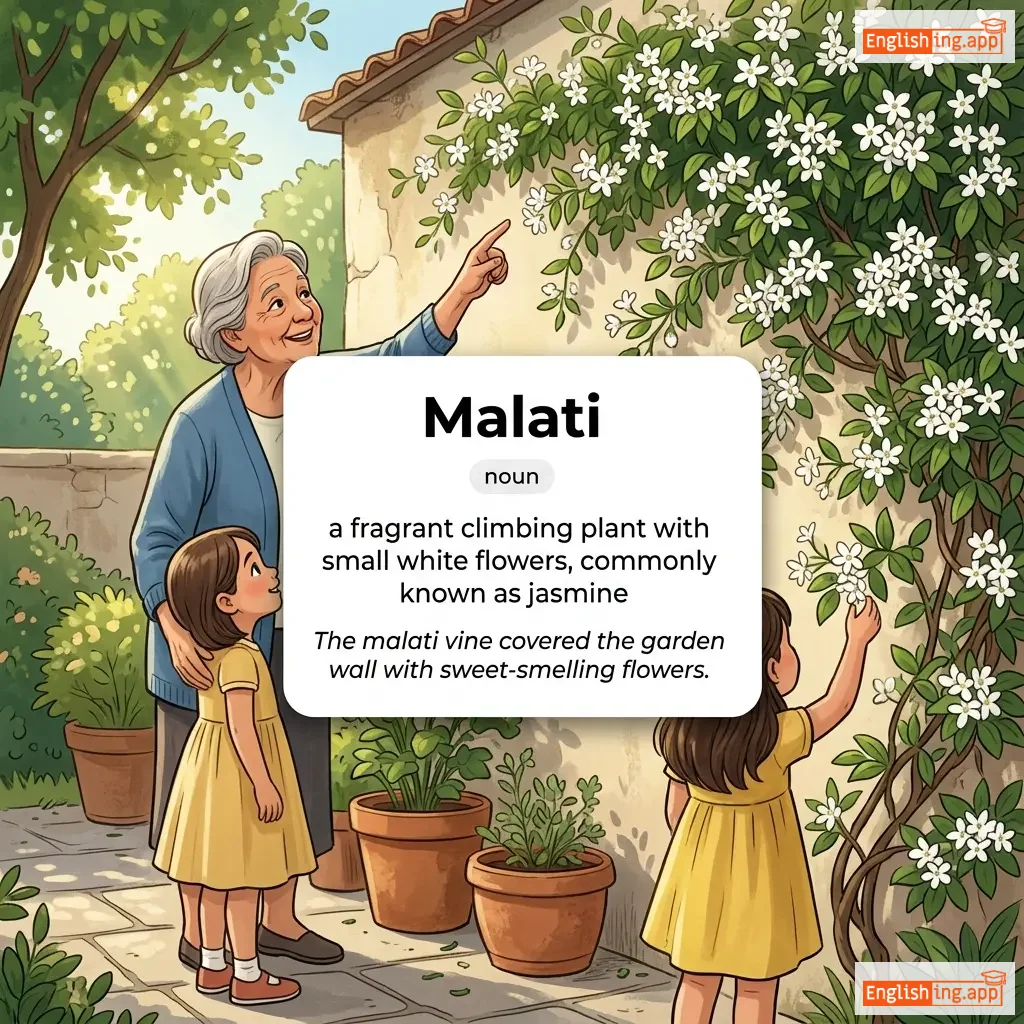
Malati definition card — visual illustration of the meaning
noun
/məˈlɑː.ti/
मालती (malati)

a fragrant climbing plant with small white flowers, commonly known as jasmine

"The malati vine covered the garden wall with sweet-smelling flowers."

"मालती की बेल ने बगीचे की दीवार को मीठी महकते हुए फूलों से ढक लिया था।" (malati ki bel ne bagiche ki deewaar ko meethi mahakte hue phoolon se dhak liya tha)
noun
/məˈlɛəriə/
मलेरिया (maleriya)

a serious infectious disease spread by mosquitoes, causing fever, chills, and sweating

"Malaria is a common disease in tropical regions."

"मलेरिया उष्णकटिबंधीय क्षेत्रों में एक सामान्य बीमारी है।" (Maleriya ushankatibandhiy kshetron mein ek samanya bimari hai.)
adjective, adverb
/ˌmæləprəˈpoʊ/
असंगत (asangat)

inappropriate or unsuitable; at an inconvenient or inappropriate time

"His comment was malapropos during the serious discussion."

"गंभीर चर्चा के दौरान उसकी टिप्पणी असंगत थी।" (Gambhir charcha ke dauran uski tippani asangat thi.)
noun
/ˈmæləprɒˌpɪzəm/
गलत शब्द प्रयोग (galat shabd prayog)

the mistaken use of a word in place of a similar-sounding one, often with amusing effect

"He is famous for his malapropism when speaking in public."

"वह सार्वजनिक रूप से बोलते समय अपने गलत शब्द प्रयोग के लिए प्रसिद्ध है।" (Wah saarbhautik roop se bolte samay apne galat shabd prayog ke liye prasiddh hai.)
noun
/məˈleɪz/
अस्वस्थता (aswasthata)

a general feeling of discomfort, illness, or unease whose exact cause is difficult to identify

"After the long journey, she felt a general malaise."

"लंबी यात्रा के बाद, उसे एक सामान्य अस्वस्थता महसूस हुई।" (Lambi yatra ke baad, use ek samanya aswasthata mehsoos hui.)
noun
/ˈmælədi/
रोग (rog)

a disease or disorder of the body or mind; a serious problem

"The doctor treated the malady with great care."

"डॉक्टर ने बीमारी का इलाज बड़ी देखभाल से किया।" (Doctor ne bimari ka ilaaj badi dekhbhal se kiya.)
adjective
/ˌmæləˈdrɔɪt/
अकुशल (akushal)

clumsy or awkward in movement or behavior

"His maladroit attempt at fixing the chair made it worse."

"उसका अकुशल प्रयास कुर्सी ठीक करने में और भी बुरा हो गया।" (Uska akushal prayaas kursi thik karne mein aur bhi bura ho gaya.)
noun
/ˈmeɪkɪŋ/
बनाना (banana)

the process of producing or constructing something

"The making of the movie took over two years."

"फिल्म बनाने की प्रक्रिया दो साल से अधिक समय लेती है।" (Film banane ki prakriya do saal se adhik samay leti hai.)
noun
/ˈmeɪkʌp/
सौंदर्य प्रसाधन (soundarya prasadhan)

cosmetics used to enhance or alter appearance

"She applied makeup before the party."

"उसने पार्टी से पहले मेकअप किया।" (Usne party se pehle makeup kiya.)
adjective
/ˈmeɪkˌʃɪft/
अस्थायी व्यवस्था (asthaayi vyavastha)

used as a temporary substitute; improvised

"They used boxes as a makeshift table."

"उन्होंने बॉक्सों को अस्थायी टेबल के रूप में इस्तेमाल किया।" (Unhone baksom ko asthaayi table ke roop mein istemaal kiya.)
noun
/ˈmeɪkər/
निर्माता (nirmata)

a person or thing that makes or produces something

"He is a famous movie maker in Hollywood."

"वह हॉलीवुड में एक प्रसिद्ध मूवी मेकर है।" (vah hollywood mein ek prasiddh movie maker hai.)
make definition card — visual illustration of the meaning
verb
/meɪk/
बनाना (banana)

to create, build, or cause something to happen

"She can make delicious cakes."

"वह स्वादिष्ट केक बना सकती है।" (Vah swadisht cake bana sakti hai.)
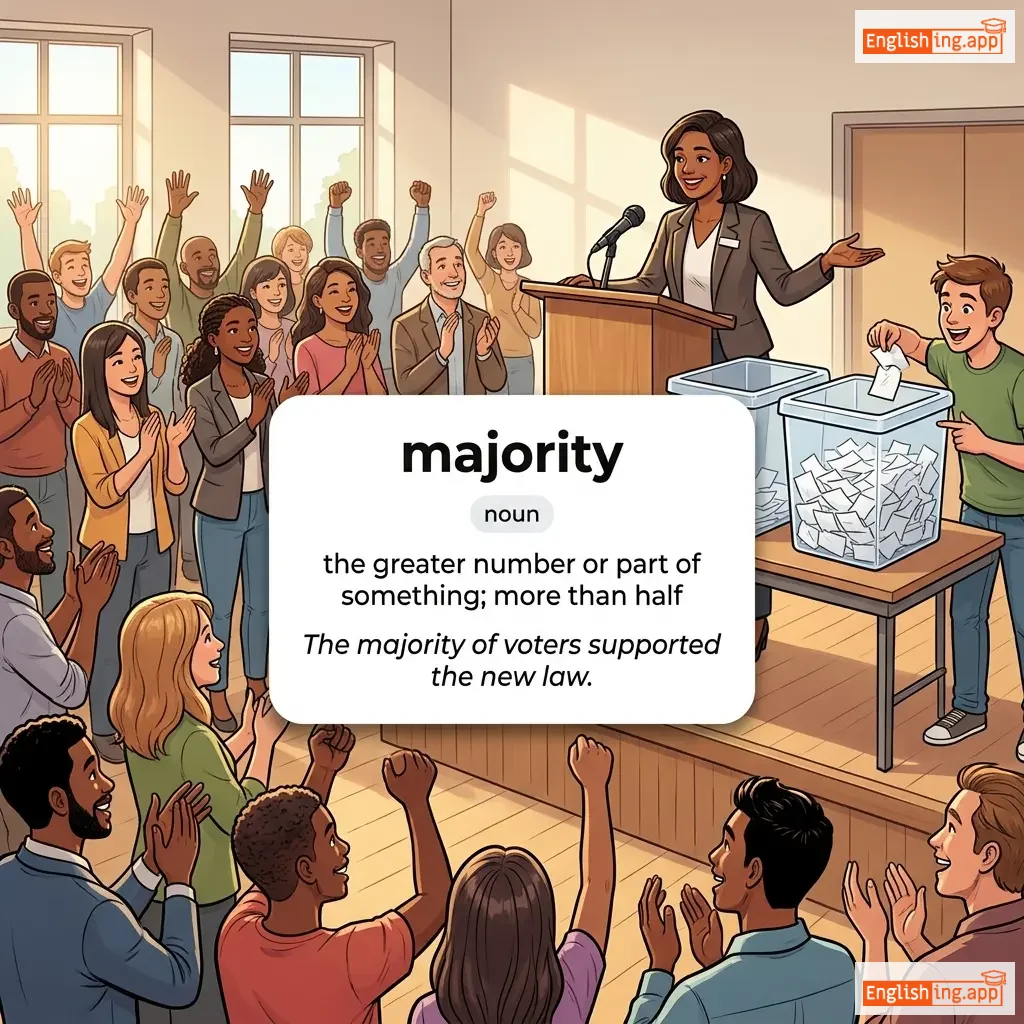
majority definition card — visual illustration of the meaning
noun
/məˈdʒɒrəti/
बहुमत (bahumat)

the greater number or part of something; more than half

"The majority of voters supported the new law."

"मतदाताओं का बहुमत नए कानून के पक्ष में था।" (Matdataon ka bahumat naye kanoon ke paksh mein tha.)
adjective
/ˈmeɪdʒər/
महत्वपूर्ण (mahatvapurn)

important, serious, or significant

"Climate change is a major concern for the world."

"जलवायु परिवर्तन दुनिया के लिए एक महत्वपूर्ण चिंता है।" (jalvayu parivartan duniya ke liye ek mahatvapurn chinta hai.)
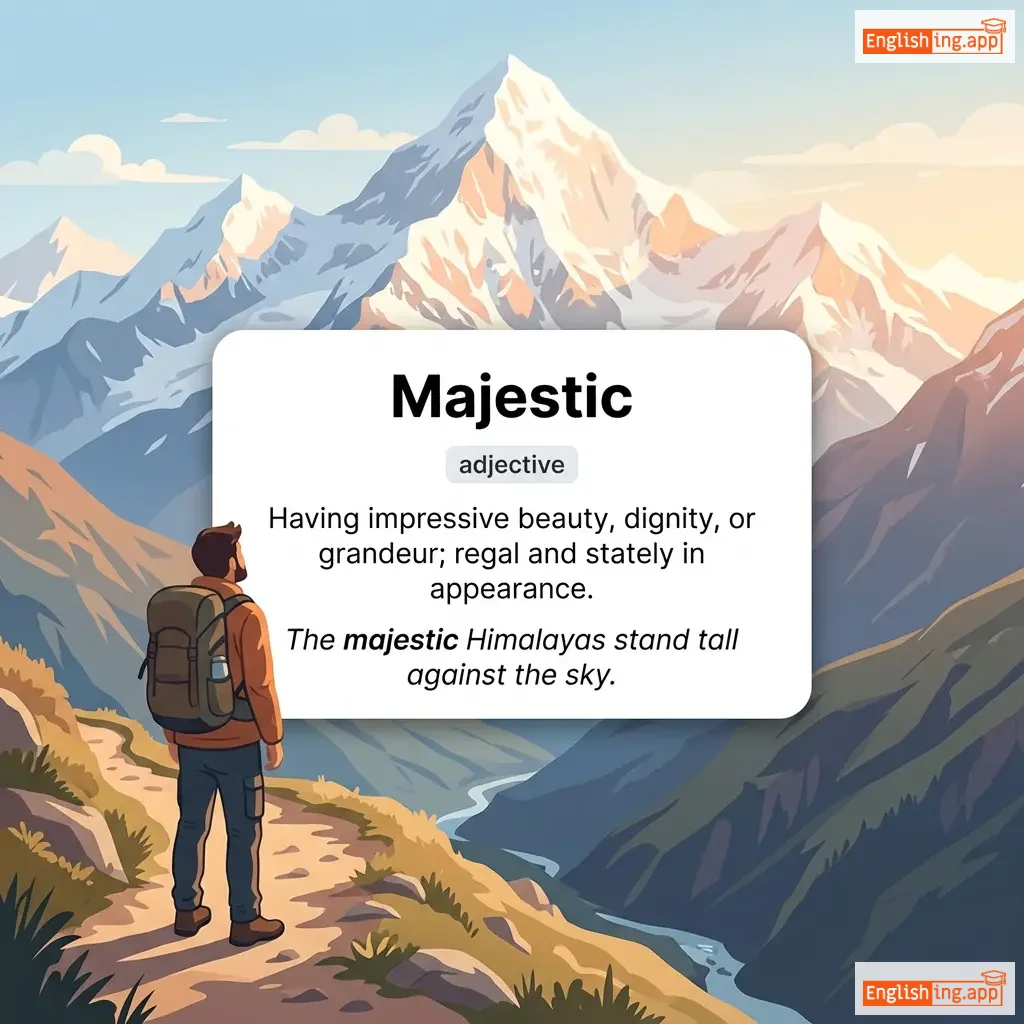
Majestic definition card — visual illustration of the meaning
adjective
məˈdʒes.tɪk
भव्य (bhavya)

Having impressive beauty, dignity, or grandeur; regal and stately in appearance.

"The majestic Himalayas stand tall against the sky."

"भव्य हिमालय आसमान के खिलाफ ऊंचे खड़े हैं।" (Bhavya Himalaya aasmaan ke khilaf unche khade hain.)
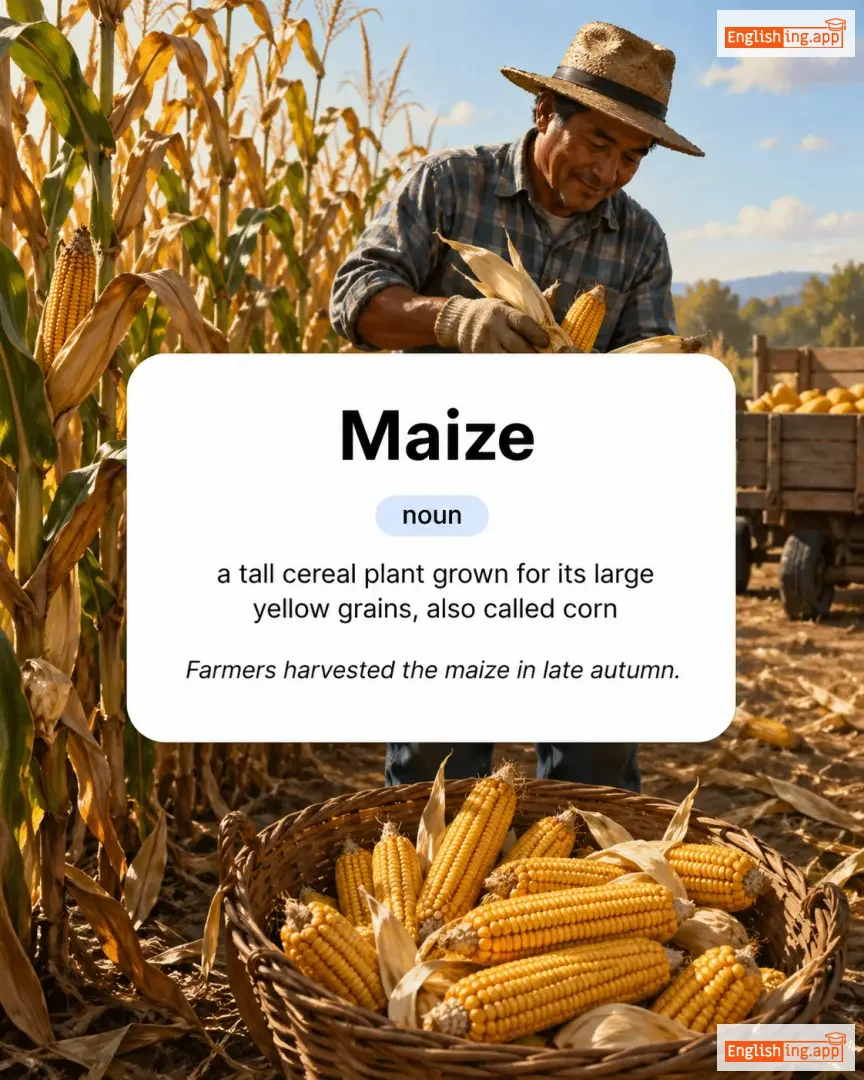
Maize definition card — visual illustration of the meaning
noun
/meɪz/
मक्का (makka)

a tall cereal plant grown for its large yellow grains, also called corn

"Farmers harvested the maize in late autumn."

"किसान ने शरद ऋतु में मक्का काटा।" (Kisaan ne sharad ritu mein makka kaata.)
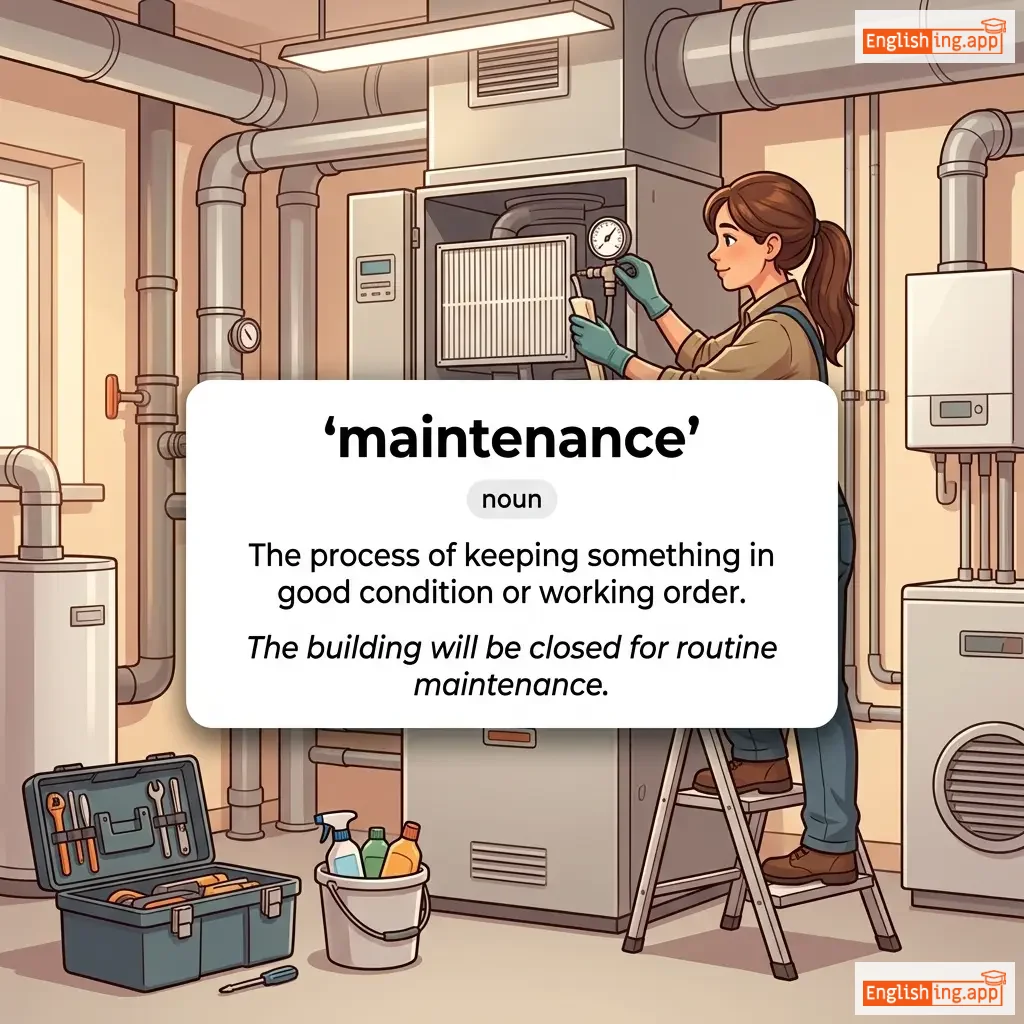
maintenance definition card — visual illustration of the meaning
noun
/ˈmeɪntənəns/
रखरखाव (rakhrakhav)

The process of keeping something in good condition or working order.

"The building will be closed for routine maintenance."

"इमारत नियमित रखरखाव के लिए बंद होगी।" (Imarat niyamit rakhrakhav ke liye band hogi.)
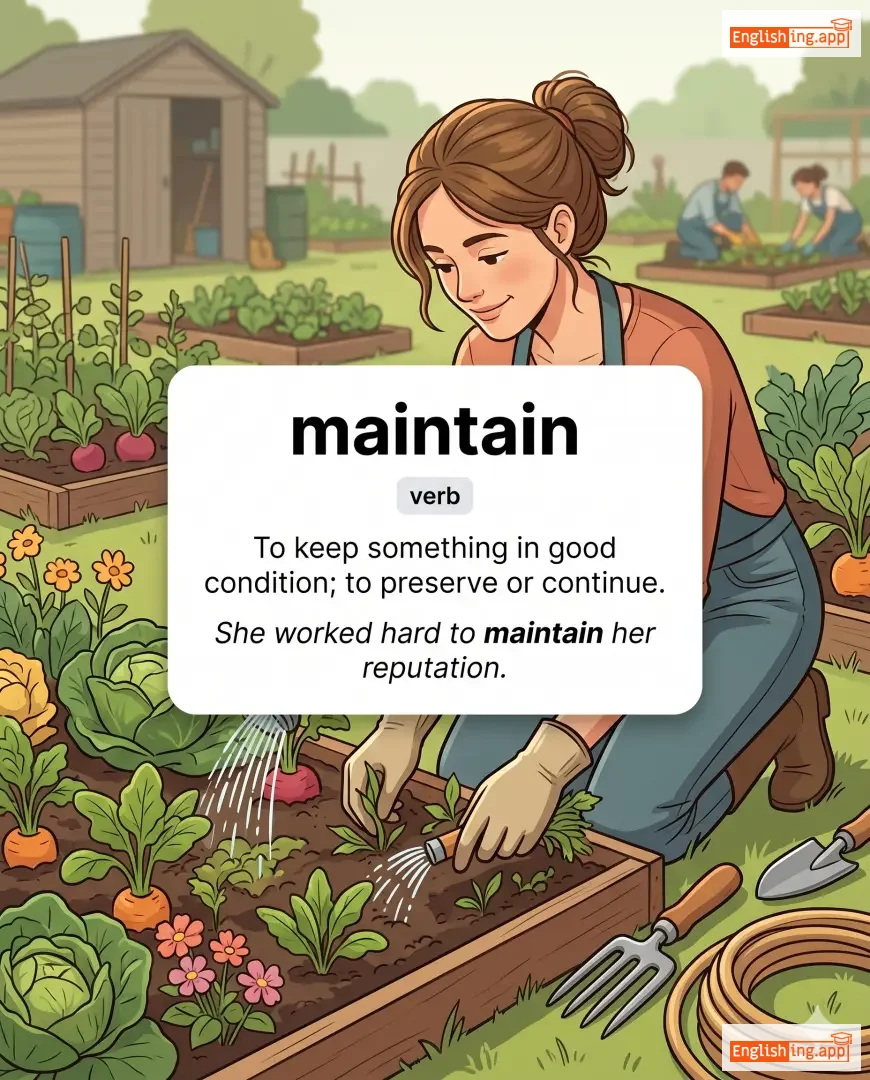
maintain definition card — visual illustration of the meaning
verb
/meɪnˈteɪn/
बनाए रखना (banaye rakhna)

To keep something in good condition; to preserve or continue.

"She worked hard to maintain her reputation."

"वह अपनी प्रतिष्ठा बनाए रखने के लिए कड़ी मेहनत करती थी।" (Wah apni pratishtha banaye rakhne ke liye kadi mehnat karti thi.)
noun
/ˈmeɪnstriːm/
मुखधारा (mukhadhara)

the ideas, attitudes, or activities that are regarded as normal or conventional; the dominant trend in opinion or fashion

"Social media has become a mainstream source of news for many people."

"सोशल मीडिया अब कई लोगों के लिए मुख्यधारा का समाचार स्रोत बन गया है।" (Social media ab kai logon ke liye mukhadhara ka samachar srot ban gaya hai.)
adverb
/ˈmeɪnli/
मुख्यतः (mukhyaatah)

for the most part; chiefly

"The audience was mainly composed of students."

"दर्शक मुख्यतः छात्रों से बने थे।" (darshak mukhyaatah chhatron se bane the.)
noun
/ˈmeɪnˌlænd/
मुख्य भूमि (mainland)

the principal landmass of a country or continent, as opposed to the surrounding islands

"The mainland of Australia is home to most of its population."

"ऑस्ट्रेलिया की मुख्य भूमि में उसकी अधिकांश आबादी रहती है।" (australia ki mukhya bhumi mein uski adhikansh aabadi rahti hai)
adjective
/meɪn/
मुख्य (mukhya)

most important; chief in size, extent, or importance

"The main reason for his success is hard work."

"उसकी सफलता का मुख्य कारण कड़ी मेहनत है।" (uski safalta ka mukhya karan kadi mehnat hai.)
noun
/laɪər/
प्राचीन बांसुरी (prachin bamsuri)

a stringed musical instrument of ancient Greece

"The musician played a melody on the lyre."

"संगीतज्ञ ने लायर पर एक धुन बजाई।" (Sangeetgya ne lyre par ek dhun bajayi.)
noun
/lʌst/
वासना (vasana)

a very strong sexual desire or an intense craving for something

"His mind was clouded by lust for power."

"उसका मन शक्ति की वासना से ढका हुआ था।" (uska man shakti ki vasana se dhaka hua tha.)
noun
/ˈlʌstər/
चमक (chamak)

a gentle sheen or soft glow, especially from a polished surface

"The diamond had a brilliant luster."

"हीरे में शानदार चमक थी।" (hiere mein shandaar chamak thi.)
lustrous definition card — visual illustration of the meaning
adjective
/ˈlʌstrəs/
चमकदार (chamakdaar)

having a gentle sheen or soft glow

"Her hair looked smooth and lustrous."

"उसके बाल चिकने और चमकदार लग रहे थे।" (uske baal chikne aur chamakdaar lag rahe the.)
noun
/lʌɡˈʒʊəriəns/
समृद्धि (samriddhi)

abundant growth, richness, or elegance

"The garden was filled with the luxuriance of tropical plants."

"बग़ीचा उष्णकटिबंधीय पौधों की समृद्धि से भरा हुआ था।" (bagicha ushnakatibandhiya paudhon ki samriddhi se bhara hua tha.)
adjective
/lʌɡˈʒʊəriənt/
वृद्धिशील (vruddhishil)

abundant in growth or richly abundant

"The luxuriant forest was teeming with life."

"वृद्धिशील जंगल जीवन से भरपूर था।" (vruddhishil jangal jeevan se bharpoor tha.)
verb
/lʌɡˈʒʊrieɪt/
विलासिता का आनंद लेना (vilasita ka anand lena)

to enjoy something in a self-indulgent way; to take pleasure in great comfort

"She luxuriated in the warm bubble bath after a long day."

"वह एक लंबे दिन के बाद गर्म बबल स्नान में विलासिता का आनंद ले रही थी।" (Vah ek lambe din ke baad garm bubble snaan mein vilasita ka anand le rahi thi.)
adjective
/lʌɡˈʒʊəriəs/
विलासी (vilasi)

extremely comfortable, elegant, or enjoyable, often involving great expense

"They stayed in a luxurious hotel during their vacation."

"वे अपनी छुट्टियों के दौरान एक विलासी होटल में ठहरे थे।" (Ve apni chhutiyon ke dauran ek vilasi hotel mein thahare the.)
noun
/ˈlʌkʃəri/
विलासिता (vilasita)

a state of great comfort or elegance, often involving great expense

"Staying at a five-star hotel is a luxury for most people."

"पाँच सितारा होटल में रहना अधिकांश लोगों के लिए विलासिता है।" (paanch sitara hotel mein rehna adhikansh logon ke liye vilasita hai.)
verb
/ˈlaɪɪŋ/
झूठ बोलना (jhuth bolna)

the act of not telling the truth

"He was caught lying about his grades."

"वह अपने ग्रेड के बारे में झूठ बोलते हुए पकड़ा गया।" (Vah apne grade ke baare mein jhuth bolte huye pakda gaya.)
noun
/meɪs/
गदा / राजदंड (gada / rajdand)

a ceremonial staff carried as a symbol of authority or a weapon similar to a club

"The guard carried a mace as a symbol of authority."

"गार्ड ने अधिकार के प्रतीक के रूप में एक गदा उठाई थी।" (Guard ne adhikar ke pratik ke roop mein ek gada uthayi thi.)
noun
/ˌmæk.ɪˈneɪ.ʃən/
षड्यंत्र (shadyantra)

a secret plan or scheme intended to accomplish something, especially something evil

"The detective uncovered the villain's machination."

"जांचकर्ता ने खलनायक के षड्यंत्र का खुलासा किया।" (Jaanch karta ne khalnayak ke shadyantra ka khulasa kiya.)
verb
/ˈmæk.ɪ.neɪt/
षड्यंत्र करना (shadyantr karna)

to engage in plots or schemes, usually for harmful or evil purposes

"The rebels tried to machinate against the king."

"विद्रोहियों ने राजा के खिलाफ षड्यंत्र करने की कोशिश की।" (Vidrohiyon ne raja ke khilaf shadyantr karne ki koshish ki.)
machiavellian definition card — visual illustration of the meaning
adjective
/ˌmækɪəˈvɛliən/
चतुर, षड्यंत्रकारी और नीतिहीन, खासकर राजनीति में या किसी के करियर को आगे बढ़ाने में (makiveliyan)

cunning, scheming, and unscrupulous, especially in politics or in advancing one's career

"The politician was known for his Machiavellian tactics."

"राजनेता अपने मैकीवेलियन चालों के लिए प्रसिद्ध थे।" (raajneta apne makiveliyan chalon ke liye prasiddh the.)
verb
/ˈmæsəˌreɪt/
नर्म करना (narm karna)

to soften or break up something, especially food, by soaking in liquid

"The chef macerated the fruit in wine before serving."

"शेफ ने फल को परोसने से पहले वाइन में मैसरट किया।" (Shef ne phal ko parosne se pehle wain mein macerate kiya.)
adjective
/məˈkɑːbrə/
भयावह (bhayavah)

disturbing and horrifying because of involvement with or depiction of death and injury

"The horror movie had a macabre ending."

"हॉरर मूवी का एक भयावह अंत था।" (Horror movie ka ek bhayavah ant tha.)
noun
/ˈluː.məˌnɛr.i/
प्रकाशस्तंभ (prakashstambh)

A person who inspires or influences others, especially in a particular field.

"He is considered a luminary in the world of science."

"उसे विज्ञान की दुनिया में एक प्रकाशस्तंभ माना जाता है।" (use vigyan ki duniya mein ek prakashstambh maana jaata hai.)
noun
/ˈlɪrɪk/
गीत के बोल (geet ke bol)

the words of a song or a short poem that expresses personal feelings

"She memorized every lyric of her favorite song."

"उसने अपनी पसंदीदा गीत के हर बोल को याद किया।" (Usne apni pasandida geet ke har bol ko yaad kiya.)