वोकैबुलरीज

इंग्लिश वोकैबुलरी डिस्कवर, लर्न और मास्टर करें

misconception definition card — visual illustration of the meaning
noun
/ˌmɪs.kənˈsep.ʃən/
गलत धारणा, भ्रम (galat dharna, bhram)

A view or opinion that is incorrect based on faulty thinking or understanding.

"Many people have a misconception about healthy dieting."

"बहुत से लोगों को स्वस्थ आहार के बारे में एक गलत धारणा है।" (Bahut se logon ko swasth aahaar ke baare mein ek galat dharna hai.)
noun
/ˌmɪsˈkɒndʌkt/
दुराचार (durachar)

Improper or unacceptable behavior, especially by a professional or authority figure.

"The teacher was dismissed for serious misconduct."

"शिक्षक को गंभीर दुराचार के लिए बर्खास्त किया गया।" (Shikshak ko gambhir durachar ke liye barkhast kiya gaya.)
noun
/ˈmɪn.i.ən/
अनुचर (anuchar)

A follower or underling of a powerful person, especially a servile one.

"The dictator was surrounded by loyal minions who carried out his orders."

"तानाशाह अपने आदेशों को निभाने वाले विश्वासयोग्य अनुचरों से घिरा हुआ था।" (Taanashaah apne aadeshon ko nibhaane wale vishwasyogya anucharon se ghira hua tha.)
adjective
/meɪn/
मुख्य (mukhya)

most important; chief in size, extent, or importance

"The main reason for his success is hard work."

"उसकी सफलता का मुख्य कारण कड़ी मेहनत है।" (uski safalta ka mukhya karan kadi mehnat hai.)
noun
/ˈmeɪnˌlænd/
मुख्य भूमि (mainland)

the principal landmass of a country or continent, as opposed to the surrounding islands

"The mainland of Australia is home to most of its population."

"ऑस्ट्रेलिया की मुख्य भूमि में उसकी अधिकांश आबादी रहती है।" (australia ki mukhya bhumi mein uski adhikansh aabadi rahti hai)
adverb
/ˈmeɪnli/
मुख्यतः (mukhyaatah)

for the most part; chiefly

"The audience was mainly composed of students."

"दर्शक मुख्यतः छात्रों से बने थे।" (darshak mukhyaatah chhatron se bane the.)
noun
/ˈmeɪnstriːm/
मुखधारा (mukhadhara)

the ideas, attitudes, or activities that are regarded as normal or conventional; the dominant trend in opinion or fashion

"Social media has become a mainstream source of news for many people."

"सोशल मीडिया अब कई लोगों के लिए मुख्यधारा का समाचार स्रोत बन गया है।" (Social media ab kai logon ke liye mukhadhara ka samachar srot ban gaya hai.)
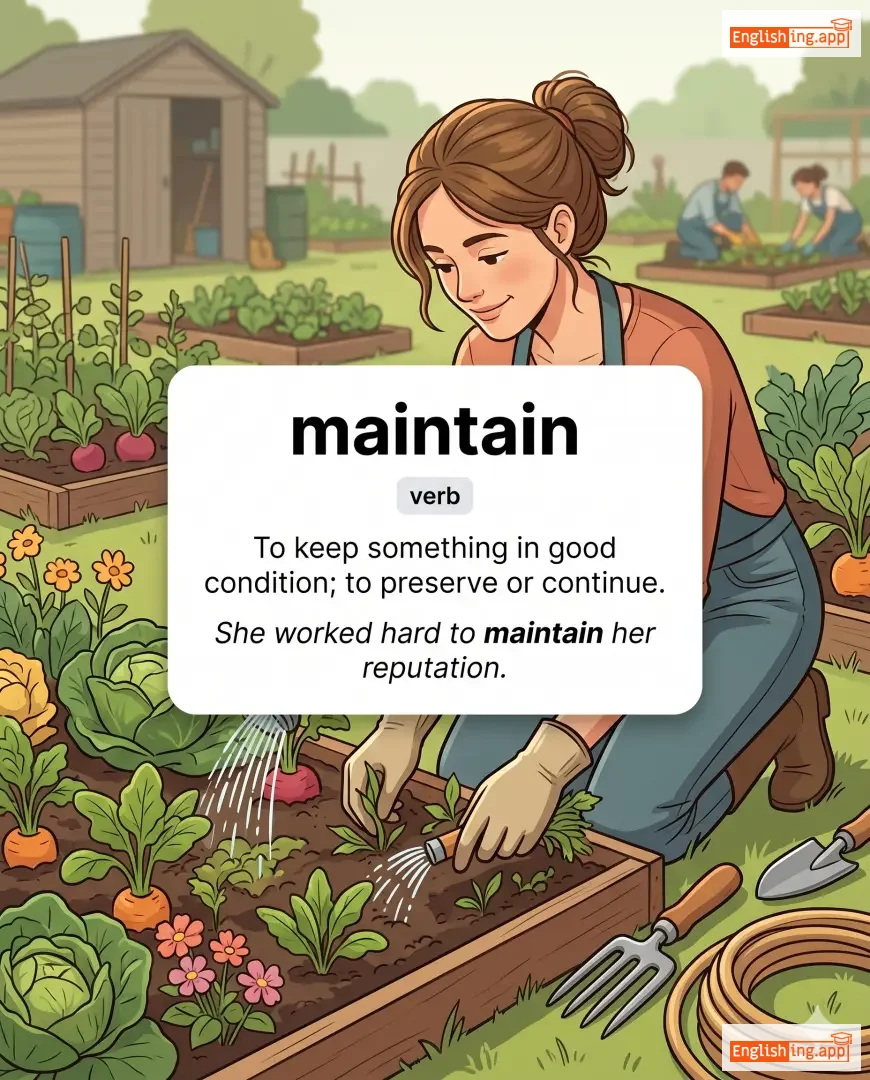
maintain definition card — visual illustration of the meaning
verb
/meɪnˈteɪn/
बनाए रखना (banaye rakhna)

To keep something in good condition; to preserve or continue.

"She worked hard to maintain her reputation."

"वह अपनी प्रतिष्ठा बनाए रखने के लिए कड़ी मेहनत करती थी।" (Wah apni pratishtha banaye rakhne ke liye kadi mehnat karti thi.)
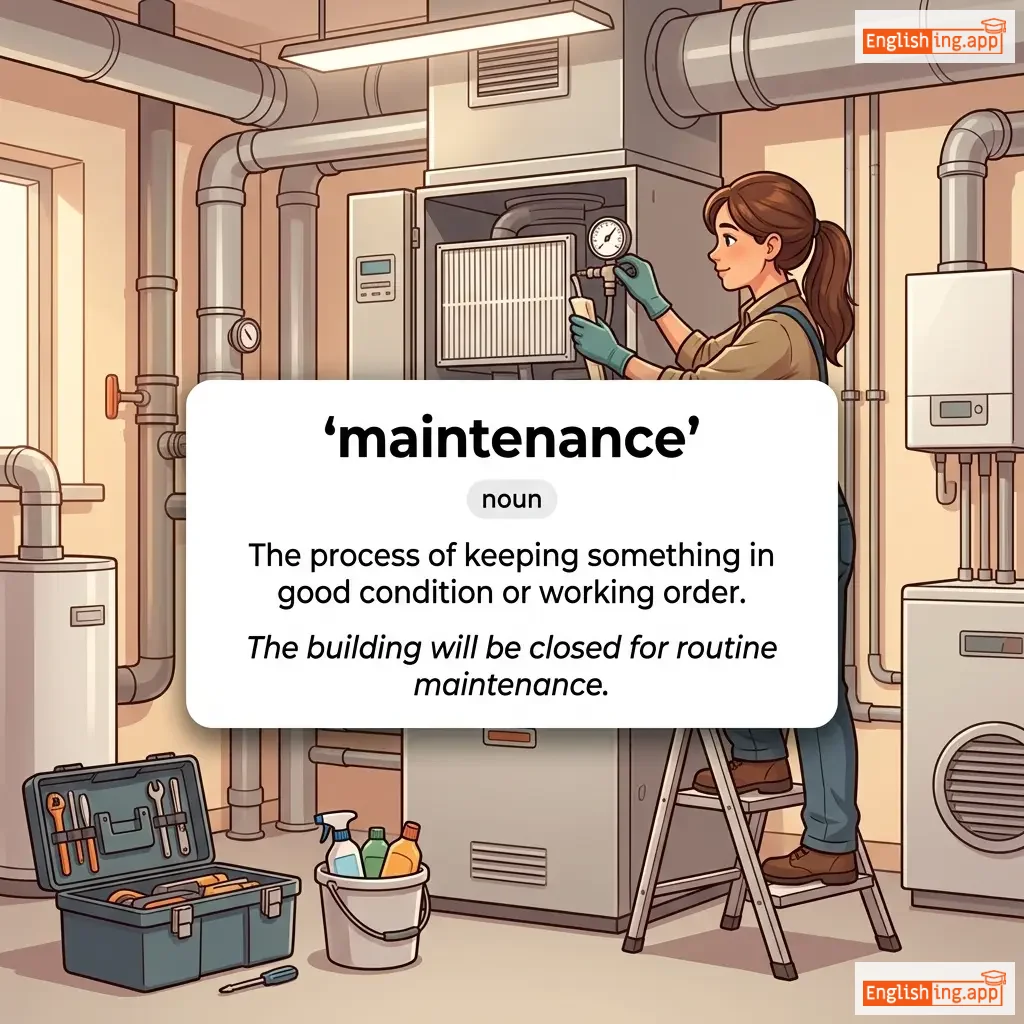
maintenance definition card — visual illustration of the meaning
noun
/ˈmeɪntənəns/
रखरखाव (rakhrakhav)

The process of keeping something in good condition or working order.

"The building will be closed for routine maintenance."

"इमारत नियमित रखरखाव के लिए बंद होगी।" (Imarat niyamit rakhrakhav ke liye band hogi.)
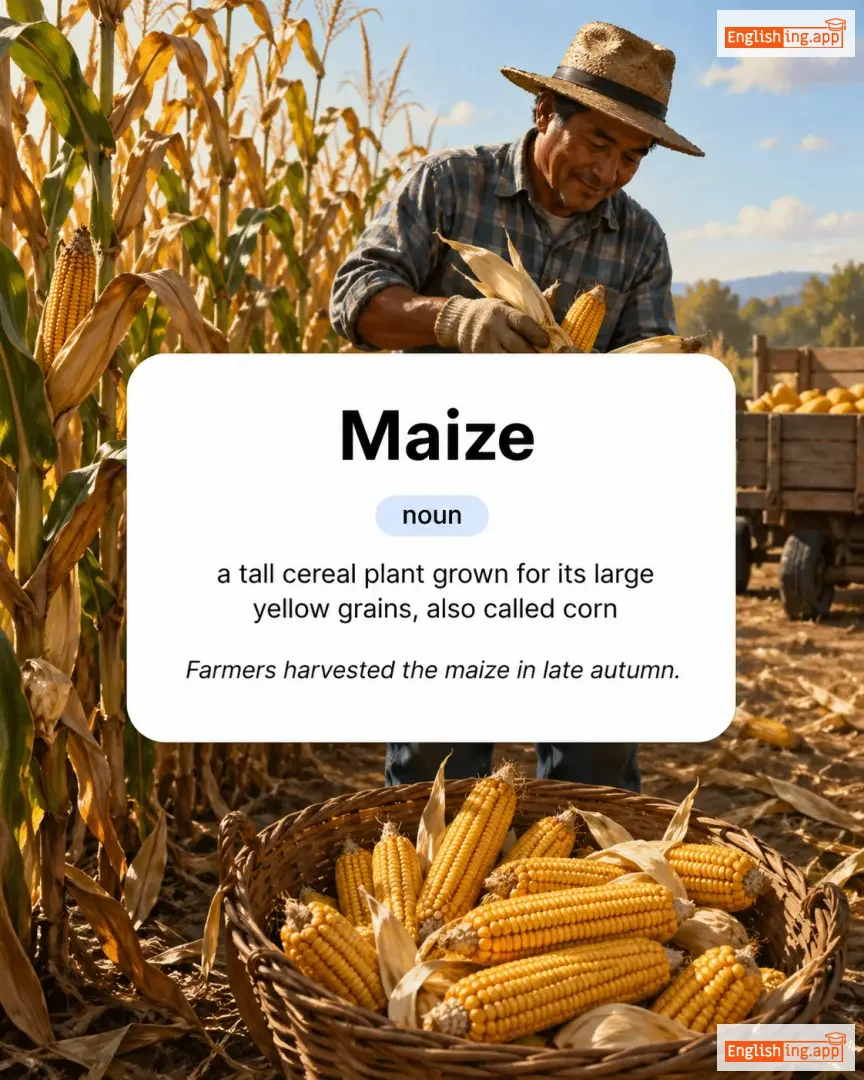
Maize definition card — visual illustration of the meaning
noun
/meɪz/
मक्का (makka)

a tall cereal plant grown for its large yellow grains, also called corn

"Farmers harvested the maize in late autumn."

"किसान ने शरद ऋतु में मक्का काटा।" (Kisaan ne sharad ritu mein makka kaata.)
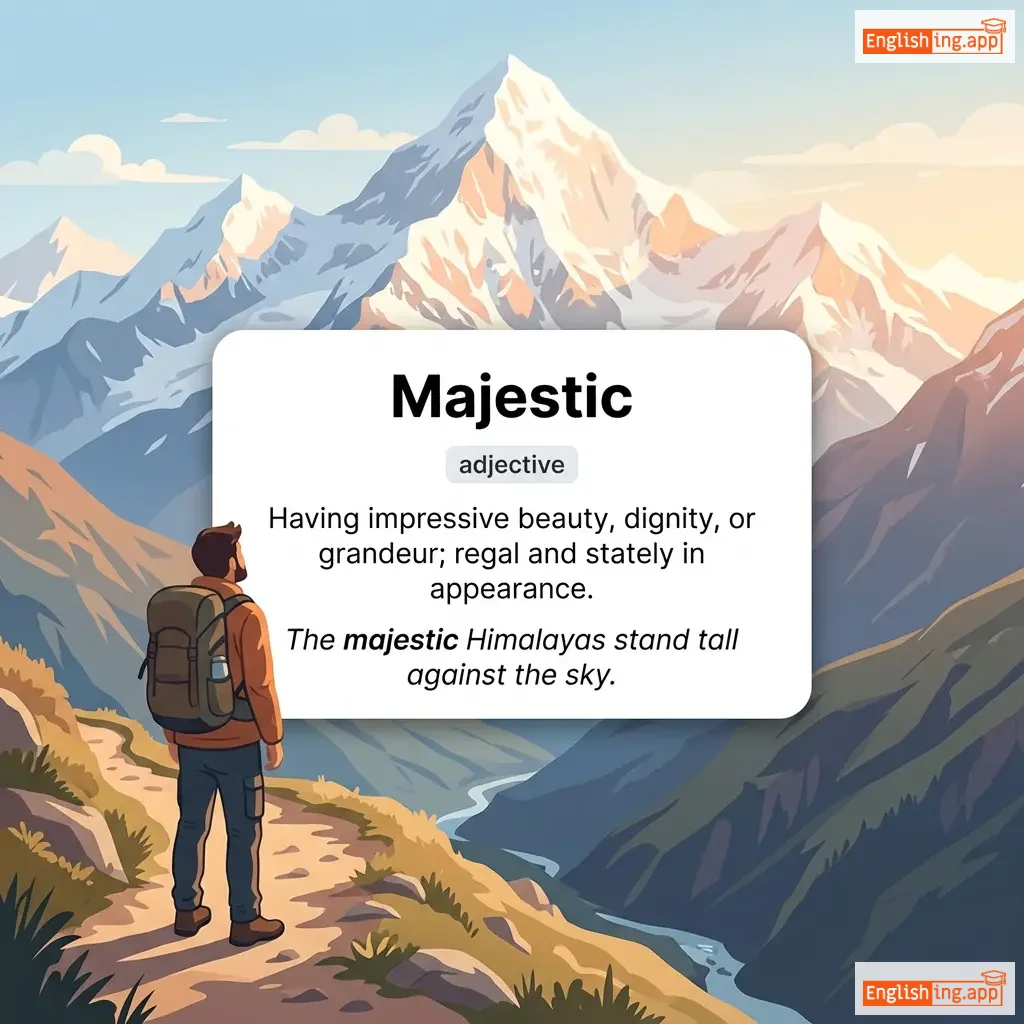
Majestic definition card — visual illustration of the meaning
adjective
məˈdʒes.tɪk
भव्य (bhavya)

Having impressive beauty, dignity, or grandeur; regal and stately in appearance.

"The majestic Himalayas stand tall against the sky."

"भव्य हिमालय आसमान के खिलाफ ऊंचे खड़े हैं।" (Bhavya Himalaya aasmaan ke khilaf unche khade hain.)
adjective
/ˈmeɪdʒər/
महत्वपूर्ण (mahatvapurn)

important, serious, or significant

"Climate change is a major concern for the world."

"जलवायु परिवर्तन दुनिया के लिए एक महत्वपूर्ण चिंता है।" (jalvayu parivartan duniya ke liye ek mahatvapurn chinta hai.)
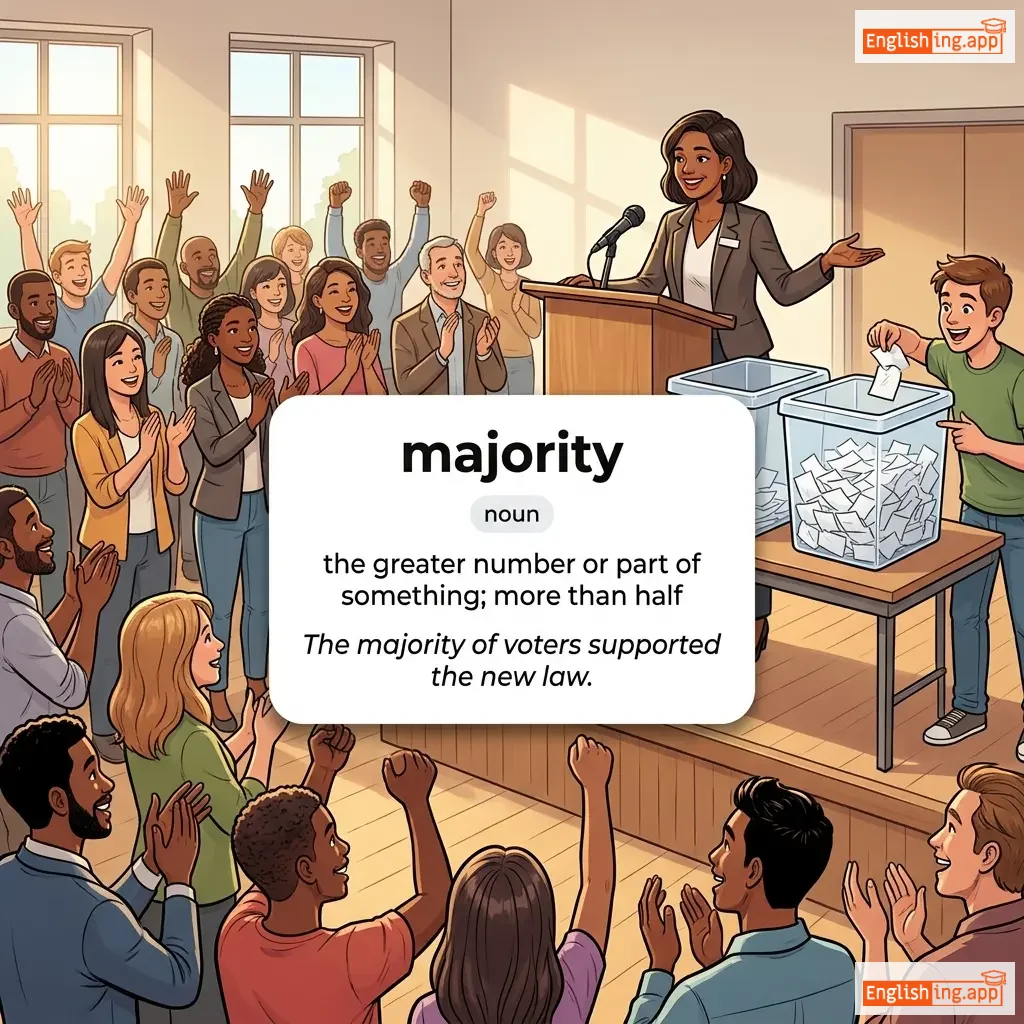
majority definition card — visual illustration of the meaning
noun
/məˈdʒɒrəti/
बहुमत (bahumat)

the greater number or part of something; more than half

"The majority of voters supported the new law."

"मतदाताओं का बहुमत नए कानून के पक्ष में था।" (Matdataon ka bahumat naye kanoon ke paksh mein tha.)
make definition card — visual illustration of the meaning
verb
/meɪk/
बनाना (banana)

to create, build, or cause something to happen

"She can make delicious cakes."

"वह स्वादिष्ट केक बना सकती है।" (Vah swadisht cake bana sakti hai.)
noun
/ˈmeɪkər/
निर्माता (nirmata)

a person or thing that makes or produces something

"He is a famous movie maker in Hollywood."

"वह हॉलीवुड में एक प्रसिद्ध मूवी मेकर है।" (vah hollywood mein ek prasiddh movie maker hai.)
adjective
/ˈmeɪkˌʃɪft/
अस्थायी व्यवस्था (asthaayi vyavastha)

used as a temporary substitute; improvised

"They used boxes as a makeshift table."

"उन्होंने बॉक्सों को अस्थायी टेबल के रूप में इस्तेमाल किया।" (Unhone baksom ko asthaayi table ke roop mein istemaal kiya.)
noun
/ˈmeɪkʌp/
सौंदर्य प्रसाधन (soundarya prasadhan)

cosmetics used to enhance or alter appearance

"She applied makeup before the party."

"उसने पार्टी से पहले मेकअप किया।" (Usne party se pehle makeup kiya.)
noun
/ˈmeɪkɪŋ/
बनाना (banana)

the process of producing or constructing something

"The making of the movie took over two years."

"फिल्म बनाने की प्रक्रिया दो साल से अधिक समय लेती है।" (Film banane ki prakriya do saal se adhik samay leti hai.)
adjective
/ˌmæləˈdrɔɪt/
अकुशल (akushal)

clumsy or awkward in movement or behavior

"His maladroit attempt at fixing the chair made it worse."

"उसका अकुशल प्रयास कुर्सी ठीक करने में और भी बुरा हो गया।" (Uska akushal prayaas kursi thik karne mein aur bhi bura ho gaya.)
noun
/ˈmælədi/
रोग (rog)

a disease or disorder of the body or mind; a serious problem

"The doctor treated the malady with great care."

"डॉक्टर ने बीमारी का इलाज बड़ी देखभाल से किया।" (Doctor ne bimari ka ilaaj badi dekhbhal se kiya.)
noun
/məˈleɪz/
अस्वस्थता (aswasthata)

a general feeling of discomfort, illness, or unease whose exact cause is difficult to identify

"After the long journey, she felt a general malaise."

"लंबी यात्रा के बाद, उसे एक सामान्य अस्वस्थता महसूस हुई।" (Lambi yatra ke baad, use ek samanya aswasthata mehsoos hui.)
noun
/ˈmæləprɒˌpɪzəm/
गलत शब्द प्रयोग (galat shabd prayog)

the mistaken use of a word in place of a similar-sounding one, often with amusing effect

"He is famous for his malapropism when speaking in public."

"वह सार्वजनिक रूप से बोलते समय अपने गलत शब्द प्रयोग के लिए प्रसिद्ध है।" (Wah saarbhautik roop se bolte samay apne galat shabd prayog ke liye prasiddh hai.)
adjective, adverb
/ˌmæləprəˈpoʊ/
असंगत (asangat)

inappropriate or unsuitable; at an inconvenient or inappropriate time

"His comment was malapropos during the serious discussion."

"गंभीर चर्चा के दौरान उसकी टिप्पणी असंगत थी।" (Gambhir charcha ke dauran uski tippani asangat thi.)
noun
/məˈlɛəriə/
मलेरिया (maleriya)

a serious infectious disease spread by mosquitoes, causing fever, chills, and sweating

"Malaria is a common disease in tropical regions."

"मलेरिया उष्णकटिबंधीय क्षेत्रों में एक सामान्य बीमारी है।" (Maleriya ushankatibandhiy kshetron mein ek samanya bimari hai.)
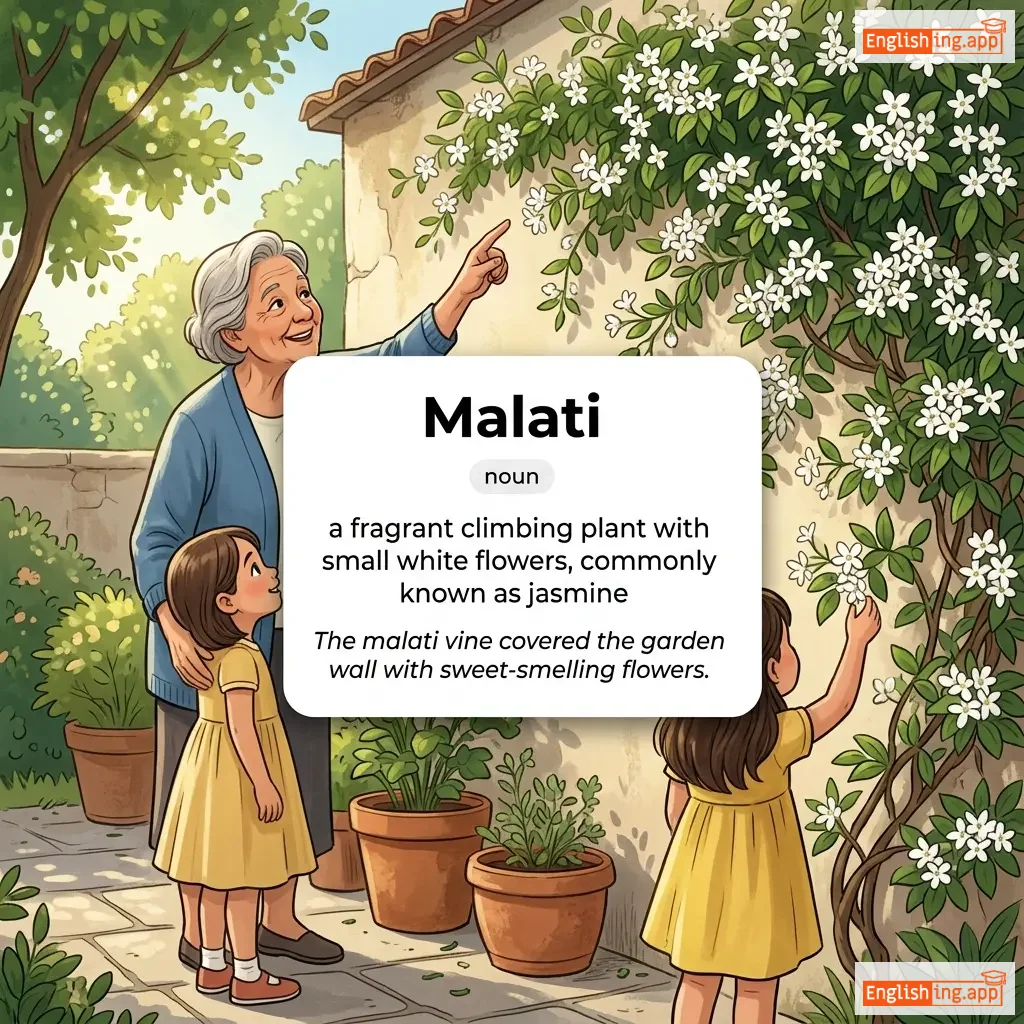
Malati definition card — visual illustration of the meaning
noun
/məˈlɑː.ti/
मालती (malati)

a fragrant climbing plant with small white flowers, commonly known as jasmine

"The malati vine covered the garden wall with sweet-smelling flowers."

"मालती की बेल ने बगीचे की दीवार को मीठी महकते हुए फूलों से ढक लिया था।" (malati ki bel ne bagiche ki deewaar ko meethi mahakte hue phoolon se dhak liya tha)
noun
/ˈmæl.kənˌtɛnt/
असंतुष्ट व्यक्ति (asantusht vyakti)

A person who is dissatisfied or rebellious; one who is not content.

"The malcontent voiced his grievances against the government."

"असंतुष्ट व्यक्ति ने अपनी शिकायतें सरकार के खिलाफ व्यक्त की।" (Asantusht vyakti ne apni shikayatein sarkar ke khilaf vyakt ki.)
noun/adjective
/meɪl/
पुरुष (purush)

a man or boy; relating to men or boys

"The school has more male teachers than female teachers."

"स्कूल में महिला शिक्षकों से ज्यादा पुरुष शिक्षक हैं।" (school mein mahila shikshakon se zyada purush shikshak hain.)
noun
/ˌmæl.əˈdɪk.ʃən/
शाप (shaap)

A curse or the utterance of a curse.

"The witch cast a malediction upon the village."

"चालिन ने गांव पर एक शाप डाला।" (Chaalin ne gaon par ek shaap daala.)
noun
/ˈmæl.əˌfæk.tər/
दुष्ट व्यक्ति (dusht vyakti)

A person who commits a crime or does evil.

"The malefactor was arrested for the robbery."

"दुष्ट व्यक्ति डकैती के लिए गिरफ्तार किया गया था।" (Dusht vyakti dakatī ke liye giraftār kiyā gayā thā.)
adjective
/məˈlɛfɪsənt/
दुष्ट (dusht)

Causing harm or destruction, especially by supernatural means.

"The maleficent witch cursed the young princess."

"दुष्ट डायन ने युवा राजकुमारी को शाप दिया।" (Dusht daayan ne yuva raajkumari ko shaap diya.)
adjective
/ˌmæl.əˈfɪʃ.ənt/
दुष्ट (dusht)

Doing harm or evil; having a harmful effect.

"The maleficient acts of the tyrant ruined the kingdom."

"त्यागी के दुष्ट कृत्य ने राज्य को बर्बाद कर दिया।" (Tyagi ke dusht kritya ne rajya ko barbaad kar diya.)
noun
/məˈlɛvələns/
द्वेष (dwesh)

The state or condition of being malevolent; having or showing a wish to do evil to others.

"His malevolence was clear in the cruel way he treated his rivals."

"उसका द्वेष उसके प्रतिद्वंद्वियों के प्रति क्रूर तरीके से व्यवहार में स्पष्ट था।" (uska dwesh uske pratidwandiye ke prati krur tareeke se vyavhaar mein spasht tha.)
adjective
/məˈlɛvələnt/
दुष्ट (dusht)

Having or showing a wish to do evil or harm to others.

"The malevolent glare in his eyes frightened the children."

"उसकी आँखों में दुष्ट घृणा बच्चों को डराने वाली थी।" (uski aankhon mein dusht ghrina bachon ko daraane waali thi.)
noun
/mælˈfiːzəns/
दुराचार (durachar)

Wrongdoing or misconduct, especially by a public official.

"The mayor was accused of malfeasance in office."

"महापौर पर कार्यालय में दुराचार का आरोप लगाया गया था।" (mahaur par karyalay mein durachar ka aarop lagaya gaya tha.)
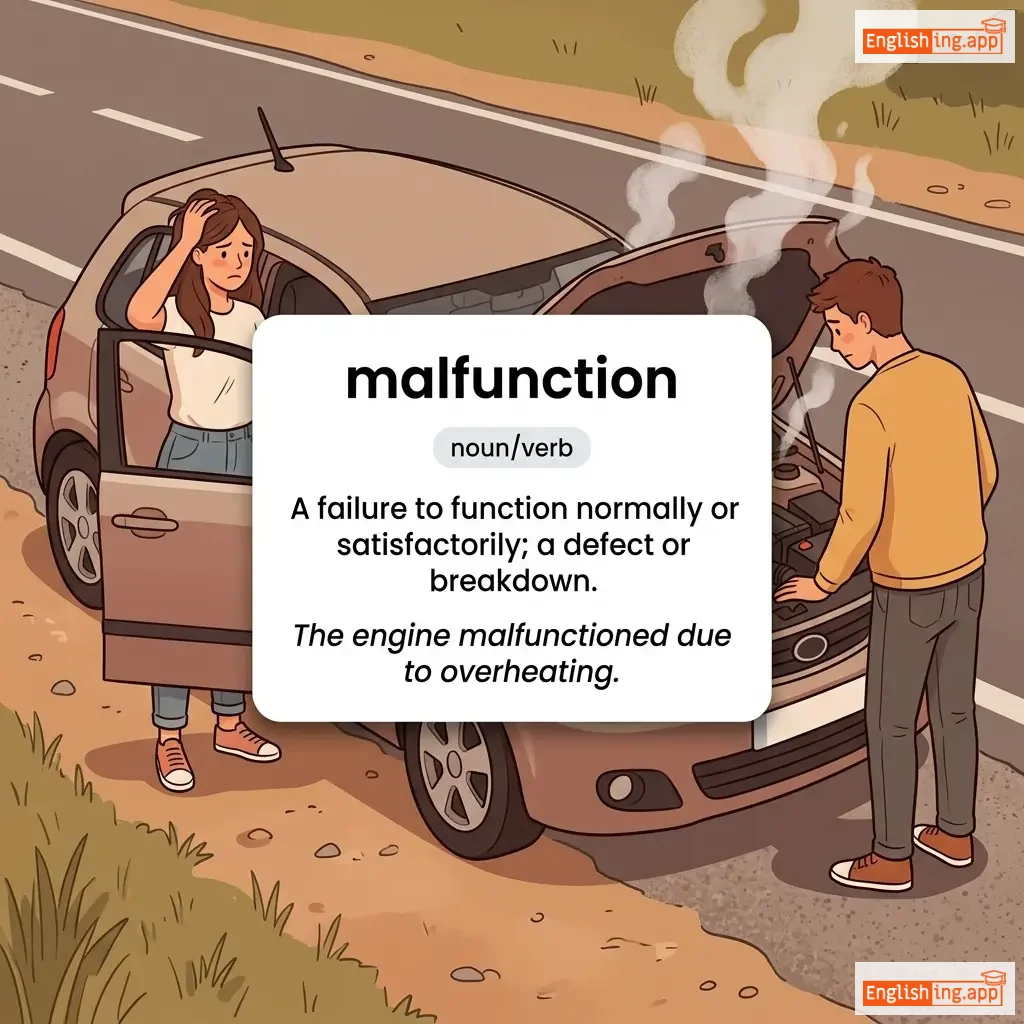
malfunction definition card — visual illustration of the meaning
noun/verb
mælˈfʌŋk.ʃən
दोष (dosh)

A failure to function normally or satisfactorily; a defect or breakdown.

"The engine malfunctioned due to overheating."

"इंजन अधिक गर्मी के कारण खराब हो गया।" (Injan adhik garmi ke karan kharab ho gaya.)
noun
/ˈmælɪs/
द्वेष (dwesh)

The intention or desire to do evil or cause harm.

"She bore no malice towards her former friend."

"वह अपनी पूर्व मित्र के प्रति कोई द्वेष नहीं रखती थी।" (vah apni poorv mitr ke prati koi dwesh nahin rakhti thi.)
adjective
/məˈlɪʃəs/
दुष्ट (dusht)

Characterized by malice; intending or intended to do harm.

"The hackers launched a malicious attack on the company’s system."

"हैकर्स ने कंपनी के सिस्टम पर एक दुष्ट हमला किया।" (hackers ne company ke system par ek dusht hamla kiya.)
Malign definition card — visual illustration of the meaning
verb
/məˈlaɪn/
अपमानित करना (apamaanit karna)

to speak harmful untruths about someone; to slander or defame

"She felt hurt when her rivals tried to malign her reputation."

"वह दुखी हुई जब उसके प्रतिद्वंद्वियों ने उसकी प्रतिष्ठा को मलिन करने की कोशिश की।" (vah dukhi hui jab uske pratidvandviyon ne uski pratishtha ko malin karne ki koshish ki.)
adjective
/məˈlɪɡnənt/
मलिन (malin)

dangerous or harmful in influence or effect; medically, tending to invade and destroy tissue

"Doctors confirmed that the tumor was malignant."

"डॉक्टरों ने पुष्टि की कि ट्यूमर मलिन था।" (Doktoron ne pushti ki ki tumor malin tha.)
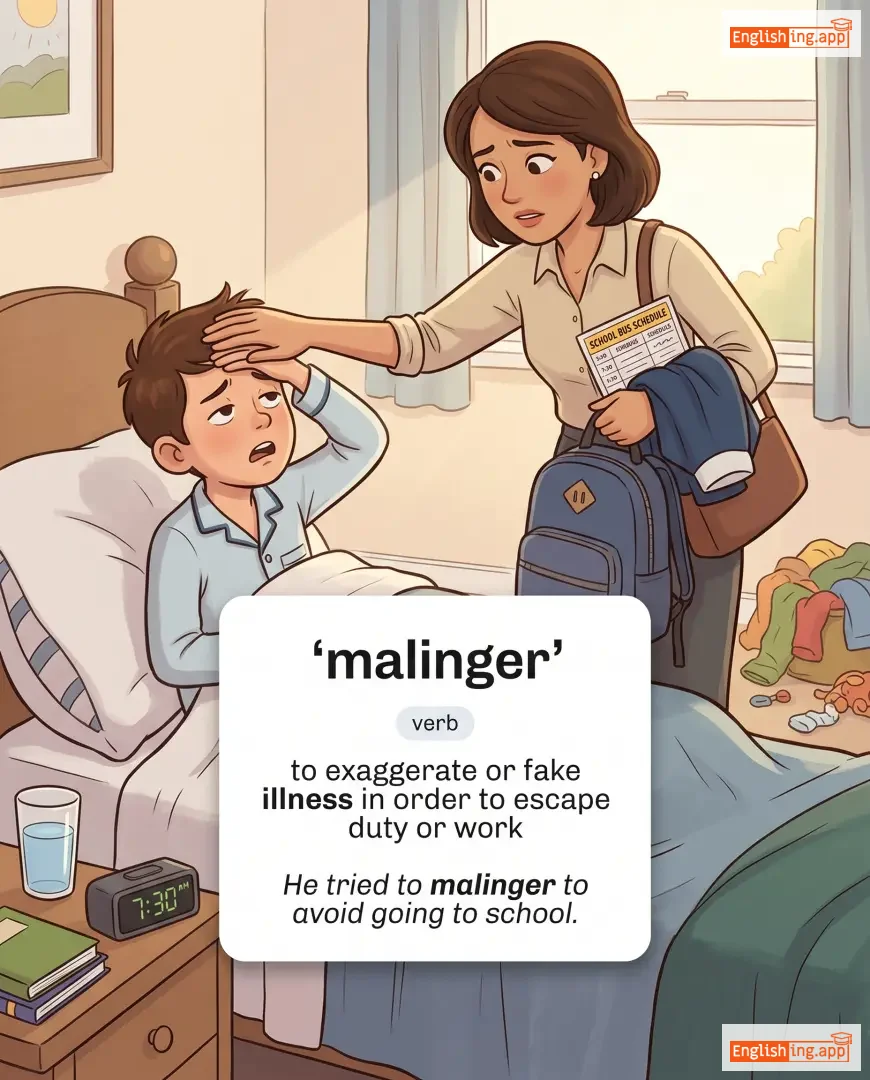
malinger definition card — visual illustration of the meaning
verb
/məˈlɪŋɡər/
बीमार होने का बहाना बनाना (beemar hone ka bahaana banana)

to exaggerate or fake illness in order to escape duty or work

"He tried to malinger to avoid going to school."

"उसने स्कूल जाने से बचने के लिए मिलिंजर करने की कोशिश की।" (usne school jaane se bachne ke liye malingar karne ki koshish ki.)
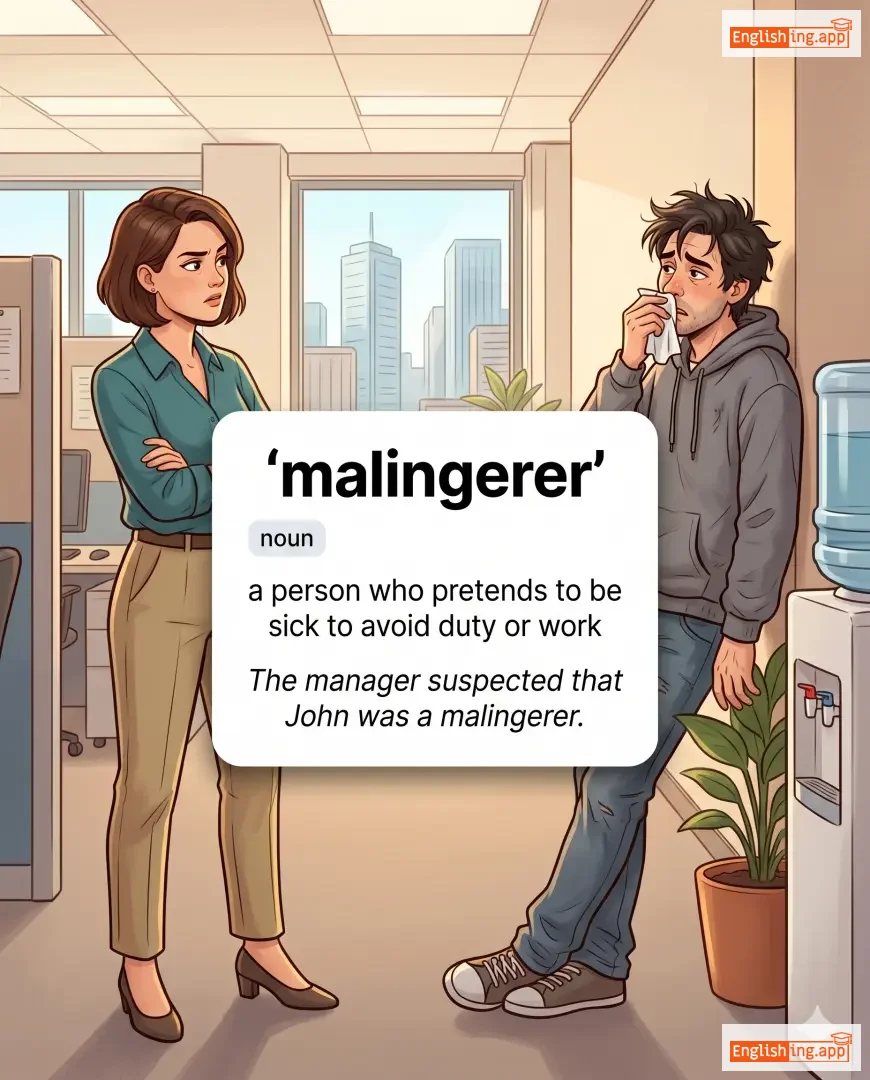
malingerer definition card — visual illustration of the meaning
noun
/məˈlɪŋɡərər/
स्वास्थ्य का बहाना करने वाला व्यक्ति (swasthya ka bahana karne wala vyakti)

a person who pretends to be sick to avoid duty or work

"The manager suspected that John was a malingerer."

"मैनेजर को संदेह था कि जॉन एक स्वास्थ्य का बहाना करने वाला व्यक्ति था।" (manager ko sandeh tha ki John ek swasthya ka bahana karne wala vyakti tha.)
noun
/mɔːl/ or /mæl/
मॉल (mall)

a large building or series of connected buildings containing shops and restaurants

"They went to the mall to buy new clothes."

"वे नए कपड़े खरीदने के लिए मॉल गए थे।" (ve naye kapde kharidne ke liye mall gaye the.)
noun
/meɪndʒ/
खुजली रोग (khujli rog)

a skin disease in animals caused by parasitic mites, leading to hair loss and sores

"The stray dog was suffering from mange."

"सड़क पर घूमता कुत्ता खुजली रोग से पीड़ित था।" (Sadak par ghoomta kutta khujli rog se peedit tha.)
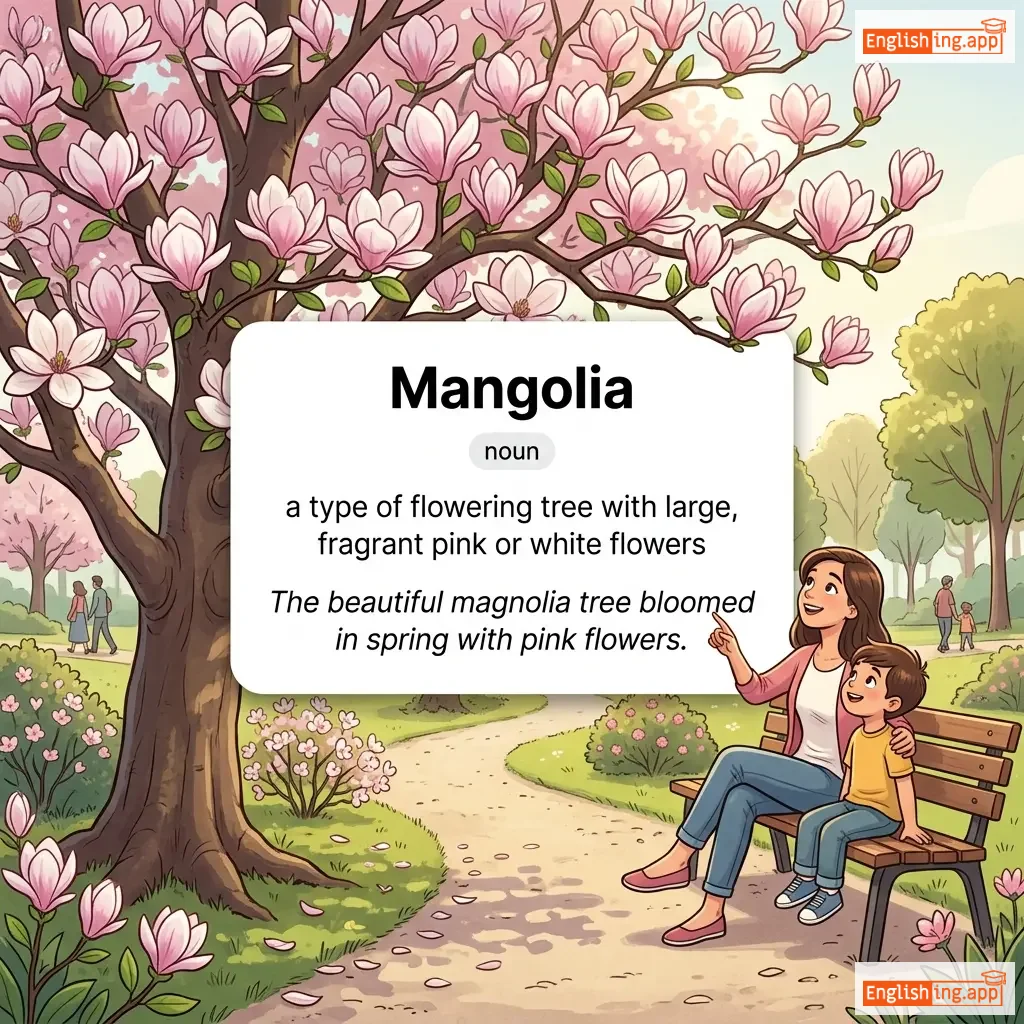
Mangolia definition card — visual illustration of the meaning
noun
/mæŋˈɡoʊ.li.ə/
मैंगोलिया (maingoliya)

a type of flowering tree with large, fragrant pink or white flowers

"The beautiful magnolia tree bloomed in spring with pink flowers."

"खूबसूरत मैगनोलिया पेड़ वसंत में गुलाबी फूलों के साथ खिल उठा।" (khubsurat magnolia ped vasant mein gulaabi phoolon ke saath khil utha)
Mango fish definition card — visual illustration of the meaning
noun
/ˈmæŋɡoʊ fɪʃ/
भेटकी मछली (bhetki machhli)

A popular white fish also known as barramundi or Asian sea bass

"Mango fish is prized for its delicate flavor and tender texture."

"भेटकी मछली अपने नाज़ुक स्वाद और मुलायम बनावट के लिए प्रसिद्ध है।" (bhetki machhli apne naazuk swad aur mulayam banawat ke liye prasiddh hai)
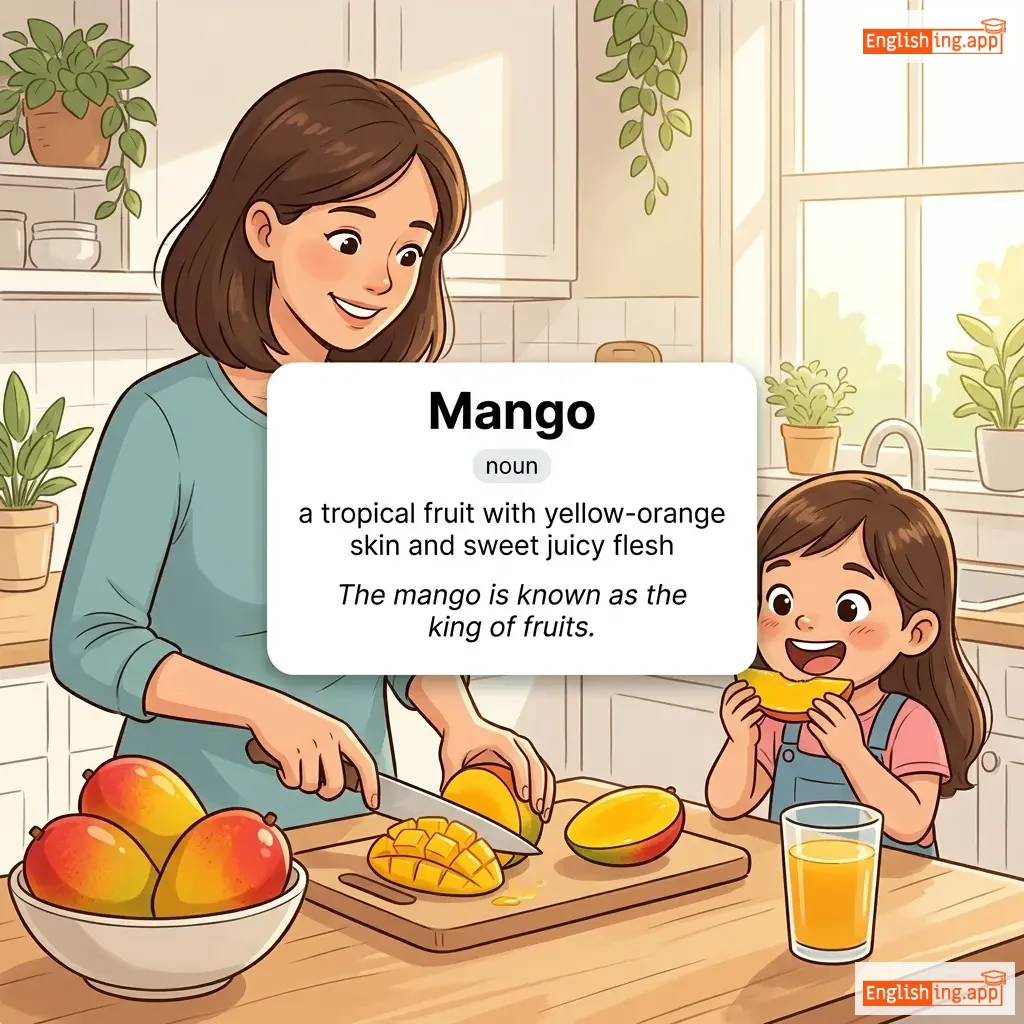
Mango definition card — visual illustration of the meaning
noun
/ˈmæŋ.ɡoʊ/
आम (aam)

a tropical fruit with yellow-orange skin and sweet juicy flesh

"The mango is known as the king of fruits."

"आम फल के राजा के रूप में जाना जाता है।" (aam phal ke raja ke roop mein jaana jaata hai)
verb
/ˈmæŋɡəl/
नष्ट करना (nasht karna)

to severely damage or mutilate something, often by tearing or crushing

"The car was mangled in the accident."

"कार हादसे में नष्ट हो गई थी।" (kaar haadse mein nasht ho gayi thi.)
noun
/meɪn/
माने (mane)

the long hair growing on the neck of a horse, lion, or other animal

"The lion shook its thick mane proudly."

"शेर ने गर्व से अपनी मोटी माने को हिलाया।" (Sher ne garv se apni moti mane ko hilaaya.)
noun, verb
/ˈmæn.deɪt/
आदेश / मैंडेट (adesh / mandate)

an official order or command; to give someone authority to act in a certain way

"The government issued a mandate to reduce carbon emissions."

"सरकार ने कार्बन उत्सर्जन को घटाने के लिए एक आदेश जारी किया।" (Sarkar ne carbon utserjan ko ghatane ke liye ek adesh jaari kiya.)
adjective
/ˈmæn.dəˌtɔːr.i/
अनिवार्य (anivarya)

required by law or rules; compulsory

"Wearing seat belts is mandatory in most countries."

"अधिकांश देशों में सीट बेल्ट पहनना अनिवार्य है।" (Adhikansh deshon mein seat belt pehnna anivarya hai.)