語彙集

英単語辞書 | 単語の意味、定義、例文

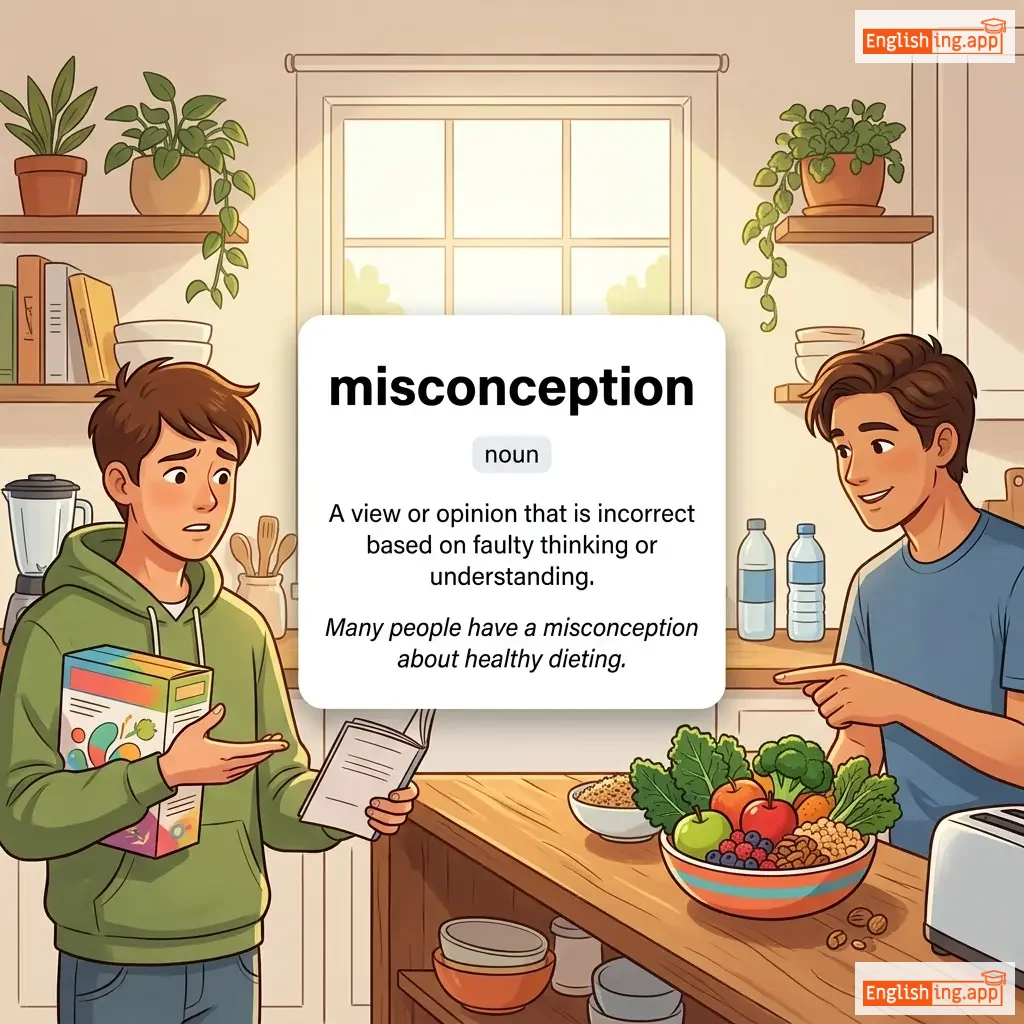
misconception definition card — visual illustration of the meaning
noun
/ˌmɪs.kənˈsep.ʃən/
誤解、間違った理解 (gokai, machigatta rikai)

A view or opinion that is incorrect based on faulty thinking or understanding.

"Many people have a misconception about healthy dieting."

"多くの人々は健康的な食事について誤解しています。" (Ōku no hitobito wa kenko-teki na shokuji ni tsuite gokai shiteimasu.)
noun
/ˌmɪsˈkɒndʌkt/
不正行為 (fuseikoui)

Improper or unacceptable behavior, especially by a professional or authority figure.

"The teacher was dismissed for serious misconduct."

"教師は重大な不正行為のため解雇されました。" (Kyoushi wa juudaina fuseikoui no tame kaiko saremashita.)
🧑‍🤝‍🧑

minion (ミニオン)

noun
/ˈmɪn.i.ən/
手先 (tesaki)

A follower or underling of a powerful person, especially a servile one.

"The dictator was surrounded by loyal minions who carried out his orders."

"独裁者は忠実な手先に囲まれていて、彼の命令を実行していた。" (Dokusai-sha wa chūjitsu na tesaki ni kakomarete ite, kare no meirei o jikkō shite ita.)
adjective
/meɪn/
主要な (shuyō na)

most important; chief in size, extent, or importance

"The main reason for his success is hard work."

"彼の成功の主な理由は、努力したことです。" (kare no seikō no omona riyū wa, doryoku shita koto desu.)
noun
/ˈmeɪnˌlænd/

the principal landmass of a country or continent, as opposed to the surrounding islands

"The mainland of Australia is home to most of its population."

adverb
/ˈmeɪnli/
主に (omoni)

for the most part; chiefly

"The audience was mainly composed of students."

"観客は主に学生で構成されていました。" (Kankyaku wa omoni gakusei de kousei sarete imashita.)
noun
/ˈmeɪnstriːm/
主流 (shuryuu)

the ideas, attitudes, or activities that are regarded as normal or conventional; the dominant trend in opinion or fashion

"Social media has become a mainstream source of news for many people."
"ソーシャルメディアは多くの人々にとって主流のニュースソースとなった。" (Sōsharumedia wa ōku no hitobito ni totte shuryū no nyūsu sōsu to natta.)
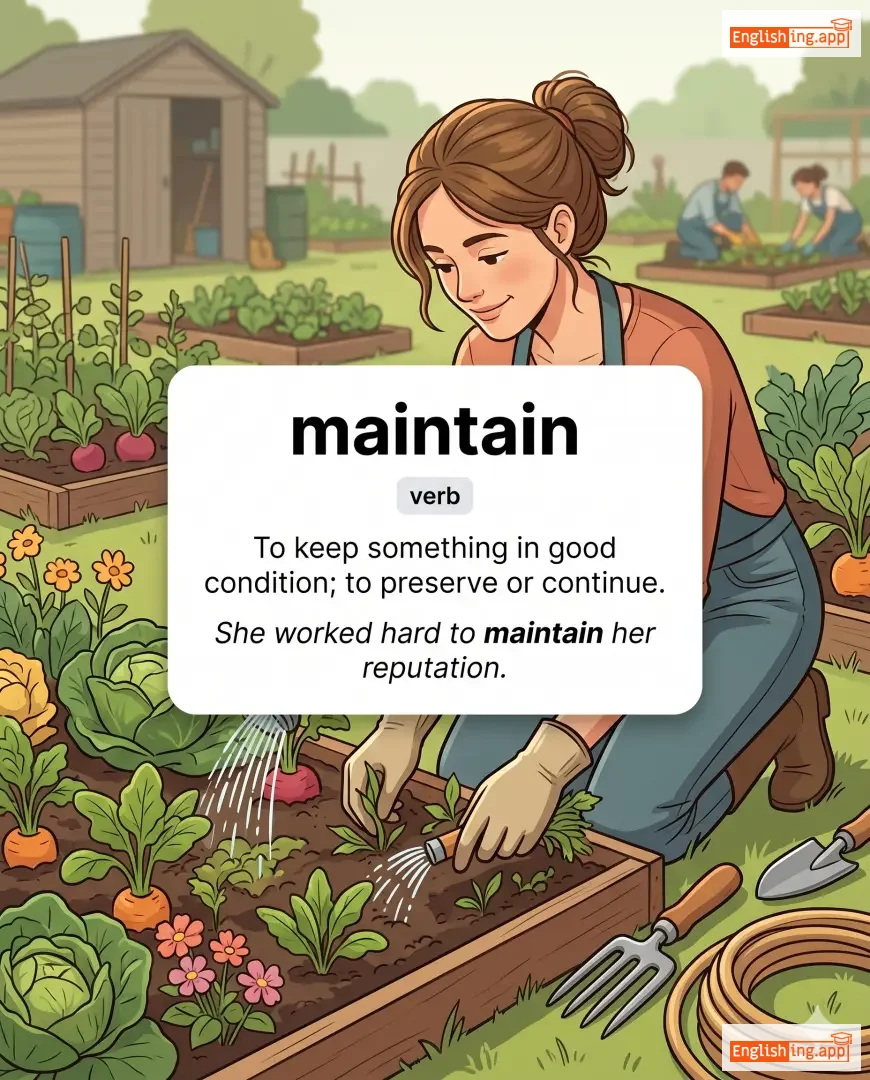
maintain definition card — visual illustration of the meaning
verb
/meɪnˈteɪn/
維持する (iji suru)

To keep something in good condition; to preserve or continue.

"She worked hard to maintain her reputation."
"彼女は評判を維持するために一生懸命働きました。" (Kanojo wa hyōban o iji suru tame ni isshōkenmei hatarakimashita.)
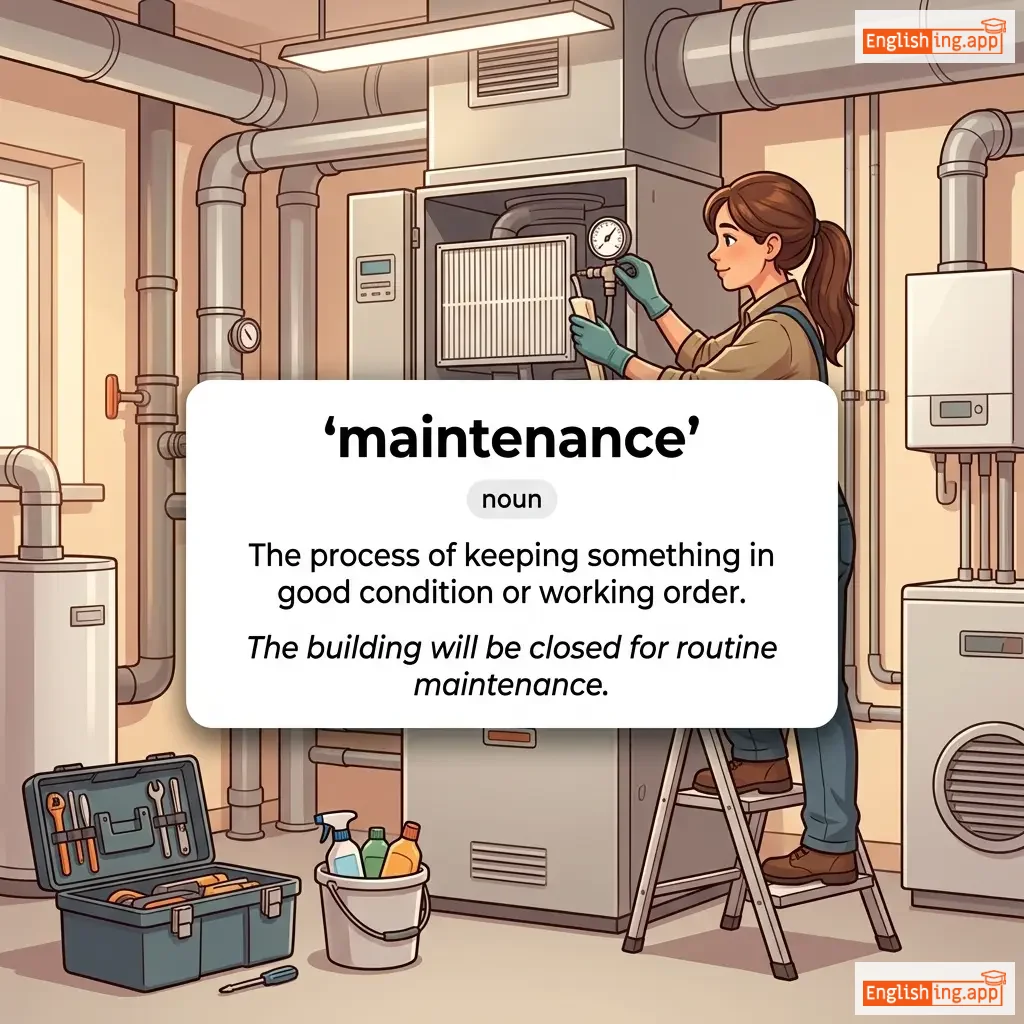
maintenance definition card — visual illustration of the meaning
noun
/ˈmeɪntənəns/
メンテナンス (mentenansu)

The process of keeping something in good condition or working order.

"The building will be closed for routine maintenance."
"その建物は定期的なメンテナンスのために閉鎖されます。" (Sono tatemono wa teikiteki na mentenansu no tame ni heisa saremasu.)
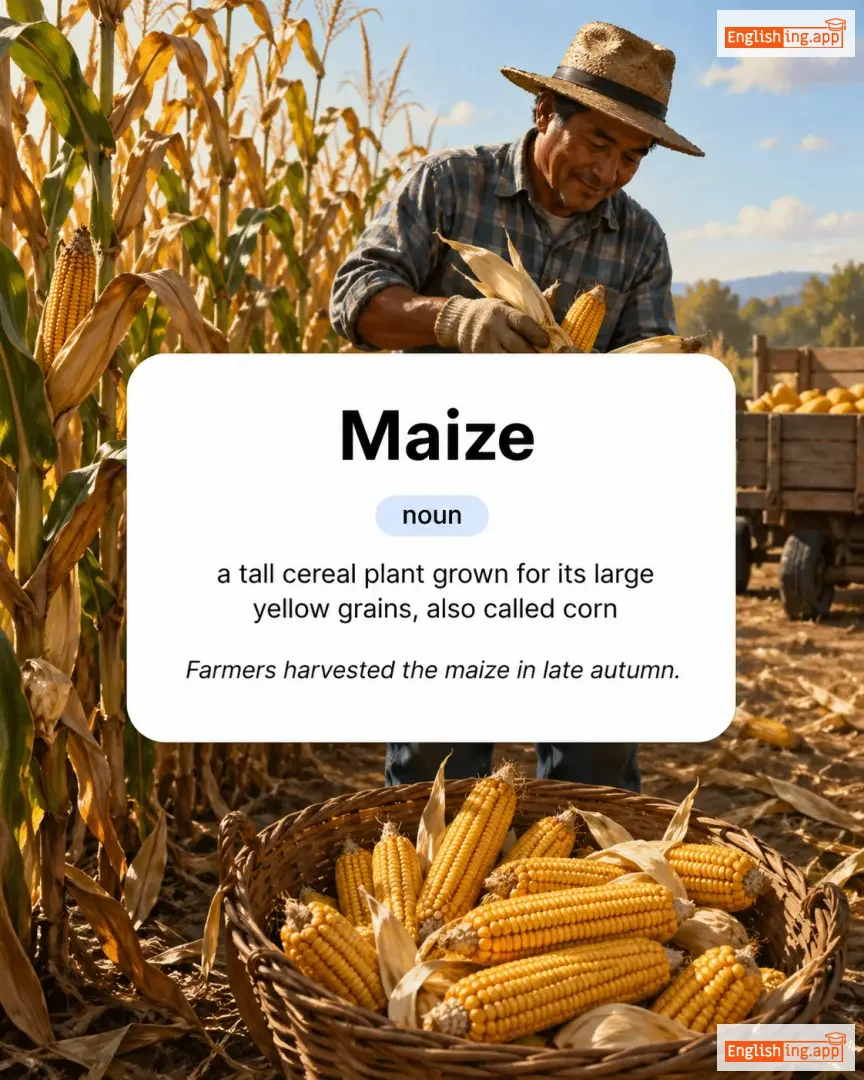
Maize definition card — visual illustration of the meaning
noun
/meɪz/
トウモロコシ (toumorokoshi)

a tall cereal plant grown for its large yellow grains, also called corn

"Farmers harvested the maize in late autumn."
"農家は秋の終わりにトウモロコシを収穫しました。" (Nouka wa aki no owari ni toumorokoshi wo shuukaku shimashita.)
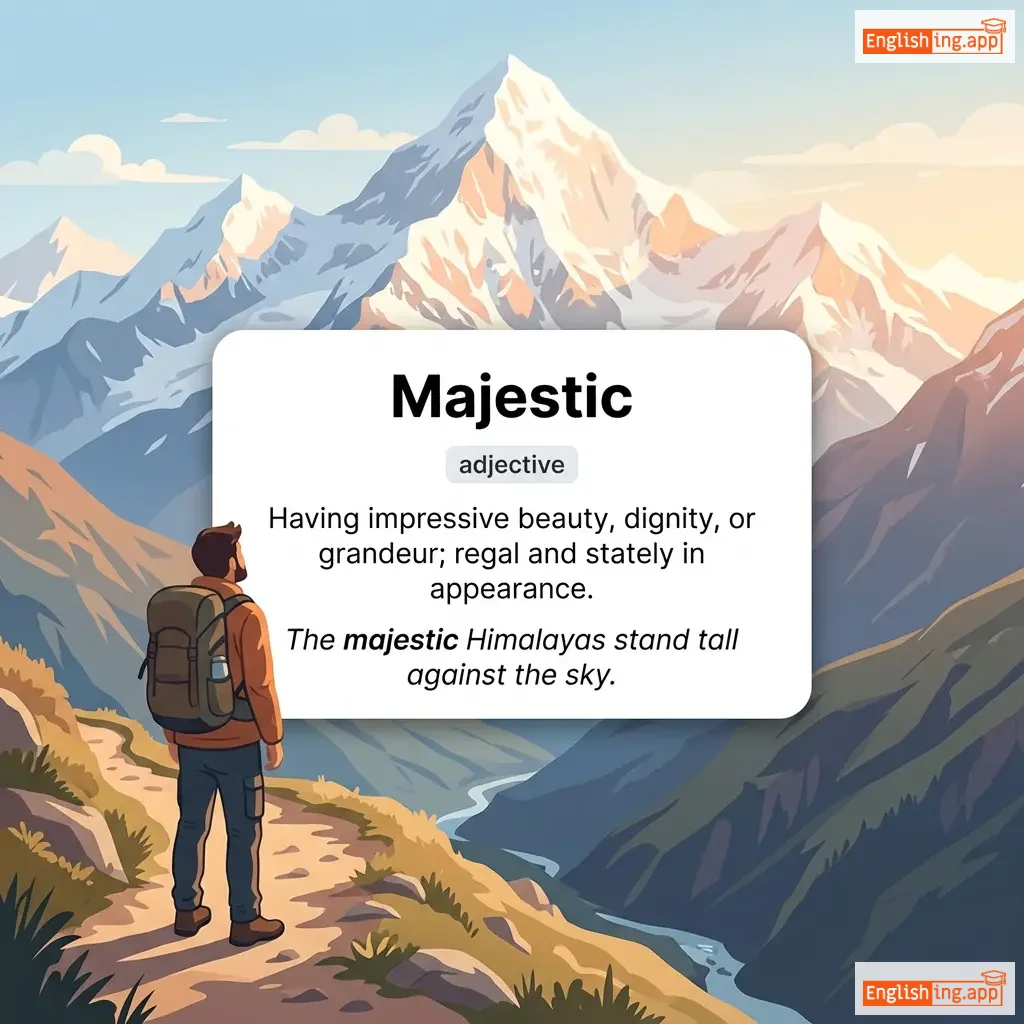
Majestic definition card — visual illustration of the meaning
adjective
məˈdʒes.tɪk
壮大な (sōdaina)

Having impressive beauty, dignity, or grandeur; regal and stately in appearance.

"The majestic Himalayas stand tall against the sky."

"壮大なヒマラヤ山脈は空に向かって高くそびえ立っています。" (Sōdaina Himaraya sanmyaku wa sora ni mukatte takaku sobietatteimasu.)
adjective
/ˈmeɪdʒər/
重要な (jūyōna)

important, serious, or significant

"Climate change is a major concern for the world."
"気候変動は世界にとって重大な懸念事項です。" (kikō hendō wa sekai ni totte jūdaina shinpai jikō desu.)
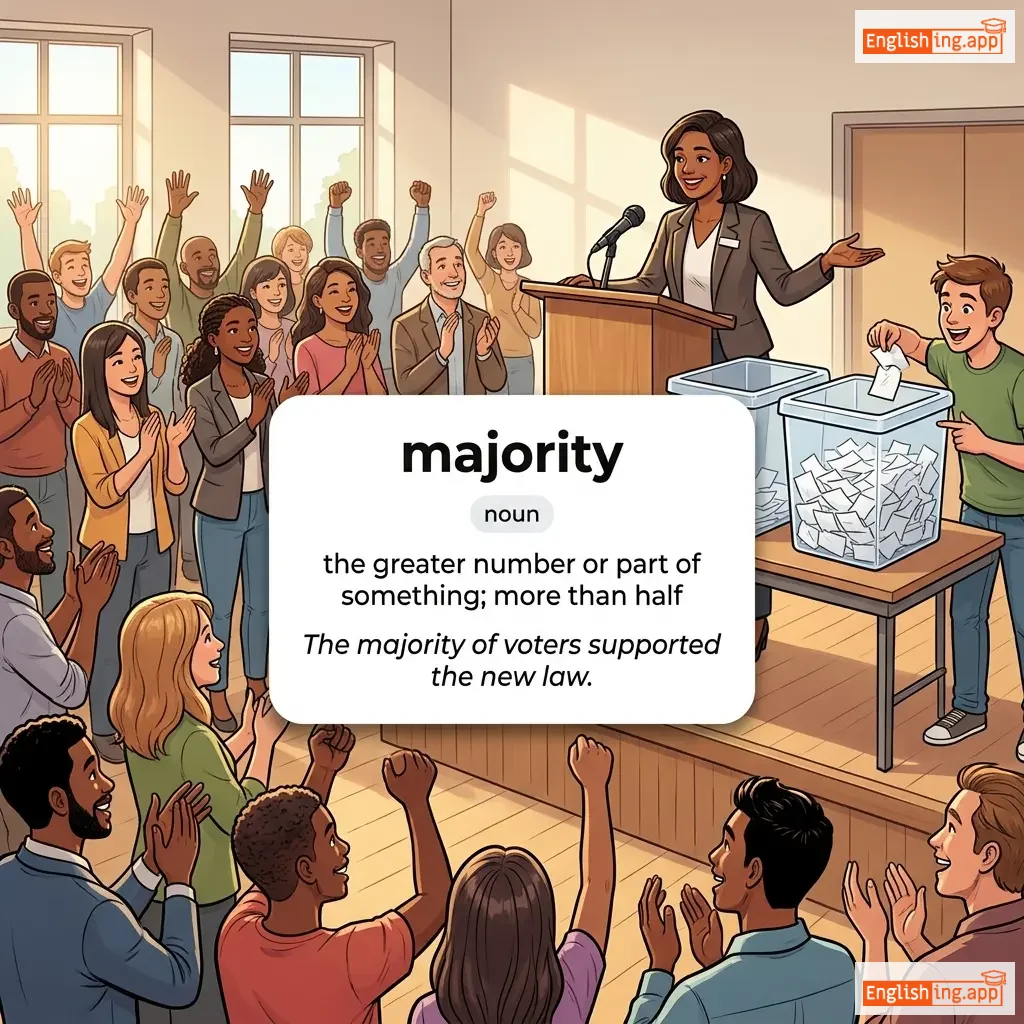
majority definition card — visual illustration of the meaning
noun
/məˈdʒɒrəti/
多数 (tasuu)

the greater number or part of something; more than half

"The majority of voters supported the new law."

"有権者の多数が新しい法律を支持しました。" (Yuken-sha no tasuu ga atarashii houritsu o shiji shimashita.)
make definition card — visual illustration of the meaning
verb
/meɪk/
作る (tsukuru)

to create, build, or cause something to happen

"She can make delicious cakes."

"彼女は美味しいケーキを作れます。" (Kanojo wa oishii keeki o tsukuremasu.)
noun
/ˈmeɪkər/
創造者 (sozo-sha)

a person or thing that makes or produces something

"He is a famous movie maker in Hollywood."

"彼はハリウッドの有名な映画製作者です。" (kare wa hariruddo no yuumei na eiga seisakusha desu.)
adjective
/ˈmeɪkˌʃɪft/
即席の (sokuseki no)

used as a temporary substitute; improvised

"They used boxes as a makeshift table."

"彼らは箱を即席のテーブルとして使った。" (Karera wa hako o sokuseki no tēburu to shite tsukatta.)
noun
/ˈmeɪkʌp/
化粧 (keshou)

cosmetics used to enhance or alter appearance

"She applied makeup before the party."

"彼女はパーティーの前に化粧をした。" (Kanojo wa pātī no mae ni keshou o shita.)
noun
/ˈmeɪkɪŋ/
制作 (seisaku)

the process of producing or constructing something

"The making of the movie took over two years."

"映画の制作には2年以上かかりました。" (Eiga no seisaku ni wa 2-nen ijō kakarimashita.)
adjective
/ˌmæləˈdrɔɪt/
不器用 (bukiyou)

clumsy or awkward in movement or behavior

"His maladroit attempt at fixing the chair made it worse."

"椅子を修理しようとした彼の不器用な試みは、さらに悪化させた。" (Isu o shuuri shiyou to shita kare no bukiyou na kokoromi wa, sara ni akka saseta.)
noun
/ˈmælədi/
病気 (byouki)

a disease or disorder of the body or mind; a serious problem

"The doctor treated the malady with great care."

"医者は病気を慎重に治療しました。" (Isha wa byouki wo shinchou ni chiryou shimashita.)
noun
/məˈleɪz/
不調 (fuchou)

a general feeling of discomfort, illness, or unease whose exact cause is difficult to identify

"After the long journey, she felt a general malaise."

"長時間の旅行の後、彼女は一般的な不調を感じました。" (Choujikan no ryokou no ato, kanojo wa ippan-teki na fuchou o kanjimashita.)
noun
/ˈmæləprɒˌpɪzəm/
誤用語 (goyōgo)

the mistaken use of a word in place of a similar-sounding one, often with amusing effect

"He is famous for his malapropism when speaking in public."

"彼は公衆の前で話すときに誤用語で有名です。" (Kare wa kōshū no mae de hanasu toki ni goyōgo de yūmei desu.)
adjective, adverb
/ˌmæləprəˈpoʊ/
不適切 (futekisetsu)

inappropriate or unsuitable; at an inconvenient or inappropriate time

"His comment was malapropos during the serious discussion."

"真剣な議論中に彼のコメントは不適切だった。" (Shinken na giron-chuu ni kare no komento wa futekisetsu datta.)
noun
/məˈlɛəriə/
マラリア (mararia)

a serious infectious disease spread by mosquitoes, causing fever, chills, and sweating

"Malaria is a common disease in tropical regions."
"マラリアは熱帯地域で一般的な病気です。" (Mararia wa nettai chiiki de ippantekina byōki desu.)
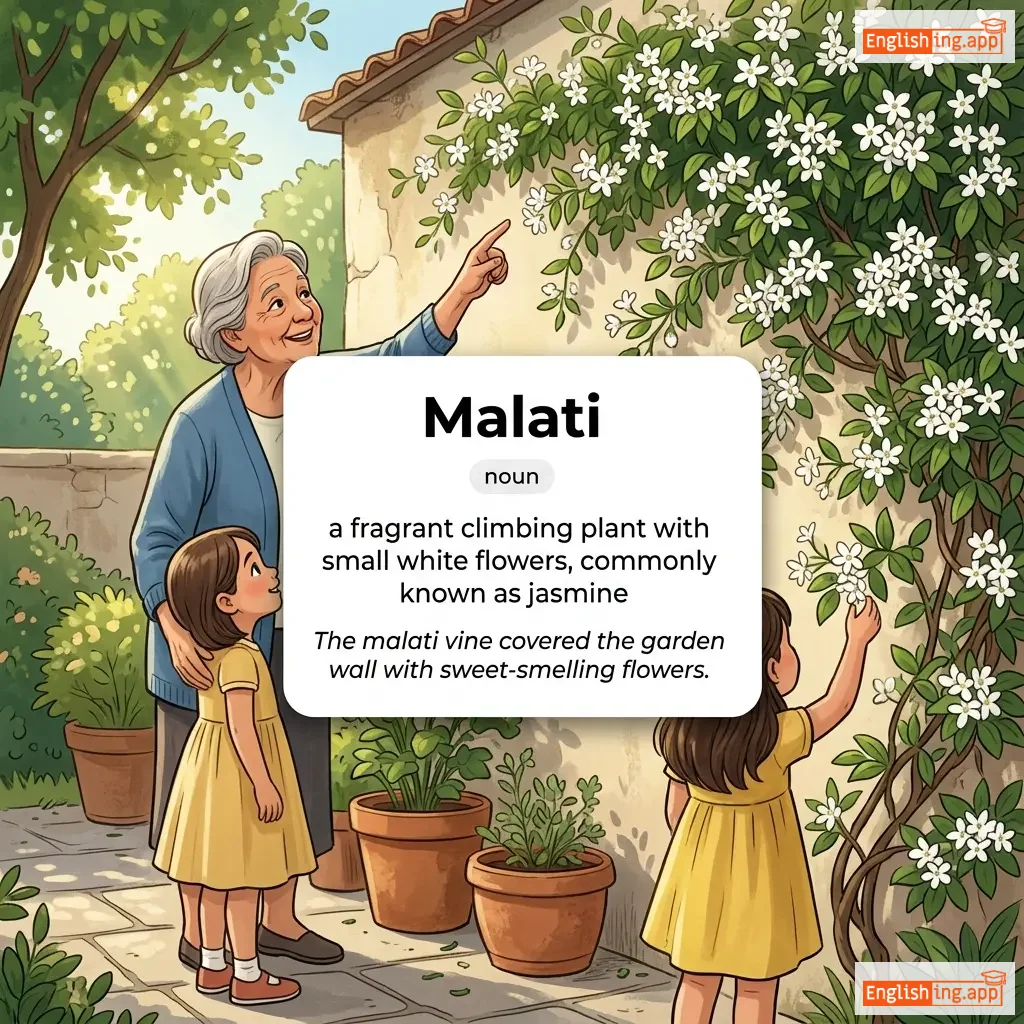
Malati definition card — visual illustration of the meaning
noun
/məˈlɑː.ti/
マラティ (malati)

a fragrant climbing plant with small white flowers, commonly known as jasmine

"The malati vine covered the garden wall with sweet-smelling flowers."

"マラティのツルが甘い香りの花で庭の壁を覆っていました。" (Malati no tsuru ga amai kaori no hana de niwa no kabe wo otteimashita)
noun
/ˈmæl.kənˌtɛnt/
不満な人 (fuman na hito)

A person who is dissatisfied or rebellious; one who is not content.

"The malcontent voiced his grievances against the government."

"不満な人は政府に対して不平を述べました。" (Fuman na hito wa seifu ni taishite fuhei wo nobemashita.)
noun/adjective
/meɪl/
男性 (dansei)

a man or boy; relating to men or boys

"The school has more male teachers than female teachers."

"学校には女性の教師よりも男性の教師が多い。" (Gakkou ni wa josei no kyoushi yori mo dansei no kyoushi ga ooi.)
noun
/ˌmæl.əˈdɪk.ʃən/
呪い (noroi)

A curse or the utterance of a curse.

"The witch cast a malediction upon the village."

"魔女は村に呪いをかけた。" (Majo wa mura ni noroi o kaketa.)
noun
/ˈmæl.əˌfæk.tər/
悪党 (akutou)

A person who commits a crime or does evil.

"The malefactor was arrested for the robbery."

"その悪党は強盗で逮捕された。" (Sono akutou wa goutou de taiho sareta.)
adjective
/məˈlɛfɪsənt/
邪悪 (jaaku)

Causing harm or destruction, especially by supernatural means.

"The maleficent witch cursed the young princess."

"その悪しき魔女は若い王女に呪いをかけました。" (Sono ashiki majo wa wakai ōjo ni noroi o kakemashita.)
adjective
/ˌmæl.əˈfɪʃ.ənt/
悪意のある (akui no aru)

Doing harm or evil; having a harmful effect.

"The maleficient acts of the tyrant ruined the kingdom."

"暴君の悪意のある行為は王国を滅ぼした。" (Bōkun no akui no aru kōi wa ōkoku o horoboshita.)
noun
/məˈlɛvələns/
悪意 (akui)

The state or condition of being malevolent; having or showing a wish to do evil to others.

"His malevolence was clear in the cruel way he treated his rivals."

"彼の悪意は、彼がライバルを扱う残忍な方法において明らかだった。" (Kare no akui wa, kare ga raibaru o atsukau zan'ina hōhō ni oite akirakadaった.)
adjective
/məˈlɛvələnt/
悪意のある (akui no aru)

Having or showing a wish to do evil or harm to others.

"The malevolent glare in his eyes frightened the children."

"彼の目に浮かぶ悪意のある視線は子供たちを怖がらせた。" (Kare no me ni ukabu akui no aru shisen wa kodomotachi o kowagaraseta.)
noun
/mælˈfiːzəns/
公務員の不正行為 (koumuin no fusei koui)

Wrongdoing or misconduct, especially by a public official.

"The mayor was accused of malfeasance in office."
"市長は職務中の不正行為で告発された。" (Shichou wa shokumu-chuu no fusei koui de kokuhatsu sareta.)
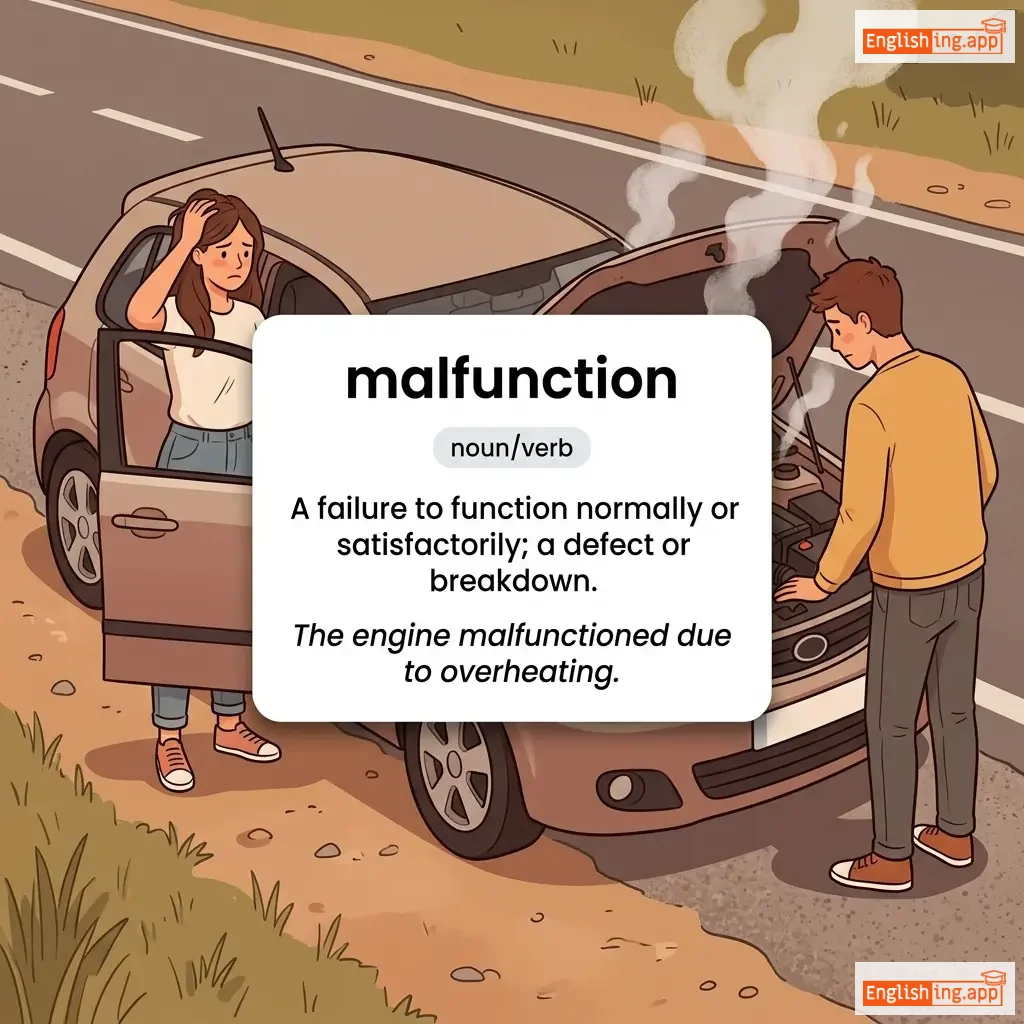
malfunction definition card — visual illustration of the meaning
noun/verb
mælˈfʌŋk.ʃən
故障 (koshou)

A failure to function normally or satisfactorily; a defect or breakdown.

"The engine malfunctioned due to overheating."

"エンジンは過熱のため故障しました。" (Enjin wa kanetsu no tame koshou shimashita.)
noun
/ˈmælɪs/
悪意 (akui)

The intention or desire to do evil or cause harm.

"She bore no malice towards her former friend."

"彼女は元の友人に対して悪意を抱いていなかった。" (Kanojo wa moto no yuujin ni taishite akui o idaite inakatta.)
adjective
/məˈlɪʃəs/
悪意のある (akui no aru)

Characterized by malice; intending or intended to do harm.

"The hackers launched a malicious attack on the company’s system."

"ハッカーたちは企業のシステムに悪意のある攻撃を仕掛けた。" (Hakkā-tachi wa kigyō no shisutemu ni akui no aru kōgeki o shikaketa.)
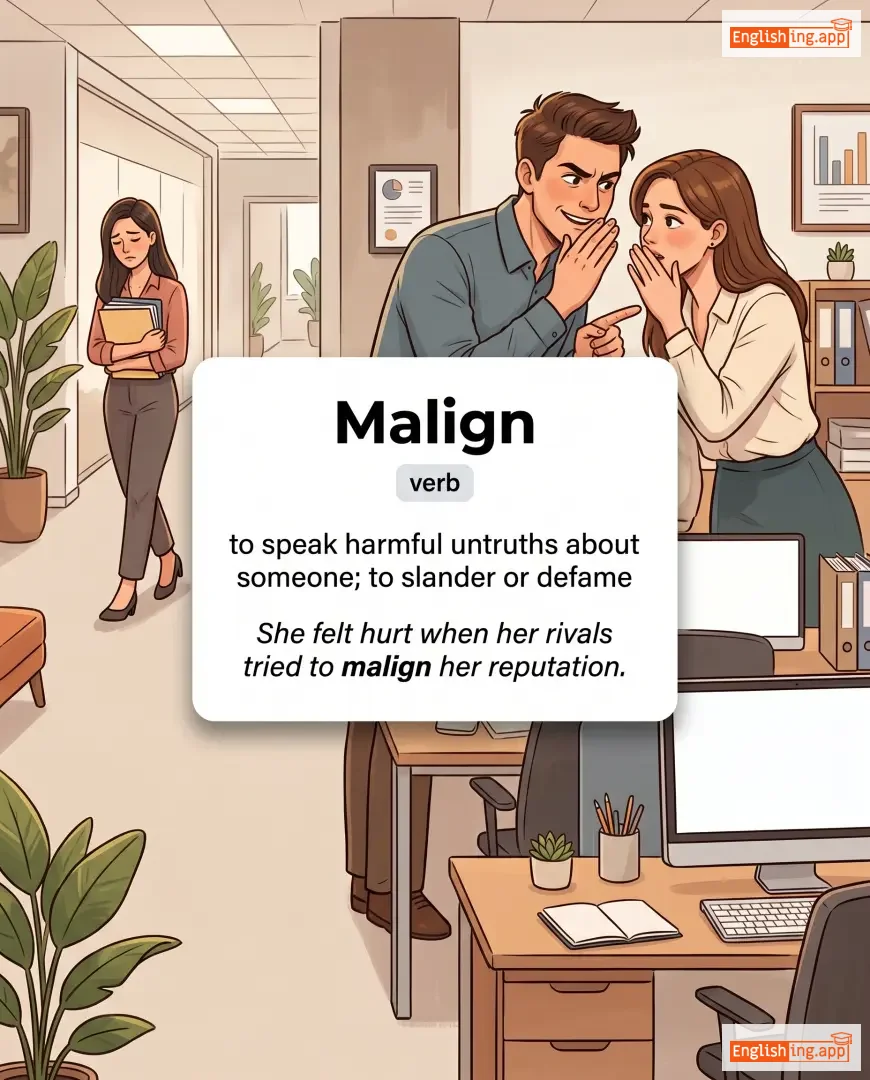
Malign definition card — visual illustration of the meaning
🗣️

Malign

verb
/məˈlaɪn/

to speak harmful untruths about someone; to slander or defame

"She felt hurt when her rivals tried to malign her reputation."

adjective
/məˈlɪɡnənt/
悪性 (akusei)

dangerous or harmful in influence or effect; medically, tending to invade and destroy tissue

"Doctors confirmed that the tumor was malignant."
"医師はその腫瘍が悪性であることを確認しました。" (Ishi wa sono shuyou ga akusei de aru koto wo kakunin shimashita.)
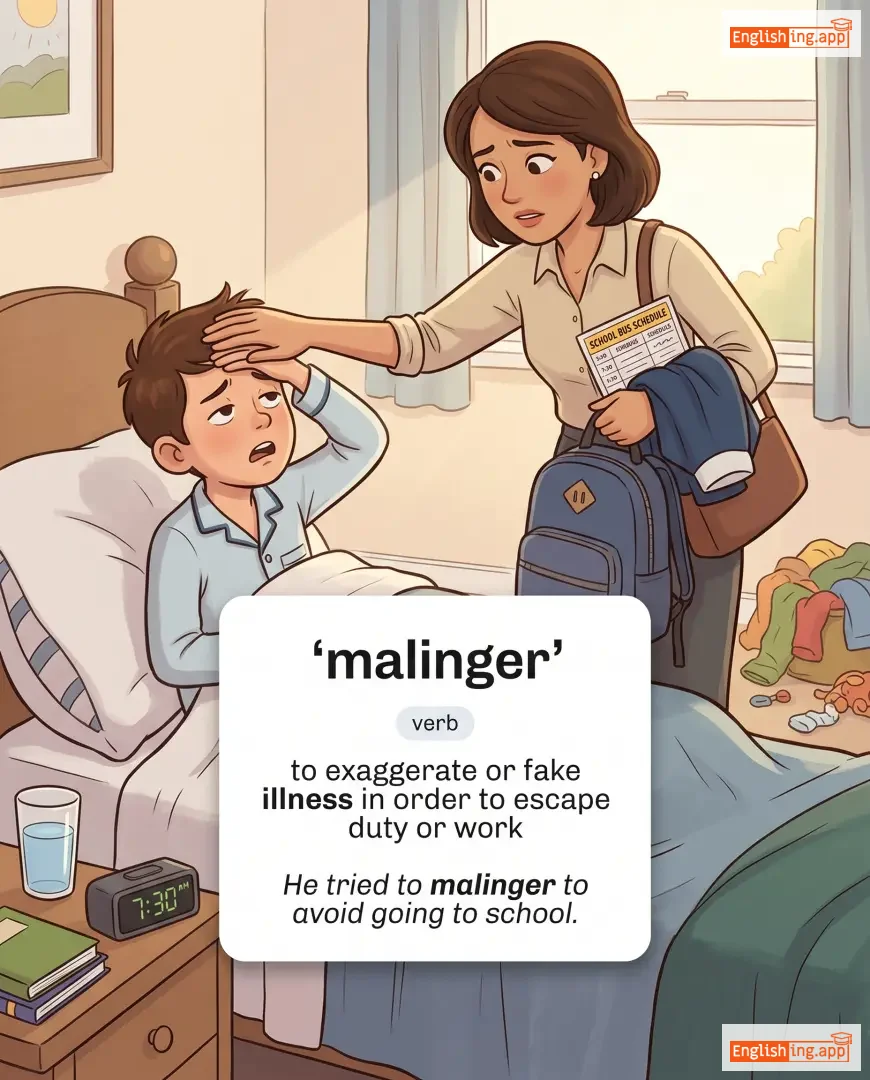
malinger definition card — visual illustration of the meaning
verb
/məˈlɪŋɡər/
病気を装う (byouki o yosou)

to exaggerate or fake illness in order to escape duty or work

"He tried to malinger to avoid going to school."
"彼は学校に行くのを避けるためにマリンジャーしようとした。" (Kare wa gakkou ni iku no o sakeru tame ni malingā shiyou to shita.)
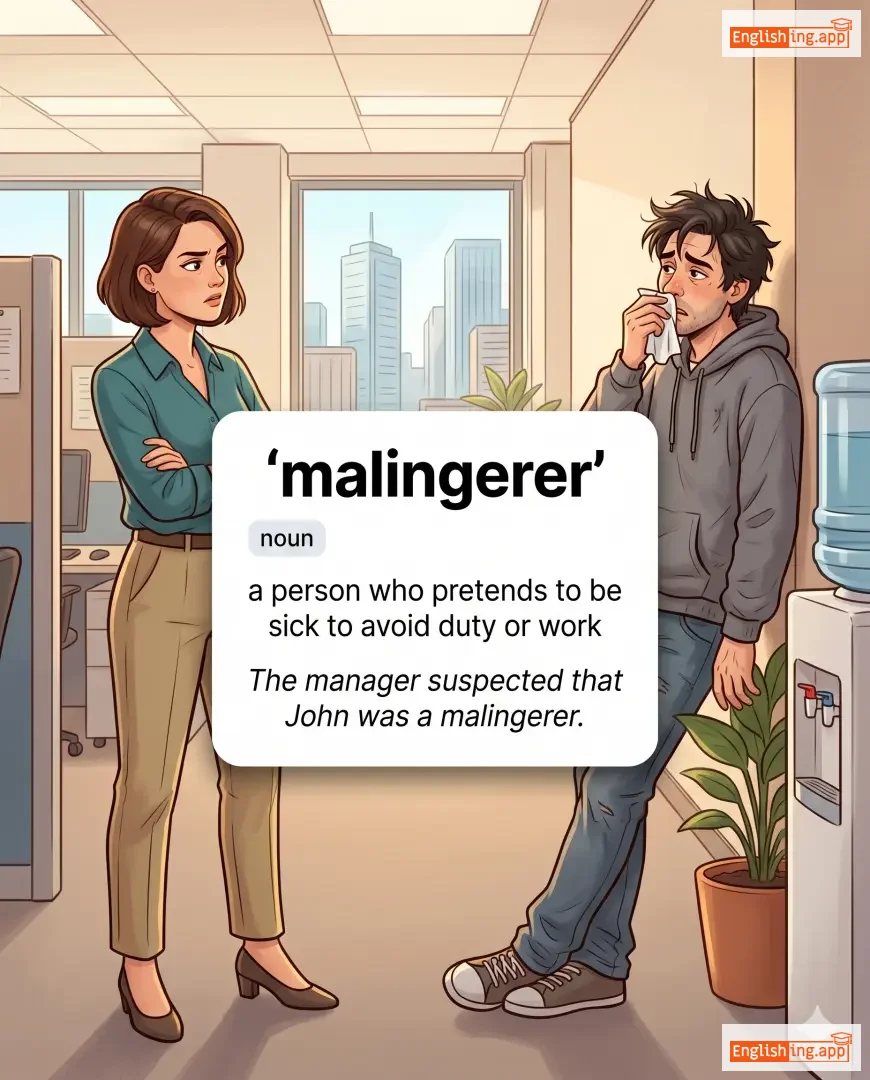
malingerer definition card — visual illustration of the meaning
noun
/məˈlɪŋɡərər/
病気を装う人 (byouki wo yosou hito)

a person who pretends to be sick to avoid duty or work

"The manager suspected that John was a malingerer."

"マネージャーはジョンがマリンガラーだと疑っていた。" (Manejā wa Jon ga Maringarā da to utagatte ita.)
noun
/mɔːl/ or /mæl/
ショッピングモール (shoppingu mōru)

a large building or series of connected buildings containing shops and restaurants

"They went to the mall to buy new clothes."

"彼らは新しい服を買うためにショッピングモールに行きました。" (Karera wa atarashī fuku o kau tame ni shoppingu mōru ni ikimashita.)
noun
/meɪndʒ/
疥癬 (kaisen)

a skin disease in animals caused by parasitic mites, leading to hair loss and sores

"The stray dog was suffering from mange."
"野良犬は疥癬に苦しんでいた。" (Nora inu wa kaisen ni kurushinde ita.)
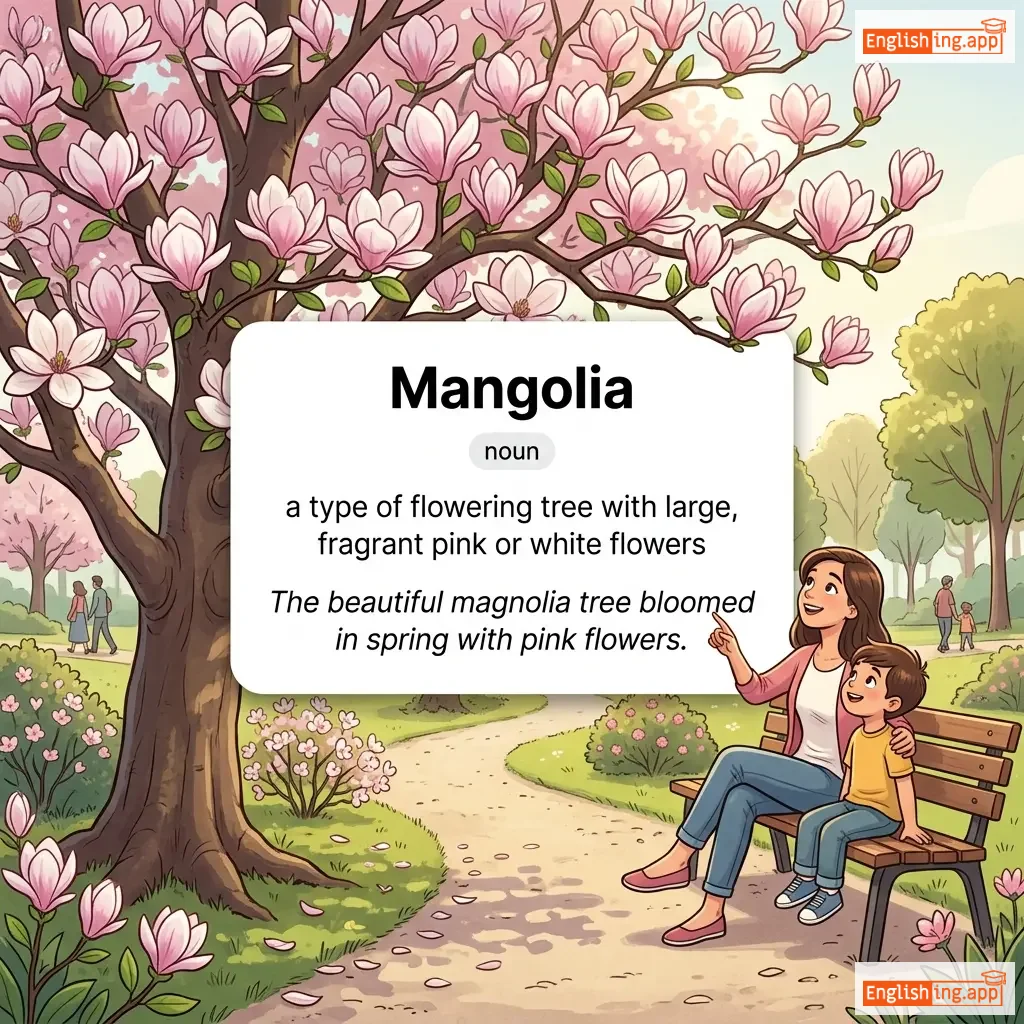
Mangolia definition card — visual illustration of the meaning
noun
/mæŋˈɡoʊ.li.ə/
マグノリア (magunoria)

a type of flowering tree with large, fragrant pink or white flowers

"The beautiful magnolia tree bloomed in spring with pink flowers."
"美しいマグノリアの木は春にピンクの花で咲きました。" (Utsukushī magunoria no ki wa haru ni pinku no hana de sakimashita)
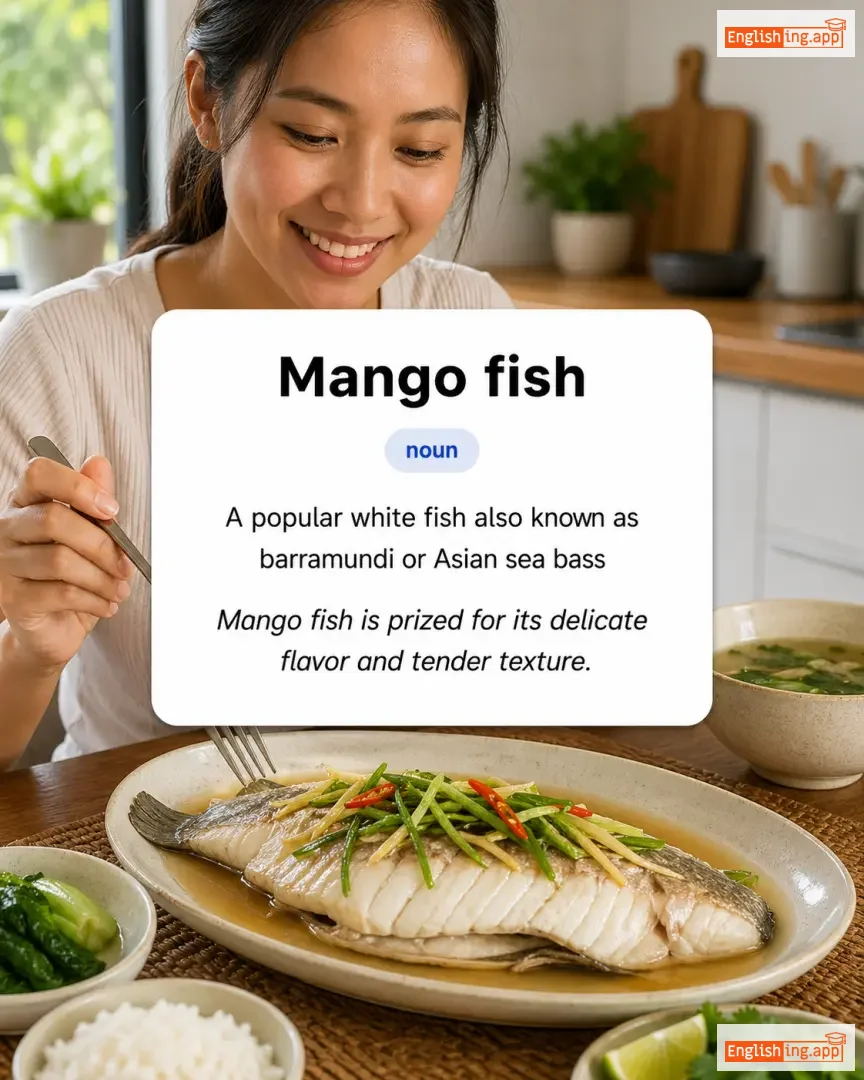
Mango fish definition card — visual illustration of the meaning
noun
/ˈmæŋɡoʊ fɪʃ/
スズキ (suzuki)

A popular white fish also known as barramundi or Asian sea bass

"Mango fish is prized for its delicate flavor and tender texture."
"スズキはその繊細な味と柔らかな食感で高く評価されています。" (suzuki wa sono sensai na aji to yawaraka na shokkan de takaku hyoka sareteimasu)
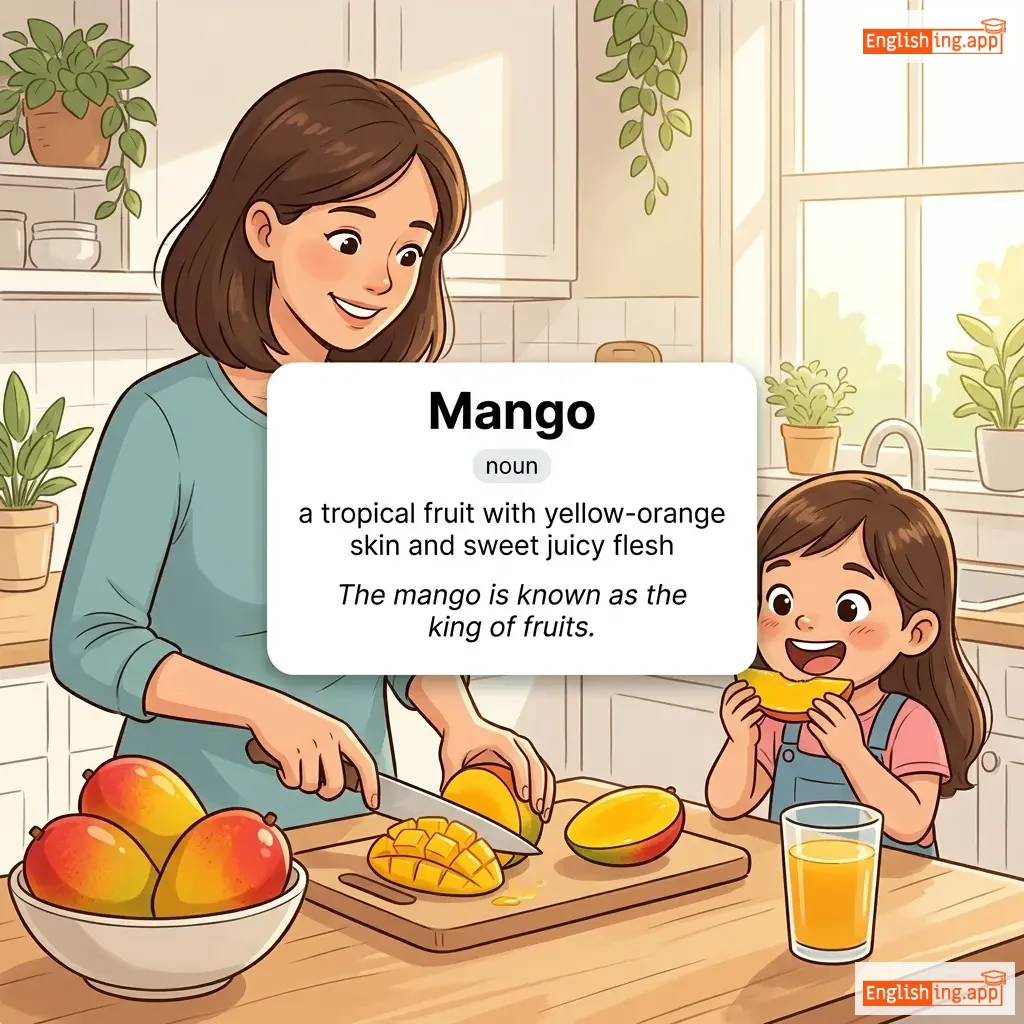
Mango definition card — visual illustration of the meaning
noun
/ˈmæŋ.ɡoʊ/
マンゴー (mango)

a tropical fruit with yellow-orange skin and sweet juicy flesh

"The mango is known as the king of fruits."

"マンゴーは果物の王様として知られています。" (Mangō wa kudamono no ōsama toshite shirareteimasu.)
verb
/ˈmæŋɡəl/
ひどく壊す (hidoku kowasu)

to severely damage or mutilate something, often by tearing or crushing

"The car was mangled in the accident."

"車は事故でひどく壊れた。" (Kuruma wa jiko de hidoku kowareta.)
noun
/meɪn/
たてがみ (tategami)

the long hair growing on the neck of a horse, lion, or other animal

"The lion shook its thick mane proudly."

"ライオンは誇らしげに太いたてがみを揺らした。" (Raion wa hokorashige ni futoi tategami o yurashita.)
noun, verb
/ˈmæn.deɪt/
マンダト (mandato)

an official order or command; to give someone authority to act in a certain way

"The government issued a mandate to reduce carbon emissions."

"政府は炭素排出削減のためのマンダトを発行した。" (Seifu wa tanso haishutsu sakugen no tame no mandato o hakko shita.)
adjective
/ˈmæn.dəˌtɔːr.i/
義務的な (gimuteki na)

required by law or rules; compulsory

"Wearing seat belts is mandatory in most countries."

"ほとんどの国でシートベルトの着用は義務的です。" (Hotondo no kuni de shītoberuto no chakuyō wa gimuteki desu.)