語彙集

英単語辞書 | 単語の意味、定義、例文

noun
/ˈmɪshæp/
不運, 小さな事故 (fuun, chiisana jiko)

an unlucky accident or minor misfortune

"A minor mishap delayed the train for half an hour."

"小さな事故で電車は30分遅れました。" (Chiisana jiko de densha wa 30-pun okuremashita.)
verb
/ˌmɪsɪnˈtɜːrprɪt/
誤解する (gokai suru)

to understand or explain something wrongly

"He misinterpreted her silence as agreement."

"彼は彼女の沈黙を同意と誤解した。" (Kare wa kanojo no chinmoku o dōi to gokai shita.)
verb
/ˌmɪsˈleɪ/
一時的に失う (ichijiteki ni ushinau)

to lose something temporarily by putting it in the wrong place

"I must have mislaid my keys somewhere in the house."

"私は家のどこかで鍵を一時的に失ったに違いない。" (Watashi wa ie no dokoka de kagi o ichijiteki ni ushinatta ni chigai nai.)
adjective
/mɪsˈliːdɪŋ/
誤解を招く (gokai o maneku)

giving the wrong idea or impression

"The advertisement was misleading and gave false information."

"その広告は誤解を招くもので、偽の情報を提供していました。" (Sono kōkoku wa gokai o maneku mono de, nise no jōhō o teikyō shiteimashita.)
verb
/ˌmɪsˈmænɪdʒ/

to handle or control something badly or inefficiently

"The company went bankrupt because it was mismanaged for years."

mismanagement definition card — visual illustration of the meaning
noun
ˌmɪsˈmænɪdʒmənt
不適切な管理 (futekisetsu na kanri)

Bad or careless management of something.

"Mismanagement of plastic waste worsens pollution."

"プラスチックごみの不適切な管理が汚染を悪化させます。" (Purasutikku gomi no futekisetsu na kanri ga osen o akka sasemasu.)
noun
/ˌmɪsˈnoʊmər/
誤った名前 (ayamatta namae)

A wrong or inaccurate name or designation.

"Calling the tiny dog a 'giant' is a misnomer."

"小さな犬を「ジャイアント」と呼ぶのは誤った名前です。" (Chiisana inu wo 'Jaianto' to yobu no wa ayamatta namae desu.)
noun
/mɪˈsɑːɡəmi/
ミソガミー (misogamī)

Hatred or dislike of marriage.

"His misogamy prevented him from ever settling down with a partner."

"彼のミソガミーは、パートナーと一緒に落ち着くことを妨げた。" (Kare no misogamī wa, pātonā to issho ni ochitsuku koto o samatage ta.)
noun
/mɪˈsɑːdʒɪnɪst/
女性嫌悪者 (josei ken'oshā)

A person who dislikes, despises, or is strongly prejudiced against women.

"Many condemned his speech as the words of a misogynist."

"多くの人々は彼のスピーチを女性嫌悪者の言葉として非難しました。" (Ōku no hitobito wa kare no supīchi o josei ken'oshā no kotoba to shite hinan shimashita.)
noun
/mɪˈsɑːdʒəni/
女性嫌悪 (josei ken'o)

Hatred of, contempt for, or prejudice against women.

"The novel has been criticized for promoting misogyny."

"その小説は女性嫌悪を助長すると批判された。" (Sono shōsetsu wa josei ken'o o jochō suru to hihan sareta.)
verb
/ˌmɪsˈpleɪs/
間違った場所に置く (machigatta basho ni oku)

To put something in the wrong location and temporarily lose it.

"I often misplace my keys when I am in a hurry."

"急いでいるとき、よく鍵を間違った場所に置いてしまいます。" (Isoide iru toki, yoku kagi o machigatta basho ni oite shimaimasu.)
verb
/ˌmɪsˈriːd/
誤って読む (ayamatte yomu)

to read something incorrectly or interpret wrongly

"He misread the instructions and built the shelf incorrectly."

"彼は指示を誤読して棚を間違って作った。" (Kare wa shiji o godoku shite tana o machigatte tsukutta.)
verb
/ˌmɪsˌrɛprɪˈzɛnt/

to give a false or misleading account of something

"The lawyer accused the witness of trying to misrepresent the facts."

noun
/ˌmɪsˈruːl/
悪政 (akusei)

bad or poor governance

"The kingdom suffered for decades under misrule."

"王国は数十年にわたって悪政の下で苦しんだ。" (Ōkoku wa suujūnen ni watatte akusei no moto de kurushinda.)
verb, noun
/mɪs/
失う / 恋しい (ushinau / koishii)

to fail to hit, reach, or meet; to feel the absence of someone or something

"I really miss my family when I travel abroad."

"海外旅行の際、家族を本当に恋しく感じます。" (Kaigai ryokou no sai, kazoku wo hontou ni koishiku kanjimasu.)
noun
/ˈmɪsəl/
ミサの書 (Misa no sho)

a book containing the texts used in the Catholic Mass throughout the year

"The priest read from the missal during the ceremony."

"祭司は儀式中にミサの書から読んでいました。" (Saishi wa gishiki-chū ni misa no sho kara yonde imashita.)
noun
/ˈmɪsaɪl/ or /ˈmɪsəl/
ミサイル (misairu)

a weapon that is self-propelled and directed toward a target

"The army launched a missile towards the enemy base."
"軍は敵基地に向かってミサイルを発射しました。" (Gun wa teki kichi ni mukatte misairu o hassha shimashita.)
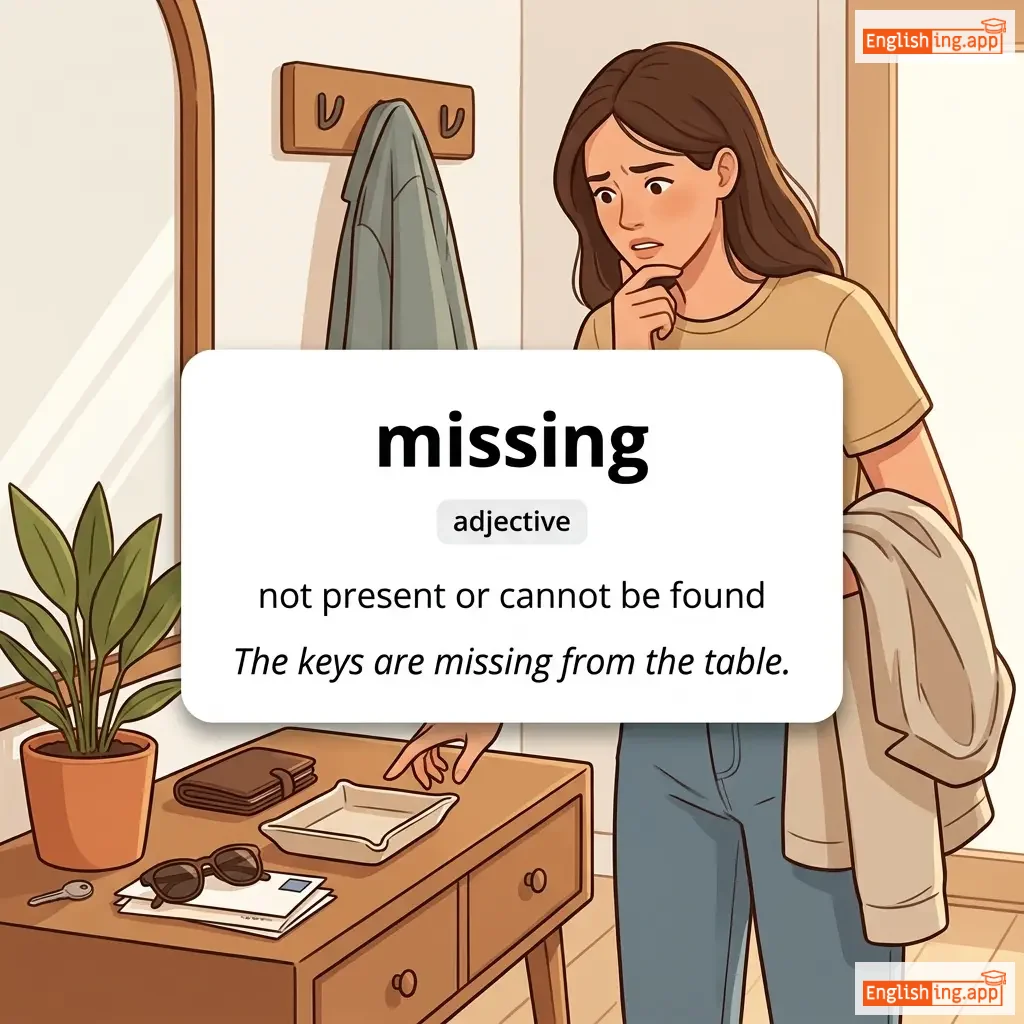
missing definition card — visual illustration of the meaning
adjective
/ˈmɪsɪŋ/
行方不明 (yūkōfumei)

not present or cannot be found

"The keys are missing from the table."

"テーブルから鍵が行方不明です。" (Tēburu kara kagi ga yūkōfumei desu.)
noun
/ˈmɪʃən/
ミッション / 任務 (misshon / ninmu)

an important assignment or task, often with a specific purpose

"The astronauts were on a mission to explore Mars."

"宇宙飛行士たちは火星を探査するためのミッションに出発しました。" (Uchuu hikoushi tachi wa kasei wo tansa suru tame no misshon ni shuppatsu shimashita.)
noun
/ˈmɪʃəneri/
宣教師 (senkyōshi)

a person sent on a religious mission, especially to promote Christianity in a foreign country

"The missionary spent years helping local communities in Africa."

"その宣教師はアフリカで地元のコミュニティを支援するために何年も費やしました。" (Sono senkyōshi wa Afurika de jimoto no komyuniti o shien suru tame ni nannen mo tsuiyashimashita.)
noun
/ˈmɪsɪv/
書簡 (shokan)

a written message, especially a formal or official letter

"He sent a long missive to the governor."

"彼は知事に長い書簡を送った。" (Kare wa chiji ni nagai shokan o okutta.)
noun
/mɪˈsteɪk/
間違い (machigai)

An action or decision that is wrong or misguided.

"She realized her mistake after submitting the wrong file."

"彼女は間違ったファイルを提出した後、自分の間違いに気づきました。" (Kanojo wa machigatta fairu o teishutsu shita ato, jibun no machigai ni kizukimashita.)
adjective
/mɪˈsteɪkən/
間違った (machigatta)

wrong or incorrect because of an error in judgment or understanding

"I was mistaken about the meeting time."

"私は会議の時間を間違えていました。" (watashi wa kaigi no jikan o machigaete imashita)
noun/verb
/ˌmɪsˈtrʌst/
不信 (fushin)

lack of trust; suspicion or doubt about someone or something

"The villagers showed deep mistrust of outsiders."

"村人たちは外部の人々に深い不信を示しました。" (Murabito-tachi wa gaibu no hitobito ni fukai fushin o shimashita.)
noun
/ˌmɪs.ʌn.dəˈstæn.dɪŋ/
誤解 (gokai)

A failure to understand something correctly; a disagreement or confusion between people

"The argument was caused by a simple misunderstanding."
"その議論は単純な誤解から生じた。" (sono giron wa tanjun na gokai kara shōjita.)
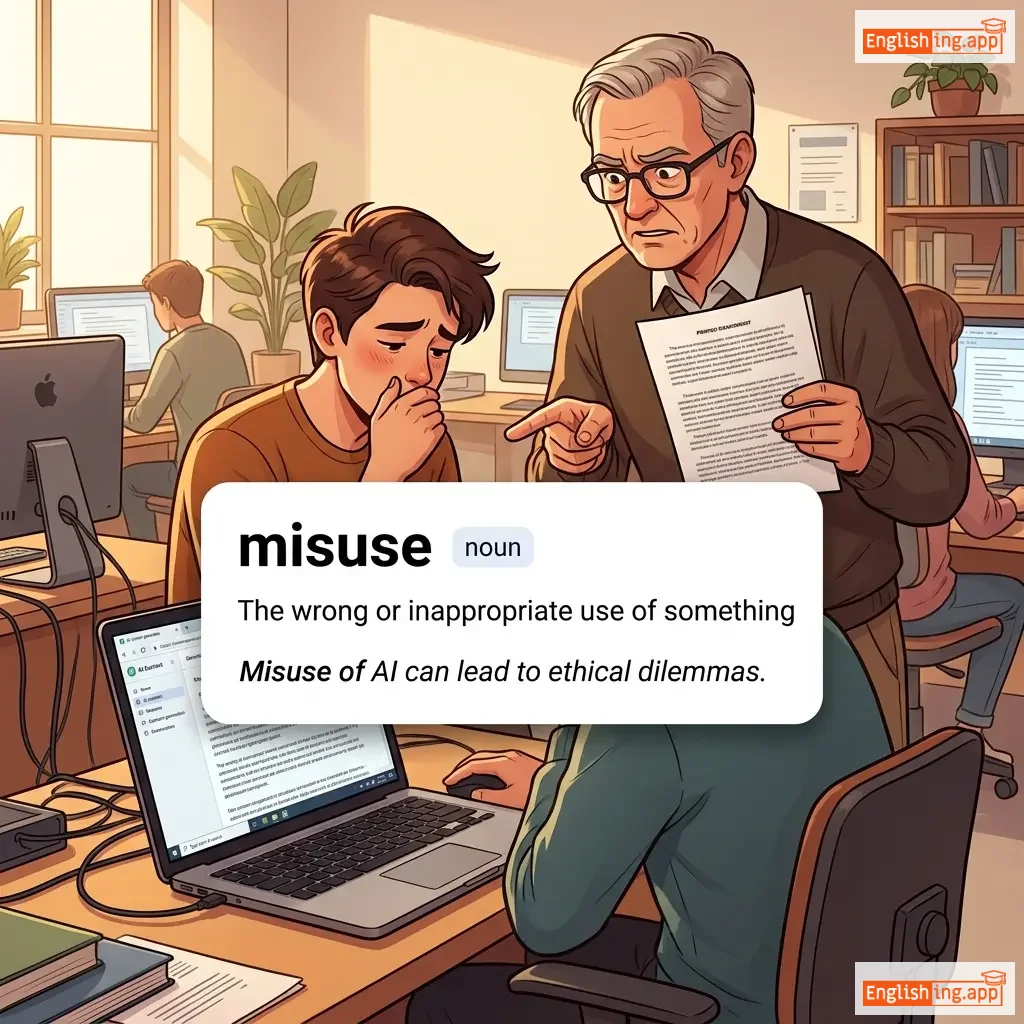
misuse definition card — visual illustration of the meaning
noun
ˌmɪsˈjuːs
誤用 (goyou)

The wrong or inappropriate use of something

"Misuse of AI can lead to ethical dilemmas."

"AIの誤用は倫理的ジレンマを引き起こす可能性があります。" (AI no goyou wa rinriteki jirenma wo hikiokosu kanousei ga arimasu.)
noun
/maɪt/
ダニ (dani)

a very small creature, often a tiny arachnid; also used to mean a very small amount

"The mattress was infested with dust mites."

"マットレスはホコリのダニに感染していました。" (Mattoresu wa hokori no dani ni kansen shite imashita.)
noun
/ˈmaɪtər/
司教帽子 (shikyō bōshi)

a tall, pointed hat worn by bishops; also a type of joint made between two pieces of material

"The bishop placed the miter on his head during the ceremony."
"司教は儀式の間に司教帽子を頭に載せました。" (Shikyō wa gishiki no aida ni shikyō bōshi o atama ni nose mashita.)
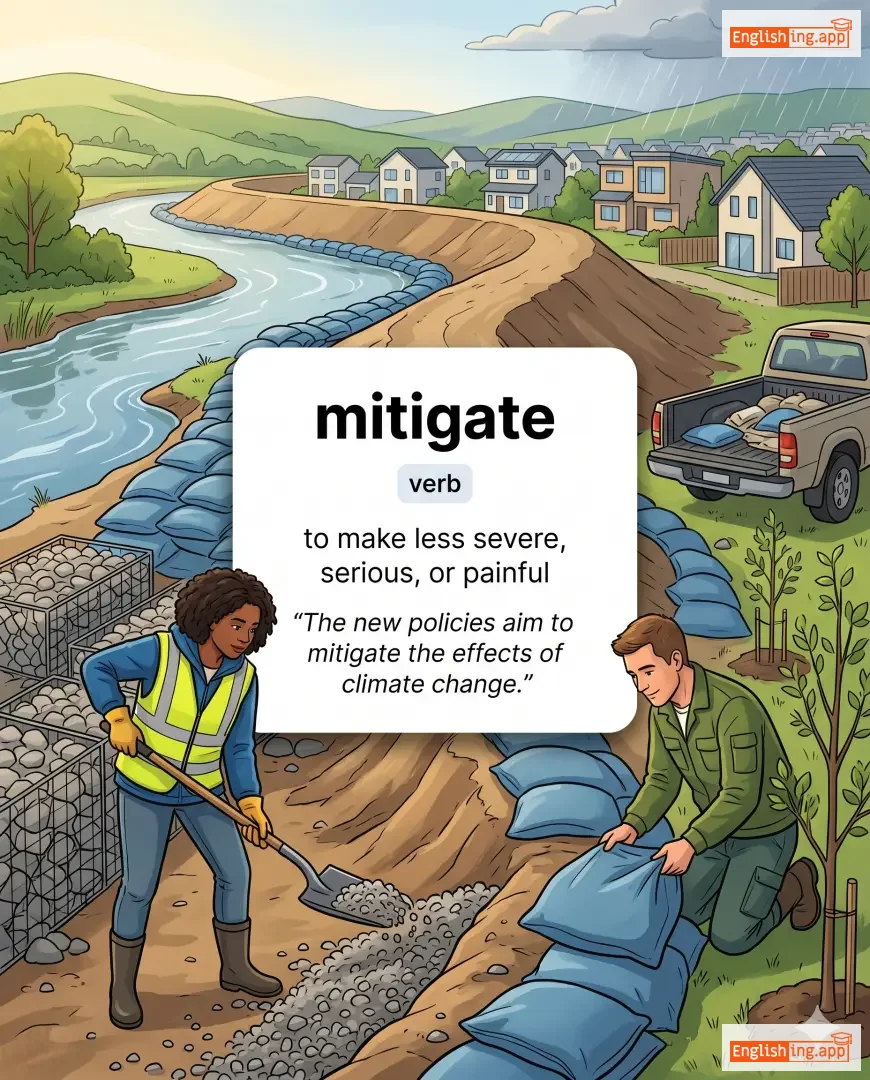
mitigate definition card — visual illustration of the meaning
verb
/ˈmɪtɪˌɡeɪt/
軽減する (keigen suru)

to make less severe, serious, or painful

"The new policies aim to mitigate the effects of climate change."

"新しい政策は気候変動の影響を軽減することを目指しています。" (Atarashii seisaku wa kikō hendō no eikyō o keigen suru koto o mezashiteimasu.)
mitigation definition card — visual illustration of the meaning
noun
ˌmɪt.ɪˈɡeɪ.ʃən
緩和 (kanwa)

The action of reducing the severity, seriousness, or painfulness of something.

"Climate change mitigation requires global cooperation."

"気候変動の緩和には、世界的な協力が必要です。" (Kikō hendō no kanwa ni wa, sekaiteki na kyōryoku ga hitsuyō desu.)
noun
/ˈmɒd.ə.sti/
謙虚さ; 謙遜 (kenkyosa; kenson)

the quality of being humble and not boastful about achievements

"Despite his success, he showed great modesty."

"成功にもかかわらず、彼は偉大な謙虚さを示しました。" (Seikou ni mo kakawarazu, kare wa idaina kenkyosa wo shimashita.)
model definition card — visual illustration of the meaning
noun
/ˈmɒdəl/
モデル (moderu)

A representation of something, often smaller or used as an example.

"The architect showed us a model of the new building."
"建築家は私たちに新しい建物のモデルを見せてくれました。" (Kenchikuka wa watashitachi ni atarashii tatemono no moderu wo misete kuremashita.)
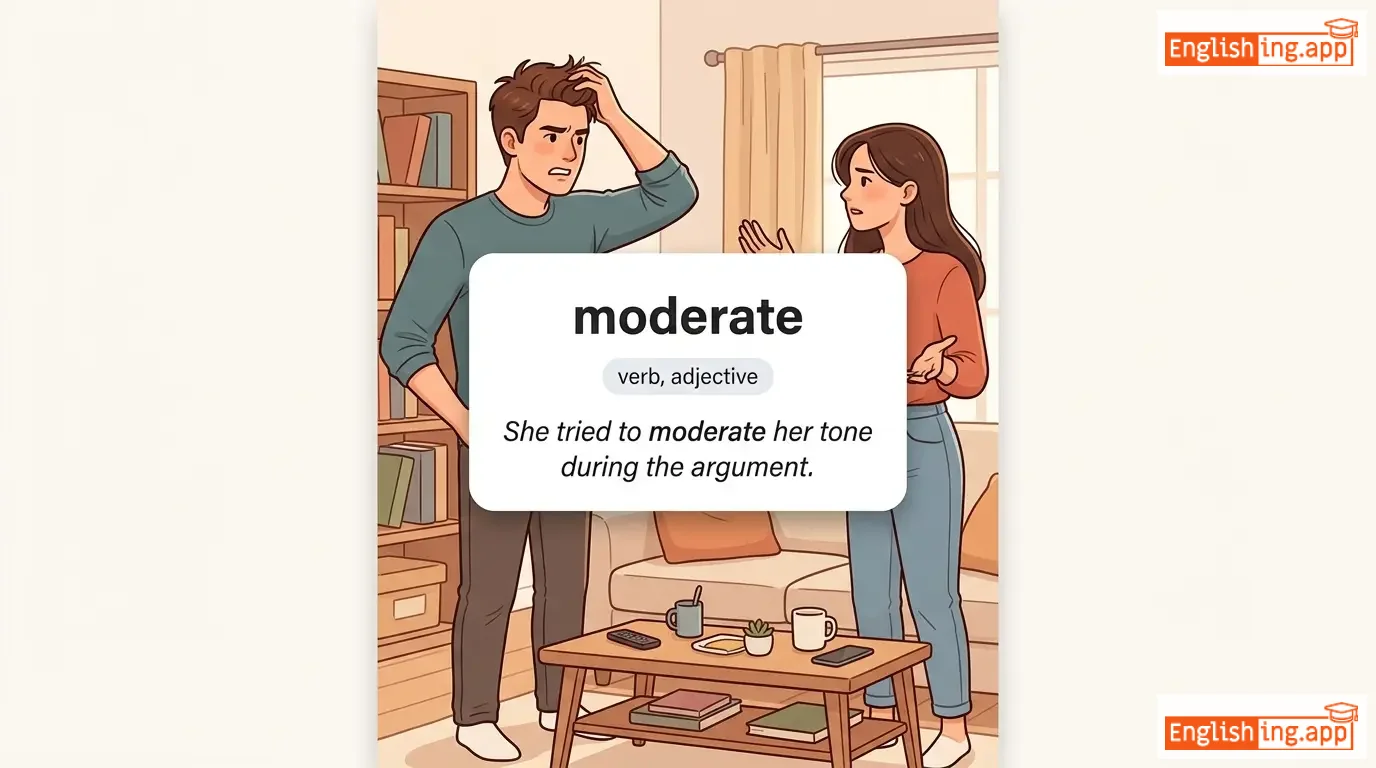
moderate definition card — visual illustration of the meaning
verb, adjective
/ˈmɒdəreɪt/ (verb), /ˈmɒdərət/ (adj)
適度な, 控える (tekido na, hikaeru)

To make something less extreme (verb); average in amount, intensity, quality, or degree (adjective).

"She tried to moderate her tone during the argument."

"彼女は議論中に口調を和らげようとした。" (Kanojo wa giron-chū ni kuchō o yawarageyō to shita.)
adverb
/ˈmɒdərətli/
適度に (tekido ni)

to a reasonable extent, not excessively

"She exercises moderately to stay healthy."

"彼女は健康を保つために適度に運動しています。" (Kanojo wa kenko wo tamotsu tame ni tekido ni undou shiteimasu.)
noun
/ˌmɒdəˈreɪʃən/

The avoidance of excess or extremes; keeping balance or within reasonable limits.

"He drinks wine in moderation."

noun
/ˈmɒdəreɪtər/
モデレーター (moderētā)

A person who leads or oversees discussions, debates, or forums to maintain order.

"The moderator asked each panelist to share their views."

"モデレーターは各パネリストに自分の意見を共有するように頼みました。" (Moderētā wa kaku panerisuto ni jibun no iken o kyōyū suru yō ni tanomimashita.)
adjective
/ˈmɒdən/
現代的 (gendai-teki)

relating to the present or recent times, not ancient or old-fashioned

"They live in a modern apartment with new facilities."

"彼らは新しい設備のある現代的なアパートに住んでいます。" (Karera wa atarashī setsubi no aru gendai-teki na apāto ni sundeimasu.)
noun
/məˈdɜːrnəti/
現代性 (gendai-sei)

The quality or condition of being modern; up-to-date ideas, practices, or style.

"The city’s architecture reflects both tradition and modernity."
"その都市の建築は、伝統と現代性の両方を反映しています。" (Sono toshi no kenchiku wa, dentou to gendai-sei no ryōhō o han'ei shiteimasu.)
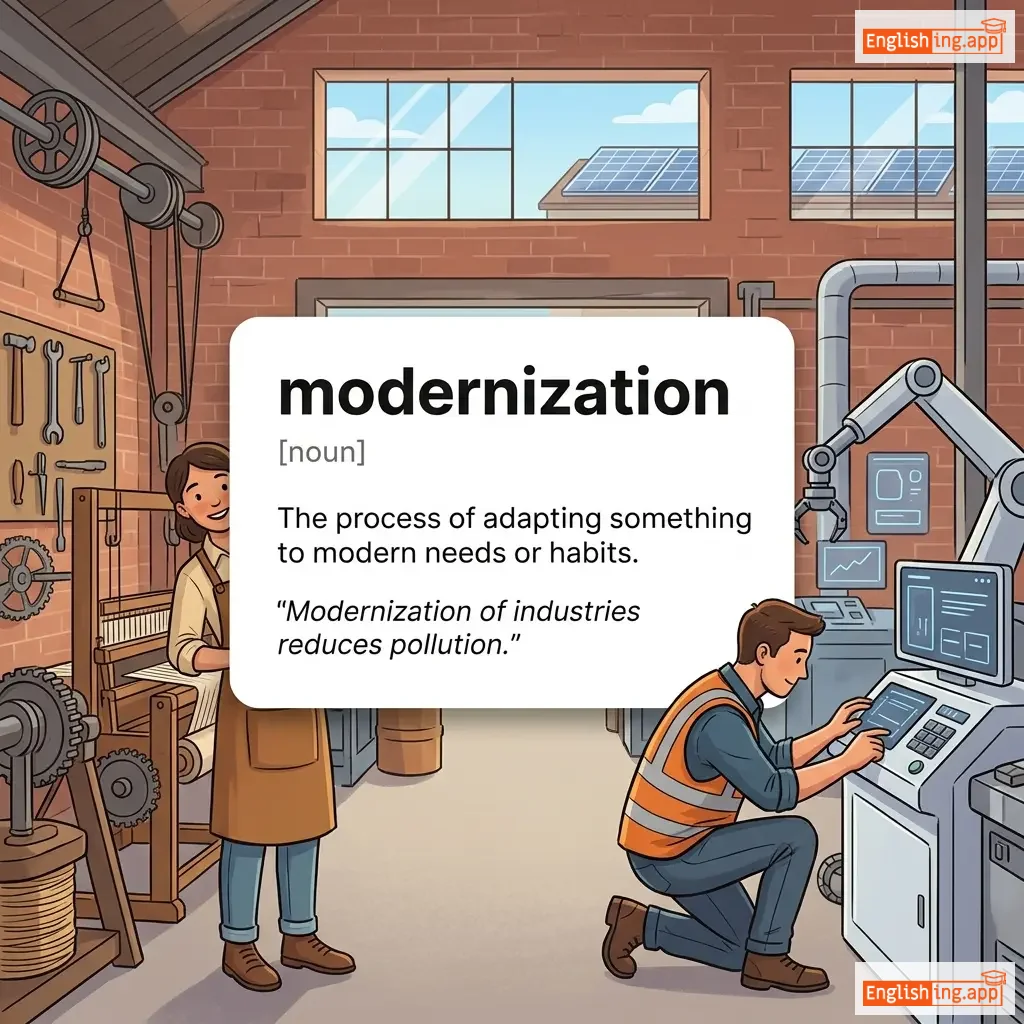
modernization definition card — visual illustration of the meaning
noun
/ˌmɒd.ən.aɪˈzeɪ.ʃən/
近代化 (kindaika)

The process of adapting something to modern needs or habits.

"Modernization of industries reduces pollution."

"産業の近代化は汚染を減らします。" (Sangyō no kindaika wa osen o herashimasu.)
verb
/ˈmɒdənaɪz/
近代化する (kindai-ka suru)

To adapt something to modern needs or styles; to update or improve.

"The company plans to modernize its IT infrastructure."

"その会社はITインフラを近代化する計画です。" (Sono kaisha wa IT infura o kindaika suru keikaku desu.)
adjective
/ˈmɒdɪst/

Having or showing a humble estimate of one’s importance; simple and not extravagant.

"She lives in a modest house in the countryside."

modify definition card — visual illustration of the meaning
verb
/ˈmɒdɪfaɪ/
修正する (shūsei suru)

to make partial or minor changes to something

"You need to modify the settings to improve performance."
"パフォーマンスを改善するために設定を変更する必要があります。" (Pafōmansu o kaizen suru tame ni settei o henkō suru hitsuyō ga arimasu.)
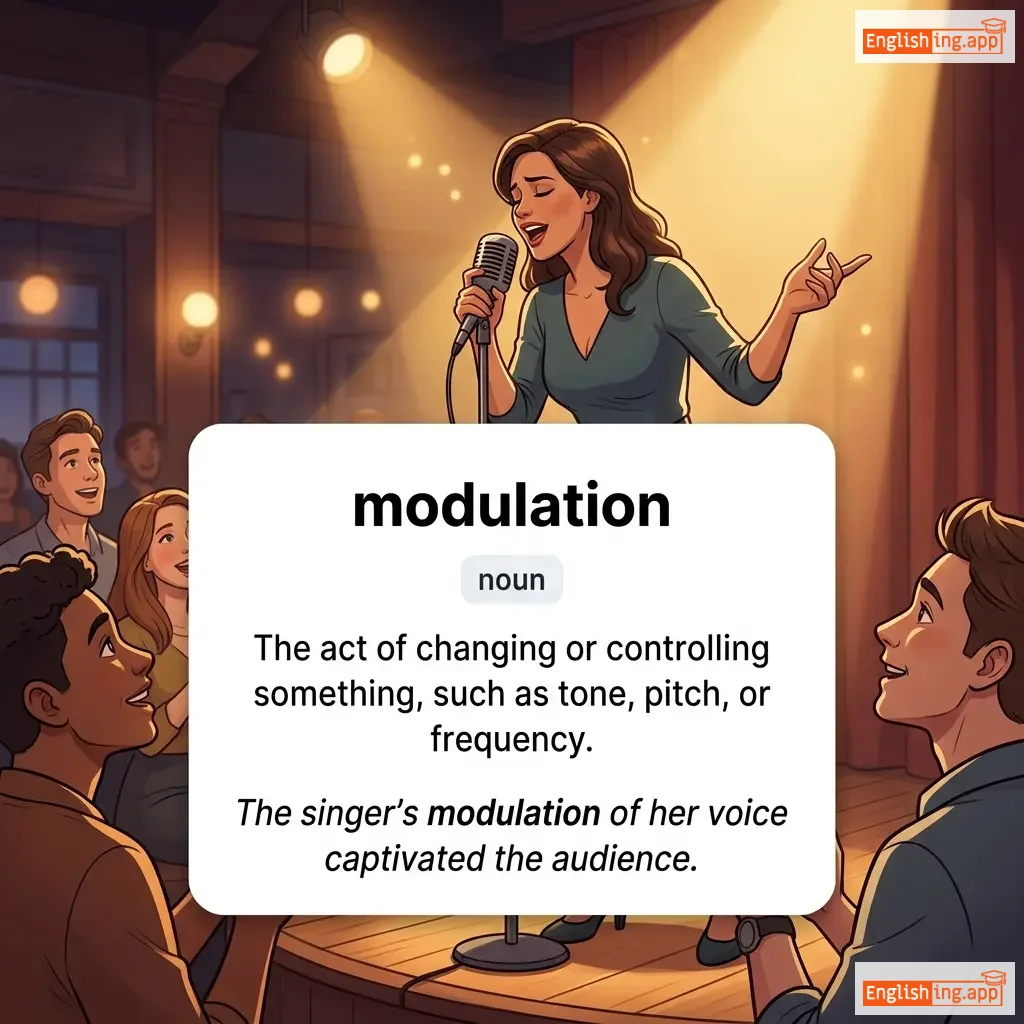
modulation definition card — visual illustration of the meaning
noun
/ˌmɒdjʊˈleɪʃən/
音の制御や周波数の調整 (on no seigyo ya shūhasū no chōsei)

The act of changing or controlling something, such as tone, pitch, or frequency.

"The singer’s modulation of her voice captivated the audience."
"歌手の声のモジュレーションが観客を魅了した。" (Kashu no koe no mojurēshon ga kankyaku o miryō shita.)
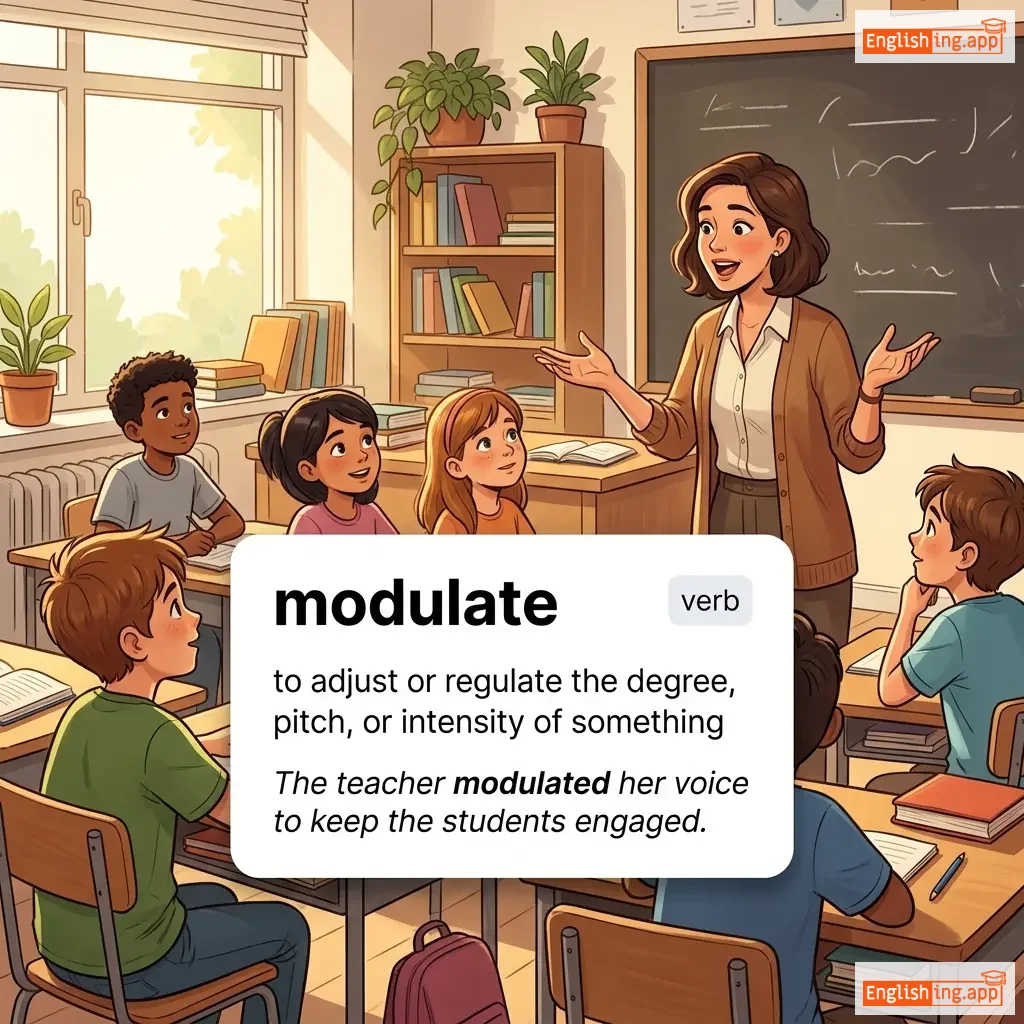
modulate definition card — visual illustration of the meaning
verb
/ˈmɒdjʊleɪt/
調整する (chōsei suru)

to adjust or regulate the degree, pitch, or intensity of something

"The teacher modulated her voice to keep the students engaged."
"教師は生徒を引きつけるために声を調整しました。" (Kyōshi wa seito o hikitsukeru tame ni koe o chōsei shimashita.)
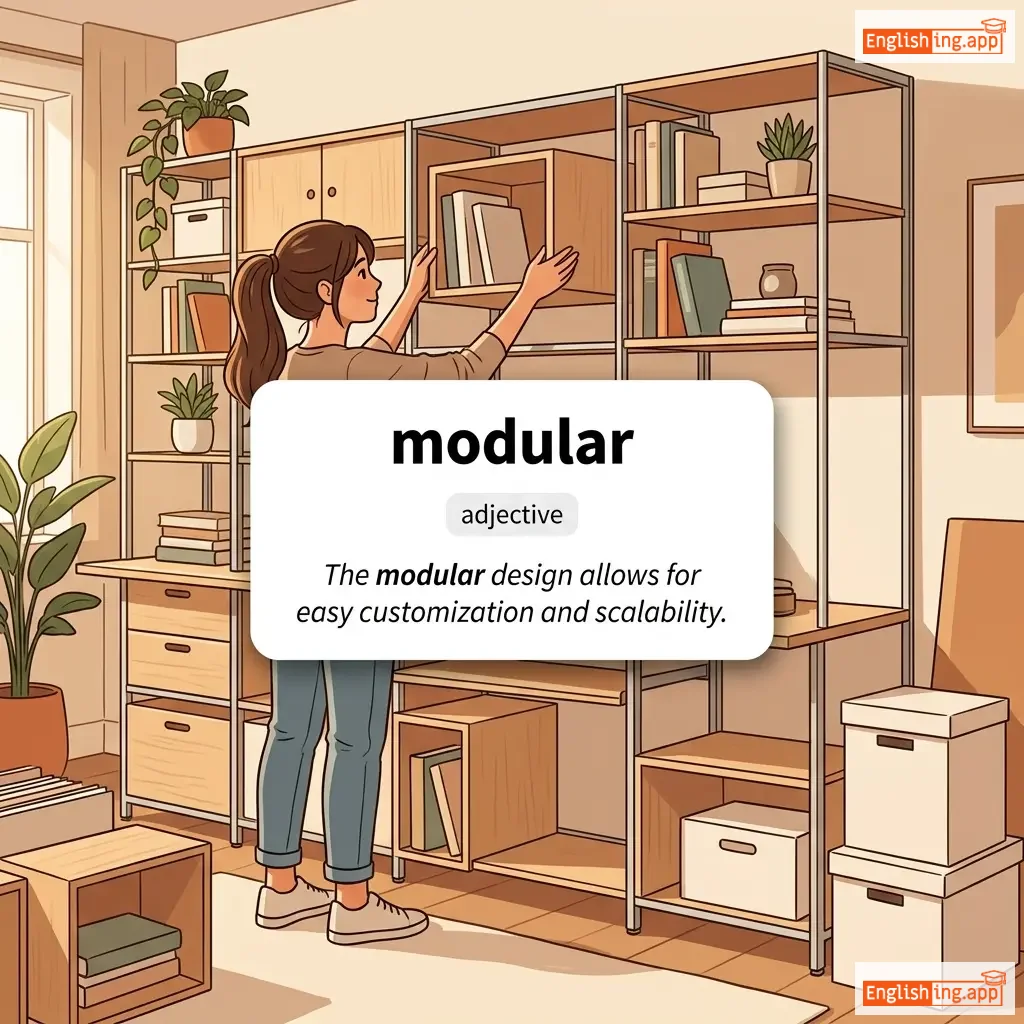
modular definition card — visual illustration of the meaning
adjective
/ˈmɒdʒʊlər/
モジュラー (mojuraa)

Employing or involving a module or modules as the basis of design or construction.

"The modular design allows for easy customization and scalability."

"モジュラー設計は簡単なカスタマイズとスケーラビリティを提供します。" (Mojuraa sekkei wa kantan na kasutamaizu to sukeerabiriti o teikyō shimasu.)
adjective
/ˈməʊdɪʃ/
流行の (ryūkō no)

conforming to or following current fashion or style

"She wore a modish outfit that caught everyone’s attention."
"彼女はモディッシュな服を着て、みんなの注目を集めていました。" (Kanojo wa modisshu na fuku o kite, minna no chūmoku o atsumete imashita.)
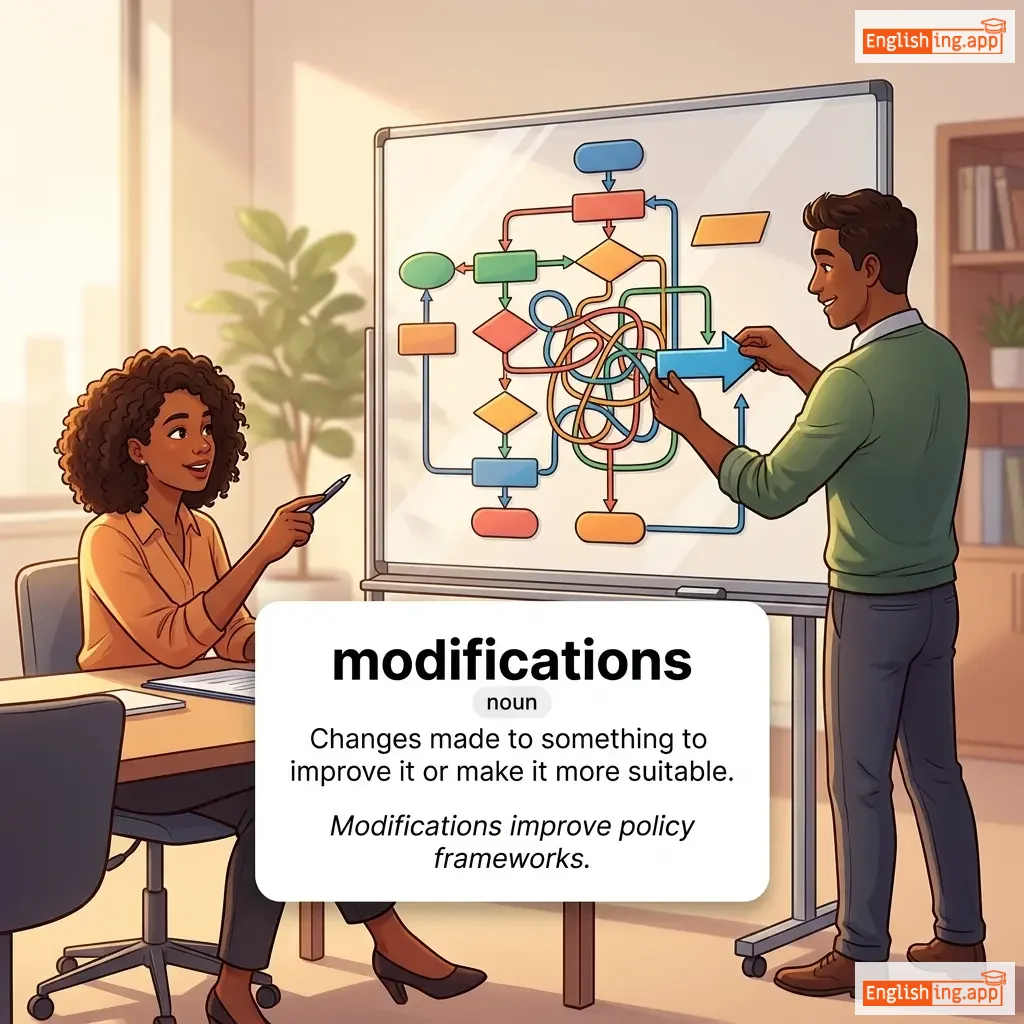
modifications definition card — visual illustration of the meaning
noun
ˌmɒd.ɪ.fɪˈkeɪ.ʃənz
変更 (henkou)

Changes made to something to improve it or make it more suitable.

"Modifications improve policy frameworks."

"変更は政策フレームワークを改善します。" (Henkou wa seisaku fureemuwaaku o kaizen shimasu.)
noun
/ˈmɒdɪkəm/
少しの量 (sukoshi no ryou)

a small or moderate amount of something, especially something valuable or desirable

"She showed a modicum of patience during the long meeting."
"長い会議の間、彼女は少しの忍耐を見せました。" (Nagai kaigi no aida, kanojo wa sukoshi no nintai o misemashita.)
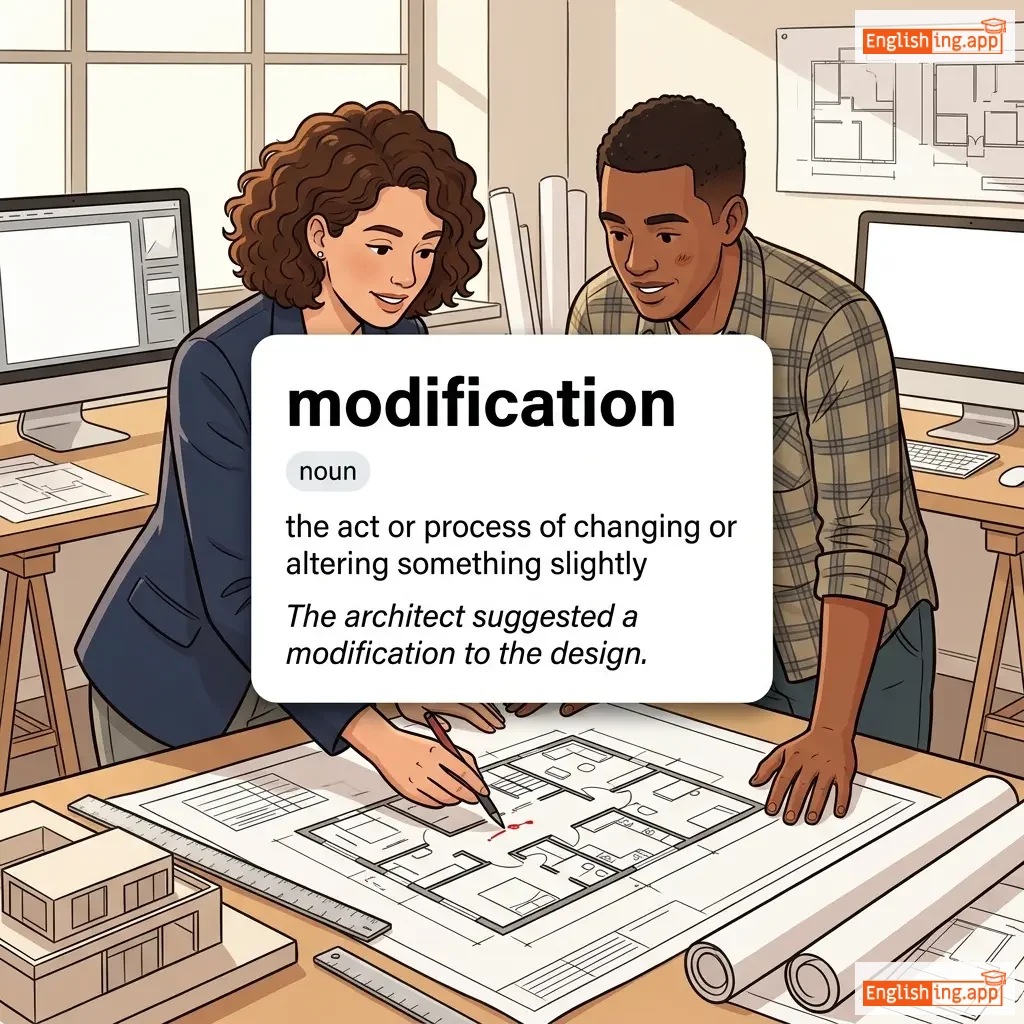
modification definition card — visual illustration of the meaning
noun
/ˌmɒdɪfɪˈkeɪʃən/
修正 (shūsei)

the act or process of changing or altering something slightly

"The architect suggested a modification to the design."

"建築家はデザインの修正を提案しました。" (Kenchikuka wa dezain no shūsei o teian shimashita.)
noun
/moʊd/
モード (mōdo)

A particular way or style in which something is done, experienced, or expressed.

"The phone has a silent mode for meetings."

"電話には会議用のサイレントモードがあります。" (Denwa ni wa kaigi-yō no sairento mōdo ga arimasu.)