語彙集

英単語辞書 | 単語の意味、定義、例文

noun
/məˈtrɒpəlɪs/
大都市 (daitoshi)

A large, important city that is a hub of culture, business, and population.

"New York is often described as a global metropolis."

"ニューヨークはしばしば世界的な大都市として説明されます。" (Nyū Yōku wa shibashiba sekaiteki na daitoshi toshite setsumei saremasu.)
adjective
/ˌmɛtrəˈpɑːlɪtən/
大都市 (daitoshi)

Relating to a large city, its surrounding areas, or its lifestyle.

"She moved to a metropolitan area for better job opportunities."

"彼女はより良い仕事の機会のために大都市エリアに引っ越しました。" (Kanojo wa yori yoi shigoto no kikai no tame ni daitoshi eria ni hikkoshimashita.)
noun
/ˈmɛtəl/
勇気 (yūki)

A person's ability to cope well with difficulties or to face demanding situations with courage.

"The young athlete showed his mettle in the final match."

"その若いアスリートは決勝戦で勇気を示しました。" (Sono wakai asurīto wa kesshōsen de yūki o shimeshimashita.)
adjective
/ˈmɛtəlˌsʌm/
勇敢な (yūkan na)

Full of courage and spirit; lively and spirited.

"The mettlesome young rider never backed down from a challenge."

"その勇敢な若い騎手は挑戦から決して後退しなかった。" (Sono yūkan na wakai kishu wa chōsen kara kesshite kōtai shinakatta.)
noun
/mjuːz/
路地/小道 (roji/kodou)

A row or street of houses or apartments that have been converted from stables or built to look like former stables.

"They rented a small flat in a quiet London mews."

"彼らはロンドンの静かなミューズに小さなアパートを借りました。" (Karera wa Rondon no shizukana myūzu ni chiisana apāto o karimashita.)
noun/adjective
/ˈmɛksɪkən/
幸せ (shiawase)

a native or inhabitant of Mexico; relating to Mexico or its people, culture, or language

"She enjoys Mexican food like tacos and enchiladas."

"彼女は賞を受け取ったとき、幸せを隠すことができませんでした。" (Kanojo wa shō o uketotta toki, shiawase o kakusu koto ga dekimasen deshita.)
noun
/maɪˈæzmə/
悪臭の空気 (akushu no kūki)

An unpleasant or unhealthy smell or atmosphere.

"A miasma of decay hung over the abandoned house."
"腐敗の気配が廃墟の上に漂っていた。" (Fuhai no kehai ga haikyo no ue ni tadayotte ita.)
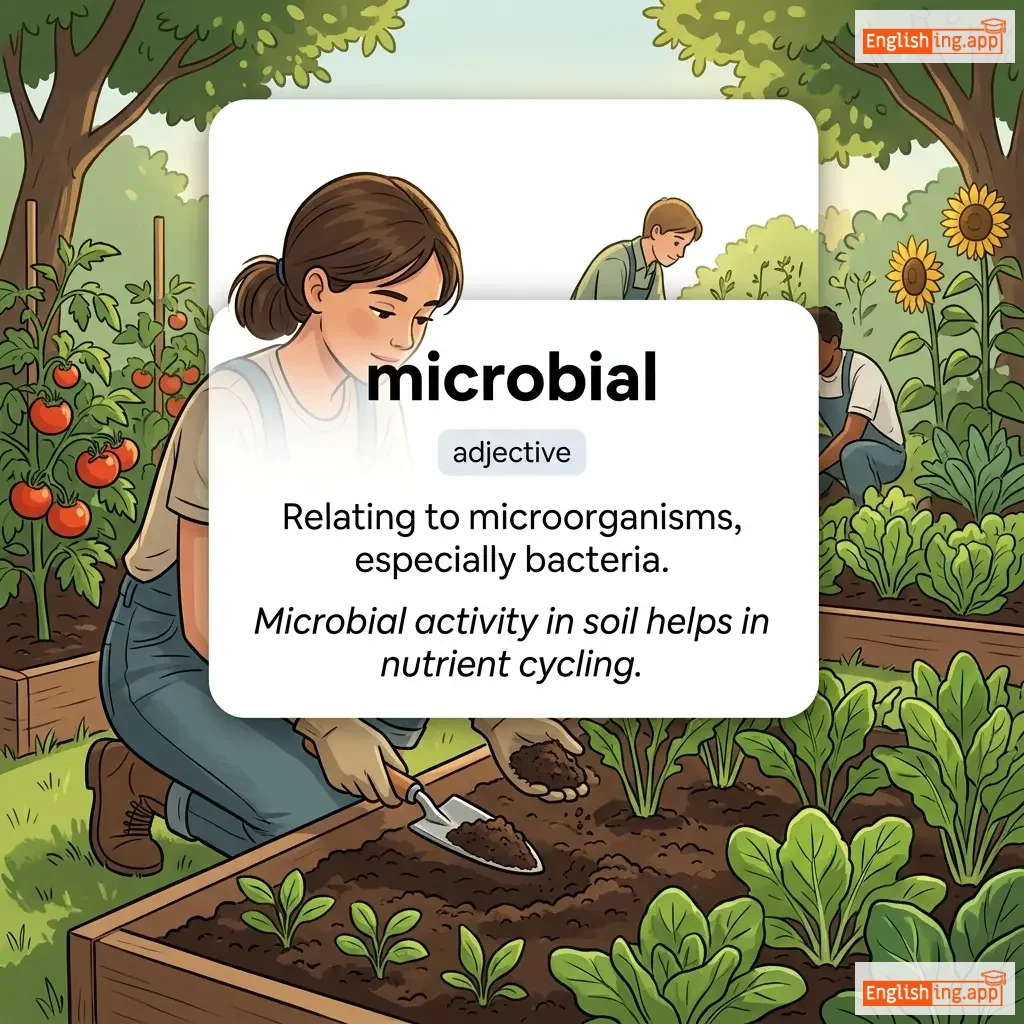
microbial definition card — visual illustration of the meaning
adjective
/maɪˈkroʊ.bi.əl/
微生物に関連する (biseibutsu ni kanren suru)

Relating to microorganisms, especially bacteria.

"Microbial activity in soil helps in nutrient cycling."
"土壌中の微生物活動は栄養素の循環に役立ちます。" (Dojo-chu no biseibutsu katsudō wa eiyōso no junkan ni yakudachimasu.)
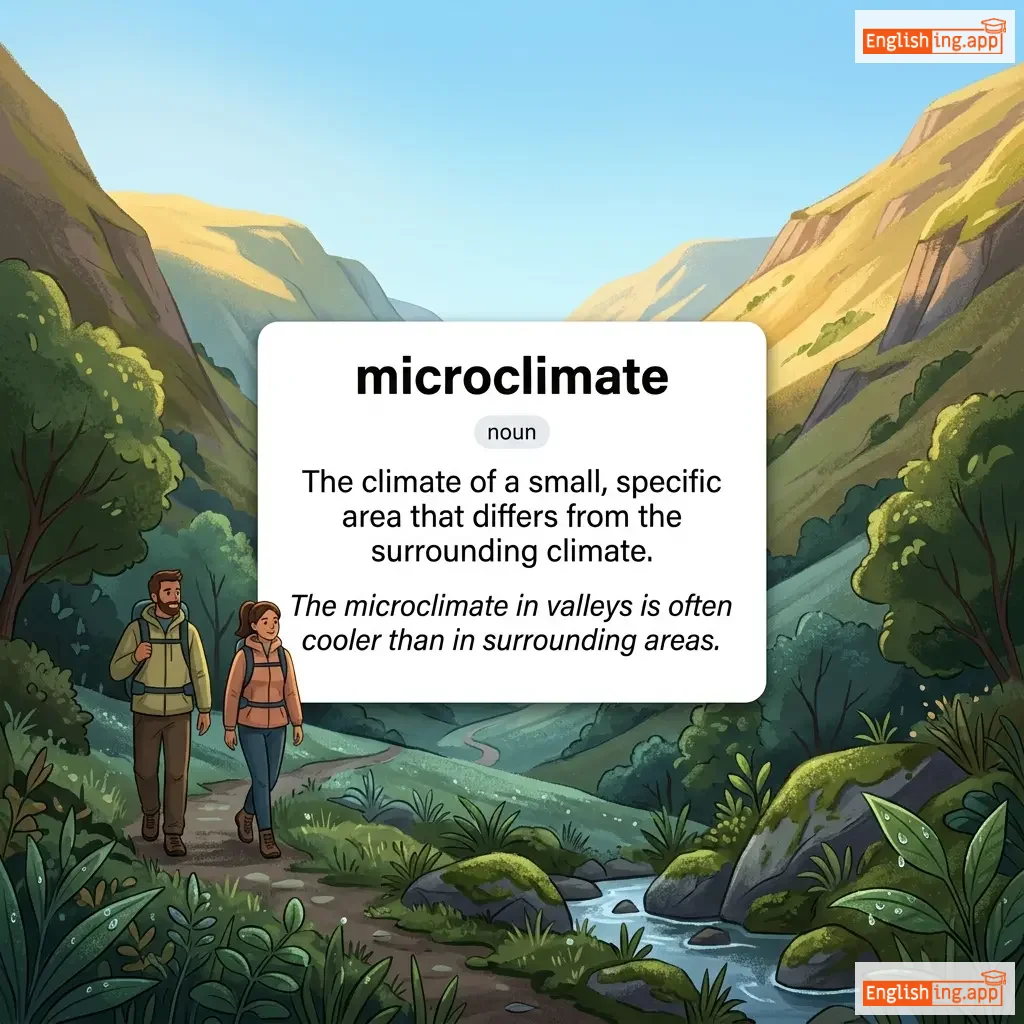
microclimate definition card — visual illustration of the meaning
noun
/ˈmaɪ.krəʊˌklaɪ.mət/
ミクロクライメート (mikurokuraimeto)

The climate of a small, specific area that differs from the surrounding climate.

"The microclimate in valleys is often cooler than in surrounding areas."

"谷間のマイクロクライメートは周囲の地域よりも涼しいことがよくあります。" (Tani ma no mikurokuraimeto wa shuui no chiiki yori mo suzushii koto ga yoku arimasu.)
noun
/ˈmaɪkrəˌkɒzəm/
ミクロコスム (mikurokosumu)

A small, representative system having analogies to a larger system; a miniature version of something.

"The small town is a microcosm of the entire nation."

"その小さな町は、国全体のミクロコスムです。" (Sono chiisana machi wa, kuni zentai no mikurokosumu desu.)
noun
/maɪˈkrɒmɪtər/
マイクロメーター (maikuromētā)

A device used for measuring small distances with great accuracy.

"The engineer used a micrometer to measure the thickness of the wire."

"エンジニアはワイヤーの厚さを測るためにマイクロメーターを使いました。" (Enjinia wa waiyā no atsusa o hakaru tame ni maikuromētā o tsukaimashita.)
micronutrient definition card — visual illustration of the meaning
noun
ˈmaɪ.krəʊˌnjuː.tri.ənt
微量栄養素 (biryō eiyōso)

Essential nutrients required by the body in small amounts, including vitamins and minerals.

"Iron and zinc are essential micronutrients for growth."

"鉄分と亜鉛は成長に必要な微量栄養素です。" (Tetsubun to aen wa seichō ni hitsuyōna biryō eiyōso desu.)
micronutrients definition card — visual illustration of the meaning
noun
/ˈmaɪ.krəʊˌnjuː.tri.ənts/
微量栄養素 (biryou eiyouso)

Essential nutrients required in small amounts for proper body function, including vitamins and minerals.

"Micronutrients like iron and zinc are essential for immunity."

"鉄や亜鉛などのマイクロニュートリエントは免疫力にとって重要です。" (Tetsu ya aen nado no maikuro nyuutoriento wa men'eki-ryoku ni totte juuyou desu.)
/ˈmaɪ.krəˌfoʊn/
マイクロフォン (maikurofon)

A device that converts sound into an electrical signal, typically used to amplify or record voices or music.

"She spoke into the microphone during the presentation."

"彼女はプレゼンテーション中にマイクロフォンで話していました。" (Kanojo wa purezentēshon chū ni maikurofon de hanashite imashita.)
noun
/ˈmaɪ.krəˌskoʊp/
顕微鏡 (kenbikyō)

An optical instrument used for viewing very small objects, such as cells, by magnifying them.

"The scientist observed the bacteria under the microscope."

"科学者は顕微鏡で細菌を観察した。" (Kagakusha wa kenbikyō de saikin o kansatsu shita.)
adjective
/ˌmaɪ.krəˈskɑː.pɪk/
顕微鏡的 (kenbikyō-teki)

Extremely small and only visible with a microscope.

"The sample contained microscopic particles."

"サンプルには顕微鏡的な粒子が含まれていました。" (Sanpuru ni wa kenbikyō-teki na ryūshi ga fukumarete imashita.)
noun
/maɪˈkrɑː.skə.pi/
顕微鏡学 (kenbikyōgaku)

The use of a microscope to observe small objects or organisms.

"Microscopy revealed the structure of the cells."
"顕微鏡学は細胞の構造を明らかにしました。" (Kenbikyōgaku wa saibo no kōzō o akiraka ni shimashita.)
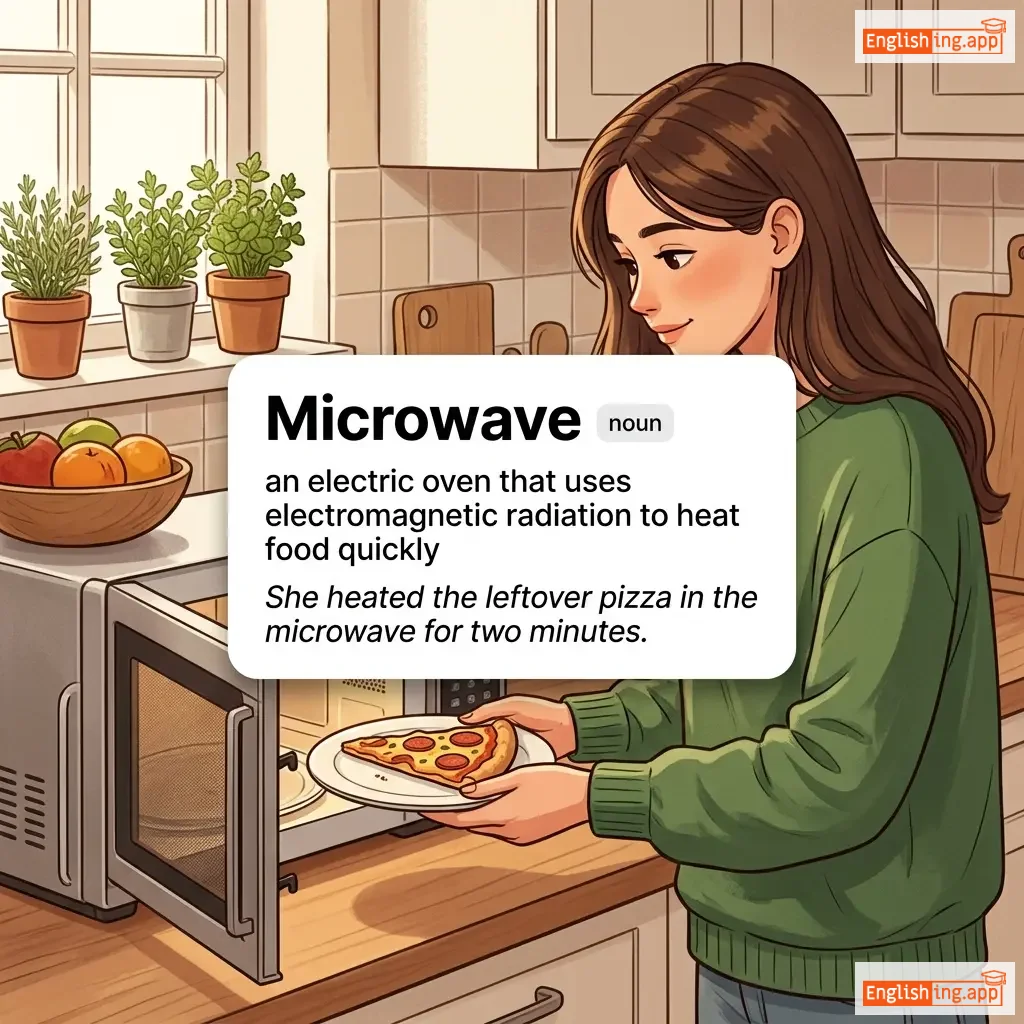
Microwave definition card — visual illustration of the meaning
noun
/ˈmaɪkroʊweɪv/
電子レンジ (denshi renji)

an electric oven that uses electromagnetic radiation to heat food quickly

"She heated the leftover pizza in the microwave for two minutes."

"彼女は残りのピザを電子レンジで2分間加熱しました。" (kanojo wa nokori no piza o denshi renji de 2 funkan kanetsu shimashita)
adjective, preposition, noun
/mɪd/
中間 (chukan)

being in the middle of something; the central part or point

"She joined the project in mid June."

"彼女は6月中旬にそのプロジェクトに参加した。" (kanojo wa rokugatsu chujun ni sono purojekuto ni sanka shita)
noun
/ˈmɪd.deɪ/
正午 (shougo)

The middle of the day; twelve o'clock in the daytime; noon

"The sun is brightest at midday when it's directly overhead."

"太陽は正午に最も輝いており、真上にあります。" (Taiyou wa shougo ni mottomo kagayaite ori, maue ni arimasu.)
noun/adjective
/ˈmɪdəl/
真ん中 (mannaka)

the central point, position, or part of something

"The park is in the middle of the city."

"公園は街の真ん中にあります。" (Kōen wa machi no mannaka ni arimasu.)
adjective
/ˈmɪd.əl.eɪdʒd/
中年 (chūnen)

being of an age between young and old; typically between 40-60 years old

"The middle-aged man started a new career."
"中年の男性が新しいキャリアを始めた。" (Chūnen no dansei ga atarashī kyaria o hajimeta.)
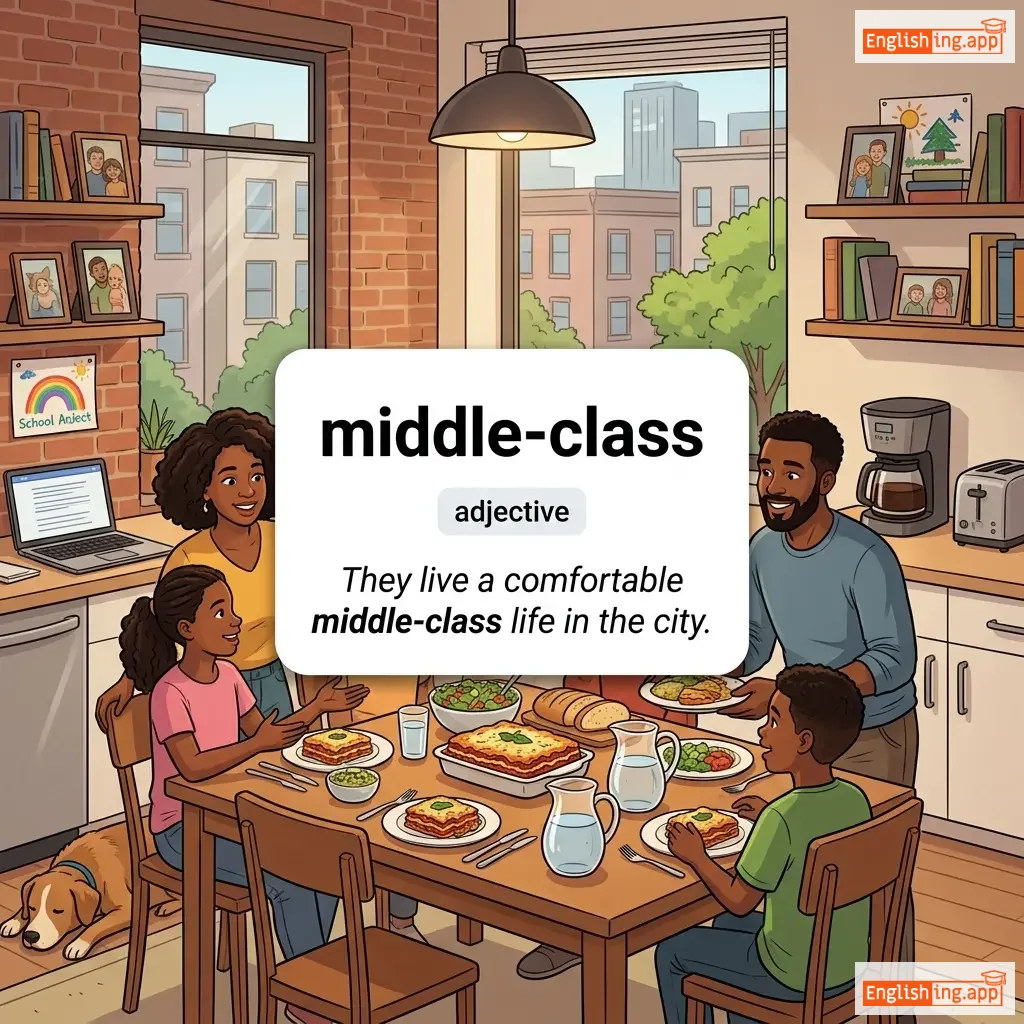
middle-class definition card — visual illustration of the meaning
adjective
/ˈmɪdəl klɑːs/
中産階級 (chūsan kaikyū)

belonging to the social group between the upper and working class, typically with moderate income and education

"They live a comfortable middle-class life in the city."

"彼らは都市で快適な中産階級の生活を送っています。" (Karera wa toshi de kaiteki na chūsan kaikyū no seikatsu o okutteimasu.)
noun
/ˈmɪdəlˌmæn/
仲介者 (chūkaisha)

A person who acts as a link between buyers and sellers, often in business deals.

"The farmer sold his crops directly, without a middleman."

"農夫は直接作物を売りました、仲介者なしで。" (Nōfu wa chokusetsu sakumotsu o urimashita, chūkai-sha nashi de.)
noun
/ˈmɪdnaɪt/
真夜中 (mayonaka)

twelve o'clock at night; the middle of the night

"He reached home just after midnight."

"彼は真夜中過ぎに家に着いた。" (Kare wa mayonaka sugi ni ie ni tsuita.)
noun
/mɪdst/
真ん中 (mannaka)

the middle part or position of something

"In the midst of chaos, she remained calm."

"混乱の真ん中で、彼女は冷静を保ちました。" (Konran no mannaka de, kanojo wa reisei wo tamochimashita.)
noun
/ˌmɪdˈsʌm.ər/
真夏 (manatsu)

The middle of summer, often around the summer solstice in June.

"We had a festival to celebrate midsummer."

"私たちは真夏を祝うためにフェスティバルを開きました。" (Watashitachi wa manatsu o iwau tame ni fesutibaru o hirakimashita.)
adverb
/ˈmɪd.weɪ/
途中 (tochū)

in the middle of an event, process, or distance

"He stopped midway through his speech."

"彼はスピーチの途中で止まりました。" (Kare wa supīchi no tochū de tomarimashita.)
noun
/ˈmɪd.waɪf/
助産師 (josanshi)

A person, typically a woman, trained to assist women during childbirth.

"The midwife stayed with the mother throughout her labor."

"助産師は出産中ずっと母親と一緒にいました。" (Josanshi wa shussan-chū zutto hahaoya to issho ni imashita.)
noun
/miːn/
表情 (hyōjō)

A person's appearance or manner, especially as an indication of their character or mood.

"His serious mien made everyone fall silent."

"彼の真剣な表情は皆を黙らせた。" (Kare no shinken na hyōjō wa mina o damaraseta.)
noun
/mɪf/
小さな争い (chiisana araso)

A petty quarrel or annoyance.

"They had a slight miff over the seating arrangement."

"彼らは座席配置について小さな争いを起こしました。" (Karera wa zaseki haichi ni tsuite chiisana arasoi o okoshimashita.)
modal verb/noun
/maɪt/
かもしれない / 力 (kamoshirenai / chikara)

used to express possibility; power or strength

"She might come to the party if she finishes work early."

"もし彼女が早く仕事を終わらせたら、パーティーに来るかもしれない。" (Moshi kanojo ga hayaku shigoto wo owarasetara, paatii ni kuru kamoshirenai.)
adjective
/ˈmaɪti/
強力な (kyoryoku na)

having great power or strength; very strong or impressive

"The mighty river flows through the heart of the country."

"その強力な川は国の中心を流れている。" (Sono kyoryoku na kawa wa kuni no chushin o nagarete iru)
noun
/ˈmaɪ.ɡrənt/
移民 (imin)

A person who moves from one place to another, especially to find work or better living conditions.

"Many migrants travel long distances to find employment."

"多くの移民は仕事を見つけるために長距離を移動します。" (Ōku no imin wa shigoto o mitsukeru tame ni chōkyori o idō shimasu.)
🕊️

migrate

verb
/maɪˈɡreɪt/

To move from one region or habitat to another, especially regularly according to the seasons or for work.

"Birds migrate south during the winter."

noun
/maɪˈɡreɪʃən/
移動 (idou)

the movement of people or animals from one place to another, often for better living conditions or seasonal reasons

"The annual migration of birds is a fascinating natural event."

"鳥の毎年の移動は魅力的な自然現象です。" (Tori no mainen no idou wa miryokuteki na shizen genshō desu.)
adjective
/ˈmaɪɡrəˌtɔːri/
渡り鳥の (watari tori no)

Relating to or characterized by migration, especially animals or people moving from one place to another.

"Migratory birds travel thousands of miles each year."

"渡り鳥は毎年何千マイルも旅をする。" (Watari tori wa mainen nan sen mairu mo tabi o suru.)
adjective
/maɪld/
穏やか (odayaka)

not severe or strong; gentle in nature

"The patient had only mild symptoms."

"患者には軽い症状だけがありました。" (Kanja ni wa karui shōjō dake ga arimashita.)
noun
/ˈmɪsɪv/
書簡 (shokan)

a written message, especially a formal or official letter

"He sent a long missive to the governor."

"彼は知事に長い書簡を送った。" (Kare wa chiji ni nagai shokan o okutta.)
verb
/ˌmɪsˈpleɪs/
間違った場所に置く (machigatta basho ni oku)

To put something in the wrong location and temporarily lose it.

"I often misplace my keys when I am in a hurry."

"急いでいるとき、よく鍵を間違った場所に置いてしまいます。" (Isoide iru toki, yoku kagi o machigatta basho ni oite shimaimasu.)
verb
/ˌmɪsˈriːd/
誤って読む (ayamatte yomu)

to read something incorrectly or interpret wrongly

"He misread the instructions and built the shelf incorrectly."

"彼は指示を誤読して棚を間違って作った。" (Kare wa shiji o godoku shite tana o machigatte tsukutta.)
verb
/ˌmɪsˌrɛprɪˈzɛnt/

to give a false or misleading account of something

"The lawyer accused the witness of trying to misrepresent the facts."

noun
/ˌmɪsˈruːl/
悪政 (akusei)

bad or poor governance

"The kingdom suffered for decades under misrule."

"王国は数十年にわたって悪政の下で苦しんだ。" (Ōkoku wa suujūnen ni watatte akusei no moto de kurushinda.)
verb, noun
/mɪs/
失う / 恋しい (ushinau / koishii)

to fail to hit, reach, or meet; to feel the absence of someone or something

"I really miss my family when I travel abroad."

"海外旅行の際、家族を本当に恋しく感じます。" (Kaigai ryokou no sai, kazoku wo hontou ni koishiku kanjimasu.)
noun
/ˈmɪsəl/
ミサの書 (Misa no sho)

a book containing the texts used in the Catholic Mass throughout the year

"The priest read from the missal during the ceremony."

"祭司は儀式中にミサの書から読んでいました。" (Saishi wa gishiki-chū ni misa no sho kara yonde imashita.)
noun
/ˈmɪsaɪl/ or /ˈmɪsəl/
ミサイル (misairu)

a weapon that is self-propelled and directed toward a target

"The army launched a missile towards the enemy base."
"軍は敵基地に向かってミサイルを発射しました。" (Gun wa teki kichi ni mukatte misairu o hassha shimashita.)
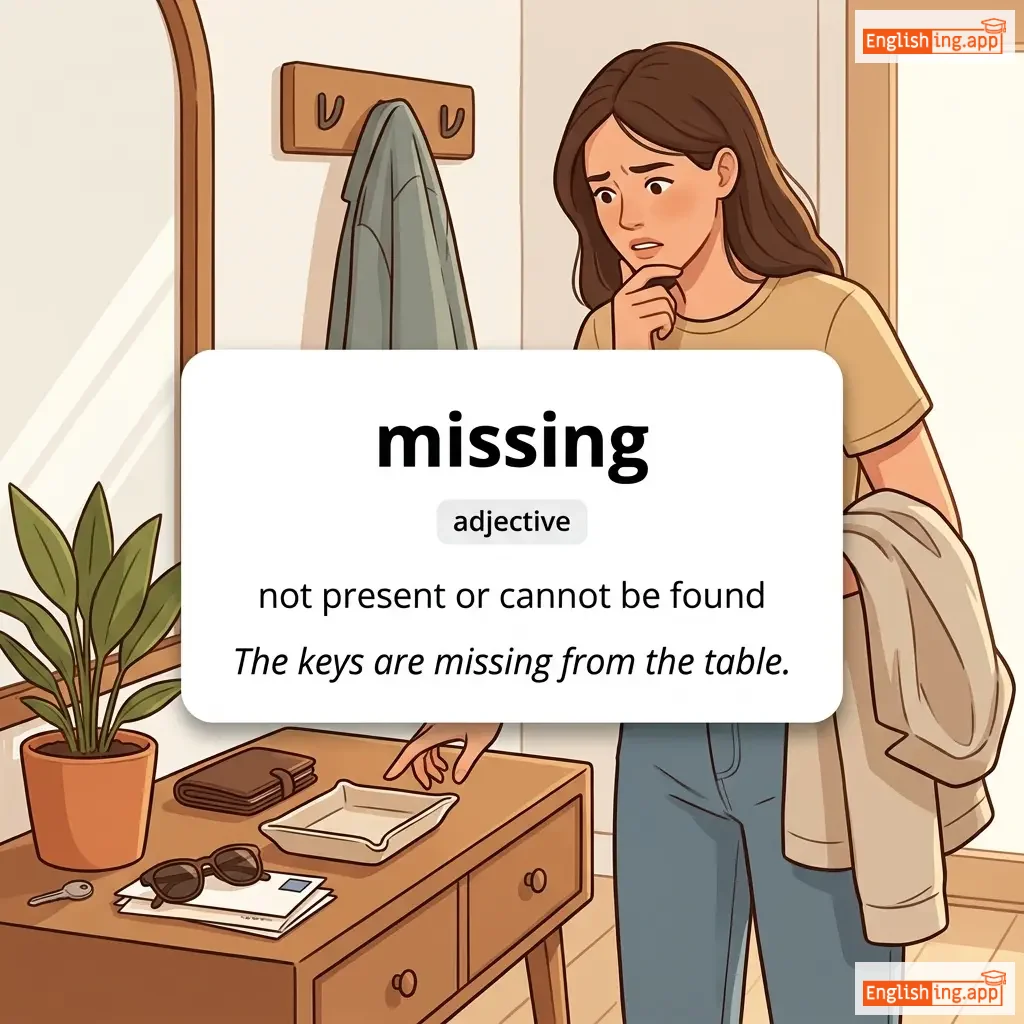
missing definition card — visual illustration of the meaning
adjective
/ˈmɪsɪŋ/
行方不明 (yūkōfumei)

not present or cannot be found

"The keys are missing from the table."

"テーブルから鍵が行方不明です。" (Tēburu kara kagi ga yūkōfumei desu.)
noun
/ˈmɪʃən/
ミッション / 任務 (misshon / ninmu)

an important assignment or task, often with a specific purpose

"The astronauts were on a mission to explore Mars."

"宇宙飛行士たちは火星を探査するためのミッションに出発しました。" (Uchuu hikoushi tachi wa kasei wo tansa suru tame no misshon ni shuppatsu shimashita.)
noun
/ˈmɪʃəneri/
宣教師 (senkyōshi)

a person sent on a religious mission, especially to promote Christianity in a foreign country

"The missionary spent years helping local communities in Africa."
"その宣教師はアフリカで地元のコミュニティを支援するために何年も費やしました。" (Sono senkyōshi wa Afurika de jimoto no komyuniti o shien suru tame ni nannen mo tsuiyashimashita.)
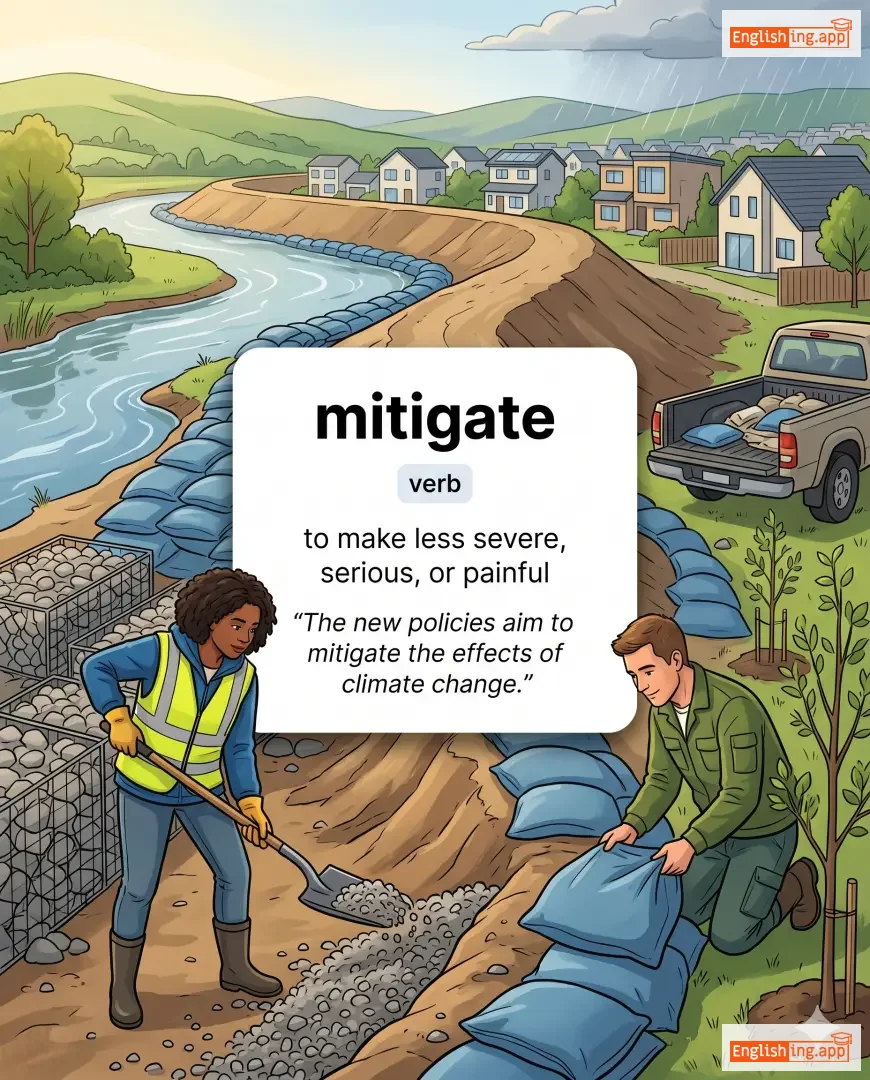
mitigate definition card — visual illustration of the meaning
verb
/ˈmɪtɪˌɡeɪt/
軽減する (keigen suru)

to make less severe, serious, or painful

"The new policies aim to mitigate the effects of climate change."

"新しい政策は気候変動の影響を軽減することを目指しています。" (Atarashii seisaku wa kikō hendō no eikyō o keigen suru koto o mezashiteimasu.)