語彙集

英単語辞書 | 単語の意味、定義、例文

noun
/ˈnæfθə/
ナフタ (nafuta)

A flammable oil containing hydrocarbons, obtained from petroleum or coal tar, used as fuel or solvent.

"The factory stored barrels of naphtha for industrial use."

"工場は工業用途のためにナフタの樽を保管していました。" (Koujou wa kougyou youto no tame ni nafuta no taru wo hokan shiteimashita.)
Nap Kin definition card — visual illustration of the meaning
noun
/ˈnæp.kɪn/
ナプキン (napukin)

a piece of cloth or paper used for wiping the mouth and hands while eating

"She placed the napkin on her lap before starting dinner."

"彼女は夕食を始める前に、膝の上にナプキンを置きました。" (Kanojo wa yūshoku o hajimeru mae ni, hizano ue ni napukin o okimashita.)
nanotechnology definition card — visual illustration of the meaning
noun
ˌnæn.oʊ.tekˈnɒl.ə.dʒi
ナノテクノロジー (nanotekunorojī)

The branch of technology that deals with dimensions and tolerances of less than 100 nanometers.

"Nanotechnology is advancing medical treatments."
"ナノテクノロジーは医療治療の進歩を促進しています。" (Nanotekunorojī wa iryō chiryō no shinpo o sokushin shiteimasu.)
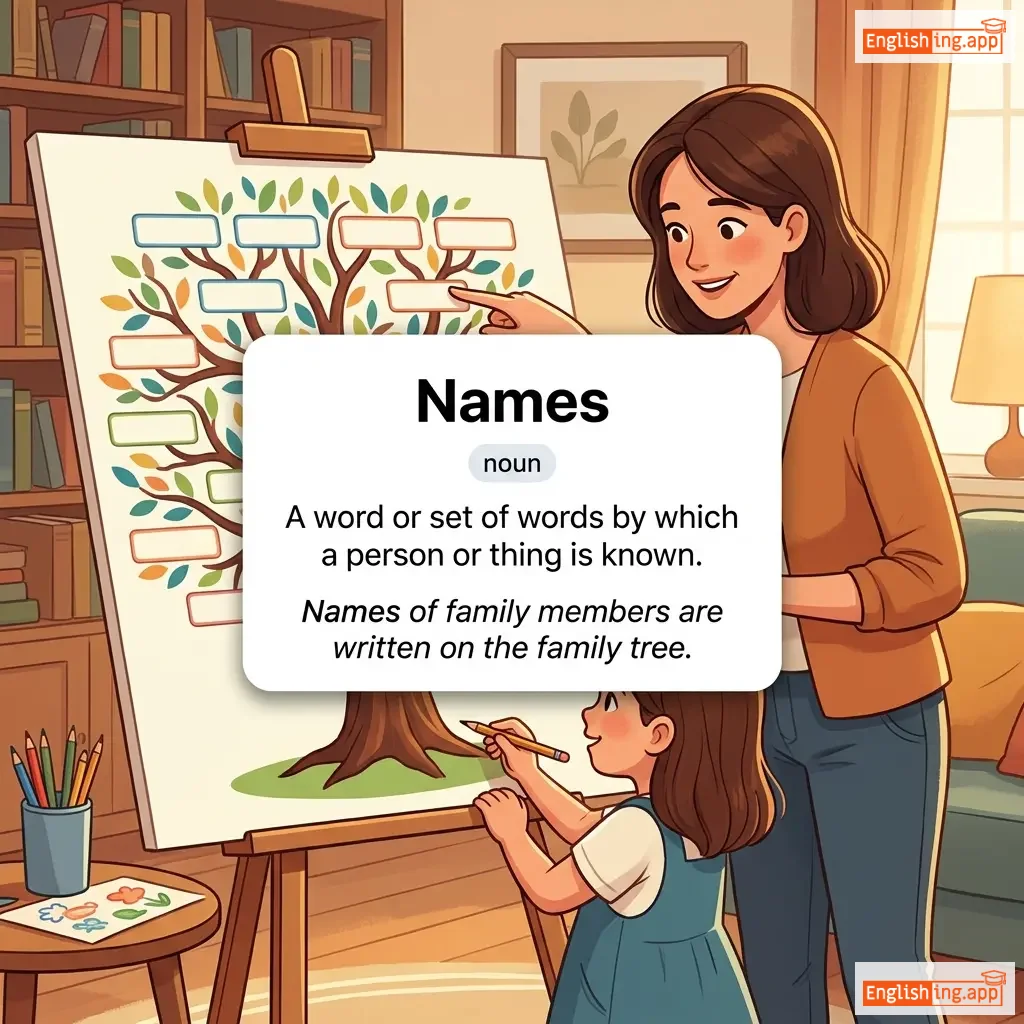
Names definition card — visual illustration of the meaning
noun
neɪmz
名前 (namae)

A word or set of words by which a person or thing is known.

"Names of family members are written on the family tree."

"家族の名前は家系図に書かれています。" (Kazoku no namae wa kakeizu ni kakareteimasu.)
adverb
/ˈneɪmli/
すなわち (sunawachi)

that is to say; to be specific

"The festival will be held in three cities, namely Dhaka, Chittagong, and Sylhet."

"その祭りは3つの都市で行われます。すなわち、ダッカ、チッタゴン、シレットです。" (Sono matsuri wa mittsu no toshi de okonawaremasu. Sunawachi, Dhaka, Chittagong, Shiretto desu.)
adjective
/ˈneɪmləs/
無名 (mumei)

Without a name or not known by name.

"A nameless fear crept over him in the dark room."

"無名の恐怖が暗い部屋で彼を襲った。" (Mumei no kyōfu ga kurai heya de kare o osotta.)
name definition card — visual illustration of the meaning
noun
/neɪm/
名前 (namae)

a word by which a person or thing is known or called

"His name is John."

"彼の名前はジョンです。" (Kare no namae wa John desu.)
adjective
/ˈneɪkɪd/
(hadaka)

not covered by clothing or without protection

"The child was running naked in the yard."

"その子は庭で裸で走っていた。" (Sono ko wa niwa de hadaka de hashitte ita.)
noun
/naɪˈiːvɪti/
無邪気 (muzaki)

The quality of being innocent, simple, and lacking experience or sophistication.

"Her naivety made her trust people too easily."

"彼女の無邪気は、彼女が人々をあまりにも簡単に信頼させました。" (Kanojo no muzaki wa, kanojo ga hitobito o amari ni mo kantan ni shinrai sasemashita.)
noun
/naɪˈiːvteɪ/

The quality of being naive; lack of experience, wisdom, or judgment.

"His naivete made him an easy target for manipulation."

adjective
/naɪˈiːv/
素直 (sunao)

Lacking experience, wisdom, or judgment; too trusting.

"She was naïve to believe every advertisement she saw."

"彼女は見たすべての広告を信じることに素直だった。" (Kanojo wa mita subete no kōkoku o shinjiru koto ni sunao datta.)
Nail definition card — visual illustration of the meaning
noun, verb
/neɪl/
(kugi)

a small metal spike driven into wood or other material, or to fasten or fix something with nails

"He nailed the wooden board to the wall."

"彼は木製の板を壁に釘付けしました。" (kare wa mokusei no ita o kabe ni kugi tsuke shimashita.)
⬇️

nadir

noun
/ˈneɪdɪər/

The lowest point of a situation or condition.

"The company reached its nadir during the financial crisis."

noun
/mɪˈθɒlədʒi/

A collection of myths, especially belonging to a particular culture or religion.

"Greek mythology is filled with stories of gods and heroes."

adjective
/ˈmɪθɪkəl/
神話的な (shinwateki na)

existing only in myths or legends; imaginary or fictitious

"Dragons are mythical creatures that appear in many cultures."

"ドラゴンは多くの文化に登場する神話的な生き物です。" (doragon wa ōku no bunka ni tōjō suru shinwateki na ikimono desu.)
noun
/mɪθ/
神話 (shinwa)

A traditional story explaining natural or social phenomena, often involving supernatural beings; a widely held but false belief.

"The myth of the phoenix tells of a bird reborn from its ashes."

"フェニックスの神話は、灰の中から生まれ変わった鳥の話を伝えています。" (Fenikkusu no shinwa wa, hai no naka kara umarekawatta tori no hanashi o tsutaete imasu.)
noun
/ˌmɪstɪfɪˈkeɪʃən/
困惑, 神秘化 (konwaku, shinpi-ka)

the act of making something unclear or confusing; a state of being puzzled or bewildered

"The audience watched in mystification as the magician performed his tricks."

"観客はマジシャンが手品を披露する間、困惑して見ていた。" (Kankyaku wa majishan ga tejin o hirou suru aida, konwaku shite mite ita.)
noun/adjective
/ˈmɪstɪk/
神秘的な、精神的な探求者 (mishitikuna, seishintekina tankyūsha)

relating to mysteries, spirituality, or hidden truths; a person who seeks spiritual insight

"The mystic devoted his life to meditation and spiritual discovery."
"その神秘的な探求者は瞑想と精神的発見に人生を捧げました。" (Sono mishitekina tankyūsha wa meisō to seishinteki hakken ni jinsei o sasagemashita.)
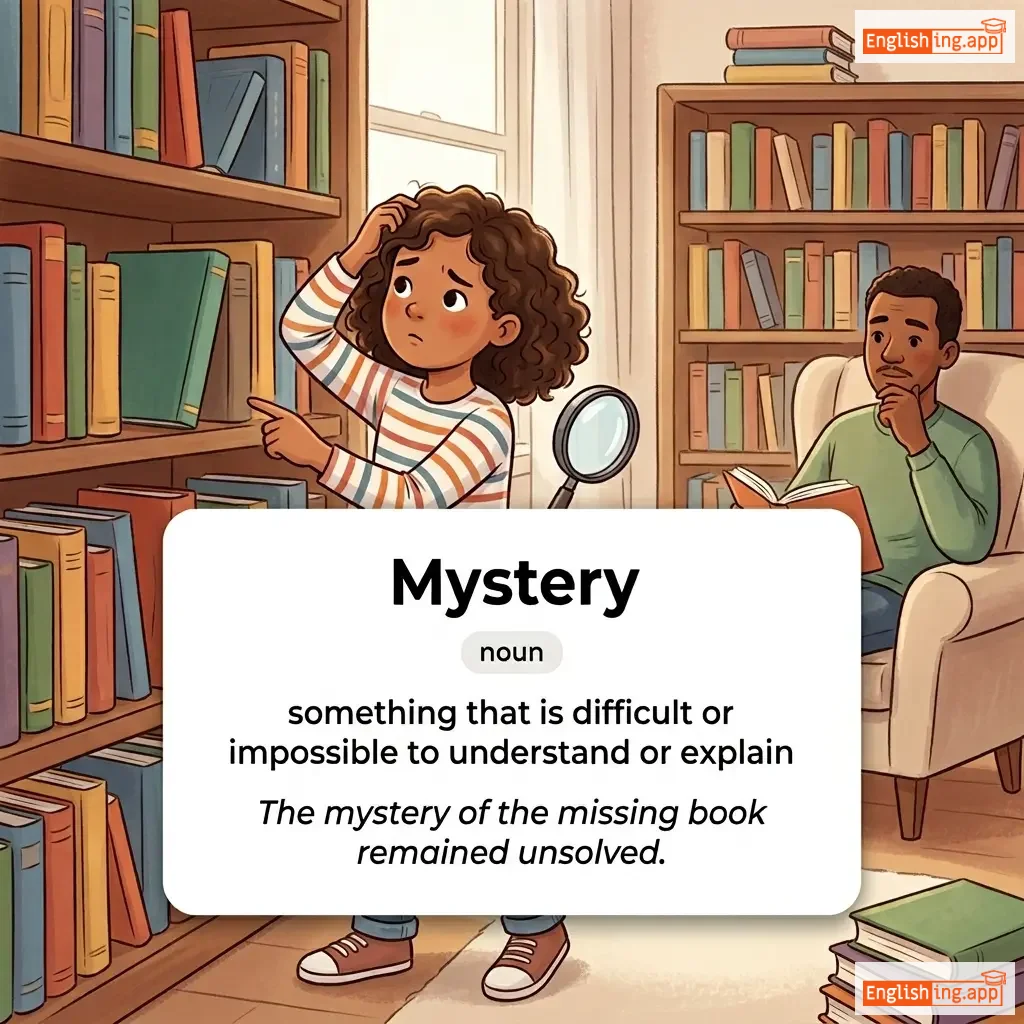
Mystery definition card — visual illustration of the meaning
noun
/ˈmɪstəri/
(nazo)

something that is difficult or impossible to understand or explain

"The mystery of the missing book remained unsolved."
"失われた本の謎は解けていない。" (Ushinawareta hon no nazo wa toketenai.)
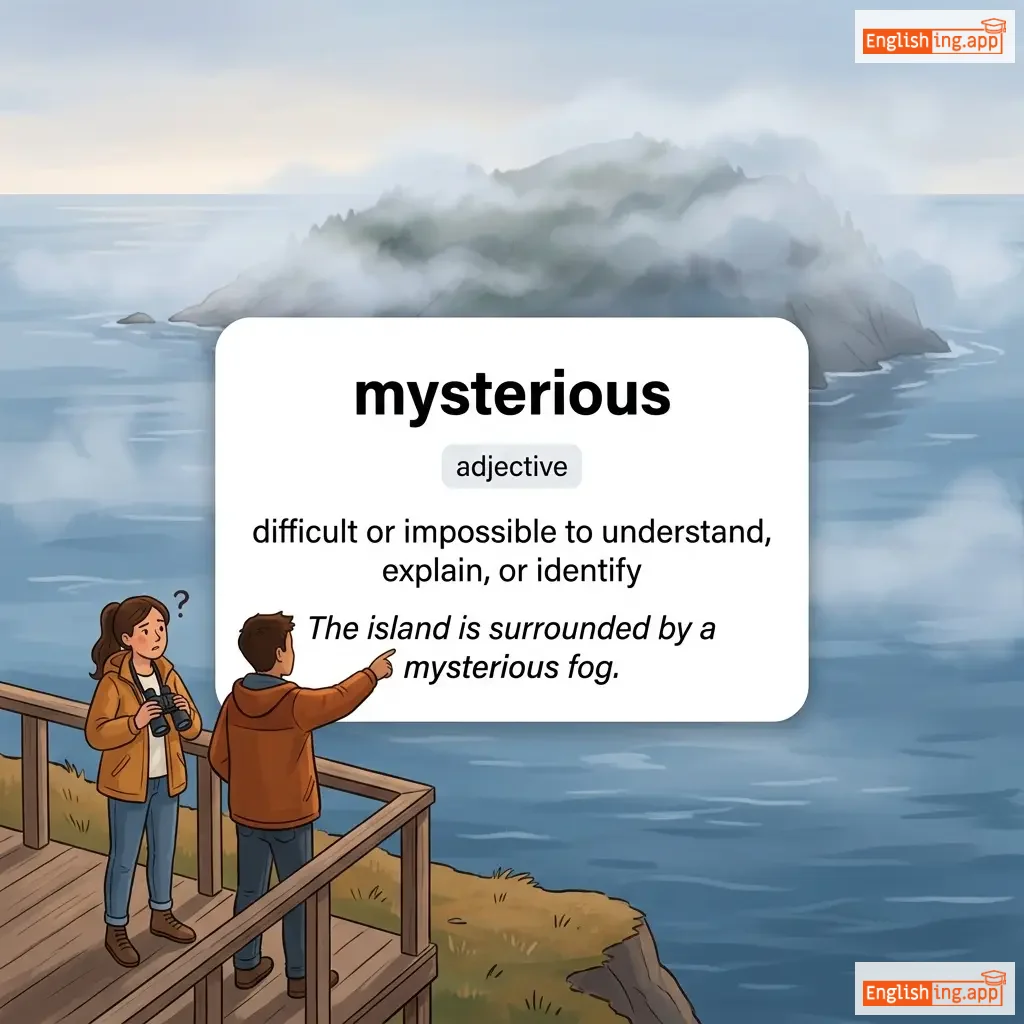
mysterious definition card — visual illustration of the meaning
adjective
/mɪˈstɪəriəs/
神秘的 (shinpiteki)

difficult or impossible to understand, explain, or identify

"The island is surrounded by a mysterious fog."

"島は神秘的な霧に包まれています。" (Shima wa shinpiteki na kiri ni tsutsumareteimasu.)
narcissism definition card — visual illustration of the meaning
noun
/ˈnɑːrsɪsɪzəm/
自己愛 (jikoi)

Excessive interest in or admiration of oneself.

"His constant selfies were a sign of his narcissism."

"彼の絶え間ない自撮りは、彼の自己愛の表れだった。" (kare no taemajanai jidorii wa, kare no jikoi no araware datta.)
adjective
/ˈmɛtrɪkəl/
韻律の (inritsu no)

Relating to or composed in a regular rhythmic pattern of beats or meter, especially in poetry.

"The poet carefully followed metrical rules in his verses."

"詩人は自分の詩の中でメトリカルなルールを慎重に守った。" (Shijin wa jibun no shi no naka de metorikaru na rūru o shinchō ni mamotta.)
adjective
/ˈmɛtrɪk/
メトリック (metorikku)

Relating to the metric system of measurement; also, a standard of measurement used to assess performance.

"The company tracks success using clear performance metrics."

"会社は明確なパフォーマンス指標を使用して成功を追跡しています。" (Kaisha wa meikaku na pafōmansu shihyō o shiyō shite seikō o tsuiseki shiteimasu.)
noun
/mɪˈtɒnɪmi/
換喩 (kan'yu)

A figure of speech in which one word or phrase is substituted with another closely related word or concept.

"In the phrase 'the crown will decide,' 'crown' is a metonymy for monarchy."
"フレーズ「王冠が決定する」では、「王冠」が君主制の換喩です。" (Furēzu 'ōkan ga kettei suru' de wa, 'ōkan' ga kunshusei no kan'yu desu.)
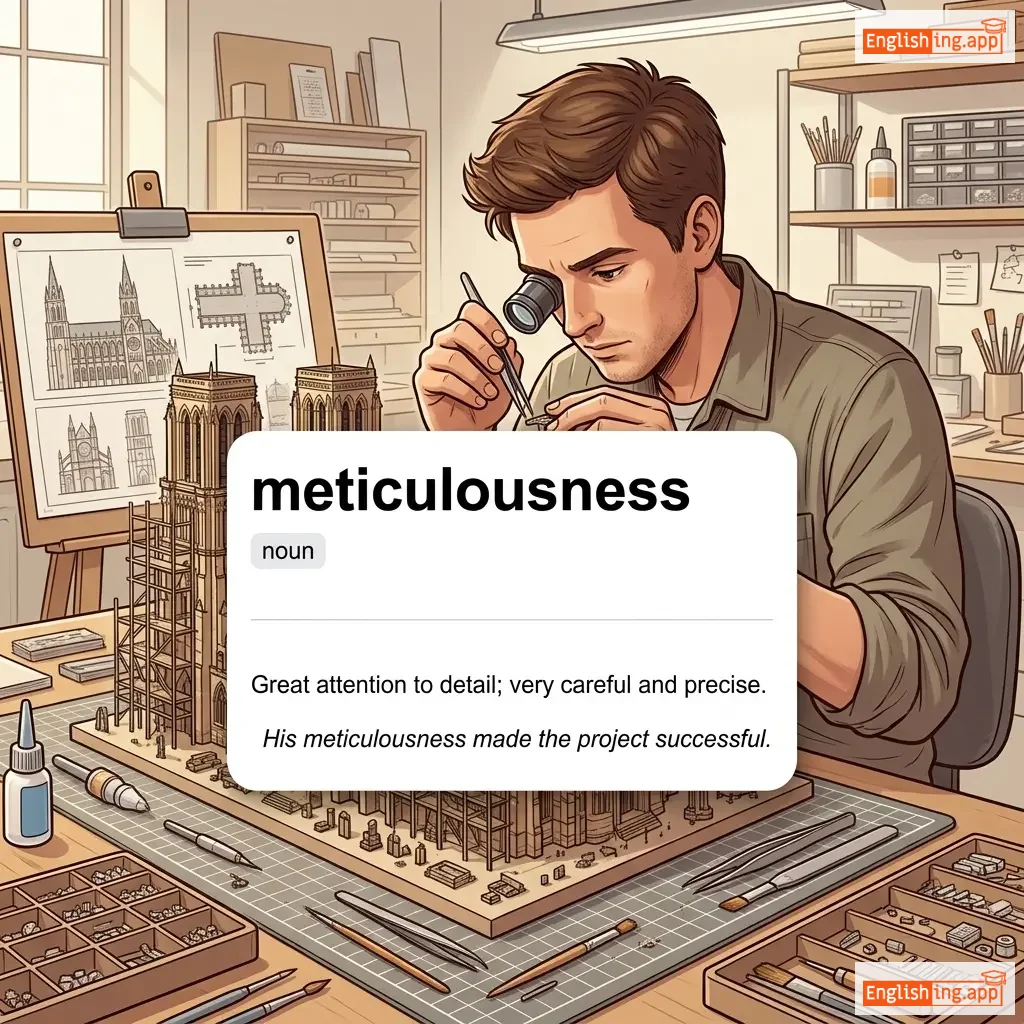
meticulousness definition card — visual illustration of the meaning
noun
mɪˈtɪkjʊləsnɪs
詳細への注意 (shousai e no chuui)

Great attention to detail; very careful and precise.

"His meticulousness made the project successful."
"彼のメティキュラスネスはプロジェクトを成功させました。" (Kare no metikyurasunesu wa purojekuto wo seikou saseshimashita.)
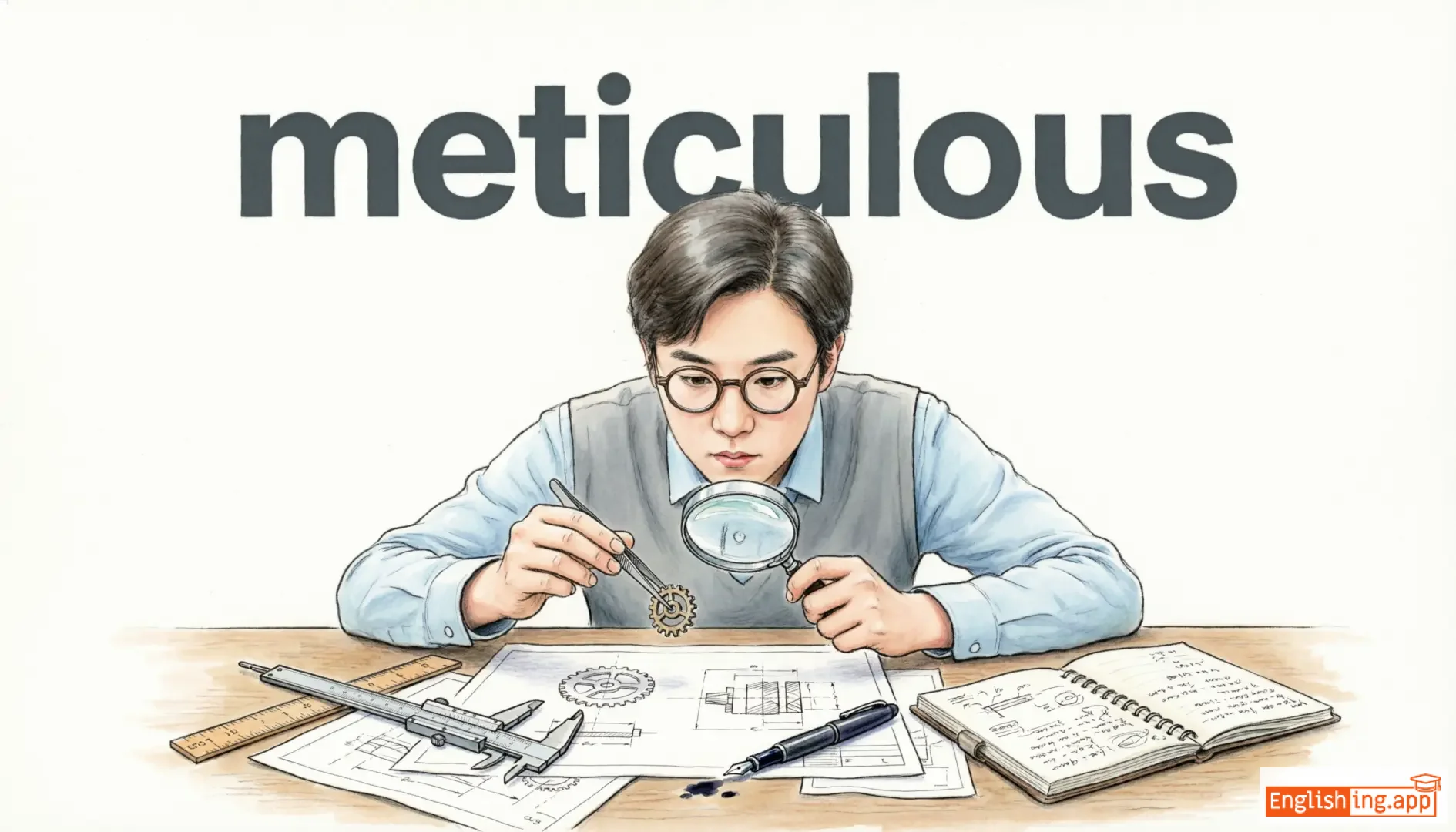
meticulous definition card — visual illustration of the meaning
adjective
/məˈtɪkjʊləs/
几帳面 (kichoumen)

Showing great attention to detail; very careful and precise.

"The artist was meticulous in painting every tiny detail."

"その芸術家は、すべての小さな詳細を描くのに几帳面でした。" (Sono geijutsuka wa, subete no chiisana shousai o kaku no ni kichoumen deshita.)
noun
/ˌmɛθəˈdɑlədʒi/
方法論 (hōhōron)

A system of methods used in a particular area of study or activity.

"The research was conducted using a new methodology."
"その研究は新しいメソドロジーを使って行われました。" (Sono kenkyū wa atarashī mesodorojī o tsukatte okonaware mashita.)
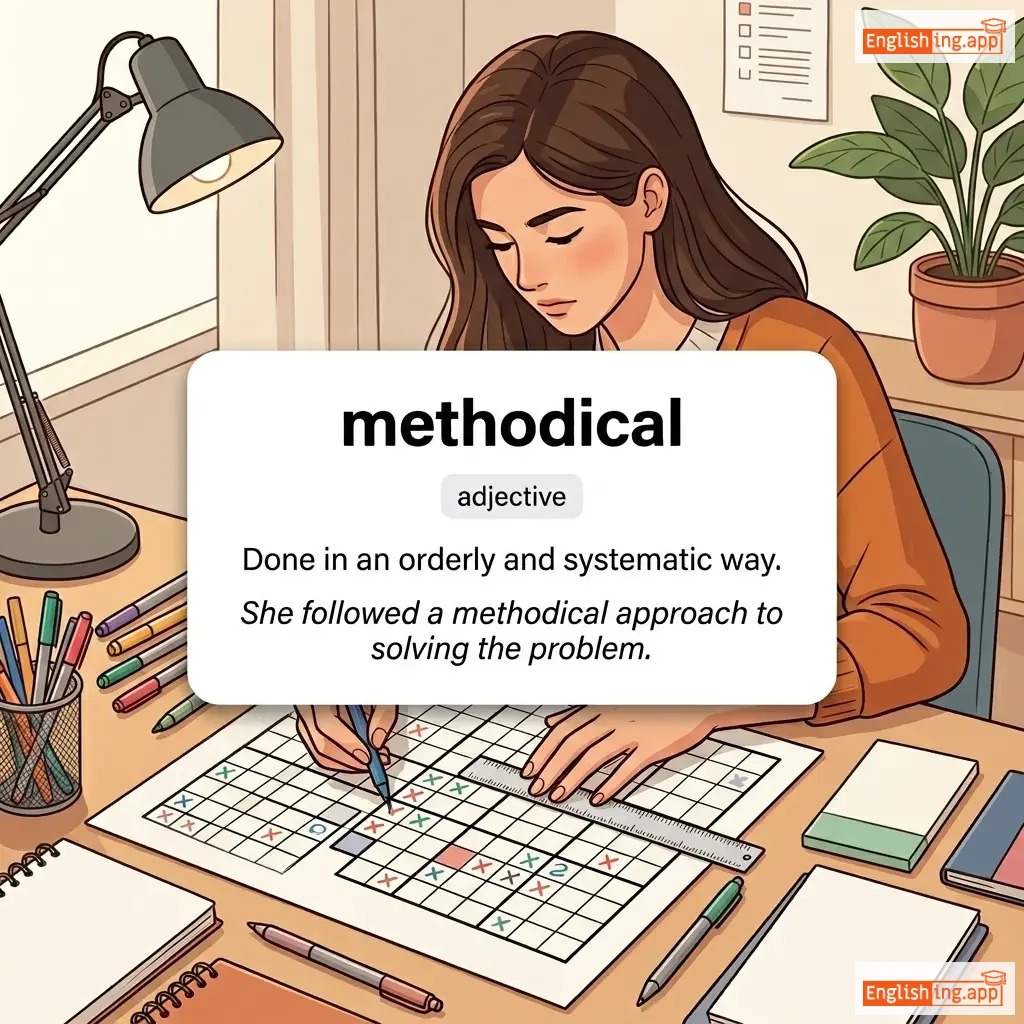
methodical definition card — visual illustration of the meaning
adjective
/məˈθɒdɪkəl/
体系的な (taikeiteki na)

Done in an orderly and systematic way.

"She followed a methodical approach to solving the problem."

"彼女は問題解決に体系的なアプローチを取った。" (Kanojo wa mondai kaiketsu ni taikeiteki na apurōchi o totta.)
noun
/ˈmɛθəd/
方法 (hōhō)

A particular way or process of doing something.

"She explained the method of solving the problem."

"彼女は問題を解決する方法を説明しました。" (Kanojo wa mondai o kaiketsu suru hōhō o setsumei shimashita.)
noun
/ˈmiːtər/
メートル (mētoru)

A unit of length in the metric system equal to 100 centimeters; also, a device that measures quantity such as electricity or gas.

"The technician came to check the electricity meter."

"技術者が電気メーターをチェックしに来ました。" (Gijutsusha ga denki mētā o chekku shi ni kimashita.)
noun
/ˌmiːtiəˈrɒlədʒi/
気象学 (kishougaku)

The scientific study of the atmosphere and weather.

"He chose to specialize in meteorology to study weather patterns."
"彼は天気のパターンを研究するために気象学を専門に選びました。" (Kare wa tenki no pataan wo kenkyuu suru tame ni kishougaku wo senmon ni erabimashita.)
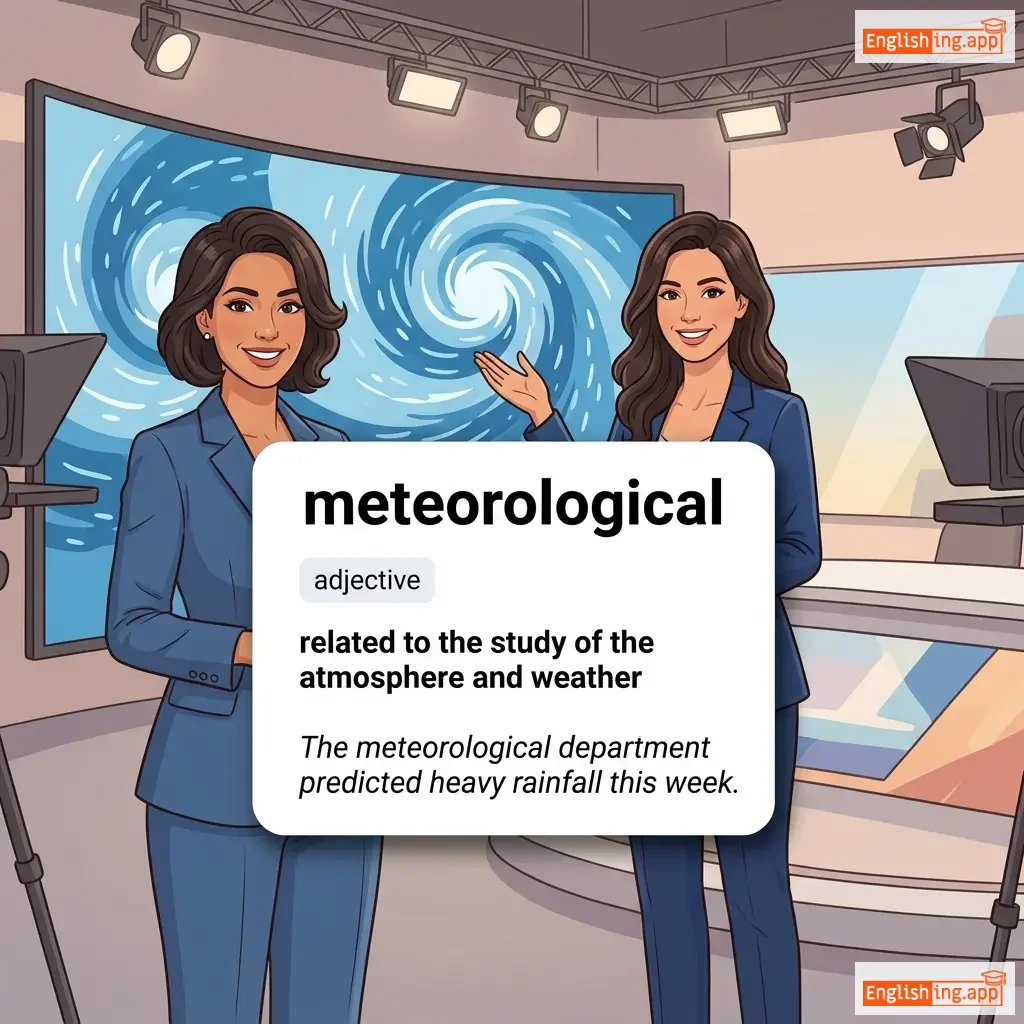
meteorological definition card — visual illustration of the meaning
adjective
/ˌmiː.ti.ə.rəˈlɒ.dʒɪ.kəl/
気象学的 (kishōgakuteki)

related to the study of the atmosphere and weather

"The meteorological department predicted heavy rainfall this week."

"気象学部門は今週の大雨を予測しました。" (Kishōgakubumon wa konshū no ōame o yosoku shimashita.)
adjective
/ˌmiːtiˈɔːrɪk/
流星に関連する; 非常に迅速で、しばしば一時的な。 (ryuusei ni kanren suru; hijou ni jinsoku de, shibashiba ichijiteki na.)

Relating to meteors; very rapid and often temporary.

"The singer’s meteoric rise to fame surprised everyone."

"歌手の流星のような名声の上昇は皆を驚かせた。" (Kashu no ryuusei no you na meisei no joushou wa mina o odorokaseta.)
noun
/ˌmɛtəmˌsaɪˈkoʊsɪs/
魂の転生 (tamashī no tensei)

The supposed transmigration of the soul, especially its reincarnation after death.

"Ancient philosophers often debated the idea of metempsychosis."

"古代の哲学者たちは、しばしば魂の転生について議論していました。" (Kodai no tetsugakusha-tachi wa, shibashiba tamashī no tensei ni tsuite giron shite imashita.)
verb
/miːt/
分配する (bunkai suru)

To dispense or allot justice, punishment, or harsh treatment.

"The judge will mete out punishment according to the crime."
"裁判官は犯行に応じて罰を分配します。" (Saibankan wa hankō ni ōjite batsu o bunkai shimasu.)
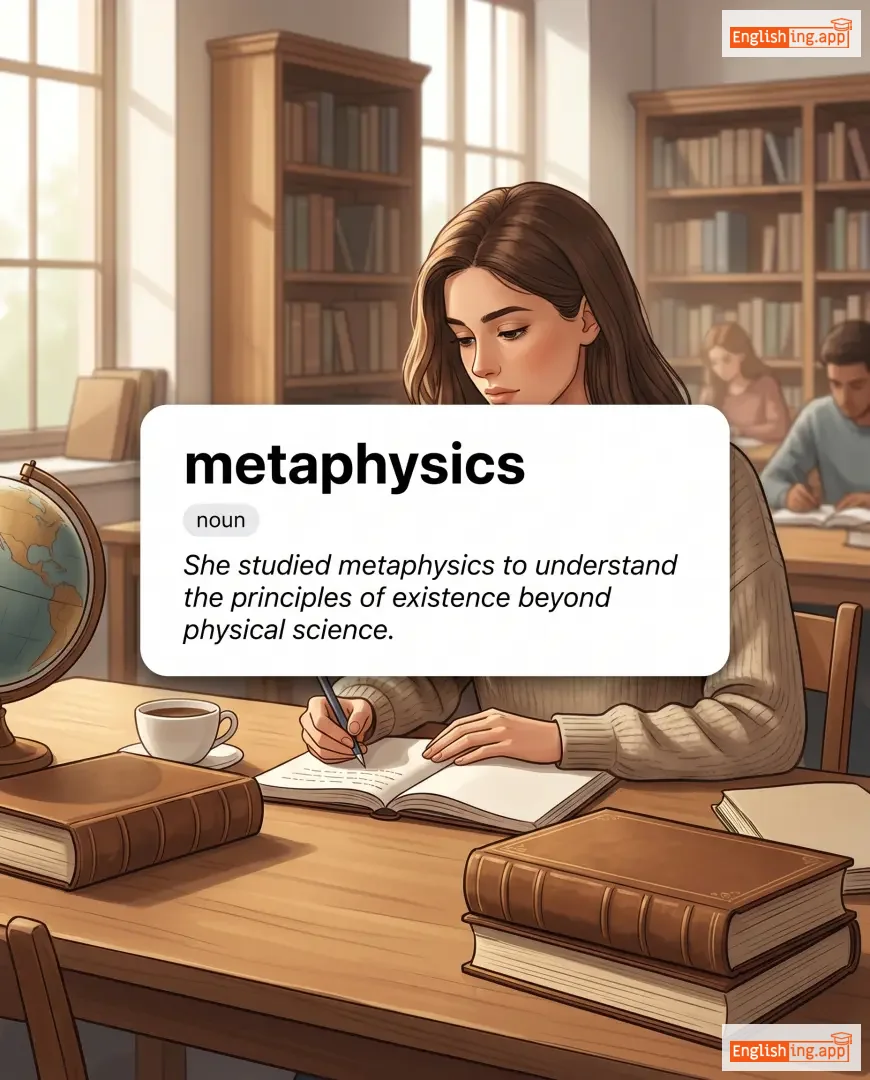
metaphysics definition card — visual illustration of the meaning
noun
/ˌmɛtəˈfɪzɪks/
形而上学 (kējōgaku)

The branch of philosophy that deals with the fundamental nature of reality, existence, and the relationship between mind and matter.

"She studied metaphysics to understand the principles of existence beyond physical science."

"彼女は物理学を超えた存在の原理を理解するために形而上学を学びました。" (Kanojo wa butsurigaku o koeta sonzai no genri o rikai suru tame ni kējōgaku o manabimashita.)
noun
/ˌmɛtəfɪˈzɪʃən/
形而上学者 (keijou-gakusha)

A person who studies or is an expert in metaphysics.

"The metaphysician debated the essence of reality with his peers."

"形而上学者は現実の本質について仲間たちと議論した。" (Keijou-gakusha wa genjitsu no honshitsu ni tsuite nakamatachi to giron shita.)
adjective
/ˌmɛtəˈfɪzɪkəl/
形而上学的 (keijou shougakuteki)

Relating to the branch of philosophy that deals with the fundamental nature of reality and existence.

"He spent years studying metaphysical questions about life and being."

"彼は人生と存在に関する形而上学的な問題を何年も研究しました。" (Kare wa jinsei to sonzai ni kansuru keijou shougakuteki na mondai o nannen mo kenkyuu shimashita.)
noun
/ˈmɛtəfɔːrm/
隠喩の形 (in'yu no katachi)

A coined or rare term sometimes used to describe a hybrid form of metaphor and form in literature or art.

"The poet introduced a metaphorm to blend imagery with structure."

"詩人はイメージと構造を結びつけるためにメタフォームを導入しました。" (Shijin wa imēji to kōzō o musubitsukeru tame ni metafōmu o dōnyū shimashita.)
adjective
/ˌmɛtəˈfɔːrɪkəl/
比喩的な (hiyuteki na)

Characteristic of or relating to metaphor; figurative rather than literal.

"He used metaphorical language to describe his emotions."

"彼は感情を表現するために比喩的な言葉を使った。" (Kare wa kanjou o hyougen suru tame ni hiyuteki na kotoba o tsukatta.)
noun
/ˈmɛtəfɔːr/
幸せ (shiawase)

A figure of speech in which a word or phrase is applied to something to which it is not literally applicable.

"Time is a thief is a common metaphor for how quickly life passes."

"彼女は賞を受け取ったとき、自分の幸せを隠せなかった。" (Kanojo wa shō o uketotta toki, jibun no shiawase o kakusenakatta.)
verb, noun
/mɛʃ/
メッシュ, 絡ませる (messhu, karamaseru)

To fit or work together properly; or a material made of interlaced threads.

"The two gears mesh perfectly to keep the machine running smoothly."
"二つの歯車が完璧に噛み合って、機械がスムーズに動く。" (Futatsu no haguruma ga kanpeki ni kamiatte, kikai ga sumūzu ni ugoku.)
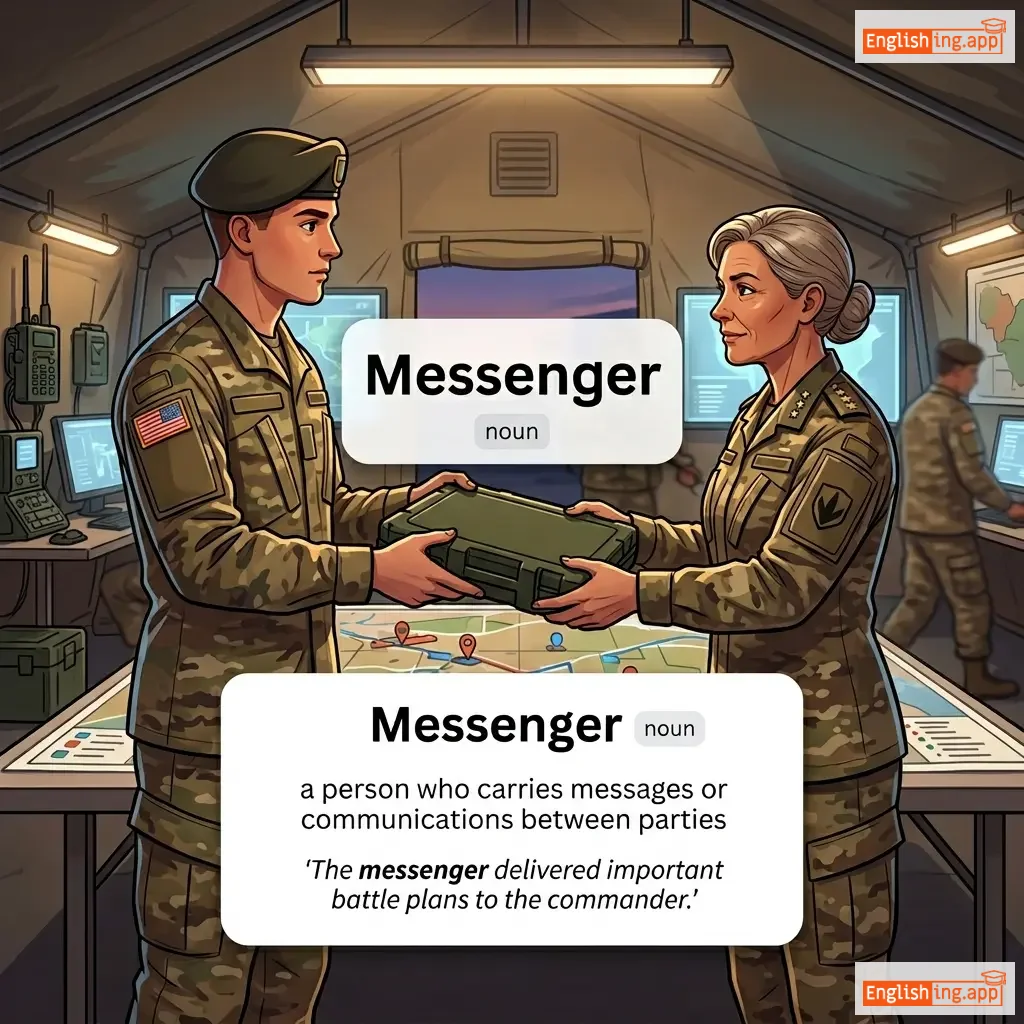
Messenger definition card — visual illustration of the meaning
noun
/ˈmes.ɪn.dʒər/
使者 (shisha)

a person who carries messages or communications between parties

"The messenger delivered important battle plans to the commander."

"使者は司令官に重要な戦闘計画を届けました。" (Shisha wa shireikan ni jūyōna sentō keikaku o todokemashita.)
noun
/ˈmɛsɪdʒ/
メッセージ (messeji)

A piece of information sent or communicated from one person to another.

"I received a message from my friend yesterday."
"昨日、友達からメッセージを受け取りました。" (Kinō, tomodachi kara mesēji o uketorimashita.)
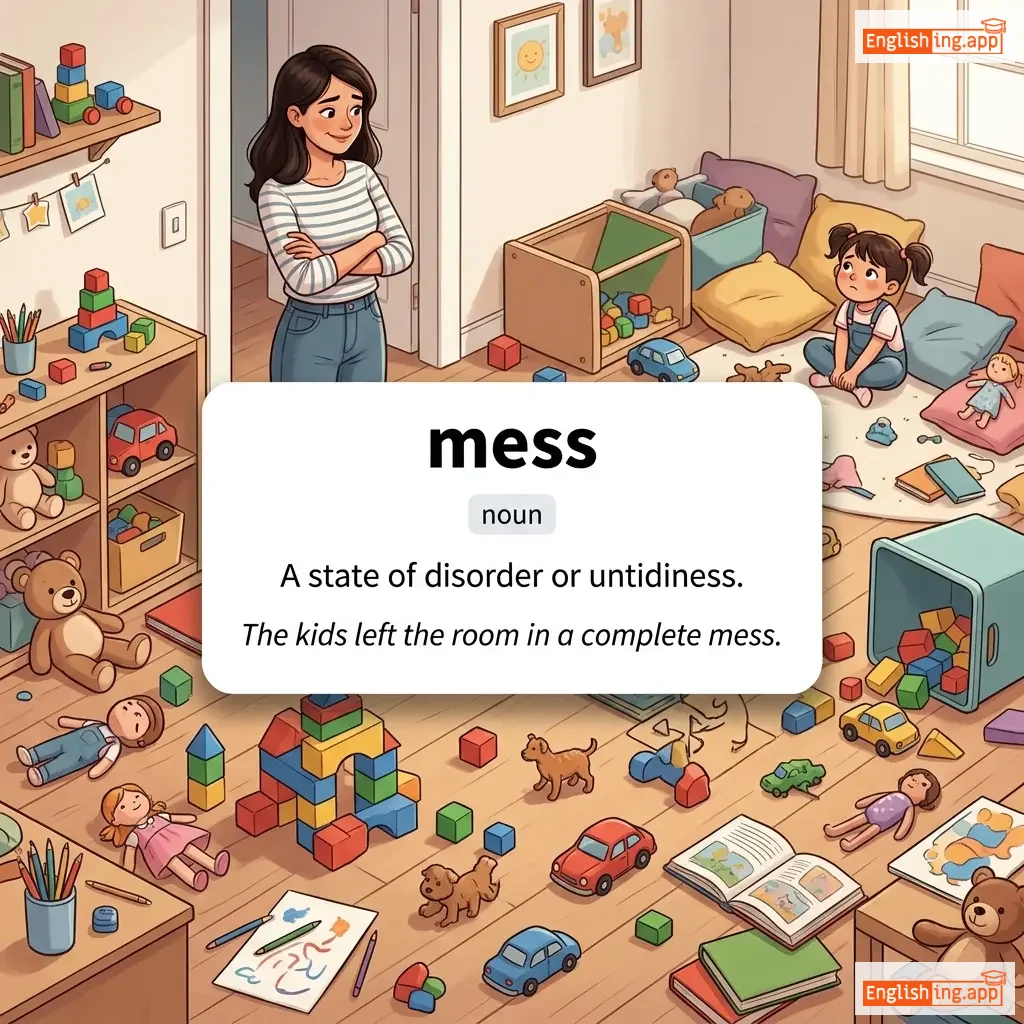
mess definition card — visual illustration of the meaning
noun
/mɛs/
混乱 (konran)

A state of disorder or untidiness.

"The kids left the room in a complete mess."

"子供たちは部屋を完全に混乱させました。" (Kodomotachi wa heya o kanzen ni konran sasemashita.)
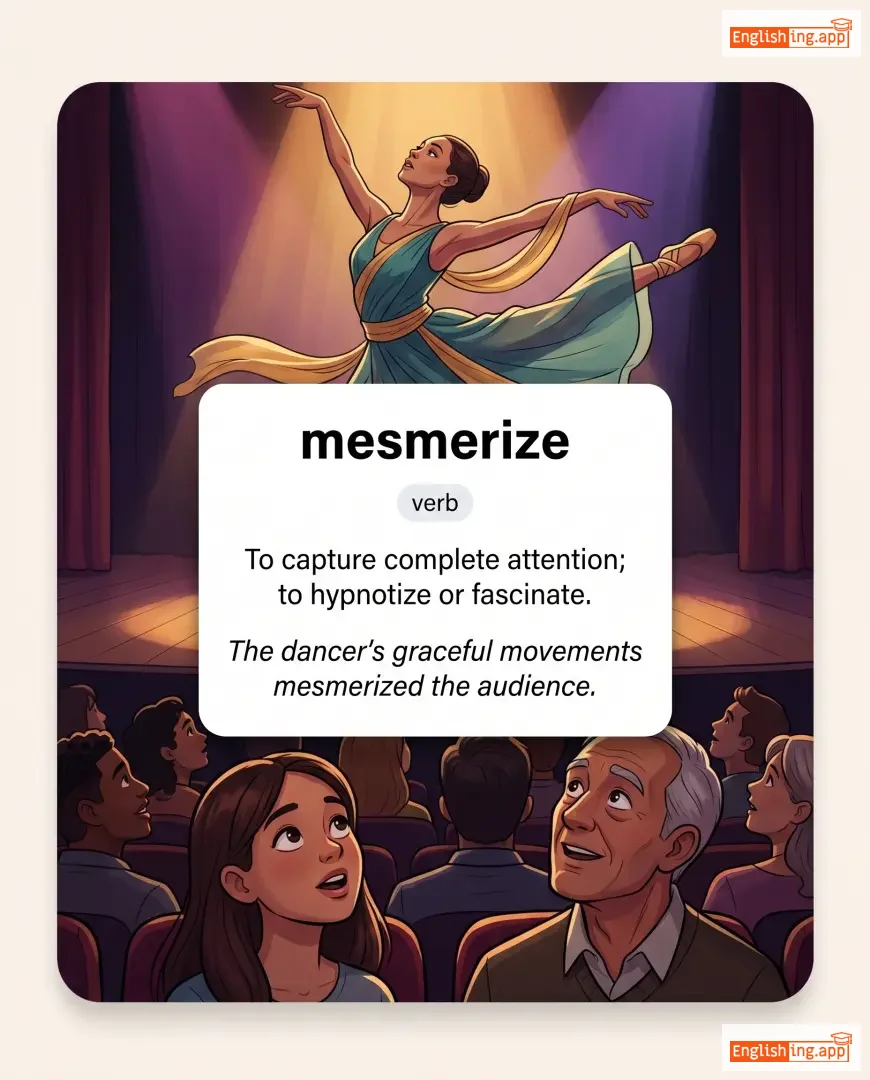
mesmerize definition card — visual illustration of the meaning
verb
/ˈmɛzməˌraɪz/
魅了する (miryou suru)

To capture complete attention; to hypnotize or fascinate.

"The dancer's graceful movements mesmerized the audience."

"ダンサーの優雅な動きは観客を魅了しました。" (Dānsā no yūga na ugoki wa kankyaku o miryō shimashita.)
noun
/ˈmɛzməˌrɪzəm/
催眠術 (saiminjutsu)

A state of fascination or hypnotism.

"The magician held the audience in a state of mesmerism."

"マジシャンは観客を催眠状態に保っていた。" (Majishan wa kankyaku wo saimin joutai ni tamotteita.)
adverb
/ˈmerɪli/
楽しそうに (tanoshisou ni)

in a cheerful and joyful manner

"The children played merrily in the garden."

"子供たちは庭で楽しそうに遊んでいました。" (Kodomotachi wa niwa de tanoshisou ni asonde imashita.)
adjective
/ˌmɛrɪˈtɔːriəs/
功績がある (kōseki ga aru)

Deserving reward, praise, or recognition.

"She received a scholarship for her meritorious academic performance."

"彼女はその功績がある学業成績で奨学金を受け取った。" (Kanojo wa sono kōseki ga aru gakugyō seiseki de shōgakukin o uketotta.)
noun
/ˈmɛr.meɪd/
人魚 (ningyo)

A mythical sea creature with the head and torso of a woman and the tail of a fish

"The little girl loved stories about mermaids living under the sea."

"小さな女の子は海の下に住む人魚の話が好きでした。" (chiisana onnanoko wa umi no shita ni sumu ningyo no hanashi ga suki deshita.)