語彙集

英単語辞書 | 単語の意味、定義、例文

adverb
/ˈnɪəli/
ほぼ (hobo)

almost, but not completely

"She nearly missed the bus."

"彼女はほぼバスに乗り遅れるところだった。" (Kanojo wa hobo basu ni noriokureru tokoro datta.)
adjective
/ˈnɪəˌbaɪ/
近く (chikaku)

close to a particular place or person

"The nearest gas station is nearby."

"最寄りのガソリンスタンドは近くにあります。" (Moyori no gasorin sutando wa chikaku ni arimasu.)
adverb
/ˈnɪərbaɪ/
近く; 近所 (chikaku; kinjo)

close to; not far away; in the neighborhood

"There is a grocery store nearby."

"近くに食料品店があります。" (Chikaku ni shokuryouhinten ga arimasu.)
preposition
/nɪə(r)/
近く (chikaku)

At or to a short distance away; close in space, time, or relationship.

"There is a park near my house."

"私の家の近くに公園があります。" (Watashi no ie no chikaku ni kōen ga arimasu.)
noun
/niːp/
小潮 (shōchō)

A tide just after the first or third quarters of the moon when the difference between high and low tide is least.

"During a neap tide, the water level change is minimal."

"ニープタイドの間、水位の変化は最小限です。" (Nīpu taido no aida, suii no henka wa saishōgen desu.)
noun
/ˌɛn.biː.esˈpiː/
ノンブレイキングスペース (non breaking space)

a non-breaking space character in HTML used to prevent an automatic line break at its position

"Use   in HTML to add a space that won't break into a new line."

"HTMLで改行しないスペースを追加するために を使用します。" (HTML de kaigyō shinai supēsu o tsuika suru tame ni  o shiyō shimasu.)
noun
/ˈneɪˌseɪ.ɪŋ/
否定的な発言 (hiteiteki na hatsugen)

The act of expressing negative or pessimistic views.

"His constant naysaying discouraged the team."

"彼の絶え間ない否定的な発言はチームをがっかりさせました。" (Kare no taemanai hiteiteki na hatsugen wa chiimu wo gakkari saseshimashita.)
Navy definition card — visual illustration of the meaning
noun
/ˈneɪvi/
海軍 (kaigun)

the branch of armed forces that conducts military operations at sea

"He joined the navy after graduating from college."
"彼は大学を卒業した後、海軍に入隊した。" (Kare wa daigaku o sotsugyō shita ato, kaigun ni nyūtai shita.)
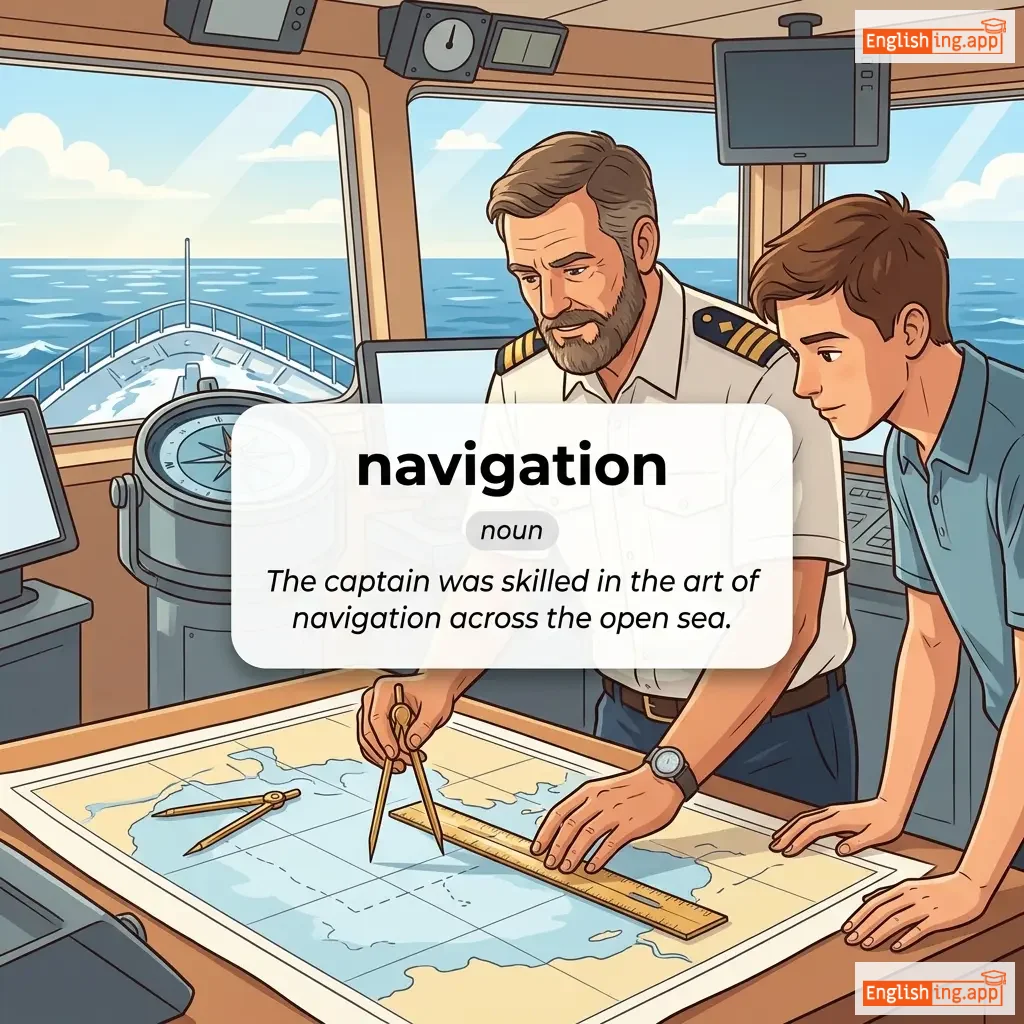
navigation definition card — visual illustration of the meaning
noun
/ˌnævɪˈɡeɪʃən/
ナビゲーション (navigēshon)

the process or activity of accurately determining one's position and planning and following a route

"The captain was skilled in the art of navigation across the open sea."

"キャプテンは開けた海での航海術に熟練していました。" (kyaputen wa aketa umi de no kōkaijutsu ni jukuren shiteimashita.)
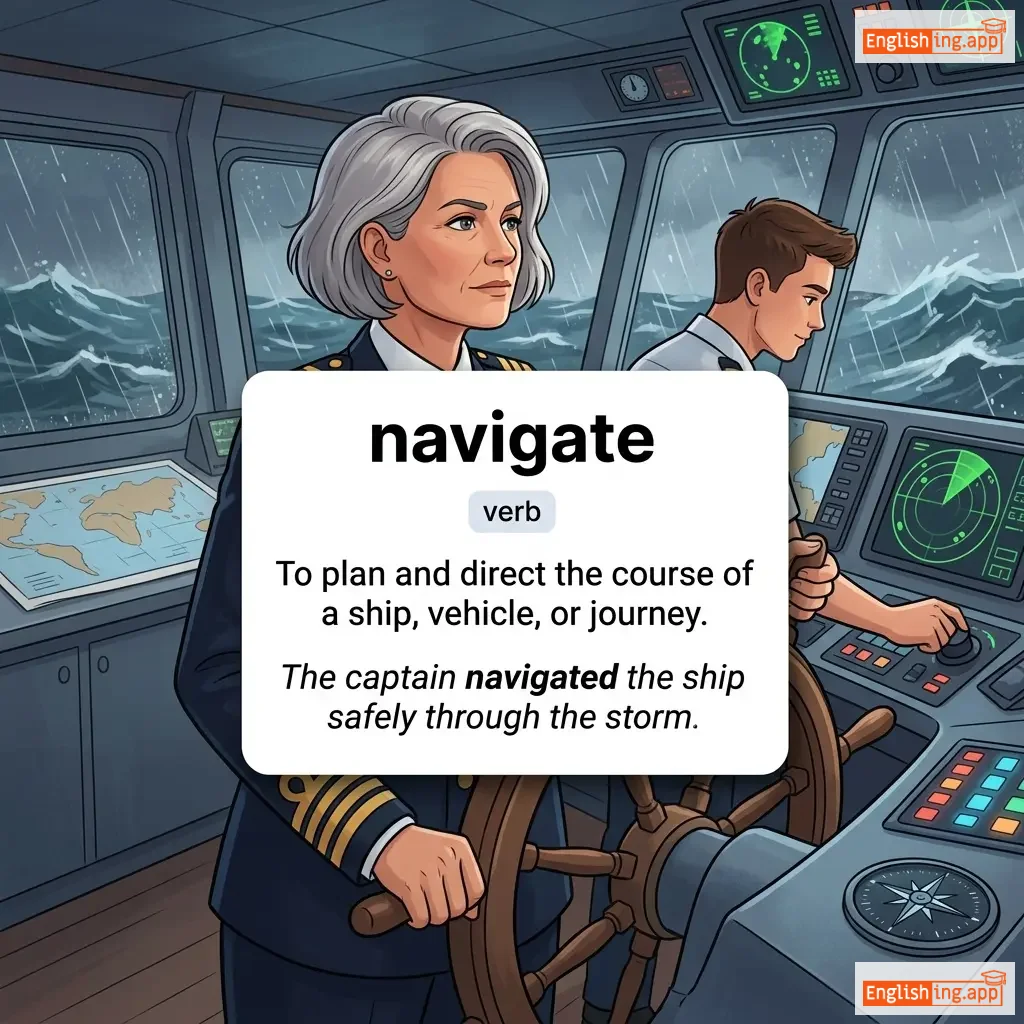
navigate definition card — visual illustration of the meaning
verb
/ˈnæv.ɪ.ɡeɪt/

To plan and direct the course of a ship, vehicle, or journey.

"The captain navigated the ship safely through the storm."

adjective
/ˈnæv.ɪ.ɡə.bəl/
航行可能 (kōkō kanō)

Able to be sailed on or through by ships or boats.

"The river is navigable for large cargo ships."

"その川は大型貨物船にとって航行可能です。" (Sono kawa wa ōgata kamotsusen ni totte kōkō kanō desu.)
👶

Navel

noun
/ˈneɪvəl/

the small hollow or raised area in the middle of the stomach, also called the belly button

"The baby’s navel was carefully cleaned after birth."

noun
/neɪv/
教会の中央部 (kyoukai no chuoubu)

the central part of a church building intended to accommodate the congregation

"The choir sang beautifully in the church nave."
"合唱団は教会のネイヴで美しく歌いました。" (Gasshoudan wa kyoukai no neivu de utsukushiku utaimashita.)
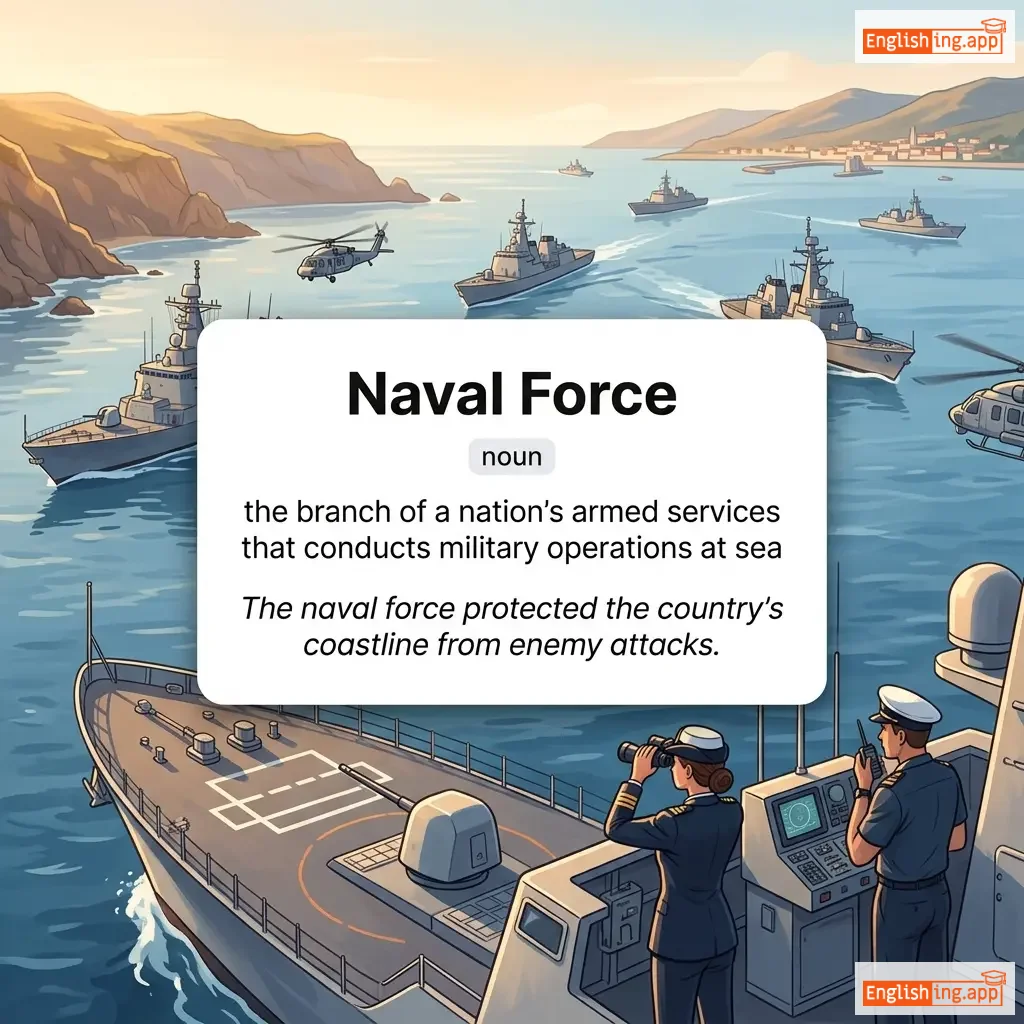
Naval Force definition card — visual illustration of the meaning
noun
/ˈneɪ.vəl fɔːrs/
海軍 (Kaigun)

the branch of a nation's armed services that conducts military operations at sea

"The naval force protected the country's coastline from enemy attacks."

"海軍は敵の攻撃から国の海岸線を守った" (Kaigun wa teki no kougeki kara kuni no kaiganssen o mamotta)
adjective
/ˈneɪvəl/
海軍の (kaigun no)

relating to a country's navy or military ships

"The country invested heavily in naval defense."

"その国は海軍防衛に多額の投資をしました。" (Sono kuni wa kaigun bōei ni tagaku no tōshi o shimashita.)
adjective
/ˈnɔːtɪkəl/
航海 (koukai)

relating to ships, sailors, or navigation on water

"He studied nautical charts before setting sail."

"彼は出航前に海図を勉強しました。" (Kare wa shukkou mae ni kaizu wo benkyou shimashita.)
adjective
/ˈnɔːʃəs/
吐き気を感じる (hakike o kanjiru)

feeling like you are about to vomit; causing a feeling of sickness

"The smell of rotten food made her feel nauseous."

"腐った食べ物の匂いが彼女に吐き気を感じさせた。" (kusatta tabemono no nioi ga kanojo ni hakike o kanjiraseta.)
verb
/ˈnɔːzieɪt/
吐き気を催す (hakike o moyasu)

To make someone feel sick, with an inclination to vomit.

"The spoiled food nauseated him quickly."

"腐った食べ物は彼をすぐに吐き気を催させました。" (Kusatta tabemono wa kare o sugu ni hakike o moyosase mashita.)
noun
/ˈnɔːziə/
吐き気 (hakike)

A feeling of sickness with an inclination to vomit.

"The strong smell of paint gave her a sudden nausea."

"強いペンキの匂いが彼女に突然吐き気を与えた。" (Tsuyoi penki no nioi ga kanojo ni totsuzen hakike o ataeta.)
adjective
/ˈnɔːti/
いたずら (itazura)

Disobedient or mischievous, often in a playful or mildly bad way.

"The naughty child drew on the walls with crayons."

"いたずらな子供がクレヨンで壁に絵を描きました。" (Itazura na kodomo ga kureyon de kabe ni e o kakimashita.)
Nature Enthusiasts definition card — visual illustration of the meaning
noun
ˈneɪʧər ɪnˈθjuːziæsts
自然愛好家 (shizen aikouka)

People who have a passionate interest in and love for the natural world and outdoor activities.

"Nature enthusiasts often visit Sajek Valley for its scenic beauty."
"自然愛好家は、その美しい景色のためにサジェックバレーを訪れることがよくあります。" (Shizen aikouka wa, sono utsukushii keshiki no tame ni Sajek Barē o otozureru koto ga yoku arimasu.)
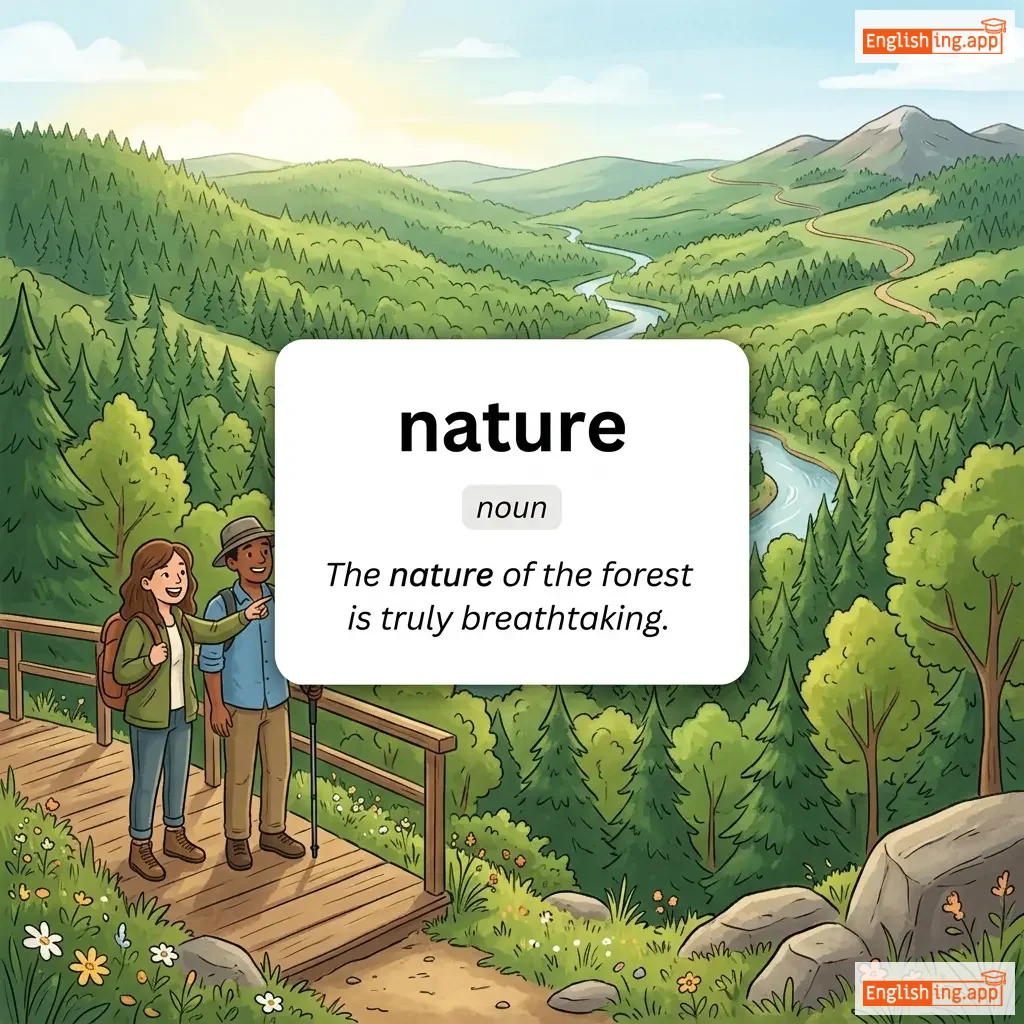
nature definition card — visual illustration of the meaning
noun
/ˈneɪtʃər/
自然 (shizen)

the physical world and everything in it, including plants, animals, and the landscape

"The nature of the forest is truly breathtaking."

"森の自然は本当に息を呑むほど素晴らしい。" (Mori no shizen wa hontō ni iki o nomu hodo subarashī.)
adverb
/ˈnætʃrəli/
自然に (shizen ni)

In a way that is normal, expected, or without effort.

"He spoke so naturally that everyone felt comfortable."
"彼はとても自然に話したので、みんなが快適に感じました。" (Kare wa totemo shizen ni hanashita node, minna ga kaiteki ni kanjimashita.)
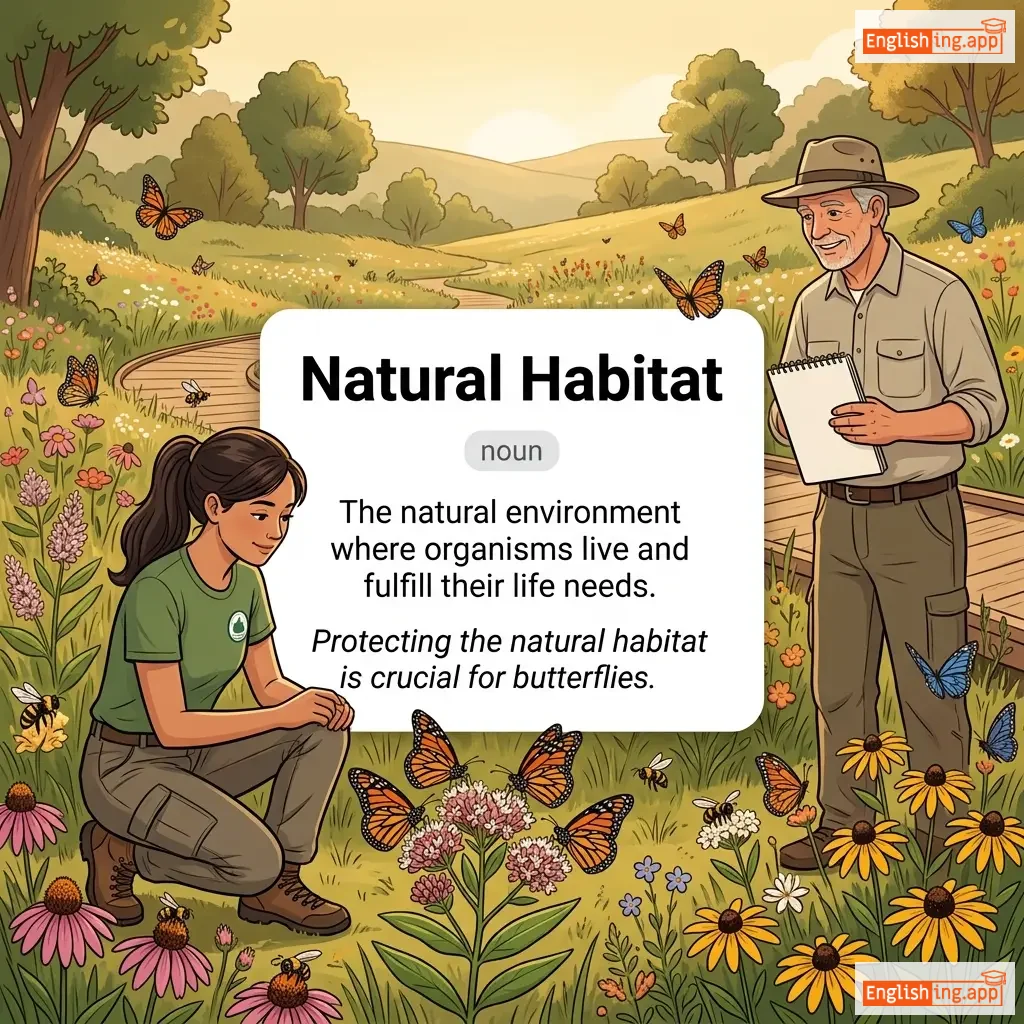
Natural Habitat definition card — visual illustration of the meaning
noun
ˈnætʃərəl ˈhæbɪtæt
自然の生息地 (shizen no seisokuchi)

The natural environment where organisms live and fulfill their life needs.

"Protecting the natural habitat is crucial for butterflies."

"蝶々のために自然の生息地を守ることが重要です。" (Choucho no tame ni shizen no seisokuchi o mamoru koto ga juuyou desu.)
noun
/ˈnætʃərəl dɪˈzæstər/
自然災害 (shizen saigai)

a catastrophic event caused by natural processes of the Earth that results in significant damage, destruction, or loss of life

"The coastal town was devastated by a natural disaster."

"その沿岸の町は自然災害で壊滅的な被害を受けた。" (sono engan no machi wa shizen saigai de kaimetsuteki na higai o uketa)
adjective
/ˈnætʃərəl/
自然な (shizen na)

existing in or derived from nature; not made or caused by humankind

"She prefers to use natural ingredients in her cooking."

"彼女は料理に自然な食材を使うのが好きです。" (Kanojo wa ryouri ni shizen na shokuzai o tsukau no ga suki desu.)
adjective
/ˈnæti/
おしゃれ (oshare)

Neat, stylish, and fashionable in appearance.

"He looked very natty in his new suit."

"彼は新しいスーツでとてもおしゃれに見えた。" (Kare wa atarashī sūtsu de totemo oshare ni mietta.)
adjective
/ˈneɪtɪv/
ネイティブ (neitibu)

Belonging to a person by birth; originating in a particular place.

"He is a native speaker of Bengali."

"彼はベンガル語のネイティブスピーカーです。" (Kare wa bengaru-go no neitibu supīka desu.)
noun
/mjuːˈteɪʃn/
突然変異、遺伝的変化 (totsuzen hen'i, iden-teki henka)

A change in form, structure, or nature, especially in genetics.

"Scientists discovered a genetic mutation that caused the disorder."

"科学者たちは、その障害を引き起こした遺伝的な突然変異を発見しました。" (Kagakusha-tachi wa, sono shougai o hikiokoshita iden-teki na totsuzen hen'i o hakken shimashita.)
verb
/mʌst/
しなければならない (shinakereba naranai)

to be required or obligated to

"You must complete your homework before you go out."
"あなたは外出する前に宿題を終わらせなければなりません。" (Anata wa gaishutsu suru mae ni shukudai o owarasenakereba narimasen.)
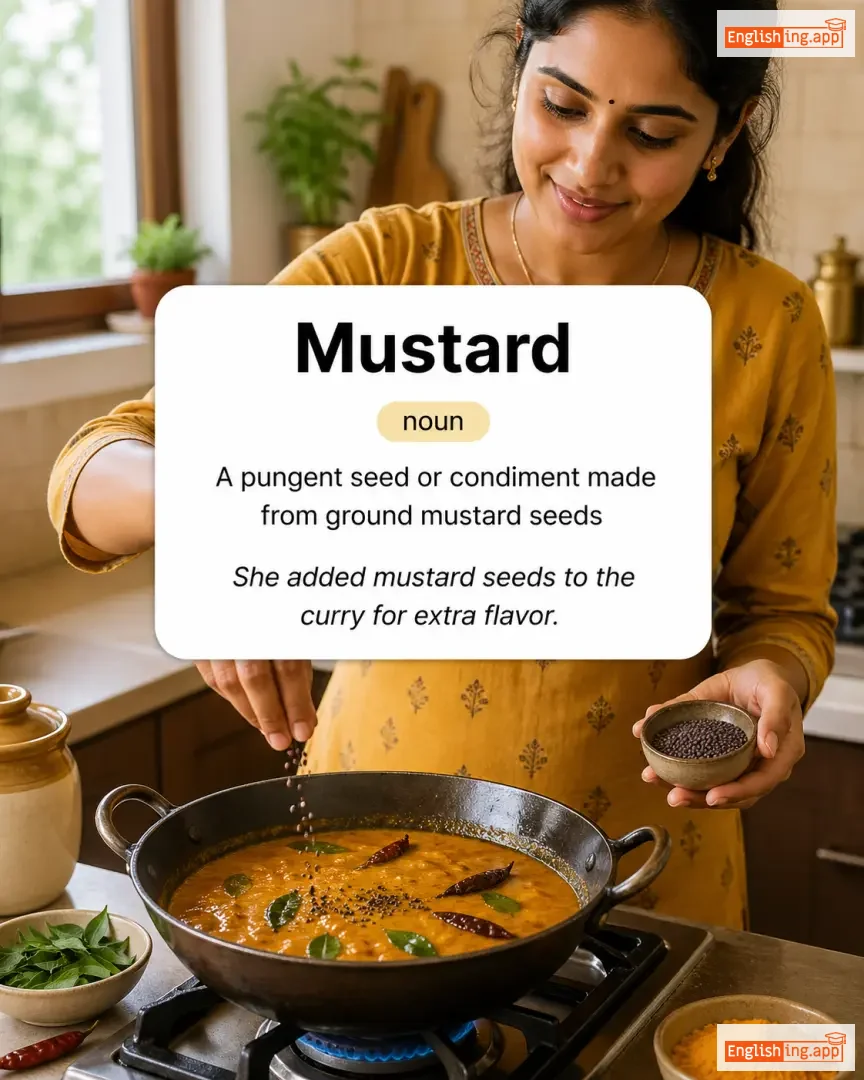
Mustard definition card — visual illustration of the meaning
noun
/ˈmʌs.tərd/
マスタード (masutādo)

A pungent seed or condiment made from ground mustard seeds

"She added mustard seeds to the curry for extra flavor."
"カレーに風味を加えるためにマスタードの種を加えました。" (karē ni fūmi o kuwaeru tame ni masutādo no tane o kuwaemashita.)
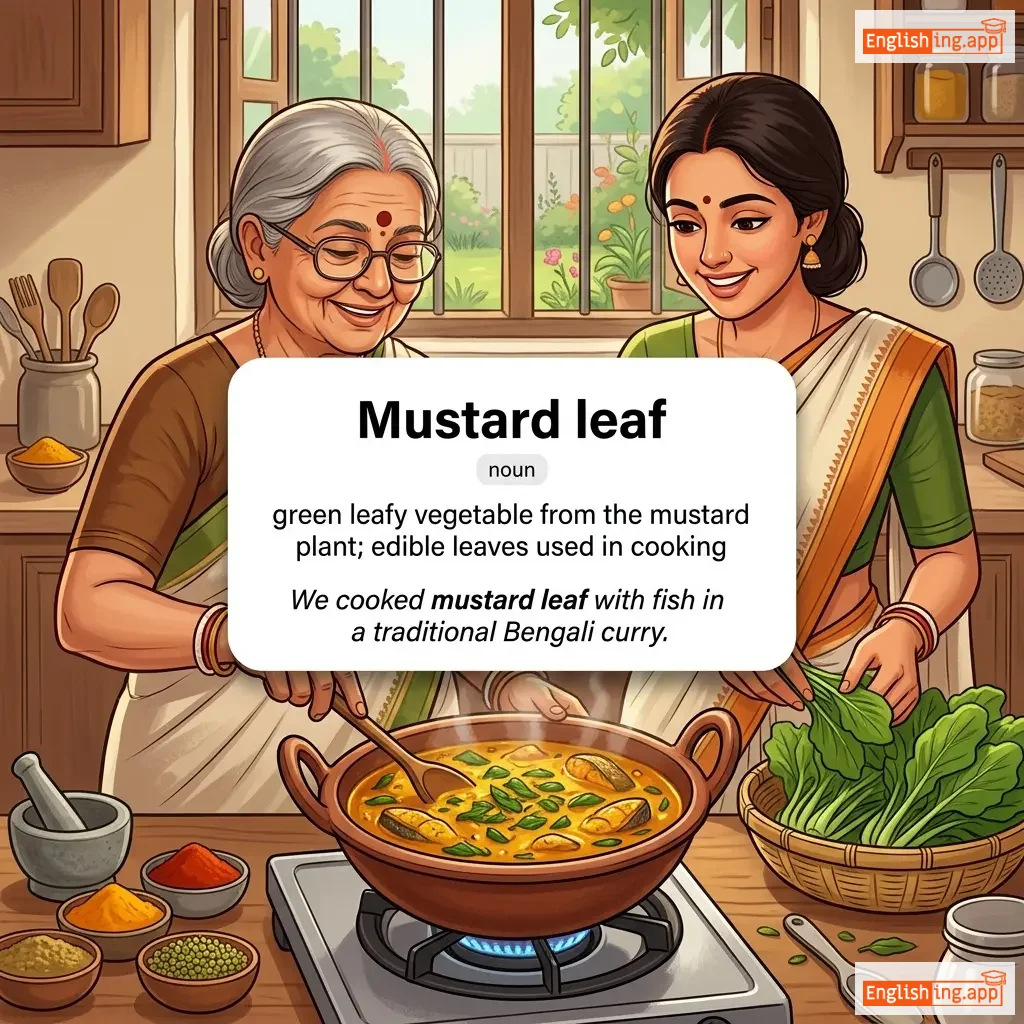
Mustard leaf definition card — visual illustration of the meaning
noun
/ˈmʌs.tərd liːf/
マスタードの葉 (masutādo no ha)

green leafy vegetable from the mustard plant; edible leaves used in cooking

"We cooked mustard leaf with fish in a traditional Bengali curry."
"私たちは伝統的なベンガルカレーで魚と一緒にマスタードリーフを料理しました。" (Watashitachi wa dentō-teki na bengaru karē de sakana to issho ni masutādo rīfu o ryōri shimashita.)
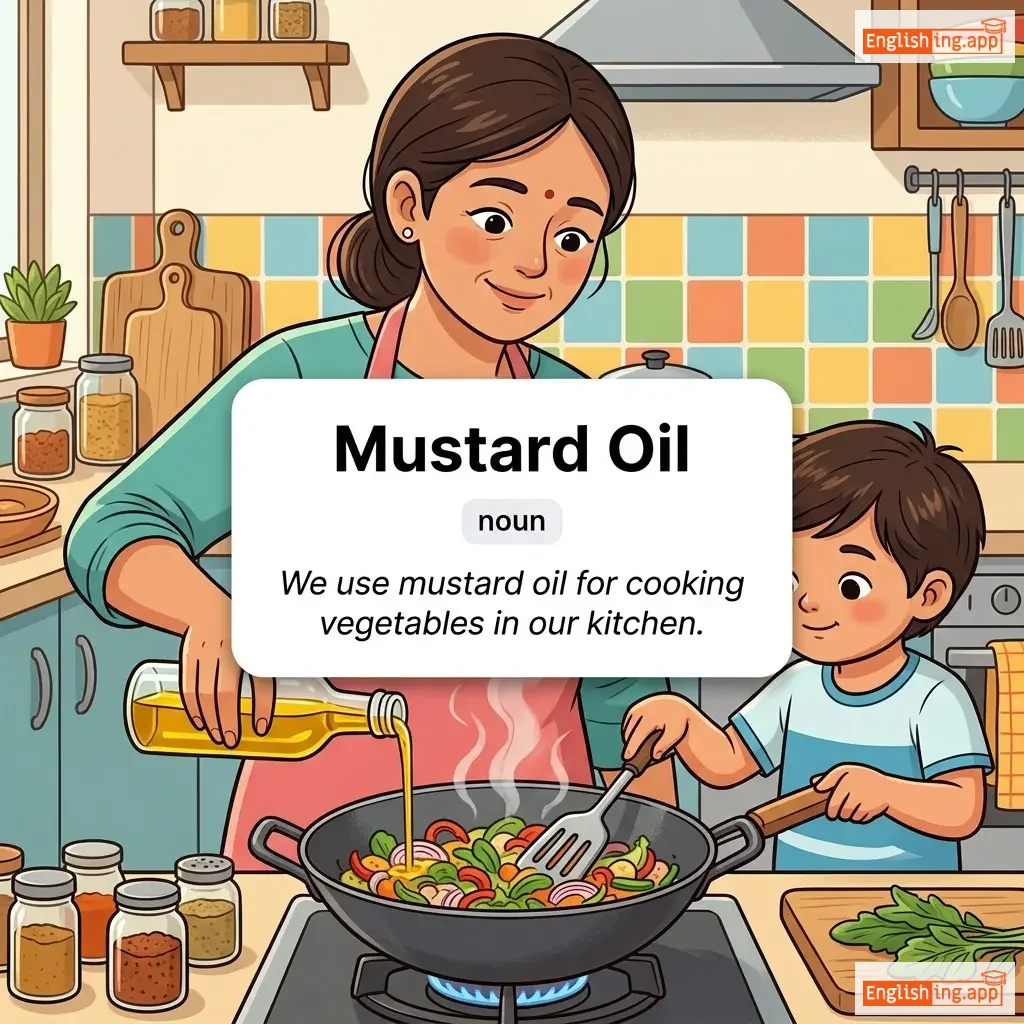
Mustard Oil definition card — visual illustration of the meaning
noun
/ˈmʌstərd ɔɪl/
マスタードオイル (masutādo oiru)

oil extracted from mustard seeds, commonly used for cooking and medicinal purposes

"We use mustard oil for cooking vegetables in our kitchen."
"私たちはキッチンで野菜を調理するためにマスタードオイルを使います。" (Watashitachi wa kicchin de yasai o chōri suru tame ni masutādo oiru o tsukaimasu.)
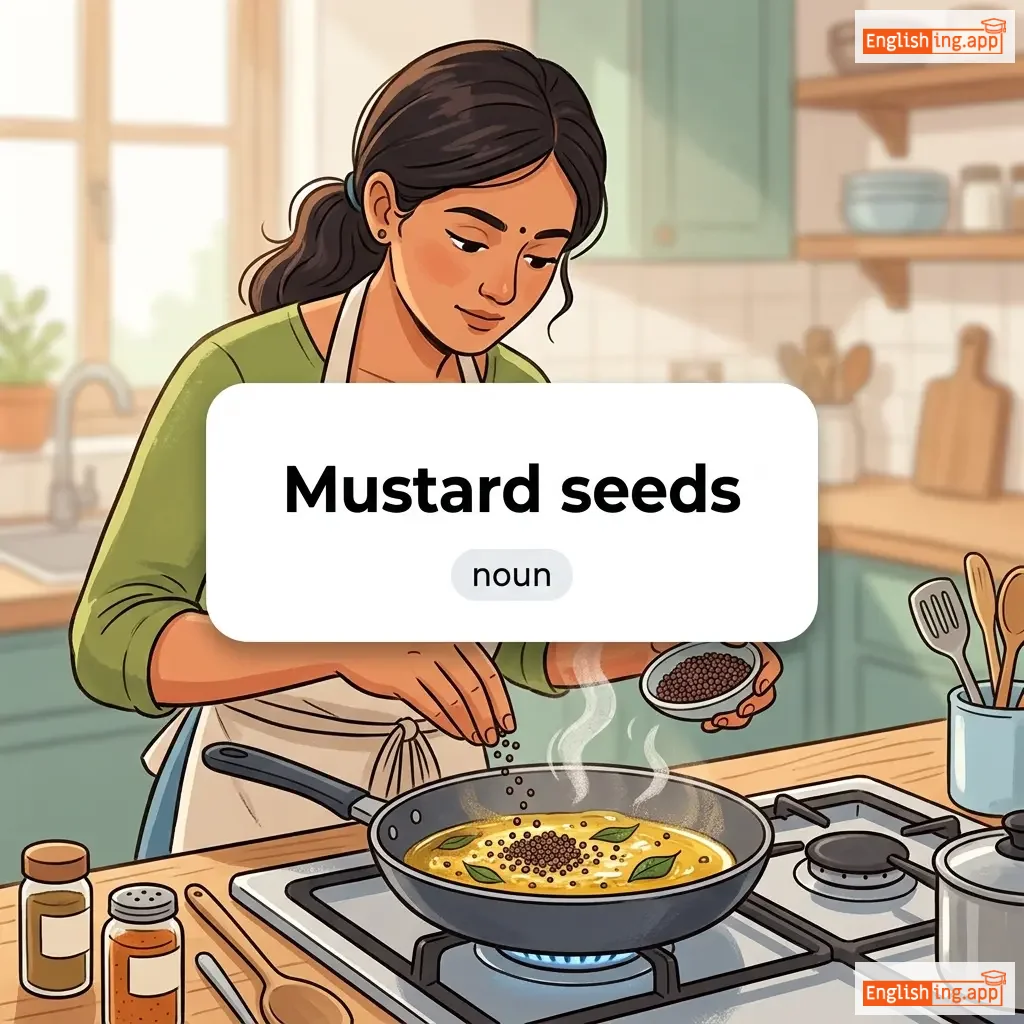
Mustard seeds definition card — visual illustration of the meaning
noun
/ˈmʌs.tərd siːdz/
マスタードシード (masutādo shīdo)

small round seeds from the mustard plant, used as a spice and for making mustard condiment

"Mustard seeds are often tempered in hot oil to release their nutty flavor before adding to dishes."

"マスタードシードは、料理に加える前に、そのナッツのような風味を引き出すために熱い油で炒められることがよくあります。" (Masutādo shīdo wa, ryōri ni kuwaeru mae ni, sono nattsu no yō na fūmi o hikidasu tame ni atsui abura de itamerareru koto ga yoku arimasu.)
verb, noun
/ˈmʌstər/
集める / 勇気を出す (atsumeru / yūki o dasu)

to gather people, especially soldiers; to summon courage or strength

"He mustered enough courage to face the challenge."

"彼は挑戦に立ち向かうために十分な勇気を集めました。" (Kare wa chōsen ni tachimukau tame ni jūbun na yūki o atsumemashita.)
adjective
/ˈmʌsti/
湿っぽい、カビ臭いまたは湿気のある匂い (shimeppoi, kabikusai mata wa shikke no aru nioi)

having a stale, moldy, or damp smell

"The old books had a musty odor."

"古い本にはカビ臭い匂いがあった。" (Furui hon ni wa kabikusai nioi ga atta.)
noun
/ˌmjuːtəˈbɪləti/
変動性 (hendousei)

The quality of being changeable or capable of change.

"The mutability of fashion trends makes it hard to keep up."

"ファッションのトレンドの可変性は、それについていくのを難しくします。" (Fasshon no torendo no kahensei wa, sore ni tsuiteiku no o muzukashiku shimasu.)
adjective
/ˈmjuːtəbl/
可変の (kaken no)

Capable of change or alteration.

"Human emotions are mutable and can shift rapidly."

"人間の感情は可変的で、迅速に変わることがあります。" (Ningen no kanjō wa kahen-teki de, jinsoku ni kawaru koto ga arimasu.)
noun
/ˌmjuːtəˈbɪləti/
変化性(綴り間違い) (henkasei (tsudzuri machigai))

A misspelled form of 'mutability', meaning the quality of being changeable.

"The document contained the misspelled word 'mutablility' instead of 'mutability'."

"その文書には 'mutability' の代わりに 'mutablility' の綴り間違いがありました。" (Sono bunsho ni wa 'mutability' no kawari ni 'mutablility' no tsudzuri machigai ga arimashita.)
verb
/ˈmjuːteɪt/
突然変異する (totsuzenhen'i suru)

To change or cause to change in form, nature, or character.

"The virus can mutate into a more dangerous strain."

"ウイルスはより危険な株にミュートすることができます。" (Uirusu wa yori kiken na kabu ni myuuto suru koto ga dekimasu.)
verb
/ˈmʌtər/
呟く (tsubuyaku)

to speak in a low or barely audible voice, often in dissatisfaction or irritation

"He muttered something under his breath as he walked away."

"彼は歩きながら何かを呟いた。" (Kare wa aruki nagara nanika o tsubuyaita.)
adjective
/maɪˈɑːpɪk/
近視的な、視野が狭い (kinshitekina, shiya ga semai)

lacking foresight or long-term perspective; also refers to nearsightedness

"The company’s myopic strategy led to long-term losses."
"その会社の近視的な戦略は、長期的な損失を招いた。" (Sono kaisha no kinshiteki na senryaku wa, chōkitekina sonshitsu o manekita.)
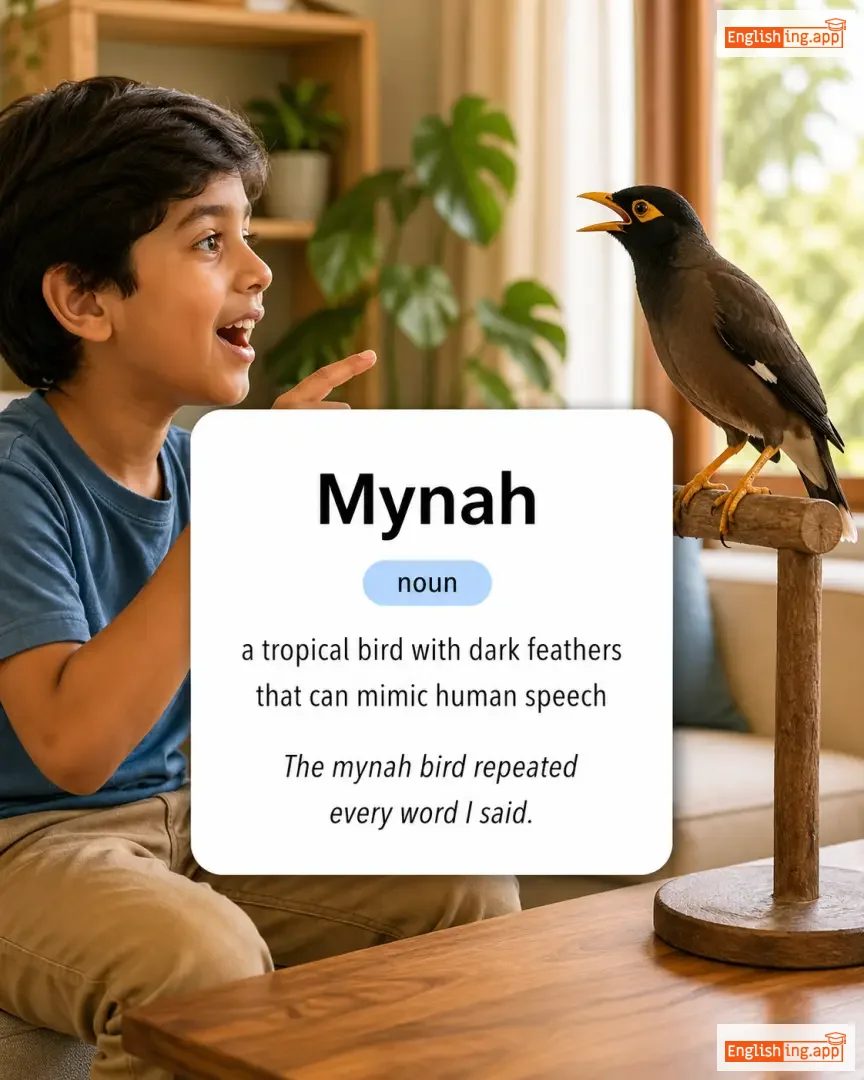
Mynah definition card — visual illustration of the meaning
noun
/ˈmaɪ.nə/
マイナ (maina)

a tropical bird with dark feathers that can mimic human speech

"The mynah bird repeated every word I said."

"マイナの鳥は私が言ったすべての言葉を繰り返しました。" (Maina no tori wa watashi ga itta subete no kotoba o kurikaeshimashita.)
pronoun
/maɪ/
私の (watashi no)

used to indicate possession or ownership

"This is my book."

"これは私の本です。" (Kore wa watashi no hon desu.)
adjective
/ˈmjuːtʃuəl/
相互の (sōgo no)

felt, shared, or done by two or more people equally

"They have mutual respect for each other."
"彼らはお互いに相互の敬意を持っています。" (Karera wa otagai ni sōgo no keii o motteimasu.)
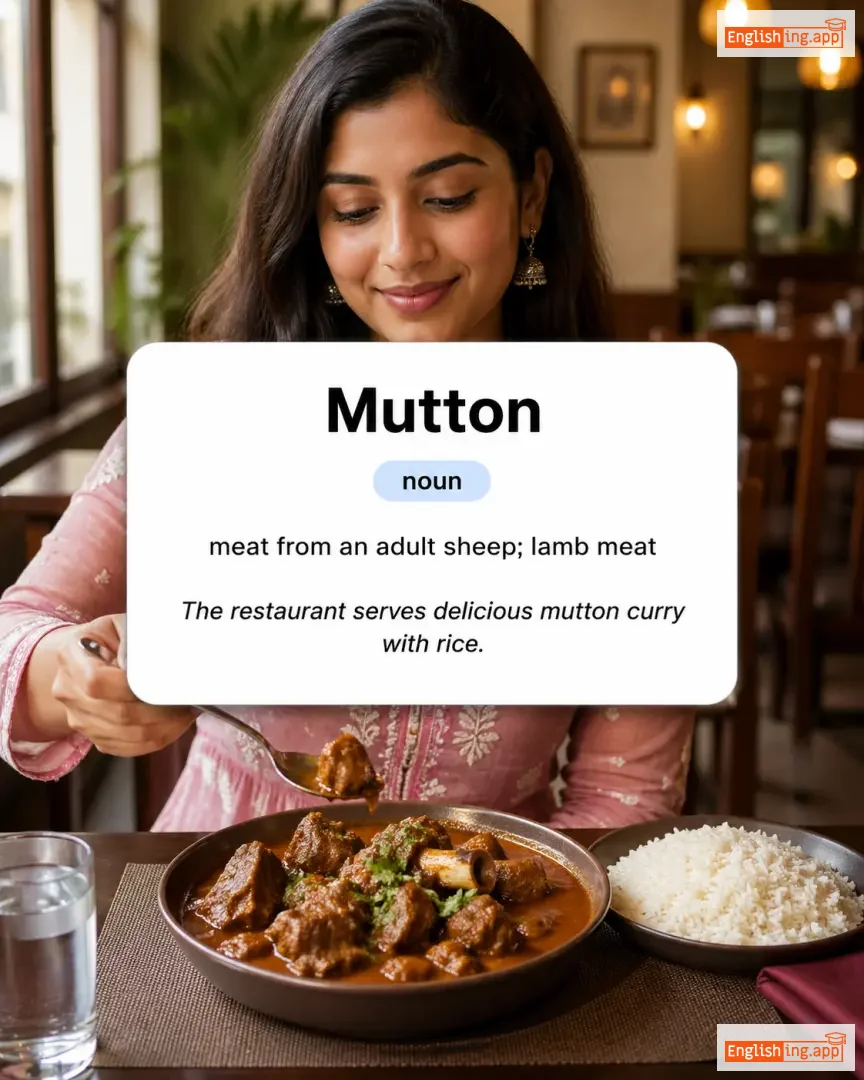
Mutton definition card — visual illustration of the meaning
noun
/ˈmʌtn/
羊肉 (hitsuji niku)

meat from an adult sheep; lamb meat

"The restaurant serves delicious mutton curry with rice."

"レストランはおいしい羊肉カレーを提供しています。" (Resutoran wa oishii hitsuji niku karee o teikyō shiteimasu.)
verb
/ˈmjuːtɪleɪt/
損傷する (sonshou suru)

to inflict serious damage on something, often by cutting or tearing

"The ancient manuscript was mutilated by careless handling."

"古代の写本は不注意な取り扱いで損傷しました。" (Kodai no shahon wa fuchuui na toriatsukai de sonshou shimashita.)
🤐

Mute

adjective
/mjuːt/

silent or unable to speak; not expressed in words

"She remained mute during the entire meeting."

adjective
/ˈmjuːtɪd/
muted (ミューテッド) (myutedd)

softened in sound, color, or effect; subdued

"The room was painted in muted shades of blue and grey."

"部屋は青と灰色の muted な色合いで塗られていました。" (Heya wa ao to haiiro no myutedd na iroai de nurareteimashita.)
noun
/ˈmʊzlɪm/
ムスリム (musurimu)

a follower of Islam

"He is a devout Muslim."

"彼は熱心なムスリムです。" (Kare wa nesshin na musurimu desu.)