词汇表

英语词汇词典 | 单词含义、定义和示例

adverb
/ˈnɪəli/
几乎 (jīhū)

almost, but not completely

"She nearly missed the bus."

"她差点错过了公交车。" (Tā chàdiǎn cuòguòle gōngjiāochē.)
adjective
/ˈnɪəˌbaɪ/
附近 (fujin)

close to a particular place or person

"The nearest gas station is nearby."

"最近的加油站就在附近。" (Zui jin de jia you zhan jiu zai fujin.)
adverb
/ˈnɪərbaɪ/
附近; 在附近 (fùjìn; zài fùjìn)

close to; not far away; in the neighborhood

"There is a grocery store nearby."

"附近有一家杂货店。" (Fùjìn yǒu yī jiā záhuòdiàn.)
preposition
/nɪə(r)/
(jin)

At or to a short distance away; close in space, time, or relationship.

"There is a park near my house."

"我家附近有一个公园。" (Wo jia fujin you yige gongyuan.)
noun
/niːp/
低潮 (dīcháo)

A tide just after the first or third quarters of the moon when the difference between high and low tide is least.

"During a neap tide, the water level change is minimal."

"在低潮期间,水位变化最小。" (Zai dīcháo qījiān, shuǐwèi biànhuà zuìxiǎo.)
noun
/ˌɛn.biː.esˈpiː/
不间断空格 (bu jian duan kong ge)

a non-breaking space character in HTML used to prevent an automatic line break at its position

"Use   in HTML to add a space that won't break into a new line."

"在HTML中使用 添加一个不会换行的空格。" (zai HTML zhong shiyong  tianjia yige bu hui huanhang de kongge.)
noun
/ˈneɪˌseɪ.ɪŋ/
负面言论 (fùmiàn yánlùn)

The act of expressing negative or pessimistic views.

"His constant naysaying discouraged the team."

"他不断的负面言论使团队失去了动力。" (Tā bùduàn de fùmiàn yánlùn shǐ tuánduì shīqùle dònglì.)
Navy definition card — visual illustration of the meaning
noun
/ˈneɪvi/
海军 (haijun)

the branch of armed forces that conducts military operations at sea

"He joined the navy after graduating from college."
"他在大学毕业后加入了海军。" (Tā zài dàxué bìyè hòu jiārùle hǎijūn.)
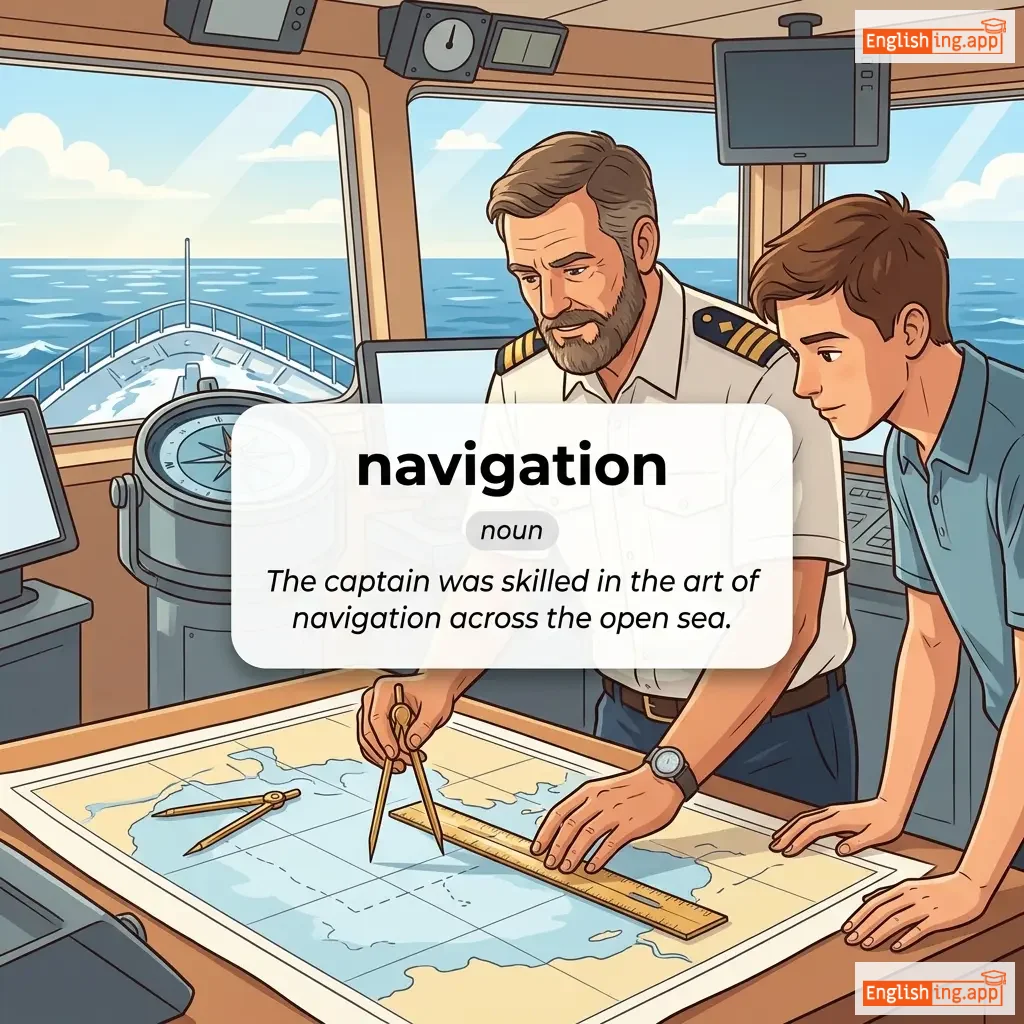
navigation definition card — visual illustration of the meaning
noun
/ˌnævɪˈɡeɪʃən/
导航 (daohang)

the process or activity of accurately determining one's position and planning and following a route

"The captain was skilled in the art of navigation across the open sea."

"船长擅长在开阔海洋中的导航艺术。" (chuánzhǎng shàncháng zài kāikuò hǎiyáng zhōng de dǎoháng yìshù.)
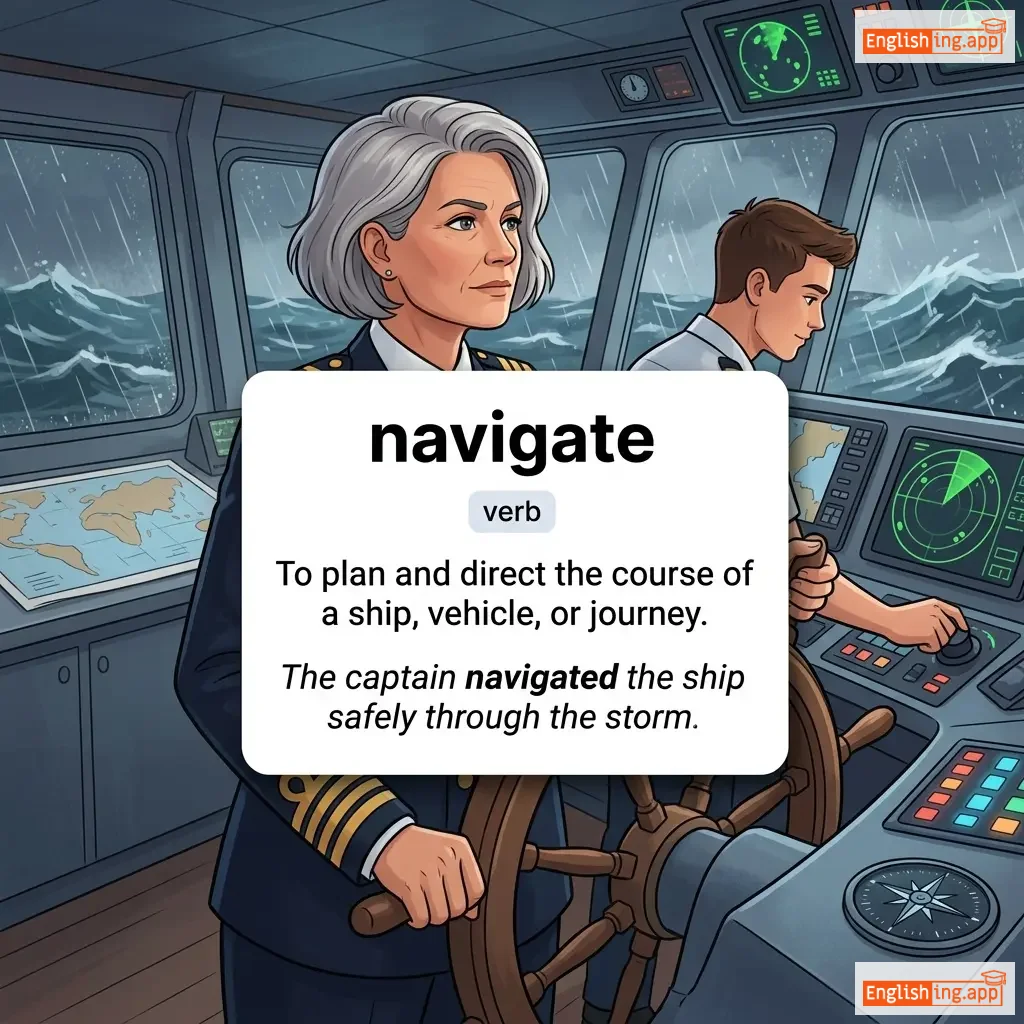
navigate definition card — visual illustration of the meaning
verb
/ˈnæv.ɪ.ɡeɪt/

To plan and direct the course of a ship, vehicle, or journey.

"The captain navigated the ship safely through the storm."

adjective
/ˈnæv.ɪ.ɡə.bəl/
可通航的 (ke tong hang de)

Able to be sailed on or through by ships or boats.

"The river is navigable for large cargo ships."
"这条河流适合大型货船通行。" (Zhe tiao he liu shi he da xing huo chuan tong xing.)
👶

Navel

noun
/ˈneɪvəl/

the small hollow or raised area in the middle of the stomach, also called the belly button

"The baby’s navel was carefully cleaned after birth."

noun
/neɪv/
教堂的中央部分 (jiàotáng de zhōngyāng bùfen)

the central part of a church building intended to accommodate the congregation

"The choir sang beautifully in the church nave."

"合唱团在教堂的内夫里唱得非常动听。" (Héchàngtuán zài jiàotáng de nèifū lǐ chàng dé fēicháng dòngtīng.)
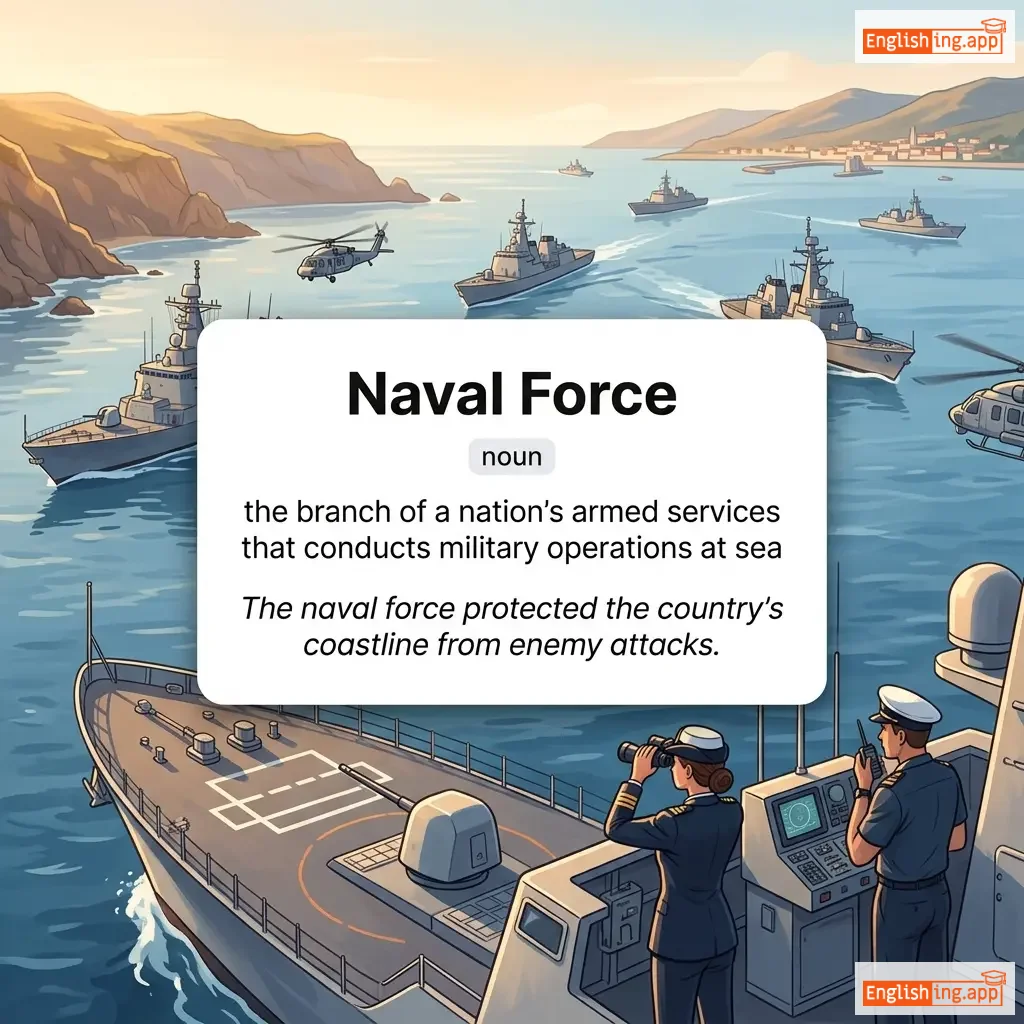
Naval Force definition card — visual illustration of the meaning
noun
/ˈneɪ.vəl fɔːrs/
海军 (hǎijūn)

the branch of a nation's armed services that conducts military operations at sea

"The naval force protected the country's coastline from enemy attacks."

"海军保护了国家的海岸线免受敌人攻击" (hǎijūn bǎohùle guójiā de hǎi'àn xiàn miǎn shòu dírén gōngjī)
adjective
/ˈneɪvəl/
海军的 (haijun de)

relating to a country's navy or military ships

"The country invested heavily in naval defense."

"该国在海军防御方面进行了大量投资。" (Gai guo zai haijun fangyu fangmian jin xing le daliao touzi.)
adjective
/ˈnɔːtɪkəl/
航海 (hanghai)

relating to ships, sailors, or navigation on water

"He studied nautical charts before setting sail."

"他在起航前研究了航海图。" (Ta zai qihang qian yanjiu le hanghai tu.)
adjective
/ˈnɔːʃəs/
感觉恶心 (gǎn jué ě xīn)

feeling like you are about to vomit; causing a feeling of sickness

"The smell of rotten food made her feel nauseous."

"腐烂食物的气味让她感到恶心。" (fǔ làn shí wù de qì wèi ràng tā gǎn dào ě xīn.)
verb
/ˈnɔːzieɪt/
引起恶心 (yǐnqǐ èxīn)

To make someone feel sick, with an inclination to vomit.

"The spoiled food nauseated him quickly."

"坏掉的食物很快让他感到恶心。" (Huài diào de shíwù hěn kuài ràng tā gǎndào èxīn.)
noun
/ˈnɔːziə/
恶心 (èxīn)

A feeling of sickness with an inclination to vomit.

"The strong smell of paint gave her a sudden nausea."

"油漆的刺鼻气味让她突然感到恶心。" (Yóuqī de cìbí qìwèi ràng tā túrán gǎndào èxīn.)
adjective
/ˈnɔːti/
顽皮 (wánpí)

Disobedient or mischievous, often in a playful or mildly bad way.

"The naughty child drew on the walls with crayons."

"顽皮的孩子用蜡笔在墙上画画。" (Wánpí de háizi yòng làbǐ zài qiáng shàng huàhuà.)
Nature Enthusiasts definition card — visual illustration of the meaning
noun
ˈneɪʧər ɪnˈθjuːziæsts
自然爱好者 (zìrán àihào zhě)

People who have a passionate interest in and love for the natural world and outdoor activities.

"Nature enthusiasts often visit Sajek Valley for its scenic beauty."
"自然爱好者常常前往萨杰克山谷,欣赏其美丽的景色。" (Zìrán àihào zhě chángcháng qiánwǎng Sàjiékè shāngǔ, xīnshǎng qí měilì de jǐngsè.)
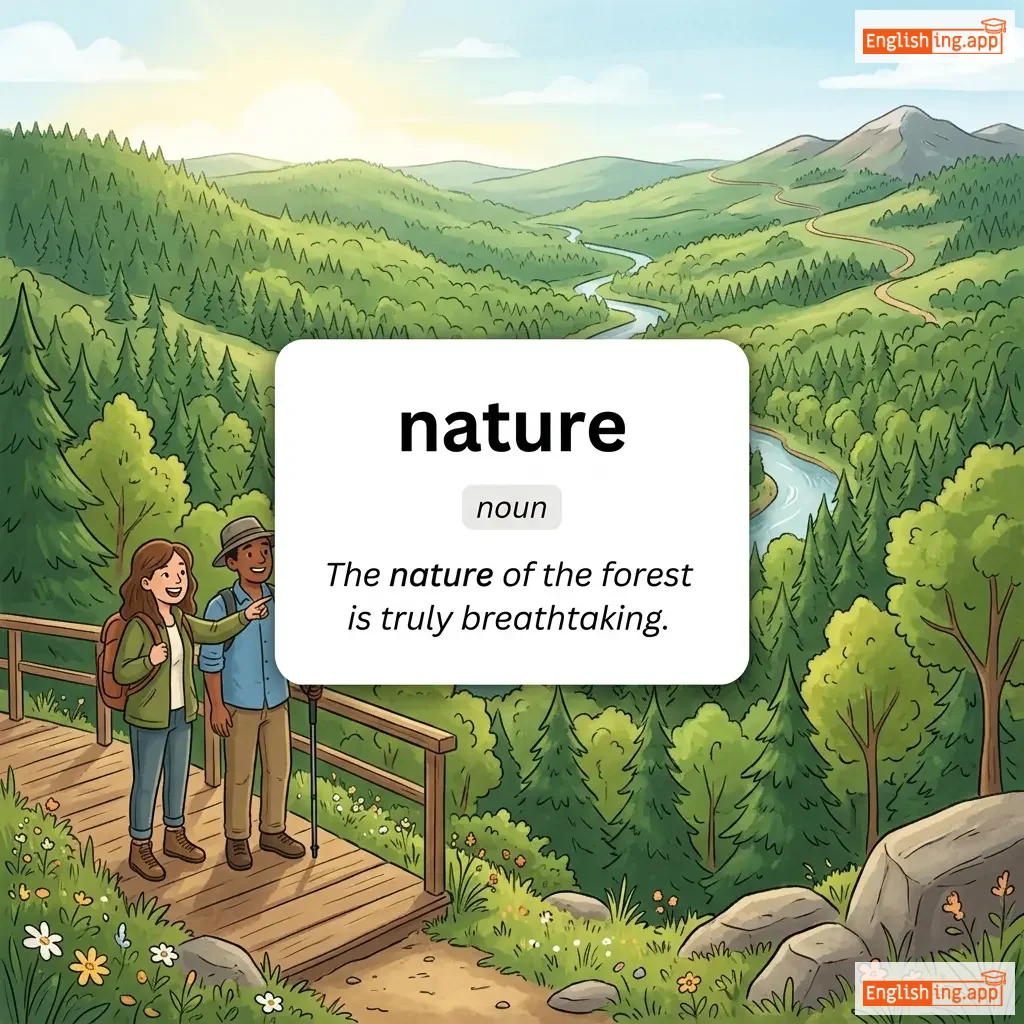
nature definition card — visual illustration of the meaning
noun
/ˈneɪtʃər/
自然 (ziran)

the physical world and everything in it, including plants, animals, and the landscape

"The nature of the forest is truly breathtaking."

"森林的自然景观确实令人叹为观止。" (Sēnlín de zìrán jǐngguān quèshí lìng rén tàn wéi guānzhǐ.)
adverb
/ˈnætʃrəli/
自然地 (zìrán de)

In a way that is normal, expected, or without effort.

"He spoke so naturally that everyone felt comfortable."
"他讲得如此自然,以至于每个人都感到舒服。" (Tā jiǎng dé rúcǐ zìrán, yǐzhì yú měi gèrén dōu gǎndào shūfú.)
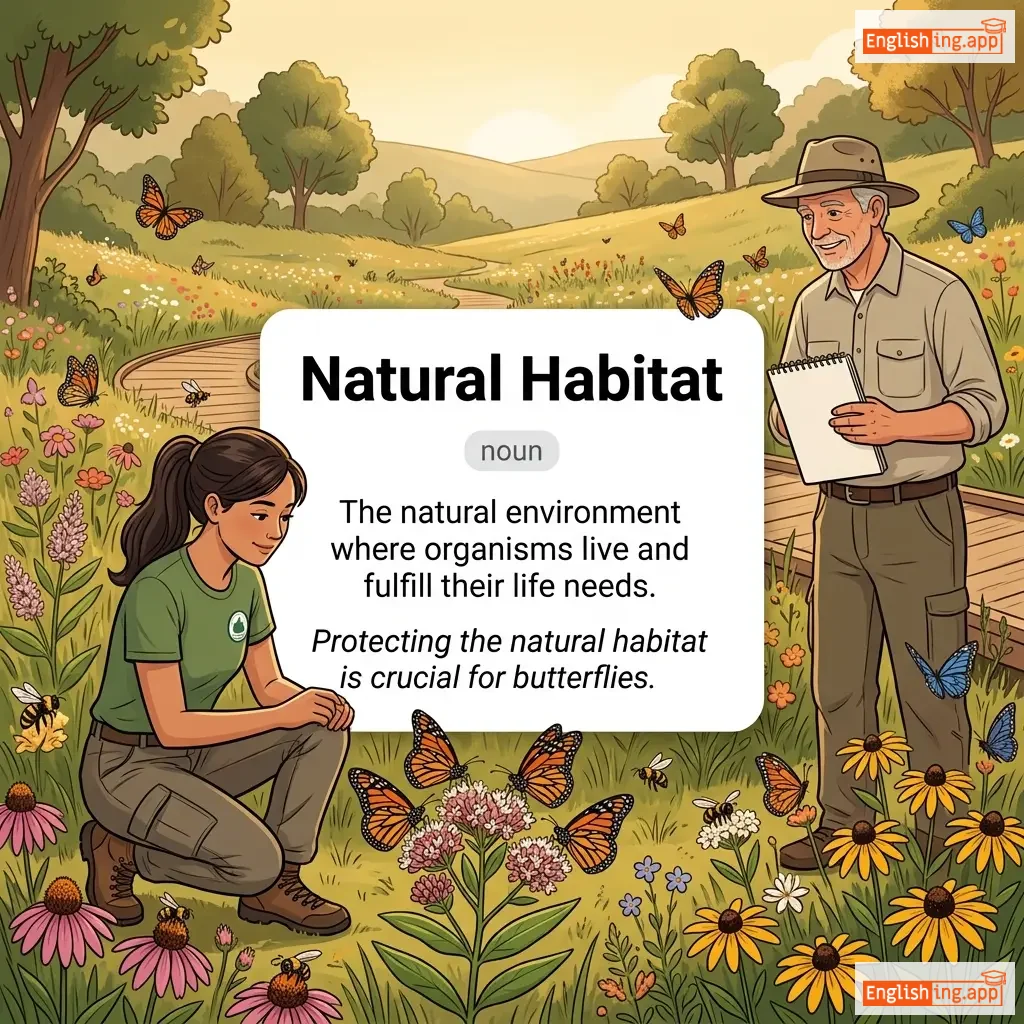
Natural Habitat definition card — visual illustration of the meaning
noun
ˈnætʃərəl ˈhæbɪtæt
自然栖息地 (zìrán qīxī dì)

The natural environment where organisms live and fulfill their life needs.

"Protecting the natural habitat is crucial for butterflies."

"保护自然栖息地对蝴蝶至关重要。" (Bǎohù zìrán qīxī dì duì húdié zhìguān zhòngyào.)
noun
/ˈnætʃərəl dɪˈzæstər/
自然灾害 (ziran zaihai)

a catastrophic event caused by natural processes of the Earth that results in significant damage, destruction, or loss of life

"The coastal town was devastated by a natural disaster."

"这座沿海城镇被一场自然灾害摧毁了。" (zhe zuo yanhai chengzhen bei yi chang ziran zaihai cuhui le)
adjective
/ˈnætʃərəl/
自然的 (zìrán de)

existing in or derived from nature; not made or caused by humankind

"She prefers to use natural ingredients in her cooking."

"她更喜欢在烹饪中使用天然的食材。" (Tā gèng xǐhuān zài pēngrèn zhōng shǐyòng tiānrán de shícái.)
adjective
/ˈnæti/
时尚 (shíshàng)

Neat, stylish, and fashionable in appearance.

"He looked very natty in his new suit."

"他在新西装里看起来非常时尚。" (Tā zài xīn xīzhuāng lǐ kàn qǐlái fēicháng shíshàng.)
adjective
/ˈneɪtɪv/
本地的 (běndì de)

Belonging to a person by birth; originating in a particular place.

"He is a native speaker of Bengali."

"他是孟加拉语的母语者。" (Tā shì mèngjiālā yǔ de mǔyǔ zhě.)
noun
/mjuːˈteɪʃn/
突变,基因变异 (tūbiàn, jīyīn biànyì)

A change in form, structure, or nature, especially in genetics.

"Scientists discovered a genetic mutation that caused the disorder."

"科学家发现了一种基因突变,导致了这种疾病。" (Kēxuéjiā fāxiànle yī zhǒng jīyīn tūbiàn, dǎozhìle zhè zhǒng jíbìng.)
verb
/mʌst/
必须 (bìxū)

to be required or obligated to

"You must complete your homework before you go out."
"你必须完成作业,然后才能出去。" (Nǐ bìxū wánchéng zuòyè, ránhòu cáinéng chūqù.)
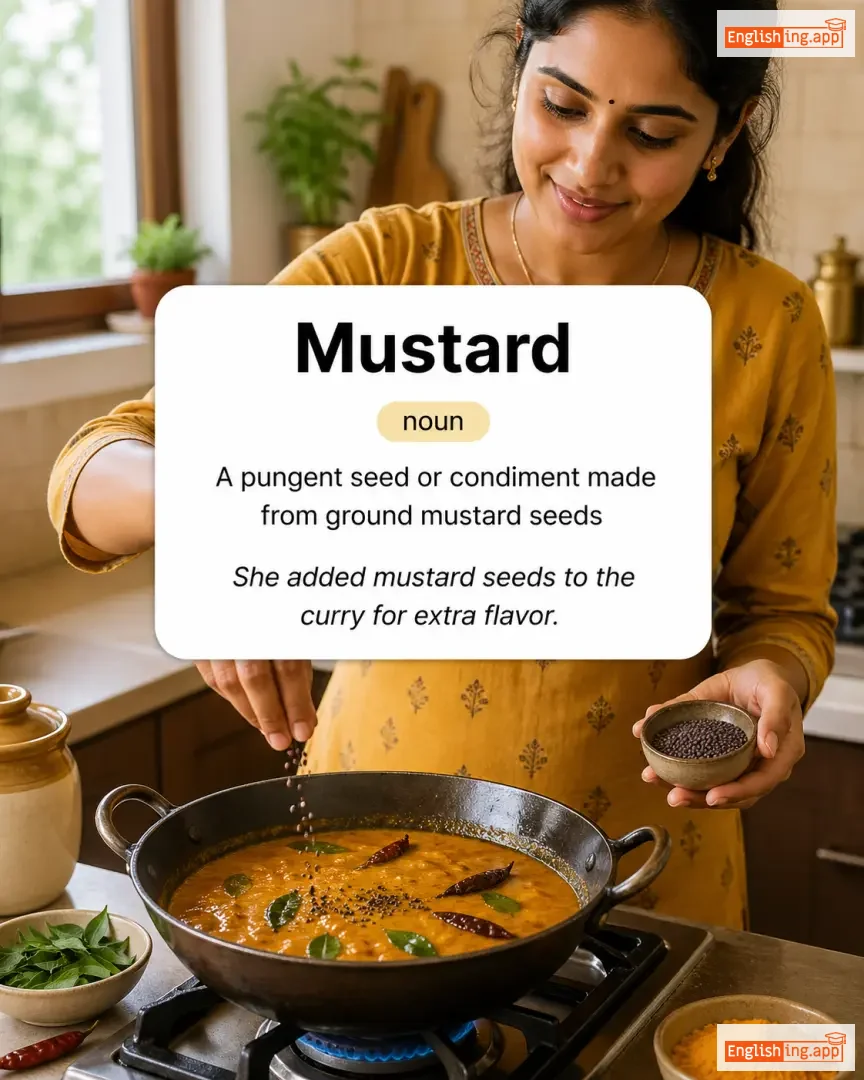
Mustard definition card — visual illustration of the meaning
noun
/ˈmʌs.tərd/
芥末 (jiè mò)

A pungent seed or condiment made from ground mustard seeds

"She added mustard seeds to the curry for extra flavor."
"她将芥末种子加入咖喱中,以增添更多风味。" (tā jiāng jiè mò zhǒng zǐ jiārù gālí zhōng, yǐ zēngtiān gèng duō fēngwèi.)
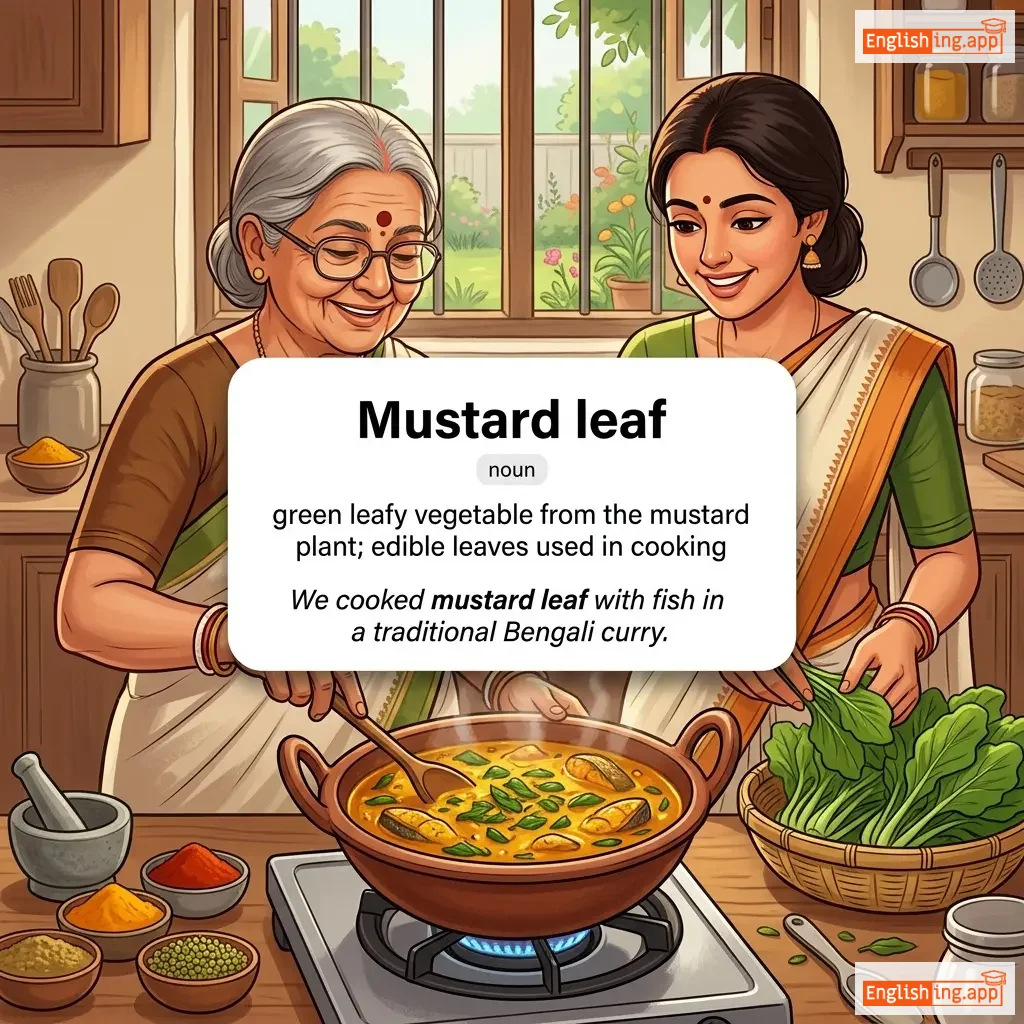
Mustard leaf definition card — visual illustration of the meaning
noun
/ˈmʌs.tərd liːf/
芥菜叶 (jiè cài yè)

green leafy vegetable from the mustard plant; edible leaves used in cooking

"We cooked mustard leaf with fish in a traditional Bengali curry."
"我们在传统的孟加拉咖喱中与鱼一起煮了芥菜叶。" (Wǒmen zài chuántǒng de mèngjiālā kālí zhōng yǔ yú yīqǐ zhǔle jiè cài yè.)
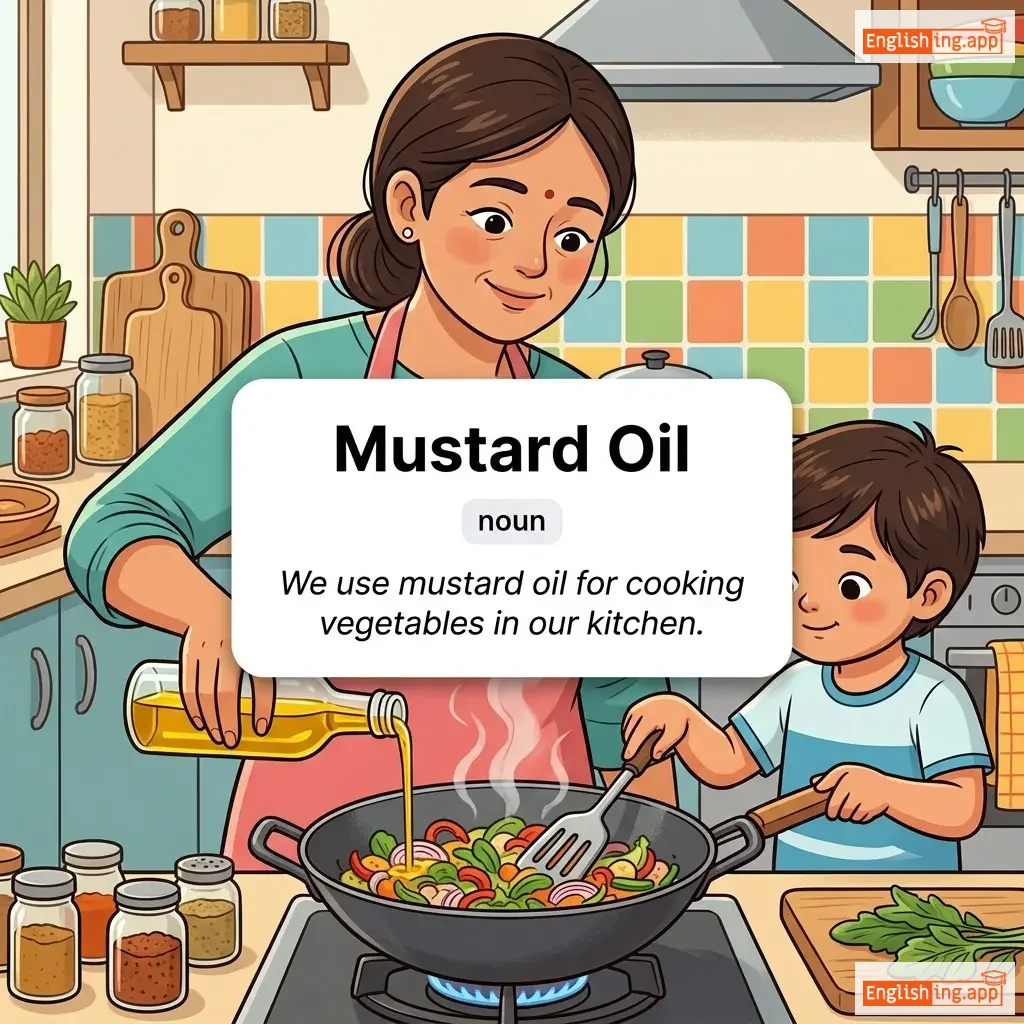
Mustard Oil definition card — visual illustration of the meaning
noun
/ˈmʌstərd ɔɪl/
芥末油 (jiè mò yóu)

oil extracted from mustard seeds, commonly used for cooking and medicinal purposes

"We use mustard oil for cooking vegetables in our kitchen."
"我们在厨房里用芥末油来煮蔬菜。" (Wǒmen zài chúfáng lǐ yòng jiè mò yóu lái zhǔ shū cài.)
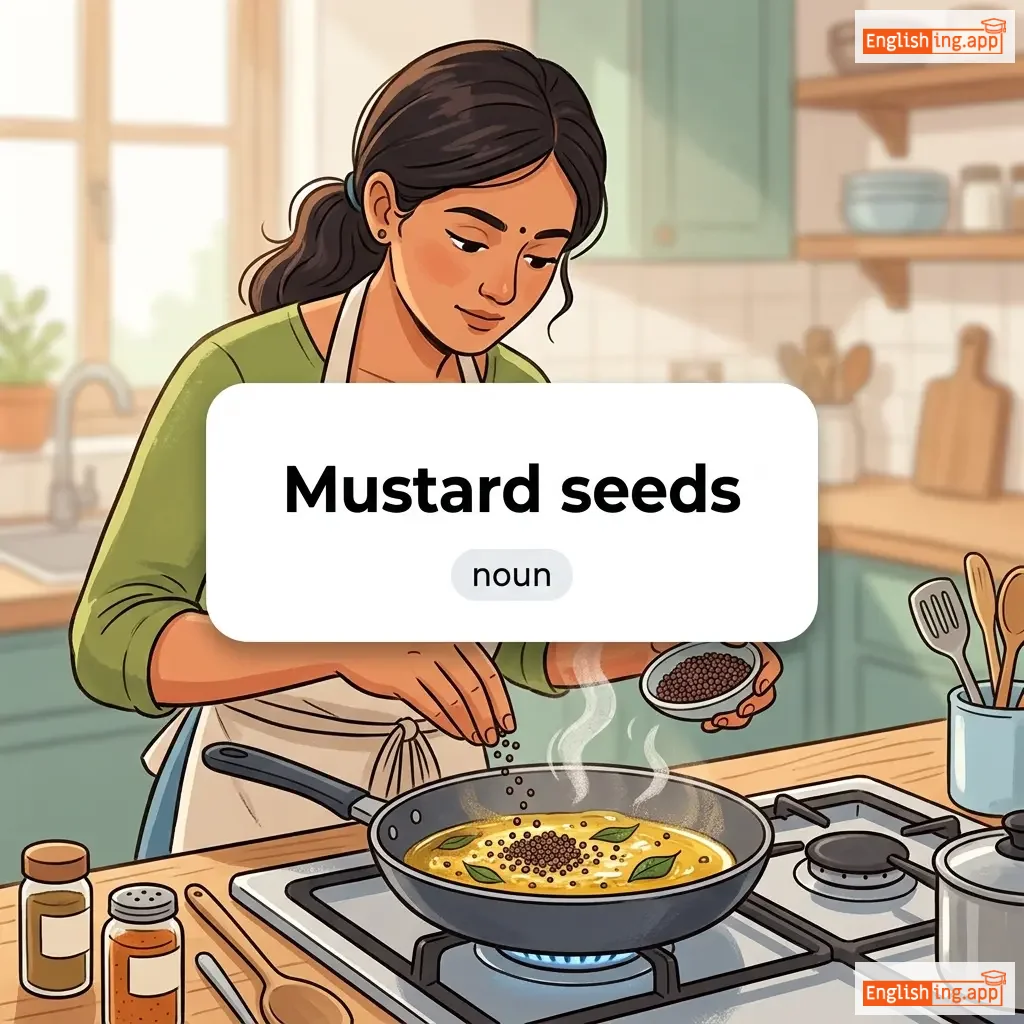
Mustard seeds definition card — visual illustration of the meaning
noun
/ˈmʌs.tərd siːdz/
芥菜种子 (jiè cài zhǒng zǐ)

small round seeds from the mustard plant, used as a spice and for making mustard condiment

"Mustard seeds are often tempered in hot oil to release their nutty flavor before adding to dishes."

"芥菜种子常常在热油中炒制,释放它们的坚果味道,然后加入菜肴中。" (Jiè cài zhǒng zǐ cháng cháng zài rè yóu zhōng chǎo zhì, shì fàng tā men de jiān guǒ wèi dào, rán hòu jiā rù cài yáo zhōng.)
verb, noun
/ˈmʌstər/
聚集 / 集合勇气 (jùjí / jíhé yǒngqì)

to gather people, especially soldiers; to summon courage or strength

"He mustered enough courage to face the challenge."

"他积聚了足够的勇气来面对挑战。" (Tā jījùle zúgòu de yǒngqì lái miànduì tiǎozhàn.)
adjective
/ˈmʌsti/
发霉的,潮湿的或有霉味的 (fāméi de, cháoshī de huò yǒu méi wèi de)

having a stale, moldy, or damp smell

"The old books had a musty odor."

"旧书有霉味。" (Jiù shū yǒu méi wèi.)
noun
/ˌmjuːtəˈbɪləti/
可变性 (kebiànxìng)

The quality of being changeable or capable of change.

"The mutability of fashion trends makes it hard to keep up."

"时尚潮流的变动性使得跟上它变得困难。" (Shíshàng cháoliú de biàndòngxìng shǐdé gēn shàng tā biàndé kùnnán.)
adjective
/ˈmjuːtəbl/
可变的 (kebian de)

Capable of change or alteration.

"Human emotions are mutable and can shift rapidly."

"人类的情感是可变的,能够迅速变化。" (Rénlèi de qínggǎn shì kěbiàn de, nénggòu xùnsù biànhuà.)
noun
/ˌmjuːtəˈbɪləti/
变异性 (拼写错误) (bianyixing (pinyin cuowu))

A misspelled form of 'mutability', meaning the quality of being changeable.

"The document contained the misspelled word 'mutablility' instead of 'mutability'."

"文件中包含了拼写错误的词 'mutablility',而不是 'mutability'。" (Wenjian zhong baohanle pinxie cuowu de ci 'mutablility', er bushi 'mutability'.)
verb
/ˈmjuːteɪt/
突变 (tubian)

To change or cause to change in form, nature, or character.

"The virus can mutate into a more dangerous strain."

"病毒可以突变成一种更危险的菌株。" (Bingdu keyi tubian cheng yizhong geng weixian de junzhu.)
verb
/ˈmʌtər/
低声说 (dīshēng shuō)

to speak in a low or barely audible voice, often in dissatisfaction or irritation

"He muttered something under his breath as he walked away."

"他低声咕哝着什么,走开了。" (Tā dīshēng gūnóng zhe shénme, zǒu kāi le.)
adjective
/maɪˈɑːpɪk/
近视,狭隘的视野 (jìnshì, xiá'ài de shìyě)

lacking foresight or long-term perspective; also refers to nearsightedness

"The company’s myopic strategy led to long-term losses."
"公司的近视战略导致了长期损失。" (Gōngsī de jìnshì zhànlüè dǎozhì le chángqī sǔnshī.)
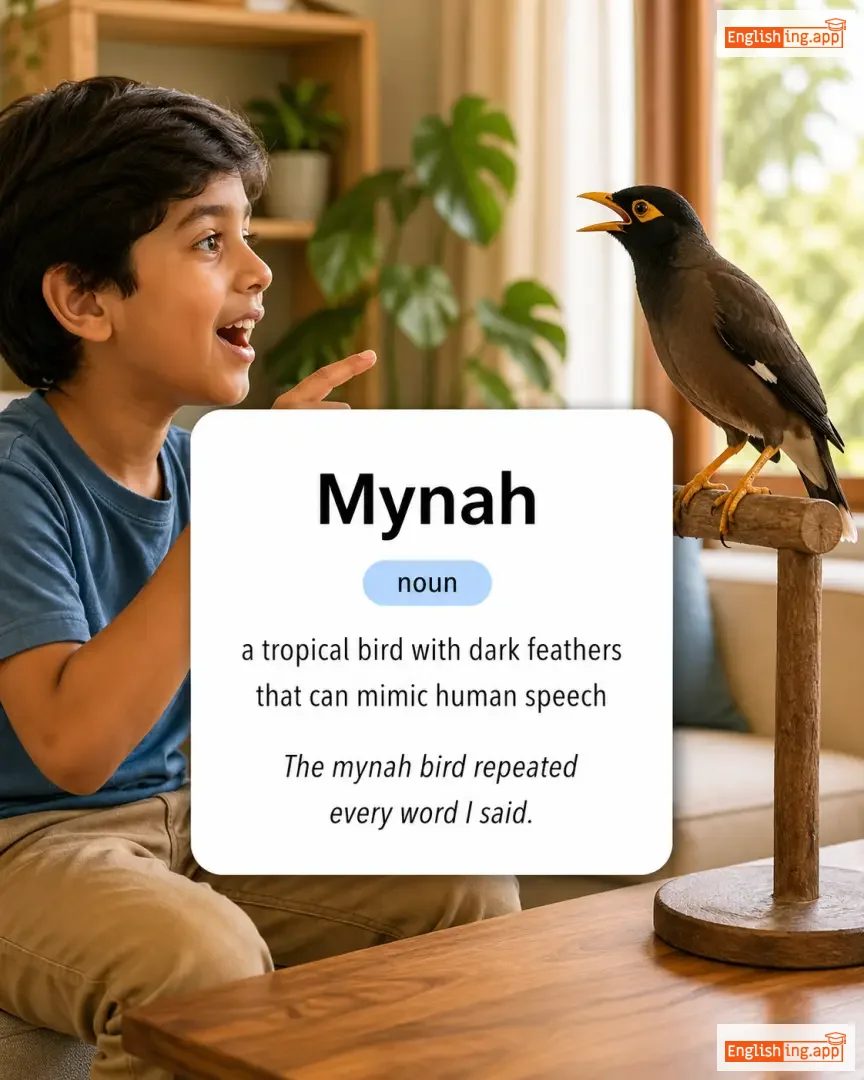
Mynah definition card — visual illustration of the meaning
noun
/ˈmaɪ.nə/
八哥 (bā gē)

a tropical bird with dark feathers that can mimic human speech

"The mynah bird repeated every word I said."

"八哥鸟重复了我说的每一个词。" (bā gē niǎo chóngfùle wǒ shuō de měi yīgè cí)
pronoun
/maɪ/
我的 (wǒ de)

used to indicate possession or ownership

"This is my book."

"这是我的书。" (Zhè shì wǒ de shū.)
adjective
/ˈmjuːtʃuəl/
相互的 (xiānghù de)

felt, shared, or done by two or more people equally

"They have mutual respect for each other."
"他们彼此有相互的尊重。" (Tāmen bǐcǐ yǒu xiānghù de zūnzhòng.)
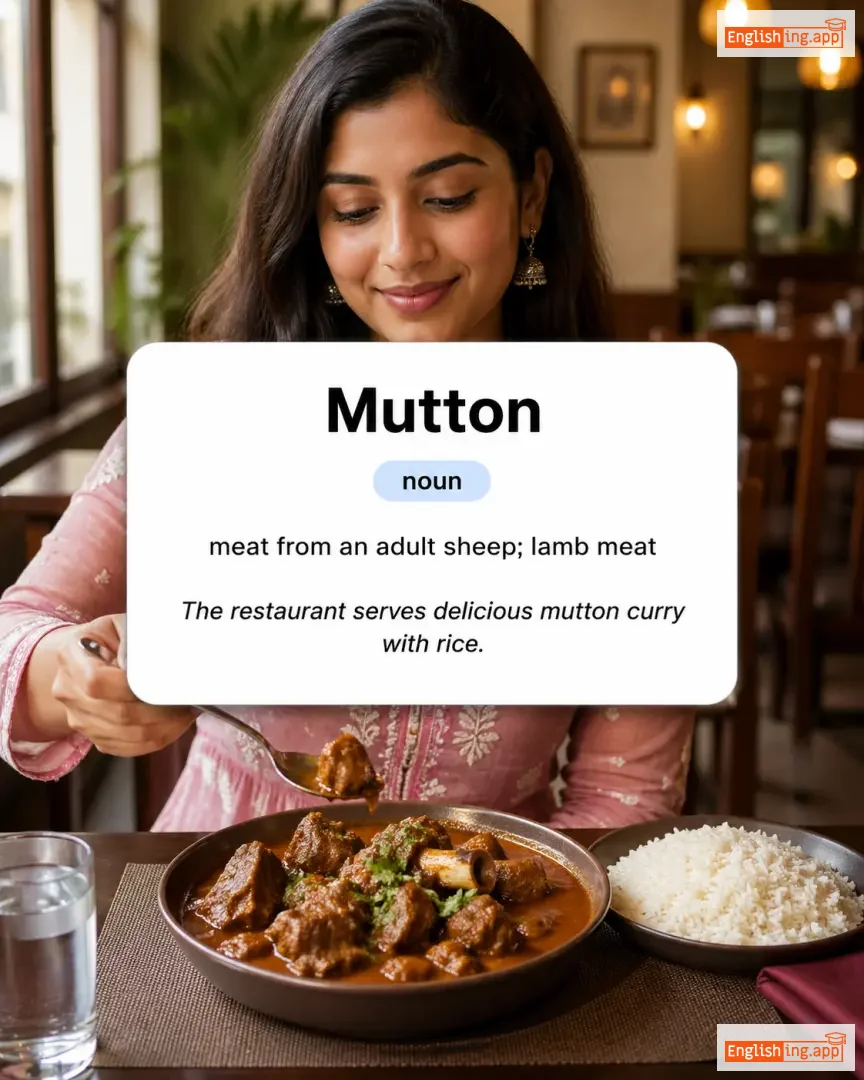
Mutton definition card — visual illustration of the meaning
noun
/ˈmʌtn/
羊肉 (yáng ròu)

meat from an adult sheep; lamb meat

"The restaurant serves delicious mutton curry with rice."

"餐厅提供美味的羊肉咖喱配米饭。" (Cāntīng tígōng měiwèi de yángròu gālí pèi mǐfàn.)
verb
/ˈmjuːtɪleɪt/
摧残 (cuīcán)

to inflict serious damage on something, often by cutting or tearing

"The ancient manuscript was mutilated by careless handling."

"古老的手稿因不小心处理而被摧残。" (Gǔlǎo de shǒugǎo yīn bù xiǎoxīn chǔlǐ ér bèi cuīcán.)
🤐

Mute

adjective
/mjuːt/

silent or unable to speak; not expressed in words

"She remained mute during the entire meeting."

adjective
/ˈmjuːtɪd/
柔和的 (rouhe de)

softened in sound, color, or effect; subdued

"The room was painted in muted shades of blue and grey."

"房间用蓝色和灰色的柔和色调粉刷。" (Fangjian yong lanse he huise de rouhe se tiao fen shua.)
noun
/ˈmʊzlɪm/
穆斯林 (musilin)

a follower of Islam

"He is a devout Muslim."

"他是一个虔诚的穆斯林。" (Tā shì yīgè qiánchéng de mùsīlín.)