词汇表

英语词汇词典 | 单词含义、定义和示例

noun
/ˈnæfθə/
石油醚 (shíyóu mǐ)

A flammable oil containing hydrocarbons, obtained from petroleum or coal tar, used as fuel or solvent.

"The factory stored barrels of naphtha for industrial use."

"工厂储存了工业用途的纳夫塔桶。" (gōngchǎng chǔcúnle gōngyè yòngtú de nàfūtǎ tǒng.)
Nap Kin definition card — visual illustration of the meaning
noun
/ˈnæp.kɪn/
餐巾 (canjin)

a piece of cloth or paper used for wiping the mouth and hands while eating

"She placed the napkin on her lap before starting dinner."

"她在开始吃晚餐前,把餐巾放在了自己的膝盖上。" (Tā zài kāishǐ chī wǎncān qián, bǎ cānjīn fàng zài le zìjǐ de xīgài shàng.)
nanotechnology definition card — visual illustration of the meaning
noun
ˌnæn.oʊ.tekˈnɒl.ə.dʒi
纳米技术 (nà mǐ jì shù)

The branch of technology that deals with dimensions and tolerances of less than 100 nanometers.

"Nanotechnology is advancing medical treatments."
"纳米技术正在推动医疗治疗的发展。" (Nà mǐ jì shù zhèng zài tuī dòng yī liáo zhì liáo de fā zhǎn.)
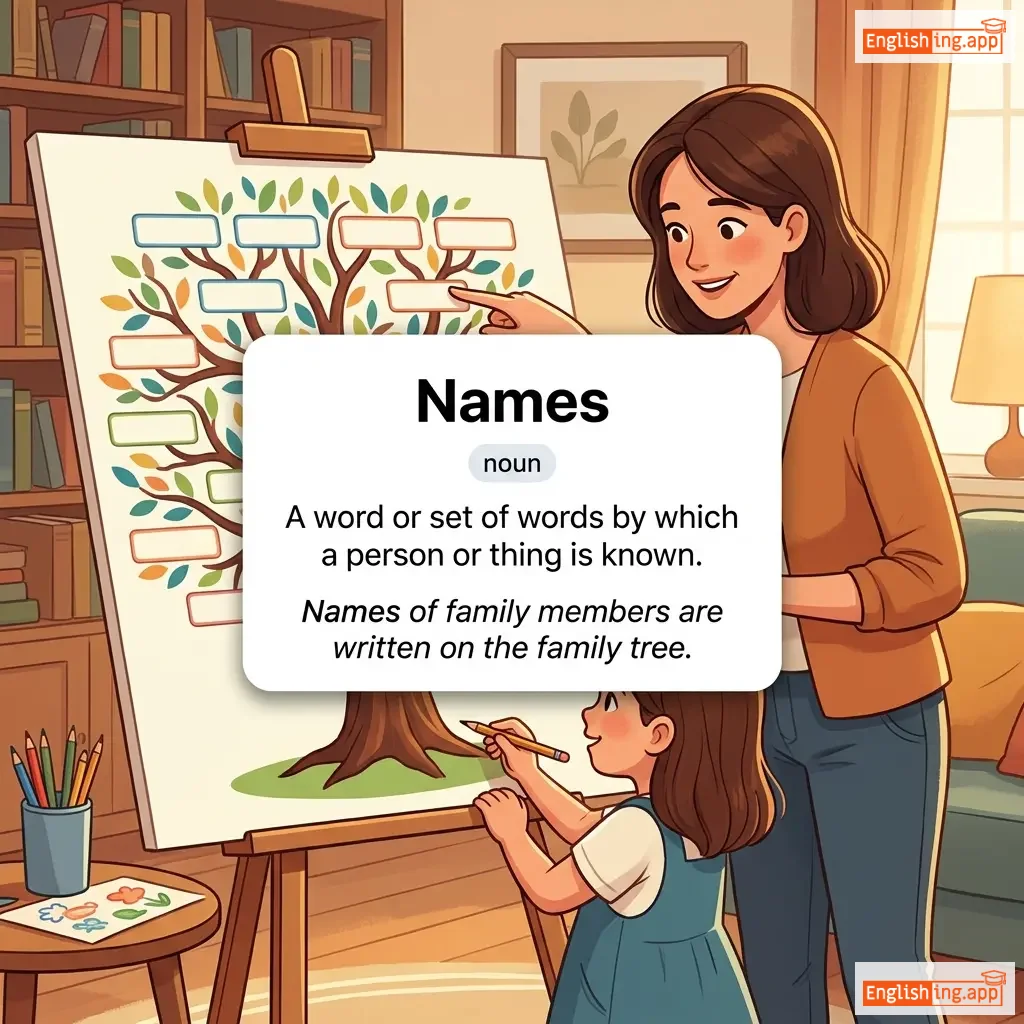
Names definition card — visual illustration of the meaning
noun
neɪmz
名字 (mingzi)

A word or set of words by which a person or thing is known.

"Names of family members are written on the family tree."

"家庭成员的名字写在家谱上。" (Jiātíng chéngyuán de míngzì xiě zài jiāpǔ shàng.)
adverb
/ˈneɪmli/
也就是说 (ye shi shuo)

that is to say; to be specific

"The festival will be held in three cities, namely Dhaka, Chittagong, and Sylhet."

"节日将在三个城市举行,也就是说,达卡、吉大港和西莱特。" (Jieri jiang zai san ge chengshi juxing, ye shi shuo, Daka, Jidagang he Xilaite.)
adjective
/ˈneɪmləs/
无名 (wu ming)

Without a name or not known by name.

"A nameless fear crept over him in the dark room."

"一个无名的恐惧在黑暗的房间里袭击了他。" (Yi ge wu ming de kong ju zai hei'an de fang jian li xi ji le ta.)
name definition card — visual illustration of the meaning
noun
/neɪm/
名字 (mingzi)

a word by which a person or thing is known or called

"His name is John."

"他的名字是约翰。" (Tā de míngzì shì Yuēhàn.)
adjective
/ˈneɪkɪd/
赤裸 (chiluo)

not covered by clothing or without protection

"The child was running naked in the yard."

"孩子在院子里赤裸地跑来跑去。" (Haizi zai yuanzi li chiluo de pao lai pao qu.)
noun
/naɪˈiːvɪti/
天真 (tianzhen)

The quality of being innocent, simple, and lacking experience or sophistication.

"Her naivety made her trust people too easily."

"她的天真使她太容易相信别人。" (Ta de tianzhen shi ta tai rongyi xiangxin bieren.)
noun
/naɪˈiːvteɪ/

The quality of being naive; lack of experience, wisdom, or judgment.

"His naivete made him an easy target for manipulation."

adjective
/naɪˈiːv/
天真 (tian zhen)

Lacking experience, wisdom, or judgment; too trusting.

"She was naïve to believe every advertisement she saw."

"她天真地相信她看到的每一个广告。" (Ta tian zhen de xiang xin ta kan dao de mei yi ge guang gao.)
Nail definition card — visual illustration of the meaning
noun, verb
/neɪl/
钉子 (dīngzi)

a small metal spike driven into wood or other material, or to fasten or fix something with nails

"He nailed the wooden board to the wall."

"他把木板钉在墙上。" (tā bǎ mùbǎn dī zài qiáng shàng.)
⬇️

nadir

noun
/ˈneɪdɪər/

The lowest point of a situation or condition.

"The company reached its nadir during the financial crisis."

noun
/mɪˈθɒlədʒi/

A collection of myths, especially belonging to a particular culture or religion.

"Greek mythology is filled with stories of gods and heroes."

adjective
/ˈmɪθɪkəl/
神话的 (shénhuà de)

existing only in myths or legends; imaginary or fictitious

"Dragons are mythical creatures that appear in many cultures."

"龙是神话中的生物,出现在许多文化中。" (lóng shì shénhuà zhōng de shēngwù, chūxiàn zài xǔduō wénhuà zhōng.)
noun
/mɪθ/
神话 (shenhua)

A traditional story explaining natural or social phenomena, often involving supernatural beings; a widely held but false belief.

"The myth of the phoenix tells of a bird reborn from its ashes."

"凤凰的神话讲述了一只从灰烬中重生的鸟。" (Fenghuang de shenhua jiangshu le yi zhi cong huijin zhong chongsheng de niao.)
noun
/ˌmɪstɪfɪˈkeɪʃən/
困惑, 神秘化 (kunhuo, shenmi hua)

the act of making something unclear or confusing; a state of being puzzled or bewildered

"The audience watched in mystification as the magician performed his tricks."

"观众在困惑中看着魔术师表演他的戏法。" (Guanzhong zai kunhuo zhong kanzhe moshushi biaoyan tade xifa.)
noun/adjective
/ˈmɪstɪk/
神秘的,灵性追求者 (shenmi de, lingxing zhuiqiu zhe)

relating to mysteries, spirituality, or hidden truths; a person who seeks spiritual insight

"The mystic devoted his life to meditation and spiritual discovery."
"那位神秘的追求者将他的生命献给了冥想和灵性探索。" (Na wei shenmi de zhuiqiu zhe jiang tade shengming xiangeile mingxiang he lingxing tansuo.)
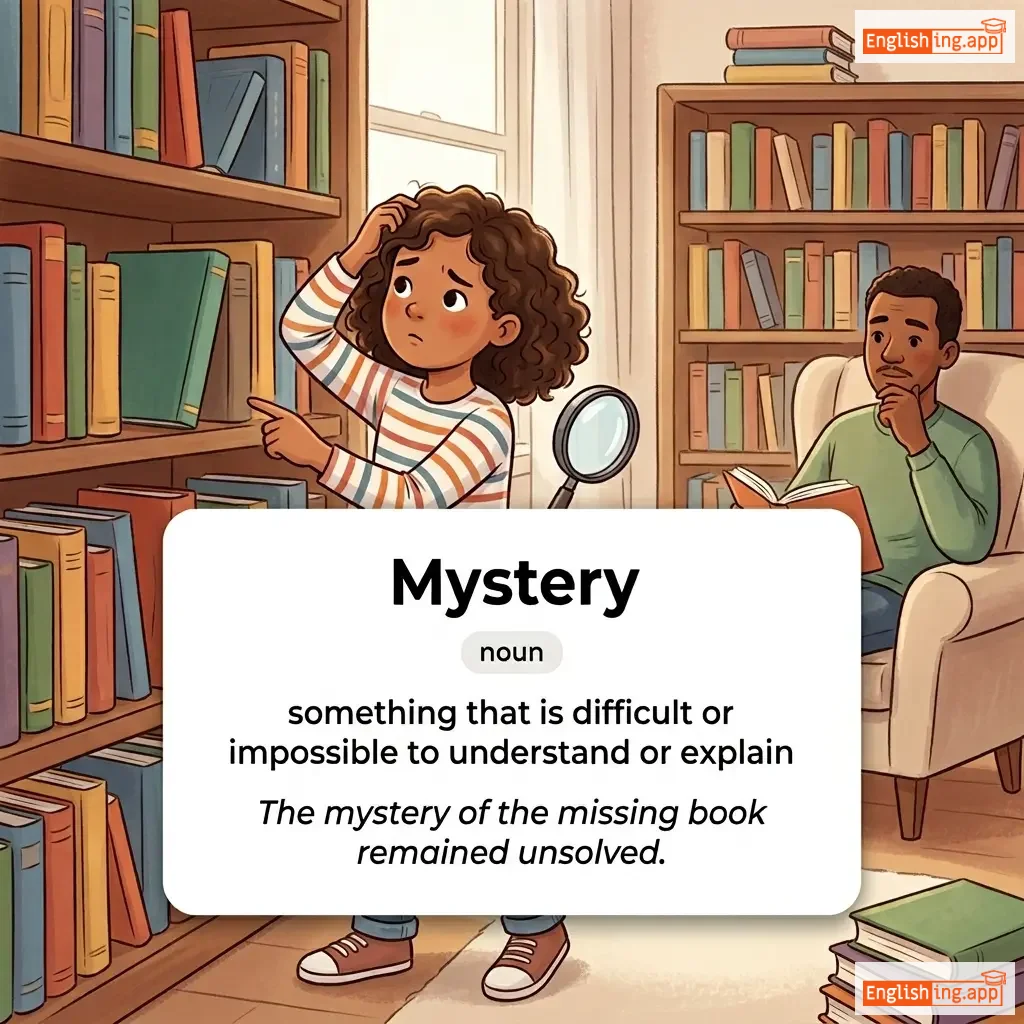
Mystery definition card — visual illustration of the meaning
noun
/ˈmɪstəri/
谜团 (mi tuan)

something that is difficult or impossible to understand or explain

"The mystery of the missing book remained unsolved."
"失踪的书之谜仍未解开。" (Shīzōng de shū zhī mí réng wèi jiě kāi.)
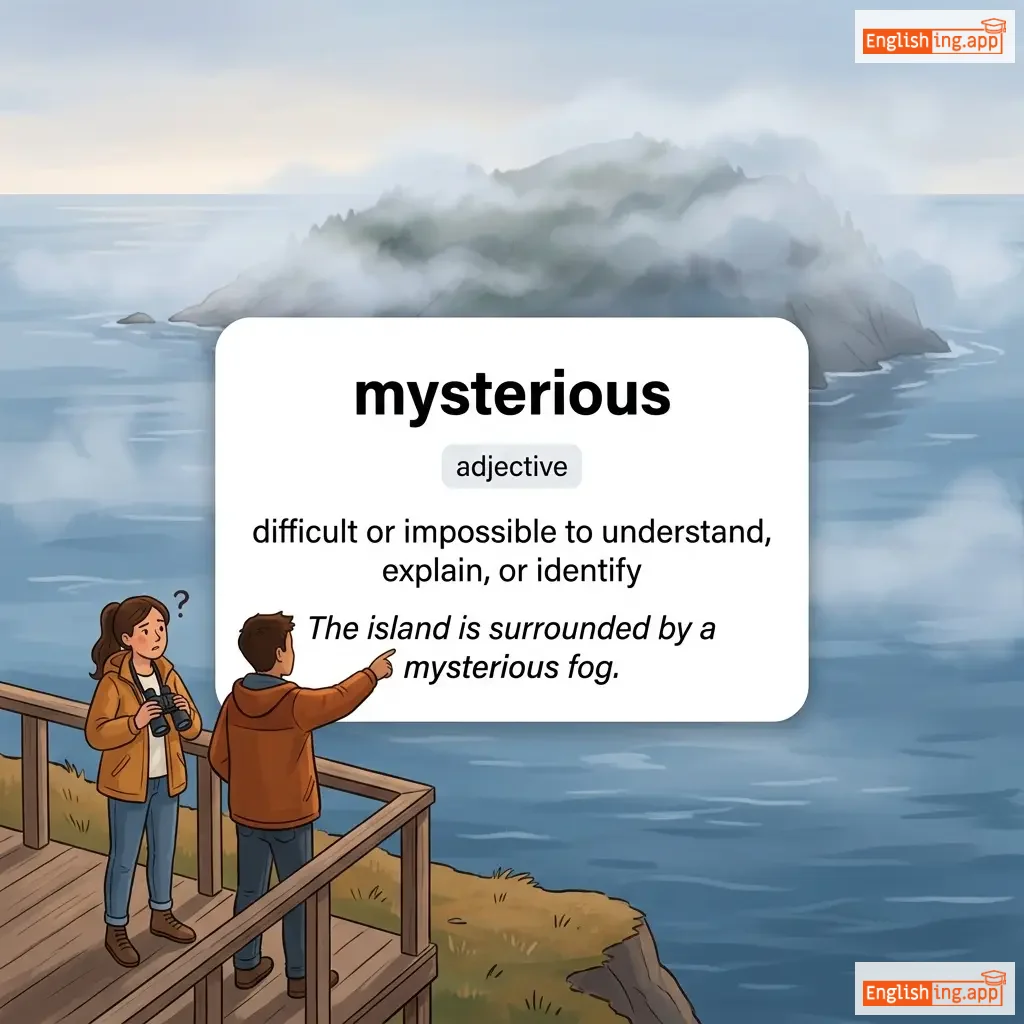
mysterious definition card — visual illustration of the meaning
adjective
/mɪˈstɪəriəs/
神秘 (shenmi)

difficult or impossible to understand, explain, or identify

"The island is surrounded by a mysterious fog."

"岛屿被神秘的雾气包围。" (Dao yu bei shenmi de wuqi baowei.)
narcissism definition card — visual illustration of the meaning
noun
/ˈnɑːrsɪsɪzəm/
自恋 (zì liàn)

Excessive interest in or admiration of oneself.

"His constant selfies were a sign of his narcissism."

"他不断自拍是他自恋的表现。" (tā bù duàn zì pāi shì tā zì liàn de biǎo xiàn.)
adjective
/ˈmɛtrɪkəl/
韵律的 (yùnlǜ de)

Relating to or composed in a regular rhythmic pattern of beats or meter, especially in poetry.

"The poet carefully followed metrical rules in his verses."

"诗人在他的诗句中小心地遵循了韵律规则。" (Shīrén zài tā de shī jù zhōng xiǎoxīn de zūnxúnle yùnlǜ guīzé.)
adjective
/ˈmɛtrɪk/
米特里克 (mì tè lǐ kè)

Relating to the metric system of measurement; also, a standard of measurement used to assess performance.

"The company tracks success using clear performance metrics."

"公司通过使用清晰的绩效指标来追踪成功。" (Gōng sī tōng guò shǐ yòng qīng xī de jì xiào zhǐ biāo lái zhuī zōng chéng gōng.)
noun
/mɪˈtɒnɪmi/
借代 (jièdài)

A figure of speech in which one word or phrase is substituted with another closely related word or concept.

"In the phrase 'the crown will decide,' 'crown' is a metonymy for monarchy."
"在短语 '王冠将决定' 中,'王冠' 是君主制的借代。" (Zài duǎnyǔ 'wángguàn jiāng juédìng' zhōng, 'wángguàn' shì jūnzhǔzhì de jièdài.)
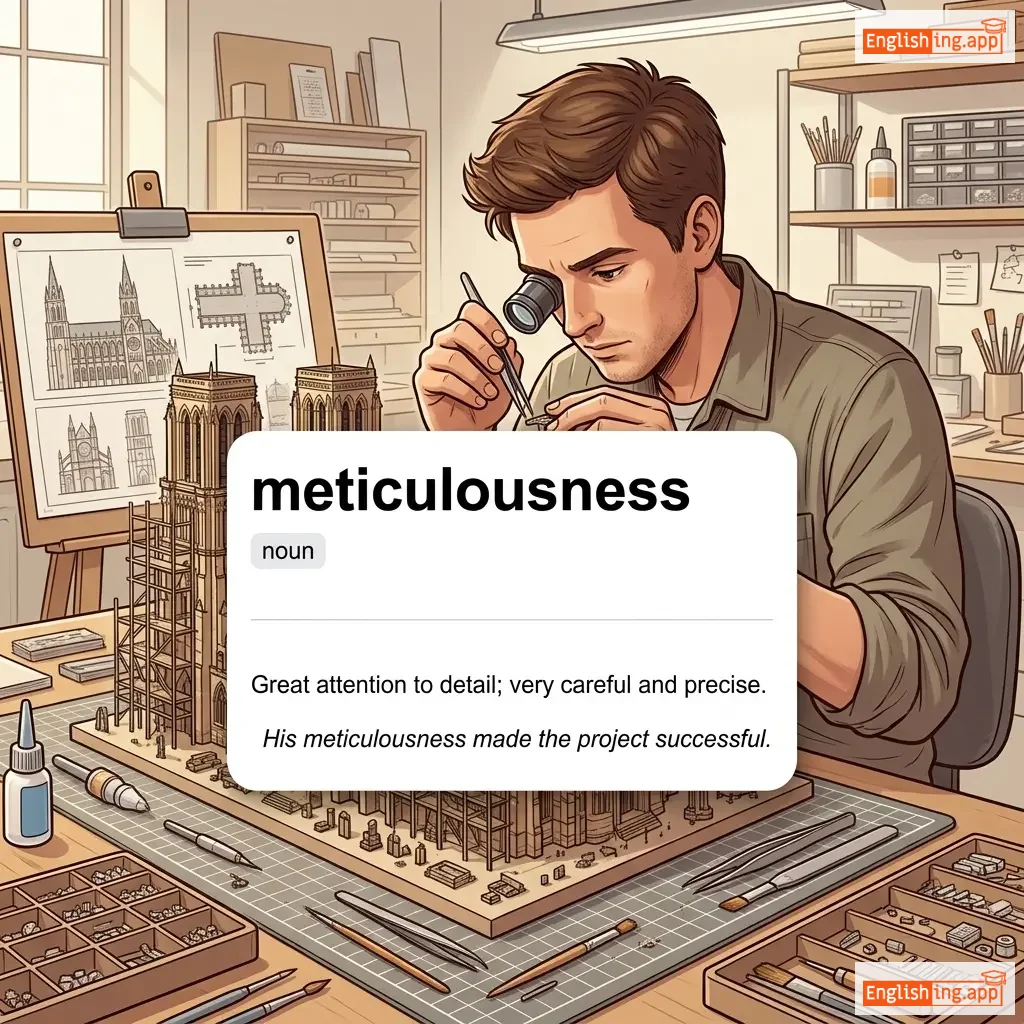
meticulousness definition card — visual illustration of the meaning
noun
mɪˈtɪkjʊləsnɪs
对细节的极大关注 (dui xijie de jida guanzhu)

Great attention to detail; very careful and precise.

"His meticulousness made the project successful."
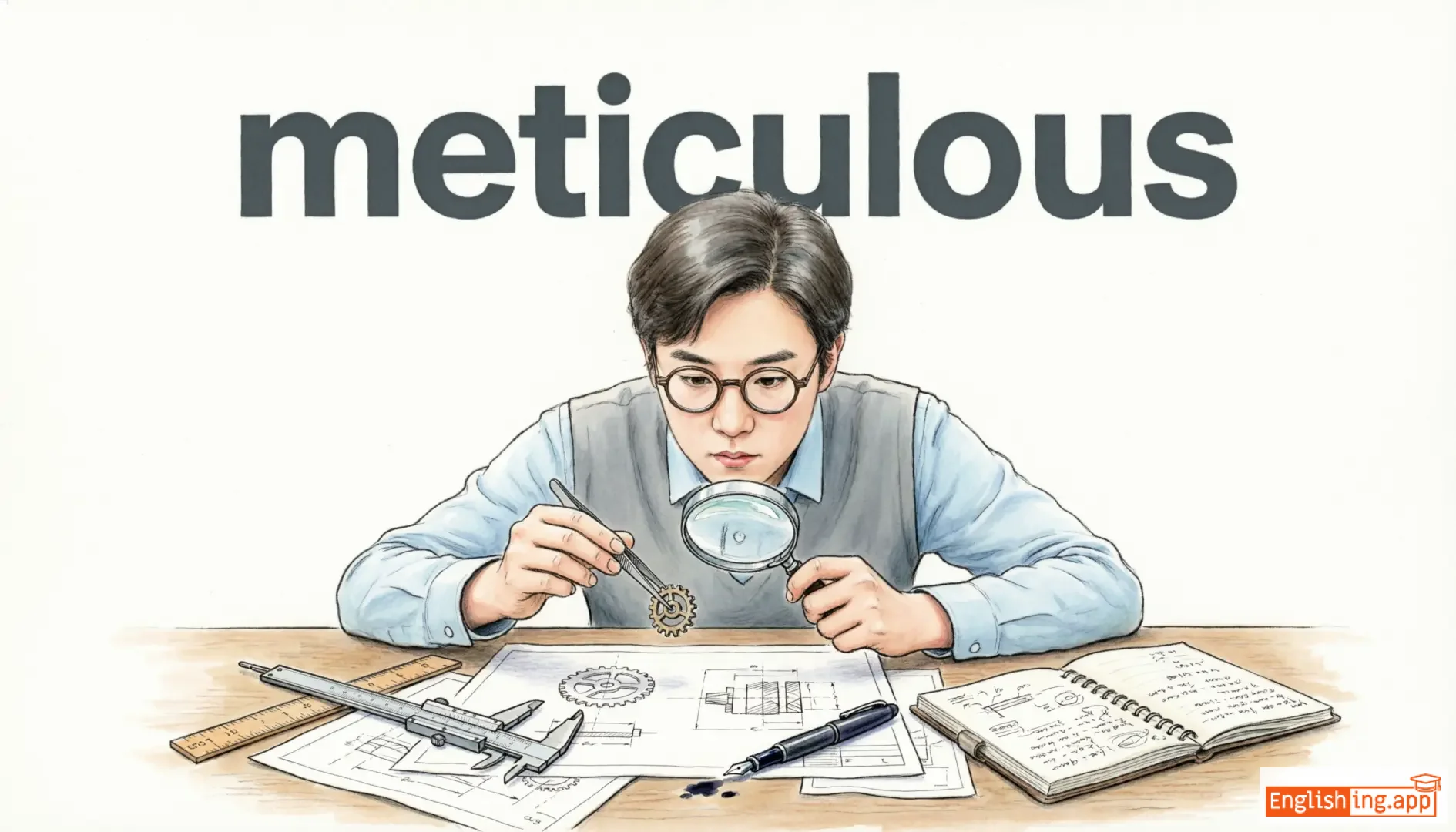
"他的细心让这个项目成功。" (Tade xixin rang zhege xiangmu chenggong.)
meticulous definition card — visual illustration of the meaning
adjective
/məˈtɪkjʊləs/
一丝不苟 (yīsī bùgǒu)

Showing great attention to detail; very careful and precise.

"The artist was meticulous in painting every tiny detail."

"艺术家在绘制每个小细节时都非常一丝不苟。" (Yìshùjiā zài huìzhì měi gè xiǎo xìjié shí dōu fēicháng yīsī bùgǒu.)
noun
/ˌmɛθəˈdɑlədʒi/
方法论 (fāngfǎlùn)

A system of methods used in a particular area of study or activity.

"The research was conducted using a new methodology."
"这项研究是使用新方法论进行的。" (Zhe xiang yanjiu shi shiyong xin fangfalu jinxing de.)
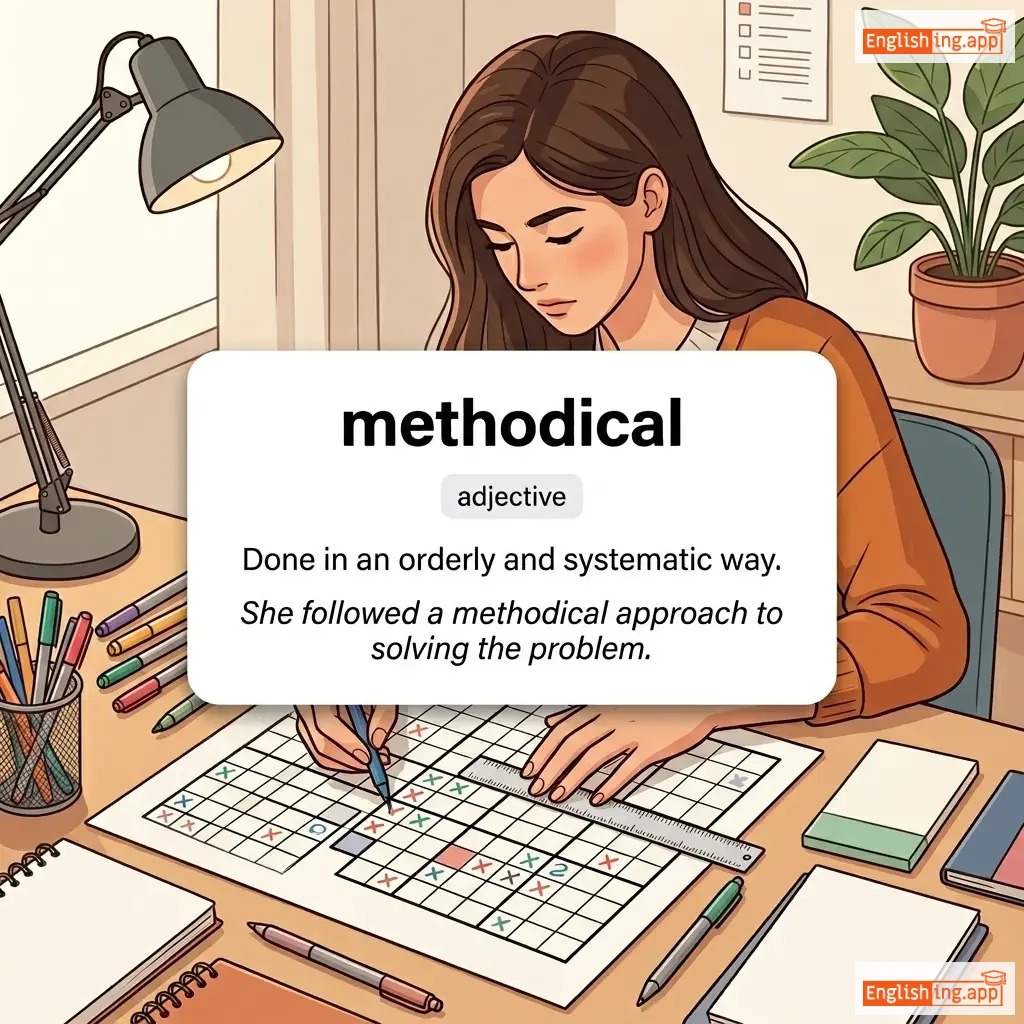
methodical definition card — visual illustration of the meaning
adjective
/məˈθɒdɪkəl/
有条理的 (yǒu tiáolǐ de)

Done in an orderly and systematic way.

"She followed a methodical approach to solving the problem."

"她采用了有条理的方式解决问题。" (Tā cǎiyòngle yǒu tiáolǐ de fāngshì jiějué wèntí.)
noun
/ˈmɛθəd/
方法 (fāngfǎ)

A particular way or process of doing something.

"She explained the method of solving the problem."

"她解释了解决问题的方法。" (Tā jiěshìle jiějué wèntí de fāngfǎ.)
noun
/ˈmiːtər/
(mǐ)

A unit of length in the metric system equal to 100 centimeters; also, a device that measures quantity such as electricity or gas.

"The technician came to check the electricity meter."

"技术员来了检查电表。" (Jìshùyuán lái le jiǎnchá diànbiǎo.)
noun
/ˌmiːtiəˈrɒlədʒi/
气象学 (qixiangxue)

The scientific study of the atmosphere and weather.

"He chose to specialize in meteorology to study weather patterns."
"他选择专攻气象学,以研究天气模式。" (Ta xuanze zhuangong qixiangxue, yi yanjiu tianqi moshi.)
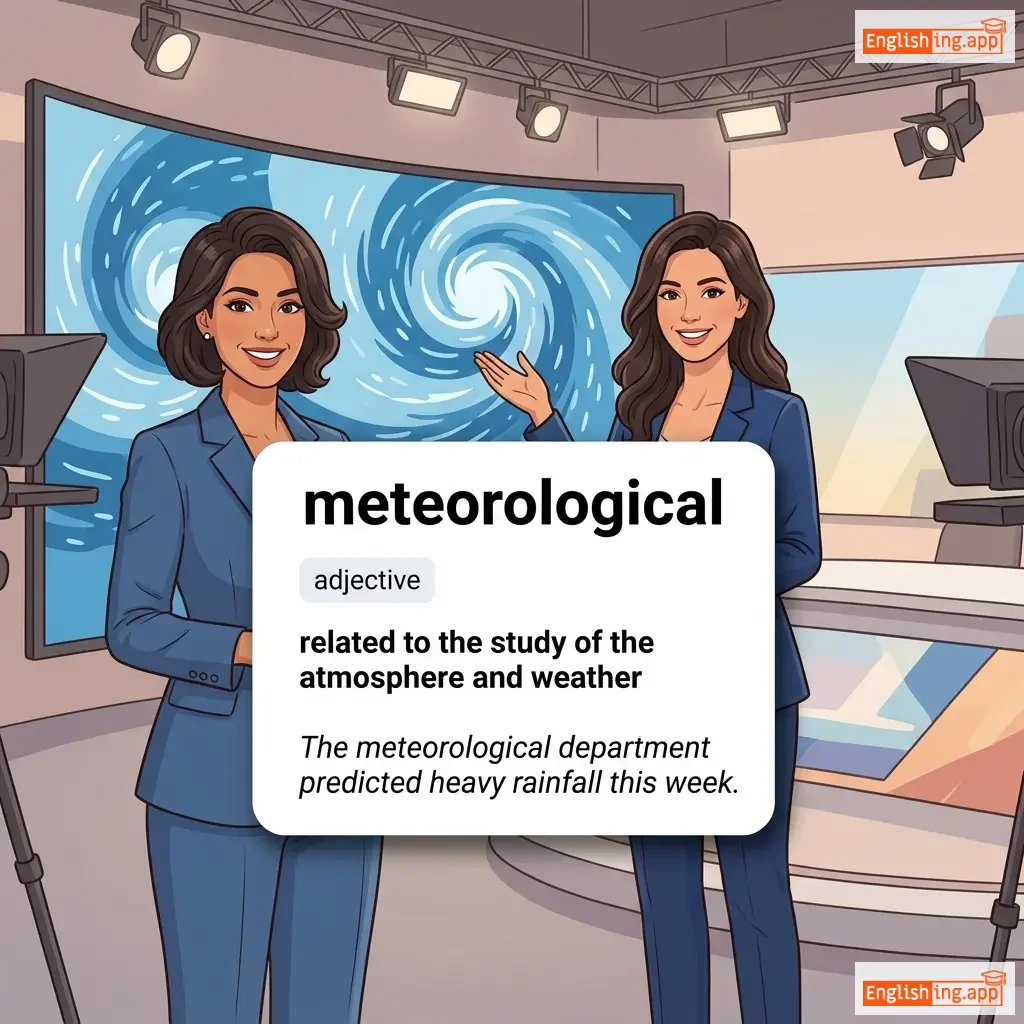
meteorological definition card — visual illustration of the meaning
adjective
/ˌmiː.ti.ə.rəˈlɒ.dʒɪ.kəl/
气象的 (qìxiàng de)

related to the study of the atmosphere and weather

"The meteorological department predicted heavy rainfall this week."

"气象部门预测本周有大雨。" (Qìxiàng bùmén yùcè běn zhōu yǒu dàyǔ.)
adjective
/ˌmiːtiˈɔːrɪk/
与流星相关; 非常迅速且通常是暂时的。 (yu liuxing xiangguan; feichang xunshu qie tongchang shi zan shi de.)

Relating to meteors; very rapid and often temporary.

"The singer’s meteoric rise to fame surprised everyone."

"这位歌手的流星般的成名之路让每个人都感到惊讶。" (Zhe wei geshou de liuxing ban de chengming zhi lu rang mei ge ren dou gandu jingya.)
noun
/ˌmɛtəmˌsaɪˈkoʊsɪs/
灵魂的转生 (línghún de zhuǎnshēng)

The supposed transmigration of the soul, especially its reincarnation after death.

"Ancient philosophers often debated the idea of metempsychosis."
"古代哲学家常常讨论灵魂的转生。" (Gǔdài zhéxuéjiā chángcháng tǎolùn línghún de zhuǎnshēng.)
verb
/miːt/
分配 (fenpei)

To dispense or allot justice, punishment, or harsh treatment.

"The judge will mete out punishment according to the crime."

"法官将根据罪行分配惩罚。" (Fǎguān jiāng gēnjù zuìxíng fēnpèi chéngfá.)
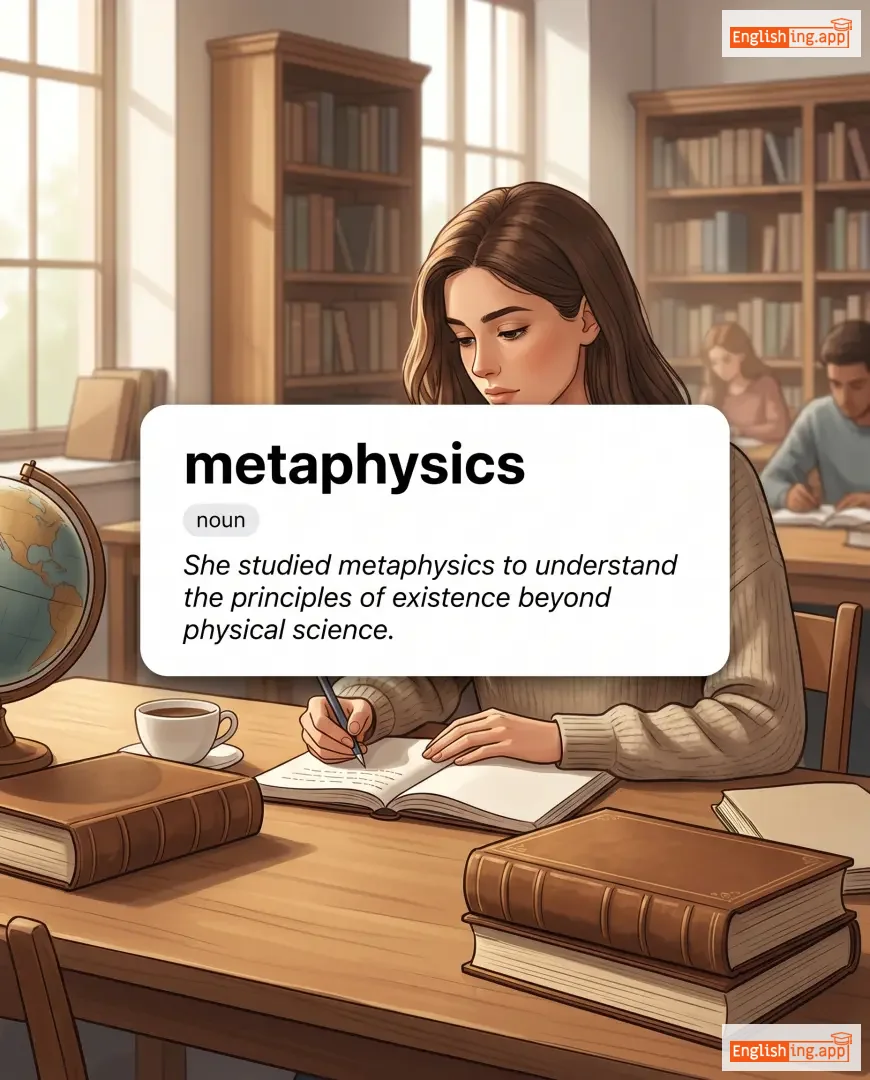
metaphysics definition card — visual illustration of the meaning
noun
/ˌmɛtəˈfɪzɪks/
形而上学 (xíng ér shàng xué)

The branch of philosophy that deals with the fundamental nature of reality, existence, and the relationship between mind and matter.

"She studied metaphysics to understand the principles of existence beyond physical science."

"她学习形而上学,以理解超越物理科学的存在原理。" (Tā xuéxí xíng ér shàng xué, yǐ lǐjiě chāoyuè wùlǐ kēxué de cúnzài yuánlǐ.)
noun
/ˌmɛtəfɪˈzɪʃən/
形而上学家 (xíng ér shàng xué jiā)

A person who studies or is an expert in metaphysics.

"The metaphysician debated the essence of reality with his peers."

"形而上学家与同伴们讨论了现实的本质。" (Xíng ér shàng xué jiā yǔ tóngbànmen tǎolùnle xiànshí de běnzhì.)
adjective
/ˌmɛtəˈfɪzɪkəl/
形而上学的 (xíng ér shàng xué de)

Relating to the branch of philosophy that deals with the fundamental nature of reality and existence.

"He spent years studying metaphysical questions about life and being."

"他花了多年时间研究关于生活和存在的形而上学问题。" (tā huāle duōnián shíjiān yánjiū guānyú shēnghuó hé cúnzài de xíng ér shàng xué wèntí.)
noun
/ˈmɛtəfɔːrm/
隐喻形式 (yǐn yù xíng shì)

A coined or rare term sometimes used to describe a hybrid form of metaphor and form in literature or art.

"The poet introduced a metaphorm to blend imagery with structure."

"诗人引入了一种梅塔福姆,把意象和结构结合在一起。" (Shīrén yǐnrù le yī zhǒng méitǎfúm, bǎ yìxiàng hé jiégòu jiéhé zài yīqǐ.)
adjective
/ˌmɛtəˈfɔːrɪkəl/
隐喻的 (yǐn yù de)

Characteristic of or relating to metaphor; figurative rather than literal.

"He used metaphorical language to describe his emotions."

"他用隐喻语言来描述他的情感。" (Tā yòng yǐn yù yǔyán lái miáoshù tā de qínggǎn.)
noun
/ˈmɛtəfɔːr/
幸福 (xingfu)

A figure of speech in which a word or phrase is applied to something to which it is not literally applicable.

"Time is a thief is a common metaphor for how quickly life passes."

"当她获得奖项时,她无法掩饰自己的幸福。" (Dāng tā huò dé jiǎngxiàng shí, tā wúfǎ yǎnshì zìjǐ de xìngfú.)
verb, noun
/mɛʃ/
网格, 编织 (wǎnggé, biānzhī)

To fit or work together properly; or a material made of interlaced threads.

"The two gears mesh perfectly to keep the machine running smoothly."

"这两个齿轮完美契合,使机器平稳运行。" (Zhè liǎng gè chǐlún wánměi qìhé, shǐ jīqì píngwěn yùnxíng.)
Messenger definition card — visual illustration of the meaning
noun
/ˈmes.ɪn.dʒər/
信使 (xìnshǐ)

a person who carries messages or communications between parties

"The messenger delivered important battle plans to the commander."

"信使将重要的战斗计划传递给了指挥官。" (Xìnshǐ jiāng zhòngyào de zhàndòu jìhuà chuándì gěile zhǐhuīguān.)
noun
/ˈmɛsɪdʒ/
消息 (xiaoxi)

A piece of information sent or communicated from one person to another.

"I received a message from my friend yesterday."
"我昨天收到了一条来自朋友的消息。" (Wo zuotian shoudao le yitiao laizi pengyou de xiaoxi.)
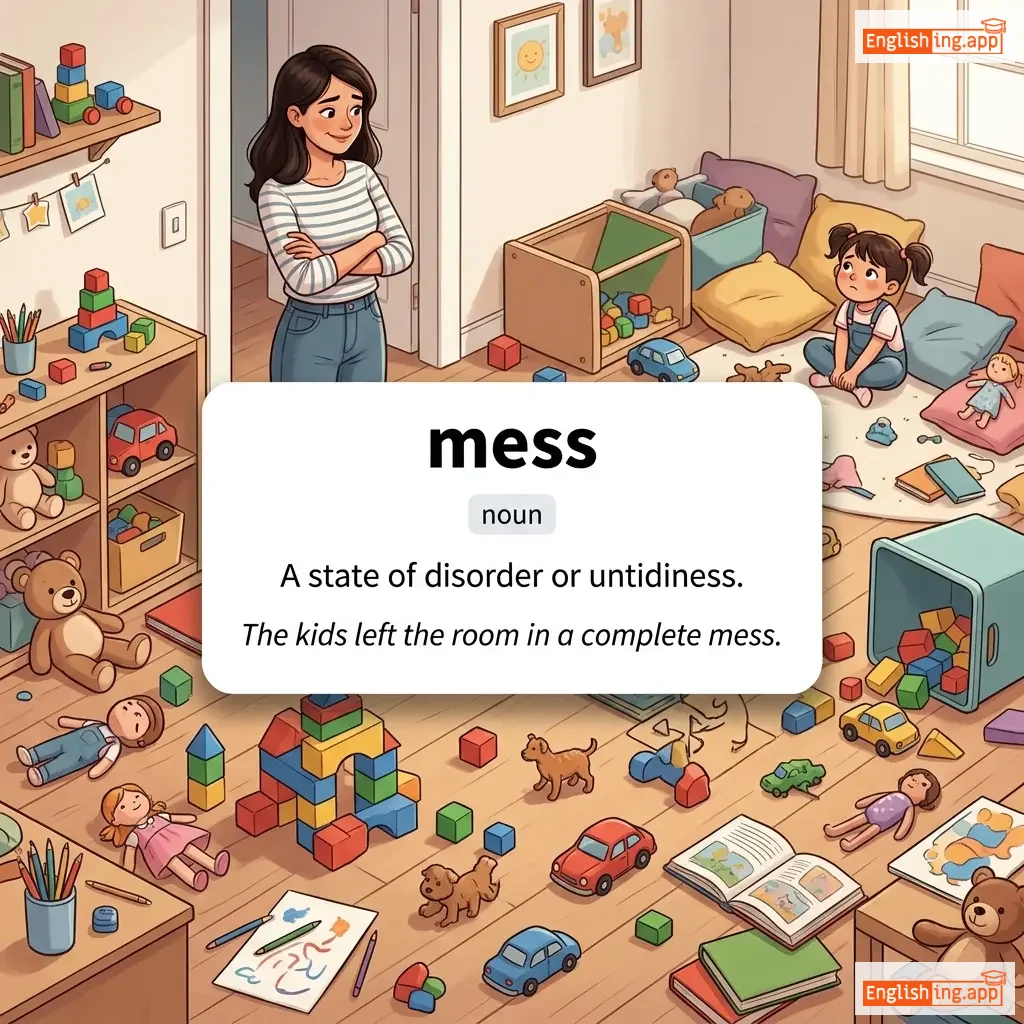
mess definition card — visual illustration of the meaning
noun
/mɛs/
混乱 (hùnluàn)

A state of disorder or untidiness.

"The kids left the room in a complete mess."
"孩子们把房间弄得一团糟。" (Háizimen bǎ fángjiān nòng de yìtuánzāo.)
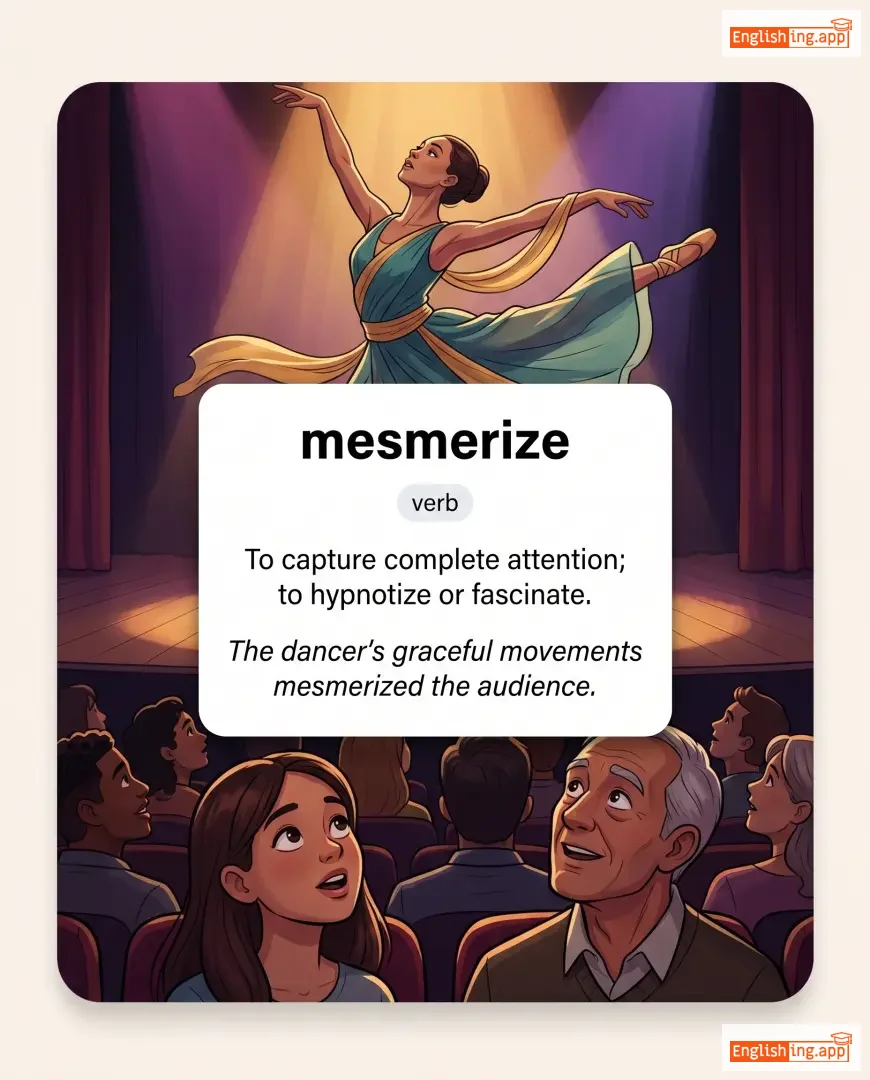
mesmerize definition card — visual illustration of the meaning
verb
/ˈmɛzməˌraɪz/
迷住 (mí zhù)

To capture complete attention; to hypnotize or fascinate.

"The dancer's graceful movements mesmerized the audience."

"舞者优雅的动作迷住了观众。" (Wǔzhě yōuyǎ de dòngzuò mí zhù le guānzhòng.)
noun
/ˈmɛzməˌrɪzəm/
催眠术 (cuīmián shù)

A state of fascination or hypnotism.

"The magician held the audience in a state of mesmerism."

"魔术师让观众处于催眠状态。" (Móshùshī ràng guānzhòng chǔ yú cuīmián zhuàngtài.)
adverb
/ˈmerɪli/
快乐地 (kuaile de)

in a cheerful and joyful manner

"The children played merrily in the garden."

"孩子们在花园里快乐地玩耍。" (Haizimen zai huayuan li kuaile de wanshua.)
adjective
/ˌmɛrɪˈtɔːriəs/
值得称赞的 (zhí dé chēng zàn de)

Deserving reward, praise, or recognition.

"She received a scholarship for her meritorious academic performance."

"她因其值得称赞的学术表现而获得奖学金。" (Tā yīn qí zhí dé chēng zàn de xué shù biǎo xiàn ér huò dé jiǎng xué jīn.)
🧜‍♀️

Mermaid (mèrmáid)

noun
/ˈmɛr.meɪd/
美人鱼 (měirényú)

A mythical sea creature with the head and torso of a woman and the tail of a fish

"The little girl loved stories about mermaids living under the sea."

"小女孩喜欢关于美人鱼在海底生活的故事。" (xiǎo nǚhái xǐhuān guānyú měirényú zài hǎidǐ shēnghuó de gùshì.)