词汇表

英语词汇词典 | 单词含义、定义和示例

noun
/neɪv/
教堂的中央部分 (jiàotáng de zhōngyāng bùfen)

the central part of a church building intended to accommodate the congregation

"The choir sang beautifully in the church nave."

"合唱团在教堂的内夫里唱得非常动听。" (Héchàngtuán zài jiàotáng de nèifū lǐ chàng dé fēicháng dòngtīng.)
👶

Navel

noun
/ˈneɪvəl/

the small hollow or raised area in the middle of the stomach, also called the belly button

"The baby’s navel was carefully cleaned after birth."

adjective
/ˈnæv.ɪ.ɡə.bəl/
可通航的 (ke tong hang de)

Able to be sailed on or through by ships or boats.

"The river is navigable for large cargo ships."
"这条河流适合大型货船通行。" (Zhe tiao he liu shi he da xing huo chuan tong xing.)
navigate definition card — visual illustration of the meaning
verb
/ˈnæv.ɪ.ɡeɪt/

To plan and direct the course of a ship, vehicle, or journey.

"The captain navigated the ship safely through the storm."

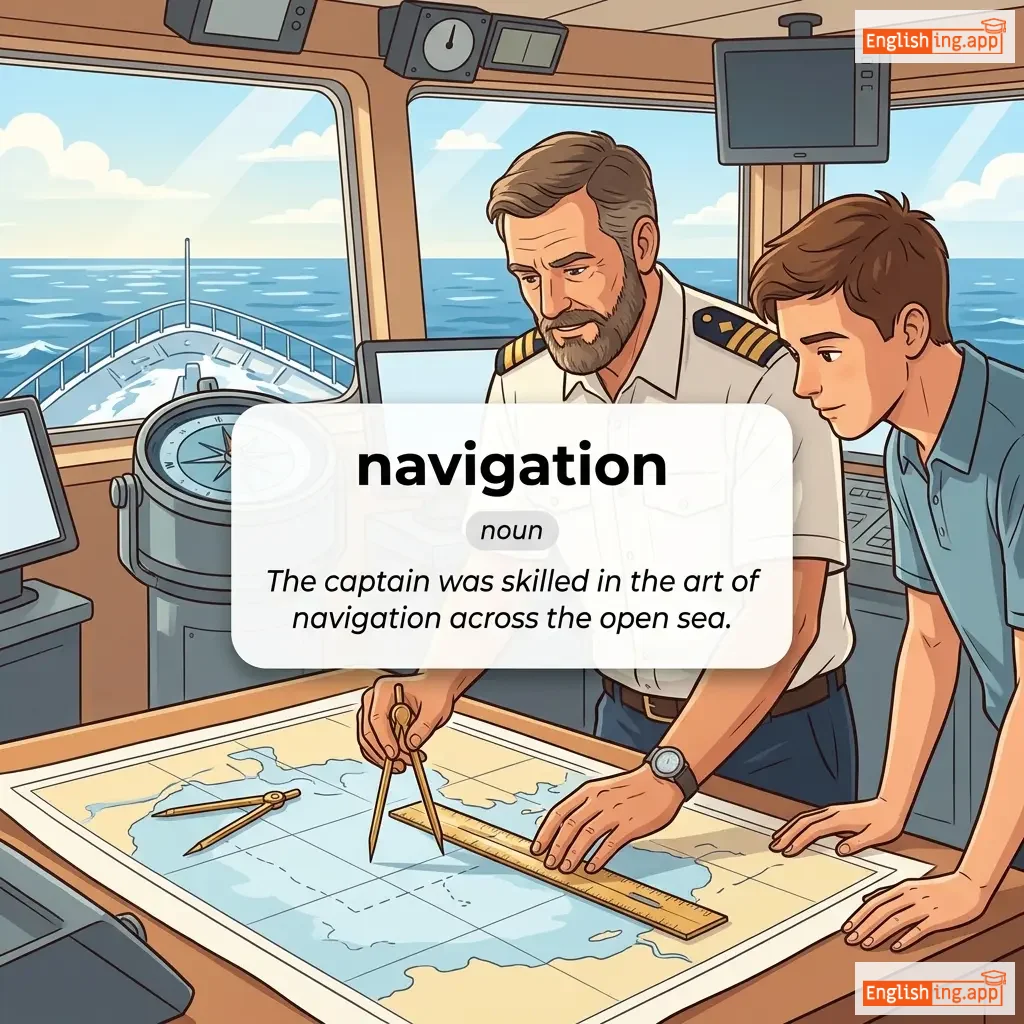
navigation definition card — visual illustration of the meaning
noun
/ˌnævɪˈɡeɪʃən/
导航 (daohang)

the process or activity of accurately determining one's position and planning and following a route

"The captain was skilled in the art of navigation across the open sea."

"船长擅长在开阔海洋中的导航艺术。" (chuánzhǎng shàncháng zài kāikuò hǎiyáng zhōng de dǎoháng yìshù.)
Navy definition card — visual illustration of the meaning
noun
/ˈneɪvi/
海军 (haijun)

the branch of armed forces that conducts military operations at sea

"He joined the navy after graduating from college."

"他在大学毕业后加入了海军。" (Tā zài dàxué bìyè hòu jiārùle hǎijūn.)
noun
/ˈneɪˌseɪ.ɪŋ/
负面言论 (fùmiàn yánlùn)

The act of expressing negative or pessimistic views.

"His constant naysaying discouraged the team."

"他不断的负面言论使团队失去了动力。" (Tā bùduàn de fùmiàn yánlùn shǐ tuánduì shīqùle dònglì.)
noun
/ˌɛn.biː.esˈpiː/
不间断空格 (bu jian duan kong ge)

a non-breaking space character in HTML used to prevent an automatic line break at its position

"Use   in HTML to add a space that won't break into a new line."

"在HTML中使用 添加一个不会换行的空格。" (zai HTML zhong shiyong  tianjia yige bu hui huanhang de kongge.)
noun
/niːp/
低潮 (dīcháo)

A tide just after the first or third quarters of the moon when the difference between high and low tide is least.

"During a neap tide, the water level change is minimal."

"在低潮期间,水位变化最小。" (Zai dīcháo qījiān, shuǐwèi biànhuà zuìxiǎo.)
preposition
/nɪə(r)/
(jin)

At or to a short distance away; close in space, time, or relationship.

"There is a park near my house."

"我家附近有一个公园。" (Wo jia fujin you yige gongyuan.)
adverb
/ˈnɪərbaɪ/
附近; 在附近 (fùjìn; zài fùjìn)

close to; not far away; in the neighborhood

"There is a grocery store nearby."

"附近有一家杂货店。" (Fùjìn yǒu yī jiā záhuòdiàn.)
adjective
/ˈnɪəˌbaɪ/
附近 (fujin)

close to a particular place or person

"The nearest gas station is nearby."

"最近的加油站就在附近。" (Zui jin de jia you zhan jiu zai fujin.)
adverb
/ˈnɪəli/
几乎 (jīhū)

almost, but not completely

"She nearly missed the bus."

"她差点错过了公交车。" (Tā chàdiǎn cuòguòle gōngjiāochē.)
Neat definition card — visual illustration of the meaning
adjective
/niːt/
整洁 (zhěngjié)

tidy, orderly, and well-arranged; simple and elegant

"His handwriting is very neat and easy to read."

"他的字迹很整洁,容易阅读。" (Tā de zìjì hěn zhěngjié, róngyì yuèdú.)
adverb
/ˈniːtli/
整齐地; 干净地 (zhěngqí de; gānjìng de)

in a tidy and orderly way; carefully and precisely

"She arranged the books neatly on the shelf."

"她把书整齐地放在书架上。" (Tā bǎ shū zhěngqí de fàng zài shūjià shàng.)
noun
/ˈneb.jʊ.lə/
星云 (xingyun)

A cloud of gas and dust in outer space, sometimes visible in the night sky.

"The Orion Nebula is one of the brightest in the sky."

"猎户座星云是天空中最明亮的之一。" (Liè hù zuò xīng yún shì tiānkōng zhōng zuì míngliàng de zhī yī.)
adjective
/ˈnɛbjələs/
朦胧 (ménglóng)

Unclear, vague, or ill-defined; resembling a cloud or haze.

"His plan for the future was still nebulous and hard to understand."

"他对未来的计划仍然是朦胧的,难以理解。" (tā duì wèilái de jìhuà réngrán shì ménglóng de, nán yǐ lǐjiě.)
adverb
/ˌnɛsəˈsɛrɪli/
不一定 (bù yí dìng)

as a necessary result; inevitably

"It doesn’t necessarily mean you’re wrong."

"这不一定意味着你错了。" (Zhè bù yí dìng yìwèizhe nǐ cuòle.)
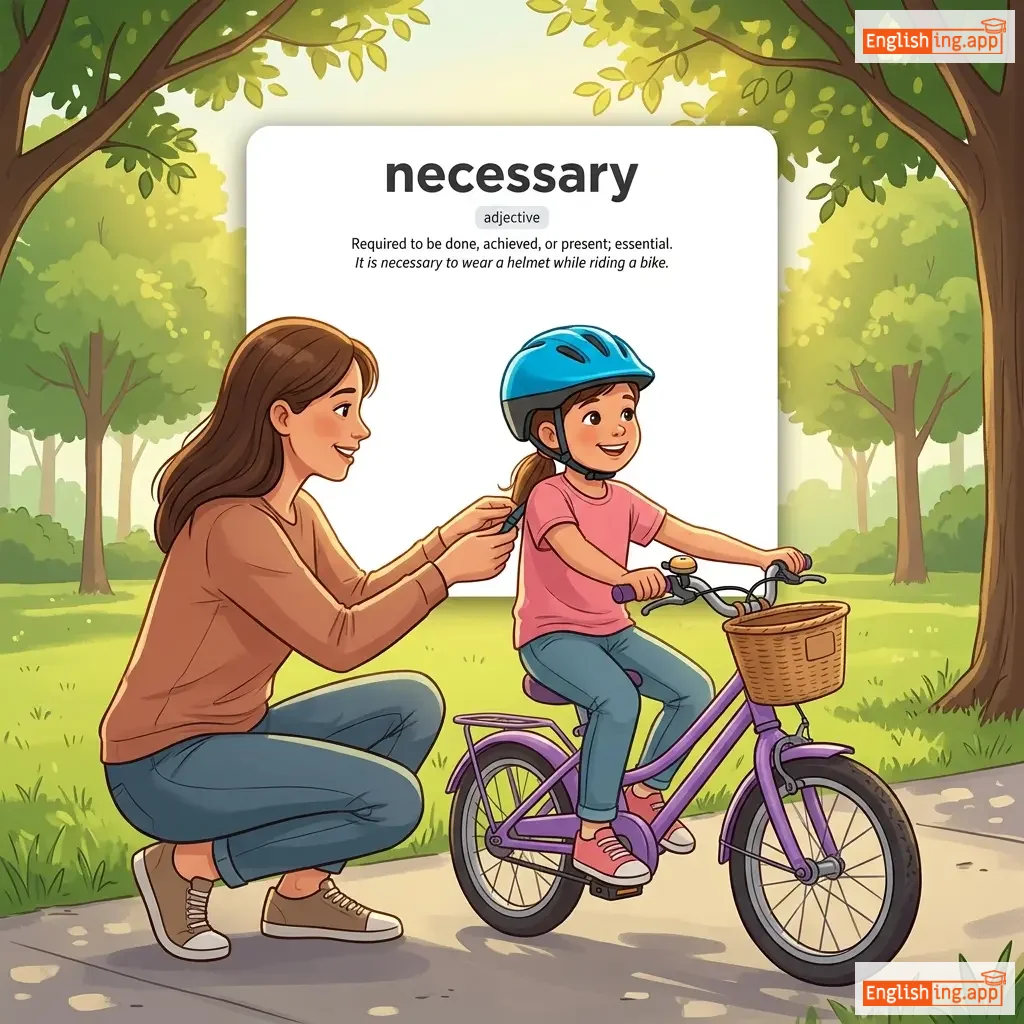
necessary definition card — visual illustration of the meaning
adjective
/ˈnɛsəsɛri/

Required to be done, achieved, or present; essential.

"It is necessary to wear a helmet while riding a bike."

verb
/nəˈsɛsɪteɪt/
使成为必要 (shǐ chéngwéi bìyào)

To make something necessary or unavoidable.

"The heavy rains necessitated the cancellation of the event."
"大雨使得活动的取消成为必然。" (Dàyǔ shǐdé huódòng de qǔxiāo chéngwéi bìrán.)
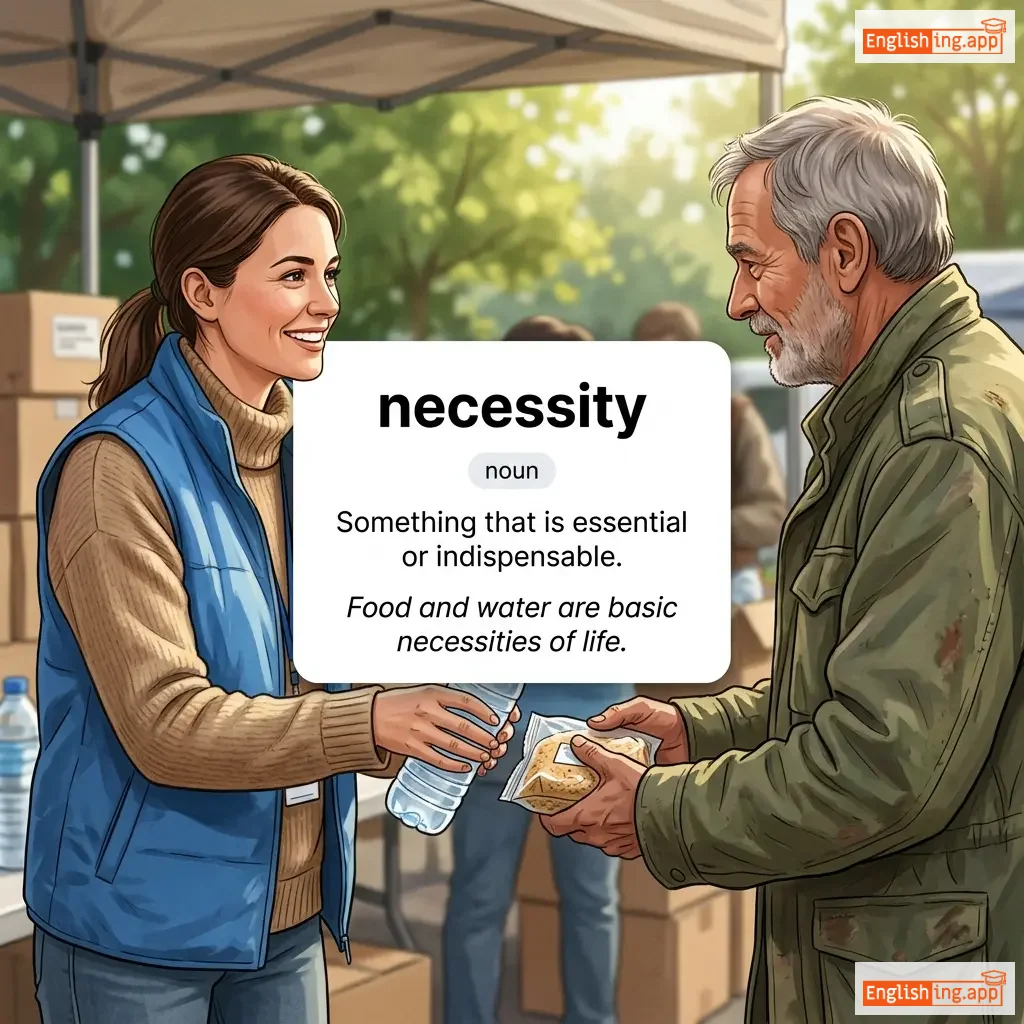
necessity definition card — visual illustration of the meaning
noun
/nəˈsɛsəti/
必要性 (bì yào xìng)

Something that is essential or indispensable.

"Food and water are basic necessities of life."

"食物和水是生活中的基本必需品。" (Shíwù hé shuǐ shì shēnghuó zhōng de jīběn bìxū pǐn.)
noun
/nɛk/
脖子 (bozi)

the part of the body connecting the head and the shoulders

"She wore a necklace around her neck."

"她脖子上戴着一条项链。" (Tā bózi shàng dàizhe yītiáo xiàngliàn.)
Necklace definition card — visual illustration of the meaning
noun
/ˈnek.ləs/
项链 (xianglian)

a piece of jewelry that is worn around the neck

"She wore a beautiful diamond necklace to the party."

"她在派对上戴着一条漂亮的钻石项链。" (Tā zài pàiduì shàng dàizhe yītiáo piàoliang de zuànshí xiàngliàn.)
noun
/ˈnɛkˌlaɪn/
领口 (lǐngkǒu)

the edge of a garment around the neck, especially as cut to form a particular shape

"The dress has a beautiful V-shaped neckline."

"这件裙子有一个漂亮的V形领口。" (Zhè jiàn qúnzi yǒu yīgè piàoliang de V xíng lǐngkǒu.)
Necktie definition card — visual illustration of the meaning
noun
/ˈnek.taɪ/
领带 (lingdai)

a strip of cloth worn around the neck under a shirt collar and tied in front

"He adjusted his necktie before the important meeting."

"他在重要会议前调整了他的领带。" (Tā zài zhòngyào huìyì qián tiáozhěngle tā de lǐngdài.)
noun
/nɪˈkrɒlədʒi/
讣告 (fugao)

An obituary notice or a list of people who have recently died.

"The newspaper published a necrology of notable figures who passed away that year."

"报纸发布了该年已故知名人物的讣告。" (Baozhi fabulei gai nian yigou zhiming renwu de fugao.)
🧙‍♂️

necromancer

noun
/ˈnɛkrəˌmænsər/

a person who practices necromancy; a wizard or magician who claims to communicate with the dead

"The villagers feared the old necromancer who lived at the edge of the forest."

noun
/ˈnɛkrəˌmænsi/
死灵法 (sǐlíng fǎ)

the practice of communicating with the dead, often to predict the future

"Ancient texts described rituals of necromancy performed by priests."

"古代的文献描述了由祭司执行的死灵法仪式。" (Gǔdài de wénxiàn miáoshùle yóu jìsī zhíxíng de sǐlíng fǎ yíshì.)
noun
/nəˈkrɒpəlɪs/
古代墓地 (gǔdài mùdì)

a large ancient cemetery with elaborate tombs

"The archaeologists discovered artifacts in the necropolis of the ancient city."

"考古学家在古城的内克罗波利斯中发现了文物。" (Kǎogǔxuéjiā zài gǔ chéng de nèikèluōbōlìsī zhōng fāxiànle wénwù.)
noun
/nɛˈkroʊsɪs/
坏死 (huàisǐ)

the death of body tissue due to disease, injury, or lack of blood supply

"The doctor explained that the patient’s wound showed signs of necrosis."
"医生解释说,病人的伤口显示出坏死的迹象。" (Yīshēng jiěshì shuō, bìngrén de shāngkǒu xiǎnshì chū huàisǐ de jìxiàng.)
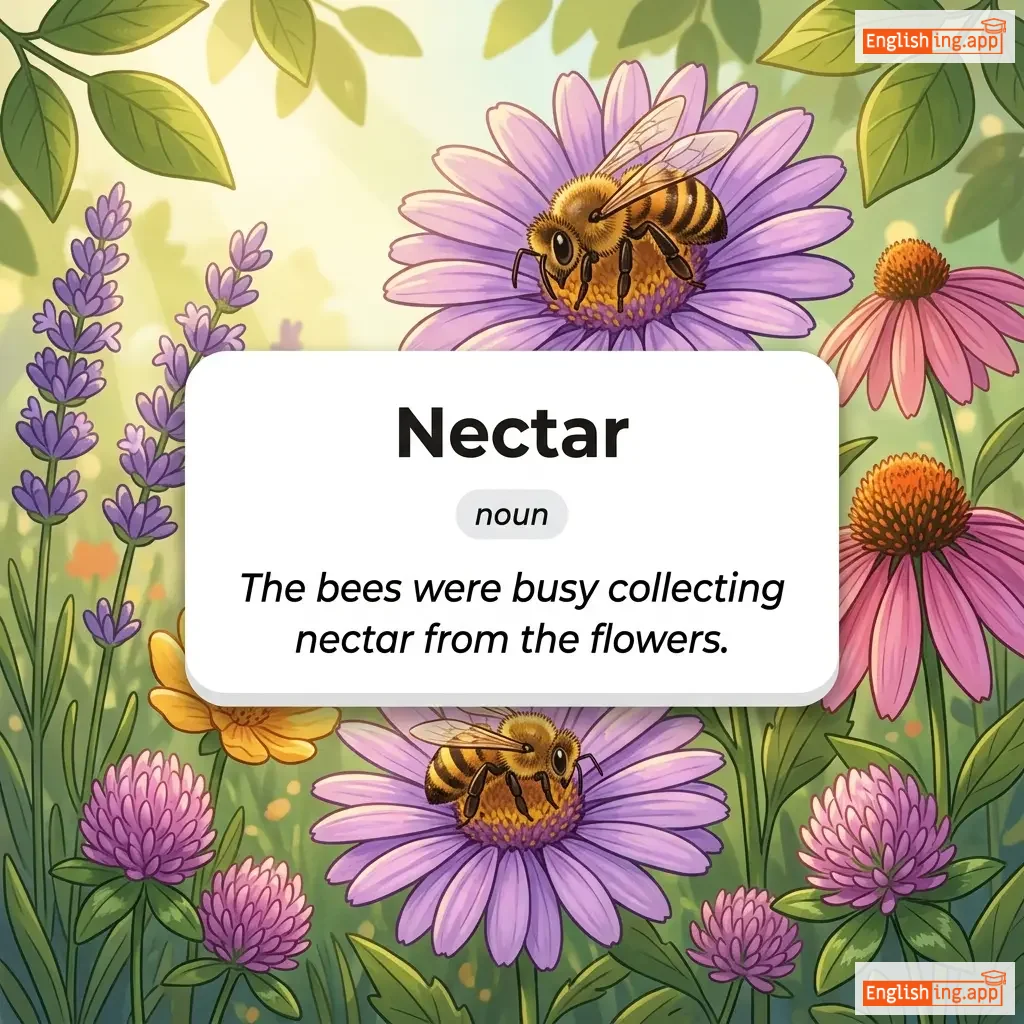
Nectar definition card — visual illustration of the meaning
noun
/ˈnɛktər/
甘露 (ganlu)

a sweet liquid produced by flowers and collected by bees; in mythology, the drink of the gods

"The bees were busy collecting nectar from the flowers."

"蜜蜂忙于从花朵中采集甘露。" (Mifeng mangyu cong huaduo zhong caiji ganlu.)
noun
/ˈnɛpətɪzəm/
裙带关系 (qundai guanxi)

The practice of giving unfair advantages to relatives, especially in jobs or positions of power.

"The company was accused of nepotism after the manager hired his brother."

"公司因经理雇佣了他的兄弟而被指控裙带关系。" (Gōngsī yīn jīnglǐ gùyōngle tā de xiōngdì ér bèi zhǐkòng qundai guanxi.)
conjunction
/ˈniːðər/
既不 (ji bu)

used to connect two negative alternatives

"Neither the manager nor the assistant could attend the meeting."

"经理和助理都无法参加会议。" (jing li he zhu li dou wu fa can jia hui yi)
noun
/ˈnɛm.ə.sɪs/
敌人 / 对手 (dí rén / duì shǒu)

A long-standing rival or an inescapable agent of downfall.

"For years, he considered his colleague to be his nemesis."

"多年来,他把同事当作自己的敌人。" (duō nián lái, tā bǎ tóngshì dàng zuò zìjǐ de dí rén.)
noun
/ˌniːoʊˈdɑːrwɪnɪzəm/
新达尔文主义 (xin daerwen zhuyi)

A modern interpretation of Darwin's theory of evolution, integrating genetics and natural selection.

"Neo-Darwinism combines Darwin’s theory of natural selection with modern genetics."

"新达尔文主义将达尔文的自然选择理论与现代遗传学相结合。" (Xin Daerwen zhuyi jiang Daerwen de ziran xuanze lilun yu xiandai yichuanxue xiang jiehe.)
noun
/ˌniːoʊˈlætɪn/
新拉丁语 (xin lādīng yǔ)

The use of Latin language for scholarly, scientific, and literary purposes after the medieval period.

"Many scientific names are derived from Neo-Latin."

"许多科学名称来源于新拉丁语。" (Xǔduō kēxué míngchēng láiyuán yú xīn lādīng yǔ.)
noun
/niːˈɒkrəsi/
由无经验或新官员领导的政府 (you wu jingyan huo xin guan yuan lingdao de zhengfu)

A government or leadership run by inexperienced or new officials.

"The sudden revolution led to a neocracy with inexperienced leaders."

"突如其来的革命导致了一个新政府,由经验不足的领导人执政。" (Tū rù qí lái de gémìng dǎozhìle yīgè xīn zhèngfǔ, yóu jīngyàn bùzú de lǐngdǎo rén zhízhèng.)
adjective
/ˌniːoʊˈlɪθɪk/
新石器时代的 (xīn shíqì shídài de)

Relating to the later part of the Stone Age, when ground or polished stone weapons and tools prevailed.

"Neolithic communities began practicing agriculture and domesticating animals."

"新石器时代的社区开始从事农业和驯化动物。" (Xīn shíqì shídài de shèqū kāishǐ cóngshì nóngyè hé xùnhuà dòngwù.)
noun
/niːˈɒlədʒɪzəm/
新词 (xīn cí)

A newly coined word or expression.

"The internet has given rise to many neologisms like 'selfie' and 'hashtag'."

"互联网催生了许多新词,如“自拍”和“标签”。" (hùliánwǎng cuīshēngle xǔduō xīncí, rú 'zìpāi' hé 'biāoqiān'.)
noun
/niˈɒlədʒi/
使用新词或研究其起源 (shǐyòng xīn cí huò yánjiū qí qǐyuán)

The use of new words or the study of their origin.

"The professor specialized in neology, studying the creation of modern slang."

"教授专注于新词学,研究现代俚语的创造。" (Jiàoshòu zhuānzhù yú xīncí xué, yánjiū xiàndài lǐyǔ de chuàngzào.)
noun
/ˌniːoʊˈpeɪɡənɪzəm/
新异教主义 (xīn yìjiào zhǔyì)

Modern religious movements influenced by or claiming to be derived from the various historical pagan beliefs of pre-modern Europe.

"Neopaganism has gained popularity as people seek spiritual alternatives to mainstream religions."

"新异教主义已获得越来越多的关注,因为人们正在寻找主流宗教的精神替代品。" (Xīn yìjiào zhǔyì yǐ huòdé yuè lái yuè duō de guānzhù, yīnwèi rénmen zhèngzài xúnzhǎo zhǔliú zōngjiào de jīngshén tìdàipǐn.)
neophyte definition card — visual illustration of the meaning
noun
/ˈniːəˌfaɪt/
新手 (xin shou)

A beginner or novice in a subject, skill, or belief.

"As a neophyte in programming, she often asked for guidance from her mentor."

"作为编程的新手,她经常向她的导师请教。" (Zuo wei bian cheng de xin shou, ta jing chang xiang ta de dao shi qing jiao.)
noun
/ˈnefjuː/
侄子 (zhizi)

the son of one’s brother or sister

"My nephew is studying at the university."

"我的侄子在大学学习。" (wo de zhizi zai daxue xuexi)
noun
/nɛt/
(wang)

a piece of material made of threads or ropes woven together, used to catch or hold things

"The fisherman cast his net into the sea."

"渔夫把他的网投进了海里。" (Yufu ba tade wang tou jin le hǎi li.)
mundanity definition card — visual illustration of the meaning
noun
mʌnˈdeɪ.nɪ.ti
平凡 (pingfan)

The quality of being ordinary, routine, or lacking excitement.

"The mundanity of office life can be exhausting."

"办公室生活的平凡可能是令人疲惫的。" (Bangongshi shenghuo de pingfan keneng shi lingren pibei de.)
noun
/ˈnɛtˌwɜrk/
网络 (wangluo)

A system of interconnected people, things, or computers.

"She built a strong professional network."

"她建立了一个强大的职业网络。" (Ta jianli le yige qiangda de zhiye wangluo.)
adjective
/ˈnɛtlˌsʌm/
令人烦恼的 (lìng rén fánnǎo de)

Causing irritation, annoyance, or difficulty.

"The nettlesome rules frustrated the workers."

"令人烦恼的规则让工人们感到沮丧。" (Lìng rén fánnǎo de guīzé ràng gōngrén men gǎndào jǔsàng.)
noun
/ˈnɛtl̩/
一种触碰时会引起刺激的植物 (yī zhǒng chù pèng shí huì yǐn qǐ cì jī de zhí wù)

a plant with stinging hairs that cause irritation when touched

"He accidentally brushed against the nettle and felt a sharp sting."

"他不小心碰到了荨麻,感到一阵剧烈的刺痛。" (Tā bù xiǎoxīn pèng dào le qiánmá, gǎndào yī zhèn jùliè de cì tòng.)
adjective
/ˈnɛðər/
下方的 (xia fang de)

situated down or below; lower

"They explored the nether regions of the cave."
"他们探险了洞穴的下方区域。" (Tamen tanxian le dongxue de xiafang quyu.)
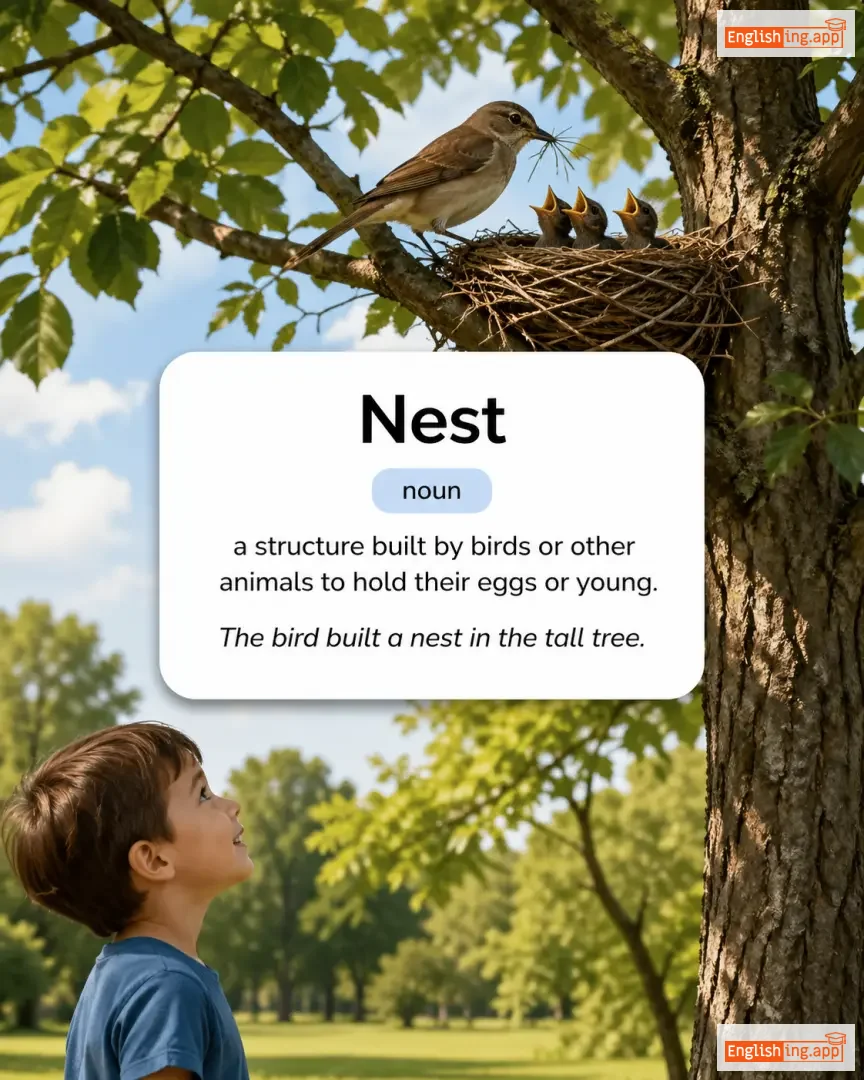
Nest definition card — visual illustration of the meaning
noun
/nɛst/
鸟巢 (niao chao)

a structure built by birds or other animals to hold their eggs or young.

"The bird built a nest in the tall tree."

"那只鸟在高高的树上建了一个鸟巢。" (Na zhi niao zai gao gao de shu shang jian le yi ge niao chao.)