Vocabularios

Descubra, aprenda y domine el vocabulario en inglés

noun
/neɪv/
nave central de la iglesia (nave central de la iglesia)

the central part of a church building intended to accommodate the congregation

"The choir sang beautifully in the church nave."

"El coro cantó hermosamente en la nave de la iglesia." (El coro cantó hermosamente en la nave de la iglesia.)
noun
/ˈneɪvəl/
ombligo (ombligo)

the small hollow or raised area in the middle of the stomach, also called the belly button

"The baby’s navel was carefully cleaned after birth."

"El ombligo del bebé fue limpiado cuidadosamente después del nacimiento." (El ombligo del bebe fue limpiado cuidadosamente despues del nacimiento.)
adjective
/ˈnæv.ɪ.ɡə.bəl/
navegable (navegable)

Able to be sailed on or through by ships or boats.

"The river is navigable for large cargo ships."

"El río es navegable para grandes barcos de carga." (El río es navegable para grandes barcos de carga.)
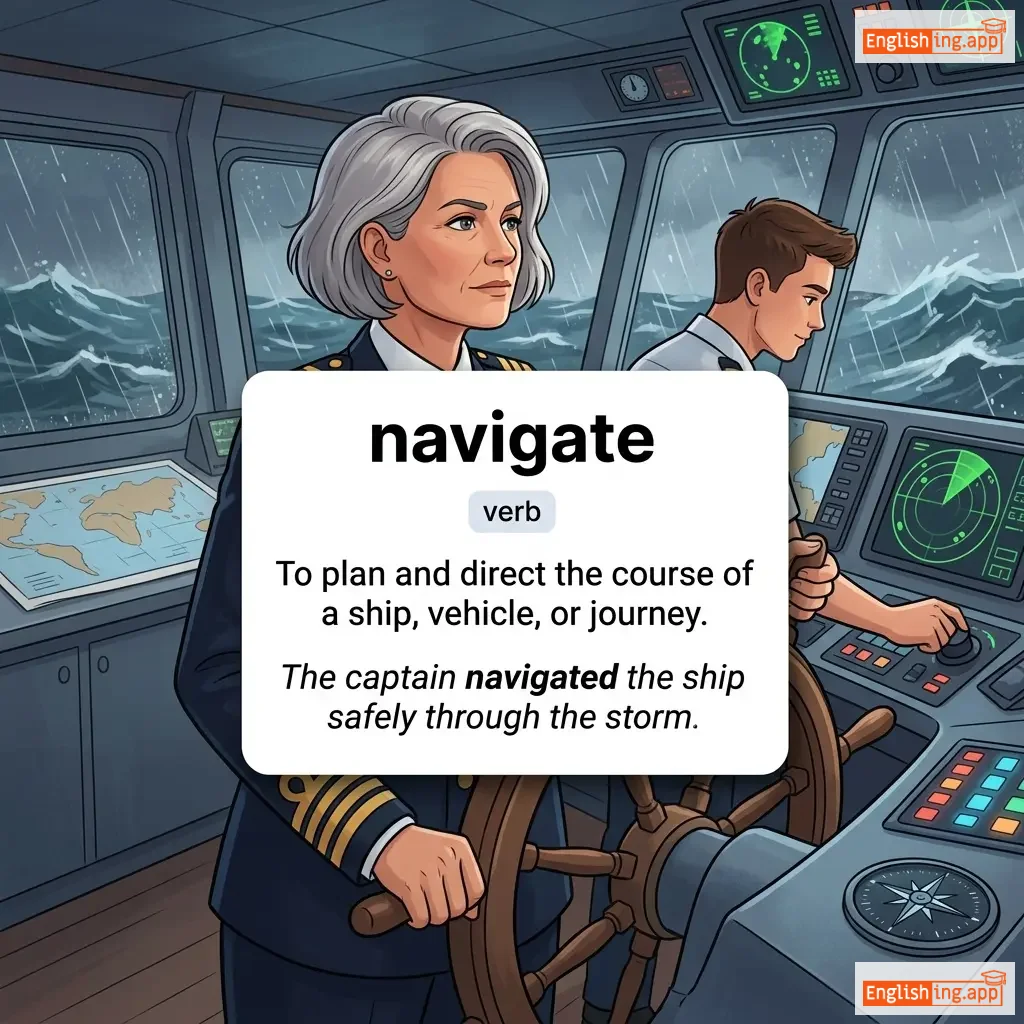
navigate definition card — visual illustration of the meaning
verb
/ˈnæv.ɪ.ɡeɪt/
navegar (navegar)

To plan and direct the course of a ship, vehicle, or journey.

"The captain navigated the ship safely through the storm."

"El capitán navegó el barco de manera segura a través de la tormenta." (El capitan navego el barco de manera segura a traves de la tormenta.)
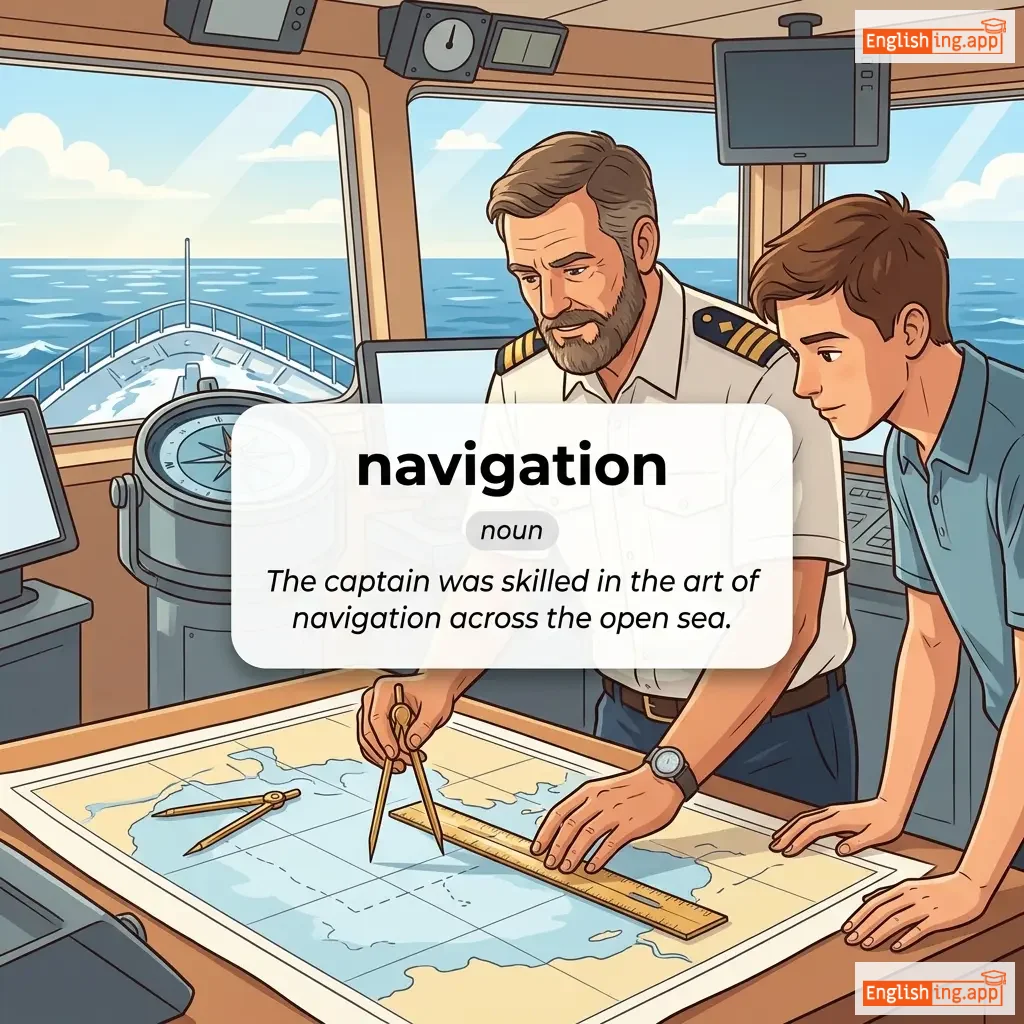
navigation definition card — visual illustration of the meaning
noun
/ˌnævɪˈɡeɪʃən/
navegación (navegacion)

the process or activity of accurately determining one's position and planning and following a route

"The captain was skilled in the art of navigation across the open sea."

"El capitán era experto en el arte de la navegación a través del mar abierto." (El capitan era experto en el arte de la navegacion a traves del mar abierto.)
Navy definition card — visual illustration of the meaning
noun
/ˈneɪvi/
marina (marina)

the branch of armed forces that conducts military operations at sea

"He joined the navy after graduating from college."

"Se unió a la marina después de graduarse de la universidad." (Se unió a la marina después de graduarse de la universidad.)
noun
/ˈneɪˌseɪ.ɪŋ/
expresión negativa (expresion negativa)

The act of expressing negative or pessimistic views.

"His constant naysaying discouraged the team."

"Su constante expresión negativa desmotivó al equipo." (Su constante expresion negativa desmotivo al equipo.)
noun
/ˌɛn.biː.esˈpiː/
espacio no rompible (espacio no rompible)

a non-breaking space character in HTML used to prevent an automatic line break at its position

"Use   in HTML to add a space that won't break into a new line."

"Usa   en HTML para agregar un espacio que no se rompa en una nueva línea." (Usa   en HTML para agregar un espacio que no se rompa en una nueva linea.)
noun
/niːp/
marea baja (marea baja)

A tide just after the first or third quarters of the moon when the difference between high and low tide is least.

"During a neap tide, the water level change is minimal."

"Durante una marea baja, el cambio en el nivel del agua es mínimo." (Durante una marea baja, el cambio en el nivel del agua es minimo.)
preposition
/nɪə(r)/
cerca (cerca)

At or to a short distance away; close in space, time, or relationship.

"There is a park near my house."

"Hay un parque cerca de mi casa." (Hay un parque cerca de mi casa.)
adverb
/ˈnɪərbaɪ/
cerca; en las cercanías (cerca; en las cercanias)

close to; not far away; in the neighborhood

"There is a grocery store nearby."

"Hay una tienda de comestibles cerca." (Hay una tienda de comestibles cerca.)
adjective
/ˈnɪəˌbaɪ/
cerca (cerca)

close to a particular place or person

"The nearest gas station is nearby."

"La estación de gasolina más cercana está cerca." (La estacion de gasolina mas cercana esta cerca.)
adverb
/ˈnɪəli/
casi (casi)

almost, but not completely

"She nearly missed the bus."

"Casi perdió el autobús." (Casi perdio el autobus.)
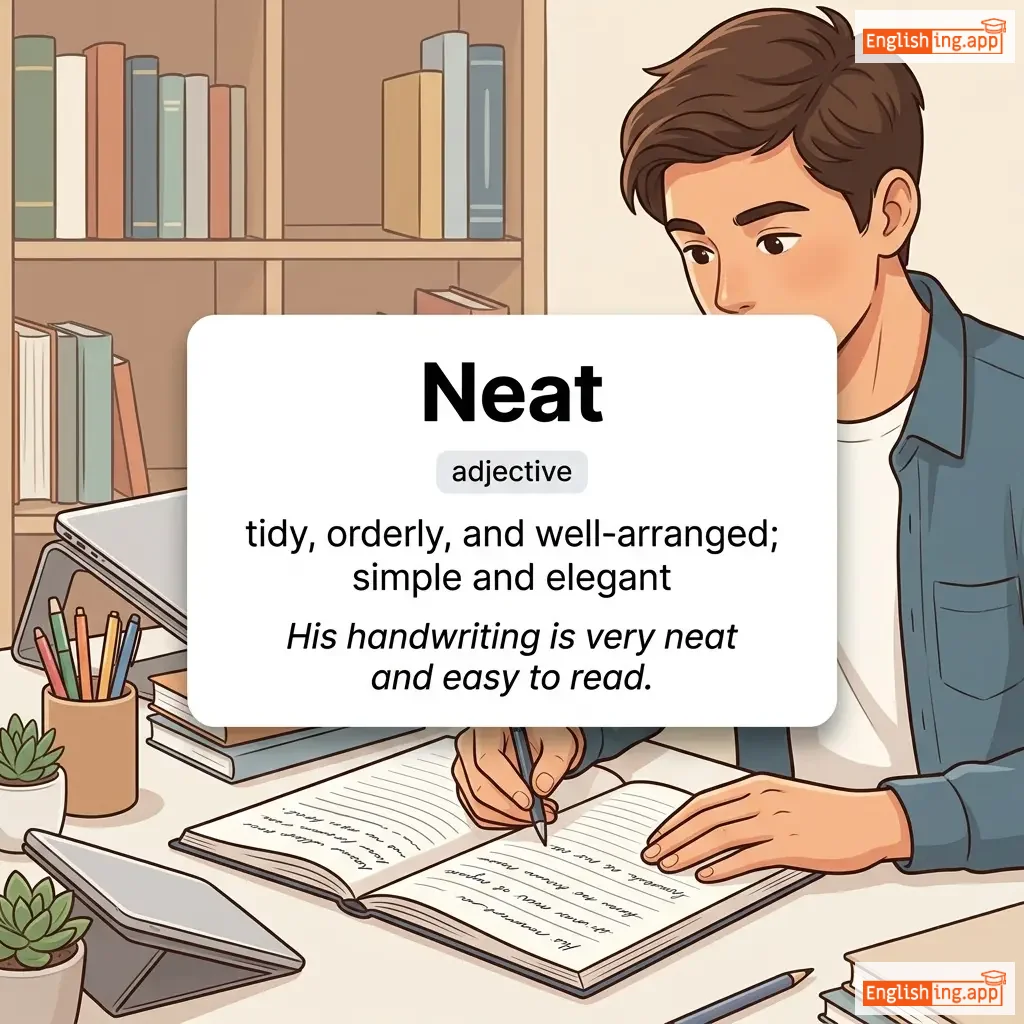
Neat definition card — visual illustration of the meaning
adjective
/niːt/
ordenado (ordenado)

tidy, orderly, and well-arranged; simple and elegant

"His handwriting is very neat and easy to read."

"Su escritura es muy ordenada y fácil de leer." (Su escritura es muy ordenada y fácil de leer.)
adverb
/ˈniːtli/
ordenadamente; cuidadosamente (ordenadamente; cuidadosamente)

in a tidy and orderly way; carefully and precisely

"She arranged the books neatly on the shelf."

"Ella arregló los libros ordenadamente en la estantería." (Ella arreglo los libros ordenadamente en la estantería.)
noun
/ˈneb.jʊ.lə/
nebulosa (nebulosa)

A cloud of gas and dust in outer space, sometimes visible in the night sky.

"The Orion Nebula is one of the brightest in the sky."

"La Nebulosa de Orión es una de las más brillantes en el cielo." (La Nebulosa de Orión es una de las más brillantes en el cielo.)
adjective
/ˈnɛbjələs/
nebuloso (nebuloso)

Unclear, vague, or ill-defined; resembling a cloud or haze.

"His plan for the future was still nebulous and hard to understand."

"Su plan para el futuro seguía siendo nebuloso y difícil de entender." (Su plan para el futuro seguía siendo nebuloso y difícil de entender.)
adverb
/ˌnɛsəˈsɛrɪli/
necesariamente (necesariamente)

as a necessary result; inevitably

"It doesn’t necessarily mean you’re wrong."

"No significa necesariamente que estés equivocado." (No significa necesariamente que estés equivocado.)
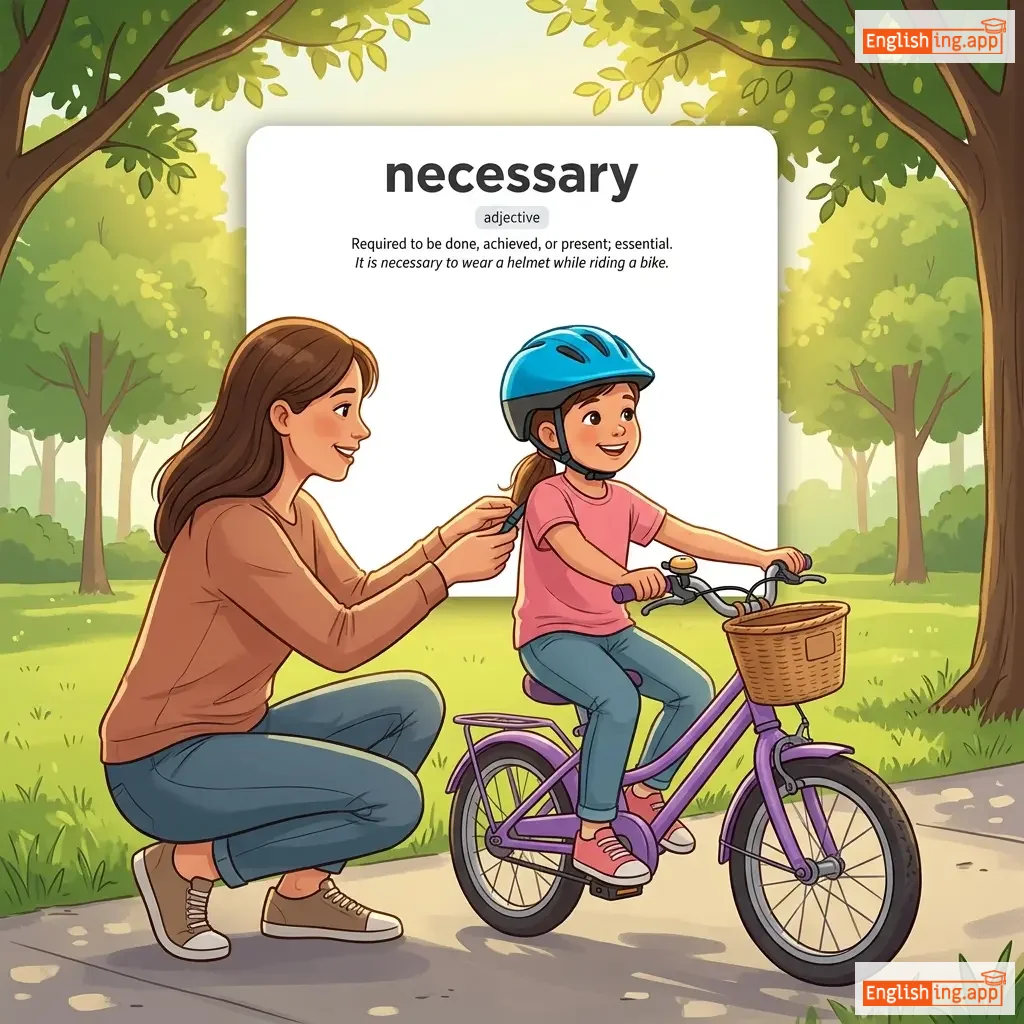
necessary definition card — visual illustration of the meaning
adjective
/ˈnɛsəsɛri/
necesario (necesario)

Required to be done, achieved, or present; essential.

"It is necessary to wear a helmet while riding a bike."

"Es necesario usar un casco mientras se monta en una bicicleta." (es necesario usar un casco mientras se monta en una bicicleta)
verb
/nəˈsɛsɪteɪt/
hacer necesario (hacer necesario)

To make something necessary or unavoidable.

"The heavy rains necessitated the cancellation of the event."

"Las fuertes lluvias hicieron inevitable la cancelación del evento." (Las fuertes lluvias hicieron inevitable la cancelación del evento.)
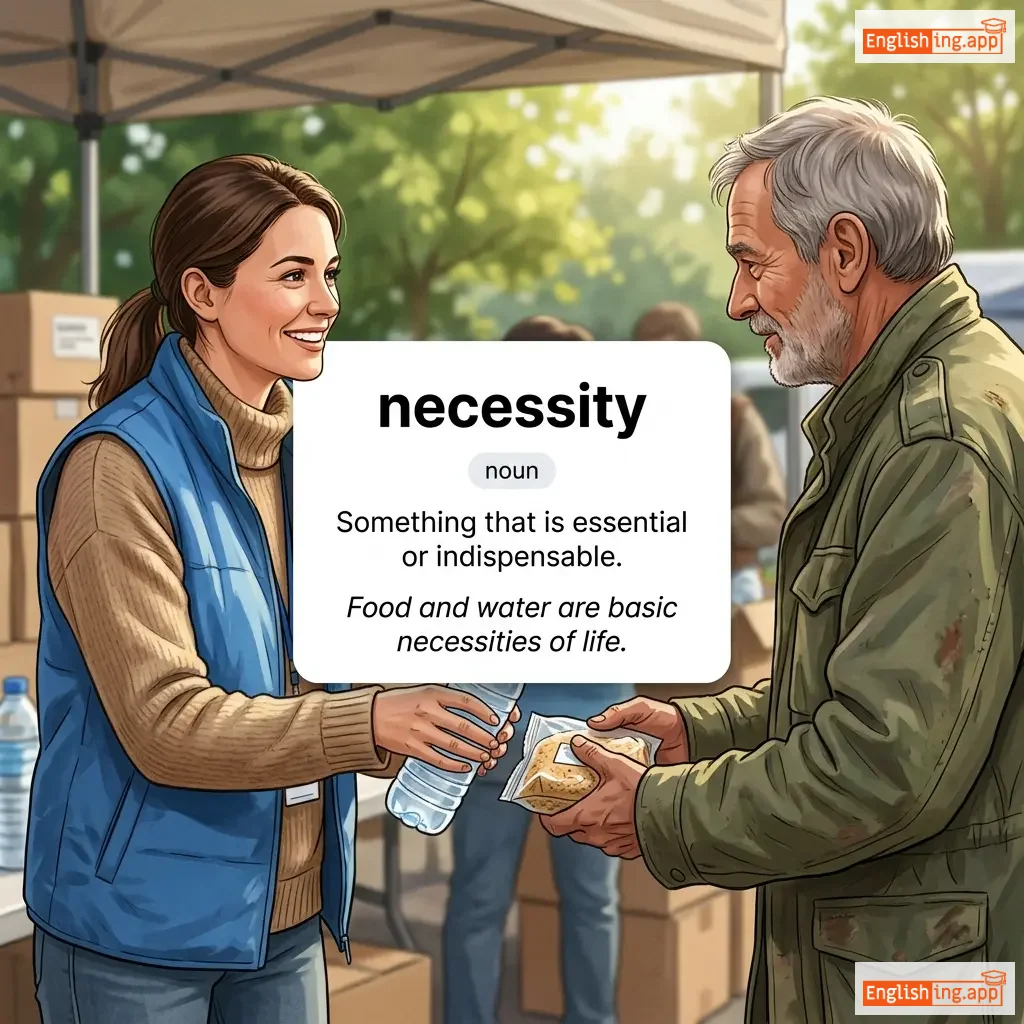
necessity definition card — visual illustration of the meaning
noun
/nəˈsɛsəti/
necesidad (necesidad)

Something that is essential or indispensable.

"Food and water are basic necessities of life."

"La comida y el agua son necesidades básicas de la vida." (La comida y el agua son necesidades básicas de la vida.)
noun
/nɛk/
cuello (cuello)

the part of the body connecting the head and the shoulders

"She wore a necklace around her neck."

"Ella llevaba un collar alrededor de su cuello." (Ella llevaba un collar alrededor de su cuello.)
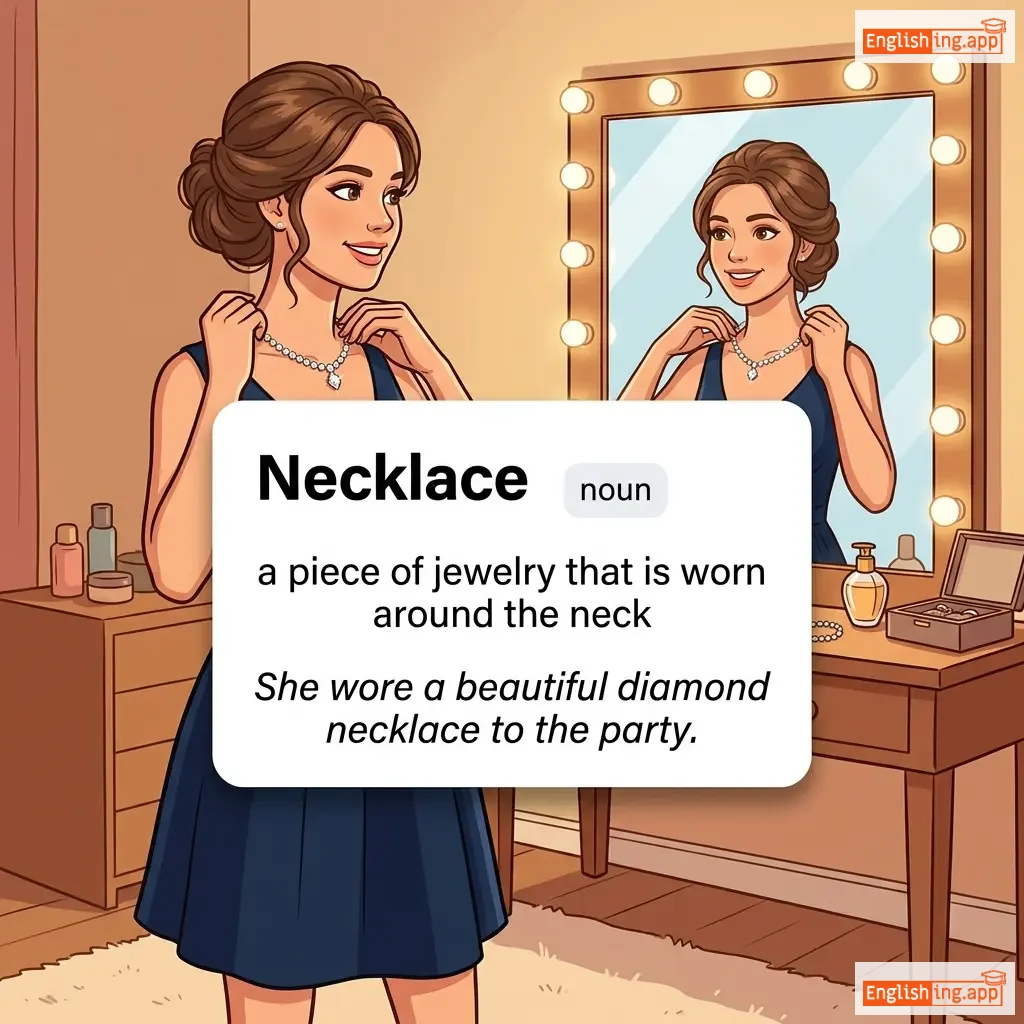
Necklace definition card — visual illustration of the meaning
noun
/ˈnek.ləs/
collar (koyar)

a piece of jewelry that is worn around the neck

"She wore a beautiful diamond necklace to the party."

"Ella llevaba un hermoso collar de diamantes en la fiesta." (Ella llevaba un hermoso collar de diamantes en la fiesta.)
noun
/ˈnɛkˌlaɪn/
escote (escote)

the edge of a garment around the neck, especially as cut to form a particular shape

"The dress has a beautiful V-shaped neckline."

"El vestido tiene un hermoso escote en forma de V." (El vestido tiene un hermoso escote en forma de V.)
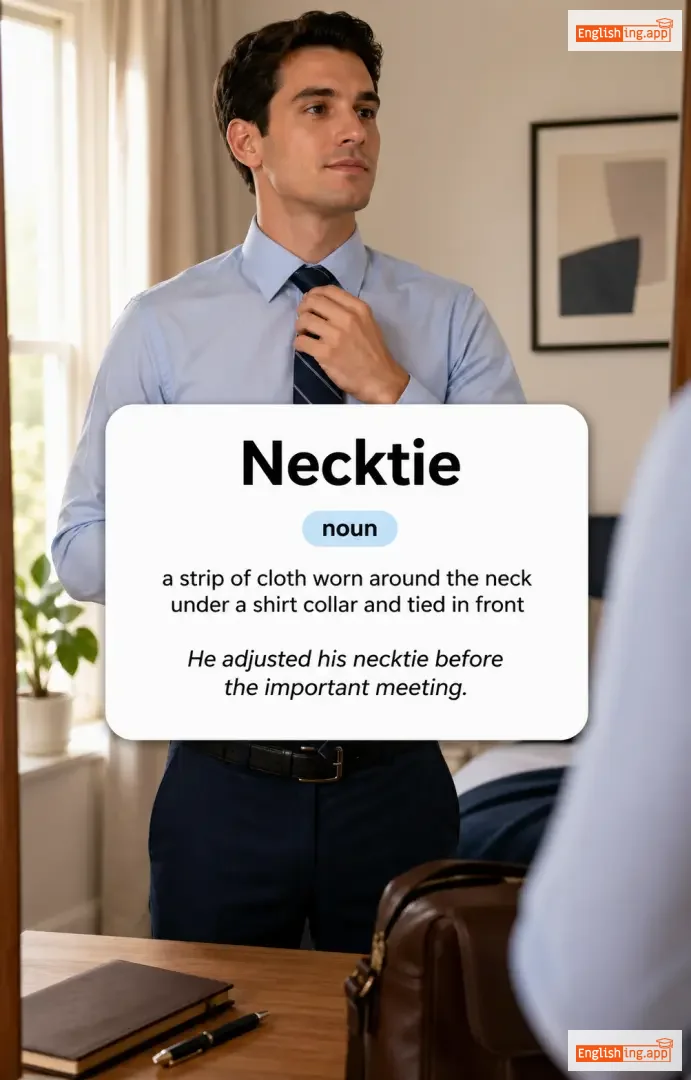
Necktie definition card — visual illustration of the meaning
noun
/ˈnek.taɪ/
corbata (corbata)

a strip of cloth worn around the neck under a shirt collar and tied in front

"He adjusted his necktie before the important meeting."

"Él ajustó su corbata antes de la importante reunión." (Él ajustó su corbata antes de la importante reunión.)
noun
/nɪˈkrɒlədʒi/
necrológico (necrologico)

An obituary notice or a list of people who have recently died.

"The newspaper published a necrology of notable figures who passed away that year."

"El periódico publicó una necrología de figuras notables que fallecieron ese año." (El periodico publico una necrologia de figuras notables que fallecieron ese ano.)
noun
/ˈnɛkrəˌmænsər/
necromante (nekro-man-ser)

a person who practices necromancy; a wizard or magician who claims to communicate with the dead

"The villagers feared the old necromancer who lived at the edge of the forest."

"Los aldeanos temían al viejo necromante que vivía al borde del bosque." (Los aldeanos temian al viejo necromante que vivia al borde del bosque.)
noun
/ˈnɛkrəˌmænsi/
necromancia (necromancia)

the practice of communicating with the dead, often to predict the future

"Ancient texts described rituals of necromancy performed by priests."

"Los textos antiguos describen rituales de necromancia realizados por sacerdotes." (Los textos antiguos describen rituales de necromancia realizados por sacerdotes.)
noun
/nəˈkrɒpəlɪs/
necrópolis (necropolis)

a large ancient cemetery with elaborate tombs

"The archaeologists discovered artifacts in the necropolis of the ancient city."

"Los arqueólogos descubrieron artefactos en la necrópolis de la antigua ciudad." (Los arqueólogos descubrieron artefactos en la necrópolis de la antigua ciudad.)
noun
/nɛˈkroʊsɪs/
necrósis (necrosis)

the death of body tissue due to disease, injury, or lack of blood supply

"The doctor explained that the patient’s wound showed signs of necrosis."

"El doctor explicó que la herida del paciente mostraba signos de necrosis." (El doctor explico que la herida del paciente mostraba signos de necrosis.)
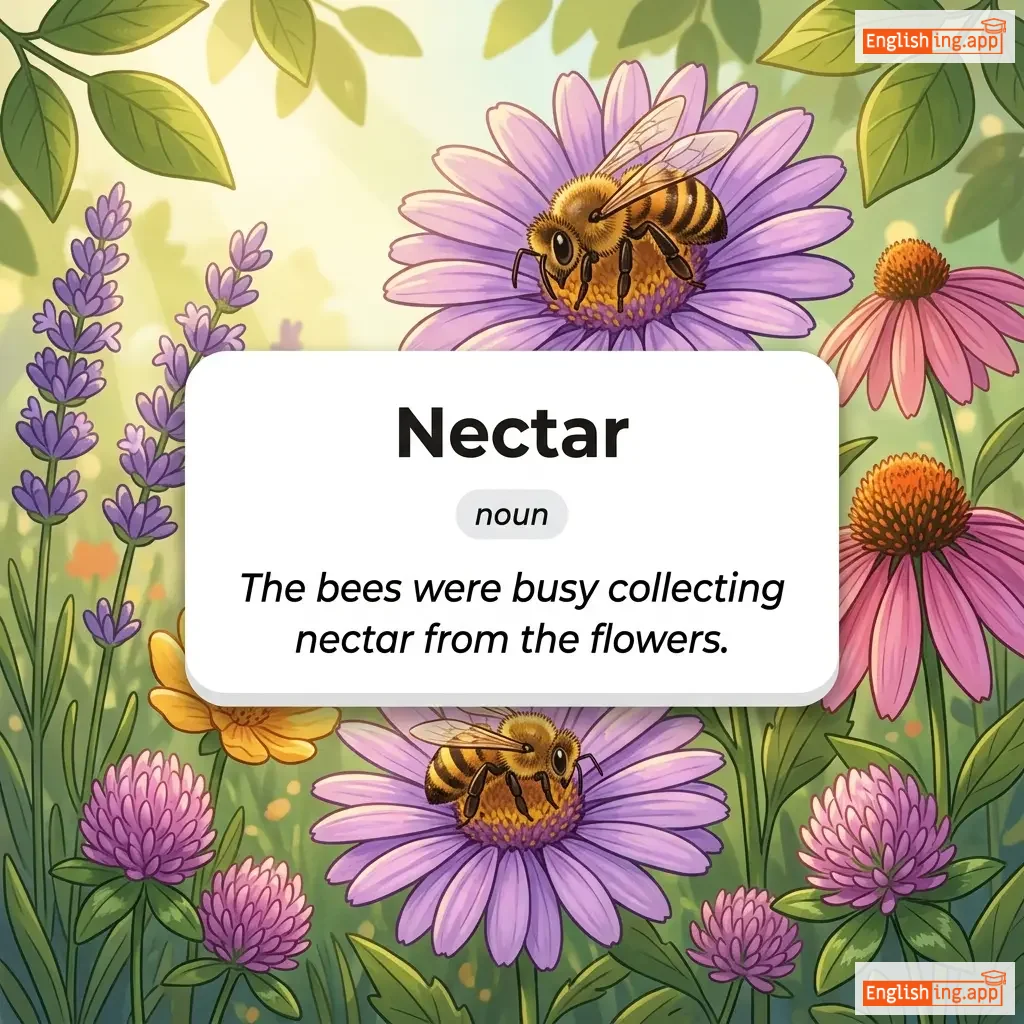
Nectar definition card — visual illustration of the meaning
noun
/ˈnɛktər/
néctar (nectar)

a sweet liquid produced by flowers and collected by bees; in mythology, the drink of the gods

"The bees were busy collecting nectar from the flowers."

"Las abejas estaban ocupadas recolectando néctar de las flores." (Las abejas estaban ocupadas recolectando nectar de las flores.)
noun
/ˈnɛpətɪzəm/
nepotismo (nepotismo)

The practice of giving unfair advantages to relatives, especially in jobs or positions of power.

"The company was accused of nepotism after the manager hired his brother."

"La empresa fue acusada de nepotismo después de que el gerente contratara a su hermano." (La empresa fue acusada de nepotismo despues de que el gerente contratara a su hermano.)
conjunction
/ˈniːðər/
ni uno ni otro (ni uno ni otro)

used to connect two negative alternatives

"Neither the manager nor the assistant could attend the meeting."

"Ni el gerente ni el asistente pudieron asistir a la reunión." (ni el gerente ni el asistente pudieron asistir a la reunion)
noun
/ˈnɛm.ə.sɪs/
enemigo / rival (enemigo / rival)

A long-standing rival or an inescapable agent of downfall.

"For years, he considered his colleague to be his nemesis."

"Durante años, consideró a su colega como su enemigo." (Durante años, consideró a su colega como su enemigo.)
noun
/ˌniːoʊˈdɑːrwɪnɪzəm/
neodarwinismo (neodarwinismo)

A modern interpretation of Darwin's theory of evolution, integrating genetics and natural selection.

"Neo-Darwinism combines Darwin’s theory of natural selection with modern genetics."

"El neodarwinismo combina la teoría de selección natural de Darwin con la genética moderna." (El neodarwinismo combina la teoria de seleccion natural de Darwin con la genetica moderna.)
noun
/ˌniːoʊˈlætɪn/
neo-latín (neo-latin)

The use of Latin language for scholarly, scientific, and literary purposes after the medieval period.

"Many scientific names are derived from Neo-Latin."

"Muchos nombres científicos provienen del neo-latín." (Muchos nombres científicos provienen del neo-latín.)
noun
/niːˈɒkrəsi/
Gobierno dirigido por funcionarios inexpertos o nuevos (Gobierno dirigido por funcionarios inexpertos o nuevos)

A government or leadership run by inexperienced or new officials.

"The sudden revolution led to a neocracy with inexperienced leaders."

"La repentina revolución dio lugar a una neocracia con líderes inexpertos." (La repentina revolución dio lugar a una neocracia con líderes inexpertos.)
adjective
/ˌniːoʊˈlɪθɪk/
neolítico (neolitico)

Relating to the later part of the Stone Age, when ground or polished stone weapons and tools prevailed.

"Neolithic communities began practicing agriculture and domesticating animals."

"Las comunidades neolíticas comenzaron a practicar la agricultura y a domesticar animales." (Las comunidades neolíticas comenzaron a practicar la agricultura y a domesticar animales.)
noun
/niːˈɒlədʒɪzəm/
neologismo (neologismo)

A newly coined word or expression.

"The internet has given rise to many neologisms like 'selfie' and 'hashtag'."

"Internet ha dado lugar a muchos neologismos como 'selfie' y 'hashtag'." (Internet ha dado lugar a muchos neologismos como 'selfie' y 'hashtag'.)
noun
/niˈɒlədʒi/
el uso de nuevas palabras o el estudio de su origen (el uso de nuevas palabras o el estudio de su origen)

The use of new words or the study of their origin.

"The professor specialized in neology, studying the creation of modern slang."

"El profesor se especializó en neología, estudiando la creación de jerga moderna." (El profesor se especializó en neología, estudiando la creación de jerga moderna.)
noun
/ˌniːoʊˈpeɪɡənɪzəm/
neopaganismo (neopaganismo)

Modern religious movements influenced by or claiming to be derived from the various historical pagan beliefs of pre-modern Europe.

"Neopaganism has gained popularity as people seek spiritual alternatives to mainstream religions."

"El neopaganismo ha ganado popularidad a medida que las personas buscan alternativas espirituales a las religiones principales." (El neopaganismo ha ganado popularidad a medida que las personas buscan alternativas espirituales a las religiones principales.)
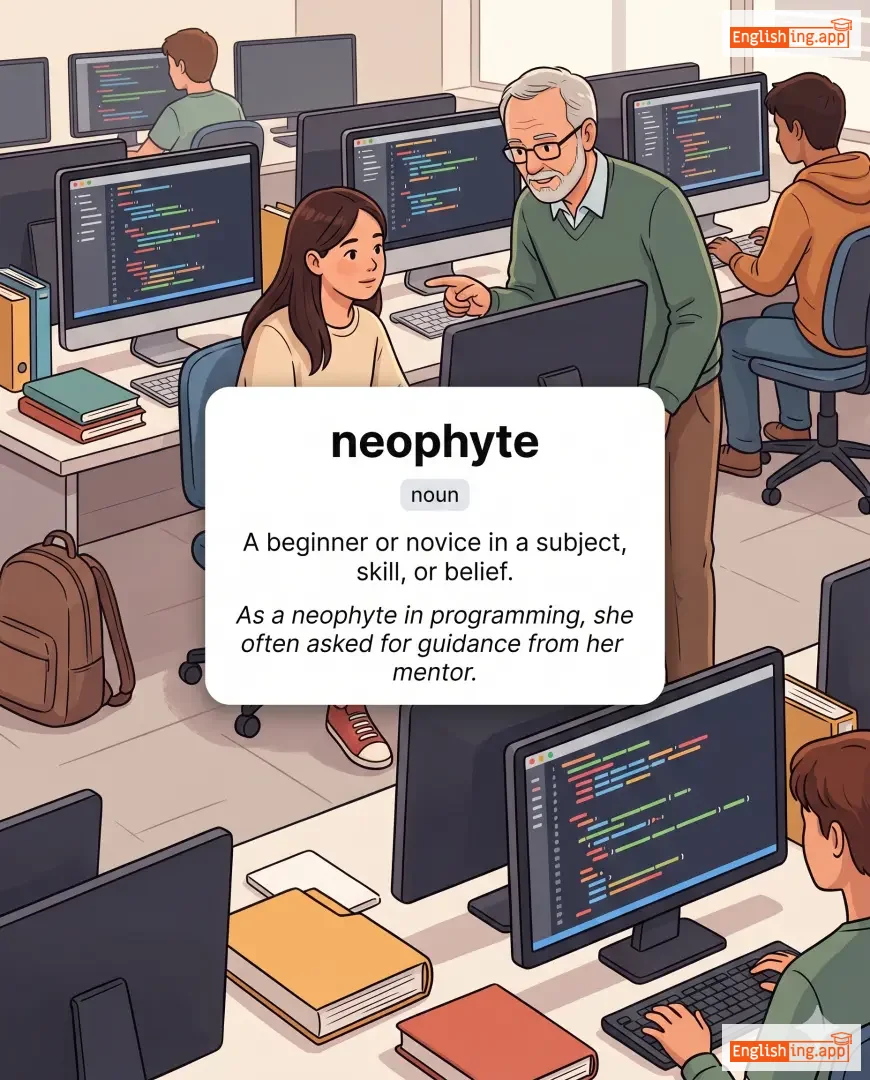
neophyte definition card — visual illustration of the meaning
noun
/ˈniːəˌfaɪt/
neófito (neofito)

A beginner or novice in a subject, skill, or belief.

"As a neophyte in programming, she often asked for guidance from her mentor."

"Como neófita en programación, a menudo pedía orientación a su mentor." (Como neófita en programación, a menudo pedía orientación a su mentor.)
noun
/ˈnefjuː/
sobrino (sobrino)

the son of one’s brother or sister

"My nephew is studying at the university."

"Mi sobrino estudia en la universidad." (mi sobrino estudia en la universidad)
noun
/nɛt/
red (red)

a piece of material made of threads or ropes woven together, used to catch or hold things

"The fisherman cast his net into the sea."

"El pescador lanzó su red al mar." (El pescador lanzó su red al mar.)
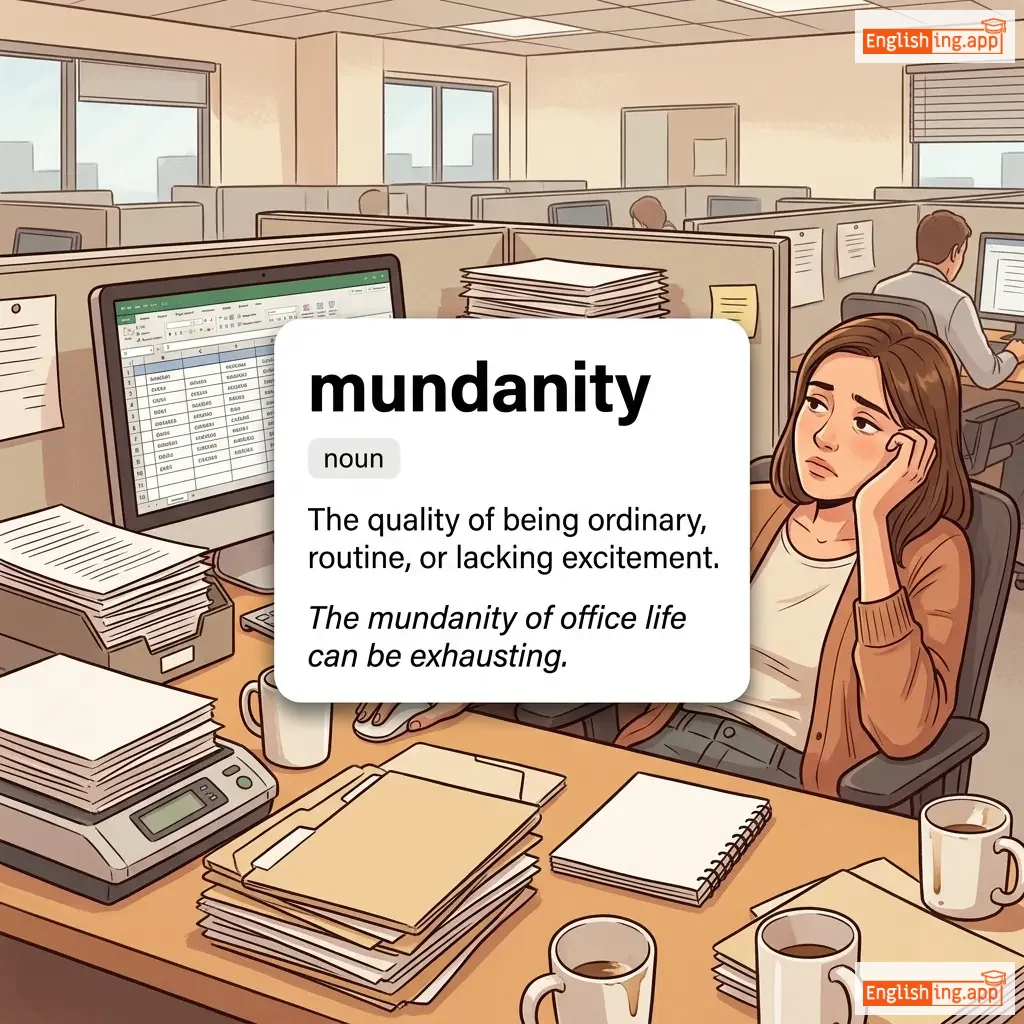
mundanity definition card — visual illustration of the meaning
noun
mʌnˈdeɪ.nɪ.ti
mundanalidad (mundanalidad)

The quality of being ordinary, routine, or lacking excitement.

"The mundanity of office life can be exhausting."

"La mundanalidad de la vida en la oficina puede ser agotadora." (La mundanalidad de la vida en la oficina puede ser agotadora.)
noun
/ˈnɛtˌwɜrk/
red (red)

A system of interconnected people, things, or computers.

"She built a strong professional network."

"Ella construyó una red profesional sólida." (Ella construyó una red profesional sólida.)
adjective
/ˈnɛtlˌsʌm/
irritante (irritante)

Causing irritation, annoyance, or difficulty.

"The nettlesome rules frustrated the workers."

"Las reglas irritantes frustraron a los trabajadores." (Las reglas irritantes frustraron a los trabajadores.)
noun
/ˈnɛtl̩/
planta con espinas que causa irritación al tocarla (planta con espinas que causa irritación al tocarla)

a plant with stinging hairs that cause irritation when touched

"He accidentally brushed against the nettle and felt a sharp sting."

"Él accidentalmente rozó la ortiga y sintió un ardor agudo." (Él accidentalmente rozó la ortiga y sintió un ardor agudo.)
adjective
/ˈnɛðər/
inferior (inferior)

situated down or below; lower

"They explored the nether regions of the cave."

"Exploraron las regiones inferiores de la cueva." (Exploraron las regiones inferiores de la cueva.)
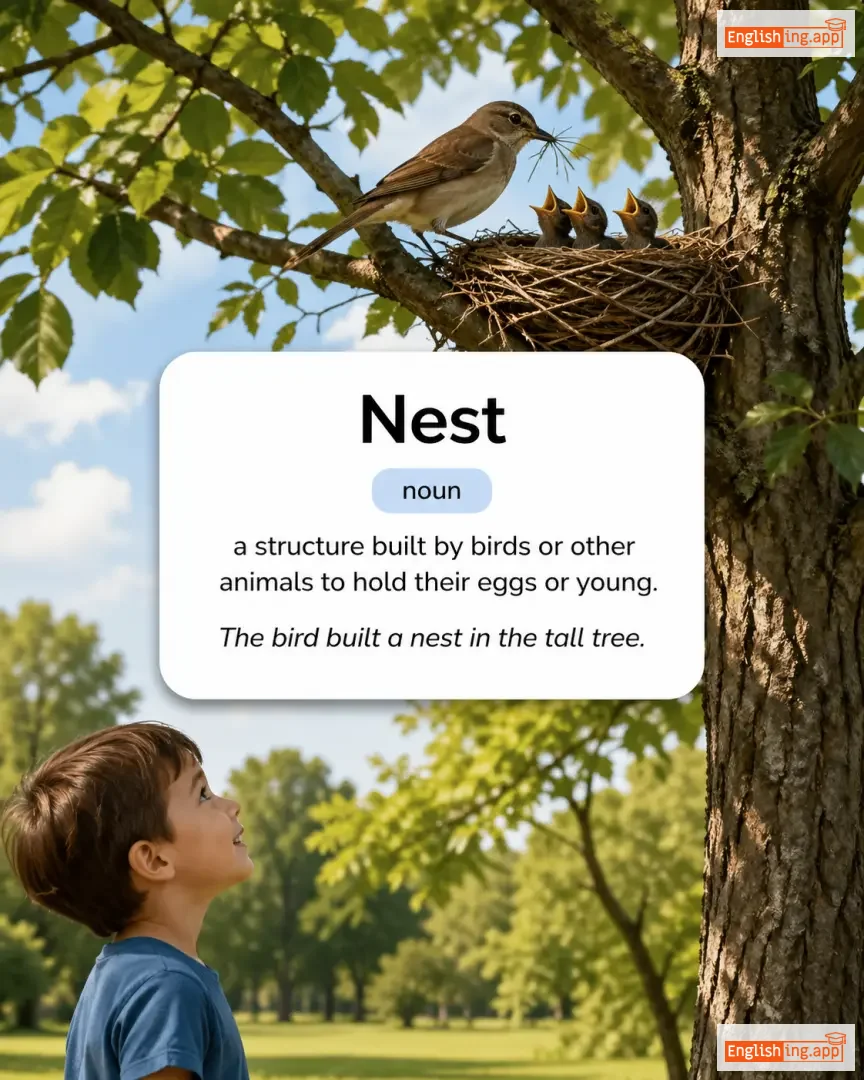
Nest definition card — visual illustration of the meaning
noun
/nɛst/
nido (nido)

a structure built by birds or other animals to hold their eggs or young.

"The bird built a nest in the tall tree."

"El pájaro construyó un nido en el árbol alto." (El pajaro construyo un nido en el arbol alto.)