Vocabularios

Descubra, aprenda y domine el vocabulario en inglés

title
/ˈmɪstər/
Sr. (Sr.)

a title used before a man's name

"Mr. Rahman is our new teacher."

"Sr. Rahman es nuestro nuevo maestro." (Sr. Rahman es nuestro nuevo maestro.)
title
/ˈmɪsɪz/
señora (senora)

a title used before a married woman's name

"Mrs. Karim is the headmistress of the school."

"La señora Karim es la directora de la escuela." (La senora Karim es la directora de la escuela.)
👩‍💼

ms (miz)

title
/mɪz/
Sra. (Sra.)

a title used before a woman's name, regardless of marital status

"Ms. Akter will give a speech at the seminar."

"Ms. Akter dará un discurso en el seminario." (Ms. Akter dara un discurso en el seminario.)
adjective, adverb, pronoun
/mʌtʃ/
mucho (mucho)

a large amount or degree of something

"She doesn’t have much time to finish the project."

"Ella no tiene mucho tiempo para terminar el proyecto." (Ella no tiene mucho tiempo para terminar el proyecto.)
noun
/mʌd/
barro (barro)

soft, wet earth or soil

"The children were playing in the mud after the rain."

"Los niños estaban jugando en el barro después de la lluvia." (Los niños estaban jugando en el barro después de la lluvia.)
verb
/ˈmʌd.əl/
desordenar (desordenar)

to mix things up in a confused way or to make a mess of something

"He muddled the papers and couldn’t find the report."

"Él desordenó los papeles y no pudo encontrar el informe." (Él desordenó los papeles y no pudo encontrar el informe.)
adjective
/ˈmʌd.i/
embarrado (embarrado)

covered in or full of mud; unclear or confused

"The children came back with muddy shoes after playing outside."

"Los niños regresaron con zapatos embarrados después de jugar afuera." (Los niños regresaron con zapatos embarrados después de jugar afuera.)
verb
/ˈmʌfəl/
amortiguar (amortiguar)

to make a sound quieter or less distinct; to cover or wrap something to reduce noise or warmth

"She tried to muffle her laughter with a scarf."

"Ella intentó amortiguar su risa con una bufanda." (Ella intentó amortiguar su risa con una bufanda.)
Muffler definition card — visual illustration of the meaning
noun
/ˈmʌflər/
mofle (mofle)

a device on a vehicle's exhaust to reduce noise; also a scarf worn around the neck for warmth

"The car's muffler needs to be replaced."

"El mofle del coche necesita ser reemplazado." (El mofle del coche necesita ser reemplazado.)
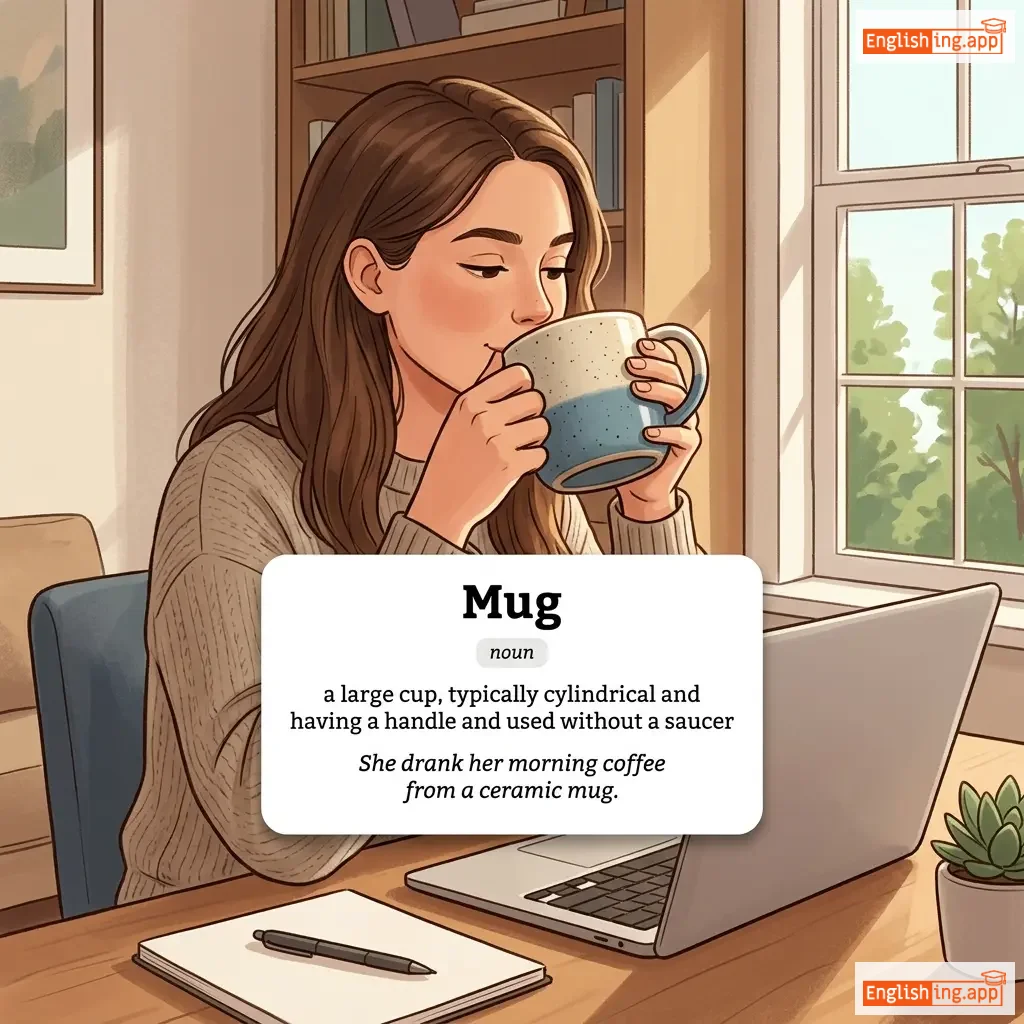
Mug definition card — visual illustration of the meaning
noun
/mʌɡ/
taza (taza)

a large cup, typically cylindrical and having a handle and used without a saucer

"She drank her morning coffee from a ceramic mug."

"Ella bebió su café de la mañana de una taza de cerámica." (Ella bebió su café de la mañana de una taza de cerámica.)
adjective
/ˈmʌɡi/
bochornoso y húmedo (bochornosso y humedo)

uncomfortably warm and humid

"It was a muggy afternoon in July."

"Era una tarde bochornosa en julio." (Era una tarde bochornosa en julio.)
noun
/ˈmʌɡwʌmp/
persona ajena a la política de partidos (persona ajena a la politica de partidos)

a person who remains independent from party politics or remains aloof from disputes

"He was called a mugwump for refusing to join either political side."

"Se le llamó mugwump por negarse a unirse a cualquiera de los dos lados políticos." (Se le llamó mugwump por negarse a unirse a cualquiera de los dos lados politicos.)
noun
/mjuːˈlætoʊ/
persona de raza mixta (término antiguo y ofensivo) (persona de raza mixta (termino antiguo y ofensivo))

an outdated and now offensive term historically used to describe a person of mixed white and Black ancestry

"The word 'mulatto' is now considered outdated and offensive."

"La palabra 'mulato' ahora se considera anticuada y ofensiva." (La palabra 'mulato' ahora se considera anticuada y ofensiva.)
verb
/mʌlkt/
multar / defraudar (multar / defraudar)

to punish by a fine or to defraud someone of money

"The corrupt official was mulcted for his misconduct."

"El funcionario corrupto fue multado por su mala conducta." (El funcionario corrupto fue multado por su mala conducta.)
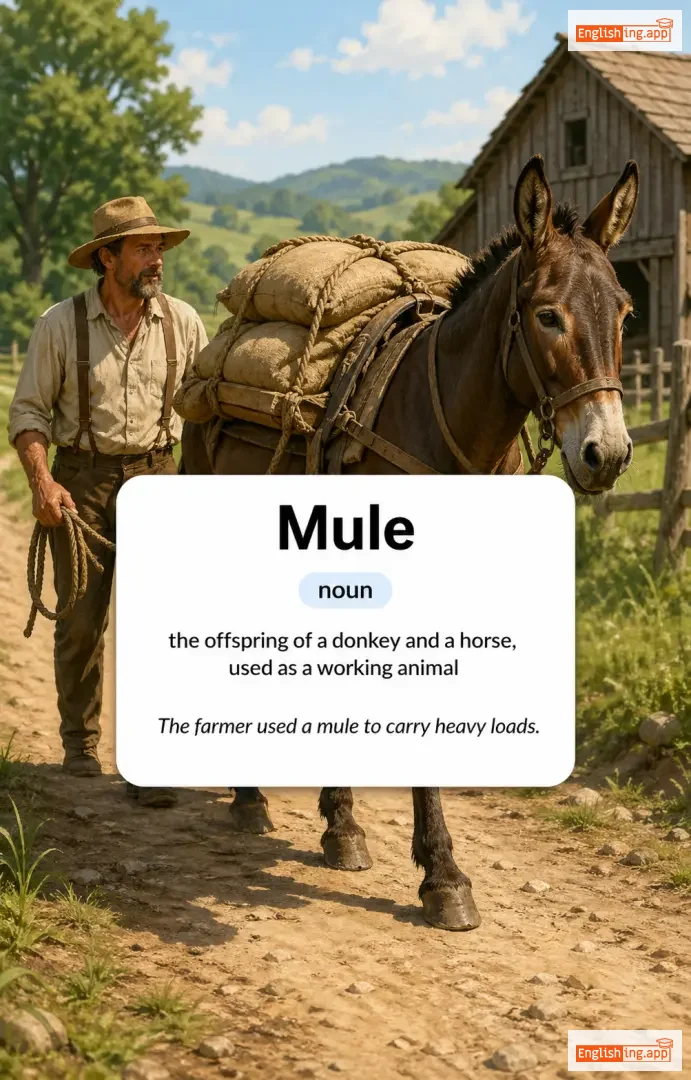
Mule definition card — visual illustration of the meaning
noun
/mjuːl/
mulo (mulo)

the offspring of a donkey and a horse, used as a working animal

"The farmer used a mule to carry heavy loads."

"El agricultor usó un mulo para llevar cargas pesadas." (El agricultor uso un mulo para llevar cargas pesadas.)
noun
/ˌmjuːlˈtɪər/
muletero (muletero)

a person who drives or takes care of mules

"The muleteer guided the animals safely across the mountain path."

"El muletero guió a los animales de manera segura a través del sendero montañoso." (El muletero guió a los animales de manera segura a través del sendero montañoso.)
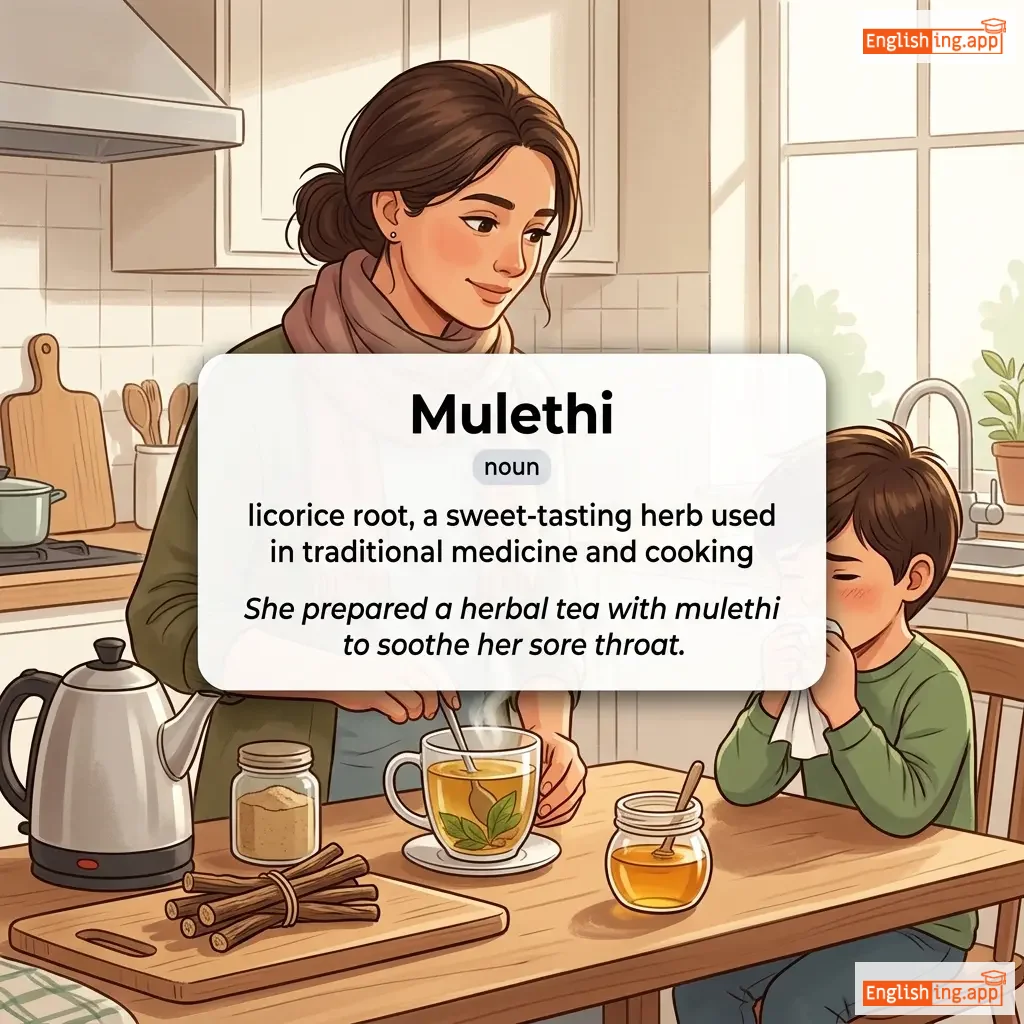
Mulethi definition card — visual illustration of the meaning
noun
/muˈleθi/
raíz de regaliz (raiz de regaliz)

licorice root, a sweet-tasting herb used in traditional medicine and cooking

"She prepared a herbal tea with mulethi to soothe her sore throat."

"Ella preparó un té herbal con mulethi para calmar su dolor de garganta." (Ella preparo un te herbal con mulethi para calmar su dolor de garganta.)
adjective
/ˈmjuːlɪʃ/
terco (mulish)

extremely stubborn or unwilling to change

"She remained mulish despite all the convincing arguments."

"Ella siguio siendo terca a pesar de todos los argumentos convincentes." (Ella siguio siendo terca a pesar de todos los argumentos convincentes.)
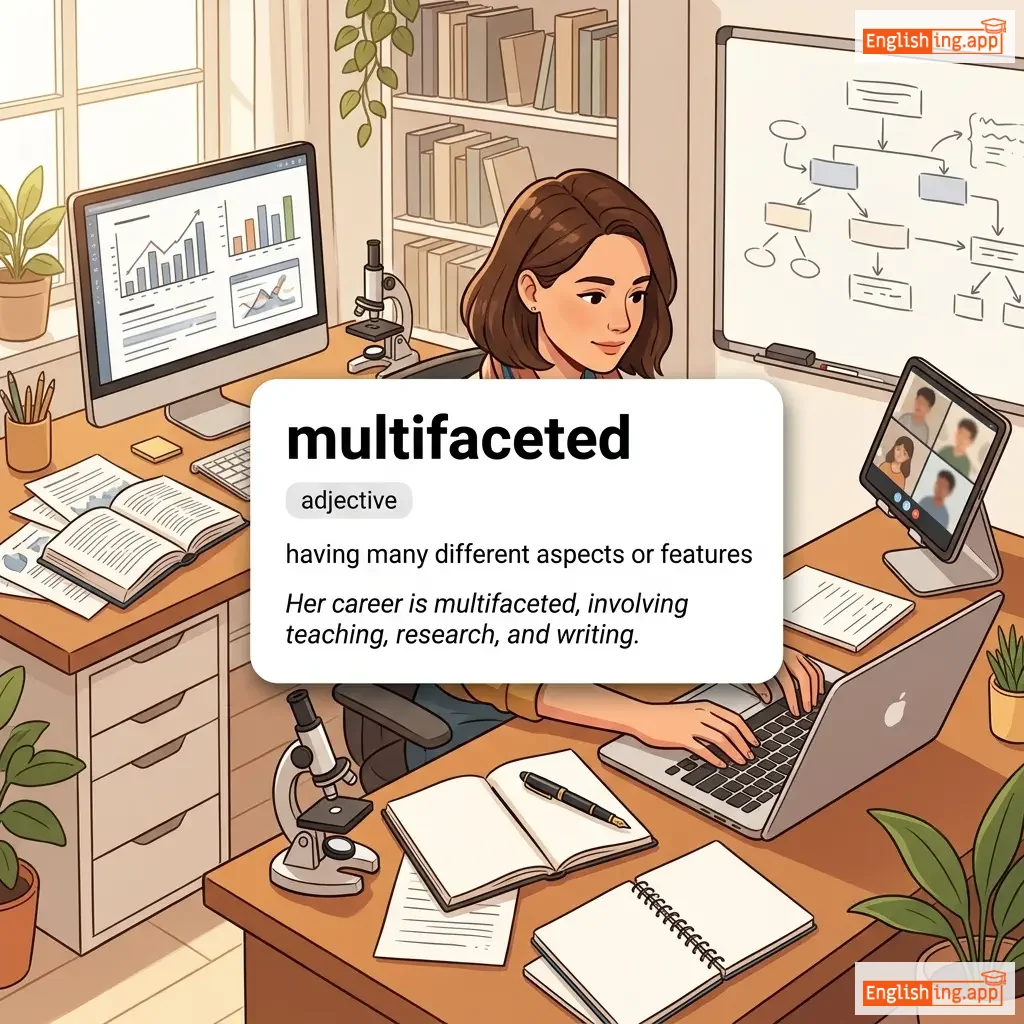
multifaceted definition card — visual illustration of the meaning
adjective
/ˌmʌltiˈfæsɪtɪd/
multifacético (multifacetico)

having many different aspects or features

"Her career is multifaceted, involving teaching, research, and writing."

"Su carrera es multifacética, involucrando enseñanza, investigación y escritura." (Su carrera es multifacetica, involucrando ensenanza, investigacion y escritura.)
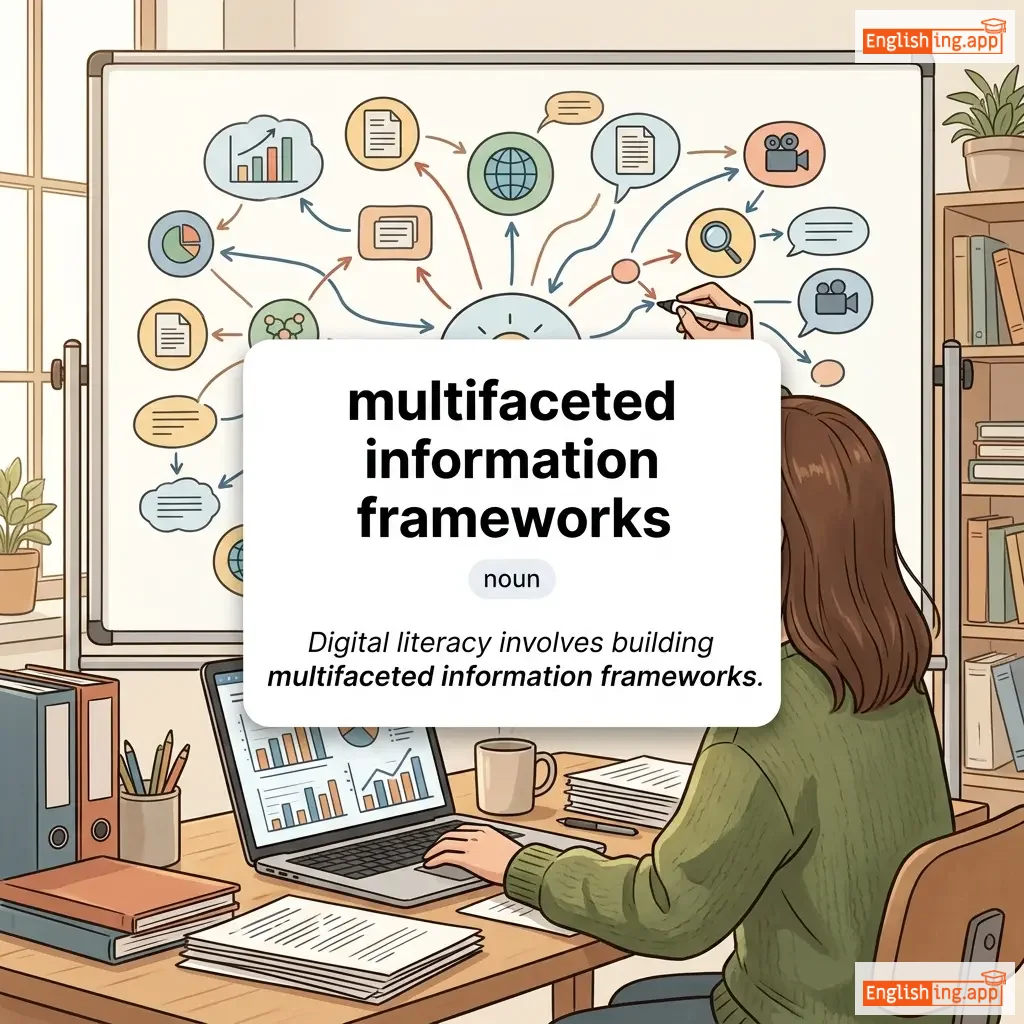
multifaceted information frameworks definition card — visual illustration of the meaning
noun
ˌmʌltɪˈfæsɪtɪd ˌɪnfərˈmeɪʃən ˈfreɪmwɜːrks
marcos de información multifacéticos (marcos de informacion multifaceticos)

Complex, comprehensive structures for organizing and managing information that have multiple aspects or dimensions.

"Digital literacy involves building multifaceted information frameworks."

"La alfabetización digital implica la construcción de marcos de información multifacéticos." (La alfabetizacion digital implica la construccion de marcos de informacion multifaceticos.)
adjective
/ˌmʌltɪˈfɛərɪəs/
multifacético (multifacetico)

having many different parts, elements, or kinds

"The museum displayed a multifarious collection of artifacts."

"El museo mostró una colección multifacética de artefactos." (El museo mostró una colección multifacética de artefactos.)
adjective
/ˈmʌltɪfɔːrm/
multiforme (multiforme)

Having many different forms or appearances.

"The festival was a multiform celebration of art, music, and culture."

"El festival fue una celebración multiforme de arte, música y cultura." (El festival fue una celebracion multiforme de arte, musica y cultura.)
adjective
/ˌmʌltɪˈlɪŋɡwəl/
multilingüe (multilingue)

Able to speak or written in several languages.

"She grew up in a multilingual household."

"Ella creció en una casa multilingüe." (Ella creció en una casa multilingüe.)
adjective
/ˈmʌltɪpl/
múltiple (multiple)

involving or consisting of many parts or elements

"The company faced multiple challenges during the year."

"La empresa enfrentó múltiples desafíos durante el año." (La empresa enfrentó múltiples desafíos durante el año.)
noun
/ˌmʌltɪplɪˈkeɪʃən/
multiplicación (multiplicacion)

the mathematical process of combining numbers to get a product; the act of increasing in number or amount

"Multiplication is one of the basic operations taught in elementary mathematics."

"La multiplicación es una operación básica en matemáticas." (la multiplicacion es una operacion basica en matematicas)
noun
/ˌmʌltɪˈplɪsɪti/
multiplicidad (multiplicidad)

A large number or variety of something.

"The project faced a multiplicity of challenges."

"El proyecto enfrentó una multiplicidad de desafíos." (El proyecto enfrento una multiplicidad de desafios.)
noun
/ˈmʌltɪplaɪər/
multiplicador (multiplicador)

a number or factor by which another number is multiplied; something that increases the effect or value of something else

"In economics, government spending can act as a multiplier for economic growth."

"En economía, el gasto público puede ser un multiplicador del crecimiento." (en economia el gasto publico puede ser un multiplicador del crecimiento)
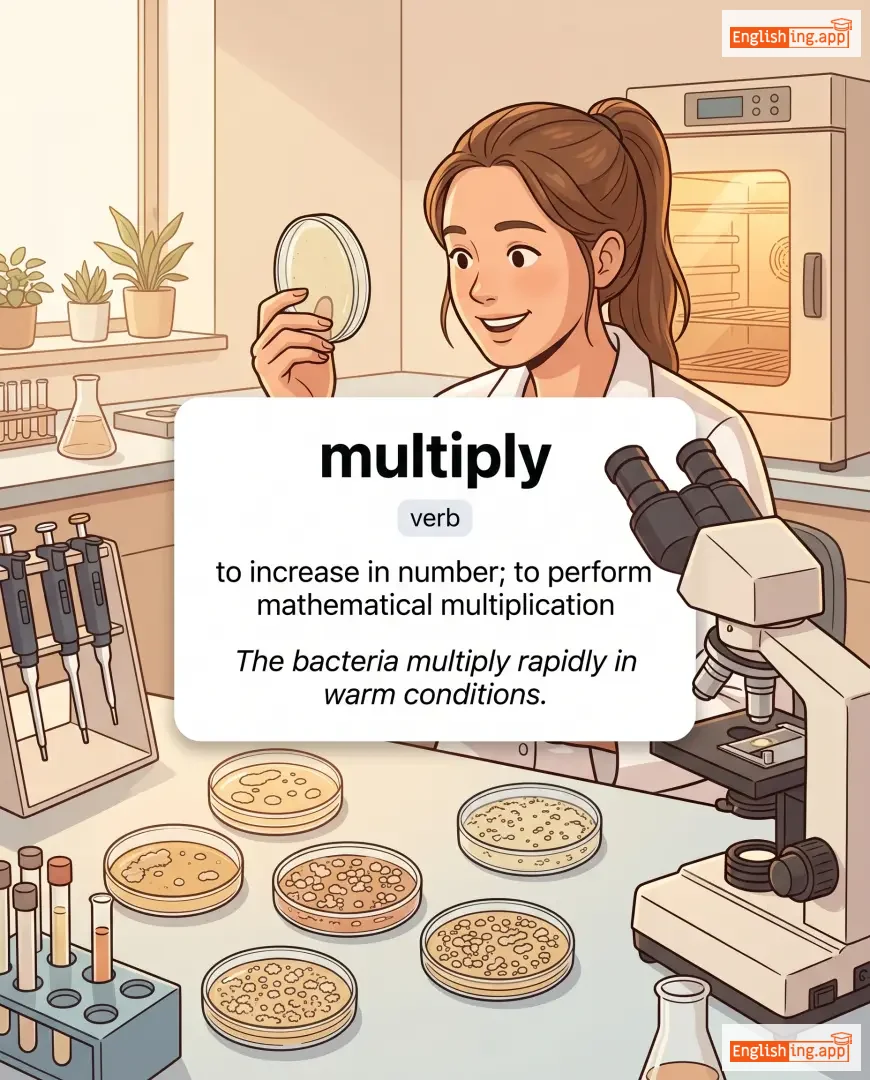
multiply definition card — visual illustration of the meaning
verb
/ˈmʌltɪplaɪ/
multiplicar (multiplicar)

to increase in number; to perform mathematical multiplication

"The bacteria multiply rapidly in warm conditions."

"Las bacterias se multiplican rápidamente en condiciones cálidas." (Las bacterias se multiplican rapidamente en condiciones calidas)
adjective
/ˌmʌl.tiˈpɜː.pəs/
multifuncional (multifuncional)

having multiple uses or functions; versatile

"This multipurpose tool can be used as a knife, screwdriver, and bottle opener."

"Esta herramienta multifuncional se puede usar como cuchillo, destornillador y abridor de botellas." (Esta herramienta multifuncional se puede usar como cuchillo, destornillador y abridor de botellas.)
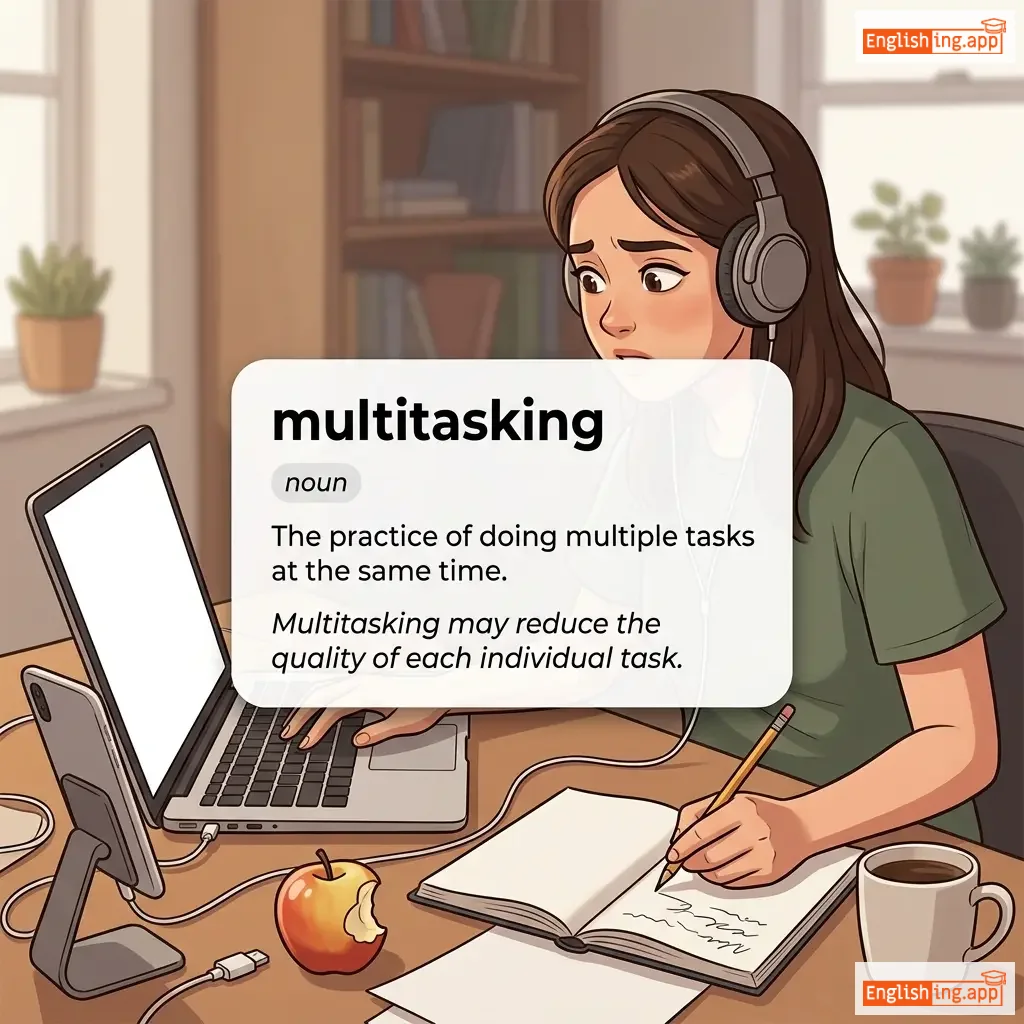
multitasking definition card — visual illustration of the meaning
noun
ˈmʌltɪˌtɑːskɪŋ
realización de múltiples tareas al mismo tiempo (realizacion de multiples tareas al mismo tiempo)

The practice of doing multiple tasks at the same time.

"Multitasking may reduce the quality of each individual task."

"El multitasking puede reducir la calidad de cada tarea individual." (El multitasking puede reducir la calidad de cada tarea individual.)
noun
/ˈmʌltɪtuːd/
multitud (multitud)

A large number of people or things.

"A multitude of fans gathered at the stadium."

"Una multitud de fanáticos se reunió en el estadio." (Una multitud de fanaticos se reunio en el estadio.)
adjective
/mʌm/
silencioso; no decir nada; quedarse callado (silencioso; no decir nada; quedarse callado)

silent; saying nothing; keeping quiet

"He kept mum about the surprise party plans."

"Él se quedó callado sobre los planes de la fiesta sorpresa." (El se quedo callado sobre los planes de la fiesta sorpresa.)
verb
/ˈmʌmbəl/
murmurar (murmurar)

To speak quietly and not clearly so that words are difficult to understand.

"He mumbled an apology before leaving."

"Él murmuró una disculpa antes de irse." (Él murmuró una disculpa antes de irse.)
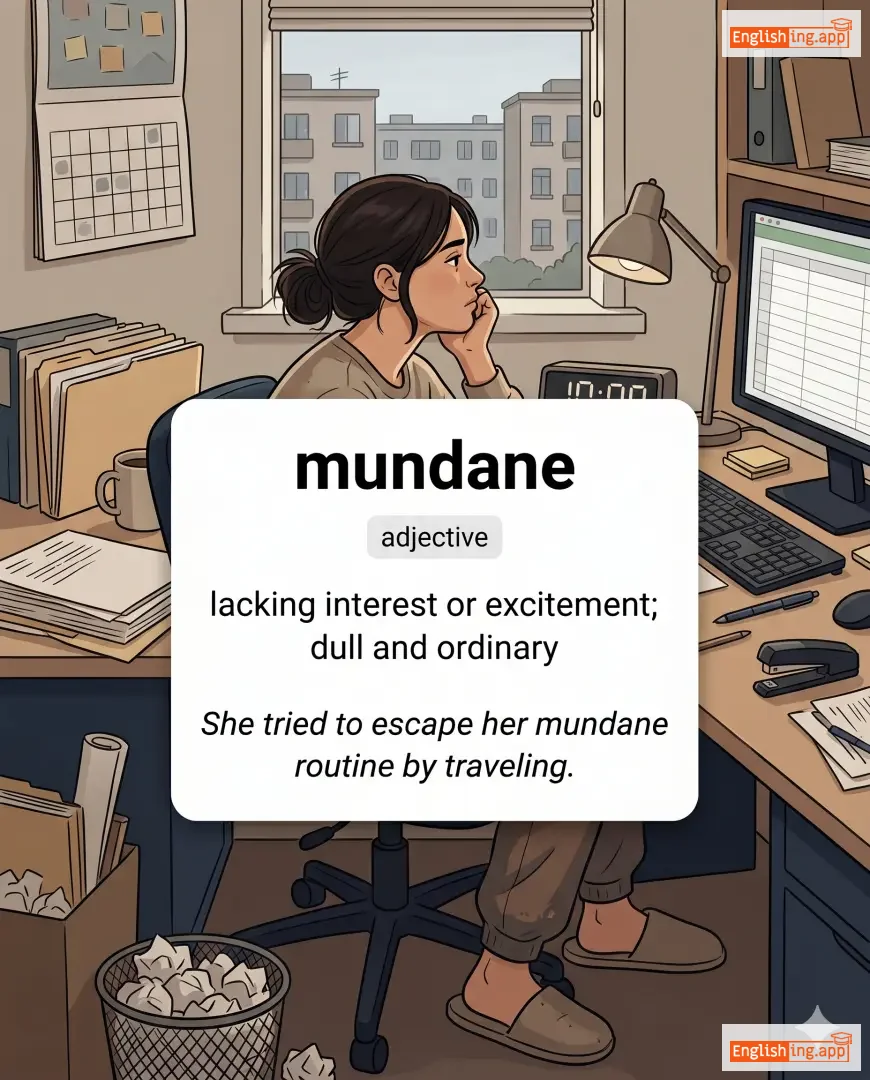
mundane definition card — visual illustration of the meaning
adjective
/mʌnˈdeɪn/
mundano (mundano)

lacking interest or excitement; dull and ordinary

"She tried to escape her mundane routine by traveling."

"Ella intentó escapar de su rutina mundana viajando." (Ella intento escapar de su rutina mundana viajando.)
verb
/nəˈsɛsɪteɪt/
hacer necesario (hacer necesario)

To make something necessary or unavoidable.

"The heavy rains necessitated the cancellation of the event."

"Las fuertes lluvias hicieron inevitable la cancelación del evento." (Las fuertes lluvias hicieron inevitable la cancelación del evento.)
noun
/niːp/
marea baja (marea baja)

A tide just after the first or third quarters of the moon when the difference between high and low tide is least.

"During a neap tide, the water level change is minimal."

"Durante una marea baja, el cambio en el nivel del agua es mínimo." (Durante una marea baja, el cambio en el nivel del agua es minimo.)
preposition
/nɪə(r)/
cerca (cerca)

At or to a short distance away; close in space, time, or relationship.

"There is a park near my house."

"Hay un parque cerca de mi casa." (Hay un parque cerca de mi casa.)
adverb
/ˈnɪərbaɪ/
cerca; en las cercanías (cerca; en las cercanias)

close to; not far away; in the neighborhood

"There is a grocery store nearby."

"Hay una tienda de comestibles cerca." (Hay una tienda de comestibles cerca.)
adjective
/ˈnɪəˌbaɪ/
cerca (cerca)

close to a particular place or person

"The nearest gas station is nearby."

"La estación de gasolina más cercana está cerca." (La estacion de gasolina mas cercana esta cerca.)
adverb
/ˈnɪəli/
casi (casi)

almost, but not completely

"She nearly missed the bus."

"Casi perdió el autobús." (Casi perdio el autobus.)
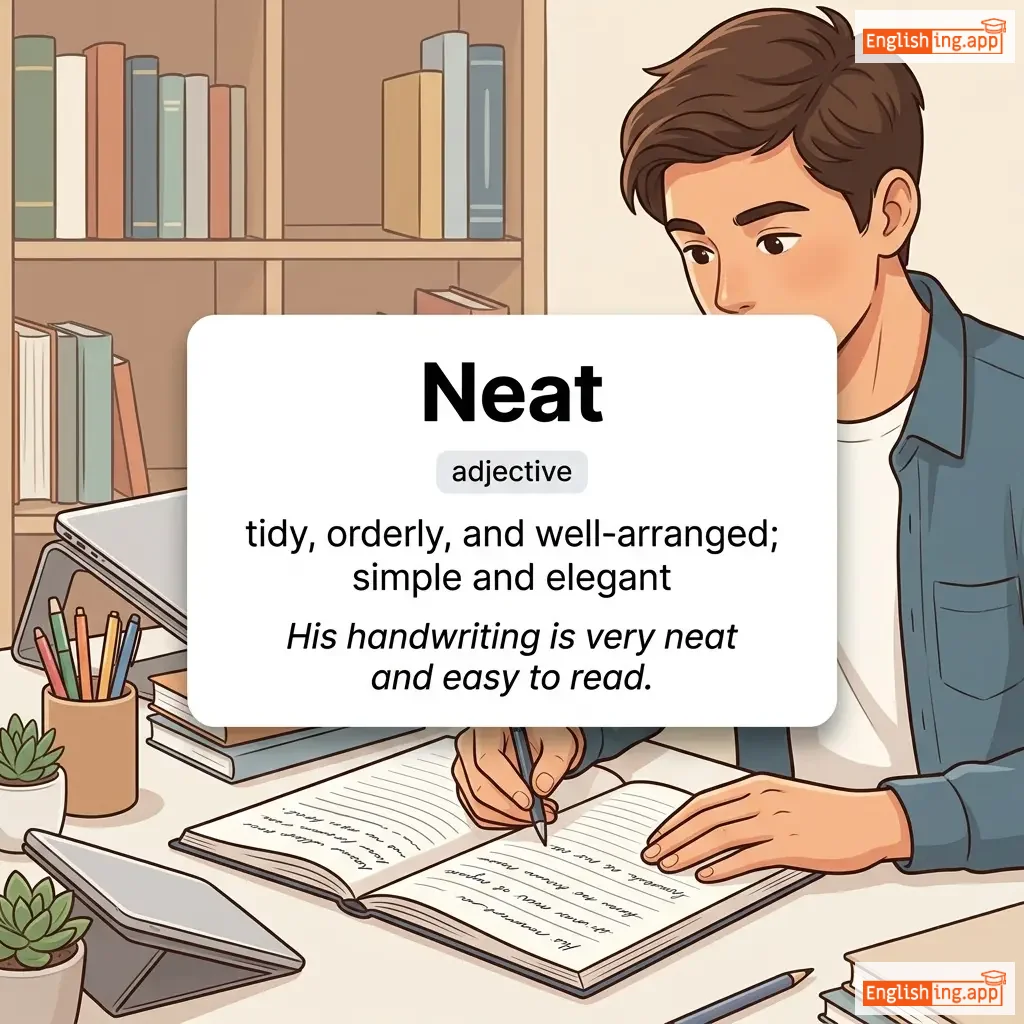
Neat definition card — visual illustration of the meaning
adjective
/niːt/
ordenado (ordenado)

tidy, orderly, and well-arranged; simple and elegant

"His handwriting is very neat and easy to read."

"Su escritura es muy ordenada y fácil de leer." (Su escritura es muy ordenada y fácil de leer.)
adverb
/ˈniːtli/
ordenadamente; cuidadosamente (ordenadamente; cuidadosamente)

in a tidy and orderly way; carefully and precisely

"She arranged the books neatly on the shelf."

"Ella arregló los libros ordenadamente en la estantería." (Ella arreglo los libros ordenadamente en la estantería.)
noun
/ˈneb.jʊ.lə/
nebulosa (nebulosa)

A cloud of gas and dust in outer space, sometimes visible in the night sky.

"The Orion Nebula is one of the brightest in the sky."

"La Nebulosa de Orión es una de las más brillantes en el cielo." (La Nebulosa de Orión es una de las más brillantes en el cielo.)
adjective
/ˈnɛbjələs/
nebuloso (nebuloso)

Unclear, vague, or ill-defined; resembling a cloud or haze.

"His plan for the future was still nebulous and hard to understand."

"Su plan para el futuro seguía siendo nebuloso y difícil de entender." (Su plan para el futuro seguía siendo nebuloso y difícil de entender.)
adverb
/ˌnɛsəˈsɛrɪli/
necesariamente (necesariamente)

as a necessary result; inevitably

"It doesn’t necessarily mean you’re wrong."

"No significa necesariamente que estés equivocado." (No significa necesariamente que estés equivocado.)
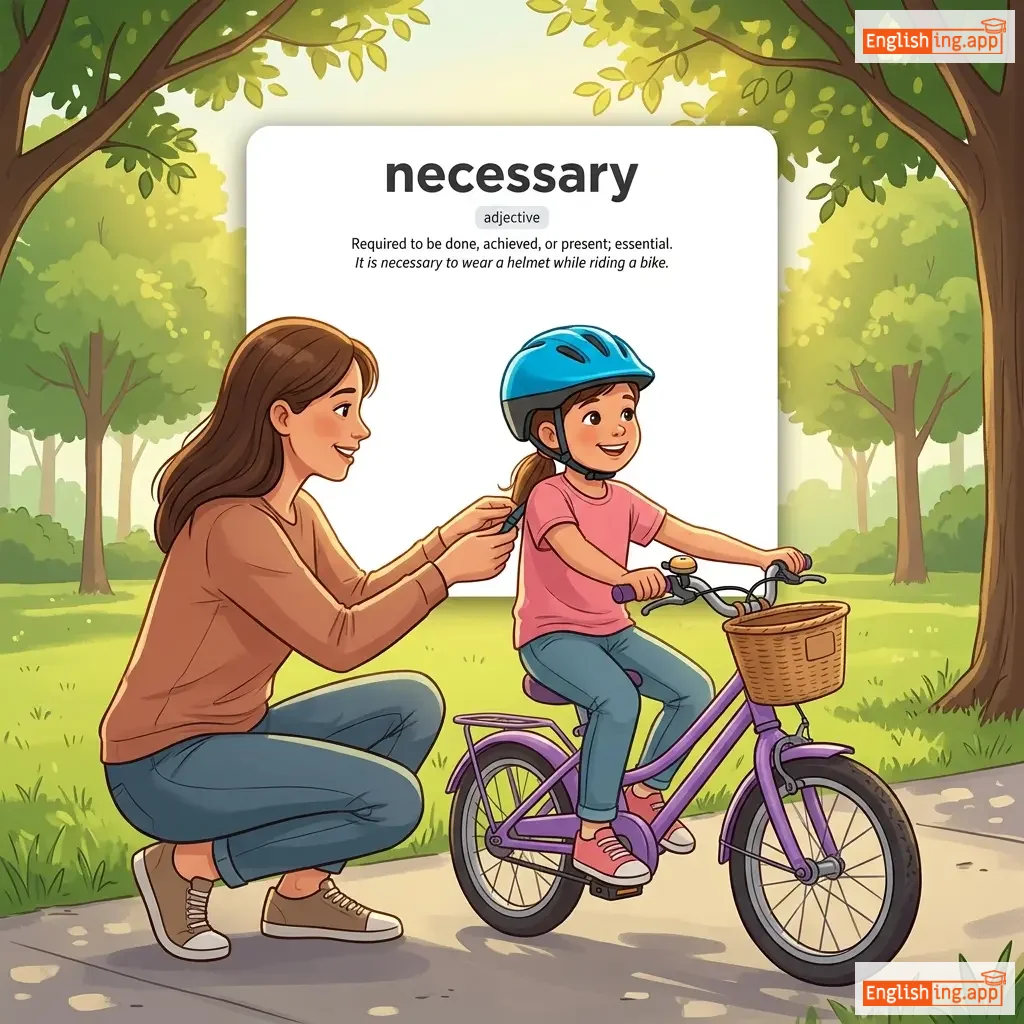
necessary definition card — visual illustration of the meaning
adjective
/ˈnɛsəsɛri/
necesario (necesario)

Required to be done, achieved, or present; essential.

"It is necessary to wear a helmet while riding a bike."

"Es necesario usar un casco mientras se monta en una bicicleta." (es necesario usar un casco mientras se monta en una bicicleta)
noun
/nəˈkrɒpəlɪs/
necrópolis (necropolis)

a large ancient cemetery with elaborate tombs

"The archaeologists discovered artifacts in the necropolis of the ancient city."

"Los arqueólogos descubrieron artefactos en la necrópolis de la antigua ciudad." (Los arqueólogos descubrieron artefactos en la necrópolis de la antigua ciudad.)
noun
/ˈnɛkrəˌmænsər/
necromante (nekro-man-ser)

a person who practices necromancy; a wizard or magician who claims to communicate with the dead

"The villagers feared the old necromancer who lived at the edge of the forest."

"Los aldeanos temían al viejo necromante que vivía al borde del bosque." (Los aldeanos temian al viejo necromante que vivia al borde del bosque.)
noun
/ˈnɛkrəˌmænsi/
necromancia (necromancia)

the practice of communicating with the dead, often to predict the future

"Ancient texts described rituals of necromancy performed by priests."

"Los textos antiguos describen rituales de necromancia realizados por sacerdotes." (Los textos antiguos describen rituales de necromancia realizados por sacerdotes.)
noun
/nɪˈkrɒlədʒi/
necrológico (necrologico)

An obituary notice or a list of people who have recently died.

"The newspaper published a necrology of notable figures who passed away that year."

"El periódico publicó una necrología de figuras notables que fallecieron ese año." (El periodico publico una necrologia de figuras notables que fallecieron ese ano.)