Vocabularios

Descubra, aprenda y domine el vocabulario en inglés

adverb
/ˈnɪəli/
casi (casi)

almost, but not completely

"She nearly missed the bus."

"Casi perdió el autobús." (Casi perdio el autobus.)
adjective
/ˈnɪəˌbaɪ/
cerca (cerca)

close to a particular place or person

"The nearest gas station is nearby."

"La estación de gasolina más cercana está cerca." (La estacion de gasolina mas cercana esta cerca.)
adverb
/ˈnɪərbaɪ/
cerca; en las cercanías (cerca; en las cercanias)

close to; not far away; in the neighborhood

"There is a grocery store nearby."

"Hay una tienda de comestibles cerca." (Hay una tienda de comestibles cerca.)
preposition
/nɪə(r)/
cerca (cerca)

At or to a short distance away; close in space, time, or relationship.

"There is a park near my house."

"Hay un parque cerca de mi casa." (Hay un parque cerca de mi casa.)
noun
/niːp/
marea baja (marea baja)

A tide just after the first or third quarters of the moon when the difference between high and low tide is least.

"During a neap tide, the water level change is minimal."

"Durante una marea baja, el cambio en el nivel del agua es mínimo." (Durante una marea baja, el cambio en el nivel del agua es minimo.)
noun
/ˌɛn.biː.esˈpiː/
espacio no rompible (espacio no rompible)

a non-breaking space character in HTML used to prevent an automatic line break at its position

"Use   in HTML to add a space that won't break into a new line."

"Usa   en HTML para agregar un espacio que no se rompa en una nueva línea." (Usa   en HTML para agregar un espacio que no se rompa en una nueva linea.)
noun
/ˈneɪˌseɪ.ɪŋ/
expresión negativa (expresion negativa)

The act of expressing negative or pessimistic views.

"His constant naysaying discouraged the team."

"Su constante expresión negativa desmotivó al equipo." (Su constante expresion negativa desmotivo al equipo.)
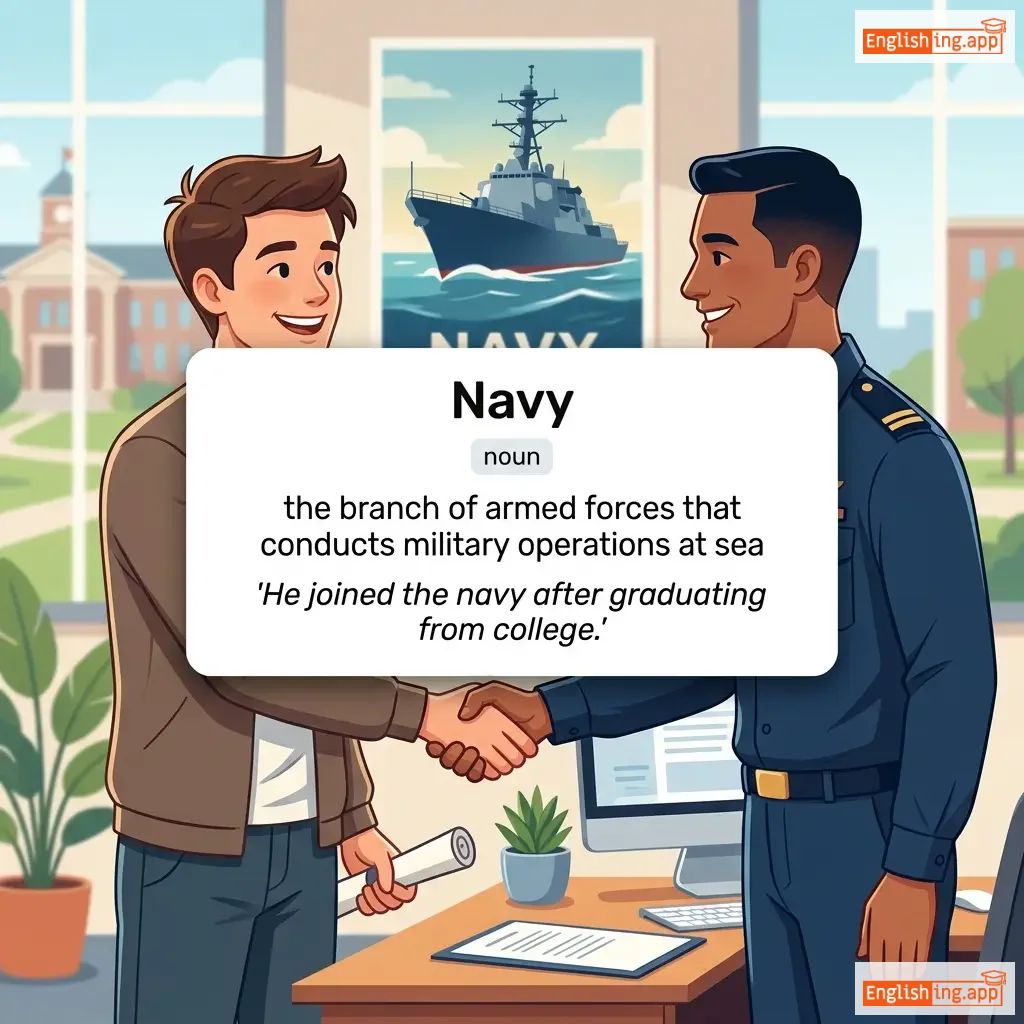
Navy definition card — visual illustration of the meaning
noun
/ˈneɪvi/
marina (marina)

the branch of armed forces that conducts military operations at sea

"He joined the navy after graduating from college."

"Se unió a la marina después de graduarse de la universidad." (Se unió a la marina después de graduarse de la universidad.)
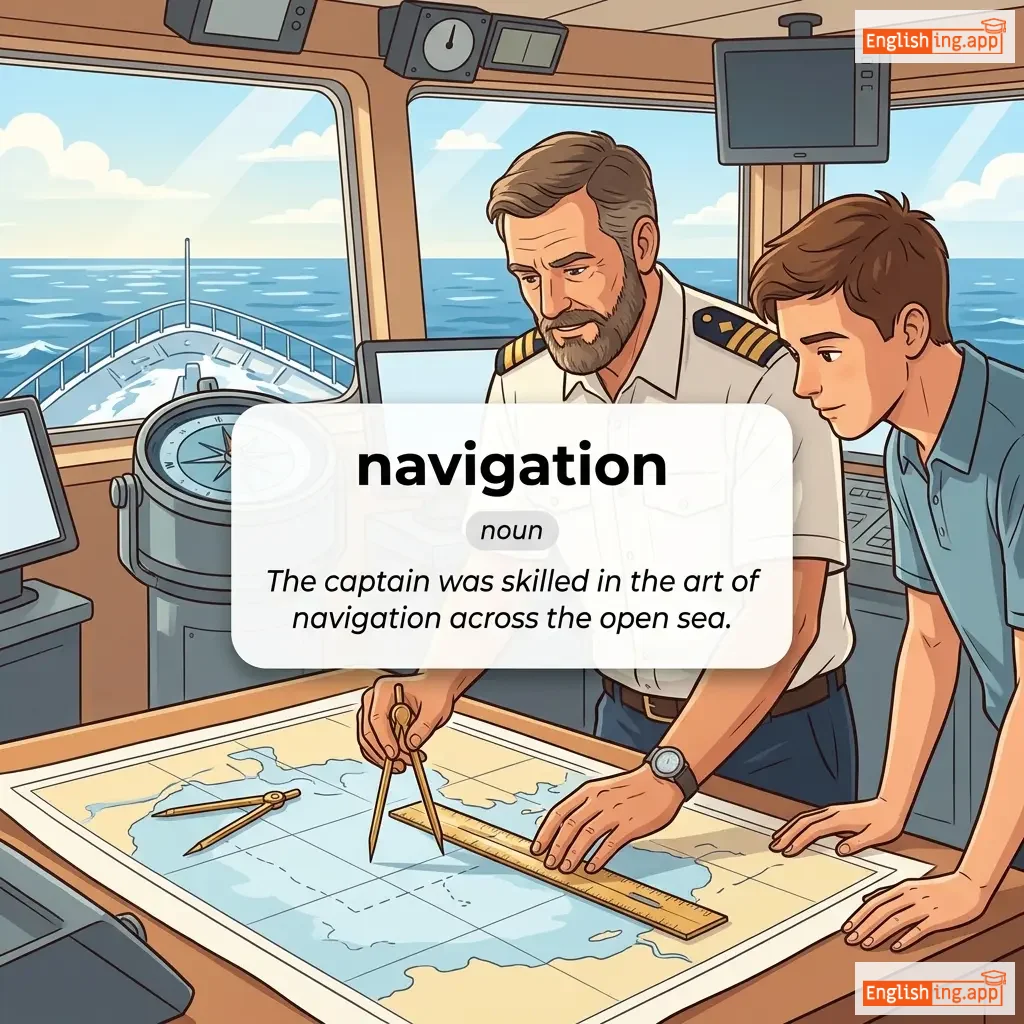
navigation definition card — visual illustration of the meaning
noun
/ˌnævɪˈɡeɪʃən/
navegación (navegacion)

the process or activity of accurately determining one's position and planning and following a route

"The captain was skilled in the art of navigation across the open sea."

"El capitán era experto en el arte de la navegación a través del mar abierto." (El capitan era experto en el arte de la navegacion a traves del mar abierto.)
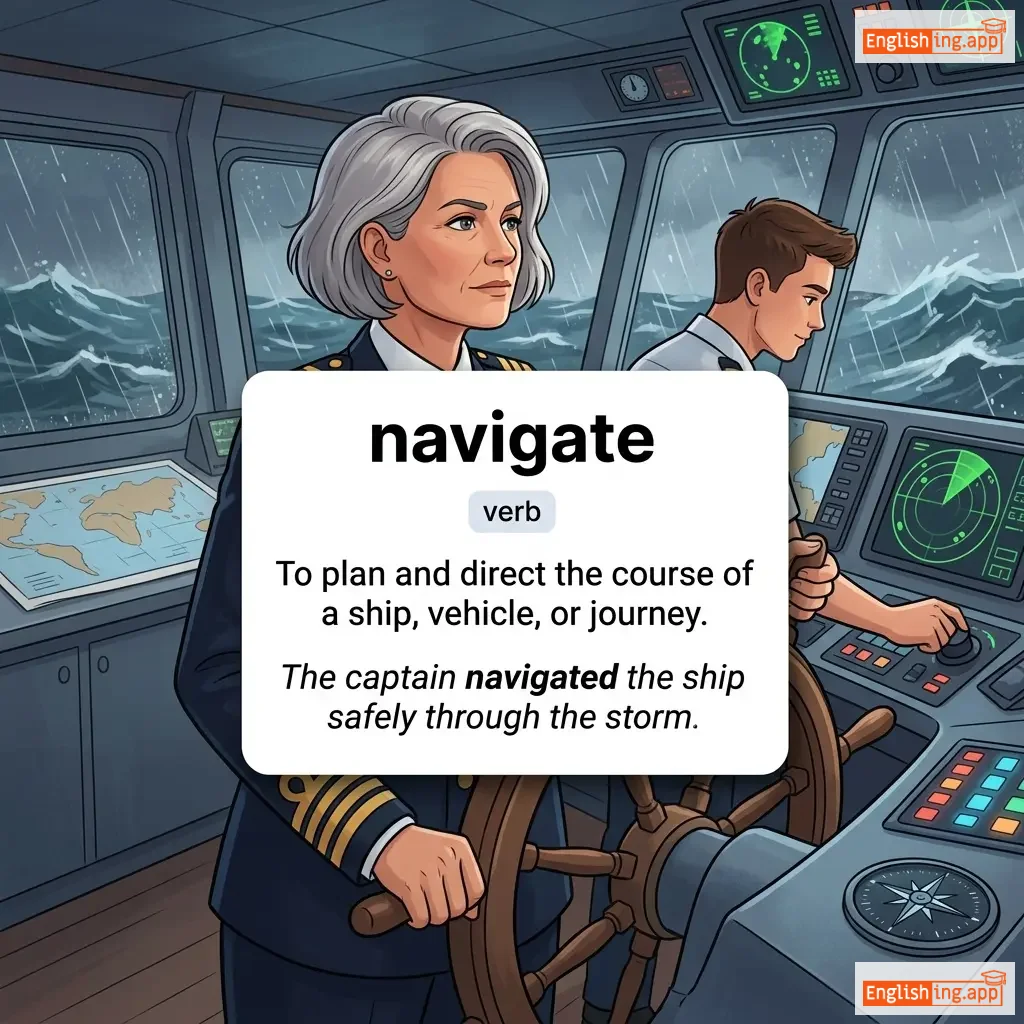
navigate definition card — visual illustration of the meaning
verb
/ˈnæv.ɪ.ɡeɪt/
navegar (navegar)

To plan and direct the course of a ship, vehicle, or journey.

"The captain navigated the ship safely through the storm."

"El capitán navegó el barco de manera segura a través de la tormenta." (El capitan navego el barco de manera segura a traves de la tormenta.)
adjective
/ˈnæv.ɪ.ɡə.bəl/
navegable (navegable)

Able to be sailed on or through by ships or boats.

"The river is navigable for large cargo ships."

"El río es navegable para grandes barcos de carga." (El río es navegable para grandes barcos de carga.)
noun
/ˈneɪvəl/
ombligo (ombligo)

the small hollow or raised area in the middle of the stomach, also called the belly button

"The baby’s navel was carefully cleaned after birth."

"El ombligo del bebé fue limpiado cuidadosamente después del nacimiento." (El ombligo del bebe fue limpiado cuidadosamente despues del nacimiento.)
noun
/neɪv/
nave central de la iglesia (nave central de la iglesia)

the central part of a church building intended to accommodate the congregation

"The choir sang beautifully in the church nave."

"El coro cantó hermosamente en la nave de la iglesia." (El coro cantó hermosamente en la nave de la iglesia.)
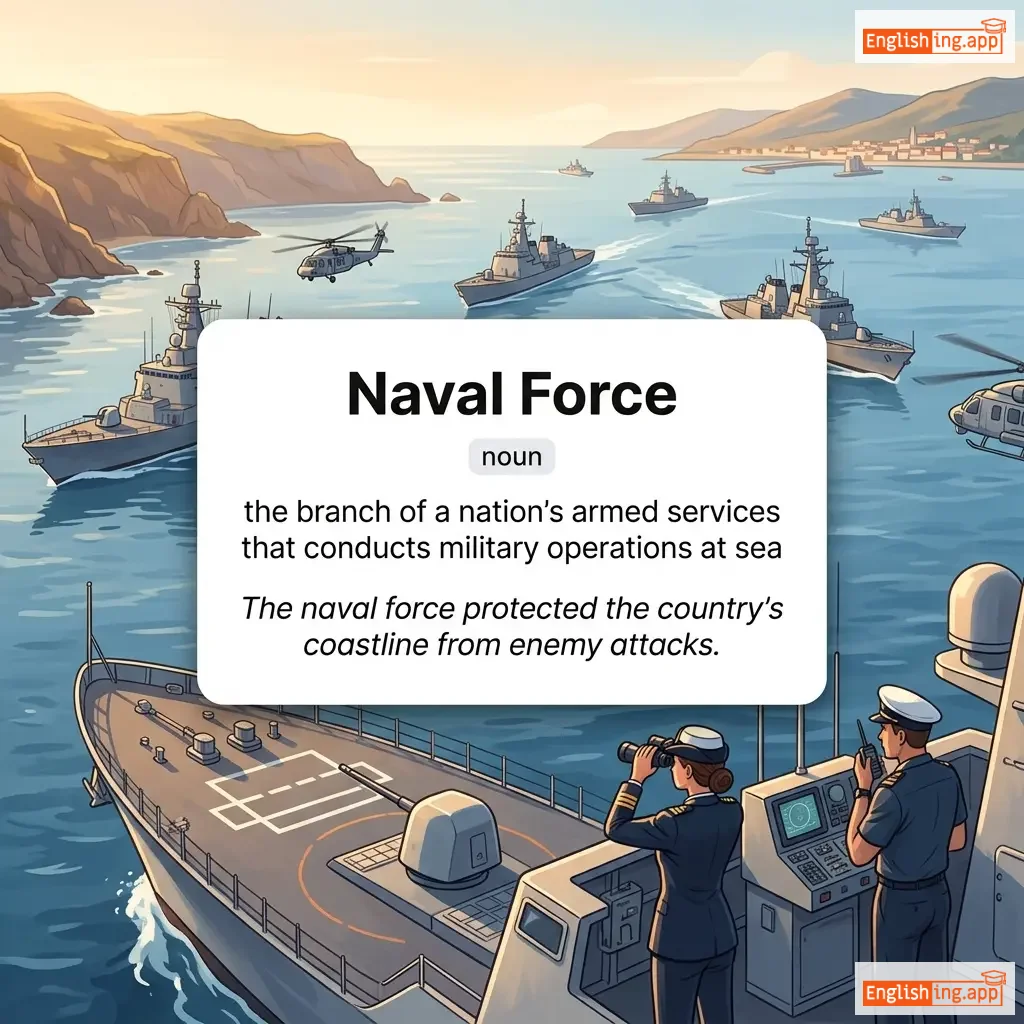
Naval Force definition card — visual illustration of the meaning
noun
/ˈneɪ.vəl fɔːrs/
fuerzas navales (fuerzas navales)

the branch of a nation's armed services that conducts military operations at sea

"The naval force protected the country's coastline from enemy attacks."

"Las fuerzas navales protegieron la costa del país de los ataques enemigos" (Las fuerzas navales protegieron la costa del pais de los ataques enemigos)
adjective
/ˈneɪvəl/
naval (naval)

relating to a country's navy or military ships

"The country invested heavily in naval defense."

"El país invirtió fuertemente en defensa naval." (El pais invirtió fuertemente en defensa naval.)
adjective
/ˈnɔːtɪkəl/
náutico (nautico)

relating to ships, sailors, or navigation on water

"He studied nautical charts before setting sail."

"Estudió mapas náuticos antes de zarpar." (Estudió mapas náuticos antes de zarpar.)
adjective
/ˈnɔːʃəs/
sentirse como si estuvieras a punto de vomitar (sentirse como si estuvieras a punto de vomitar)

feeling like you are about to vomit; causing a feeling of sickness

"The smell of rotten food made her feel nauseous."

"El olor a comida en descomposición le hizo sentir como si fuera a vomitar." (El olor a comida en descomposición le hizo sentir como si fuera a vomitar.)
verb
/ˈnɔːzieɪt/
provocar náuseas (provocar nauseas)

To make someone feel sick, with an inclination to vomit.

"The spoiled food nauseated him quickly."

"La comida echada a perder lo nauseó rápidamente." (La comida echada a perder lo nauseó rápidamente.)
noun
/ˈnɔːziə/
náusea (nausea)

A feeling of sickness with an inclination to vomit.

"The strong smell of paint gave her a sudden nausea."

"El fuerte olor a pintura le dio una repentina náusea." (El fuerte olor a pintura le dio una repentina nausea.)
adjective
/ˈnɔːti/
travieso (travieso)

Disobedient or mischievous, often in a playful or mildly bad way.

"The naughty child drew on the walls with crayons."

"El niño travieso dibujó en las paredes con crayones." (El niño travieso dibujó en las paredes con crayones.)
Nature Enthusiasts definition card — visual illustration of the meaning
noun
ˈneɪʧər ɪnˈθjuːziæsts
entusiastas de la naturaleza (entusiastas de la naturaleza)

People who have a passionate interest in and love for the natural world and outdoor activities.

"Nature enthusiasts often visit Sajek Valley for its scenic beauty."

"Los entusiastas de la naturaleza a menudo visitan el Valle de Sajek por su belleza escénica." (Los entusiastas de la naturaleza a menudo visitan el Valle de Sajek por su belleza escénica.)
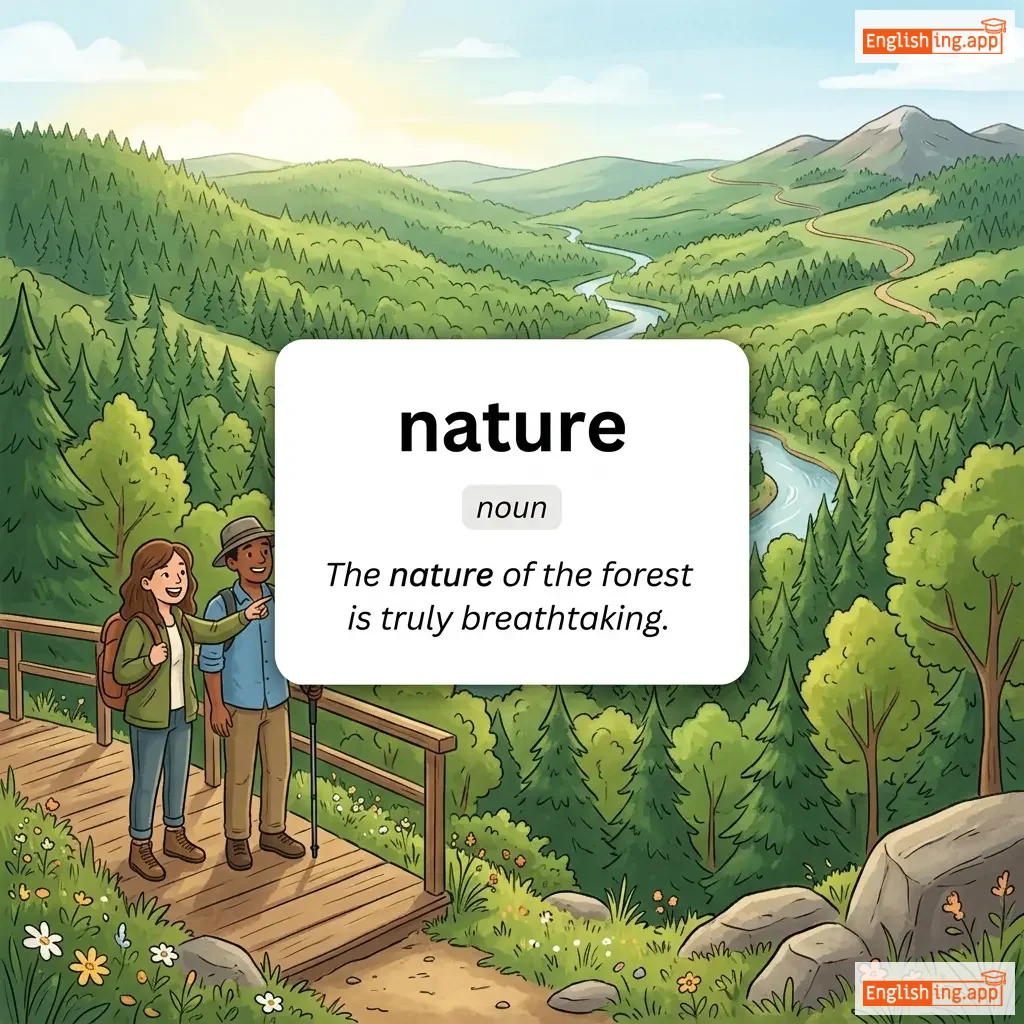
nature definition card — visual illustration of the meaning
noun
/ˈneɪtʃər/
naturaleza (naturaleza)

the physical world and everything in it, including plants, animals, and the landscape

"The nature of the forest is truly breathtaking."

"La naturaleza del bosque es realmente impresionante." (La naturaleza del bosque es realmente impresionante.)
adverb
/ˈnætʃrəli/
naturalmente (naturalmente)

In a way that is normal, expected, or without effort.

"He spoke so naturally that everyone felt comfortable."

"Él habló tan naturalmente que todos se sintieron cómodos." (Él habló tan naturalmente que todos se sintieron cómodos.)
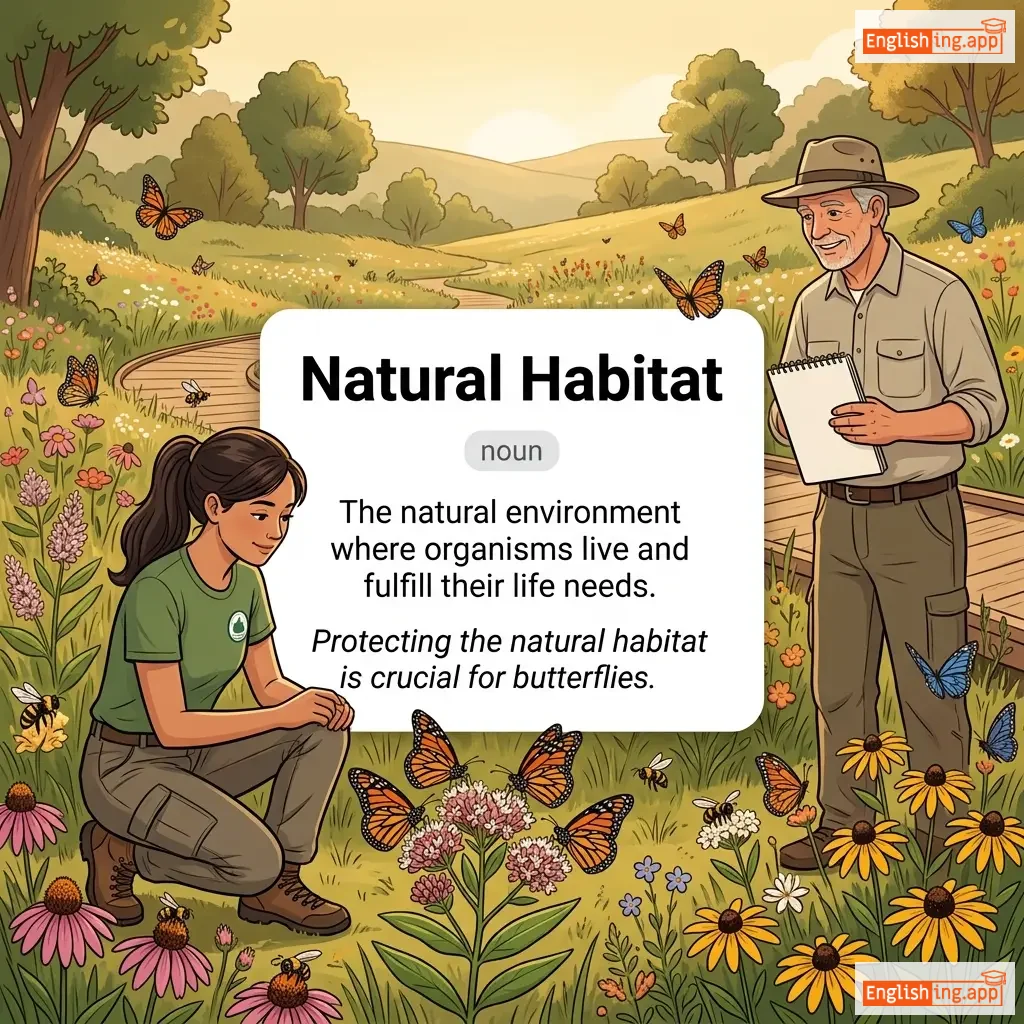
Natural Habitat definition card — visual illustration of the meaning
noun
ˈnætʃərəl ˈhæbɪtæt
hábitat natural (habitat natural)

The natural environment where organisms live and fulfill their life needs.

"Protecting the natural habitat is crucial for butterflies."

"Proteger el hábitat natural es crucial para las mariposas." (Proteger el hábitat natural es crucial para las mariposas.)
noun
/ˈnætʃərəl dɪˈzæstər/
desastre natural (desastre natural)

a catastrophic event caused by natural processes of the Earth that results in significant damage, destruction, or loss of life

"The coastal town was devastated by a natural disaster."

"La ciudad costera fue devastada por un desastre natural." (la ciudad costera fue devastada por un desastre natural)
adjective
/ˈnætʃərəl/
natural (natural)

existing in or derived from nature; not made or caused by humankind

"She prefers to use natural ingredients in her cooking."

"Ella prefiere usar ingredientes naturales en su cocina." (Ella prefiere usar ingredientes naturales en su cocina.)
adjective
/ˈnæti/
elegante (elegante)

Neat, stylish, and fashionable in appearance.

"He looked very natty in his new suit."

"Él lucía muy elegante con su nuevo traje." (Él lucía muy elegante con su nuevo traje.)
adjective
/ˈneɪtɪv/
nativo (nativo)

Belonging to a person by birth; originating in a particular place.

"He is a native speaker of Bengali."

"Él es un hablante nativo de bengalí." (El es un hablante nativo de bengali.)
noun
/mjuːˈteɪʃn/
mutación, cambio genético (mutacion, cambio genetico)

A change in form, structure, or nature, especially in genetics.

"Scientists discovered a genetic mutation that caused the disorder."

"Los científicos descubrieron una mutación genética que causó el trastorno." (Los cientificos descubrieron una mutacion genetica que causo el trastorno.)
verb
/mʌst/
deber (deber)

to be required or obligated to

"You must complete your homework before you go out."

"Debes completar tu tarea antes de salir." (Debes completar tu tarea antes de salir.)
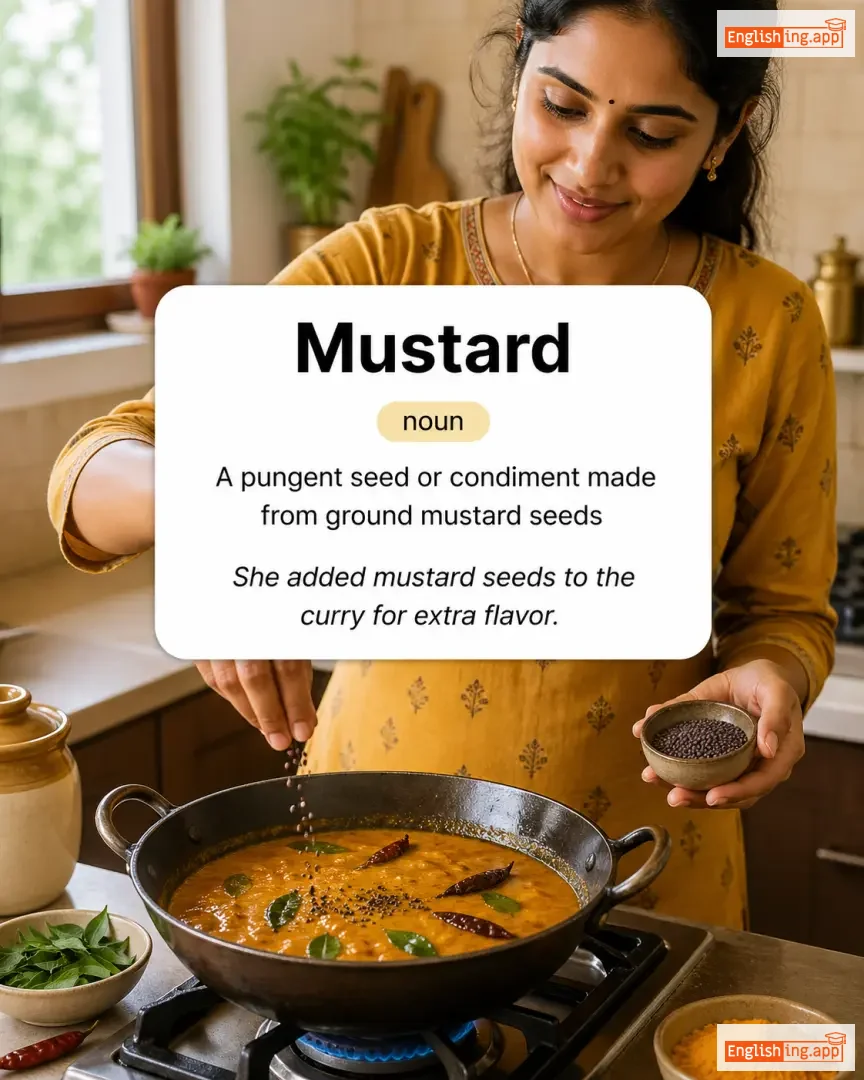
Mustard definition card — visual illustration of the meaning
noun
/ˈmʌs.tərd/
mostaza (mostaza)

A pungent seed or condiment made from ground mustard seeds

"She added mustard seeds to the curry for extra flavor."

"Ella añadió semillas de mostaza al curry para darle más sabor." (ella añadio semillas de mostaza al curry para darle mas sabor.)
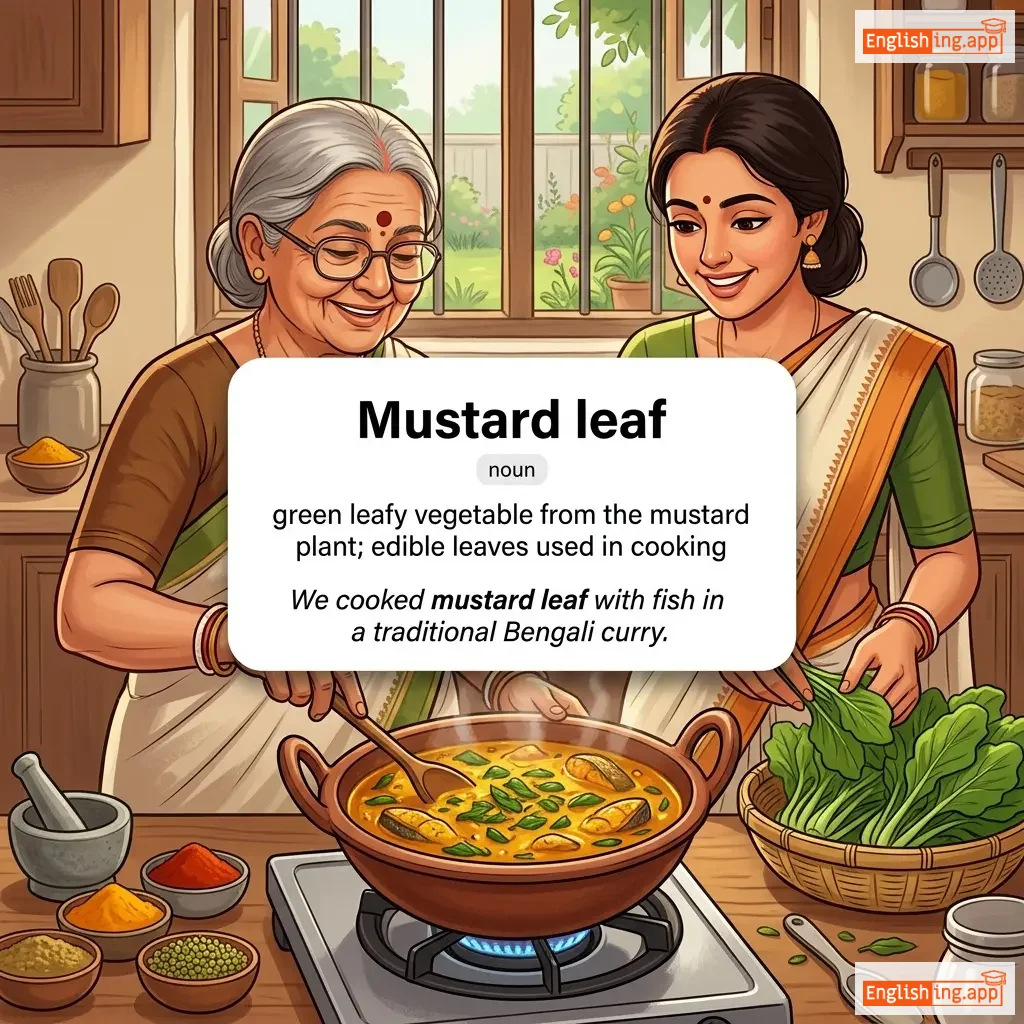
Mustard leaf definition card — visual illustration of the meaning
noun
/ˈmʌs.tərd liːf/
hoja de mostaza (hoja de mostaza)

green leafy vegetable from the mustard plant; edible leaves used in cooking

"We cooked mustard leaf with fish in a traditional Bengali curry."

"Cocinamos hoja de mostaza con pescado en un curry bengalí tradicional." (Cocinamos hoja de mostaza con pescado en un curry bengalí tradicional.)
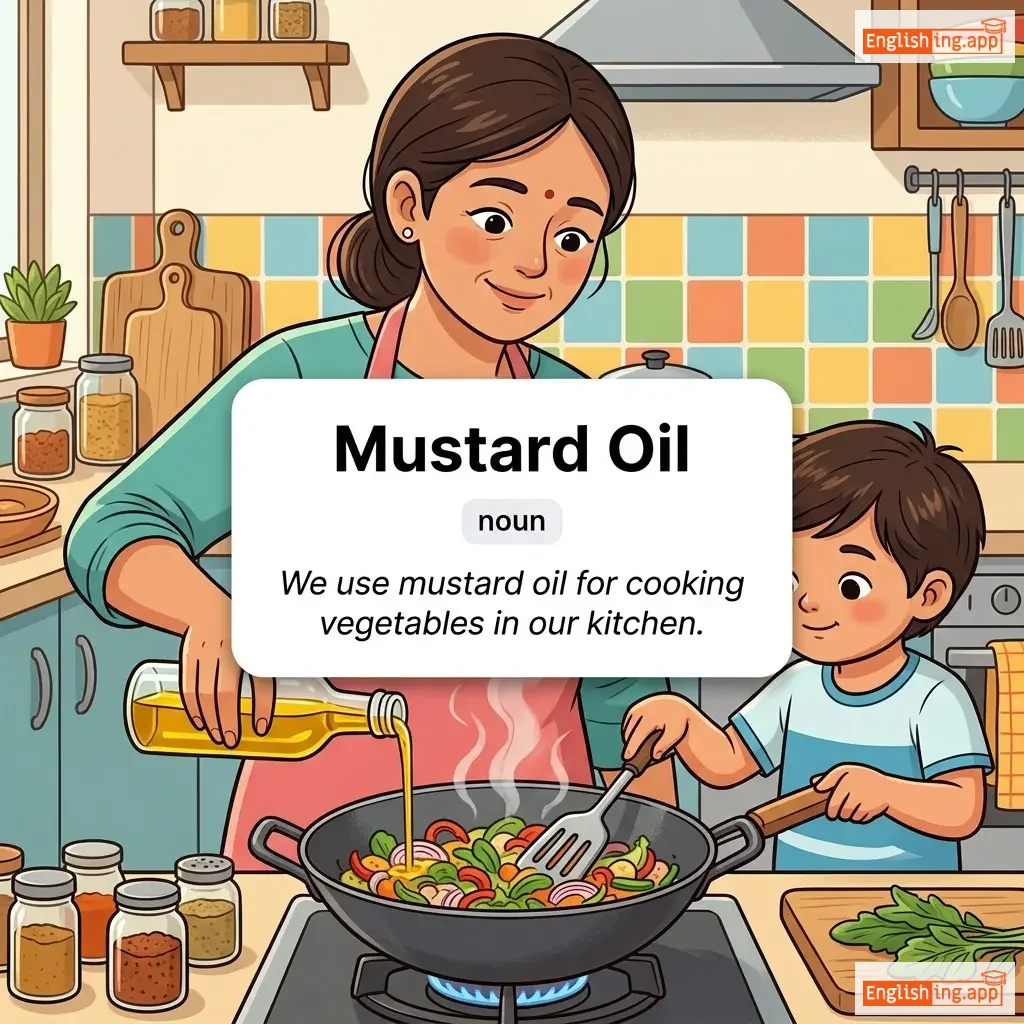
Mustard Oil definition card — visual illustration of the meaning
noun
/ˈmʌstərd ɔɪl/
aceite de mostaza (aceite de mostaza)

oil extracted from mustard seeds, commonly used for cooking and medicinal purposes

"We use mustard oil for cooking vegetables in our kitchen."

"Usamos aceite de mostaza para cocinar vegetales en nuestra cocina." (Usamos aceite de mostaza para cocinar vegetales en nuestra cocina.)
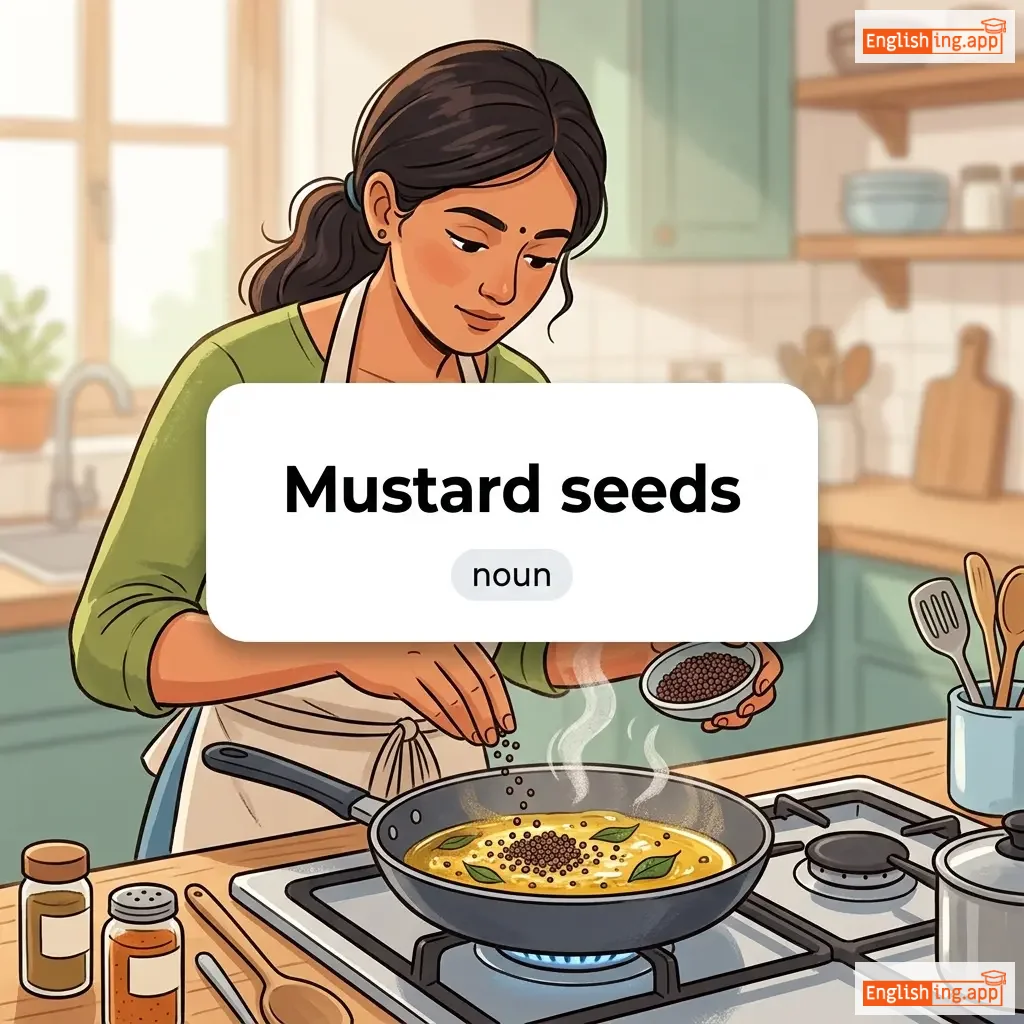
Mustard seeds definition card — visual illustration of the meaning
noun
/ˈmʌs.tərd siːdz/
semillas de mostaza (semillas de mostaza)

small round seeds from the mustard plant, used as a spice and for making mustard condiment

"Mustard seeds are often tempered in hot oil to release their nutty flavor before adding to dishes."

"Las semillas de mostaza a menudo se temperan en aceite caliente para liberar su sabor a nuez antes de agregarlas a los platos." (Las semillas de mostaza a menudo se temperan en aceite caliente para liberar su sabor a nuez antes de agregarlas a los platos.)
verb, noun
/ˈmʌstər/
reunir / juntar coraje (reunir / juntar coraje)

to gather people, especially soldiers; to summon courage or strength

"He mustered enough courage to face the challenge."

"Él reunió suficiente coraje para enfrentar el desafío." (Él reunió suficiente coraje para enfrentar el desafío.)
adjective
/ˈmʌsti/
húmedo, mohoso o con olor a humedad (humedo, mohoso o con olor a humedad)

having a stale, moldy, or damp smell

"The old books had a musty odor."

"Los libros viejos tenían un olor a humedad." (Los libros viejos tenian un olor a humedad.)
noun
/ˌmjuːtəˈbɪləti/
mutabilidad (mutabilidad)

The quality of being changeable or capable of change.

"The mutability of fashion trends makes it hard to keep up."

"La mutabilidad de las tendencias de moda hace que sea difícil mantenerse al día." (La mutabilidad de las tendencias de moda hace que sea difícil mantenerse al día.)
adjective
/ˈmjuːtəbl/
mutable (mutable)

Capable of change or alteration.

"Human emotions are mutable and can shift rapidly."

"Las emociones humanas son mutables y pueden cambiar rápidamente." (Las emociones humanas son mutables y pueden cambiar rápidamente.)
noun
/ˌmjuːtəˈbɪləti/
mutabilidad (mala ortografía) (mutabilidad (mala ortografia))

A misspelled form of 'mutability', meaning the quality of being changeable.

"The document contained the misspelled word 'mutablility' instead of 'mutability'."

"El documento contenía la palabra mal escrita 'mutablility' en lugar de 'mutability'." (El documento contenia la palabra mal escrita 'mutablility' en lugar de 'mutability'.)
verb
/ˈmjuːteɪt/
mutar (mutar)

To change or cause to change in form, nature, or character.

"The virus can mutate into a more dangerous strain."

"El virus puede mutar a una cepa más peligrosa." (El virus puede mutar a una cepa más peligrosa.)
verb
/ˈmʌtər/
murmurar (murmurar)

to speak in a low or barely audible voice, often in dissatisfaction or irritation

"He muttered something under his breath as he walked away."

"Él murmuró algo bajo su aliento mientras se alejaba." (Él murmuró algo bajo su aliento mientras se alejaba.)
adjective
/maɪˈɑːpɪk/
miopía, visión limitada (miopia, vision limitada)

lacking foresight or long-term perspective; also refers to nearsightedness

"The company’s myopic strategy led to long-term losses."

"La estrategia miope de la empresa condujo a pérdidas a largo plazo." (La estrategia miope de la empresa condujo a perdidas a largo plazo.)
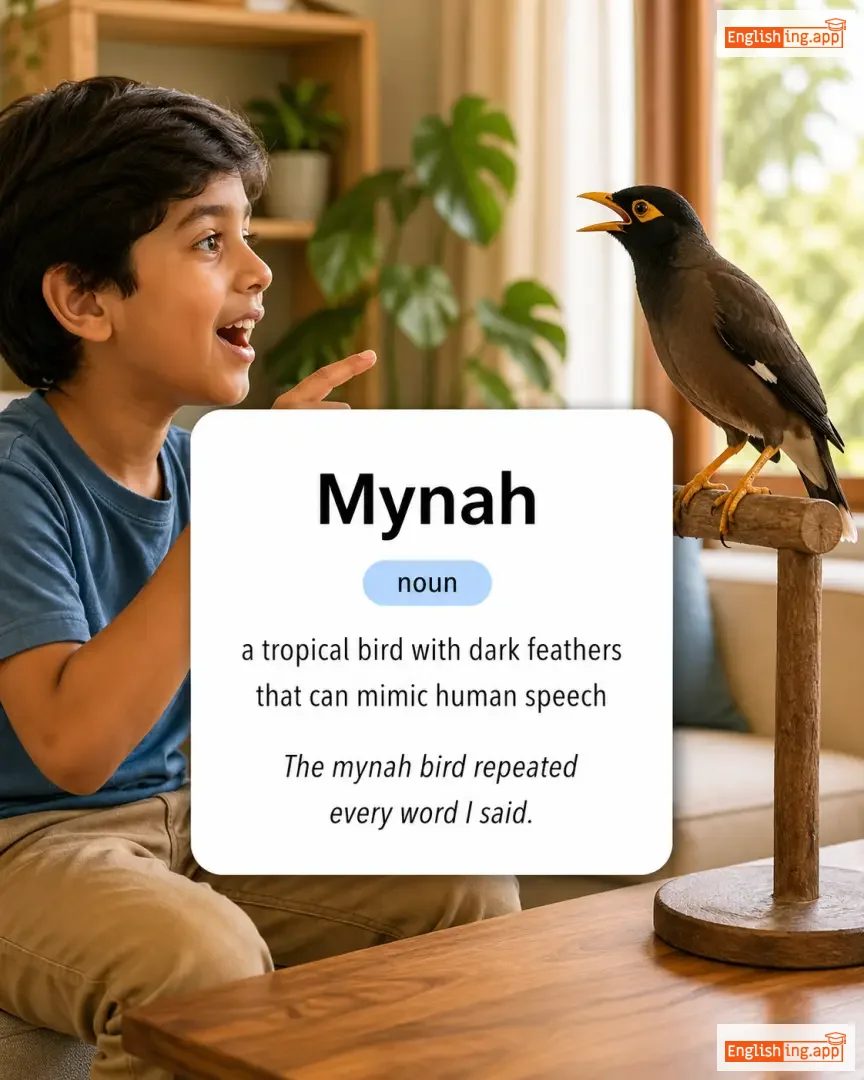
Mynah definition card — visual illustration of the meaning
noun
/ˈmaɪ.nə/
mynah (mynah)

a tropical bird with dark feathers that can mimic human speech

"The mynah bird repeated every word I said."

"El pájaro mynah repitió cada palabra que dije." (El pájaro mynah repitió cada palabra que dije.)
pronoun
/maɪ/
mi (mi)

used to indicate possession or ownership

"This is my book."

"Este es mi libro." (Este es mi libro.)
adjective
/ˈmjuːtʃuəl/
mutuo (mutuo)

felt, shared, or done by two or more people equally

"They have mutual respect for each other."

"Ellos tienen respeto mutuo el uno por el otro." (Ellos tienen respeto mutuo el uno por el otro.)
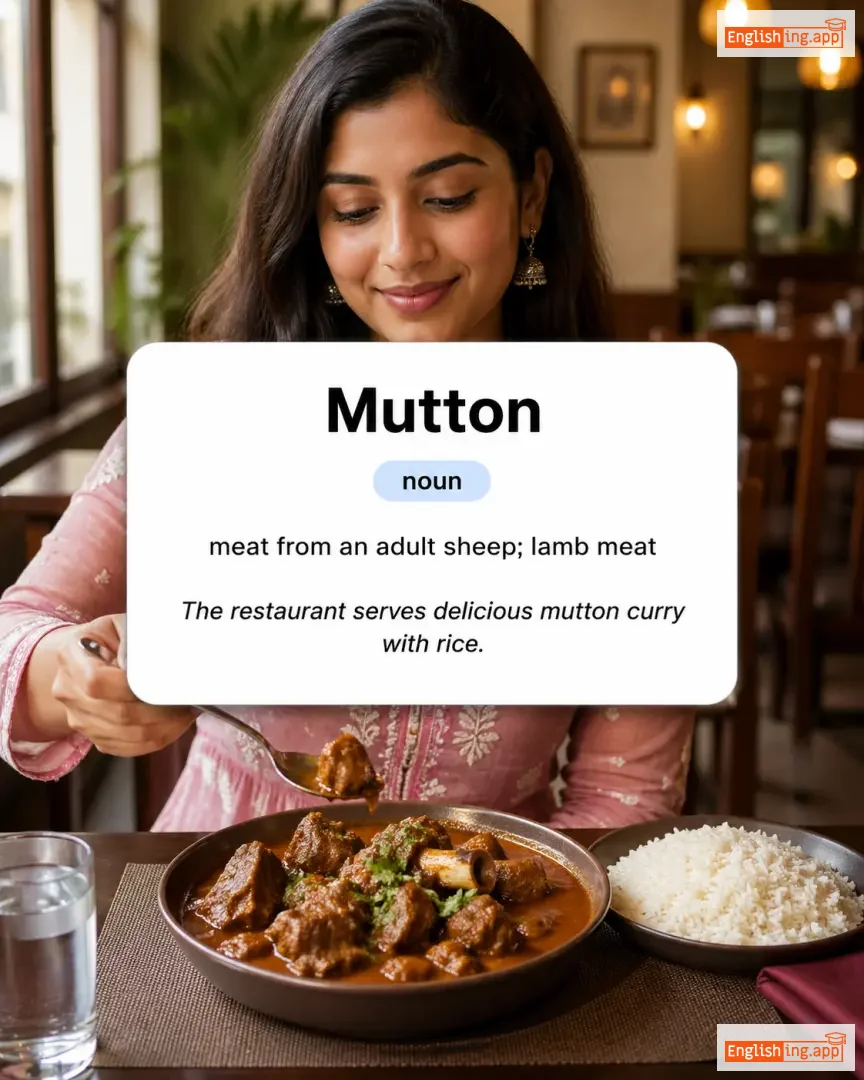
Mutton definition card — visual illustration of the meaning
noun
/ˈmʌtn/
carne de cordero (carne de cordero)

meat from an adult sheep; lamb meat

"The restaurant serves delicious mutton curry with rice."

"El restaurante sirve un delicioso curry de carne de cordero con arroz." (El restaurante sirve un delicioso curry de carne de cordero con arroz.)
verb
/ˈmjuːtɪleɪt/
mutilar (mutilar)

to inflict serious damage on something, often by cutting or tearing

"The ancient manuscript was mutilated by careless handling."

"El antiguo manuscrito fue mutilado por un manejo descuidado." (El antiguo manuscrito fue mutilado por un manejo descuidado.)
adjective
/mjuːt/
mudo (myoot)

silent or unable to speak; not expressed in words

"She remained mute during the entire meeting."

"Ella se quedó muda durante toda la reunión." (Ella se quedo muda durante toda la reunion.)
adjective
/ˈmjuːtɪd/
atenuado (atenuado)

softened in sound, color, or effect; subdued

"The room was painted in muted shades of blue and grey."

"La habitación fue pintada en tonos atenuados de azul y gris." (La habitacion fue pintada en tonos atenuados de azul y gris.)
noun
/ˈmʊzlɪm/
musulmán (musulman)

a follower of Islam

"He is a devout Muslim."

"Él es un musulmán devoto." (Él es un musulmán devoto.)