Словари

Словарь английского языка | Значения слов, определения и примеры

adverb
/ˈnɪəli/
почти (pochti)

almost, but not completely

"She nearly missed the bus."

"Она почти пропустила автобус." (Ona pochtit propustila avtobus.)
adjective
/ˈnɪəˌbaɪ/
рядом (ryadom)

close to a particular place or person

"The nearest gas station is nearby."

"Ближайшая автозаправка рядом." (Blizhayshaya avtobenzinovka ryadom.)
adverb
/ˈnɪərbaɪ/
рядом; в окрестностях (ryadom; v okrestnostyakh)

close to; not far away; in the neighborhood

"There is a grocery store nearby."

"Недалеко есть продуктовый магазин." (Nedaleko yest' produktovyy magazin.)
preposition
/nɪə(r)/
близко (blizko)

At or to a short distance away; close in space, time, or relationship.

"There is a park near my house."

"Есть парк недалеко от моего дома." (Yest park nedaleko ot moyego doma.)
noun
/niːp/
низкий прилив (nizkiy prilyv)

A tide just after the first or third quarters of the moon when the difference between high and low tide is least.

"During a neap tide, the water level change is minimal."

"Во время низкого прилива изменение уровня воды минимально." (Vo vremya nizkogo prilyva izmenenie urovnya vody minimalno.)
noun
/ˌɛn.biː.esˈpiː/
неразрывный пробел (nerazryvnyy probel)

a non-breaking space character in HTML used to prevent an automatic line break at its position

"Use   in HTML to add a space that won't break into a new line."

"Используйте   в HTML, чтобы добавить пробел, который не разрывает строку." (Ispol'zuyte   v HTML, chtoby dobavit' probel, kotoryy ne razryvayet stroku.)
noun
/ˈneɪˌseɪ.ɪŋ/
негативное высказывание (negativnoe vyskazivanie)

The act of expressing negative or pessimistic views.

"His constant naysaying discouraged the team."

"Его постоянное негативное высказывание разочаровывало команду." (Ego postoyannoe negativnoe vyskazivanie razocharovyvalo komandu.)
Navy definition card — visual illustration of the meaning
noun
/ˈneɪvi/
военно-морской флот (voyenno-morskoy flot)

the branch of armed forces that conducts military operations at sea

"He joined the navy after graduating from college."
"Он поступил в военно-морской флот после окончания колледжа." (On postupil v voyenno-morskoy flot posle okonchaniya kolledzha.)
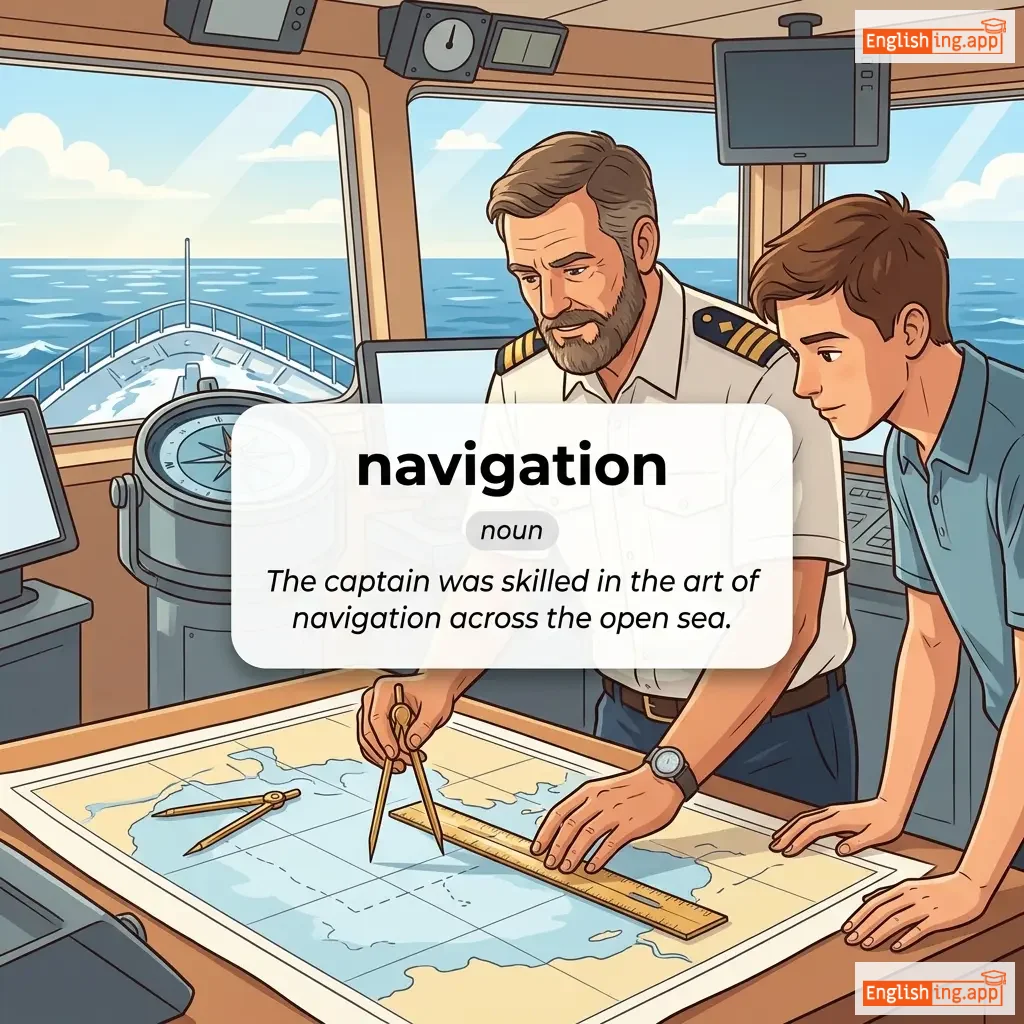
navigation definition card — visual illustration of the meaning
noun
/ˌnævɪˈɡeɪʃən/
навигация (navigatsiya)

the process or activity of accurately determining one's position and planning and following a route

"The captain was skilled in the art of navigation across the open sea."
"Капитан был мастером в искусстве навигации через открытое море." (Kapitan byl masterom v iskusstve navigatsii cherez otkrytoye more.)
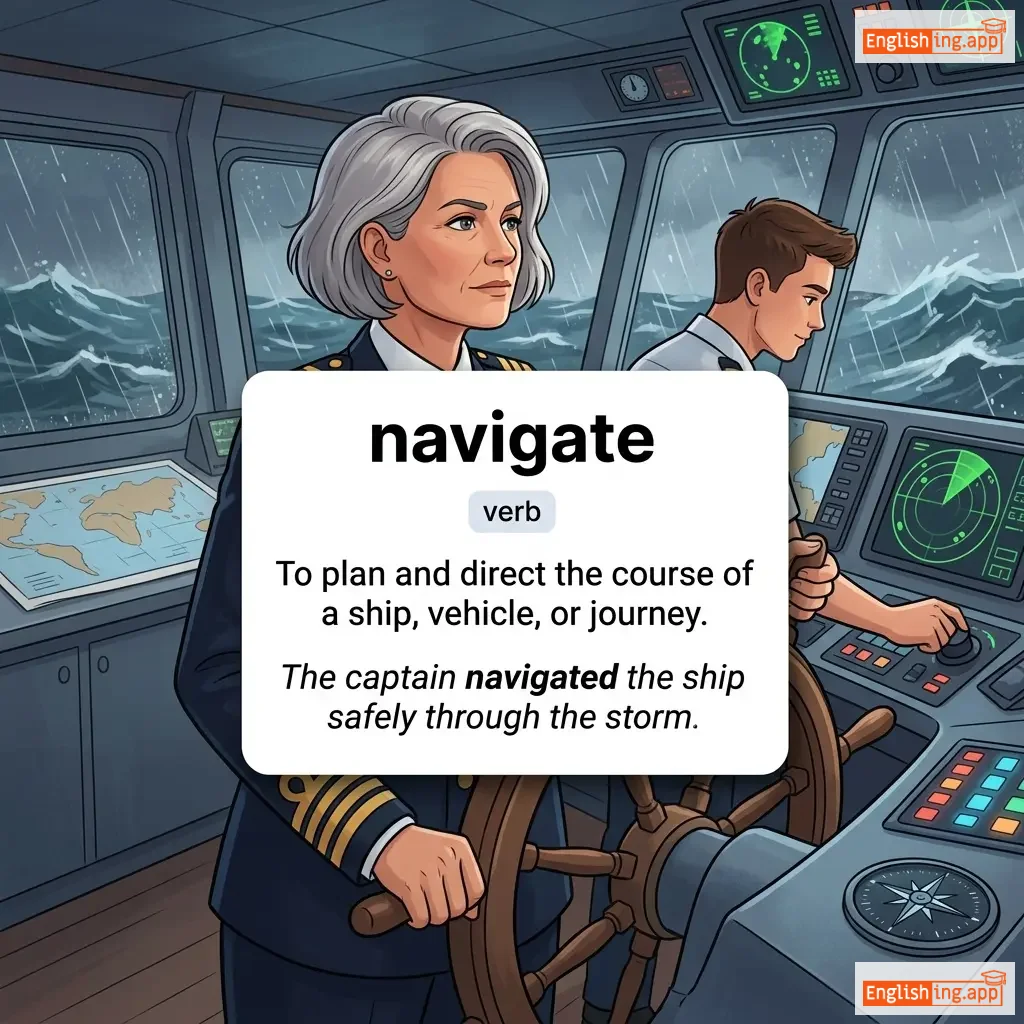
navigate definition card — visual illustration of the meaning
verb
/ˈnæv.ɪ.ɡeɪt/

To plan and direct the course of a ship, vehicle, or journey.

"The captain navigated the ship safely through the storm."

adjective
/ˈnæv.ɪ.ɡə.bəl/
плавучий (plavuchiy)

Able to be sailed on or through by ships or boats.

"The river is navigable for large cargo ships."

"Река пригодна для больших грузовых судов." (Reka prigodna dlya bol'shikh gruzovikh sudov.)
👶

Navel

noun
/ˈneɪvəl/

the small hollow or raised area in the middle of the stomach, also called the belly button

"The baby’s navel was carefully cleaned after birth."

noun
/neɪv/
главный неф церкви (glavny nef tserkvi)

the central part of a church building intended to accommodate the congregation

"The choir sang beautifully in the church nave."
"Хор прекрасно пел в нефе церкви." (Khor prekrasno pel v nefe tserkvi.)
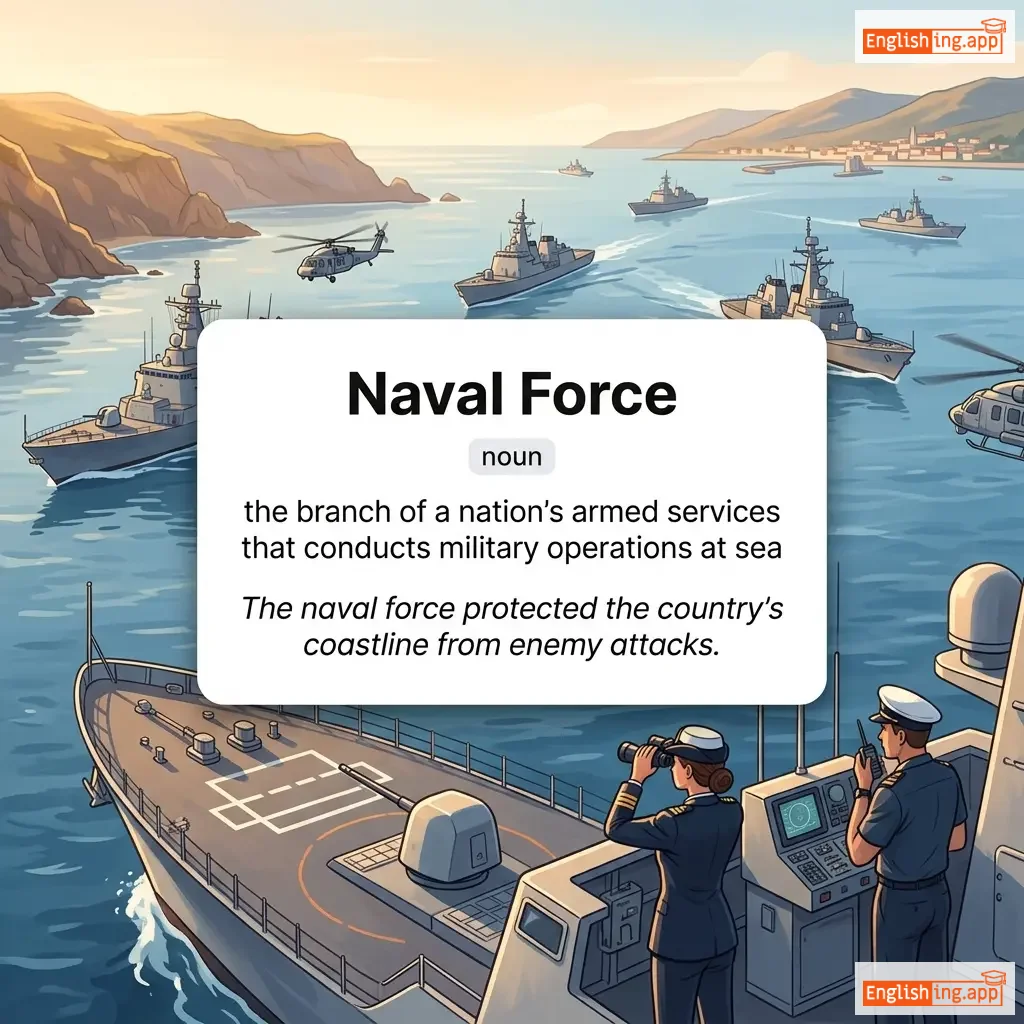
Naval Force definition card — visual illustration of the meaning
noun
/ˈneɪ.vəl fɔːrs/
военно-морские силы (voenno-morskie sily)

the branch of a nation's armed services that conducts military operations at sea

"The naval force protected the country's coastline from enemy attacks."

"Военно-морские силы защитили побережье страны от вражеских атак" (Voyenno-morskie sily zashchitili poberezhe strany ot vrazheskikh atak)
adjective
/ˈneɪvəl/
морской (morskoy)

relating to a country's navy or military ships

"The country invested heavily in naval defense."

"Страна сделала большие инвестиции в морскую оборону." (Strana sdelala bol'shie investitsii v morskuyu oboronu.)
adjective
/ˈnɔːtɪkəl/
морской (morskoy)

relating to ships, sailors, or navigation on water

"He studied nautical charts before setting sail."

"Он изучал морские карты перед тем, как отплыть." (On izuchal morskie karty pered tem, kak otplyt'.)
adjective
/ˈnɔːʃəs/
ощущать тошноту (oshchushchat toshnotu)

feeling like you are about to vomit; causing a feeling of sickness

"The smell of rotten food made her feel nauseous."

"Запах гниющей пищи заставил её почувствовать тошноту." (Zapakh gniyushchey pishchi zastavil yeye pochuvstvovat' toshnotu.)
verb
/ˈnɔːzieɪt/
вызывать тошноту (vyzyvat toshnotu)

To make someone feel sick, with an inclination to vomit.

"The spoiled food nauseated him quickly."

"Порченая еда быстро вызвала у него тошноту." (Porchenaya yeda bystro vyzvala u nego toshnotu.)
noun
/ˈnɔːziə/
тошнота (toshnota)

A feeling of sickness with an inclination to vomit.

"The strong smell of paint gave her a sudden nausea."

"Резкий запах краски вызвал у неё внезапную тошноту." (Rezkij zapah kraski vyzval u neyo vnezapnuyu toshnotu.)
adjective
/ˈnɔːti/
озорной (ozornoy)

Disobedient or mischievous, often in a playful or mildly bad way.

"The naughty child drew on the walls with crayons."

"Озорной ребенок рисовал на стенах мелками." (Ozornoy rebenok risoval na stenakh melkami.)
Nature Enthusiasts definition card — visual illustration of the meaning
noun
ˈneɪʧər ɪnˈθjuːziæsts
энтузиасты природы (entuziasty prirody)

People who have a passionate interest in and love for the natural world and outdoor activities.

"Nature enthusiasts often visit Sajek Valley for its scenic beauty."
"Энтузиасты природы часто посещают долину Саджек из-за ее живописной красоты." (Entuziasty prirody chasto poseshaют dolinu Sadjek iz-za ee zhivopisnoy krasoty.)
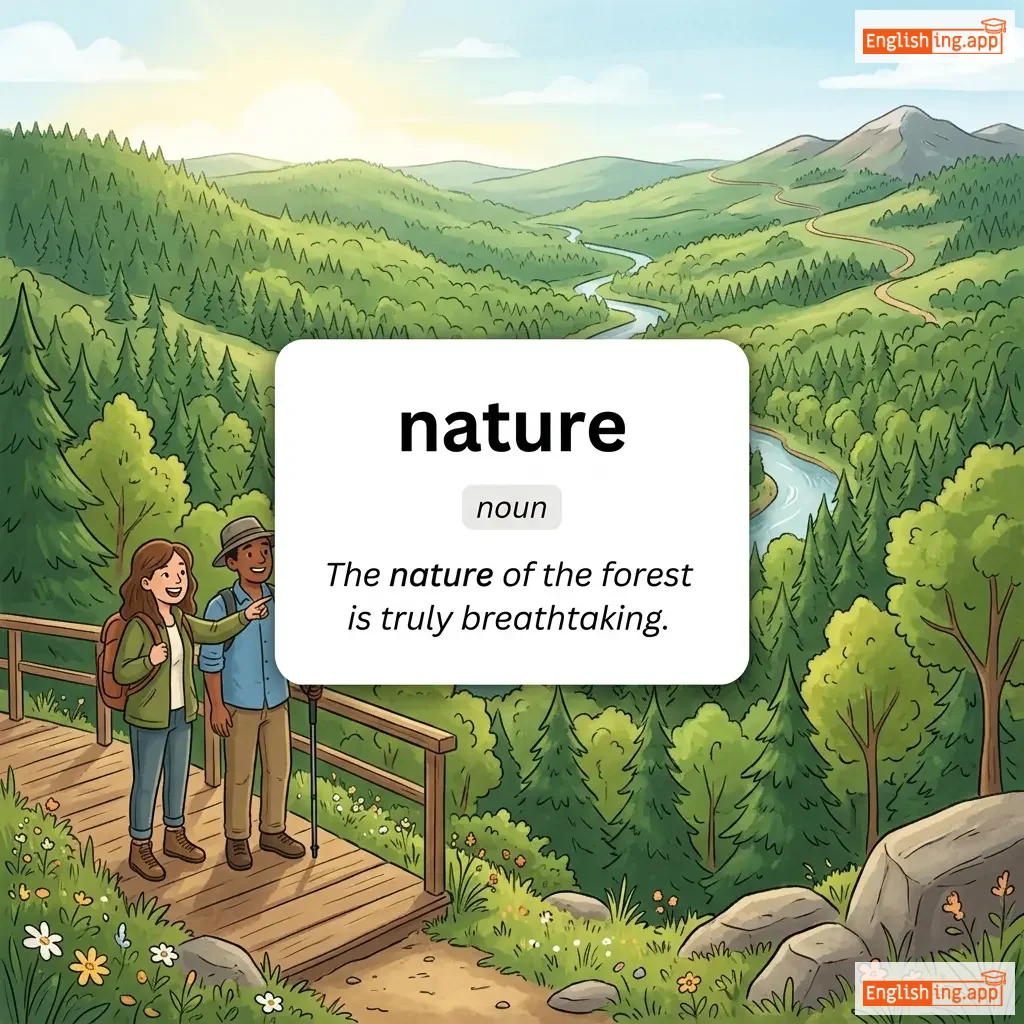
nature definition card — visual illustration of the meaning
noun
/ˈneɪtʃər/
природа (priroda)

the physical world and everything in it, including plants, animals, and the landscape

"The nature of the forest is truly breathtaking."

"Природа леса действительно захватывающая." (Priroda lesa deystvitel'no zakhvatyvayushchaya.)
adverb
/ˈnætʃrəli/
естественно (yestestvenno)

In a way that is normal, expected, or without effort.

"He spoke so naturally that everyone felt comfortable."
"Он говорил так естественно, что все чувствовали себя комфортно." (On govoril tak yestestvenno, chto vse chuvstvovali sebya komfortno.)
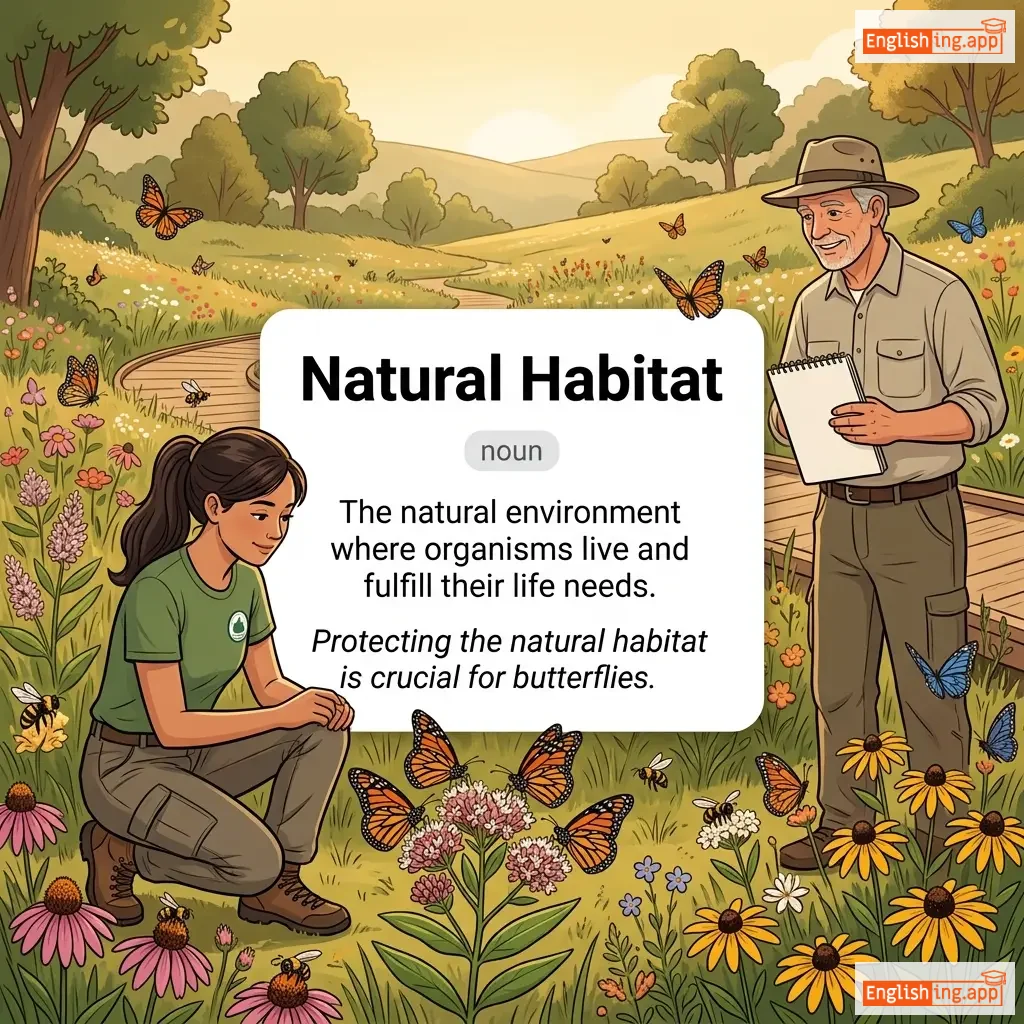
Natural Habitat definition card — visual illustration of the meaning
noun
ˈnætʃərəl ˈhæbɪtæt
естественная среда обитания (yestestvennaya sreda obitaniya)

The natural environment where organisms live and fulfill their life needs.

"Protecting the natural habitat is crucial for butterflies."

"Защита естественной среды обитания критически важна для бабочек." (Zashchita yestestvennoy sredy obitaniya kriticheski vazhna dlya babocek.)
noun
/ˈnætʃərəl dɪˈzæstər/
стихийное бедствие (stikhiynoye bedstviye)

a catastrophic event caused by natural processes of the Earth that results in significant damage, destruction, or loss of life

"The coastal town was devastated by a natural disaster."

"Прибрежный город был разрушен стихийным бедствием." (pribrezhnye gorod byl razrushen stikhiynym bedstviem)
adjective
/ˈnætʃərəl/
натуральный (natural'nyy)

existing in or derived from nature; not made or caused by humankind

"She prefers to use natural ingredients in her cooking."

"Она предпочитает использовать натуральные ингредиенты в своей кухне." (Ona predpochitayet ispol'zovat' natural'nye ingredienty v svoey kukhne.)
adjective
/ˈnæti/
стильный (stil'nyy)

Neat, stylish, and fashionable in appearance.

"He looked very natty in his new suit."

"Он выглядел очень стильным в своем новом костюме." (On vyglyadel ochen' stil'nym v svoem novom kostyume.)
adjective
/ˈneɪtɪv/
местный (mestnyy)

Belonging to a person by birth; originating in a particular place.

"He is a native speaker of Bengali."

"Он носитель бенгальского языка." (On nositel bengalskogo yazyka.)
noun
/mjuːˈteɪʃn/
мутация, генетическое изменение (mutaciya, geneticheskoe izmenenie)

A change in form, structure, or nature, especially in genetics.

"Scientists discovered a genetic mutation that caused the disorder."

"Учёные обнаружили генетическую мутацию, которая вызвала расстройство." (Uchyonye obnaruzhili geneticheskuyu mutaciyu, kotoraya vyzvala rasstroystvo.)
verb
/mʌst/
должен (dolzhen)

to be required or obligated to

"You must complete your homework before you go out."
"Ты должен закончить домашку, прежде чем выйти." (Ty dolzhen zakonchit' domashku, prezhde chem vyiti.)
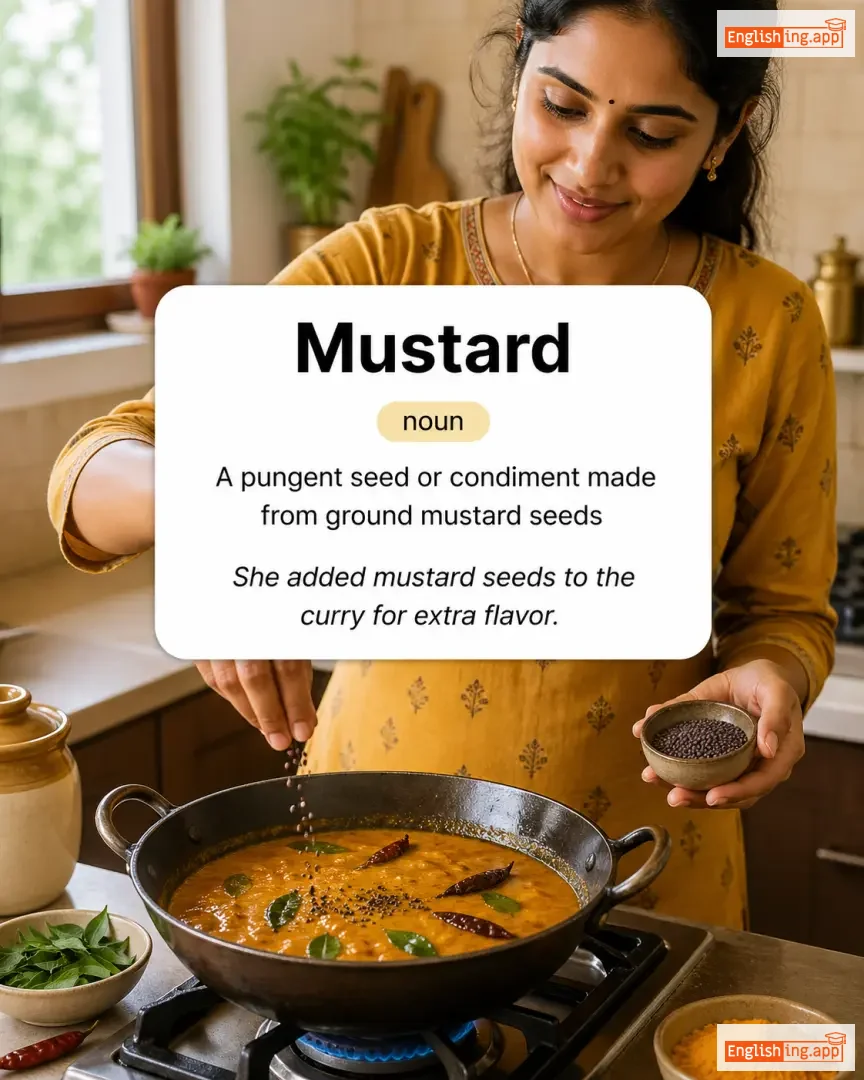
Mustard definition card — visual illustration of the meaning
noun
/ˈmʌs.tərd/
горчица (gorchitsa)

A pungent seed or condiment made from ground mustard seeds

"She added mustard seeds to the curry for extra flavor."
"Она добавила семена горчицы в карри, чтобы добавить больше вкуса." (ona dobavila semena gorchitsy v karri, chtoby dobavit' bolshe vkus.)
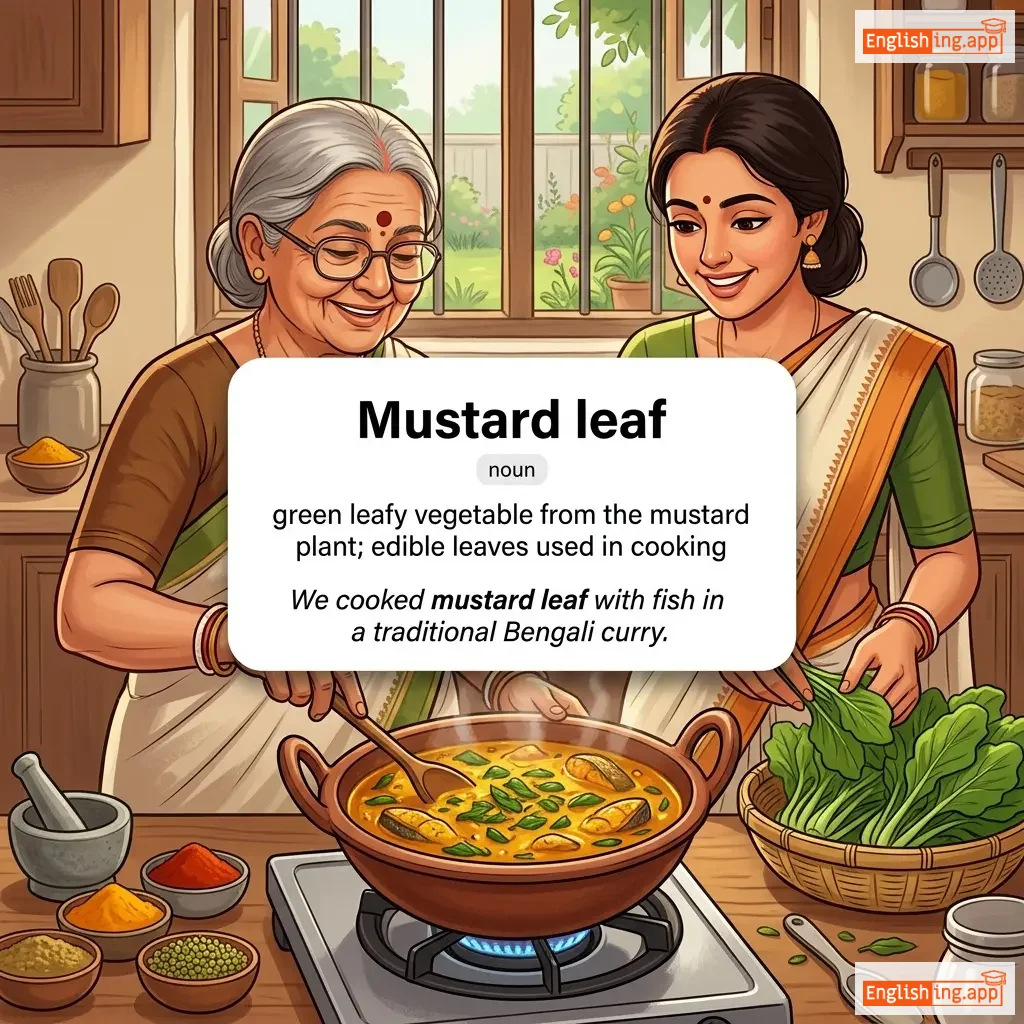
Mustard leaf definition card — visual illustration of the meaning
noun
/ˈmʌs.tərd liːf/
листья горчицы (listya gorchitsy)

green leafy vegetable from the mustard plant; edible leaves used in cooking

"We cooked mustard leaf with fish in a traditional Bengali curry."

"Мы готовили листья горчицы с рыбой в традиционном бенгальском карри." (My gotovili list'ya gorchitsy s ryboy v traditsionnom bengalskom karri.)
Mustard Oil definition card — visual illustration of the meaning
noun
/ˈmʌstərd ɔɪl/
горчичное масло (gorchichnoye maslo)

oil extracted from mustard seeds, commonly used for cooking and medicinal purposes

"We use mustard oil for cooking vegetables in our kitchen."
"Мы используем горчичное масло для приготовления овощей на нашей кухне." (My ispol'zuyem gorchichnoye maslo dlya prigotovleniya ovoshchey na nashey kukhne.)
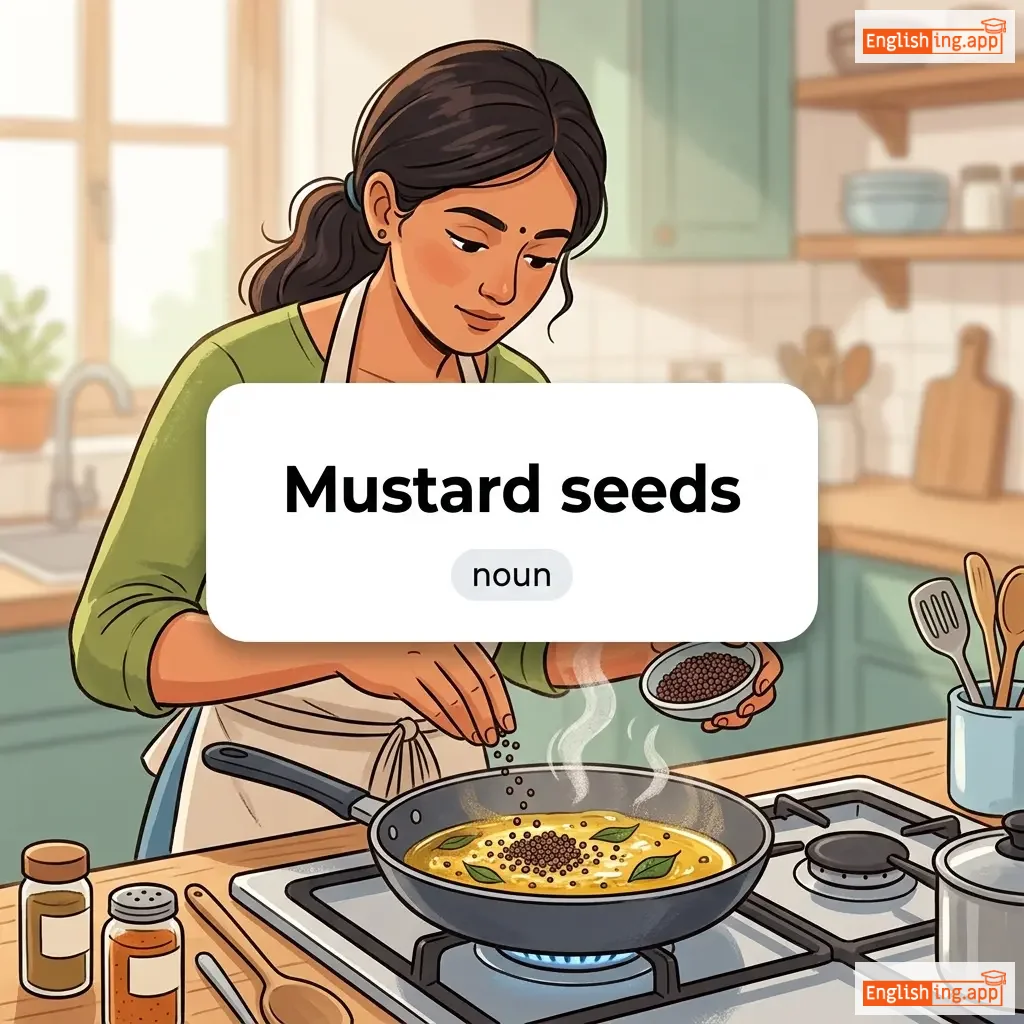
Mustard seeds definition card — visual illustration of the meaning
noun
/ˈmʌs.tərd siːdz/
горчичные семена (gorchichnye semena)

small round seeds from the mustard plant, used as a spice and for making mustard condiment

"Mustard seeds are often tempered in hot oil to release their nutty flavor before adding to dishes."

"Семена горчицы часто обжариваются в горячем масле, чтобы раскрыть их ореховый вкус перед добавлением в блюда." (Semena gorchitsy chasto obzhariyvayutsya v goryachem masle, chtoby raskryt' ikh orekhovyy vkus pered dobavleniem v blyuda.)
verb, noun
/ˈmʌstər/
собирать / собирать мужество (sobirat / sobirat muzhectvo)

to gather people, especially soldiers; to summon courage or strength

"He mustered enough courage to face the challenge."

"Он собрал достаточно мужества, чтобы встретиться с вызовом." (On sobral dostatochno muzhestva, chtoby vstrechatsya s vyzovom.)
adjective
/ˈmʌsti/
заплесневелый, сырой или с запахом влаги (zaplesnevelyy, syroy ili s zapakhom vlagi)

having a stale, moldy, or damp smell

"The old books had a musty odor."

"Старые книги имели затхлый запах." (Staryye knigi imeli zatkhy zapakh.)
noun
/ˌmjuːtəˈbɪləti/
изменчивость (izmenchivost)

The quality of being changeable or capable of change.

"The mutability of fashion trends makes it hard to keep up."

"Изменчивость модных трендов усложняет следить за ними." (Izmenchivost modnykh trendov uslozhnyayet slezhit' za nimi.)
adjective
/ˈmjuːtəbl/
изменчивый (izmenchivyy)

Capable of change or alteration.

"Human emotions are mutable and can shift rapidly."

"Человеческие эмоции изменчивы и могут быстро меняться." (Chelovekskie emotsii izmenchivy i mogut bystro menyat'sya.)
noun
/ˌmjuːtəˈbɪləti/
мутабилинити (ошибка в написании) (mutabiliti (oshivka v napisanij))

A misspelled form of 'mutability', meaning the quality of being changeable.

"The document contained the misspelled word 'mutablility' instead of 'mutability'."

"Документ содержал слово с ошибкой 'mutablility' вместо 'mutability'." (Dokument soderzhal slovo s oshibkoy 'mutablility' vmesto 'mutability'.)
verb
/ˈmjuːteɪt/
мутировать (mutirovat')

To change or cause to change in form, nature, or character.

"The virus can mutate into a more dangerous strain."

"Вирус может мутировать в более опасный штамм." (Virus mozhet mutirovat' v bolee opasnyy shtamm.)
verb
/ˈmʌtər/
бормотать (bormotat)

to speak in a low or barely audible voice, often in dissatisfaction or irritation

"He muttered something under his breath as he walked away."

"Он пробормотал что-то под нос, когда уходил." (On probormotal chto-to pod nos, kogda ukhodyl.)
adjective
/maɪˈɑːpɪk/
миопия, ограниченное зрение (miopiya, ogranichennoe zrenie)

lacking foresight or long-term perspective; also refers to nearsightedness

"The company’s myopic strategy led to long-term losses."
"Миопическая стратегия компании привела к долгосрочным потерям." (Miopicheskaya strategiya kompanii privela k dolgrosrochnym poteryam.)
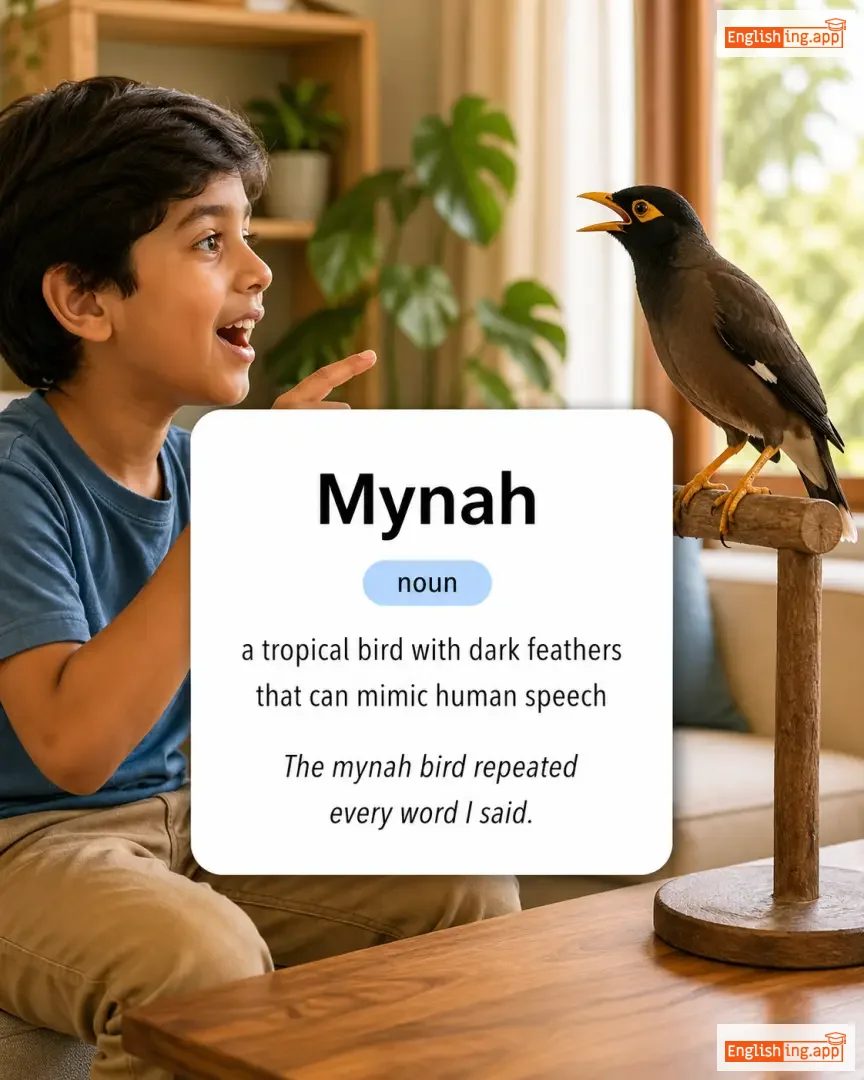
Mynah definition card — visual illustration of the meaning
noun
/ˈmaɪ.nə/
майна (mayna)

a tropical bird with dark feathers that can mimic human speech

"The mynah bird repeated every word I said."

"Птица майна повторила каждое слово, которое я сказал." (Ptitsa mayna povtorila kazhdoe slovo, kotoroe ya skazal.)
pronoun
/maɪ/
мой (moy)

used to indicate possession or ownership

"This is my book."

"Это моя книга." (Eto moya kniga.)
adjective
/ˈmjuːtʃuəl/
взаимный (vzaimnyy)

felt, shared, or done by two or more people equally

"They have mutual respect for each other."
"У них взаимное уважение друг к другу." (U nikh vzaimnoye uvazheniye drug k drugu.)
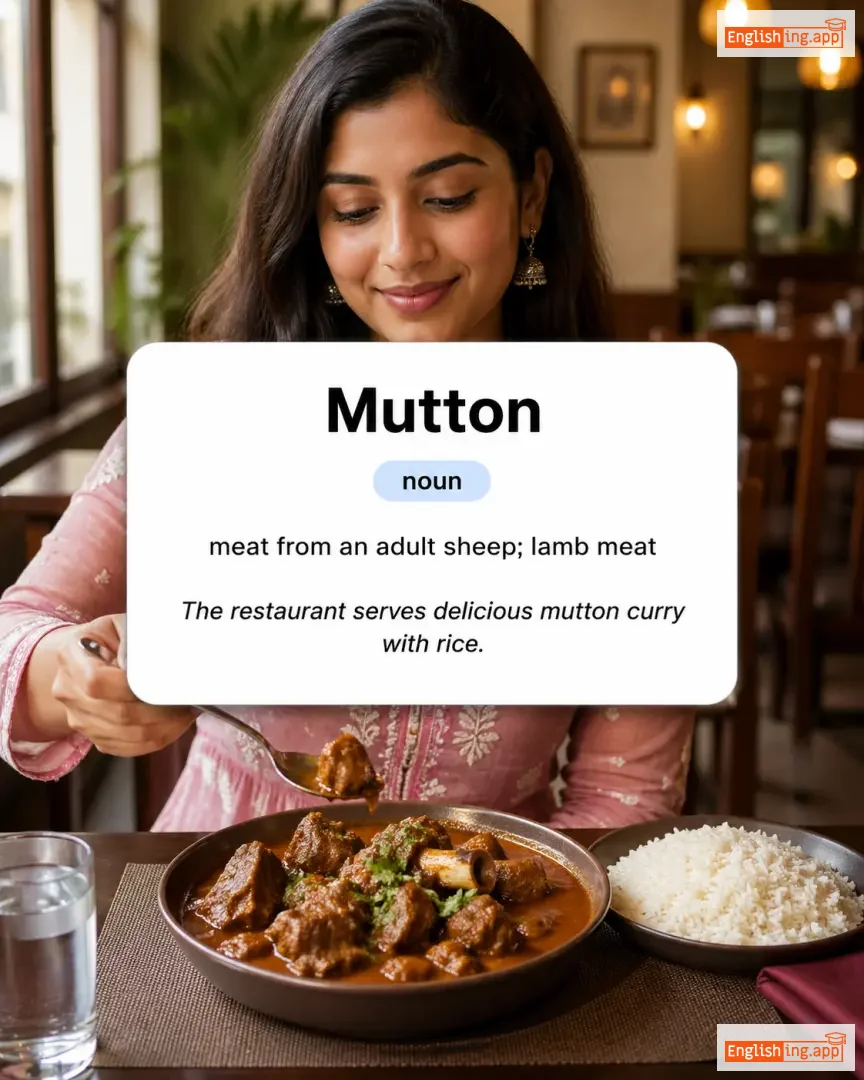
Mutton definition card — visual illustration of the meaning
noun
/ˈmʌtn/
мясо барашка (myaso barashka)

meat from an adult sheep; lamb meat

"The restaurant serves delicious mutton curry with rice."

"Ресторан подает вкусное карри из мяса барашка с рисом." (Restoran podayet vkusnoye karri iz myasa barashka s risom.)
verb
/ˈmjuːtɪleɪt/
искорёжить (iskoryezhit)

to inflict serious damage on something, often by cutting or tearing

"The ancient manuscript was mutilated by careless handling."

"Древний манускрипт был изуродован из-за небрежного обращения." (Drevniy manuskript byl izurodovan iz-za nebrezhnogo obrashcheniya.)
adjective
/mjuːt/
немой (nemoy)

silent or unable to speak; not expressed in words

"She remained mute during the entire meeting."

"Она осталась немой на протяжении всей встречи." (Ona ostalas nemoy na protyazhenii vsej vstrechi.)
adjective
/ˈmjuːtɪd/
приглушенный (priglushennyy)

softened in sound, color, or effect; subdued

"The room was painted in muted shades of blue and grey."

"Комната была покрашена в приглушенные оттенки синего и серого." (Komnata byla pokrashena v priglushennye otnetki sinyego i serogo.)
noun
/ˈmʊzlɪm/
мусульманин (musul'manin)

a follower of Islam

"He is a devout Muslim."

"Он верный мусульманин." (On vernyy musul'manin.)