Словари

Словарь английского языка | Значения слов, определения и примеры

noun
/ˈnæfθə/
нафта (nafta)

A flammable oil containing hydrocarbons, obtained from petroleum or coal tar, used as fuel or solvent.

"The factory stored barrels of naphtha for industrial use."

"Фабрика хранила бочки с нафтой для промышленного использования." (Fabrika khranila bochki s naftoy dlya promyshlennogo ispol'zovaniya.)
Nap Kin definition card — visual illustration of the meaning
noun
/ˈnæp.kɪn/
салфетка (salfetka)

a piece of cloth or paper used for wiping the mouth and hands while eating

"She placed the napkin on her lap before starting dinner."

"Она положила салфетку на колени перед тем, как начать ужинать." (Ona polozhila salfetku na koleni pered tem, kak nachat' uzhinat'.)
nanotechnology definition card — visual illustration of the meaning
noun
ˌnæn.oʊ.tekˈnɒl.ə.dʒi
нанотехнология (nanotekhnologiya)

The branch of technology that deals with dimensions and tolerances of less than 100 nanometers.

"Nanotechnology is advancing medical treatments."
"Нанотехнология делает прорывы в медицинских исследованиях." (Nanotekhnologiya delayet proryvy v meditsinskikh issledovaniyakh.)
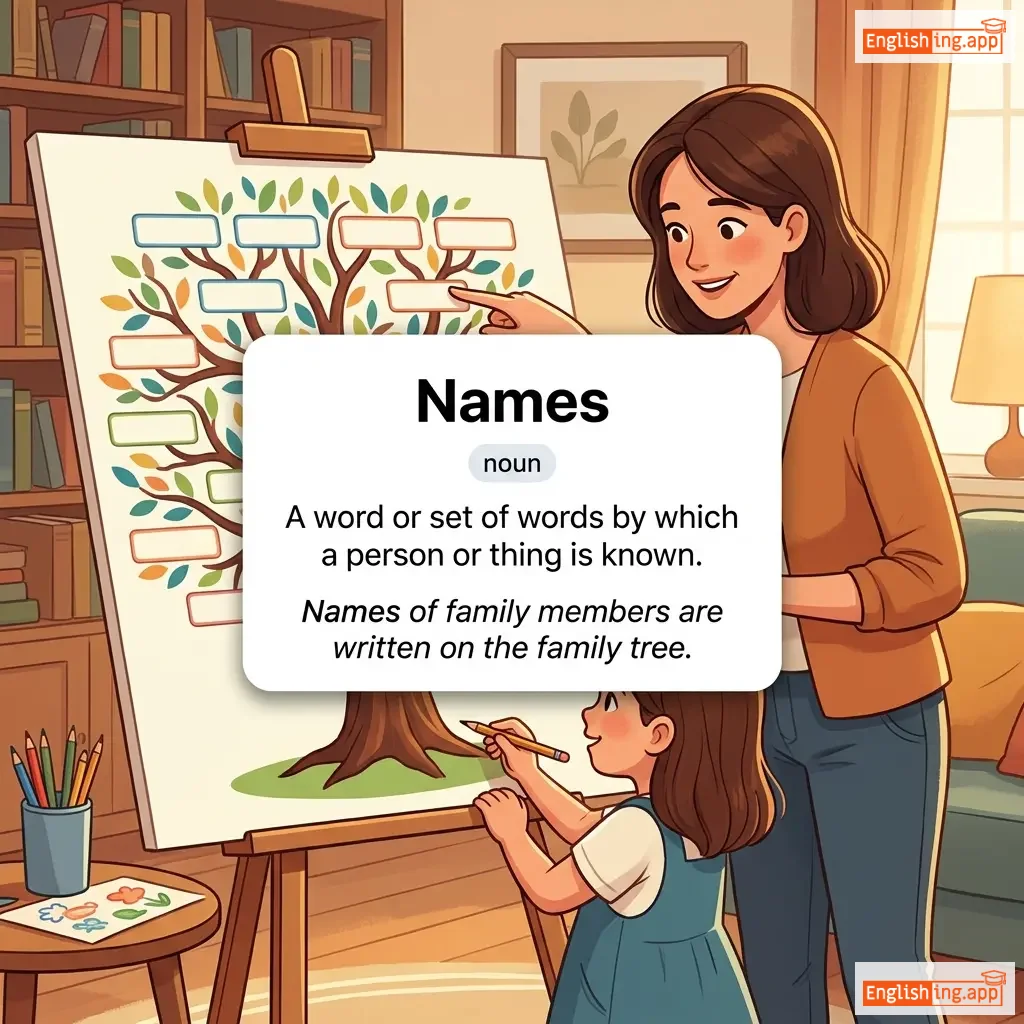
Names definition card — visual illustration of the meaning
noun
neɪmz
имя (imya)

A word or set of words by which a person or thing is known.

"Names of family members are written on the family tree."

"Имена членов семьи написаны на генеалогическом дереве." (Imena chlenov sem'i napisany na genealogicheskom dereve.)
adverb
/ˈneɪmli/
то есть (to yest)

that is to say; to be specific

"The festival will be held in three cities, namely Dhaka, Chittagong, and Sylhet."

"Фестиваль пройдет в трех городах, то есть в Дакке, Читтагонге и Силхете." (Festival proydet v tryokh gorodakh, to yest v Dakke, Chittagonge i Silhete.)
adjective
/ˈneɪmləs/
безымянный (bezymyannyy)

Without a name or not known by name.

"A nameless fear crept over him in the dark room."

"Безымянный страх охватил его в темной комнате." (Bezymyannyy strakh okhvatil ego v temnoy komnate.)
name definition card — visual illustration of the meaning
noun
/neɪm/
имя (imya)

a word by which a person or thing is known or called

"His name is John."

"Его имя Джон." (Ego imya John.)
adjective
/ˈneɪkɪd/
голый (golyy)

not covered by clothing or without protection

"The child was running naked in the yard."

"Ребенок бегал голым во дворе." (Rebenok begal golym vo dvore.)
noun
/naɪˈiːvɪti/
наивность (naivnost)

The quality of being innocent, simple, and lacking experience or sophistication.

"Her naivety made her trust people too easily."

"Её наивность заставила её слишком легко доверять людям." (Eyo naivnost' zastavila yeye slishkom legko doveryat' lyudyam.)
noun
/naɪˈiːvteɪ/
наивность (naivete)

The quality of being naive; lack of experience, wisdom, or judgment.

"His naivete made him an easy target for manipulation."

"Его наивность делала его легкой мишенью для манипуляций." (Yego naivnost delala ego legkoy mishenyu dlya manipulyatsiy)
adjective
/naɪˈiːv/
наивный (naivny)

Lacking experience, wisdom, or judgment; too trusting.

"She was naïve to believe every advertisement she saw."
"Она была наивной, веря каждому объявлению, которое она видела." (Ona byla naivnoy, verya kazhdomu ob'yavleniyu, kotoroye ona videla.)
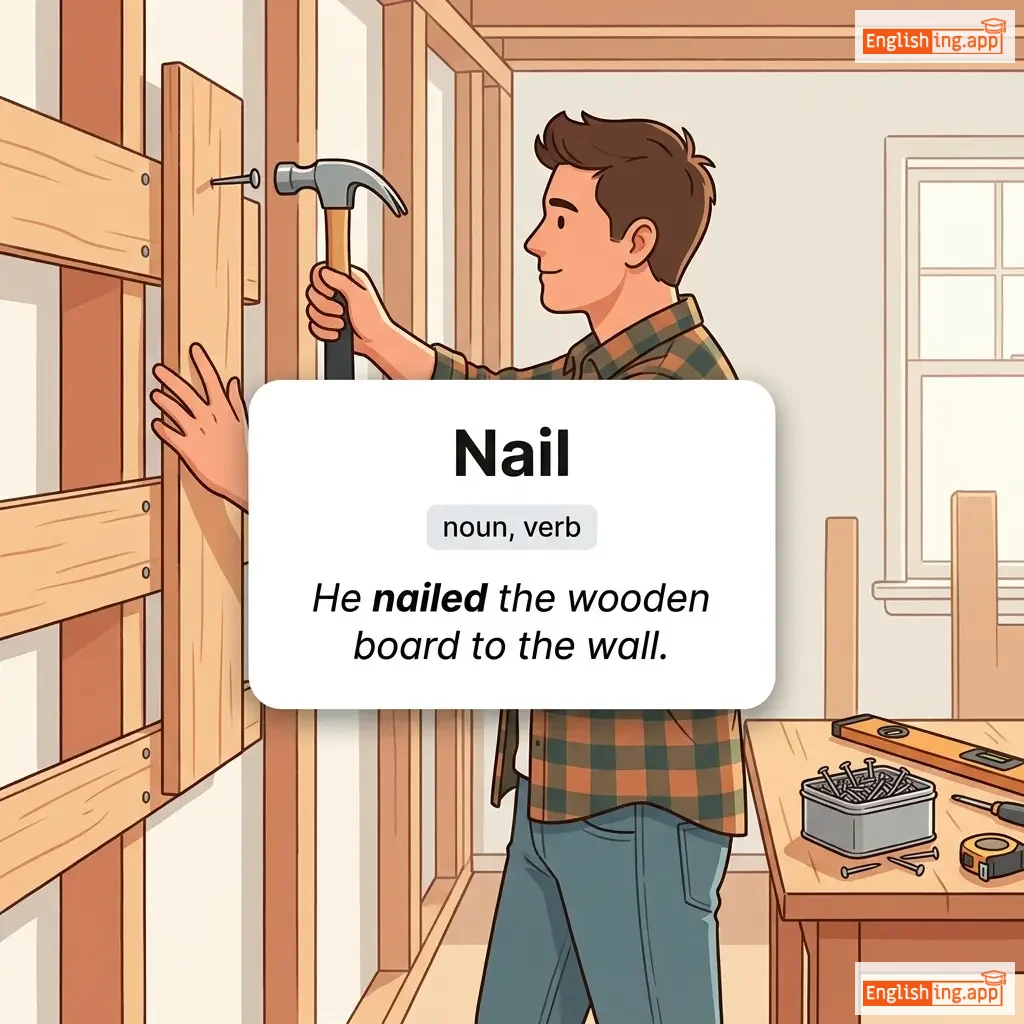
Nail definition card — visual illustration of the meaning
noun, verb
/neɪl/
гвоздь (gvozdy)

a small metal spike driven into wood or other material, or to fasten or fix something with nails

"He nailed the wooden board to the wall."

"Он прибил деревянную доску к стене." (On pribyl derevyannuyu dosku k stene.)
⬇️

nadir

noun
/ˈneɪdɪər/

The lowest point of a situation or condition.

"The company reached its nadir during the financial crisis."

noun
/mɪˈθɒlədʒi/
мифология (mifologiya)

A collection of myths, especially belonging to a particular culture or religion.

"Greek mythology is filled with stories of gods and heroes."

"Греческая мифология полна историй о богах и героях." (Grecheskaya mifologiya polna istoriy o bogakh i geroyakh)
adjective
/ˈmɪθɪkəl/
мифический (mificheskiy)

existing only in myths or legends; imaginary or fictitious

"Dragons are mythical creatures that appear in many cultures."

"Драконы — мифические существа, которые появляются в разных культурах." (Drakony — mificheskiye suschestva, kotoryye poyavlyayutsya v raznykh kul'turakh.)
noun
/mɪθ/
миф (mif)

A traditional story explaining natural or social phenomena, often involving supernatural beings; a widely held but false belief.

"The myth of the phoenix tells of a bird reborn from its ashes."

"Миф о фениксе рассказывает о птице, рожденной заново из своих пепелищ." (Mif o fenikse rasskazyvayet o ptitse, rozhdennoy zanovo iz svoikh pepelishch.)
noun
/ˌmɪstɪfɪˈkeɪʃən/
мистификация, замешательство (mistifikatsiya, zameshatel'stvo)

the act of making something unclear or confusing; a state of being puzzled or bewildered

"The audience watched in mystification as the magician performed his tricks."

"Зрители смотрели в недоумении, пока маг не показывал свои фокусы." (Zriteli smotreli v nedoumiyeniye, poka mag ne pokazyval svoi fokusi.)
noun/adjective
/ˈmɪstɪk/
мистический, духовный искатель (misticheskiy, duhovnyy iskatel')

relating to mysteries, spirituality, or hidden truths; a person who seeks spiritual insight

"The mystic devoted his life to meditation and spiritual discovery."
"Мистик посвятил свою жизнь медитации и духовному открытию." (Mistik posvyatil svoyu zhizn' meditacii i dukhovnomu otkrytiyu.)
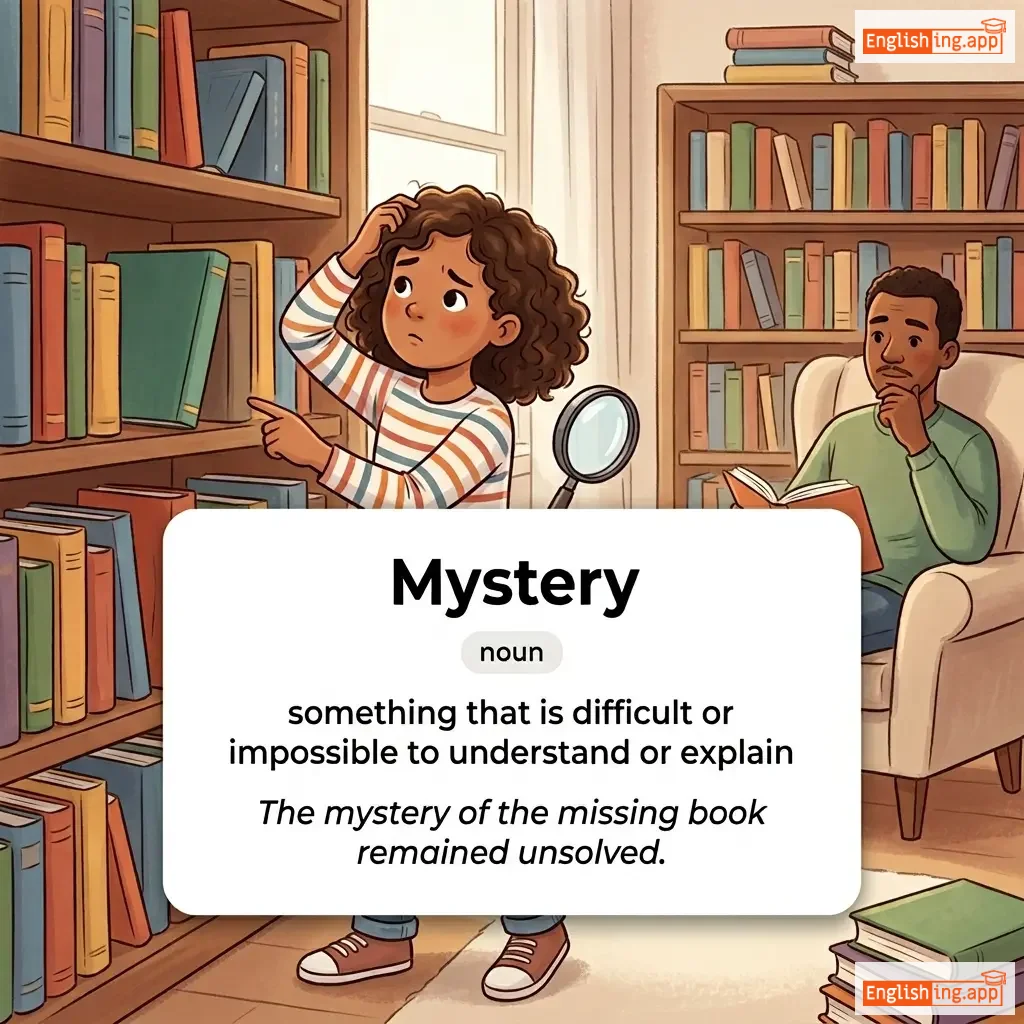
Mystery definition card — visual illustration of the meaning
noun
/ˈmɪstəri/
тайна (tayna)

something that is difficult or impossible to understand or explain

"The mystery of the missing book remained unsolved."
"Тайна исчезнувшей книги осталась нерешенной." (Tayna ischeznovshey knigi ostalas' nereshennoy.)
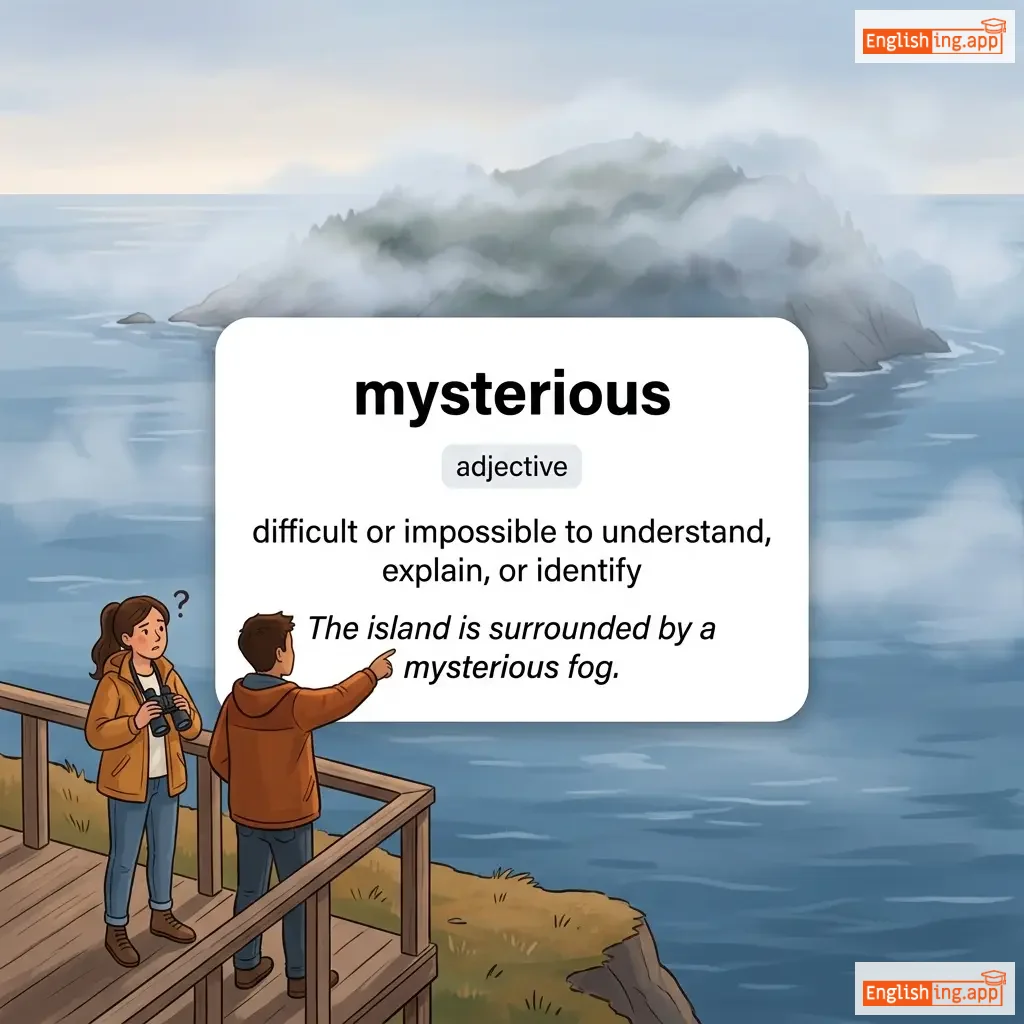
mysterious definition card — visual illustration of the meaning
adjective
/mɪˈstɪəriəs/
загадочный (zagadocny)

difficult or impossible to understand, explain, or identify

"The island is surrounded by a mysterious fog."

"Остров окружен загадочным туманом." (Ostrov okruzhen zagadochnym tumanom.)
narcissism definition card — visual illustration of the meaning
noun
/ˈnɑːrsɪsɪzəm/
нарциссизм (nartsissizm)

Excessive interest in or admiration of oneself.

"His constant selfies were a sign of his narcissism."

"Его постоянные селфи были признаком его нарциссизма." (Yego postoyannyye selfi byli priznakom yego nartsissizma.)
adjective
/ˈmɛtrɪkəl/
метрический (metricheskiy)

Relating to or composed in a regular rhythmic pattern of beats or meter, especially in poetry.

"The poet carefully followed metrical rules in his verses."

"Поэт тщательно следовал метрическим правилам в своих стихах." (Poet tchatel'no sledoval metricheskim pravilam v svoikh stikhakh.)
adjective
/ˈmɛtrɪk/
метрический (metricheskiy)

Relating to the metric system of measurement; also, a standard of measurement used to assess performance.

"The company tracks success using clear performance metrics."

"Компания отслеживает успех, используя четкие показатели производительности." (Kompaniya otslezhivayet uspek, ispol'zuyya chetkie pokazateli proizvoditel'nosti.)
noun
/mɪˈtɒnɪmi/
метонимия (metonimiya)

A figure of speech in which one word or phrase is substituted with another closely related word or concept.

"In the phrase 'the crown will decide,' 'crown' is a metonymy for monarchy."
"В фразе 'корона решит' 'корона' является метонимией для монархии." (V fraze 'korona reshit' 'korona' yavlyayetsya metonimiyey dlya monarkhii.)
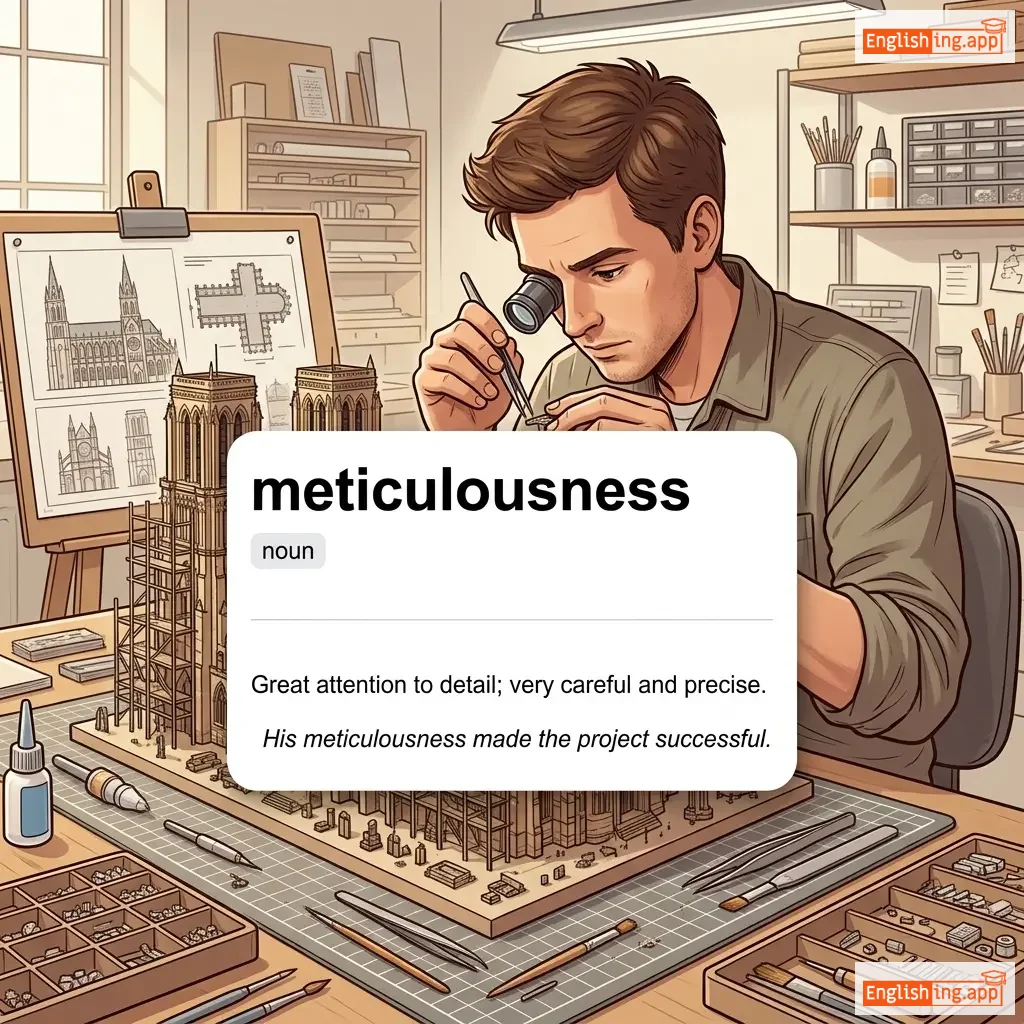
meticulousness definition card — visual illustration of the meaning
noun
mɪˈtɪkjʊləsnɪs
внимание к деталям (vnimanie k detalyam)

Great attention to detail; very careful and precise.

"His meticulousness made the project successful."

"Его метикулизм сделал проект успешным." (Ego metikulizm sdelal proyekt uspeshnym.)
meticulous definition card — visual illustration of the meaning
adjective
/məˈtɪkjʊləs/
тщательный (tshchatel'nyy)

Showing great attention to detail; very careful and precise.

"The artist was meticulous in painting every tiny detail."

"Художник был тщателен в рисовании каждого маленького детали." (Khodzhik byl tshchatelen v risovanii kazhdogo malen'kogo detali.)
noun
/ˌmɛθəˈdɑlədʒi/
методология (metodologiya)

A system of methods used in a particular area of study or activity.

"The research was conducted using a new methodology."
"Исследование было проведено с использованием новой методологии." (Issledovanie bylo provedeno s ispol'zovaniem novoy metodologii.)
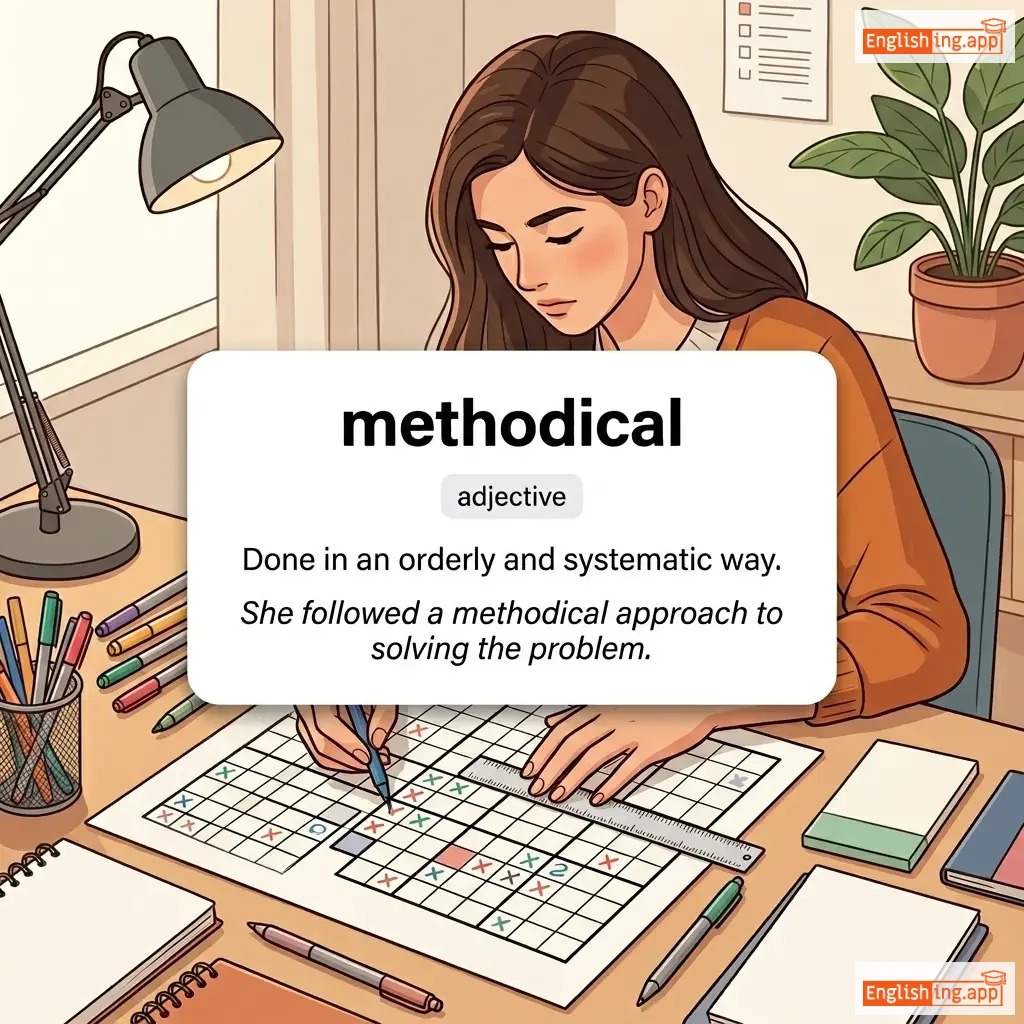
methodical definition card — visual illustration of the meaning
adjective
/məˈθɒdɪkəl/
методичный (metodichnyy)

Done in an orderly and systematic way.

"She followed a methodical approach to solving the problem."

"Она использовала методичный подход для решения проблемы." (Ona ispol'zovala metodichnyy podkhod dlya resheniya problemy.)
noun
/ˈmɛθəd/
метод (metod)

A particular way or process of doing something.

"She explained the method of solving the problem."

"Она объяснила метод решения проблемы." (Ona ob'yasnila metod resheniya problemy.)
noun
/ˈmiːtər/
метр (metr)

A unit of length in the metric system equal to 100 centimeters; also, a device that measures quantity such as electricity or gas.

"The technician came to check the electricity meter."

"Техник пришел проверять электрический счетчик." (Tekhnik prishyol proveryat' elektricheskiy schetchik.)
noun
/ˌmiːtiəˈrɒlədʒi/
метеорология (meteorologiya)

The scientific study of the atmosphere and weather.

"He chose to specialize in meteorology to study weather patterns."
"Он выбрал специализацию по метеорологии, чтобы изучать погодные модели." (On vybral spetsializatsiyu po meteorologii, chtoby izuchat' pogodnye modeli.)
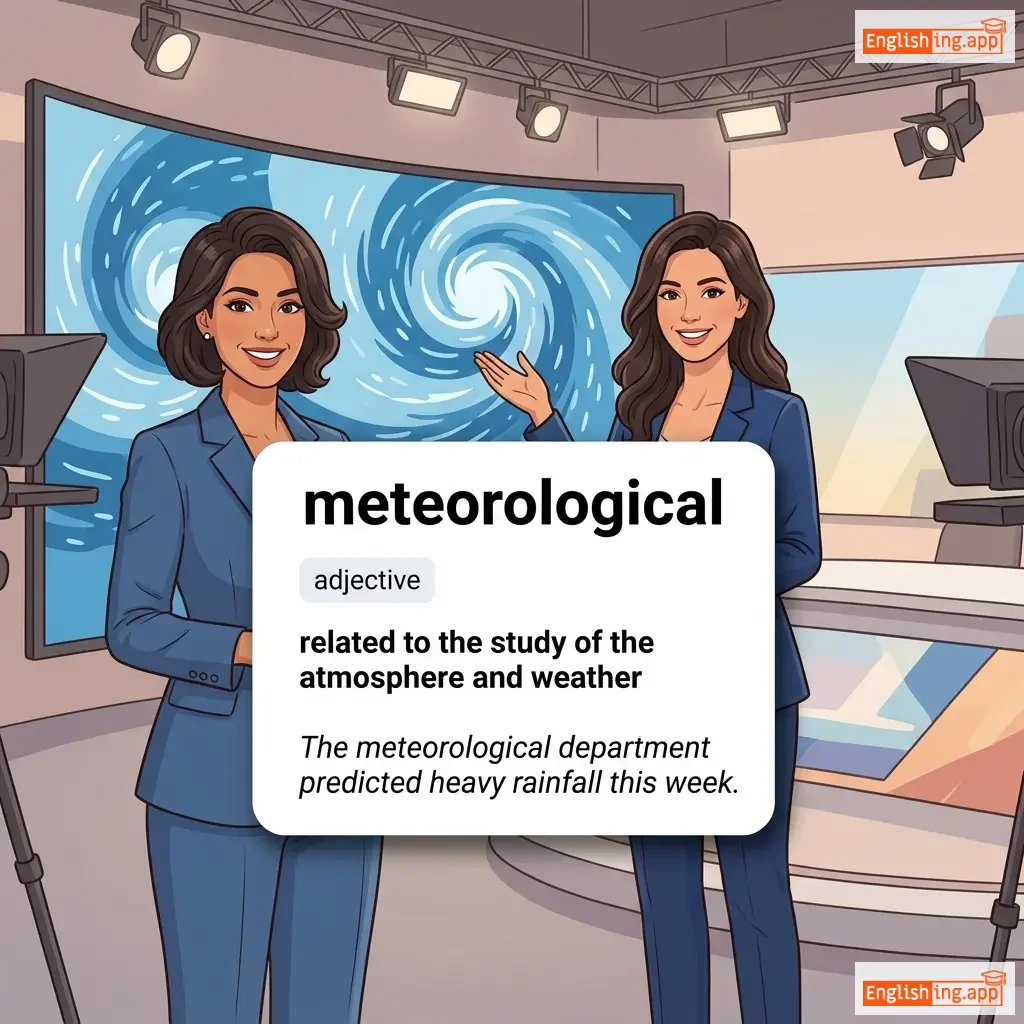
meteorological definition card — visual illustration of the meaning
adjective
/ˌmiː.ti.ə.rəˈlɒ.dʒɪ.kəl/
метеорологический (meteorologicheskiy)

related to the study of the atmosphere and weather

"The meteorological department predicted heavy rainfall this week."

"Метеорологический департамент предсказал сильные дожди на этой неделе." (Meteorologicheskiy departament predskazal silnye dozhdi na etoy nedele.)
adjective
/ˌmiːtiˈɔːrɪk/
связанный с метеорами; очень быстрый и часто временный. (svyazannyy s meteoramiy; ochen' bystryy i chasto vremennyy.)

Relating to meteors; very rapid and often temporary.

"The singer’s meteoric rise to fame surprised everyone."

"Метеорический подъём певца к славе удивил всех." (Meteoricheskiy pod'yem pevtsa k slave udivil vsekh.)
noun
/ˌmɛtəmˌsaɪˈkoʊsɪs/
переселение души (pereselenie dushi)

The supposed transmigration of the soul, especially its reincarnation after death.

"Ancient philosophers often debated the idea of metempsychosis."

"Древние философы часто обсуждали переселение души." (Drevnie filosofy chasto obsuzhdali pereselenie dushi.)
verb
/miːt/
назначать (naznachat)

To dispense or allot justice, punishment, or harsh treatment.

"The judge will mete out punishment according to the crime."
"Судья назначит наказание в соответствии с преступлением." (Sudya naznachit nakazanie v sootvetstvii s prestupleniem.)
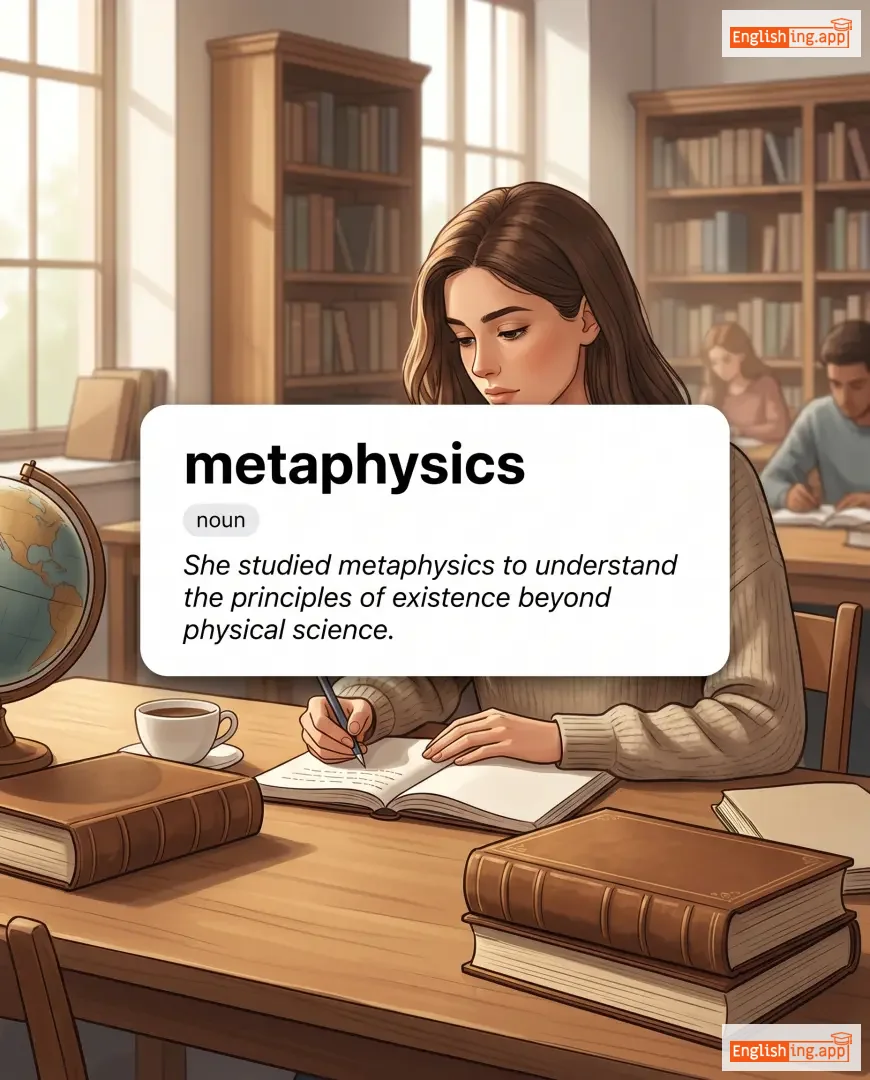
metaphysics definition card — visual illustration of the meaning
noun
/ˌmɛtəˈfɪzɪks/
метафизика (metafizika)

The branch of philosophy that deals with the fundamental nature of reality, existence, and the relationship between mind and matter.

"She studied metaphysics to understand the principles of existence beyond physical science."

"Она изучала метафизику, чтобы понять принципы существования, выходящие за пределы физической науки." (Ona izuchala metafiziku, chtoby ponyat' printsipy sushchestvovaniya, vykhodyashchie za predely fizicheskoy nauki.)
noun
/ˌmɛtəfɪˈzɪʃən/
метафизик (metafizik)

A person who studies or is an expert in metaphysics.

"The metaphysician debated the essence of reality with his peers."

"Метафизик обсуждал сущность реальности с коллегами." (Metafizik obshchuzhdal sushchnost' real'nosti s kollegami.)
adjective
/ˌmɛtəˈfɪzɪkəl/
метафизический (metafizicheskiy)

Relating to the branch of philosophy that deals with the fundamental nature of reality and existence.

"He spent years studying metaphysical questions about life and being."

"Он провел годы, изучая метафизические вопросы о жизни и бытии." (On provel gody, izuchaya metafizicheskie voprosy o zhizni i bytiy.)
noun
/ˈmɛtəfɔːrm/
форма метафоры (forma metafory)

A coined or rare term sometimes used to describe a hybrid form of metaphor and form in literature or art.

"The poet introduced a metaphorm to blend imagery with structure."

"Поэт представил метаформу, чтобы соединить образы с конструкцией." (Poet predstavil metaformu, chtoby soedinit' obrazy s konstrukciey.)
adjective
/ˌmɛtəˈfɔːrɪkəl/
метафорический (metaforicheskiy)

Characteristic of or relating to metaphor; figurative rather than literal.

"He used metaphorical language to describe his emotions."

"Он использовал метафорический язык, чтобы описать свои эмоции." (On ispol'zoval metaforicheskiy yazyk, chtoby opisat' svoi emotsii.)
noun
/ˈmɛtəfɔːr/
счастье (schastye)

A figure of speech in which a word or phrase is applied to something to which it is not literally applicable.

"Time is a thief is a common metaphor for how quickly life passes."

"Она не могла скрыть своего счастья, когда получила награду." (Ona ne mogla skryt' svoego schast'ya, kogda poluchila nagradu.)
verb, noun
/mɛʃ/
сетка, переплетать (setka, perepletat)

To fit or work together properly; or a material made of interlaced threads.

"The two gears mesh perfectly to keep the machine running smoothly."
"Два шестерёнки идеально соединяются, чтобы обеспечить плавную работу машины." (Dva shesteryonki ideal'no soyedinyayutsya, chtoby obespechit' plavnuyu rabotu mashiny.)
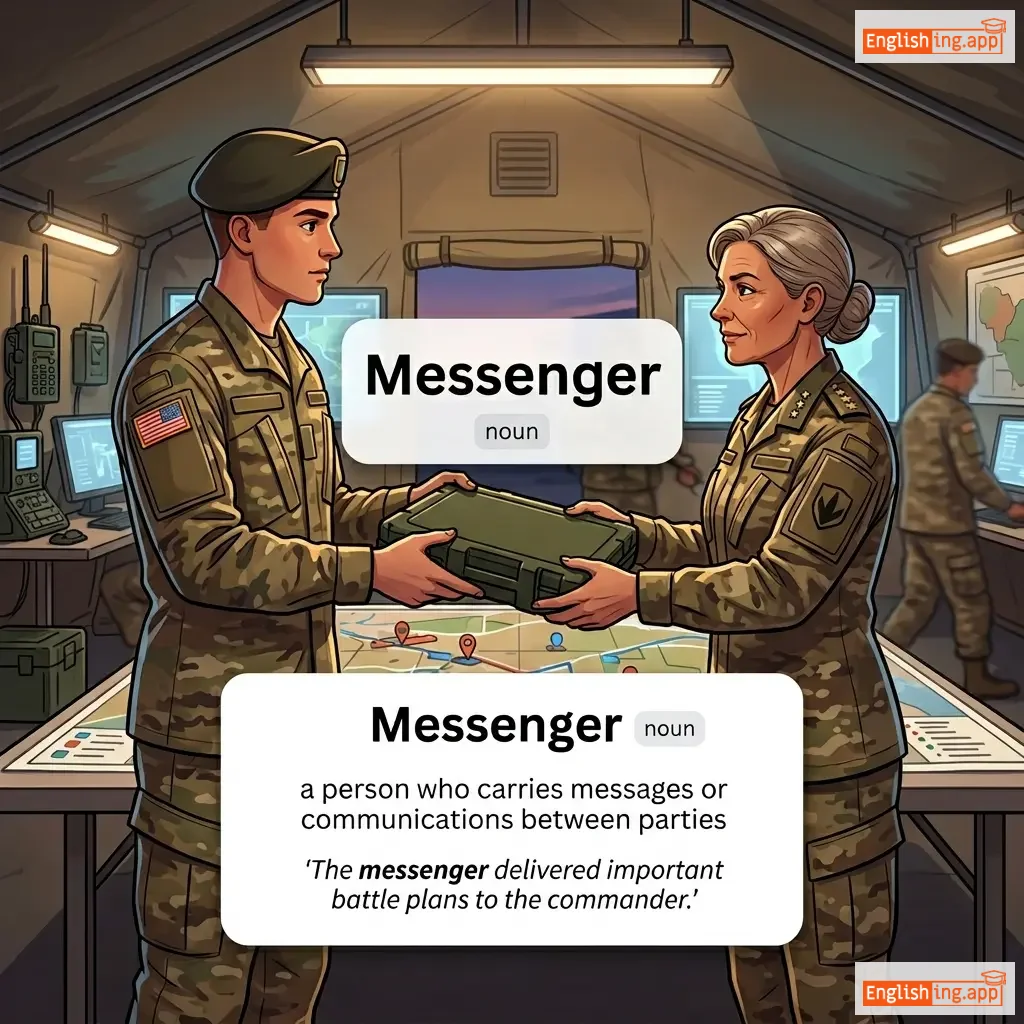
Messenger definition card — visual illustration of the meaning
noun
/ˈmes.ɪn.dʒər/
посланник (poslannik)

a person who carries messages or communications between parties

"The messenger delivered important battle plans to the commander."

"Посланник доставил командующему важные боевые планы." (Poslannik dostavil komanduyushchemu vazhnyye boevyye plany.)
noun
/ˈmɛsɪdʒ/
сообщение (soobshchenie)

A piece of information sent or communicated from one person to another.

"I received a message from my friend yesterday."
"Я получил сообщение от своего друга вчера." (Ya poluchil soobshchenie ot svoego druga vchera.)
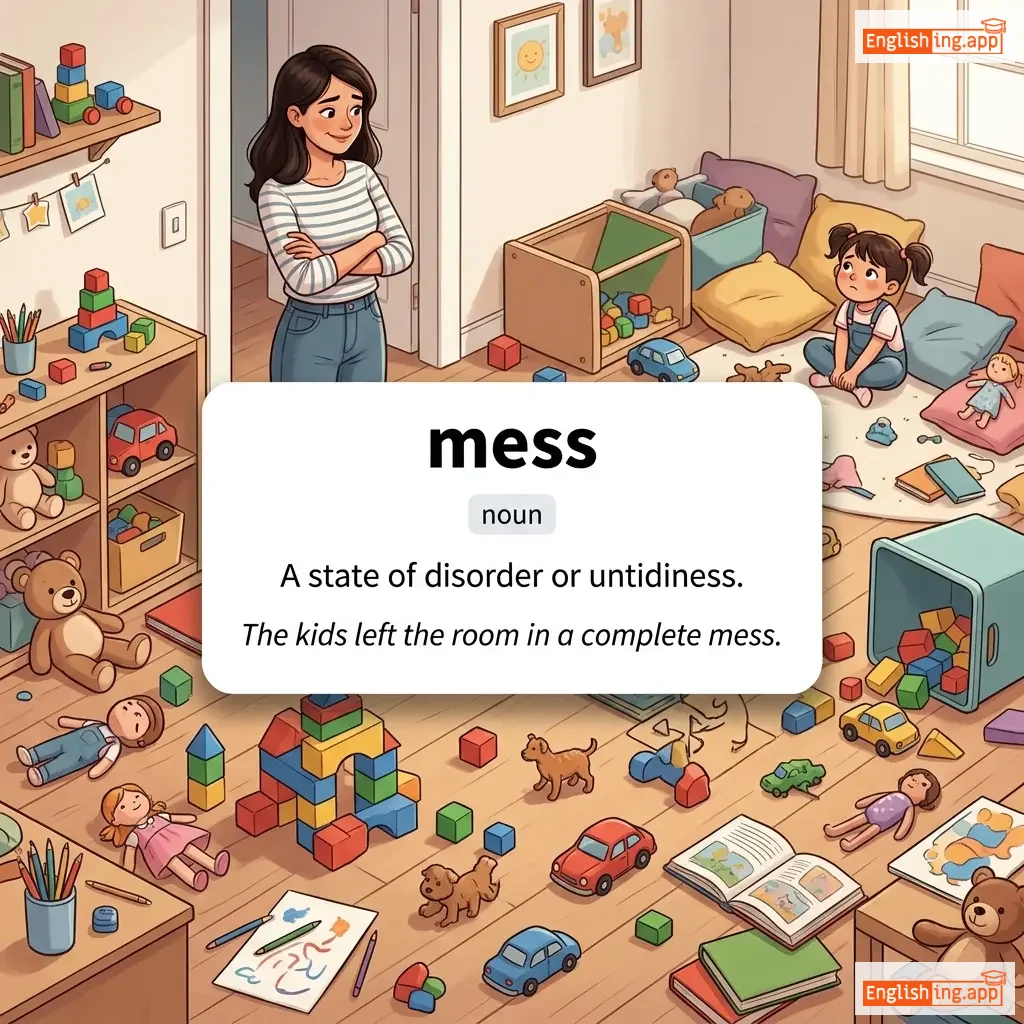
mess definition card — visual illustration of the meaning
noun
/mɛs/
беспорядок (besporyadok)

A state of disorder or untidiness.

"The kids left the room in a complete mess."
"Дети оставили комнату в полном беспорядке." (Deti ostavili komnatu v polnom besporyadke.)
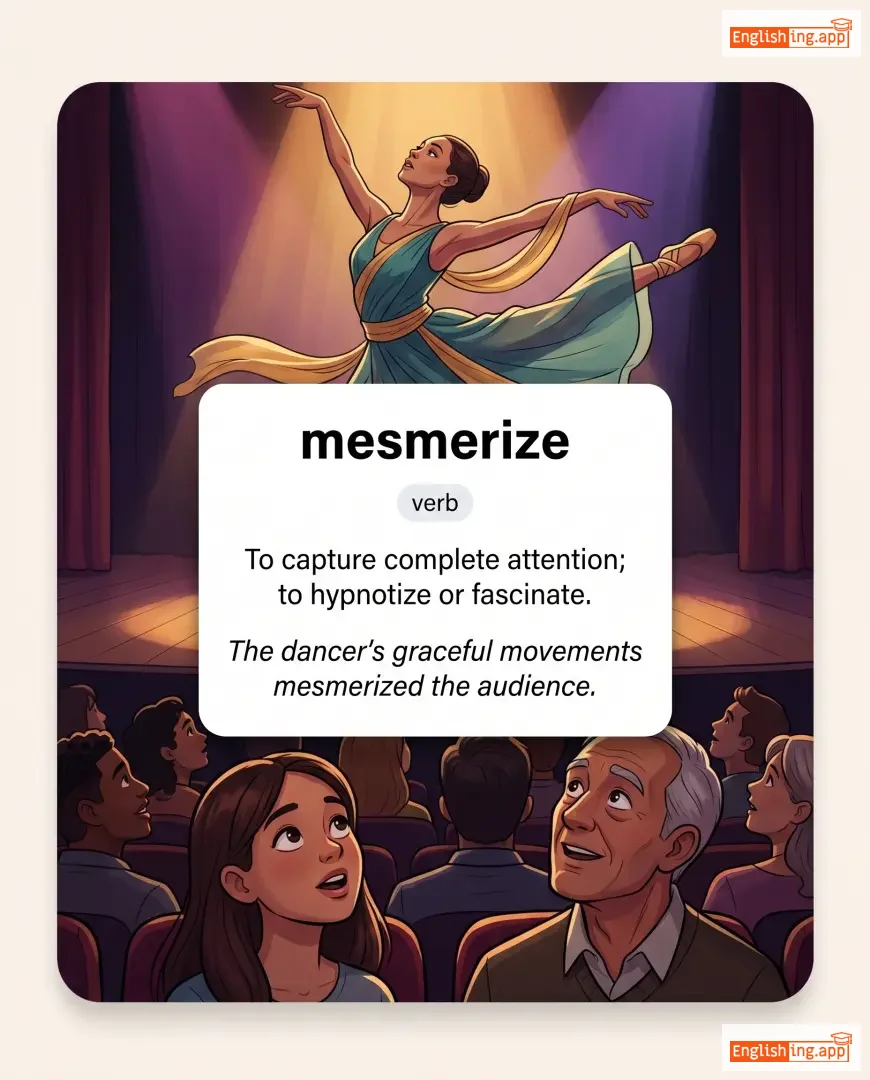
mesmerize definition card — visual illustration of the meaning
verb
/ˈmɛzməˌraɪz/
завораживать (zavorazhivat)

To capture complete attention; to hypnotize or fascinate.

"The dancer's graceful movements mesmerized the audience."

"Грациозные движения танцовщицы заворожили зрителей." (Gratsioznyye dviženiya tantsovščitsy zavorozhili zriteliy.)
noun
/ˈmɛzməˌrɪzəm/
гипнотизм (gipnotizm)

A state of fascination or hypnotism.

"The magician held the audience in a state of mesmerism."

"Фокусник держал аудиторию в состоянии мезмеризма." (Fokusnik derzhal auditoriyu v sostoyanii mezmerizma.)
adverb
/ˈmerɪli/
весело (veselo)

in a cheerful and joyful manner

"The children played merrily in the garden."

"Дети играли весело в саду." (Deti igrali veselo v sadu.)
adjective
/ˌmɛrɪˈtɔːriəs/
заслуженный (zasluzhennyy)

Deserving reward, praise, or recognition.

"She received a scholarship for her meritorious academic performance."

"Она получила стипендию за свои заслуженные академические достижения." (Ona poluchila stipendiyu za svoi zasluzhennyye akademicheskiye dostizheniya.)
noun
/ˈmɛr.meɪd/
русалка (rusalka)

A mythical sea creature with the head and torso of a woman and the tail of a fish

"The little girl loved stories about mermaids living under the sea."

"Маленькая девочка любила истории о русалках, которые жили под водой." (Malen'kaya devochka lyubila istorii o rusal'kakh, kotorye zhili pod vodoj.)