词汇表

英语词汇词典 | 单词含义、定义和示例

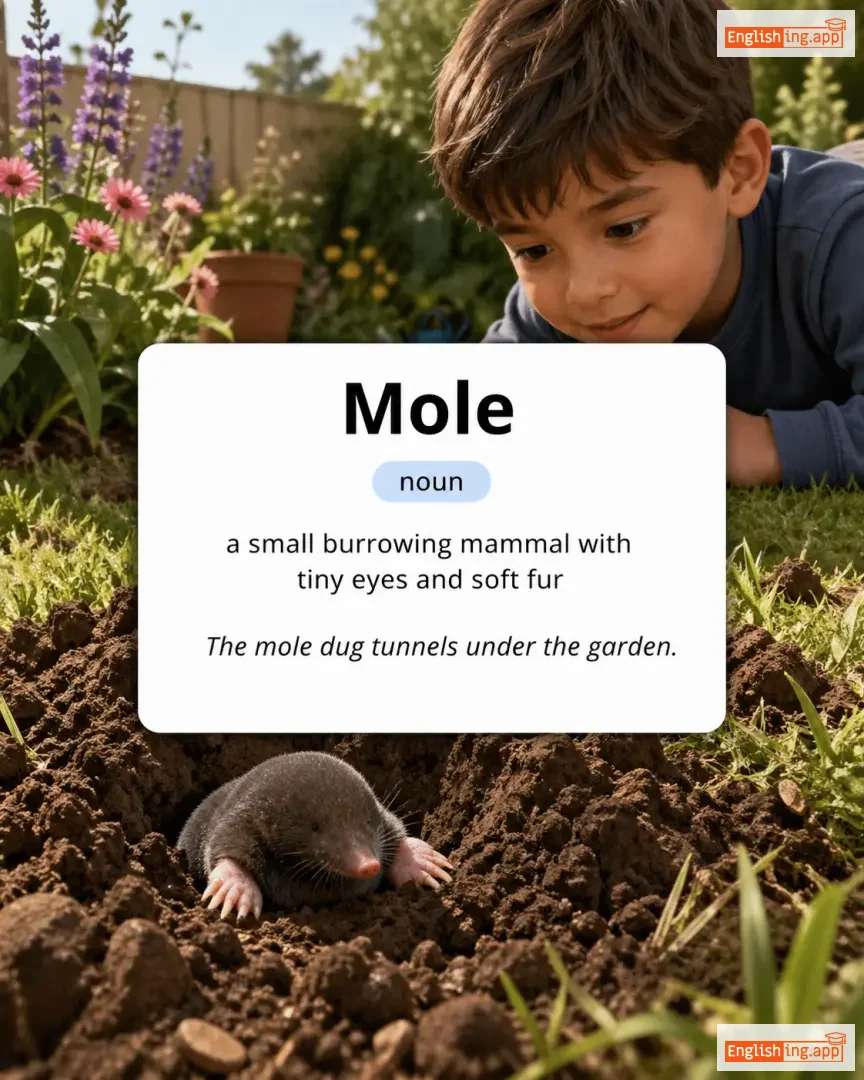
Mole definition card — visual illustration of the meaning
noun
/moʊl/
鼹鼠 (yanshu)

a small burrowing mammal with tiny eyes and soft fur

"The mole dug tunnels under the garden."

"鼹鼠在花园下挖了隧道。" (Yǎn shǔ zài huāyuán xià wāle suìdào.)
noun
/ˈmɒlɪkjuːl/
分子 (fenzi)

The smallest unit of a chemical compound that retains its chemical properties.

"A water molecule is made up of two hydrogen atoms and one oxygen atom."

"一个水分子由两个氢原子和一个氧原子组成。" (yige shui fenzi you liangge qing yuanzhi he yige yang yuanzhi zucheng.)
verb
/məˈlɛst/
骚扰 / 性虐待 (saorao / xing nvedai)

to assault or abuse someone, especially in a sexual or physical way

"The criminal was arrested for attempting to molest a child."

"罪犯因试图猥亵一个孩子而被逮捕。" (Zuifan yin shitu weixie yige haizi er bei daibu.)
mollify definition card — visual illustration of the meaning
verb
/ˈmɒlɪfaɪ/
安抚 (ānfǔ)

To calm or soothe someone's anger or anxiety.

"The manager tried to mollify the angry customers with discounts."

"经理试图通过折扣安抚生气的顾客。" (Jīnglǐ shìtú tōngguò zhékòu ānfǔ shēngqì de gùkè.)
verb
/ˈmɒlikɒdl/
宠爱 (chongai)

To treat someone in an overprotective and indulgent way.

"Parents should avoid mollycoddling their children too much."

"父母应避免过度宠爱他们的孩子。" (Fumu ying bimian guodu chongai tamen de haizi.)
verb
/məʊlt/
脱羽 (tuo yu)

To shed old feathers, skin, or hair to make way for new growth.

"Birds molt their feathers once a year."

"鸟类每年会脱羽。" (Niaolui meinian hui tuo yu.)
adjective
/ˈməʊltən/
熔化的 (rónghuà de)

Made into liquid by heat; melted.

"The blacksmith poured molten metal into the mold."

"铁匠把熔化的金属倒入模具中。" (tiějiàng bǎ rónghuà de jīnshǔ dào rù mújù zhōng.)
👩‍👧

mom (妈妈)

noun
/mɑːm/
妈妈 (mama)

an informal word for mother

"My mom makes the best homemade food."

"我妈妈做的家常菜最好吃。" (Wo mama zuo de jiachang cai zui hao chi.)
noun
/ˈmoʊmənt/
瞬间 (shun jian)

A very short period of time; a particular point in time.

"She paused for a moment before answering."

"她在回答之前停顿了片刻。" (Ta zai huida zhiqian tingdun le pianke.)
adjective
/ˈmoʊmənˌteri/
短暂 (duǎnzhàn)

Lasting for only a short time.

"There was a momentary silence in the room."

"房间里有一阵短暂的沉默。" (Fángjiān lǐ yǒu yī zhèn duǎnzhàn de chénmò.)
adjective
/moʊˈmɛntəs/
重大 (zhòngdà)

Of great importance or significance, especially in its effect on the future.

"The signing of the agreement was a momentous event."

"签署协议是一个重大的事件。" (Qiānshǔ xiéyì shì yīgè zhòngdà de shìjiàn.)
momentum definition card — visual illustration of the meaning
noun
/moʊˈmɛntəm/

The force or speed gained by a moving object; the strength of progress.

"The team gained momentum after scoring the first goal."

noun
/ˈmɒn.ɑːk/
君主 (jūnzhǔ)

a sovereign ruler, especially a king or queen

"The monarch addressed the nation on television."
"君主在电视上向全国致辞。" (Jūnzhǔ zài diànshì shàng xiàng quánguó zhìcí.)
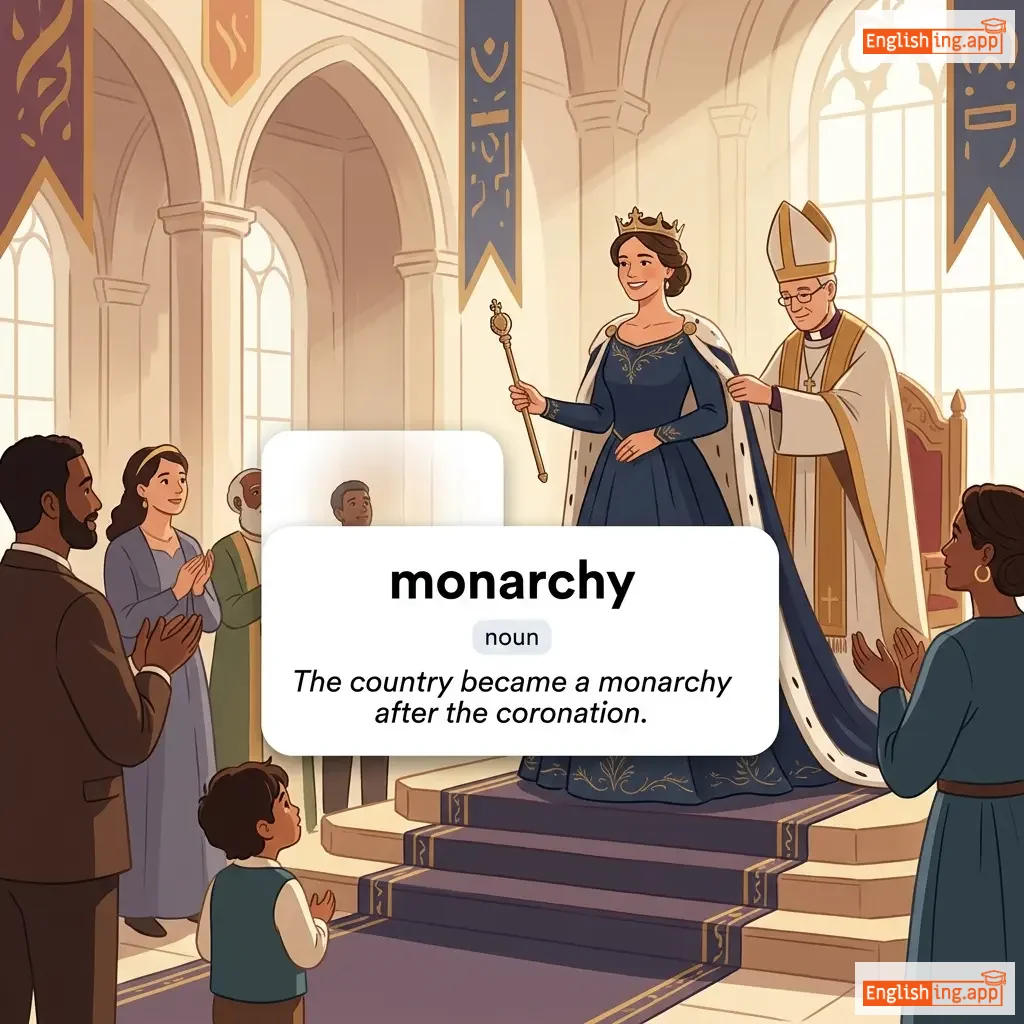
monarchy definition card — visual illustration of the meaning
noun
/ˈmɑːnərki/
君主制 (jūnzhǔ zhì)

A system of government with a king or queen as head of state.

"The country became a monarchy after the coronation."

"这个国家在加冕后成为了君主制国家。" (Zhège guójiā zài jiāmiǎn hòu chéngwéi le jūnzhǔ zhì guójiā.)
noun
/ˈmɒnəstɛri/

A building or complex where monks or nuns live, work, and worship.

"The old monastery was surrounded by high stone walls."

adjective
/məˈnæstɪk/
修道的 (xiudao de)

Relating to monks, monasteries, or a life of religious seclusion.

"He chose to live a monastic life away from the city."

"他选择过一种修道的生活,远离城市。" (Ta xuanze guo yizhong xiudao de shenghuo, yuanli chengshi.)
noun
/ˈmʌn.deɪ/
星期一 (xingqi yi)

the first day of the working week following Sunday

"I start my new job on Monday."

"我星期一开始新工作。" (wo xingqi yi kaishi xin gongzuo)
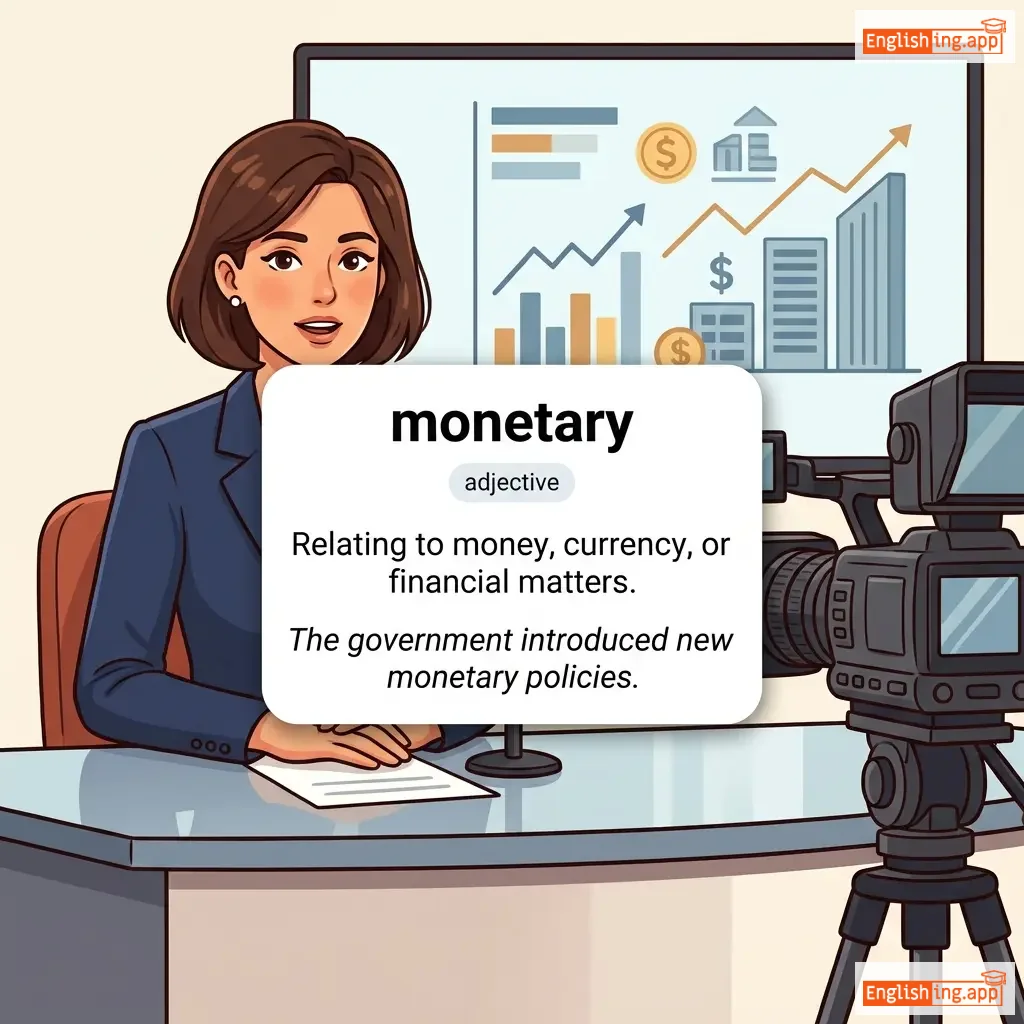
monetary definition card — visual illustration of the meaning
adjective
/ˈmʌnɪtəri/

Relating to money, currency, or financial matters.

"The government introduced new monetary policies."

monetization definition card — visual illustration of the meaning
noun
/ˌmɒn.ɪ.taɪˈzeɪ.ʃən/
货币化 (huòbì huà)

The process of converting assets or services into money, involving commercialization, profit generation, and revenue creation.

"The monetization of digital content has created new income streams."

"数字内容的货币化创造了新的收入来源。" (Shùzì nèiróng de huòbì huà chuàngzào le xīn de shōurù láiyuán.)
money definition card — visual illustration of the meaning
noun
/ˈmʌni/
幸福 (xìngfú)

A medium of exchange in the form of coins and banknotes; wealth or financial resources.

"He saved enough money to buy a new car."

"她在收到奖项时无法掩饰她的幸福。" (Tā zài shōudào jiǎngxiàng shí wúfǎ yǎnshì tā de xìngfú.)
adjective
/ˈmʌnid/
富有的; 富裕的; 有钱的 (manid)

having much money; wealthy; rich

"She comes from a moneyed family with extensive real estate holdings."

"她来自一个富有的家庭,拥有大量的房地产。" (tā láizì yīgè fùyǒu de jiātíng, yǒngyǒu dàliàng de fángdìchǎn.)
noun
/ˈmɒŋ.ɡuːs/
(méng)

a small carnivorous mammal known for its ability to kill venomous snakes

"The mongoose quickly attacked the cobra to protect its young."

"獴迅速攻击了眼镜蛇,以保护它的幼崽。" (Méng xùnsù gōngjīle yǎnjìngshé, yǐ bǎohù tā de yòuzǎi.)
noun
/ˈmʌŋɡrəl/
杂种狗 (zá zhǒng gǒu)

A dog of mixed breed; sometimes used to describe something mixed or of inferior quality.

"The stray dog was a friendly mongrel."

"那只流浪狗是一只友好的杂种狗。" (nà zhī liú làng gǒu shì yī zhī yǒu hǎo de zá zhǒng gǒu.)
noun
/məˈnɪʃən/
警告 (jinggao)

A warning or caution, often of a religious or moral nature.

"The priest gave a monition against dishonesty."

"牧师对不诚实行为发出了警告。" (Mushi dui buchengshi xingwei fashu le jinggao.)
noun, verb
/ˈmɒnɪtər/
监视器,观察 (jiānshìqì, guānchá)

to observe and check the progress or quality of something; also a device that displays information

"The teacher monitors the students during the exam."
"老师在考试期间监控学生。" (Lǎoshī zài kǎoshì qījiān jiānkòng xuéshēng.)
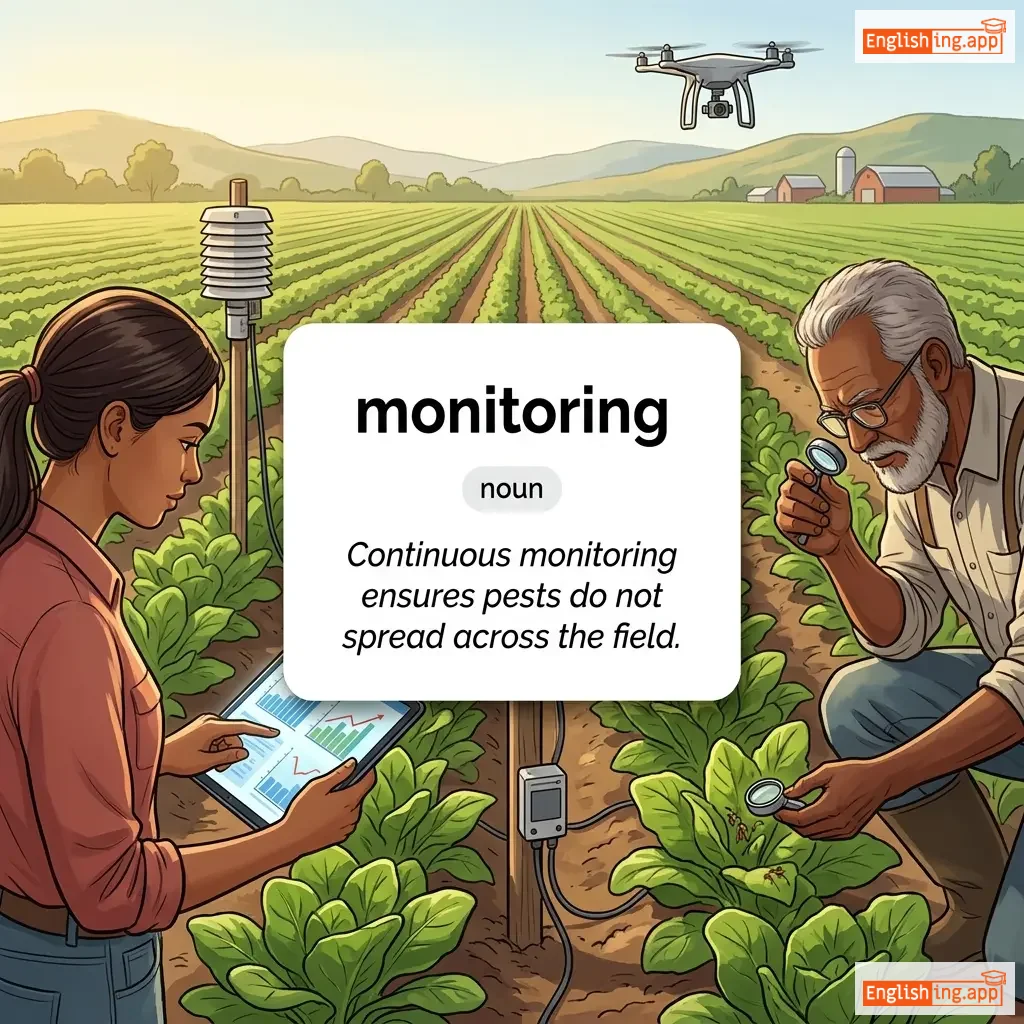
monitoring definition card — visual illustration of the meaning
noun
ˈmɒnɪtərɪŋ
监控,持续监测 (jiānkòng, chíxù jiāncè)

The action of observing and checking the progress or quality of something over a period of time.

"Continuous monitoring ensures pests do not spread across the field."

"持续的监测确保害虫不会在田地中蔓延。" (Chíxù de jiāncè quèbǎo hàichóng bù huì zài tiándì zhōng mànyán.)
adjective
/ˈmɒnɪtəri/
警示性的 (jǐngshì xìng de)

Giving a warning or cautionary advice; serving to warn.

"His monitory tone made everyone cautious about their next move."

"他警示性的语气让每个人对下一步感到谨慎。" (Tā jǐngshì xìng de yǔqì ràng měi gèrén duì xià yī bù gǎndào jǐnshèn.)
noun
/mɒŋk/
僧侣 (senglü)

a member of a religious community living under vows of poverty, chastity, and obedience

"The monk lived a simple and peaceful life in the monastery."
"僧侣在修道院过着简单和平静的生活。" (Senglü zài xiūdàoyuàn guòzhe jiǎndān hé píngjìng de shēnghuó.)
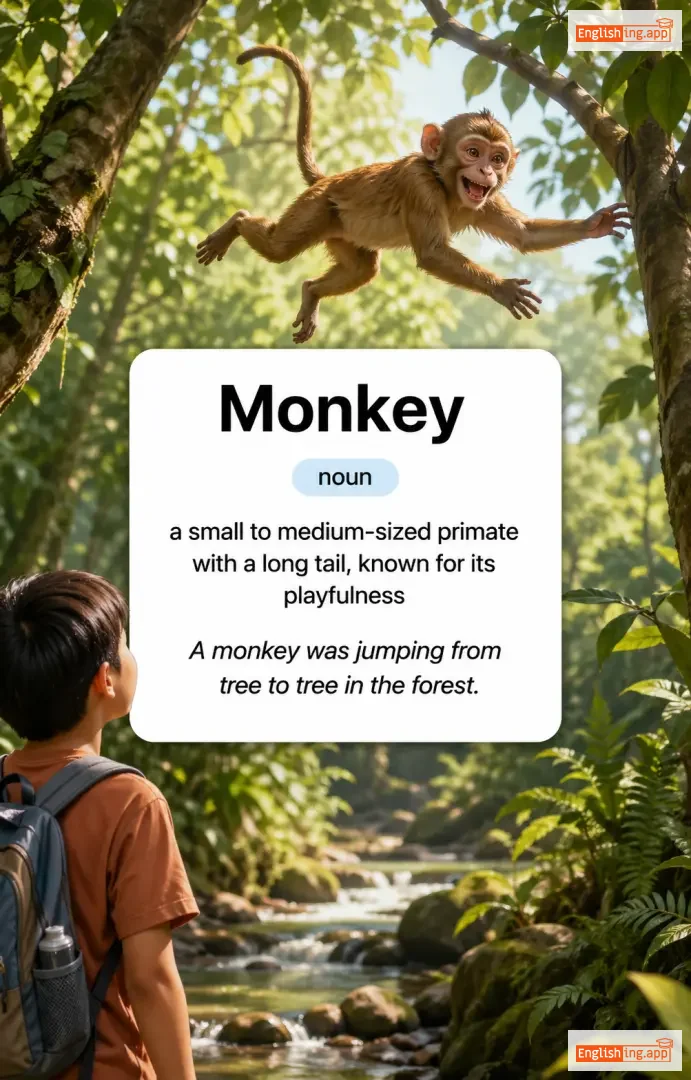
Monkey definition card — visual illustration of the meaning
noun
/ˈmʌŋki/
猴子 (hóu zi)

a small to medium-sized primate with a long tail, known for its playfulness

"A monkey was jumping from tree to tree in the forest."

"一只猴子在森林中从树上跳到树上。" (yī zhī hóu zi zài sēn lín zhōng cóng shù shàng tiào dào shù shàng)
adjective
/ˌmɒnəkrəˈmætɪk/

Consisting of or displaying only one color.

"The artist created a striking monochromatic painting in shades of blue."

noun/adjective
/ˈmɒnəkrəʊm/
单色 (danse)

A photograph, painting, or screen image in black and white or varying tones of one color.

"The old film was shot entirely in monochrome."

"那部老电影完全是用单色拍摄的。" (Na bu lao dianying wanquan shi yong danse paishe de.)
noun
/ˈmɒnəkl/

A single round lens for one eye, used to correct or enhance vision.

"The old gentleman wore a monocle at formal events."

noun
/məˈnɒkrəsi/
独裁制 (dúcáizhì)

A system of government by a single person; autocracy.

"The nation suffered under decades of monocracy."
"国家在几十年的独裁制下遭受痛苦。" (Guójiā zài jǐ shí nián de dúcáizhì xià zāoshòu tòngkǔ.)
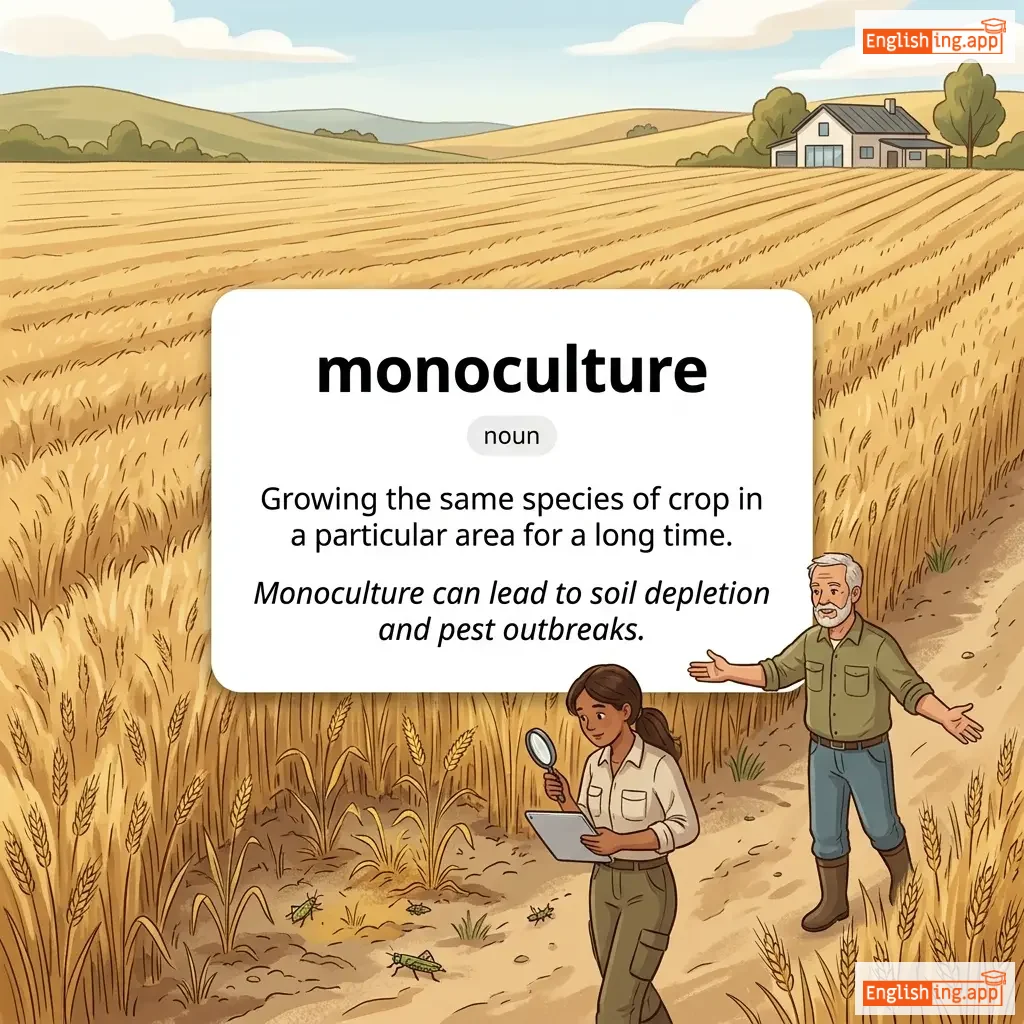
monoculture definition card — visual illustration of the meaning
noun
ˈmɒn.əˌkʌl.tʃər
单一种植 (dan yi zhong zhi)

Growing the same species of crop in a particular area for a long time.

"Monoculture can lead to soil depletion and pest outbreaks."

"单一种植可能导致土壤贫瘠和害虫爆发。" (Dan yi zhong zhi ke neng dao zhi tu rang pin jie he hai chong bao fa.)
noun
/məˈnɒɡəmi/
一夫一妻制 (yī fū yī qī zhì)

The practice of being married to or in a relationship with only one person at a time.

"Many cultures encourage monogamy as the ideal form of marriage."

"许多文化鼓励一夫一妻制作为理想的婚姻形式。" (Xǔduō wénhuà gǔlì yī fū yī qī zhì zuòwéi lǐxiǎng de hūnyīn xíngshì.)
noun
/ˈmɒnəɡræm/
字母图案 (zìmǔ tú'àn)

A design consisting of two or more letters, typically a person's initials, combined or interwoven.

"The towel was embroidered with her monogram."

"毛巾上刺绣着她的字母图案。" (Máojīn shàng cìxiù zhe tā de zìmǔ tú'àn.)
noun
/ˈmɒnəɡrɑːf/

A detailed written study of a single specialized subject or aspect of it.

"The professor published a monograph on ancient pottery."

adjective
/mɔːrˈdeɪʃəs/
尖锐或讽刺的 (jiānruì huò fěngcì de)

Sharp or biting in style, tone, or remark; sarcastic.

"The critic’s mordacious review offended the author."

"评论家的尖锐评论冒犯了作者。" (Pínglùn jiā de jiānruì pínglùn màofànle zuòzhě.)
noun
/ˈmuːn.biːm/
月光 (yuèguāng)

A ray of light from the moon.

"A moonbeam lit up the quiet forest clearing."

"一束月光照亮了安静的森林空地。" (Yī shù yuèguāng zhàoliàngle ān jìng de sēnlín kōngdì.)
💭

moot

adjective, verb
/muːt/

Adjective: subject to debate or irrelevant. Verb: to suggest an idea for discussion.

"The issue of funding became a moot point after the project was canceled."

adjective, noun
/ˈmɔːrəl/
道德 (daode)

Adjective: concerned with principles of right and wrong. Noun: a lesson about right and wrong from a story or experience.

"The moral of the story is that honesty is the best policy."

"这个故事的道德是诚实为上策。" (Zhège gùshì de dàodé shì chéngshí wéi shàngcè.)
noun
/məˈræl/
士气 (shiqi)

The confidence, enthusiasm, and discipline of a person or group at a particular time.

"The team's morale improved after their recent victory."

"团队的士气在他们最近的胜利后有所提升。" (Tuánduì de shìqì zài tāmen zuìjìn de shènglì hòu yǒu suǒ tíshēng.)
noun
/ˈmɒrəlɪst/
道德主义者 (daode zhuyi zhe)

A person who teaches or promotes moral principles and values.

"The author was known as a strict moralist in his writings."

"作者以其作品中严格的道德主义者而闻名。" (Zuozhe yi qi zuopin zhong yan'ge de daode zhuyi zhe er wenming.)
noun
/məˈrælɪti/
道德 (daode)

Principles concerning the distinction between right and wrong or good and bad behavior.

"Society's sense of morality changes over time."

"社会的道德感随着时间的推移而改变。" (Shèhuì de dàodé gǎn suízhe shíjiān de tuīyí ér gǎibiàn.)
verb
/ˈmɒrəlaɪz/
道德化 (daodehua)

To comment on issues of right and wrong, often with an air of superiority.

"He tends to moralize about other people's choices."

"他倾向于对别人做出的选择进行道德化评论。" (Ta qingxiang yu dui bieren zuo chude xuanze jinxing daodehua pinglun.)
adverb
/ˈmɔːrəli/
道德上 (dàodé shàng)

in accordance with principles of right and wrong behavior; ethically

"She felt morally obligated to help the refugees."

"她感到道德上有责任帮助难民。" (Tā gǎndào dàodé shàng yǒu zérèn bāngzhù nànmín.)
noun
/məˈræs/
复杂局面 (fuza júmiàn)

A complicated or confused situation; a swampy or boggy ground.

"The project got stuck in a bureaucratic morass."

"项目陷入了官僚主义的困境。" (Xiàngmù xiànrùle guānliáo zhǔyì de kùnjìng.)
noun
/ˌmɔːrəˈtɔːriəm/
暂停令 (zan ting ling)

A temporary suspension or delay of an activity, law, or obligation.

"The government announced a moratorium on new mining licenses."

"政府宣布对新矿业许可证实行暂停令。" (Zhèngfǔ xuānbù duì xīn kuàngyè xǔkězhèng shíxíng zàntíng lìng.)
adjective
/ˈmɔːrbɪd/
对令人不安或不愉快的主题的异常兴趣 (dui lingren buan huo buyu kuai de zhutide yichang xingqu)

Having an abnormal interest in disturbing or unpleasant subjects such as death or disease.

"She had a morbid fascination with crime stories."
"她对犯罪故事有一种莫比德的迷恋。" (Ta dui fanzui gushi you yizhong mobide de milian.)
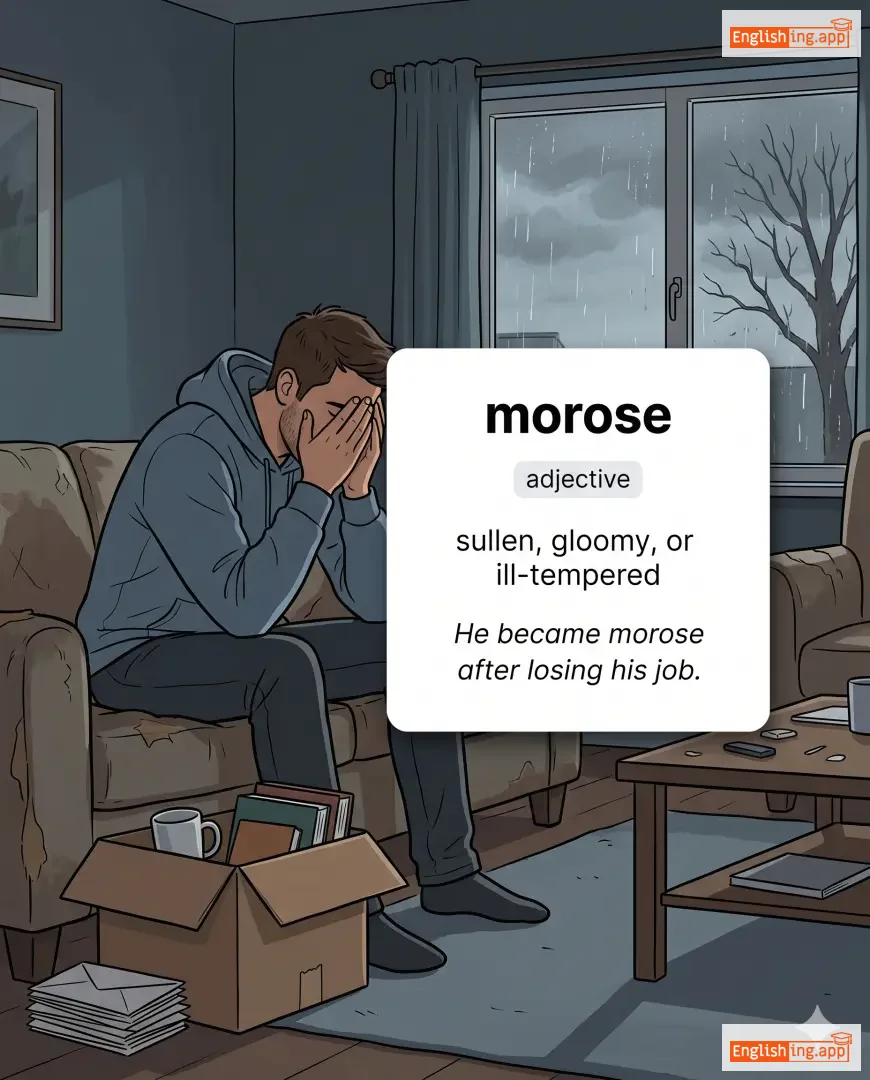
morose definition card — visual illustration of the meaning
adjective
/məˈroʊs/
忧郁 (yōuyù)

sullen, gloomy, or ill-tempered

"He became morose after losing his job."

"他在失业后变得沉闷。" (Tā zài shīyè hòu biàn dé chénmèn.)