Vocabulaires

Découvrez, apprenez et maîtrisez le vocabulaire anglais

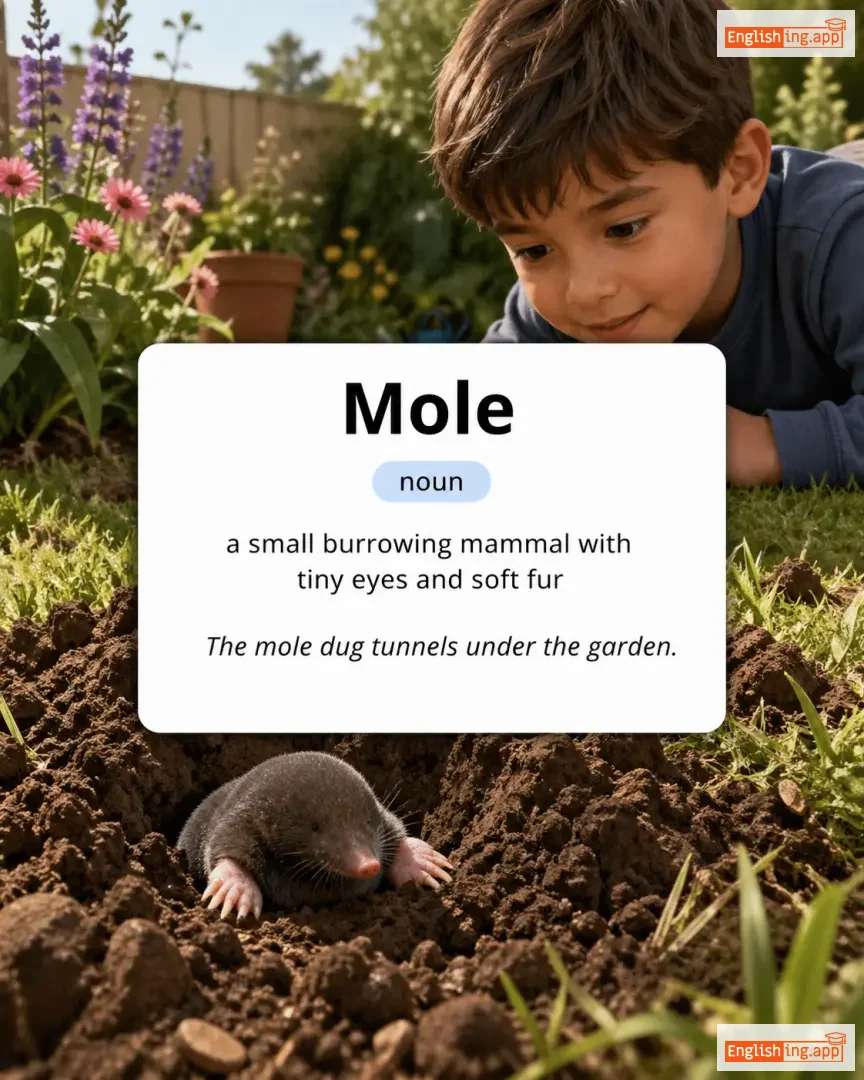
Mole definition card — visual illustration of the meaning
noun
/moʊl/
taupe (taupe)

a small burrowing mammal with tiny eyes and soft fur

"The mole dug tunnels under the garden."

"Le taupe a creusé des tunnels sous le jardin." (Le taupe a creusé des tunnels sous le jardin.)
noun
/ˈmɒlɪkjuːl/
molécule (molekul)

The smallest unit of a chemical compound that retains its chemical properties.

"A water molecule is made up of two hydrogen atoms and one oxygen atom."

"Une molécule d'eau est composée de deux atomes d'hydrogène et d'un atome d'oxygène." (une molekul de o est compose de deux atomes d'hydrogene et d'un atome d'oxygene.)
verb
/məˈlɛst/
harceler / agresser sexuellement (harceler / agresser sexuellement)

to assault or abuse someone, especially in a sexual or physical way

"The criminal was arrested for attempting to molest a child."

"Le criminel a été arrêté pour avoir tenté de molester un enfant." (Le criminel a été arrêté pour avoir tenté de molester un enfant.)
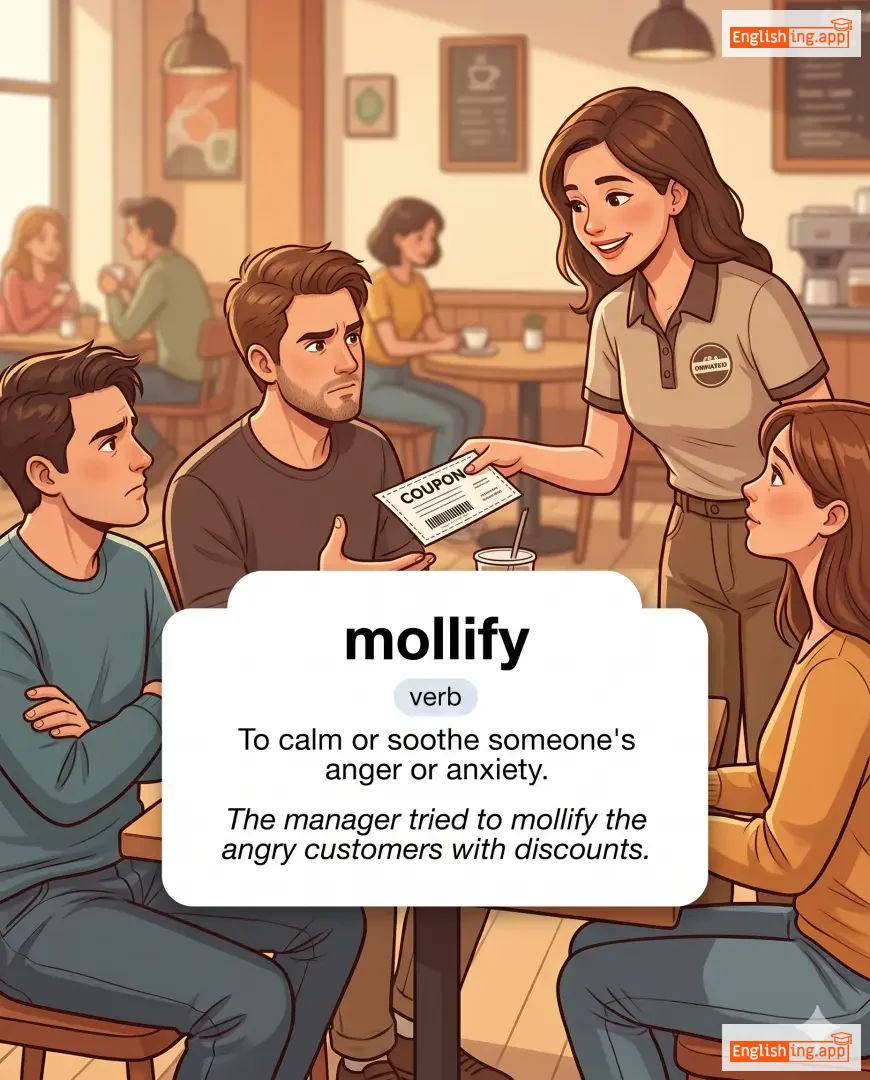
mollify definition card — visual illustration of the meaning
verb
/ˈmɒlɪfaɪ/
apaiser (apaiser)

To calm or soothe someone's anger or anxiety.

"The manager tried to mollify the angry customers with discounts."

"Le responsable a essayé d'apaiser les clients en colère avec des réductions." (Le responsable a essayé d'apaiser les clients en colère avec des réductions.)
verb
/ˈmɒlikɒdl/
gâter (gater)

To treat someone in an overprotective and indulgent way.

"Parents should avoid mollycoddling their children too much."

"Les parents devraient éviter de gâter trop leurs enfants." (Les parents devraient éviter de gâter trop leurs enfants.)
verb
/məʊlt/
muet (muet)

To shed old feathers, skin, or hair to make way for new growth.

"Birds molt their feathers once a year."

"Les oiseaux muent leurs plumes une fois par an." (Les oiseaux muent leurs plumes une fois par an.)
adjective
/ˈməʊltən/
fondu (fondu)

Made into liquid by heat; melted.

"The blacksmith poured molten metal into the mold."

"Le forgeron a versé du métal fondu dans le moule." (Le forgeron a versé du métal fondu dans le moule.)
👩‍👧

mom (maman)

noun
/mɑːm/
maman (maman)

an informal word for mother

"My mom makes the best homemade food."

"Ma maman fait la meilleure cuisine maison." (Ma maman fait la meilleure cuisine maison.)
noun
/ˈmoʊmənt/
moment (moment)

A very short period of time; a particular point in time.

"She paused for a moment before answering."

"Elle s'est arrêtée un moment avant de répondre." (Elle s'est arrete un moment avant de repondre.)
adjective
/ˈmoʊmənˌteri/
momentané (momentane)

Lasting for only a short time.

"There was a momentary silence in the room."

"Il y a eu un silence momentané dans la pièce." (Il y a eu un silence momentane dans la piece.)
adjective
/moʊˈmɛntəs/
important (important)

Of great importance or significance, especially in its effect on the future.

"The signing of the agreement was a momentous event."

"La signature de l'accord a été un événement important." (La signature de l'accord a été un événement important.)
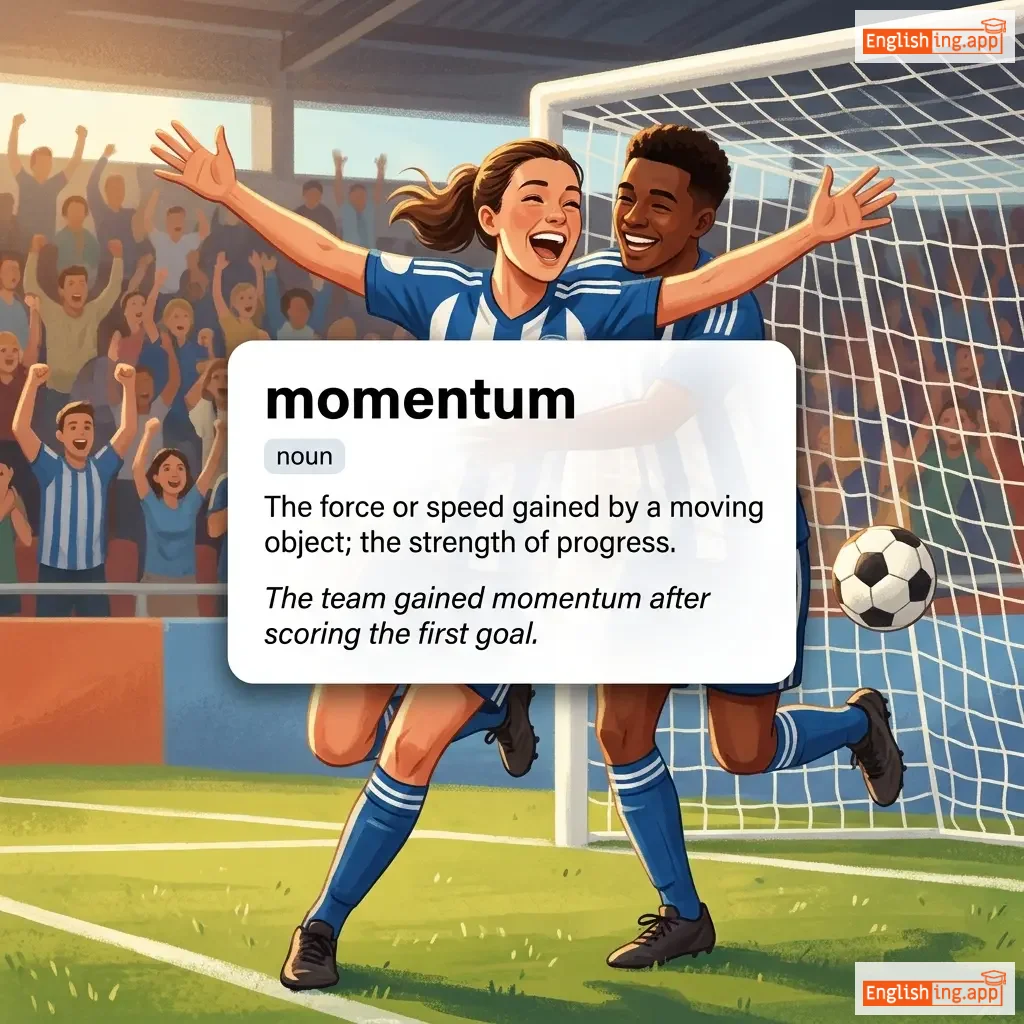
momentum definition card — visual illustration of the meaning
noun
/moʊˈmɛntəm/
quantité de mouvement (momentum)

The force or speed gained by a moving object; the strength of progress.

"The team gained momentum after scoring the first goal."

"L'équipe a pris de l'élan après avoir marqué le premier but." (Lequipe a pris de elan apres avoir marque le premier but)
noun
/ˈmɒn.ɑːk/
monarque (monarque)

a sovereign ruler, especially a king or queen

"The monarch addressed the nation on television."

"Le monarque a adressé la nation à la télévision." (Le monarque a adressé la nation à la télévision.)
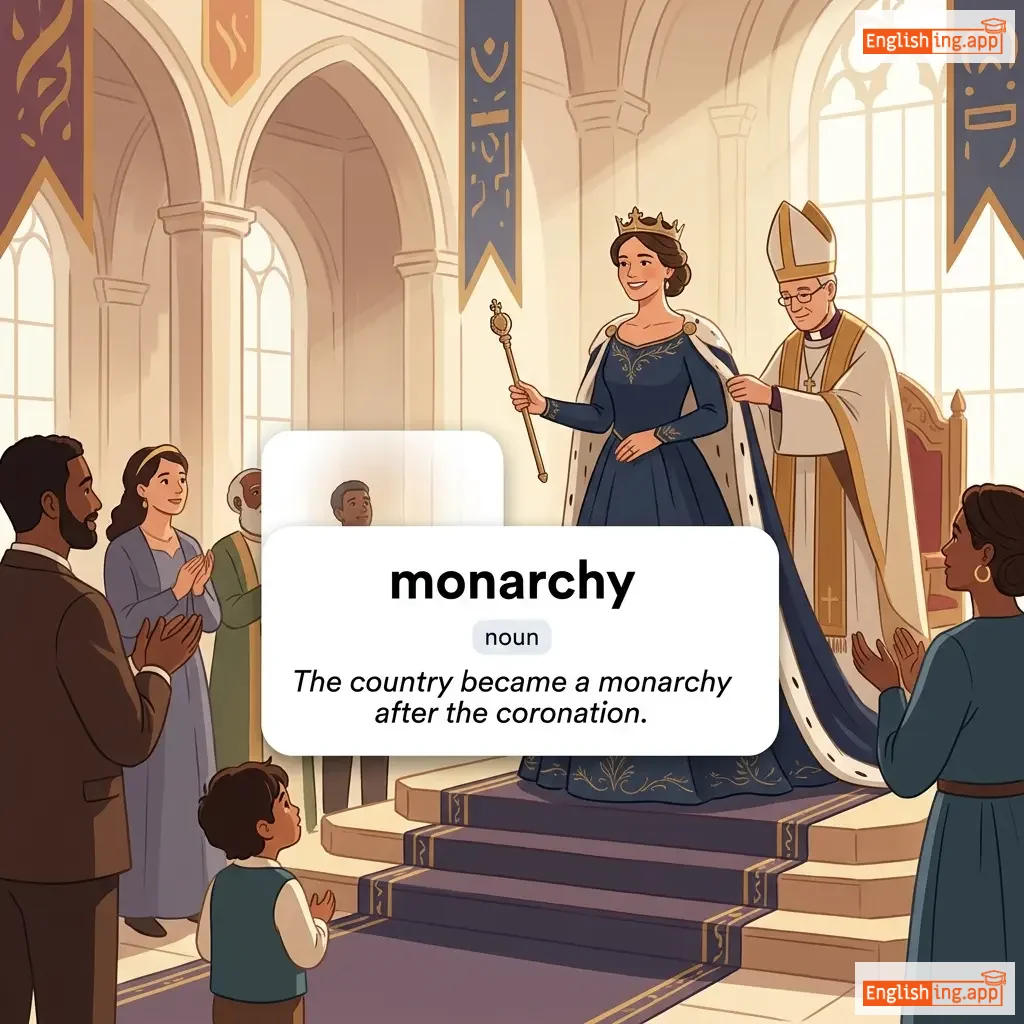
monarchy definition card — visual illustration of the meaning
noun
/ˈmɑːnərki/
monarchie (monarshi)

A system of government with a king or queen as head of state.

"The country became a monarchy after the coronation."

"Le pays est devenu une monarchie après le couronnement." (Le pays est devenu une monarchie apres le couronnement.)
noun
/ˈmɒnəstɛri/
monastère (monastere)

A building or complex where monks or nuns live, work, and worship.

"The old monastery was surrounded by high stone walls."

"Le vieux monastère était entouré de hauts murs de pierre." (Le vieux monastere etait entoure de hauts murs de pierre.)
adjective
/məˈnæstɪk/
monastique (monastik)

Relating to monks, monasteries, or a life of religious seclusion.

"He chose to live a monastic life away from the city."

"Il a choisi de vivre une vie monastique loin de la ville." (Il a choisi de vivre une vie monastique loin de la ville.)
noun
/ˈmʌn.deɪ/
lundi (lundi)

the first day of the working week following Sunday

"I start my new job on Monday."

"Je commence mon nouveau travail lundi." (je commence mon nouveau travail lundi)
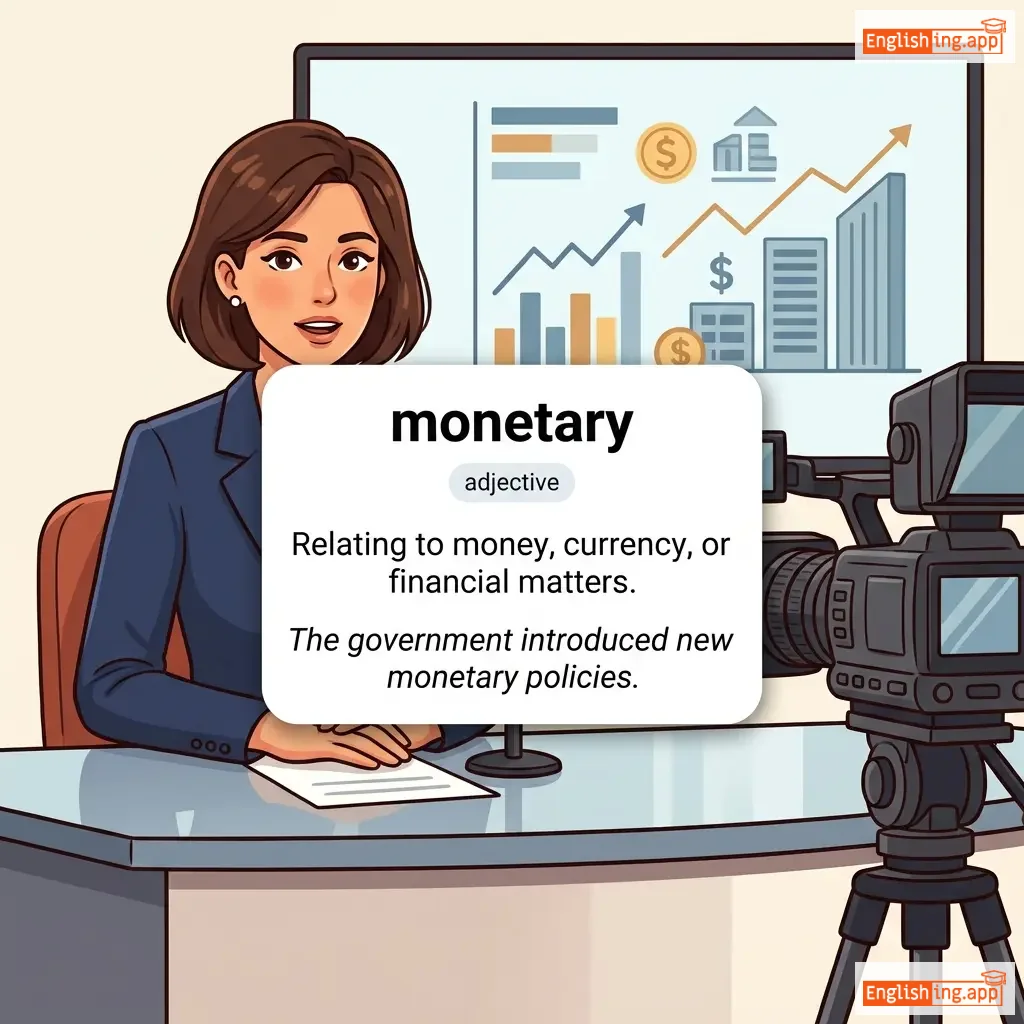
monetary definition card — visual illustration of the meaning
adjective
/ˈmʌnɪtəri/
monétaire (monetaire)

Relating to money, currency, or financial matters.

"The government introduced new monetary policies."

"Le gouvernement a introduit de nouvelles politiques monétaires." (Le gouvernement a introduit de nouvelles politiques monetaires.)
monetization definition card — visual illustration of the meaning
noun
/ˌmɒn.ɪ.taɪˈzeɪ.ʃən/
monétisation (monetisation)

The process of converting assets or services into money, involving commercialization, profit generation, and revenue creation.

"The monetization of digital content has created new income streams."

"La monétisation du contenu numérique a créé de nouvelles sources de revenus." (La monetisation du contenu numerique a cree de nouvelles sources de revenus.)
money definition card — visual illustration of the meaning
noun
/ˈmʌni/
bonheur (bonheur)

A medium of exchange in the form of coins and banknotes; wealth or financial resources.

"He saved enough money to buy a new car."

"Elle ne pouvait pas cacher son bonheur lorsqu'elle a reçu le prix." (Elle ne pouvait pas cacher son bonheur lorsqu'elle a reçu le prix.)
adjective
/ˈmʌnid/
riches; fortuné; aisé (manid)

having much money; wealthy; rich

"She comes from a moneyed family with extensive real estate holdings."

"Elle vient d'une famille fortunée avec de vastes biens immobiliers." (elle vient d'une famille fortunée avec de vastes biens immobiliers.)
noun
/ˈmɒŋ.ɡuːs/
mangouste (mangouste)

a small carnivorous mammal known for its ability to kill venomous snakes

"The mongoose quickly attacked the cobra to protect its young."

"La mangouste a attaqué rapidement le cobra pour protéger ses petits." (La mangouste a attaqué rapidement le cobra pour protéger ses petits.)
noun
/ˈmʌŋɡrəl/
chien bâtard (chien bâtard)

A dog of mixed breed; sometimes used to describe something mixed or of inferior quality.

"The stray dog was a friendly mongrel."

"Le chien errant était un chien bâtard amical." (Le chien errant était un chien bâtard amical.)
noun
/məˈnɪʃən/
avertissement (avertissement)

A warning or caution, often of a religious or moral nature.

"The priest gave a monition against dishonesty."

"Le prêtre a donné un avertissement contre la malhonnêteté." (Le pretre a donne un avertissement contre la malhonnetete.)
noun, verb
/ˈmɒnɪtər/
moniteur, surveiller (moniteur, surveiller)

to observe and check the progress or quality of something; also a device that displays information

"The teacher monitors the students during the exam."

"Le professeur surveille les élèves pendant l'examen." (Le professeur surveille les élèves pendant l'examen.)
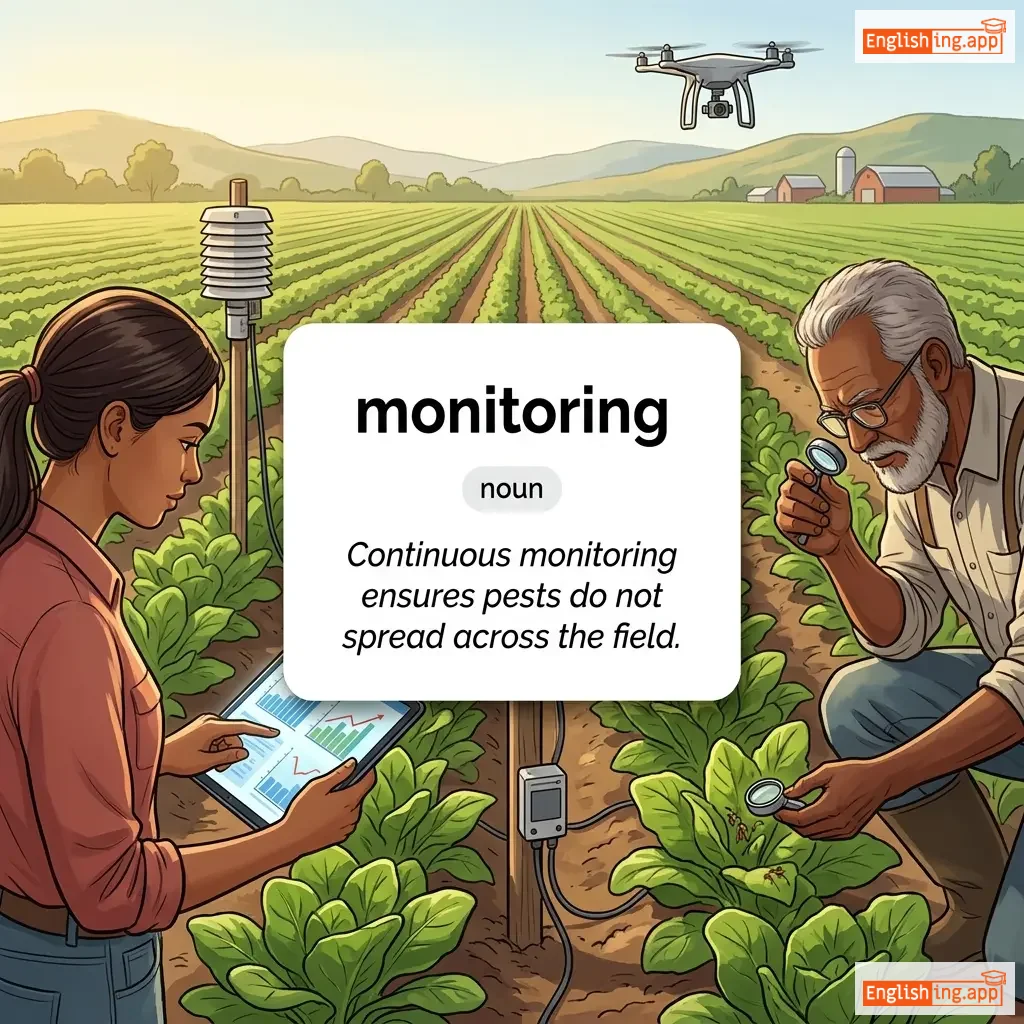
monitoring definition card — visual illustration of the meaning
noun
ˈmɒnɪtərɪŋ
surveillance, suivi continu (surveillance, suivi continu)

The action of observing and checking the progress or quality of something over a period of time.

"Continuous monitoring ensures pests do not spread across the field."

"La surveillance continue garantit que les nuisibles ne se propagent pas dans le champ." (La surveillance continue garantit que les nuisibles ne se propagent pas dans le champ.)
adjective
/ˈmɒnɪtəri/
avertisseur (avertisseur)

Giving a warning or cautionary advice; serving to warn.

"His monitory tone made everyone cautious about their next move."

"Son ton monitory a rendu tout le monde prudent quant à leur prochain mouvement." (Son ton monitory a rendu tout le monde prudent quant à leur prochain mouvement.)
noun
/mɒŋk/
moine (moine)

a member of a religious community living under vows of poverty, chastity, and obedience

"The monk lived a simple and peaceful life in the monastery."

"Le moine vivait une vie simple et paisible au monastère." (Le moine vivait une vie simple et paisible au monastère.)
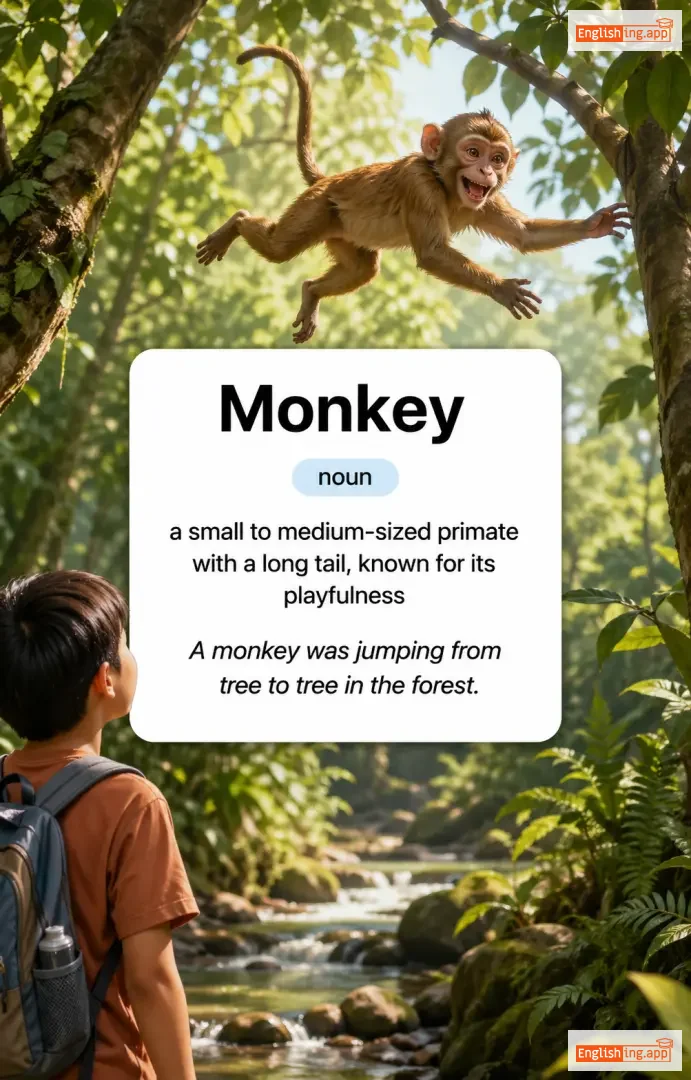
Monkey definition card — visual illustration of the meaning
noun
/ˈmʌŋki/
singe (singe)

a small to medium-sized primate with a long tail, known for its playfulness

"A monkey was jumping from tree to tree in the forest."

"Un singe sautait d'arbre en arbre dans la forêt." (Un singe sautait d'arbre en arbre dans la foret)
adjective
/ˌmɒnəkrəˈmætɪk/
monochromatique (monochromatique)

Consisting of or displaying only one color.

"The artist created a striking monochromatic painting in shades of blue."

"L'artiste a créé une peinture monochromatique frappante dans des nuances de bleu." (Lartiste a cree une peinture monochromatique frappante dans des nuances de bleu)
noun/adjective
/ˈmɒnəkrəʊm/
monochrome (monochrome)

A photograph, painting, or screen image in black and white or varying tones of one color.

"The old film was shot entirely in monochrome."

"Le vieux film a été tourné entièrement en monochrome." (Le vieux film a été tourné entièrement en monochrome.)
noun
/ˈmɒnəkl/
monocle (monocle)

A single round lens for one eye, used to correct or enhance vision.

"The old gentleman wore a monocle at formal events."

"Le vieux monsieur portait un monocle lors des événements officiels." (Le vieux monsieur portait un monocle lors des evenements officiels.)
noun
/məˈnɒkrəsi/
monocratie (monocratie)

A system of government by a single person; autocracy.

"The nation suffered under decades of monocracy."

"La nation a souffert sous des décennies de monocratie." (La nation a souffert sous des décennies de monocratie.)
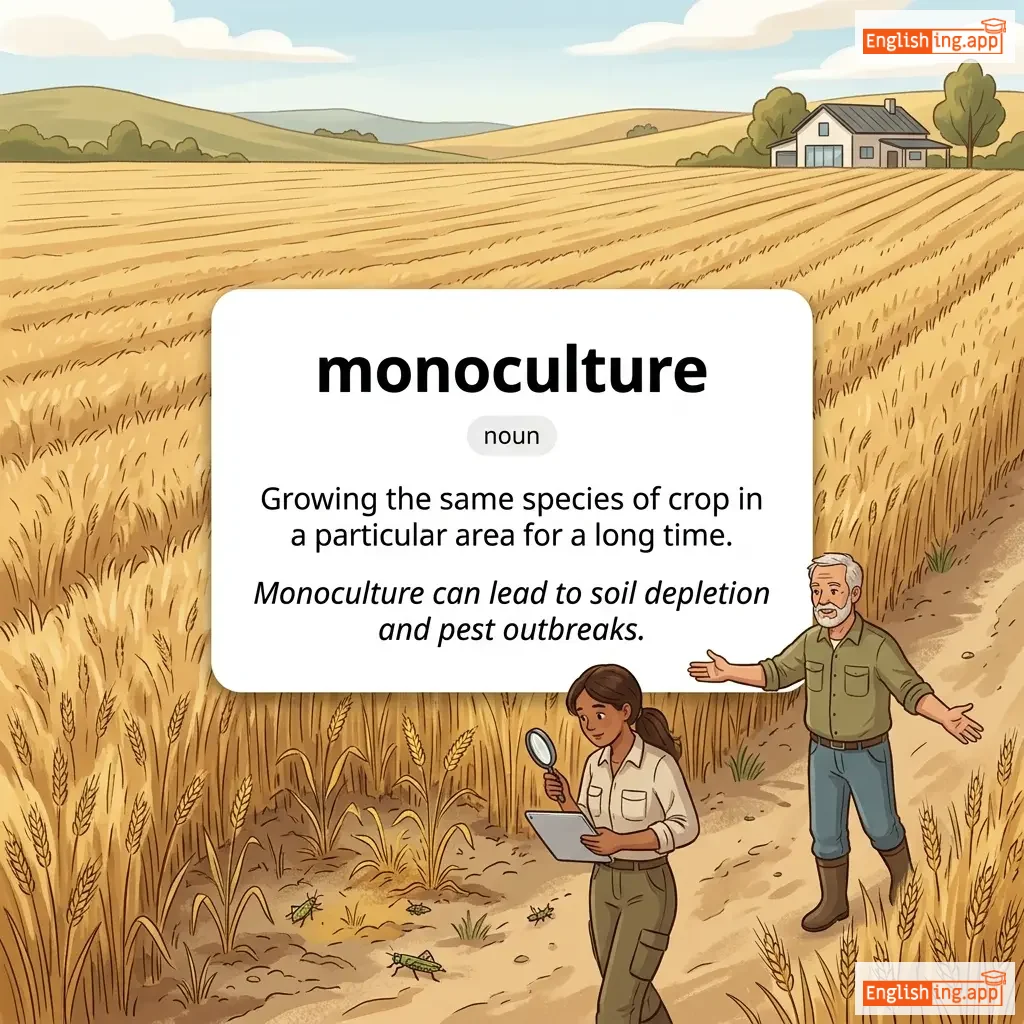
monoculture definition card — visual illustration of the meaning
noun
ˈmɒn.əˌkʌl.tʃər
monoculture (monoculture)

Growing the same species of crop in a particular area for a long time.

"Monoculture can lead to soil depletion and pest outbreaks."

"La monoculture peut entraîner une diminution de la fertilité du sol et des épidémies de parasites." (La monoculture peut entraîner une diminution de la fertilité du sol et des épidémies de parasites.)
noun
/məˈnɒɡəmi/
monogamie (monogamie)

The practice of being married to or in a relationship with only one person at a time.

"Many cultures encourage monogamy as the ideal form of marriage."

"De nombreuses cultures encouragent la monogamie comme la forme idéale de mariage." (De nombreuses cultures encouragent la monogamie comme la forme ideale de mariage.)
noun
/ˈmɒnəɡræm/
monogramme (monogramme)

A design consisting of two or more letters, typically a person's initials, combined or interwoven.

"The towel was embroidered with her monogram."

"La serviette était brodée avec son monogramme." (La serviette etait brodee avec son monogramme.)
noun
/ˈmɒnəɡrɑːf/
monographie (monograhfee)

A detailed written study of a single specialized subject or aspect of it.

"The professor published a monograph on ancient pottery."

"Le professeur a publie une monographie sur la poterie antique." (Leprofesseurapublieunemonographiesurlapoterieantique)
adjective
/mɔːrˈdeɪʃəs/
acerbe ou sarcastique (acerbe ou sarcastique)

Sharp or biting in style, tone, or remark; sarcastic.

"The critic’s mordacious review offended the author."

"La critique mordante du critique a offensé l'auteur." (La critique mordante du critique a offusqué l'auteur.)
noun
/ˈmuːn.biːm/
rayon de lune (rayon de lune)

A ray of light from the moon.

"A moonbeam lit up the quiet forest clearing."

"Un rayon de lune illumina la clairière silencieuse de la forêt." (Un rayon de lune illumina la clairière silencieuse de la forêt.)
adjective, verb
/muːt/
irrélevant / discutable (irrelevant / discutable)

Adjective: subject to debate or irrelevant. Verb: to suggest an idea for discussion.

"The issue of funding became a moot point after the project was canceled."

"La question du financement est devenue un point sans importance après l'annulation du projet." (La question du financement est devenue un point sans importance après l'annulation du projet.)
adjective, noun
/ˈmɔːrəl/
moral (moral)

Adjective: concerned with principles of right and wrong. Noun: a lesson about right and wrong from a story or experience.

"The moral of the story is that honesty is the best policy."

"La morale de l'histoire est que l'honnêteté est la meilleure politique." (La morale de l'histoire est que l'honnêteté est la meilleure politique.)
noun
/məˈræl/
moral (moral)

The confidence, enthusiasm, and discipline of a person or group at a particular time.

"The team's morale improved after their recent victory."

"Le moral de l'équipe s'est amélioré après leur récente victoire." (Le moral de l'équipe s'est amélioré après leur récente victoire.)
noun
/ˈmɒrəlɪst/
moraliste (moraliste)

A person who teaches or promotes moral principles and values.

"The author was known as a strict moralist in his writings."

"L'auteur était connu comme un moraliste strict dans ses écrits." (L'auteur était connu comme un moraliste strict dans ses écrits.)
noun
/məˈrælɪti/
moralité (moralite)

Principles concerning the distinction between right and wrong or good and bad behavior.

"Society's sense of morality changes over time."

"Le sens de la moralité dans la société change avec le temps." (Le sens de la moralité dans la société change avec le temps.)
verb
/ˈmɒrəlaɪz/
moraliser (moralizer)

To comment on issues of right and wrong, often with an air of superiority.

"He tends to moralize about other people's choices."

"Il a tendance à moraliser sur les choix des autres." (Il a tendance à moraliser sur les choix des autres.)
adverb
/ˈmɔːrəli/
moralement (moralement)

in accordance with principles of right and wrong behavior; ethically

"She felt morally obligated to help the refugees."

"Elle se sentait moralement obligée d'aider les réfugiés." (Elle se sentait moralement obligée d'aider les réfugiés.)
noun
/məˈræs/
situation compliquée (situation compliquee)

A complicated or confused situation; a swampy or boggy ground.

"The project got stuck in a bureaucratic morass."

"Le projet est coincé dans un marasme bureaucratique." (Le projet est coince dans un marasme bureaucratique.)
noun
/ˌmɔːrəˈtɔːriəm/
moratoire (moratoire)

A temporary suspension or delay of an activity, law, or obligation.

"The government announced a moratorium on new mining licenses."

"Le gouvernement a annoncé un moratoire sur les nouvelles licences minières." (Le gouvernement a annonce un moratoire sur les nouvelles licences minieres.)
adjective
/ˈmɔːrbɪd/
intérêt anormal pour des sujets perturbants ou désagréables (interet anormal pour des sujets perturbants ou desagreables)

Having an abnormal interest in disturbing or unpleasant subjects such as death or disease.

"She had a morbid fascination with crime stories."

"Elle avait une fascination morbide pour les histoires de crime." (Elle avait une fascination morbide pour les histoires de crime.)
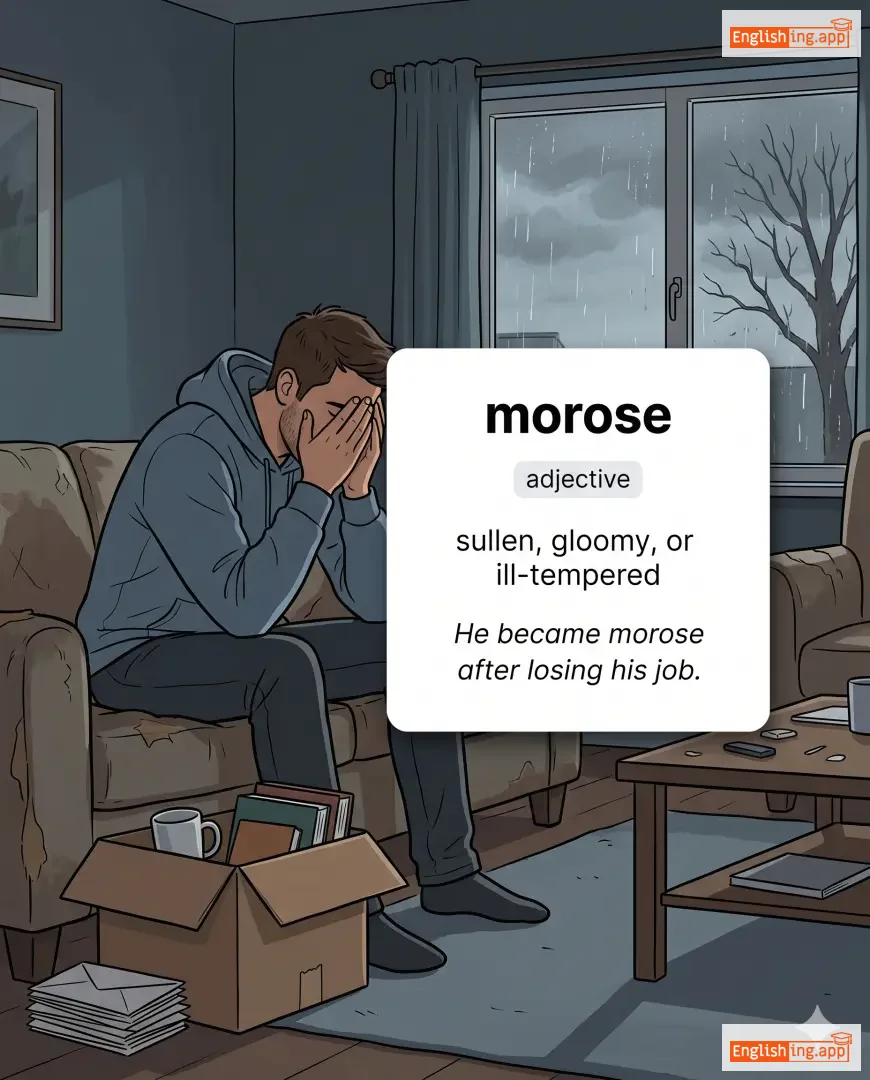
morose definition card — visual illustration of the meaning
adjective
/məˈroʊs/
morose (morose)

sullen, gloomy, or ill-tempered

"He became morose after losing his job."

"Il est devenu morose après avoir perdu son travail." (Il est devenu morose apres avoir perdu son travail.)