Vocabulaires

Découvrez, apprenez et maîtrisez le vocabulaire anglais

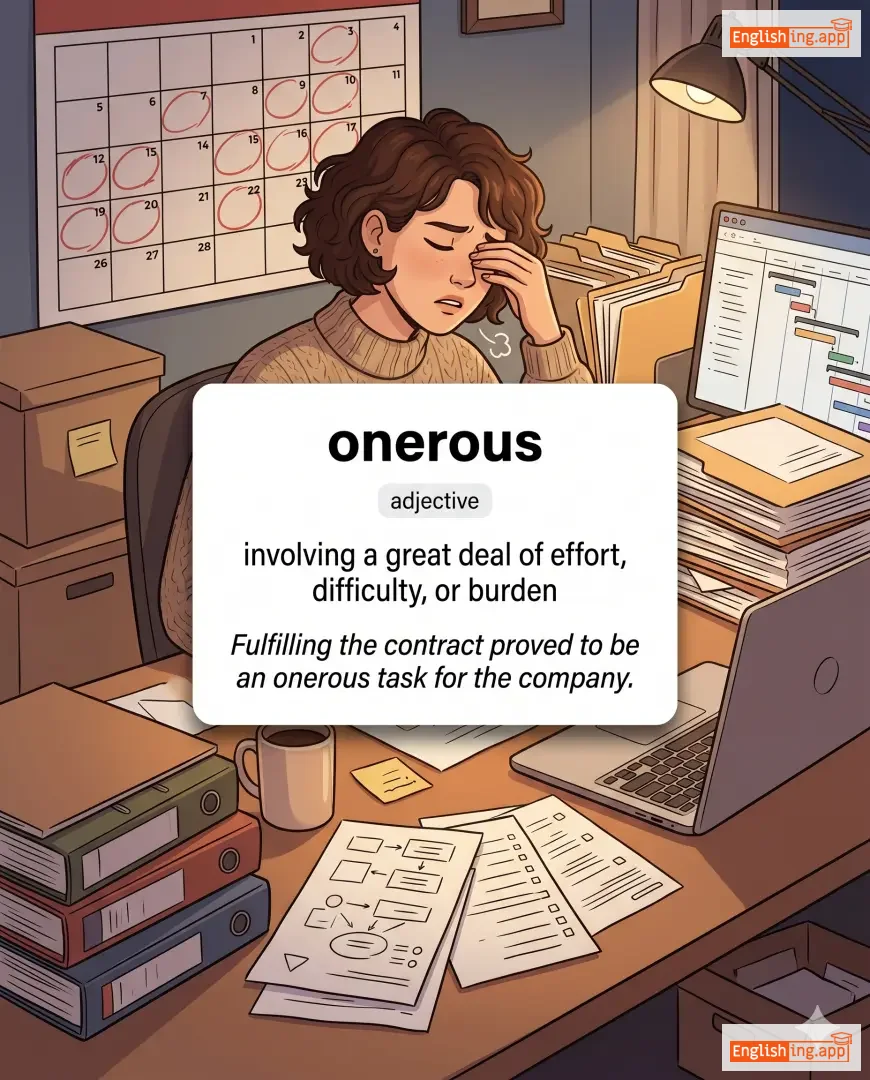
onerous definition card — visual illustration of the meaning
adjective
/ˈəʊnərəs/
ardu (ardu)

involving a great deal of effort, difficulty, or burden

"Fulfilling the contract proved to be an onerous task for the company."

"Accomplir le contrat s'est avéré être une tâche ardue pour l'entreprise." (Accomplir le contrat s'est avéré être une tâche ardue pour l'entreprise.)
noun
/wʌn θɜːd/
un tiers (un tiers)

one part of something that is divided into three equal parts

"One-third of the class was absent today."

"Un tiers de la classe était absent aujourd'hui." (Un tiers de la classe était absent aujourd'hui.)
1️⃣

one (wan)

pronoun, noun, adjective
/wʌn/
un (un)

the number equivalent to the sum of zero and one; a single person or thing

"Only one student answered the question."

"Un seul étudiant a répondu à la question." (Un seul étudiant a répondu à la question.)
adverb
/wʌns/
une fois (une fois)

on one occasion only; at a time in the past

"She visited Paris once last year."

"Elle a visité Paris une fois l'année dernière." (Elle a visité Paris une fois l'année dernière.)
preposition
/ɒn/
sur (sur)

physically in contact with and supported by a surface

"The book is on the table."

"Le livre est sur la table." (Le livre est sur la table.)
adjective
/ɒmˈnɪvərəs/
omnivore (omnivore)

eating both plants and animals

"Humans are generally considered omnivorous creatures."

"Les humains sont généralement considérés comme des créatures omnivores." (Les humains sont généralement considérés comme des créatures omnivores.)
adjective
/ɒmˈnɪʃənt/
omniscient (omniscient)

having complete or unlimited knowledge and awareness

"Some religions describe God as omniscient and all-powerful."

"Certaines religions décrivent Dieu comme omniscient et tout-puissant." (Certaines religions decrivent Dieu comme omniscient et tout-puissant.)
noun
/ɒmˈnɪʃəns/
omniscience (omniscience)

the state of knowing everything

"The novel's narrator has an air of omniscience, revealing every character's thoughts."

"Le narrateur du roman a un air d'omniscience, révélant les pensées de chaque personnage." (Le narrateur du roman a un air domniscience, revelant les pensees de chaque personnage.)
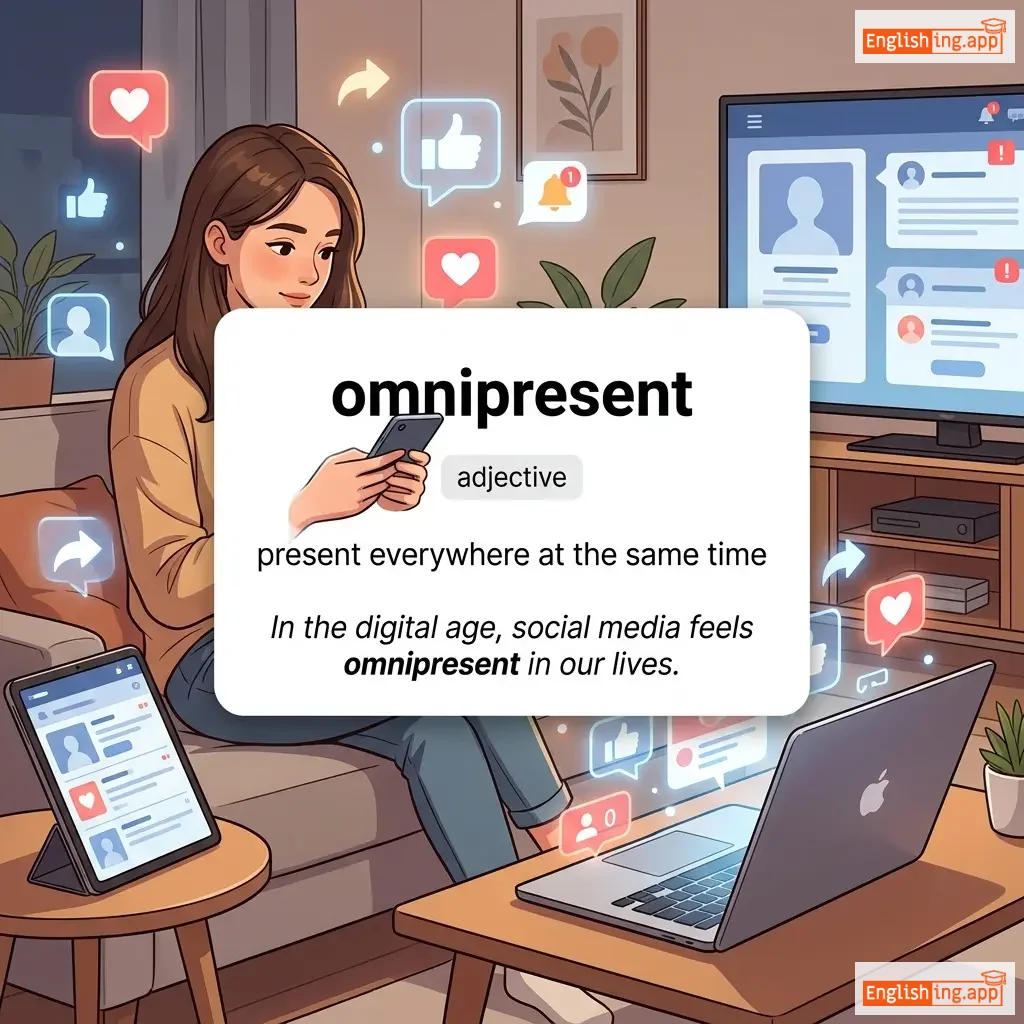
omnipresent definition card — visual illustration of the meaning
adjective
/ˌɒmnɪˈprɛzənt/
omniprésent (omnipresent)

present everywhere at the same time

"In the digital age, social media feels omnipresent in our lives."

"À l'ère numérique, les réseaux sociaux se sentent omniprésents dans nos vies." (A l'ere numerique, les reseaux sociaux se sentent omnipresents dans nos vies.)
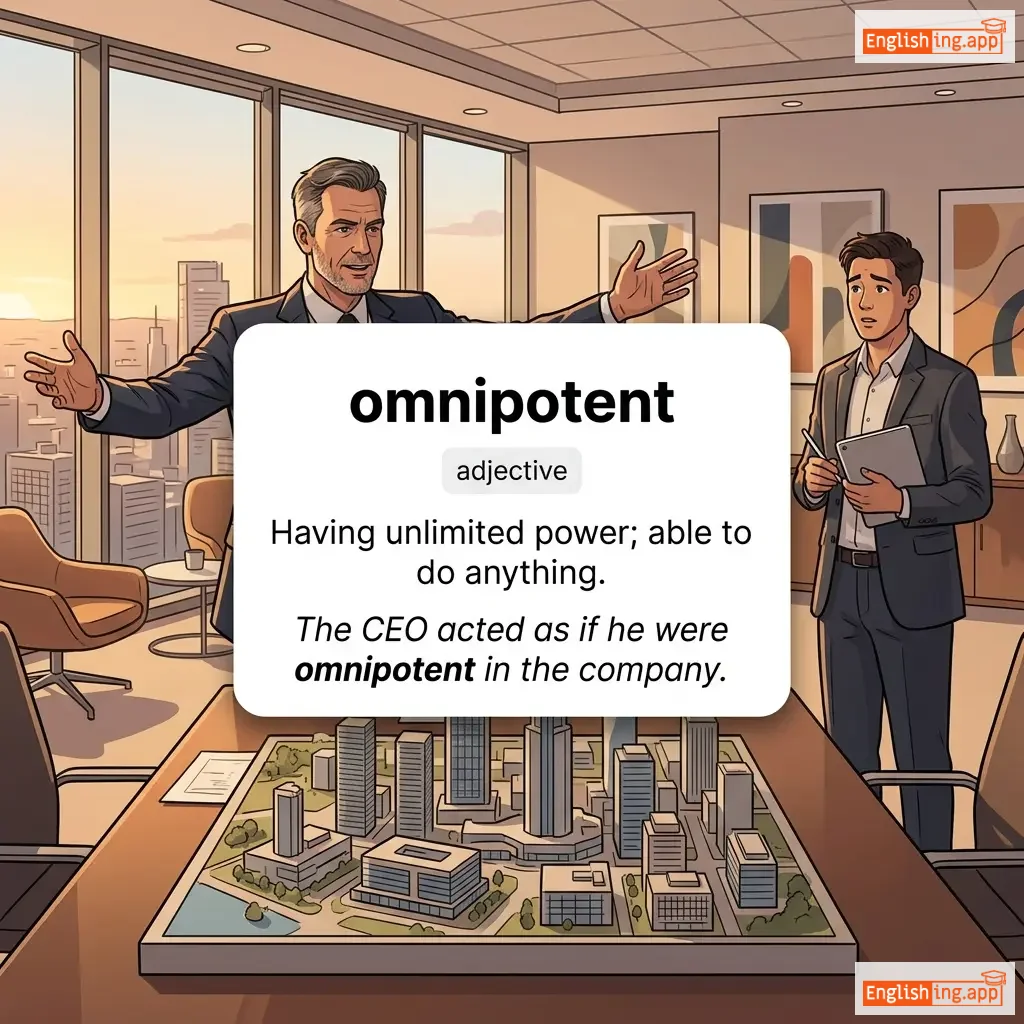
omnipotent definition card — visual illustration of the meaning
adjective
/ɒmˈnɪpətənt/
omnipotent (omnipotent)

Having unlimited power; able to do anything.

"The CEO acted as if he were omnipotent in the company."

"Le PDG a agi comme s'il était omnipotent dans l'entreprise." (Le PDG a agi comme s'il était omnipotent dans l'entreprise.)
noun
/ɒmˈnɪpətəns/
omnipotence (omnipotence)

The quality of having unlimited power or authority.

"Many religions describe God’s omnipotence as absolute."

"De nombreuses religions décrivent l'omnipotence de Dieu comme absolue." (De nombreuses religions decrivent l'omnipotence de Dieu comme absolue.)
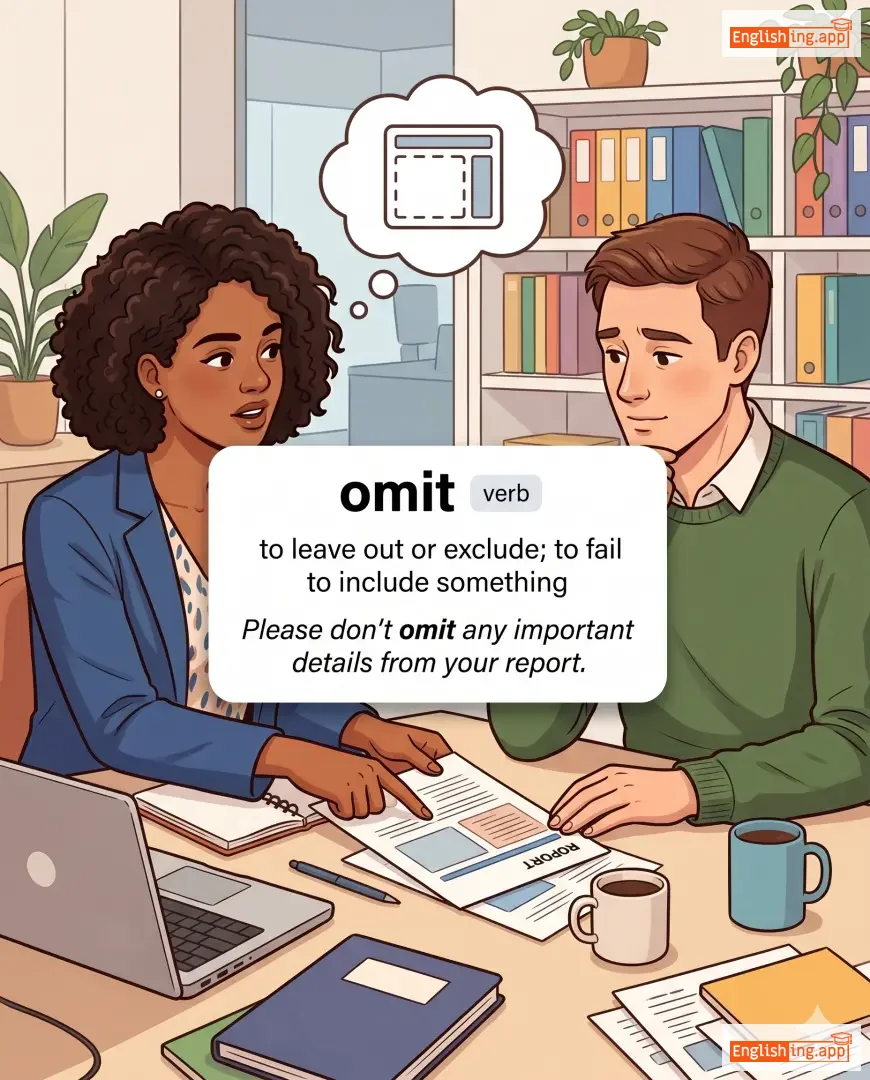
omit definition card — visual illustration of the meaning
verb
/oʊˈmɪt/
omettre (ometre)

to leave out or exclude; to fail to include something

"Please don't omit any important details from your report."

"Veuillez ne pas omettre les détails importants dans votre rapport." (Veuillez ne pas omettre les détails importants dans votre rapport.)
noun
/əˈmɪʃən/
omission (omission)

The act of leaving out or excluding something; something that has been left out.

"Her omission of important details caused confusion."

"Son omission de détails importants a causé de la confusion." (Son omission de détails importants a causé de la confusion.)
adjective
/ˈɒmɪnəs/
menaçant (menasant)

Giving the impression that something bad or unpleasant is going to happen.

"Dark clouds gave an ominous sign of an approaching storm."

"Les nuages sombres ont donné un signe menaçant d'une tempête approchante." (Les nuages sombres ont donné un signe menaçant d'une tempête approchante.)
noun
/ˈoʊ.mən/
un signe de bonne ou mauvaise chance future (un signe de bonne ou mauvaise chance future)

an event regarded as a sign of future good or bad luck

"Many people consider a black cat crossing your path a bad omen."

"Beaucoup de gens considèrent qu'un chat noir traversant votre chemin est un mauvais présage." (Beaucoup de gens considèrent qu'un chat noir traversant votre chemin est un mauvais présage.)
noun
/əˈlɪmpɪks/
Jeux Olympiques (Jeux Olympiques)

an international sports competition held every four years with athletes from many countries

"The Olympics bring athletes from all over the world together."

"Les Jeux Olympiques réunissent des athlètes du monde entier." (Les Jeux Olympiques réunissent des athlètes du monde entier.)
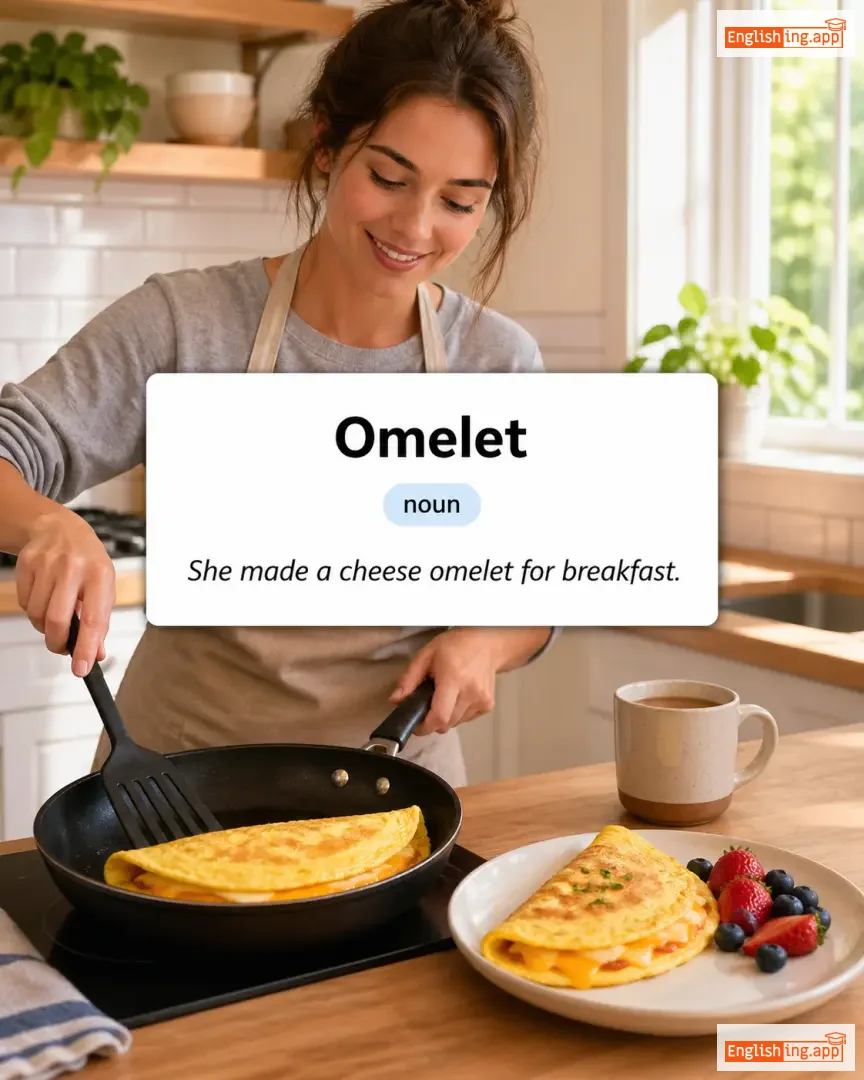
Omelet definition card — visual illustration of the meaning
noun
/ˈɒm.lət/
omelette (omelette)

a dish made from beaten eggs cooked in a frying pan and often folded around a filling

"She made a cheese omelet for breakfast."

"Elle a préparé une omelette au fromage pour le petit déjeuner." (elle a préparé une omelette au fromage pour le petit déjeuner.)
adjective
/əˈfɪʃəl/
officiel (officiel)

relating to or connected with an authority or public office

"He is the official spokesperson for the company."

"Il est le porte-parole officiel de l'entreprise." (Il est le porte-parole officiel de l'entreprise.)
adverb
/əˈfɪʃəli/
officiellement (officiellement)

in a formal or authorized way

"The building was officially opened by the mayor."

"Le bâtiment a été officiellement inauguré par le maire." (Le bâtiment a été officiellement inauguré par le maire.)
verb
/əˈfɪʃieɪt/
officier (officier)

To perform official duties, especially in a ceremony or as a referee.

"The priest will officiate the wedding ceremony."

"Le prêtre officiera la cérémonie de mariage." (Le prêtre officiera la cérémonie de mariage.)
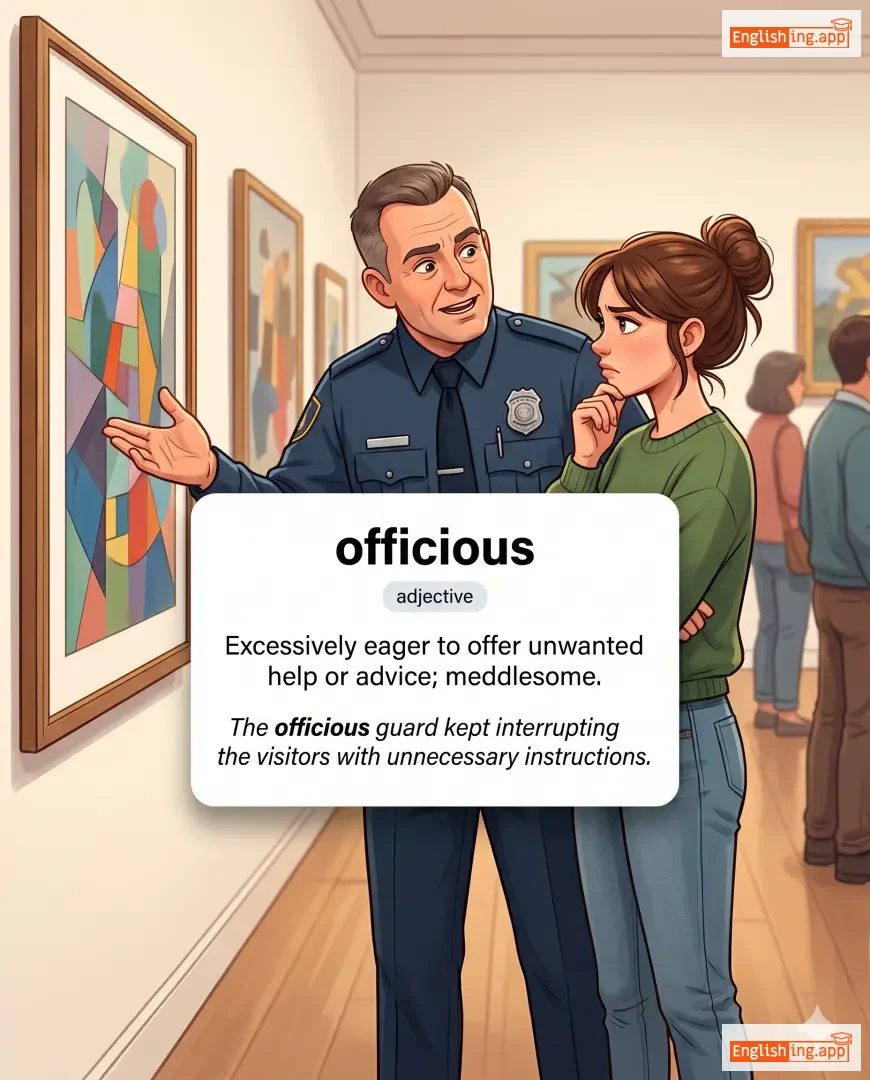
officious definition card — visual illustration of the meaning
adjective
/əˈfɪʃəs/
médicule (medicule)

Excessively eager to offer unwanted help or advice; meddlesome.

"The officious guard kept interrupting the visitors with unnecessary instructions."

"Le garde médicule interrompait les visiteurs avec des instructions inutiles." (Le garde médicule interrompait les visiteurs avec des instructions inutiles.)
adjective
/ˈɒfɪʃ/
distant (distant)

Unfriendly, distant, or reserved in manner.

"He seemed offish at the party and avoided most conversations."

"Il semblait distant à la fête et évitait la plupart des conversations." (Il semblait distant a la fete et evitait la plupart des conversations.)
verb
/ˈɒfsɛt/
compenser (compenser)

To counterbalance or compensate for something.

"The company's losses were offset by gains in other departments."

"Les pertes de l'entreprise ont été compensées par des gains dans d'autres départements." (Les pertes de l'entreprise ont été compensées par des gains dans d'autres départements.)
noun
/ˈɒfʃuːt/
dérivé (derive)

A branch or result that develops from something larger or more important.

"The startup was an offshoot of a major tech company."

"La startup était un dérivé d'une grande entreprise technologique." (La startup etait un derive d'une grande entreprise technologique.)
noun
/ˈɒf.sprɪŋ/
progéniture (progeniture)

a person's child or children; an animal's young

"The bird carefully fed its offspring."

"L'oiseau a nourri soigneusement sa progéniture." (L'oiseau a nourri soigneusement sa progéniture.)
adverb
/ˈɔːfən/
souvent (souvent)

frequently, many times

"I often visit my grandparents on weekends."

"Je visite souvent mes grands-parents le week-end." (Je visite souvent mes grands-parents le week-end.)
verb
/ˈoʊɡəl/
regarder avec désir (regarder avec desir)

To look at someone with obvious sexual interest.

"He kept ogling the models on the runway."

"Il n'arrêtait pas de regarder les mannequins sur le podium." (Il n'arretait pas de regarder les mannequins sur le podium.)
noun
/ˈoʊɡər/
ogre (ogre)

A mythical monster, often depicted as large, hideous, and cruel; metaphorically, a cruel or terrifying person.

"The villagers feared the ogre who lived in the dark forest."

"Les villageois craignaient l'ogre qui vivait dans la forêt sombre." (Les villageois craignaient l ogre qui vivait dans la foret sombre)
interjection
/oʊ/
Oh (oh)

used to express surprise, realization, or understanding

"Oh, I didn't know you were here!"

"Oh, je ne savais pas que tu étais ici !" (Oh, je ne savais pas que tu étais ici !)
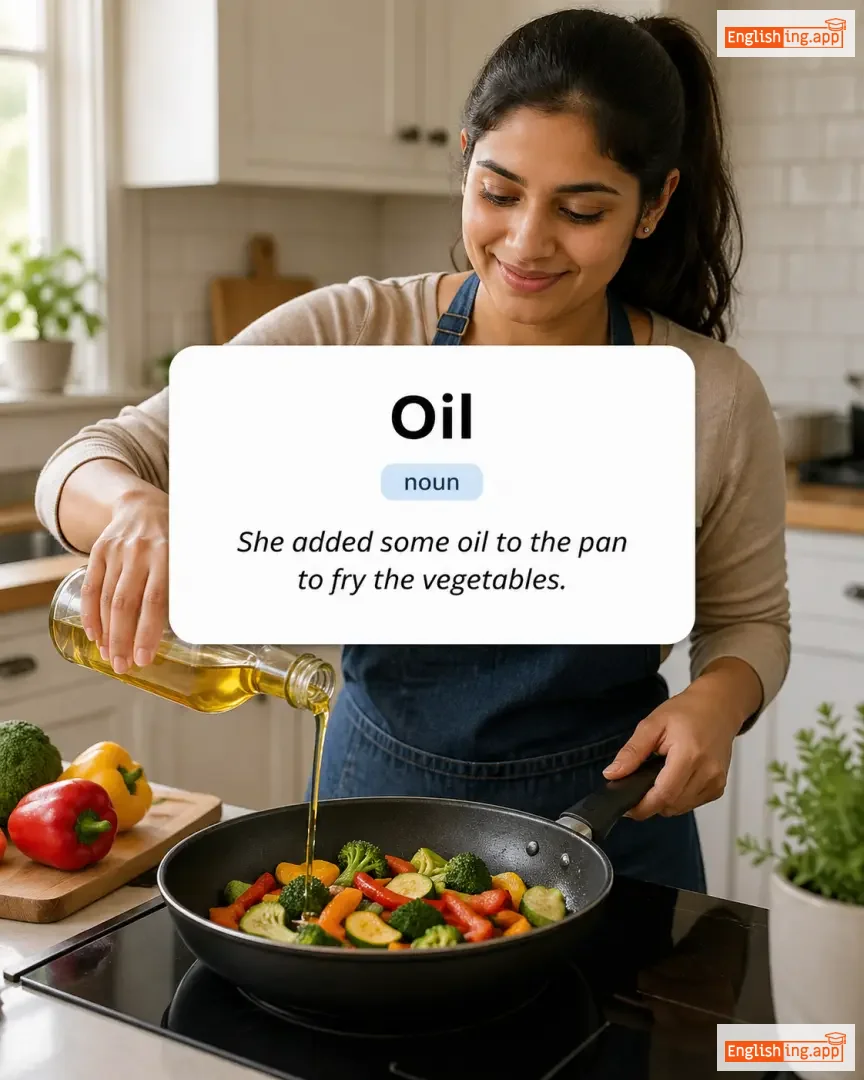
Oil definition card — visual illustration of the meaning
noun
/ɔɪl/
huile (huile)

a viscous liquid derived from plants or animals, used for cooking, lubrication, or fuel

"She added some oil to the pan to fry the vegetables."

"Elle a ajouté un peu d'huile dans la poêle pour faire frire les légumes." (Elle a ajoute un peu d'huile dans la poele pour faire frire les legumes.)
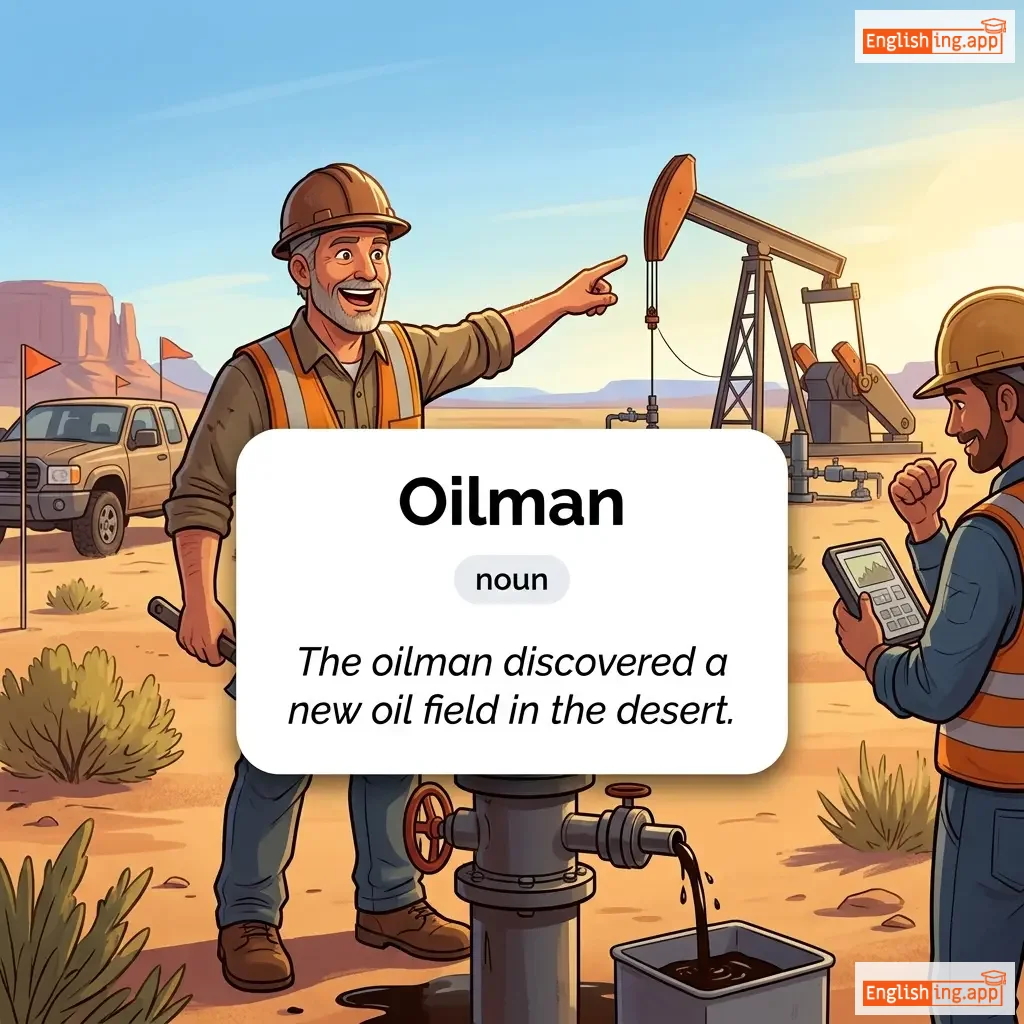
Oilman definition card — visual illustration of the meaning
noun
/ˈɔɪl.mən/
pétrolier (petrolier)

a person who works in the oil industry; someone who sells oil or petroleum products

"The oilman discovered a new oil field in the desert."

"Le pétrolier a découvert un nouveau champ pétrolier dans le désert." (Le petrolier a decouvert un nouveau champ petrolier dans le desert.)
noun
/ˈɔɪntmənt/
onguent (onguent)

A smooth, oily substance applied to the skin for healing or soothing.

"The doctor prescribed an ointment for the burn on his arm."

"Le médecin a prescrit un onguent pour la brûlure sur son bras." (Le médecin a prescrit un onguent pour la brûlure sur son bras.)
adjective
/ˈɔɪl.i/
huileux; recouvert d'huile; gras (huileux; recouvert d'huile; gras)

covered with oil; containing oil; greasy

"Her oily skin needs special care."

"Sa peau huileuse a besoin de soins spéciaux." (Sa peau huileuse a besoin de soins spéciaux.)
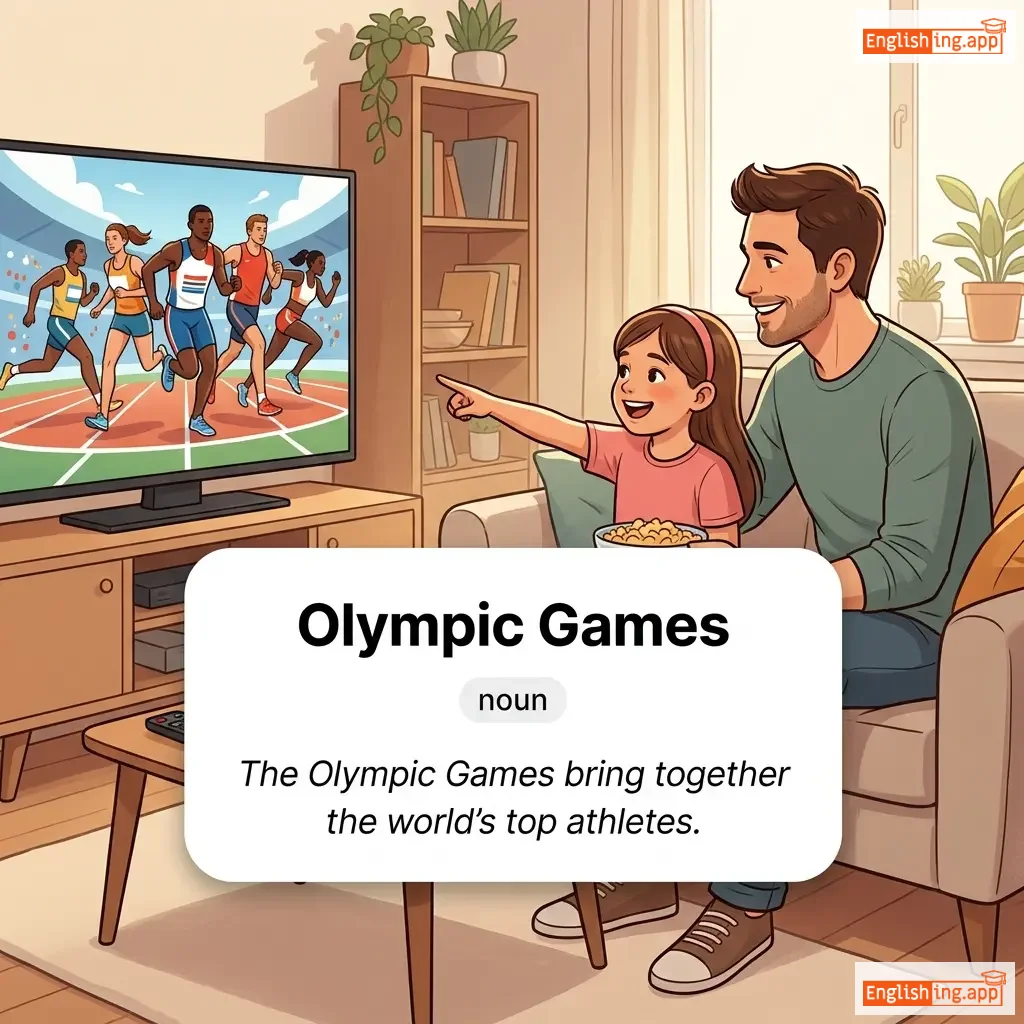
Olympic Games definition card — visual illustration of the meaning
noun
əˈlɪm.pɪk ɡeɪmz
jeux olympiques (jeux olympiques)

The world's largest international sports competition held every four years, bringing together athletes from different countries to compete in various sports.

"The Olympic Games bring together the world's top athletes."

"Les Jeux Olympiques réunissent les meilleurs athlètes du monde." (Les Jeux Olympiques reunissent les meilleurs athletes du monde.)
adjective
/əˈlɪmpɪk/
olympique (olimpik)

related to the Olympic Games, a major international sporting event

"She trained hard to compete in the Olympic Games."

"Elle a beaucoup travaillé pour participer aux Jeux Olympiques." (Elle a beaucoup travaillé pour participer aux Jeux Olympiques.)
noun
/ˈɒlɪv brɑːntʃ/
branche d'olivier (branche d'olivier)

A symbol of peace or reconciliation; an offer to end conflict.

"He extended an olive-branch to his rival after years of hostility."

"Il a tendu une branche d'olivier à son rival après des années d'hostilité." (Il a tendu une branche d'olivier à son rival après des années d'hostilité.)
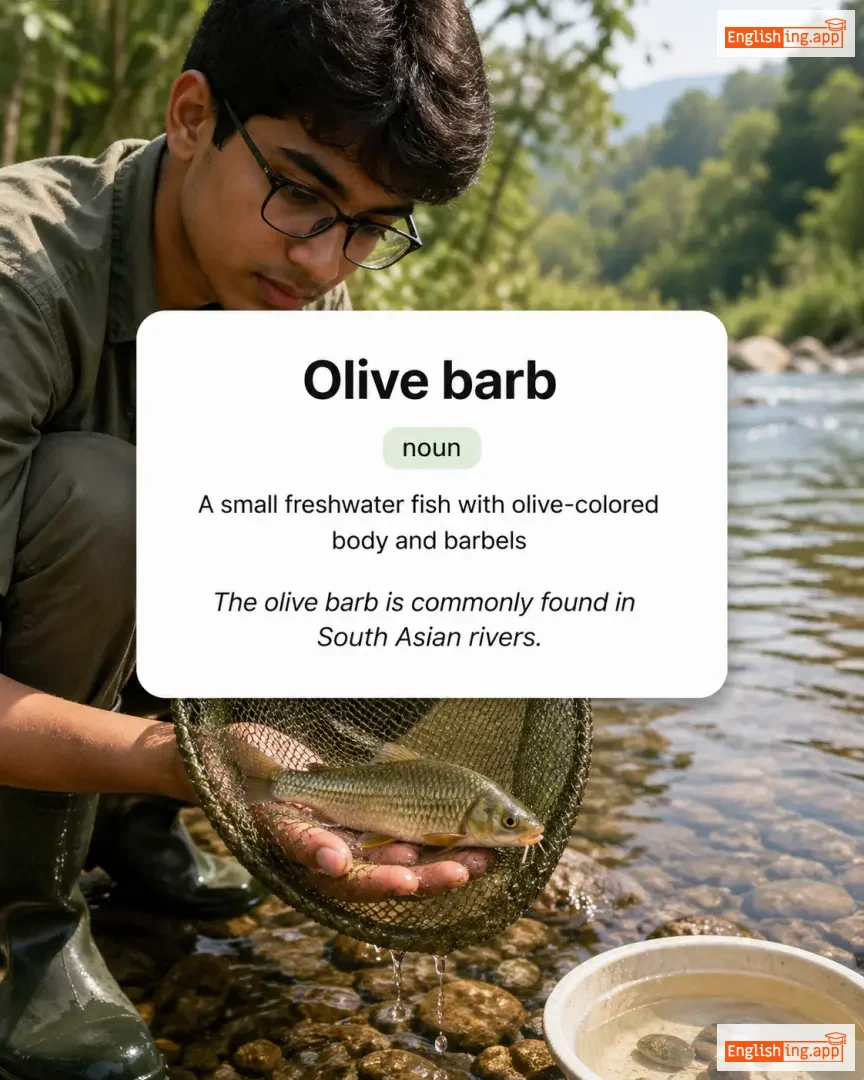
Olive barb definition card — visual illustration of the meaning
noun
/ˈɒlɪv bɑːb/
barbe olive (barb oliv)

A small freshwater fish with olive-colored body and barbels

"The olive barb is commonly found in South Asian rivers."

"La barbe olive se trouve couramment dans les rivières d’Asie du Sud." (la barb oliv se trouv kouramman dan le riviere dazi du sud)
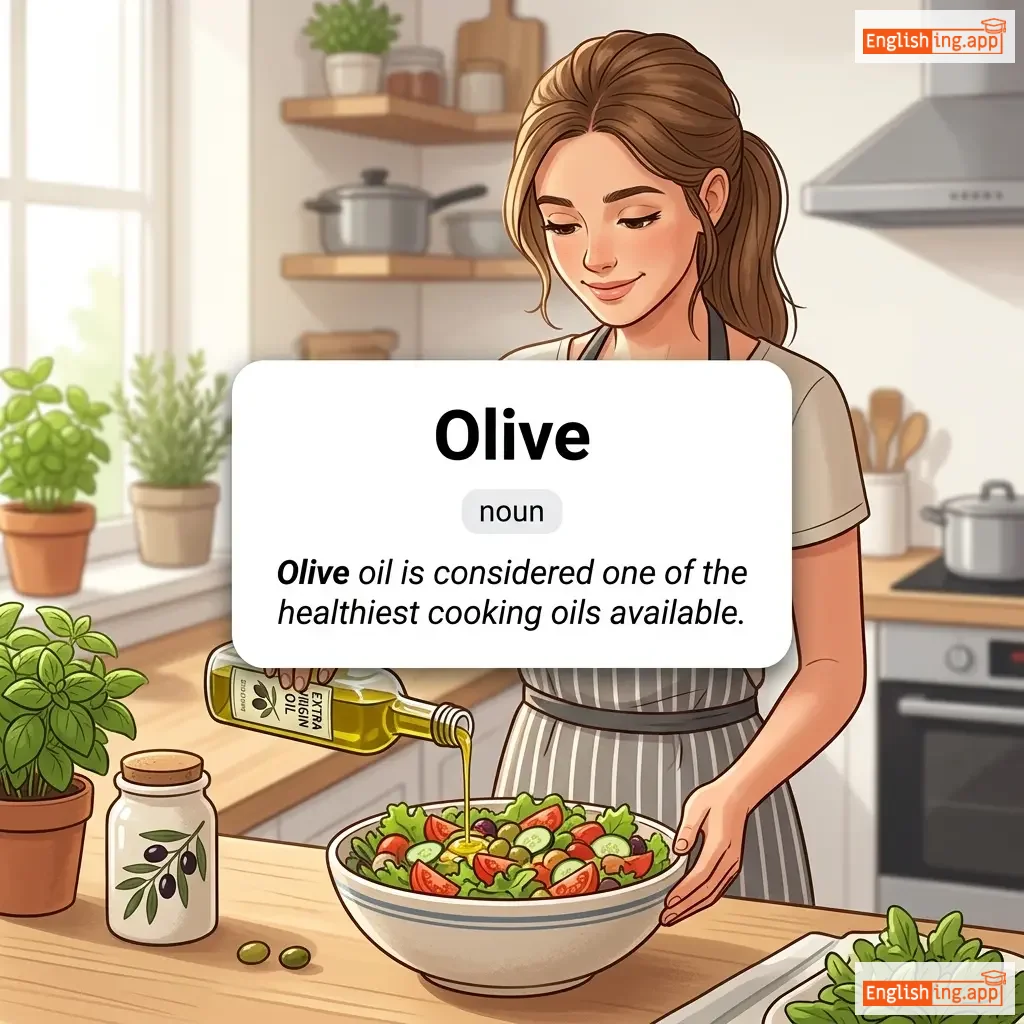
Olive definition card — visual illustration of the meaning
noun
/ˈɑː.lɪv/
olive (olive)

a small oval fruit with a hard pit, typically green or black, used for eating or making oil

"Olive oil is considered one of the healthiest cooking oils available."

"L'huile d'olive est considérée comme l'une des huiles de cuisson les plus saines disponibles." (L'huile d'olive est considérée comme l'une des huiles de cuisson les plus saines disponibles.)
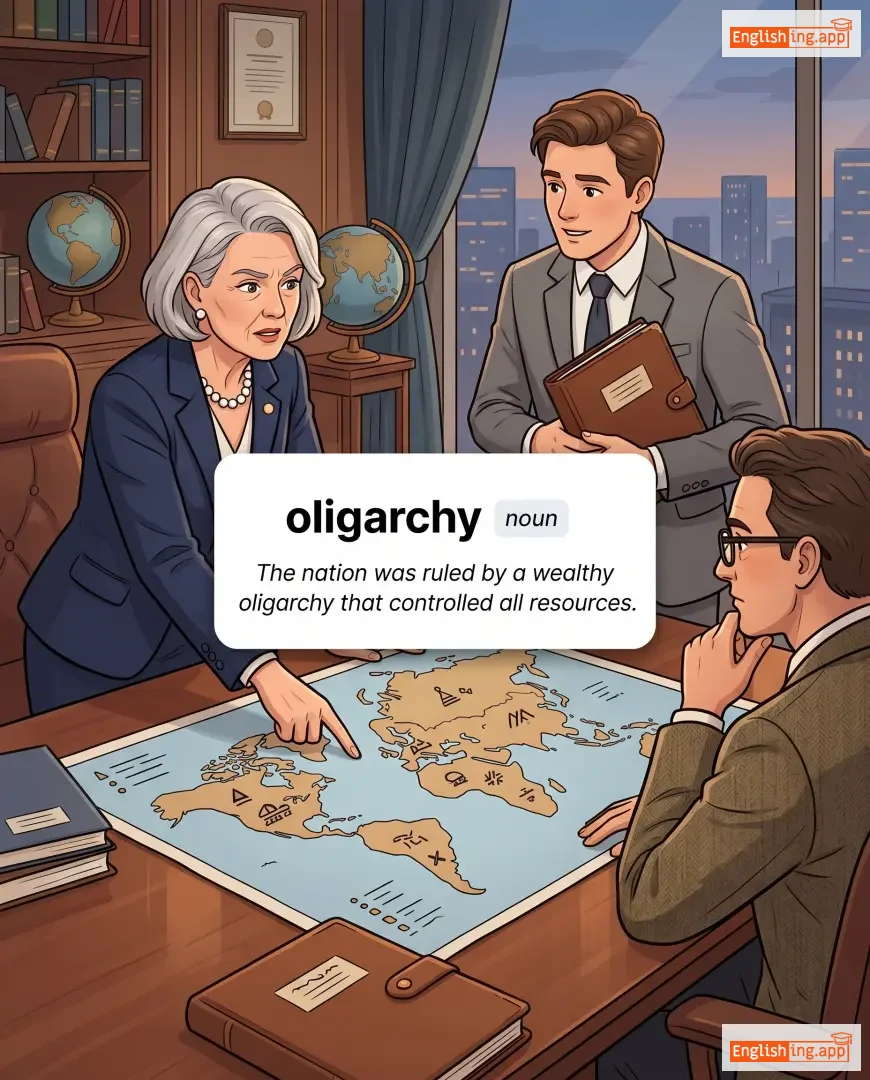
oligarchy definition card — visual illustration of the meaning
noun
/ˈɑːlɪˌɡɑːrki/
oligarchie (oligarchie)

A small group of people having control of a country, organization, or institution.

"The nation was ruled by a wealthy oligarchy that controlled all resources."

"La nation était dirigée par une oligarchie riche qui contrôlait toutes les ressources." (La nation etait dirigee par une oligarchie riche qui controllait toutes les ressources.)
noun
/ɑːlˈfækʃən/
olfaction (olfaction)

The sense of smell; the process of detecting and perceiving odors.

"Dogs have a highly developed sense of olfaction."

"Les chiens ont un sens de l'olfaction très développé." (Les chiens ont un sens de l'olfaction très développé.)
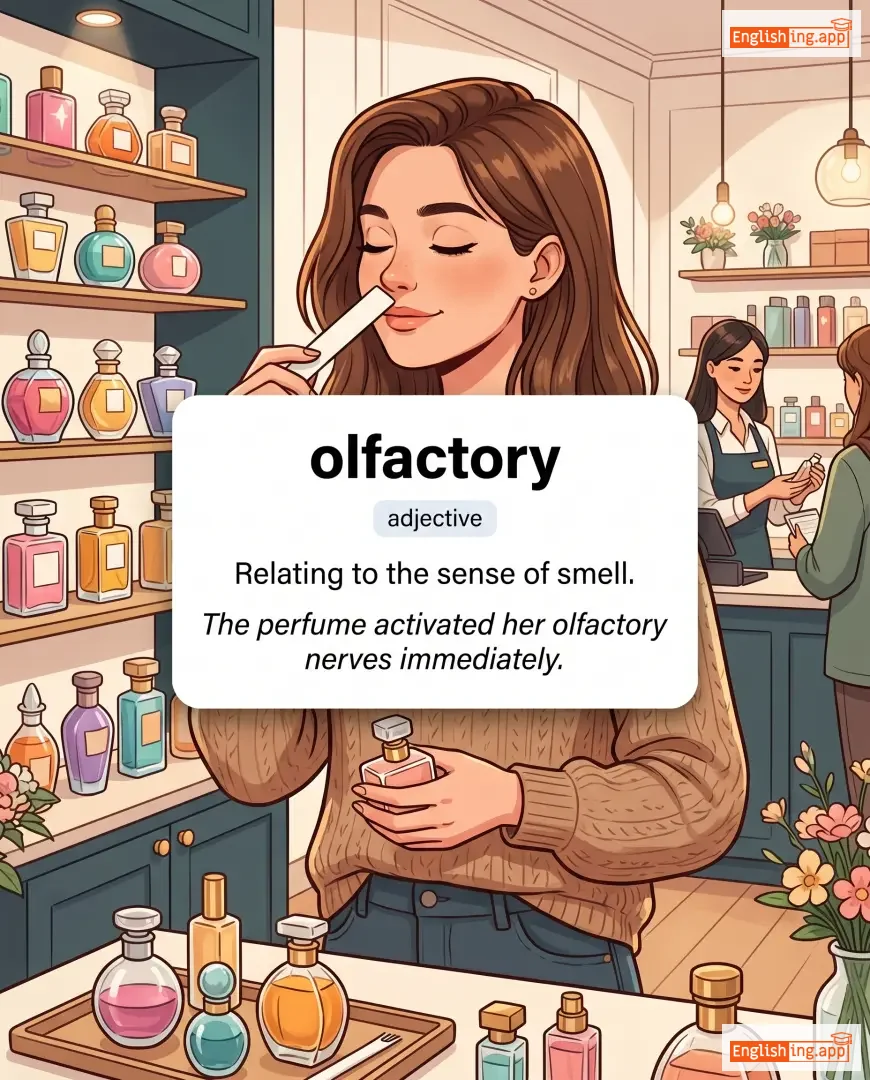
olfactory definition card — visual illustration of the meaning
adjective
/ɑːlˈfæktəri/
olfactif (olfactif)

Relating to the sense of smell.

"The perfume activated her olfactory nerves immediately."

"Le parfum a immédiatement activé ses nerfs olfactifs." (Le parfum a immediatement active ses nerfs olfactifs)
adjective
/oʊˈkeɪ/
d'accord (d'accord)

used to indicate agreement, approval, or understanding

"Okay, let's go to the park."

"D'accord, allons au parc." (D'accord, allons au parc.)
adjective
/əʊˈkeɪ/
d'accord (d'accord)

used to express agreement or acceptance

"It's okay to leave early today."

"Il est d'accord de partir tôt aujourd'hui." (Il est d'accord de partir tôt aujourd'hui.)
adjective
/ˌoʊld ˈfæʃənd/
démodé (demode)

not modern; belonging to an earlier time

"He still wears an old-fashioned hat."

"Il porte encore un chapeau démodé." (Il porte encore un chapeau démodé.)
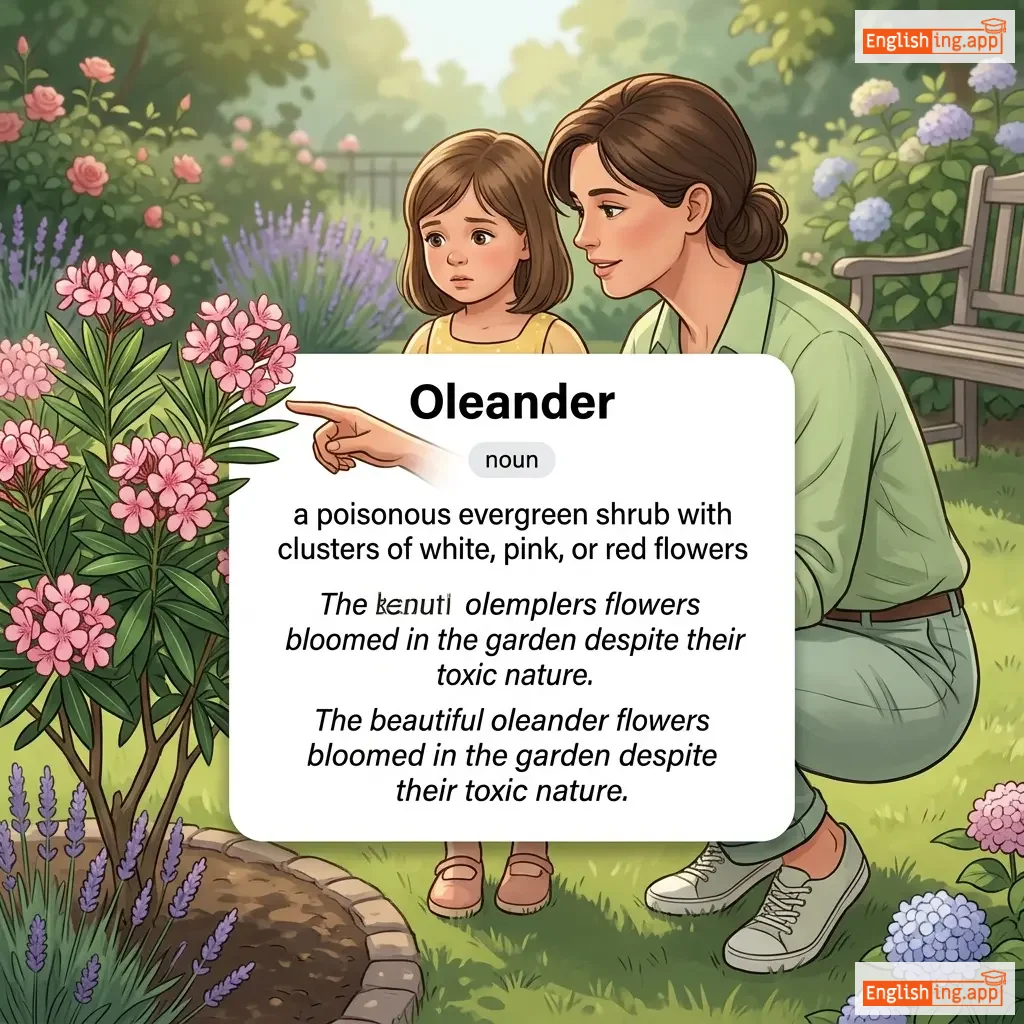
Oleander definition card — visual illustration of the meaning
noun
/oʊliˈændər/
oléandre (oleandre)

a poisonous evergreen shrub with clusters of white, pink, or red flowers

"The beautiful oleander flowers bloomed in the garden despite their toxic nature."

"Les belles fleurs d'oléanre ont fleuri dans le jardin malgré leur nature toxique." (Les belles fleurs d'oléanre ont fleuri dans le jardin malgré leur nature toxique.)
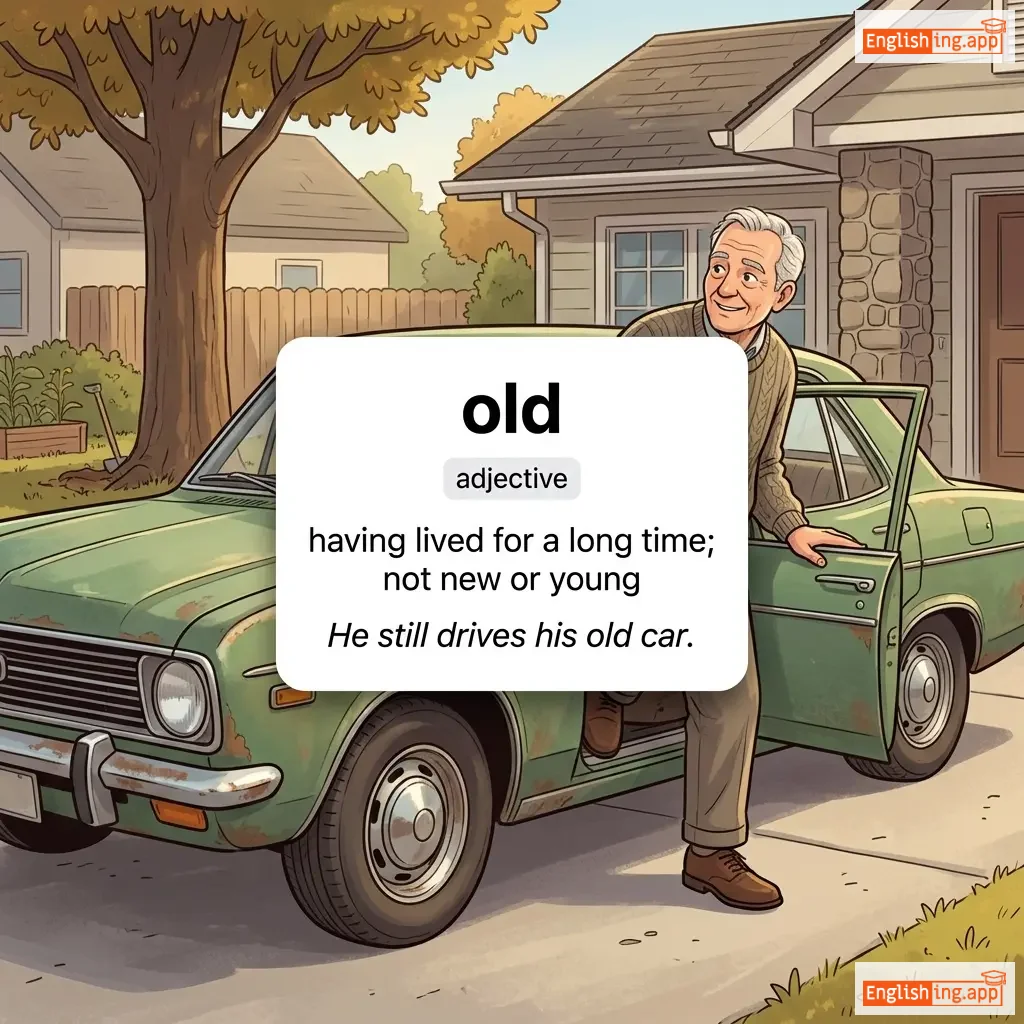
old definition card — visual illustration of the meaning
adjective
/oʊld/
vieux (vieux)

having lived for a long time; not new or young

"He still drives his old car."

"Il conduit toujours sa vieille voiture." (Il conduit toujours sa vieille voiture.)
adjective
/ˈmɒtli/
hétérogène (hétérogène)

Made up of different, often incongruous or diverse elements.

"The festival attracted a motley crowd of artists, musicians, and tourists."

"Le festival a attiré une foule hétérogène d'artistes, de musiciens et de touristes." (Le festival a attiré une foule hétérogène d'artistes, de musiciens et de touristes.)
noun
/ˈmoʊtər/
moteur (moteur)

a machine that produces motion or power to make something work

"The car’s motor stopped suddenly."

"Le moteur de la voiture s'est arrêté soudainement." (Le moteur de la voiture s'est arrêté soudainement.)
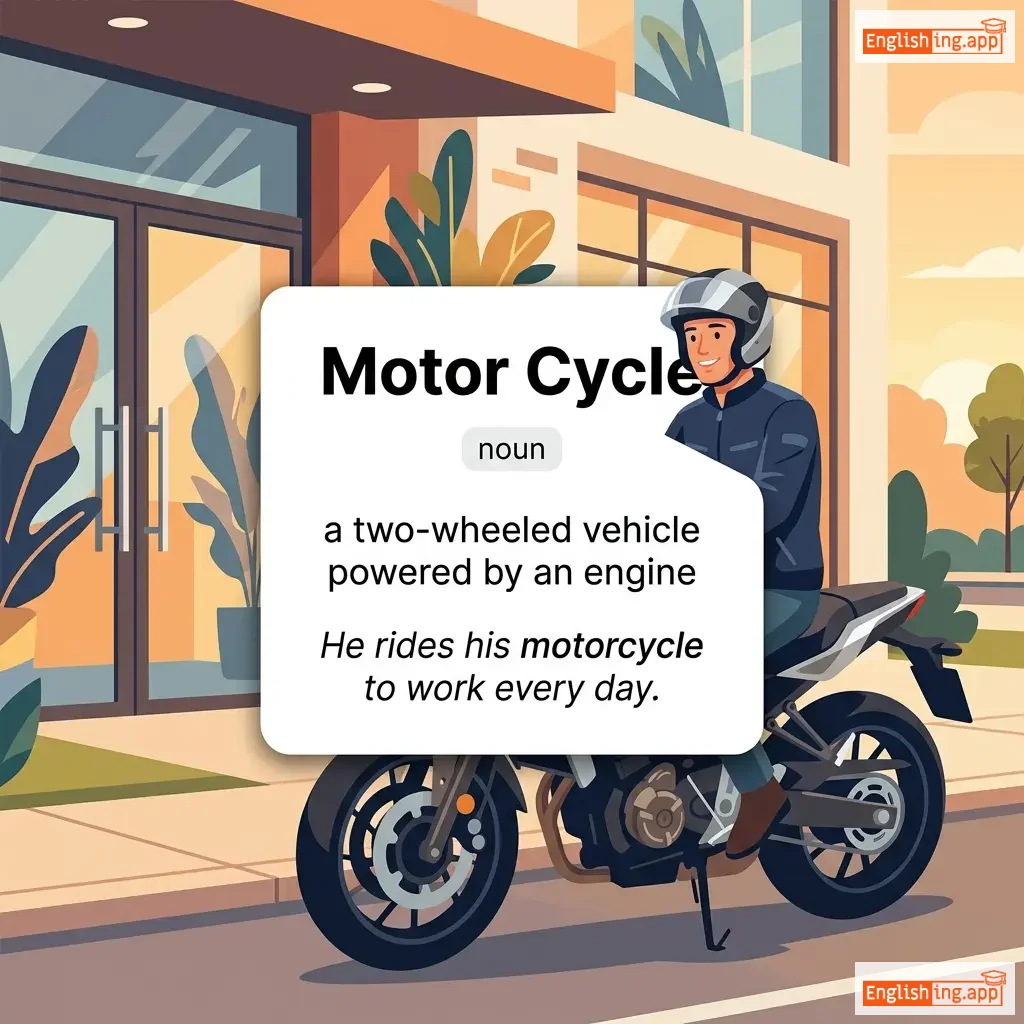
Motor Cycle definition card — visual illustration of the meaning
noun
/ˈmoʊ.tər ˌsaɪ.kəl/
moto (moto)

a two-wheeled vehicle powered by an engine

"He rides his motorcycle to work every day."

"Il roule en moto tous les jours pour aller au travail." (Il roule en moto tous les jours pour aller au travail.)
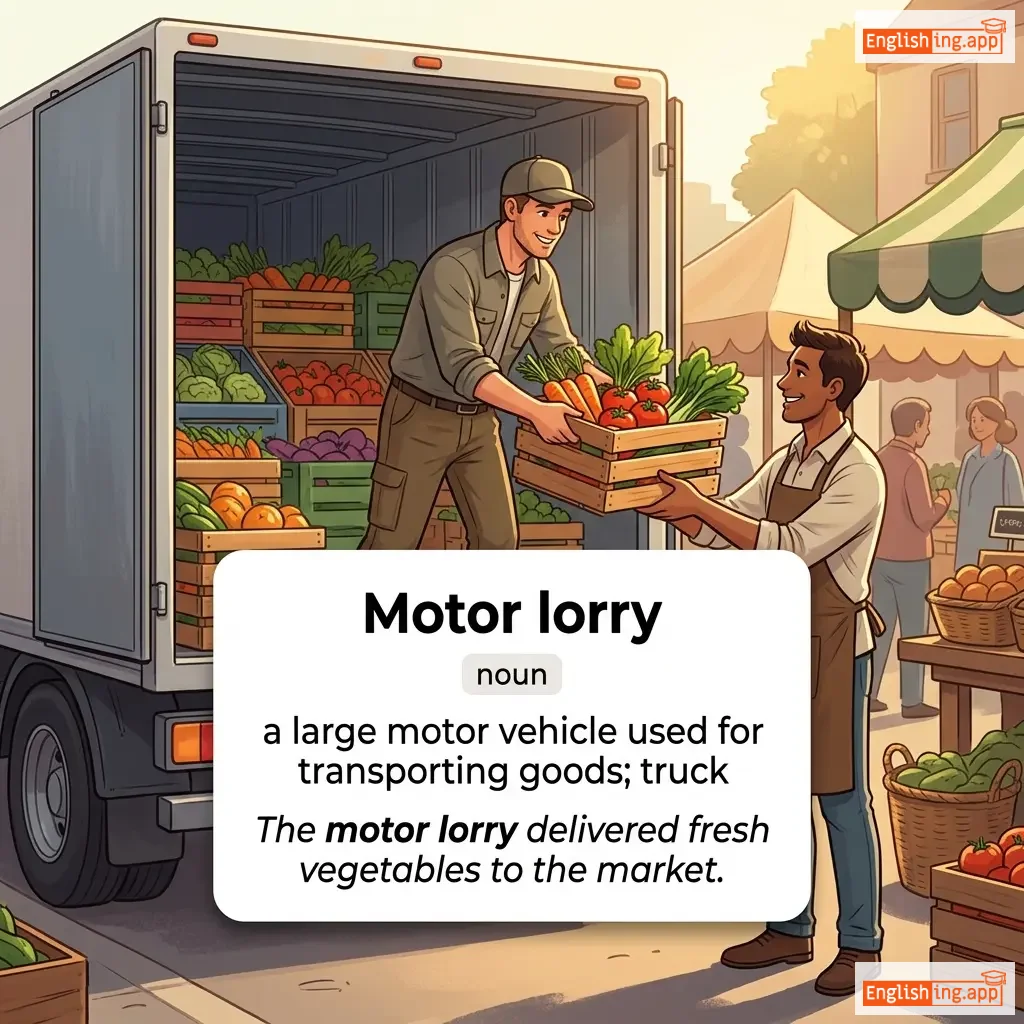
Motor lorry definition card — visual illustration of the meaning
noun
/ˈmoʊ.tər ˈlɔː.ri/
camion motorisé (camion motorise)

a large motor vehicle used for transporting goods; truck

"The motor lorry delivered fresh vegetables to the market."

"Le camion motorisé a livré des légumes frais au marché." (Le camion motorise a livre des legumes frais au marche.)