語彙集

英単語辞書 | 単語の意味、定義、例文

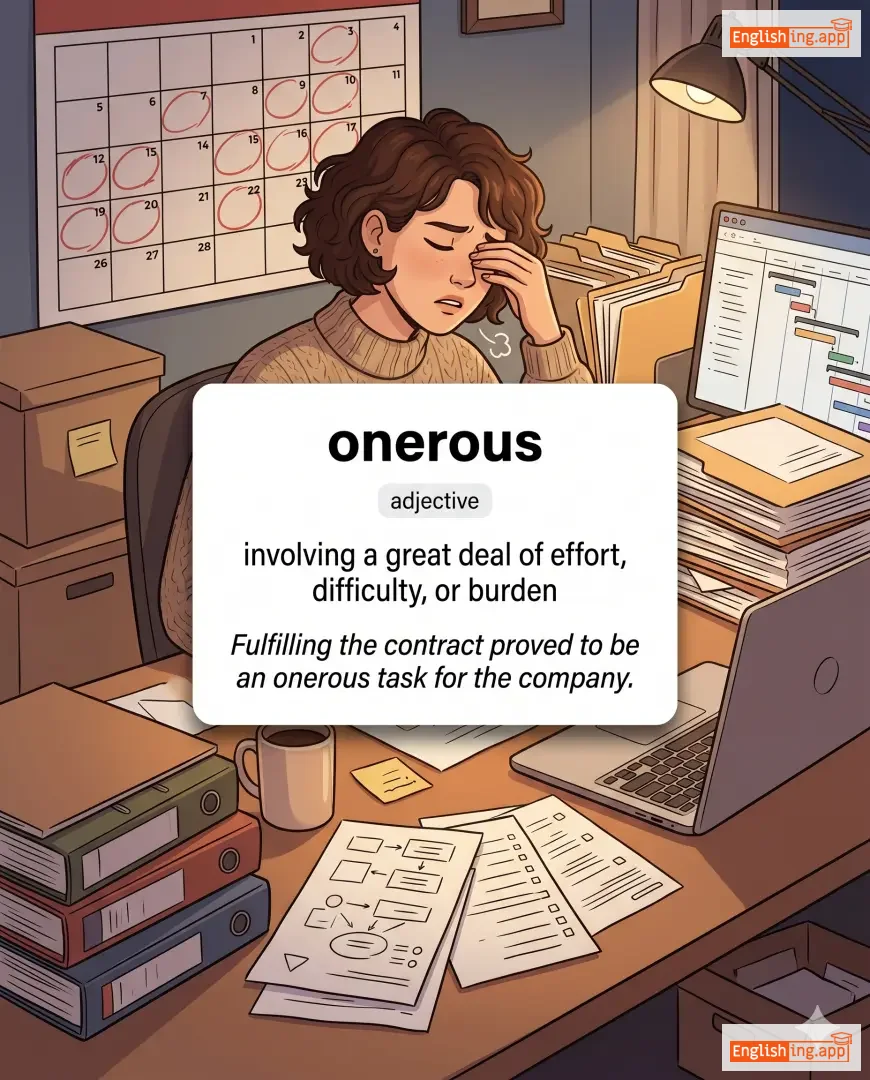
onerous definition card — visual illustration of the meaning
adjective
/ˈəʊnərəs/
重い (omoi)

involving a great deal of effort, difficulty, or burden

"Fulfilling the contract proved to be an onerous task for the company."

"契約を履行することは会社にとって負担の大きい仕事だと証明された。" (Keiyaku o rikō suru koto wa kaisha ni totte futan no ōkii shigoto da to shōmei sareta.)
noun
/wʌn θɜːd/
三分の一 (sanbun no ichi)

one part of something that is divided into three equal parts

"One-third of the class was absent today."

"クラスの三分の一が今日は欠席でした。" (Kurasu no sanbun no ichi ga kyō wa kesseki deshita.)
pronoun, noun, adjective
/wʌn/
(ichi)

the number equivalent to the sum of zero and one; a single person or thing

"Only one student answered the question."

"ただ一人の学生が質問に答えました。" (Tada hitori no gakusei ga shitsumon ni kotaemashita.)
adverb
/wʌns/
一度 (ichido)

on one occasion only; at a time in the past

"She visited Paris once last year."

"彼女は昨年一度パリを訪れました。" (Kanojo wa sakunen ichido Pari o otozuremashita.)
preposition
/ɒn/
(ue)

physically in contact with and supported by a surface

"The book is on the table."

"本はテーブルの上にあります。" (Hon wa tēburu no ue ni arimasu.)
adjective
/ɒmˈnɪvərəs/
雑食性 (zasshokusei)

eating both plants and animals

"Humans are generally considered omnivorous creatures."

"人間は一般的に雑食性の生き物と見なされます。" (Ningen wa ippanteki ni zasshokusei no ikimono to minasarerumasu.)
adjective
/ɒmˈnɪʃənt/
全知 (zenchi)

having complete or unlimited knowledge and awareness

"Some religions describe God as omniscient and all-powerful."

"いくつかの宗教は神を全知かつ全能であると説明しています。" (Ikutsuka no shukyo wa kami o zenchi katsu zennou de aru to setsumei shiteimasu.)
noun
/ɒmˈnɪʃəns/
全知 (zenchi)

the state of knowing everything

"The novel's narrator has an air of omniscience, revealing every character's thoughts."
"小説の語り手は全知の空気をまとい、すべてのキャラクターの考えを明らかにしている。" (shosetsu no katarite wa zenchi no kuuki o matoi, subete no kyarakuta no kangae o akirakani shite iru.)
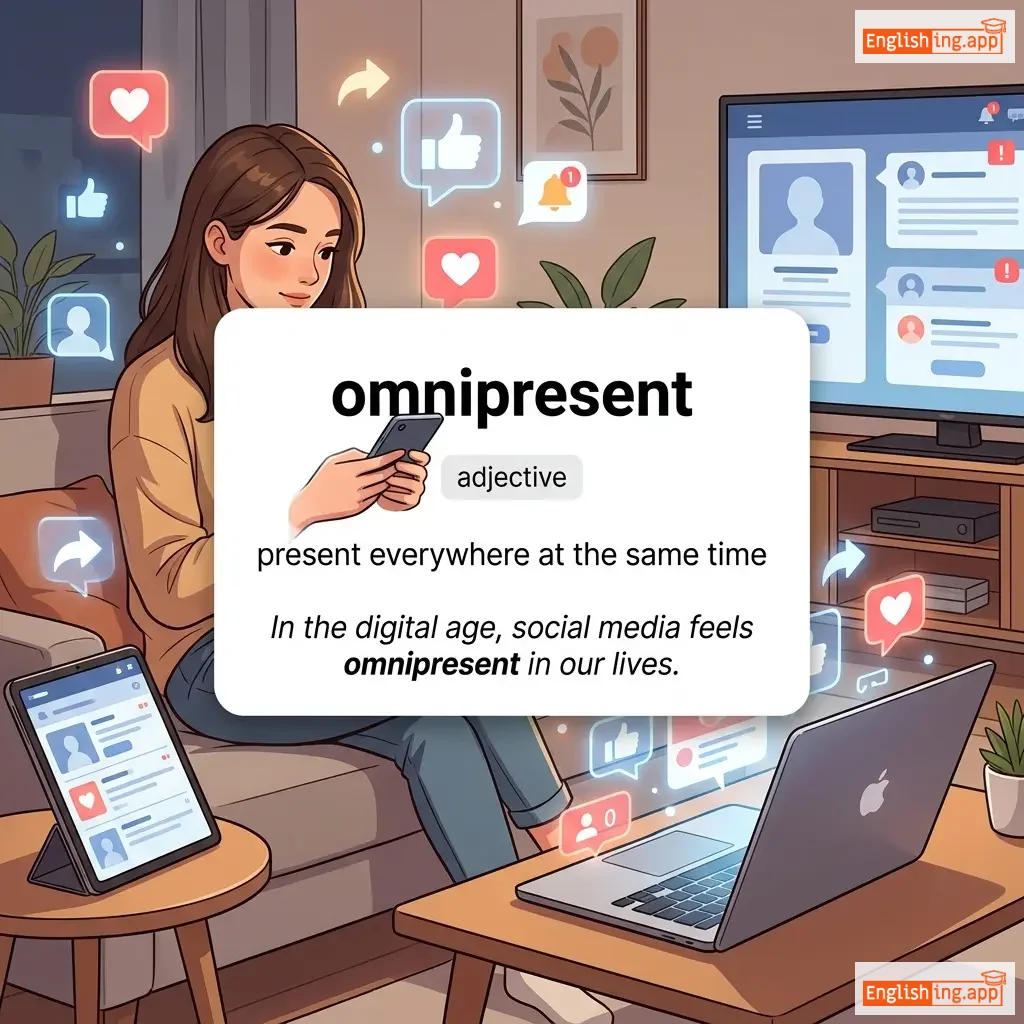
omnipresent definition card — visual illustration of the meaning
adjective
/ˌɒmnɪˈprɛzənt/
遍在する (hennzaisuru)

present everywhere at the same time

"In the digital age, social media feels omnipresent in our lives."
"デジタル時代では、ソーシャルメディアは私たちの生活の中で遍在するように感じます。" (Dejitaru jidai dewa, soosharu media wa watashitachi no seikatsu no naka de hennzai suru you ni kanjimasu.)
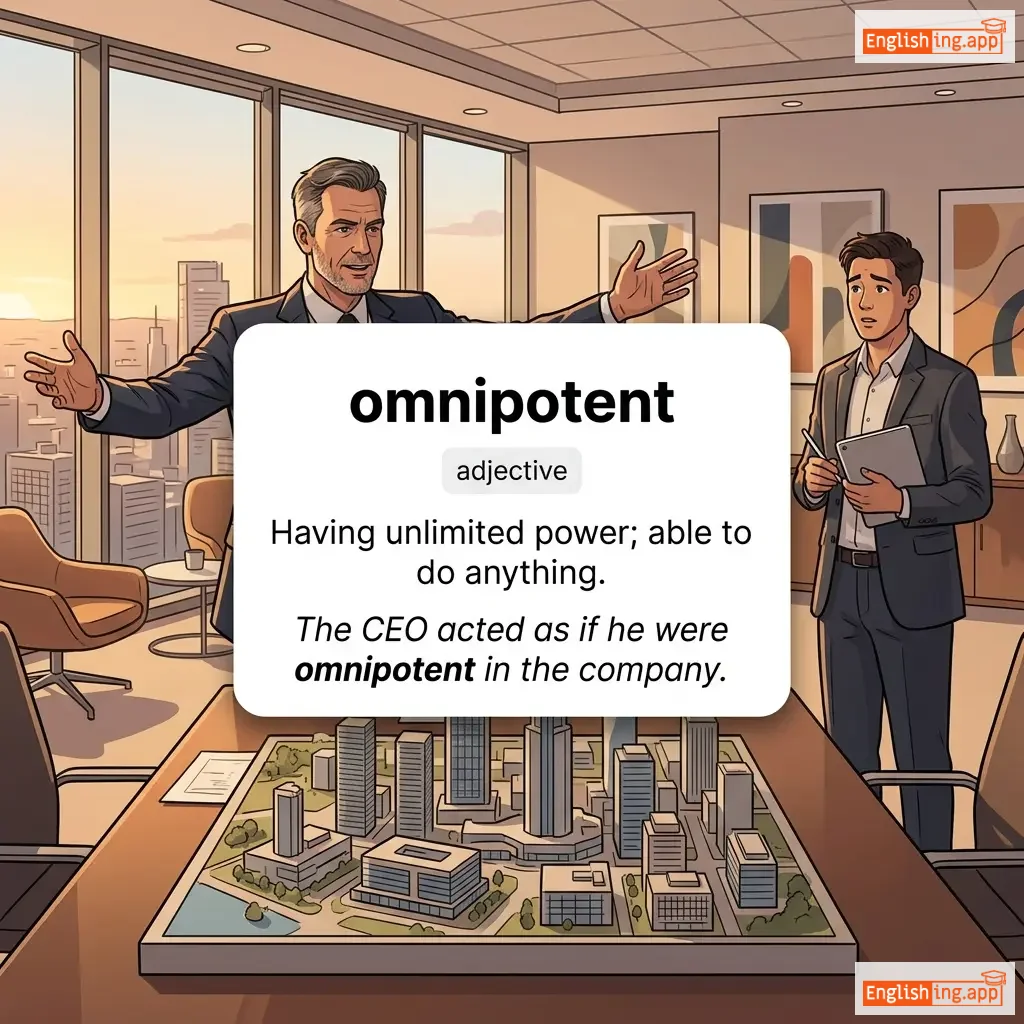
omnipotent definition card — visual illustration of the meaning
adjective
/ɒmˈnɪpətənt/
全能の (zen'nō no)

Having unlimited power; able to do anything.

"The CEO acted as if he were omnipotent in the company."

"CEOは会社で全能であるかのように振舞った。" (CEO wa kaisha de zennō de aru ka no yō ni furumatta.)
noun
/ɒmˈnɪpətəns/
全能 (zennou)

The quality of having unlimited power or authority.

"Many religions describe God’s omnipotence as absolute."
"多くの宗教では神の全能は絶対的なものと説明されています。" (Ōku no shūkyō de wa kami no zennō wa zettaiteki na mono to setsumei sareteimasu.)
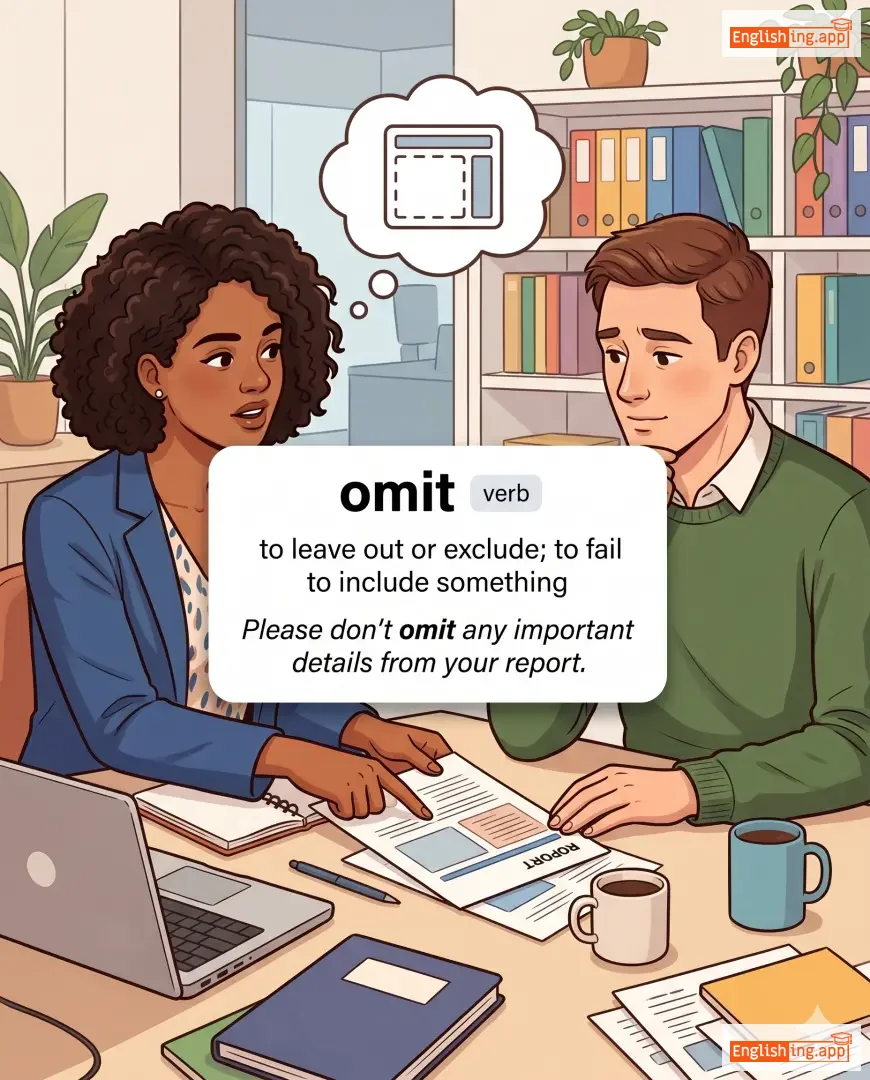
omit definition card — visual illustration of the meaning
verb
/oʊˈmɪt/
省略する (shōryaku suru)

to leave out or exclude; to fail to include something

"Please don't omit any important details from your report."

"レポートから重要な詳細を省略しないでください。" (Repōto kara jūyō na shōsai o shōryaku shinai de kudasai.)
noun
/əˈmɪʃən/
省略 (shōryaku)

The act of leaving out or excluding something; something that has been left out.

"Her omission of important details caused confusion."

"彼女の重要な詳細の省略が混乱を引き起こした。" (Kanojo no jūyōna shōryaku ga konran o hikiokoshita.)
adjective
/ˈɒmɪnəs/
不吉 (fukitsu)

Giving the impression that something bad or unpleasant is going to happen.

"Dark clouds gave an ominous sign of an approaching storm."

"暗い雲が近づく嵐の不吉な兆しを示した。" (Kurai kumo ga chikaduku arashi no fukitsu na kizashi o shimeshita.)
noun
/ˈoʊ.mən/
未来の良いまたは悪い運命の兆し (mirai no yoi matawa warui unmei no kizashi)

an event regarded as a sign of future good or bad luck

"Many people consider a black cat crossing your path a bad omen."

"多くの人々は、黒猫が道を横切ることを悪いオーメンだと考えています。" (ooku no hitobito wa, kuroneko ga michi wo yokogiru koto wo warui omen da to kangaeteimasu.)
noun
/əˈlɪmpɪks/
オリンピック競技大会 (Olimpikku kyōgi taikai)

an international sports competition held every four years with athletes from many countries

"The Olympics bring athletes from all over the world together."
"オリンピックは世界中のアスリートを一堂に集めます。" (Olimpikku wa sekai jū no asurīto o ichidō ni atsumemasu.)
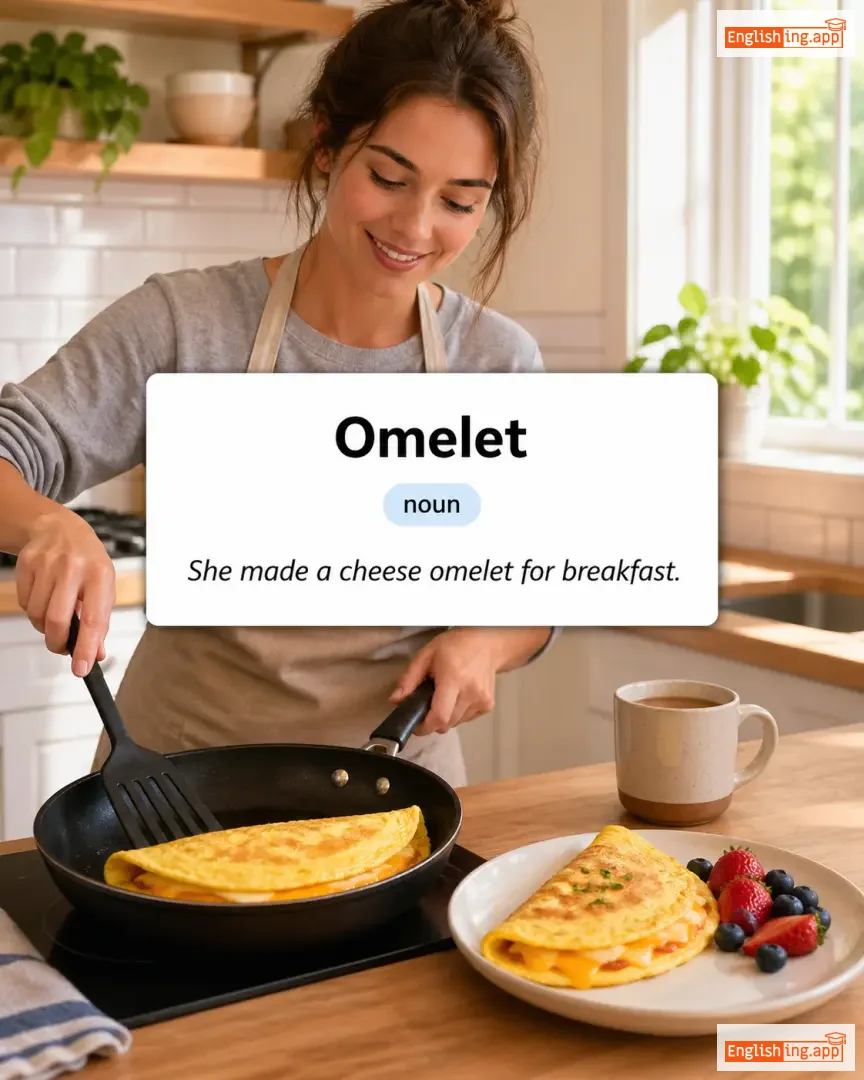
Omelet definition card — visual illustration of the meaning
noun
/ˈɒm.lət/
オムレツ (omuretsu)

a dish made from beaten eggs cooked in a frying pan and often folded around a filling

"She made a cheese omelet for breakfast."

"彼女は朝食にチーズオムレツを作った。" (kanojo wa chōshoku ni chīzu omuretsu o tsukutta.)
adjective
/əˈfɪʃəl/
公式 (kōshiki)

relating to or connected with an authority or public office

"He is the official spokesperson for the company."

"彼は会社の公式なスポークスマンです。" (Kare wa kaisha no kōshiki na supōkusuman desu.)
adverb
/əˈfɪʃəli/
公式に (kōshiki ni)

in a formal or authorized way

"The building was officially opened by the mayor."

"その建物は市長によって公式に開かれました。" (Sono tatemono wa shichō ni yotte kōshiki ni hirakaremashita.)
verb
/əˈfɪʃieɪt/
執り行う (toriokonau)

To perform official duties, especially in a ceremony or as a referee.

"The priest will officiate the wedding ceremony."

"司祭が結婚式を司る。" (Shisai ga kekkonshiki o toriokonau.)
officious definition card — visual illustration of the meaning
adjective
/əˈfɪʃəs/
干渉的な (kanshouteki na)

Excessively eager to offer unwanted help or advice; meddlesome.

"The officious guard kept interrupting the visitors with unnecessary instructions."

"その干渉的な警備員は訪問者に不必要な指示で何度も中断させた。" (Sono kanshouteki na keibiin wa houmonsha ni fuhitsuyouna shiji de nando mo chuudan saseta.)
adjective
/ˈɒfɪʃ/
無愛想 (mu aisou)

Unfriendly, distant, or reserved in manner.

"He seemed offish at the party and avoided most conversations."

"彼はパーティーで無愛想に見え、大半の会話を避けていました。" (Kare wa pātī de mu aisou ni mie, taihan no kaiwa o saketemashita.)
verb
/ˈɒfsɛt/
相殺 (sōsai)

To counterbalance or compensate for something.

"The company's losses were offset by gains in other departments."

"会社の損失は他の部門での利益で相殺されました。" (Kaisha no sonshitsu wa hoka no bumon de no rieki de sōsai saremashita.)
noun
/ˈɒfʃuːt/
分岐 (bunki)

A branch or result that develops from something larger or more important.

"The startup was an offshoot of a major tech company."

"そのスタートアップは大手テクノロジー企業からの分岐でした。" (Sono start-up wa oote tekunorojii kigyou kara no bunki deshita.)
noun
/ˈɒf.sprɪŋ/
子孫 (shison)

a person's child or children; an animal's young

"The bird carefully fed its offspring."

"その鳥は注意深く自分の子孫に餌を与えました。" (Sono tori wa chūi bukaku jibun no shison ni esa o ataemashita.)
adverb
/ˈɔːfən/
しばしば (shibashiba)

frequently, many times

"I often visit my grandparents on weekends."

"私は週末にしばしば祖父母を訪れます。" (Watashi wa shūmatsu ni shibashiba sofubo o otozuremasu.)
verb
/ˈoʊɡəl/
じっと見る (jitto miru)

To look at someone with obvious sexual interest.

"He kept ogling the models on the runway."
"彼はランウェイのモデルたちを見続けた。" (Kare wa ranwei no moderu-tachi o mi tsudzuketa.)
👹

ogre

noun
/ˈoʊɡər/

A mythical monster, often depicted as large, hideous, and cruel; metaphorically, a cruel or terrifying person.

"The villagers feared the ogre who lived in the dark forest."

interjection
/oʊ/
オー (oo)

used to express surprise, realization, or understanding

"Oh, I didn't know you were here!"

"オー、あなたがここにいるとは思わなかった!" (Oo, anata ga koko ni iru to wa omowanakatta!)
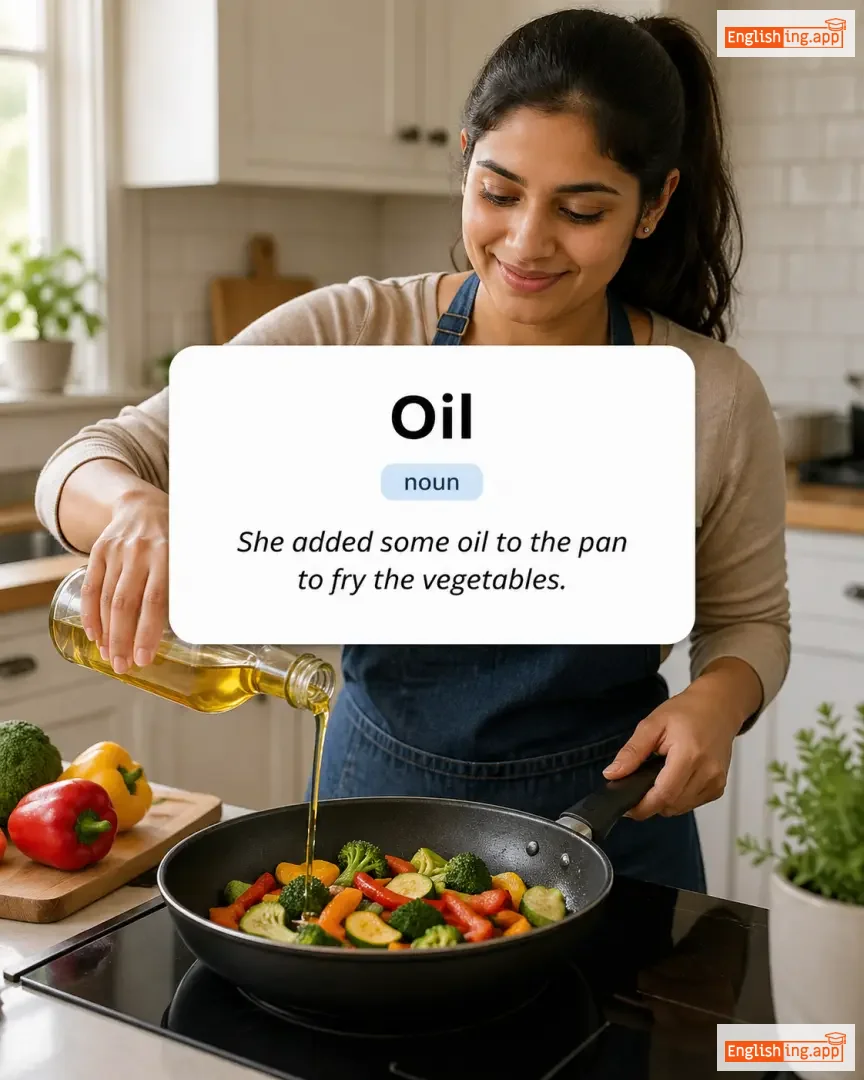
Oil definition card — visual illustration of the meaning
noun
/ɔɪl/
(abura)

a viscous liquid derived from plants or animals, used for cooking, lubrication, or fuel

"She added some oil to the pan to fry the vegetables."

"彼女は野菜を揚げるためにフライパンに少し油を加えました。" (Kanojo wa yasai o ageru tame ni furaipan ni sukoshi abura o kuwaemashita.)
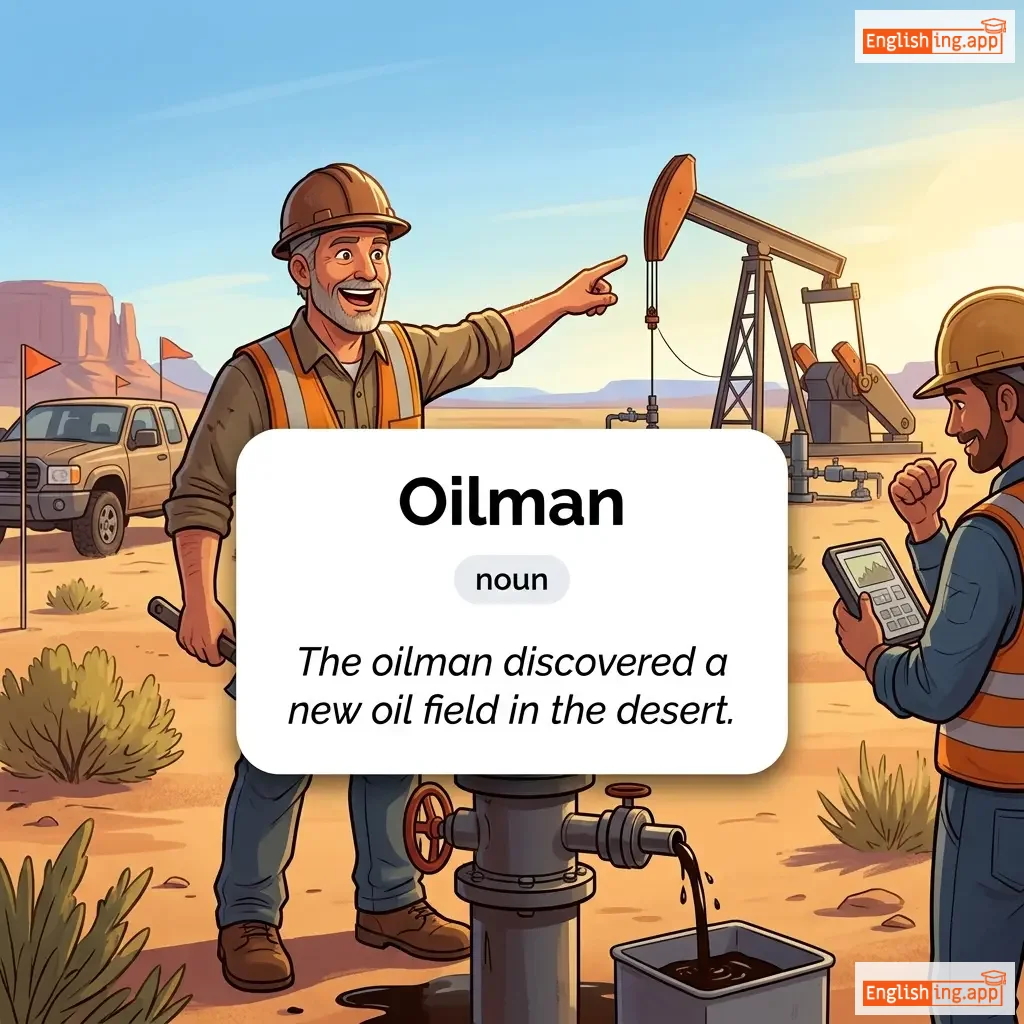
Oilman definition card — visual illustration of the meaning
noun
/ˈɔɪl.mən/
石油業者 (sekiyū gyōsha)

a person who works in the oil industry; someone who sells oil or petroleum products

"The oilman discovered a new oil field in the desert."

"オイルマンは砂漠で新しい油田を発見した。" (Oiruman wa sabaku de atarashī yutō o hakken shita.)
noun
/ˈɔɪntmənt/
軟膏 (nankou)

A smooth, oily substance applied to the skin for healing or soothing.

"The doctor prescribed an ointment for the burn on his arm."

"医師は彼の腕のやけどのために軟膏を処方しました。" (Ishi wa kare no ude no yakedo no tame ni nankou o shohō shimashita.)
adjective
/ˈɔɪl.i/
油っぽい; 油で覆われた; 脂っこい (aburappoi; abura de ōwareta; aburakkoi)

covered with oil; containing oil; greasy

"Her oily skin needs special care."
"彼女の油っぽい肌は特別なケアが必要です。" (Kanojo no aburappoi hada wa tokubetsu na kea ga hitsuyō desu.)
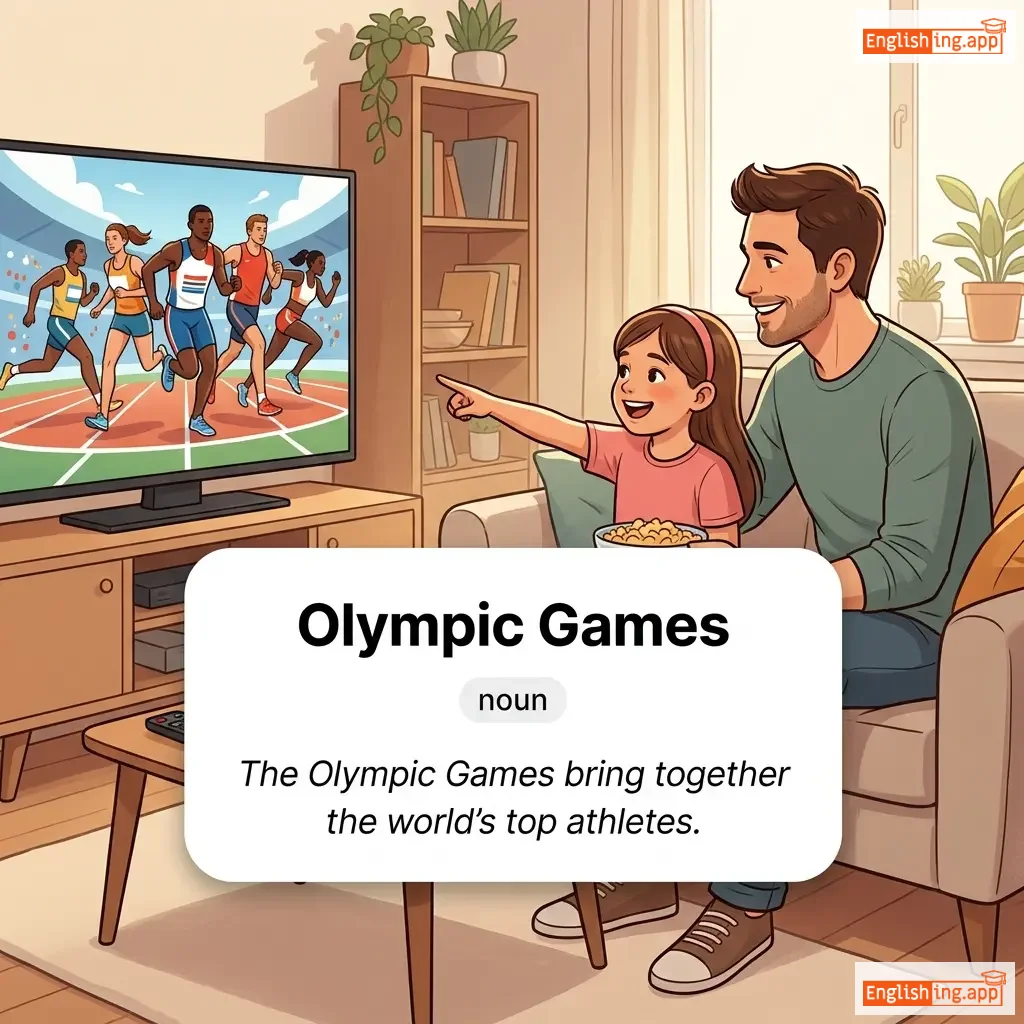
Olympic Games definition card — visual illustration of the meaning
noun
əˈlɪm.pɪk ɡeɪmz
オリンピック競技大会 (Orinpikku kyōgi taikai)

The world's largest international sports competition held every four years, bringing together athletes from different countries to compete in various sports.

"The Olympic Games bring together the world's top athletes."

"オリンピック競技大会は世界のトップアスリートを集めます。" (Orinpikku kyōgi taikai wa sekai no toppu asurīto o atsume masu.)
adjective
/əˈlɪmpɪk/
オリンピック (orimpikku)

related to the Olympic Games, a major international sporting event

"She trained hard to compete in the Olympic Games."

"彼女はオリンピックに出場するために一生懸命トレーニングをしました。" (Kanojo wa orimpikku ni shutsujō suru tame ni isshōkenmei torēningu o shimashita.)
noun
/ˈɒlɪv brɑːntʃ/
オリーブの枝 (orību no eda)

A symbol of peace or reconciliation; an offer to end conflict.

"He extended an olive-branch to his rival after years of hostility."
"彼は長年の敵対後、ライバルにオリーブの枝を差し出した。" (Kare wa naganen no tekitaigo, raibaru ni orību no eda o sashidashita.)
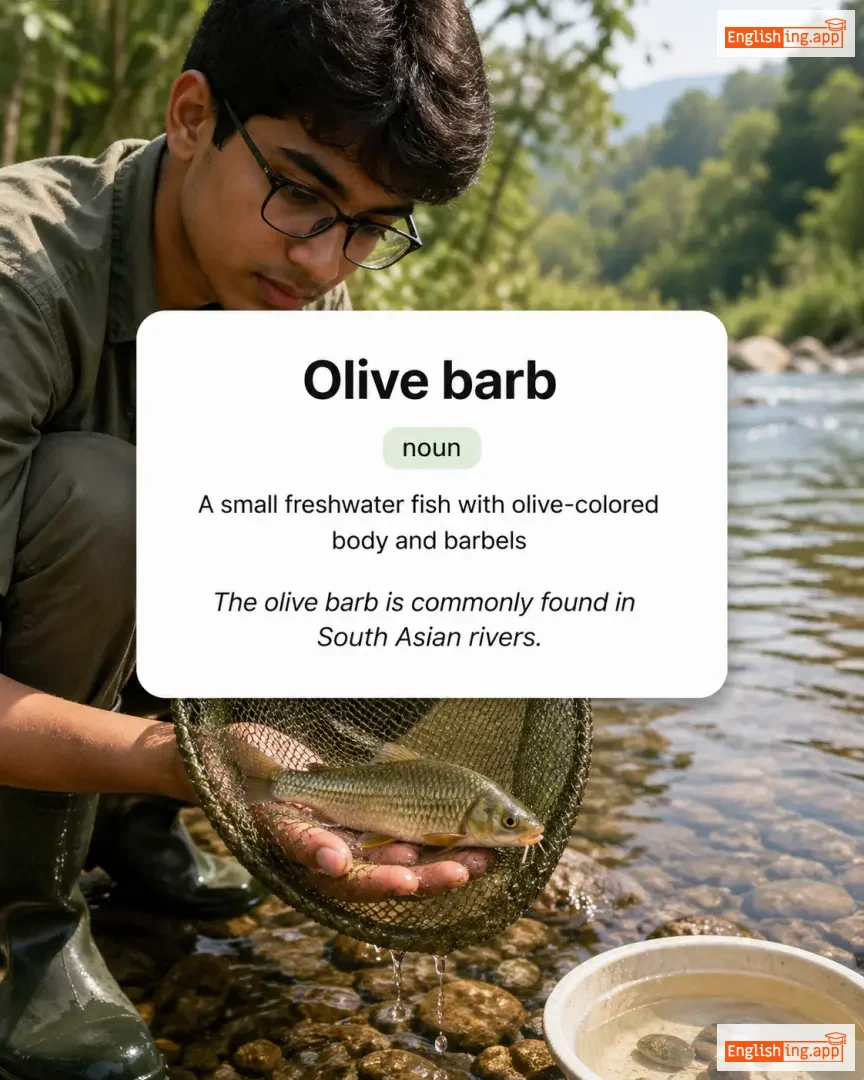
Olive barb definition card — visual illustration of the meaning
noun
/ˈɒlɪv bɑːb/
オリーブバーブ (oriibu baabu)

A small freshwater fish with olive-colored body and barbels

"The olive barb is commonly found in South Asian rivers."
"オリーブバーブは南アジアの川によく見られます。" (oriibu baabu wa minami ajia no kawa ni yoku mirareru)
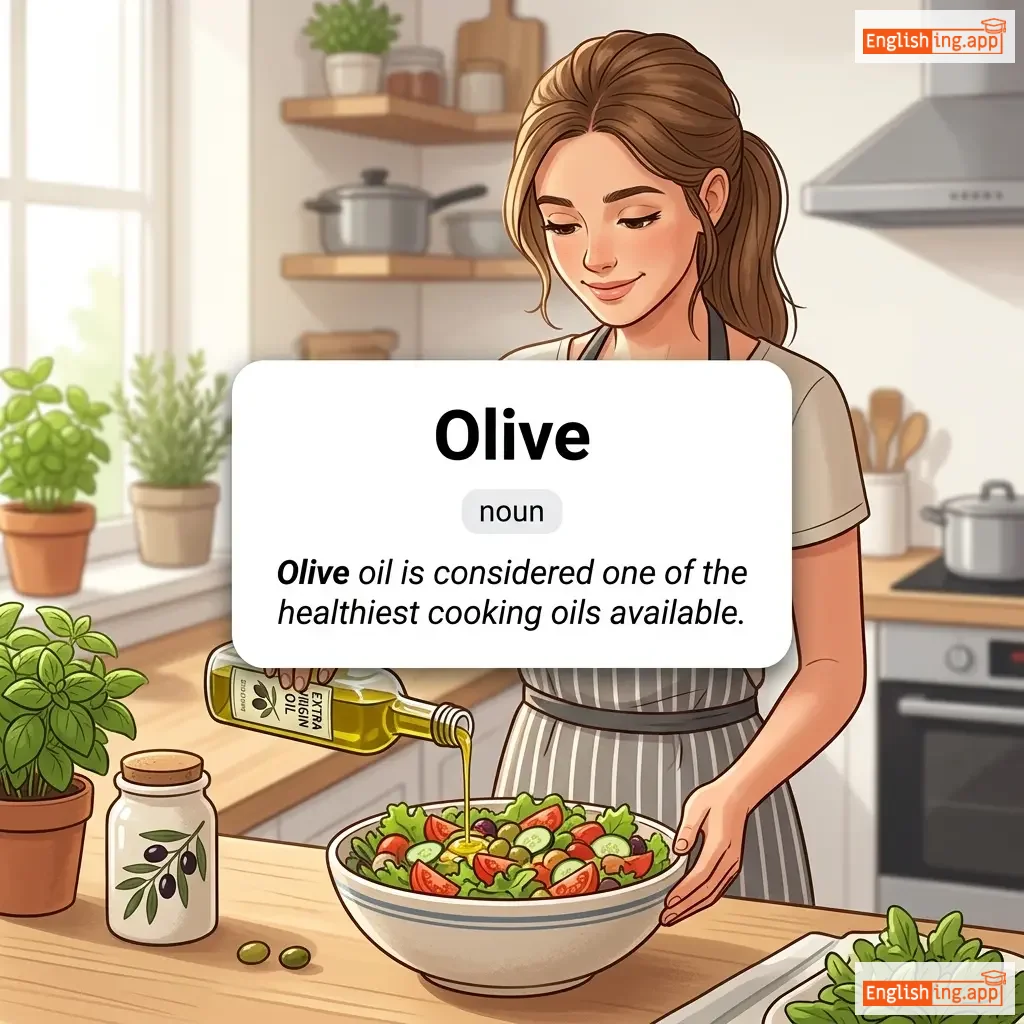
Olive definition card — visual illustration of the meaning
noun
/ˈɑː.lɪv/
オリーブ (orību)

a small oval fruit with a hard pit, typically green or black, used for eating or making oil

"Olive oil is considered one of the healthiest cooking oils available."
"オリーブオイルは、最も健康的な料理用オイルの一つと見なされています。" (orību oiru wa, mottomo ken-kō-teki na ryōri-yō oiru no hitotsu to minasa rete imasu.)
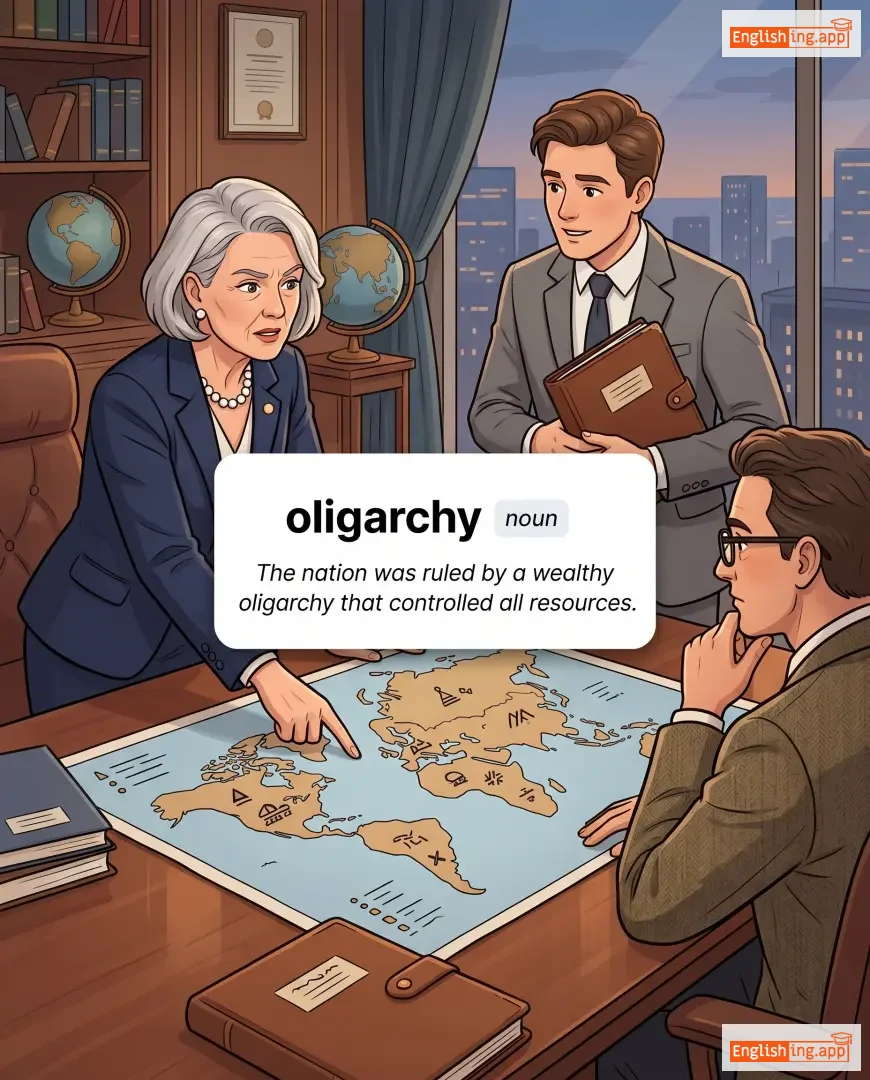
oligarchy definition card — visual illustration of the meaning
noun
/ˈɑːlɪˌɡɑːrki/
寡頭政治 (katō seiji)

A small group of people having control of a country, organization, or institution.

"The nation was ruled by a wealthy oligarchy that controlled all resources."

"その国は裕福なオリガーキーによって支配され、すべての資源を支配していました。" (Sono kuni wa yūfukuna origākī ni yotte shihaisa re, subete no shigen o shihai shite imashita.)
noun
/ɑːlˈfækʃən/
嗅覚 (kyūkaku)

The sense of smell; the process of detecting and perceiving odors.

"Dogs have a highly developed sense of olfaction."

"犬は非常に発達した嗅覚を持っています。" (Inu wa hijō ni hattatsu shita kyūkaku o motteimasu.)
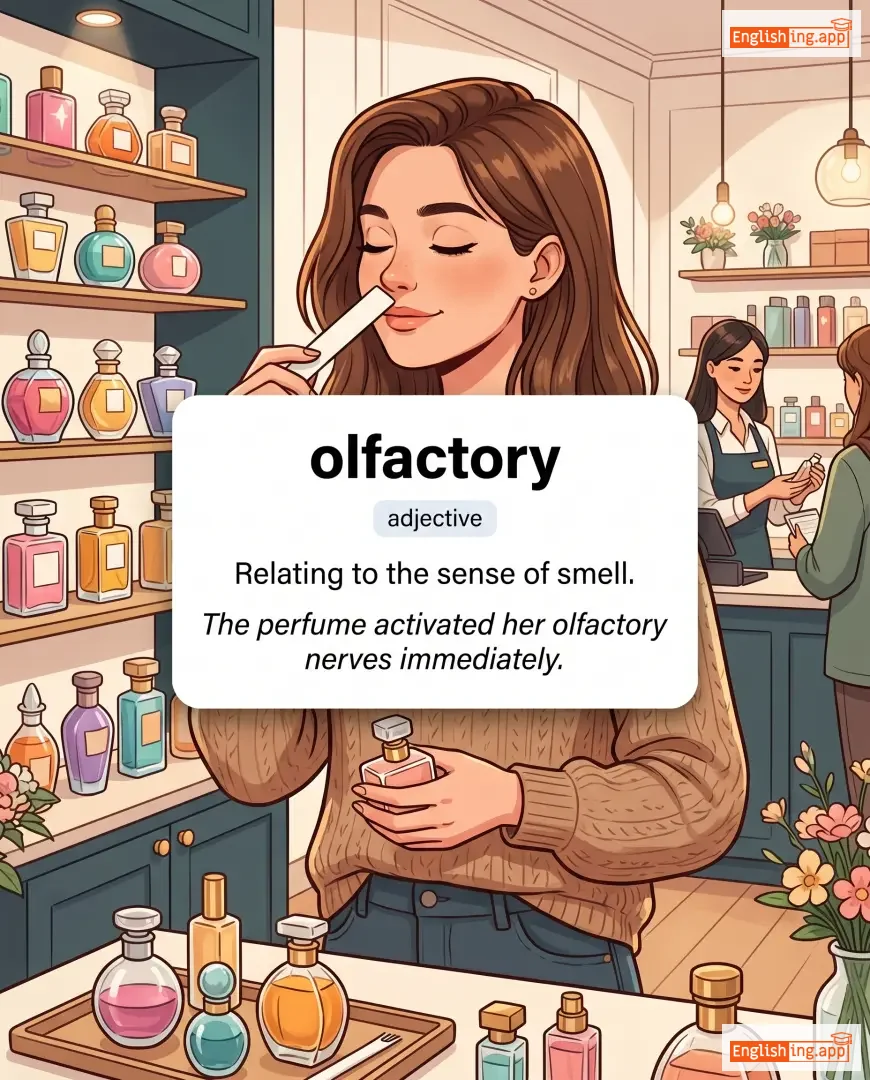
olfactory definition card — visual illustration of the meaning
adjective
/ɑːlˈfæktəri/

Relating to the sense of smell.

"The perfume activated her olfactory nerves immediately."

adjective
/oʊˈkeɪ/
わかった (wakatta)

used to indicate agreement, approval, or understanding

"Okay, let's go to the park."

"わかった、じゃあ公園に行こう。" (Wakatta, jyaa kouen ni ikou.)
adjective
/əʊˈkeɪ/
大丈夫 (daijoubu)

used to express agreement or acceptance

"It's okay to leave early today."

"今日は早く帰るのは大丈夫です。" (Kyou wa hayaku kaeru no wa daijoubu desu.)
adjective
/ˌoʊld ˈfæʃənd/
昔風の (mukashifū no)

not modern; belonging to an earlier time

"He still wears an old-fashioned hat."
"彼は今でも昔風の帽子をかぶっています。" (Kare wa imademo mukashifū no bōshi o kabutteimasu.)
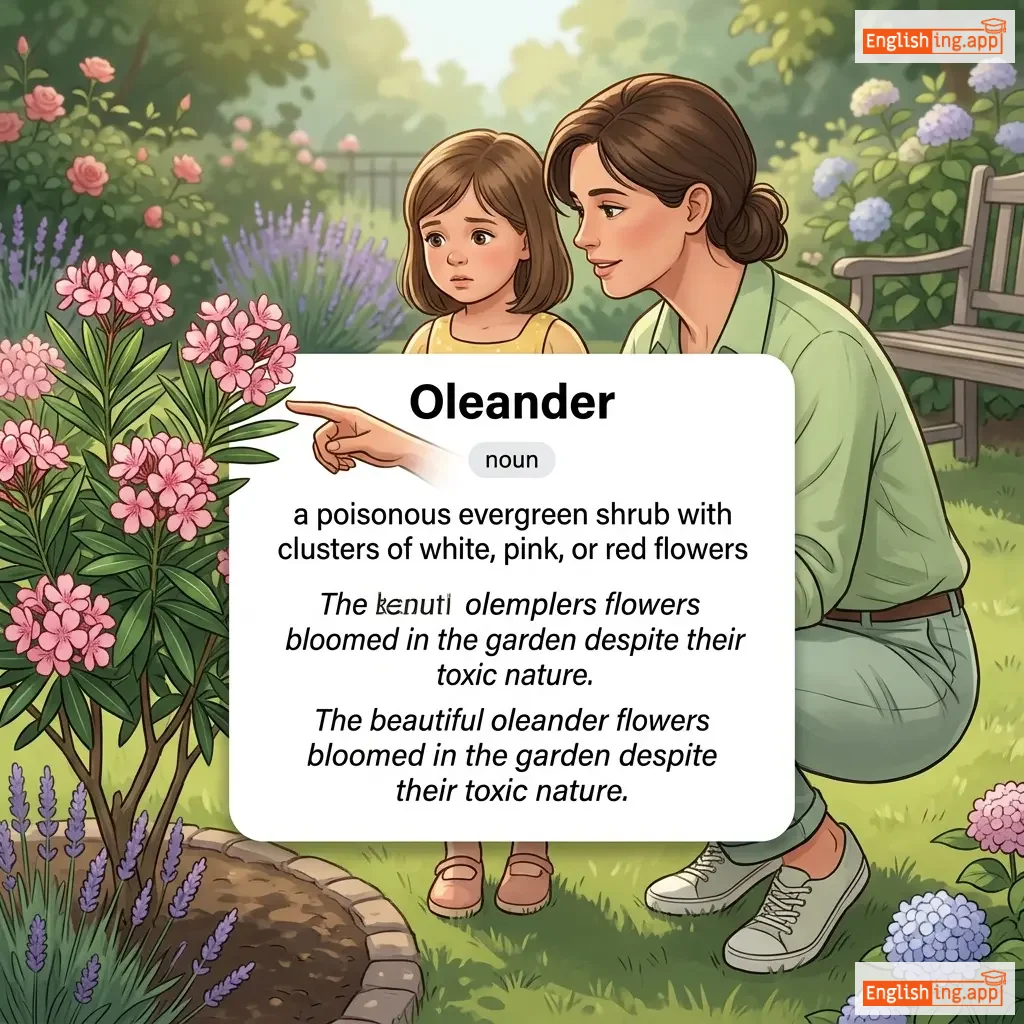
Oleander definition card — visual illustration of the meaning
noun
/oʊliˈændər/
オレアンダー (oreaandā)

a poisonous evergreen shrub with clusters of white, pink, or red flowers

"The beautiful oleander flowers bloomed in the garden despite their toxic nature."
"美しいオレアンダーの花が庭で咲いていましたが、その毒性に関わらず。" (Utsukushī oreaandā no hana ga niwa de saite imashita ga, sono dokusei ni kakawarazu.)
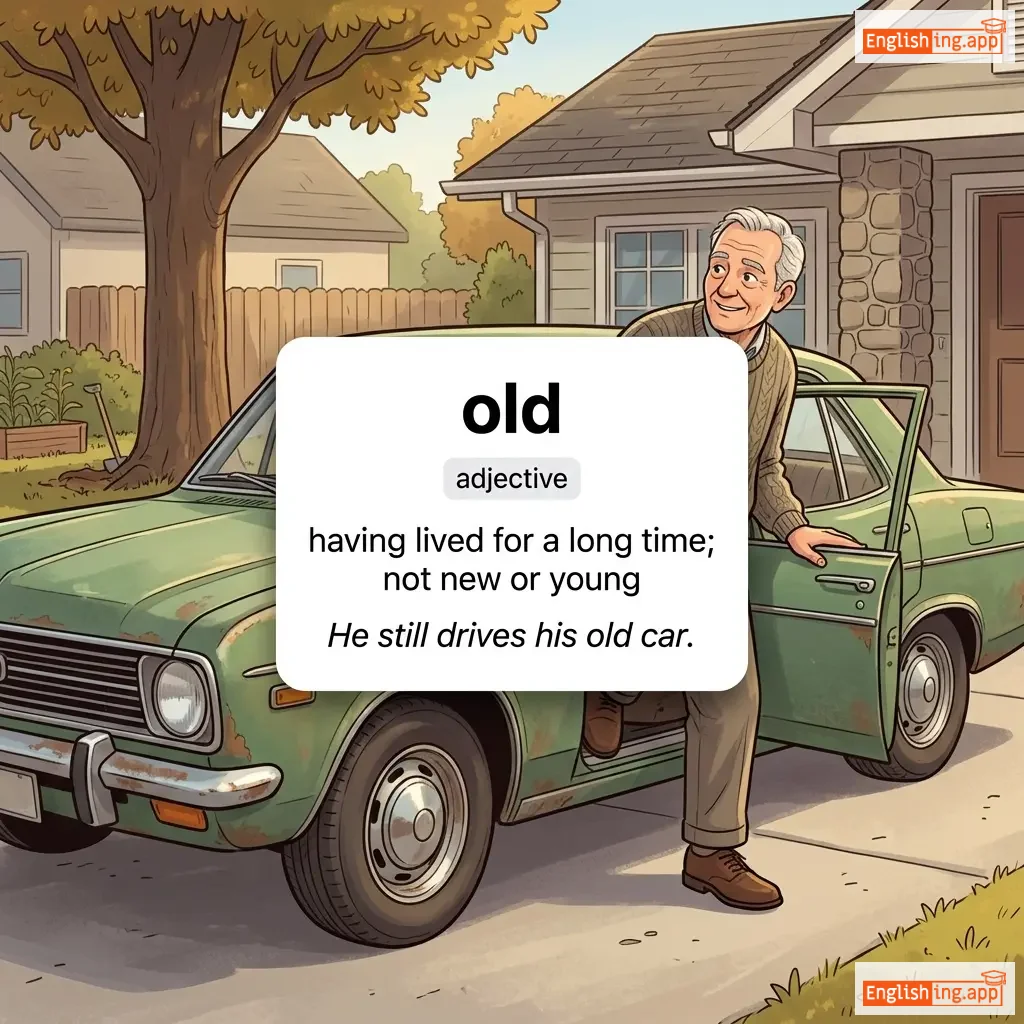
old definition card — visual illustration of the meaning
adjective
/oʊld/
古い (furui)

having lived for a long time; not new or young

"He still drives his old car."

"彼は今でも古い車を運転しています。" (Kare wa imademo furui kuruma o unten shiteimasu.)
adjective
/ˈmɒtli/
混成 (konsei)

Made up of different, often incongruous or diverse elements.

"The festival attracted a motley crowd of artists, musicians, and tourists."

"フェスティバルはアーティスト、ミュージシャン、観光客からなる混成の群衆を引き寄せた。" (Fesutibaru wa aatisuto, myuujishan, kankoukyaku kara naru konsei no gunshuu wo hiki yoseta.)
noun
/ˈmoʊtər/
モーター (mōtā)

a machine that produces motion or power to make something work

"The car’s motor stopped suddenly."
"車のモーターは突然止まりました。" (kuruma no mōtā wa totsuzen tomarimashita.)
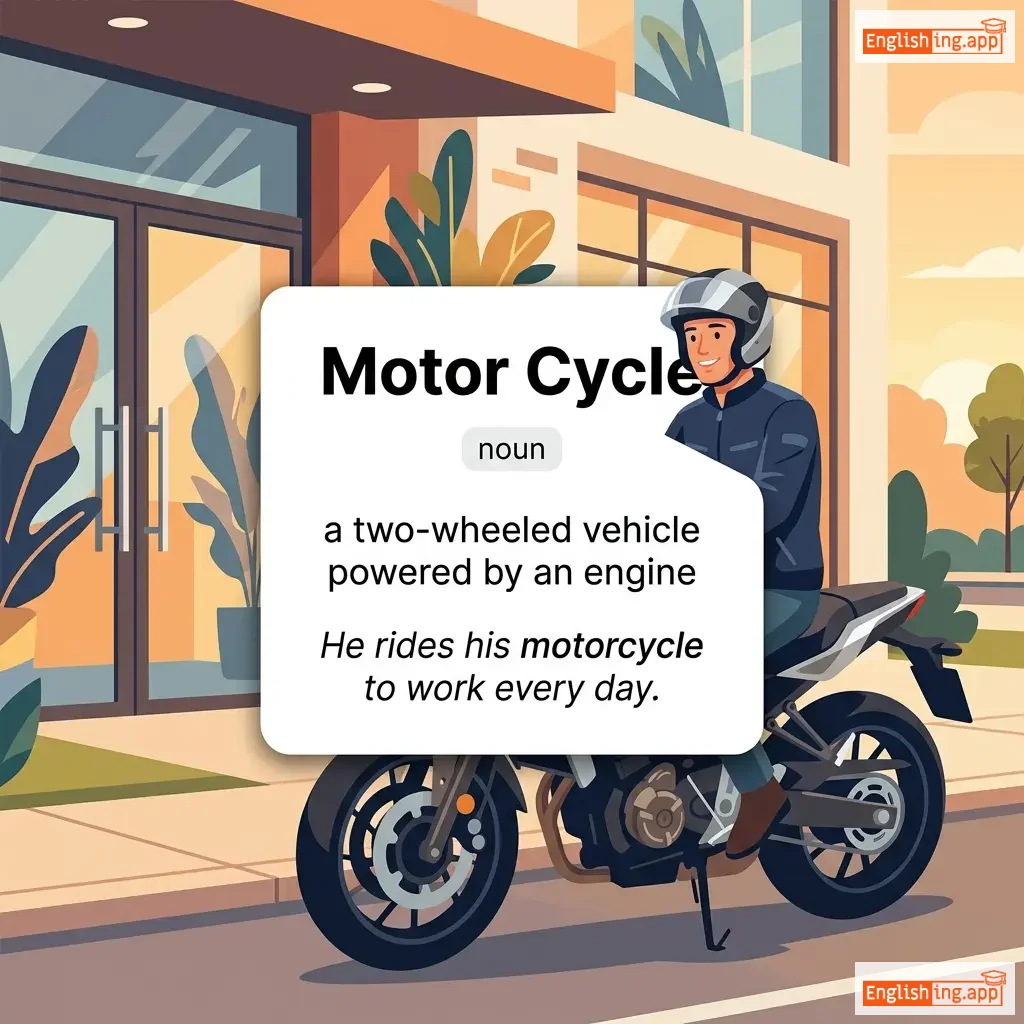
Motor Cycle definition card — visual illustration of the meaning
noun
/ˈmoʊ.tər ˌsaɪ.kəl/
バイク (baiku)

a two-wheeled vehicle powered by an engine

"He rides his motorcycle to work every day."
"彼は毎日バイクで仕事に行きます。" (Kare wa mainichi baiku de shigoto ni ikimasu.)
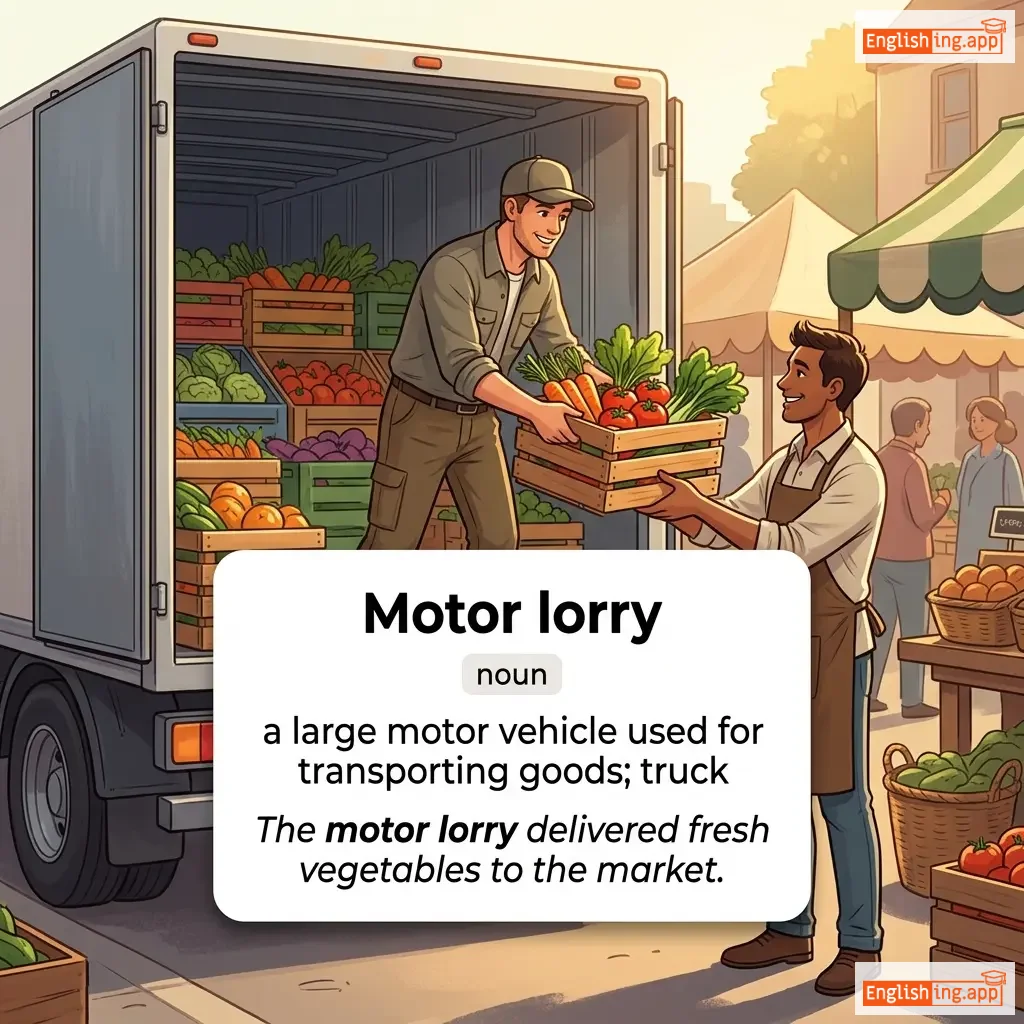
Motor lorry definition card — visual illustration of the meaning
noun
/ˈmoʊ.tər ˈlɔː.ri/
トラック (torakku)

a large motor vehicle used for transporting goods; truck

"The motor lorry delivered fresh vegetables to the market."

"そのモーター車は新鮮な野菜を市場に届けました。" (Sono mōtāsha wa shinsen na yasai o ichiba ni todokemashita.)