語彙集

英単語辞書 | 単語の意味、定義、例文

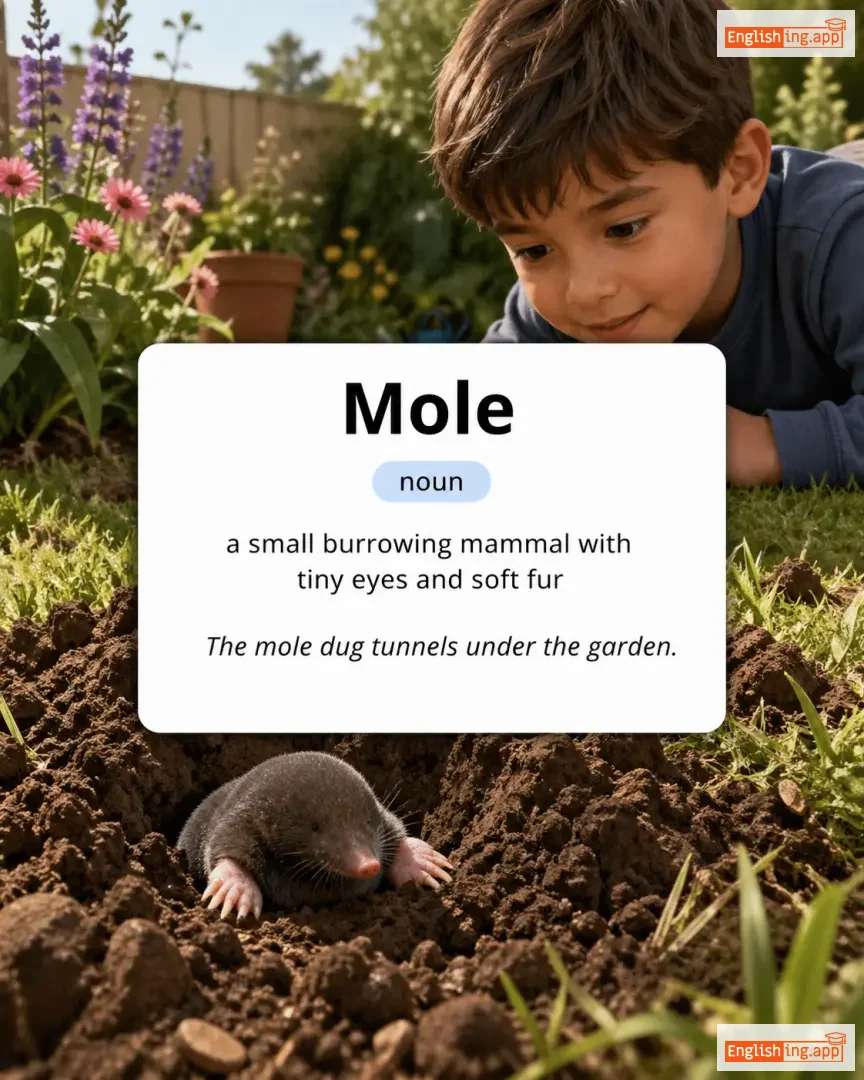
Mole definition card — visual illustration of the meaning
noun
/moʊl/
モグラ (mogura)

a small burrowing mammal with tiny eyes and soft fur

"The mole dug tunnels under the garden."

"モグラは庭の下にトンネルを掘った。" (Mogura wa niwa no shita ni tonneru o hotta.)
noun
/ˈmɒlɪkjuːl/
分子 (bunshi)

The smallest unit of a chemical compound that retains its chemical properties.

"A water molecule is made up of two hydrogen atoms and one oxygen atom."

"水分子は2つの水素原子と1つの酸素原子で構成されています。" (suibunshi wa futatsu no suiso genshi to hitotsu no sanso genshi de kōsei sareteimasu.)
verb
/məˈlɛst/
嫌がらせ / 性的虐待 (iyagarase / seiteki gyakutai)

to assault or abuse someone, especially in a sexual or physical way

"The criminal was arrested for attempting to molest a child."

"犯罪者は子供を誘惑しようとしたため逮捕されました。" (Hanzaisha wa kodomo o yuuwaku shiyou to shita tame taiho saremashita.)
mollify definition card — visual illustration of the meaning
verb
/ˈmɒlɪfaɪ/
なだめる (nadameru)

To calm or soothe someone's anger or anxiety.

"The manager tried to mollify the angry customers with discounts."

"マネージャーは割引で怒った顧客をなだめようとした。" (Manejā wa waribiki de okotta kokyaku o nadameyō to shita.)
verb
/ˈmɒlikɒdl/
甘やかす (amayakasu)

To treat someone in an overprotective and indulgent way.

"Parents should avoid mollycoddling their children too much."

"親は子供を過度に甘やかすのを避けるべきです。" (Oya wa kodomo o kado ni amayakasu no o sakeru beki desu.)
verb
/məʊlt/
脱羽 (datsu wa)

To shed old feathers, skin, or hair to make way for new growth.

"Birds molt their feathers once a year."

"鳥は年に一度羽を抜けます。" (Tori wa toshi ni ichido hane o nukemasu.)
adjective
/ˈməʊltən/
溶けた (toketa)

Made into liquid by heat; melted.

"The blacksmith poured molten metal into the mold."

"鍛冶屋は型に溶けた金属を注ぎました。" (Kajiya wa kata ni toketa kinzoku o sosogimashita.)
👩‍👧

mom (ママ)

noun
/mɑːm/
ママ (mama)

an informal word for mother

"My mom makes the best homemade food."

"私のママは一番美味しい手作り料理を作る。" (Watashi no mama wa ichiban oishii tezukuri ryouri wo tsukuru.)
noun
/ˈmoʊmənt/
瞬間 (shunkan)

A very short period of time; a particular point in time.

"She paused for a moment before answering."

"彼女は答える前に一瞬止まった。" (Kanojo wa kotaeru mae ni isshun tomatta.)
adjective
/ˈmoʊmənˌteri/
一瞬の (isshun no)

Lasting for only a short time.

"There was a momentary silence in the room."

"部屋の中に一瞬の静けさがあった。" (Heya no naka ni isshun no shizukesa ga atta.)
adjective
/moʊˈmɛntəs/
重要な (jūyōna)

Of great importance or significance, especially in its effect on the future.

"The signing of the agreement was a momentous event."

"契約の署名は重要な出来事でした。" (Keiyaku no shomei wa jūyōna dekigoto deshita.)
momentum definition card — visual illustration of the meaning
noun
/moʊˈmɛntəm/

The force or speed gained by a moving object; the strength of progress.

"The team gained momentum after scoring the first goal."

noun
/ˈmɒn.ɑːk/
君主 (kunshu)

a sovereign ruler, especially a king or queen

"The monarch addressed the nation on television."
"モナークはテレビで国民に演説を行いました。" (Monāku wa terebi de kokumin ni enzetsu o okonai mashita.)
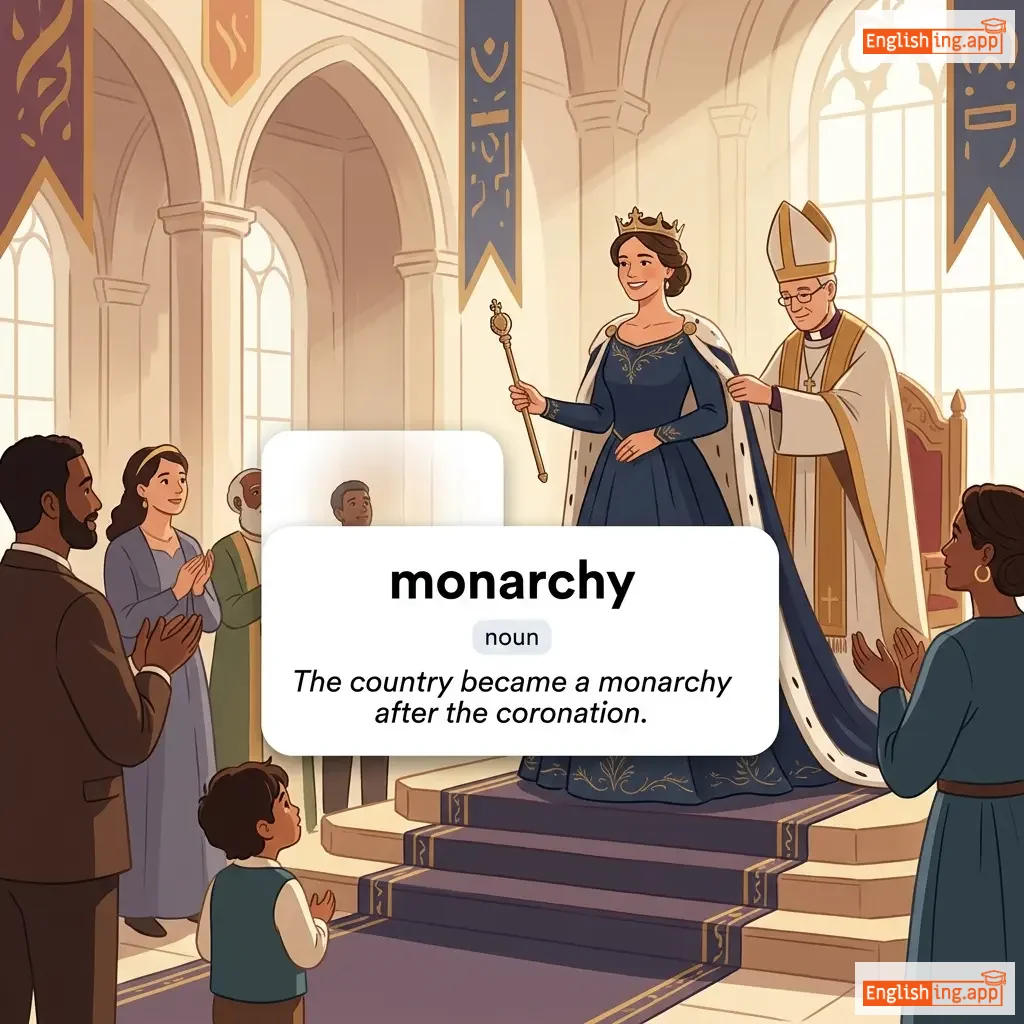
monarchy definition card — visual illustration of the meaning
noun
/ˈmɑːnərki/
君主制 (kunshusei)

A system of government with a king or queen as head of state.

"The country became a monarchy after the coronation."

"その国は戴冠後、君主制となった。" (Sono kuni wa taikan go, kunshusei to natta.)
noun
/ˈmɒnəstɛri/

A building or complex where monks or nuns live, work, and worship.

"The old monastery was surrounded by high stone walls."

adjective
/məˈnæstɪk/
修道的な (shuudou teki na)

Relating to monks, monasteries, or a life of religious seclusion.

"He chose to live a monastic life away from the city."

"彼は都市から離れた修道的な生活を選んだ。" (Kare wa toshi kara hanareta shuudou teki na seikatsu wo eranda.)
noun
/ˈmʌn.deɪ/
月曜日 (getsuyoubi)

the first day of the working week following Sunday

"I start my new job on Monday."

"私は月曜日に新しい仕事を始めます。" (watashi wa getsuyoubi ni atarashii shigoto o hajimemasu)
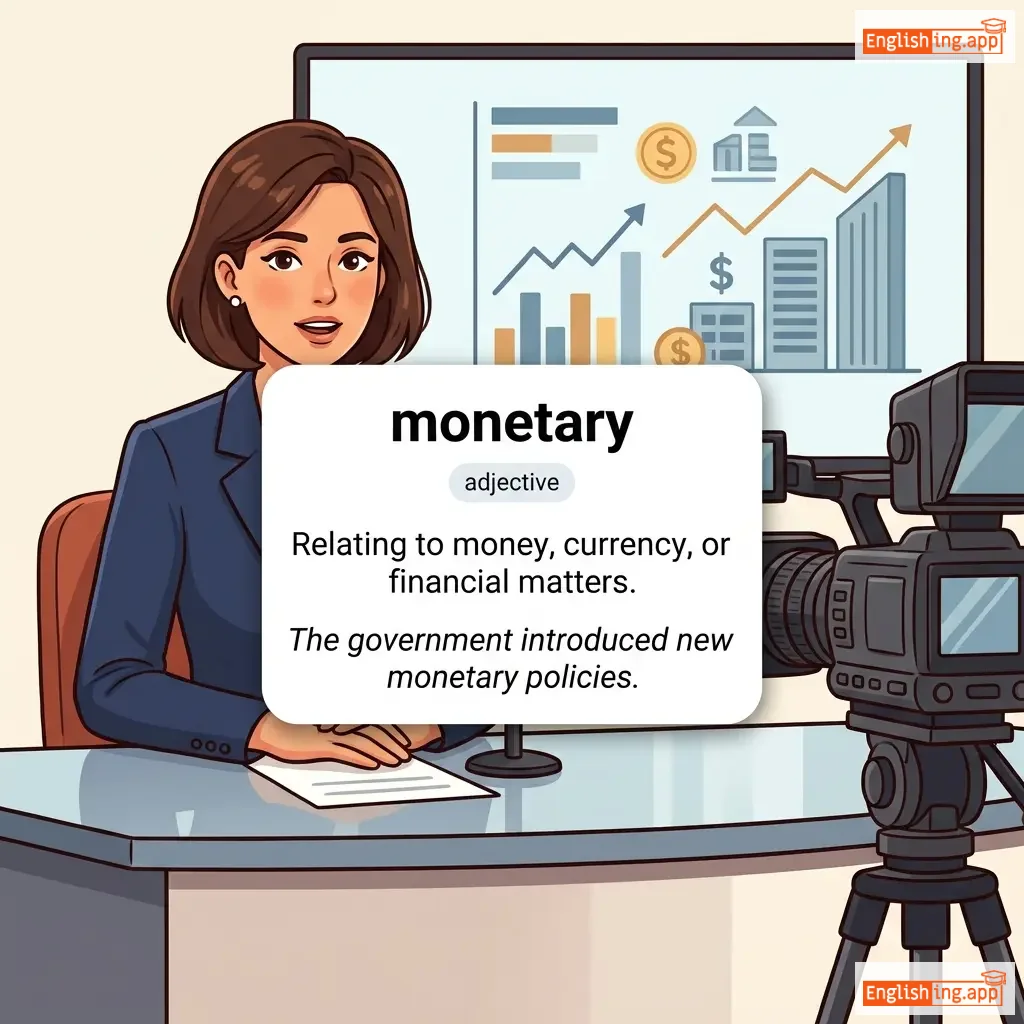
monetary definition card — visual illustration of the meaning
adjective
/ˈmʌnɪtəri/

Relating to money, currency, or financial matters.

"The government introduced new monetary policies."

monetization definition card — visual illustration of the meaning
noun
/ˌmɒn.ɪ.taɪˈzeɪ.ʃən/
マネタイズ (manetaizu)

The process of converting assets or services into money, involving commercialization, profit generation, and revenue creation.

"The monetization of digital content has created new income streams."

"デジタルコンテンツのマネタイズは新しい収入源を生み出しました。" (Dejitaru kontentsu no manetaizu wa atarashī shūnyūgen o umidashimashita.)
money definition card — visual illustration of the meaning
noun
/ˈmʌni/
幸福 (koufuku)

A medium of exchange in the form of coins and banknotes; wealth or financial resources.

"He saved enough money to buy a new car."

"彼女は賞を受け取ったとき、幸せを隠せなかった。" (Kanojo wa shou o uketotta toki, koufuku o kakusenakatta.)
adjective
/ˈmʌnid/
金持ち; 裕福な; 富裕な (manid)

having much money; wealthy; rich

"She comes from a moneyed family with extensive real estate holdings."

"彼女は広範な不動産を持つ裕福な家庭から来ています。" (kanojo wa kōhan'na fudōsan o motsu yūfukuna katei kara kiteimasu.)
noun
/ˈmɒŋ.ɡuːs/
マングース (Mangūsu)

a small carnivorous mammal known for its ability to kill venomous snakes

"The mongoose quickly attacked the cobra to protect its young."

"マングースは子供たちを守るためにコブラを素早く攻撃しました。" (Mangūsu wa kodomotachi o mamoru tame ni kobura o subayaku kōgeki shimashita.)
noun
/ˈmʌŋɡrəl/
雑種犬 (zasshu inu)

A dog of mixed breed; sometimes used to describe something mixed or of inferior quality.

"The stray dog was a friendly mongrel."

"その野良犬は友好的な雑種犬だった。" (sono nora inu wa yūkōteki na zasshu inu datta.)
noun
/məˈnɪʃən/
警告 (keikoku)

A warning or caution, often of a religious or moral nature.

"The priest gave a monition against dishonesty."

"神父は不正行為に対する警告を与えた。" (Shinpu wa fusei koui ni taisuru keikoku wo ataeta.)
noun, verb
/ˈmɒnɪtər/
モニター、監視する (monitā, kanshi suru)

to observe and check the progress or quality of something; also a device that displays information

"The teacher monitors the students during the exam."
"先生は試験中に生徒を監視します。" (Sensei wa shiken-chū ni seito o kanshi shimasu.)
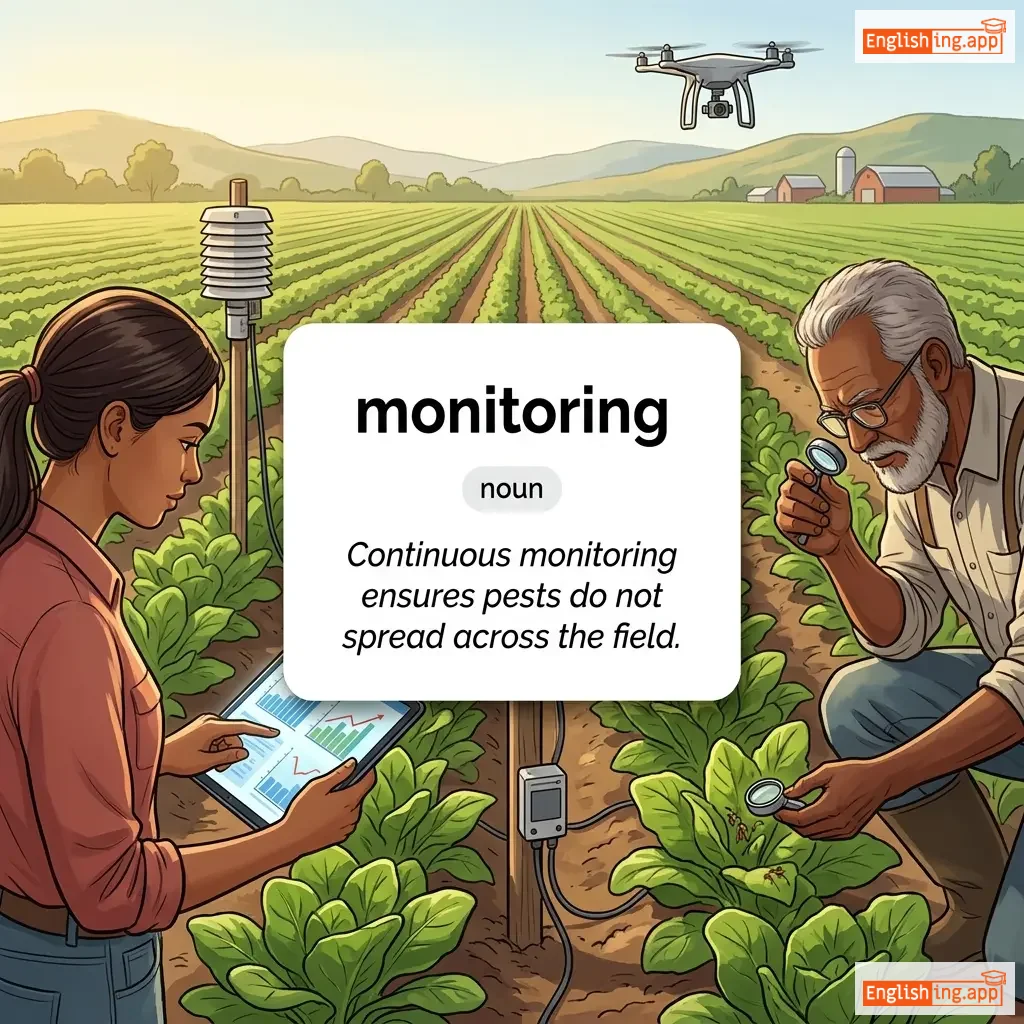
monitoring definition card — visual illustration of the meaning
noun
ˈmɒnɪtərɪŋ
監視、継続的なモニタリング (kanshi, keizokuteki na monitoring)

The action of observing and checking the progress or quality of something over a period of time.

"Continuous monitoring ensures pests do not spread across the field."

"継続的なモニタリングにより、害虫が畑全体に広がることはありません。" (Keizokuteki na monitoring ni yori, gaichū ga hatake zentai ni hirogaru koto wa arimasen.)
adjective
/ˈmɒnɪtəri/
警告的な (keikoku-teki na)

Giving a warning or cautionary advice; serving to warn.

"His monitory tone made everyone cautious about their next move."

"彼の警告的な口調は、次の動きについて皆を警戒させました。" (Kare no keikoku-teki na kuchō wa, tsugi no ugoki ni tsuite mina o keikai sasemashita.)
noun
/mɒŋk/
僧侶 (sōryo)

a member of a religious community living under vows of poverty, chastity, and obedience

"The monk lived a simple and peaceful life in the monastery."
"その僧侶は修道院でシンプルで平和な生活を送りました。" (Sono sōryo wa shūdōin de shinpuru de heiwa na seikatsu o okurimashita.)
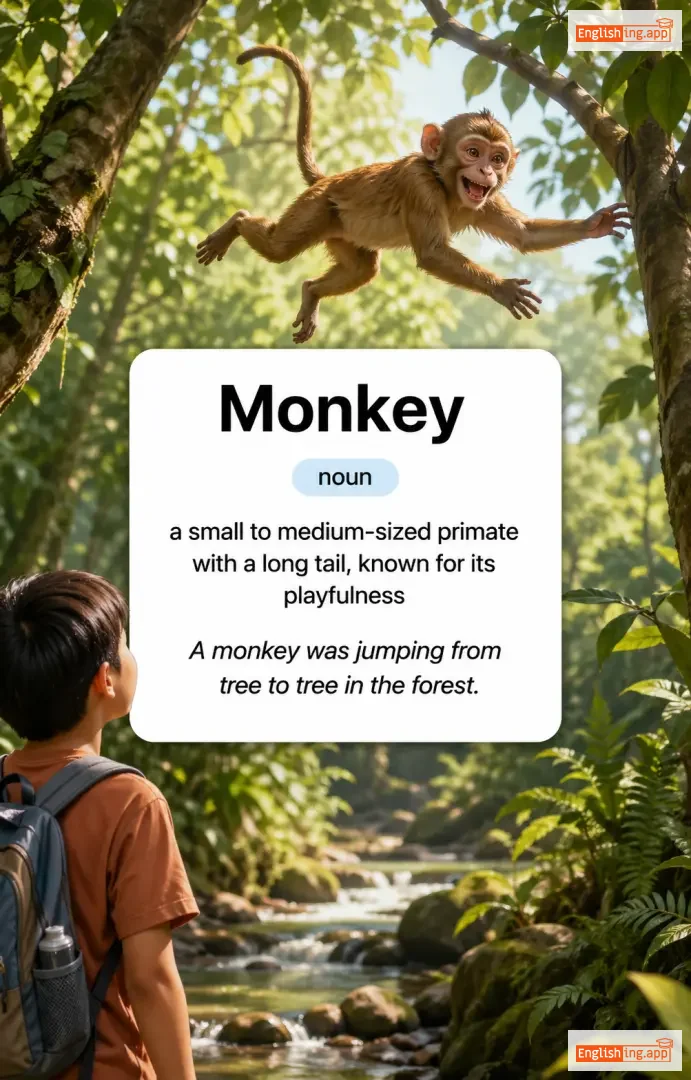
Monkey definition card — visual illustration of the meaning
noun
/ˈmʌŋki/
(saru)

a small to medium-sized primate with a long tail, known for its playfulness

"A monkey was jumping from tree to tree in the forest."

"森の中で猿が木から木へ飛び移っていた。" (mori no naka de saru ga ki kara ki e tobi utte ita)
adjective
/ˌmɒnəkrəˈmætɪk/

Consisting of or displaying only one color.

"The artist created a striking monochromatic painting in shades of blue."

noun/adjective
/ˈmɒnəkrəʊm/
モノクローム (monokurōmu)

A photograph, painting, or screen image in black and white or varying tones of one color.

"The old film was shot entirely in monochrome."

"その古い映画は完全にモノクロームで撮影されました。" (Sono furui eiga wa kanzen ni monokurōmu de satsuei saremashita.)
noun
/ˈmɒnəkl/

A single round lens for one eye, used to correct or enhance vision.

"The old gentleman wore a monocle at formal events."

noun
/məˈnɒkrəsi/
独裁政治 (dokusaiseiji)

A system of government by a single person; autocracy.

"The nation suffered under decades of monocracy."
"国は数十年にわたるモノクラシーの下で苦しんだ。" (Kuni wa sūjūnen ni wataru monokurashī no shita de kurushinda.)
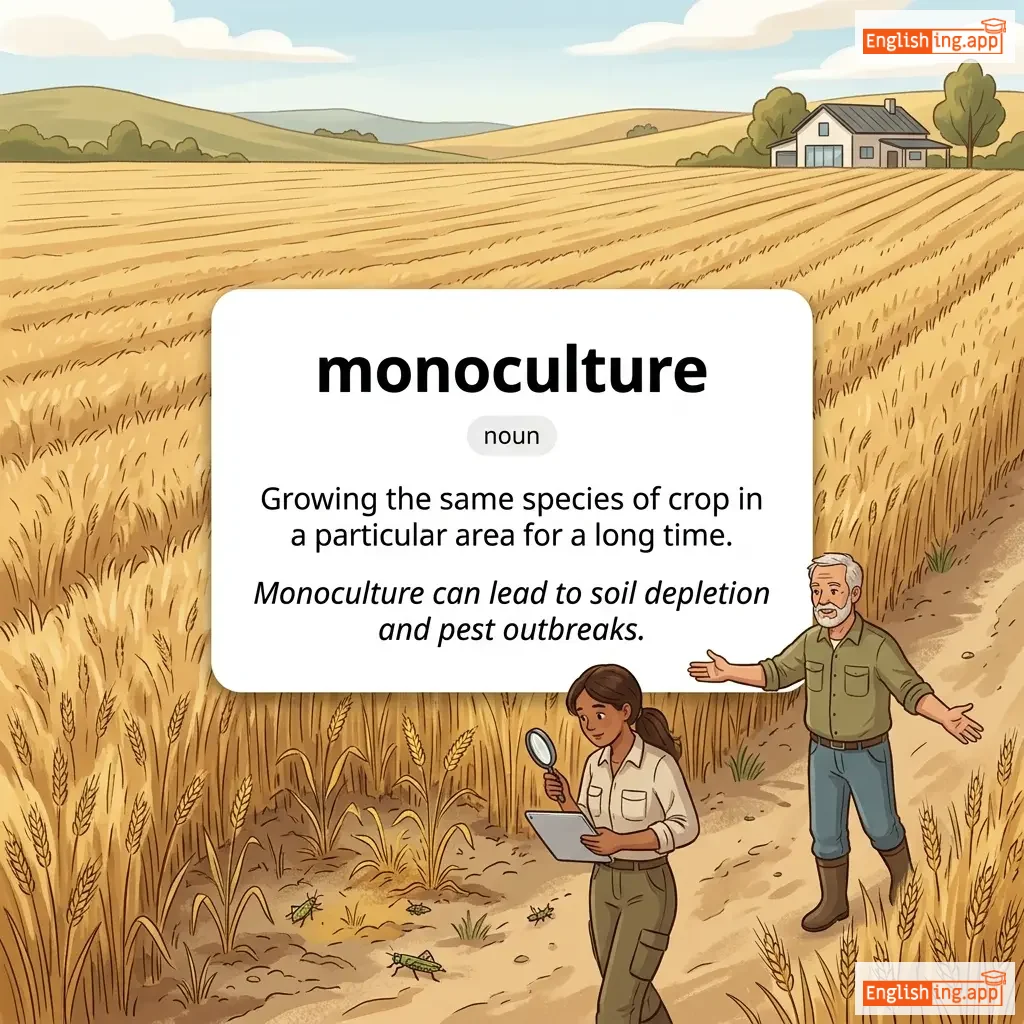
monoculture definition card — visual illustration of the meaning
noun
ˈmɒn.əˌkʌl.tʃər
モノカルチャー (monokaruchaa)

Growing the same species of crop in a particular area for a long time.

"Monoculture can lead to soil depletion and pest outbreaks."

"モノカルチャーは土壌の肥沃度の低下と害虫の発生を引き起こす可能性があります。" (Monokaruchaa wa dojou no hiyokudo no teika to gaichuu no hassei o hikiokosu kanousei ga arimasu.)
noun
/məˈnɒɡəmi/
一夫一妻制 (ippuisshisei)

The practice of being married to or in a relationship with only one person at a time.

"Many cultures encourage monogamy as the ideal form of marriage."

"多くの文化は一夫一妻制を理想的な結婚形態として奨励しています。" (Ōku no bunka wa ippuisshisei o risōteki na kekkon keitai toshite shōrei shiteimasu.)
noun
/ˈmɒnəɡræm/
モノグラム (monogramu)

A design consisting of two or more letters, typically a person's initials, combined or interwoven.

"The towel was embroidered with her monogram."

"タオルには彼女のモノグラムが刺繍されていた。" (Taoru ni wa kanojo no monogramu ga shishū sarete ita.)
noun
/ˈmɒnəɡrɑːf/

A detailed written study of a single specialized subject or aspect of it.

"The professor published a monograph on ancient pottery."

adjective
/mɔːrˈdeɪʃəs/
辛辣または皮肉な (shinratsu matawa hinikuna)

Sharp or biting in style, tone, or remark; sarcastic.

"The critic’s mordacious review offended the author."

"批評家の辛辣なレビューは著者を怒らせた。" (Hihyōka no shinratsu na rebyū wa chosha o okorase ta.)
noun
/ˈmuːn.biːm/
月光 (gekkou)

A ray of light from the moon.

"A moonbeam lit up the quiet forest clearing."

"月光が静かな森の開けた場所を照らした。" (Gekkou ga shizukana mori no hiraketa basho o terashita.)
💭

moot

adjective, verb
/muːt/

Adjective: subject to debate or irrelevant. Verb: to suggest an idea for discussion.

"The issue of funding became a moot point after the project was canceled."

adjective, noun
/ˈmɔːrəl/
道徳 (dōtoku)

Adjective: concerned with principles of right and wrong. Noun: a lesson about right and wrong from a story or experience.

"The moral of the story is that honesty is the best policy."

"物語の教訓は、正直が最良の政策であることです。" (Monogatari no kyōkun wa, shōjiki ga sairyō no seisaku de aru koto desu.)
noun
/məˈræl/
士気 (shiki)

The confidence, enthusiasm, and discipline of a person or group at a particular time.

"The team's morale improved after their recent victory."

"チームの士気は最近の勝利後に向上しました。" (Chīmu no shiki wa saikin no shōri go ni kōjō shimashita.)
noun
/ˈmɒrəlɪst/
道徳家 (dōtokuka)

A person who teaches or promotes moral principles and values.

"The author was known as a strict moralist in his writings."

"著者は彼の著作で厳格なモラリストとして知られていました。" (Chosha wa kare no chosaku de genkaku na morarisuto toshite shirareteimashita.)
noun
/məˈrælɪti/
道徳 (doutoku)

Principles concerning the distinction between right and wrong or good and bad behavior.

"Society's sense of morality changes over time."

"社会の道徳観は時とともに変化します。" (Shakai no doutoku kan wa toki to tomo ni henka shimasu.)
verb
/ˈmɒrəlaɪz/
道徳化する (doutokuka suru)

To comment on issues of right and wrong, often with an air of superiority.

"He tends to moralize about other people's choices."

"彼は他の人々の選択について道徳的なコメントをする傾向がある。" (Kare wa hoka no hitobito no sentaku ni tsuite doutokuteki na komento o suru keikou ga aru.)
adverb
/ˈmɔːrəli/
道徳的に (dōtoku-teki ni)

in accordance with principles of right and wrong behavior; ethically

"She felt morally obligated to help the refugees."

"彼女は難民を助けるために道義的に義務を感じていた。" (Kanojo wa nanmin o tasukeru tame ni dōtoku-teki ni gimu o kanjite ita.)
noun
/məˈræs/
複雑な状況 (fukuzatsu na jōkyō)

A complicated or confused situation; a swampy or boggy ground.

"The project got stuck in a bureaucratic morass."

"そのプロジェクトは官僚主義の沼に嵌ってしまった。" (Sono purojekuto wa kanryōshugi no numa ni hamatte shimatta.)
noun
/ˌmɔːrəˈtɔːriəm/
モラトリアム (moratorium)

A temporary suspension or delay of an activity, law, or obligation.

"The government announced a moratorium on new mining licenses."

"政府は新しい鉱鉱許可に対してモラトリアムを発表しました。" (Seifu wa atarashī kōkō kyoka ni taishite moratorium o happyō shimashita.)
adjective
/ˈmɔːrbɪd/
死や病気など、不快または不安を引き起こすテーマへの異常な関心 (shi ya byouki nado, fukai matawa fuan wo hikiokosu tema e no ijou na kanshin)

Having an abnormal interest in disturbing or unpleasant subjects such as death or disease.

"She had a morbid fascination with crime stories."
"彼女は犯罪の話に対してモービッドな魅力を持っていた。" (Kanojo wa hanzai no hanashi ni taishite mobiddo na miryoku wo motte ita.)
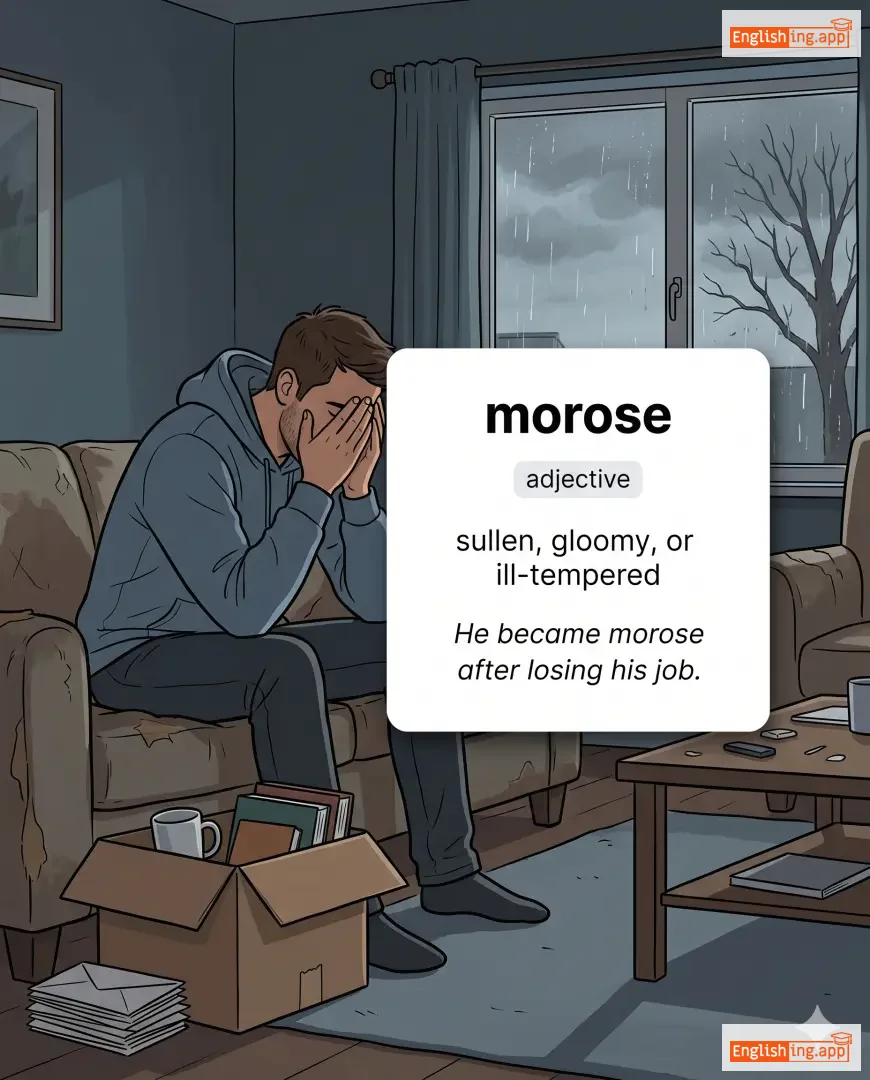
morose definition card — visual illustration of the meaning
adjective
/məˈroʊs/
陰鬱 (in'utsu)

sullen, gloomy, or ill-tempered

"He became morose after losing his job."

"彼は仕事を失った後、落ち込んでしまった。" (Kare wa shigoto o ushinatta ato, ochikonde shimatta.)