वोकैबुलरीज

इंग्लिश वोकैबुलरी डिस्कवर, लर्न और मास्टर करें

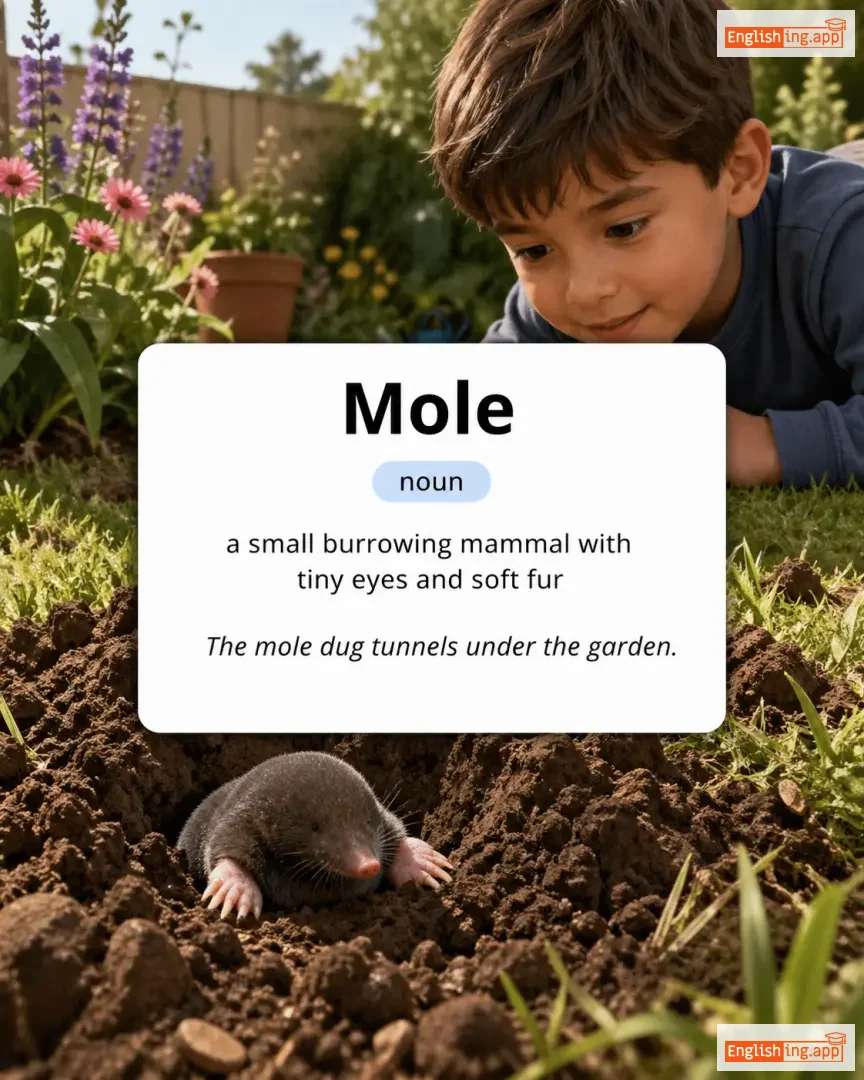
Mole definition card — visual illustration of the meaning
noun
/moʊl/
मोल (mol)

a small burrowing mammal with tiny eyes and soft fur

"The mole dug tunnels under the garden."

"मोल ने बग़ीचे के नीचे सुरंगें खोदीं।" (mol ne bagiche ke neeche surangen khodi)
noun
/ˈmɒlɪkjuːl/
अणु (anu)

The smallest unit of a chemical compound that retains its chemical properties.

"A water molecule is made up of two hydrogen atoms and one oxygen atom."

"एक पानी के अणु में दो हाइड्रोजन एटम और एक ऑक्सीजन एटम होते हैं।" (ek pani ke anu mein do hydrogen atom aur ek oxygen atom hote hain.)
verb
/məˈlɛst/
उत्पीड़ित करना / यौन शोषण करना (utpeedit karna / yaun shoshan karna)

to assault or abuse someone, especially in a sexual or physical way

"The criminal was arrested for attempting to molest a child."

"अपराधी को एक बच्चे को उत्पीड़ित करने का प्रयास करने पर गिरफ्तार किया गया था।" (Aparadhi ko ek bachche ko utpeedit karne ka prayaas karne par giraftaar kiya gaya tha.)
mollify definition card — visual illustration of the meaning
verb
/ˈmɒlɪfaɪ/
शांत करना (shaant karna)

To calm or soothe someone's anger or anxiety.

"The manager tried to mollify the angry customers with discounts."

"मैनेजर ने गुस्साए ग्राहकों को छूट देकर शांत करने की कोशिश की।" (manager ne gussaaye graahkon ko chhoot dekar shaant karne ki koshish ki.)
verb
/ˈmɒlikɒdl/
अत्यधिक स्नेह से पालना (atyadhik sneha se palna)

To treat someone in an overprotective and indulgent way.

"Parents should avoid mollycoddling their children too much."

"माता-पिता को अपने बच्चों को अत्यधिक स्नेह से बिगाड़ने से बचना चाहिए।" (Mata-pita ko apne bachcho ko atyadhik sneha se bigadne se bachna chahiye.)
verb
/məʊlt/
पंख झाड़ना (pankh jhadna)

To shed old feathers, skin, or hair to make way for new growth.

"Birds molt their feathers once a year."

"पक्षी साल में एक बार अपने पंख झाड़ते हैं।" (Pakshi saal mein ek baar apne pankh jhadte hain.)
adjective
/ˈməʊltən/
पिघला हुआ (pighla hua)

Made into liquid by heat; melted.

"The blacksmith poured molten metal into the mold."

"लोहार ने साँचे में पिघला हुआ धातु डाला।" (lohar ne sanche mein pighla hua dhatu dala.)
👩‍👧

mom (माँ)

noun
/mɑːm/
माँ (maa)

an informal word for mother

"My mom makes the best homemade food."

"मेरी माँ सबसे बेहतरीन घर का खाना बनाती हैं।" (Meri maa sabse behtareen ghar ka khana banati hain.)
noun
/ˈmoʊmənt/
क्षण (kshan)

A very short period of time; a particular point in time.

"She paused for a moment before answering."

"वह उत्तर देने से पहले एक पल के लिए रुकी।" (Wah uttar dene se pehle ek pal ke liye ruki.)
adjective
/ˈmoʊmənˌteri/
क्षणिक (kshanik)

Lasting for only a short time.

"There was a momentary silence in the room."

"वहाँ कमरे में एक क्षणिक शांति थी।" (Wahan kamre mein ek kshanik shanti thi.)
adjective
/moʊˈmɛntəs/
महत्वपूर्ण (mahatvapurn)

Of great importance or significance, especially in its effect on the future.

"The signing of the agreement was a momentous event."

"समझौते पर हस्ताक्षर एक महत्वपूर्ण घटना थी।" (Samjhaute par hastakshar ek mahatvapurn ghatna thi.)
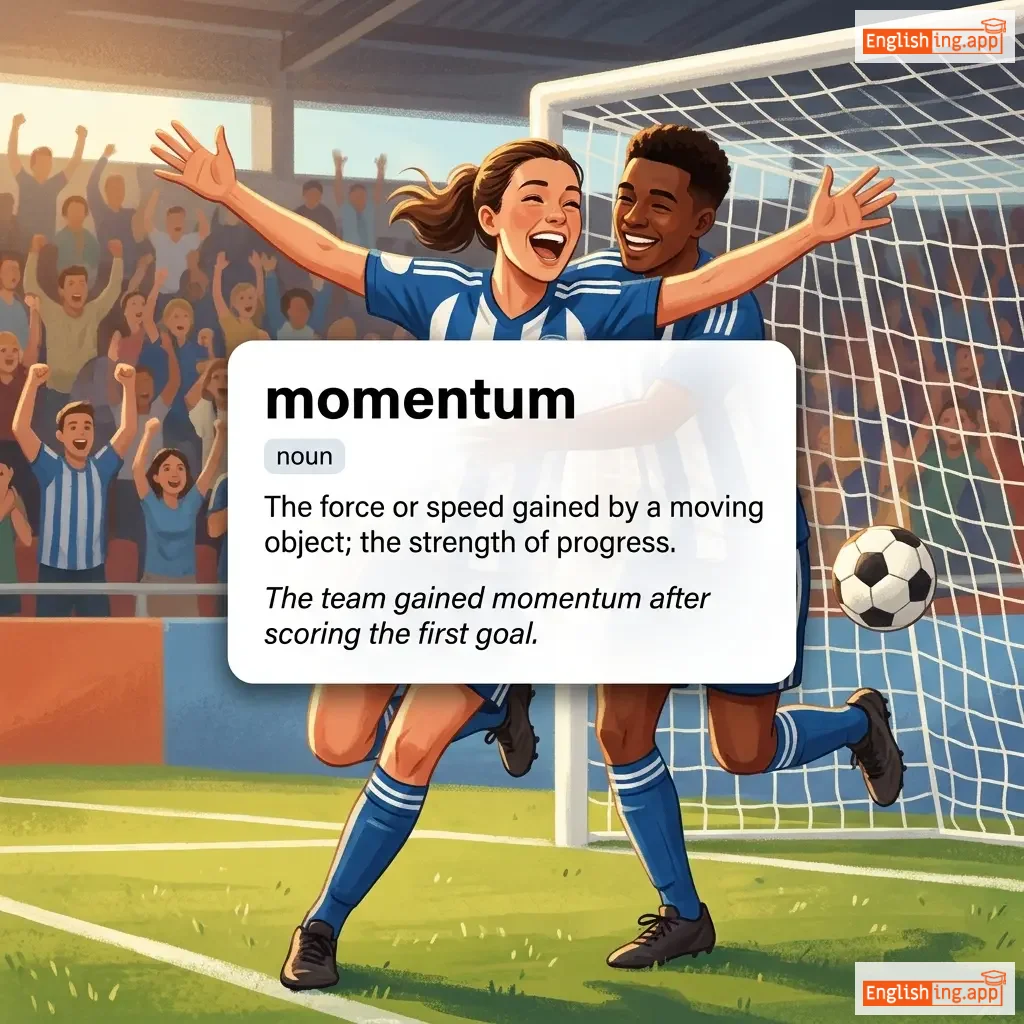
momentum definition card — visual illustration of the meaning
noun
/moʊˈmɛntəm/

The force or speed gained by a moving object; the strength of progress.

"The team gained momentum after scoring the first goal."

noun
/ˈmɒn.ɑːk/
सम्राट (samrat)

a sovereign ruler, especially a king or queen

"The monarch addressed the nation on television."

"सम्राट ने टेलीविज़न पर राष्ट्र को संबोधित किया।" (samrat ne television par rashtr ko sambodhit kiya.)
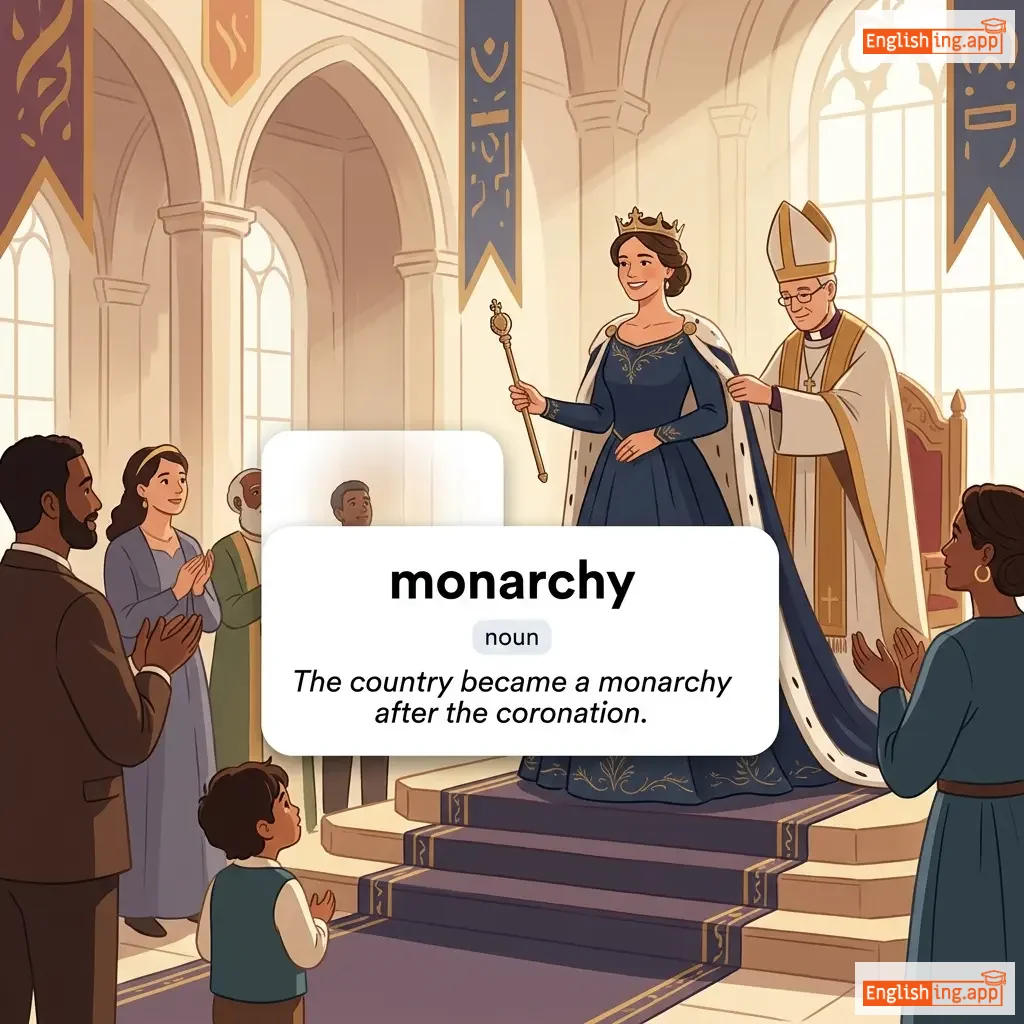
monarchy definition card — visual illustration of the meaning
noun
/ˈmɑːnərki/
राजतंत्र (raajtantra)

A system of government with a king or queen as head of state.

"The country became a monarchy after the coronation."

"देश ने राजतंत्र बनने के बाद शाही ताज पहन लिया।" (Desh ne raajtantra banne ke baad shaahi taaj pehn liya.)
noun
/ˈmɒnəstɛri/
मठ (math)

A building or complex where monks or nuns live, work, and worship.

"The old monastery was surrounded by high stone walls."

"पुराना मठ ऊँची पत्थर की दीवारों से घिरा हुआ था" (purana math oonchi patthar ki deewaron se ghira hua tha)
adjective
/məˈnæstɪk/
संन्यासी जैसा (sannyasi jaisa)

Relating to monks, monasteries, or a life of religious seclusion.

"He chose to live a monastic life away from the city."

"उसने शहर से दूर संन्यासी जैसा जीवन जीने का फैसला किया।" (Usne shahar se door sannyasi jaisa jeevan jeene ka faisla kiya.)
noun
/ˈmʌn.deɪ/
सोमवार (somvaar)

the first day of the working week following Sunday

"I start my new job on Monday."

"मैं सोमवार को अपनी नई नौकरी शुरू करता हूँ।" (main somvaar ko apni nai naukri shuru karta hoon)
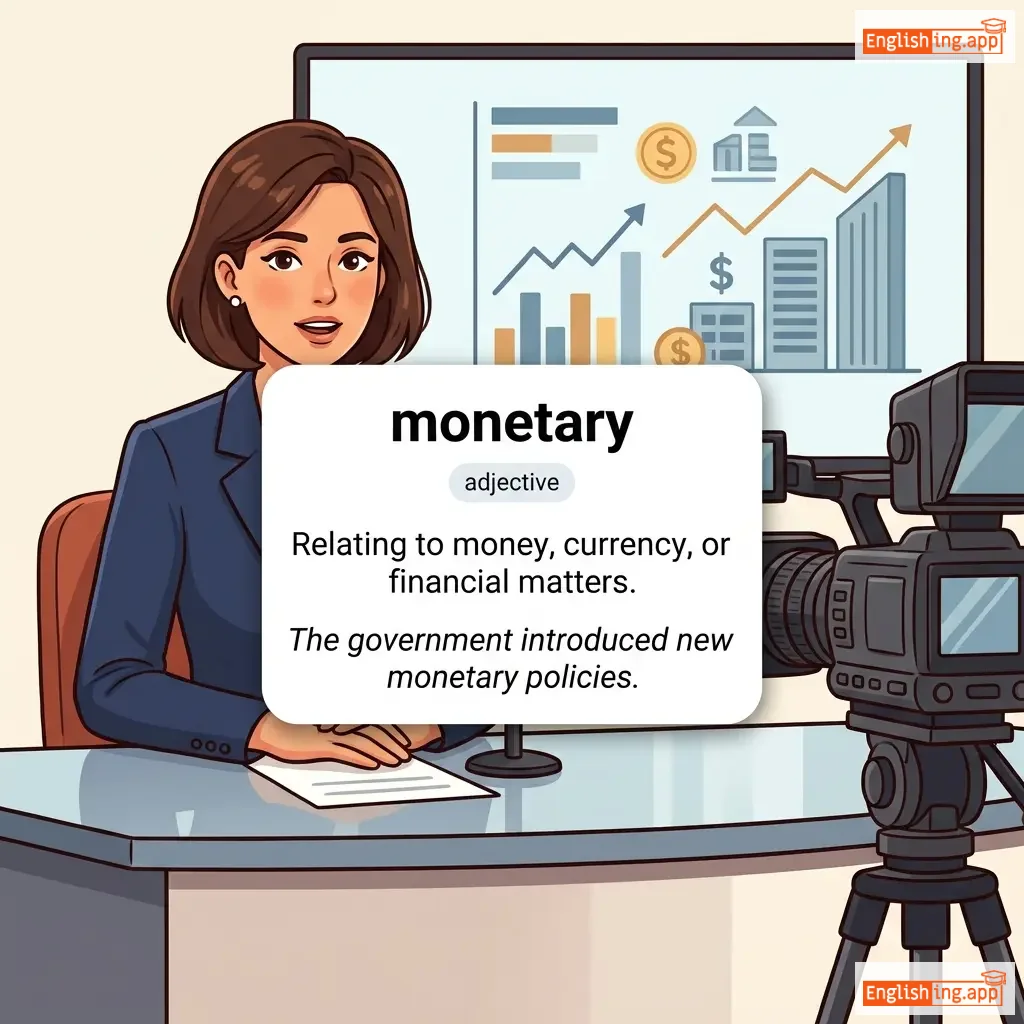
monetary definition card — visual illustration of the meaning
adjective
/ˈmʌnɪtəri/

Relating to money, currency, or financial matters.

"The government introduced new monetary policies."

monetization definition card — visual illustration of the meaning
noun
/ˌmɒn.ɪ.taɪˈzeɪ.ʃən/
मनीकरण (manikaran)

The process of converting assets or services into money, involving commercialization, profit generation, and revenue creation.

"The monetization of digital content has created new income streams."

"डिजिटल सामग्री का मुद्रीकरण नए आय के स्रोत उत्पन्न कर चुका है।" (Digital samagri ka mudrikaran naye aay ke srot utpann kar chuka hai.)
money definition card — visual illustration of the meaning
noun
/ˈmʌni/
खुशी (khushi)

A medium of exchange in the form of coins and banknotes; wealth or financial resources.

"He saved enough money to buy a new car."

"जब उसे पुरस्कार मिला तो वह अपनी खुशी छिपा नहीं सकी।" (Jab use puraskaar mila to vah apni khushi chhupa nahi saki.)
adjective
/ˈmʌnid/
धनी; संपन्न; अमीर (manid)

having much money; wealthy; rich

"She comes from a moneyed family with extensive real estate holdings."

"वह एक संपन्न परिवार से आती है, जिसके पास व्यापक रियल एस्टेट संपत्ति है।" (vah ek sampann parivar se aati hai, jiske paas vyaapak riāl esṭeṭ sampatti hai.)
noun
/ˈmɒŋ.ɡuːs/
मांगूस (mangoos)

a small carnivorous mammal known for its ability to kill venomous snakes

"The mongoose quickly attacked the cobra to protect its young."

"मांगूस ने जल्दी से कोबरा पर हमला किया ताकि अपने बच्चों की रक्षा कर सके।" (Mangoos ne jaldi se kobra par hamla kiya taaki apne bachchon ki raksha kar sake.)
noun
/ˈmʌŋɡrəl/
मिश्रित नस्ल का कुत्ता (mishrit nasl ka kutta)

A dog of mixed breed; sometimes used to describe something mixed or of inferior quality.

"The stray dog was a friendly mongrel."

"वह आवारा कुत्ता एक दोस्ताना मिश्रित नस्ल का कुत्ता था।" (vah avara kutta ek dostana mishrit nasl ka kutta tha.)
noun
/məˈnɪʃən/
चेतावनी (chetavani)

A warning or caution, often of a religious or moral nature.

"The priest gave a monition against dishonesty."

"पादरी ने बेईमानी के खिलाफ एक चेतावनी दी।" (paadri ne beimaani ke khilaaf ek chetavani di.)
noun, verb
/ˈmɒnɪtər/
मॉनिटर, निरीक्षण करना (monitor, nirikshan karna)

to observe and check the progress or quality of something; also a device that displays information

"The teacher monitors the students during the exam."

"शिक्षक परीक्षा के दौरान छात्रों की निगरानी करते हैं।" (Shikshak pariksha ke dauran chhatron ki nigraani karte hain.)
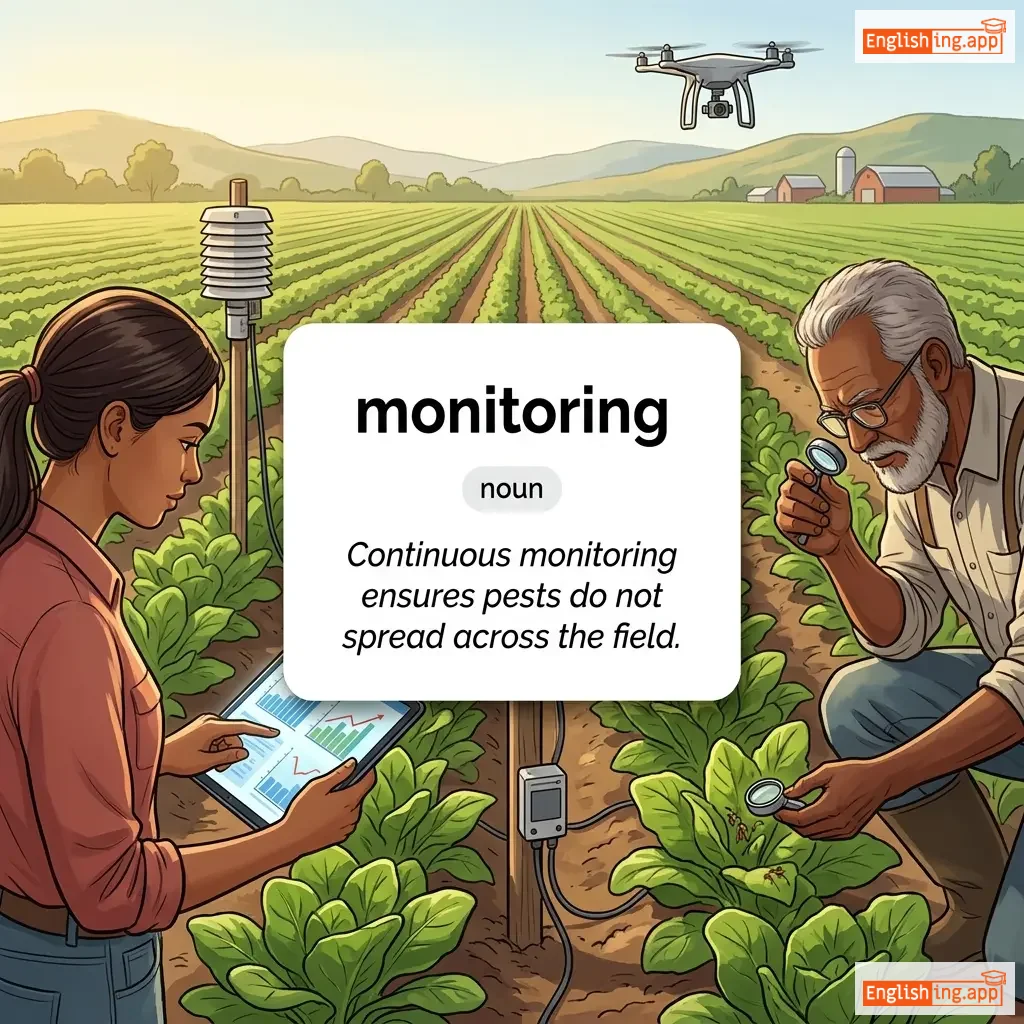
monitoring definition card — visual illustration of the meaning
noun
ˈmɒnɪtərɪŋ
निरीक्षण, निरंतर निगरानी (nirikshan, nirantar nigarani)

The action of observing and checking the progress or quality of something over a period of time.

"Continuous monitoring ensures pests do not spread across the field."

"निरंतर निगरानी यह सुनिश्चित करती है कि कीट खेत में न फैलें।" (Nirantar nigarani yah sunishchit karti hai ki keet khet mein na phailen.)
adjective
/ˈmɒnɪtəri/
चेतावनी देने वाला (cheetavni dene wala)

Giving a warning or cautionary advice; serving to warn.

"His monitory tone made everyone cautious about their next move."

"उसका मोनिटरी स्वर सभी को अगले कदम के बारे में सतर्क कर गया।" (Uska monitory swar sabhi ko agle kadam ke baare mein satark kar gaya.)
noun
/mɒŋk/
साधु (sadhu)

a member of a religious community living under vows of poverty, chastity, and obedience

"The monk lived a simple and peaceful life in the monastery."

"साधु मठ में एक सरल और शांतिपूर्ण जीवन जीते थे।" (Sadhu math mein ek saral aur shantipurn jeevan jeete the.)
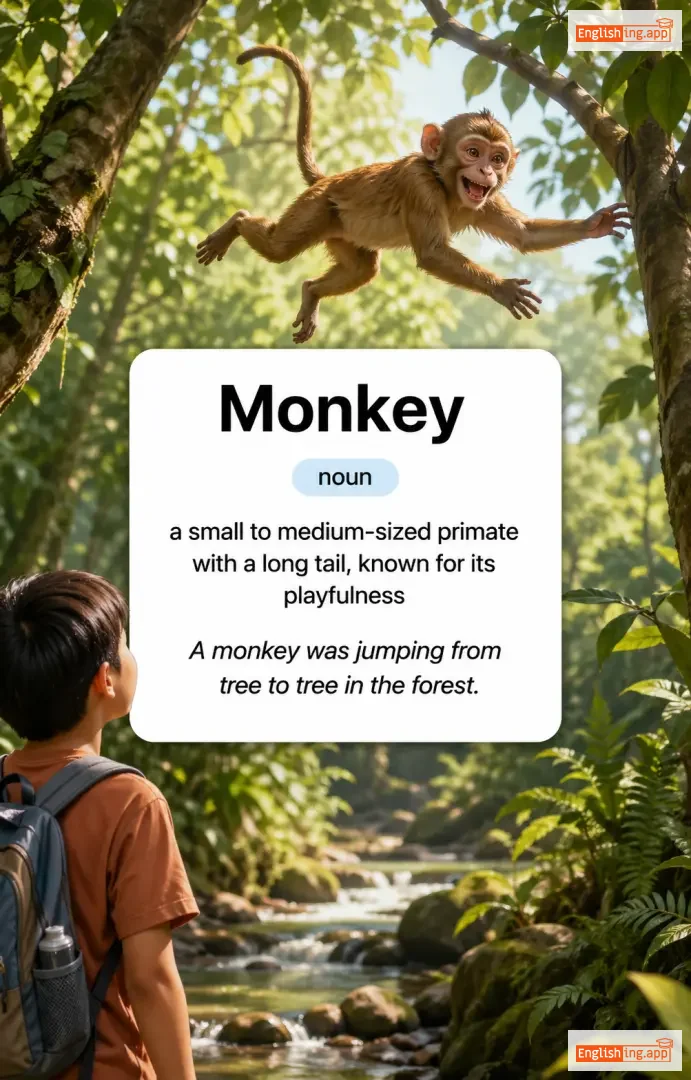
Monkey definition card — visual illustration of the meaning
noun
/ˈmʌŋki/
बंदर (bandar)

a small to medium-sized primate with a long tail, known for its playfulness

"A monkey was jumping from tree to tree in the forest."

"एक बंदर जंगल में एक पेड़ से दूसरे पेड़ पर कूद रहा था।" (ek bandar janglė mein ek ped se doosre ped par kood raha tha)
adjective
/ˌmɒnəkrəˈmætɪk/
एकरंगी (ekrangi)

Consisting of or displaying only one color.

"The artist created a striking monochromatic painting in shades of blue."

"कलाकार ने नीले रंगों के शेड्स में एक चौंकाने वाली एकरंगी पेंटिंग बनाई।" (Kalakar ne neele rangon ke shedz mein ek chaunkane waali ekrangi painting banai.)
noun/adjective
/ˈmɒnəkrəʊm/
काले-सफेद (kaale-safed)

A photograph, painting, or screen image in black and white or varying tones of one color.

"The old film was shot entirely in monochrome."

"पुरानी फिल्म पूरी तरह से काले-सफेद में शूट की गई थी।" (Puraani film poori tarah se kaale-safed mein shoot ki gayi thi.)
noun
/ˈmɒnəkl/
मोनोंकल (monokal)

A single round lens for one eye, used to correct or enhance vision.

"The old gentleman wore a monocle at formal events."

"बुजुर्ग सज्जन औपचारिक अवसरों पर मोनोंकल पहने थे." (bujurg sajjan aupcharik avsaroon par monokal pehne the)
noun
/məˈnɒkrəsi/
एकलशासन (ekalshasan)

A system of government by a single person; autocracy.

"The nation suffered under decades of monocracy."

"राष्ट्र मोनोक्रीसी के दशकों के दौरान पीड़ित था।" (Rashtra monokrisī ke dashako ke dauran pīṛit thā.)
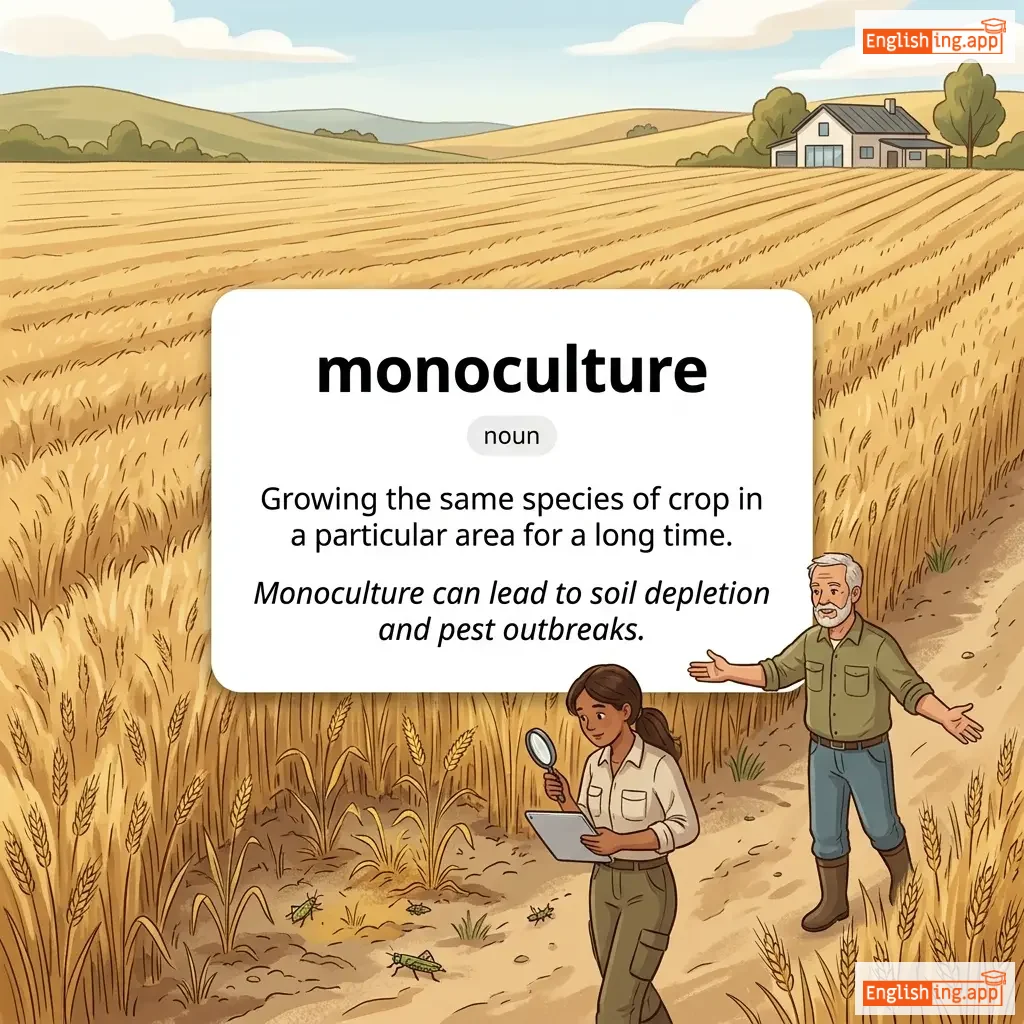
monoculture definition card — visual illustration of the meaning
noun
ˈmɒn.əˌkʌl.tʃər
मोनोकल्चर (monokalchar)

Growing the same species of crop in a particular area for a long time.

"Monoculture can lead to soil depletion and pest outbreaks."

"मोनोकल्चर से मृदा की उर्वरता में कमी और कीटों के प्रकोप हो सकते हैं।" (Monokalchar se mrida ki urvarata mein kami aur keeton ke prakoop ho sakte hain.)
noun
/məˈnɒɡəmi/
एकविवाहिता (ekvivahita)

The practice of being married to or in a relationship with only one person at a time.

"Many cultures encourage monogamy as the ideal form of marriage."

"कई संस्कृतियाँ मोनोगामी को विवाह का आदर्श रूप मानती हैं।" (kai sanskritiyan monogamy ko vivah ka adarsh roop manti hain.)
noun
/ˈmɒnəɡræm/
मोनोग्राम (monogram)

A design consisting of two or more letters, typically a person's initials, combined or interwoven.

"The towel was embroidered with her monogram."

"तौलिया उसके मोनोग्राम से कढ़ा हुआ था।" (tauliya uske monogram se kadha hua tha.)
noun
/ˈmɒnəɡrɑːf/
विशिष्ट विषय पर विस्तृत अध्ययन (monograaf)

A detailed written study of a single specialized subject or aspect of it.

"The professor published a monograph on ancient pottery."

"प्रोफेसर ने प्राचीन मिट्टी के बर्तनों पर एक मोनोग्राफ प्रकाशित किया।" (professor ne praachin mitti ke bartano par ek monograaf prakaashit kiya.)
adjective
/mɔːrˈdeɪʃəs/
तीखा या विडंबनात्मक (teekha ya vidambanatmak)

Sharp or biting in style, tone, or remark; sarcastic.

"The critic’s mordacious review offended the author."

"समीक्षक की तीखी और विडंबनात्मक समीक्षा ने लेखक को आहत कर दिया।" (Sameekshak ki teekhi aur vidambanatmak sameeksha ne lekhak ko aahat kar diya.)
noun
/ˈmuːn.biːm/
चाँद की किरण (chaand ki kiran)

A ray of light from the moon.

"A moonbeam lit up the quiet forest clearing."

"एक चाँद की किरण ने शांत जंगल की खाली जगह को रोशन कर दिया।" (ek chaand ki kiran ne shaant jangla ki khaali jagah ko roshan kar diya.)
adjective, verb
/muːt/
विवादास्पद / अप्रासंगिक (vivadaspad / aprasangik)

Adjective: subject to debate or irrelevant. Verb: to suggest an idea for discussion.

"The issue of funding became a moot point after the project was canceled."

"परियोजना रद्द होने के बाद, धन के मुद्दे को अप्रासंगिक मान लिया गया।" (pariyojana radd hone ke baad, dhan ke mudde ko aprasangik maan liya gaya.)
adjective, noun
/ˈmɔːrəl/
नैतिक (naitik)

Adjective: concerned with principles of right and wrong. Noun: a lesson about right and wrong from a story or experience.

"The moral of the story is that honesty is the best policy."

"कहानी का नैतिक यह है कि ईमानदारी सबसे अच्छा नीति है।" (kahani ka naitik yah hai ki imandari sabse accha niti hai.)
noun
/məˈræl/
मनोबल (manobal)

The confidence, enthusiasm, and discipline of a person or group at a particular time.

"The team's morale improved after their recent victory."

"टीम का मनोबल उनके हालिया विजय के बाद बेहतर हो गया।" (Teem ka manobal unke haaliya vijay ke baad behtar ho gaya.)
noun
/ˈmɒrəlɪst/
नैतिक शिक्षक (naitik shikshak)

A person who teaches or promotes moral principles and values.

"The author was known as a strict moralist in his writings."

"लेखक अपनी रचनाओं में एक सख्त नैतिक शिक्षक के रूप में प्रसिद्ध थे।" (Lekhak apni rachnaon mein ek sakht naitik shikshak ke roop mein prasiddh the.)
noun
/məˈrælɪti/
नैतिकता (naitikta)

Principles concerning the distinction between right and wrong or good and bad behavior.

"Society's sense of morality changes over time."

"समाज की नैतिकता समय के साथ बदलती है।" (Samaj ki naitikta samay ke saath badalti hai.)
verb
/ˈmɒrəlaɪz/
नैतिक शिक्षा देना (naitik shiksha dena)

To comment on issues of right and wrong, often with an air of superiority.

"He tends to moralize about other people's choices."

"वह अक्सर दूसरों के विकल्पों पर नैतिक शिक्षा देता है।" (Vah aksar doosron ke vikalpon par naitik shiksha deta hai.)
adverb
/ˈmɔːrəli/
नैतिक रूप से (naitik roop se)

in accordance with principles of right and wrong behavior; ethically

"She felt morally obligated to help the refugees."

"वह शरणार्थियों की मदद करने के लिए नैतिक रूप से बाध्य महसूस करती थी।" (vah sharanarthiyon ki madad karne ke liye naitik roop se baadhy mahsus karti thi)
noun
/məˈræs/
जटिल स्थिति (jatil sthiti)

A complicated or confused situation; a swampy or boggy ground.

"The project got stuck in a bureaucratic morass."

"प्रोजेक्ट एक नौकरशाही की जटिल स्थिति में फंस गया।" (Project ek naukarshahi ki jatil sthiti mein phans gaya.)
noun
/ˌmɔːrəˈtɔːriəm/
मोराटोरियम (moratorium)

A temporary suspension or delay of an activity, law, or obligation.

"The government announced a moratorium on new mining licenses."

"सरकार ने नई खनन लाइसेंस पर मोराटोरियम की घोषणा की।" (Sarkar ne nai khanan license par moratorium ki ghoshna ki.)
adjective
/ˈmɔːrbɪd/
अस्वस्थकर या डरावने विषयों में असामान्य रुचि (aswasthakar ya daravane vishayon mein asamany ruchi)

Having an abnormal interest in disturbing or unpleasant subjects such as death or disease.

"She had a morbid fascination with crime stories."

"वह अपराध की कहानियों के प्रति एक मोर्बिड आकर्षण रखती थी।" (Wah apradh ki kahaniyon ke prati ek morbid aakarshan rakhti thi.)
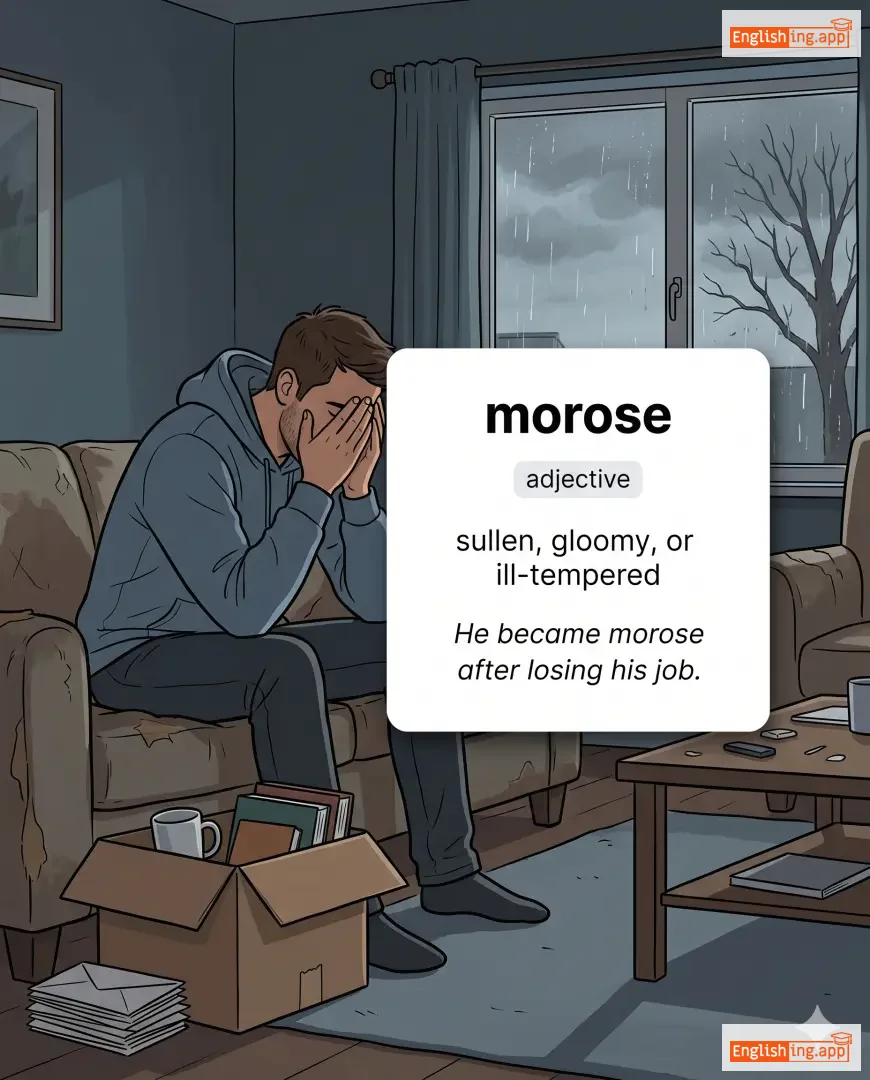
morose definition card — visual illustration of the meaning
adjective
/məˈroʊs/
उदास (udas)

sullen, gloomy, or ill-tempered

"He became morose after losing his job."

"वह अपनी नौकरी खोने के बाद उदास हो गया।" (Vah apni naukri khone ke baad udas ho gaya.)