ভোকাবুলারিসমূহ

ইংরেজি শব্দের বাংলা অর্থ | English to Bangla Word Meaning Dictionary

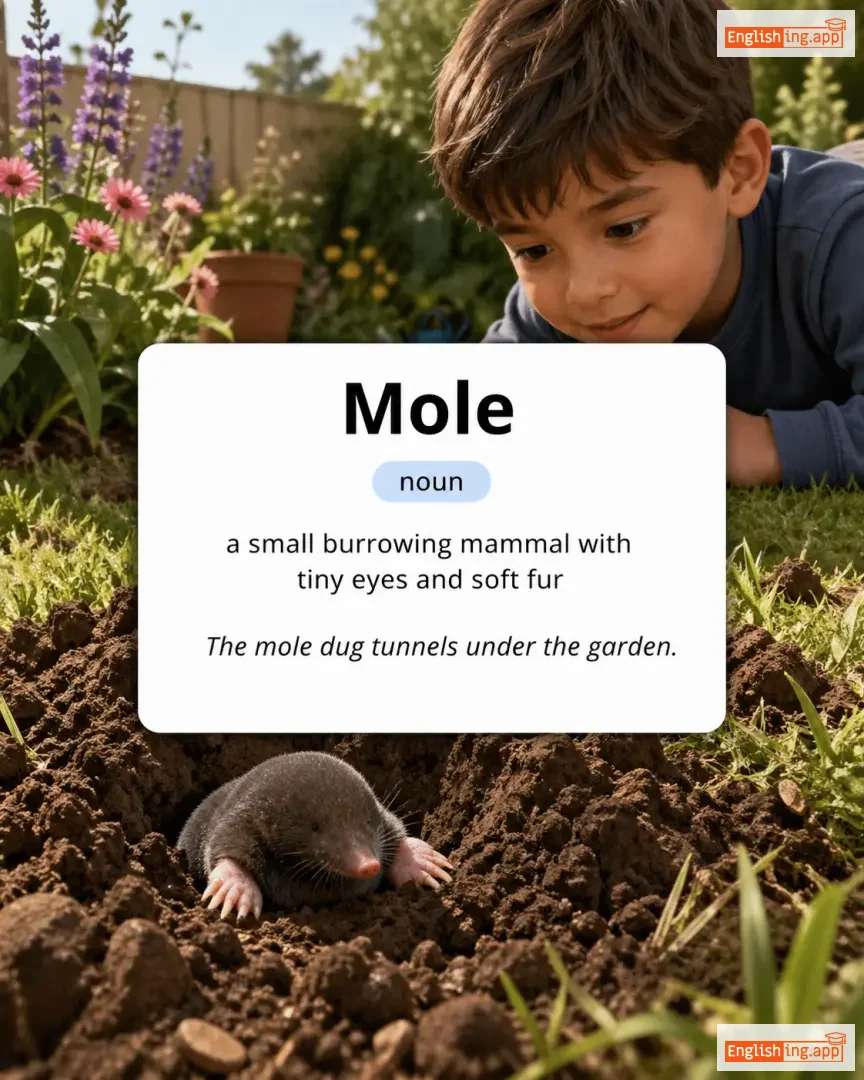
Mole definition card — visual illustration of the meaning
noun
/moʊl/
ছুঁচো (chhuncho)

a small burrowing mammal with tiny eyes and soft fur

"The mole dug tunnels under the garden."

"ছুঁচোটি বাগানের নিচে সুড়ঙ্গ খুঁড়েছিল।" (chhunchoti baganer niche shurang khureche chilo)
noun
/ˈmɒlɪkjuːl/
অণু (onu)

The smallest unit of a chemical compound that retains its chemical properties.

"A water molecule is made up of two hydrogen atoms and one oxygen atom."

"একটি পানির অণু দুটি হাইড্রোজেন এবং একটি অক্সিজেন পরমাণু দ্বারা গঠিত।" (ekti panir onu duti hydrogen ebong ekti oxygen poromanu dara gothito.)
verb
/məˈlɛst/
উত্যক্ত করা / নির্যাতন করা (uttyokto kora / niroyton kora)

to assault or abuse someone, especially in a sexual or physical way

"The criminal was arrested for attempting to molest a child."

"একটি শিশুকে উত্যক্ত করার চেষ্টা করার জন্য অপরাধীকে গ্রেফতার করা হয়েছিল।" (Ekti shishuke uttyokto korar cheshta korar jonno oprodheke greftar kora hoyechilo.)
mollify definition card — visual illustration of the meaning
verb
/ˈmɒlɪfaɪ/
প্রশমিত করা (proshomit kora)

To calm or soothe someone's anger or anxiety.

"The manager tried to mollify the angry customers with discounts."

"ম্যানেজার ছাড় দিয়ে রাগান্বিত গ্রাহকদের শান্ত করার চেষ্টা করেছিলেন।" (manager chhar diye raganbito grakhokder shanto korar cheshta korechilen.)
verb
/ˈmɒlikɒdl/
অতিরিক্ত স্নেহে আদর করা (otirikto snehe ador kora)

To treat someone in an overprotective and indulgent way.

"Parents should avoid mollycoddling their children too much."

"অভিভাবকদের উচিত নয় শিশুদের অতিরিক্ত আদর করে নষ্ট করা।" (obhivabokder uchit noy shishuder otirikto ador kore noshto kora.)
verb
/məʊlt/
পালক ঝরানো (palok jhorano)

To shed old feathers, skin, or hair to make way for new growth.

"Birds molt their feathers once a year."

"পাখিরা বছরে একবার তাদের পালক ঝরায়।" (pakhirara bachore ekbar tader palok jhoray.)
adjective
/ˈməʊltən/
গলিত (golito)

Made into liquid by heat; melted.

"The blacksmith poured molten metal into the mold."

"লোহার মিস্ত্রি ঢালাই ছাঁচে গলিত ধাতু ঢেলেছেন।" (lohar misti dhalai chanche golito dhatu dhelechhen.)
👩‍👧

mom (মম)

noun
/mɑːm/
মা (ma)

an informal word for mother

"My mom makes the best homemade food."

"আমার মা সেরা ঘরে তৈরি খাবার বানান।" (Amar ma sera ghore toiri khabar banan.)
noun
/ˈmoʊmənt/
ক্ষণ (khon)

A very short period of time; a particular point in time.

"She paused for a moment before answering."

"সে উত্তর দেওয়ার আগে এক মুহূর্ত থেমেছিল।" (Se uttar dewar age ek muhurto themechhilo.)
adjective
/ˈmoʊmənˌteri/
ক্ষণস্থায়ী (khonosthai)

Lasting for only a short time.

"There was a momentary silence in the room."

"কক্ষে এক ক্ষণস্থায়ী নীরবতা ছিল।" (Kokhe ek khonosthai nirobota chhilo.)
adjective
/moʊˈmɛntəs/
গুরুত্বপূর্ণ (gurutto purno)

Of great importance or significance, especially in its effect on the future.

"The signing of the agreement was a momentous event."

"চুক্তি স্বাক্ষর একটি গুরুত্বপূর্ণ ঘটনা ছিল।" (Chukti shakkhor ekti gurutto purno ghotona chhilo.)
momentum definition card — visual illustration of the meaning
noun
/moʊˈmɛntəm/
গতি (goti)

The force or speed gained by a moving object; the strength of progress.

"The team gained momentum after scoring the first goal."

"প্রথম গোল করার পর দলটি গতি অর্জন করেছিল।" (Prothom goal korar por dolti goti arjon korechhilo.)
noun
/ˈmɒn.ɑːk/
সাম্রাজ্যবাদ; এককেন্দ্রিক অধিকার; সম্রাট; (shomrat)

a sovereign ruler, especially a king or queen

"The monarch addressed the nation on television."

"সম্রাট টেলিভিশনে জাতির উদ্দেশ্যে ভাষণ দিয়েছেন।" (shomrat telivishone jatir uddeshye bhashan diyechhen.)
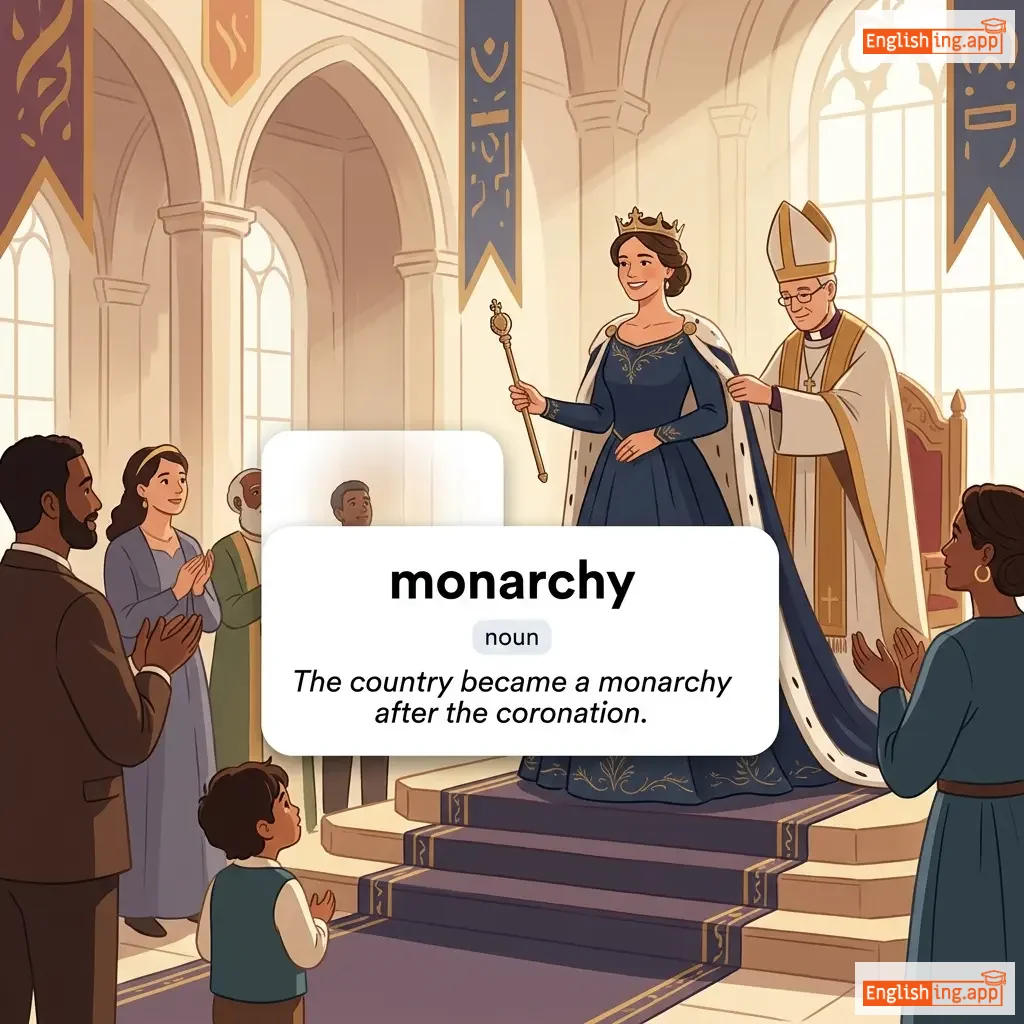
monarchy definition card — visual illustration of the meaning
noun
/ˈmɑːnərki/
রাজতন্ত্র (rajo tantra)

A system of government with a king or queen as head of state.

"The country became a monarchy after the coronation."

"রাজ্যাভিষেকের পর দেশটি রাজতন্ত্রে পরিণত হয়।" (Rajjobhisheker por deshti rajo tantrer porinoto hoy.)
noun
/ˈmɒnəstɛri/
মঠ (moth)

A building or complex where monks or nuns live, work, and worship.

"The old monastery was surrounded by high stone walls."

"পুরনো মঠটি উঁচু পাথরের দেয়াল দিয়ে ঘেরা ছিল।" (purono moth ti unchu pathorer deyal diye ghera chilo.)
adjective
/məˈnæstɪk/
সন্ন্যাসীসুলভ (sonnashisulov)

Relating to monks, monasteries, or a life of religious seclusion.

"He chose to live a monastic life away from the city."

"সে শহর থেকে দূরে সন্ন্যাসীসুলভ জীবন যাপন করার সিদ্ধান্ত নিয়েছিল।" (se shohor theke dure sonnashisulov jibon jhapon korar siddhanto niyechilo.)
noun
/ˈmʌn.deɪ/
সোমবার (shombar)

the first day of the working week following Sunday

"I start my new job on Monday."

"আমি সোমবার আমার নতুন চাকরি শুরু করি।" (ami shombar amar notun chakri shuru kori)
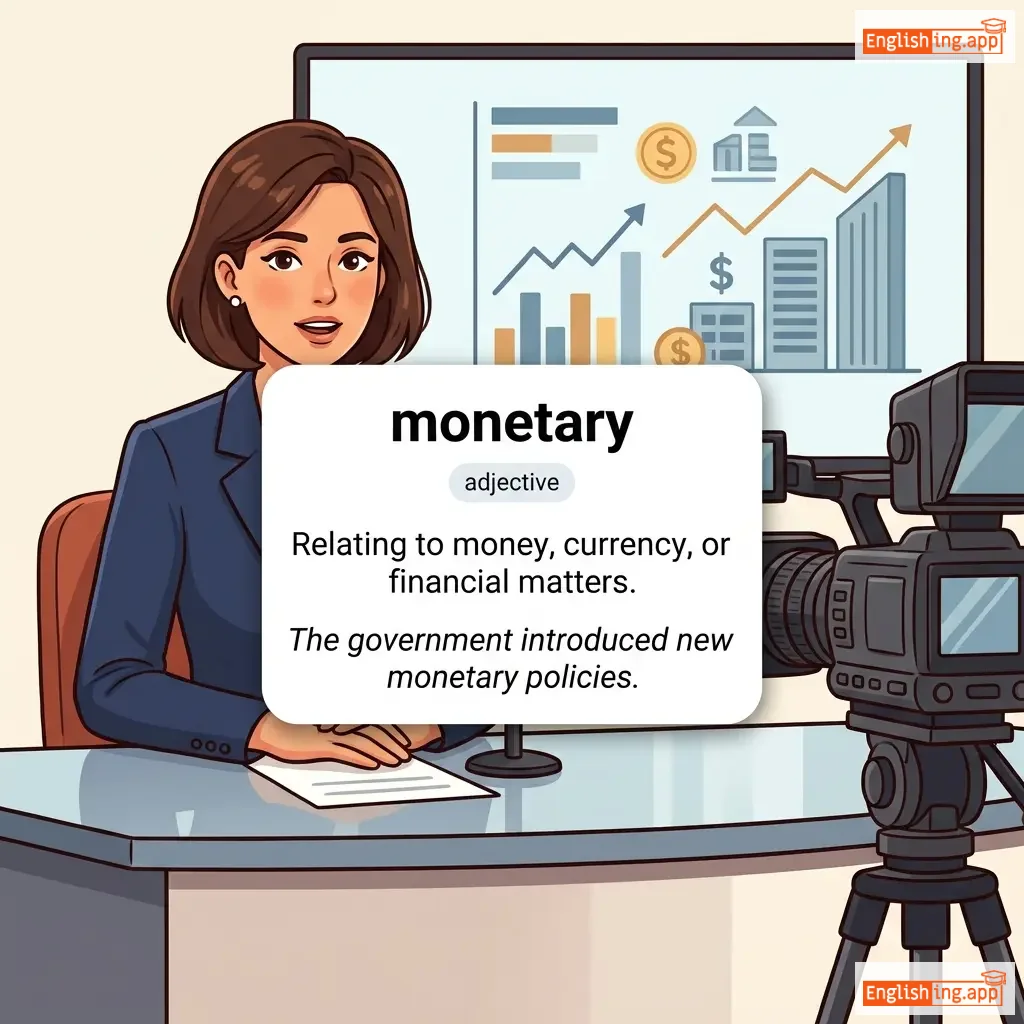
monetary definition card — visual illustration of the meaning
adjective
/ˈmʌnɪtəri/
আর্থিক (arthik)

Relating to money, currency, or financial matters.

"The government introduced new monetary policies."

"সরকার নতুন আর্থিক নীতি চালু করেছে।" (sorkar notun arthik niti chalu koreche.)
monetization definition card — visual illustration of the meaning
noun
/ˌmɒn.ɪ.taɪˈzeɪ.ʃən/
অর্থায়ন (orthayan)

The process of converting assets or services into money, involving commercialization, profit generation, and revenue creation.

"The monetization of digital content has created new income streams."

"ডিজিটাল কনটেন্টের নগদীকরণ নতুন আয়ের পথ সৃষ্টি করেছে।" (Digital kontenter nogdikoron notun ayer poth srishti koreche.)
money definition card — visual illustration of the meaning
noun
/ˈmʌni/
টাকা (taka)

A medium of exchange in the form of coins and banknotes; wealth or financial resources.

"He saved enough money to buy a new car."

"সে একটি নতুন গাড়ি কেনার জন্য যথেষ্ট টাকা সঞ্চয় করেছিল।" (Se ekti notun gari kenar jonno jothesto taka soncoy korechilo.)
adjective
/ˈmʌnid/
সমৃদ্ধ; ধনবান; ধনী; (māniḍ)

having much money; wealthy; rich

"She comes from a moneyed family with extensive real estate holdings."

"তিনি ব্যাপক রিয়েল এস্টেট সম্পত্তির সাথে একটি ধনী পরিবার থেকে এসেছেন।" (tini byāpok riẏel esṭeṭ sampattir sāthe ekṭi dhanī paribār theke esechen.)
noun
/ˈmɒŋ.ɡuːs/
বেজি, নেউল (beji, neul)

a small carnivorous mammal known for its ability to kill venomous snakes

"The mongoose quickly attacked the cobra to protect its young."

"বেজিটি দ্রুত কোবরাকে আক্রমণ করেছিল তার বাচ্চাদের রক্ষা করার জন্য।" (bejiti druto kobrake akromon korechilo tar bacchader rakkha korar jonno.)
noun
/ˈmʌŋɡrəl/
দেশি কুকুর (deshi kukur)

A dog of mixed breed; sometimes used to describe something mixed or of inferior quality.

"The stray dog was a friendly mongrel."

"আশ্রয়হীন কুকুরটি ছিল এক বন্ধুসুলভ দেশি কুকুর।" (ashroyhin kukurti chilo ek bondhusulov deshi kukur.)
noun
/məˈnɪʃən/
সতর্কতা (sotorkota)

A warning or caution, often of a religious or moral nature.

"The priest gave a monition against dishonesty."

"যাজক অসততার বিরুদ্ধে একটি সতর্কতা দিয়েছিলেন।" (jajak osottatar biruddhe ekti sotorkota diyechilen.)
noun, verb
/ˈmɒnɪtər/
মনিটর, পর্যবেক্ষণ করা (monitor, porjobekkhon kora)

to observe and check the progress or quality of something; also a device that displays information

"The teacher monitors the students during the exam."

"শিক্ষক পরীক্ষার সময় শিক্ষার্থীদের পর্যবেক্ষণ করেন।" (Shikkhok porikkhar somoy shikkharthider porjobekkhon koren.)
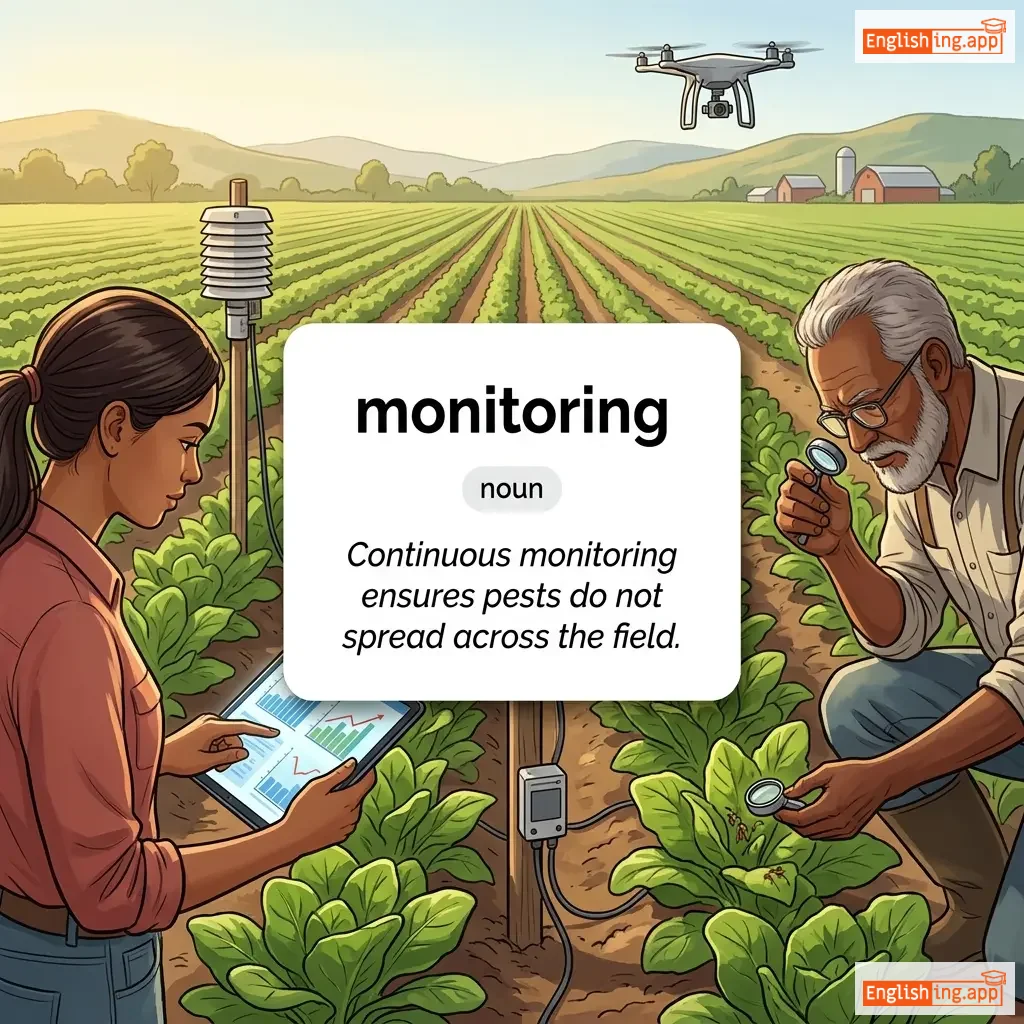
monitoring definition card — visual illustration of the meaning
noun
ˈmɒnɪtərɪŋ
পর্যবেক্ষণ, নিয়মিত পর্যালোচনা (porjobeksho, niyomito porjalocha)

The action of observing and checking the progress or quality of something over a period of time.

"Continuous monitoring ensures pests do not spread across the field."

"অবিরত মনিটরিং নিশ্চিত করে যে পোকামাকড় মাঠের মধ্যে ছড়িয়ে পড়বে না।" (Abirato monitoring nishchito kore je pokamakod mather moddhe chhorie porbe na.)
adjective
/ˈmɒnɪtəri/
সতর্কতামূলক (sotorkatamulok)

Giving a warning or cautionary advice; serving to warn.

"His monitory tone made everyone cautious about their next move."

"তার সতর্কতামূলক স্বর সবাইকে তাদের পরবর্তী পদক্ষেপ সম্পর্কে সতর্ক করে তুলেছিল।" (Tar sotorkatamulok swor sobaike tader poroborti podokkhep somporke sotorko kore tulchhilo.)
noun
/mɒŋk/
ভিক্ষু (bhikkhu)

a member of a religious community living under vows of poverty, chastity, and obedience

"The monk lived a simple and peaceful life in the monastery."

"ভিক্ষু মঠে সাদাসিধা এবং শান্তিপূর্ণ জীবনযাপন করতেন।" (Bhikkhu mothe shadasidha ebong shantipurno jibonjapon korten.)
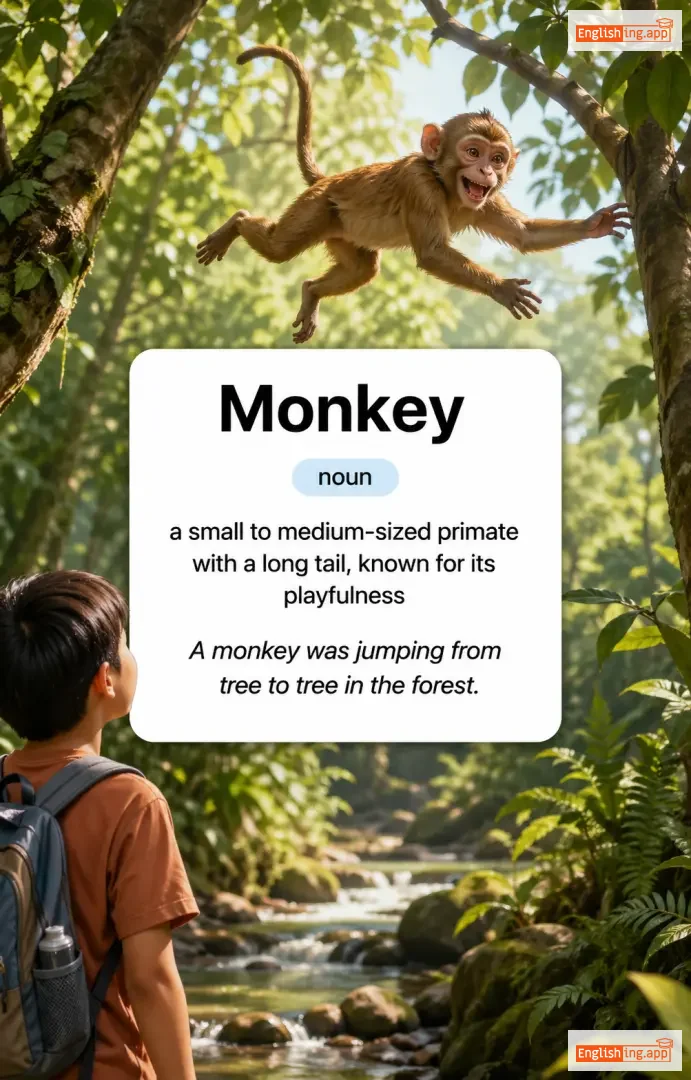
Monkey definition card — visual illustration of the meaning
noun
/ˈmʌŋki/
বানর (banor)

a small to medium-sized primate with a long tail, known for its playfulness

"A monkey was jumping from tree to tree in the forest."

"একটি বানর জঙ্গলে গাছ থেকে গাছে লাফাচ্ছিল।" (Ekti banor jongole gach theke gache lafachchhilo.)
adjective
/ˌmɒnəkrəˈmætɪk/
একবর্ণ (ekborno)

Consisting of or displaying only one color.

"The artist created a striking monochromatic painting in shades of blue."

"শিল্পী নীল রঙের বিভিন্ন শেড দিয়ে একটি একবর্ণ চিত্র এঁকেছিলেন।" (Shilpi nil ronger bibhinno shed diye ekti ekborno chitra ekhchhilen.)
noun/adjective
/ˈmɒnəkrəʊm/
সাদাকালো (sadakalo)

A photograph, painting, or screen image in black and white or varying tones of one color.

"The old film was shot entirely in monochrome."

"পুরোনো চলচ্চিত্রটি পুরোপুরি সাদাকালোতে ধারণ করা হয়েছিল।" (Purono cholchhitrati purotori sadakalote dharhon kora hoyechhilo.)
noun
/ˈmɒnəkl/
একচোখা চশমা (ekchokha choshma)

A single round lens for one eye, used to correct or enhance vision.

"The old gentleman wore a monocle at formal events."

"বৃদ্ধ ভদ্রলোক আনুষ্ঠানিক অনুষ্ঠানে একটি একচোখা চশমা পরতেন।" (Briddho bhodrolok anushtanik onusthane ekti ekchokha choshma porten.)
noun
/məˈnɒkrəsi/
একনায়কতন্ত্র (eknayoktontro)

A system of government by a single person; autocracy.

"The nation suffered under decades of monocracy."

"জাতি কয়েক দশক ধরে একনায়কতন্ত্রের অধীনে ভুগছিল।" (Jati koyek doshok dhore eknayoktontro adhine vugchhilo.)
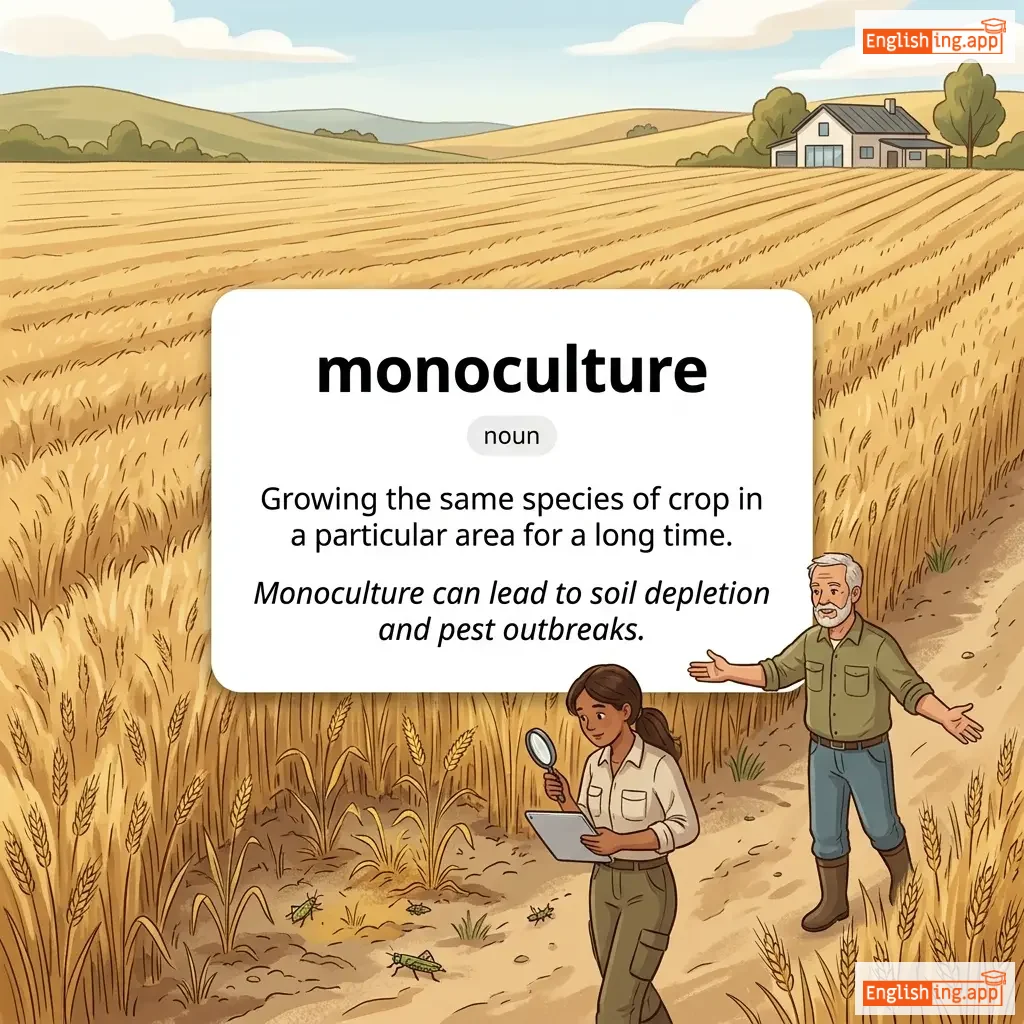
monoculture definition card — visual illustration of the meaning
noun
ˈmɒn.əˌkʌl.tʃər
একক ফসল চাষ (ekko foshol chash)

Growing the same species of crop in a particular area for a long time.

"Monoculture can lead to soil depletion and pest outbreaks."

"একক ফসল চাষ মাটির উর্বরতা হ্রাস ও কীটপতঙ্গ বৃদ্ধির কারণ হতে পারে।" (Ekko foshol chash matir urborota hrash o kitpotongo briddhir karon hote pare.)
noun
/məˈnɒɡəmi/
একবিবাহ (ekbibah)

The practice of being married to or in a relationship with only one person at a time.

"Many cultures encourage monogamy as the ideal form of marriage."

"অনেক সংস্কৃতি একবিবাহকে আদর্শ বিবাহরূপে উৎসাহিত করে।" (onek songskriti ekbibahke adorsho bibahrup e utsahito kore.)
noun
/ˈmɒnəɡræm/
মনোগ্রাম (monogram)

A design consisting of two or more letters, typically a person's initials, combined or interwoven.

"The towel was embroidered with her monogram."

"তোয়ালেটি তার মনোগ্রাম দিয়ে সূচিকর্ম করা ছিল।" (toyaleti tar monogram diye suchikorm kora chhilo.)
noun
/ˈmɒnəɡrɑːf/
মনোগ্রাফ (monograph)

A detailed written study of a single specialized subject or aspect of it.

"The professor published a monograph on ancient pottery."

"প্রফেসর প্রাচীন মৃৎশিল্প নিয়ে একটি মনোগ্রাফ প্রকাশ করেছিলেন।" (professor prachin mritshilpo niye ekti monograph prokash korechhilen.)
adjective
/mɔːrˈdeɪʃəs/
তিক্ত বা বিদ্রূপাত্মক (tiktoba bidrupatmak)

Sharp or biting in style, tone, or remark; sarcastic.

"The critic’s mordacious review offended the author."

"সমালোচকের তীব্র বিদ্রূপাত্মক সমালোচনা লেখককে আহত করেছিল।" (Somalochoker tibro bidrupatmak somalochona lekhokke ahoto korechhilo.)
noun
/ˈmuːn.biːm/
চাঁদের আলো (chander alo)

A ray of light from the moon.

"A moonbeam lit up the quiet forest clearing."

"একটি চাঁদের আলো নীরব জঙ্গলের ফাঁকা জায়গা আলোকিত করল।" (ekti chander alo nirob jongoler faka jayga alokit korlo.)
adjective, verb
/muːt/
বিতর্কযোগ্য / অপ্রাসঙ্গিক (bitorkojogyo / aprasangik)

Adjective: subject to debate or irrelevant. Verb: to suggest an idea for discussion.

"The issue of funding became a moot point after the project was canceled."

"প্রকল্পটি বাতিল হওয়ার পর অর্থায়নের বিষয়টি অপ্রাসঙ্গিক হয়ে গেল।" (prokolpoti batil howar por orthayaner bishoyti aprasangik hoye gelo.)
adjective, noun
/ˈmɔːrəl/
নৈতিক (noitik)

Adjective: concerned with principles of right and wrong. Noun: a lesson about right and wrong from a story or experience.

"The moral of the story is that honesty is the best policy."

"গল্পটির শিক্ষা হলো সততাই সর্বোত্তম নীতি।" (golpoti shikkha holo sototai sorbottam niti.)
noun
/məˈræl/
মানসিক অবস্থা (manoshik obostha)

The confidence, enthusiasm, and discipline of a person or group at a particular time.

"The team's morale improved after their recent victory."

"দলের মানসিক অবস্থা তাদের সাম্প্রতিক জয়ের পর উন্নত হয়েছে।" (Doler manoshik obostha tader samprotik joyer por unnoto hoyeche.)
noun
/ˈmɒrəlɪst/
নৈতিক শিক্ষক (noitik shikkhok)

A person who teaches or promotes moral principles and values.

"The author was known as a strict moralist in his writings."

"লেখক তাঁর লেখায় একজন কঠোর নৈতিক শিক্ষক হিসেবে পরিচিত ছিলেন।" (Lekhok tar lekhay ekjon kothor noitik shikkhok hisebe porichito chilen.)
noun
/məˈrælɪti/
নৈতিকতা (noitikota)

Principles concerning the distinction between right and wrong or good and bad behavior.

"Society's sense of morality changes over time."

"সমাজের নৈতিকতা সময়ের সাথে সাথে পরিবর্তিত হয়।" (Somajer noitikota somoyer sathe sathe poribortito hoy.)
verb
/ˈmɒrəlaɪz/
নৈতিক শিক্ষা দেওয়া (noitik shikkha dewa)

To comment on issues of right and wrong, often with an air of superiority.

"He tends to moralize about other people's choices."

"সে প্রায়ই অন্যদের পছন্দ নিয়ে নৈতিক শিক্ষা দিতে থাকে।" (Se prayoi onnoder pochondo nie noitik shikkha dite thake.)
adverb
/ˈmɔːrəli/
নীতিগতভাবে; নৈতিকভাবে; (nitigotobhabe)

in accordance with principles of right and wrong behavior; ethically

"She felt morally obligated to help the refugees."

"তিনি শরণার্থীদের সাহায্য করতে নৈতিকভাবে বাধ্য বোধ করেছিলেন।" (tini shoronarthider shahajjo korte noitikbhabe badho bodh korechilen)
noun
/məˈræs/
জটিল অবস্থা (jotil obostha)

A complicated or confused situation; a swampy or boggy ground.

"The project got stuck in a bureaucratic morass."

"প্রকল্পটি একটি আমলাতান্ত্রিক জটিল অবস্থায় আটকে গিয়েছিল।" (Prokolpti ekti amlatantrik jotil obosthay atke gie chilo.)
noun
/ˌmɔːrəˈtɔːriəm/
সাময়িক স্থগিতাদেশ (samoyik sthogitodesh)

A temporary suspension or delay of an activity, law, or obligation.

"The government announced a moratorium on new mining licenses."

"সরকার নতুন খনির লাইসেন্সে সাময়িক স্থগিতাদেশ ঘোষণা করেছে।" (Sorkar notun khonir license samoyik sthogitodesh ghosona koreche.)
adjective
/ˈmɔːrbɪd/
অসুস্থকর বা ভয়ঙ্কর বিষয়ে অস্বাভাবিক আগ্রহ (osusthokor ba voyonkor bishoye ashobhabik agroho)

Having an abnormal interest in disturbing or unpleasant subjects such as death or disease.

"She had a morbid fascination with crime stories."

"তার অপরাধ কাহিনীর প্রতি ভয়ঙ্কর আগ্রহ ছিল।" (Tar oprodho kahinir proti voyonkor agroho chhilo.)
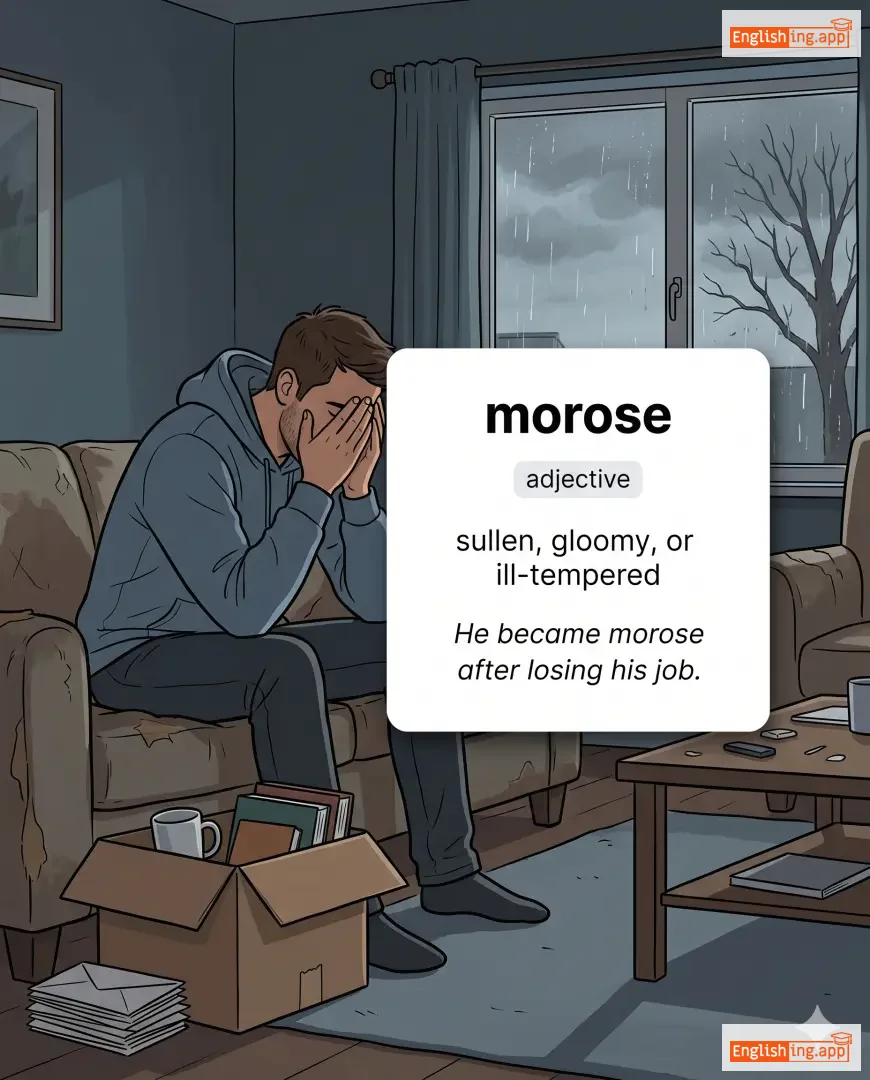
morose definition card — visual illustration of the meaning
adjective
/məˈroʊs/
বিষণ্ণ (bishonno)

sullen, gloomy, or ill-tempered

"He became morose after losing his job."

"চাকরি হারানোর পর সে বিষণ্ণ হয়ে গেল।" (Chakri haranor por se bishonno hoye gelo.)