語彙集

英単語辞書 | 単語の意味、定義、例文

adjective
/ˈmʌski/
ムスクのような (musuku no yōna)

having a strong, sweet, earthy smell like musk

"The perfume had a musky fragrance."

"その香水はムスクのような香りがしました。" (Sono kōsui wa musuku no yōna kaori ga shimashita.)
noun
/ˈmʊzlɪm/
ムスリム (musurimu)

a follower of Islam

"He is a devout Muslim."

"彼は熱心なムスリムです。" (Kare wa nesshin na musurimu desu.)
verb
/mʌst/
しなければならない (shinakereba naranai)

to be required or obligated to

"You must complete your homework before you go out."
"あなたは外出する前に宿題を終わらせなければなりません。" (Anata wa gaishutsu suru mae ni shukudai o owarasenakereba narimasen.)
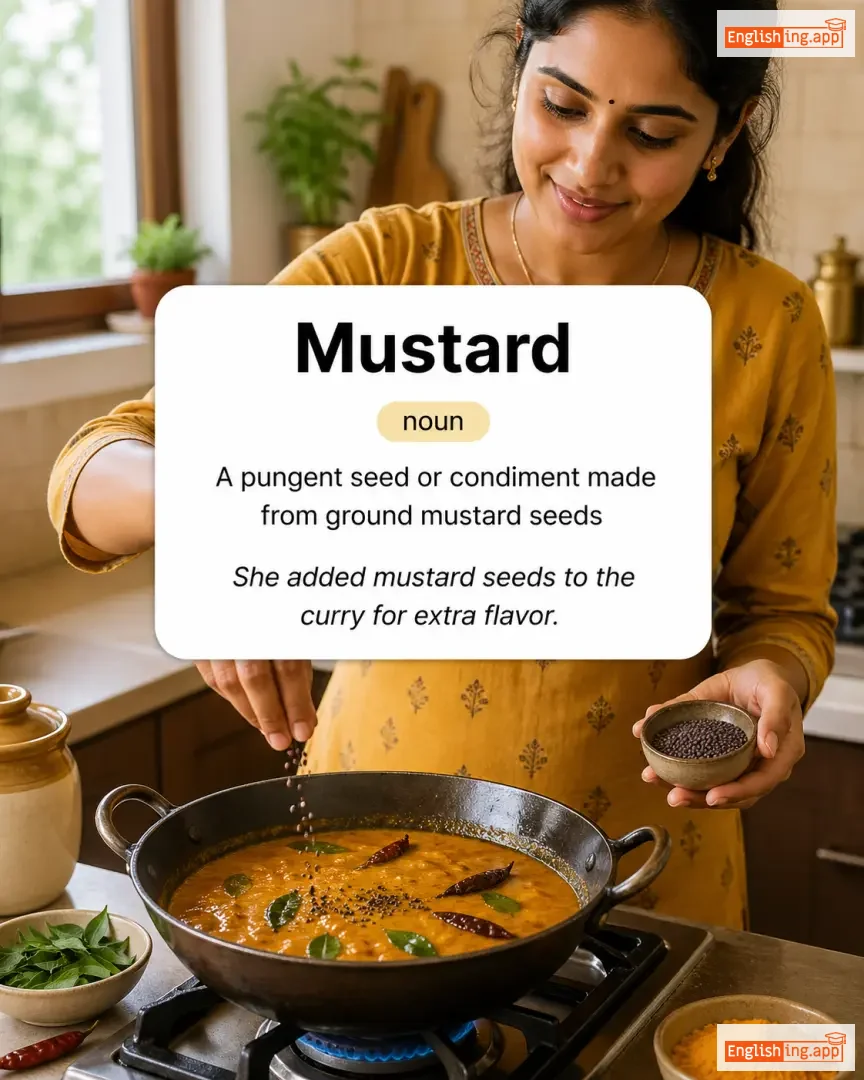
Mustard definition card — visual illustration of the meaning
noun
/ˈmʌs.tərd/
マスタード (masutādo)

A pungent seed or condiment made from ground mustard seeds

"She added mustard seeds to the curry for extra flavor."
"カレーに風味を加えるためにマスタードの種を加えました。" (karē ni fūmi o kuwaeru tame ni masutādo no tane o kuwaemashita.)
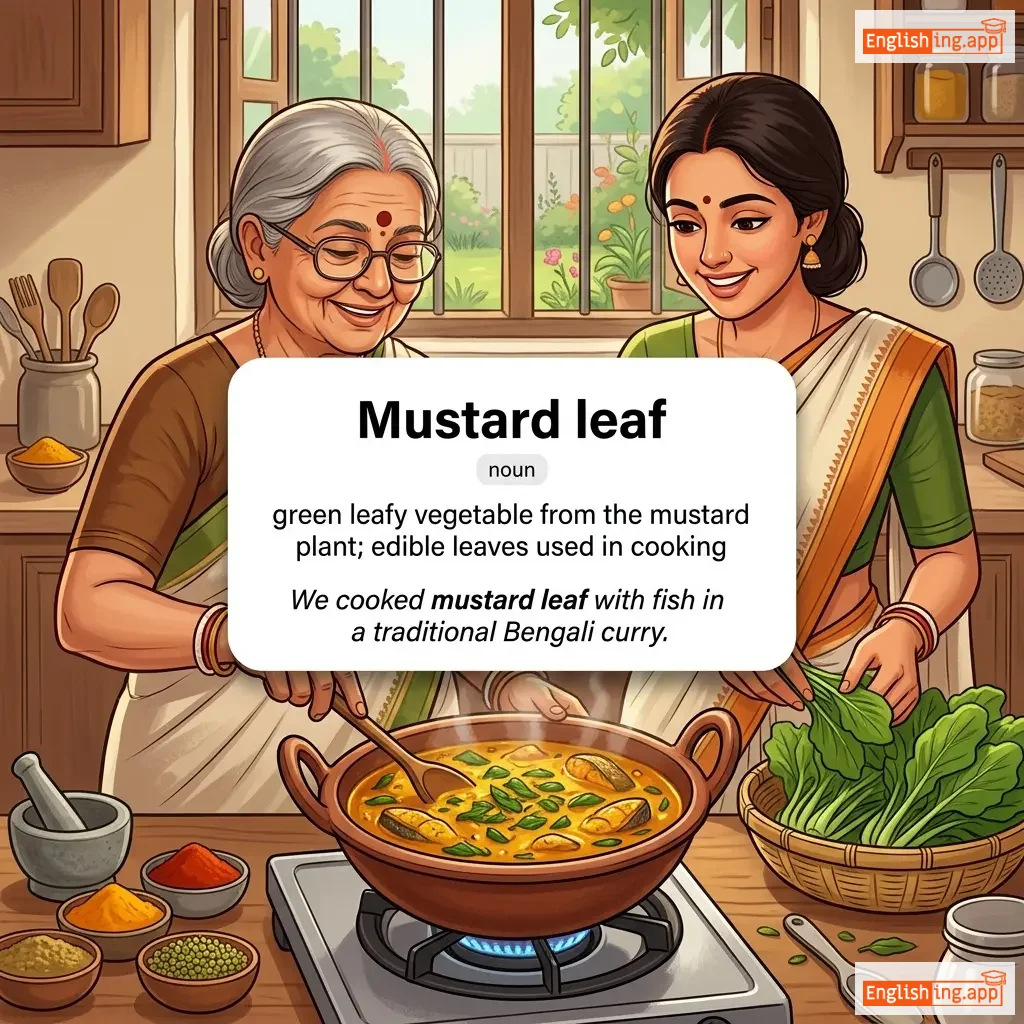
Mustard leaf definition card — visual illustration of the meaning
noun
/ˈmʌs.tərd liːf/
マスタードの葉 (masutādo no ha)

green leafy vegetable from the mustard plant; edible leaves used in cooking

"We cooked mustard leaf with fish in a traditional Bengali curry."
"私たちは伝統的なベンガルカレーで魚と一緒にマスタードリーフを料理しました。" (Watashitachi wa dentō-teki na bengaru karē de sakana to issho ni masutādo rīfu o ryōri shimashita.)
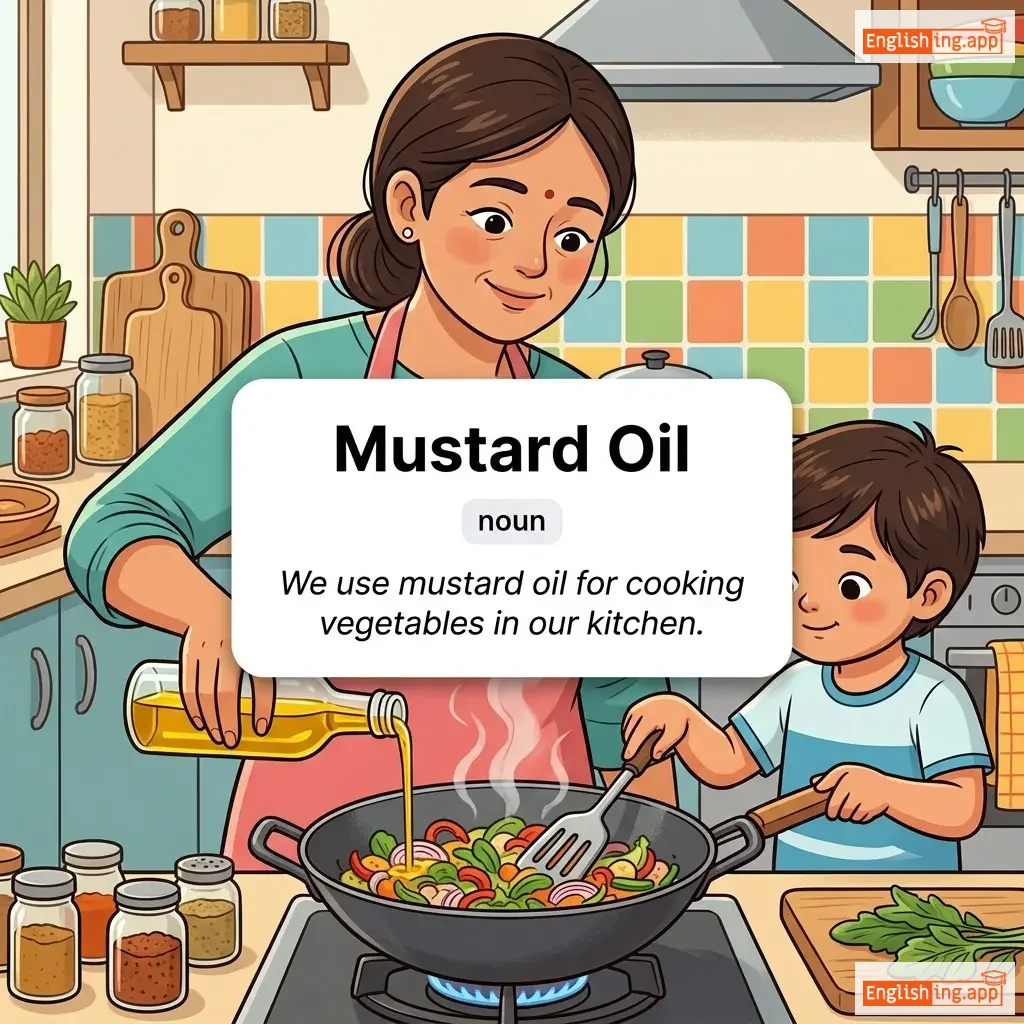
Mustard Oil definition card — visual illustration of the meaning
noun
/ˈmʌstərd ɔɪl/
マスタードオイル (masutādo oiru)

oil extracted from mustard seeds, commonly used for cooking and medicinal purposes

"We use mustard oil for cooking vegetables in our kitchen."
"私たちはキッチンで野菜を調理するためにマスタードオイルを使います。" (Watashitachi wa kicchin de yasai o chōri suru tame ni masutādo oiru o tsukaimasu.)
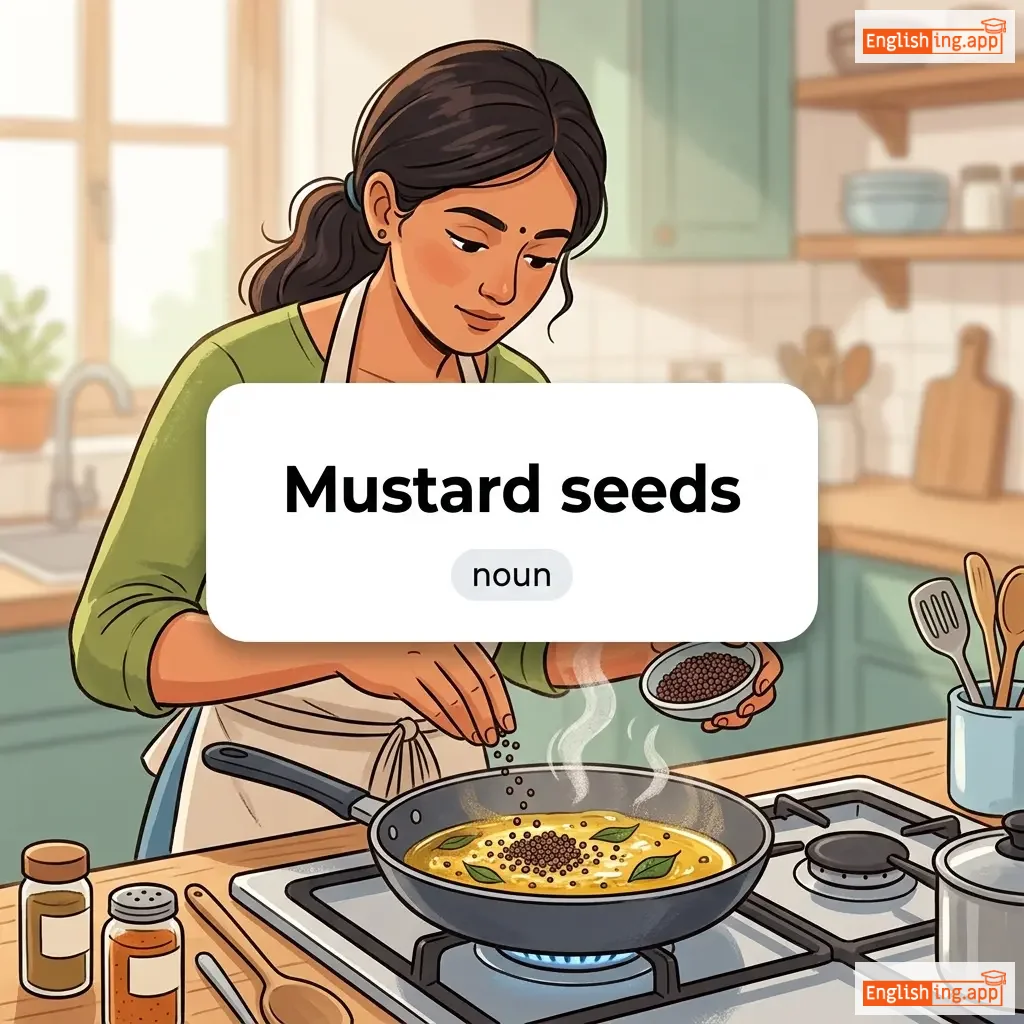
Mustard seeds definition card — visual illustration of the meaning
noun
/ˈmʌs.tərd siːdz/
マスタードシード (masutādo shīdo)

small round seeds from the mustard plant, used as a spice and for making mustard condiment

"Mustard seeds are often tempered in hot oil to release their nutty flavor before adding to dishes."

"マスタードシードは、料理に加える前に、そのナッツのような風味を引き出すために熱い油で炒められることがよくあります。" (Masutādo shīdo wa, ryōri ni kuwaeru mae ni, sono nattsu no yō na fūmi o hikidasu tame ni atsui abura de itamerareru koto ga yoku arimasu.)
verb, noun
/ˈmʌstər/
集める / 勇気を出す (atsumeru / yūki o dasu)

to gather people, especially soldiers; to summon courage or strength

"He mustered enough courage to face the challenge."

"彼は挑戦に立ち向かうために十分な勇気を集めました。" (Kare wa chōsen ni tachimukau tame ni jūbun na yūki o atsumemashita.)
adjective
/ˈmʌsti/
湿っぽい、カビ臭いまたは湿気のある匂い (shimeppoi, kabikusai mata wa shikke no aru nioi)

having a stale, moldy, or damp smell

"The old books had a musty odor."

"古い本にはカビ臭い匂いがあった。" (Furui hon ni wa kabikusai nioi ga atta.)
noun
/ˌmjuːtəˈbɪləti/
変動性 (hendousei)

The quality of being changeable or capable of change.

"The mutability of fashion trends makes it hard to keep up."

"ファッションのトレンドの可変性は、それについていくのを難しくします。" (Fasshon no torendo no kahensei wa, sore ni tsuiteiku no o muzukashiku shimasu.)
adjective
/ˈmjuːtəbl/
可変の (kaken no)

Capable of change or alteration.

"Human emotions are mutable and can shift rapidly."

"人間の感情は可変的で、迅速に変わることがあります。" (Ningen no kanjō wa kahen-teki de, jinsoku ni kawaru koto ga arimasu.)
noun
/ˌmjuːtəˈbɪləti/
変化性(綴り間違い) (henkasei (tsudzuri machigai))

A misspelled form of 'mutability', meaning the quality of being changeable.

"The document contained the misspelled word 'mutablility' instead of 'mutability'."

"その文書には 'mutability' の代わりに 'mutablility' の綴り間違いがありました。" (Sono bunsho ni wa 'mutability' no kawari ni 'mutablility' no tsudzuri machigai ga arimashita.)
verb
/ˈmjuːteɪt/
突然変異する (totsuzenhen'i suru)

To change or cause to change in form, nature, or character.

"The virus can mutate into a more dangerous strain."

"ウイルスはより危険な株にミュートすることができます。" (Uirusu wa yori kiken na kabu ni myuuto suru koto ga dekimasu.)
noun
/mjuːˈteɪʃn/
突然変異、遺伝的変化 (totsuzen hen'i, iden-teki henka)

A change in form, structure, or nature, especially in genetics.

"Scientists discovered a genetic mutation that caused the disorder."

"科学者たちは、その障害を引き起こした遺伝的な突然変異を発見しました。" (Kagakusha-tachi wa, sono shougai o hikiokoshita iden-teki na totsuzen hen'i o hakken shimashita.)
🤐

Mute

adjective
/mjuːt/

silent or unable to speak; not expressed in words

"She remained mute during the entire meeting."

adjective
/ˈmjuːtɪd/
muted (ミューテッド) (myutedd)

softened in sound, color, or effect; subdued

"The room was painted in muted shades of blue and grey."

"部屋は青と灰色の muted な色合いで塗られていました。" (Heya wa ao to haiiro no myutedd na iroai de nurareteimashita.)
verb
/ˈmjuːtɪleɪt/
損傷する (sonshou suru)

to inflict serious damage on something, often by cutting or tearing

"The ancient manuscript was mutilated by careless handling."

"古代の写本は不注意な取り扱いで損傷しました。" (Kodai no shahon wa fuchuui na toriatsukai de sonshou shimashita.)
adjective
/ˈmjuːtɪnəs/
反乱者 (hanransha)

refusing to obey authority; rebellious

"The soldiers grew mutinous after months without pay."

"兵士たちは数ヶ月間給料がなくて反乱者になった。" (Heishitachi wa suukagetsu kan kyūryō ga nakute hanransha ni natta.)
noun
/ˈmjuːtɪni/
反乱 (hanran)

an open rebellion against authority, especially by soldiers or sailors

"The sailors staged a mutiny against their captain."

"船員たちはキャプテンに対して反乱を起こした。" (Sen'in-tachi wa kyaputen ni taishite hanran o okoshita.)
verb
/ˈmʌtər/
呟く (tsubuyaku)

to speak in a low or barely audible voice, often in dissatisfaction or irritation

"He muttered something under his breath as he walked away."
"彼は歩きながら何かを呟いた。" (Kare wa aruki nagara nanika o tsubuyaita.)
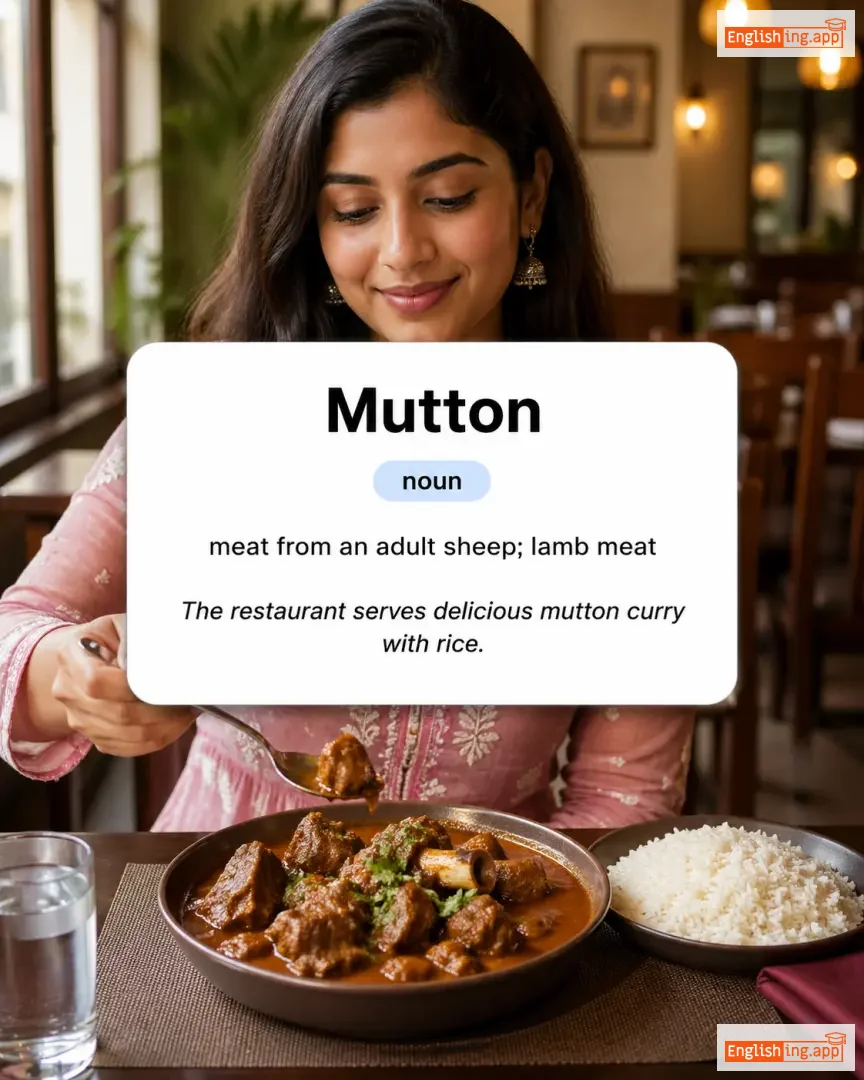
Mutton definition card — visual illustration of the meaning
noun
/ˈmʌtn/
羊肉 (hitsuji niku)

meat from an adult sheep; lamb meat

"The restaurant serves delicious mutton curry with rice."

"レストランはおいしい羊肉カレーを提供しています。" (Resutoran wa oishii hitsuji niku karee o teikyō shiteimasu.)
adjective
/ˈmjuːtʃuəl/
相互の (sōgo no)

felt, shared, or done by two or more people equally

"They have mutual respect for each other."
"彼らはお互いに相互の敬意を持っています。" (Karera wa otagai ni sōgo no keii o motteimasu.)
pronoun
/maɪ/
私の (watashi no)

used to indicate possession or ownership

"This is my book."

"これは私の本です。" (Kore wa watashi no hon desu.)
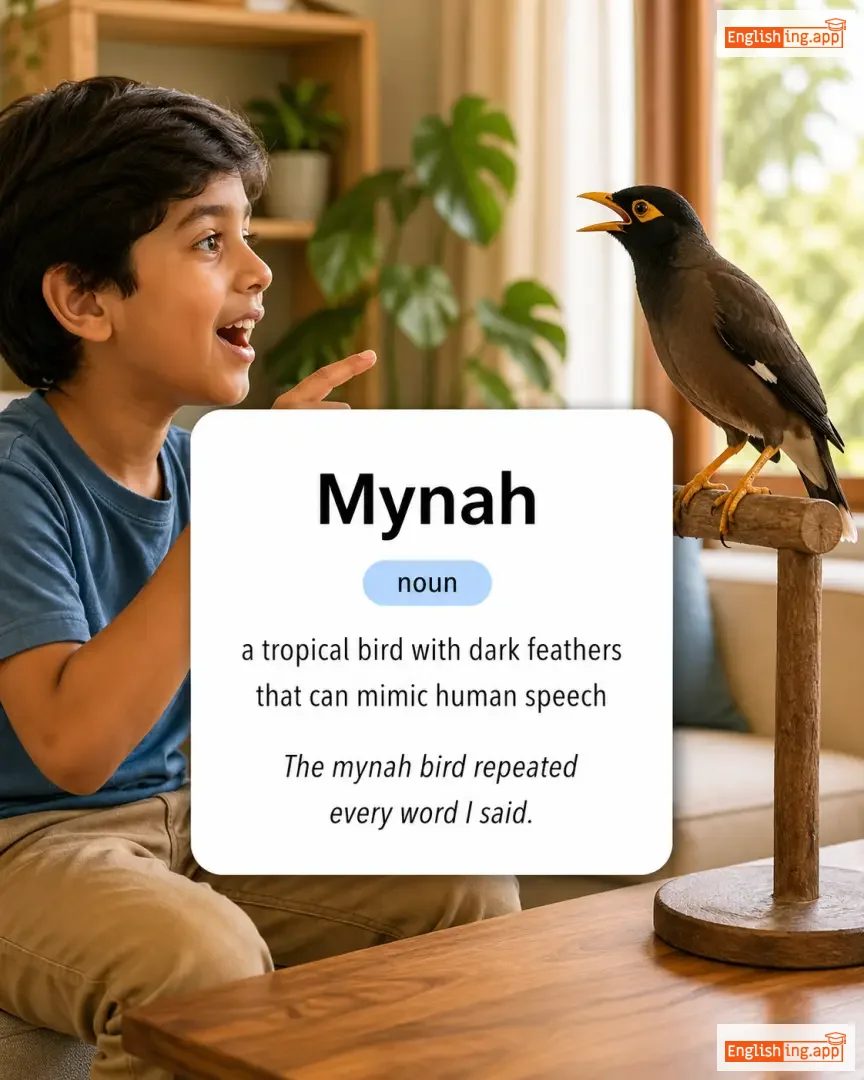
Mynah definition card — visual illustration of the meaning
noun
/ˈmaɪ.nə/
マイナ (maina)

a tropical bird with dark feathers that can mimic human speech

"The mynah bird repeated every word I said."

"マイナの鳥は私が言ったすべての言葉を繰り返しました。" (Maina no tori wa watashi ga itta subete no kotoba o kurikaeshimashita.)
adjective
/maɪˈɑːpɪk/
近視的な、視野が狭い (kinshitekina, shiya ga semai)

lacking foresight or long-term perspective; also refers to nearsightedness

"The company’s myopic strategy led to long-term losses."

"その会社の近視的な戦略は、長期的な損失を招いた。" (Sono kaisha no kinshiteki na senryaku wa, chōkitekina sonshitsu o manekita.)
pronoun
/maɪˈsɛlf/
自分 (jibun)

used for emphasis or to refer to oneself

"I will do it myself."

"私は自分でそれをやります。" (Watashi wa jibun de sore o yarimasu.)
noun/adjective
/ˈmɪriəd/
無数 (musuu)

a countless or extremely great number

"There are myriad stars in the night sky."

"夜空には無数の星がある。" (Yozora ni wa musuu no hoshi ga aru.)
nationalization definition card — visual illustration of the meaning
noun
/ˌnæʃ.ən.ə.laɪˈzeɪ.ʃən/
国有化 (kokuyuka)

The transfer of private property or business to government ownership.

"The nationalization of banks increased state control over finance."

"銀行の国有化は、金融への国家の管理を強化した。" (Ginkou no kokuyuka wa, kin'yu e no kokka no kanri o kyōka shita.)
noun
/ˌnæʃəˈnæləti/
国籍 (kokuseki)

The status of belonging to a particular nation, either by birth or naturalization.

"Her nationality is Canadian, though she was born in France."

"彼女の国籍はカナダのもので、フランスで生まれました。" (Kanojo no kokuseki wa Kanada no mono de, Furansu de umaremashita.)
noun
/ˈnæʃənəl ˈænθəm/
国歌 (kokka)

an official patriotic song of a country, performed at national events and ceremonies

"The national anthem was played before the international match."

"国際試合の前に国歌が演奏された。" (Kokusai shiai no mae ni kokka ga enso sareta)
adjective
/ˈnæʃənəl/
国民の (kokumin no)

relating to a nation, especially its culture, language, or government

"The national anthem was played at the ceremony."

"国歌は式典で演奏されました。" (Kokuga wa shikiten de ensō saremashita.)
noun
/ˈneɪʃən/
国家 (kokka)

a large group of people united by common descent, history, culture, or language

"The nation celebrated its independence day with pride."

"その国は独立記念日を誇りを持って祝いました。" (Sono kuni wa dokuritsuki nembi o hokori o motte iwai mashita.)
noun
/næˈteɪʃən/
水泳 (suiei)

The act or sport of swimming.

"She took lessons in natation to improve her swimming skills."

"彼女は泳ぎの技術を向上させるために水泳のレッスンを受けました。" (Kanojo wa oyogi no gijutsu o kōjōsaseru tame ni suiei no ressun o ukemashita.)
adjective
/ˈneɪtl/
出生に関連する (shussei ni kanren suru)

Relating to birth or the place of birth.

"She returned to her natal village after many years."

"彼女は何年も経った後、故郷の村に帰りました。" (Kanojo wa nannen mo tatta ato, kokyou no mura ni kaerimashita.)
adjective
/ˈnæsti/
嫌な (iya na)

very unpleasant, unkind, or offensive

"He made a nasty comment about her dress."

"彼は彼女のドレスについて嫌なコメントをしました。" (Kare wa kanojo no doresu ni tsuite iya na komento o shimashita.)
nascent definition card — visual illustration of the meaning
adjective
/ˈneɪsnt/
萌芽 (hōga)

Just coming into existence and beginning to develop.

"The nascent technology has great potential."

"萌芽中の技術は大きな可能性を持っています。" (Hōgachū no gijutsu wa ōkina kanōsei o motteimasu.)
adjective
/ˈneɪzl/
鼻音の (bion no)

Relating to the nose; a sound produced through the nose.

"He spoke with a nasal voice due to his cold."

"風邪で彼は鼻声で話した。" (Kaze de kare wa hanagoe de hanashita.)
adverb
/ˈnæroʊli/
かろうじて; 辛うじて (karōjite; karōjite)

by a small margin; barely; in a limited way

"She narrowly escaped the accident."

"彼女は事故をかろうじて避けた。" (Kanojo wa jiko o karōjite saketa.)
adjective
/ˌnæroʊˈmaɪndɪd/

Having a limited outlook or unwillingness to accept different opinions or ideas.

"She was too narrow-minded to consider other perspectives."
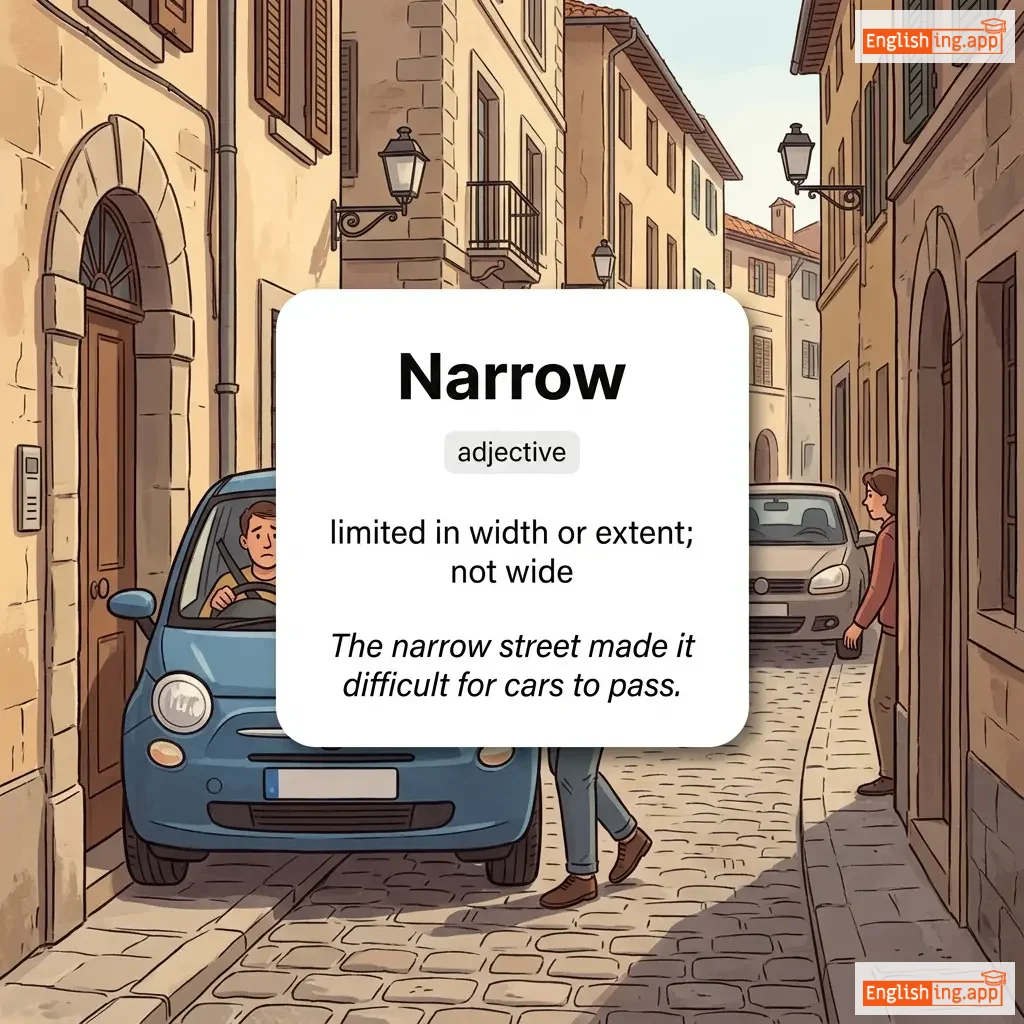
Narrow definition card — visual illustration of the meaning
adjective
/ˈnær.oʊ/
狭い (semai)

limited in width or extent; not wide

"The narrow street made it difficult for cars to pass."

"狭い通りは車が通るのを難しくしました。" (Semai toori wa kuruma ga tooru no wo muzukashiku shimashita.)
noun
/ˈnæreɪtər/
語り手 (katarite)

A person who tells the story in a book, play, or film.

"The narrator guided the audience through the complex plot."

"語り手は複雑なプロットを通じて観客を導きました。" (Katarite wa fukuzatsu na purotto wo tsūjite kankyaku wo michibikimashita.)
narrative style definition card — visual illustration of the meaning
noun
ˈnærətɪv staɪl
物語のスタイル (monogatari no sutairu)

The way in which a story is told, including the point of view and the voice of the narrator.

"Dickens' narrative style is engaging and emotional."

"ディケンズの物語のスタイルは魅力的で感情的です。" (Dikenzu no monogatari no sutairu wa miryokuteki de kanjō-teki desu.)
noun
/ˈnærətɪv/

A spoken or written account of connected events; a story.

"The novel’s narrative explores themes of identity and freedom."

noun
/næˈreɪʃən/
ナレーション (nareeshon)

The act of telling a story or describing events in detail.

"The movie’s narration was done by a famous actor."

"映画のナレーションは有名な俳優によって行われました。" (Eiga no nareeshon wa yuumei na haiyuu ni yotte okonawaremashita.)
verb
/ˈnæreɪt/
物語る (monogatari)

To tell a story or describe events, often in detail.

"She will narrate the events of her journey to the audience."

"彼女は観客に自分の旅の出来事を語るでしょう。" (Kanojo wa kankyaku ni jibun no tabi no dekigoto o kataru deshou.)
noun
/nɑːrˈkɒtɪk/
麻薬 (mayaku)

A drug that dulls the senses and relieves pain, often causing sleep and sometimes addiction.

"The police seized a large amount of narcotic substances."

"警察は大量の麻薬を押収した。" (Keisatsu wa tairyo no mayaku o oshū shita.)
noun
/nɑːrˈsɪsəs/
ナルシスの花 (narushisu no hana)

A type of flowering plant with yellow or white blooms, often associated with self-love from Greek mythology.

"A narcissus bloomed in the garden during spring."

"春に、庭でナルシスの花が咲きました。" (Haru ni, niwa de narushisu no hana ga sakimashita.)
noun
/ˈnɑːrsɪsɪst/
ナルシシスト (narushisuto)

A person who has an excessive interest in or admiration of themselves.

"Everyone avoided him because he was a narcissist."

"みんな彼を避けていた、なぜなら彼はナルシシストだったから。" (Minna kare o sakete ita, nazenara kare wa narushisuto datta kara.)
adjective, adverb
/ˈneɪʃənˌwaɪd/
全国規模 (zenkoku kibo)

existing or happening throughout an entire nation

"The campaign received nationwide support."

"キャンペーンは全国的な支持を得ました。" (Kyanpēn wa zenkokuteki na shiji o emashita.)
⬇️

nadir

noun
/ˈneɪdɪər/

The lowest point of a situation or condition.

"The company reached its nadir during the financial crisis."