語彙集

英単語辞書 | 単語の意味、定義、例文

noun
/ˈmeɪsə/
メサ (mesa)

An isolated flat-topped hill with steep sides, found in arid regions.

"The hikers stopped to admire the mesa rising above the desert floor."

"ハイカーたちは砂漠の床から突き出たメサを賞賛するために立ち寄りました。" (Haikā-tachi wa sabaku no yuka kara tsukideta mesa o shōsan suru tame ni tachiyorimashita.)
adverb
/ˈmerɪli/
楽しそうに (tanoshisou ni)

in a cheerful and joyful manner

"The children played merrily in the garden."

"子供たちは庭で楽しそうに遊んでいました。" (Kodomotachi wa niwa de tanoshisou ni asonde imashita.)
noun
/ˈmɛr.meɪd/
人魚 (ningyo)

A mythical sea creature with the head and torso of a woman and the tail of a fish

"The little girl loved stories about mermaids living under the sea."

"小さな女の子は海の下に住む人魚の話が好きでした。" (chiisana onnanoko wa umi no shita ni sumu ningyo no hanashi ga suki deshita.)
adjective
/ˌmɛrɪˈtɔːriəs/
功績がある (kōseki ga aru)

Deserving reward, praise, or recognition.

"She received a scholarship for her meritorious academic performance."
"彼女はその功績がある学業成績で奨学金を受け取った。" (Kanojo wa sono kōseki ga aru gakugyō seiseki de shōgakukin o uketotta.)
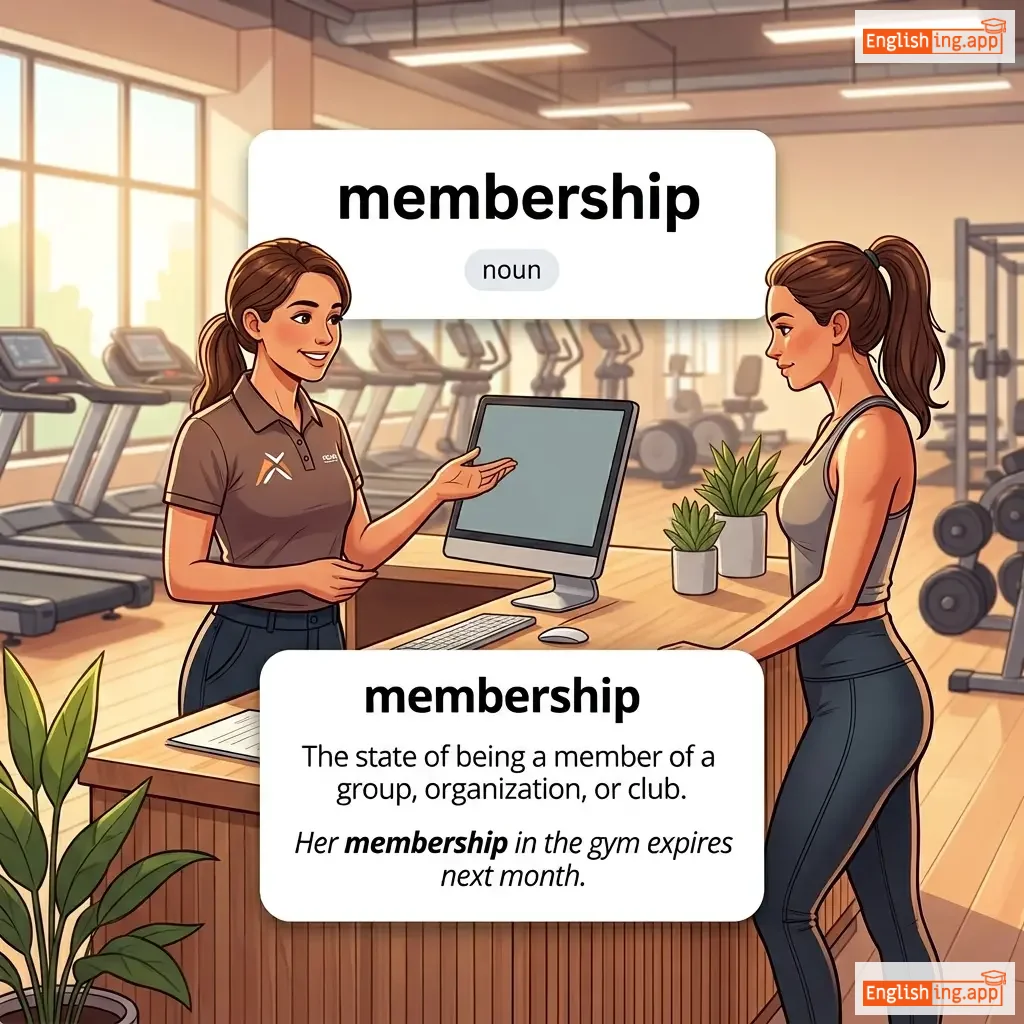
membership definition card — visual illustration of the meaning
noun
/ˈmɛmbərʃɪp/
会員資格 (kaiinshikaku)

The state of being a member of a group, organization, or club.

"Her membership in the gym expires next month."

"ジムの会員資格は来月終了します。" (Jimu no kaiinshikaku wa raigetsu shūryō shimasu.)
adjective
/ˈmɛdəlsəm/
干渉好きな (kanshō suki na)

fond of interfering in other people’s affairs

"She found her neighbor to be meddlesome and annoying."

"彼女は隣人が干渉的で迷惑だと感じた。" (Kanojo wa rinjin ga kanshō-teki de meiwaku da to kanjita.)
noun
/ˈmiːdiə/
メディア (media)

the main means of mass communication such as newspapers, television, radio, and the internet

"The story quickly spread across the media."

"その話はメディアを通じてすぐに広まりました。" (Sono hanashi wa media o tōjite sugu ni hiromarimashita.)
media dominance definition card — visual illustration of the meaning
noun
ˈmiːdiə ˈdɒmɪnəns
メディア支配 (media shihai)

The control and powerful influence that media has over communication and information distribution in society.

"The internet has enhanced media dominance globally."

"インターネットは世界的にメディア支配を強化した。" (Intānetto wa sekai-teki ni media shihai o kyōka shita.)
adjective
/ˌmed.iˈiː.vəl/
中世の (chūsei no)

relating to the Middle Ages; medieval

"The castle displayed mediaeval architecture and design."

"その城は中世の建築とデザインを展示していました。" (Sono shiro wa chūsei no kenchiku to dezain o tenji shite imashita.)
adjective
/ˈmiː.di.əl/
内側 (uchigawa)

Situated in or pertaining to the middle; located toward the midline of the body or structure.

"The medial side of the knee is more prone to injury."

"膝の内側は怪我をしやすい。" (Hiza no uchigawa wa kega o shiyasui.)
verb
/ˈmiː.di.eɪt/
調停する (choutei suru)

To act as an intermediary in bringing about agreement or reconciliation between parties.

"She was asked to mediate between the two companies."

"彼女は二つの会社の間で調停するよう求められました。" (Kanojo wa futatsu no kaisha no aida de choutei suru you motomeraremashita.)
mediation definition card — visual illustration of the meaning
noun
/ˌmiːdɪˈeɪʃən/
仲裁 (chūsai)

Intervention between parties to promote reconciliation, settlement, or compromise.

"The mediation helped resolve the conflict between the two teams."

"その仲裁は二つのチーム間の対立を解決するのに役立ちました。" (Sono chūsai wa futatsu no chīmukan no tairitsu o kaiketsu suru no ni yakudachimashita.)
mediative definition card — visual illustration of the meaning
adjective
/ˈmiː.di.eɪ.tɪv/
仲裁に関連する (chūsai ni kanren suru)

Related to mediation, helping to resolve conflicts through diplomatic means.

"His mediative skills helped resolve the conflict."

"彼の仲裁スキルは紛争を解決するのに役立った。" (Kare no chūsai sukiru wa funsō o kaiketsu suru no ni yakudatta.)
noun
/ˈmiːdieɪtər/
仲裁者 (chūsai-sha)

A person who attempts to make people involved in a conflict agree

"The United Nations often acts as a mediator in international disputes."
"国際的な争いにおいて、国連はしばしばメディエーターとして機能します。" (Kokusai-teki na arasoi ni oite, kokuren wa shibashiba mediētā to shite kinō shimasu.)
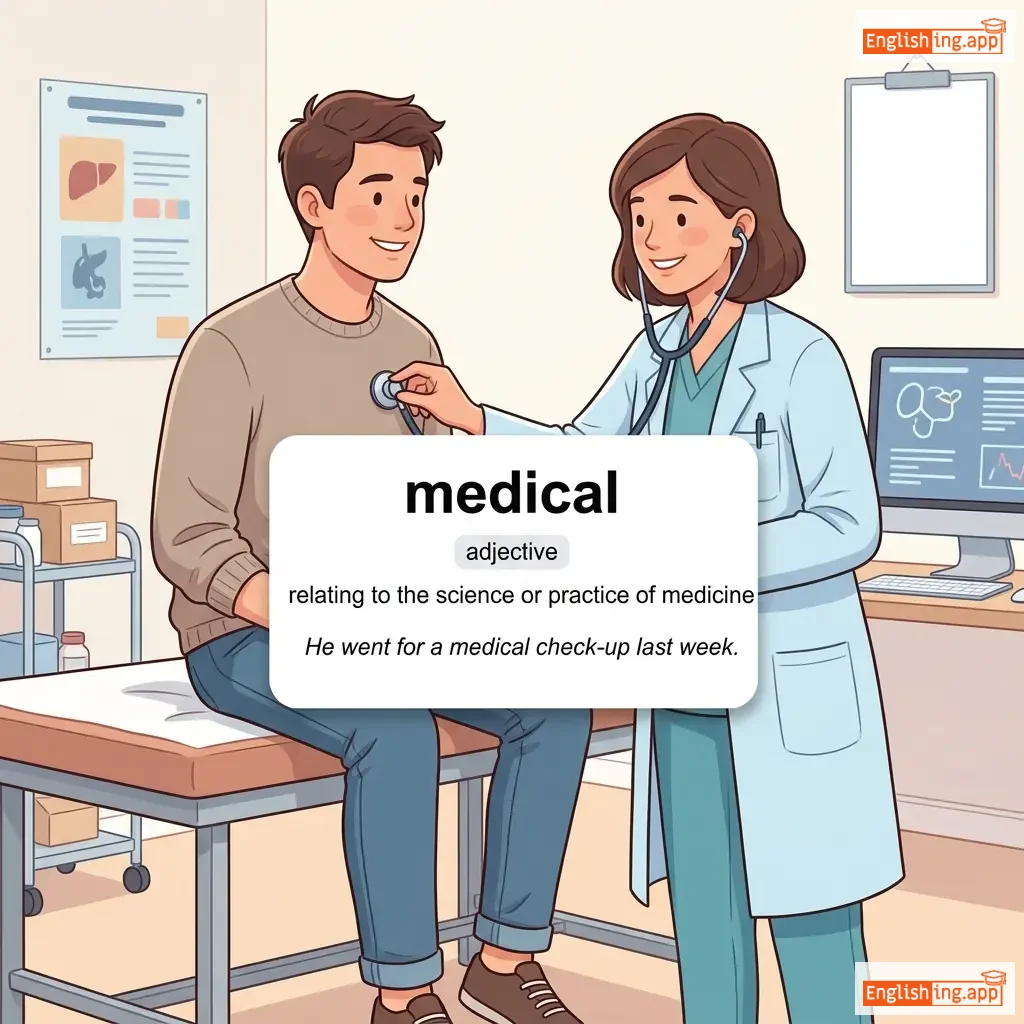
medical definition card — visual illustration of the meaning
adjective
/ˈmedɪkəl/
医療的 (iryōteki)

relating to the science or practice of medicine

"He went for a medical check-up last week."
"彼は先週、医療検査を受けに行きました。" (Kare wa senshū, iryō kensa o uke ni ikimashita.)
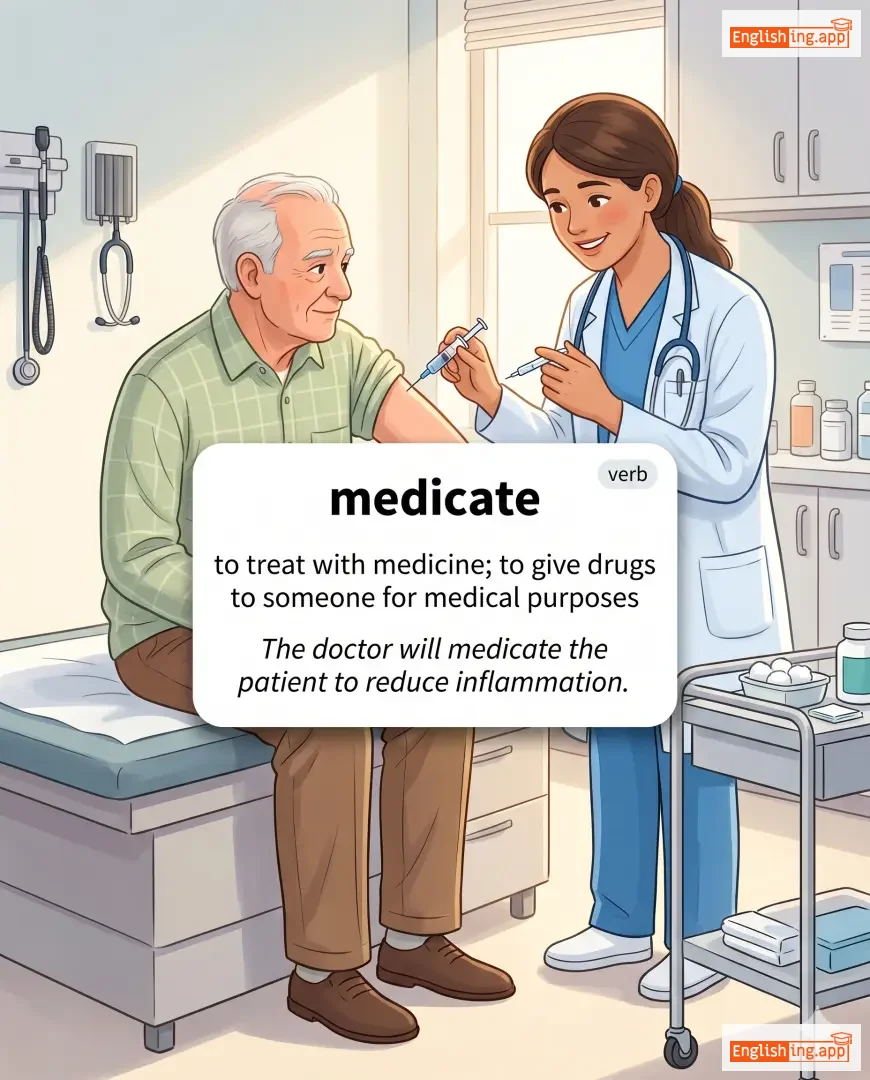
medicate definition card — visual illustration of the meaning
verb
/ˈmedɪkeɪt/
薬を与える (kusuri o ataeru)

to treat with medicine; to give drugs to someone for medical purposes

"The doctor will medicate the patient to reduce inflammation."

"医師は患者に炎症を減らすために薬を処方します。" (Ishi wa kanja ni ensyō o herasu tame ni kusuri o shohō shimasu.)
noun
/ˌmedɪˈkeɪʃən/
(kusuri)

a drug or other form of medicine used to treat or prevent disease

"The doctor prescribed medication for his headache."

"医者は彼の頭痛のために薬を処方した。" (Isha wa kare no zutsuu no tame ni kusuri wo shohou shita.)
medicine definition card — visual illustration of the meaning
noun
/ˈmed.ɪ.sən/
(kusuri)

A substance used to treat illness, injury, or disease.

"He took some medicine for his headache."

"彼は頭痛のために薬を飲んだ。" (Kare wa zutsū no tame ni kusuri o nonda.)
adjective
/ˌmiː.diˈiː.vəl/
中世の (chūsei no)

Relating to the Middle Ages, the period in European history from about the 5th to the 15th century.

"The castle is a famous medieval monument."

"その城は有名な中世の記念碑です。" (Sono shiro wa yūmei na chūsei no kinenhi desu.)
adjective
/ˌmiː.diˈoʊ.kər/
平凡 (heibon)

Of only average quality; not very good.

"The movie was entertaining but overall mediocre."
"その映画は面白かったが、全体的に平凡だった。" (Sono eiga wa omoshirokatta ga, zentaiteki ni heibon datta.)
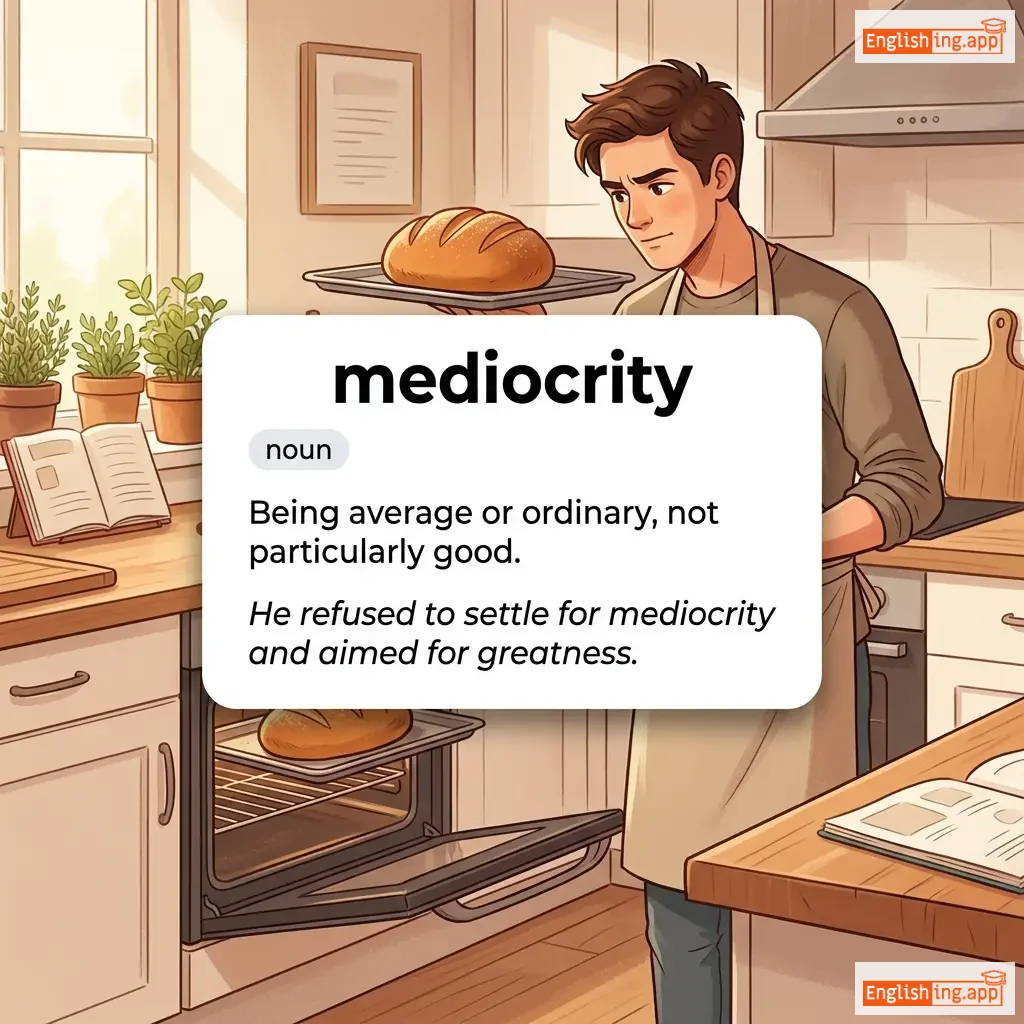
mediocrity definition card — visual illustration of the meaning
noun
ˌmiː.diˈɒk.rə.ti
平凡さ (heibansā)

Being average or ordinary, not particularly good.

"He refused to settle for mediocrity and aimed for greatness."

"彼は平凡さに満足せず、偉大さを目指して努力した。" (Kare wa heibansā ni manzoku sezu, idaisa o mezashite doryoku shita.)
noun
/ˌmɛdɪˈteɪʃən/
瞑想 (meisou)

The practice of focusing the mind to achieve calmness, clarity, or spiritual growth.

"She practices meditation every morning to start her day peacefully."

"彼女は毎朝瞑想を実践して、穏やかな一日を始めます。" (Kanojo wa mai asa meisou o jissen shite, odayakana ichinichi o hajimemasu.)
noun
/ˈmiːdiəm/
メディア (media)

A means or channel of communication, expression, or artistic work.

"Television is a powerful medium for spreading information."

"テレビは情報を広めるための強力なメディアです。" (Terebi wa jōhō o hiromeru tame no kyōryokuna media desu.)
noun
/ˈmɛdli/
メドレー (medorē)

A mixture of different things, especially musical tunes combined together.

"The band played a medley of popular songs."

"バンドは人気のある曲のメドレーを演奏しました。" (Band wa ninki no aru kyoku no medorē o ensō shimashita.)
adjective
/miːk/
おとなしい (otonashii)

Quiet, gentle, and submissive in nature.

"Despite his strength, he remained meek and humble."

"力強さにもかかわらず、彼はおとなしく謙虚でした。" (Chikaradzuyosa ni mo kakawarazu, kare wa otonashiku kenkyō deshita.)
adverb
/ˈmiːk.li/
従順に; おとなしく (jūjun ni; otonashiku)

in a quiet, gentle way; without resistance or protest

"He meekly accepted the criticism without arguing."

"彼は反論せずに従順に批判を受け入れた。" (Kare wa hanron sezu ni jūjun ni hihan o ukeireta.)
noun
/ˈmiːknəs/
謙遜 (kenson)

The quality of being quiet, gentle, and submissive

"His meekness was often mistaken for weakness by his colleagues."
"彼の謙遜はしばしば同僚に弱さだと誤解された。" (Kare no kenson wa shibashiba dōryō ni yowasa da to gokai sareta.)
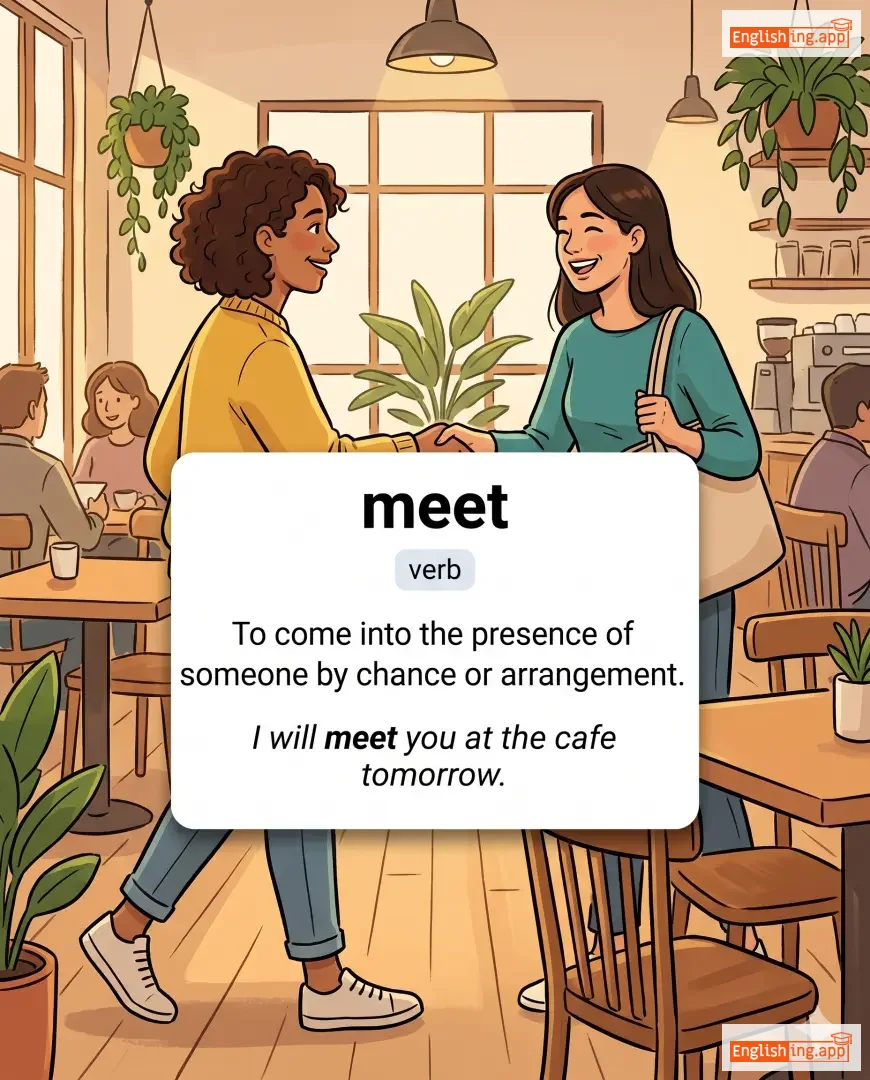
meet definition card — visual illustration of the meaning
verb
/miːt/
会う (au)

To come into the presence of someone by chance or arrangement.

"I will meet you at the cafe tomorrow."
"私は明日カフェであなたに会います。" (Watashi wa ashita kafe de anata ni aimasu.)
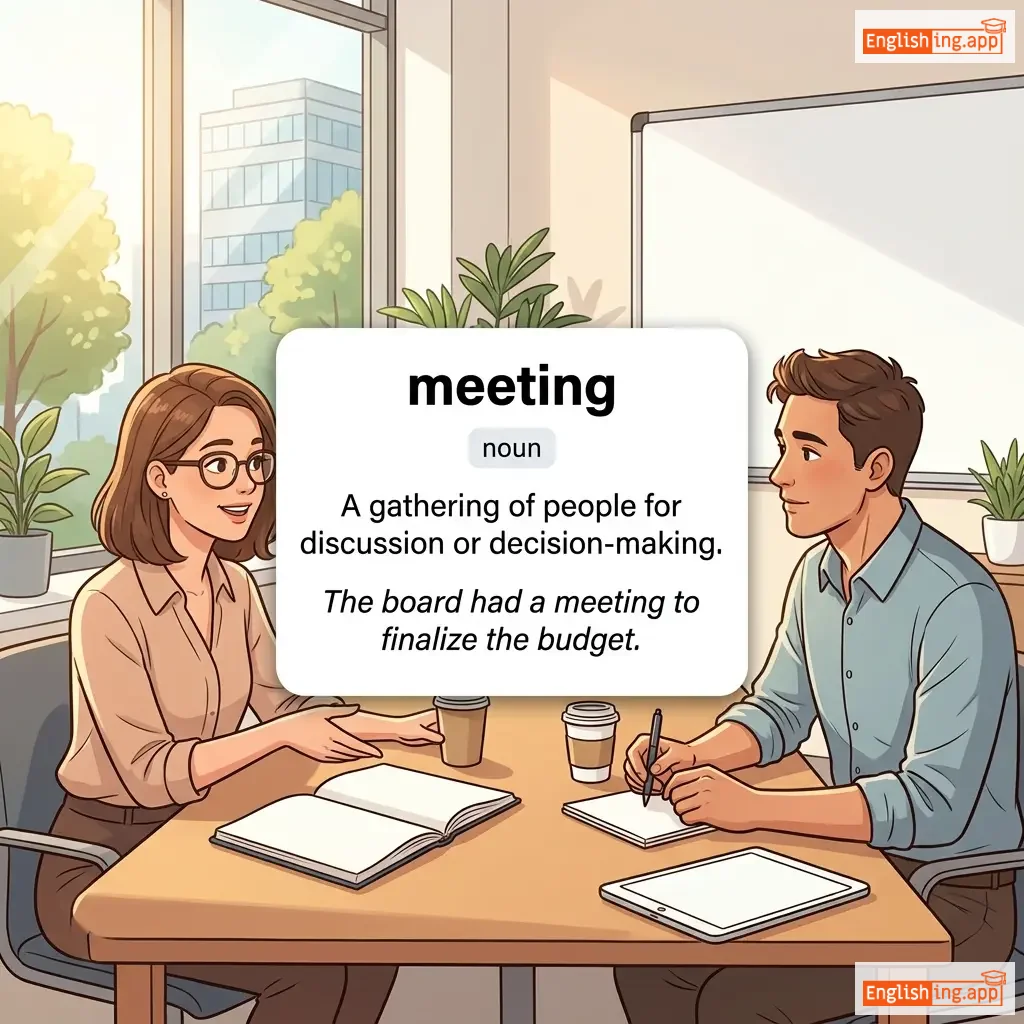
meeting definition card — visual illustration of the meaning
noun
/ˈmiːtɪŋ/
会議 (kaigi)

A gathering of people for discussion or decision-making.

"The board had a meeting to finalize the budget."
"取締役会は予算を最終決定するために会議を開きました。" (Torishimariyakukai wa yosan o saishuu kettei suru tame ni kaigi o hirakimashita.)
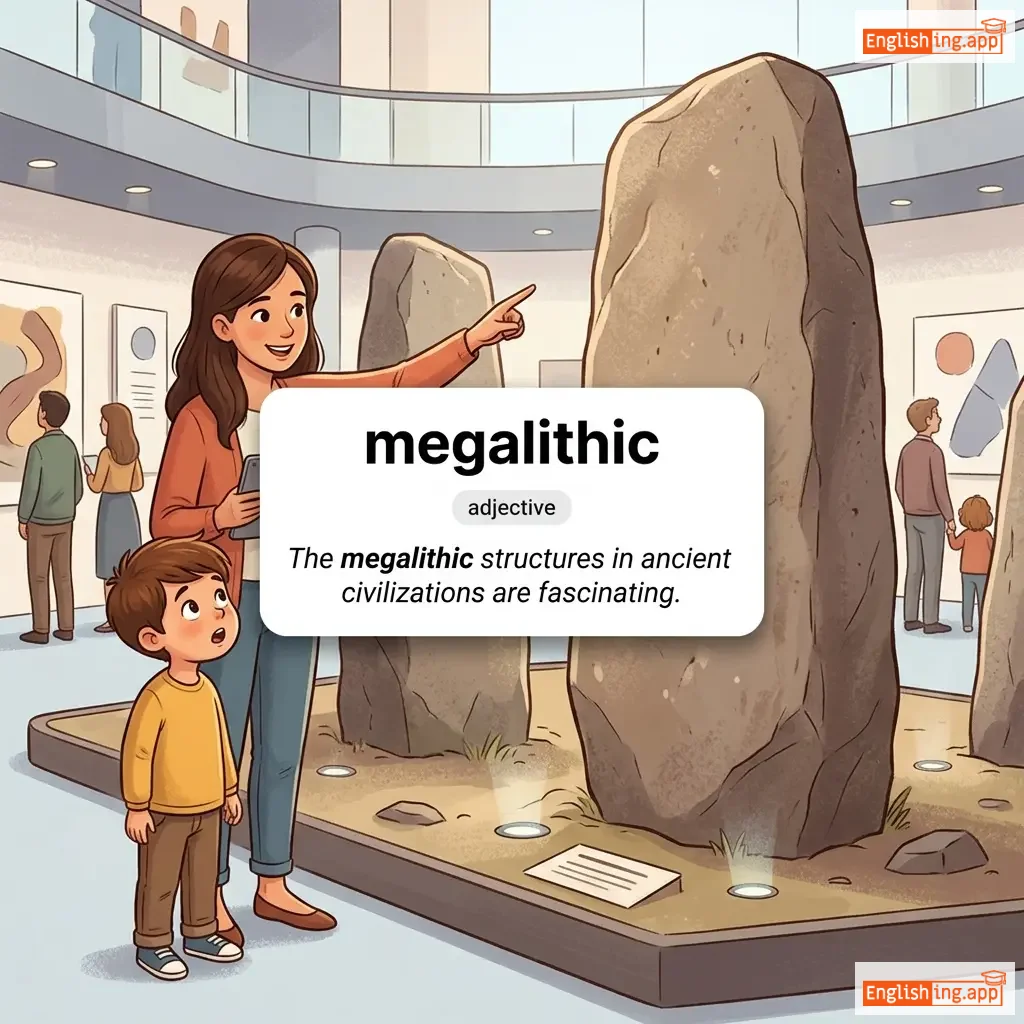
megalithic definition card — visual illustration of the meaning
adjective
ˌmɛɡəˈlɪθɪk
巨石 (kyoseki)

Relating to or denoting prehistoric monuments made of or containing large stones.

"The megalithic structures in ancient civilizations are fascinating."
"古代文明の巨石構造物は魅力的です。" (Kodai bunmei no kyoseki kouzou-butsu wa miryokuteki desu.)
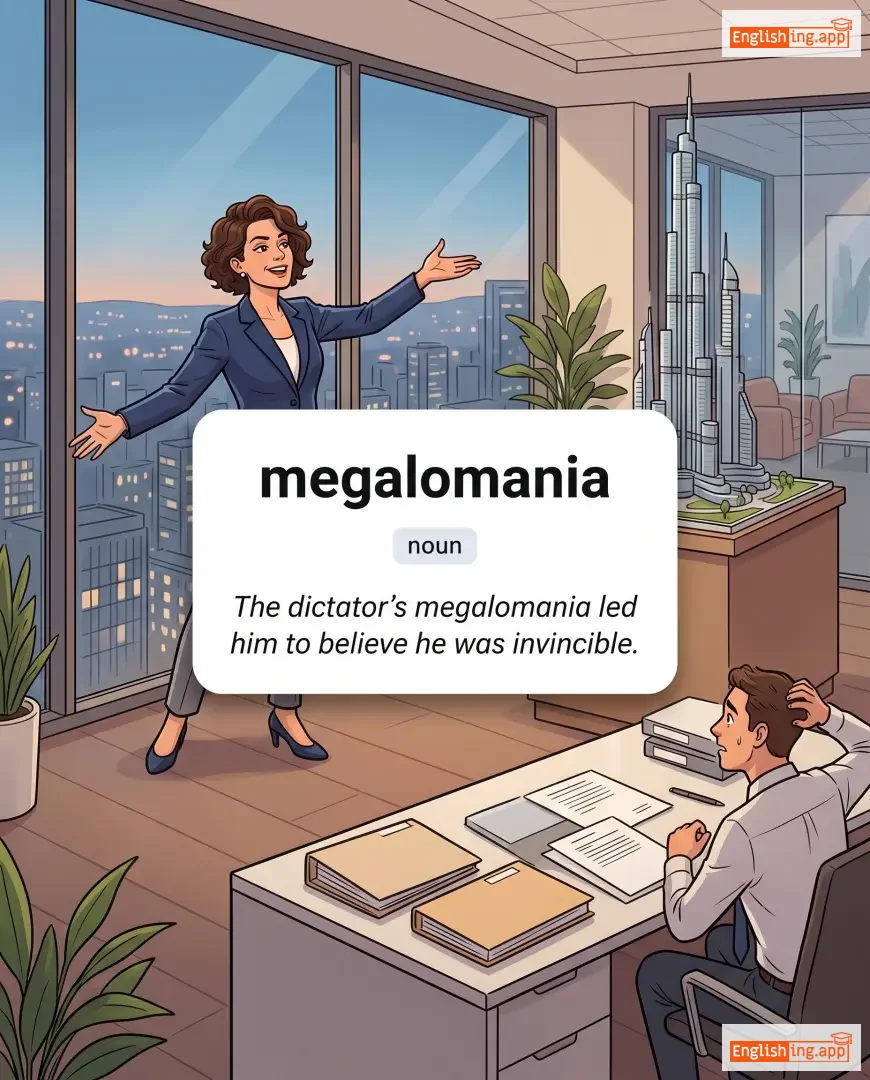
megalomania definition card — visual illustration of the meaning
noun
/ˌmɛɡələˈmeɪniə/
権力、富、または全能の幻想 (kenryoku, tomi, matawa zennou no gensou)

A condition characterized by delusional fantasies of power, wealth, or omnipotence.

"The dictator’s megalomania led him to believe he was invincible."

"独裁者のメガロマニアは彼に自分が無敵だと信じさせました。" (Dokusai-sha no megaromania wa kare ni jibun ga muteki da to shinjisasemashita.)
adjective
/ˌmel.ənˈkɒl.ɪk/
悲しくて思慮深い; 悲しみを表現するまたは感じる (merankorikku)

sad and thoughtful; feeling or expressing sadness

"The melancholic music made everyone feel sad."

"メランコリックな音楽は、誰もが悲しく感じさせました。" (Merankorikku na ongaku wa, daremo ga kanashiku kanjisasemashita)
noun
/ˈmɛlənˌkɒli/
憂鬱 (yuuatsu)

A deep, persistent sadness or gloom.

"She felt a deep melancholy after hearing the tragic news."

"彼女は悲劇的なニュースを聞いた後、深い憂鬱を感じた。" (Kanojo wa higeki-teki na nyuusu wo kiita ato, fukai yuuatsu wo kanjita.)
noun
/meɪˈlɑːnʒ/
混合 (kongo)

A mixture of different things or styles.

"The festival offered a melange of music, food, and art."

"そのフェスティバルでは、音楽、食べ物、アートの混合が提供されました。" (Sono fesutibaru de wa, ongaku, tabemono, āto no kongou ga teikyō saremashita.)
noun
/ˈmeɪleɪ/
騒乱の戦い (souran no tatakai)

A noisy, confused fight or crowd situation.

"A melee broke out during the football match."

"サッカーの試合中に騒乱の戦いが起きました。" (Sakkaa no shiaichuu ni souran no tatakai ga okimashita.)
verb
/ˈmiːliəˌreɪt/
改善する (kaizen suru)

To make something better or improve a condition.

"The new policies aim to meliorate the living conditions of the poor."

"新しい政策は貧しい人々の生活条件を改善することを目指しています。" (Atarashī seisaku wa mazushī hitobito no seikatsu jōken o kaizen suru koto o mezashiteimasu.)
noun
/ˈmiːliərɪzəm/
改良主義 (kairyō shugi)

The belief that the world tends to improve and that humans can aid its betterment.

"Her philosophy of meliorism kept her hopeful during difficult times."

"彼女の改良主義的な哲学は、困難な時期に彼女を希望に満ちた状態に保ちました。" (kanojo no kairyō shugi-teki na tetsugaku wa, kon'nan'na jiki ni kanojo o kibō ni michita jōtai ni tamochimashita.)
adjective
/məˈlɪfluəs/
甘美な (kanbina)

Sweet or musical; pleasant to hear.

"The singer’s mellifluous voice enchanted the audience."

"歌手の甘美な声が観客を魅了した。" (Kashu no kanbina koe ga kankyaku o miryō shita.)
adjective
/ˈmel.əʊ/
柔らかくて心地よい; 落ち着いていて優しい (merou)

soft and pleasant; relaxed and gentle

"The mellow evening light created a peaceful atmosphere."

"穏やかな夕方の光が平和な雰囲気を作り出しました。" (odayakana yūgata no hikari ga heiwa na fun'iki o tsukuridashimashita.)
adjective
/məˈloʊdiəs/
メロディアス (merodiasu)

Having a pleasant tune; tuneful.

"She played a melodious tune on the piano."

"彼女はピアノでメロディアスな曲を演奏した。" (Kanojo wa piano de merodiasu na kyoku o ensō shita.)
noun
/ˈmɛləˌdrɑːmə/
誇張したドラマ (kochou shita dorama)

A dramatic piece with exaggerated characters and exciting events intended to appeal to the emotions.

"The movie was criticized for its excessive melodrama."
"その映画は過剰なメロドラマで批判されました。" (Sono eiga wa kajou na merodorama de hihan saremashita.)
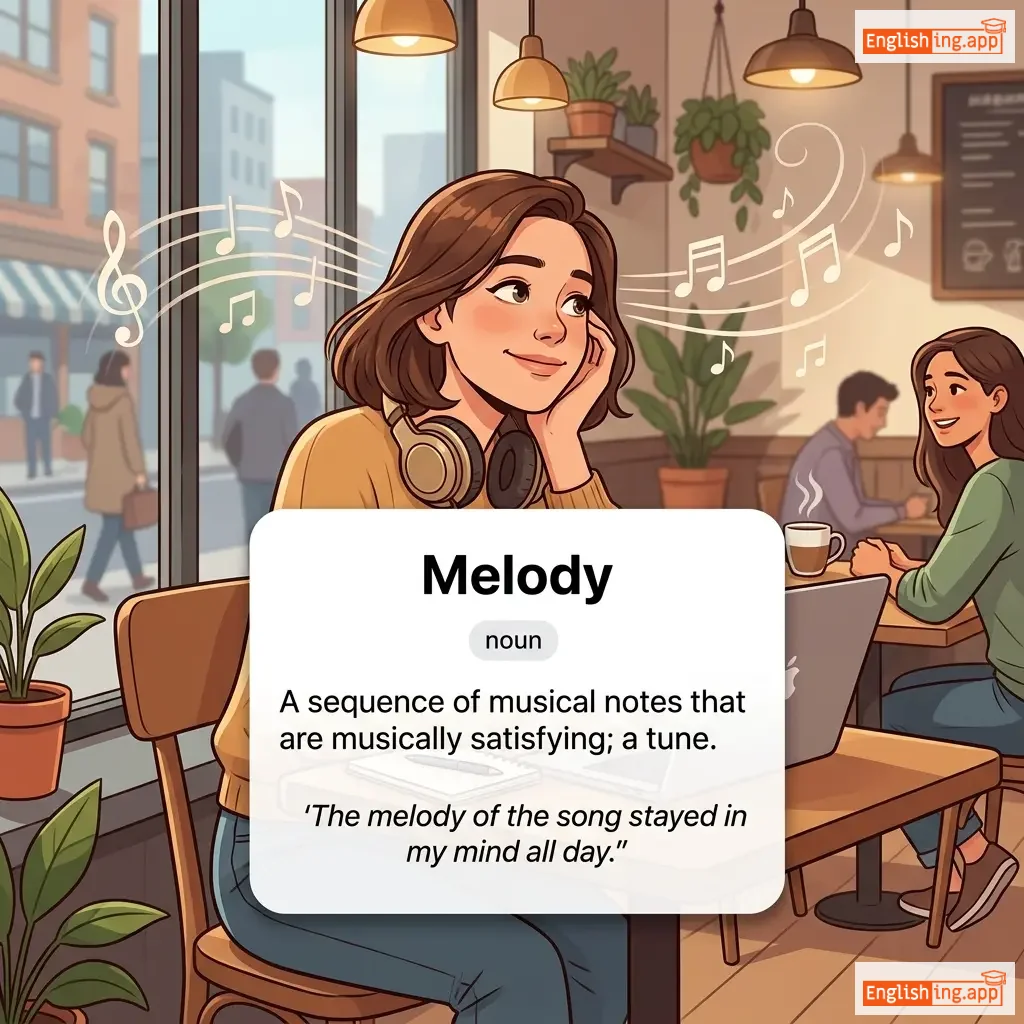
Melody definition card — visual illustration of the meaning
noun
/ˈmɛlədi/
メロディー (merodii)

A sequence of musical notes that are musically satisfying; a tune.

"The melody of the song stayed in my mind all day."
"その歌のメロディーは一日中私の頭の中に残っていた。" (Sono uta no merodii wa ichinichijuu watashi no atama no naka ni nokotteita.)
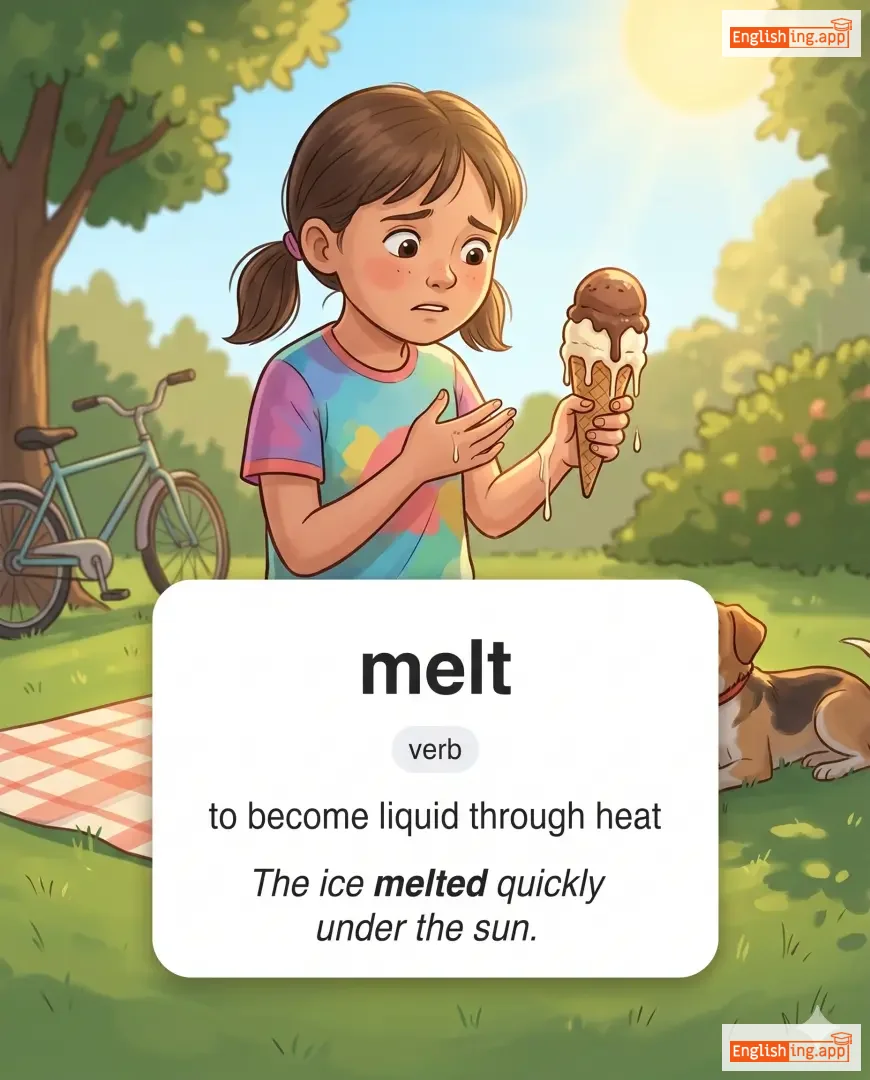
melt definition card — visual illustration of the meaning
verb
/mɛlt/
溶ける (tokeru)

to become liquid through heat

"The ice melted quickly under the sun."

"氷は太陽の下で素早く溶けました。" (Kōri wa taiyō no shita de subayaku tokemashita.)
verb, noun, adjective
/ˈmeltɪŋ/
溶けること (tokeru koto)

the process of changing from solid to liquid due to heat; becoming softer or less rigid; emotionally moving or tender

"The ice is melting quickly under the hot sun."

"氷は強い日差しで早く溶けています。" (Kori wa tsuyoi hizashi de hayaku tokete imasu)
noun
/ˈmembər/
メンバー (menbā)

a person or thing that belongs to a group or organization

"She is a member of the local sports club."

"彼女は地元のスポーツクラブのメンバーです。" (Kanojo wa jimoto no supōtsu kurabu no menbā desu.)
members definition card — visual illustration of the meaning
noun
ˈmem.bərz
メンバー (menbā)

A person, animal, or plant belonging to a particular group; an individual belonging to a group such as a society or team.

"Members collaborate to finalize recruitment decisions."

"メンバーは採用決定を完了するために協力します。" (Menbā wa saiyō kettei o kanryō suru tame ni kyōryoku shimasu.)
adjective
/ˈmɜːrsɪfəl/
慈悲深い (jihi fukai)

showing compassion or forgiveness towards someone one has the power to punish or harm.

"The judge was merciful and gave him a lighter sentence."

"裁判官は慈悲深く、彼に軽い判決を与えました。" (Saibankan wa jihi fukaku, kare ni karui hanketsu o ataemashita.)
noun
/ˈmɜːrsəˌnɛri/
傭兵 (youhei)

a professional soldier hired to serve in a foreign army; also used to describe someone motivated solely by money.

"The mercenary fought for whoever paid the highest wage."

"傭兵は最も高い給料を支払った人のために戦った。" (Youhei wa mottomo takai kyūryō o shiharatta hito no tame ni tatakatta.)
noun
/ˈmɜːrtʃənt/
商人 (shōnin)

a person or company involved in the trade of goods, especially in large quantities

"The merchant sold spices from distant lands."

"商人は遠くの土地から香辛料を売っていた。" (Shōnin wa tōku no tochi kara kōshinryō o utte ita.)
adjective
/ˈmɜːrkəntaɪl/
商業的 (shōgyō-teki)

related to trade or commerce

"The city grew rapidly due to its mercantile activities."

"この都市は商業活動のおかげで急速に成長しました。" (Kono toshi wa shōgyō katsudō no okage de kyūsoku ni seichō shimashita.)