語彙集

英単語辞書 | 単語の意味、定義、例文

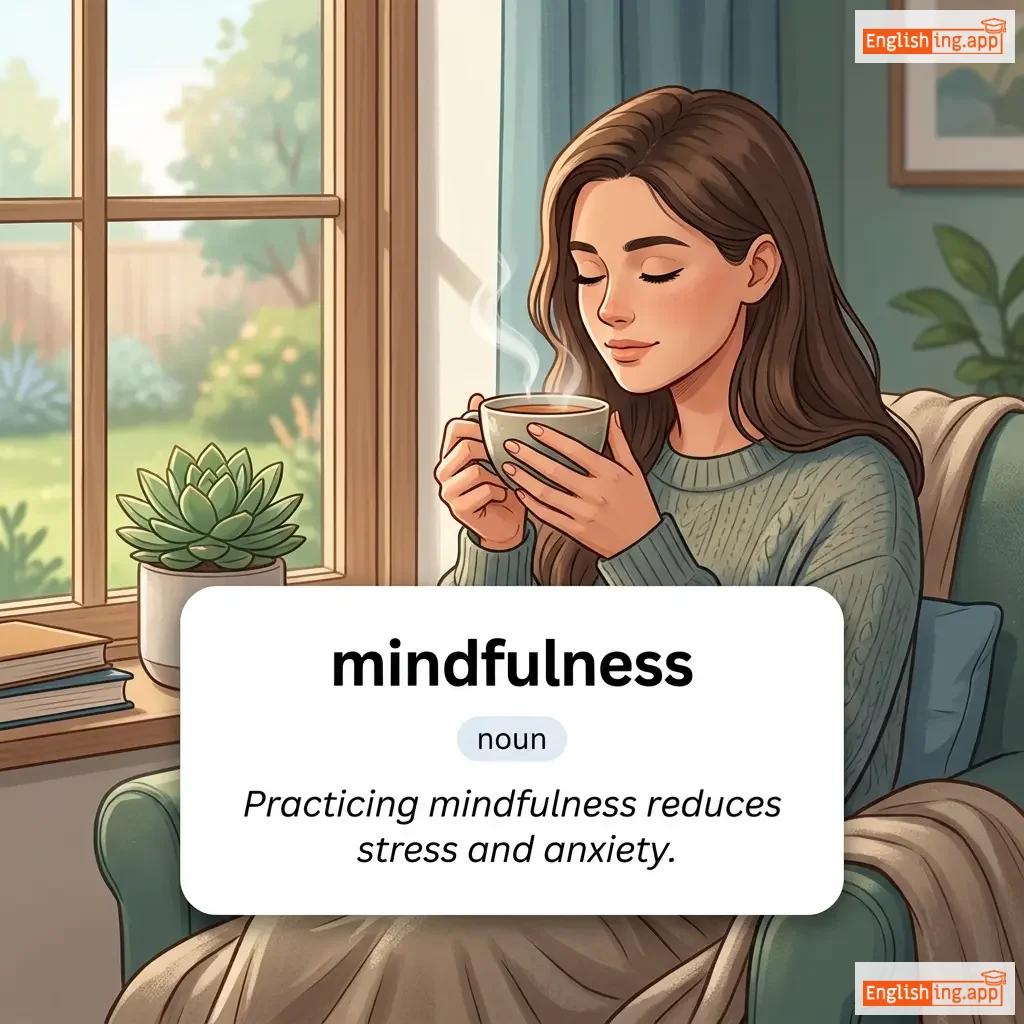
mindfulness definition card — visual illustration of the meaning
noun
/ˈmaɪnd.fʊl.nəs/
マインドフルネス (maindofurunesu)

The quality or state of being conscious or aware of something; a mental state achieved by focusing one's awareness on the present moment.

"Practicing mindfulness reduces stress and anxiety."

"マインドフルネスの実践は、ストレスと不安を軽減します。" (Maindofurunesu no jissen wa, sutoresu to fuan o keigen shimasu.)
adjective
/ˈmaɪndləs/
無意味な (muimi na)

without thought or intelligence; done without consideration

"He was bored by the mindless tasks at work."
"彼は仕事の中で無意味な作業に退屈していた。" (Kare wa shigoto no naka de muimi na sagyō ni taikutsu shite ita.)
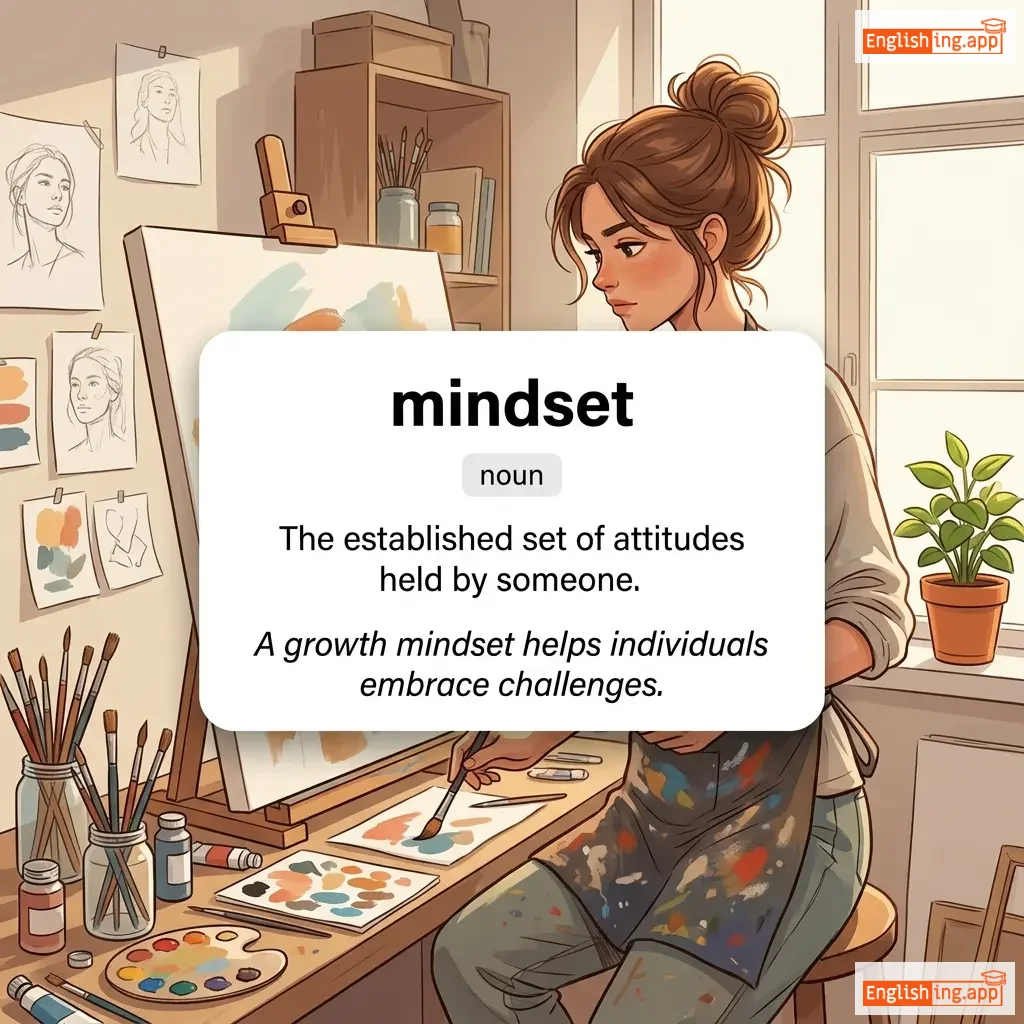
mindset definition card — visual illustration of the meaning
noun
ˈmaɪnd.set
マインドセット (maindosetto)

The established set of attitudes held by someone.

"A growth mindset helps individuals embrace challenges."

"成長マインドセットは、個人が挑戦を受け入れるのを助けます。" (Seichō maindosetto wa, kojin ga chōsen o ukeireru no o tasukemasu.)
noun, pronoun, verb
/maɪn/
鉱山 / 私の (kōzan / watashi no)

a place where minerals are dug from the ground; or something belonging to me

"The workers went deep into the mine to extract coal."

"労働者たちは炭鉱に深く入って炭を採掘しました。" (Rōdō-sha-tachi wa tankō ni fukaku haitte sumi o saikutsu shimashita.)
noun
/ˈmaɪnə(r)/
鉱夫 (kōfu)

a person who works in a mine, extracting minerals or other resources

"The miner worked in the coal mine for many years."

"鉱夫は長年、石炭鉱で働いていました。" (Kōfu wa naganen, sekitan kō de hataraite imashita.)
noun
/ˈmɪnərəl/
鉱物 (kōbutsu)

a naturally occurring substance that is solid and inorganic, often used in industry or nutrition

"Calcium is an important mineral for strong bones."

"カルシウムは強い骨のための重要な鉱物です。" (Karushiumu wa tsuyoi hone no tame no jūyōna kōbutsu desu.)
verb
/ˈmɪŋɡl/

to mix or combine; to move among people and engage socially

"Guests mingled at the party, chatting and laughing together."

adjective
/ˈmɪn.dʒi/
ケチ; 吝嗇 (kechi; rinshaku)

mean or stingy; unwilling to spend money

"He is too mingy to spend money on anything but necessities."

"彼は必要なもの以外にお金を使うのがあまりにもケチだ。" (Kare wa hitsuyou na mono igai ni okane o tsukau no ga amari ni mo kechi da.)
noun/adjective
/ˈmɪnətʃər/ or /ˈmɪniətʃʊr/
ミニチュア版 (minichua-ban)

a very small version of something; small in scale or size

"The artist created a miniature model of the castle."

"アーティストは城のミニチュアモデルを作りました。" (Aatisuto wa shiro no minichua moderu o tsukurimashita.)
adjective
/ˈmɪnɪməl/
最小限 (saishōgen)

the smallest or least amount possible

"The damage to the car was minimal after the accident."
"事故後、車の損傷は最小限でした。" (Jiko-go, kuruma no sonshō wa saishōgen deshita.)
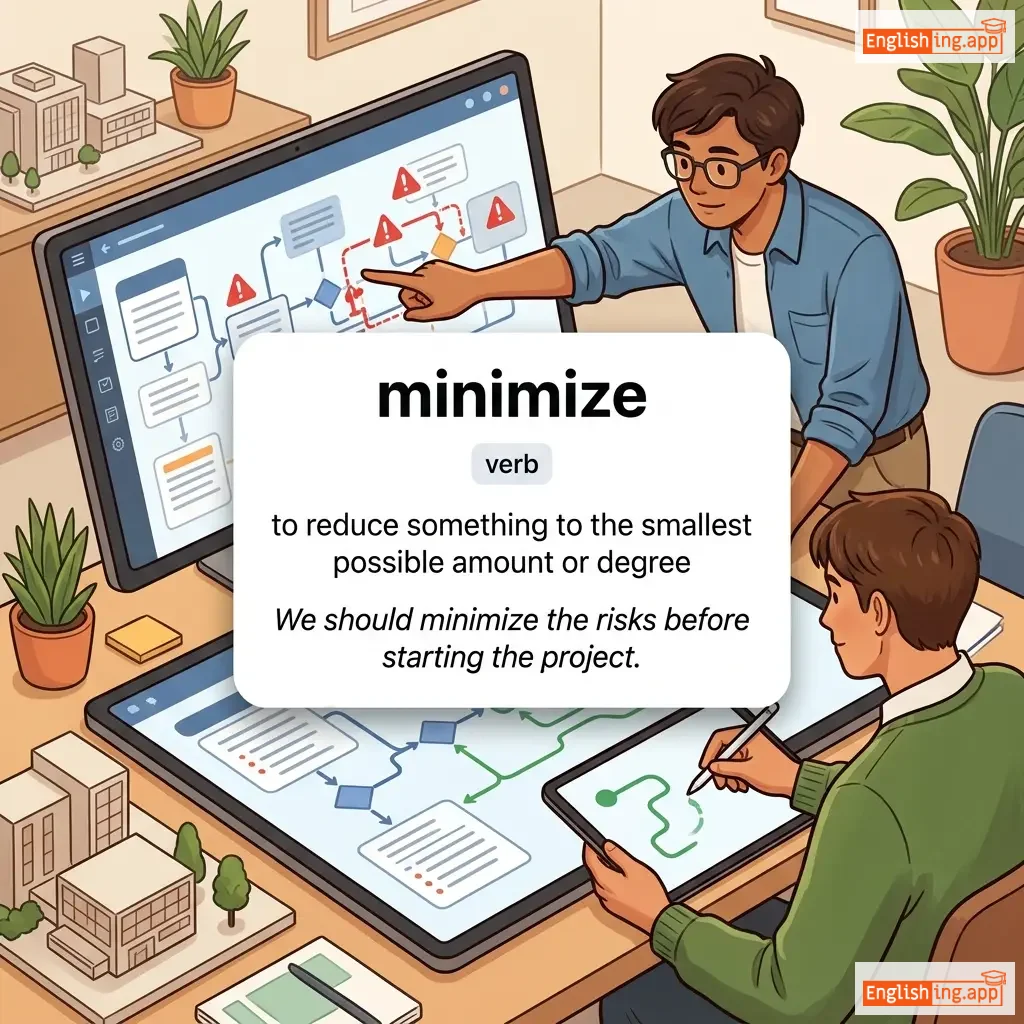
minimize definition card — visual illustration of the meaning
verb
/ˈmɪnɪmaɪz/
最小化する (saishōka suru)

to reduce something to the smallest possible amount or degree

"We should minimize the risks before starting the project."
"プロジェクトを始める前にリスクを最小化するべきです。" (Purojekuto o hajimeru mae ni risuku o saishōka suru beki desu.)
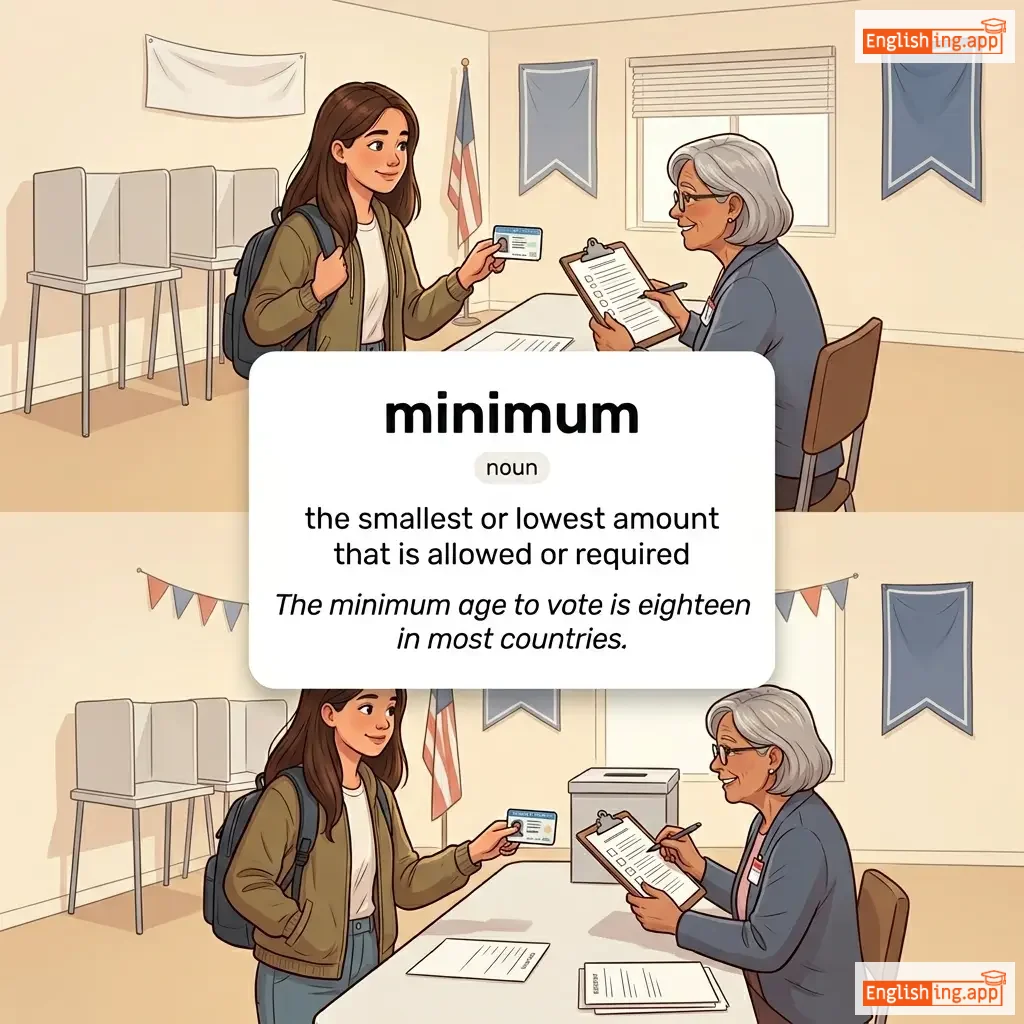
minimum definition card — visual illustration of the meaning
noun
/ˈmɪnɪməm/
最小限 (saishōgen)

the smallest or lowest amount that is allowed or required

"The minimum age to vote is eighteen in most countries."

"投票のための最小年齢は、ほとんどの国で18歳です。" (Tōhyō no tame no saishō nenrei wa, hotondo no kuni de 18-sai desu.)
noun
/ˈmaɪnɪŋ/
採掘 (saikutsu)

the process of extracting valuable minerals or other resources from the earth

"Mining in this area has increased in recent years."

"この地域での採掘は近年増加しています。" (Kono chiiki de no saikutsu wa kin-nen zōka shiteimasu.)
adjective
/ˈmɪn.ɪ.skjuːl/
微小 (bishou)

Extremely small or tiny.

"The error was so miniscule that nobody noticed it."

"その誤りは非常に微小で、誰もそれに気づかなかった。" (Sono ayamari wa hijou ni bishou de, dare mo sore ni kizukanakatta.)
🧑‍🤝‍🧑

minion (ミニオン)

noun
/ˈmɪn.i.ən/
手先 (tesaki)

A follower or underling of a powerful person, especially a servile one.

"The dictator was surrounded by loyal minions who carried out his orders."

"独裁者は忠実な手先に囲まれていて、彼の命令を実行していた。" (Dokusai-sha wa chūjitsu na tesaki ni kakomarete ite, kare no meirei o jikkō shite ita.)
noun
/ˌmɪsˈkɒndʌkt/
不正行為 (fuseikoui)

Improper or unacceptable behavior, especially by a professional or authority figure.

"The teacher was dismissed for serious misconduct."
"教師は重大な不正行為のため解雇されました。" (Kyoushi wa juudaina fuseikoui no tame kaiko saremashita.)
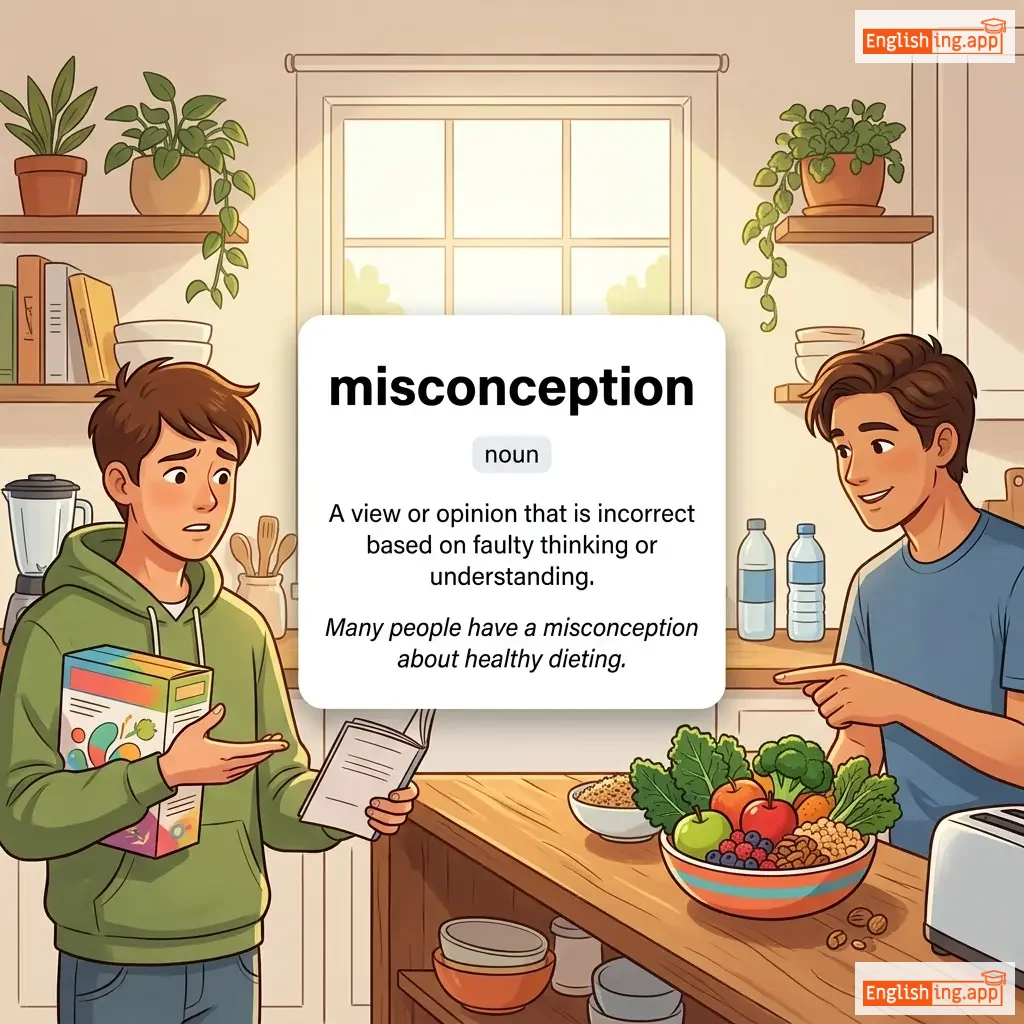
misconception definition card — visual illustration of the meaning
noun
/ˌmɪs.kənˈsep.ʃən/
誤解、間違った理解 (gokai, machigatta rikai)

A view or opinion that is incorrect based on faulty thinking or understanding.

"Many people have a misconception about healthy dieting."

"多くの人々は健康的な食事について誤解しています。" (Ōku no hitobito wa kenko-teki na shokuji ni tsuite gokai shiteimasu.)
verb
/ˌmɪskənˈsiːv/
誤解する (gokai suru)

To misunderstand or form an incorrect idea about something.

"He misconceived the purpose of the project."

"彼はプロジェクトの目的を誤解しました。" (Kare wa purojekuto no mokuteki o gokai shimashita.)
adjective
/ˈmɪstʃɪvəs/
いたずらな (itazura na)

Causing or showing a fondness for causing trouble in a playful way.

"She gave him a mischievous smile."

"彼女は彼にいたずらな笑顔を向けた。" (Kanojo wa kare ni itazura na egao wo muketa.)
noun
/ˈmɪstʃɪf/
いたずら (itazura)

Playful misbehavior or troublemaking.

"The children were full of mischief during the party."

"パーティー中、子供たちはいたずらでいっぱいでした。" (Pātī-chū, kodomotachi wa itazura de ippai deshita.)
noun
/ˌmɪsˈtʃæns/

An unfortunate accident or event; bad luck.

"By mischance, he missed the last train home."

noun
/ˈmɪsəleɪni/
寄せ集め (yoseatsume)

A collection or mixture of various things.

"The book is a miscellany of essays and poems."

"その本はエッセイと詩の寄せ集めです。" (Sono hon wa essei to shi no yoseatsume desu.)
adjective
/ˌmɪsəˈleɪniəs/
雑多な (zattana)

Consisting of a variety of different items or types.

"The drawer was filled with miscellaneous objects."

"引き出しはさまざまな物でいっぱいだった。" (Hikidashi wa samazama na mono de ippai datta.)
noun
/mɪˌsɛdʒəˈneɪʃən/
人種間結婚 (jinshukan kekkon)

the interbreeding of people considered to be of different racial types

"The law once prohibited miscegenation in many countries."

"その法律は多くの国で人種間結婚を禁じていました。" (Sono hōritsu wa ōku no kuni de jinshukan kekkon o kinjite imashita.)
noun
/ˌmɪs.bɪˈheɪ.vjər/
悪いまたは受け入れられない行動、特に子供によるものや公式の場面で (misbehaviour)

Bad or unacceptable behavior, especially by children or in formal situations

"The student was punished for his misbehaviour in class."

"生徒はクラスでの不適切な行動で罰を受けた。" (Seito wa kurasu de no futekisetsu na kōdō de batsu o ukemashita.)
noun
/ˌmɪsbɪˈheɪvjər/
不正行為 (fusei kōi)

bad or improper behavior

"The teacher punished the student for his misbehavior."
"教師は彼の不正行為で生徒を罰しました。" (Kyōshi wa kare no fusei kōi de seito o basshimashita.)
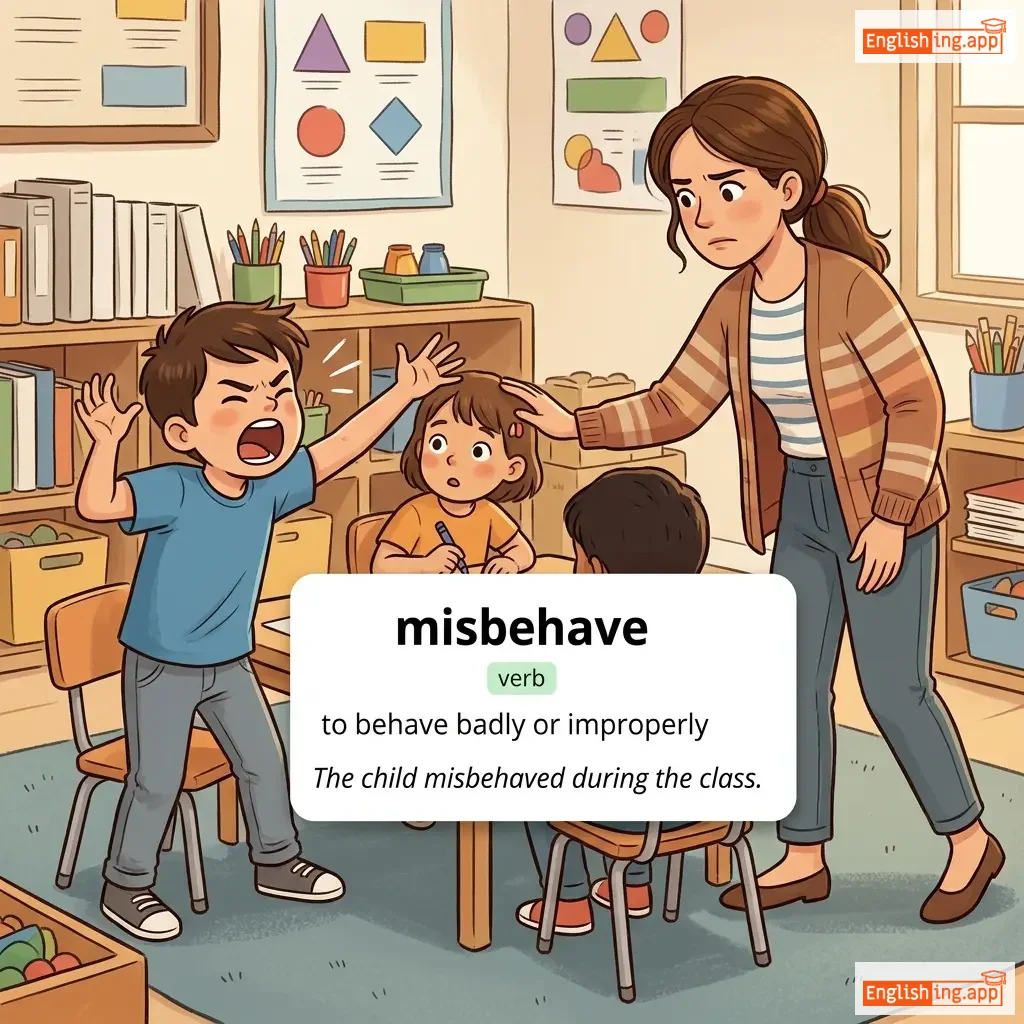
misbehave definition card — visual illustration of the meaning
verb
/ˌmɪsbɪˈheɪv/
悪い振る舞いをする (warui furumai wo suru)

to behave badly or improperly

"The child misbehaved during the class."

"その子供はクラス中に悪い振る舞いをした。" (Sono kodomo wa kurasu-chū ni warui furumai wo shita.)
verb
/ˌmɪs.əˈtrɪb.juːt/
誤って帰属する (ayamatte kizoku suru)

to incorrectly credit something, such as a work or remark, to the wrong person or source

"The quote was misattributed to Shakespeare."
"その引用はシェイクスピアに誤って帰属されました。" (Sono inyo wa Sheikusupia ni ayamatte kizoku saremashita.)
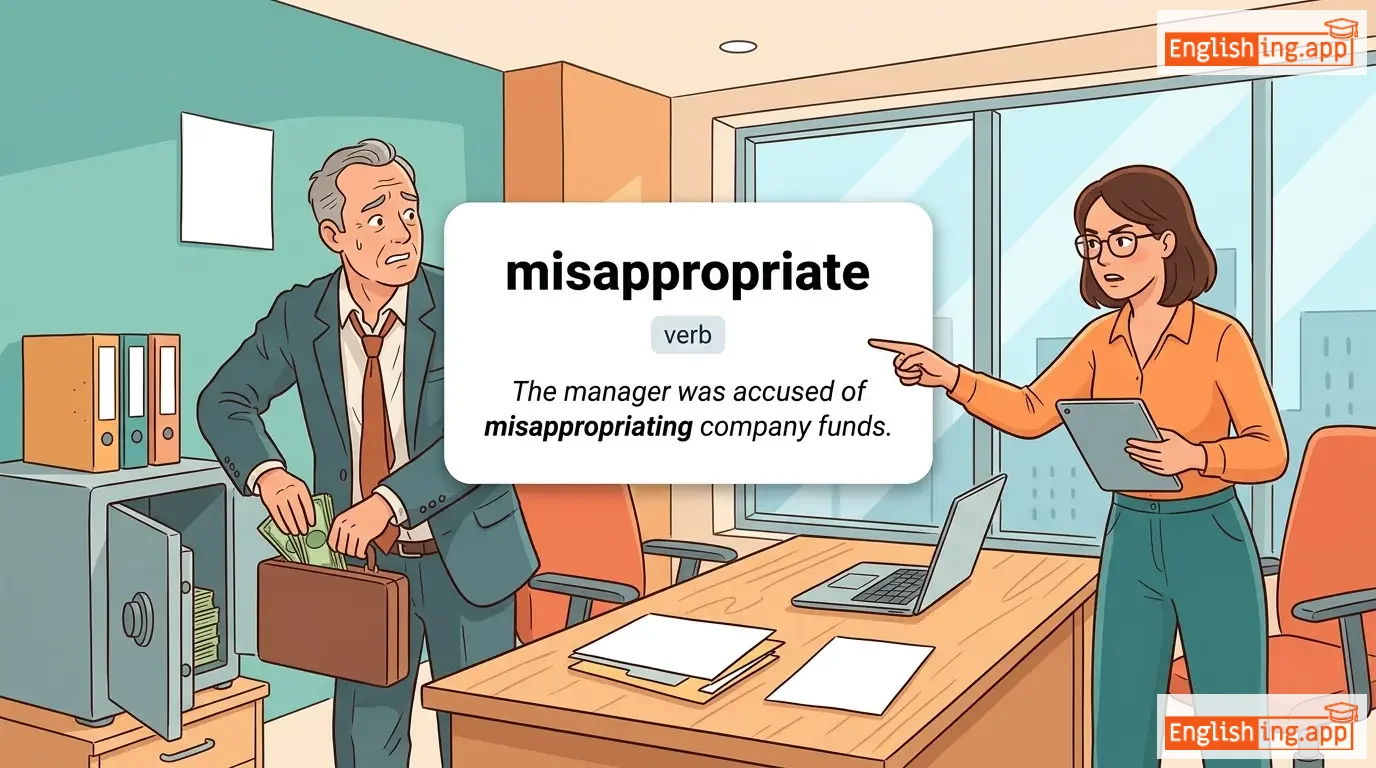
misappropriate definition card — visual illustration of the meaning
verb
/ˌmɪsəˈproʊprieɪt/
不正流用する (fusei ryūyō suru)

to take or use something dishonestly, especially money or property, for one's own use

"The manager was accused of misappropriating company funds."

"マネージャーは会社の資金を不正に使ったとして告発されました。" (Manējā wa kaisha no shikin o fusei ni tsukatta to shite kokuhatsu saremashita.)
noun
/ˌmɪsæprɪˈhɛnʃən/
誤解 (gokai)

a mistaken belief or misunderstanding

"There is a common misapprehension about the causes of the disease."

"病気の原因についての一般的な誤解がある。" (Byōki no gen'in ni tsuite no ippanteki na gokai ga aru.)
verb
/ˌmɪsæprɪˈhɛnd/
誤解する (gokai suru)

to misunderstand or misinterpret something

"He misapprehended the teacher’s instructions and did the task incorrectly."

"彼は先生の指示を誤解し、課題を間違って行いました。" (Kare wa sensei no shiji o gokai shi, kadai o machigatte okonaimashita.)
noun
/mɪˈsænθrəpi/
人類嫌悪 (jinrui ken'o)

a general dislike, distrust, or hatred of humankind

"His misanthropy was evident in the way he avoided people."

"彼の人類嫌悪は、彼が人々を避ける方法に明らかに現れていました。" (Kare no jinrui ken'o wa, kare ga hitobito o sakeru hōhō ni akiraka ni arawarete imashita.)
adjective
/ˌmɪsənˈθrɑːpɪk/
人間嫌いの (ningen girai no)

having or showing a dislike of humankind

"His misanthropic attitude made it difficult for him to make friends."
"彼の人間嫌いの態度は、友達を作るのを難しくした。" (Kare no ningen girai no taido wa, tomodachi o tsukuru no o muzukashiku shita.)
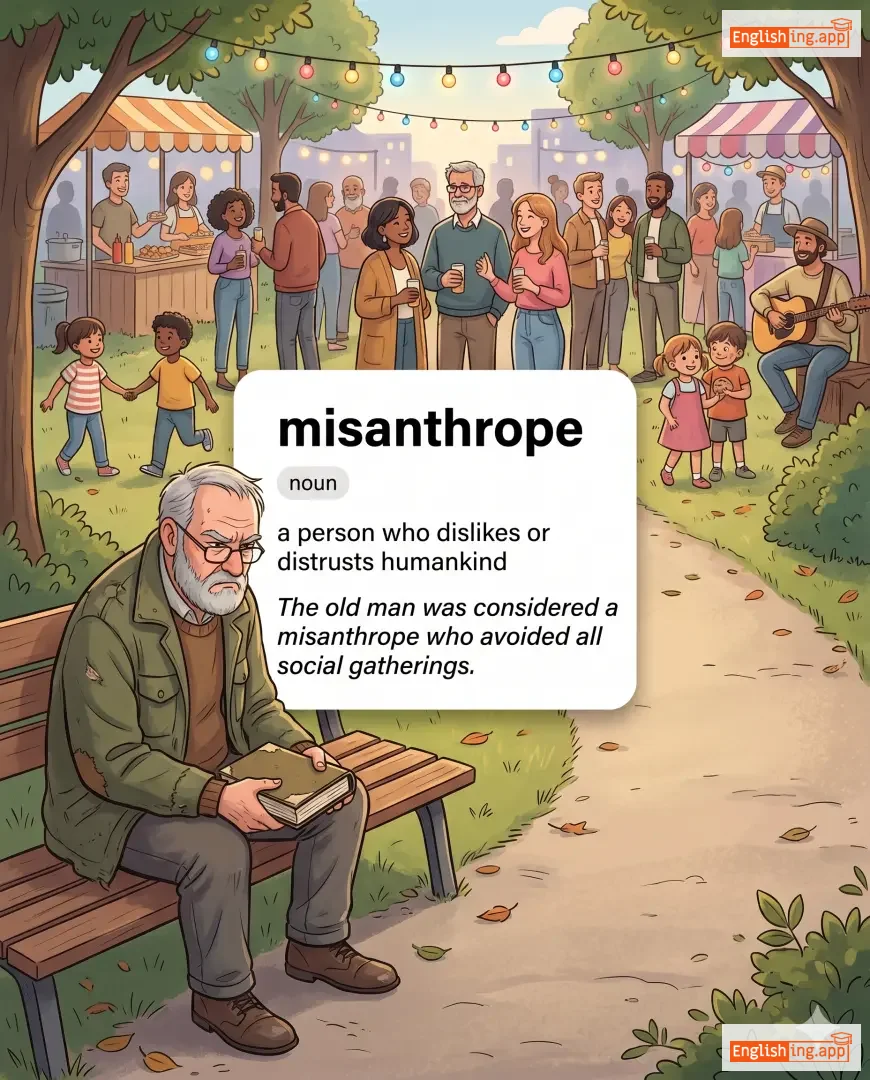
misanthrope definition card — visual illustration of the meaning
noun
/ˈmɪsənˌθroʊp/
人間嫌い (ningengirai)

a person who dislikes or distrusts humankind

"The old man was considered a misanthrope who avoided all social gatherings."

"その老人は、すべての社交的な集まりを避けるミサントロープと見なされていました。" (Sono rōjin wa, subete no shakaiteki na atsumari o yokeru misantoroopu to minasareteimashita.)
noun
/mɜːrθ/
喜び (yorokobi)

Great joy, amusement, or laughter.

"The festival was full of mirth and laughter."

"フェスティバルは喜びと笑いでいっぱいでした。" (Fesutibaru wa yorokobi to warai de ippai deshita.)
noun
/ˌmɪsədˈvɛntʃər/
不運な出来事 (fuun na dekigoto)

An unlucky accident, mishap, or unfortunate event.

"He broke his leg during a skiing misadventure."

"彼はスキー中に不運な出来事で足を骨折した。" (Kare wa sukii-chuu ni fuun na dekigoto de ashi o kossetsu shita.)
noun
/ˈmɪnɪstər/
大臣 (daijin)

a head of a government department; a person who leads a church

"The finance minister announced new tax policies."

"財務大臣は新しい税制政策を発表しました。" (Zaimu daijin wa atarashī zei-sei seisaku o happyō shimashita.)
noun
/ˌmɪn.ɪˈstreɪ.ʃən/
奉仕 (houshi)

The act of providing care, assistance, or religious service.

"She recovered thanks to the kind ministrations of the nurses."

"彼女は看護師の親切な奉仕のおかげで回復した。" (Kanojo wa kangoshi no shinsetsuna houshi no okage de kaifuku shita.)
noun
/ˈmɪn.ɪ.stri/
(shō)

A government department headed by a minister or the work of a religious minister.

"He works at the Ministry of Education."

"彼は教育省で働いています。" (Kare wa kyōiku-shō de hataraiteimasu.)
adjective/noun
/ˈmaɪ.nər/
小さい / 未成年 (chiisai / misenen)

less important, serious, or significant; a person under the legal age

"Luckily, the accident caused only minor injuries."

"幸運にも、事故は軽いけがだけを引き起こしました。" (kouun ni mo, jiko wa karui kega dake o hikiokoshimashita.)
noun
/maɪˈnɔːr.ɪ.ti/
少数派 (shousuhai)

A smaller number or part, especially a group differing from the majority.

"The law aims to protect the rights of ethnic minorities."
"この法律は、民族的少数派の権利を保護することを目的としています。" (Kono houritsu wa, minzokuteki shousuhai no kenri o hogo suru koto o mokuteki to shiteimasu.)
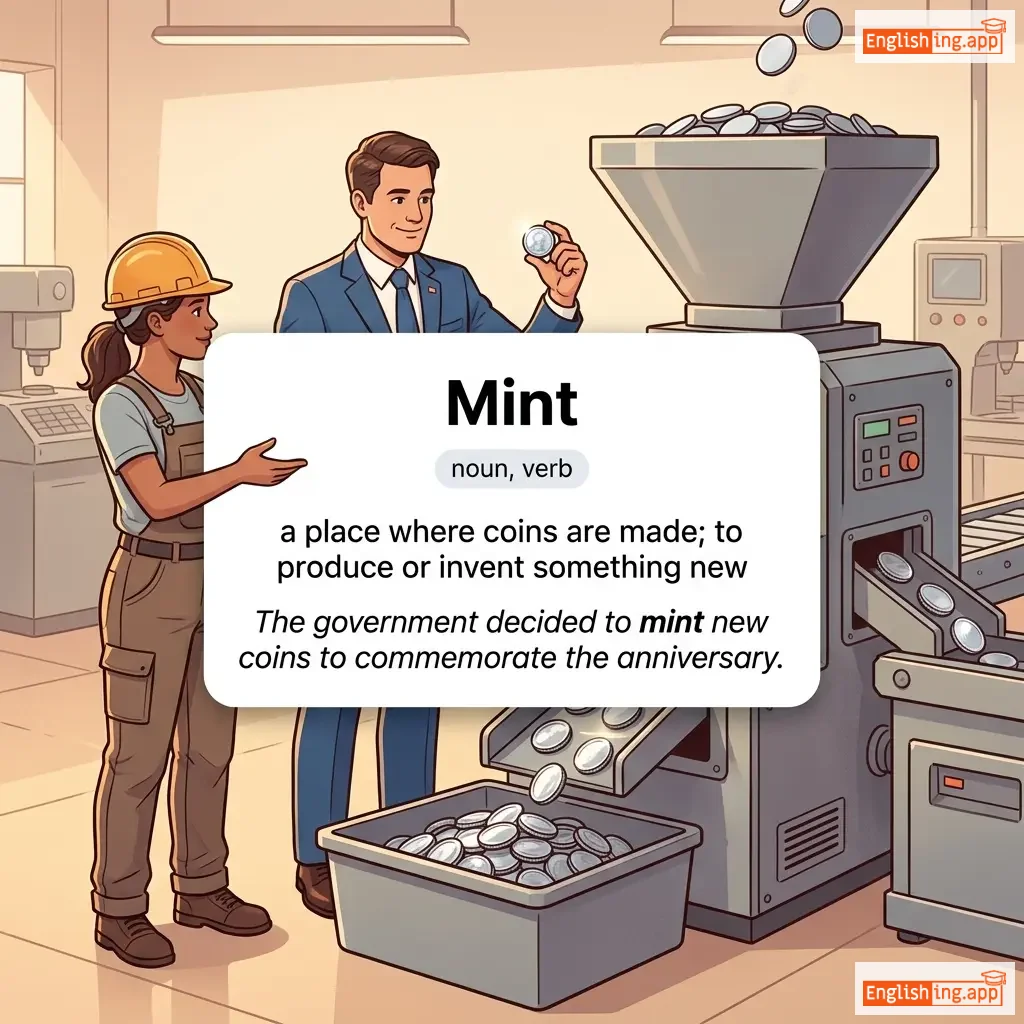
Mint definition card — visual illustration of the meaning
noun, verb
/mɪnt/
ミント / 鋳造所 (minto / chuzojo)

a place where coins are made; to produce or invent something new

"The government decided to mint new coins to commemorate the anniversary."

"政府は記念日のために新しいコインを鋳造することを決定しました。" (Seifu wa kinenbi no tame ni atarashii koin wo chuzo suru koto wo kettei shimashita.)
adjective
/ˈmɪnəskjuːl/
微細 (bisai)

extremely small in size or importance

"She made only a minuscule contribution to the project."

"彼女はプロジェクトにほんのわずかな貢献をしました。" (Kanojo wa purojekuto ni honno wazukana kouken o shimashita.)
noun, adjective
/maɪˈnjuːt/ (adj), /ˈmɪnɪt/ (noun)
分 / 微小 (fun / bishou)

a period of sixty seconds; extremely small or detailed

"He examined the painting with minute attention to detail."

"彼は細かい注意を払って絵を調べました。" (Kare wa komakai chuui o haratte e o shirabemashita.)
noun
/maɪˈnjuːʃə/
細かい事 (komakai koto)

a small or trivial detail of something

"He was bored by the minutia of office paperwork."

"彼はオフィスの書類の細かい事に飽きていた。" (Kare wa ofisu no shorui no komakai koto ni akite ita.)
adverb
/maɪˈnjuːtli/
慎重に (shinchou ni)

in very small detail; extremely carefully

"The detective examined the evidence minutely."

"探偵は証拠を慎重に調べました。" (Tantei wa shouko wo shinchou ni shirabemashita.)
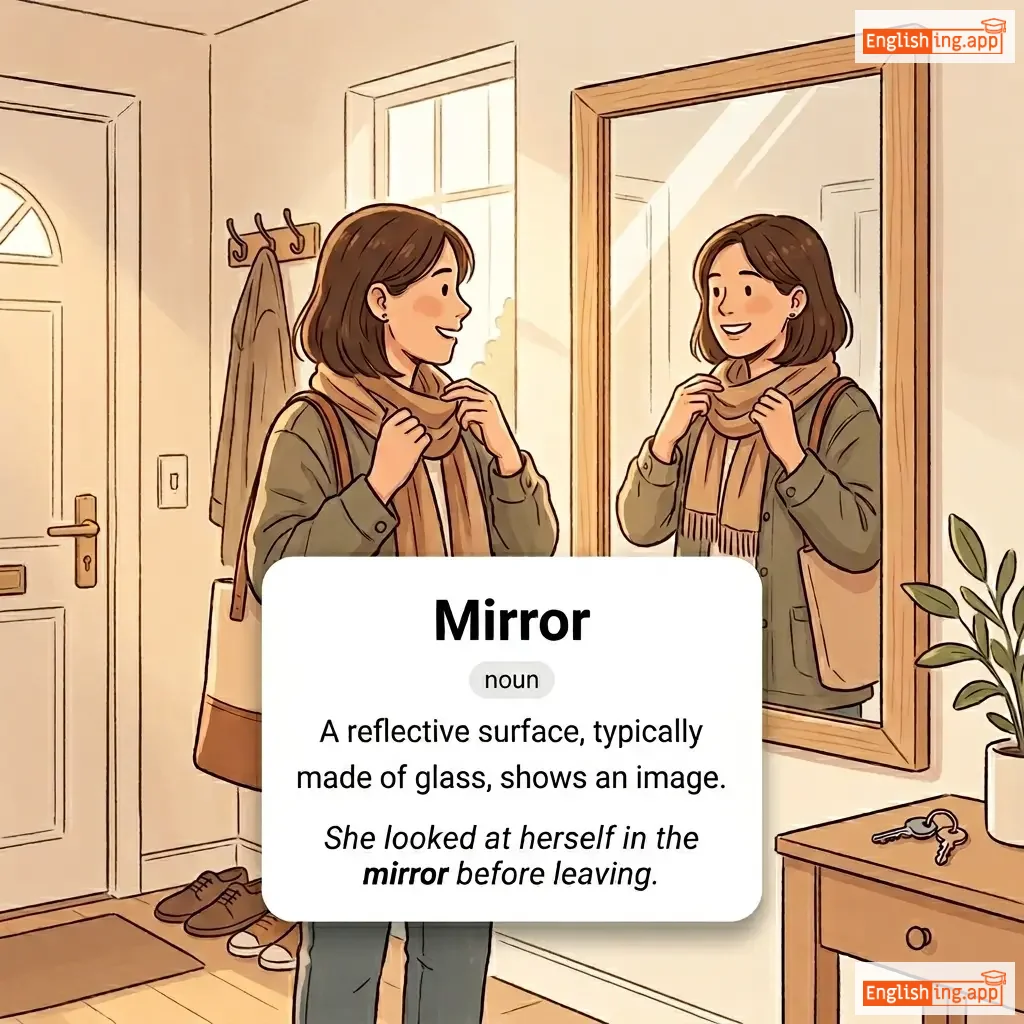
Mirror definition card — visual illustration of the meaning
noun
/ˈmɪrər/

A reflective surface, typically made of glass, that shows an image.

"She looked at herself in the mirror before leaving."

adjective, verb (past tense/participle of mire)
/ˈmaɪərd/
困難な状況に巻き込まれる (konnan na joukyou ni makikomaru)

Trapped or entangled in something, typically a difficult situation.

"The politician was mired in scandal."

"その政治家はスキャンダルに巻き込まれていた。" (Sono seijika wa sukyandaru ni makikomararete ita.)
🪵

mire

noun, verb
/ˈmaɪər/

A stretch of swampy or boggy ground; as a verb, to entangle or involve someone in a difficult situation.

"The car was stuck in the mire after the heavy rain."

adjective
/mɪˈrækjələs/
奇跡的な (kiseki-tekina)

Extraordinarily wonderful or unusual, as if by a miracle.

"Her recovery after the accident was truly miraculous."

"事故後の彼女の回復は本当に奇跡的でした。" (Jiko go no kanojo no kaifuku wa hontōni kiseki-tekideshita.)