Словари

Словарь английского языка | Значения слов, определения и примеры

mindfulness definition card — visual illustration of the meaning
noun
/ˈmaɪnd.fʊl.nəs/
осознанность (osoznannost)

The quality or state of being conscious or aware of something; a mental state achieved by focusing one's awareness on the present moment.

"Practicing mindfulness reduces stress and anxiety."

"Практика осознанности снижает стресс и тревожность." (Praktika osoznannosti snizhaet stress i trevozhnost'.)
adjective
/ˈmaɪndləs/
бессмысленный (bessmyslennyy)

without thought or intelligence; done without consideration

"He was bored by the mindless tasks at work."
"Ему было скучно от бессмысленных задач на работе." (Emu bylo skuchno ot bessmyslennykh zadach na rabote.)
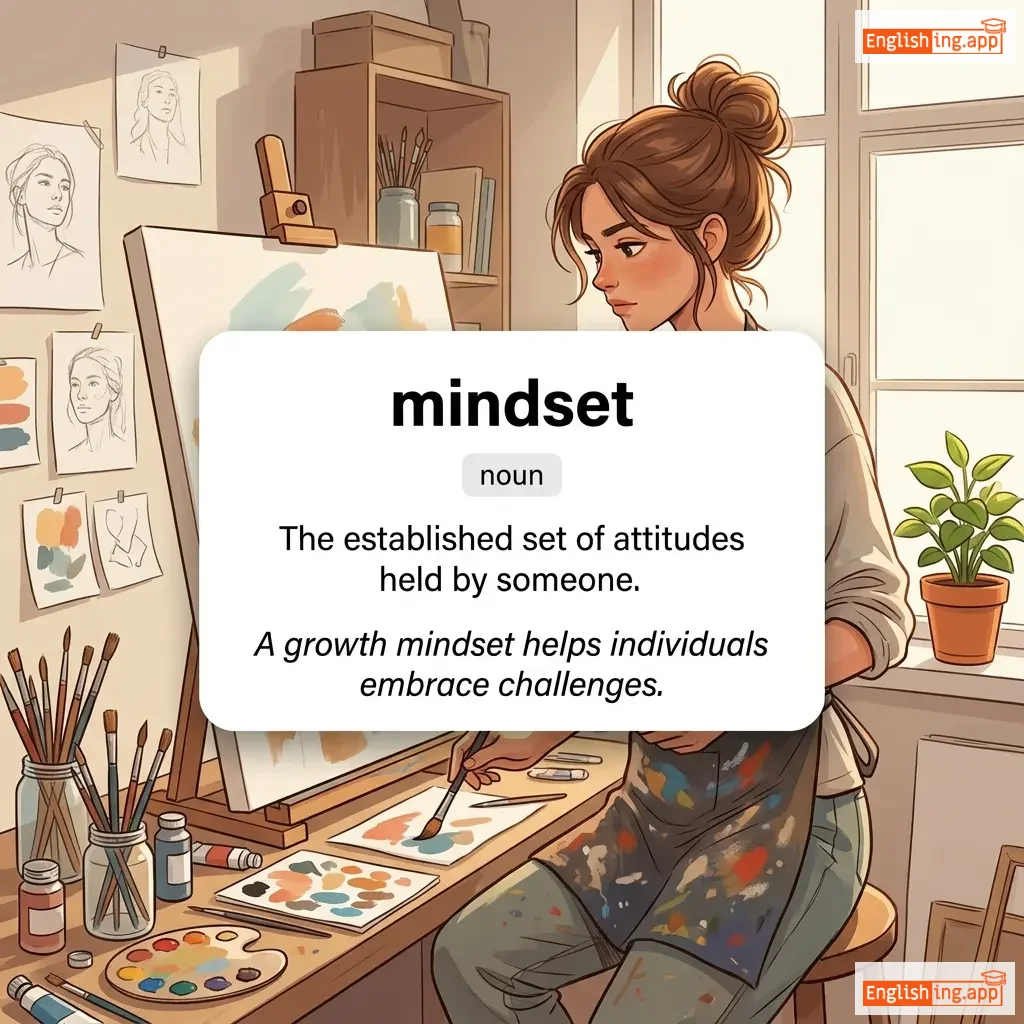
mindset definition card — visual illustration of the meaning
noun
ˈmaɪnd.set
мышление (myshlenie)

The established set of attitudes held by someone.

"A growth mindset helps individuals embrace challenges."

"Мышление на основе роста помогает людям справляться с трудностями." (Myshlenie na osnove rosta pomogaet lyudyam spravlyat'sya s trudnostyami.)
noun, pronoun, verb
/maɪn/
шахта / мой (shakhta / moy)

a place where minerals are dug from the ground; or something belonging to me

"The workers went deep into the mine to extract coal."

"Работники пошли глубоко в шахту, чтобы добыть уголь." (Rabotyki poshli gluboko v shakhtu, chtoby dobyt' ugol'.)
noun
/ˈmaɪnə(r)/
шахтёр (shahtyor)

a person who works in a mine, extracting minerals or other resources

"The miner worked in the coal mine for many years."

"Шахтёр работал в угольной шахте много лет." (Shahtyor rabotal v ugol'noy shakhtye mnogo let.)
noun
/ˈmɪnərəl/
минерал (mineral)

a naturally occurring substance that is solid and inorganic, often used in industry or nutrition

"Calcium is an important mineral for strong bones."

"Кальций - важный минерал для крепких костей." (Kaltsiy - vazhnyy mineral dlya krepkikh kostey.)
verb
/ˈmɪŋɡl/

to mix or combine; to move among people and engage socially

"Guests mingled at the party, chatting and laughing together."

adjective
/ˈmɪn.dʒi/
скупой; зажиточный (skupoy; zhazhitochniy)

mean or stingy; unwilling to spend money

"He is too mingy to spend money on anything but necessities."

"Он слишком скуп, чтобы тратить деньги на что-то, кроме необходимого." (On slishkom skup, chtoby tratit dengi na chto-to, krome neobkhodimogo.)
noun/adjective
/ˈmɪnətʃər/ or /ˈmɪniətʃʊr/
миниатюрная версия (miniatyurnaya versiya)

a very small version of something; small in scale or size

"The artist created a miniature model of the castle."

"Художник создал миниатюрную модель замка." (Hudozhnik sozdaval miniatyurnuyu model' zamka.)
adjective
/ˈmɪnɪməl/
минимум (minimum)

the smallest or least amount possible

"The damage to the car was minimal after the accident."
"Урон от аварии был минимальным." (Uron ot avarii byl minimal'nym.)
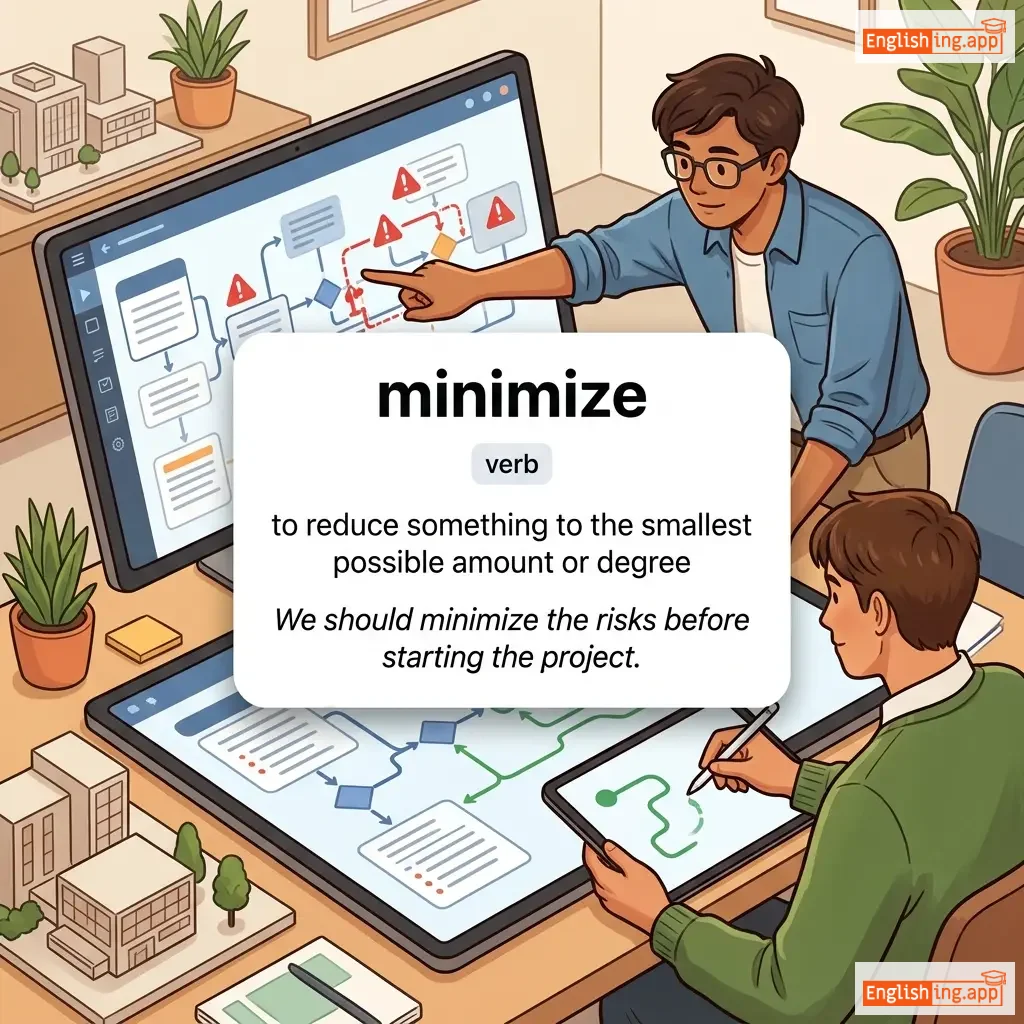
minimize definition card — visual illustration of the meaning
verb
/ˈmɪnɪmaɪz/
минимизировать (minimizirovat')

to reduce something to the smallest possible amount or degree

"We should minimize the risks before starting the project."
"Нам следует минимизировать риски перед началом проекта." (Nam sleduet minimizirovat' riski pered nachalom proekta.)
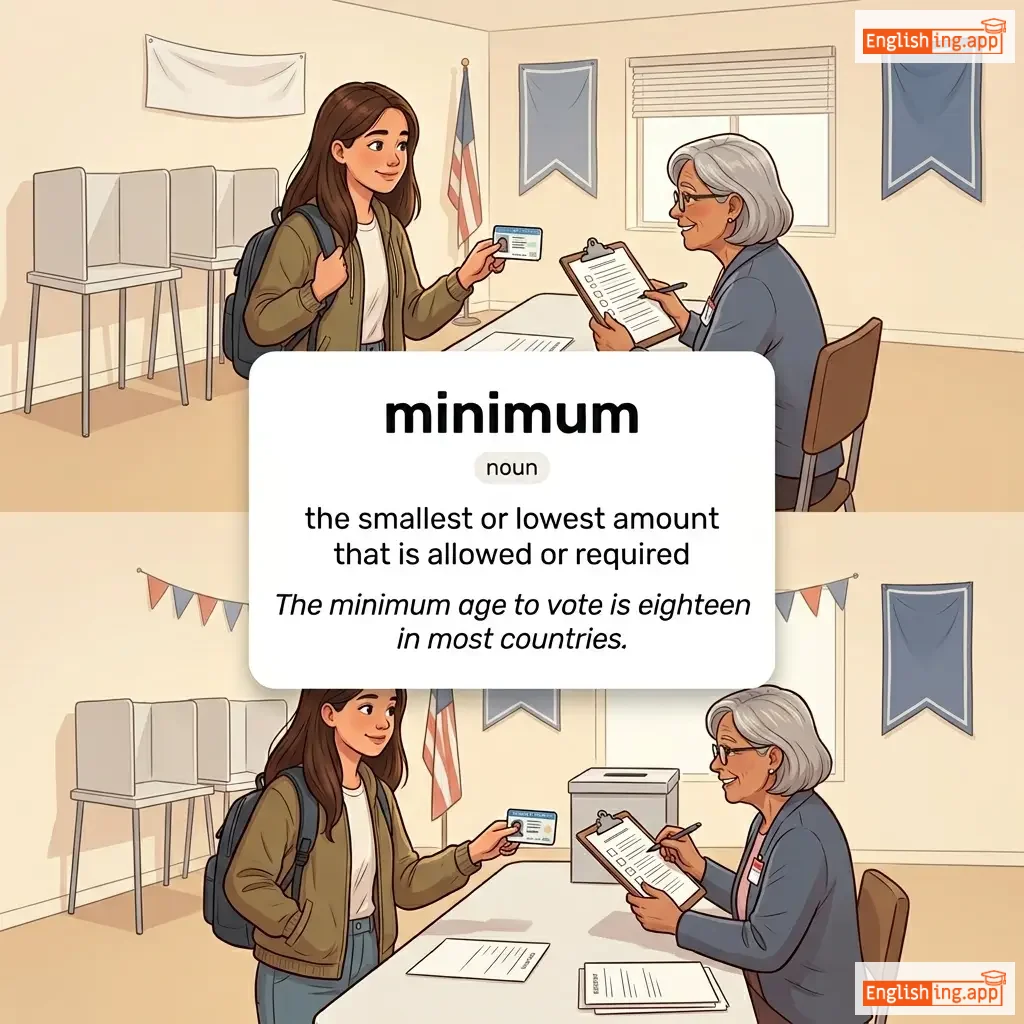
minimum definition card — visual illustration of the meaning
noun
/ˈmɪnɪməm/
минимум (minimum)

the smallest or lowest amount that is allowed or required

"The minimum age to vote is eighteen in most countries."

"Минимальный возраст для голосования во многих странах составляет восемнадцать лет." (Minimal'nyy vozrast dlya golosovaniya vo mnogikh stranakh sostavlyayet vosemnadtsat' let.)
noun
/ˈmaɪnɪŋ/
добыча (dobycha)

the process of extracting valuable minerals or other resources from the earth

"Mining in this area has increased in recent years."

"Добыча полезных ископаемых в этом регионе возросла в последние годы." (Dobycha poleznykh iskopayemykh v etom regione vozrosla v poslednie gody.)
adjective
/ˈmɪn.ɪ.skjuːl/
крошечный (kroshechnyy)

Extremely small or tiny.

"The error was so miniscule that nobody noticed it."

"Ошибка была настолько крошечной, что никто её не заметил." (Oshibka byla nastol'ko kroshechnoy, chto nikto yey ne zametil.)
🧑‍🤝‍🧑

minion (минион)

noun
/ˈmɪn.i.ən/
приспешник (prispeshnik)

A follower or underling of a powerful person, especially a servile one.

"The dictator was surrounded by loyal minions who carried out his orders."

"Диктатор был окружен верными приспешниками, которые исполняли его приказы." (Diktator byl okruzhon vernymi prispeshnikami, kotorye ispolnyali ego prikazy.)
noun
/ˌmɪsˈkɒndʌkt/
неповадок (nepovadok)

Improper or unacceptable behavior, especially by a professional or authority figure.

"The teacher was dismissed for serious misconduct."
"Учитель был уволен за серьезные проступки." (Uchitel' byl uvolen za seryoznyye prostupki.)
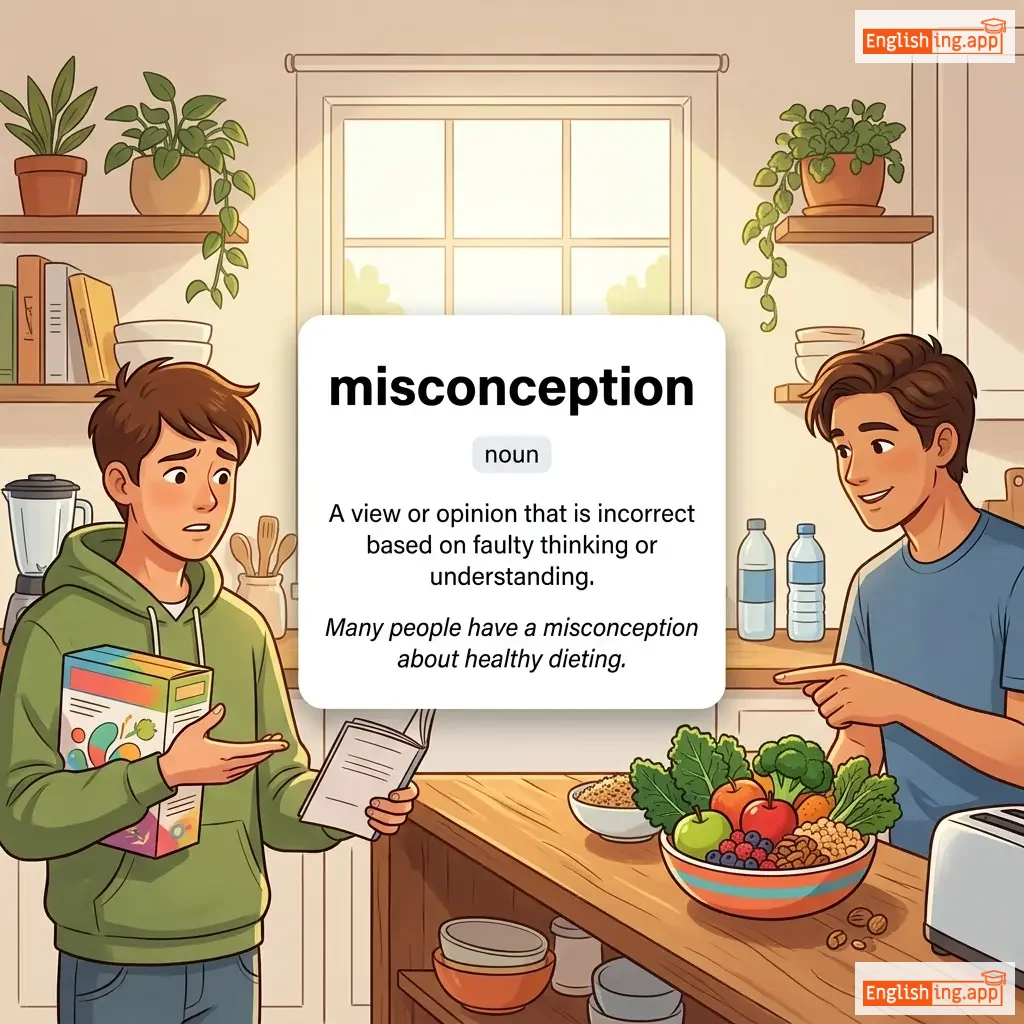
misconception definition card — visual illustration of the meaning
noun
/ˌmɪs.kənˈsep.ʃən/
неправильное представление, заблуждение (nepravil'noe predstavlenie, zabluzhdenie)

A view or opinion that is incorrect based on faulty thinking or understanding.

"Many people have a misconception about healthy dieting."

"Многие люди имеют неправильное представление о здоровом питании." (Mnogie lyudi imeyut nepravil'noe predstavlenie o zdorovom pitanii.)
verb
/ˌmɪskənˈsiːv/
неправильно понять (nepravil'no ponyat')

To misunderstand or form an incorrect idea about something.

"He misconceived the purpose of the project."

"Он неверно понял цель проекта." (On neverno ponyal tsel' proyekta.)
adjective
/ˈmɪstʃɪvəs/
озорной (ozornoy)

Causing or showing a fondness for causing trouble in a playful way.

"She gave him a mischievous smile."

"Она подарила ему озорную улыбку." (Ona podarila yemu ozornuyu ulybku.)
noun
/ˈmɪstʃɪf/
озорство (ozorstvo)

Playful misbehavior or troublemaking.

"The children were full of mischief during the party."

"Дети были полны озорства на вечеринке." (Deti byli polny ozorstva na vecherinke.)
noun
/ˌmɪsˈtʃæns/
несчастье (неудача) (mischance)

An unfortunate accident or event; bad luck.

"By mischance, he missed the last train home."

"По несчастью, он пропустил последний поезд домой." (Po neschastyu, on propustil posledniy poezd domoy.)
noun
/ˈmɪsəleɪni/
смесь (smes)

A collection or mixture of various things.

"The book is a miscellany of essays and poems."

"Книга — это смесь эссе и стихотворений." (Kniga — eto smes' esse i stikhotvoreniy.)
adjective
/ˌmɪsəˈleɪniəs/
разнообразный (razoobraznyy)

Consisting of a variety of different items or types.

"The drawer was filled with miscellaneous objects."

"Ящик был заполнен разнообразными предметами." (Yashchik byl zapolnen raznoobraznymi predmetami.)
noun
/mɪˌsɛdʒəˈneɪʃən/
межрасовые браки (mezhrasovyye braki)

the interbreeding of people considered to be of different racial types

"The law once prohibited miscegenation in many countries."

"Закон когда-то запрещал межрасовые браки в многих странах." (Zakon kogda-to zapreshchal mezhrasovyye braki v mnogikh stranakkh.)
noun
/ˌmɪs.bɪˈheɪ.vjər/
Плохое или неприемлемое поведение, особенно у детей или в формальных ситуациях (misbehaviour)

Bad or unacceptable behavior, especially by children or in formal situations

"The student was punished for his misbehaviour in class."

"Студента наказали за его плохое поведение в классе." (Studenta nakazali za yego plokhoje povedenie v klasse.)
noun
/ˌmɪsbɪˈheɪvjər/
плохое поведение (plokhoe povedenie)

bad or improper behavior

"The teacher punished the student for his misbehavior."
"Учитель наказал студента за его плохое поведение." (Uchitel' nakazal studenta za ego plokhoe povedenie.)
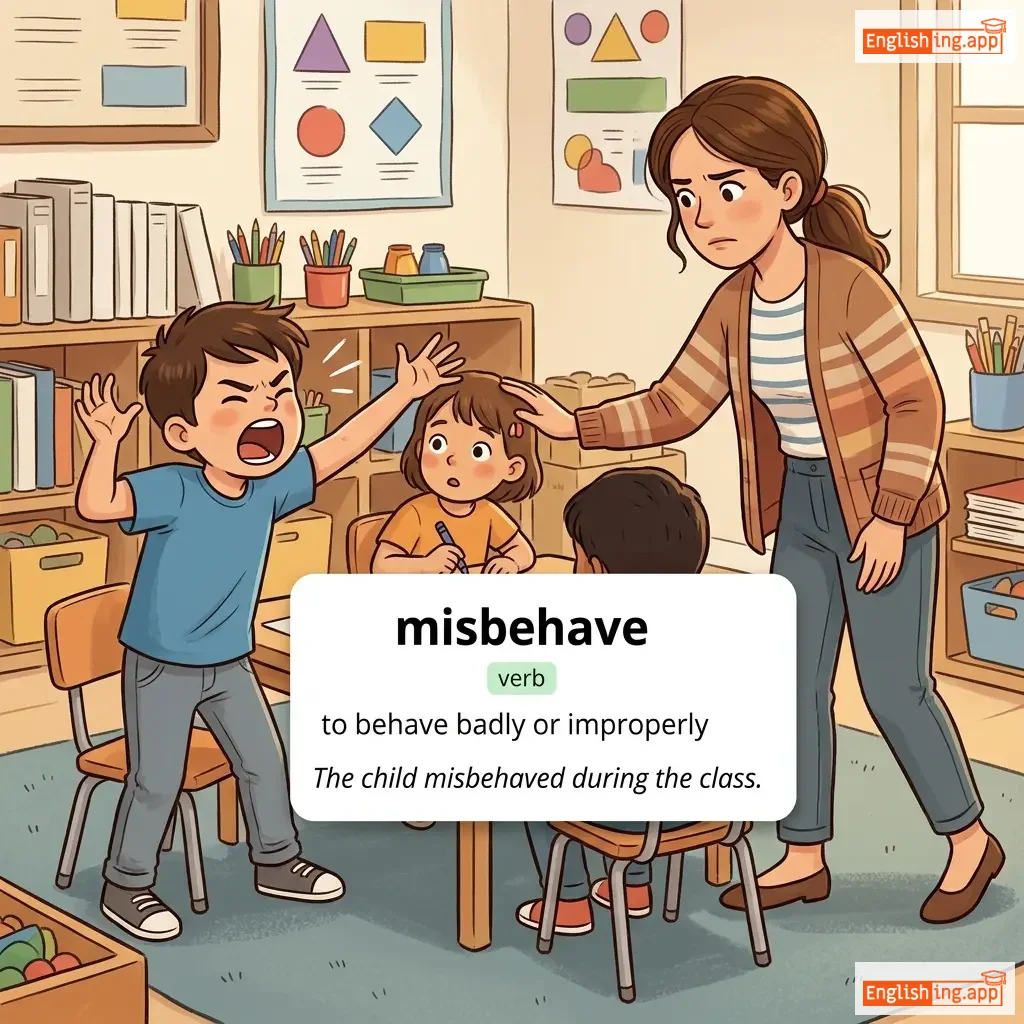
misbehave definition card — visual illustration of the meaning
verb
/ˌmɪsbɪˈheɪv/
ведти себя плохо (vedti sebya plokho)

to behave badly or improperly

"The child misbehaved during the class."

"Ребенок вел себя плохо во время занятия." (Rebenok vel sebya plokho vo vremya zanyatiya.)
verb
/ˌmɪs.əˈtrɪb.juːt/
неправильно приписывать (nepravil'no pripisyvat')

to incorrectly credit something, such as a work or remark, to the wrong person or source

"The quote was misattributed to Shakespeare."
"Цитата была ошибочно приписана Шекспиру." (Tsitata byla oshibochno pririsanna Shekspiru.)
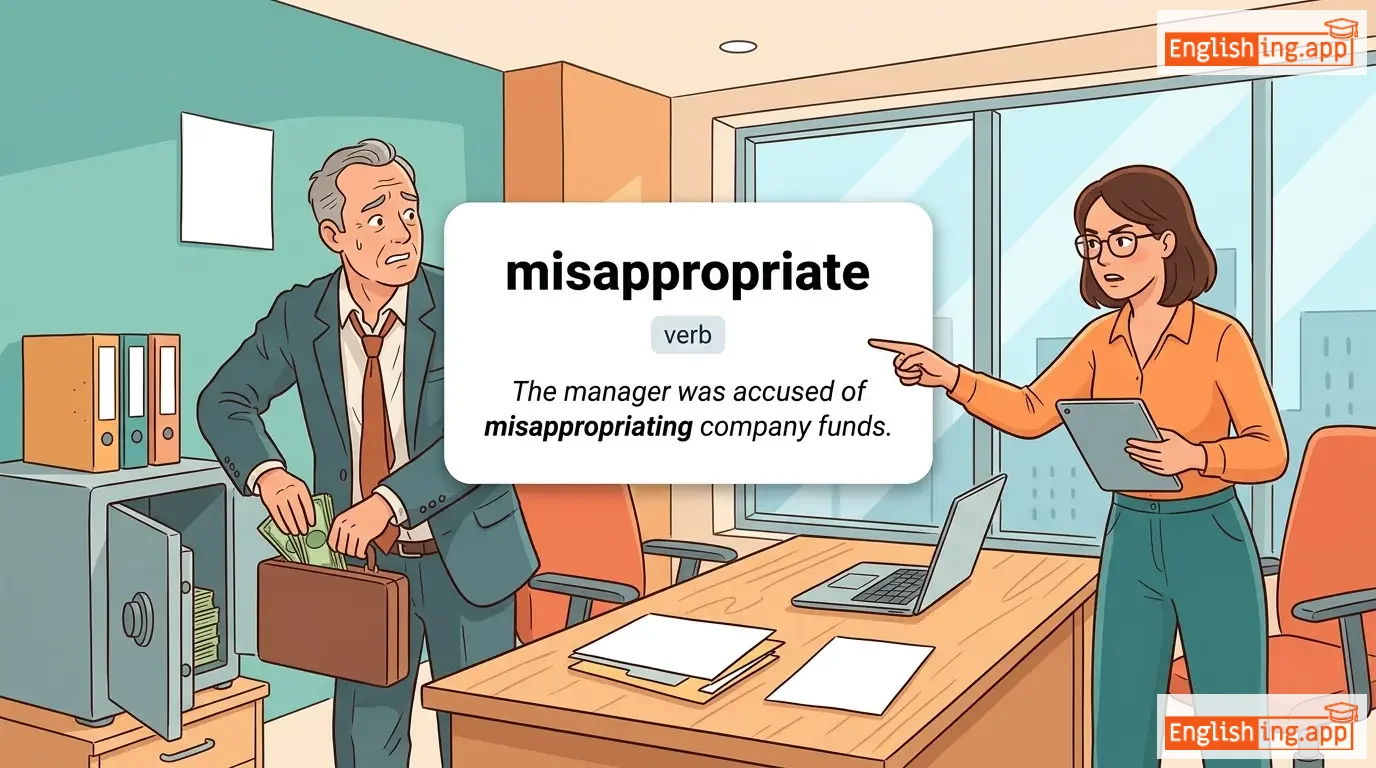
misappropriate definition card — visual illustration of the meaning
verb
/ˌmɪsəˈproʊprieɪt/
присваивать (prisyvayat)

to take or use something dishonestly, especially money or property, for one's own use

"The manager was accused of misappropriating company funds."

"Менеджера обвинили в присвоении средств компании." (Menedzhera obvinili v prisvoenii sredstv kompanii.)
noun
/ˌmɪsæprɪˈhɛnʃən/
недоразумение (nedorazumeniye)

a mistaken belief or misunderstanding

"There is a common misapprehension about the causes of the disease."

"Существует распространенное недоразумение относительно причин болезни." (Sushchestvuyet rasprostranennoye nedorazumeniye otnositel'no prichin bolezni.)
verb
/ˌmɪsæprɪˈhɛnd/
неправильно понять (nepravil'no ponyat')

to misunderstand or misinterpret something

"He misapprehended the teacher’s instructions and did the task incorrectly."

"Он неправильно понял указания учителя и выполнил задачу неверно." (On nepravil'no ponyal ukazaniya uchitelya i vypolnil zadachu neverno.)
noun
/mɪˈsænθrəpi/
мизантропия (mizantropiya)

a general dislike, distrust, or hatred of humankind

"His misanthropy was evident in the way he avoided people."

"Его мизантропия была очевидна в том, как он избегал людей." (Ego mizantropiya byla ochevidna v tom, kak on izbegal lyudey.)
adjective
/ˌmɪsənˈθrɑːpɪk/
мизантропический (mizanthropicheskiy)

having or showing a dislike of humankind

"His misanthropic attitude made it difficult for him to make friends."
"Его мизантропическое отношение затрудняло ему завести друзей." (Ego mizanthropicheskoe otnoshenie zatrudnyalo emu zavesti druzey.)
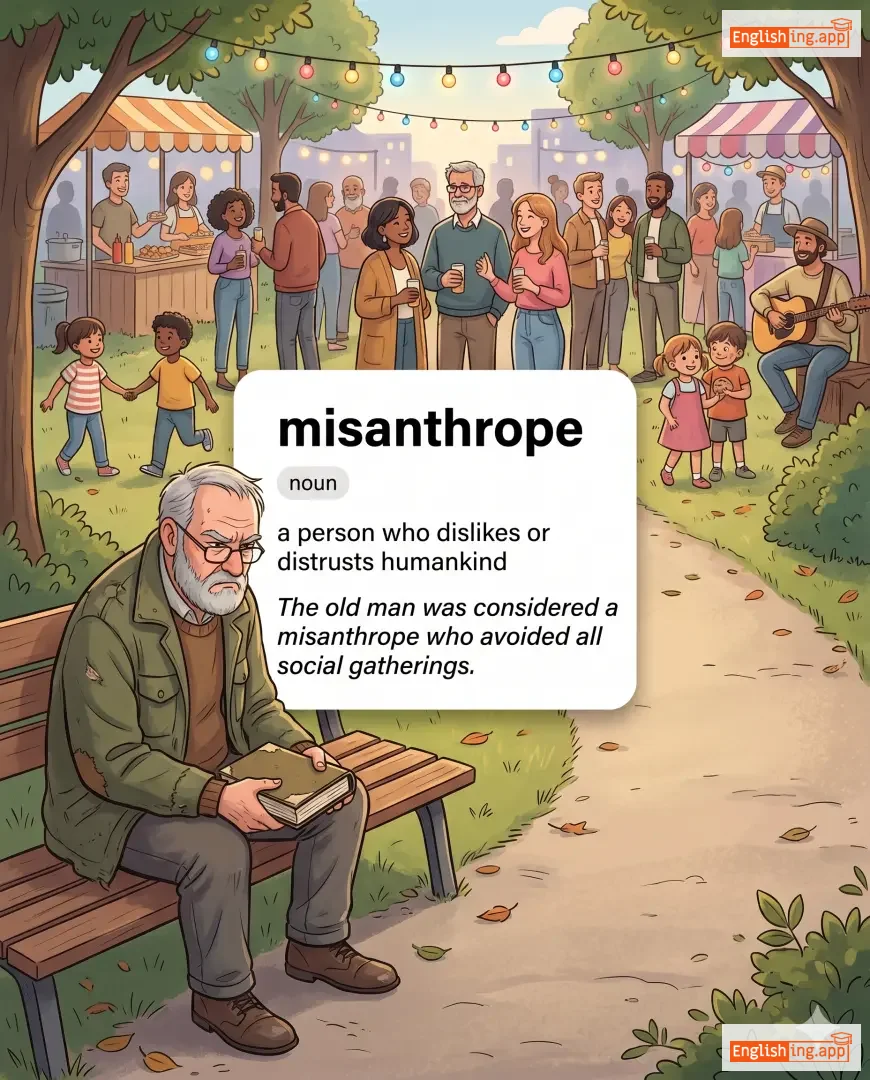
misanthrope definition card — visual illustration of the meaning
noun
/ˈmɪsənˌθroʊp/
мизантроп (mizanthrop)

a person who dislikes or distrusts humankind

"The old man was considered a misanthrope who avoided all social gatherings."

"Старик считался мизантропом, который избегал всех социальных собраний." (Starik schitalsya mizantropom, kotoryy izbegal vsekh sotsial'nykh sobraniy.)
noun
/mɜːrθ/
радость (radost)

Great joy, amusement, or laughter.

"The festival was full of mirth and laughter."

"Фестиваль был полон радости и смеха." (Festival byl polon radosti i smekha.)
noun
/ˌmɪsədˈvɛntʃər/
неудача (neudacha)

An unlucky accident, mishap, or unfortunate event.

"He broke his leg during a skiing misadventure."

"Он сломал ногу во время неудачи на лыжах." (On slomal nogu vo vremya neudachi na lyzhakh.)
noun
/ˈmɪnɪstər/
министр (ministr)

a head of a government department; a person who leads a church

"The finance minister announced new tax policies."

"Министр финансов объявил о новых налоговых политиках." (Minister finansov ob'yavil o novykh nalogovykh politikakh.)
noun
/ˌmɪn.ɪˈstreɪ.ʃən/
служба (sluzhba)

The act of providing care, assistance, or religious service.

"She recovered thanks to the kind ministrations of the nurses."

"Она выздоровела благодаря добрым министрациям медсестер." (Ona vyzdorovela blagodarya dobrym ministratsiyam medsestry.)
noun
/ˈmɪn.ɪ.stri/
министерство (ministerstvo)

A government department headed by a minister or the work of a religious minister.

"He works at the Ministry of Education."

"Он работает в Министерстве образования." (On rabotayet v Ministerstve obrazovaniya.)
adjective/noun
/ˈmaɪ.nər/
незначительный / несовершеннолетний (neznachitelny / nesovershennoletniy)

less important, serious, or significant; a person under the legal age

"Luckily, the accident caused only minor injuries."

"К счастью, авария привела только к незначительным травмам." (K schastyu, avariya privedla tolko k neznaachitel'nym travmam.)
noun
/maɪˈnɔːr.ɪ.ti/
меньшинство (menshinstvo)

A smaller number or part, especially a group differing from the majority.

"The law aims to protect the rights of ethnic minorities."
"Закон направлен на защиту прав этнических меньшинств." (Zakon napravlen na zashchitu prav etnicheskikh menshinstv.)
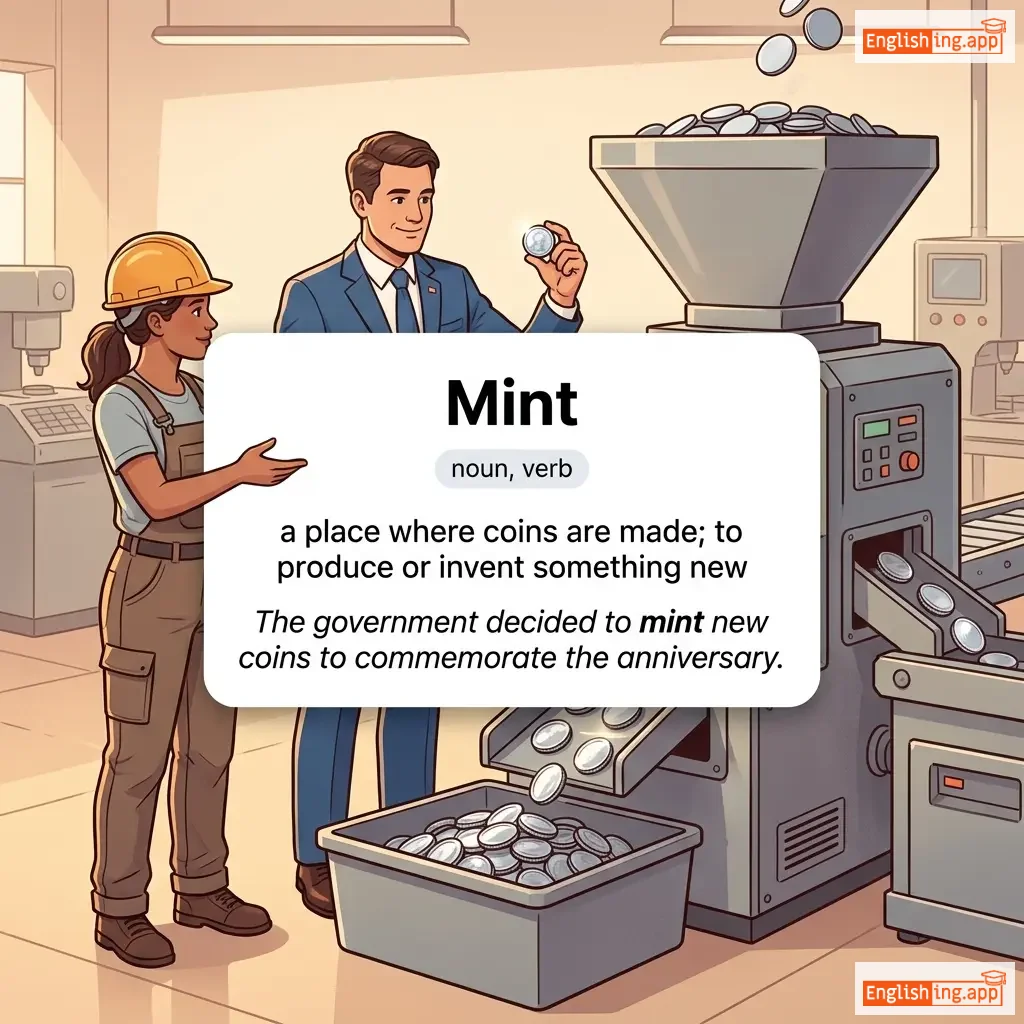
Mint definition card — visual illustration of the meaning
noun, verb
/mɪnt/
мята / монетный двор (myata / monetnyi dvor)

a place where coins are made; to produce or invent something new

"The government decided to mint new coins to commemorate the anniversary."

"Правительство решило чеканить новые монеты в честь юбилея." (Pravitel'stvo reshilo chekanyt' novye monety v chest' yubileya.)
adjective
/ˈmɪnəskjuːl/
крошечный (kroshechny)

extremely small in size or importance

"She made only a minuscule contribution to the project."

"Она внесла лишь крошечный вклад в проект." (Ona vnesla lish' kroshkechny vklad v proyekt.)
noun, adjective
/maɪˈnjuːt/ (adj), /ˈmɪnɪt/ (noun)
минута / крошечный (minuta / kroshechny)

a period of sixty seconds; extremely small or detailed

"He examined the painting with minute attention to detail."

"Он исследовал картину с минутным вниманием к деталям." (On issledoval kartinu s minutnym vnimaniem k detaljam.)
noun
/maɪˈnjuːʃə/
мелочи (melochi)

a small or trivial detail of something

"He was bored by the minutia of office paperwork."

"Ему было скучно от мелочей офисной работы." (Emu bylo skuchno ot melochi ofisnoy raboty.)
adverb
/maɪˈnjuːtli/
тщательно (tshchatel'no)

in very small detail; extremely carefully

"The detective examined the evidence minutely."
"Детектив тщательно осмотрел доказательства." (Detektiv tshchatel'no osmotrel dokazatel'stva.)
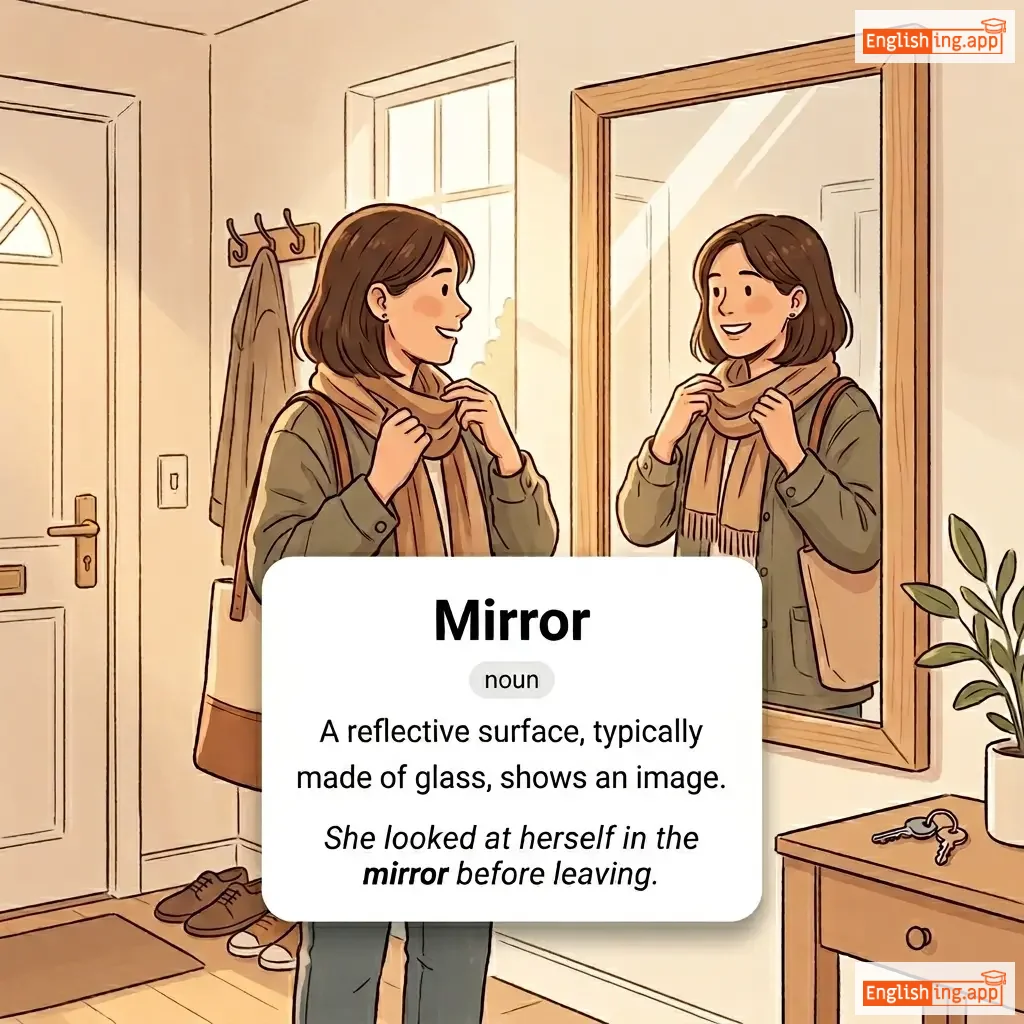
Mirror definition card — visual illustration of the meaning
noun
/ˈmɪrər/
зеркало (zerkalo)

A reflective surface, typically made of glass, that shows an image.

"She looked at herself in the mirror before leaving."

"Она посмотрела на себя в зеркало перед выходом." (Ona posmotrela na sebya v zerkalo pered vykhodom.)
adjective, verb (past tense/participle of mire)
/ˈmaɪərd/
впутанный (vputannyy)

Trapped or entangled in something, typically a difficult situation.

"The politician was mired in scandal."

"Политик был впутан в скандал." (Politik byl vputan v skandal.)
noun, verb
/ˈmaɪər/
болото (boloto)

A stretch of swampy or boggy ground; as a verb, to entangle or involve someone in a difficult situation.

"The car was stuck in the mire after the heavy rain."

"Автомобиль застрял в болоте после сильного дождя." (Avtomobil zastrial v bolote posle silnogo dozhdya)
adjective
/mɪˈrækjələs/
чудесный (chudestny)

Extraordinarily wonderful or unusual, as if by a miracle.

"Her recovery after the accident was truly miraculous."

"Ее восстановление после аварии было действительно чудесным." (Eyo vosstanovlenie posle avarii bylo deystvitel'no chudesnym.)