Словари

Словарь английского языка | Значения слов, определения и примеры

noun
/ˈmɪshæp/
неудача, происшествие (neudacha, proisshestvie)

an unlucky accident or minor misfortune

"A minor mishap delayed the train for half an hour."

"Небольшое происшествие задержало поезд на полчаса." (Neboĺ'shoe proisshestvie zaderzhalo poyezd na polchasa.)
verb
/ˌmɪsɪnˈtɜːrprɪt/
неправильно понять (nepravil'no ponyat')

to understand or explain something wrongly

"He misinterpreted her silence as agreement."

"Он неправильно понял её молчание как согласие." (On nepravil'no ponyal yeye molchaniye kak soglasiye.)
verb
/ˌmɪsˈleɪ/
временно терять (vremenno teryat')

to lose something temporarily by putting it in the wrong place

"I must have mislaid my keys somewhere in the house."

"Должно быть, я временно потерял свои ключи где-то в доме." (Dolzhno byt', ya vremyenno poteryal svoi klyuchi gde-to v dome.)
adjective
/mɪsˈliːdɪŋ/
вводящий в заблуждение (vvodjashchij v zabluzhdenie)

giving the wrong idea or impression

"The advertisement was misleading and gave false information."

"Реклама была вводящей в заблуждение и дала ложную информацию." (Reklama byla vvodjashchej v zabluzhdenie i dala lozhnuyu informatsiyu.)
verb
/ˌmɪsˈmænɪdʒ/

to handle or control something badly or inefficiently

"The company went bankrupt because it was mismanaged for years."

mismanagement definition card — visual illustration of the meaning
noun
ˌmɪsˈmænɪdʒmənt
неэффективное управление (neeffektivnoe upravlenie)

Bad or careless management of something.

"Mismanagement of plastic waste worsens pollution."

"Неэффективное управление пластиковыми отходами усугубляет загрязнение." (Neeffektivnoe upravlenie plastikovymi otdkhodami usugublyayet zagryazneniye.)
noun
/ˌmɪsˈnoʊmər/
неправильное имя (nepravil'noe imya)

A wrong or inaccurate name or designation.

"Calling the tiny dog a 'giant' is a misnomer."

"Называть маленькую собаку 'гигантом' — это неправильное имя." (Nazyvat' malen'kuyu sobaku 'gigantom' — eto nepravil'noe imya.)
noun
/mɪˈsɑːɡəmi/
мизогамия (mizo-gamiya)

Hatred or dislike of marriage.

"His misogamy prevented him from ever settling down with a partner."

"Его мисогамия не позволила ему когда-либо создать семью с партнером." (Ego misogamiya ne pozvolila emu kogda-libo sozdats' sem'yu s partnerom.)
noun
/mɪˈsɑːdʒɪnɪst/
мизогин (mizogin)

A person who dislikes, despises, or is strongly prejudiced against women.

"Many condemned his speech as the words of a misogynist."

"Многие осудили его речь как слова мизогина." (Mnogie osudili ego rech' kak slova mizogina.)
noun
/mɪˈsɑːdʒəni/
мизогиния (mizoginiya)

Hatred of, contempt for, or prejudice against women.

"The novel has been criticized for promoting misogyny."

"Роман был раскритикован за пропаганду мизогинии." (Roman byl raskritikovan za propagandu mizoginii.)
verb
/ˌmɪsˈpleɪs/
положить не на место (polozhit' ne na mesto)

To put something in the wrong location and temporarily lose it.

"I often misplace my keys when I am in a hurry."

"Я часто теряю свои ключи, когда спешу." (Ya chasto teryayu svoi klyuchi, kogda speshyu.)
verb
/ˌmɪsˈriːd/
неправильно читать (nepravil'no chitat')

to read something incorrectly or interpret wrongly

"He misread the instructions and built the shelf incorrectly."

"Он неправильно прочитал инструкции и собрал полку неправильно." (On nepravil'no prochital instruktsii i sobral polku nepravil'no.)
verb
/ˌmɪsˌrɛprɪˈzɛnt/

to give a false or misleading account of something

"The lawyer accused the witness of trying to misrepresent the facts."

noun
/ˌmɪsˈruːl/
неправильное правление (nepravil'noe pravlenie)

bad or poor governance

"The kingdom suffered for decades under misrule."

"Царство страдало десятилетиями под неправильным правлением." (Tsarstvo stradalo desyatiletijami pod nepravil'nym pravleniem.)
verb, noun
/mɪs/
скучать / пропустить (skuchat' / propustit')

to fail to hit, reach, or meet; to feel the absence of someone or something

"I really miss my family when I travel abroad."

"Я действительно скучаю по своей семье, когда путешествую за границу." (Ya deystvitel'no skuchayu po svoey sem'ye, kogda puteshestvuyu za granitsu.)
noun
/ˈmɪsəl/
мисса-книга (missa-kniga)

a book containing the texts used in the Catholic Mass throughout the year

"The priest read from the missal during the ceremony."

"Священник читал из мисса-книги во время церемонии." (Svyashchennik chital iz missa-knigi vo vremya tseremonii.)
noun
/ˈmɪsaɪl/ or /ˈmɪsəl/
ракета (raketa)

a weapon that is self-propelled and directed toward a target

"The army launched a missile towards the enemy base."
"Армия запустила ракету в сторону вражеской базы." (Armiya zapustila raketu v storonu vrazheskoy bazy.)
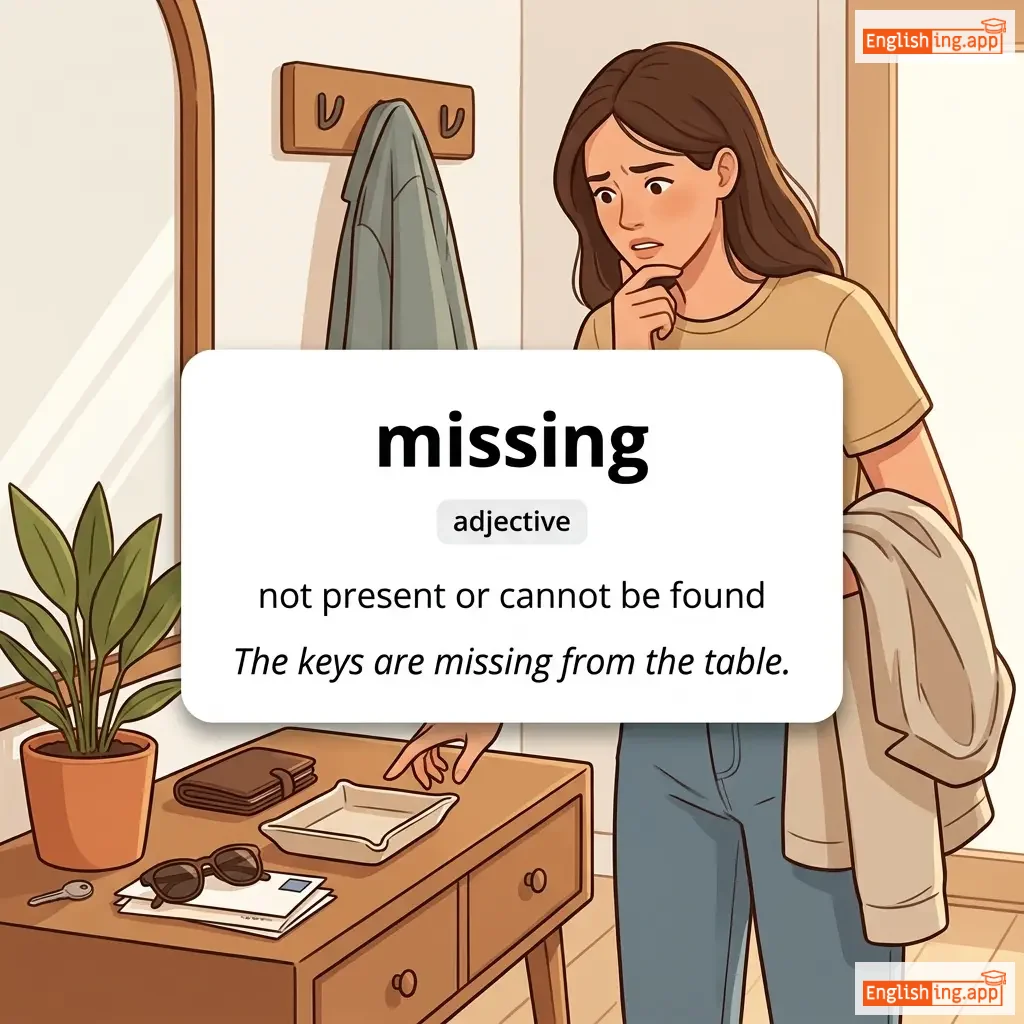
missing definition card — visual illustration of the meaning
adjective
/ˈmɪsɪŋ/
отсутствует (otsutstvuet)

not present or cannot be found

"The keys are missing from the table."

"Ключи отсутствуют на столе." (Klyuchi otsutstvuyut na stole.)
noun
/ˈmɪʃən/
миссия / задание (missiya / zadanie)

an important assignment or task, often with a specific purpose

"The astronauts were on a mission to explore Mars."

"Астронавты были на миссии по исследованию Марса." (Astronavty byli na missii po issledovaniyu Marsa.)
noun
/ˈmɪʃəneri/
миссионер (missiyoner)

a person sent on a religious mission, especially to promote Christianity in a foreign country

"The missionary spent years helping local communities in Africa."

"Миссионер провел годы, помогая местным сообществам в Африке." (Missiyoner provel gody, pomogaya mestnym soobshchestvam v Afrike.)
noun
/ˈmɪsɪv/
послание (poslanie)

a written message, especially a formal or official letter

"He sent a long missive to the governor."

"Он отправил длинное послание губернатору." (On otpravil dlinnoe poslanie gubernatoru.)
noun
/mɪˈsteɪk/
ошибка (oshibka)

An action or decision that is wrong or misguided.

"She realized her mistake after submitting the wrong file."

"Она поняла свою ошибку после того, как отправила неправильный файл." (Ona ponyala svoyu oshibku posle togo, kak otpravyla nepravil'nyy fayl.)
adjective
/mɪˈsteɪkən/
ошибочный (oshibochnyi)

wrong or incorrect because of an error in judgment or understanding

"I was mistaken about the meeting time."

"Я ошибся насчёт времени встречи." (ya oshibsya naschyot vremeni vstrechi)
noun/verb
/ˌmɪsˈtrʌst/
недоверие (nedeverie)

lack of trust; suspicion or doubt about someone or something

"The villagers showed deep mistrust of outsiders."

"Жители деревни проявили глубокое недоверие к чужакам." (Zhiteli derevni proyavili glubokoye nedeveriye k chuzhakam.)
noun
/ˌmɪs.ʌn.dəˈstæn.dɪŋ/
недоразумение (nedorazumenie)

A failure to understand something correctly; a disagreement or confusion between people

"The argument was caused by a simple misunderstanding."
"Спор был вызван простым недоразумением." (Spor byl vyzvan prostym nedorazumeniem.)
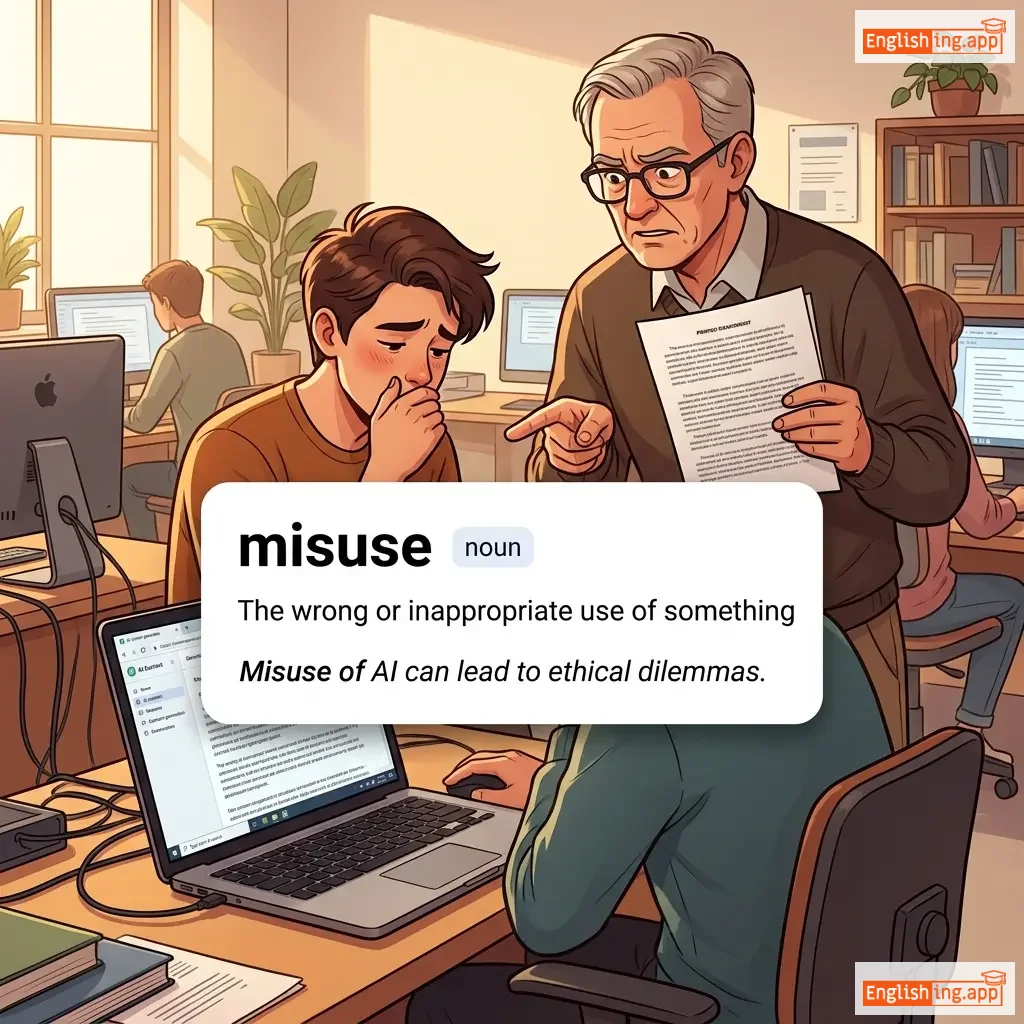
misuse definition card — visual illustration of the meaning
noun
ˌmɪsˈjuːs
злоупотребление (zloupotreblenie)

The wrong or inappropriate use of something

"Misuse of AI can lead to ethical dilemmas."

"Неправильное использование ИИ может привести к этическим дилеммам." (Nepravil'noe ispol'zovanie II mozhet privesti k eticheskim dillemmam.)
noun
/maɪt/
паука-клещ (pauka-klesh)

a very small creature, often a tiny arachnid; also used to mean a very small amount

"The mattress was infested with dust mites."

"Матрас был заражен пылевыми клещами." (Matras byl zarazhen pyl'evymi kleshchami.)
noun
/ˈmaɪtər/
митра (mitra)

a tall, pointed hat worn by bishops; also a type of joint made between two pieces of material

"The bishop placed the miter on his head during the ceremony."
"Епископ надел митру на свою голову во время церемонии." (Episkop nadel mitru na svoju golovu vo vremya tseremonii.)
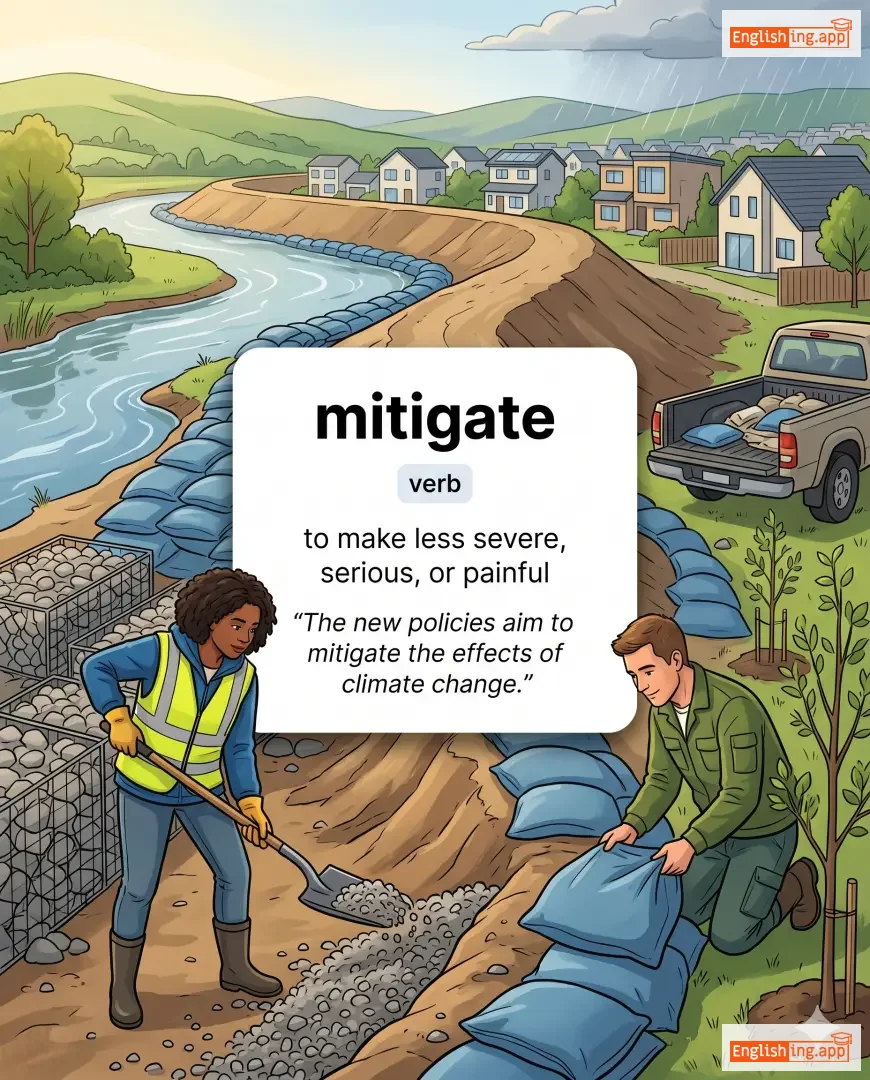
mitigate definition card — visual illustration of the meaning
verb
/ˈmɪtɪˌɡeɪt/
смягчать (smyagchat)

to make less severe, serious, or painful

"The new policies aim to mitigate the effects of climate change."
"Новые политические меры направлены на смягчение последствий изменения климата." (Novye politicheskie mery napravleny na smyagchenie posledstviy izmeneniya klimata.)
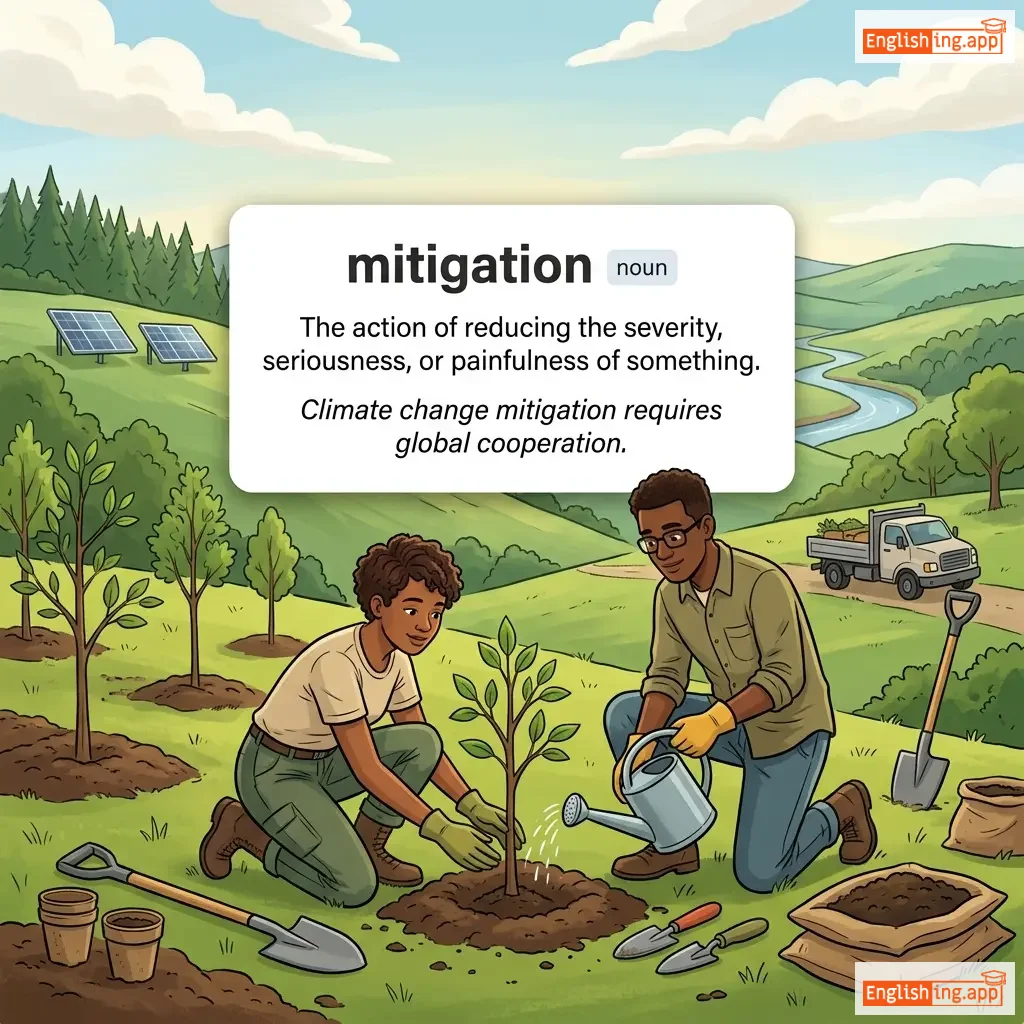
mitigation definition card — visual illustration of the meaning
noun
ˌmɪt.ɪˈɡeɪ.ʃən
смягчение (smyagchenie)

The action of reducing the severity, seriousness, or painfulness of something.

"Climate change mitigation requires global cooperation."

"Снижение воздействия изменения климата требует глобального сотрудничества." (Snizhenie vozdeystviya izmeneniya klimata trebuyet global'nogo sotrudnichestva.)
noun
/ˈmɒd.ə.sti/
скромность; смирение (skromnost'; smirenie)

the quality of being humble and not boastful about achievements

"Despite his success, he showed great modesty."
"Несмотря на успех, он проявил великую скромность." (Nesmotrya na uspekh, on proyavil velikuyu skromnost'.)
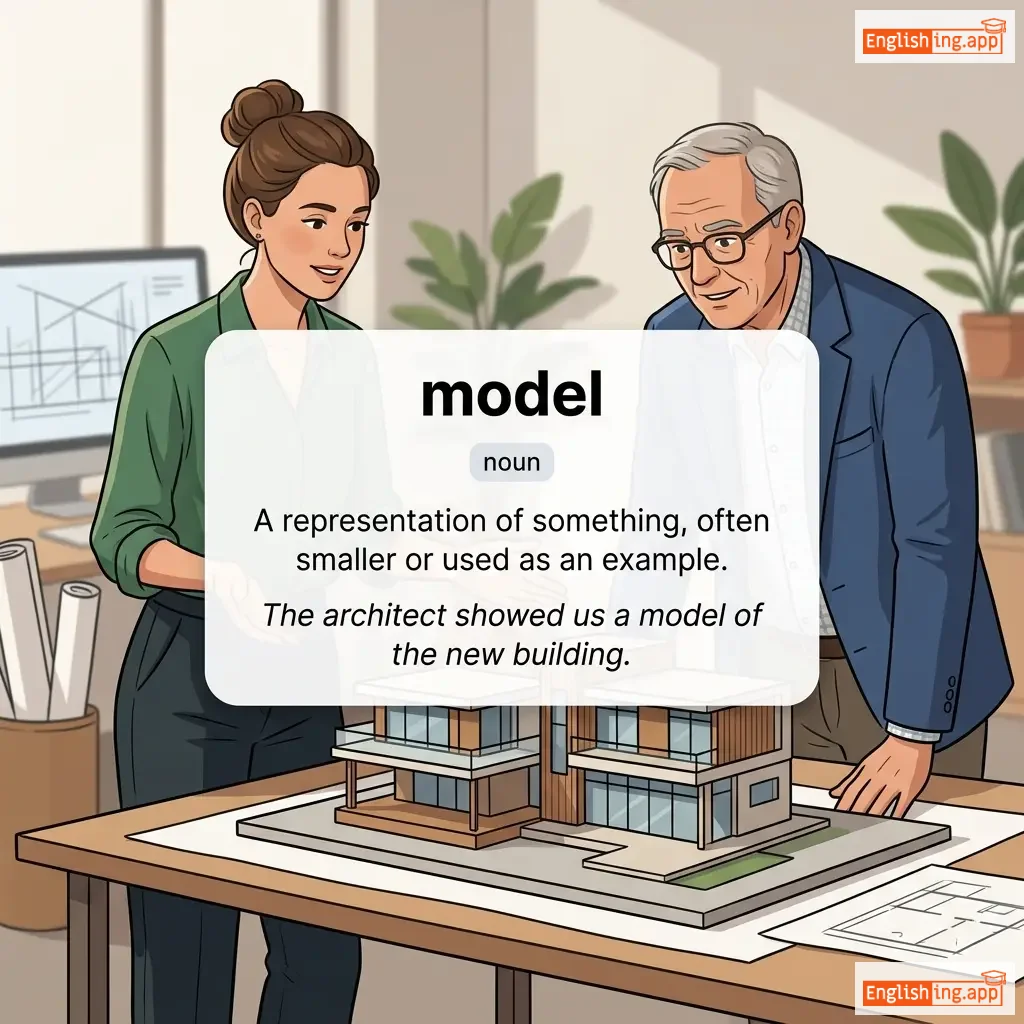
model definition card — visual illustration of the meaning
noun
/ˈmɒdəl/
модель (model)

A representation of something, often smaller or used as an example.

"The architect showed us a model of the new building."
"Архитектор показал нам модель нового здания." (Arkhitektor pokazal nam model' novogo zdaniya.)
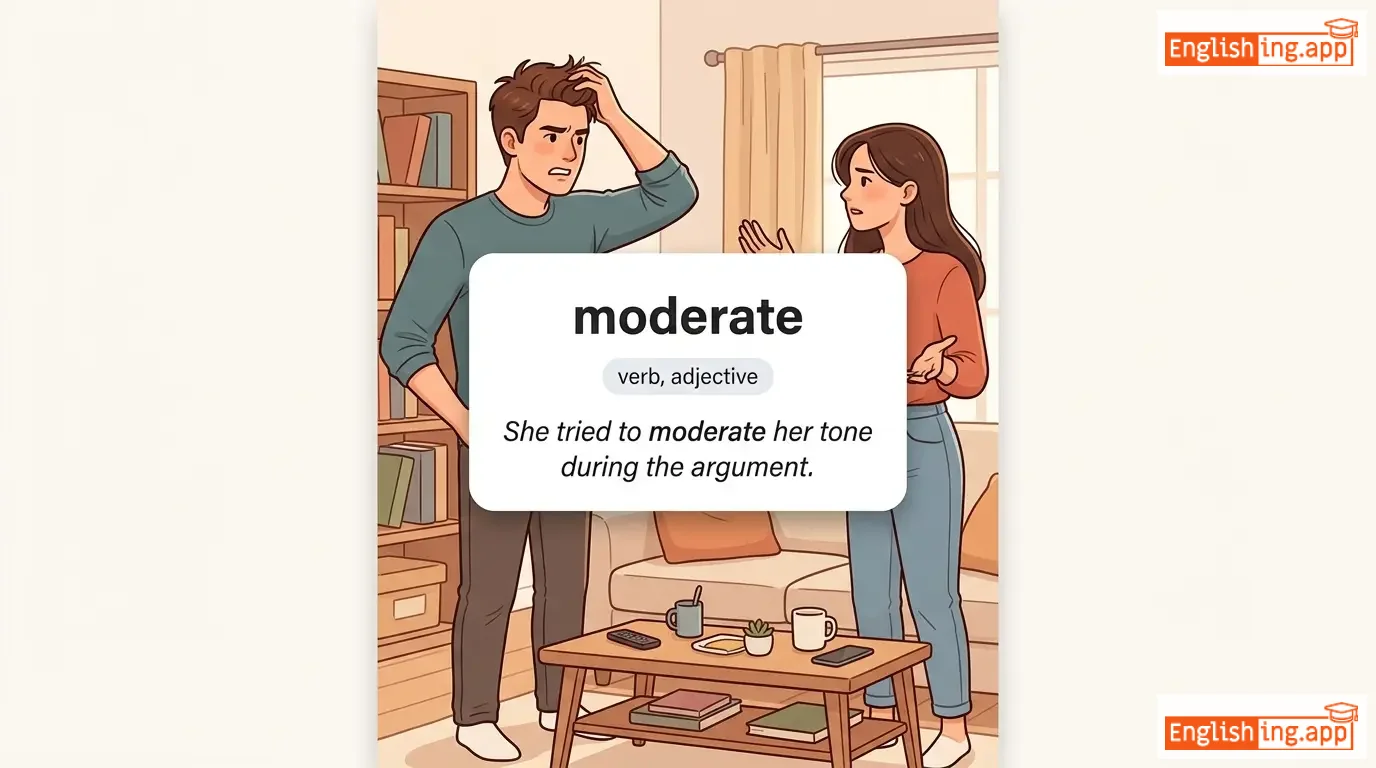
moderate definition card — visual illustration of the meaning
verb, adjective
/ˈmɒdəreɪt/ (verb), /ˈmɒdərət/ (adj)
умеренный, контролировать (umerennyj, kontrolirovat')

To make something less extreme (verb); average in amount, intensity, quality, or degree (adjective).

"She tried to moderate her tone during the argument."

"Она попыталась умерить свой тон во время спора." (Ona popytalas' umerit' svoj ton vo vremya spora.)
adverb
/ˈmɒdərətli/
умеренно (umerenno)

to a reasonable extent, not excessively

"She exercises moderately to stay healthy."

"Она занимается спортом умеренно, чтобы оставаться здоровой." (Ona zanimayetsya sportom umerenno, chtoby ostavatsya zdorovoy.)
noun
/ˌmɒdəˈreɪʃən/
умеренность (umerennost)

The avoidance of excess or extremes; keeping balance or within reasonable limits.

"He drinks wine in moderation."

"Он пьет вино в умеренных количествах." (On p'yot vino v umerennykh kolichestvakh.)
noun
/ˈmɒdəreɪtər/
модератор (moderator)

A person who leads or oversees discussions, debates, or forums to maintain order.

"The moderator asked each panelist to share their views."

"Модератор попросил каждого участника панели поделиться своими взглядами." (Moderator poprosil kazhdogo uchastnika paneli podelit'sya svoimi vzglyadami.)
adjective
/ˈmɒdən/
современный (sovremennyy)

relating to the present or recent times, not ancient or old-fashioned

"They live in a modern apartment with new facilities."

"Они живут в современной квартире с новыми удобствами." (Oni zhivut v sovremennoy kvartire s novymi udobstvami.)
noun
/məˈdɜːrnəti/
современность (sovremennost')

The quality or condition of being modern; up-to-date ideas, practices, or style.

"The city’s architecture reflects both tradition and modernity."
"Архитектура города отражает как традицию, так и современность." (Arhitektura goroda otrazhaet kak traditsiyu, tak i sovremennost'.)
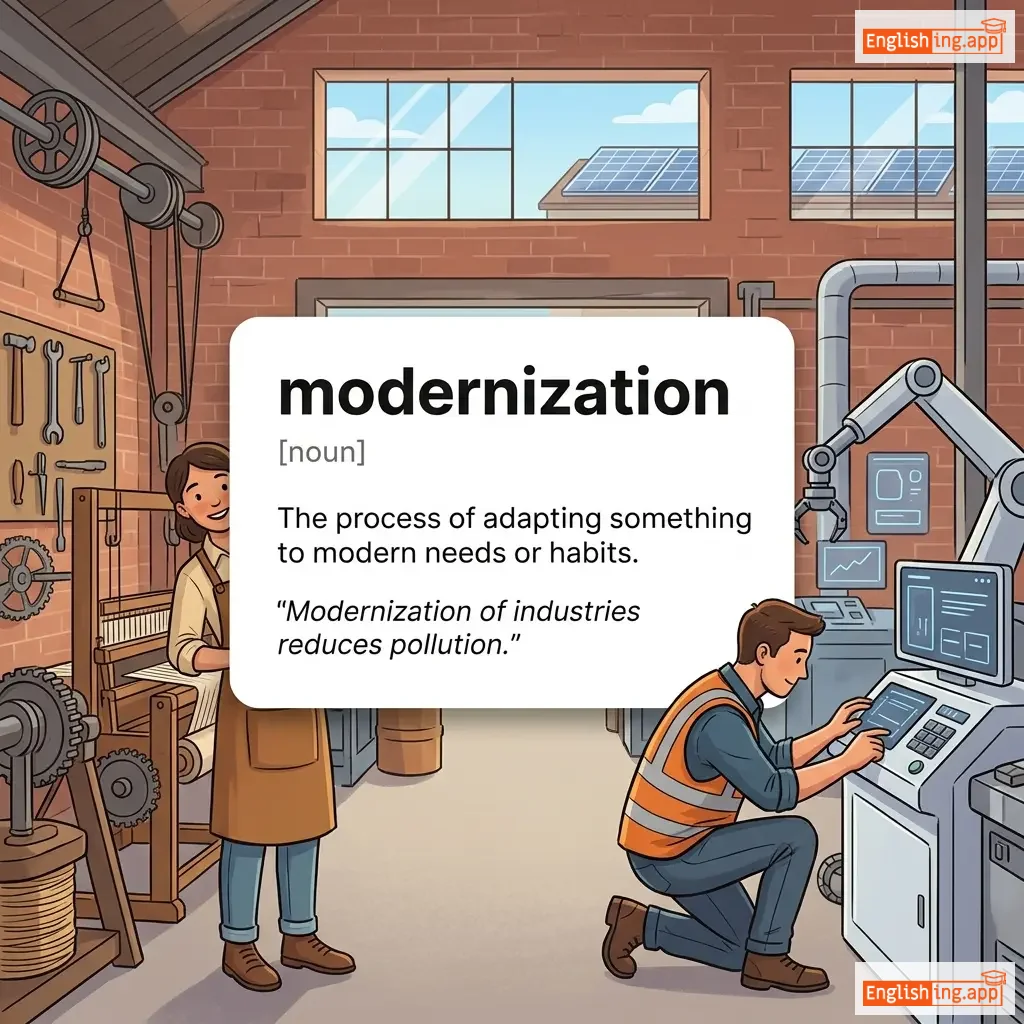
modernization definition card — visual illustration of the meaning
noun
/ˌmɒd.ən.aɪˈzeɪ.ʃən/
модернизация (modernizatsiya)

The process of adapting something to modern needs or habits.

"Modernization of industries reduces pollution."

"Модернизация промышленности уменьшает загрязнение." (Modernizatsiya promyshlennosti umenshayet zagryaznenie.)
verb
/ˈmɒdənaɪz/
модернизировать (modernizirovat')

To adapt something to modern needs or styles; to update or improve.

"The company plans to modernize its IT infrastructure."

"Компания планирует модернизировать свою ИТ-инфраструктуру." (Kompanija planirovet modernizirovat' svoju IT-infrastrukturu.)
adjective
/ˈmɒdɪst/

Having or showing a humble estimate of one’s importance; simple and not extravagant.

"She lives in a modest house in the countryside."
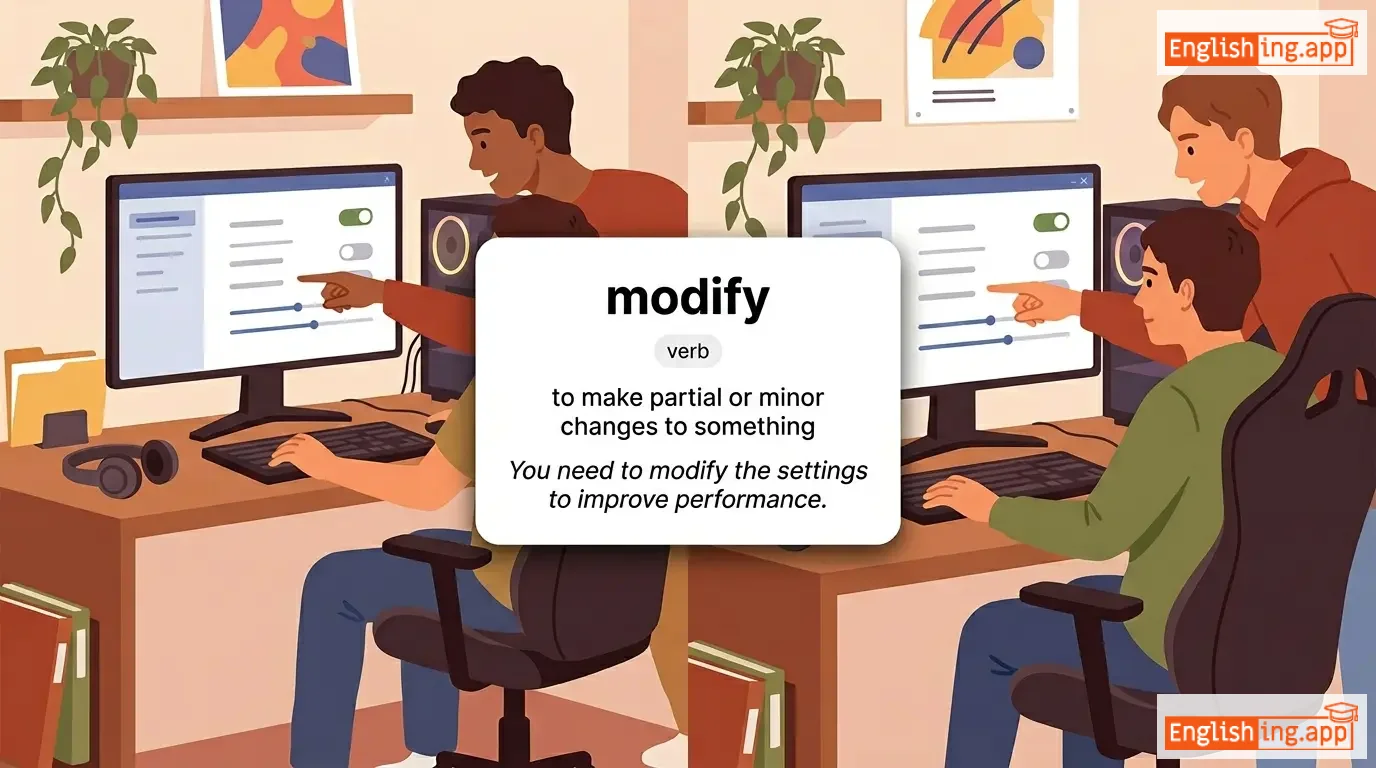
modify definition card — visual illustration of the meaning
verb
/ˈmɒdɪfaɪ/
модифицировать (modifitsirovat')

to make partial or minor changes to something

"You need to modify the settings to improve performance."
"Вам нужно изменить настройки, чтобы улучшить производительность." (Vam nužno izmenit' nastrojki, čtoby uluchšit' proizvoditel'nost'.)
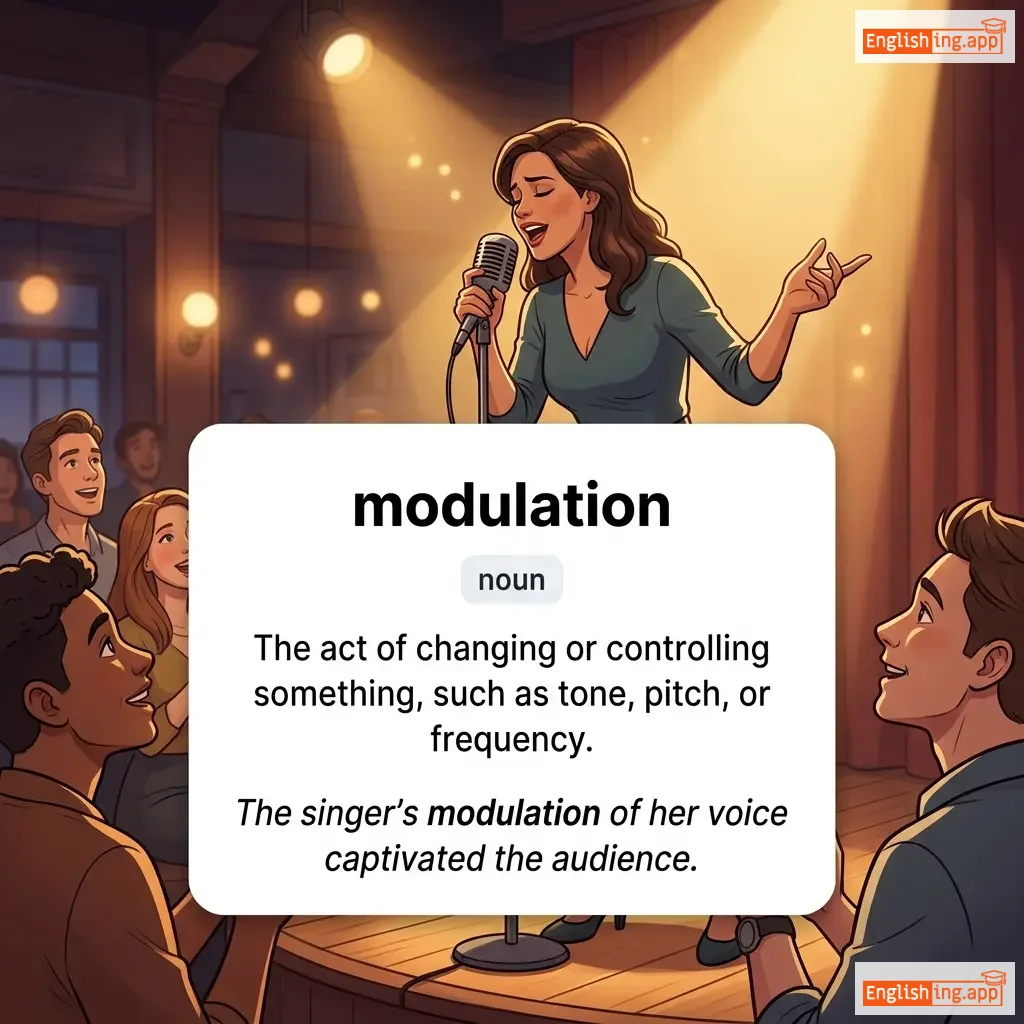
modulation definition card — visual illustration of the meaning
noun
/ˌmɒdjʊˈleɪʃən/
управление тоном или частотой (upravlenie tonom ili chastotoy)

The act of changing or controlling something, such as tone, pitch, or frequency.

"The singer’s modulation of her voice captivated the audience."
"Модуляция ее голоса захватила аудиторию." (Modulyatsiya yevo golosa zakhvatila auditoriyu.)
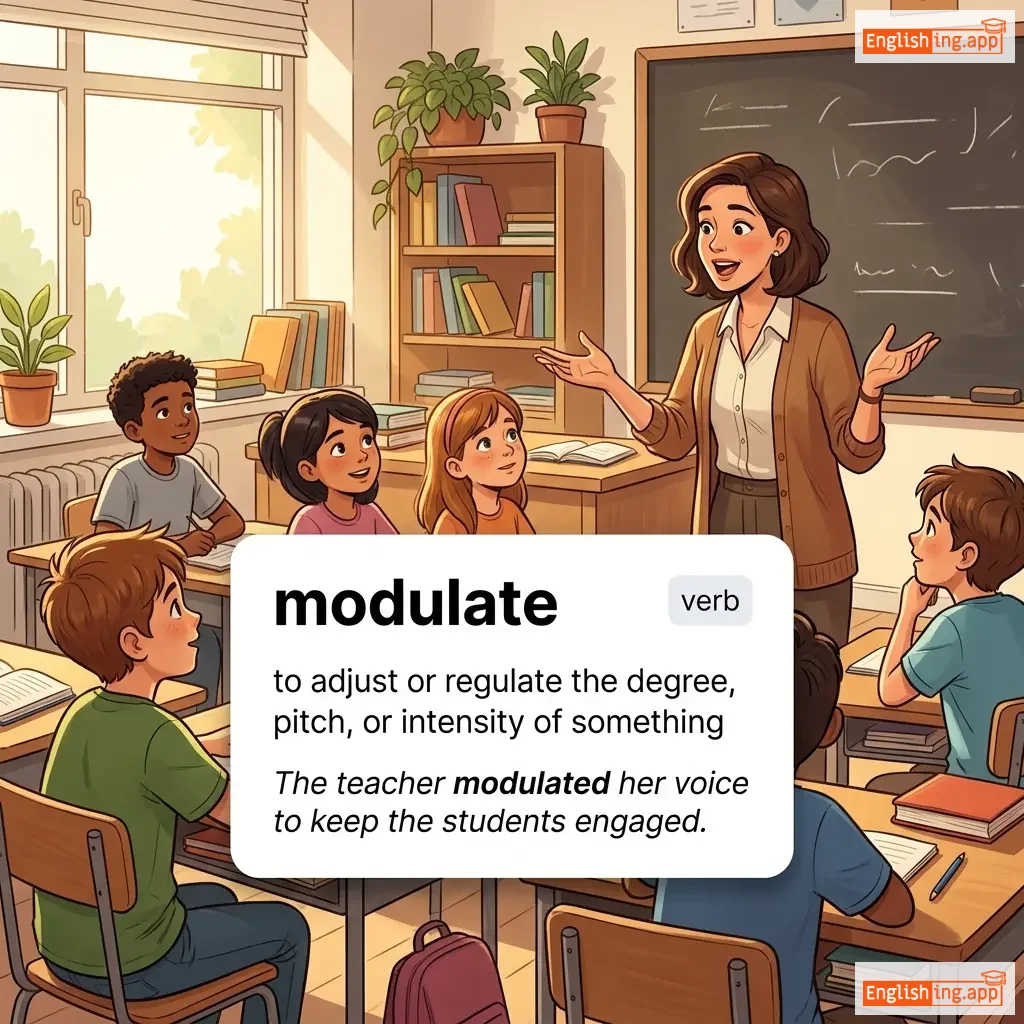
modulate definition card — visual illustration of the meaning
verb
/ˈmɒdjʊleɪt/
модулировать (modulirovat)

to adjust or regulate the degree, pitch, or intensity of something

"The teacher modulated her voice to keep the students engaged."
"Учитель отрегулировал свой голос, чтобы удержать студентов вовлеченными." (Uchitel' otreguliroval svoy golos, chtoby uderzhat' studentov vovlechenными.)
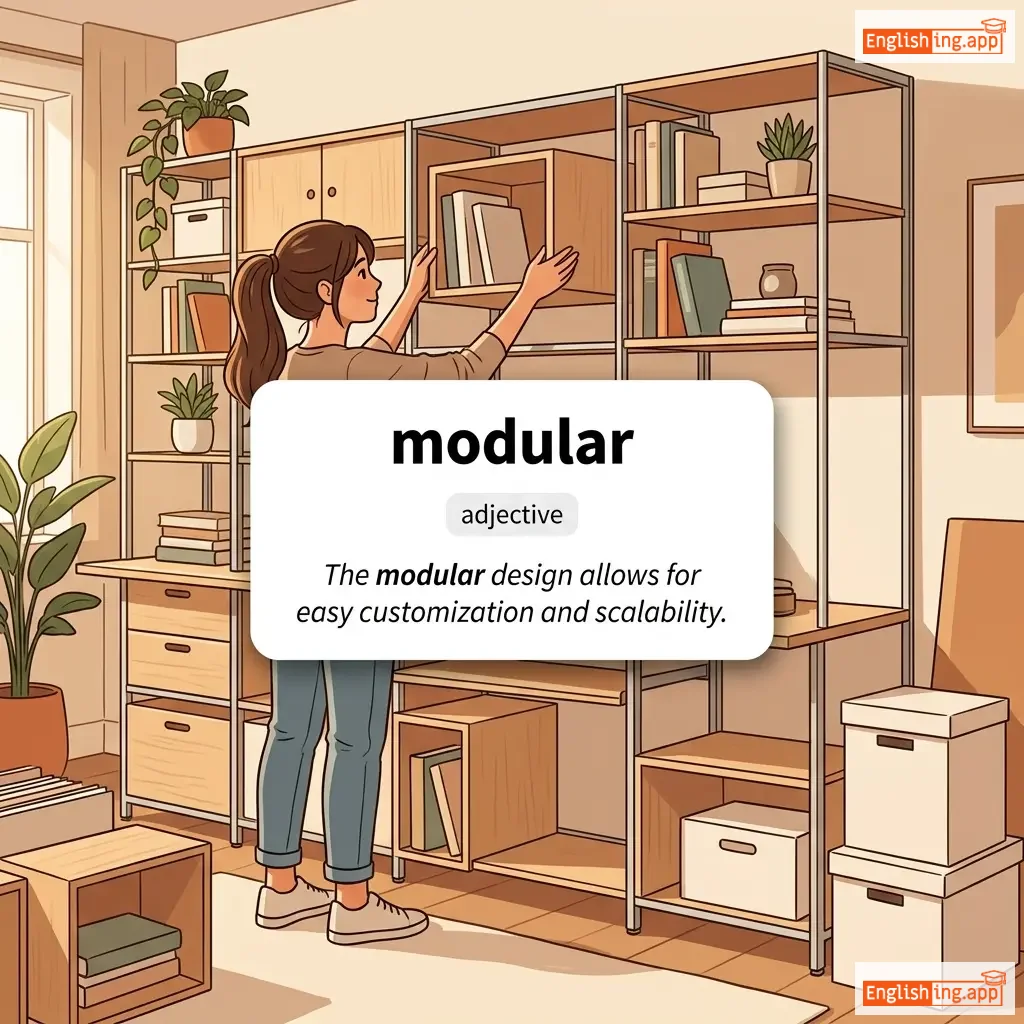
modular definition card — visual illustration of the meaning
adjective
/ˈmɒdʒʊlər/
модульный (modul'nyi)

Employing or involving a module or modules as the basis of design or construction.

"The modular design allows for easy customization and scalability."

"Модульный дизайн позволяет легко настраивать и масштабировать." (Modul'nyi dizain pozvolyaet legko nastroivat' i masshtabirovat'.)
adjective
/ˈməʊdɪʃ/
модный (modnyy)

conforming to or following current fashion or style

"She wore a modish outfit that caught everyone’s attention."
"Она носила модный наряд, который привлек внимание всех." (Ona nosila modnyy naryad, kotoryy privlekel vnimanie vsekh.)
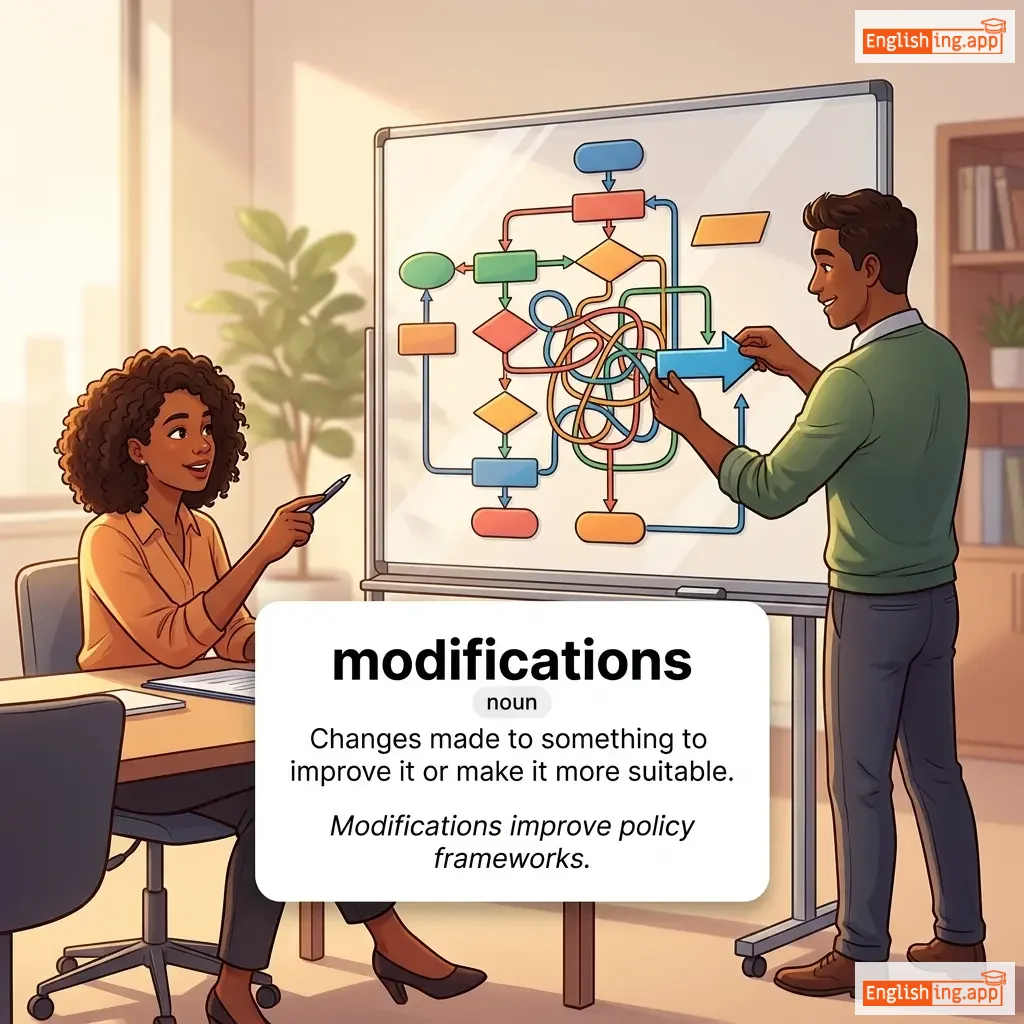
modifications definition card — visual illustration of the meaning
noun
ˌmɒd.ɪ.fɪˈkeɪ.ʃənz
модификации (modifikatsii)

Changes made to something to improve it or make it more suitable.

"Modifications improve policy frameworks."

"Модификации улучшают политические структуры." (Modifikatsii uluchshayut politicheskie struktury.)
noun
/ˈmɒdɪkəm/
небольшое количество (nebol'shoe kolichestvo)

a small or moderate amount of something, especially something valuable or desirable

"She showed a modicum of patience during the long meeting."
"Она показала небольшое количество терпения во время долгого собрания." (Ona pokazala nebol'shoe kolichestvo terpeniya vo vremya dolgogo sobraniya.)
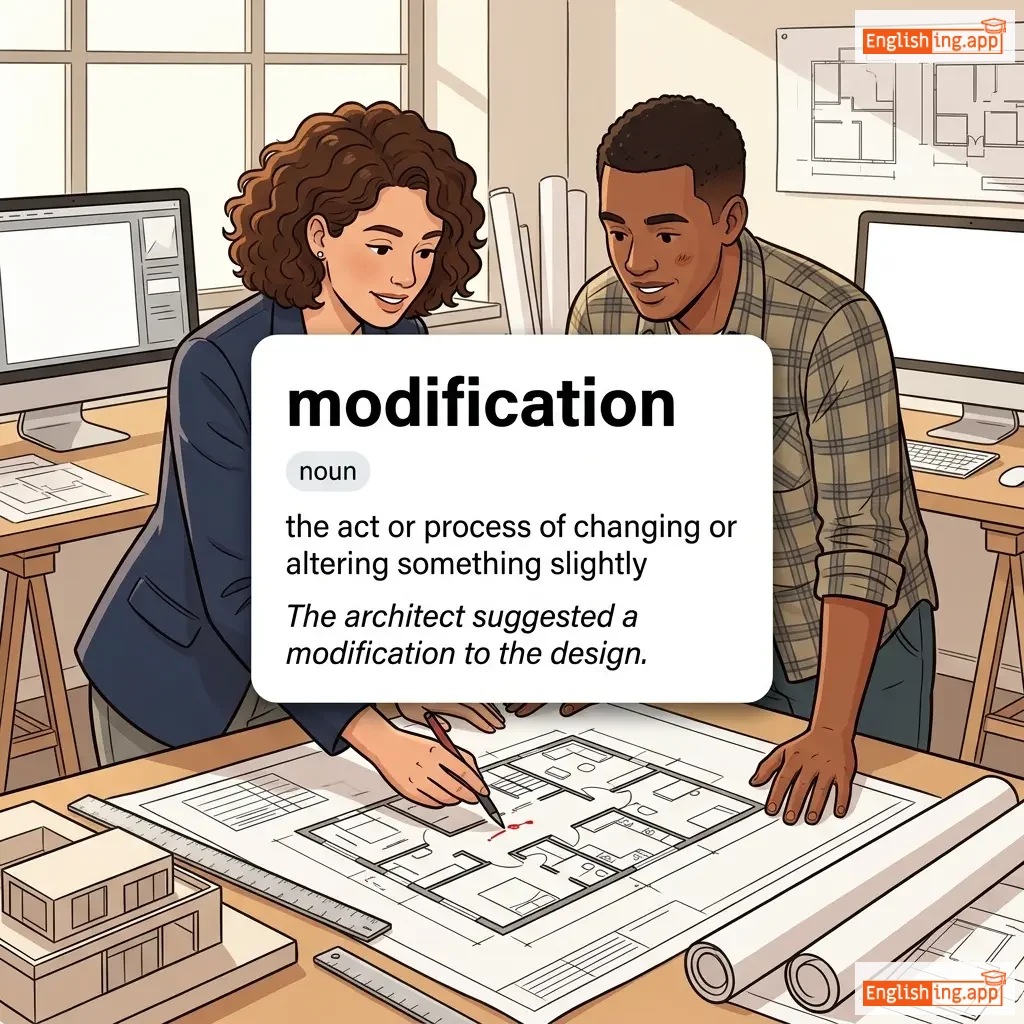
modification definition card — visual illustration of the meaning
noun
/ˌmɒdɪfɪˈkeɪʃən/
модификация (modifikatsiya)

the act or process of changing or altering something slightly

"The architect suggested a modification to the design."

"Архитектор предложил модификацию дизайна." (Arkhitektor predlozhil modifikatsiyu dizayna.)
noun
/moʊd/
режим (rezhim)

A particular way or style in which something is done, experienced, or expressed.

"The phone has a silent mode for meetings."

"На телефоне есть беззвучный режим для встреч." (Na telefone yest' bezzvuchnyy rezhim dlya vstrech.)