词汇表

英语词汇词典 | 单词含义、定义和示例

noun
/ˈmɪshæp/
不幸, 小事故 (bùxìng, xiǎo shìgù)

an unlucky accident or minor misfortune

"A minor mishap delayed the train for half an hour."

"一个小事故让火车迟到了半小时。" (Yīgè xiǎo shìgù ràng huǒchē chídào le bàn xiǎoshí.)
verb
/ˌmɪsɪnˈtɜːrprɪt/
误解 (wùjiě)

to understand or explain something wrongly

"He misinterpreted her silence as agreement."

"他错误地将她的沉默解读为同意。" (Tā cuòwù de jiāng tā de chénmò jiědú wéi tóngyì.)
verb
/ˌmɪsˈleɪ/
暂时丢失 (zan shi diu shi)

to lose something temporarily by putting it in the wrong place

"I must have mislaid my keys somewhere in the house."

"我一定把我的钥匙暂时丢失在屋子里某个地方。" (Wo yiding ba wode yaoshi zan shi diu shi zai wuzi li mou ge difang.)
adjective
/mɪsˈliːdɪŋ/
误导性的 (wù dǎo xìng de)

giving the wrong idea or impression

"The advertisement was misleading and gave false information."

"广告具有误导性,并提供了虚假的信息。" (Guǎng gào jù yǒu wù dǎo xìng, bìng tí gōng le xū jiǎ de xìn xī.)
verb
/ˌmɪsˈmænɪdʒ/

to handle or control something badly or inefficiently

"The company went bankrupt because it was mismanaged for years."

mismanagement definition card — visual illustration of the meaning
noun
ˌmɪsˈmænɪdʒmənt
管理不善 (guanli bushan)

Bad or careless management of something.

"Mismanagement of plastic waste worsens pollution."

"塑料废物的管理不善加剧了污染。" (Suliaofeiwu de guanli bushan jiaju le wuran.)
noun
/ˌmɪsˈnoʊmər/
错误的名字 (cuo wu de ming zi)

A wrong or inaccurate name or designation.

"Calling the tiny dog a 'giant' is a misnomer."

"称呼这只小狗为“巨人”是一个错误的名字。" (Cheng hu zhe zhi xiao gou wei 'ju ren' shi yi ge cuo wu de ming zi.)
noun
/mɪˈsɑːɡəmi/
厌婚症 (yàn hūn zhèng)

Hatred or dislike of marriage.

"His misogamy prevented him from ever settling down with a partner."

"他的厌婚症让他无法和伴侣定居下来。" (Tā de yàn hūn zhèng ràng tā wúfǎ hé bànlǚ dìngjū xiàlái.)
noun
/mɪˈsɑːdʒɪnɪst/
厌女症者 (yàn nǚ zhèng zhě)

A person who dislikes, despises, or is strongly prejudiced against women.

"Many condemned his speech as the words of a misogynist."

"许多人谴责他的演讲是厌女症者的言论。" (Xǔduō rén qiǎn zé tā de yǎnjiǎng shì yàn nǚ zhèng zhě de yánlùn.)
noun
/mɪˈsɑːdʒəni/
厌恶女性 (yànwù nǚxìng)

Hatred of, contempt for, or prejudice against women.

"The novel has been criticized for promoting misogyny."

"这本小说因宣扬厌恶女性而遭到批评。" (Zhè běn xiǎoshuō yīn xuānyáng yànwù nǚxìng ér zāodào pīpíng.)
verb
/ˌmɪsˈpleɪs/
放错地方 (fàng cuò dìfāng)

To put something in the wrong location and temporarily lose it.

"I often misplace my keys when I am in a hurry."

"我经常在匆忙中把钥匙放错地方。" (Wǒ jīngcháng zài cōngmáng zhōng bǎ yàoshi fàng cuò dìfāng.)
verb
/ˌmɪsˈriːd/
误读 (wù dú)

to read something incorrectly or interpret wrongly

"He misread the instructions and built the shelf incorrectly."

"他误读了指示,结果错误地建造了架子。" (Tā wù dú le zhǐ shì, jié guǒ cuò wù de jiàn zào le jià zi.)
verb
/ˌmɪsˌrɛprɪˈzɛnt/

to give a false or misleading account of something

"The lawyer accused the witness of trying to misrepresent the facts."

noun
/ˌmɪsˈruːl/
恶政 (è zhèng)

bad or poor governance

"The kingdom suffered for decades under misrule."

"王国在几十年里饱受恶政之苦。" (Wángguó zài jǐ shí nián lǐ bǎoshòu è zhèng zhī kǔ.)
verb, noun
/mɪs/
错过 / 想念 (cuo guo / xiang nian)

to fail to hit, reach, or meet; to feel the absence of someone or something

"I really miss my family when I travel abroad."

"当我出国旅行时,我真的很想念我的家人。" (Dang wo chuguo lüxing shi, wo zhen de hen xiangnian wo de jiaren.)
noun
/ˈmɪsəl/
弥撒书 (misa shu)

a book containing the texts used in the Catholic Mass throughout the year

"The priest read from the missal during the ceremony."

"神父在仪式期间从弥撒书中读出。" (Shénfù zài yíshì qījiān cóng misa shū zhōng dú chū.)
noun
/ˈmɪsaɪl/ or /ˈmɪsəl/
导弹 (daodan)

a weapon that is self-propelled and directed toward a target

"The army launched a missile towards the enemy base."

"军队向敌军基地发射了一枚导弹。" (jūnduì xiàng díjūn jīdì fāshèle yī méi dǎodàn.)
missing definition card — visual illustration of the meaning
adjective
/ˈmɪsɪŋ/
丢失 (diūshī)

not present or cannot be found

"The keys are missing from the table."

"钥匙不见了,放在桌子上。" (Yuèshi bùjiàn le, fàng zài zhuōzi shàng.)
noun
/ˈmɪʃən/
任务 / 使命 (renwu / shiming)

an important assignment or task, often with a specific purpose

"The astronauts were on a mission to explore Mars."

"宇航员们正在执行任务,探索火星。" (Yuhangyuan men zhengzai zhixing renwu, tansuo huoxing.)
noun
/ˈmɪʃəneri/
传教士 (chuán jiào shì)

a person sent on a religious mission, especially to promote Christianity in a foreign country

"The missionary spent years helping local communities in Africa."

"传教士花了多年时间在非洲帮助当地社区。" (Chuán jiào shì huāle duōnián shíjiān zài fēizhōu bāngzhù dāngdì shèqū.)
noun
/ˈmɪsɪv/
信件 (xìnjiàn)

a written message, especially a formal or official letter

"He sent a long missive to the governor."

"他给州长发送了一封长信。" (Tā gěi zhōuzhǎng fāsòngle yī fēng cháng xìn.)
noun
/mɪˈsteɪk/
错误 (cuo wu)

An action or decision that is wrong or misguided.

"She realized her mistake after submitting the wrong file."

"她在提交错误文件后意识到自己的错误。" (Ta zai tijiao cuo wu wenjian hou yishi dao ziji de cuo wu.)
adjective
/mɪˈsteɪkən/
错误的 (cuowu de)

wrong or incorrect because of an error in judgment or understanding

"I was mistaken about the meeting time."

"我对会议时间判断错了。" (wo dui huiyi shijian panduan cuo le)
noun/verb
/ˌmɪsˈtrʌst/
不信任 (buxinren)

lack of trust; suspicion or doubt about someone or something

"The villagers showed deep mistrust of outsiders."

"村民们对外来者表现出了深深的不信任。" (Cūnmín men duì wàilái zhě biǎoxiàn chūle shēn shēn de bùxìnrèn.)
noun
/ˌmɪs.ʌn.dəˈstæn.dɪŋ/
误解 (wùjiě)

A failure to understand something correctly; a disagreement or confusion between people

"The argument was caused by a simple misunderstanding."
"争论是由一个简单的误解引起的。" (zhēnglùn shì yóu yīgè jiǎndān de wùjiě yǐnqǐ de.)
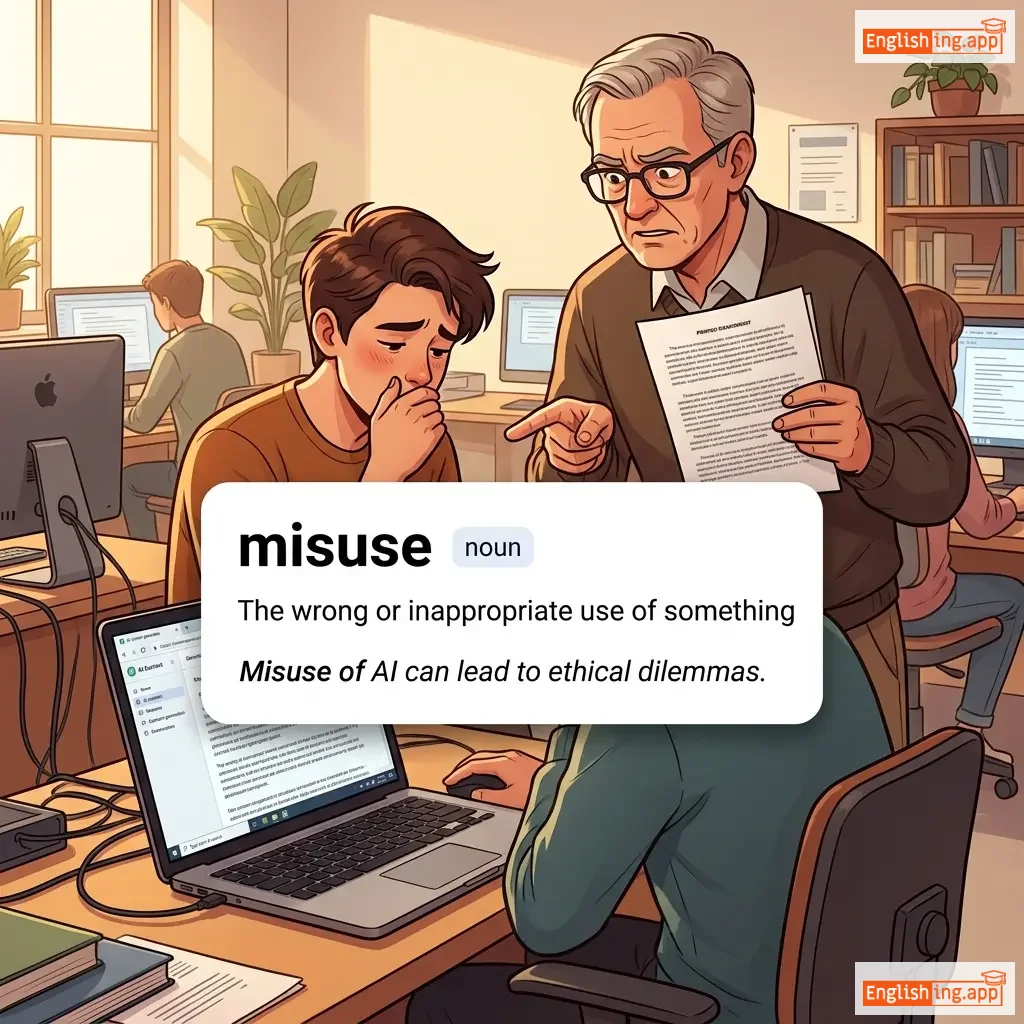
misuse definition card — visual illustration of the meaning
noun
ˌmɪsˈjuːs
滥用 (lànyòng)

The wrong or inappropriate use of something

"Misuse of AI can lead to ethical dilemmas."

"AI的滥用可能导致伦理困境。" (AI de lànyòng kěnéng dǎozhì lúnlǐ kùnjìng.)
noun
/maɪt/
螨虫 (manchong)

a very small creature, often a tiny arachnid; also used to mean a very small amount

"The mattress was infested with dust mites."

"床垫里有尘螨。" (chuangdian li you chenman.)
noun
/ˈmaɪtər/
主教帽 (zhǔjiào mào)

a tall, pointed hat worn by bishops; also a type of joint made between two pieces of material

"The bishop placed the miter on his head during the ceremony."

"主教在仪式中把主教帽戴在头上。" (Zhǔjiào zài yíshì zhōng bǎ zhǔjiào mào dài zài tóu shàng.)
mitigate definition card — visual illustration of the meaning
verb
/ˈmɪtɪˌɡeɪt/
减轻 (jianqīng)

to make less severe, serious, or painful

"The new policies aim to mitigate the effects of climate change."

"新政策旨在减缓气候变化的影响。" (Xin zhengce zhi zai jianhuan qihou bianhua de yingxiang.)
mitigation definition card — visual illustration of the meaning
noun
ˌmɪt.ɪˈɡeɪ.ʃən
缓解 (huǎnjiě)

The action of reducing the severity, seriousness, or painfulness of something.

"Climate change mitigation requires global cooperation."

"气候变化减缓需要全球合作。" (Qìhòu biànhuà jiǎnhuǎn xūyào quánqiú hézuò.)
noun
/ˈmɒd.ə.sti/
谦逊; 谦虚 (qiānxùn; qiānxū)

the quality of being humble and not boastful about achievements

"Despite his success, he showed great modesty."

"尽管成功,他展示了极大的谦虚。" (Jǐnguǎn chénggōng, tā zhǎnshìle jí dà de qiānxū.)
model definition card — visual illustration of the meaning
noun
/ˈmɒdəl/
模型 (moxing)

A representation of something, often smaller or used as an example.

"The architect showed us a model of the new building."
"建筑师向我们展示了新建筑的模型。" (Jianzhushi xiang women zhanshi le xin jianzhu de moxing.)
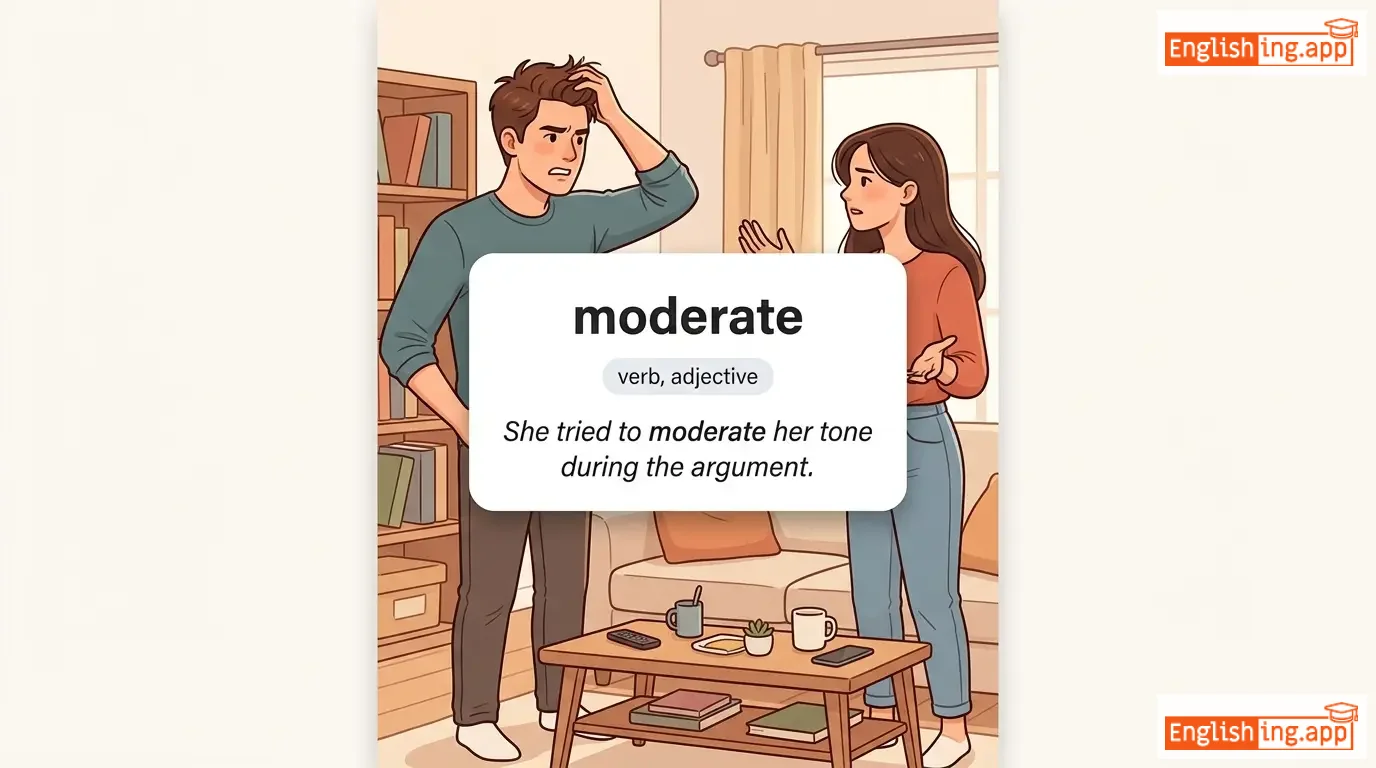
moderate definition card — visual illustration of the meaning
verb, adjective
/ˈmɒdəreɪt/ (verb), /ˈmɒdərət/ (adj)
适度的, 控制 (shidù de, kòngzhì)

To make something less extreme (verb); average in amount, intensity, quality, or degree (adjective).

"She tried to moderate her tone during the argument."

"她在争论中试图控制她的语气。" (Tā zài zhēnglùn zhōng shìtú kòngzhì tā de yǔqì.)
adverb
/ˈmɒdərətli/
适度地 (shidu de)

to a reasonable extent, not excessively

"She exercises moderately to stay healthy."

"她适度地锻炼以保持健康。" (Ta shidu de duanlian yi baochi jiankang.)
noun
/ˌmɒdəˈreɪʃən/

The avoidance of excess or extremes; keeping balance or within reasonable limits.

"He drinks wine in moderation."

noun
/ˈmɒdəreɪtər/
主持人 (zhǔchí rén)

A person who leads or oversees discussions, debates, or forums to maintain order.

"The moderator asked each panelist to share their views."

"主持人让每位小组成员分享他们的观点。" (Zhǔchí rén ràng měi wèi xiǎozǔ chéngyuán fēnxiǎng tāmen de guāndiǎn.)
adjective
/ˈmɒdən/
现代的 (xiàndài de)

relating to the present or recent times, not ancient or old-fashioned

"They live in a modern apartment with new facilities."

"他们住在一个现代化的公寓里,设施新颖。" (Tāmen zhù zài yīgè xiàndàihuà de gōngyù lǐ, shèshī xīnyǐng.)
noun
/məˈdɜːrnəti/
现代性 (xiandai xing)

The quality or condition of being modern; up-to-date ideas, practices, or style.

"The city’s architecture reflects both tradition and modernity."
"这座城市的建筑反映了传统与现代性的结合。" (Zhe zuo chengshi de jianzhu fanying le chuantong yu xiandaixing de jiehe.)
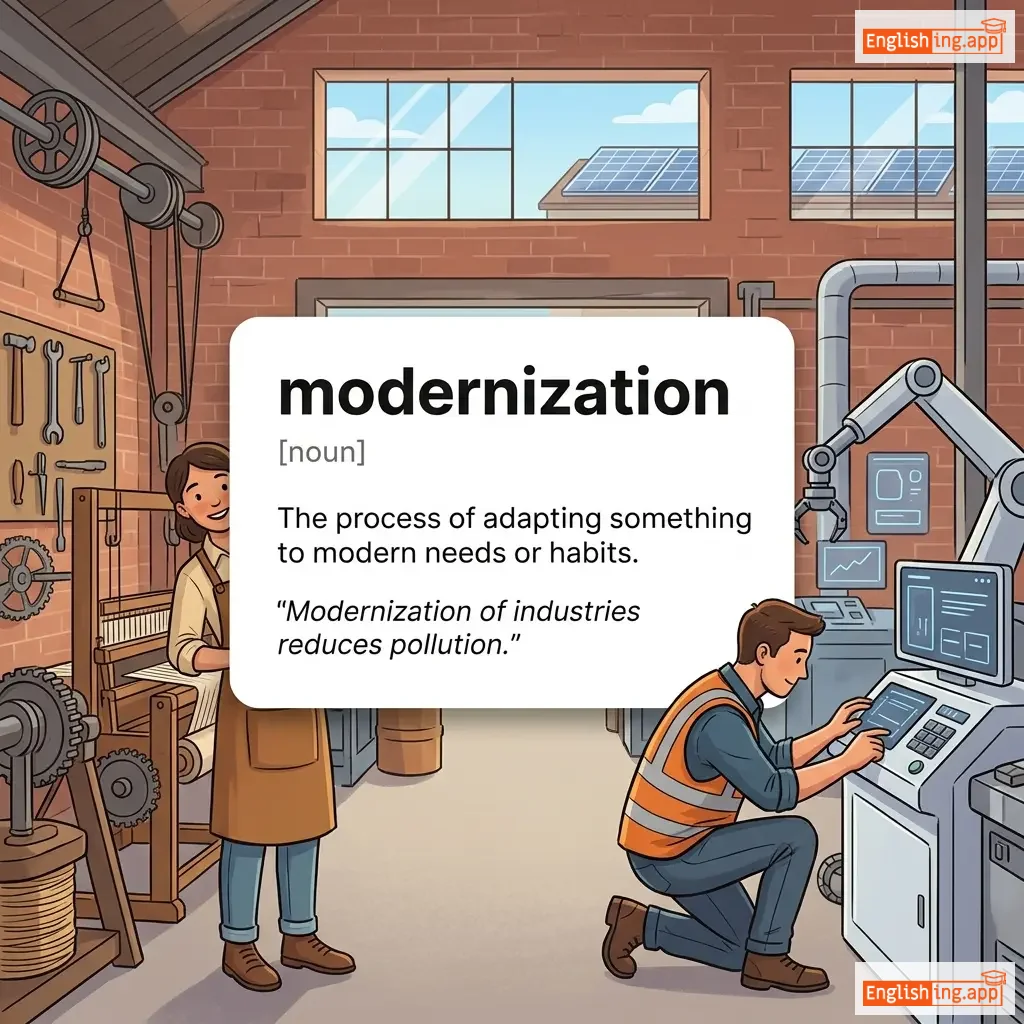
modernization definition card — visual illustration of the meaning
noun
/ˌmɒd.ən.aɪˈzeɪ.ʃən/
现代化 (xiandaihua)

The process of adapting something to modern needs or habits.

"Modernization of industries reduces pollution."

"工业的现代化减少了污染。" (Gōngyè de xiàndàihuà jiǎnshǎo le wūrǎn.)
verb
/ˈmɒdənaɪz/
现代化 (xiàndàihuà)

To adapt something to modern needs or styles; to update or improve.

"The company plans to modernize its IT infrastructure."

"公司计划现代化其IT基础设施。" (Gōngsī jìhuà xiàndàihuà qí IT jīchǔ shèshī.)
adjective
/ˈmɒdɪst/

Having or showing a humble estimate of one’s importance; simple and not extravagant.

"She lives in a modest house in the countryside."

modify definition card — visual illustration of the meaning
verb
/ˈmɒdɪfaɪ/
修改 (xiūgǎi)

to make partial or minor changes to something

"You need to modify the settings to improve performance."
"你需要修改设置以提高性能。" (Nǐ xūyào xiūgǎi shèzhì yǐ tígāo xìngnéng.)
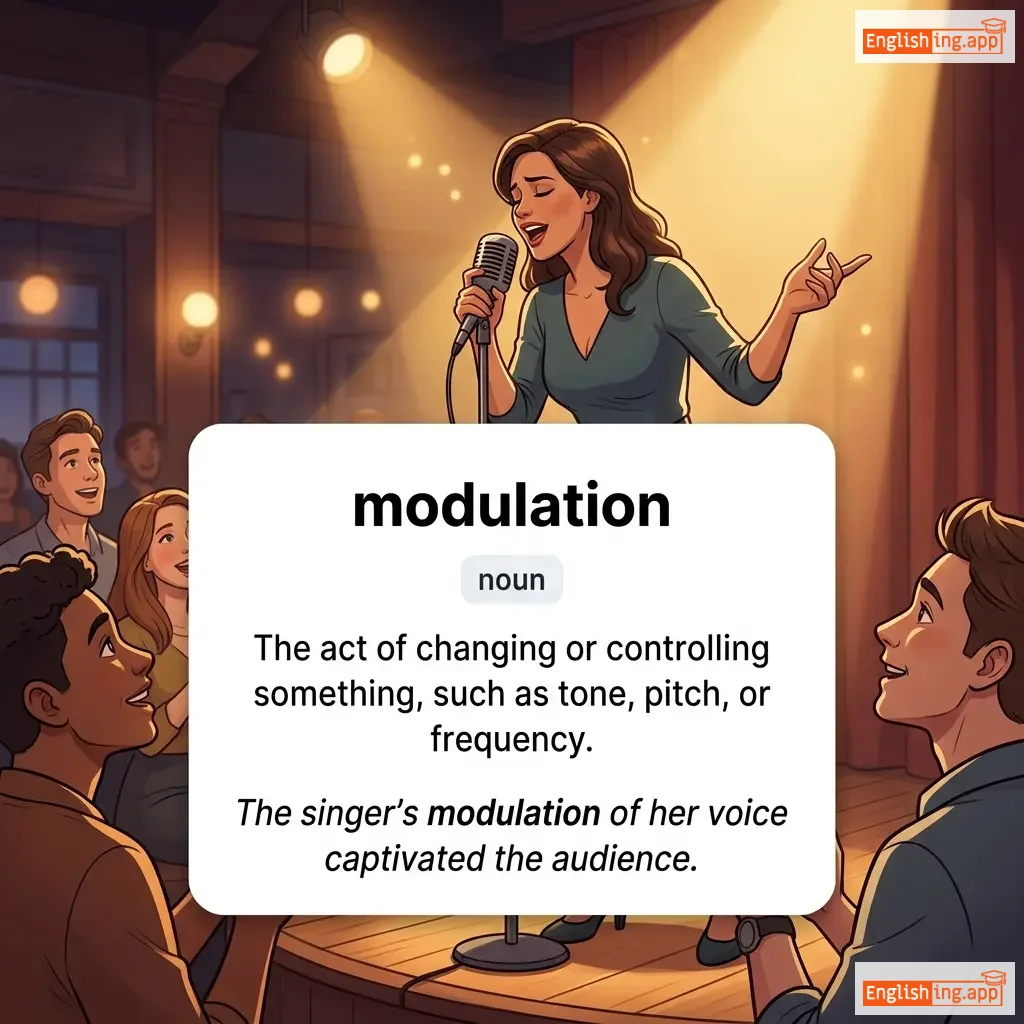
modulation definition card — visual illustration of the meaning
noun
/ˌmɒdjʊˈleɪʃən/
音调或频率控制 (yīntiáo huò pínlǜ kòngzhì)

The act of changing or controlling something, such as tone, pitch, or frequency.

"The singer’s modulation of her voice captivated the audience."

"歌手声音的调制吸引了观众。" (Gēshǒu shēngyīn de tiáozhì xīyǐnle guānzhòng.)
modulate definition card — visual illustration of the meaning
verb
/ˈmɒdjʊleɪt/
调节 (tiao jie)

to adjust or regulate the degree, pitch, or intensity of something

"The teacher modulated her voice to keep the students engaged."
"老师调整了她的声音以保持学生的专注。" (Lǎoshī tiáozhěng le tā de shēngyīn yǐ bǎochí xuéshēng de zhuānyì.)
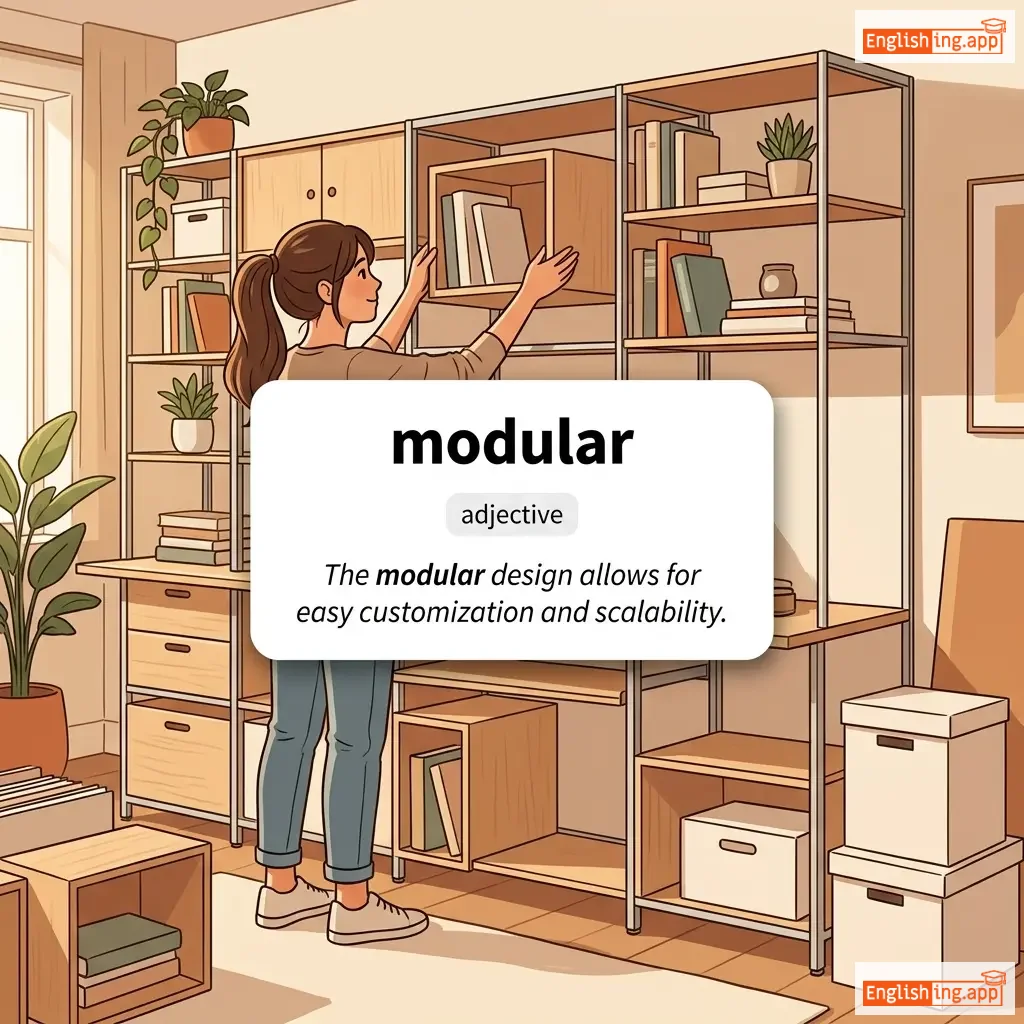
modular definition card — visual illustration of the meaning
adjective
/ˈmɒdʒʊlər/
模块化 (mó kuài huà)

Employing or involving a module or modules as the basis of design or construction.

"The modular design allows for easy customization and scalability."

"模块化设计允许轻松定制和可扩展性。" (Mó kuài huà shè jì yǔn xǔ qīng sōng dìng zhì hé kě kuò zhǎn xìng.)
adjective
/ˈməʊdɪʃ/
时髦的 (shímáo de)

conforming to or following current fashion or style

"She wore a modish outfit that caught everyone’s attention."

"她穿了一件时髦的衣服,引起了所有人的注意。" (Tā chuānle yī jiàn shímáo de yīfú, yǐnqǐle suǒyǒu rén de zhùyì.)
modifications definition card — visual illustration of the meaning
noun
ˌmɒd.ɪ.fɪˈkeɪ.ʃənz
修改 (xiugai)

Changes made to something to improve it or make it more suitable.

"Modifications improve policy frameworks."

"修改改进了政策框架。" (Xiugai gaijin le zhengce kuangjia.)
noun
/ˈmɒdɪkəm/
一点点 (yīdiǎn diǎn)

a small or moderate amount of something, especially something valuable or desirable

"She showed a modicum of patience during the long meeting."

"在漫长的会议中,她表现出了一点点耐心。" (Zài màncháng de huìyì zhōng, tā biǎoxiàn chūle yīdiǎn diǎn nàixīn.)
modification definition card — visual illustration of the meaning
noun
/ˌmɒdɪfɪˈkeɪʃən/
修改 (xiūgǎi)

the act or process of changing or altering something slightly

"The architect suggested a modification to the design."

"建筑师建议对设计进行修改。" (Jiànzhú shī jiànyì duì shèjì jìnxíng xiūgǎi.)
noun
/moʊd/
模式 (moshi)

A particular way or style in which something is done, experienced, or expressed.

"The phone has a silent mode for meetings."

"手机有一个用于会议的静音模式。" (Shǒujī yǒu yīgè yòng yú huìyì de jìngyīn móshì.)