词汇表

英语词汇词典 | 单词含义、定义和示例

noun
/mɪˈsɑːdʒəni/
厌恶女性 (yànwù nǚxìng)

Hatred of, contempt for, or prejudice against women.

"The novel has been criticized for promoting misogyny."

"这本小说因宣扬厌恶女性而遭到批评。" (Zhè běn xiǎoshuō yīn xuānyáng yànwù nǚxìng ér zāodào pīpíng.)
noun
/mɪˈsɑːdʒɪnɪst/
厌女症者 (yàn nǚ zhèng zhě)

A person who dislikes, despises, or is strongly prejudiced against women.

"Many condemned his speech as the words of a misogynist."

"许多人谴责他的演讲是厌女症者的言论。" (Xǔduō rén qiǎn zé tā de yǎnjiǎng shì yàn nǚ zhèng zhě de yánlùn.)
noun
/mɪˈsɑːɡəmi/
厌婚症 (yàn hūn zhèng)

Hatred or dislike of marriage.

"His misogamy prevented him from ever settling down with a partner."

"他的厌婚症让他无法和伴侣定居下来。" (Tā de yàn hūn zhèng ràng tā wúfǎ hé bànlǚ dìngjū xiàlái.)
noun
/ˌmɪsˈnoʊmər/
错误的名字 (cuo wu de ming zi)

A wrong or inaccurate name or designation.

"Calling the tiny dog a 'giant' is a misnomer."
"称呼这只小狗为“巨人”是一个错误的名字。" (Cheng hu zhe zhi xiao gou wei 'ju ren' shi yi ge cuo wu de ming zi.)
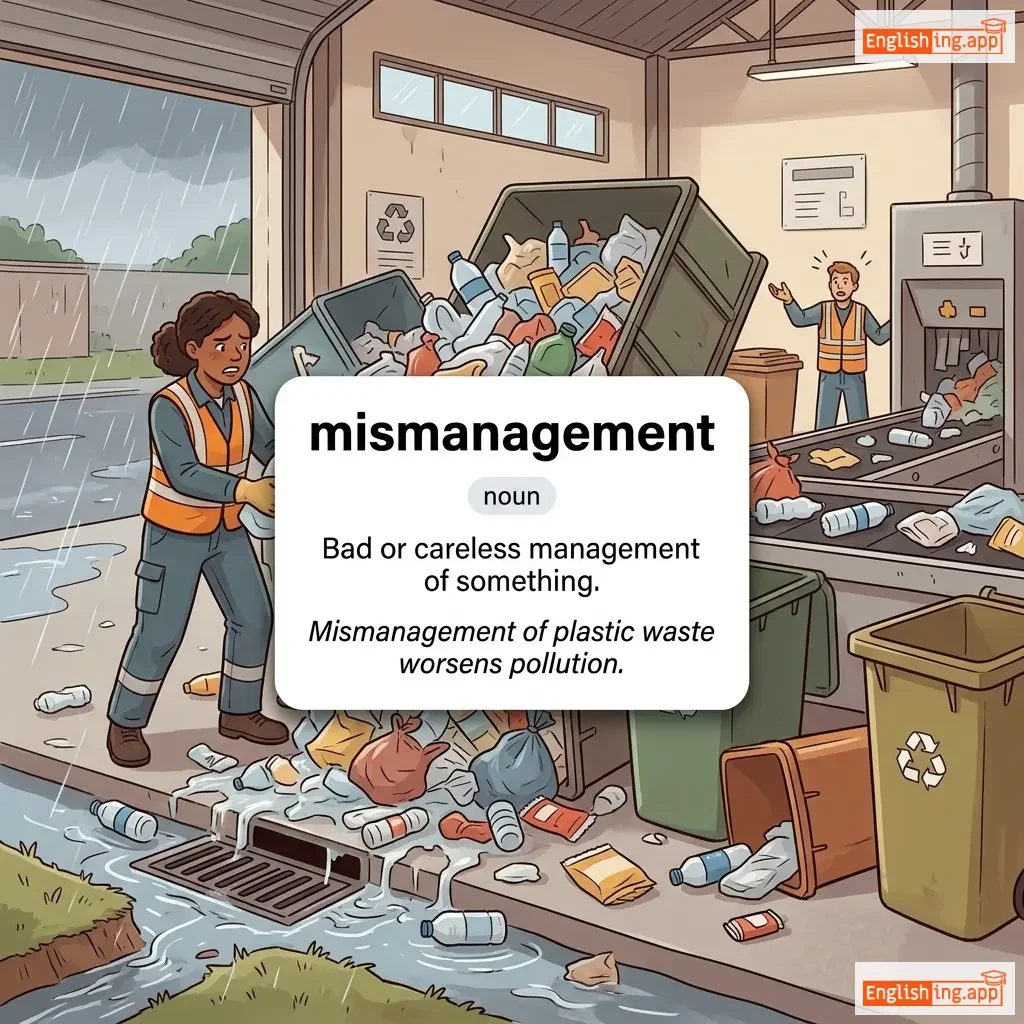
mismanagement definition card — visual illustration of the meaning
noun
ˌmɪsˈmænɪdʒmənt
管理不善 (guanli bushan)

Bad or careless management of something.

"Mismanagement of plastic waste worsens pollution."

"塑料废物的管理不善加剧了污染。" (Suliaofeiwu de guanli bushan jiaju le wuran.)
verb
/ˌmɪsˈmænɪdʒ/

to handle or control something badly or inefficiently

"The company went bankrupt because it was mismanaged for years."

adjective
/mɪsˈliːdɪŋ/
误导性的 (wù dǎo xìng de)

giving the wrong idea or impression

"The advertisement was misleading and gave false information."

"广告具有误导性,并提供了虚假的信息。" (Guǎng gào jù yǒu wù dǎo xìng, bìng tí gōng le xū jiǎ de xìn xī.)
verb
/ˌmɪsˈleɪ/
暂时丢失 (zan shi diu shi)

to lose something temporarily by putting it in the wrong place

"I must have mislaid my keys somewhere in the house."

"我一定把我的钥匙暂时丢失在屋子里某个地方。" (Wo yiding ba wode yaoshi zan shi diu shi zai wuzi li mou ge difang.)
verb
/ˌmɪsɪnˈtɜːrprɪt/
误解 (wùjiě)

to understand or explain something wrongly

"He misinterpreted her silence as agreement."

"他错误地将她的沉默解读为同意。" (Tā cuòwù de jiāng tā de chénmò jiědú wéi tóngyì.)
noun
/ˈmɪshæp/
不幸, 小事故 (bùxìng, xiǎo shìgù)

an unlucky accident or minor misfortune

"A minor mishap delayed the train for half an hour."

"一个小事故让火车迟到了半小时。" (Yīgè xiǎo shìgù ràng huǒchē chídào le bàn xiǎoshí.)
noun
/mɪsˈɡɪvɪŋz/
疑虑,担忧 (yílǜ, dānyōu)

feelings of doubt or concern about the outcome or propriety of something

"She had serious misgivings about signing the contract."

"她对签署合同有严重的疑虑。" (Tā duì qiānshǔ hé tóng yǒu yánzhòng de yílǜ.)
noun
/ˌmɪsˈɡɪvɪŋ/
怀疑 (huáiyí)

A feeling of doubt, worry, or suspicion.

"She had serious misgivings about signing the contract."

"她在签署合同之前有严重的怀疑。" (Tā zài qiānshǔ hé tóng zhīqián yǒu yánzhòng de huáiyí.)
noun
/ˌmɪsˈfɔːrtʃən/
不幸 (buxing)

Bad luck or an unfortunate event.

"He suffered the misfortune of losing his job during the recession."

"他在经济衰退期间失业的不幸遭遇。" (Ta zai jingji shuaitui qi jian shiye de buxing zao yu.)
noun
/ˈmɪzəri/
痛苦 (tòngkǔ)

A state of great suffering, unhappiness, or discomfort.

"The refugees lived in constant misery."

"难民们一直生活在持续的痛苦中。" (Nànmínmen yīzhí shēnghuó zài chíxù de tòngkǔ zhōng.)
adjective
/ˈmaɪzərli/
吝啬 (lìnsè)

Unwilling to spend money; stingy.

"She lived a miserly life, refusing to buy anything new."

"她过着吝啬的生活,拒绝购买任何新东西。" (Tā guòzhe lìnsè de shēnghuó, jùjué gòumǎi rènhé xīn dōngxi.)
adverb
/ˈmɪzərəbli/
糟糕地 (zāogāo de)

in a wretched or unhappy manner; extremely badly

"The team performed miserably in the championship."

"队伍在锦标赛中表现得非常糟糕。" (duìwǔ zài jǐnbiāosài zhōng biǎoxiàn dé fēicháng zāogāo.)
adjective
/ˈmɪzərəbəl/
痛苦的 (tòngkǔ de)

Extremely unhappy or uncomfortable.

"He felt miserable after losing his job."

"失去工作后,他感到痛苦不堪。" (Shīqù gōngzuò hòu, tā gǎndào tòngkǔ bùkān.)
noun
/ˈmaɪzər/
吝啬鬼 (lìn sè guǐ)

A person who hoards wealth and spends as little money as possible.

"The old miser refused to donate even a penny to charity."

"那个老吝啬鬼甚至不愿意捐赠一分钱给慈善。" (Nàgè lǎo lìnsè guǐ shènzhì bù yuànyì juānzèng yī fēn qián gěi císhàn.)
noun
/ˌmɪsdɪˈmiːnər/
轻罪 (qīngzuì)

A minor wrongdoing or criminal offense that is less serious than a felony.

"He was fined for a misdemeanor involving public disturbance."

"他因公共扰乱而被罚款,犯了轻罪。" (Tā yīn gōnggòng rǎoluàn ér bèi fákuǎn, fànle qīngzuì.)
noun
/ˌmɪsˈdiːd/
恶行 (èxíng)

A wrong or illegal act.

"He regretted his past misdeeds and apologized."

"他对自己过去的恶行感到后悔,并道歉。" (Tā duì zìjǐ guòqù de èxíng gǎndào hòuhuǐ, bìng dàoqiàn.)
noun
/ˈmɪskriənt/
恶棍 (ègùn)

A person who behaves badly or criminally.

"The police arrested the miscreant responsible for the theft."

"警察逮捕了负责盗窃的恶棍。" (Jǐngchá dàibǔle fùzé dàoqiè de ègùn.)
🦜

Mimic

verb
/ˈmɪmɪk/

To copy the actions, speech, or behavior of someone or something.

"Children often mimic their parents' behavior."

noun
/ˈmaɪnɪŋ/
采矿 (cǎikuàng)

the process of extracting valuable minerals or other resources from the earth

"Mining in this area has increased in recent years."
"该地区的采矿业近年来有所增加。" (Gāi dìqū de cǎikuàngyè jìnnián lái yǒu suǒ zēngjiā.)
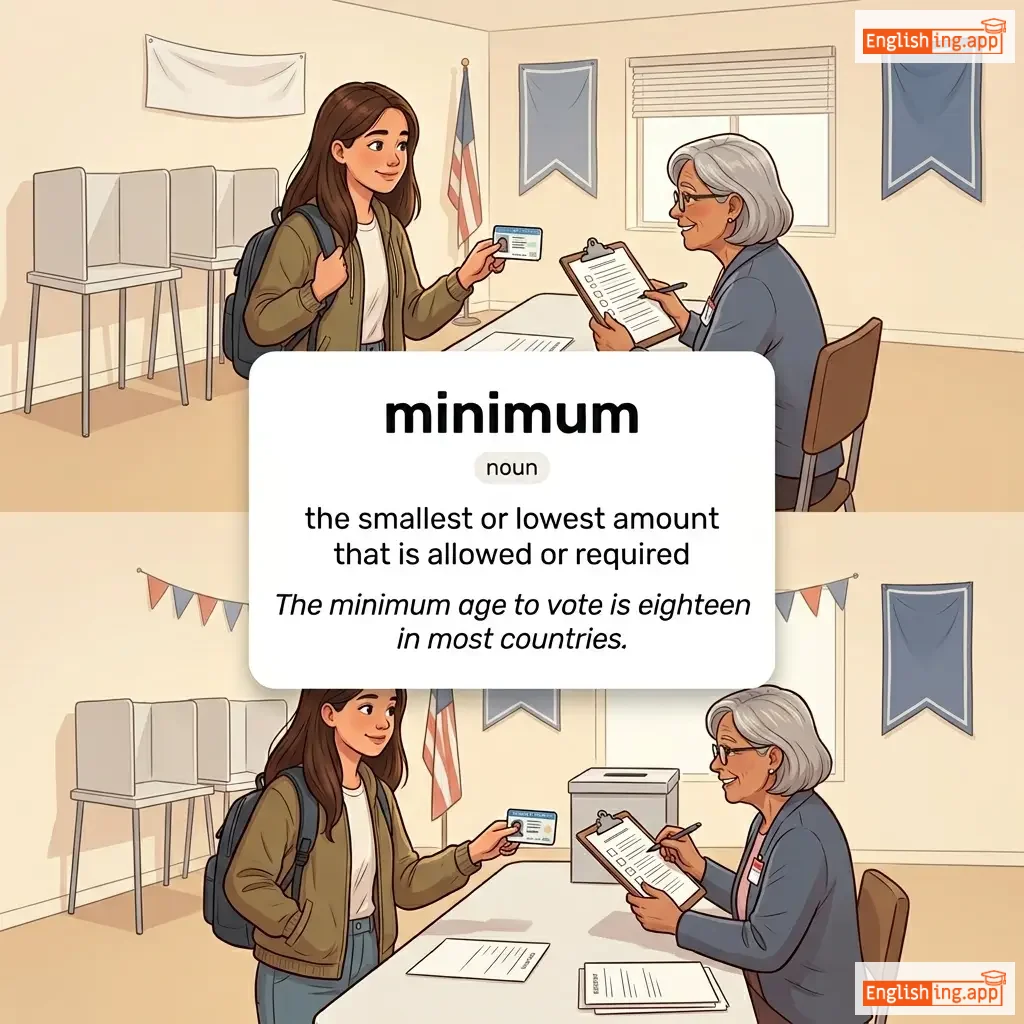
minimum definition card — visual illustration of the meaning
noun
/ˈmɪnɪməm/
最小值 (zuì xiǎo zhí)

the smallest or lowest amount that is allowed or required

"The minimum age to vote is eighteen in most countries."
"在大多数国家,投票的最低年龄是十八岁。" (Zài dàduōshù guójiā, tóupiào de zuìdī niánlíng shì shíbā suì.)
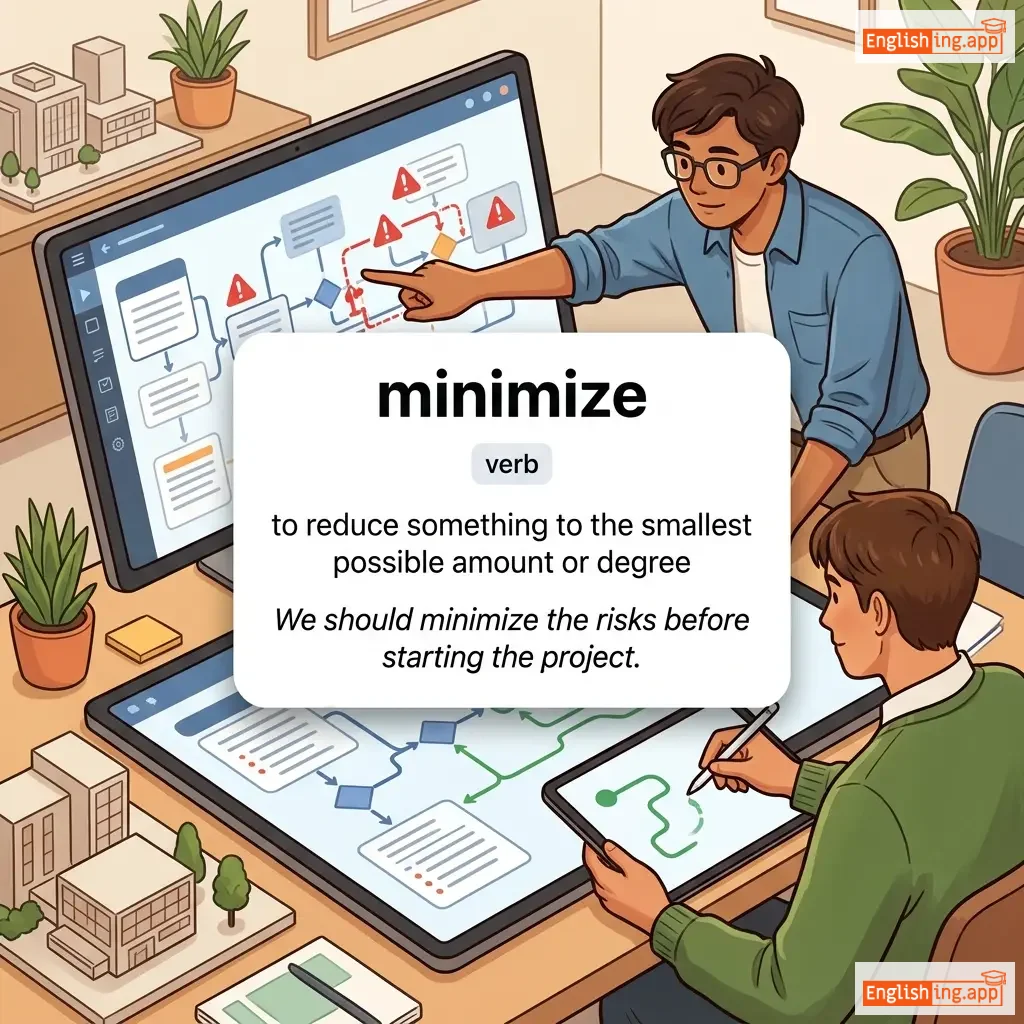
minimize definition card — visual illustration of the meaning
verb
/ˈmɪnɪmaɪz/
最小化 (zuìxiǎohuà)

to reduce something to the smallest possible amount or degree

"We should minimize the risks before starting the project."

"在开始项目之前,我们应该最小化风险。" (Zài kāishǐ xiàngmù zhīqián, wǒmen yīnggāi zuìxiǎohuà fēngxiǎn.)
adjective
/ˈmɪnɪməl/
最小的 (zuìxiǎo de)

the smallest or least amount possible

"The damage to the car was minimal after the accident."

"事故后,汽车的损坏是最小的。" (shìgù hòu, qìchē de sǔnhuài shì zuìxiǎo de.)
noun/adjective
/ˈmɪnətʃər/ or /ˈmɪniətʃʊr/
微型版本 (weixing banben)

a very small version of something; small in scale or size

"The artist created a miniature model of the castle."

"艺术家制作了一个城堡的微型模型。" (Yishujia zhizuole yige chengbao de weixing moxing.)
adjective
/ˈmɪn.dʒi/
小气; 吝啬 (xiaoqi; linse)

mean or stingy; unwilling to spend money

"He is too mingy to spend money on anything but necessities."

"他太小气,不愿意在除必要的东西外花钱。" (Ta tai xiaoqi, buyuan yong zai chu bixiao de dongxi wai huai qian.)
verb
/ˈmɪŋɡl/

to mix or combine; to move among people and engage socially

"Guests mingled at the party, chatting and laughing together."

noun
/ˈmɪnərəl/
矿物 (kuàngwù)

a naturally occurring substance that is solid and inorganic, often used in industry or nutrition

"Calcium is an important mineral for strong bones."

"钙是一种对强壮骨骼很重要的矿物。" (gài shì yī zhǒng duì qiángzhuàng gǔgé hěn zhòngyào de kuàngwù.)
noun
/ˈmaɪnə(r)/
矿工 (kuànggōng)

a person who works in a mine, extracting minerals or other resources

"The miner worked in the coal mine for many years."

"矿工在煤矿工作了很多年。" (Kuànggōng zài méikuàng gōngzuò le hěn duō nián.)
noun, pronoun, verb
/maɪn/
矿井 / 我的 (kuàngjǐng / wǒ de)

a place where minerals are dug from the ground; or something belonging to me

"The workers went deep into the mine to extract coal."

"工人们深入矿井开采煤炭。" (Gōngrénmen shēn rù kuàngjǐng kāicǎi méitàn.)
mindset definition card — visual illustration of the meaning
noun
ˈmaɪnd.set
思维方式 (sīwéi fāngshì)

The established set of attitudes held by someone.

"A growth mindset helps individuals embrace challenges."

"成长型思维帮助个人接受挑战。" (Chéngzhǎng xíng sīwéi bāngzhù gèrén jiēshòu tiǎozhàn.)
adjective
/ˈmaɪndləs/
无意义的 (wú yìyì de)

without thought or intelligence; done without consideration

"He was bored by the mindless tasks at work."

"他对工作中无意义的任务感到无聊。" (Tā duì gōngzuò zhōng wú yìyì de rènwù gǎndào wúliáo.)
mindfulness definition card — visual illustration of the meaning
noun
/ˈmaɪnd.fʊl.nəs/
正念 (zhèng niàn)

The quality or state of being conscious or aware of something; a mental state achieved by focusing one's awareness on the present moment.

"Practicing mindfulness reduces stress and anxiety."

"正念练习可以减少压力和焦虑。" (Zhèngniàn liànxí kěyǐ jiǎnshǎo yālì hé jiāolǜ.)
adjective
/ˈmaɪnd.fəl/
专注; 意识到 (zhuānzhù; yìshídào)

being conscious or aware; paying attention to the present moment

"She is always mindful of her surroundings and pays attention to details."
"她总是注意周围的环境,并关注细节。" (Tā zǒng shì zhùyì zhōuwéi de huánjìng, bìng guānzhù xìjié.)
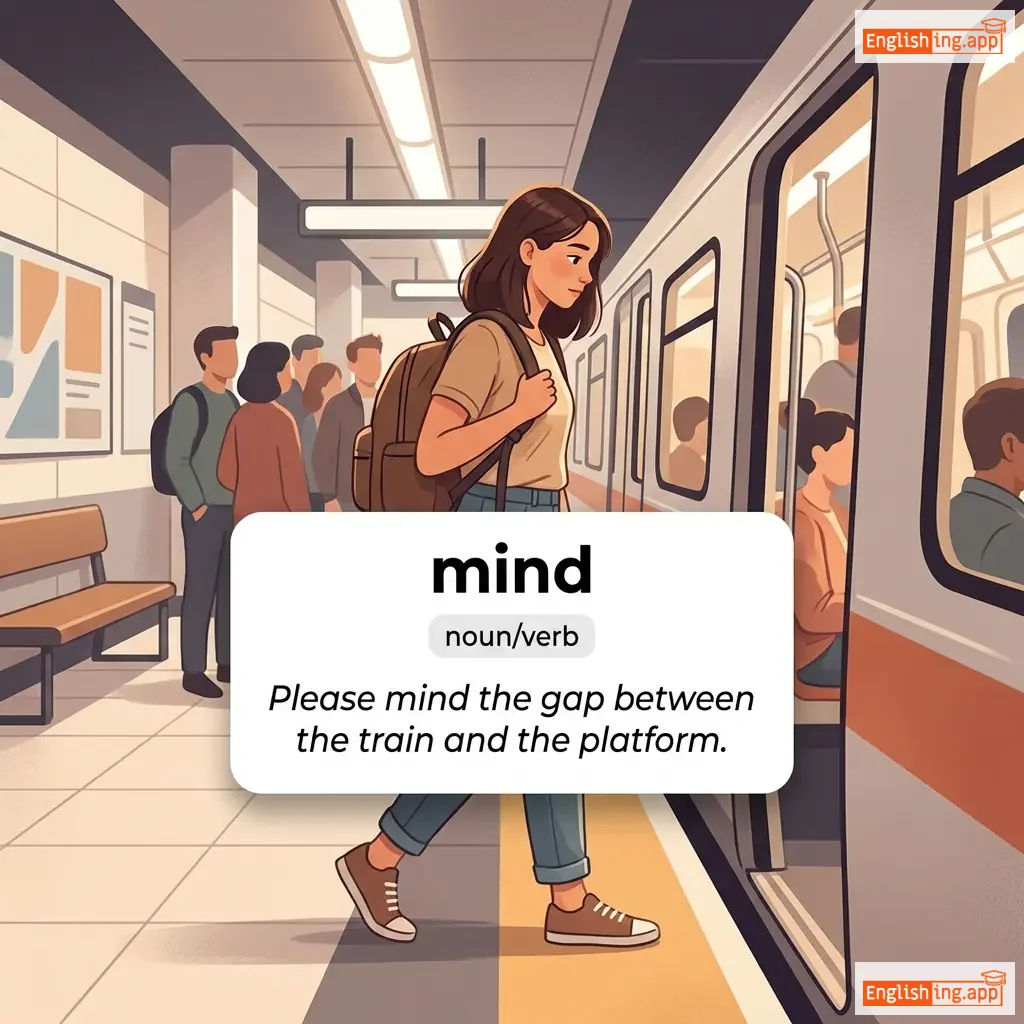
mind definition card — visual illustration of the meaning
noun/verb
/maɪnd/
心智 / 注意 (xīn zhì / zhù yì)

the part of a person that enables them to think, feel, and reason; to pay attention or take care

"Please mind the gap between the train and the platform."

"请注意火车与站台之间的间隙。" (Qǐng zhùyì huǒchē yǔ zhàntái zhījiān de jiànxì.)
adjective
/ˈmɪnsɪŋ/
做作 (zuòzuò)

affectedly delicate, dainty, or refined in manner or movement

"He walked with mincing steps across the stage."

"他走过舞台时步伐轻盈。" (Tā zǒuguò wǔtái shí bùfá qīngyíng.)
mince definition card — visual illustration of the meaning
verb
/mɪns/
切碎 (qiē suì)

to cut food, especially meat, into very small pieces; to speak in an affectedly delicate or refined way

"She minced the garlic before adding it to the sauce."

"她在将大蒜加入酱料之前切碎了它。" (Tā zài jiāng dàsuàn jiārù jiàngliào zhīqián qiē suì le tā.)
adjective
/ˈmɪnətɔːri/
威胁的 (wēixié de)

Expressing a threat; menacing.

"The criminal gave the witness a minatory look."

"罪犯给了证人一个威胁的眼神。" (Zuìfàn gěi le zhèngrén yīgè wēixié de yǎnshén.)
noun
/ˌmɪnəˈrɛt/
宣礼塔 (xuānlǐtǎ)

A tall, slender tower of a mosque, from which the call to prayer is announced.

"The minaret of the mosque could be seen from miles away."

"清真寺的宣礼塔可以从几英里外看到。" (Qīngzhēnsì de xuānlǐtǎ kěyǐ cóng jǐ yīnglǐ wài kàn dào.)
noun
/ˈmɪmɪkri/
模仿 (mofang)

The act of imitating someone or something, often for humor or learning.

"The comedian’s mimicry of celebrities made the audience laugh."

"喜剧演员通过模仿名人让观众捧腹大笑。" (Xǐjù yǎnyuán tōngguò mófǎng míngrén ràng guānzhòng pěngfù dàxiào.)
adjective
/ˈmɪlɪtənt/
激进的 (jijin de)

Aggressively active in a cause, sometimes using forceful methods.

"The group became increasingly militant in their demands."

"该组织在他们的要求中变得越来越激进。" (Gai zuzhi zai tamen de yaoqiu zhong biande yuelaiyue jijin.)
noun
/mɪˈlɪʃə/
民兵 (minbing)

a group of ordinary people who are trained to act as soldiers in emergencies

"The village formed a militia to defend against attacks."

"村庄组成了一支民兵,以防范攻击。" (Cun zhuang zu cheng le yi zhi minbing, yi fangfan gongji.)
verb
/ˈmɪlɪˌteɪt/
妨碍 (fáng'ài)

to have a strong effect against something; to work as a powerful factor in preventing or influencing an outcome

"His lack of experience will militate against his promotion."
"他的经验不足将阻碍他的晋升。" (tā de jīngyàn bùzú jiāng zǔ'ài tā de jìnshēng.)
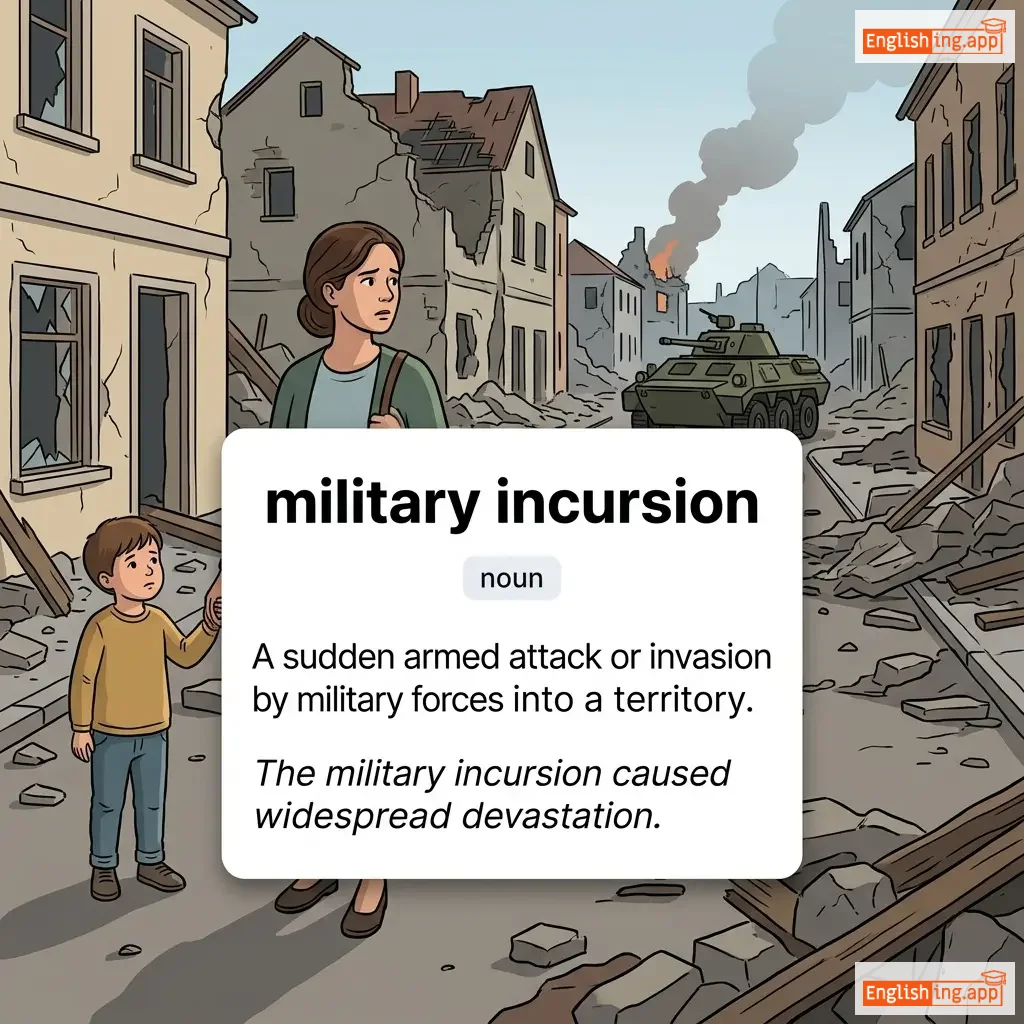
military incursion definition card — visual illustration of the meaning
noun
ˈmɪl.ɪ.tər.i ɪnˈkɜː.ʃən
军事入侵 (junshi rùqīn)

A sudden armed attack or invasion by military forces into a territory.

"The military incursion caused widespread devastation."
"军事入侵造成了广泛的破坏。" (Jūnshì rùqīn zàochéngle guǎngfàn de pòhuài.)
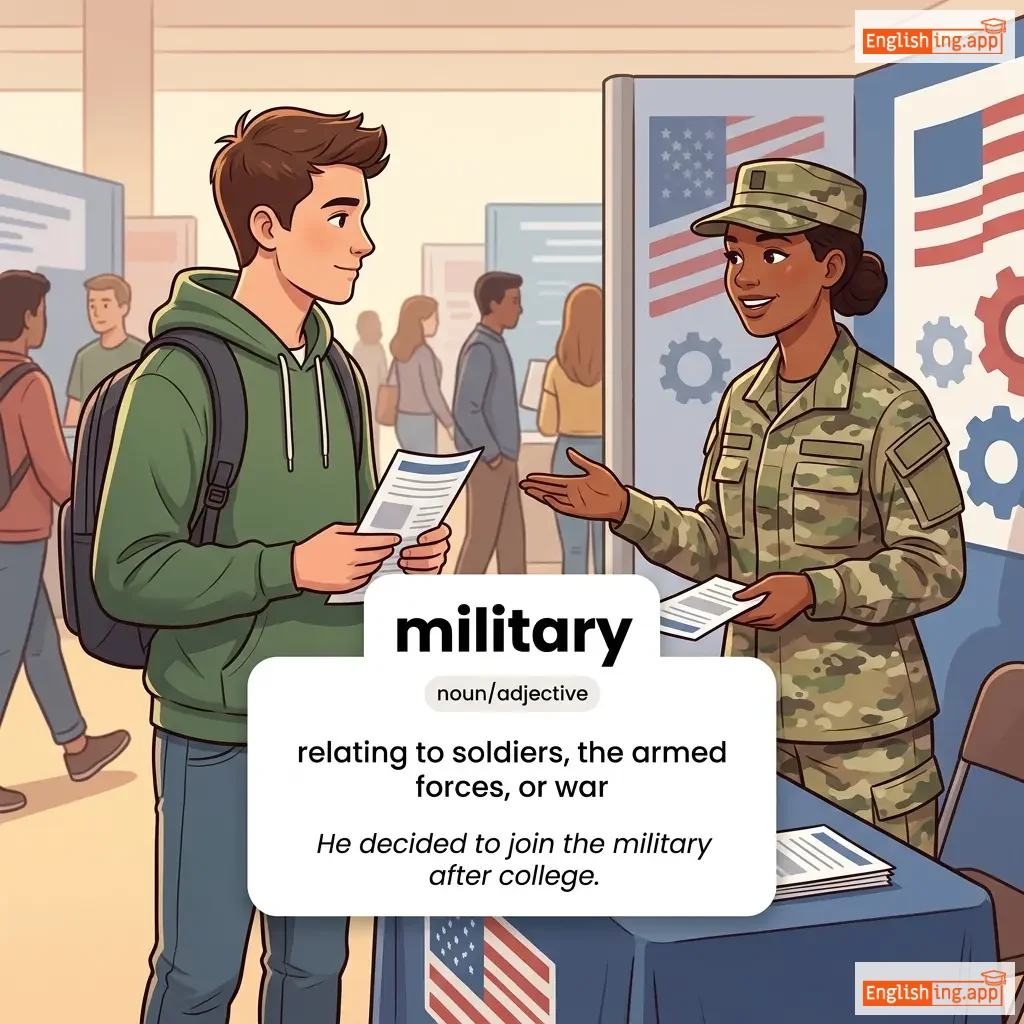
military definition card — visual illustration of the meaning
noun/adjective
/ˈmɪlɪˌtɛri/
军事 (junshi)

relating to soldiers, the armed forces, or war

"He decided to join the military after college."

"他决定大学毕业后加入军队。" (Ta jueding daxue biye hou jiaru jundui.)
noun
/ˈmɪlɪtəˌrɪzəm/
军事主义 (junshizhuyi)

The belief in maintaining a strong military and using it aggressively to defend or promote national interests.

"The rise of militarism in the region caused tension among neighboring countries."
"该地区军事主义的兴起引发了邻国之间的紧张局势。" (Gai diqu junshizhuyi de xingqi yinfa le lingguo zhi jian de jinzhang ju shi.)
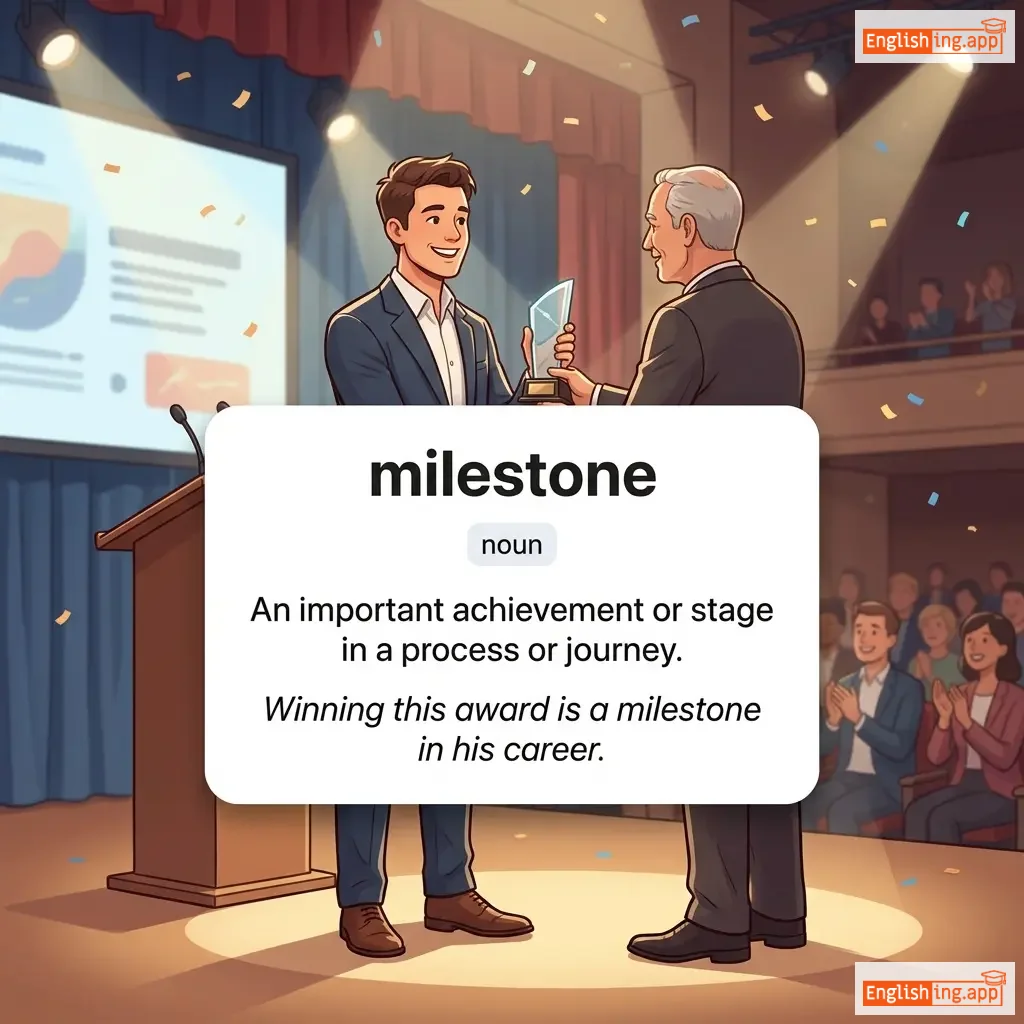
milestone definition card — visual illustration of the meaning
noun
ˈmaɪl.stəʊn
重要的成就 (zhòng yào de chéng jiù)

An important achievement or stage in a process or journey.

"Winning this award is a milestone in his career."

"赢得这个奖项是他职业生涯中的一个里程碑。" (Yíngdé zhège jiǎngxiàng shì tā zhíyè shēngyá zhōng de yīgè lǐchéngbēi.)
verb
/ˌmɪsˈkaʊnt/
算错 (suàn cuò)

To count wrongly or inaccurately.

"He miscounted the number of chairs in the hall."

"他错算了大厅里的椅子数量。" (Tā cuò suàn le dàtīng lǐ de yǐzi shùliàng.)