वोकैबुलरीज

इंग्लिश वोकैबुलरी डिस्कवर, लर्न और मास्टर करें

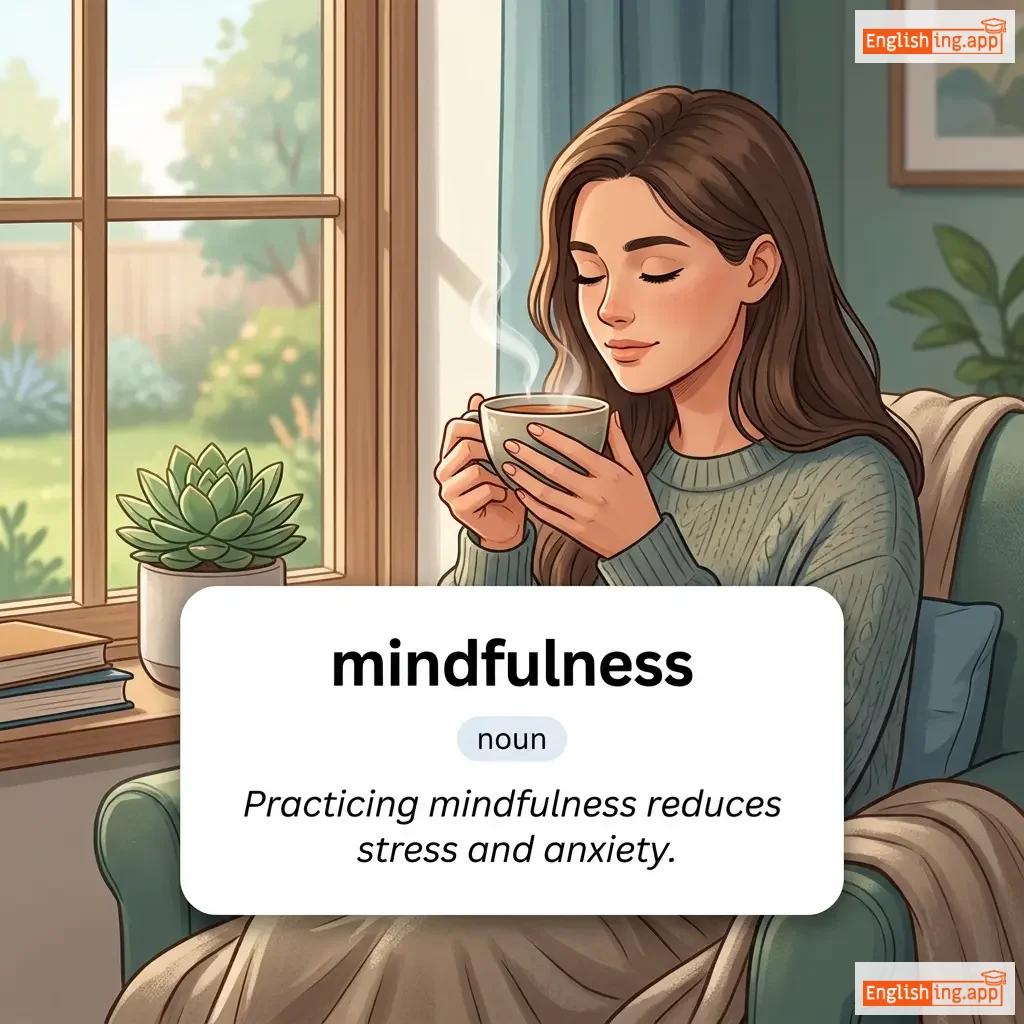
mindfulness definition card — visual illustration of the meaning
noun
/ˈmaɪnd.fʊl.nəs/
सचेतन उपस्थिति (sachetan upasthiti)

The quality or state of being conscious or aware of something; a mental state achieved by focusing one's awareness on the present moment.

"Practicing mindfulness reduces stress and anxiety."

"माइंडफुलनेस का अभ्यास तनाव और चिंता को कम करता है।" (Mindfulness ka abhyas tanav aur chinta ko kam karta hai.)
adjective
/ˈmaɪndləs/
बिना सोचे-समझे (bina soche-samjhe)

without thought or intelligence; done without consideration

"He was bored by the mindless tasks at work."

"वह काम पर बिना सोचे-समझे कामों से उब चुका था।" (Wah kaam par bina soche-samjhe kaamon se ub chuka tha.)
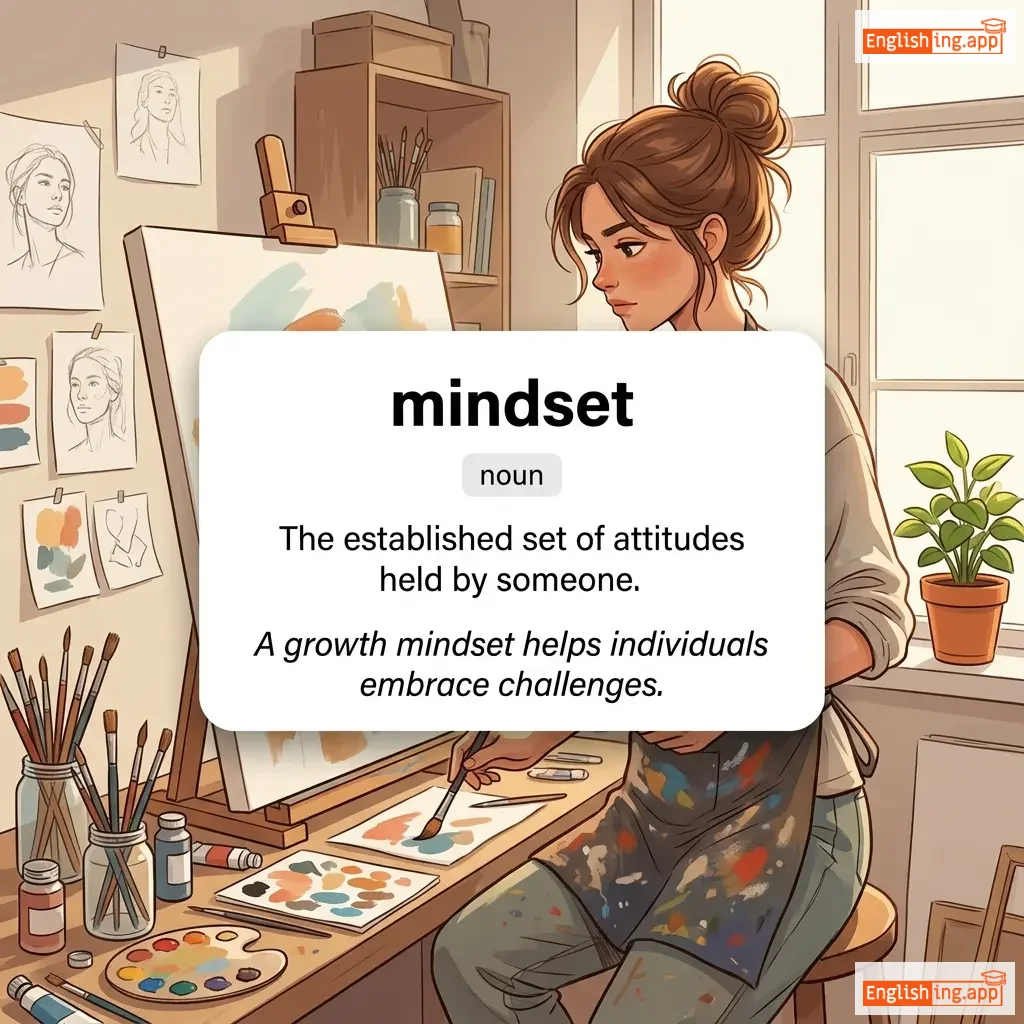
mindset definition card — visual illustration of the meaning
noun
ˈmaɪnd.set
मानसिकता (maansikta)

The established set of attitudes held by someone.

"A growth mindset helps individuals embrace challenges."

"एक विकास मानसिकता व्यक्तियों को चुनौतियों को अपनाने में मदद करती है।" (Ek vikas maansikta vyaktiyon ko chunautiyon ko apnane mein madad karti hai.)
noun, pronoun, verb
/maɪn/
खदान / मेरा (khadan / mera)

a place where minerals are dug from the ground; or something belonging to me

"The workers went deep into the mine to extract coal."

"कामकाजी लोग कोयला निकालने के लिए खदान में गहरे गए।" (kaamkaji log koyla nikaalne ke liye khadan mein gahare gaye.)
noun
/ˈmaɪnə(r)/
खनिक (khanik)

a person who works in a mine, extracting minerals or other resources

"The miner worked in the coal mine for many years."

"खनिक ने कई वर्षों तक कोयला खदान में काम किया।" (Khanik ne kai varshon tak koyla khadan mein kaam kiya.)
noun
/ˈmɪnərəl/
खनिज (khonij)

a naturally occurring substance that is solid and inorganic, often used in industry or nutrition

"Calcium is an important mineral for strong bones."

"कैल्शियम मजबूत हड्डियों के लिए एक महत्वपूर्ण खनिज है।" (Calcium majboot haddiyon ke liye ek mahatvapurn khonij hai.)
verb
/ˈmɪŋɡl/
मिलाना (milana)

to mix or combine; to move among people and engage socially

"Guests mingled at the party, chatting and laughing together."

"मेहमान पार्टी में एक दूसरे से मिले, चैटिंग और हंसी मजाक करते हुए।" (Mehmaan party mein ek doosre se mile, chatting aur hansi mazaak karte hue.)
adjective
/ˈmɪn.dʒi/
किफ़ायती; सख़्त; आलसी (kifayati; sakht; aalsi)

mean or stingy; unwilling to spend money

"He is too mingy to spend money on anything but necessities."

"वह किसी भी चीज़ पर पैसे खर्च करने के लिए बहुत मिंजी है, सिवाय आवश्यकताओं के।" (vah kisi bhi cheez par paise kharch karne ke liye bahut minji hai, siwaay aavashyaktaon ke.)
noun/adjective
/ˈmɪnətʃər/ or /ˈmɪniətʃʊr/
सूक्ष्म संस्करण (sookshm sanskaran)

a very small version of something; small in scale or size

"The artist created a miniature model of the castle."

"कलाकार ने किले का सूक्ष्म मॉडल बनाया।" (Kalakar ne kile ka sookshm model banaya.)
adjective
/ˈmɪnɪməl/
न्यूनतम (nyunatam)

the smallest or least amount possible

"The damage to the car was minimal after the accident."

"दुर्घटना के बाद कार को हुए नुकसान की मात्रा न्यूनतम थी।" (Durghatna ke baad car ko hue nuksan ki matra nyunatam thi.)
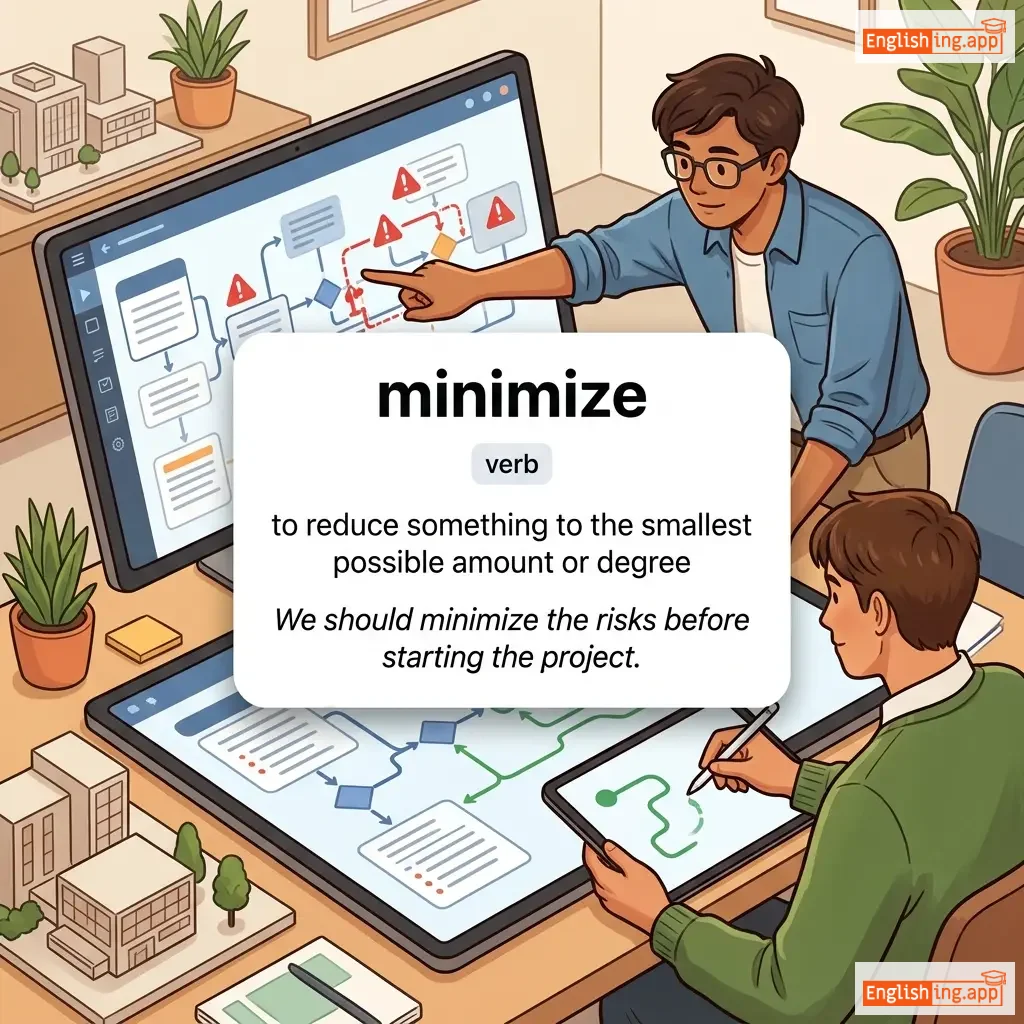
minimize definition card — visual illustration of the meaning
verb
/ˈmɪnɪmaɪz/
न्यूनतम करना (nyoonatam karna)

to reduce something to the smallest possible amount or degree

"We should minimize the risks before starting the project."

"हमें परियोजना शुरू करने से पहले जोखिम को कम करना चाहिए।" (Humein pariyojna shuru karne se pehle jokhim ko kam karna chahiye.)
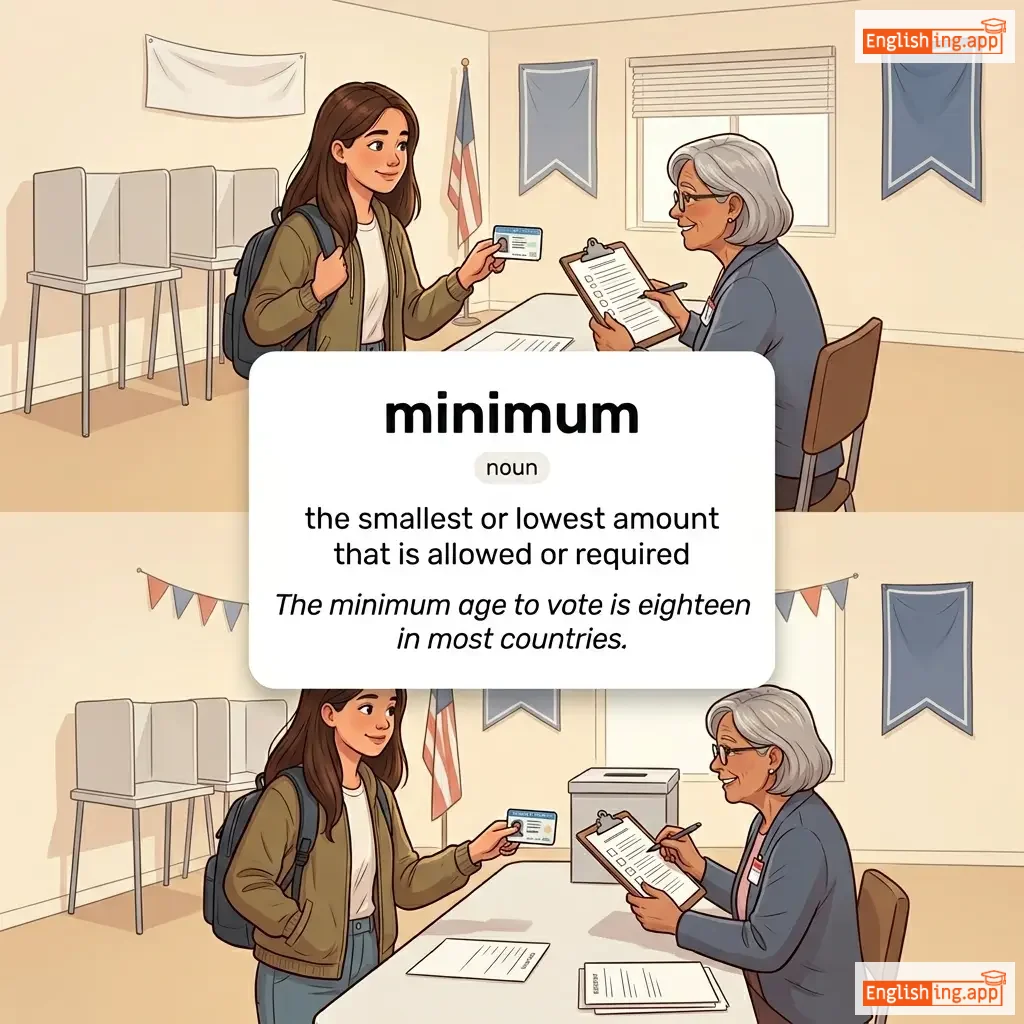
minimum definition card — visual illustration of the meaning
noun
/ˈmɪnɪməm/
न्यूनतम (nyuntam)

the smallest or lowest amount that is allowed or required

"The minimum age to vote is eighteen in most countries."

"वोट देने की न्यूनतम आयु अधिकांश देशों में अठारह साल है।" (Vote dene ki nyuntam aayu adhikansh deshon mein atharah saal hai.)
noun
/ˈmaɪnɪŋ/
खनन (khannan)

the process of extracting valuable minerals or other resources from the earth

"Mining in this area has increased in recent years."

"इस क्षेत्र में खनन पिछले कुछ वर्षों में बढ़ा है।" (Is kshetra mein khannan pichle kuch varsho mein badha hai.)
adjective
/ˈmɪn.ɪ.skjuːl/
सूक्ष्म (sookshm)

Extremely small or tiny.

"The error was so miniscule that nobody noticed it."

"गलती इतनी सूक्ष्म थी कि किसी ने ध्यान नहीं दिया।" (Galti itni sookshm thi ki kisi ne dhyan nahi diya.)
noun
/ˈmɪn.i.ən/
अनुचर (anuchar)

A follower or underling of a powerful person, especially a servile one.

"The dictator was surrounded by loyal minions who carried out his orders."

"तानाशाह अपने आदेशों को निभाने वाले विश्वासयोग्य अनुचरों से घिरा हुआ था।" (Taanashaah apne aadeshon ko nibhaane wale vishwasyogya anucharon se ghira hua tha.)
noun
/ˌmɪsˈkɒndʌkt/
दुराचार (durachar)

Improper or unacceptable behavior, especially by a professional or authority figure.

"The teacher was dismissed for serious misconduct."

"शिक्षक को गंभीर दुराचार के लिए बर्खास्त किया गया।" (Shikshak ko gambhir durachar ke liye barkhast kiya gaya.)
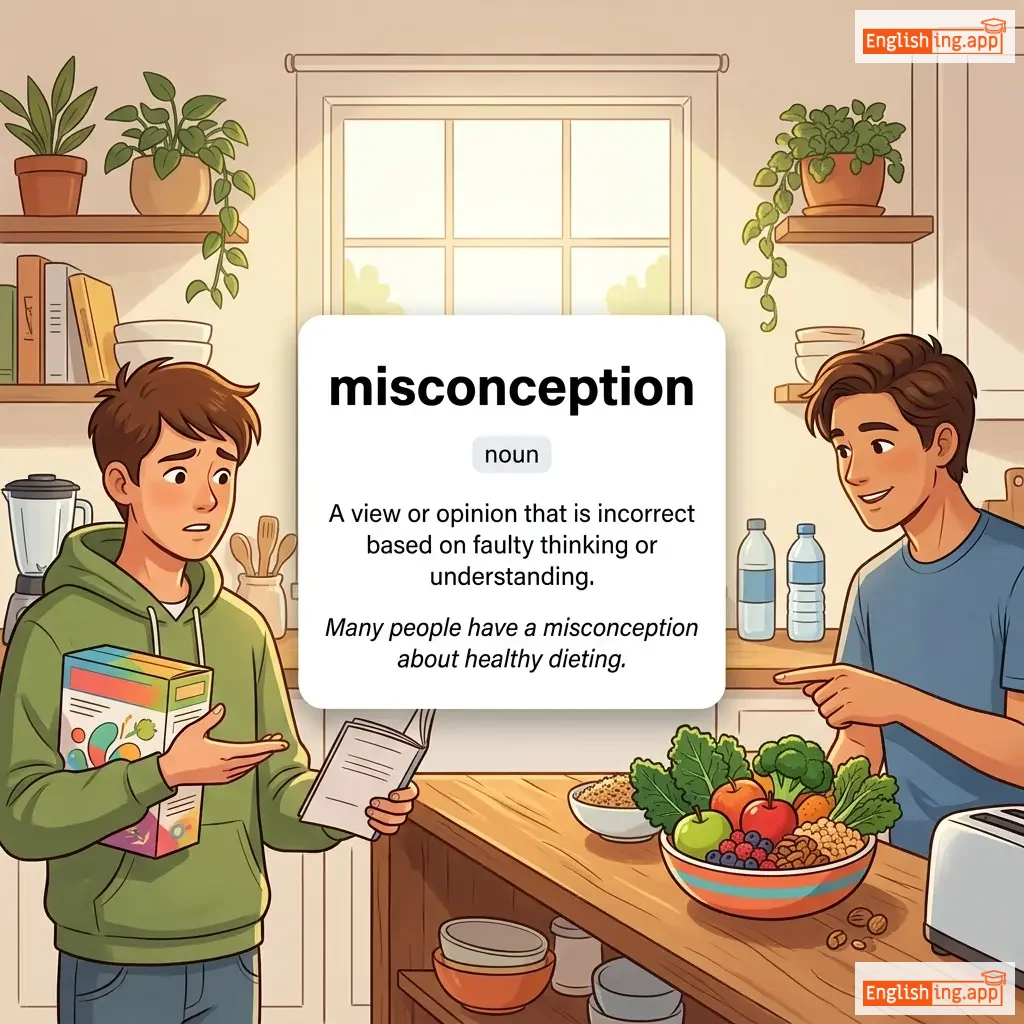
misconception definition card — visual illustration of the meaning
noun
/ˌmɪs.kənˈsep.ʃən/
गलत धारणा, भ्रम (galat dharna, bhram)

A view or opinion that is incorrect based on faulty thinking or understanding.

"Many people have a misconception about healthy dieting."

"बहुत से लोगों को स्वस्थ आहार के बारे में एक गलत धारणा है।" (Bahut se logon ko swasth aahaar ke baare mein ek galat dharna hai.)
verb
/ˌmɪskənˈsiːv/
गलत तरीके से समझना (galat tareeke se samajhna)

To misunderstand or form an incorrect idea about something.

"He misconceived the purpose of the project."

"उसने परियोजना के उद्देश्य को गलत तरीके से समझा।" (Usne pariyojna ke uddeshya ko galat tareeke se samjha.)
adjective
/ˈmɪstʃɪvəs/
शरारती (shararti)

Causing or showing a fondness for causing trouble in a playful way.

"She gave him a mischievous smile."

"उसने उसे शरारती मुस्कान दी।" (Usne use shararti muskaan di.)
noun
/ˈmɪstʃɪf/
शरारत (shararat)

Playful misbehavior or troublemaking.

"The children were full of mischief during the party."

"पार्टी के दौरान बच्चे शरारत से भरे हुए थे।" (Party ke dauran bachche shararat se bhare hue the.)
noun
/ˌmɪsˈtʃæns/
बदकिस्मती (badkismati)

An unfortunate accident or event; bad luck.

"By mischance, he missed the last train home."

"बदकिस्मती से उसने घर जाने वाली आख़िरी ट्रेन चूक गया।" (badkismati se usne ghar jaane wali aakhri train chook gaya.)
noun
/ˈmɪsəleɪni/
विविधता (vividhata)

A collection or mixture of various things.

"The book is a miscellany of essays and poems."

"किताब निबंधों और कविताओं का एक संग्रह है।" (Kitaab nibandhon aur kavitaon ka ek sangrah hai.)
adjective
/ˌmɪsəˈleɪniəs/
विविध (vividh)

Consisting of a variety of different items or types.

"The drawer was filled with miscellaneous objects."

"दराज विभिन्न वस्तुओं से भरा हुआ था।" (Daraaj vividh vastuon se bhara hua tha.)
noun
/mɪˌsɛdʒəˈneɪʃən/
जातीय मिश्रण (jaatiy mishran)

the interbreeding of people considered to be of different racial types

"The law once prohibited miscegenation in many countries."

"कानून ने कई देशों में मिसेगेनेशन को पहले प्रतिबंधित कर दिया था।" (Kanoon ne kai deshon mein miscegenation ko pehle pratibandhit kar diya tha.)
noun
/ˌmɪs.bɪˈheɪ.vjər/
गलत या अस्वीकार्य व्यवहार, खासकर बच्चों द्वारा या औपचारिक परिस्थितियों में (misbehaviour)

Bad or unacceptable behavior, especially by children or in formal situations

"The student was punished for his misbehaviour in class."

"छात्र को कक्षा में अपने गलत व्यवहार के लिए सजा मिली।" (chatr ko kaksha mein apne galat vyavhaar ke liye saza mili.)
noun
/ˌmɪsbɪˈheɪvjər/
दुराचरण (duraacharan)

bad or improper behavior

"The teacher punished the student for his misbehavior."

"टीचर ने स्टूडेंट को उसके दुराचरण के लिए सजा दी।" (Teacher ne student ko uske duraacharan ke liye saza di.)
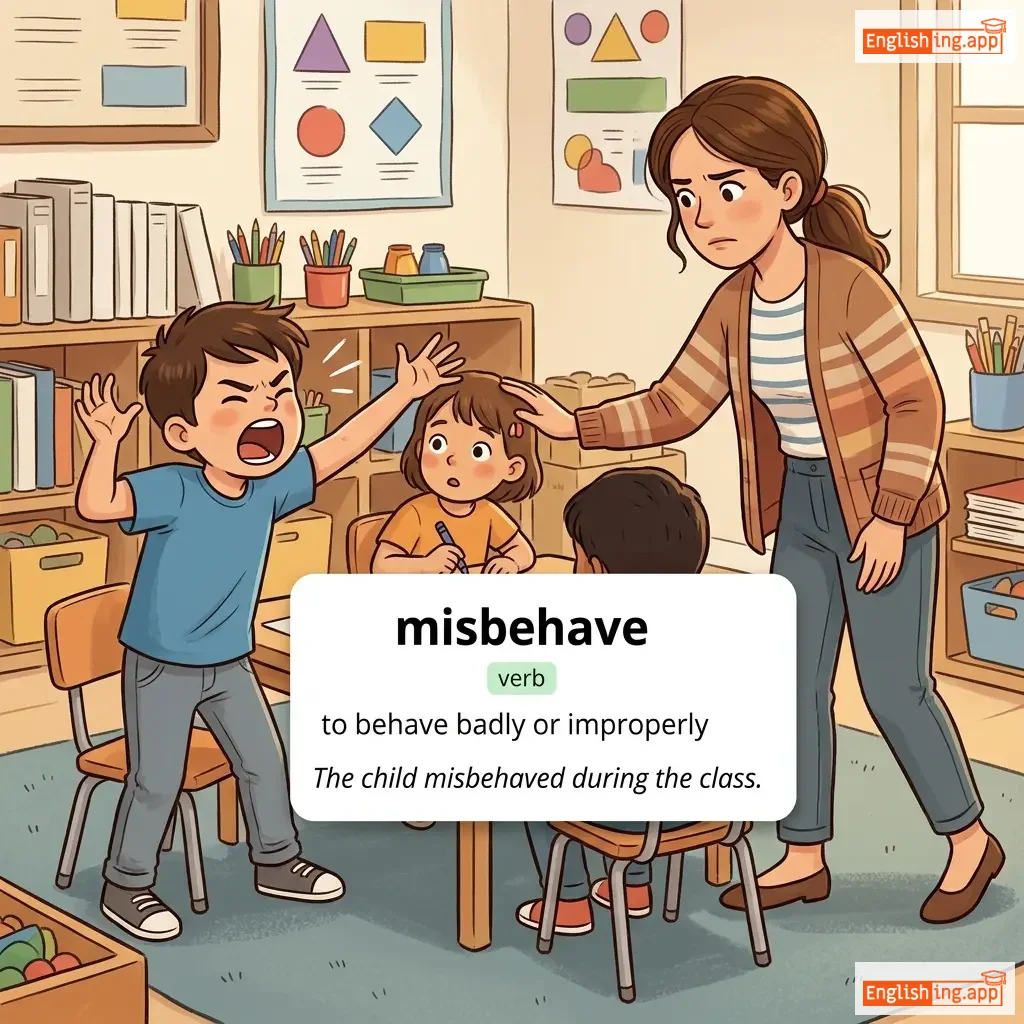
misbehave definition card — visual illustration of the meaning
verb
/ˌmɪsbɪˈheɪv/
गलत व्यवहार करना (galat vyavhaar karna)

to behave badly or improperly

"The child misbehaved during the class."

"बच्चे ने कक्षा के दौरान गलत व्यवहार किया।" (Bacche ne kaksha ke dauran galat vyavhaar kiya.)
verb
/ˌmɪs.əˈtrɪb.juːt/
गलत तरीके से श्रेय देना (galat tareeke se shrey dena)

to incorrectly credit something, such as a work or remark, to the wrong person or source

"The quote was misattributed to Shakespeare."

"उक्त उद्धरण शेक्सपियर को गलत तरीके से श्रेय दिया गया था।" (Ukt uddharan Shekspiar ko galat tareeke se shrey diya gaya tha.)
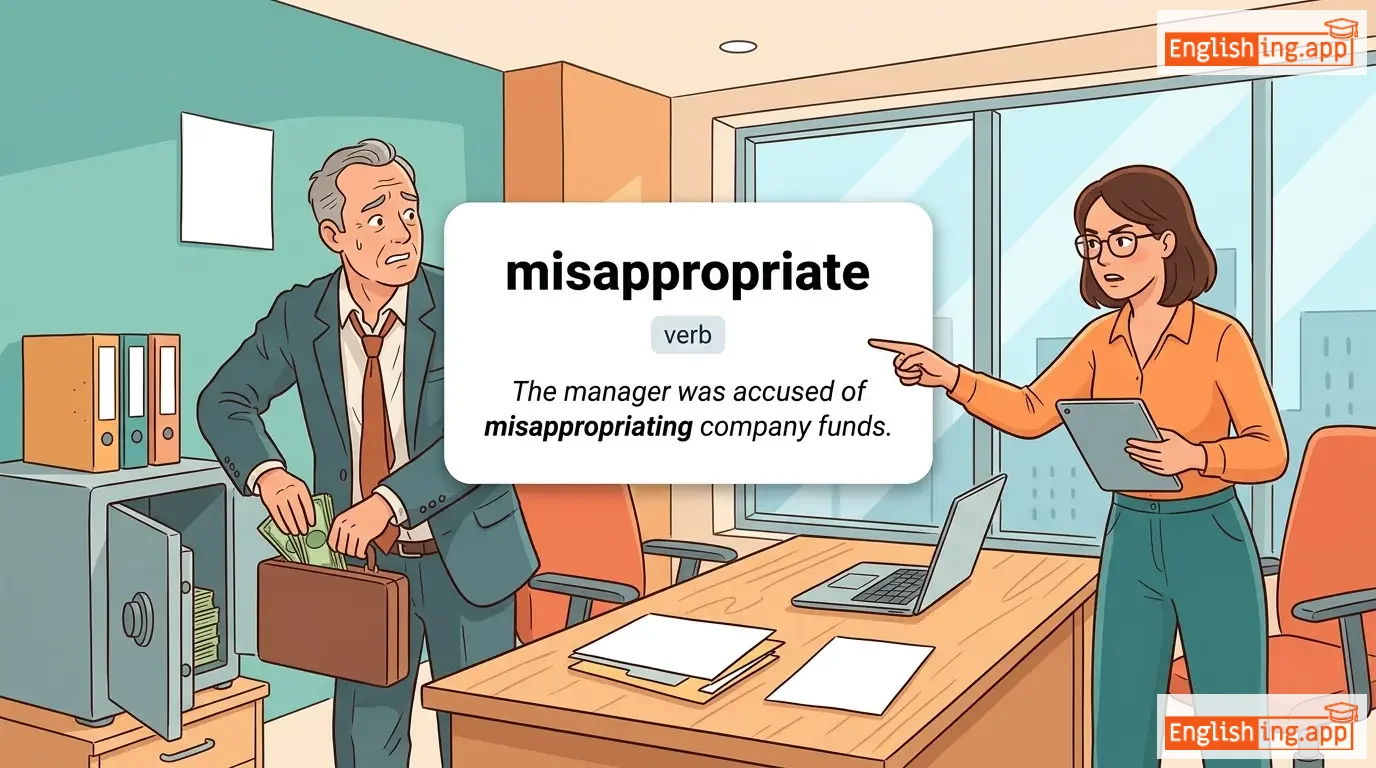
misappropriate definition card — visual illustration of the meaning
verb
/ˌmɪsəˈproʊprieɪt/
दुरुपयोग करना (durupyog karna)

to take or use something dishonestly, especially money or property, for one's own use

"The manager was accused of misappropriating company funds."

"मॅनेजर को कंपनी फंड्स को मिसअप्रोप्रिएट करने का आरोप लगा था।" (Da manager ko company funds ko misappropriate karne ka aarop laga tha.)
noun
/ˌmɪsæprɪˈhɛnʃən/
गलत धारणा (galat dharana)

a mistaken belief or misunderstanding

"There is a common misapprehension about the causes of the disease."

"रोग के कारणों के बारे में एक सामान्य गलत धारणा है।" (Rog ke karano ke baare mein ek samanya galat dharana hai.)
verb
/ˌmɪsæprɪˈhɛnd/
गलत समझना (galat samajhna)

to misunderstand or misinterpret something

"He misapprehended the teacher’s instructions and did the task incorrectly."

"उसने शिक्षक के निर्देशों को गलत समझा और काम गलत किया।" (Usne shikshak ke nirdeshon ko galat samjha aur kaam galat kiya.)
noun
/mɪˈsænθrəpi/
मानवद्वेष (manavdwesh)

a general dislike, distrust, or hatred of humankind

"His misanthropy was evident in the way he avoided people."

"उसकी मानवद्वेषिता उस तरीके से स्पष्ट थी, जिस तरह वह लोगों से बचता था।" (Uski manavdweshita us tareeke se spashth thi, jis tarah vah logon se bachta tha.)
adjective
/ˌmɪsənˈθrɑːpɪk/
मनुष्यों से घृणा करने वाला (manushyon se ghrina karne wala)

having or showing a dislike of humankind

"His misanthropic attitude made it difficult for him to make friends."

"उसका मनुष्यों से घृणा करने वाला रवैया उसे दोस्त बनाने में मुश्किल डालता था।" (Uska manushyon se ghrina karne wala ravayya use dost banane mein mushkil dalta tha.)
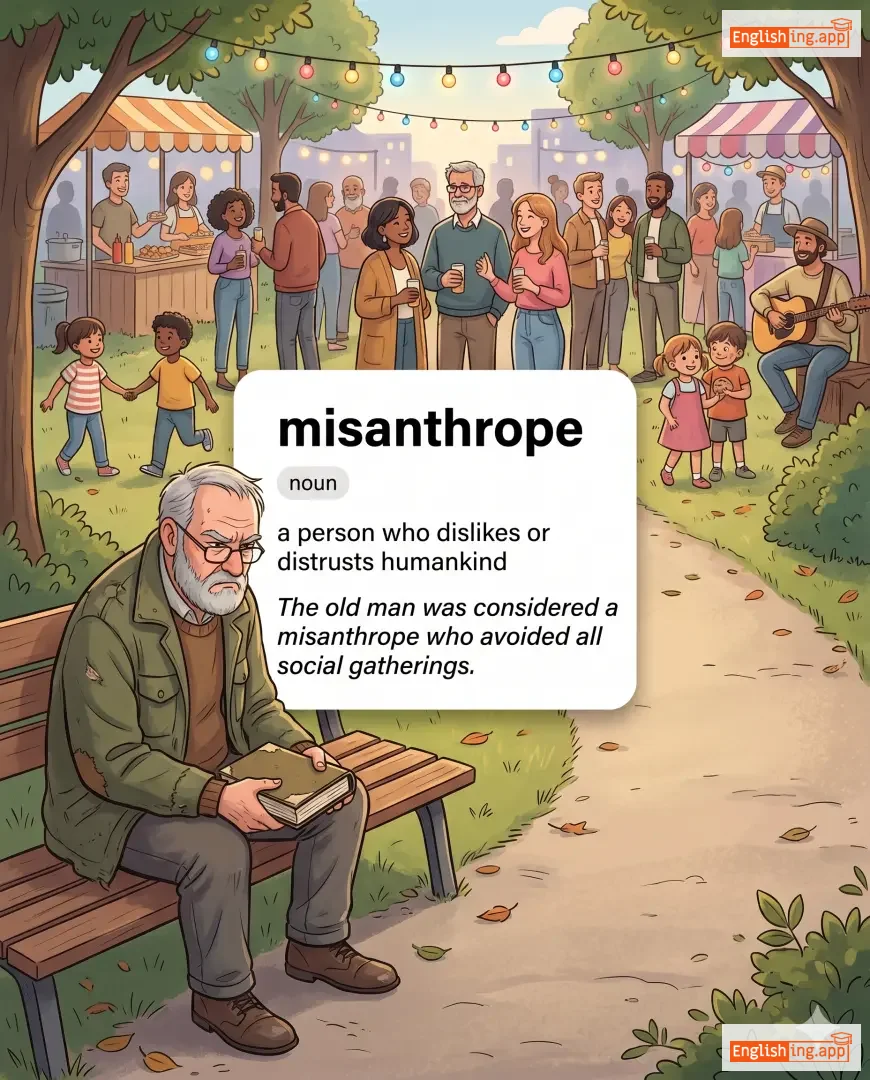
misanthrope definition card — visual illustration of the meaning
noun
/ˈmɪsənˌθroʊp/
मनुष्यों से नफरत करने वाला व्यक्ति (manushyon se nafrat karne wala vyakti)

a person who dislikes or distrusts humankind

"The old man was considered a misanthrope who avoided all social gatherings."

"वृद्ध व्यक्ति को एक मिसैनथ्रोप माना जाता था जो सभी सामाजिक आयोजनों से बचता था।" (Vriddh vyakti ko ek misanthrope mana jata tha jo sabhi samajik aayojan se bachata tha.)
noun
/mɜːrθ/
आनंद (anand)

Great joy, amusement, or laughter.

"The festival was full of mirth and laughter."

"त्योहार खुशी और हंसी से भरा हुआ था।" (tyohar khushi aur hansi se bhara hua tha.)
noun
/ˌmɪsədˈvɛntʃər/
अप्रिय घटना (apriya ghatna)

An unlucky accident, mishap, or unfortunate event.

"He broke his leg during a skiing misadventure."

"उसने स्कीइंग के दौरान एक अप्रिय घटना में अपना पैर तोड़ लिया।" (usne skiing ke dauran ek apriya ghatna mein apna pair tod liya.)
noun
/ˈmɪnɪstər/
मंत्री (mantri)

a head of a government department; a person who leads a church

"The finance minister announced new tax policies."

"वित्त मंत्री ने नए कर नीति की घोषणा की।" (Vitt mantri ne naye kar niti ki ghoshna ki.)
noun
/ˌmɪn.ɪˈstreɪ.ʃən/
सेवा (seva)

The act of providing care, assistance, or religious service.

"She recovered thanks to the kind ministrations of the nurses."

"उसकी स्वास्थ्य वापसी नर्सों की दयालु सेवाओं के कारण हुई।" (Uski swasthya wapsi narsoun ki dayalu sevaon ke karan hui.)
noun
/ˈmɪn.ɪ.stri/
मंत्रालय (mantralay)

A government department headed by a minister or the work of a religious minister.

"He works at the Ministry of Education."

"वह शिक्षा मंत्रालय में काम करता है।" (Vah shiksha mantralay mein kaam karta hai.)
adjective/noun
/ˈmaɪ.nər/
तुच्छ / अवयस्क (tuchchha / avayask)

less important, serious, or significant; a person under the legal age

"Luckily, the accident caused only minor injuries."

"सौभाग्यवश, दुर्घटना में केवल मामूली चोटें आईं।" (saubhagyavash, durghatna mein keval mamooli chhotein aayi)
noun
/maɪˈnɔːr.ɪ.ti/
अल्पसंख्यक (alpsankhyak)

A smaller number or part, especially a group differing from the majority.

"The law aims to protect the rights of ethnic minorities."

"कानून का उद्देश्य जातीय अल्पसंख्यकों के अधिकारों की रक्षा करना है।" (Kanoon ka uddeshya jaatiya alpsankhyakon ke adhikaron ki raksha karna hai.)
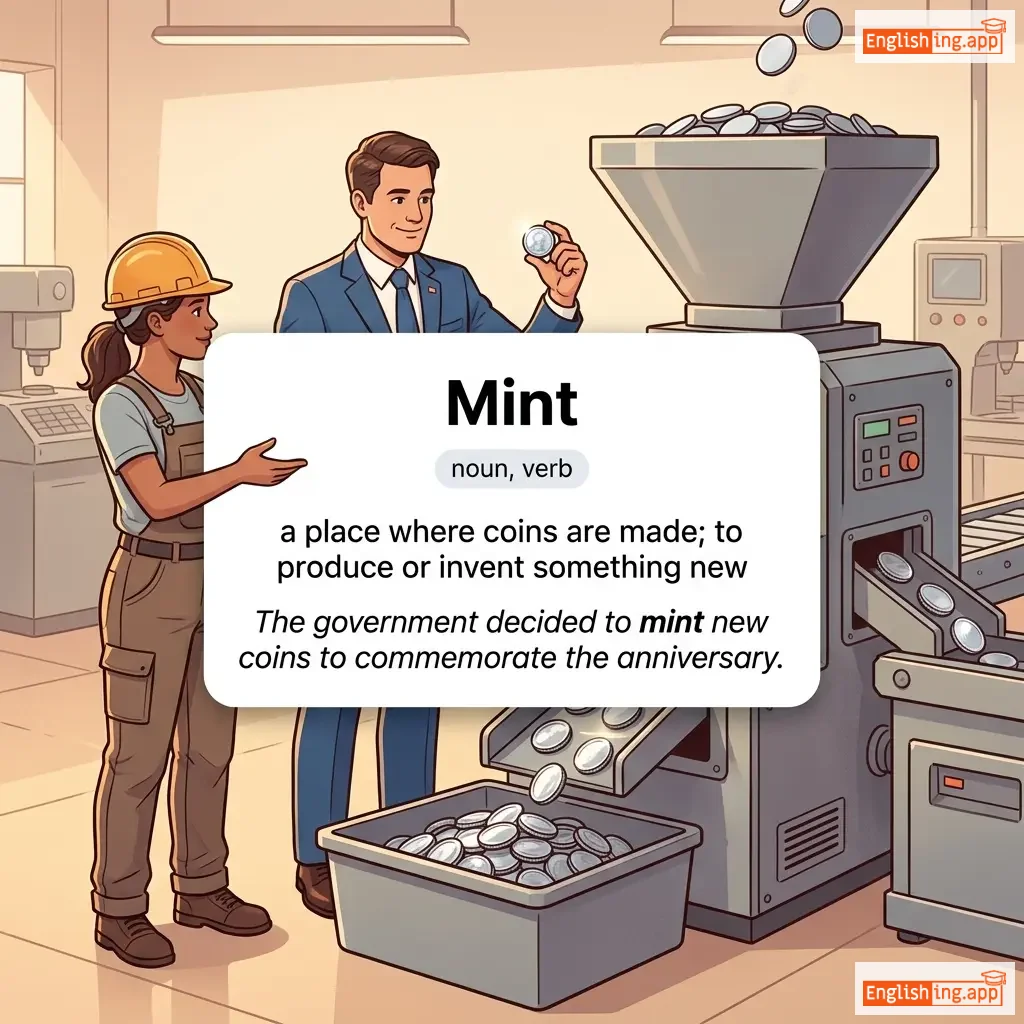
Mint definition card — visual illustration of the meaning
noun, verb
/mɪnt/
पुदीना / टकसाला (pudina / takshala)

a place where coins are made; to produce or invent something new

"The government decided to mint new coins to commemorate the anniversary."

"सरकार ने वर्षगांठ की याद में नए सिक्के बनाने का निर्णय लिया।" (Sarkar ne varshgath ki yaad mein naye sikke banane ka nirnay liya.)
adjective
/ˈmɪnəskjuːl/
सूक्ष्म (sookshm)

extremely small in size or importance

"She made only a minuscule contribution to the project."

"वह परियोजना में केवल एक सूक्ष्म योगदान कर पाई।" (Vah pariyojana mein keval ek sookshm yogdan kar pai.)
noun, adjective
/maɪˈnjuːt/ (adj), /ˈmɪnɪt/ (noun)
मिनट / सूक्ष्म (minat / sukhshm)

a period of sixty seconds; extremely small or detailed

"He examined the painting with minute attention to detail."

"उसने पेंटिंग को मिनट्स के साथ ध्यान से देखा।" (Usne painting ko minutes ke saath dhyan se dekha.)
noun
/maɪˈnjuːʃə/
सूक्ष्म विवरण (sookshm vivaran)

a small or trivial detail of something

"He was bored by the minutia of office paperwork."

"वह कार्यालय के कागजों के सूक्ष्म विवरण से ऊब चुका था।" (Vah karyalay ke kagazon ke sookshm vivaran se oob chuka tha.)
adverb
/maɪˈnjuːtli/
सूक्ष्म रूप से (sookshm roop se)

in very small detail; extremely carefully

"The detective examined the evidence minutely."

"जासूस ने प्रमाण को सूक्ष्म रूप से जांचा।" (jaasoos ne pramaan ko sookshm roop se jaancha)
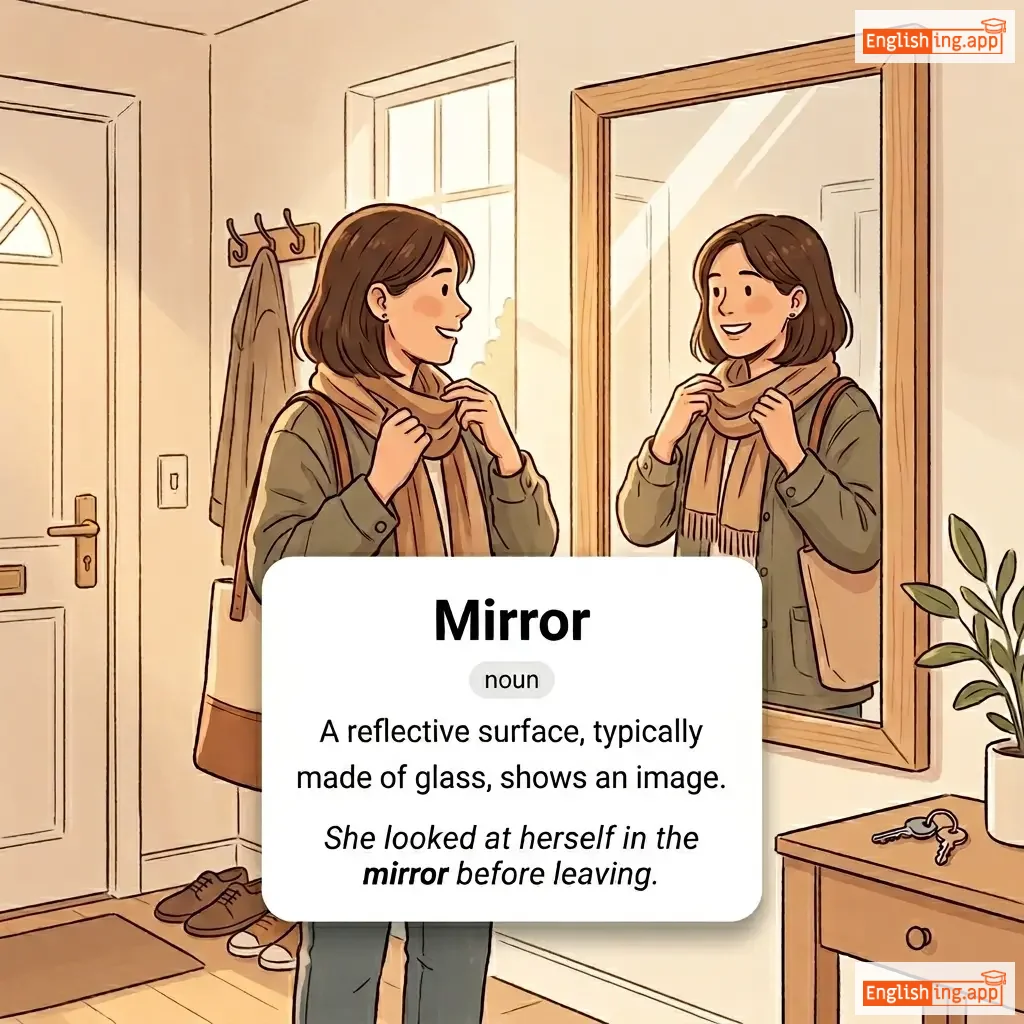
Mirror definition card — visual illustration of the meaning
noun
/ˈmɪrər/
आयना (aina)

A reflective surface, typically made of glass, that shows an image.

"She looked at herself in the mirror before leaving."

"वह दरवाजे के पास आईने में खुद को देखती है।" (Wah darwaze ke paas aaine mein khud ko dekhti hai.)
adjective, verb (past tense/participle of mire)
/ˈmaɪərd/
जटिल स्थिति में फंसना (jatil sthiti mein fansna)

Trapped or entangled in something, typically a difficult situation.

"The politician was mired in scandal."

"राजनीतिज्ञ घोटाले में फंसा हुआ था।" (rajnitijñ ghotale mein fansa hua tha.)
noun, verb
/ˈmaɪər/
कीचड़ / जटिलता (keechar / jatilta)

A stretch of swampy or boggy ground; as a verb, to entangle or involve someone in a difficult situation.

"The car was stuck in the mire after the heavy rain."

"गाड़ी भारी बारिश के बाद कीचड़ में फंसी हुई थी।" (gaadi bhaari barish ke baad keechar mein fansi hui thi.)
adjective
/mɪˈrækjələs/
चमत्कारी (chamatkari)

Extraordinarily wonderful or unusual, as if by a miracle.

"Her recovery after the accident was truly miraculous."

"दुर्घटना के बाद उसकी रिकवरी सच में चमत्कारी थी।" (Durghatna ke baad uski recovery sach mein chamatkari thi.)