Vocabularios

Descubra, aprenda y domine el vocabulario en inglés

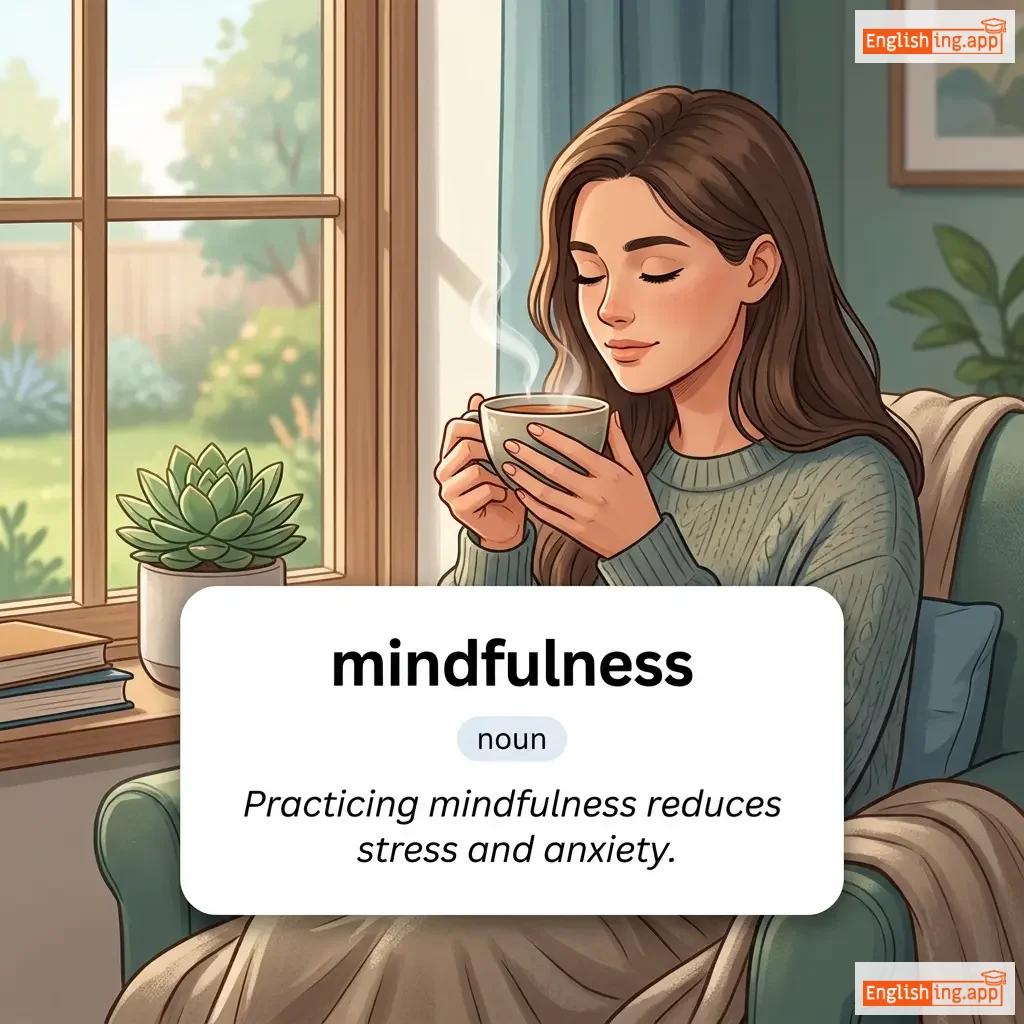
mindfulness definition card — visual illustration of the meaning
noun
/ˈmaɪnd.fʊl.nəs/
atención plena (atencion plena)

The quality or state of being conscious or aware of something; a mental state achieved by focusing one's awareness on the present moment.

"Practicing mindfulness reduces stress and anxiety."

"La práctica de la atención plena reduce el estrés y la ansiedad." (La practica de la atencion plena reduce el estres y la ansiedad.)
adjective
/ˈmaɪndləs/
sin sentido (sin sentido)

without thought or intelligence; done without consideration

"He was bored by the mindless tasks at work."

"Estaba aburrido por las tareas sin sentido en el trabajo." (Estaba aburrido por las tareas sin sentido en el trabajo.)
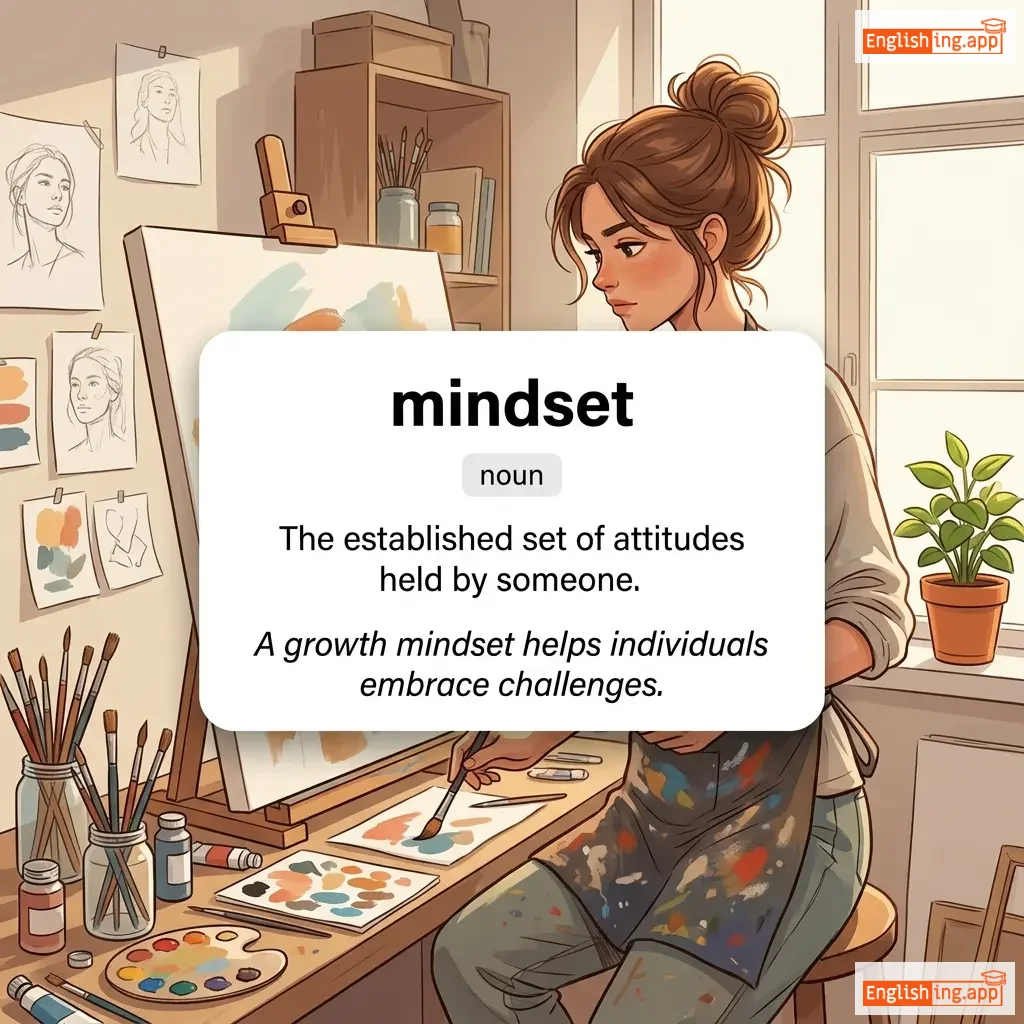
mindset definition card — visual illustration of the meaning
noun
ˈmaɪnd.set
mentalidad (mentalidad)

The established set of attitudes held by someone.

"A growth mindset helps individuals embrace challenges."

"Una mentalidad de crecimiento ayuda a las personas a aceptar los desafíos." (Una mentalidad de crecimiento ayuda a las personas a aceptar los desafíos.)
noun, pronoun, verb
/maɪn/
mina / mío (mina / mio)

a place where minerals are dug from the ground; or something belonging to me

"The workers went deep into the mine to extract coal."

"Los trabajadores fueron al fondo de la mina para extraer carbón." (Los trabajadores fueron al fondo de la mina para extraer carbón.)
noun
/ˈmaɪnə(r)/
minero (minero)

a person who works in a mine, extracting minerals or other resources

"The miner worked in the coal mine for many years."

"El minero trabajó en la mina de carbón durante muchos años." (El minero trabajó en la mina de carbón durante muchos años.)
noun
/ˈmɪnərəl/
mineral (mineral)

a naturally occurring substance that is solid and inorganic, often used in industry or nutrition

"Calcium is an important mineral for strong bones."

"El calcio es un mineral importante para los huesos fuertes." (El calcio es un mineral importante para los huesos fuertes.)
verb
/ˈmɪŋɡl/
mezclarse (mezclarse)

to mix or combine; to move among people and engage socially

"Guests mingled at the party, chatting and laughing together."

"Los invitados minglaban en la fiesta, charlando y riendo juntos." (Los invitados minglaban en la fiesta, charlando y riendo juntos.)
adjective
/ˈmɪn.dʒi/
tacaño; avaro (tacano; avaro)

mean or stingy; unwilling to spend money

"He is too mingy to spend money on anything but necessities."

"Él es demasiado tacaño para gastar dinero en algo que no sea lo esencial." (El es demasiado tacano para gastar dinero en algo que no sea lo esencial.)
noun/adjective
/ˈmɪnətʃər/ or /ˈmɪniətʃʊr/
versión en miniatura (version en miniatura)

a very small version of something; small in scale or size

"The artist created a miniature model of the castle."

"El artista creó un modelo en miniatura del castillo." (El artista creo un modelo en miniatura del castillo.)
adjective
/ˈmɪnɪməl/
mínimo (minimo)

the smallest or least amount possible

"The damage to the car was minimal after the accident."

"El daño al coche fue mínimo después del accidente." (El dano al coche fue minimo despues del accidente.)
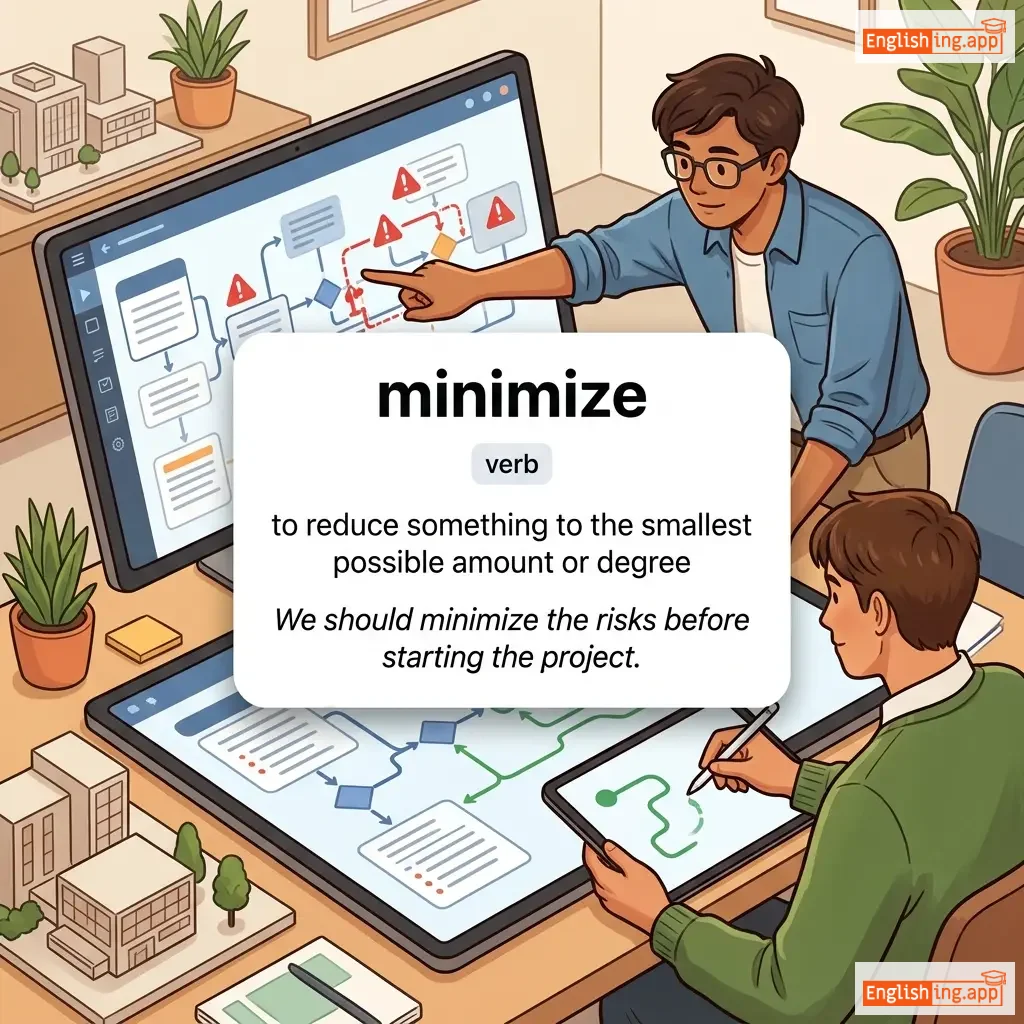
minimize definition card — visual illustration of the meaning
verb
/ˈmɪnɪmaɪz/
minimizar (minimizar)

to reduce something to the smallest possible amount or degree

"We should minimize the risks before starting the project."

"Debemos minimizar los riesgos antes de comenzar el proyecto." (Debemos minimizar los riesgos antes de comenzar el proyecto.)
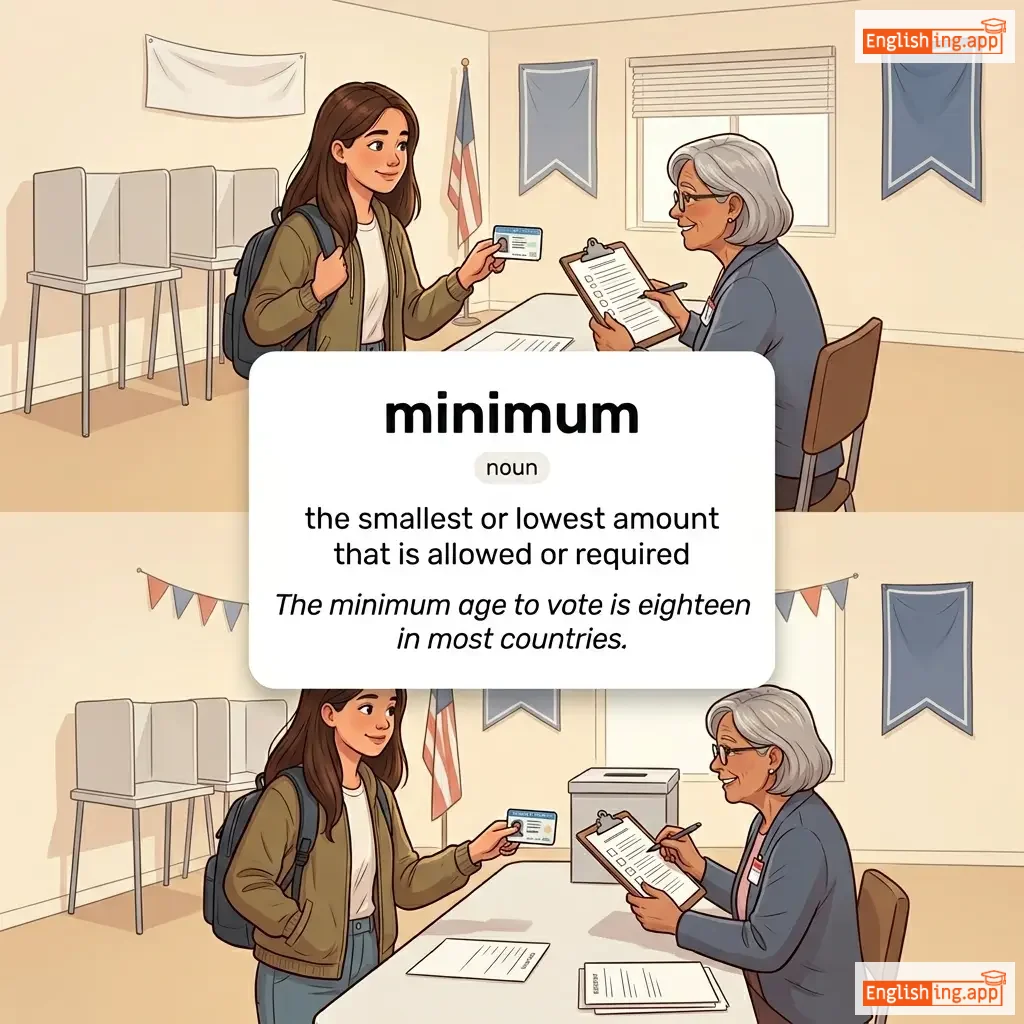
minimum definition card — visual illustration of the meaning
noun
/ˈmɪnɪməm/
mínimo (minimo)

the smallest or lowest amount that is allowed or required

"The minimum age to vote is eighteen in most countries."

"La edad mínima para votar es dieciocho en la mayoría de los países." (La edad minima para votar es dieciocho en la mayoria de los paises.)
noun
/ˈmaɪnɪŋ/
minería (mineria)

the process of extracting valuable minerals or other resources from the earth

"Mining in this area has increased in recent years."

"La minería en esta área ha aumentado en los últimos años." (La mineria en esta area ha aumentado en los ultimos anos.)
adjective
/ˈmɪn.ɪ.skjuːl/
minúsculo (minusculo)

Extremely small or tiny.

"The error was so miniscule that nobody noticed it."

"El error era tan minúsculo que nadie lo notó." (El error era tan minusculo que nadie lo noto.)
🧑‍🤝‍🧑

minion (mínion)

noun
/ˈmɪn.i.ən/
esbirro (esbirro)

A follower or underling of a powerful person, especially a servile one.

"The dictator was surrounded by loyal minions who carried out his orders."

"El dictador estaba rodeado de esbirros leales que cumplían sus órdenes." (El dictador estaba rodeado de esbirros leales que cumplían sus órdenes.)
noun
/ˌmɪsˈkɒndʌkt/
mala conducta (mala conducta)

Improper or unacceptable behavior, especially by a professional or authority figure.

"The teacher was dismissed for serious misconduct."

"La maestra fue despedida por mala conducta grave." (La maestra fue despedida por mala conducta grave.)
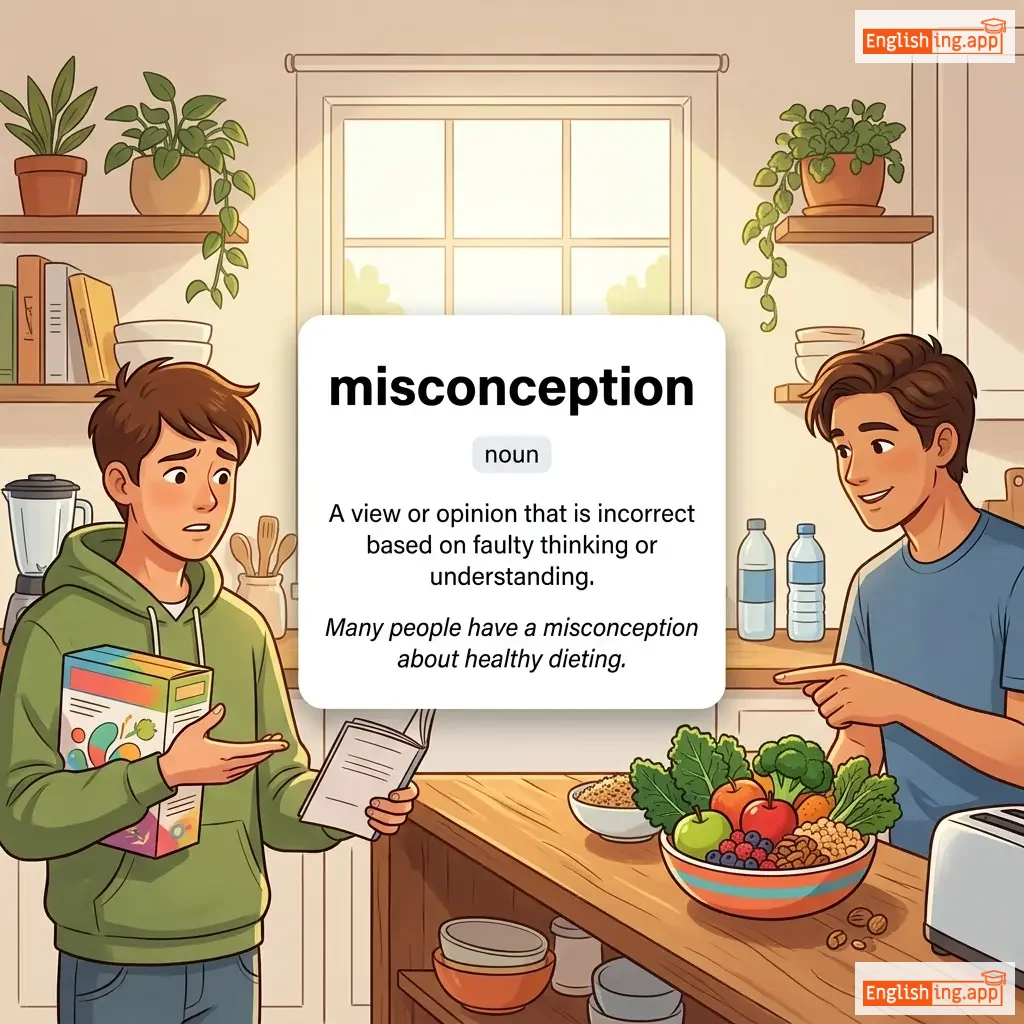
misconception definition card — visual illustration of the meaning
noun
/ˌmɪs.kənˈsep.ʃən/
idea equivocada, malentendido (idea equivocada, malentendido)

A view or opinion that is incorrect based on faulty thinking or understanding.

"Many people have a misconception about healthy dieting."

"Muchas personas tienen una idea equivocada sobre la dieta saludable." (Muchas personas tienen una idea equivocada sobre la dieta saludable.)
verb
/ˌmɪskənˈsiːv/
malinterpretar (malinterpretar)

To misunderstand or form an incorrect idea about something.

"He misconceived the purpose of the project."

"Él malinterpretó el propósito del proyecto." (Él malinterpretó el propósito del proyecto.)
adjective
/ˈmɪstʃɪvəs/
travieso (travieso)

Causing or showing a fondness for causing trouble in a playful way.

"She gave him a mischievous smile."

"Ella le dio una sonrisa traviesa." (Ella le dio una sonrisa traviesa.)
noun
/ˈmɪstʃɪf/
travesura (travesura)

Playful misbehavior or troublemaking.

"The children were full of mischief during the party."

"Los niños estaban llenos de travesura durante la fiesta." (Los niños estaban llenos de travesura durante la fiesta.)
noun
/ˌmɪsˈtʃæns/
infortunio (mischance)

An unfortunate accident or event; bad luck.

"By mischance, he missed the last train home."

"Por desgracia, perdió el último tren para volver a casa." (Por desgracia, perdio el ultimo tren para volver a casa.)
noun
/ˈmɪsəleɪni/
miscelánea (miscelanea)

A collection or mixture of various things.

"The book is a miscellany of essays and poems."

"El libro es una miscelánea de ensayos y poemas." (El libro es una miscelanea de ensayos y poemas.)
adjective
/ˌmɪsəˈleɪniəs/
misceláneo (miscelaneo)

Consisting of a variety of different items or types.

"The drawer was filled with miscellaneous objects."

"El cajón estaba lleno de objetos misceláneos." (El cajón estaba lleno de objetos misceláneos.)
noun
/mɪˌsɛdʒəˈneɪʃən/
mestizaje (mestizaje)

the interbreeding of people considered to be of different racial types

"The law once prohibited miscegenation in many countries."

"La ley prohibió la miscegenación en muchos países." (La ley prohibió la miscegenación en muchos países.)
noun
/ˌmɪs.bɪˈheɪ.vjər/
Comportamiento malo o inaceptable, especialmente de niños o en situaciones formales (misbehaviour)

Bad or unacceptable behavior, especially by children or in formal situations

"The student was punished for his misbehaviour in class."

"El estudiante fue castigado por su mala conducta en clase." (El estudiante fue castigado por su mala conducta en clase.)
noun
/ˌmɪsbɪˈheɪvjər/
mala conducta (mala conducta)

bad or improper behavior

"The teacher punished the student for his misbehavior."

"El maestro castigó al estudiante por su mala conducta." (El maestro castigó al estudiante por su mala conducta.)
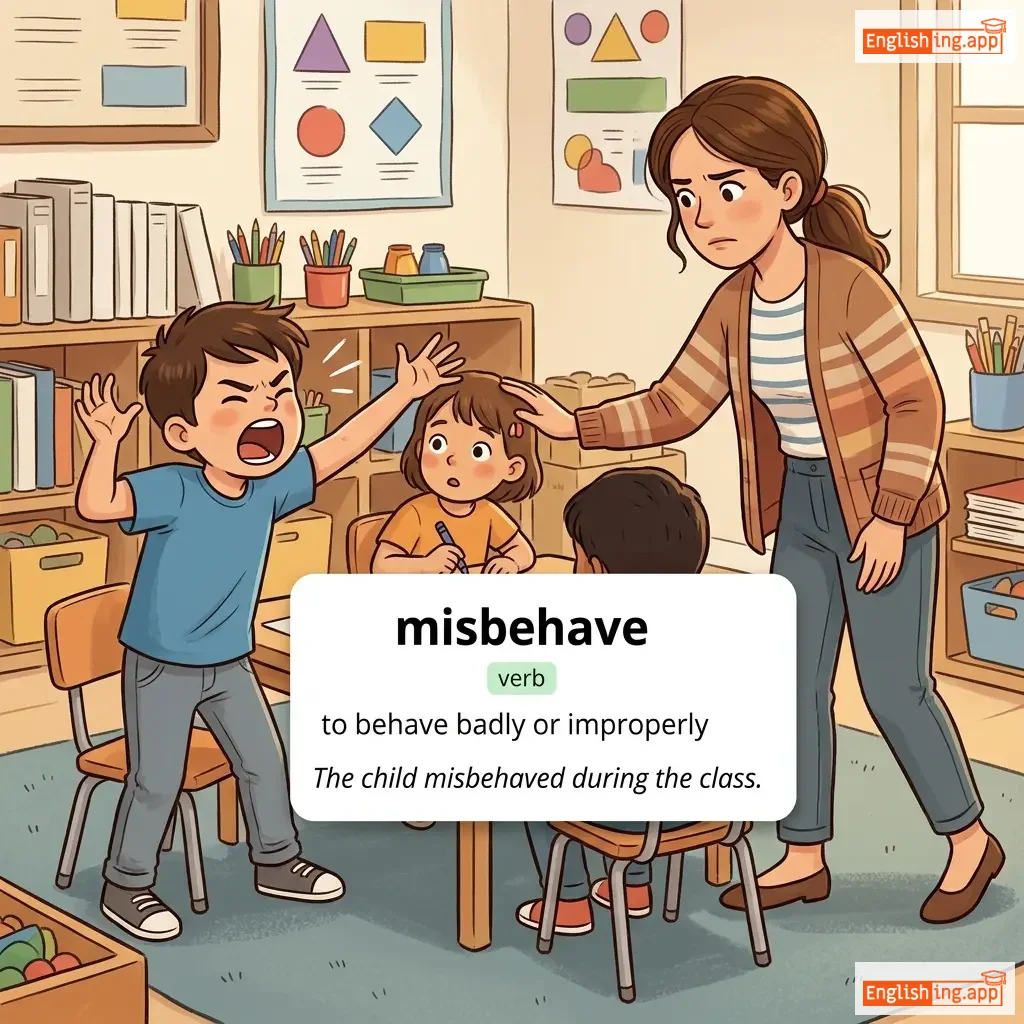
misbehave definition card — visual illustration of the meaning
verb
/ˌmɪsbɪˈheɪv/
portarse mal (portarse mal)

to behave badly or improperly

"The child misbehaved during the class."

"El niño se portó mal durante la clase." (El niño se portó mal durante la clase.)
verb
/ˌmɪs.əˈtrɪb.juːt/
mal atribuir (mal atribuir)

to incorrectly credit something, such as a work or remark, to the wrong person or source

"The quote was misattributed to Shakespeare."

"La cita fue mal atribuida a Shakespeare." (La cita fue mal atribuida a Shakespeare.)
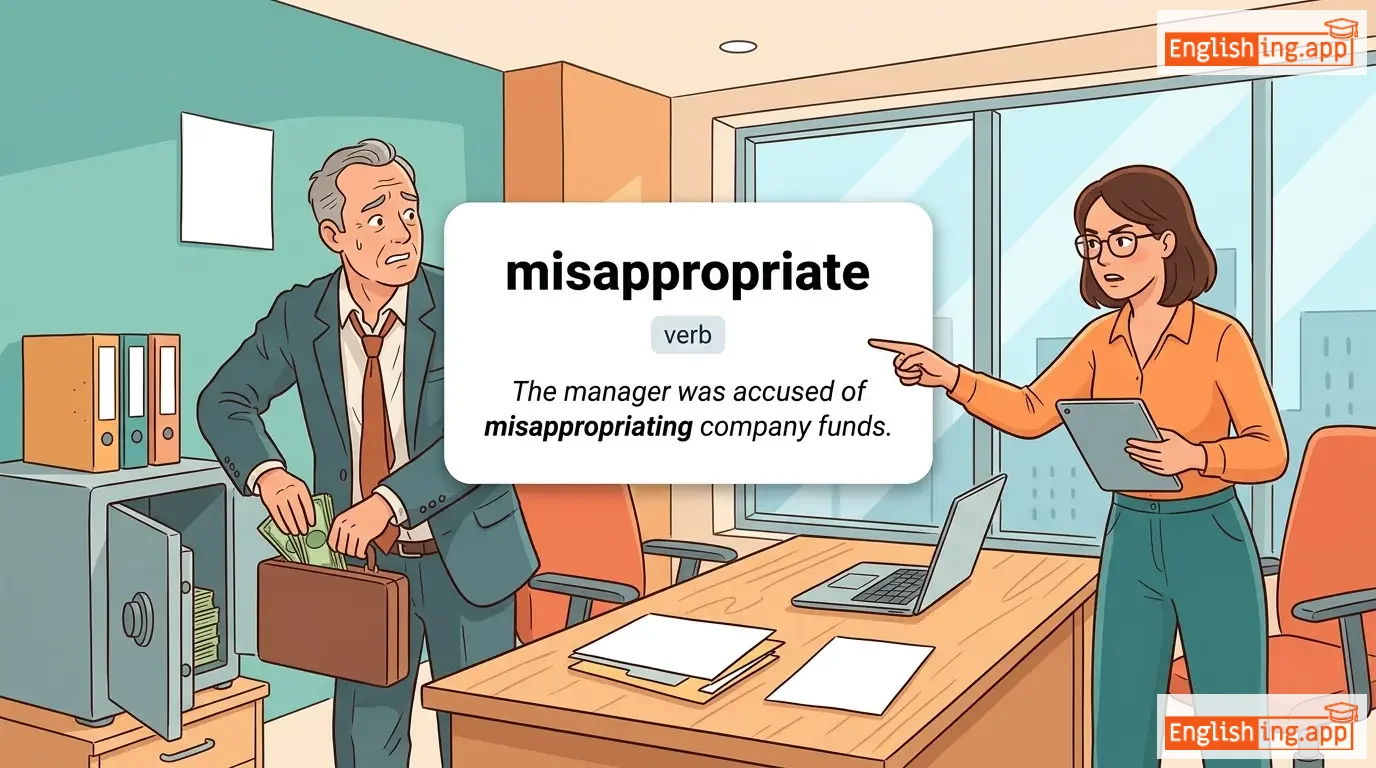
misappropriate definition card — visual illustration of the meaning
verb
/ˌmɪsəˈproʊprieɪt/
malversar (malversar)

to take or use something dishonestly, especially money or property, for one's own use

"The manager was accused of misappropriating company funds."

"El gerente fue acusado de malversar los fondos de la empresa." (El gerente fue acusado de malversar los fondos de la empresa.)
noun
/ˌmɪsæprɪˈhɛnʃən/
malentendido (malentendido)

a mistaken belief or misunderstanding

"There is a common misapprehension about the causes of the disease."

"Existe un malentendido común sobre las causas de la enfermedad." (Existe un malentendido común sobre las causas de la enfermedad.)
verb
/ˌmɪsæprɪˈhɛnd/
malinterpretar (malinterpretar)

to misunderstand or misinterpret something

"He misapprehended the teacher’s instructions and did the task incorrectly."

"Él malinterpretó las instrucciones del profesor e hizo la tarea incorrectamente." (Él malinterpretó las instrucciones del profesor e hizo la tarea incorrectamente.)
noun
/mɪˈsænθrəpi/
misantropía (misantropia)

a general dislike, distrust, or hatred of humankind

"His misanthropy was evident in the way he avoided people."

"Su misantropía era evidente en la forma en que evitaba a las personas." (Su misantropía era evidente en la forma en que evitaba a las personas.)
adjective
/ˌmɪsənˈθrɑːpɪk/
misantrópico (misantronpico)

having or showing a dislike of humankind

"His misanthropic attitude made it difficult for him to make friends."

"Su actitud misantrópica hacía difícil que hiciera amigos." (Su actitud misantropica hacia dificil que hiciera amigos.)
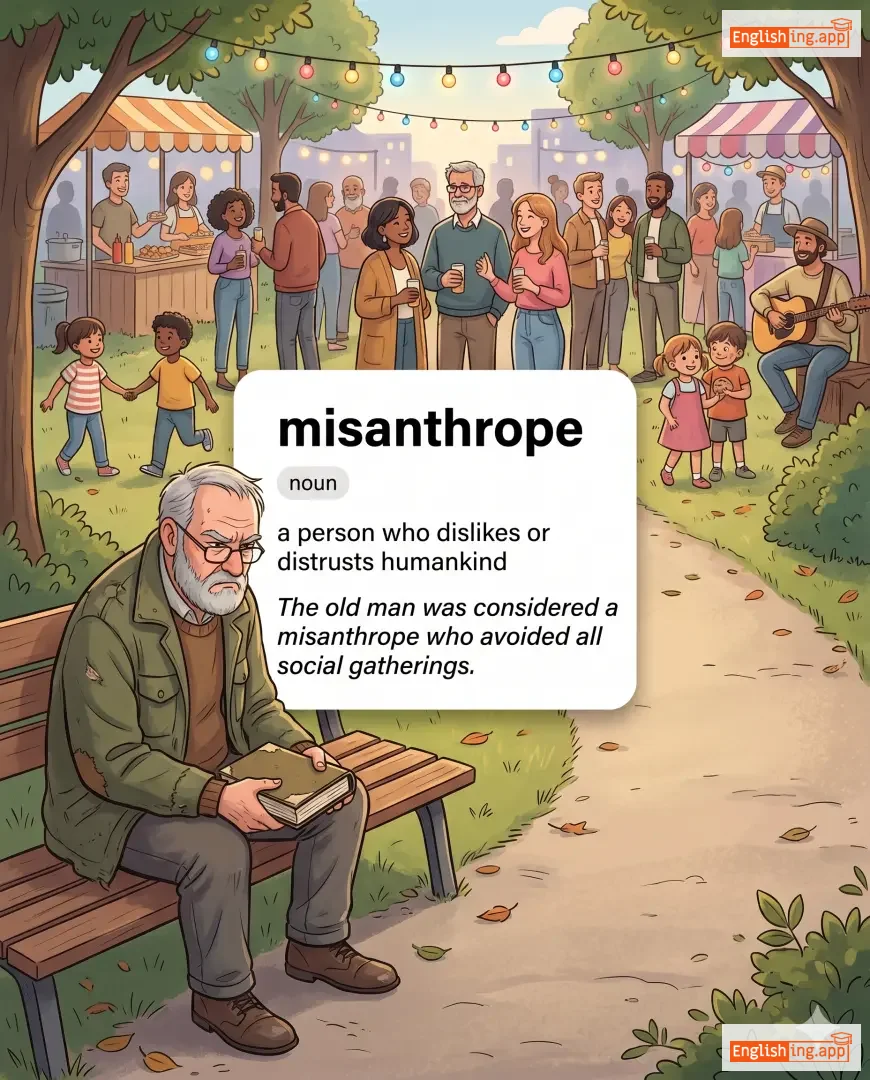
misanthrope definition card — visual illustration of the meaning
noun
/ˈmɪsənˌθroʊp/
misantropo (misantropo)

a person who dislikes or distrusts humankind

"The old man was considered a misanthrope who avoided all social gatherings."

"El hombre viejo era considerado un misántropo que evitaba todas las reuniones sociales." (El hombre viejo era considerado un misántropo que evitaba todas las reuniones sociales.)
noun
/mɜːrθ/
alegría (alegria)

Great joy, amusement, or laughter.

"The festival was full of mirth and laughter."

"El festival estaba lleno de alegría y risas." (El festival estaba lleno de alegria y risas.)
noun
/ˌmɪsədˈvɛntʃər/
mala aventura (mala aventura)

An unlucky accident, mishap, or unfortunate event.

"He broke his leg during a skiing misadventure."

"Se rompió la pierna durante una mala aventura en esquí." (Se rompio la pierna durante una mala aventura en esqui.)
noun
/ˈmɪnɪstər/
ministro (ministro)

a head of a government department; a person who leads a church

"The finance minister announced new tax policies."

"El ministro de finanzas anunció nuevas políticas fiscales." (El ministro de finanzas anunció nuevas políticas fiscales.)
noun
/ˌmɪn.ɪˈstreɪ.ʃən/
servicio (servicio)

The act of providing care, assistance, or religious service.

"She recovered thanks to the kind ministrations of the nurses."

"Se recuperó gracias a las amables ministraciones de las enfermeras." (Se recuperó gracias a las amables ministraciones de las enfermeras.)
noun
/ˈmɪn.ɪ.stri/
ministerio (ministerio)

A government department headed by a minister or the work of a religious minister.

"He works at the Ministry of Education."

"Él trabaja en el Ministerio de Educación." (Él trabaja en el Ministerio de Educación.)
adjective/noun
/ˈmaɪ.nər/
menor / insignificante (menor / insignificante)

less important, serious, or significant; a person under the legal age

"Luckily, the accident caused only minor injuries."

"Afortunadamente, el accidente causó solo lesiones menores." (Afortunadamente, el accidente causó solo lesiones menores.)
noun
/maɪˈnɔːr.ɪ.ti/
minoría (minoría)

A smaller number or part, especially a group differing from the majority.

"The law aims to protect the rights of ethnic minorities."

"La ley tiene como objetivo proteger los derechos de las minorías étnicas." (La ley tiene como objetivo proteger los derechos de las minorías étnicas.)
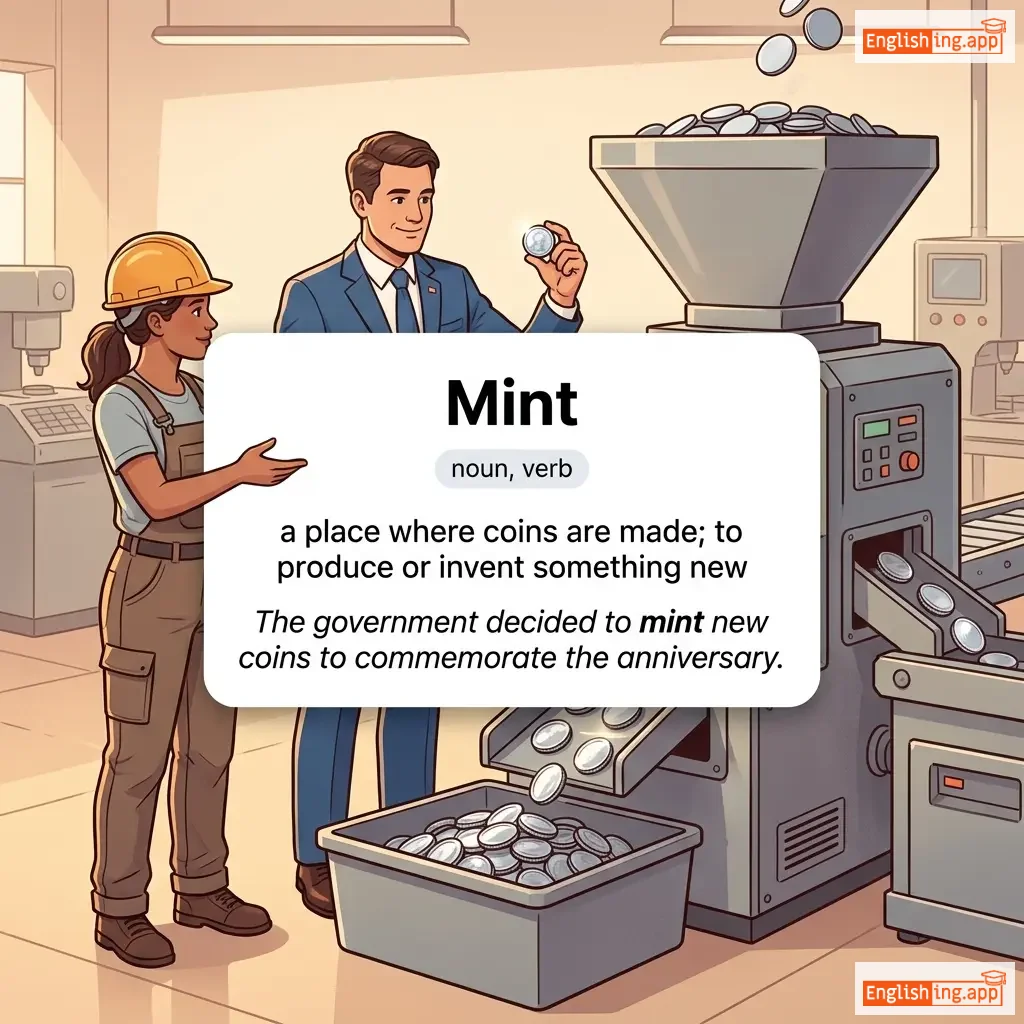
Mint definition card — visual illustration of the meaning
noun, verb
/mɪnt/
menta / casa de la moneda (menta / casa de la moneda)

a place where coins are made; to produce or invent something new

"The government decided to mint new coins to commemorate the anniversary."

"El gobierno decidió acuñar nuevas monedas para conmemorar el aniversario." (El gobierno decidió acuñar nuevas monedas para conmemorar el aniversario.)
adjective
/ˈmɪnəskjuːl/
minúsculo (minusculo)

extremely small in size or importance

"She made only a minuscule contribution to the project."

"Ella hizo solo una contribución minúscula al proyecto." (Ella hizo solo una contribucion minuscula al proyecto.)
noun, adjective
/maɪˈnjuːt/ (adj), /ˈmɪnɪt/ (noun)
minuto / minúsculo (minuto / minusculo)

a period of sixty seconds; extremely small or detailed

"He examined the painting with minute attention to detail."

"Examinó la pintura con mucha atención al minuto detalle." (Examinó la pintura con mucha atención al minuto detalle.)
noun
/maɪˈnjuːʃə/
minucias (minusias)

a small or trivial detail of something

"He was bored by the minutia of office paperwork."

"Estaba aburrido por las minucias del papeleo de la oficina." (Estaba aburrido por las minucias del papeleo de la oficina.)
adverb
/maɪˈnjuːtli/
minuciosamente (minuciosamente)

in very small detail; extremely carefully

"The detective examined the evidence minutely."

"El detective examinó la evidencia minuciosamente." (El detective examinó la evidencia minuciosamente.)
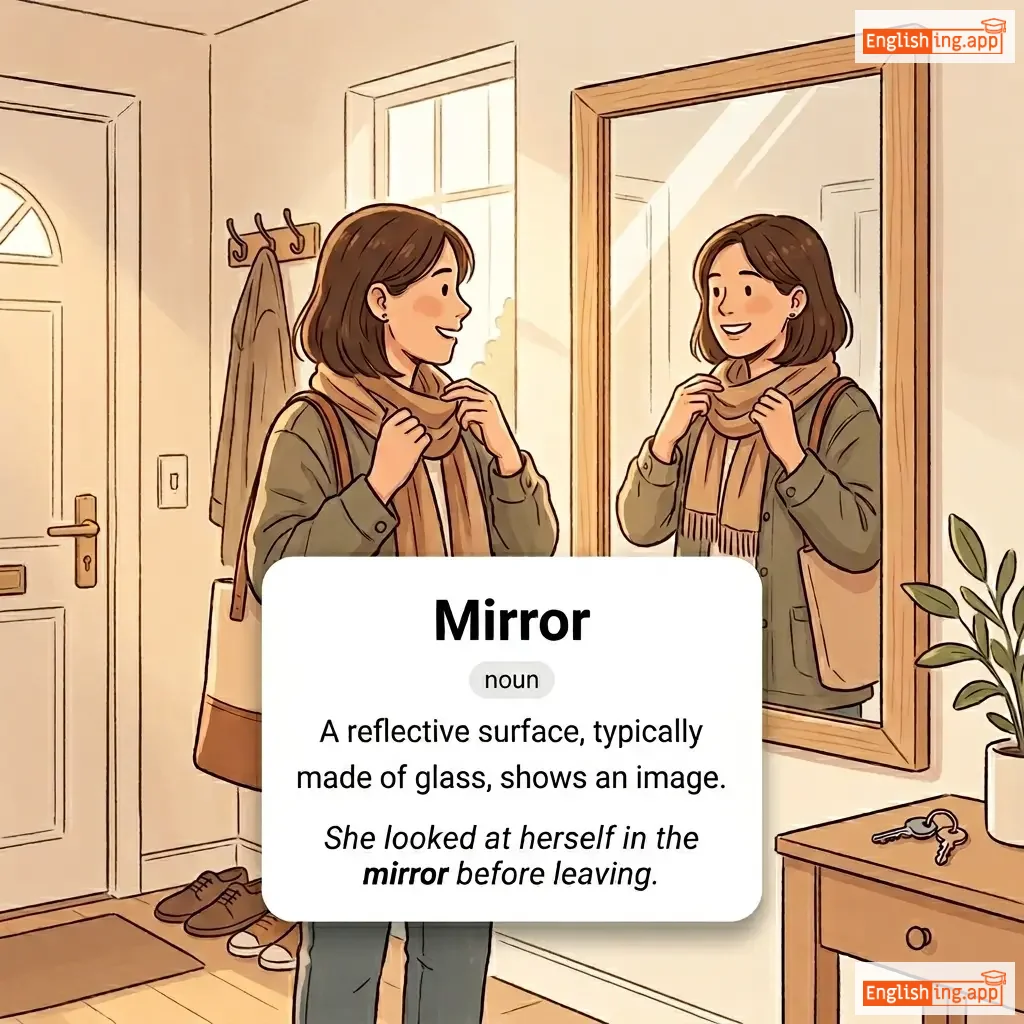
Mirror definition card — visual illustration of the meaning
noun
/ˈmɪrər/
espejo (espejo)

A reflective surface, typically made of glass, that shows an image.

"She looked at herself in the mirror before leaving."

"Ella se miró en el espejo antes de salir." (Ella se miro en el espejo antes de salir.)
adjective, verb (past tense/participle of mire)
/ˈmaɪərd/
atrapado (atrapado)

Trapped or entangled in something, typically a difficult situation.

"The politician was mired in scandal."

"El político estaba atrapado en un escándalo." (El politico estaba atrapado en un escandalo.)
noun, verb
/ˈmaɪər/
lodazal / enredo (lodazal / enredo)

A stretch of swampy or boggy ground; as a verb, to entangle or involve someone in a difficult situation.

"The car was stuck in the mire after the heavy rain."

"El carro se quedó atascado en el lodazal después de la fuerte lluvia." (El carro se quedo atascado en el lodazal despues de la fuerte lluvia.)
adjective
/mɪˈrækjələs/
milagroso (milagroso)

Extraordinarily wonderful or unusual, as if by a miracle.

"Her recovery after the accident was truly miraculous."

"Su recuperación después del accidente fue verdaderamente milagrosa." (Su recuperación después del accidente fue verdaderamente milagrosa.)