词汇表

英语词汇词典 | 单词含义、定义和示例

verb
/ˈmæk.sɪ.maɪz/
最大化 (zuìdà huà)

to increase something as much as possible

"The company aims to maximize its profits this year."

"公司今年旨在最大化其利润。" (Gōngsī jīnnián zhǐ zài zuìdà huà qí lìrùn.)
noun
/ˈmæksɪm/
格言 (geyan)

a short, well-known statement expressing a general truth or rule of conduct

"Honesty is a timeless maxim valued in every culture."

"诚实是一条在每种文化中都受到尊重的永恒格言。" (Chengshi shi yitiaou zai meizhong wenhua zhong dou shoudao zunzhong de yongheng ge yan.)
adjective
/ˈmɔːkɪʃ/
过于伤感 (guòyú shānggǎn)

excessively sentimental, often to the point of being sickly

"The movie was criticized for its mawkish sentimentality."
"电影因过于伤感的情感而受到批评。" (Diànyǐng yīn guòyú shānggǎn de qínggǎn ér shòudào pīpíng.)
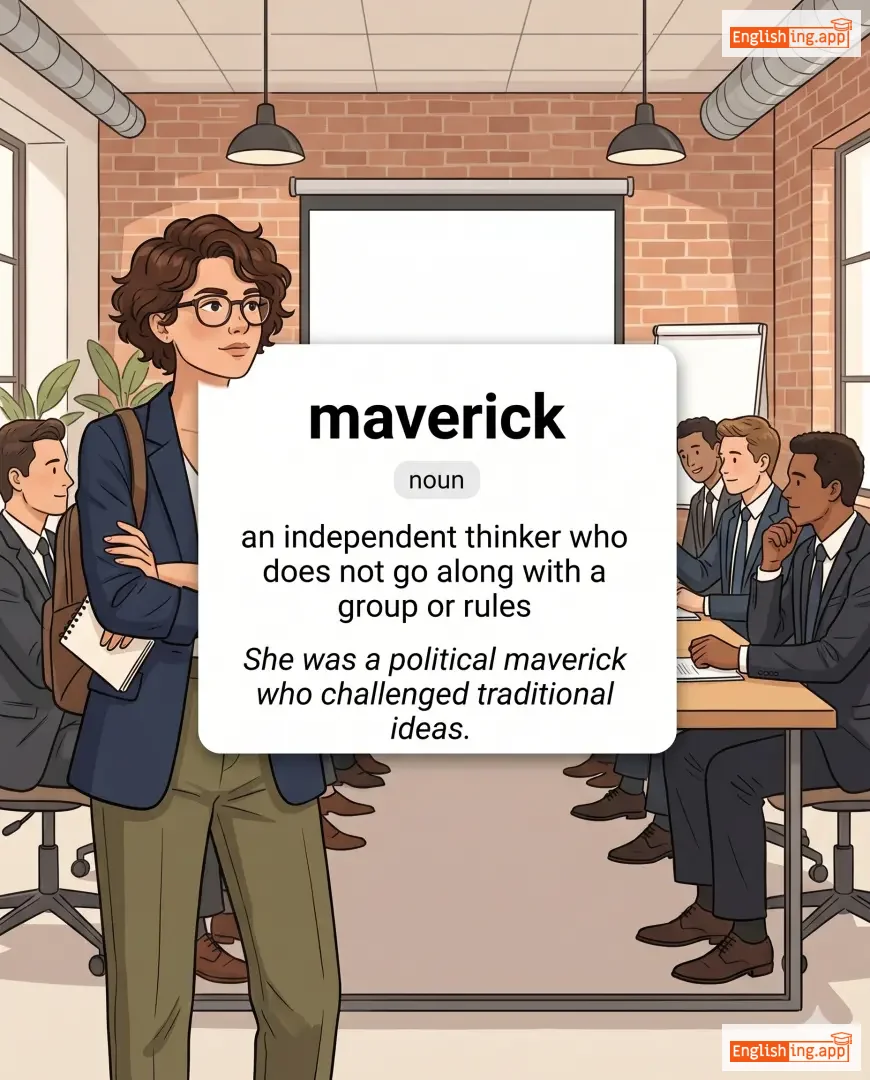
maverick definition card — visual illustration of the meaning
noun
/ˈmævərɪk/
特立独行者 (tè lì dú xíng zhě)

an independent thinker who does not go along with a group or rules

"She was a political maverick who challenged traditional ideas."

"她是一个政治上的特立独行者,挑战传统的思想。" (Tā shì yī gè zhèng zhì shàng de tè lì dú xíng zhě, tiǎo zhàn chuán tǒng de sī xiǎng.)
🧑‍🏫

maven (梅文)

noun
/ˈmeɪvən/
专家 (zhuānjiā)

an expert or connoisseur in a particular field

"He is a tech maven who always knows the latest trends."

"他是一个科技领域的专家,总是知道最新的趋势。" (Tā shì yīgè kējì lǐngyù de zhuānjiā, zǒng shì zhīdào zuìxīn de qūshì.)
adjective
/moʊv/
浅紫色 (qian zi se)

a pale purple color with a grayish or bluish tinge

"She wore a beautiful mauve dress to the party."

"她穿着一件漂亮的浅紫色连衣裙参加了聚会。" (Ta chuan zhuo yi jian piaoliang de qian zise lian yi qun can jia le ju hui.)
noun
/ˌmɔːzəˈliːəm/
陵墓 (lingmu)

A large stately building that houses a tomb or several tombs.

"The king was buried in a grand mausoleum."

"国王被埋葬在一座宏伟的陵墓中。" (Guówáng bèi mǎizàng zài yī zuò hóngwěi de língmù zhōng.)
verb
/ˈmɔːndər/
胡言乱语 (hú yán luàn yǔ)

To speak or move aimlessly and incoherently.

"He maundered on about his old memories."

"他漫无目的地谈论着他的旧记忆。" (Tā màn wú mù dì de tán lùn zhe tā de jiù jì yì.)
verb
/mɔːl/
伤害 (shānghài)

To wound or injure someone by scratching or tearing; to handle roughly.

"The bear mauled the camper in the forest."

"那只熊在森林里伤害了露营者。" (Nà zhī xióng zài sēnlín lǐ shānghài le lùyíng zhě.)
adjective
/ˈmɔːdlɪn/
过于伤感 (guòyú shānggǎn)

Overly sentimental, often tearfully or weakly emotional.

"He became maudlin after a few drinks."

"他喝了几杯后变得情绪化。" (Tā hē le jǐ bēi hòu biàn dé qíngxù huà.)
noun
/məˈtʃʊrəti/
成熟 (chengshou)

The state of being mature; full development physically or emotionally

"With age comes wisdom and emotional maturity."

"随着年龄的增长,智慧和情感成熟随之而来。" (Suizhe nianling de zengzhang, zhihui he qinggan chengshou suizhi erlai.)
adjective
/məˈtjʊr/
成熟 (chéngshú)

fully developed or grown, especially emotionally or intellectually

"She has become a mature and confident leader."

"她已经成为一位成熟且自信的领导者。" (Tā yǐjīng chéngwéi yī wèi chéngshú qiě zìxìn de lǐngdǎo zhě.)
Mattress definition card — visual illustration of the meaning
noun
/ˈmætrəs/
床垫 (chuángdiàn)

A large pad used as a bed or part of a bed, typically filled with soft material for sleeping on.

"She bought a new mattress for better sleep comfort."

"她买了一张新的床垫以获得更好的睡眠舒适度。" (Tā mǎile yī zhāng xīn de chuángdiàn yǐ huòde gèng hǎo de shuìmián shūshì dù.)
noun/verb
/ˈmætərz/
问题 / 重要 (wenti / zhongyao)

important topics, concerns, or issues; as a verb, to be of importance or significance

"What she thinks really matters to me."

"她认为的事情对我来说真的很重要。" (ta renwei de shiqing dui wo laishuo zhen de hen zhongyao.)
noun, verb
/ˈmætər/
问题 / 重要 (wenti / zhongyao)

A subject or situation under consideration; to be important.

"It doesn’t matter what others think."

"不在乎别人怎么想。" (Bù zàihu biérén zěnme xiǎng.)
noun
/ˈmeɪ.trɪks/
矩阵, 结构 (jǔzhèn, jiégòu)

An environment or structure in which something develops; also a mathematical array of numbers.

"The cultural matrix shaped his worldview."

"文化矩阵塑造了他的世界观。" (Wénhuà jǔzhèn sùzào le tā de shìjièguān.)
noun
/ˈmætrəˌmoʊni/
婚姻 (hūnyīn)

The state of being married; marriage.

"They entered into matrimony after years of friendship."

"他们在多年友谊后进入了婚姻。" (Tāmen zài duōnián yǒuyì hòu jìnrùle hūnyīn.)
verb
/məˈtrɪkjʊˌleɪt/

To enroll as a student in a college or university.

"She matriculated at Oxford University last year."

noun
/ˈmætrɪˌsaɪd/
弑母 (shimumu)

The act of killing one's own mother.

"The crime of matricide shocked the entire town."

"弑母罪震惊了整个城市。" (Shimumu zui zhenjing le zhengge chengshi.)
👩‍👩‍👧‍👦

matriarch

noun
/ˈmeɪ.triˌɑːrk/

A woman who is the head of a family or community.

"The matriarch of the family made all important decisions."

noun
/ˈmætɪneɪ/
下午场 (xiawu chang)

A performance, especially a play or movie, that takes place in the afternoon.

"We bought tickets for the Sunday afternoon matinee."

"我们买了周日下午场的票。" (Wo men mai le zhou ri xia wu chang de piao.)
noun
/ˌmæθəˈmætɪks/
数学 (shuxue)

the abstract science of number, quantity, and space; the study of numbers and their operations

"Mathematics helps us understand patterns in nature and the universe."

"数学帮助我们理解自然界和宇宙中的模式。" (Shuxue bangzhu women lijie ziran jie he yuzhou zhong de moshi.)
adverb
/ˌmæθəˈmætɪkli/
从数学上 (cong shuxue shang)

in a way that relates to mathematics; using numbers, formulas, or logical calculation

"The problem can be solved mathematically rather than by guesswork."

"这个问题可以从数学上解决,而不是靠猜测。" (zhege wenti keyi cong shuxue shang jiejue er bu shi kao caice)
adjective
/ˌmæθəˈmætɪkəl/
数学的 (shuxuede)

relating to mathematics or the use of mathematics

"The mathematical equation was difficult to solve."

"数学方程式很难解。" (Shuxue fangchengshi hen nan jie.)
noun
/mæθ/
数学 (shuxue)

The study of numbers, quantities, and shapes, also called mathematics.

"She is very good at math."

"她在数学方面非常出色。" (Ta zai shuxue fangmian feichang chuse.)
noun
/məˈtɜːrnəti/
母性 (mǔxìng)

The state of being a mother; motherhood

"The hospital has an excellent maternity ward for new mothers."

"医院为新妈妈提供了一个优秀的产科病房。" (Yīyuàn wèi xīn māmā tígōngle yīgè yōuxiù de chǎnkē bìngfáng.)
adjective
/məˈtɜːnəl/
母性 (mǔxìng)

Relating to a mother; showing motherly qualities such as care and protection.

"She showed great maternal affection toward the child."

"她表现出对孩子的极大母性关爱。" (Tā biǎoxiàn chū duì háizi de jí dà mǔxìng guān'ài.)
verb
/məˈtɪərɪəlaɪz/
实现 (shixian)

To become real or actual; to appear suddenly or in a physical form.

"The opportunity he had been waiting for finally materialized."

"他一直等待的机会终于实现了。" (Ta yizhi dengdai de jihui zhongyu shixianle.)
materialistic lifestyle definition card — visual illustration of the meaning
noun
məˌtɪərɪəˈlɪstɪk ˈlaɪfstaɪl
物质主义生活方式 (wùzhì zhǔyì shēnghuó fāngshì)

A way of living focused on acquiring material possessions and wealth.

"A materialistic lifestyle often leads to moral decline."

"物质主义生活方式常常导致道德衰退。" (Wùzhì zhǔyì shēnghuó fāngshì chángcháng dǎozhì dàodé shuāituì.)
noun
/məˈtɪəriəlɪzəm/
物质主义 (wùzhì zhǔyì)

A tendency to consider material possessions and physical comfort as more important than spiritual or moral values.

"The novel criticizes society's growing materialism."

"小说批评了社会日益增长的物质主义。" (Xiǎoshuō pīpíngle shèhuì rìyì zēngzhǎng de wùzhì zhǔyì.)
noun, adjective
/məˈtɪəriəl/
材料 (cailiao)

The substance or matter from which something is made; relating to physical things rather than ideas or emotions.

"The builder brought all the necessary material for the construction."
"建筑商带来了所有必要的建筑材料。" (Jianzhushang daile suoyou bixu de jianzhu cailiao.)
noun
/meɪt/
朋友, 伴侣 (pengyou, banlv)

a friend or companion; a partner in marriage or reproduction

"He went fishing with his old school mate."

"他和他老朋友去钓鱼了。" (Ta he ta lao pengyou qu diaoyu le.)
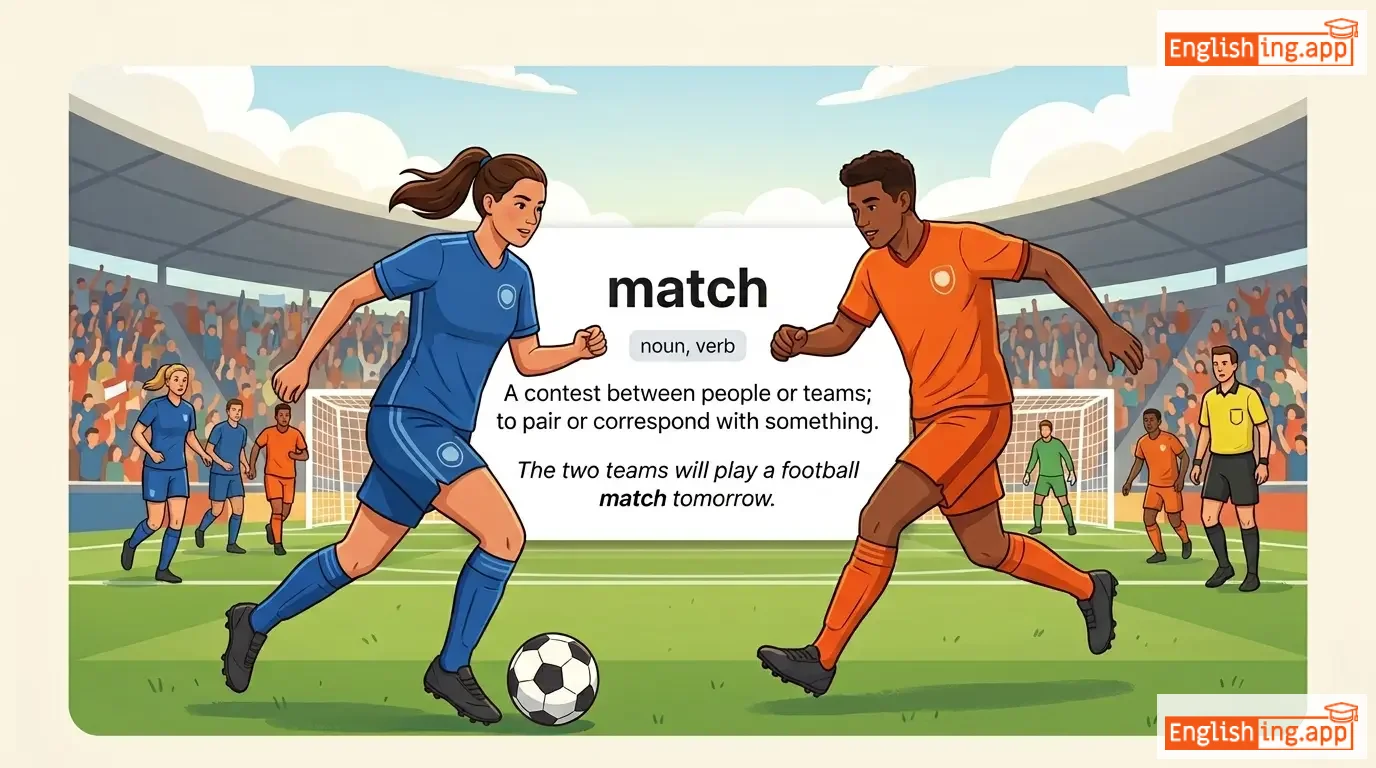
match definition card — visual illustration of the meaning
noun, verb
/mætʃ/
比赛 / 竞争 (bǐsài / jìngzhēng)

A contest between people or teams; to pair or correspond with something.

"The two teams will play a football match tomorrow."

"两队明天将进行一场足球比赛。" (Liǎng duì míngtiān jiāng jìnxíng yī chǎng zúqiú bǐsài.)
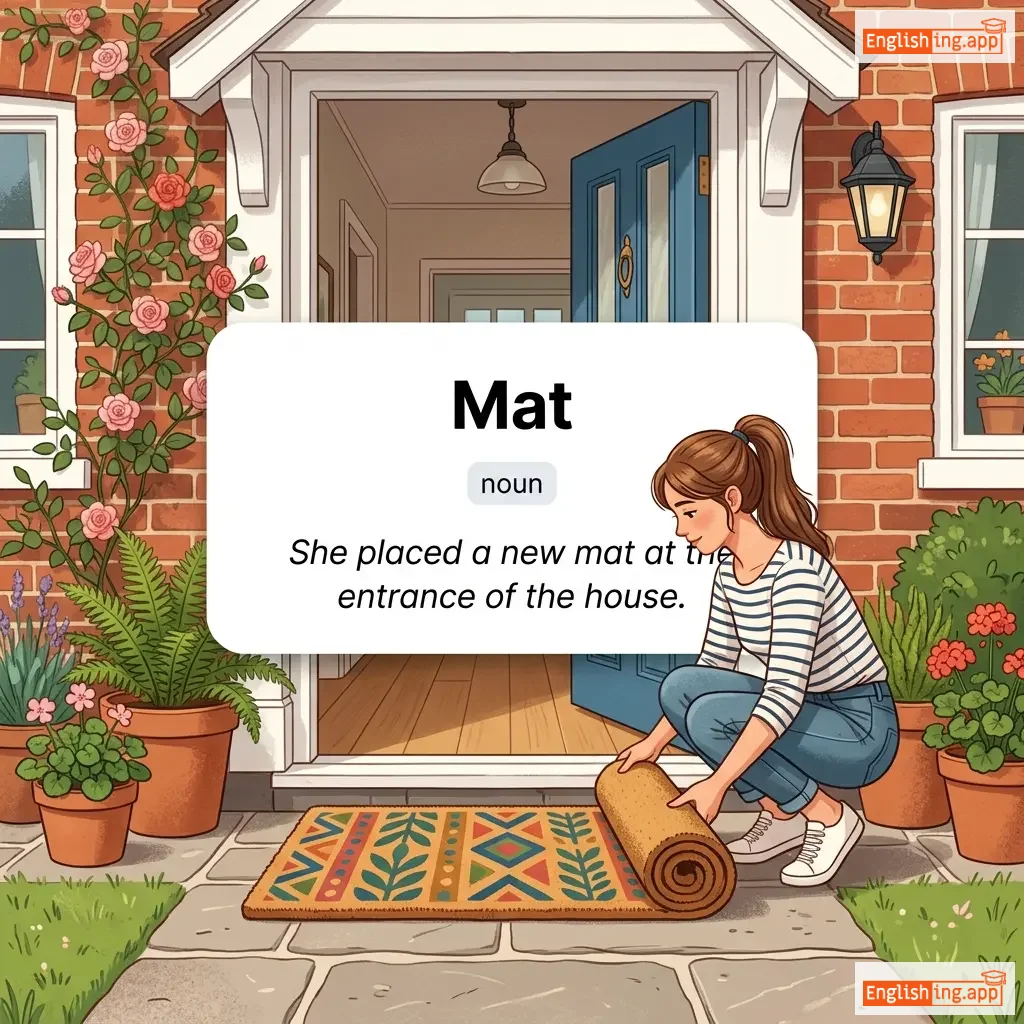
Mat definition card — visual illustration of the meaning
noun
/mæt/
垫子 (dianzi)

a piece of fabric material placed on a floor or surface for wiping feet or protection

"She placed a new mat at the entrance of the house."

"她在房子的入口处放了一块新垫子。" (Tā zài fángzi de rùkǒu chù fàngle yī kuài xīn diànzi.)
verb
/ˈmæstɪkeɪt/
咀嚼 (zuǐjué)

to chew food thoroughly before swallowing

"He slowly masticated the bread before swallowing."

"他在吞咽之前慢慢嚼着面包。" (Tā zài tūn yàn zhī qián màn man jiáo zhe miànbāo.)
noun
/ˈmæstəri/
精通 (jīngtōng)

comprehensive knowledge or skill in a subject or accomplishment

"She has achieved mastery in classical dance."
"她在古典舞蹈中达到了精通。" (Tā zài gǔdiǎn wǔdǎo zhōng dádàole jīngtōng.)
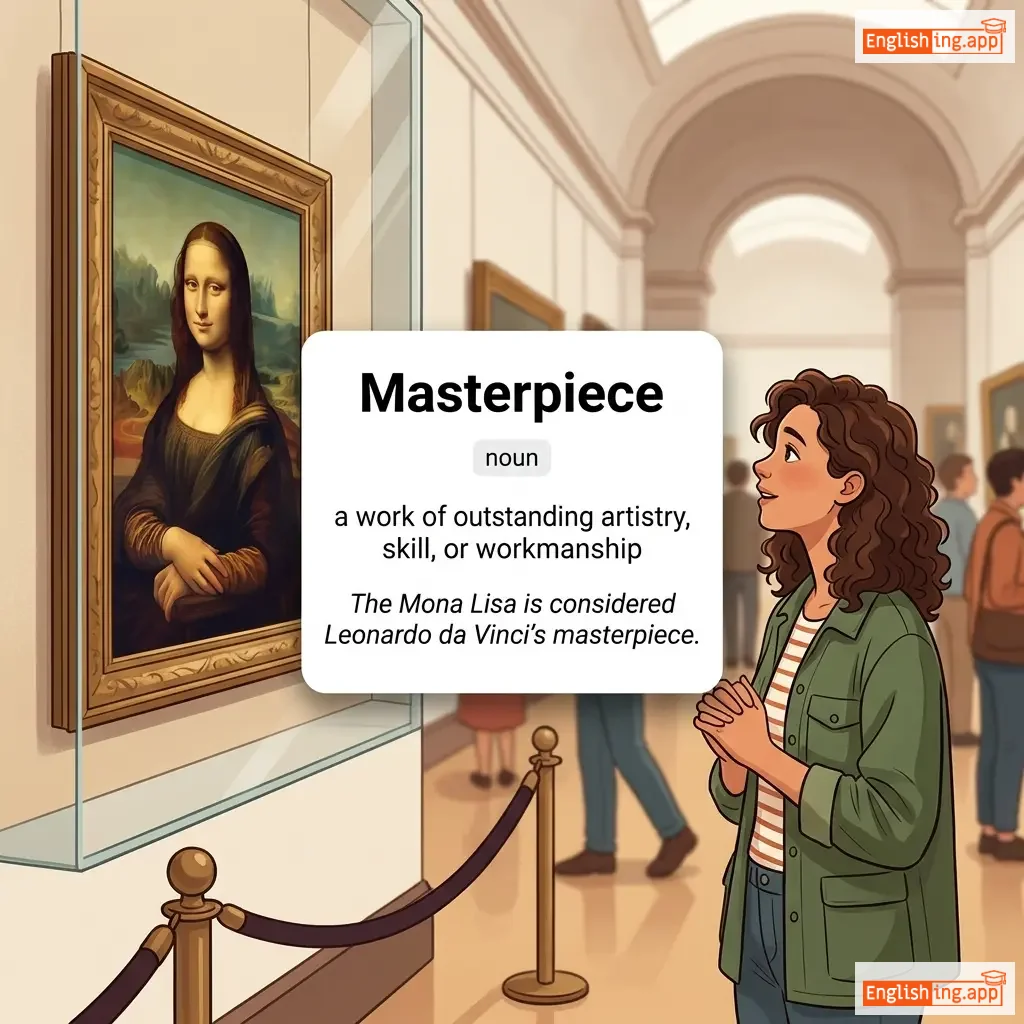
Masterpiece definition card — visual illustration of the meaning
noun
/ˈmæstərˌpiːs/
杰作 (jiézuò)

a work of outstanding artistry, skill, or workmanship

"The Mona Lisa is considered Leonardo da Vinci’s masterpiece."

"蒙娜丽莎被认为是达芬奇的杰作。" (Méngnàlìshā bèi rènwéi shì Dáfēnqí de jiézuò.)
noun, verb
/ˈmɑːstər/

A person with great skill or control in a subject or activity; to gain full command over something.

"She mastered the art of cooking Italian dishes."

adjective
/ˈmæsɪv/
巨大的 (jùdà de)

extremely large, heavy, or solid in size or degree

"The company made a massive investment in renewable energy."

"公司在可再生能源方面进行了巨额投资。" (Gōngsī zài kě zàishēng néngyuán fāngmiàn jìnxíngle jù'é tóuzī.)
verb
/məˈsɑːʒ/
按摩 (anmo)

to rub and press muscles to relieve pain or tension; to manipulate information

"The therapist will massage your back to reduce muscle tension."
"治疗师会按摩你的背部以减轻肌肉紧张。" (Zhi liao shi hui an mo ni de bei bu yi jian qing ji rou jin zhang.)
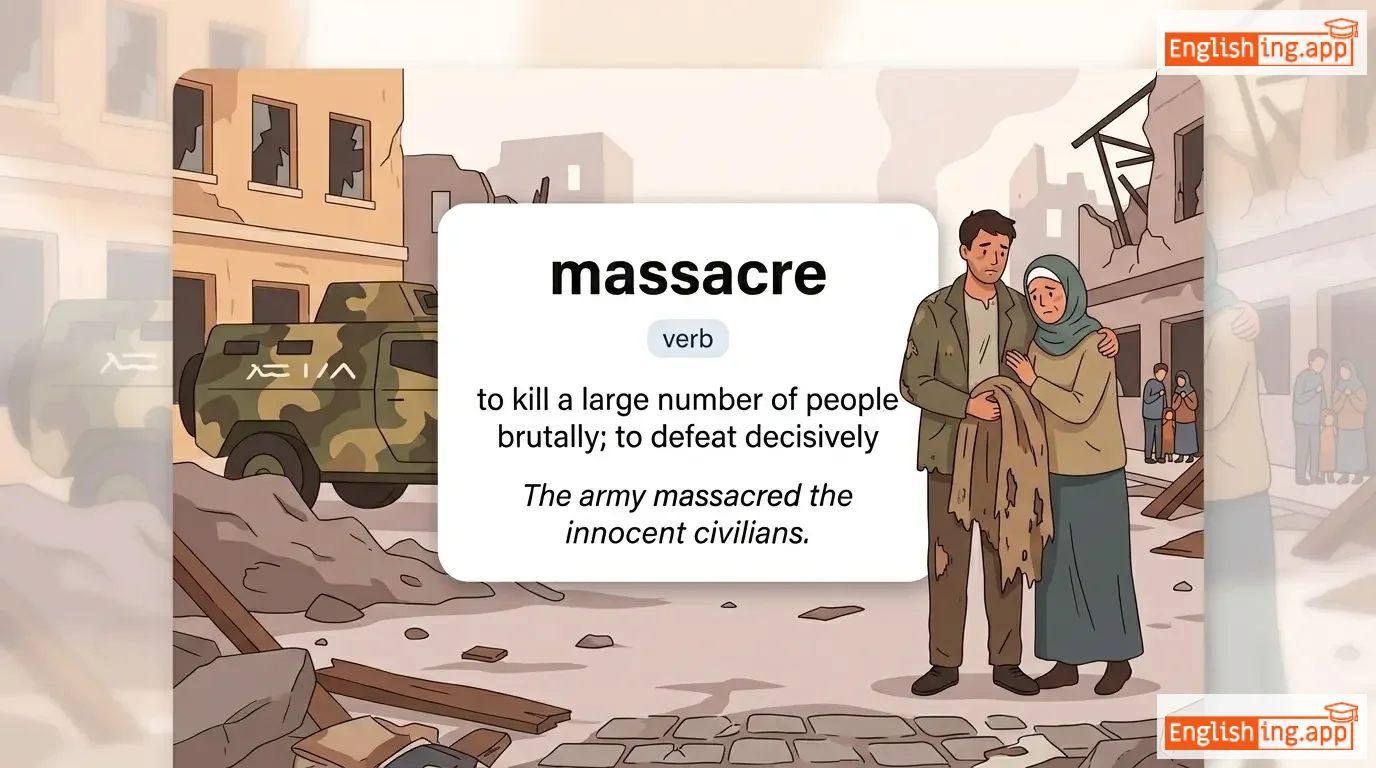
massacre definition card — visual illustration of the meaning
noun
/ˈmæsəkər/
大屠杀 (dà túshā)

the killing of a large number of people, usually in a violent way

"The massacre resulted in the deaths of hundreds of civilians."

"大屠杀导致数百名平民死亡。" (Dà túshā dǎozhì shù bǎi míng píngmín sǐwáng.)
verb
/mɑːr/
破坏 (pohuai)

to spoil or damage the appearance or quality of something

"The scratch will mar the beauty of the painting."

"刮痕将破坏画作的美丽。" (Guahen jiang pohuai huazuode meili.)
🏛️

marble

noun
/ˈmɑːrbəl/

a hard, smooth stone used in building and sculpture, often white with colored lines

"The floor of the palace was made of white marble."

noun
/məˈrɔː.dər/
掠夺者 (lüèduó zhě)

a person who roams around in search of things to steal or people to attack

"Villagers feared the marauders who raided their homes."

"村民们害怕那些袭击他们房屋的掠夺者。" (Cūnmín men hàipà nàxiē xíjī tāmen fángwū de lüèduó zhě.)
verb
/məˈrɔːd/
掠夺 (lüè duó)

to roam in search of things to steal or attack

"The bandits marauded through the village at night."

"盗贼们在夜间袭击了村庄。" (Dàozéi men zài yèjiān xíjī le cūnzhuāng.)
noun
/ˈmærəθən/
马拉松 (mala song)

a long-distance running race, typically 42.195 kilometers (26.2 miles)

"She completed the marathon in under four hours."

"她在不到四小时内完成了马拉松。" (Ta zai bu dao si xiaoshi nei wanchengle mala song.)
adjective
/ˈmɛni/
许多 (xuduo)

a large number of

"Many students attended the lecture."
"许多学生参加了讲座。" (Xuduo xuesheng canjia le jiangzuo.)
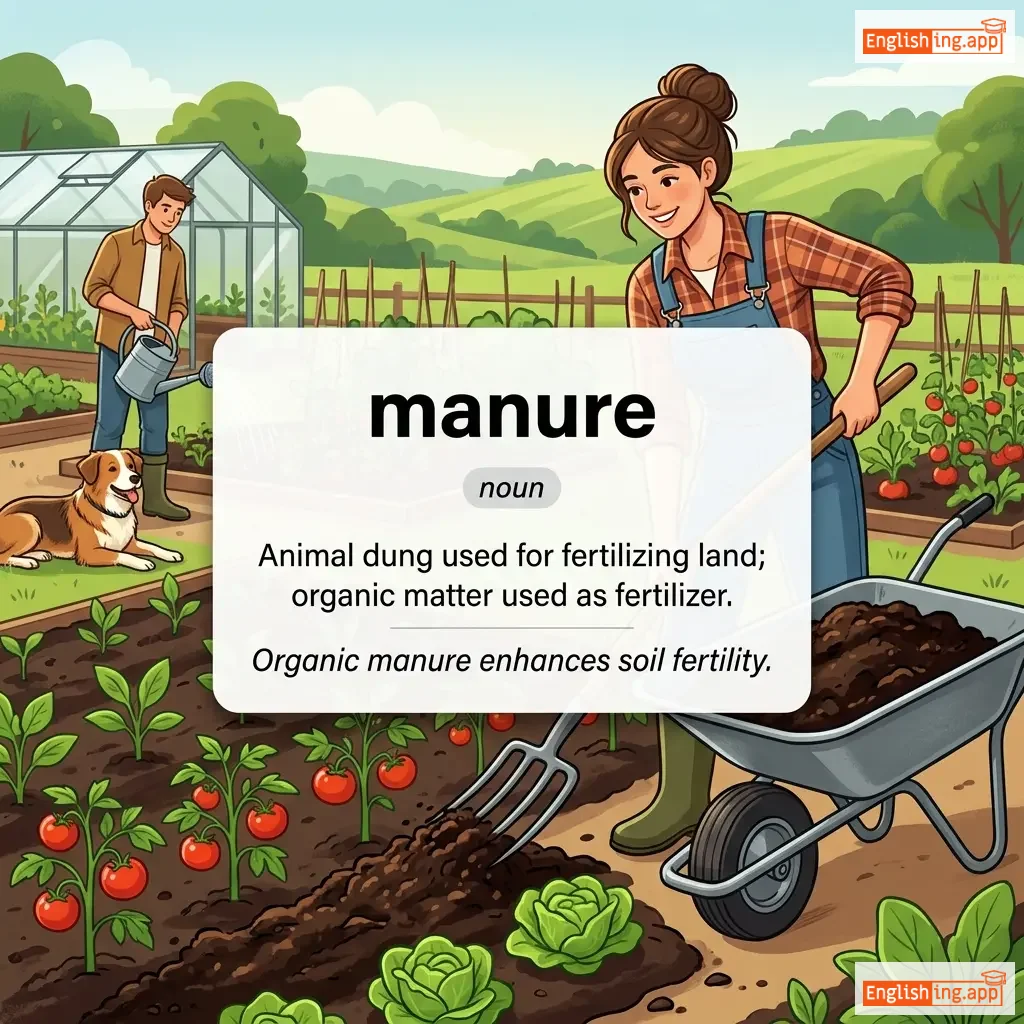
manure definition card — visual illustration of the meaning
noun
məˈnjʊər
粪肥, 有机肥料 (fèn féi, yǒu jī féiliào)

Animal dung used for fertilizing land; organic matter used as fertilizer.

"Organic manure enhances soil fertility."

"有机肥料提高土壤肥力。" (Yǒujī féiliào tígāo tǔrǎng féilì.)
noun
/ˈmæn.juˌskrɪpt/
手稿 (shougao)

a handwritten or typed document, especially a writer’s draft before publication

"The author submitted her manuscript to the publisher."

"作者将她的手稿提交给出版商。" (Zuozhe jiang ta de shougao tijiagei chubanshang.)
🚶‍♂️

March

verb
/mɑːrtʃ/

to walk in a regular, rhythmic way, often in step with others; to proceed with determination

"The soldiers marched across the field."