词汇表

英语词汇词典 | 单词含义、定义和示例

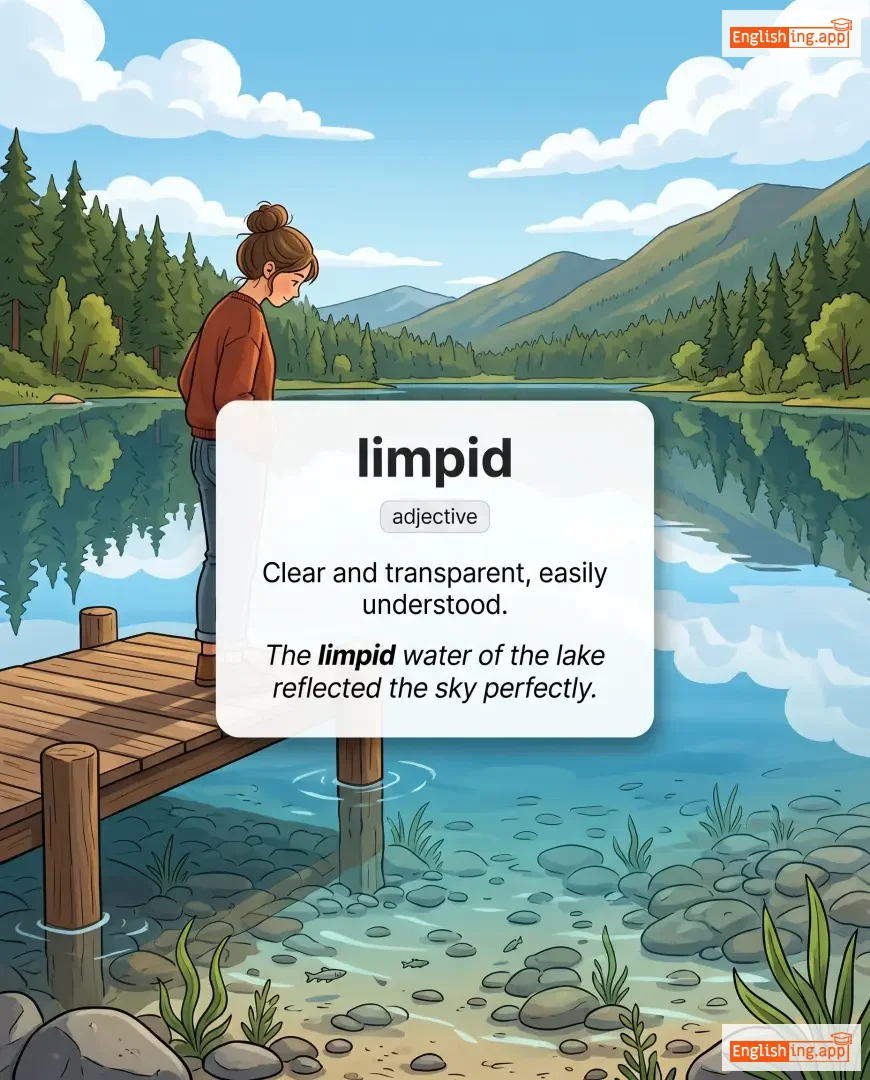
limpid definition card — visual illustration of the meaning
adjective
/ˈlɪmpɪd/
清澈 (qingche)

Clear and transparent, easily understood.

"The limpid water of the lake reflected the sky perfectly."

"湖水清澈地反射了天空。" (Hu shui qingche de fǎnshè le tiānkōng.)
verb, adjective, noun
/lɪmp/
跛行 / 虚弱 (bǒxíng / xūruò)

to walk with difficulty, often due to injury or weakness; lacking strength or firmness.

"He limped after injuring his ankle."

"他在伤到脚踝后跛行。" (Tā zài shāng dào jiǎohuái hòu bǒxíng.)
noun
/ˈlɪməˌziːn/
由司机驾驶的豪华大轿车 (you sījī jiàshǐ de háohuá dà jiàochē)

a large, luxurious car driven by a chauffeur.

"The bride arrived in a white limousine."

"新娘乘坐一辆白色的豪华轿车到达。" (Xīnniáng chéngzuò yī liàng báisè de háohuá jiàochē dàodá.)
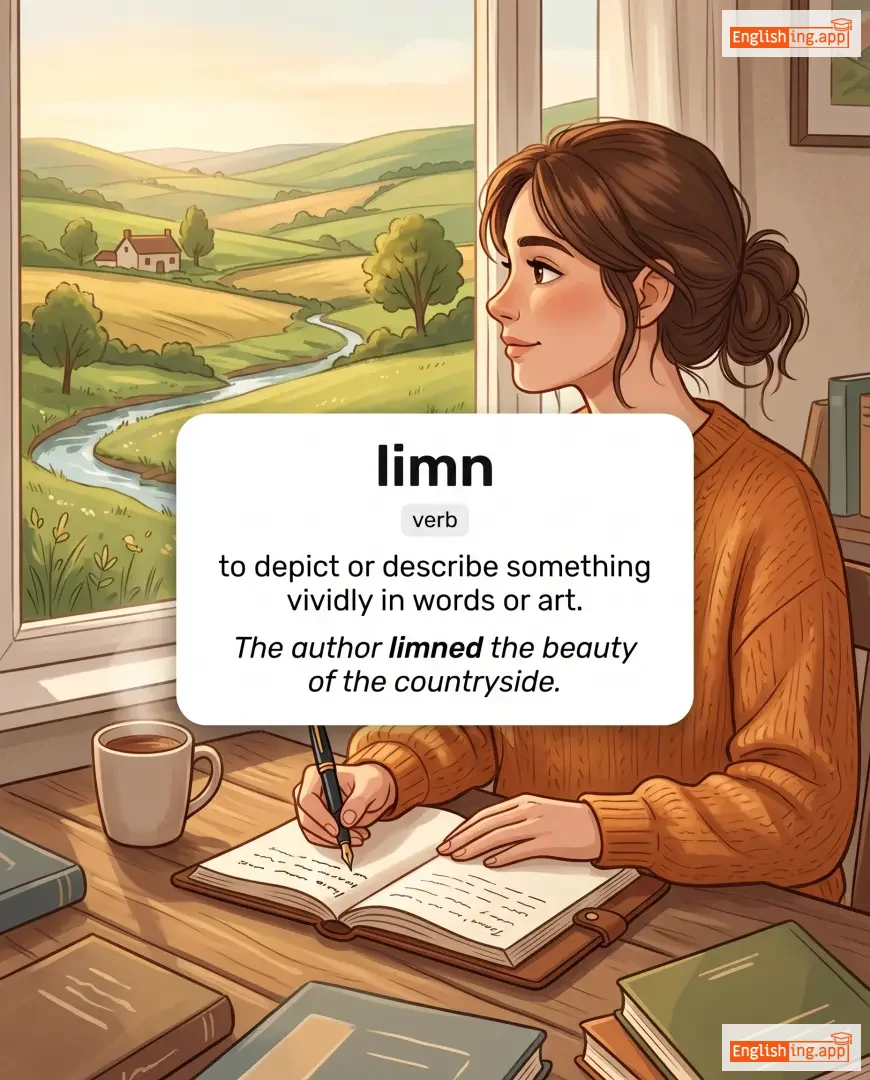
limn definition card — visual illustration of the meaning
verb
/lɪm/
描述 / 勾画 (miáoshù / gōuhuà)

to depict or describe something vividly in words or art.

"The author limned the beauty of the countryside."

"作者生动地描绘了乡村的美丽。" (Zuòzhě shēngdòng de miáohuìle xiāngcūn de měilì.)
adjective
/ˈlɪmɪtɪd/
有限的 (youxian de)

Restricted in size, amount, or extent; not great in number or ability.

"Tickets for the concert are limited."
"音乐会的票是有限的。" (Yinyuehui de piao shi youxian de.)
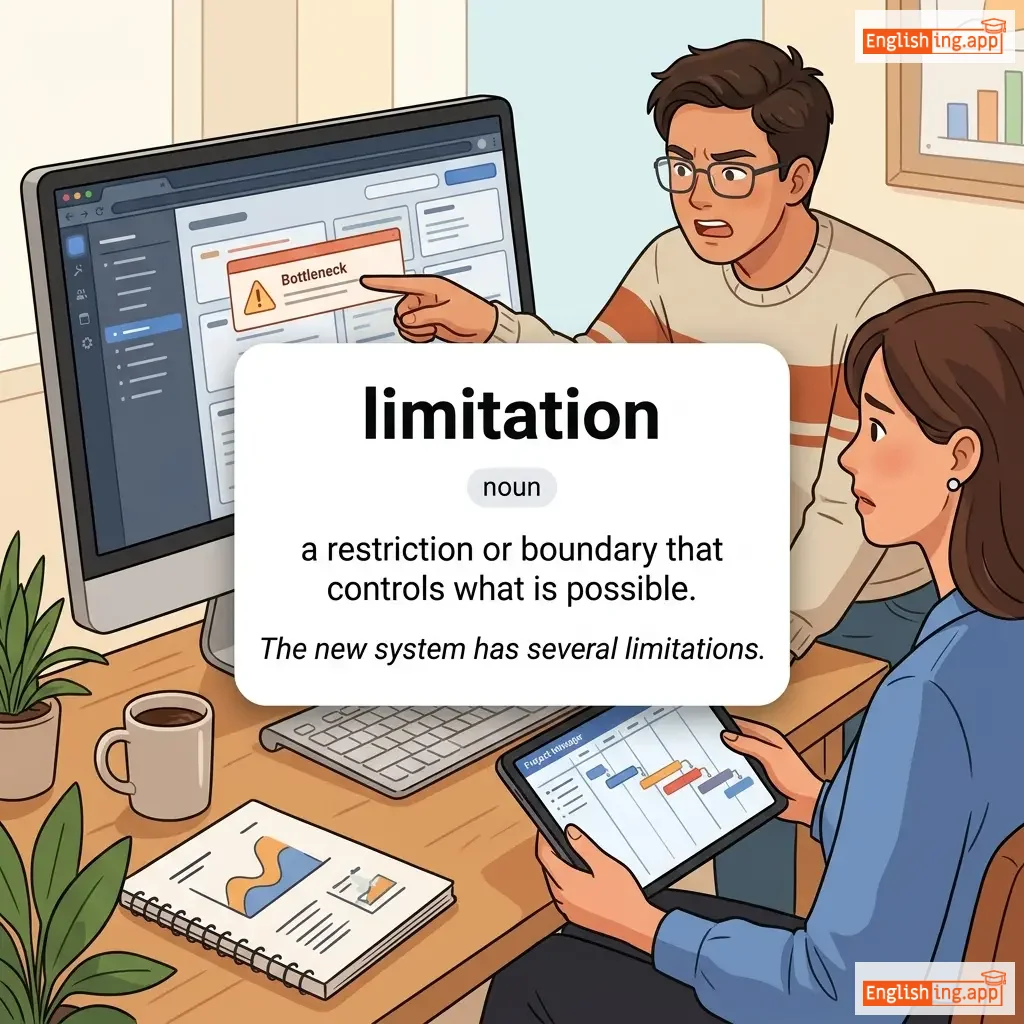
limitation definition card — visual illustration of the meaning
noun
/ˌlɪmɪˈteɪʃən/
限制 (xianzhi)

a restriction or boundary that controls what is possible.

"The new system has several limitations."

"新系统有几个限制。" (Xin xitong you ji ge xianzhi.)
noun, verb
/ˈlɪmɪt/
限制 (xianzhi)

A point or level beyond which something does not or may not extend; to restrict.

"You should limit the amount of sugar you eat."

"你应该限制你吃的糖的数量。" (Ni yinggai xianzhi ni chi de tang de shuliang.)
noun
/ˈlɪmərɪk/
一种幽默的五行诗 (yi zhong youmo de wu hang shi)

a humorous five-line poem with a specific rhythm and rhyme scheme (AABBA).

"She recited a funny limerick at the party."

"她在派对上背诵了一首有趣的利梅里克。" (Ta zai paidui shang beisong le yi shou youqu de limerick.)
noun
/ˈlaɪm.laɪt/
公众关注的焦点;通过加热石灰圆筒产生的明亮光 (laimlait)

the focus of public attention; a bright light produced by heating a cylinder of lime

"The celebrity enjoyed being in the limelight."

"明星享受站在聚光灯下。" (mingxing xiangshou zhanzai juguangdeng xia)
noun
/ˈlaɪm.stoʊn/
石灰岩 (shihuīyán)

a hard sedimentary rock, composed mainly of calcium carbonate or dolomite, used as building material and in the making of cement

"The ancient building was made of limestone blocks."
"这座古老的建筑是用石灰岩块建造的" (zhè zuò gǔlǎo de jiànzhú shì yòng shíhuīyán kuài jiànzào de)
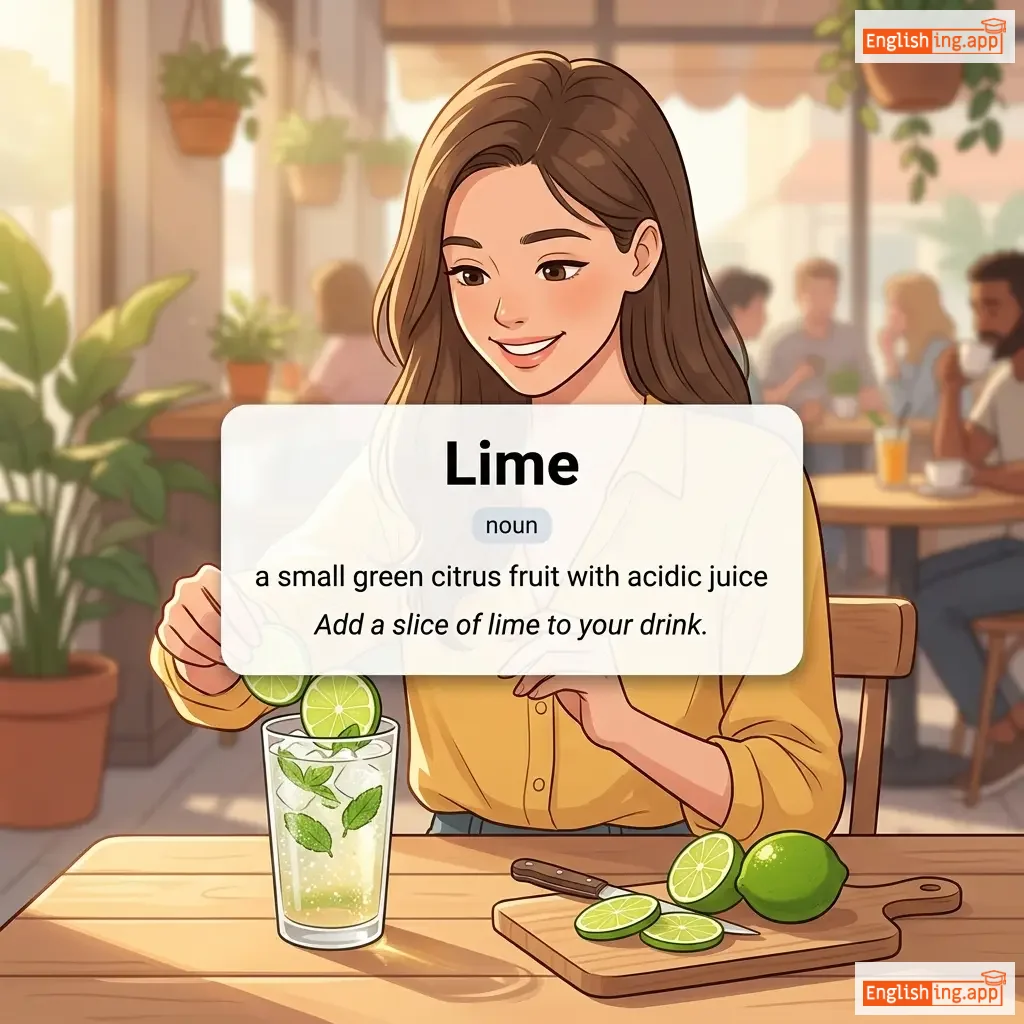
Lime definition card — visual illustration of the meaning
noun
/laɪm/
青柠 (qingling)

a small green citrus fruit with acidic juice

"Add a slice of lime to your drink."

"在你的饮料中加入一片青柠。" (Zài nǐ de yǐnliào zhōng jiārù yī piàn qīnglíng.)
noun
/ˈlɪmboʊ/
不确定,悬而未决的状态 (bù quèdìng, xuán'ér wèi jué de zhuàngtài)

A state of uncertainty or neglect; an intermediate or transitional state.

"The project was left in limbo after the funding was withdrawn."

"该项目在资金撤回后陷入了不确定状态。" (gāi xiàngmù zài zījīn chèhuí hòu xiànrùle bù quèdìng zhuàngtài.)
adjective
/ˈlɪmbər/
灵活和敏捷 (línghuó hé mǐnjié)

Flexible and agile in body or movement.

"Dancers need to stay limber to perform well."

"舞者需要保持灵活才能表现好。" (Wǔzhě xūyào bǎochí línghuó cáinéng biǎoxiàn hǎo.)
noun
/lɪm/
肢体 (zhīti)

an arm or leg of a person or animal; a large branch of a tree

"He broke a limb while climbing the tree."
"他在爬树时摔断了一只肢体。" (Tā zài pá shù shí shuāi duànle yī zhī zhīti.)
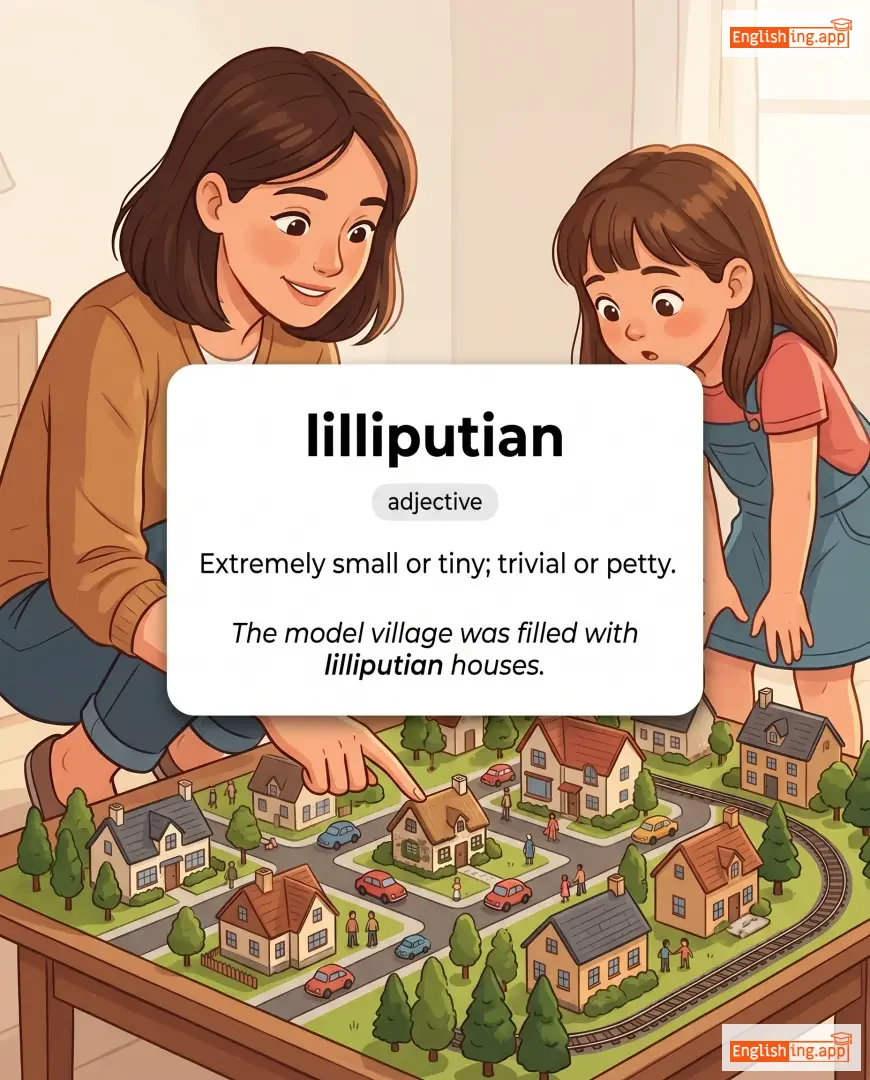
lilliputian definition card — visual illustration of the meaning
adjective
/ˌlɪlɪˈpjuːʃən/
极小的 (jí xiǎo de)

Extremely small or tiny; trivial or petty.

"The model village was filled with lilliputian houses."

"模范村庄里充满了极小的房屋。" (Mófàn cūnzhuāng lǐ chōngmǎnle jí xiǎo de fángwū.)
noun
/ˈlaɪkɪŋ/
喜好, 偏爱 (xǐhào, piān'ài)

A feeling of fondness or preference for something or someone.

"She has a strong liking for classical music."

"她对古典音乐有很强的喜好。" (Tā duì gǔdiǎn yīnyuè yǒu hěn qiáng de xǐhào.)
adverb
/ˈlaɪkˌwaɪz/
同样; 也; 类似地 (tóngyàng; yě; lèisì de)

In the same way; also; similarly.

"She smiled, and he likewise returned the gesture."

"她微笑了,他也回以同样的手势。" (Tā wēixiào le, tā yě huí yǐ tóngyàng de shǒushì.)
noun
/ˈlaɪk.nəs/
相似; 类似 (likeness)

the fact or quality of being alike; resemblance; a portrait or representation

"The portrait shows a strong likeness to her grandmother."

"这幅肖像与她的祖母有很强的相似之处。" (Zhè fú xiàoxiàng yǔ tā de zǔmǔ yǒu hěn qiáng de xiāngsì zhī chù.)
verb
/ˈlaɪ.kən/
比较 (bǐjiào)

to compare one thing to another, often in a figurative way

"He likened her voice to sweet music."

"他把她的声音与甜美的音乐相提并论。" (Tā bǎ tā de shēngyīn yǔ tiánměi de yīnyuè xiāngtíbìnglùn.)
adjective
/ˈlaɪk.li/
可能 (kěnéng)

probable or expected to happen

"It is likely to rain this evening."

"今晚可能会下雨。" (Jīn wǎn kěnéng huì xià yǔ.)
noun
/ˈlaɪ.kli.hʊd/
可能性 (kenengxing)

the chance or probability of something happening

"There is a strong likelihood of rain tomorrow."
"明天有很大的降雨可能性。" (Mingtian you hendà de jiangyu kenengxing.)
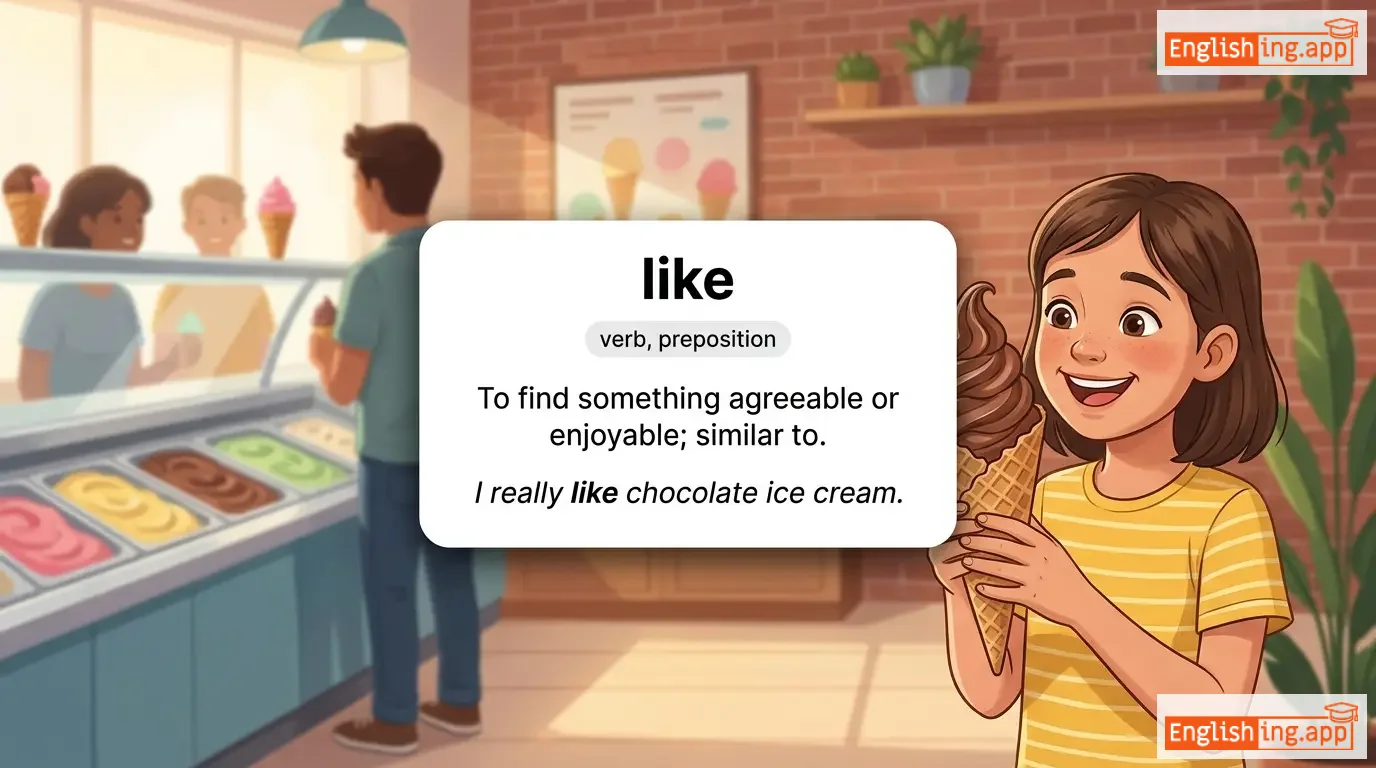
like definition card — visual illustration of the meaning
verb, preposition
/laɪk/
喜欢 (xǐ huān)

To find something agreeable or enjoyable; similar to.

"I really like chocolate ice cream."
"我真的喜欢巧克力冰淇淋。" (Wǒ zhēn de xǐ huān qiǎo kè lì bīng qí lín.)
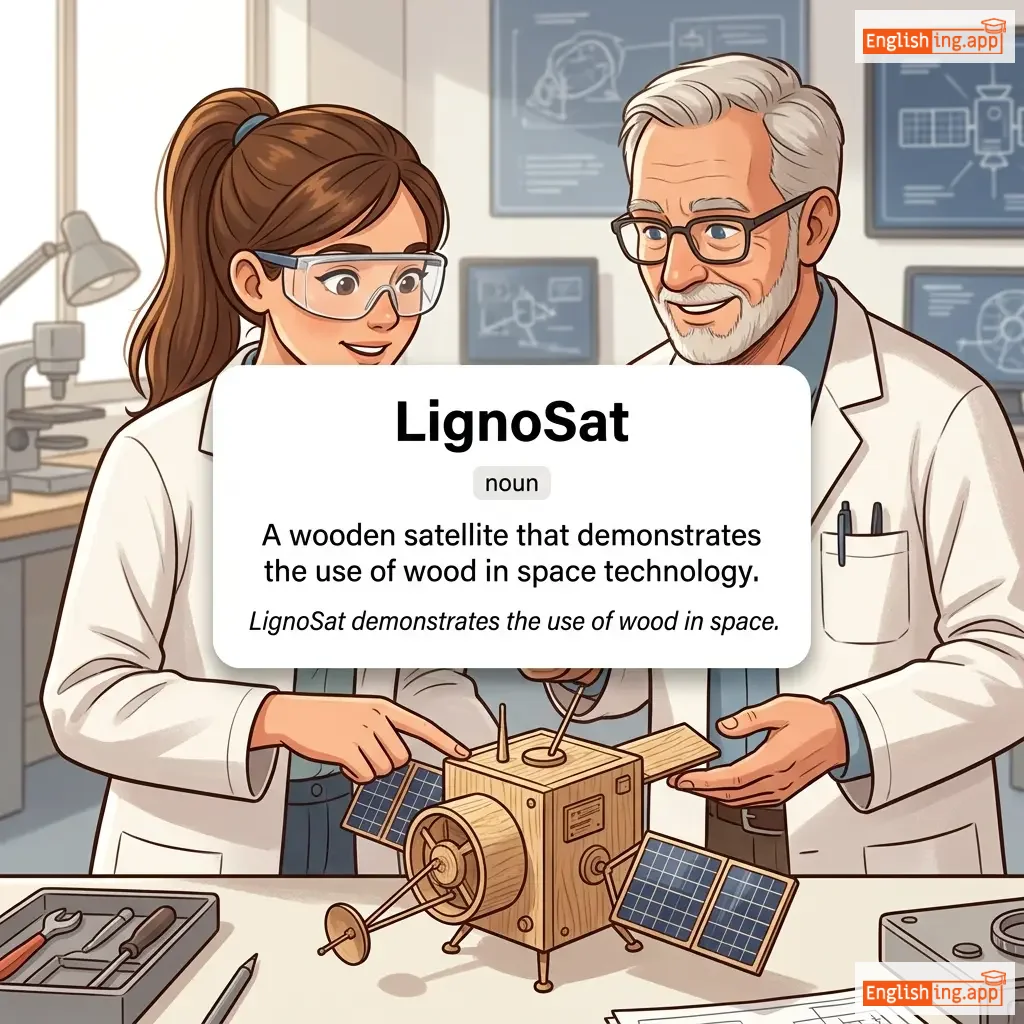
LignoSat definition card — visual illustration of the meaning
noun
ˈlɪɡ.nəʊˌsæt
木卫星 (mu weixing)

A wooden satellite that demonstrates the use of wood in space technology.

"LignoSat demonstrates the use of wood in space."

"LignoSat 展示了木材在太空中的应用。" (LignoSat zhanshi le muci zai taikong zhong de yingyong.)
adjective
/ˈlɪɡ.ni.əs/
木质的 (mù zhì de)

having the texture or appearance of wood; woody

"The ligneous stem supported the heavy flowers."

"木质的茎支撑着沉重的花朵。" (Mù zhì de jīng zhī chēng zhe chén zhòng de huā duǒ.)
noun
/ˈlaɪtnɪŋ/
闪电 (shǎndiàn)

a flash of light in the sky caused by electricity during a storm

"The lightning struck a tree near our house."

"闪电击中了我们家附近的一棵树。" (Shǎndiàn jī zhòngle wǒmen jiā fùjìn de yī kē shù.)
adverb
/ˈlaɪtli/
轻轻地 (qīngqīng de)

gently or with little force or weight

"She touched the baby’s hand lightly."

"她轻轻地触摸了宝宝的手。" (Tā qīngqīng de chùmōle bǎobǎo de shǒu.)
noun
/ˈlaɪtɪŋ/
照明 (zhaoming)

the arrangement or use of light in a place; the act of providing light

"The lighting in the restaurant created a warm and cozy atmosphere."

"餐厅的灯光创造了温暖而舒适的氛围。" (Canting de dengguang chuangzao le wennuan er shushi de fenwei.)
verb
/ˈlaɪtən/
使变亮;缓和 (shi bian liang; huan he)

to make something brighter or less dark; to make something less heavy or serious

"A joke can lighten the mood during a tense meeting."
"一个笑话可以缓和紧张会议的气氛。" (yi ge xiaohua keyi huanhe jinzhang huiyi de qifen)
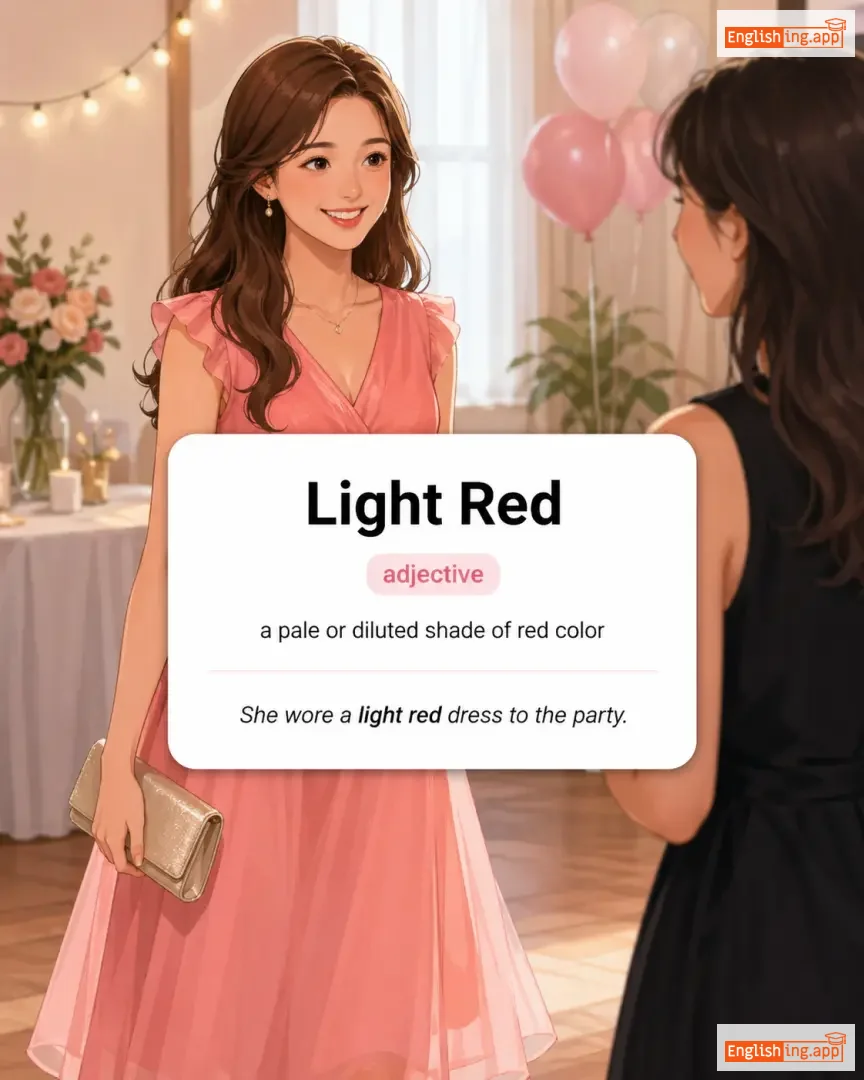
Light Red definition card — visual illustration of the meaning
adjective
/laɪt red/
浅红色 (qian hong se)

a pale or diluted shade of red color

"She wore a light red dress to the party."

"她穿着一件浅红色的裙子去参加派对。" (Ta chuanzhuo yi jian qian hong se de qunzi qu canjia paidui.)
adjective
/ˌlaɪtˈhɑːrtɪd/
轻松愉快的 (qīngsōng yúkuài de)

cheerful, carefree, and not serious

"She gave a light-hearted speech at the party."
"她在派对上做了一个轻松愉快的演讲。" (Tā zài pàiduì shàng zuòle yīgè qīngsōng yúkuài de yǎnjiǎng.)
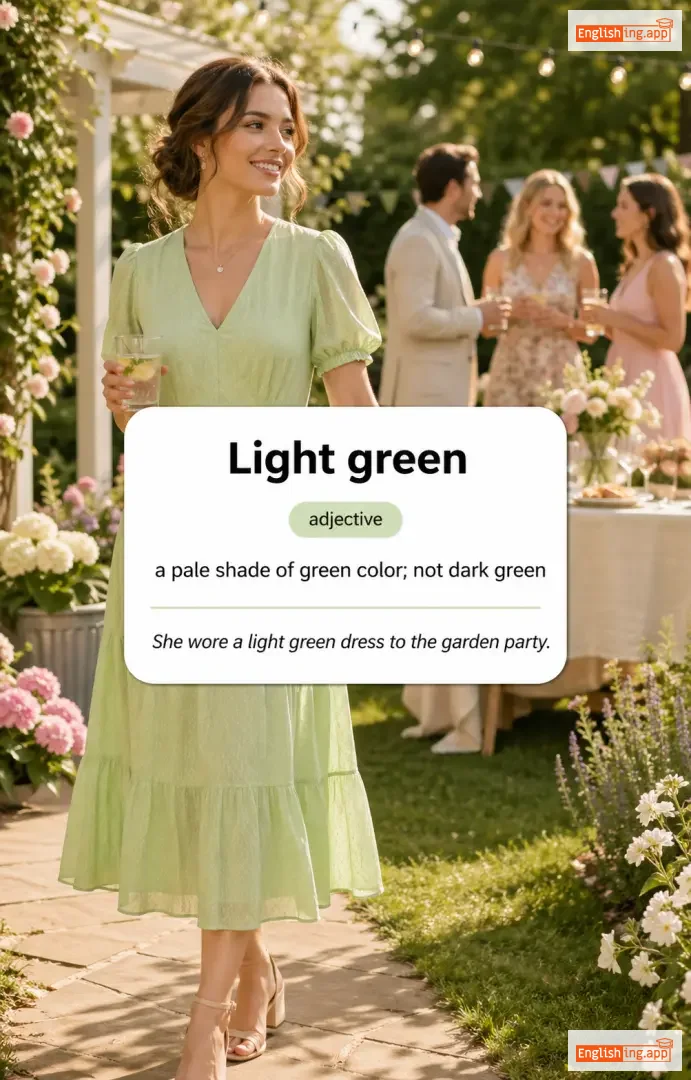
Light green definition card — visual illustration of the meaning
adjective
/laɪt ɡriːn/
浅绿色 (qiǎn lǜsè)

a pale shade of green color; not dark green

"She wore a light green dress to the garden party."
"她穿着一条浅绿色的裙子去参加花园聚会。" (Tā chuānzhuó yītiáo qiǎn lǜsè de qúnzi qù cānjiā huāyuán jùhuì.)
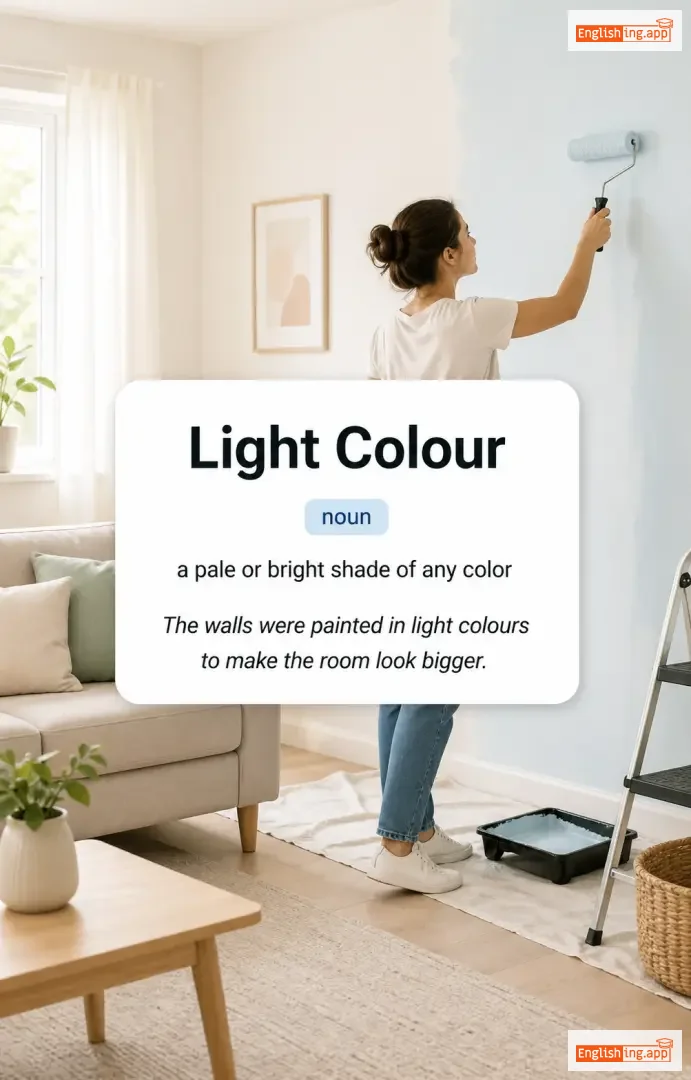
Light Colour definition card — visual illustration of the meaning
noun
/laɪt ˈkʌlər/
浅色 (qiǎn sè)

a pale or bright shade of any color

"The walls were painted in light colours to make the room look bigger."
"墙壁被涂上了浅色,使房间看起来更大。" (qiángbì bèi tú shàngle qiǎn sè, shǐ fángjiān kàn qǐlái gèng dà.)
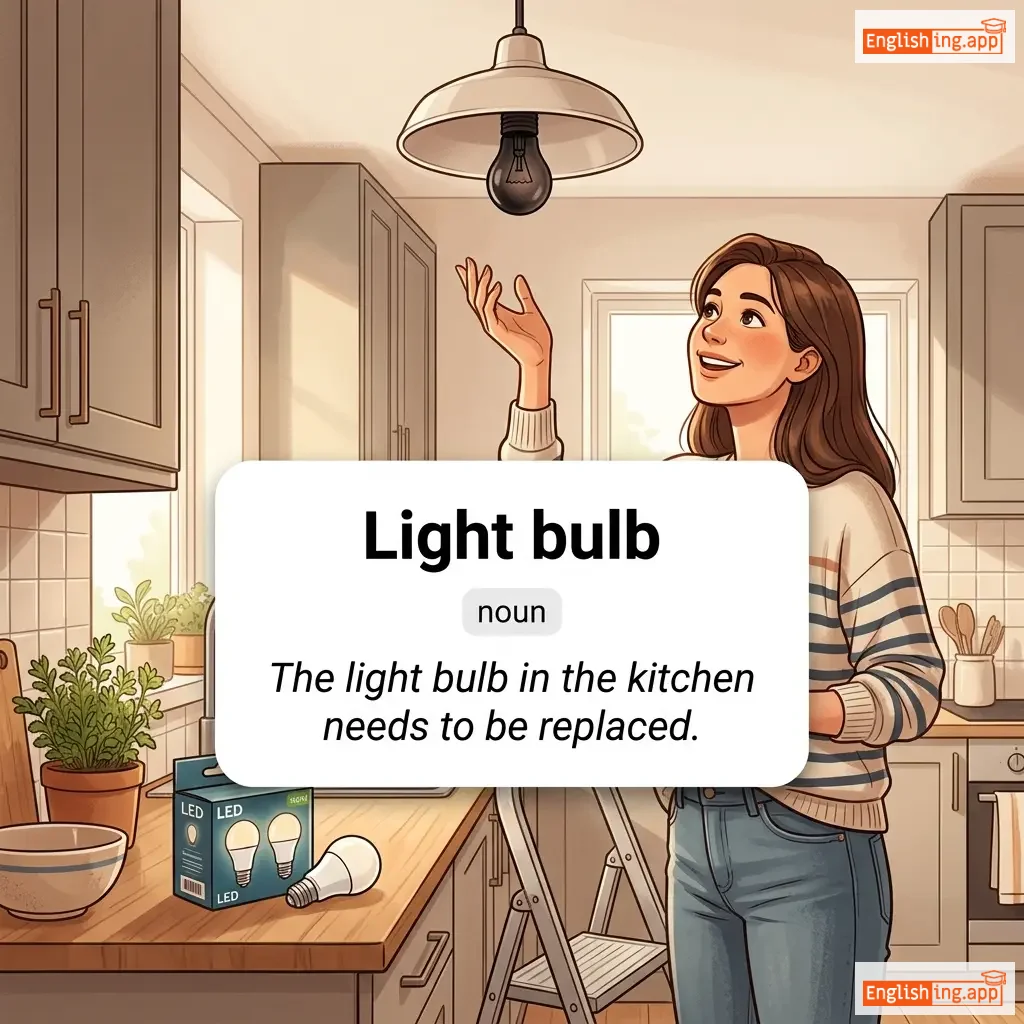
Light bulb definition card — visual illustration of the meaning
noun
/laɪt bʌlb/
灯泡 (dēngpào)

a glass or plastic container that produces light when electricity passes through it

"The light bulb in the kitchen needs to be replaced."
"厨房里的灯泡需要更换。" (chúfáng lǐ de dēngpào xūyào gēnghuàn)
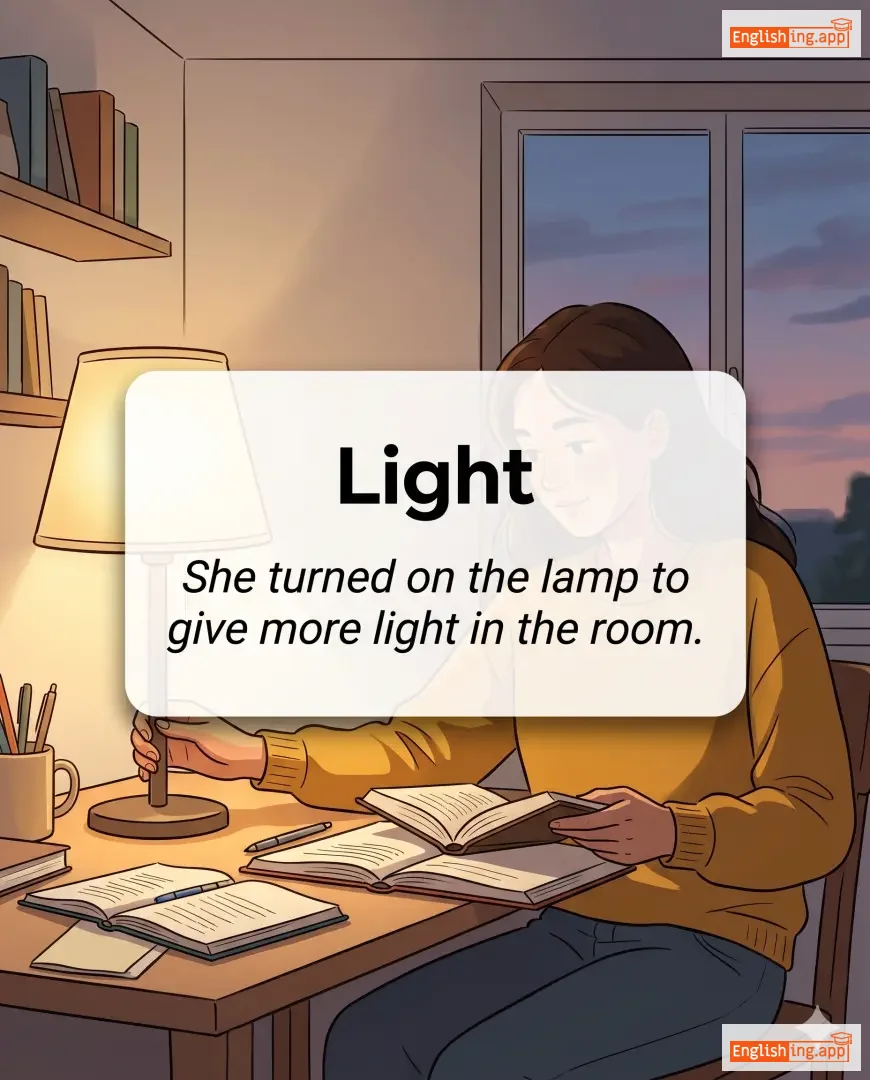
Light definition card — visual illustration of the meaning
noun, verb, adjective
/laɪt/
(guang)

The natural agent that makes things visible; to illuminate or make something start burning.

"She turned on the lamp to give more light in the room."

"她打开灯以提供更多的光线。" (Tā dǎkāi dēng yǐ tígōng gèng duō de guāngxiàn.)
noun
/ˈlɪɡ.ə.tʃər/
连字 (lianzi)

A thing used for tying or binding tightly; in music/printing, two or more notes or letters joined together.

"The doctor used a ligature to stop the bleeding."

"医生使用了连字来停止出血。" (Yīshēng shǐyòngle liánzì lái tíngzhǐ chūxiě.)
noun
/ˈlɪɡ.əmənt/
韧带组织 (rendai zuzhi)

A tough band of tissue that connects bones at a joint.

"He tore a ligament in his knee while playing football."

"他在踢足球时撕裂了膝盖的韧带。" (Tā zài tī zúqiú shí sīliè le xīgài de rèndài.)
lift definition card — visual illustration of the meaning
verb
/lɪft/
举起 (juqi)

To raise something to a higher position or level.

"He lifted the heavy box with ease."

"他轻松地抬起了重箱子。" (Ta qingsong de taqi le zhong xiangzi.)
noun
/ˈlaɪf.taɪm/
一生 (yisheng)

The duration of a person's life or the existence of something.

"She achieved more in her lifetime than most people dream of."

"她在一生中取得的成就,超出了大多数人的梦想。" (Ta zai yisheng zhong qude de chengjiu, chaochule daduoshu ren de mengxiang.)
noun
/ˈlaɪf.staɪl/
生活方式 (shenghuo fangshi)

The way in which a person or group lives, including habits, attitudes, and possessions.

"A healthy lifestyle includes regular exercise and a balanced diet."

"健康的生活方式包括定期锻炼和均衡饮食。" (Jiankang de shenghuo fangshi baokuo dingqi duanlian he junheng yinshi.)
adjective
/ˈlaɪf.lɒŋ/
终生 (zhōngshēng)

Lasting or existing for the whole of a person's life.

"They remained lifelong friends."

"他们是终生的朋友。" (Tāmen shì zhōngshēng de péngyǒu.)
adjective
/ˈlaɪf.laɪk/
栩栩如生 (xǔxǔ rú shēng)

Very similar to a real person, object, or scene; realistic.

"The wax figure was so lifelike that people thought it was a real person."
"这尊蜡像如此栩栩如生,以至于人们以为它是一个真人。" (Zhè zūn làxiàng rúcǐ xǔxǔ rú shēng, yǐ zhì yú rénmen yǐwéi tā shì yīgè zhēn rén.)
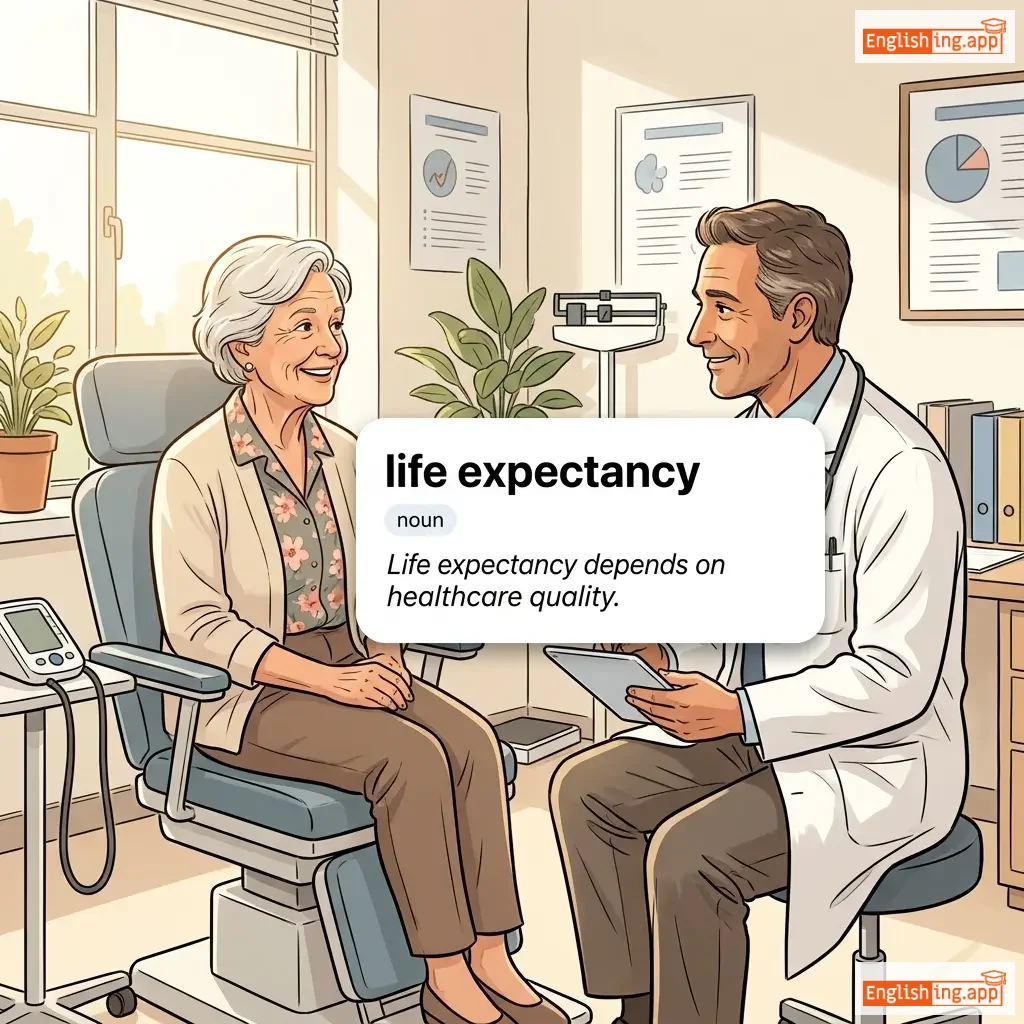
life expectancy definition card — visual illustration of the meaning
noun
ˈlaɪf ɪkˌspek.tən.si
预期寿命 (yùqī shòumìng)

The average period that a person may expect to live; the length of time for which something is expected to last or to continue being effective.

"Life expectancy depends on healthcare quality."
"预期寿命取决于医疗保健质量。" (Yùqī shòumìng qǔjué yú yīliáo bǎojiàn zhìliàng.)
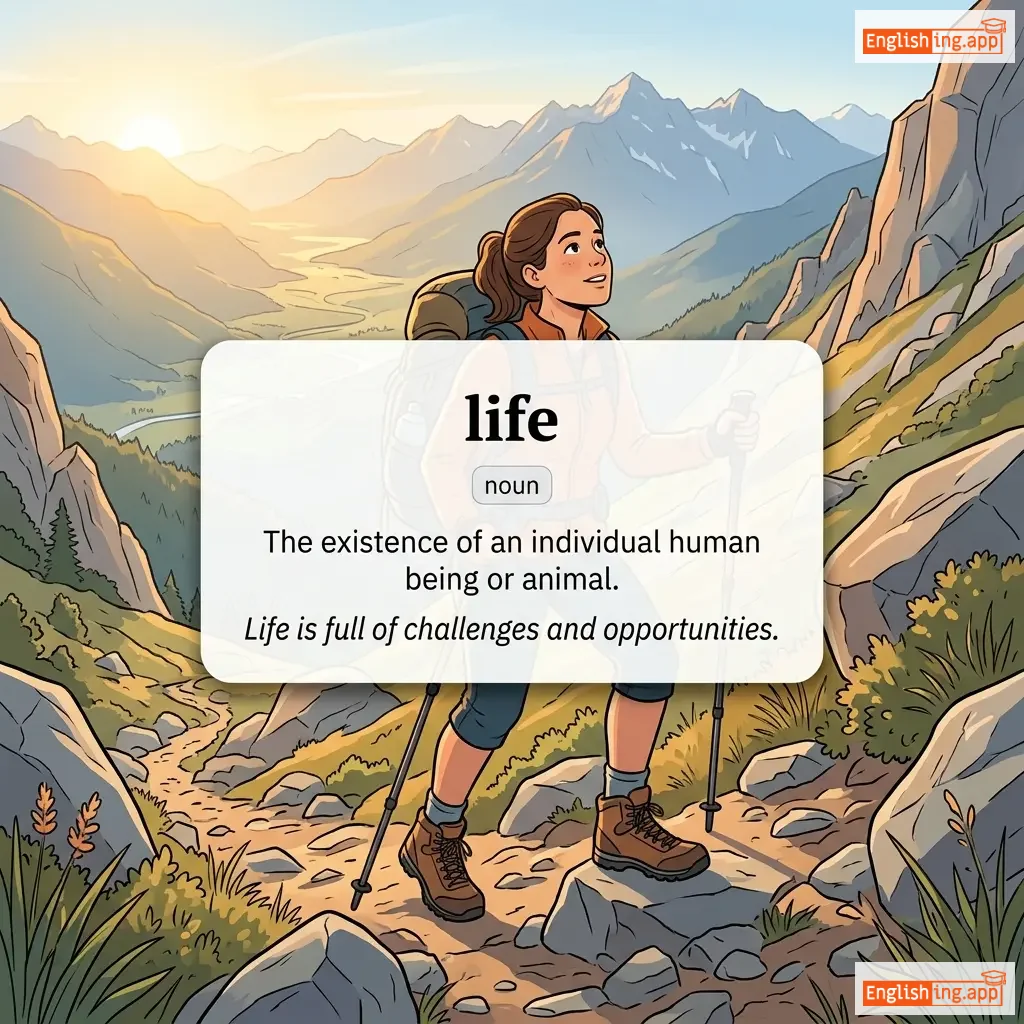
life definition card — visual illustration of the meaning
noun
/laɪf/
生命 (shengming)

The existence of an individual human being or animal.

"Life is full of challenges and opportunities."

"生命充满了挑战和机会。" (Shēngmìng chōngmǎnle tiǎozhàn hé jīhuì.)
noun
/luː/
代替 (daiti)

Instead of; in place of.

"He gave money in lieu of flowers."

"他给了钱代替花。" (Tā gěile qián dàitì huā.)
noun
/ˈlaɪər/
说谎者 (shuohuangzhe)

a person who tells lies; an alternative spelling of liar

"No one trusted him because he was known as a habitual lier."

"因为他是个惯常的说谎者,所以没人信任他。" (yinwei ta shi ge guanchang de shuohuangzhe suoyi meiren xinren ta)
let definition card — visual illustration of the meaning
verb
/lɛt/
(rang)

To allow someone to do something; to permit.

"She let him borrow her book."

"她让他借了她的书。" (Ta rang ta jie le ta de shu.)
adjective
/ˈlɛsər/
较不重要 (jiào bù zhòng yào)

of lower importance or smaller in degree or amount

"The lesser known facts about the topic were fascinating."

"关于这个主题的较少人知的事实是迷人的。" (Guānyú zhège zhǔtí de jiào shǎo rén zhī de shìshí shì mírén de.)
Lesson definition card — visual illustration of the meaning
noun
/ˈlɛsən/
(ke)

A unit of teaching or something learned through experience.

"The teacher explained the lesson clearly."

"老师清楚地解释了这节课。" (Laoshi qingchu de jieshi le zhe jie ke.)
adjective/adverb
/lɛs/
更少 (gèng shǎo)

A smaller amount; not as much.

"She spends less money than her brother."
"她花的钱比她哥哥少。" (Tā huā de qián bǐ tā gēge shǎo.)
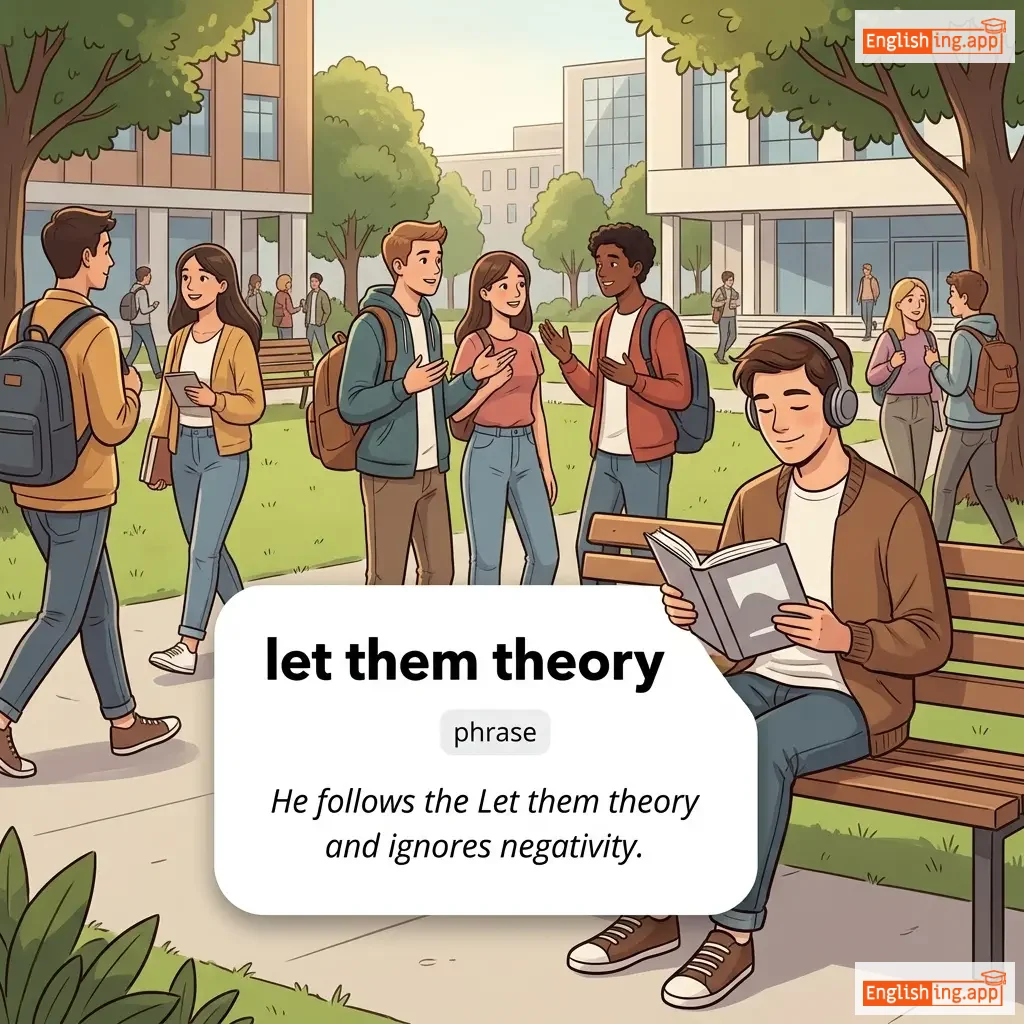
let them theory definition card — visual illustration of the meaning
phrase
/lɛt ðɛm ˈθɪə.ri/
让他们随心所欲的理论 (rang tamen sui xin suo yu de lilun)

A philosophy of not trying to control others' actions or opinions and allowing them to be themselves.

"He follows the Let them theory and ignores negativity."

"他遵循“让他们”理论,并忽视负面情绪。" (Ta zunxun 'rang tamen' lilun, bing hushi fuman qingxu.)