語彙集

英単語辞書 | 単語の意味、定義、例文

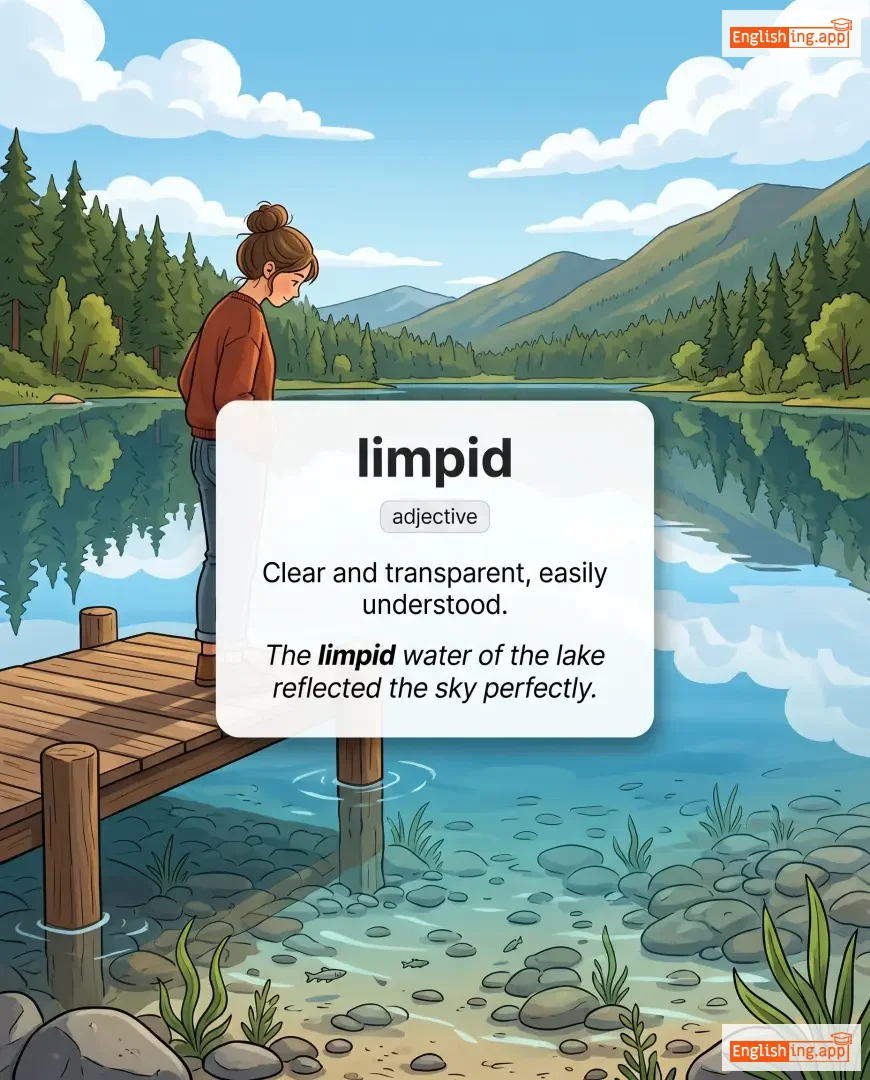
limpid definition card — visual illustration of the meaning
adjective
/ˈlɪmpɪd/
澄んだ (sunda)

Clear and transparent, easily understood.

"The limpid water of the lake reflected the sky perfectly."

"湖の澄んだ水は完璧に空を反映していました。" (Mizu no suna wa kanpeki ni sora o hanei shite imashita.)
verb, adjective, noun
/lɪmp/
引きずる / 弱い (hikizuru / yowai)

to walk with difficulty, often due to injury or weakness; lacking strength or firmness.

"He limped after injuring his ankle."

"彼は足首を怪我した後、足を引きずって歩いていた。" (Kare wa ashi-kubi o kega shita ato, ashi o hikizutte aruite ita.)
noun
/ˈlɪməˌziːn/
運転手によって運転される大きな豪華な車 (untenshu ni yotte unten sareru ōkina gōka na kuruma)

a large, luxurious car driven by a chauffeur.

"The bride arrived in a white limousine."
"花嫁は白いリムジンで到着しました。" (Hanayome wa shiroi rimujin de tōchaku shimashita.)
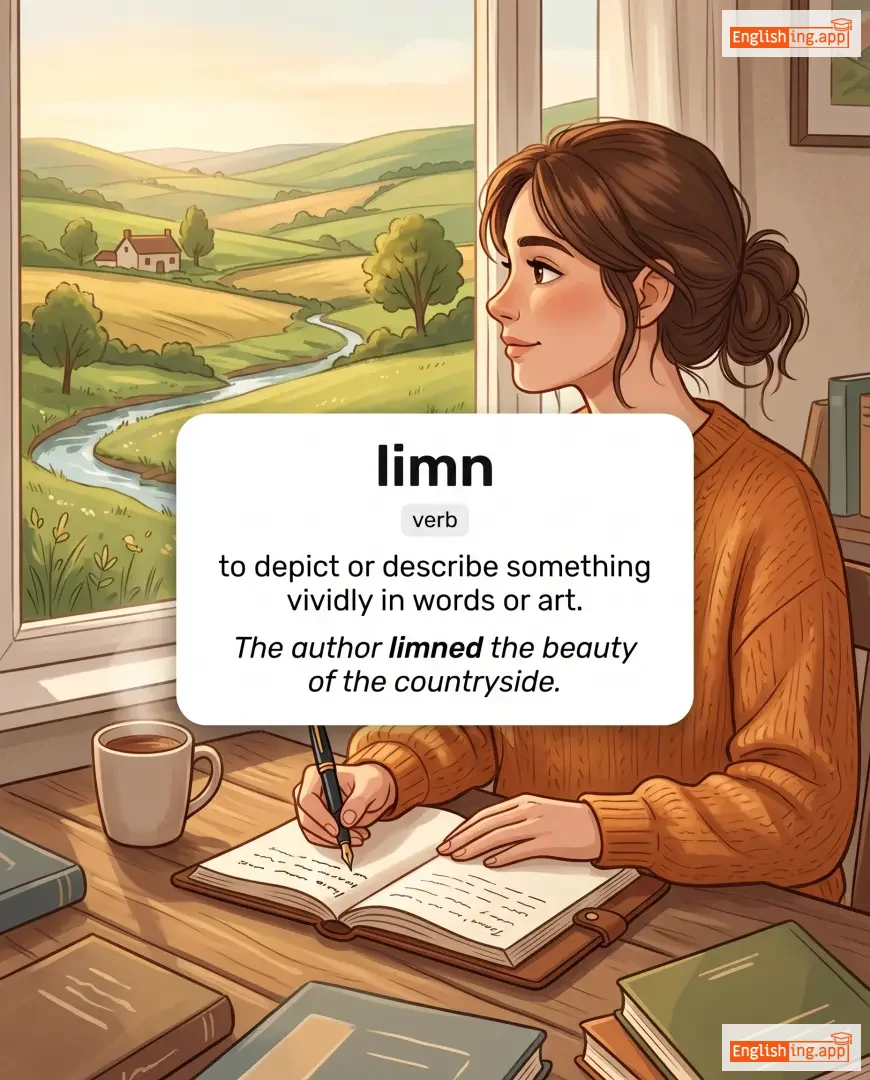
limn definition card — visual illustration of the meaning
verb
/lɪm/
描写する / 表現する (byōsha suru / hyōgen suru)

to depict or describe something vividly in words or art.

"The author limned the beauty of the countryside."

"作者は田舎の美しさを生き生きと描写しました。" (Sakusha wa inaka no utsukushisa o ikigiki to byōsha shimashita.)
adjective
/ˈlɪmɪtɪd/
限定された (gentei sareta)

Restricted in size, amount, or extent; not great in number or ability.

"Tickets for the concert are limited."
"コンサートのチケットは限定されています。" (Konsaato no chiketto wa gentei sarete imasu.)
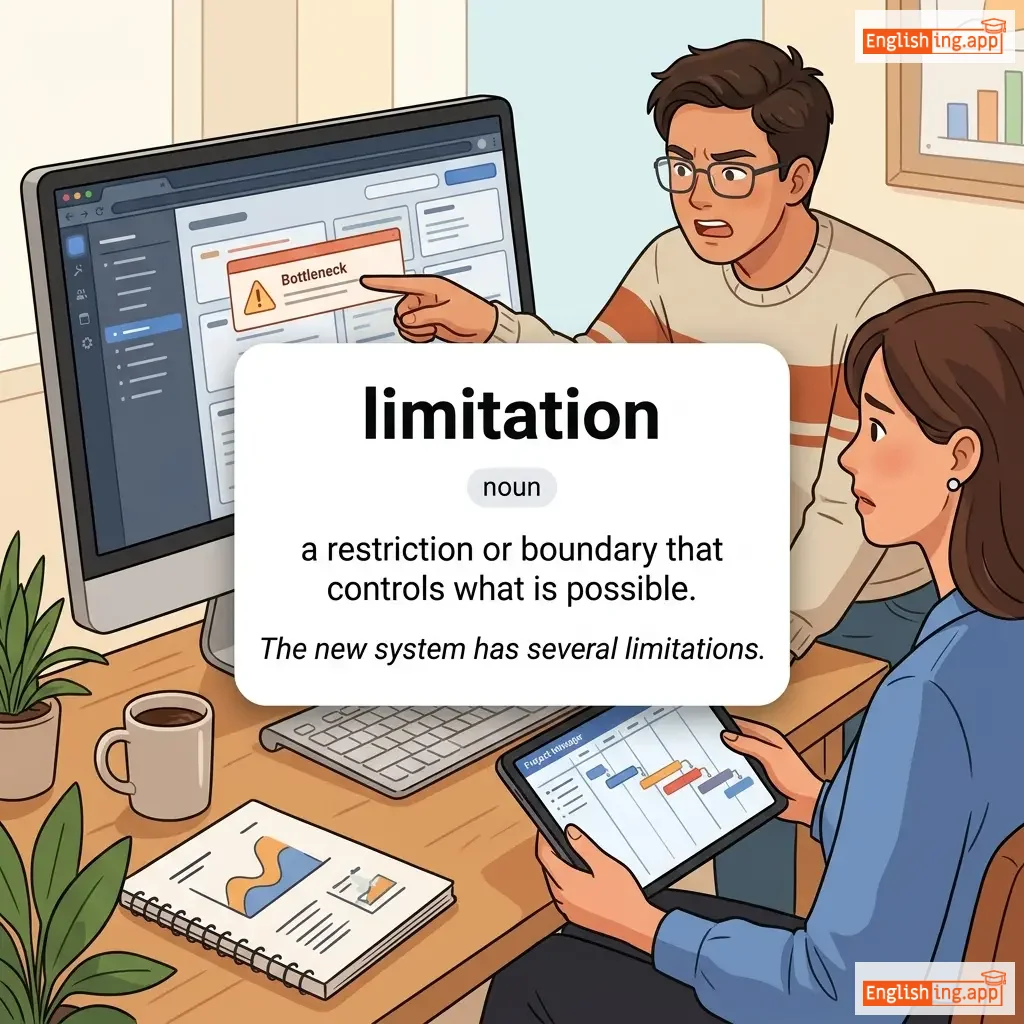
limitation definition card — visual illustration of the meaning
noun
/ˌlɪmɪˈteɪʃən/
制限 (seigen)

a restriction or boundary that controls what is possible.

"The new system has several limitations."

"新しいシステムにはいくつかの制限があります。" (Atarashii shisutemu ni wa ikutsuka no seigen ga arimasu.)
noun, verb
/ˈlɪmɪt/
限界 (genkai)

A point or level beyond which something does not or may not extend; to restrict.

"You should limit the amount of sugar you eat."

"あなたは食べる砂糖の量を制限すべきです。" (Anata wa taberu satou no ryou wo seigen subeki desu.)
noun
/ˈlɪmərɪk/
ユーモラスな五行詩 (yu-morasu na go gyou shi)

a humorous five-line poem with a specific rhythm and rhyme scheme (AABBA).

"She recited a funny limerick at the party."

"彼女はパーティーで面白いリメリックを朗読しました。" (Kanojo wa pa-ti- de omoshiroi rimerikku o roudoku shimashita.)
noun
/ˈlaɪm.laɪt/
公衆の注目の中心; ライムのシリンダーを加熱して発生する明るい光 (laimlait)

the focus of public attention; a bright light produced by heating a cylinder of lime

"The celebrity enjoyed being in the limelight."

"有名人はスポットライトの中で楽しんでいました。" (yuumeijin wa supottoraito no naka de tanoshinde imashita)
noun
/ˈlaɪm.stoʊn/
石灰岩 (seki kai gan)

a hard sedimentary rock, composed mainly of calcium carbonate or dolomite, used as building material and in the making of cement

"The ancient building was made of limestone blocks."
"その古代の建物は石灰岩のブロックで作られていました" (sono kodai no tatemono wa seki kai gan no burokku de tsukurarete imashita)
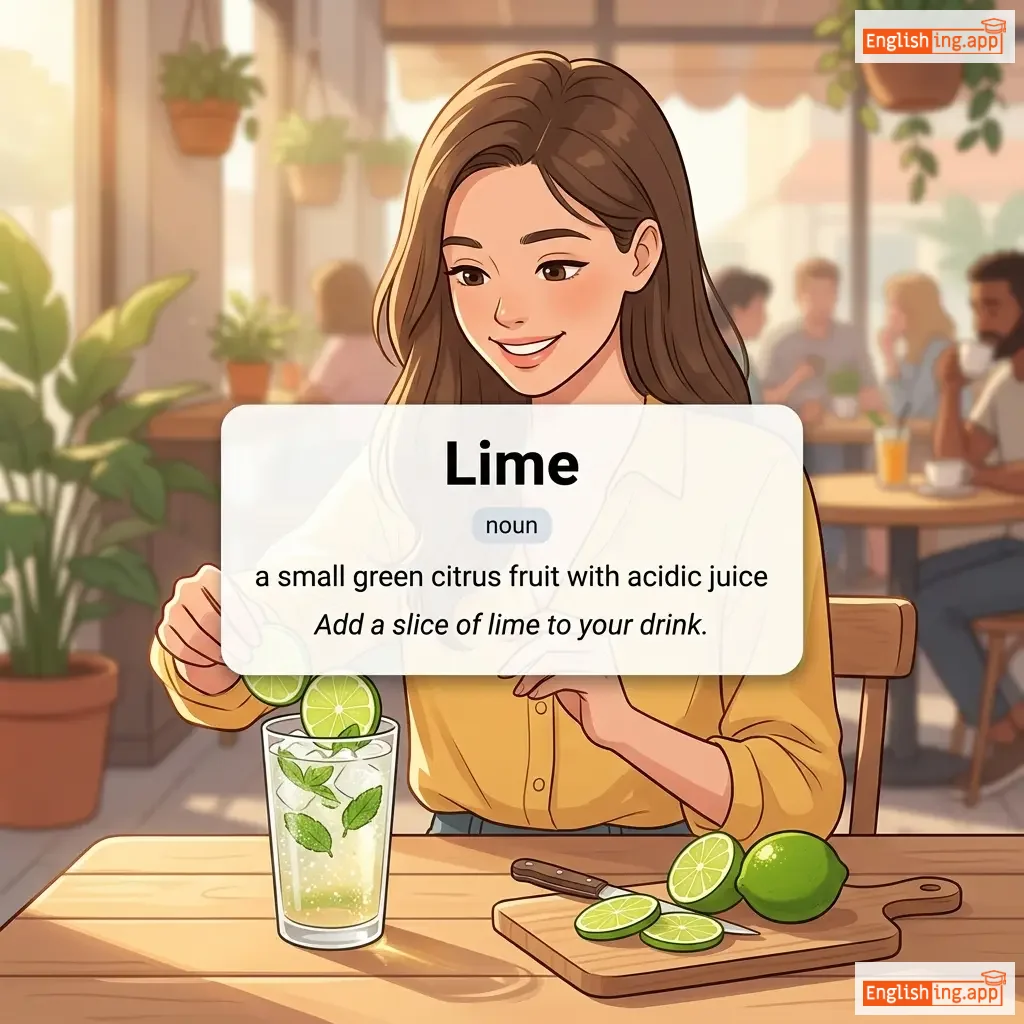
Lime definition card — visual illustration of the meaning
noun
/laɪm/
ライム (raimu)

a small green citrus fruit with acidic juice

"Add a slice of lime to your drink."

"あなたの飲み物にライムのスライスを加えてください。" (Anata no nomimono ni raimu no suraisu wo kuwaetekudasai.)
noun
/ˈlɪmboʊ/
不確実性、保留状態 (fukakujitsusei, horyu joto)

A state of uncertainty or neglect; an intermediate or transitional state.

"The project was left in limbo after the funding was withdrawn."

"資金が撤回された後、プロジェクトは不確実性に置かれました。" (Shikin ga tetsukai sareta ato, purojekuto wa fukakujitsusei ni okaremashita.)
adjective
/ˈlɪmbər/
柔軟で敏捷 (jūnan de binshō)

Flexible and agile in body or movement.

"Dancers need to stay limber to perform well."
"ダンサーはうまく演技するために柔軟でいる必要があります。" (Dansā wa umaku engi suru tame ni jūnan de iru hitsuyō ga arimasu.)
noun
/lɪm/
手足 (tezoku)

an arm or leg of a person or animal; a large branch of a tree

"He broke a limb while climbing the tree."

"彼は木に登るときに手足を折った。" (Kare wa ki ni noboru toki ni tezoku o otta.)
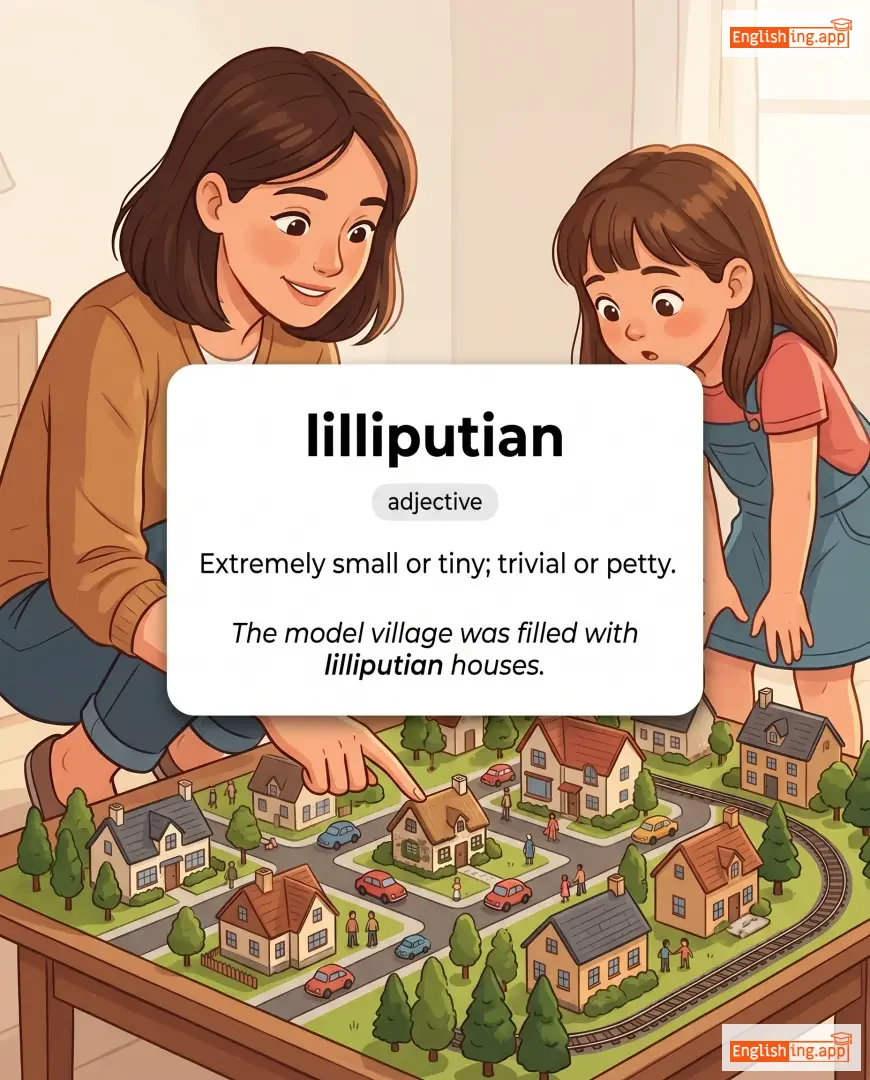
lilliputian definition card — visual illustration of the meaning
adjective
/ˌlɪlɪˈpjuːʃən/
非常に小さい (hijō ni chiisai)

Extremely small or tiny; trivial or petty.

"The model village was filled with lilliputian houses."

"モデル村は非常に小さな家で満たされていました。" (Moderu mura wa hijō ni chiisana ie de mitasarete imashita.)
noun
/ˈlaɪkɪŋ/
好意, 嗜好 (kōi, shikō)

A feeling of fondness or preference for something or someone.

"She has a strong liking for classical music."

"彼女はクラシック音楽を強く好んでいます。" (Kanojo wa kurashikku ongaku o tsuyoku konondeimasu.)
adverb
/ˈlaɪkˌwaɪz/
同様に; それと同じように; 同じように (dōyō ni; sore to onaji yō ni; onaji yō ni)

In the same way; also; similarly.

"She smiled, and he likewise returned the gesture."

"彼女は微笑んだ、そして彼も同様にジェスチャーを返した。" (Kanojo wa hohoenda, soshite kare mo dōyō ni jesshā o kaeshita.)
noun
/ˈlaɪk.nəs/
類似性; 似ていること (likeness)

the fact or quality of being alike; resemblance; a portrait or representation

"The portrait shows a strong likeness to her grandmother."

"ポートレートは彼女の祖母に強い類似性を示しています。" (Pōtoretto wa kanojo no sobo ni tsuyoi ruijisei o shimeshiteimasu.)
verb
/ˈlaɪ.kən/
例える (tatoeru)

to compare one thing to another, often in a figurative way

"He likened her voice to sweet music."

"彼は彼女の声を甘い音楽に例えました。" (Kare wa kanojo no koe o amai ongaku ni tatoemashita.)
adjective
/ˈlaɪk.li/
可能性が高い (kanousei ga takai)

probable or expected to happen

"It is likely to rain this evening."

"今晩雨が降る可能性が高いです。" (Konban ame ga furu kanousei ga takai desu.)
noun
/ˈlaɪ.kli.hʊd/
可能性 (kanousei)

the chance or probability of something happening

"There is a strong likelihood of rain tomorrow."
"明日、雨が降る可能性が高いです。" (Ashita, ame ga furu kanousei ga takai desu.)
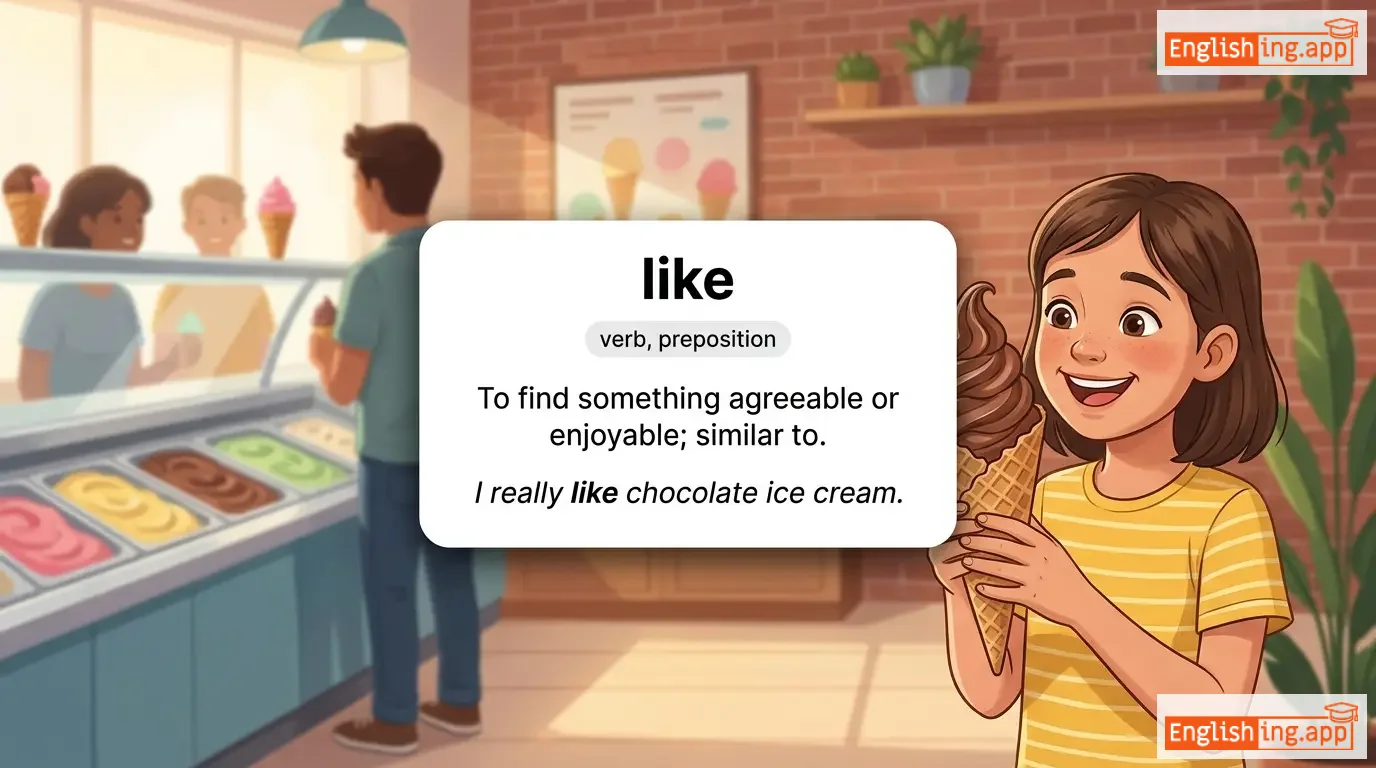
like definition card — visual illustration of the meaning
verb, preposition
/laɪk/
好き (suki)

To find something agreeable or enjoyable; similar to.

"I really like chocolate ice cream."
"私は本当にチョコレートアイスクリームが好きです。" (Watashi wa hontōni chokorēto aisukurīmu ga suki desu.)
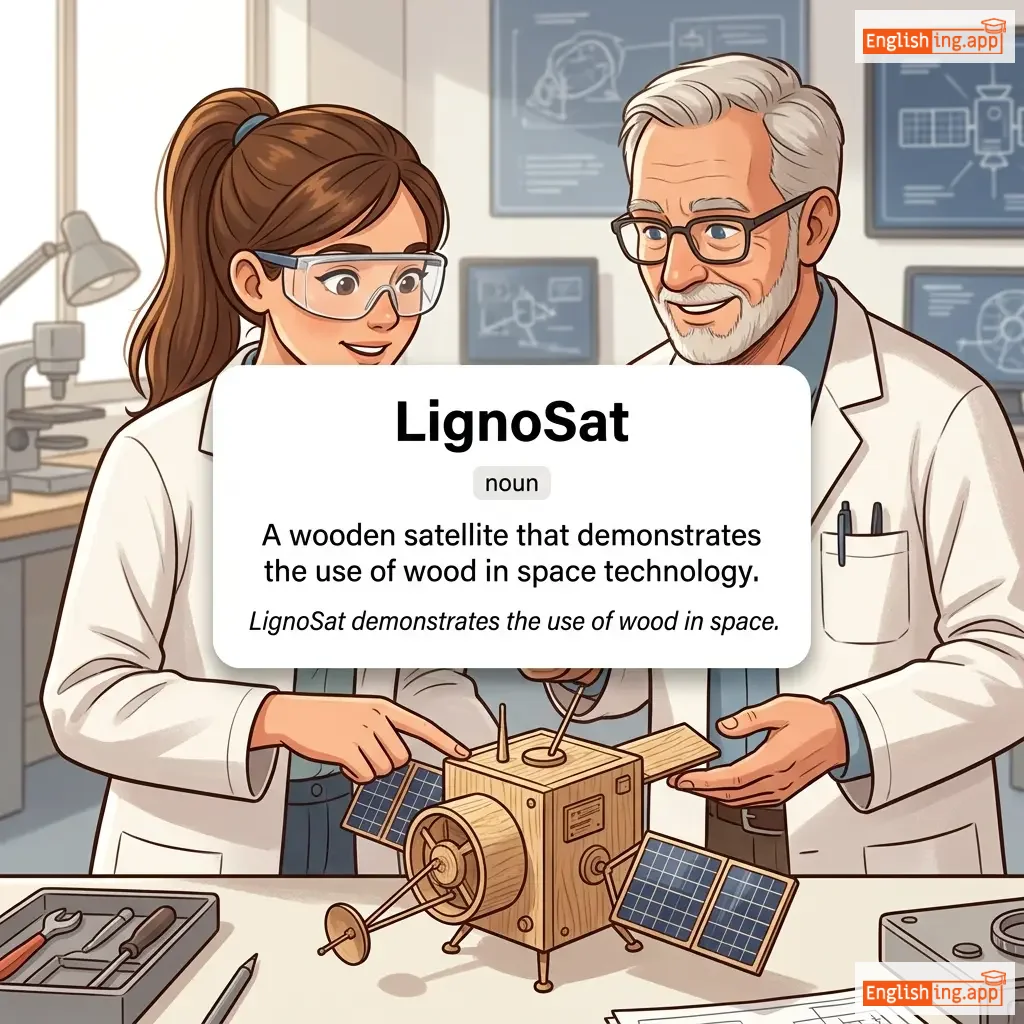
LignoSat definition card — visual illustration of the meaning
noun
ˈlɪɡ.nəʊˌsæt
木製衛星 (mokusei eisei)

A wooden satellite that demonstrates the use of wood in space technology.

"LignoSat demonstrates the use of wood in space."

"LignoSat は宇宙で木材の使用を示しています。" (LignoSat wa uchuu de mokuzai no shiyou wo shimeshiteimasu.)
adjective
/ˈlɪɡ.ni.əs/
木質の (mokushitsu no)

having the texture or appearance of wood; woody

"The ligneous stem supported the heavy flowers."

"木質の茎が重い花を支えました。" (Mokushitsu no kake ga omoi hana wo sasaemashita.)
noun
/ˈlaɪtnɪŋ/
雷光 (raikou)

a flash of light in the sky caused by electricity during a storm

"The lightning struck a tree near our house."

"雷光が私たちの家の近くの木に当たった。" (Raikou ga watashitachi no ie no chikaku no ki ni atatta.)
adverb
/ˈlaɪtli/
軽く (karuku)

gently or with little force or weight

"She touched the baby’s hand lightly."

"彼女は赤ちゃんの手を軽く触れた。" (Kanojo wa akachan no te o karuku fureta.)
noun
/ˈlaɪtɪŋ/
照明 (shoumei)

the arrangement or use of light in a place; the act of providing light

"The lighting in the restaurant created a warm and cozy atmosphere."

"レストランの照明は、暖かく快適な雰囲気を作り出しました。" (Resutoran no shōmei wa, atatakai kaiteki na fun'iki o tsukuridashimashita.)
verb
/ˈlaɪtən/
明るくする;和らげる (akaruku suru; yawarageru)

to make something brighter or less dark; to make something less heavy or serious

"A joke can lighten the mood during a tense meeting."
"冗談は緊張した会議の雰囲気を和らげることができる。" (joudan wa kinchou shita kaigi no funiki o yawarageru koto ga dekiru)
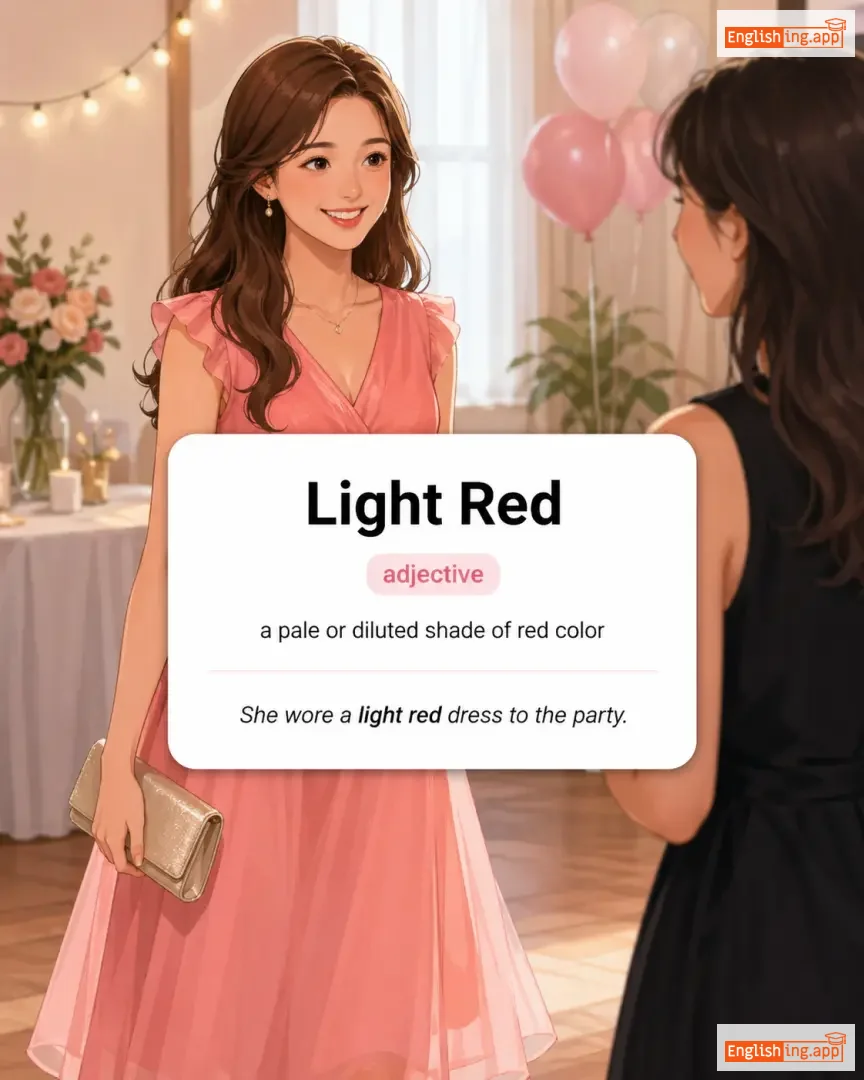
Light Red definition card — visual illustration of the meaning
adjective
/laɪt red/
薄紅色 (usui akairo)

a pale or diluted shade of red color

"She wore a light red dress to the party."

"彼女はパーティーに薄紅色のドレスを着ていました。" (Kanojo wa pātii ni usui akairo no doresu o kite imashita.)
adjective
/ˌlaɪtˈhɑːrtɪd/
軽やかで無頓着な (karoyaka de mutonchaku na)

cheerful, carefree, and not serious

"She gave a light-hearted speech at the party."
"彼女はパーティーで軽快なスピーチをしました。" (Kanojo wa pātī de keikai na supīchi o shimashita.)
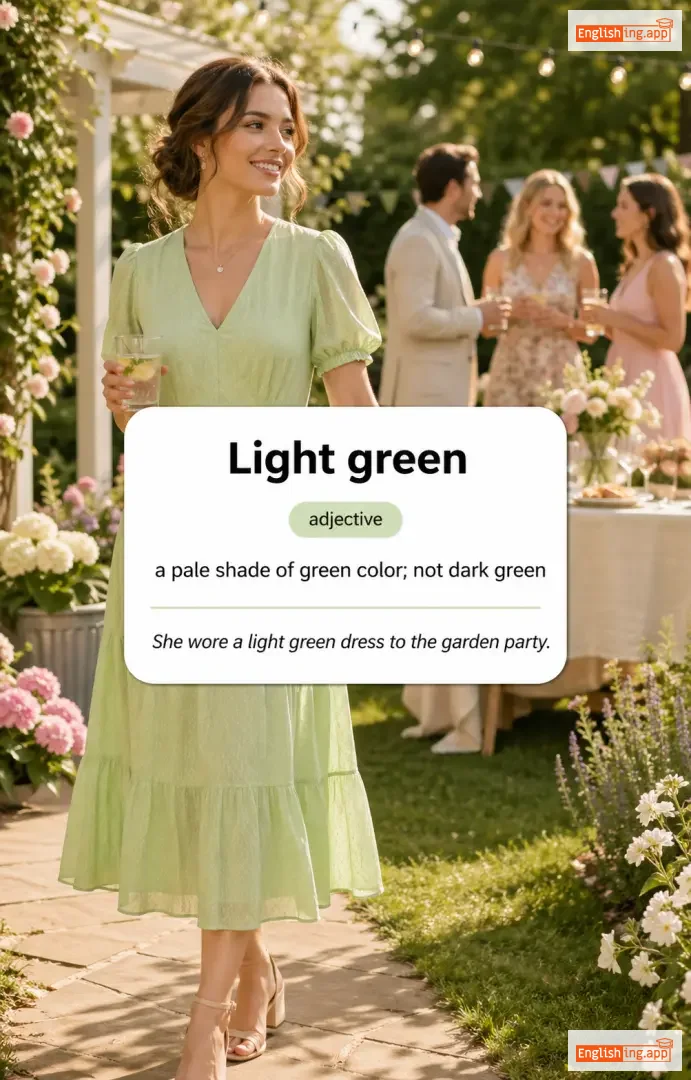
Light green definition card — visual illustration of the meaning
adjective
/laɪt ɡriːn/
ライトグリーン (raito guriin)

a pale shade of green color; not dark green

"She wore a light green dress to the garden party."
"彼女はガーデンパーティーにライトグリーンのドレスを着て行きました。" (Kanojo wa gāden pātī ni raito gurīn no doresu o kite ikimashita.)
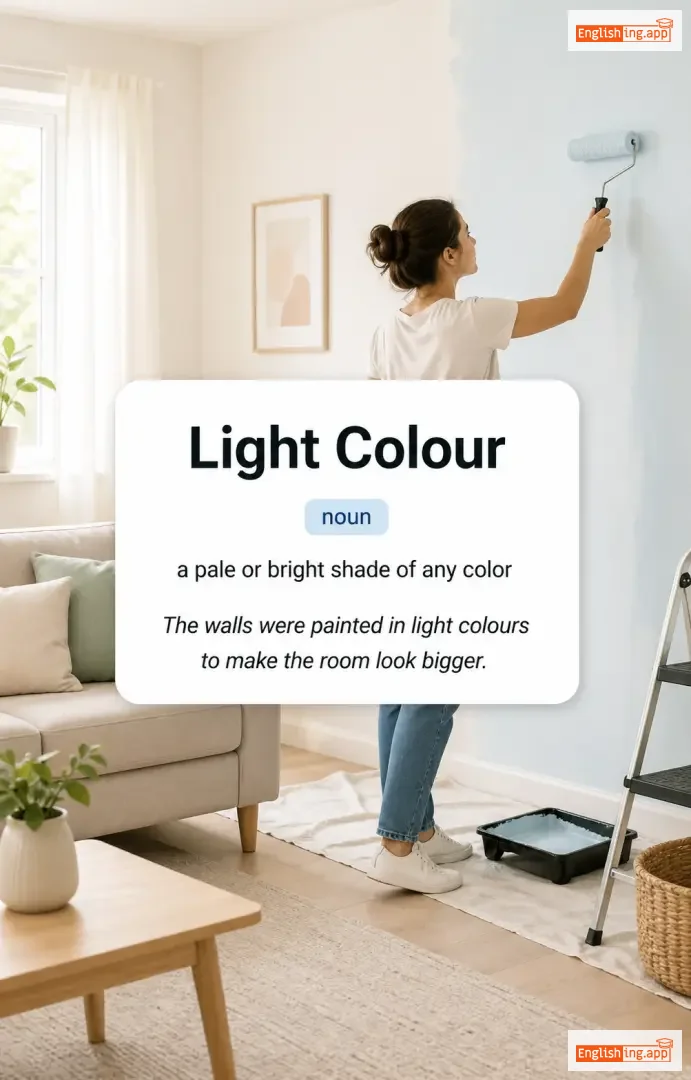
Light Colour definition card — visual illustration of the meaning
noun
/laɪt ˈkʌlər/
明るい色 (akarui iro)

a pale or bright shade of any color

"The walls were painted in light colours to make the room look bigger."
"部屋を広く見せるために、壁は明るい色で塗られました。" (Heya o hiroku miseru tame ni, kabe wa akarui iro de nuraremashita.)
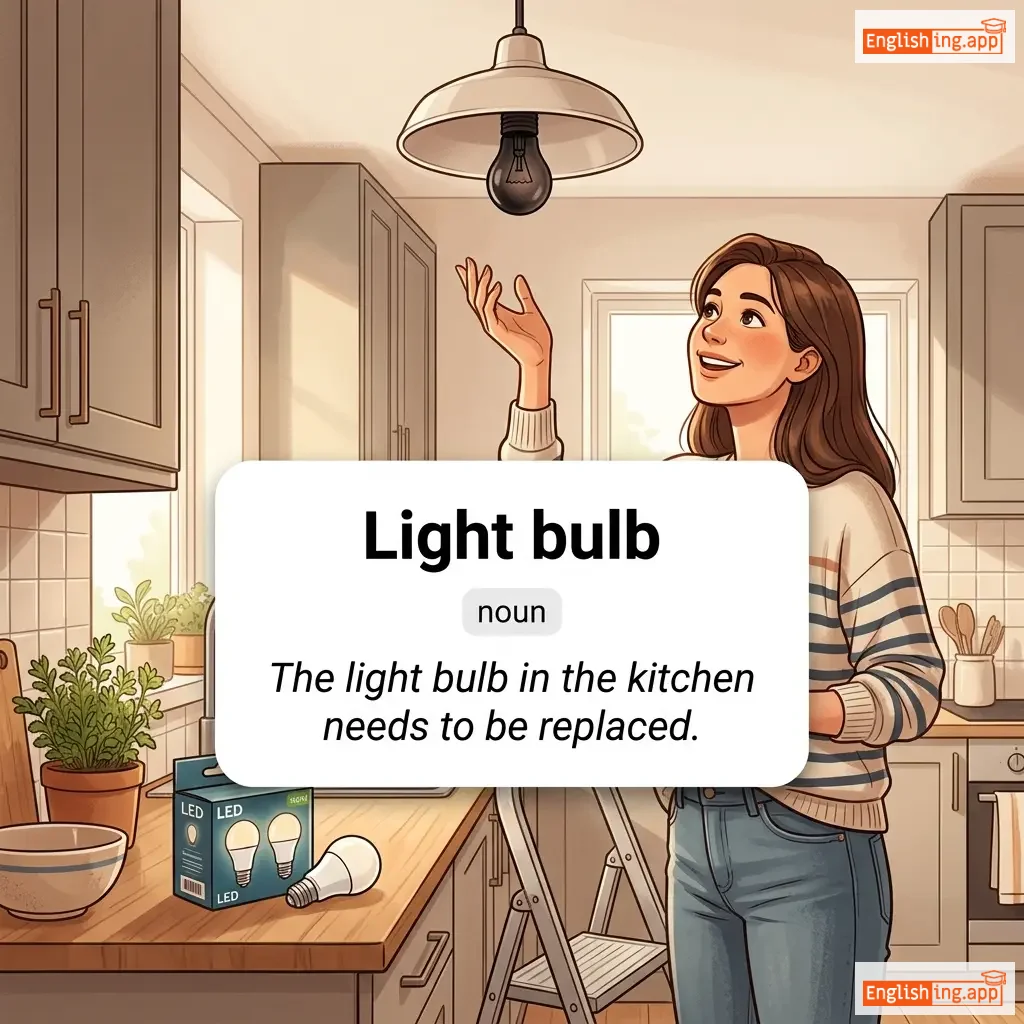
Light bulb definition card — visual illustration of the meaning
noun
/laɪt bʌlb/
電球 (denkyū)

a glass or plastic container that produces light when electricity passes through it

"The light bulb in the kitchen needs to be replaced."
"キッチンの電球は交換する必要があります。" (kitchin no denkyū wa kōkan suru hitsuyō ga arimasu)
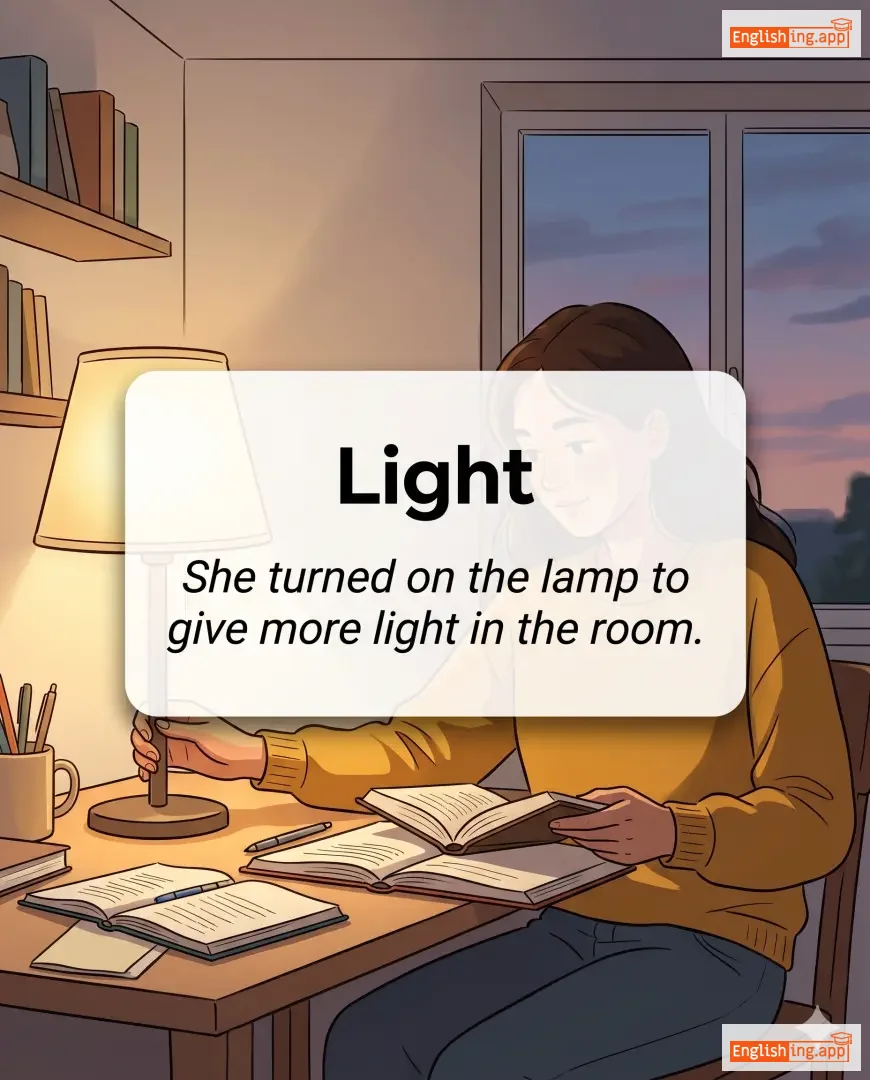
Light definition card — visual illustration of the meaning
noun, verb, adjective
/laɪt/
(hikari)

The natural agent that makes things visible; to illuminate or make something start burning.

"She turned on the lamp to give more light in the room."

"彼女は部屋にもっと光を入れるためにランプをつけました。" (Kanojo wa heya ni motto hikari wo ireru tame ni ranpu wo tsukemashita.)
noun
/ˈlɪɡ.ə.tʃər/
括弧 (kakko)

A thing used for tying or binding tightly; in music/printing, two or more notes or letters joined together.

"The doctor used a ligature to stop the bleeding."

"医者は出血を止めるためにリガチュアを使用しました。" (Isha wa shukketsu o tomeru tame ni rigachua o shiyō shimashita.)
noun
/ˈlɪɡ.əmənt/
靭帯組織 (Jintai soshiki)

A tough band of tissue that connects bones at a joint.

"He tore a ligament in his knee while playing football."

"サッカーをしているときに膝の靭帯を切った。" (Sakkā o shite irutoki ni hiza no jintai o kitta.)
lift definition card — visual illustration of the meaning
verb
/lɪft/
持ち上げる (mochiageru)

To raise something to a higher position or level.

"He lifted the heavy box with ease."

"彼は簡単に重い箱を持ち上げました。" (Kare wa kantan ni omoi hako o mochiagemashita.)
noun
/ˈlaɪf.taɪm/
生涯 (shougai)

The duration of a person's life or the existence of something.

"She achieved more in her lifetime than most people dream of."

"彼女は自分の生涯で、ほとんどの人が夢見る以上のことを達成した。" (Kanojo wa jibun no shougai de, hotondo no hito ga yumemiru ijou no koto o tassei shita.)
noun
/ˈlaɪf.staɪl/
ライフスタイル (raifusutairu)

The way in which a person or group lives, including habits, attitudes, and possessions.

"A healthy lifestyle includes regular exercise and a balanced diet."

"健康的なライフスタイルには、定期的な運動とバランスの取れた食事が含まれます。" (Kenko teki na raifusutairu ni wa, teikitekina undo to baransu no toreta shokuji ga fukumaremasu.)
adjective
/ˈlaɪf.lɒŋ/
生涯 (shōgai)

Lasting or existing for the whole of a person's life.

"They remained lifelong friends."

"彼らは生涯の友人でした。" (Karera wa shōgai no yūjin deshita.)
adjective
/ˈlaɪf.laɪk/
リアルに似ている (riaruni niteiru)

Very similar to a real person, object, or scene; realistic.

"The wax figure was so lifelike that people thought it was a real person."
"その蝋人形は非常にリアルに似ていて、人々はそれが本物の人物だと思った。" (Sono rōningyō wa hijō ni riaruni niteite, hitobito wa sore ga honmono no jinbutsu da to omotta.)
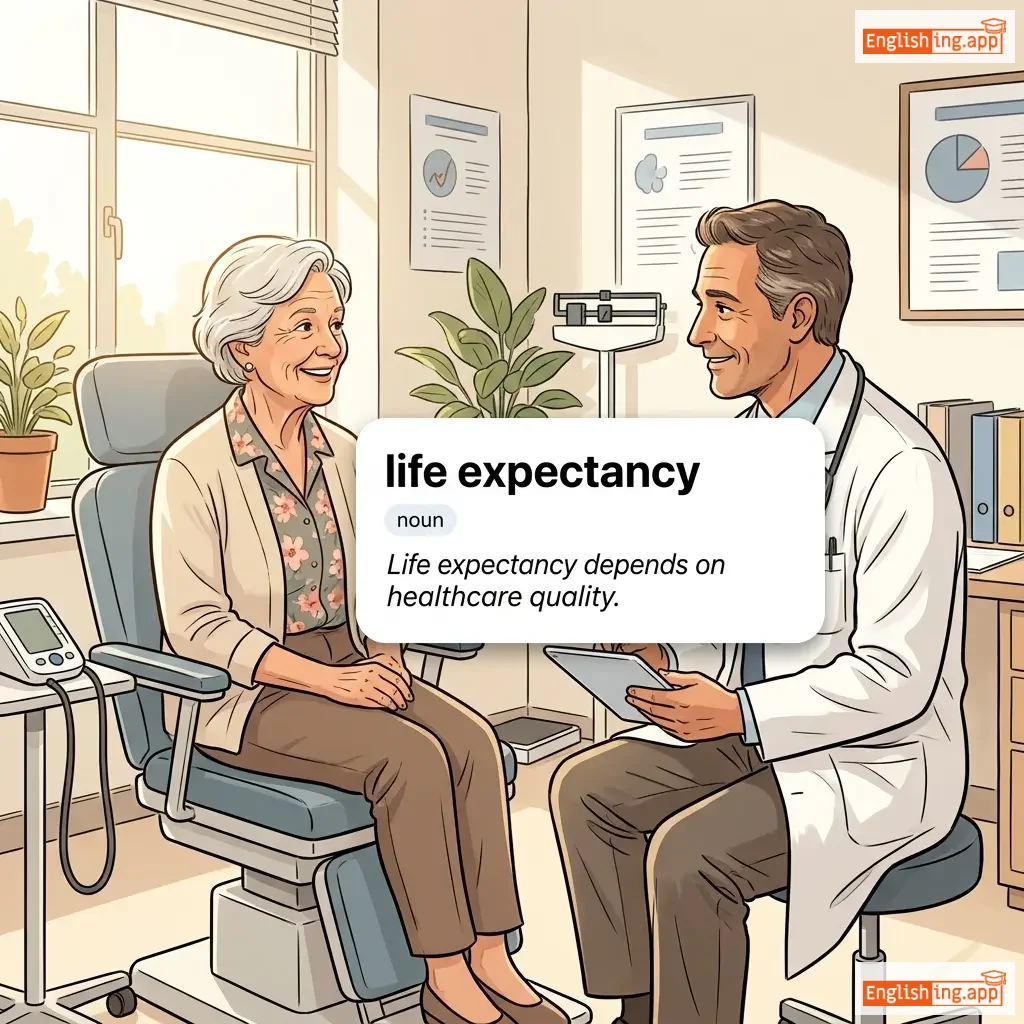
life expectancy definition card — visual illustration of the meaning
noun
ˈlaɪf ɪkˌspek.tən.si
平均寿命 (heikin jumyō)

The average period that a person may expect to live; the length of time for which something is expected to last or to continue being effective.

"Life expectancy depends on healthcare quality."
"平均寿命は医療の質に依存します。" (Heikin jumyō wa iryō no shitsu ni izon shimasu.)
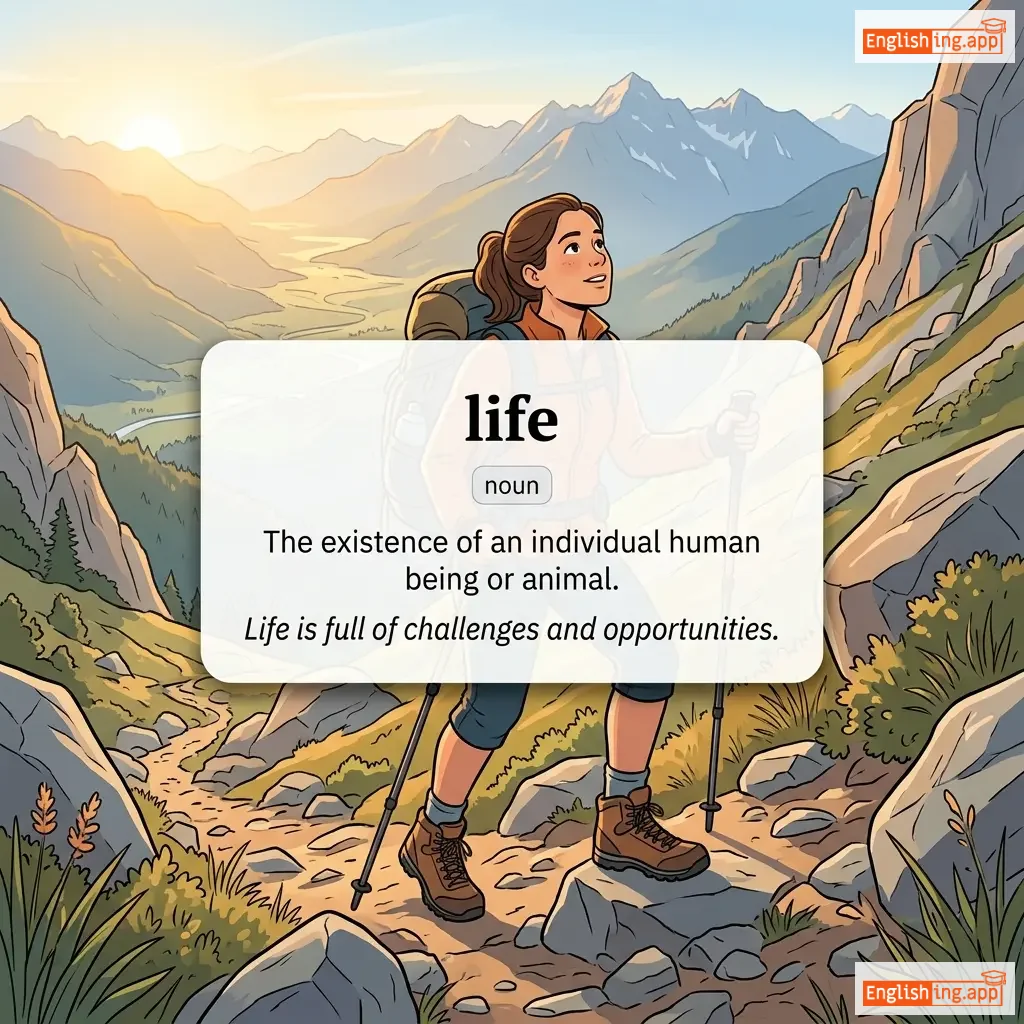
life definition card — visual illustration of the meaning
noun
/laɪf/
生命 (seimei)

The existence of an individual human being or animal.

"Life is full of challenges and opportunities."

"生命は挑戦と機会に満ちています。" (Seimei wa chōsen to kikai ni michiteimasu.)
noun
/luː/
代わりに (kawarini)

Instead of; in place of.

"He gave money in lieu of flowers."

"彼は花の代わりにお金を渡した。" (Kare wa hana no kawarini okane o watashita.)
noun
/ˈlaɪər/
嘘つき (usotsuki)

a person who tells lies; an alternative spelling of liar

"No one trusted him because he was known as a habitual lier."

"彼は常習的な嘘つきだったので、誰も彼を信用しなかった。" (kare wa shuushuuteki na usotsuki datta node dare mo kare o shinyou shinakatta)
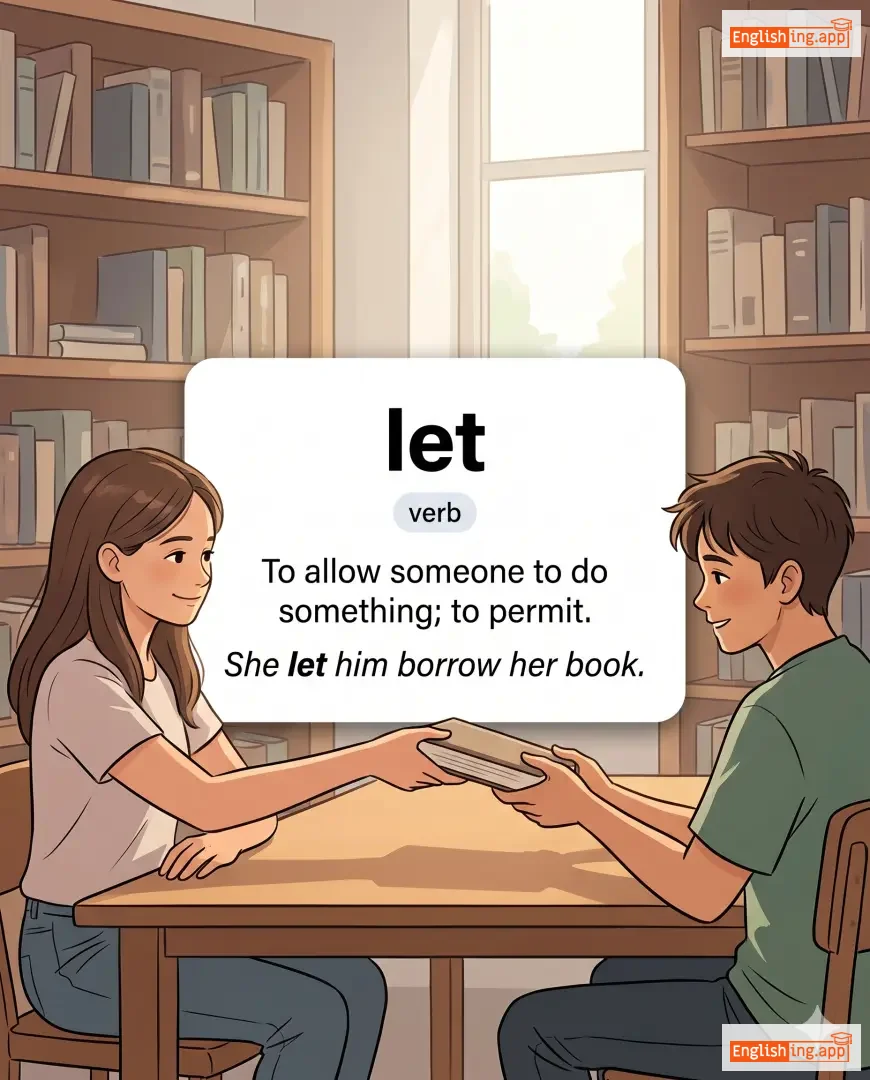
let definition card — visual illustration of the meaning
verb
/lɛt/
許可する (kyoka suru)

To allow someone to do something; to permit.

"She let him borrow her book."

"彼女は彼に彼女の本を借りさせた。" (Kanojo wa kare ni kanojo no hon wo karisaseta.)
adjective
/ˈlɛsər/
より重要でない (yori jūyō denai)

of lower importance or smaller in degree or amount

"The lesser known facts about the topic were fascinating."
"そのトピックに関するあまり知られていない事実は魅力的でした。" (Sono topikku ni kansuru amari shirarete inai jijitsu wa miryokuteki deshita.)
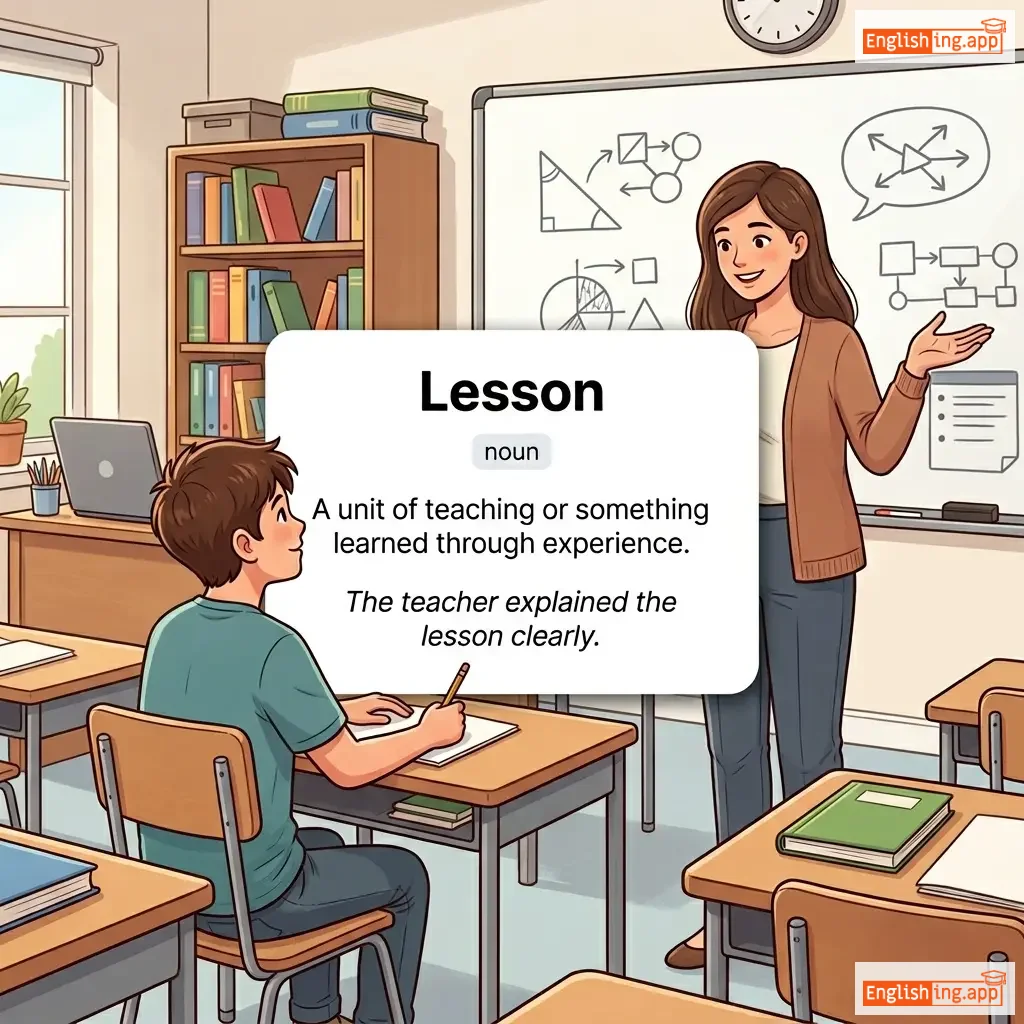
Lesson definition card — visual illustration of the meaning
noun
/ˈlɛsən/
レッスン (ressun)

A unit of teaching or something learned through experience.

"The teacher explained the lesson clearly."
"先生はレッスンを明確に説明しました。" (Sensei wa ressun o meikaku ni setsumei shimashita.)
adjective/adverb
/lɛs/
少ない (sukunai)

A smaller amount; not as much.

"She spends less money than her brother."

"彼女は兄よりお金を使うのが少ない。" (Kanojo wa ani yori okane o tsukau no ga sukunai.)
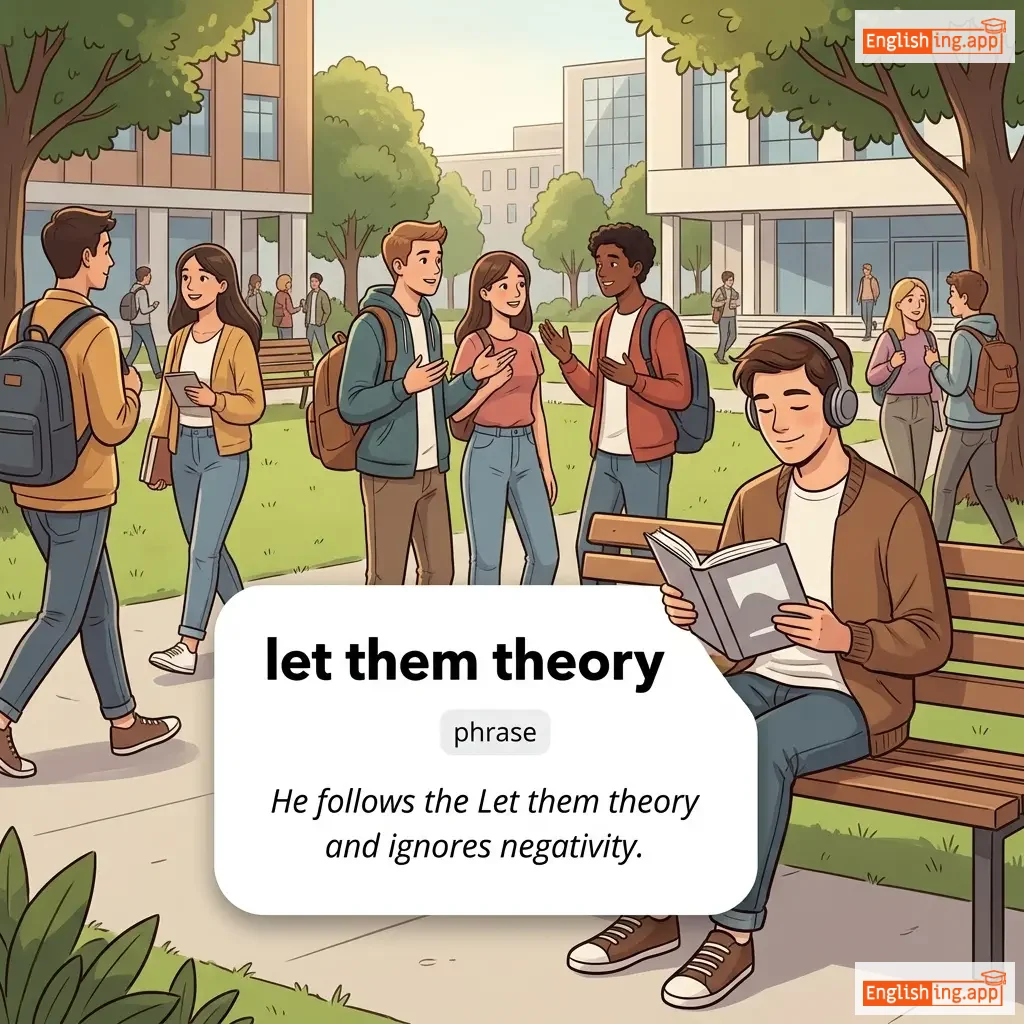
let them theory definition card — visual illustration of the meaning
phrase
/lɛt ðɛm ˈθɪə.ri/
彼らに好きなことを考えさせる理論 (karera ni sukina koto o kangaesaseru riron)

A philosophy of not trying to control others' actions or opinions and allowing them to be themselves.

"He follows the Let them theory and ignores negativity."

"彼は「彼らに好きなことを考えさせる理論」を実践し、否定的な考えを無視します。" (Kare wa 'karera ni sukina koto o kangaesaseru riron' o jissen shi, hiteiteki na kangae o mushi shimasu.)