語彙集

英単語辞書 | 単語の意味、定義、例文

verb
/məˈnuː.vər/

To move skillfully or carefully; to guide or manipulate into a desired position.

"The driver skillfully manoeuvered the car through the narrow street."

noun
/ˈmænər/
邸宅 (teitaku)

A large country house with lands; the main house of an estate.

"The old manor stood proudly on the hill for centuries."

"古い邸宅は何世代にもわたって丘の上に誇らしげに立っていました。" (Furui teitaku wa nan-sedai ni mo watatte oka no ue ni hokorashige ni tatte imashita.)
mansion definition card — visual illustration of the meaning
noun
/ˈmænʃən/
幸せ (shiawase)

a large, impressive house

"The billionaire lives in a luxurious mansion overlooking the ocean."

"彼女は賞を受け取ったとき、幸せを隠すことができませんでした。" (Kanojo wa shō o uketotta toki, shiawase o kakusu koto ga dekimasen deshita.)
noun
/ˈmæntl̩/
暖炉の上の棚 (danro no ue no tana)

A shelf above a fireplace, often used for decoration.

"She placed family photos on the mantel above the fireplace."

"彼女は家族の写真を暖炉の上の棚に置きました。" (Kanojo wa kazoku no shashin o danro no ue no tana ni okimashita.)
noun
/ˈmæntl̩/
マント, 責任 (manto, sekinin)

A cloak or covering; also the layer of the earth between the crust and the core.

"The leader assumed the mantle of responsibility."

"リーダーは責任の重みを担った。" (Rīdā wa sekinin no omomi o ninatta.)
noun
/ˈmænjuəl/
マニュアル (manual)

a handbook or guide that provides instructions on how to do or operate something

"You should read the user manual before setting up the device."

"デバイスを設定する前に、ユーザーマニュアルを読んでください。" (Debaisu wo settei suru mae ni, yūzā manyuaru wo yonde kudasai.)
adverb
/ˈmæn.ju.ə.li/
手動で; 物理的な労力を使って; (shudō de; butsuriteki na rōryoku o tsukatte)

by hand; using physical effort rather than machines

"The data was entered manually into the system."

"データは手動でシステムに入力されました。" (Dēta wa shudō de shisutemu ni nyūryoku saremashita.)
manufacture definition card — visual illustration of the meaning
verb
/ˌmænɪˈfæktʃər/
製造する (seizou suru)

to make something in large quantities using machinery

"The company manufactures high-quality electronics."

"その会社は高品質な電子機器を製造しています。" (Sono kaisha wa kōhinshitsu na denshi kiki o seizō shiteimasu.)
noun
/ˌmænjəˈfæktʃərər/
製造業者 (seizōgyōsha)

A person or company that makes goods in large quantities.

"The manufacturer produces cars for the global market."

"製造業者はグローバル市場向けに車を生産しています。" (Seizōgyōsha wa gurōbaru shijō muke ni kuruma o seisan shiteimasu.)
noun
/ˌmænjəˈfæktʃərɪŋ/
製造業 (seizōgyō)

the process of making products on a large scale using machinery

"The country is investing heavily in the manufacturing sector."

"その国は製造業に大規模に投資しています。" (sono kuni wa seizōgyō ni daikibo ni tōshi shiteimasu.)
noun
/ˌmænjəˈmɪʃən/
奴隷解放 (dorei kaihō)

The act of a slave owner freeing their slaves.

"The manumission of the slaves marked a turning point in history."

"奴隷の解放は歴史の転換点を示しました。" (Dorei no kaihō wa rekishi no tenkantei o shimeshimashita.)
verb
/ˌmæn.juˈmɪt/
奴隷解放 (dorei kaihou)

to release from slavery or servitude; to set free

"The landowner decided to manumit his slaves."
"地主は奴隷を解放することに決めました。" (Jishu wa dorei wo kaihou suru koto ni kimemashita.)
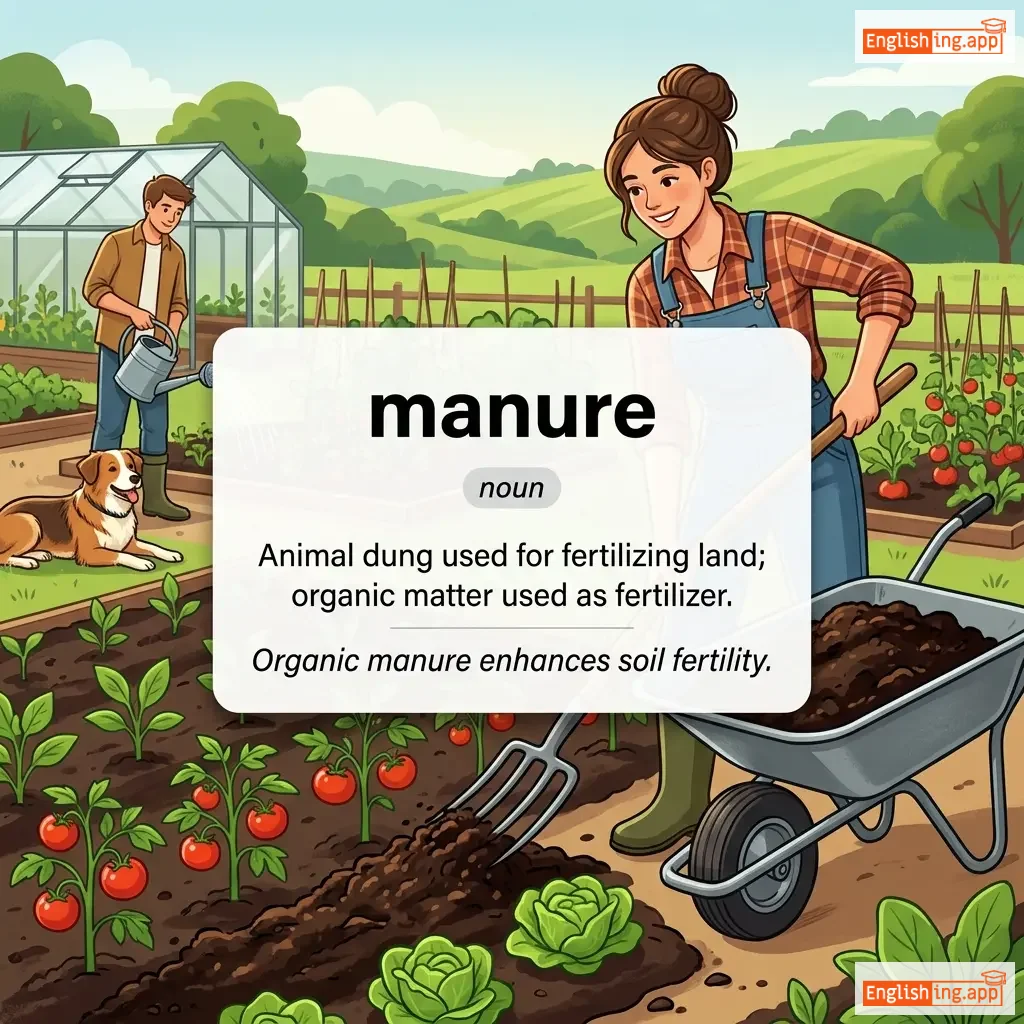
manure definition card — visual illustration of the meaning
noun
məˈnjʊər
肥料, 家畜の糞 (hiryo, kachiku no fun)

Animal dung used for fertilizing land; organic matter used as fertilizer.

"Organic manure enhances soil fertility."

"有機肥料は土壌の肥沃度を高めます。" (Yūki hiryo wa tojō no hiwokudo o takamemasu.)
noun
/ˈmæn.juˌskrɪpt/
手稿 (shukou)

a handwritten or typed document, especially a writer’s draft before publication

"The author submitted her manuscript to the publisher."

"作家は彼女の手稿を出版社に提出しました。" (Sakka wa kanojo no shukou o shuppansha ni teishutsu shimashita.)
adjective
/ˈmɛni/
多くの (ooku no)

a large number of

"Many students attended the lecture."

"多くの学生が講義に参加しました。" (Ooku no gakusei ga kougi ni sanka shimashita.)
noun
/mæp/
地図 (chizu)

a drawing that shows the features of an area of land or sea

"He studied the map before starting his journey."

"彼は旅を始める前に地図を調べました。" (Kare wa tabi o hajimeru mae ni chizu o shirabemashita.)
verb
/mɑːr/
台無しにする (dainashi ni suru)

to spoil or damage the appearance or quality of something

"The scratch will mar the beauty of the painting."

"その傷は絵画の美しさを台無しにする。" (Sono kizu wa kaiga no utsukushisa o dainashi ni suru.)
noun
/ˈmærəθən/
マラソン (marason)

a long-distance running race, typically 42.195 kilometers (26.2 miles)

"She completed the marathon in under four hours."

"彼女は4時間以内にマラソンを完走しました。" (Kanojo wa 4 jikan inai ni marason o kansou shimashita.)
verb
/məˈrɔːd/
略奪する (ryakudatsu suru)

to roam in search of things to steal or attack

"The bandits marauded through the village at night."

"バンディットたちは夜に村を略奪しました。" (Banditto-tachi wa yoru ni mura o ryakudatsu shimashita.)
noun
/məˈrɔː.dər/
略奪者 (ryakudatsusha)

a person who roams around in search of things to steal or people to attack

"Villagers feared the marauders who raided their homes."

"村人たちは自分たちの家を襲った略奪者を恐れていた。" (Murabito-tachi wa jibun-tachi no ie o osotta ryakudatsusha o osorete ita.)
🏛️

marble

noun
/ˈmɑːrbəl/

a hard, smooth stone used in building and sculpture, often white with colored lines

"The floor of the palace was made of white marble."

🚶‍♂️

March

verb
/mɑːrtʃ/

to walk in a regular, rhythmic way, often in step with others; to proceed with determination

"The soldiers marched across the field."

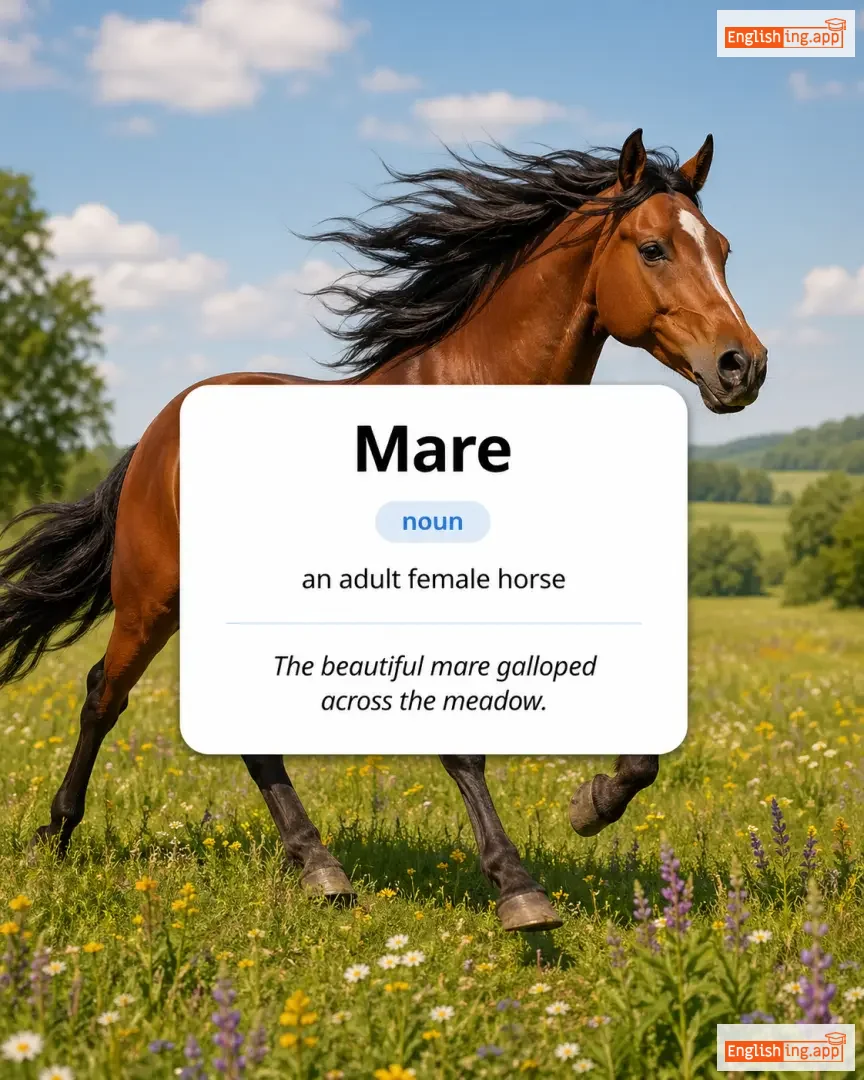
Mare definition card — visual illustration of the meaning
noun
/meər/
雌馬 (meshima)

an adult female horse

"The beautiful mare galloped across the meadow."

"美しい雌馬が草原を駆け抜けた。" (Utsukushī meshima ga sōgen o kakenuketa.)
noun
/ˈmɑːrdʒɪn/
マージン、限界、境界 (maajin, genkai, kyoukai)

The edge or border of something; the amount by which something is won or falls short.

"The company increased its profit margin last year."

"その会社は昨年、利益率を増加させました。" (Sono kaisha wa sakunen, rieki-ritu o zouka sasemashita.)
adjective
/ˈmɑːrdʒɪnəl/
限界的, 小さい, 重要でない (genkai teki, chiisai, juuyou denai)

Relating to or at the edge; small or insignificant in amount or importance.

"He made only a marginal improvement in his grades."
"彼は成績においてわずかな改善をしました。" (Kare wa seiseki ni oite wazukana kaizen o shimashita.)
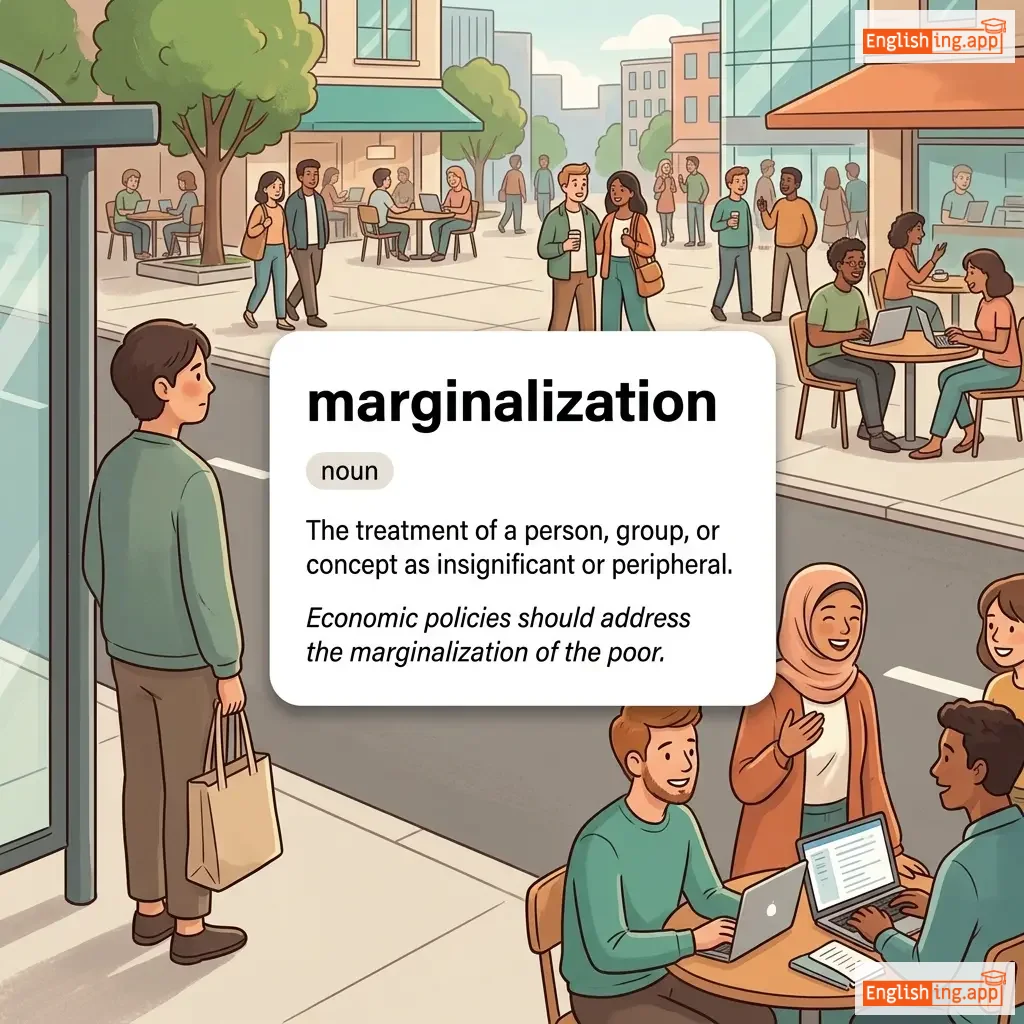
marginalization definition card — visual illustration of the meaning
noun
ˌmɑːr.dʒɪ.nəl.aɪˈzeɪ.ʃən
周縁化 (shuuenka)

The treatment of a person, group, or concept as insignificant or peripheral.

"Economic policies should address the marginalization of the poor."

"経済政策は貧困層の周縁化に対処すべきです。" (Keizai seisaku wa hinkon sou no shuuenka ni taisho subeki desu.)
verb
/ˈmɑːrdʒɪnəlaɪz/
疎外する, 置き去りにする (sogai suru, okizari ni suru)

To treat a person or group as unimportant or insignificant.

"The policy marginalized minority communities."
"政策は少数派コミュニティを疎外しました。" (Seisaku wa shōsūha komyuniti o sogai shimashita.)
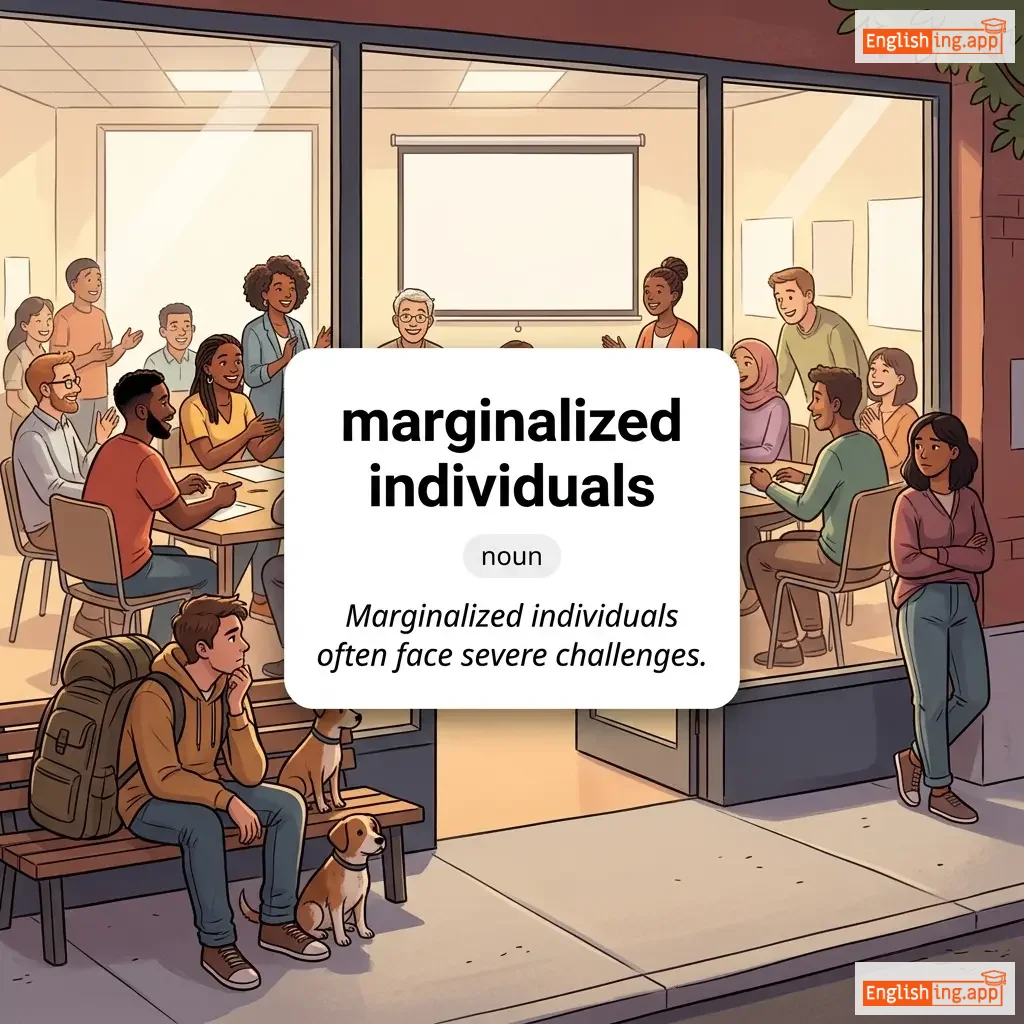
marginalized individuals definition card — visual illustration of the meaning
noun
ˈmɑːrdʒɪnəlaɪzd ˌɪndɪˈvɪdʒuəlz
疎外された個人 (sogai sareta kojin)

People who are treated as insignificant or peripheral to society, often excluded from mainstream social, economic, or political activities.

"Marginalized individuals often face severe challenges."
"疎外された個人はしばしば重大な課題に直面します。" (Sogai sareta kojin wa shibashiba jūdaina kadai ni chokumen shimasu.)
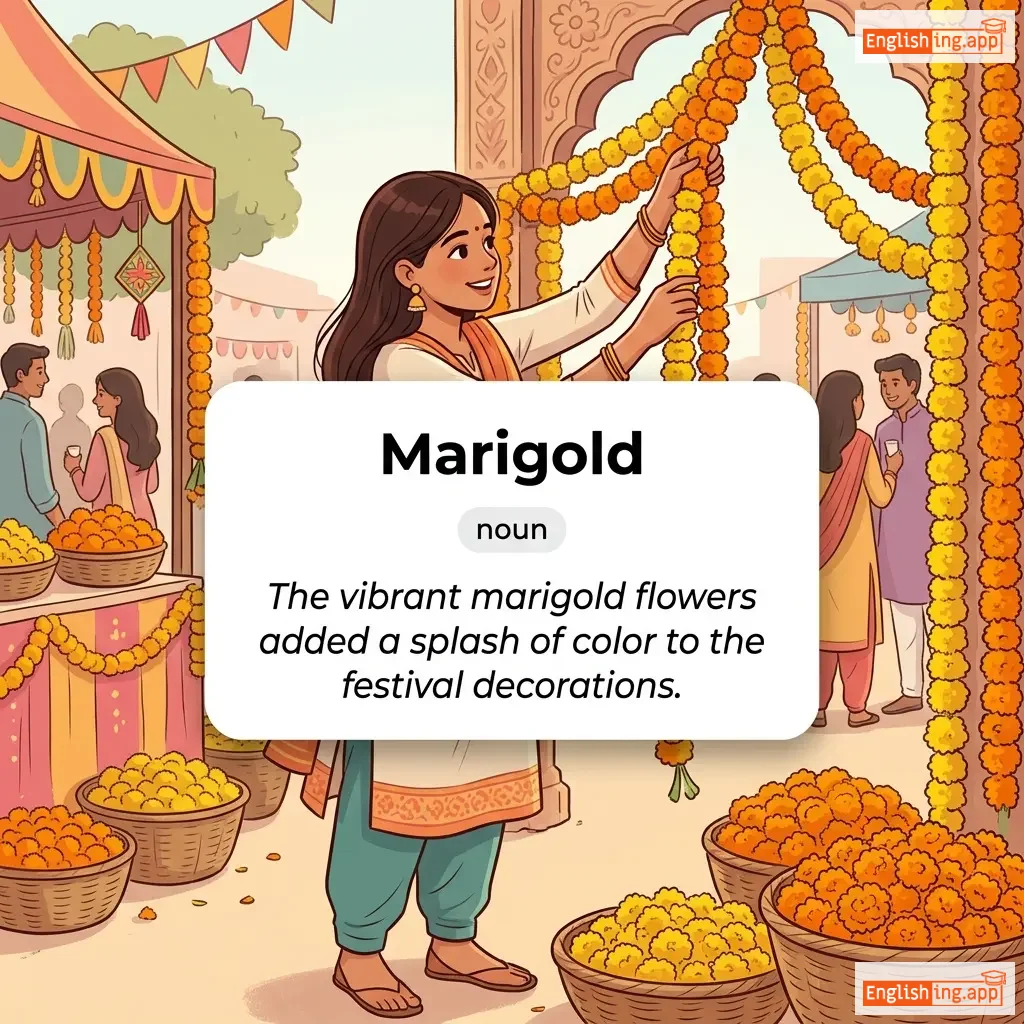
Marigold definition card — visual illustration of the meaning
noun
/ˈmɛrɪɡoʊld/
マリーゴールド (mariigorudo)

a bright orange or yellow flower of the daisy family, often used in gardens and ceremonies

"The vibrant marigold flowers added a splash of color to the festival decorations."
"鮮やかなマリーゴールドの花は、祭りの装飾に色を添えた。" (azayakana mariigorudo no hana wa matsuri no shoshoku ni iro o soeta)
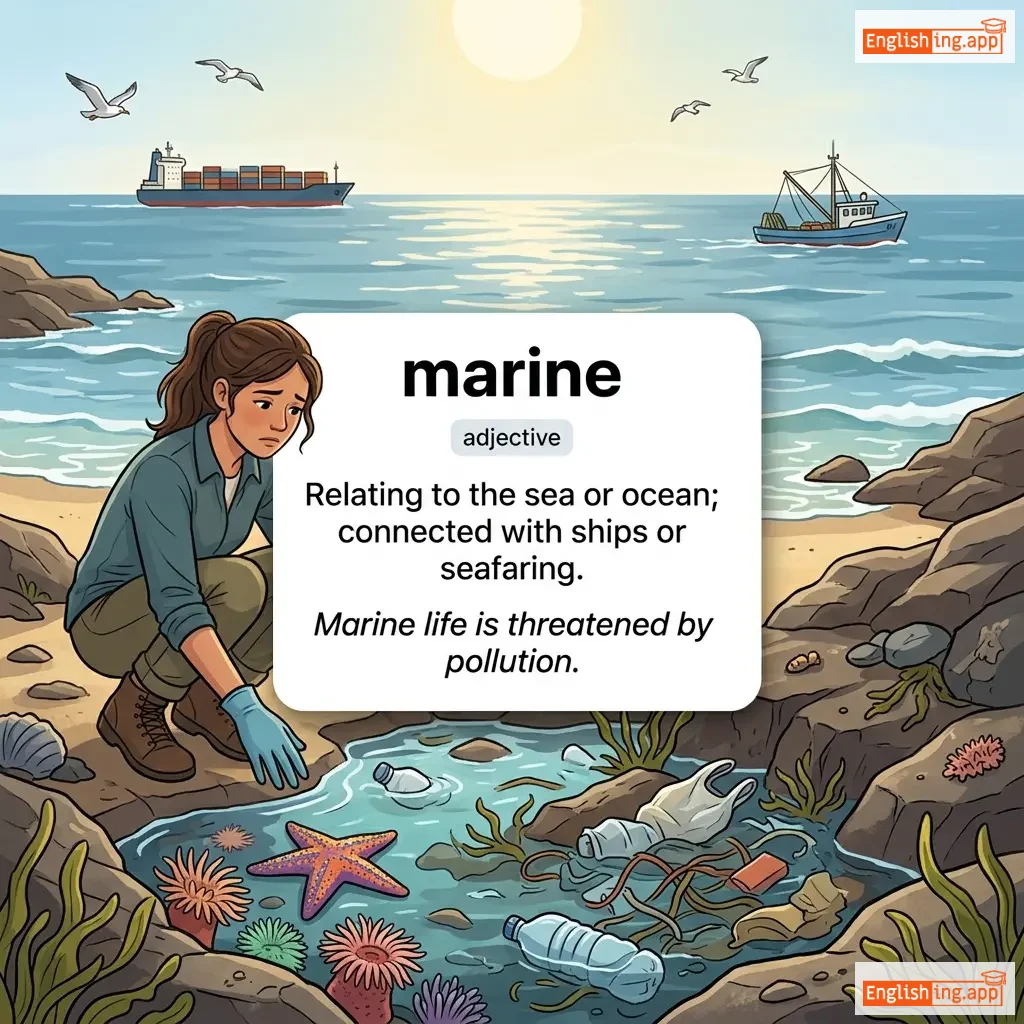
marine definition card — visual illustration of the meaning
adjective
/məˈriːn/
海洋の (kaiyō no)

Relating to the sea or ocean; connected with ships or seafaring.

"Marine life is threatened by pollution."
"海洋生物は汚染の脅威にさらされています。" (Kaiyō seibutsu wa osen no kyōi ni sarareteimasu.)
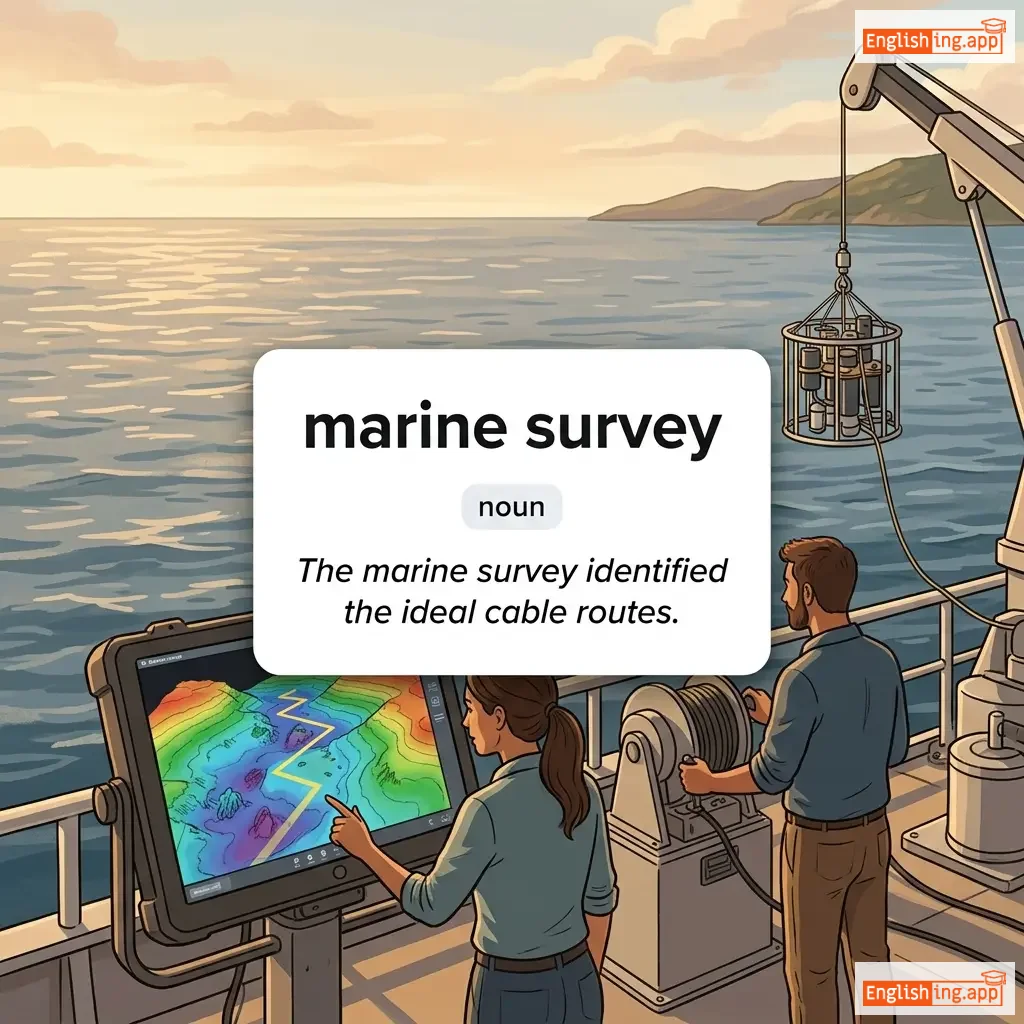
marine survey definition card — visual illustration of the meaning
noun
məˈriːn ˈsɜː.veɪ
海洋調査 (kaiyo chosa)

A systematic examination of the sea, seabed, and underwater features for the purpose of making maps or gathering other information.

"The marine survey identified the ideal cable routes."

"海洋調査によって理想的なケーブルルートが特定された。" (kaiyo chosa ni yotte risouteki na keeburu ruuto ga tokutei sareta)
adjective
/ˈmɑːrvələs/
素晴らしい; 驚くべき; 素晴らしい (subarashii; odorokubeki; subarashii)

extremely good; wonderful; causing great wonder

"The view from the mountain was marvellous."

"山からの景色は素晴らしかった。" (Yama kara no keshiki wa subarashikatta.)
verb
/ˈmɑːrʃəl/
整理する (seiri suru)

To arrange or organize people, events, or resources in an orderly way.

"The teacher marshaled the students for the field trip."

"教師は遠足のために生徒を整列させました。" (Kyōshi wa ensoku no tame ni seito o seiretsu sasemashita.)
noun
/mɑːrˈsuːpiəl/
袋で子供を育てる哺乳類 (fukuro de kodomo wo sodateru honyūrui)

A type of mammal that carries and nourishes its young in a pouch, like kangaroos and koalas.

"The kangaroo is a well-known marsupial."

"カンガルーはよく知られたマースピアルです。" (Kangarū wa yoku shirareta māsupiaru desu.)
adjective
/ˈmɑːrʃəl/
軍事的な (gunjiteki na)

Related to war, soldiers, or military life.

"The country imposed martial law during the crisis."

"その国は危機の間に戒厳令を施行した。" (Sono kuni wa kiki no aida ni kaigenrei o shikō shita.)
adjective, noun
/ˈmɑːrʃən/
火星人 (kaseijin)

Related to the planet Mars; or an imaginary being from Mars.

"The movie showed a Martian visiting Earth."

"映画は火星人が地球を訪れるシーンを見せた。" (Eiga wa kaseijin ga chikyū o otozureru shīn o miseta.)
noun
/ˈmɑːr.tɪn/
ツバメ (tsubame)

small swift-flying bird that catches insects on the wing

"The martin built its nest under the bridge."

"ツバメは橋の下に巣を作りました。" (Tsubame wa hashi no shita ni su o tsukurimashita.)
noun
/ˌmɑːrtəˈnɛt/
厳格な規律の指導者 (gengaku na kiritsu no shidōsha)

A strict disciplinarian who demands rigid adherence to rules.

"The new manager was such a martinet that even minor infractions were punished."

"新しいマネージャーはマルティネットのようで、些細な違反も処罰されました。" (Atarashī manējā wa marutinetto no yō de, sasaina ihan mo shobatsu saremashita.)
noun
/ˈmɑːrtər/
殉教者 (junkyousha)

A person who suffers or dies for their beliefs or cause.

"He was hailed as a martyr for defending his faith."

"彼は信念を守るために殉教者として称賛された。" (Kare wa shinnen o mamoru tame ni junkyousha toshite shousan sareta.)
noun
/ˈmɑːrtərdəm/
殉教 (junkyo)

The suffering or death of a martyr.

"His martyrdom inspired many to fight for justice."
"彼の殉教は多くの人々に正義のために戦うようにインスパイアしました。" (Kare no junkyo wa ooku no hitobito ni seigi no tame ni tatakau you ni insupaishimashita.)
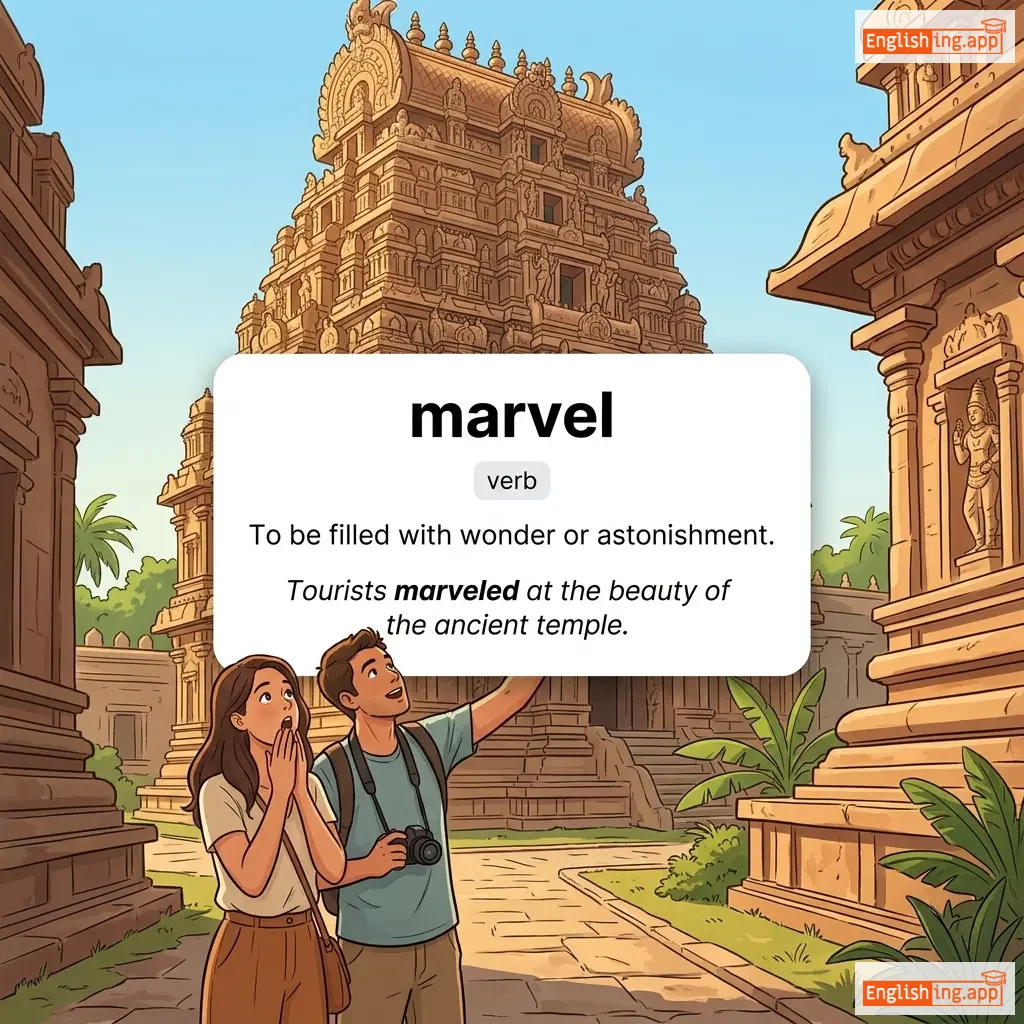
marvel definition card — visual illustration of the meaning
verb
/ˈmɑːrvl/
驚嘆する (kyōtan suru)

To be filled with wonder or astonishment.

"Tourists marveled at the beauty of the ancient temple."

"観光客たちは古代の寺院の美しさに驚嘆しました。" (Kankōkyaku-tachi wa kodai no jiin no utsukushisa ni kyōtan shimashita.)
Mask definition card — visual illustration of the meaning
noun
/mæsk/
仮面 (kamen)

A covering for the face to protect, disguise, or entertain.

"He wore a mask at the costume party."

"彼は仮装パーティーで仮面をかぶっていた。" (Kare wa kasō pātii de kamen o kabutte ita.)
adjective
/ˈmærɪtəl/
結婚に関する (kekkon ni kansuru)

Relating to marriage or the relationship between husband and wife.

"They sought counseling to resolve their marital issues."

"彼らは結婚問題を解決するためにカウンセリングを受けました。" (Karera wa kekkon mondai o kaiketsu suru tame ni kaunseringu o ukemashita.)
noun
/ˈmeɪsən/
石工 (ishikou)

a person skilled in building with stone, brick, or concrete

"The mason carefully laid the bricks for the new house."

"石工は新しい家のために慎重にレンガを積みました。" (Ishikou wa atarashī ie no tame ni shinchou ni renga o tsumimashita.)
noun
/ˈmæsəkɪst/
マゾヒスト (mazohisuto)

a person who derives pleasure from their own pain or humiliation

"He was called a masochist for enjoying tough challenges."
"彼は難しい挑戦を楽しんでいるため、マゾヒストと呼ばれました。" (Kare wa muzukashī chōsen o tanoshinde iru tame, mazo hisuto to yobaremashita.)
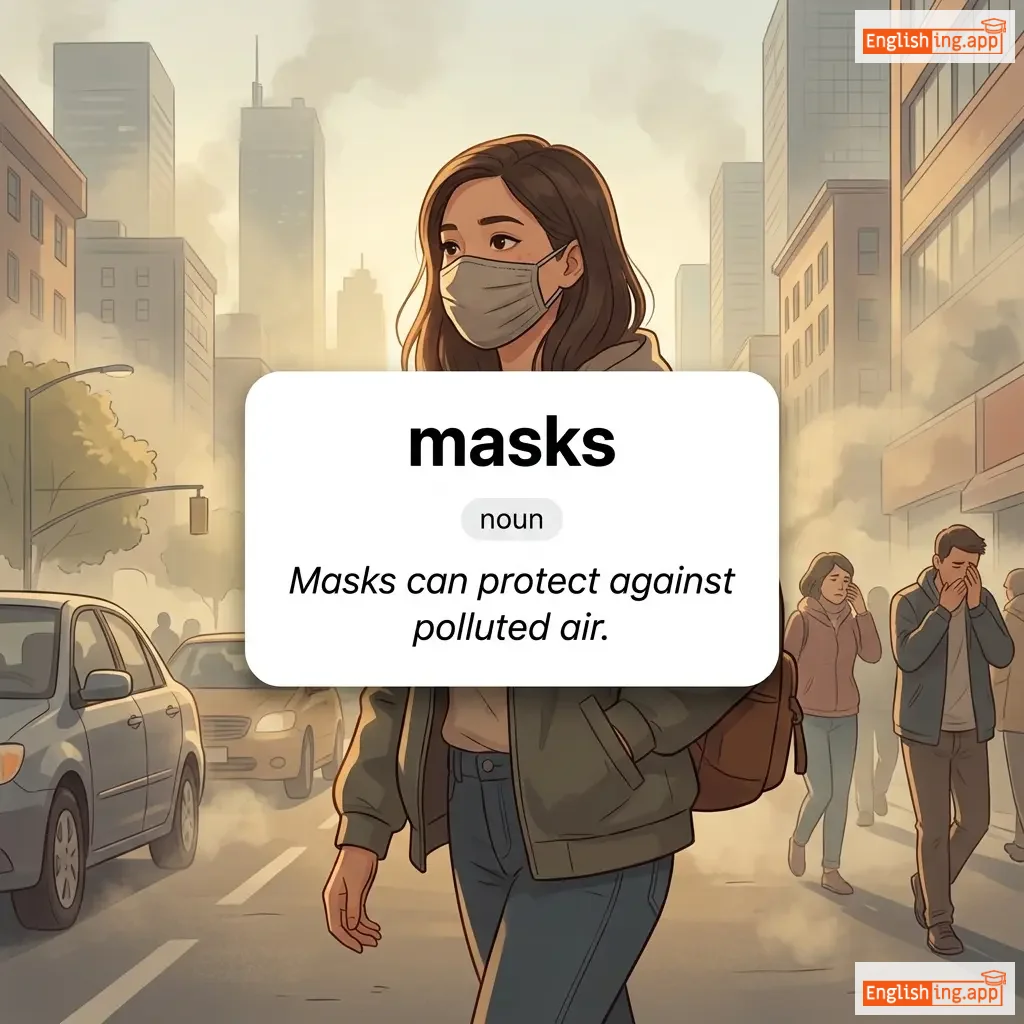
masks definition card — visual illustration of the meaning
noun
/mɑːsks/
マスク (masuku)

Coverings for all or part of the face, worn as a disguise, for protection, or for medical reasons.

"Masks can protect against polluted air."
"マスクは汚染された空気から守ることができます。" (Masuku wa osen sareta kūki kara mamoru koto ga dekimasu.)
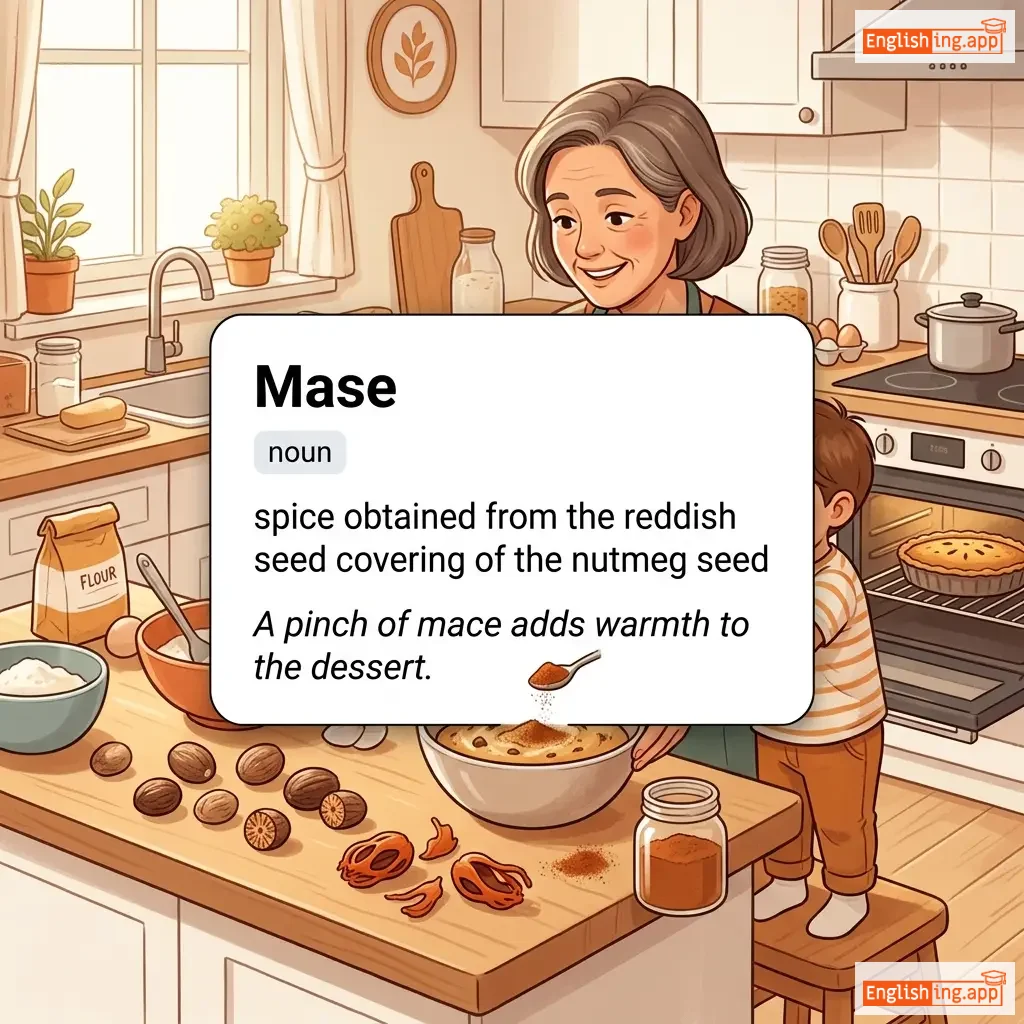
Mase definition card — visual illustration of the meaning
noun
/meɪs/
ナツメグの花 (natsumegu no hana)

spice obtained from the reddish seed covering of the nutmeg seed

"A pinch of mace adds warmth to the dessert."

"一 pinch ナツメグの花 デザートに温かみを加える。" (I pinch natsumegu no hana dezāto ni atatakai wo kuwaeru.)
adjective
/ˈmɑːrvələs/
素晴らしい (subarashii)

Causing great wonder or delight; extraordinary.

"She gave a marvelous performance on stage."

"彼女はステージで素晴らしいパフォーマンスを披露しました。" (Kanojo wa sutēji de subarashī pafōmansu o hirō shimashita.)
adjective
/ˈmæskjəlɪn/
男性的 (danseiteki)

having qualities traditionally associated with men

"He has a deep, masculine voice."
"彼は深い男性的な声を持っています。" (Kare wa fukai danseiteki na koe o motteimasu.)
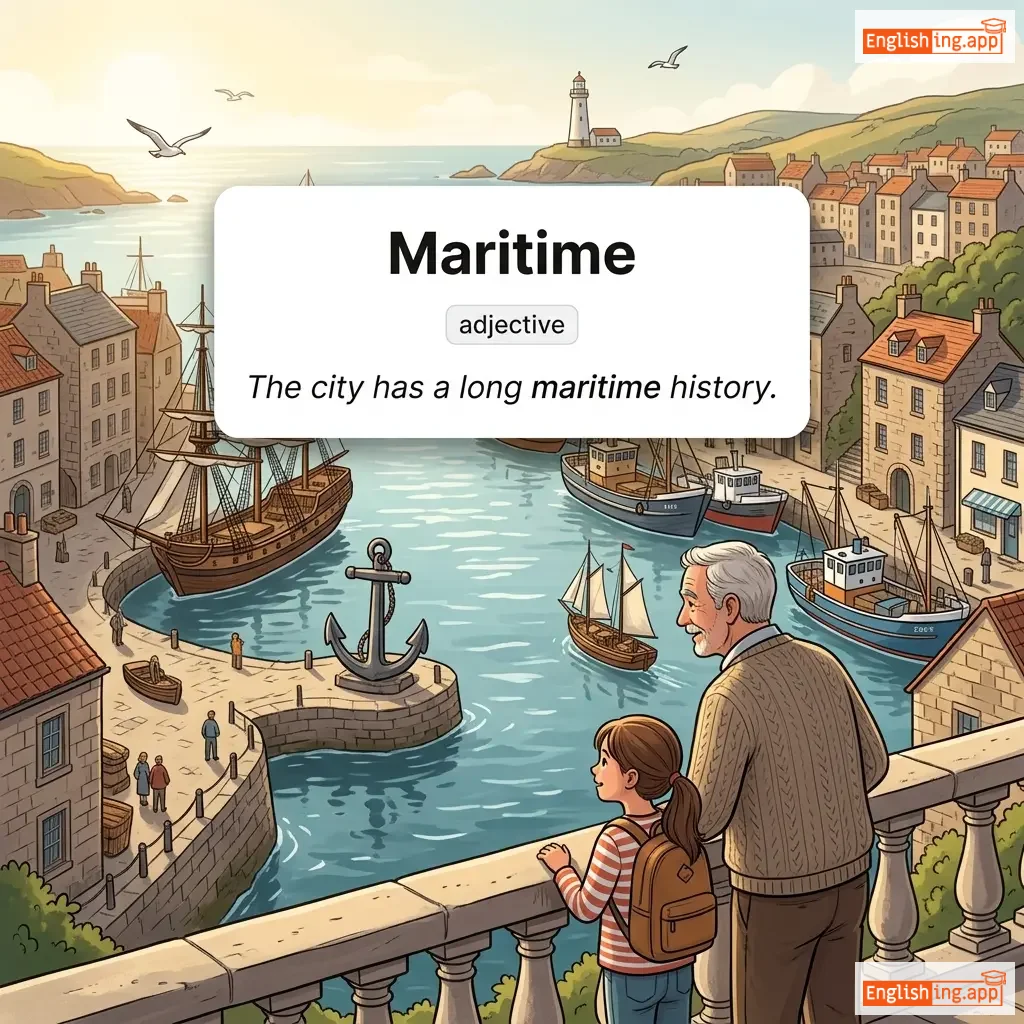
Maritime definition card — visual illustration of the meaning
adjective
/ˈmærɪˌtaɪm/
海事の (kaiji no)

connected with the sea, especially in relation to seafaring, shipping, or naval matters

"The city has a long maritime history."

"その都市には長い海事の歴史があります。" (Sono toshi ni wa nagai kaiji no rekishi ga arimasu.)