語彙集

英単語辞書 | 単語の意味、定義、例文

verb
/ˈmɑːrʃəl/
整理する (seiri suru)

To arrange or organize people, events, or resources in an orderly way.

"The teacher marshaled the students for the field trip."

"教師は遠足のために生徒を整列させました。" (Kyōshi wa ensoku no tame ni seito o seiretsu sasemashita.)
noun
/mɑːrz/
火星 (Kasei)

The fourth planet from the Sun; the Roman god of war

"Scientists are planning a manned mission to Mars in the next decade."
"科学者たちは次の十年で火星への有人ミッションを計画しています。" (Kagakusha-tachi wa tsugi no jūnen de kasei e no yūjin misshon o keikaku shiteimasu.)
marry definition card — visual illustration of the meaning
💒

marry

verb
/ˈmæri/
結婚する (kekkon suru)

To join in marriage; to take someone as a spouse.

"They plan to marry next spring."

"彼らは来年の春に結婚する予定です。" (Karera wa rainen no haru ni kekkon suru yotei desu.)
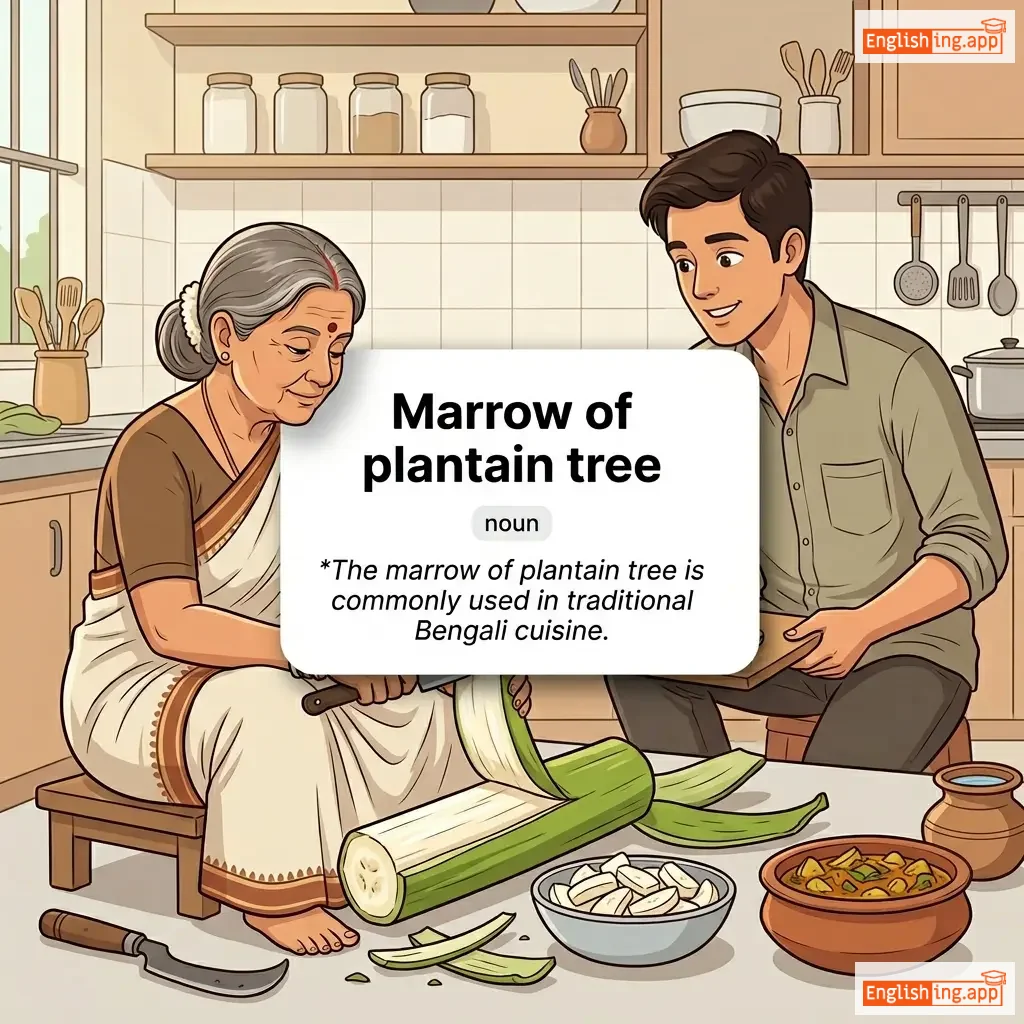
Marrow of plantain tree definition card — visual illustration of the meaning
noun
/ˈmær.oʊ ʌv ˈplæn.tɪn triː/
プランテンツリーの髄 (Puranten tsurī no zui)

the soft inner part of the banana plant stem that is used as a vegetable in cooking

"The marrow of plantain tree is commonly used in traditional Bengali cuisine."

"プランテンツリーの髄は、伝統的なベンガル料理で一般的に使用されます。" (Puranten tsurī no zui wa, dentō-teki na bengaru ryōri de ippanteki ni shiyō saremasu.)
noun
/ˈmæroʊ/
骨髄 (kotsuzui)

a soft fatty substance in the cavities of bones, producing blood cells

"Bone marrow is vital for the production of red blood cells."

"骨髄は赤血球の生産に不可欠です。" (Kotsuzui wa sekketsukyū no seisan ni fukaketsu desu.)
👩‍❤️‍👨

Married (ハピネス)

adjective
/ˈmærid/
幸福 (kōfuku)

Having a spouse; joined in marriage.

"She is happily married with two children."

"彼女は賞を受け取ったとき、自分の幸福を隠せなかった。" (Kanojo wa shō o uketotta toki, jibun no kōfuku o kakusenakatta.)
noun
/ˈmærɪdʒ/
幸せ (shiawase)

The legally or formally recognized union of two people as partners in a personal relationship.

"Their marriage lasted for over thirty years."

"彼女は賞を受け取ったとき、自分の幸せを隠せなかった。" (Kanojo wa shō o uketotta toki, jibun no shiawase o kakusenakatta.)
verb
/mɑːrd/
台無しにする (dainashi ni suru)

to spoil or damage the quality or appearance of something

"The celebration was marred by bad weather."

"お祝いは悪天候で台無しになりました。" (Oiwai wa akutenkō de dainashi ni narimashita.)
verb
/məˈruːn/
無人島に取り残す (mujintou ni torinokosu)

to leave someone trapped and isolated, especially on an island

"The sailors were marooned on a deserted island."

"水夫たちは無人島に取り残されました。" (Suifu-tachi wa mujintou ni torinokosaremashita.)
noun
/ˈmɑːrkɪtˌpleɪs/
市場 (ichiba)

a place where goods and services are bought and sold; an open area for trade

"The town's marketplace is crowded every Friday morning."

"街の市場は毎週金曜日の朝に混雑しています。" (Machi no ichiba wa maishū kin'yōbi no asa ni konzatsu shiteimasu.)
Marketing definition card — visual illustration of the meaning
noun
/ˈmɑːrkɪtɪŋ/
マーケティング (māketingu)

The action or business of promoting and selling products or services, including market research and advertising.

"The company invested heavily in digital marketing."

"その会社はデジタルマーケティングに多大な投資をしました。" (Sono kaisha wa dejitaru māketingu ni tadaina tōshi o shimashita.)
marketability definition card — visual illustration of the meaning
noun
/ˌmɑːr.kɪ.təˈbɪl.ə.ti/
市場性 (shijousei)

The possibility of commercial success for a product or service

"The new product's marketability depends on consumer demand."

"新しい商品の市場性は消費者の需要に依存しています。" (Atarashī shōhin no shijō-sei wa shōhisha no juyō ni izon shiteimasu.)
Market Penetration definition card — visual illustration of the meaning
noun
/ˈmɑː.kɪt ˌpen.ɪˈtreɪ.ʃən/
市場浸透 (shijou shintou)

A measure of the amount of sales or adoption of a product or service compared to the total theoretical market for that product or service.

"High market penetration ensures competitive dominance."

"市場浸透が競争優位性を確保する。" (Shijou shintou ga kyousou yuisei o kakuho suru.)
market economy definition card — visual illustration of the meaning
noun
ˈmɑːr.kɪt ɪˈkɒn.ə.mi
市場経済 (shijou keizai)

An economic system where production and pricing decisions are controlled by individuals and based on supply and demand.

"A market economy allows businesses to compete freely."

"市場経済は企業が自由に競争できるようにします。" (Shijou keizai wa kigyou ga jiyuu ni kyousou dekiru you ni shimasu.)
market definition card — visual illustration of the meaning
noun
/ˈmɑːrkɪt/
市場 (ichiba)

a place or system where goods and services are bought and sold

"They went to the market to buy fresh vegetables."

"彼らは新鮮な野菜を買いにマーケットに行った。" (Karera wa shinsen na yasai o kai ni māketto ni itta.)
noun
/ˈmɑːrkər/
マーカー、マーキングペン (māka, mākingu pen)

an object used to indicate a position, place, or boundary; a pen with a thick tip used for writing or drawing

"He used a red marker to underline the important points."

"彼は重要なポイントを強調するために赤いマーカーを使用しました。" (Kare wa jūyō na pointo o kyōchō suru tame ni akai mākā o shiyō shimashita.)
adjective
/mɑːrkt/
顕著な (kenchona)

clearly noticeable or significant

"There was a marked improvement in her health."

"彼女の健康には顕著な改善がありました。" (Kanojo no kenko ni wa kenchona kaizen ga arimashita.)
verb
/mɑːrk/
印をつける (ishi o tsukeru)

to make a visible impression or symbol on a surface

"The teacher marked the important points in red."

"先生は赤で重要なポイントをマークしました。" (Sensei wa aka de jūyōna pointo o māku shimashita.)
noun
/mɑːrʃ/
湿地 (shicchi)

An area of low-lying, waterlogged land, often dominated by grasses and reeds.

"The birds nested in the marsh during spring."

"春には鳥が湿地に巣を作った。" (Haru ni wa tori ga shicchi ni su o tsukutta.)
noun
/ˈlɪmərɪk/
ユーモラスな五行詩 (yu-morasu na go gyou shi)

a humorous five-line poem with a specific rhythm and rhyme scheme (AABBA).

"She recited a funny limerick at the party."

"彼女はパーティーで面白いリメリックを朗読しました。" (Kanojo wa pa-ti- de omoshiroi rimerikku o roudoku shimashita.)
noun
/ˈlaɪm.laɪt/
公衆の注目の中心; ライムのシリンダーを加熱して発生する明るい光 (laimlait)

the focus of public attention; a bright light produced by heating a cylinder of lime

"The celebrity enjoyed being in the limelight."

"有名人はスポットライトの中で楽しんでいました。" (yuumeijin wa supottoraito no naka de tanoshinde imashita)
noun
/ˈlaɪm.stoʊn/
石灰岩 (seki kai gan)

a hard sedimentary rock, composed mainly of calcium carbonate or dolomite, used as building material and in the making of cement

"The ancient building was made of limestone blocks."
"その古代の建物は石灰岩のブロックで作られていました" (sono kodai no tatemono wa seki kai gan no burokku de tsukurarete imashita)
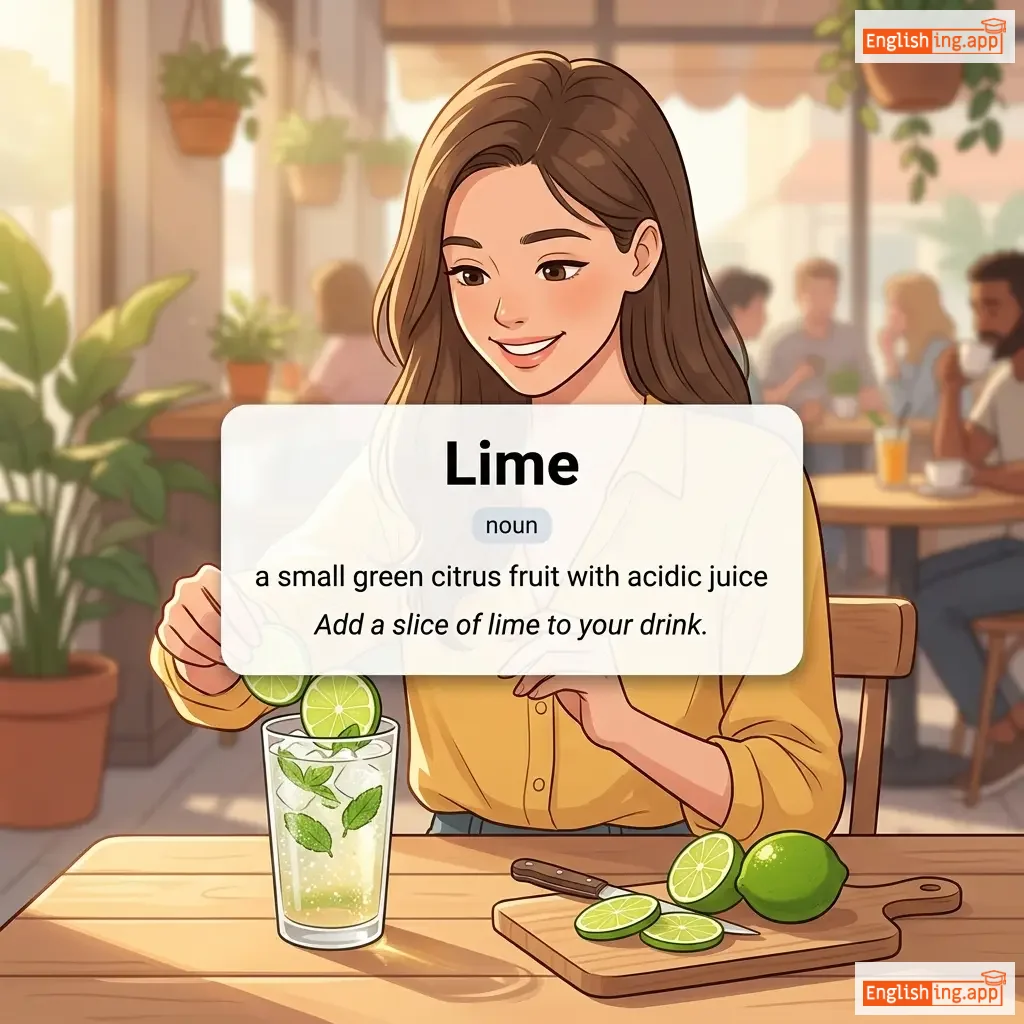
Lime definition card — visual illustration of the meaning
noun
/laɪm/
ライム (raimu)

a small green citrus fruit with acidic juice

"Add a slice of lime to your drink."

"あなたの飲み物にライムのスライスを加えてください。" (Anata no nomimono ni raimu no suraisu wo kuwaetekudasai.)
noun
/ˈlɪmboʊ/
不確実性、保留状態 (fukakujitsusei, horyu joto)

A state of uncertainty or neglect; an intermediate or transitional state.

"The project was left in limbo after the funding was withdrawn."

"資金が撤回された後、プロジェクトは不確実性に置かれました。" (Shikin ga tetsukai sareta ato, purojekuto wa fukakujitsusei ni okaremashita.)
adjective
/ˈlɪmbər/
柔軟で敏捷 (jūnan de binshō)

Flexible and agile in body or movement.

"Dancers need to stay limber to perform well."
"ダンサーはうまく演技するために柔軟でいる必要があります。" (Dansā wa umaku engi suru tame ni jūnan de iru hitsuyō ga arimasu.)
noun
/lɪm/
手足 (tezoku)

an arm or leg of a person or animal; a large branch of a tree

"He broke a limb while climbing the tree."

"彼は木に登るときに手足を折った。" (Kare wa ki ni noboru toki ni tezoku o otta.)
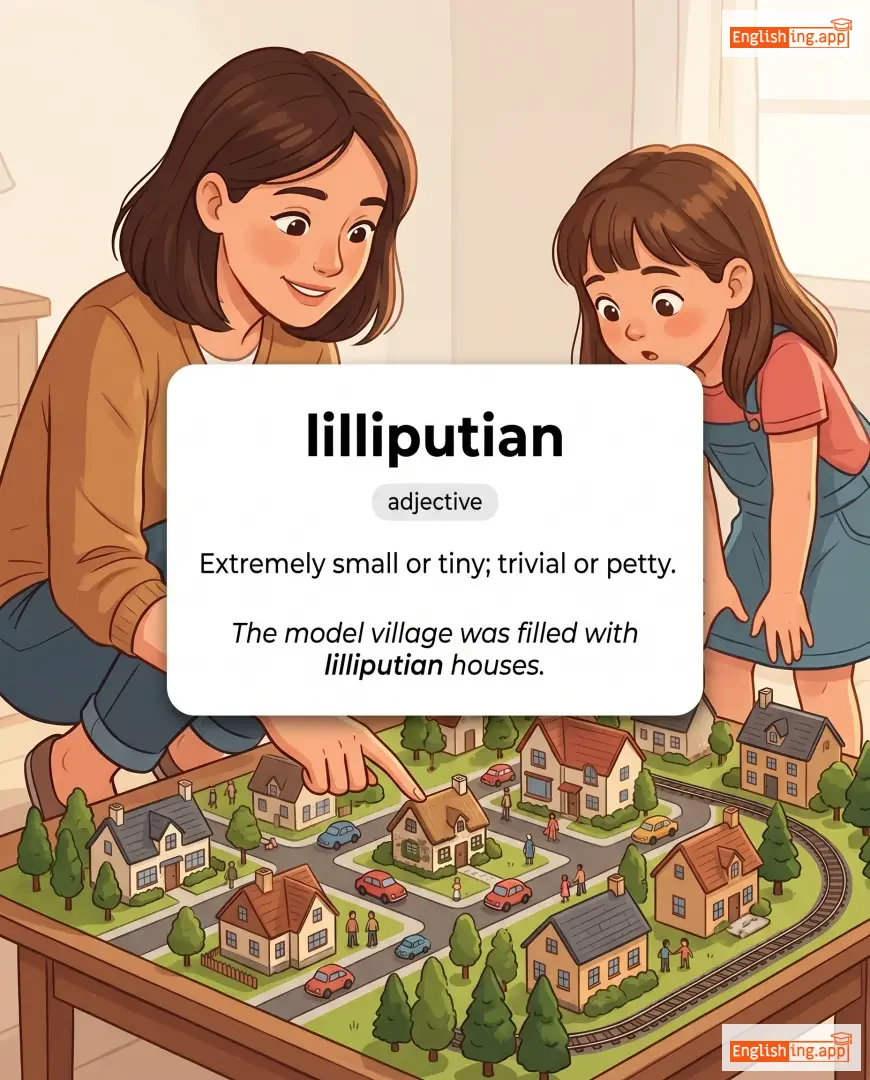
lilliputian definition card — visual illustration of the meaning
adjective
/ˌlɪlɪˈpjuːʃən/
非常に小さい (hijō ni chiisai)

Extremely small or tiny; trivial or petty.

"The model village was filled with lilliputian houses."

"モデル村は非常に小さな家で満たされていました。" (Moderu mura wa hijō ni chiisana ie de mitasarete imashita.)
noun
/ˈlaɪkɪŋ/
好意, 嗜好 (kōi, shikō)

A feeling of fondness or preference for something or someone.

"She has a strong liking for classical music."

"彼女はクラシック音楽を強く好んでいます。" (Kanojo wa kurashikku ongaku o tsuyoku konondeimasu.)
adverb
/ˈlaɪkˌwaɪz/
同様に; それと同じように; 同じように (dōyō ni; sore to onaji yō ni; onaji yō ni)

In the same way; also; similarly.

"She smiled, and he likewise returned the gesture."

"彼女は微笑んだ、そして彼も同様にジェスチャーを返した。" (Kanojo wa hohoenda, soshite kare mo dōyō ni jesshā o kaeshita.)
noun
/ˈlaɪk.nəs/
類似性; 似ていること (likeness)

the fact or quality of being alike; resemblance; a portrait or representation

"The portrait shows a strong likeness to her grandmother."

"ポートレートは彼女の祖母に強い類似性を示しています。" (Pōtoretto wa kanojo no sobo ni tsuyoi ruijisei o shimeshiteimasu.)
verb
/ˈlaɪ.kən/
例える (tatoeru)

to compare one thing to another, often in a figurative way

"He likened her voice to sweet music."

"彼は彼女の声を甘い音楽に例えました。" (Kare wa kanojo no koe o amai ongaku ni tatoemashita.)
adjective
/ˈlaɪk.li/
可能性が高い (kanousei ga takai)

probable or expected to happen

"It is likely to rain this evening."

"今晩雨が降る可能性が高いです。" (Konban ame ga furu kanousei ga takai desu.)
noun
/ˈlaɪ.kli.hʊd/
可能性 (kanousei)

the chance or probability of something happening

"There is a strong likelihood of rain tomorrow."
"明日、雨が降る可能性が高いです。" (Ashita, ame ga furu kanousei ga takai desu.)
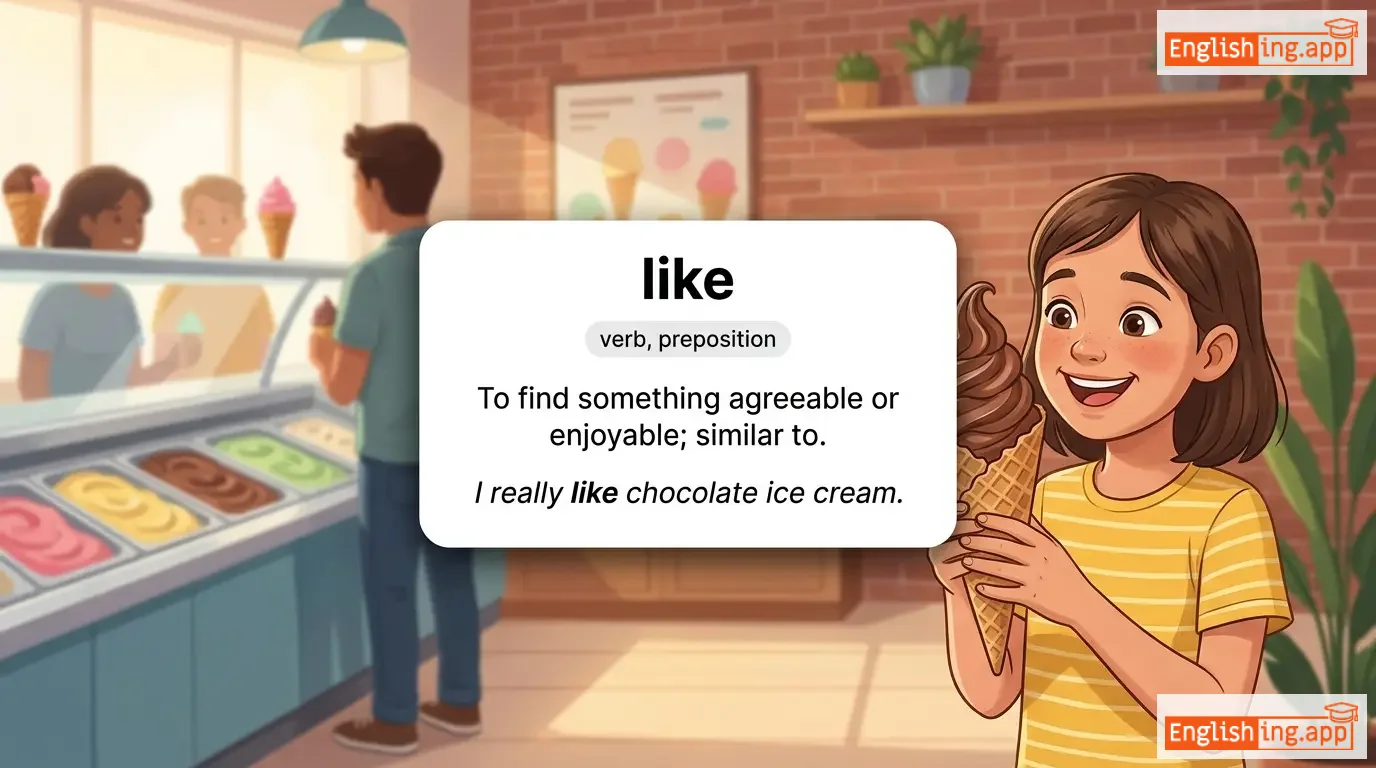
like definition card — visual illustration of the meaning
verb, preposition
/laɪk/
好き (suki)

To find something agreeable or enjoyable; similar to.

"I really like chocolate ice cream."
"私は本当にチョコレートアイスクリームが好きです。" (Watashi wa hontōni chokorēto aisukurīmu ga suki desu.)
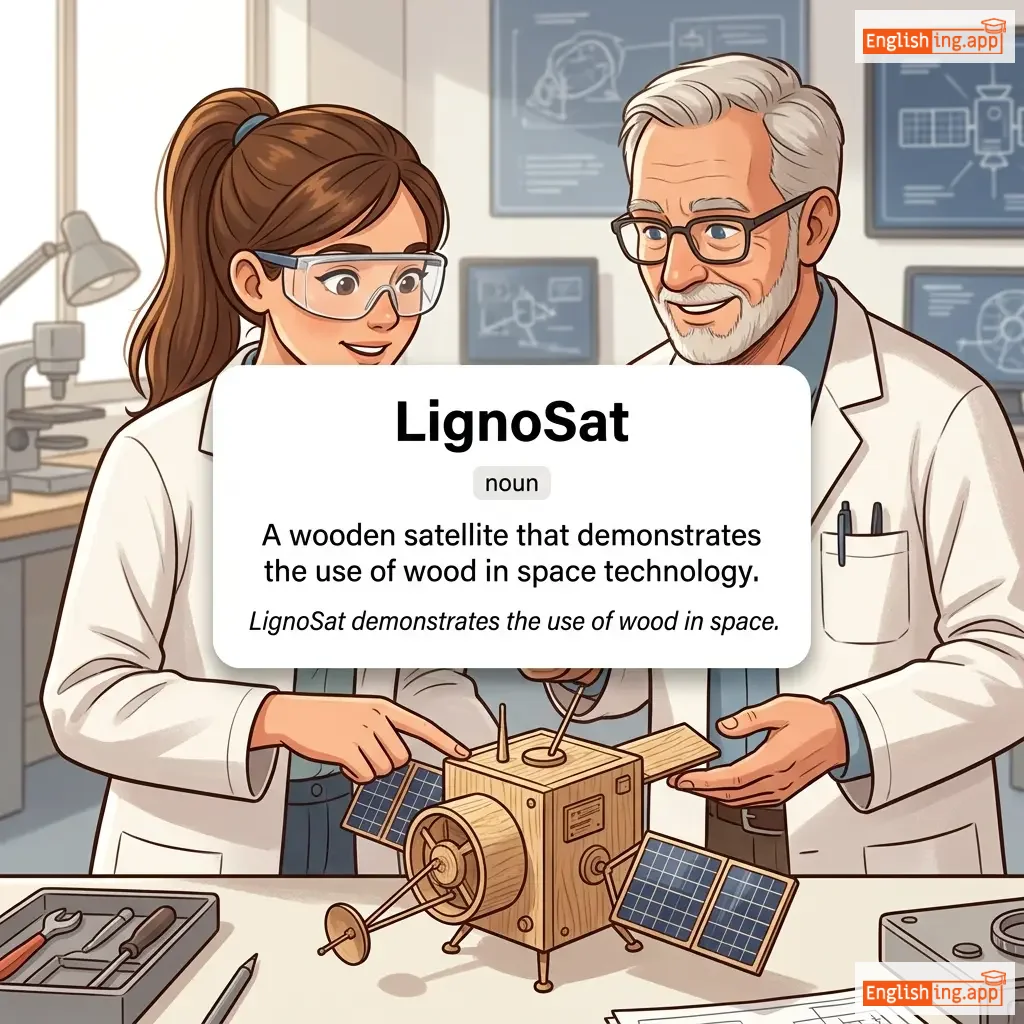
LignoSat definition card — visual illustration of the meaning
noun
ˈlɪɡ.nəʊˌsæt
木製衛星 (mokusei eisei)

A wooden satellite that demonstrates the use of wood in space technology.

"LignoSat demonstrates the use of wood in space."

"LignoSat は宇宙で木材の使用を示しています。" (LignoSat wa uchuu de mokuzai no shiyou wo shimeshiteimasu.)
adjective
/ˈlɪɡ.ni.əs/
木質の (mokushitsu no)

having the texture or appearance of wood; woody

"The ligneous stem supported the heavy flowers."

"木質の茎が重い花を支えました。" (Mokushitsu no kake ga omoi hana wo sasaemashita.)
noun
/ˈlaɪtnɪŋ/
雷光 (raikou)

a flash of light in the sky caused by electricity during a storm

"The lightning struck a tree near our house."

"雷光が私たちの家の近くの木に当たった。" (Raikou ga watashitachi no ie no chikaku no ki ni atatta.)
adverb
/ˈlaɪtli/
軽く (karuku)

gently or with little force or weight

"She touched the baby’s hand lightly."

"彼女は赤ちゃんの手を軽く触れた。" (Kanojo wa akachan no te o karuku fureta.)
noun
/ˈlɪɡ.əmənt/
靭帯組織 (Jintai soshiki)

A tough band of tissue that connects bones at a joint.

"He tore a ligament in his knee while playing football."

"サッカーをしているときに膝の靭帯を切った。" (Sakkā o shite irutoki ni hiza no jintai o kitta.)
noun
/ˈlaɪər/
嘘つき (usotsuki)

a person who tells lies; an alternative spelling of liar

"No one trusted him because he was known as a habitual lier."
"彼は常習的な嘘つきだったので、誰も彼を信用しなかった。" (kare wa shuushuuteki na usotsuki datta node dare mo kare o shinyou shinakatta)
noun
/luː/
代わりに (kawarini)

Instead of; in place of.

"He gave money in lieu of flowers."

"彼は花の代わりにお金を渡した。" (Kare wa hana no kawarini okane o watashita.)
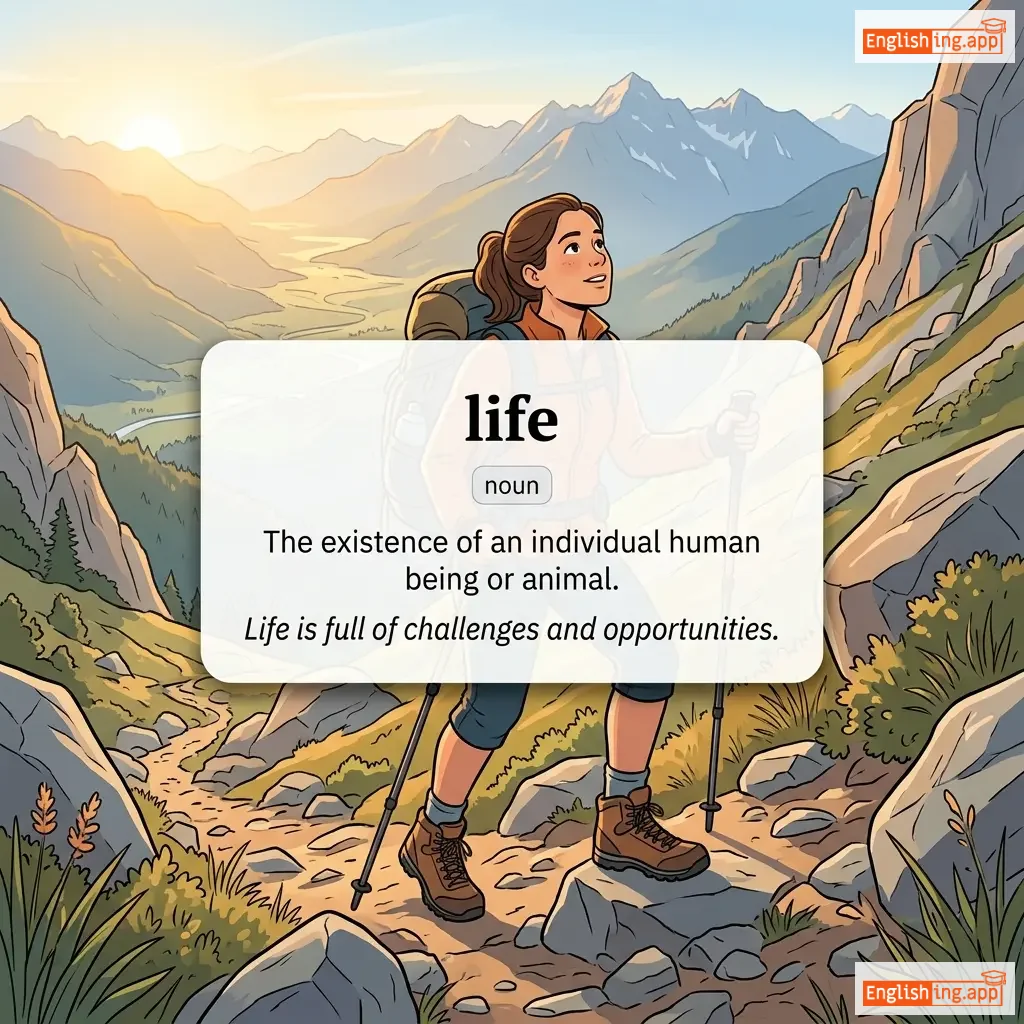
life definition card — visual illustration of the meaning
noun
/laɪf/
生命 (seimei)

The existence of an individual human being or animal.

"Life is full of challenges and opportunities."
"生命は挑戦と機会に満ちています。" (Seimei wa chōsen to kikai ni michiteimasu.)
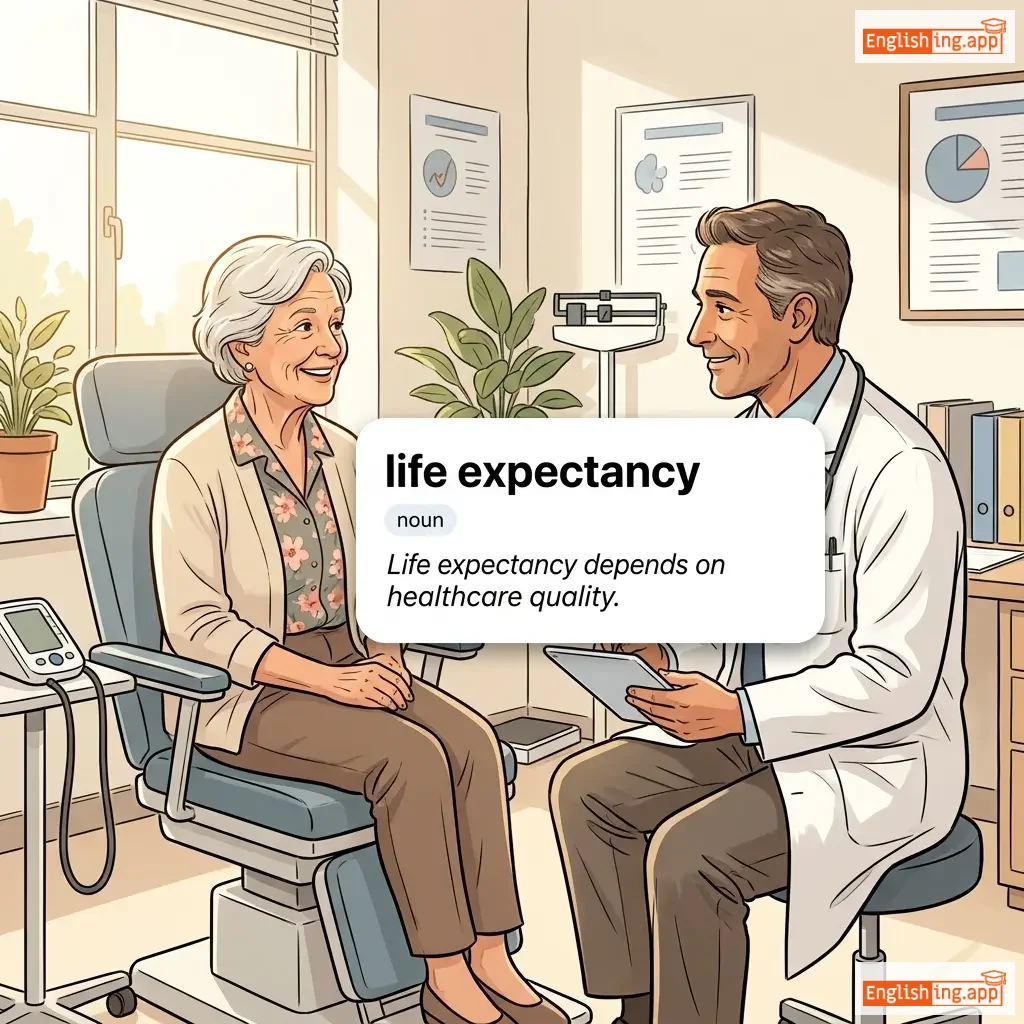
life expectancy definition card — visual illustration of the meaning
noun
ˈlaɪf ɪkˌspek.tən.si
平均寿命 (heikin jumyō)

The average period that a person may expect to live; the length of time for which something is expected to last or to continue being effective.

"Life expectancy depends on healthcare quality."

"平均寿命は医療の質に依存します。" (Heikin jumyō wa iryō no shitsu ni izon shimasu.)
adjective
/ˈlaɪf.laɪk/
リアルに似ている (riaruni niteiru)

Very similar to a real person, object, or scene; realistic.

"The wax figure was so lifelike that people thought it was a real person."

"その蝋人形は非常にリアルに似ていて、人々はそれが本物の人物だと思った。" (Sono rōningyō wa hijō ni riaruni niteite, hitobito wa sore ga honmono no jinbutsu da to omotta.)
adjective
/ˈlaɪf.lɒŋ/
生涯 (shōgai)

Lasting or existing for the whole of a person's life.

"They remained lifelong friends."

"彼らは生涯の友人でした。" (Karera wa shōgai no yūjin deshita.)
noun
/ˈlaɪf.staɪl/
ライフスタイル (raifusutairu)

The way in which a person or group lives, including habits, attitudes, and possessions.

"A healthy lifestyle includes regular exercise and a balanced diet."

"健康的なライフスタイルには、定期的な運動とバランスの取れた食事が含まれます。" (Kenko teki na raifusutairu ni wa, teikitekina undo to baransu no toreta shokuji ga fukumaremasu.)
noun
/ˈlaɪf.taɪm/
生涯 (shougai)

The duration of a person's life or the existence of something.

"She achieved more in her lifetime than most people dream of."

"彼女は自分の生涯で、ほとんどの人が夢見る以上のことを達成した。" (Kanojo wa jibun no shougai de, hotondo no hito ga yumemiru ijou no koto o tassei shita.)
lift definition card — visual illustration of the meaning
verb
/lɪft/
持ち上げる (mochiageru)

To raise something to a higher position or level.

"He lifted the heavy box with ease."
"彼は簡単に重い箱を持ち上げました。" (Kare wa kantan ni omoi hako o mochiagemashita.)
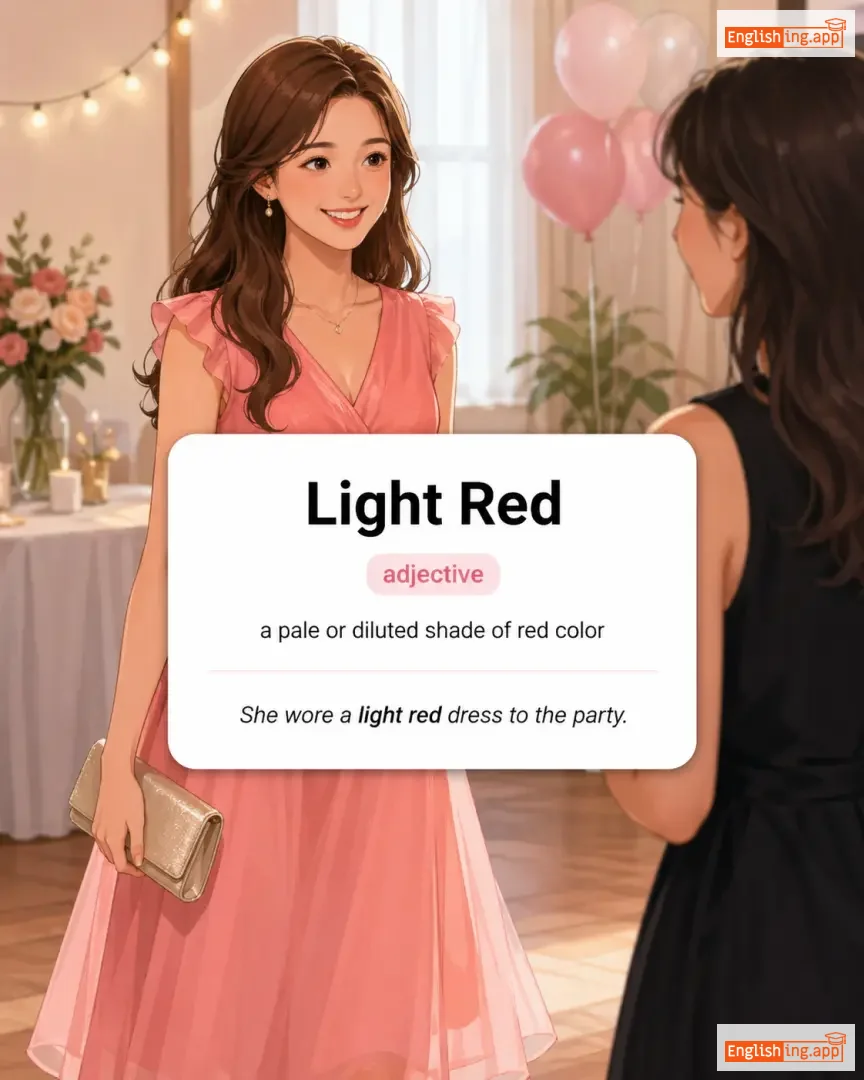
Light Red definition card — visual illustration of the meaning
adjective
/laɪt red/
薄紅色 (usui akairo)

a pale or diluted shade of red color

"She wore a light red dress to the party."
"彼女はパーティーに薄紅色のドレスを着ていました。" (Kanojo wa pātii ni usui akairo no doresu o kite imashita.)
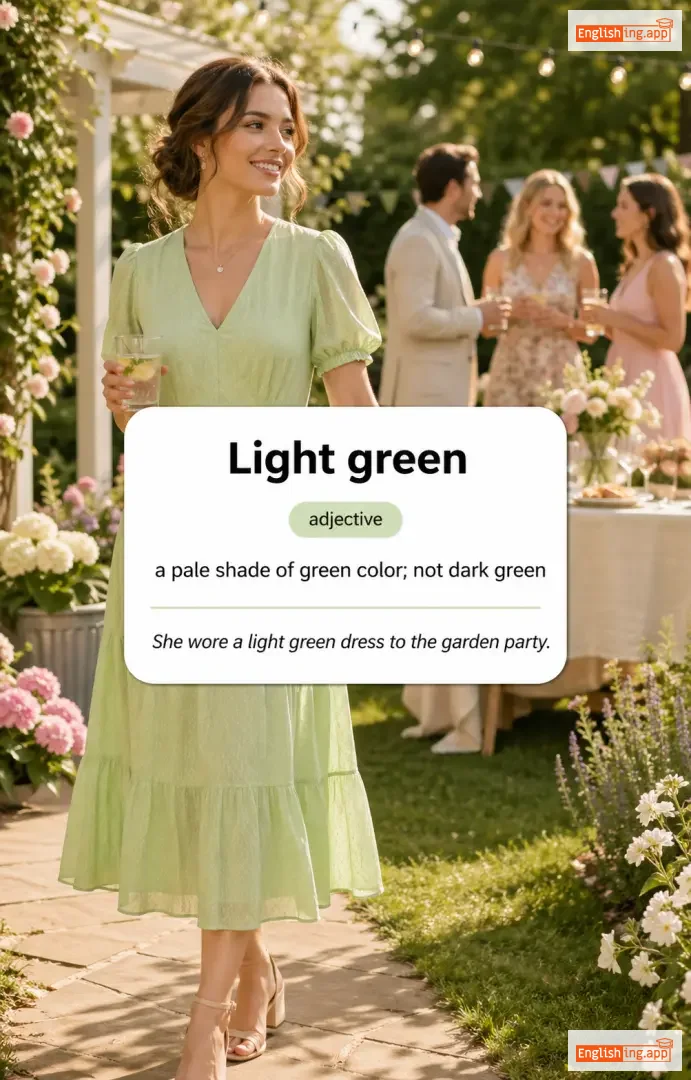
Light green definition card — visual illustration of the meaning
adjective
/laɪt ɡriːn/
ライトグリーン (raito guriin)

a pale shade of green color; not dark green

"She wore a light green dress to the garden party."

"彼女はガーデンパーティーにライトグリーンのドレスを着て行きました。" (Kanojo wa gāden pātī ni raito gurīn no doresu o kite ikimashita.)