語彙集

英単語辞書 | 単語の意味、定義、例文

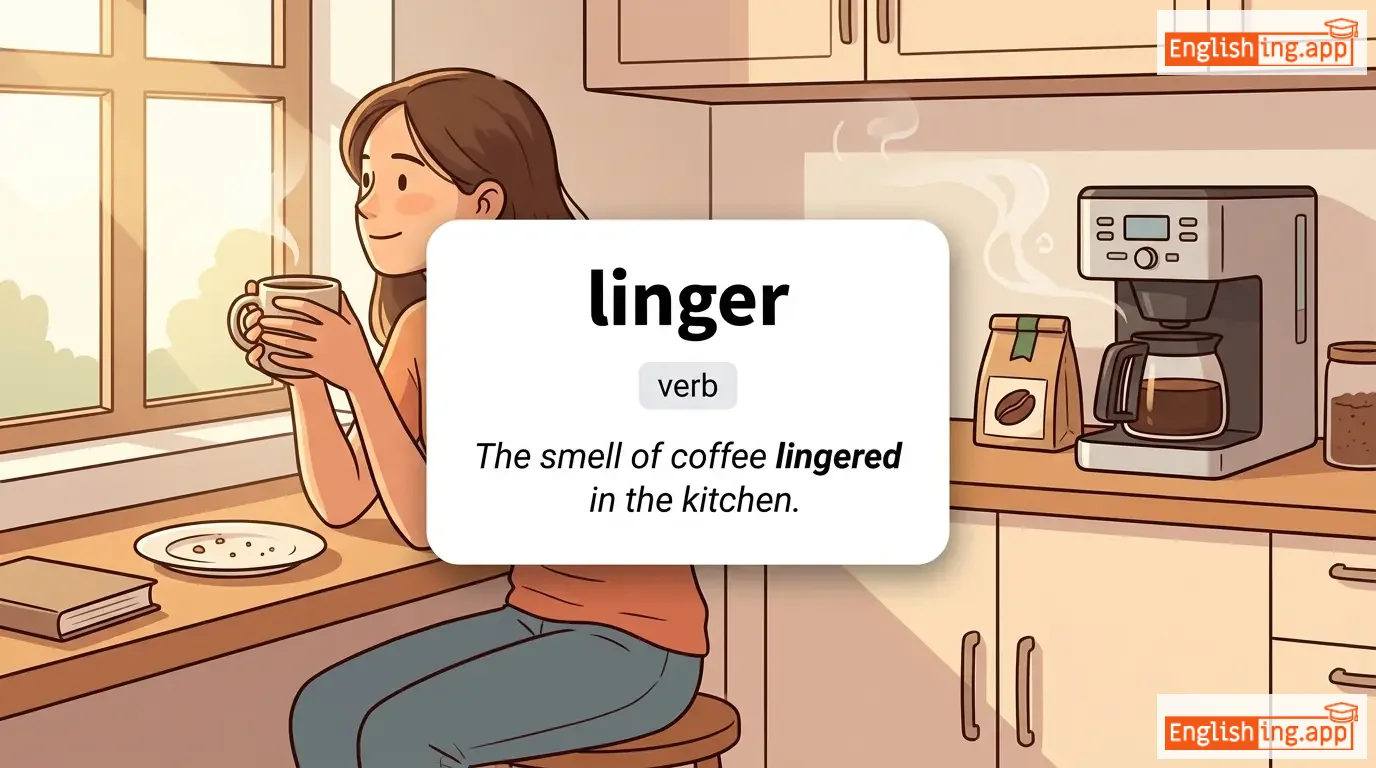
linger definition card — visual illustration of the meaning
verb
/ˈlɪŋ.ɡər/
長居する (nagai suru)

To stay in a place longer than necessary, often because of unwillingness to leave.

"The smell of coffee lingered in the kitchen."

"コーヒーの匂いはキッチンに長く linger していた。" (Kōhī no nioi wa kitchin ni nagaku linger shiteita.)
noun
/ˈlɪŋ.ɡoʊ/
専門用語 (senmon yōgo)

Specialized or informal language used by a particular group that is often difficult for outsiders to understand.

"The manual was written in technical lingo that confused the new employees."

"マニュアルは技術的な用語で書かれており、新しい従業員を混乱させました。" (Manyuaru wa gijutsuteki na yōgo de kakarete ori, atarashī jūgyōin o konran sasemashita.)
noun
/ˈlɪŋ.ɡwə/
言語 (gengo)

A language, especially one used for communication among people.

"English has become a global lingua for business and science."

"英語はビジネスと科学のためのグローバルな言語となっています。" (Eigo wa bijinesu to kagaku no tame no guroobaru na gengo to natteimasu.)
adjective
/ˈlɪŋɡwəl/
舌に関連する (shita ni kanren suru)

Relating to the tongue or speech.

"The dentist examined the patient's lingual surface of the teeth."

"歯科医は患者の歯の舌側面を調べました。" (Shika-i wa kanja no ha no shita sokumen o shirabemashita.)
noun
/ˈlɪŋɡwɪst/
言語学者 (gengogakusha)

A person skilled in foreign languages or in the scientific study of language.

"She is a linguist who speaks six languages fluently."
"彼女は6か国語を流暢に話す言語学者です。" (Kanojo wa rokkakokugo o ryūchō ni hanasu gengogakusha desu.)
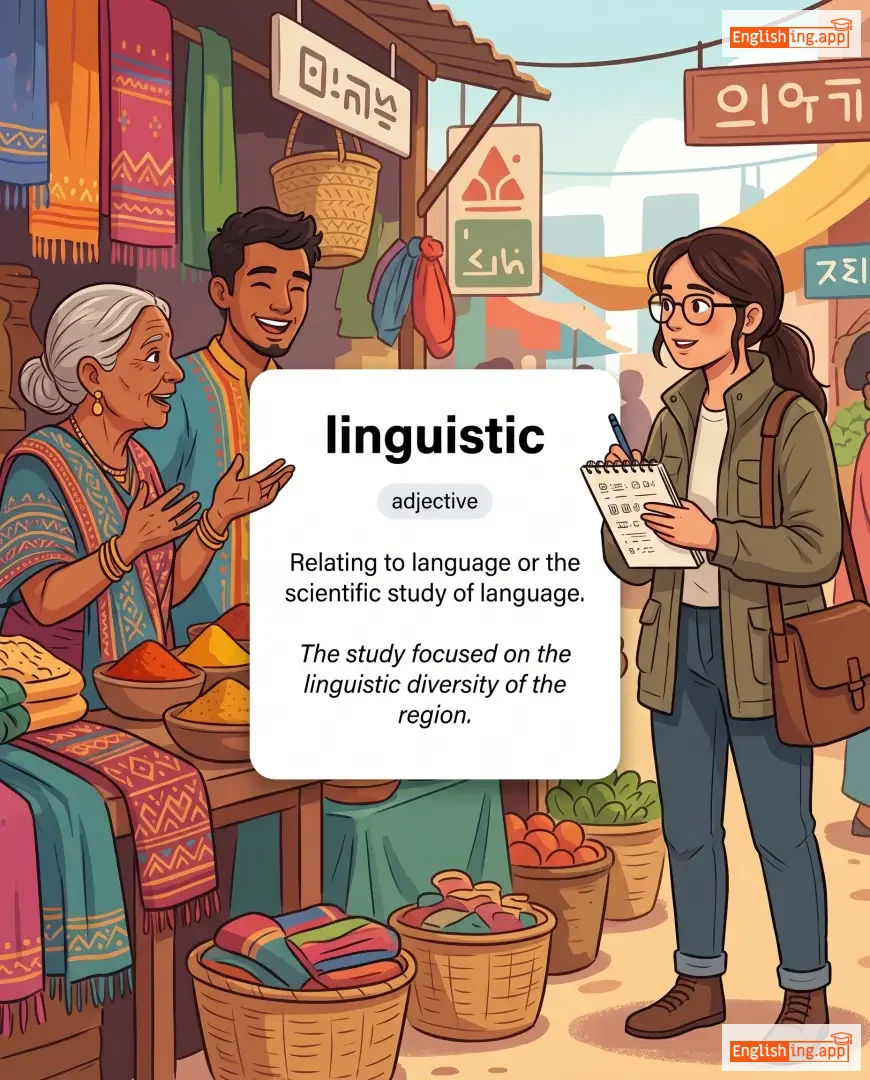
linguistic definition card — visual illustration of the meaning
adjective
/lɪŋˈɡwɪstɪk/
言語的 (gengo teki)

Relating to language or the scientific study of language.

"The study focused on the linguistic diversity of the region."

"その研究は地域の言語的多様性に焦点を当てました。" (Sono kenkyū wa chiiki no gengoteki tayōsei ni shōten o atemashita.)
noun
/lɪŋˈɡwɪstɪks/
言語学 (gengogaku)

The scientific study of language and its structure.

"She decided to major in linguistics at university."

"彼女は大学で言語学を専攻することに決めました。" (Kanojo wa daigaku de gengogaku wo senkou suru koto ni kimemashita.)
noun
/ˈlɪnəmənt/
リニメント / ローション (rinimento / roshon)

A liquid or lotion applied to the skin to relieve pain or stiffness.

"He rubbed liniment on his sore muscles after the workout."

"彼はトレーニング後、痛んだ筋肉にリニメントを擦り込んだ。" (Kare wa toreeningu go, itanda kinniku ni rinimento o surikonda.)
noun, verb
/lɪŋk/
リンク (link)

a connection between two things; to connect or associate

"The article includes a link to the official website."

"記事には公式ウェブサイトへのリンクが含まれています。" (Kiji ni wa kōshiki webusaito e no link ga fukumareteimasu.)
noun
/lɪˈnoʊ.li.əm/
リノリウム (rinoriumu)

a durable, washable floor covering made from solidified linseed oil, wood flour, or cork dust on a canvas backing

"They decided to cover the kitchen floor with linoleum."

"彼らはキッチンの床をリノリウムで覆うことに決めました。" (karera wa kicchin no yuka o rinoriumu de oou koto ni kimemashita)
noun
/lɪnt/
繊維くず (sen'i kuzu)

small soft fibers that come off cloth, often found in dryers or on clothes

"There was lint all over his black shirt after the wash."
"洗濯後、彼の黒いシャツに繊維くずがついていました。" (Sentaku go, kare no kuroi shatsu ni sen'i kuzu ga tsuite imashita.)
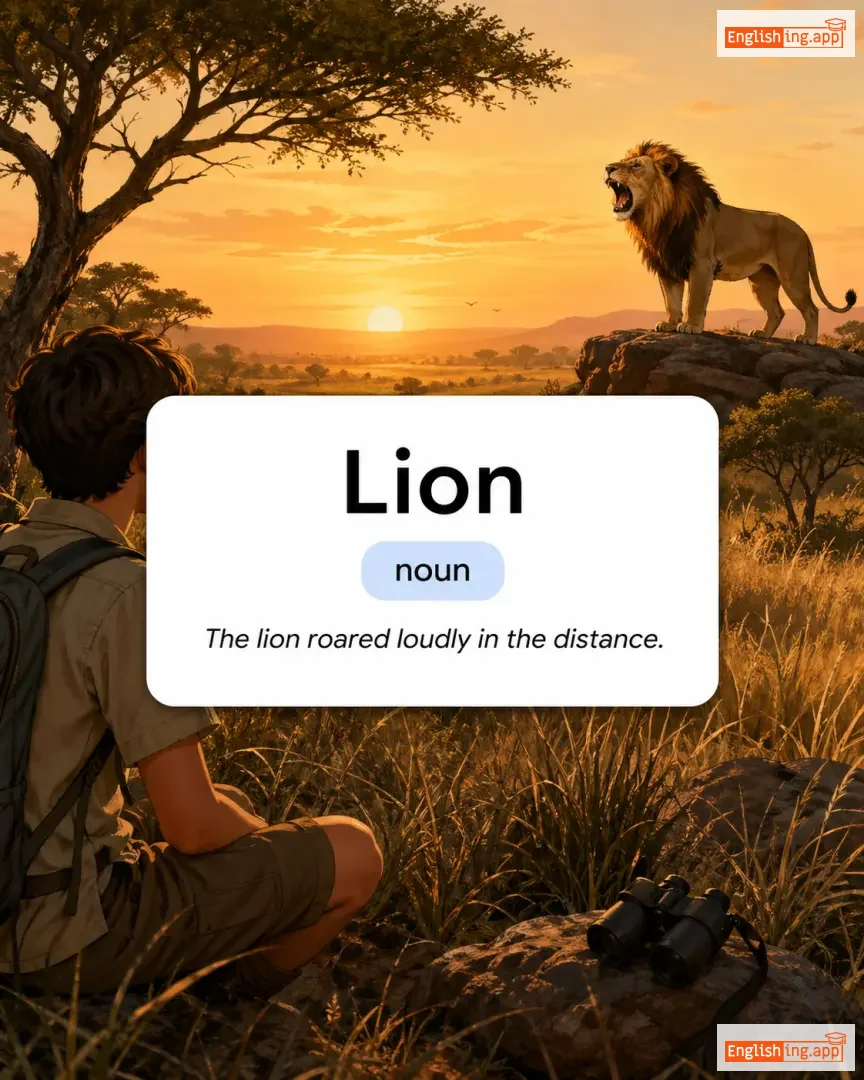
Lion definition card — visual illustration of the meaning
noun
/ˈlaɪən/
ライオン (raion)

a large wild animal of the cat family that lives in Africa and Asia, known as the king of the jungle

"The lion roared loudly in the distance."
"ライオンは遠くで大きな声で吠えました。" (Raion wa tōku de ōkina koe de hoemashita.)
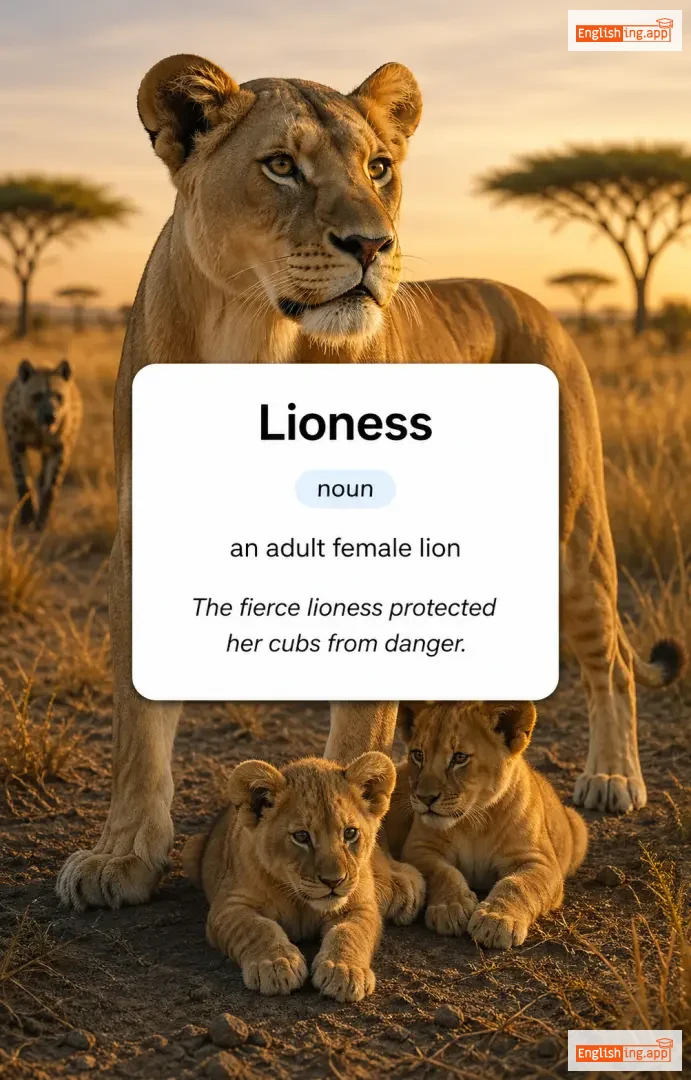
Lioness definition card — visual illustration of the meaning
noun
/ˈlaɪ.ə.nəs/
雌ライオン (mesu raion)

an adult female lion

"The fierce lioness protected her cubs from danger."

"その猛獣の雌ライオンは子ライオンたちを危険から守った。" (Sono mōjū no mesu raion wa koshirion-tachi o kiken kara mamotta.)
verb
/ˈlaɪ.ə.naɪz/
賛美する (sanbisuru)

to treat someone as a celebrity or give a lot of public attention

"The press began to lionize the young scientist after his discovery."

"彼の発見の後、メディアは若い科学者をライオナイズし始めました。" (kare no hakken no ato, media wa wakai kagakusha o raionaisu shi hajimemashita.)
noun
/lɪp/
(kuchin)

either of the two soft edges of the mouth

"She smiled and bit her lower lip nervously."

"彼女は笑い、緊張して下唇をかんだ。" (Kanojo wa warai, kinchou shite shita kuchin wo kanda.)
lipogenesis definition card — visual illustration of the meaning
noun
/ˌlaɪ.pəˈdʒen.ɪ.sɪs/
脂肪合成 (shibō gōsei)

The metabolic process of fat synthesis where excess carbohydrates are converted into fatty acids and stored as triglycerides.

"Excess carbohydrate intake promotes lipogenesis and fat storage."

"過剰な炭水化物の摂取は脂肪合成と脂肪の蓄積を促進します。" (Kajō na tansui kabutsu no sesshu wa shibō gōsei to shibō no chikuseki o sokushin shimasu.)
noun
/ˌlɪk.wəˈfeɪ.ʃənt/
液体化剤 (liquefacient)

a substance that causes something to become liquid

"The chemist explained how the liquefacient worked in the experiment."

"化学者は、実験で液体化剤がどのように機能するかを説明しました。" (Kagakusha wa, jikken de ekitaikazai ga dono yō ni kinō suru ka o setsumei shimashita.)
verb
/ˈlɪk.wɪ.faɪ/
液化する (liquefy)

to make or become liquid

"The heat will liquefy the butter in a few minutes."

"熱は数分でバターを液体に変えるでしょう。" (Netsu wa suū-fun de batā o ekitai ni kaeru deshō.)
noun
/lɪˈkjʊər/
甘いリキュール (amai rikyuuru)

A strong, sweet alcoholic drink flavored with fruits, herbs, or spices.

"She served a small glass of cherry liqueur after dinner."

"夕食後に小さなチェリーリキュールを出しました。" (Yūshokugo ni chiisana chērī rikyuuru o dashimashita.)
noun
/ˈlɪkwɪd/
液体 (ekitai)

a substance that flows freely but is of constant volume, having a consistency like water or oil.

"Water is a clear liquid that is essential for life."

"水は生命にとって不可欠な透明な液体です。" (Mizu wa seimei ni totte fukaketsu na tōmei na ekitai desu.)
verb
/ˈlɪkwɪdeɪt/
清算する (seisan suru)

To sell assets in order to pay off debts; to close a business and convert assets into cash.

"The company decided to liquidate its assets to pay creditors."

"会社は債権者に支払うために資産を清算することを決定しました。" (Kaisha wa saiken-sha ni shiharau tame ni shisan o seisan suru koto o kettei shimashita.)
liquidity definition card — visual illustration of the meaning
noun
lɪˈkwɪd.ə.ti
流動性 (ryūdōsei)

Cash flow, financial fluidity.

"The company maintains high liquidity."

"会社は高い流動性を維持しています。" (Kaisha wa takai ryūdōsei o iji shiteimasu.)
adjective
/ˈluː.ni/
クレイジー; バカ; 精神的に不安定 (kureijī; baka; seishinteki ni fuantei)

crazy; silly; mentally unstable

"His loony behavior made everyone laugh."

"彼のクレイジーな行動でみんなが笑った。" (kare no kureijī na kōdō de minna ga waratta)
noun, verb
/laʊndʒ/
ラウンジ (raunji)

A public room for relaxing; or to sit, lie, or stand in a relaxed way.

"They lounged on the sofa after dinner."

"彼らは夕食後にソファでくつろいでいた。" (Karera wa yūshoku go ni sofa de kutsuroide ita.)
noun
/lɒx/ or /lɒk/
(mi)

An Irish or Scottish word for a lake or sea inlet.

"The fishermen lived by the lough for generations."

"漁師たちは世代を超えて湖の近くに住んでいました。" (Ryōshitachi wa sedaio koete mizuumi no chikaku ni sundeimashita.)
adverb
/ˈlaʊdli/
大声で (oogoe de)

in a way that produces a lot of sound; with a high volume

"He spoke loudly so everyone in the room could hear him."

"彼はみんなに聞こえるように大声で話した。" (kare wa minna ni kikoeru you ni oogoe de hanashita)
loud definition card — visual illustration of the meaning
adjective/adverb
/laʊd/
大きい (ookii)

Producing or capable of producing much noise.

"The music was too loud to concentrate."
"音楽はあまりにも大きすぎて、集中できませんでした。" (Ongaku wa amari ni mo ookisugite, shuuchuu dekimasen deshita.)
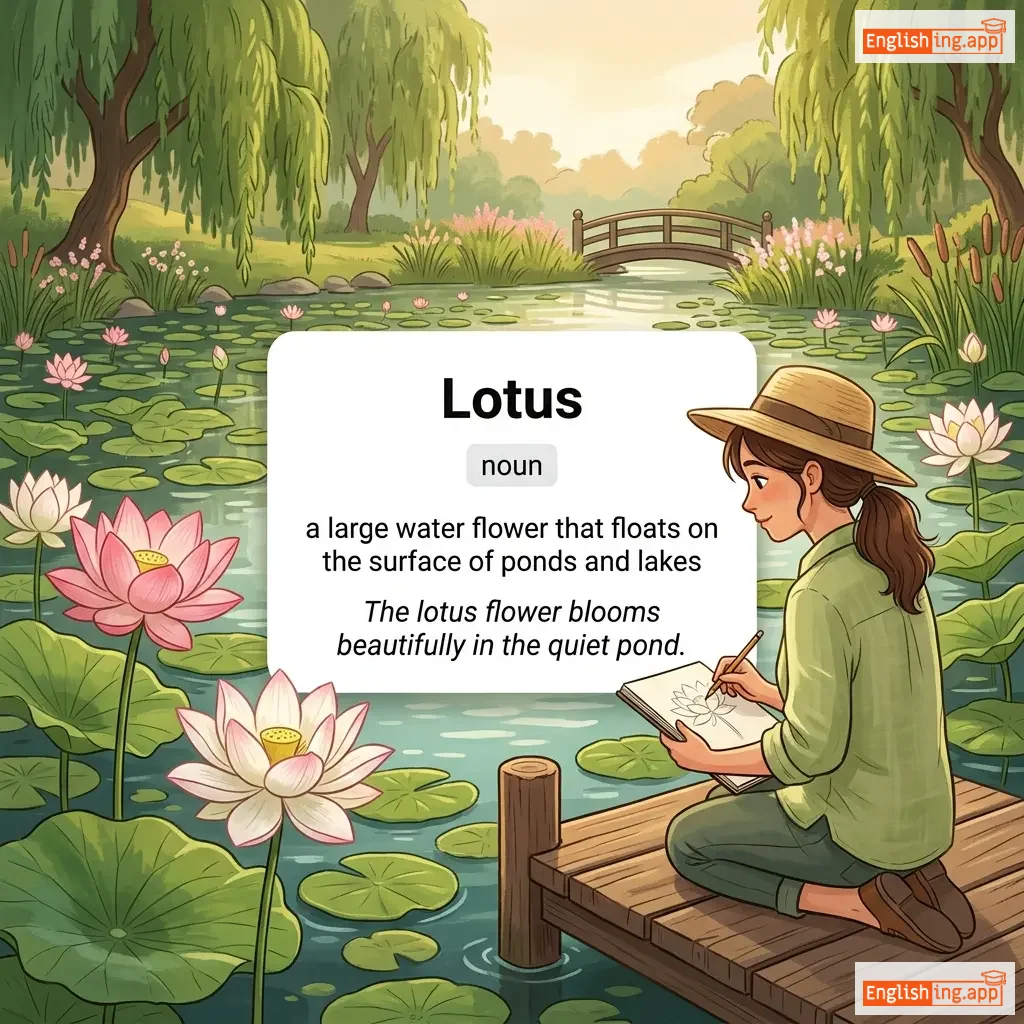
Lotus definition card — visual illustration of the meaning
noun
/ˈloʊ.təs/
(hasu)

a large water flower that floats on the surface of ponds and lakes

"The lotus flower blooms beautifully in the quiet pond."

"蓮の花は静かな池で美しく咲きます。" (hasu no hana wa shizuka na ike de utsukushiku sakimasu)
noun
/ˈlɒtəri/
宝くじ (takara kuji)

A means of raising money by selling numbered tickets and giving prizes to the holders of numbers drawn at random.

"He won a car in the national lottery."

"彼は全国宝くじで車を当てた。" (Kare wa zenkoku takara kuji de kuruma o ateta.)
pronoun/noun
/lɒts/
たくさん (takusan)

A large number or amount of something.

"She has lots of friends in the city."

"彼女は街にたくさんの友達がいます。" (Kanojo wa machi ni takusan no tomodachi ga imasu.)
noun
/lɒt/
たくさん (takusan)

A large number or amount; a group or portion.

"She bought a lot of books at the fair."

"彼女はフェアでたくさんの本を買いました。" (Kanojo wa fea de takusan no hon o kaimashita.)
verb/adjective
/lɒst/
失われた (ushinawareta)

Unable to find the way; no longer in possession of something.

"He lost his keys and couldn’t enter the house."
"彼は鍵を失い、家に入れませんでした。" (Kare wa kagi o ushinai, ie ni iremasen deshita.)
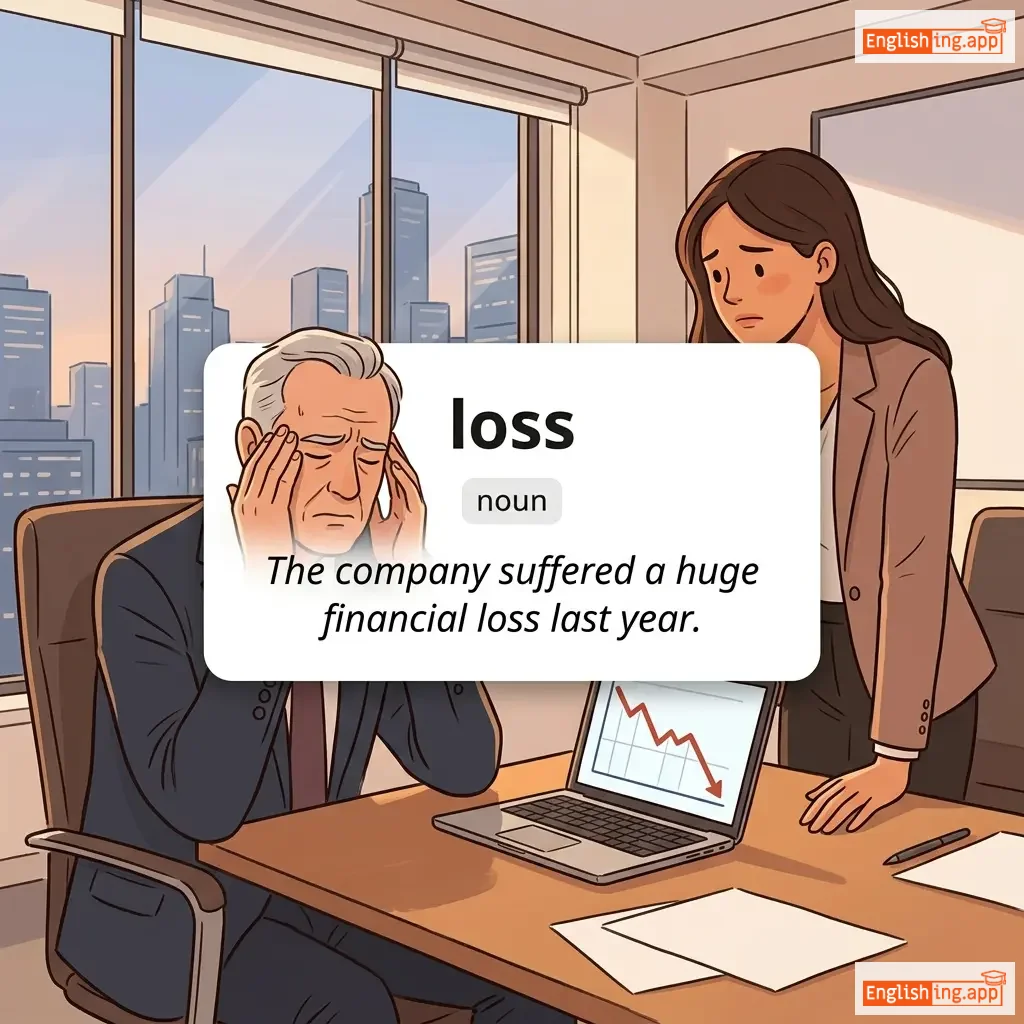
loss definition card — visual illustration of the meaning
noun
/lɒs/
損失 (sonshitsu)

The state of no longer having something or someone; the harm resulting from losing.

"The company suffered a huge financial loss last year."

"その会社は昨年、大きな財務的損失を被った。" (Sono kaisha wa sakunen, ōkina zaimuteki sonshitsu o kōmotta.)
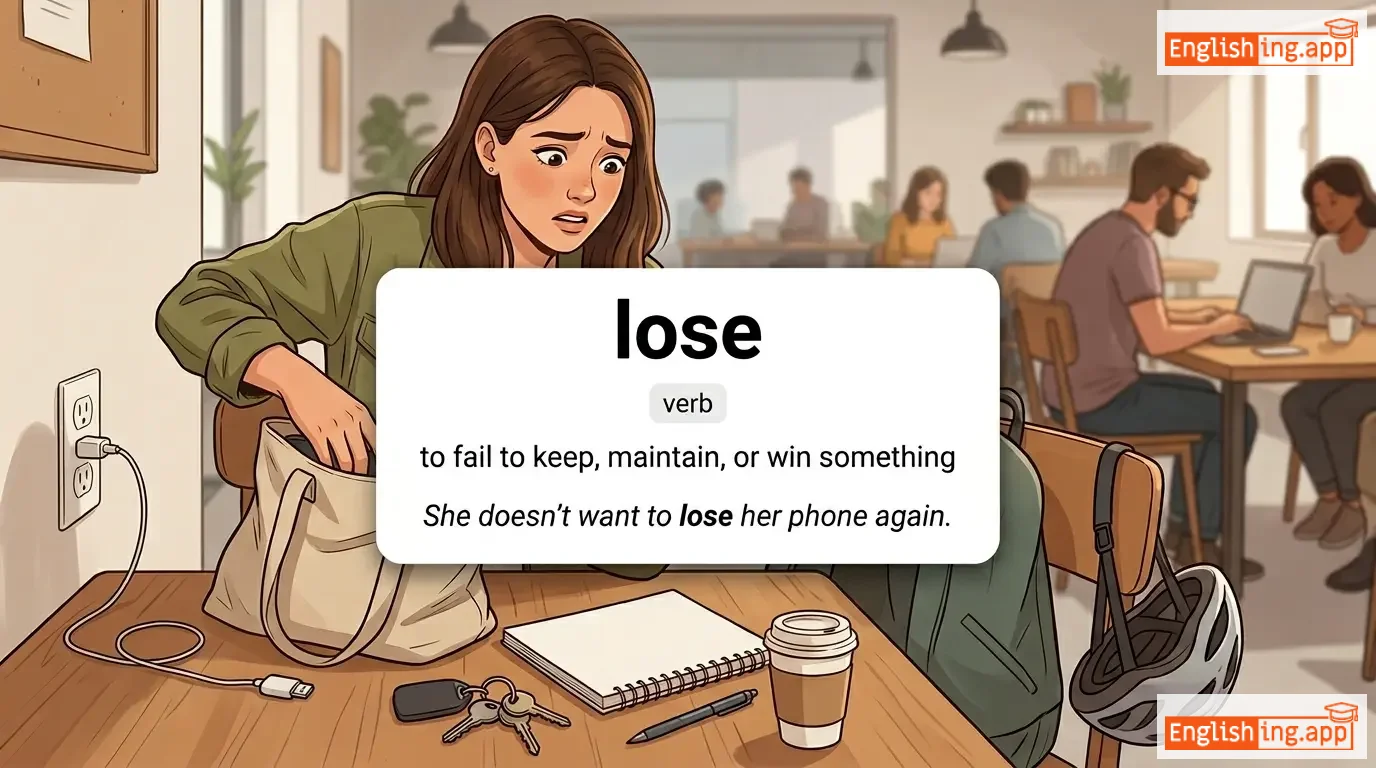
lose definition card — visual illustration of the meaning
verb
/luːz/
幸福 (kōfuku)

to fail to keep, maintain, or win something

"She doesn’t want to lose her phone again."

"彼女は賞を受け取ったとき、幸せを隠すことができませんでした。" (Kanojo wa shō o uketotta toki, kōfuku o kakusu koto ga dekimasen deshita.)
noun
/ˈlɔːrdlɪŋ/
小さな領主 (chiisana ryoushu)

A young or petty lord; someone of minor nobility.

"The arrogant lordling demanded respect despite his lack of experience."
"傲慢なロードリングは経験不足にもかかわらず、尊敬を要求した。" (Gouman na ro-doringu wa keiken busoku ni mo kakawarazu, sonkei wo youkyuu shita.)
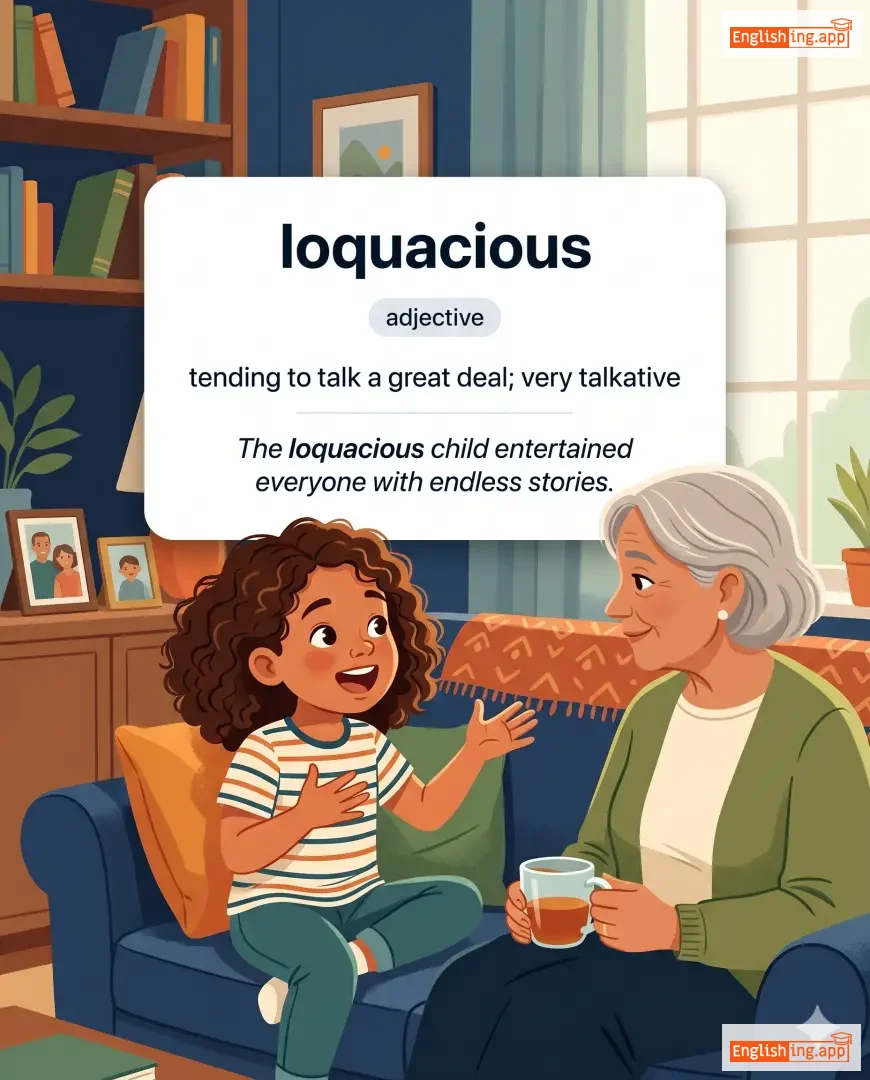
loquacious definition card — visual illustration of the meaning
adjective
/loʊˈkweɪʃəs/
おしゃべりな (oshaberina)

tending to talk a great deal; very talkative

"The loquacious child entertained everyone with endless stories."

"おしゃべりな子供は、終わりのない物語で皆を楽しませた。" (Oshaberina kodomo wa, owari no nai monogatari de mina wo tanoshimaseta.)
adjective
/ˈlɑːpˌsaɪdɪd/
片側が低い、または不均衡な (katasokoga hikui, matawa fukinoukan)

with one side lower, larger, or different from the other; uneven or imbalanced

"The cake looked lopsided after being decorated in a hurry."

"急いで飾った後、ケーキは不均衡に見えた。" (Isoide kazatta ato, kēki wa fukinou ni mieta.)
verb
/loʊp/
大きなジャンプを伴う速歩で走る (ōkina janpu o tomonau sokuhō de hashiru)

to run or move with a long, bounding stride

"The horse loped gracefully across the field."

"馬はフィールドを優雅に走っていました。" (Uma wa fīrudo o yūga ni hashitte imashita.)
verb
/luːt/
略奪する (ryakudatsu suru)

to steal goods, typically during war, riot, or chaos

"The rioters looted several shops during the protest."

"抗議の間に暴動者たちはいくつかの店を略奪した。" (Kougi no aida ni boudou-sha tachi wa ikutsuka no mise o ryakudatsu shita.)
adjective
/luːs/
緩い (yurui)

not firmly or tightly fixed in place

"The screw is loose and needs tightening."

"ネジが緩んでいて、締め直す必要があります。" (Neji ga yurunde ite, shime naosu hitsuyou ga arimasu.)
adjective
/ˈluːpi/
おかしい (okashii)

crazy, silly, or eccentric

"After working all night, he felt a little loopy."

"一晩中働いた後、彼は少しおかしく感じました。" (Hitobanjū hataraita ato, kare wa sukoshi okashiku kanjimashita.)
noun
/luːp/
ループ, 輪 (rūpu, wa)

a shape produced by a curve that bends around and crosses itself

"The string formed a neat loop around the package."
"糸はパッケージの周りにきれいなループを作りました。" (Ito wa pakkēji no mawari ni kireina rūpu o tsukurimashita.)
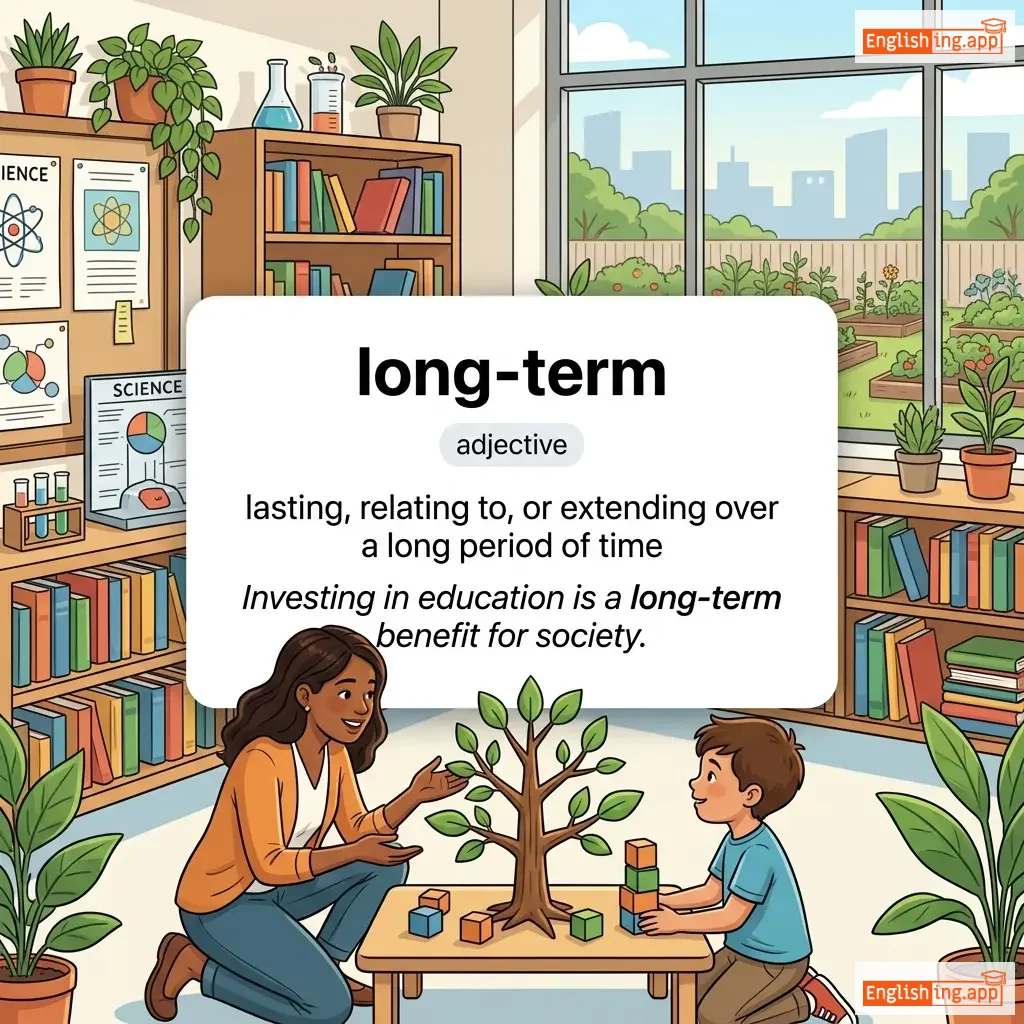
long-term definition card — visual illustration of the meaning
adjective
/ˌlɔːŋ ˈtɜːrm/
長期的 (chouki teki)

lasting, relating to, or extending over a long period of time

"Investing in education is a long-term benefit for society."
"教育への投資は社会にとって長期的な利益です。" (Kyouiku e no toushi wa shakai ni totte chouki teki na rieki desu.)
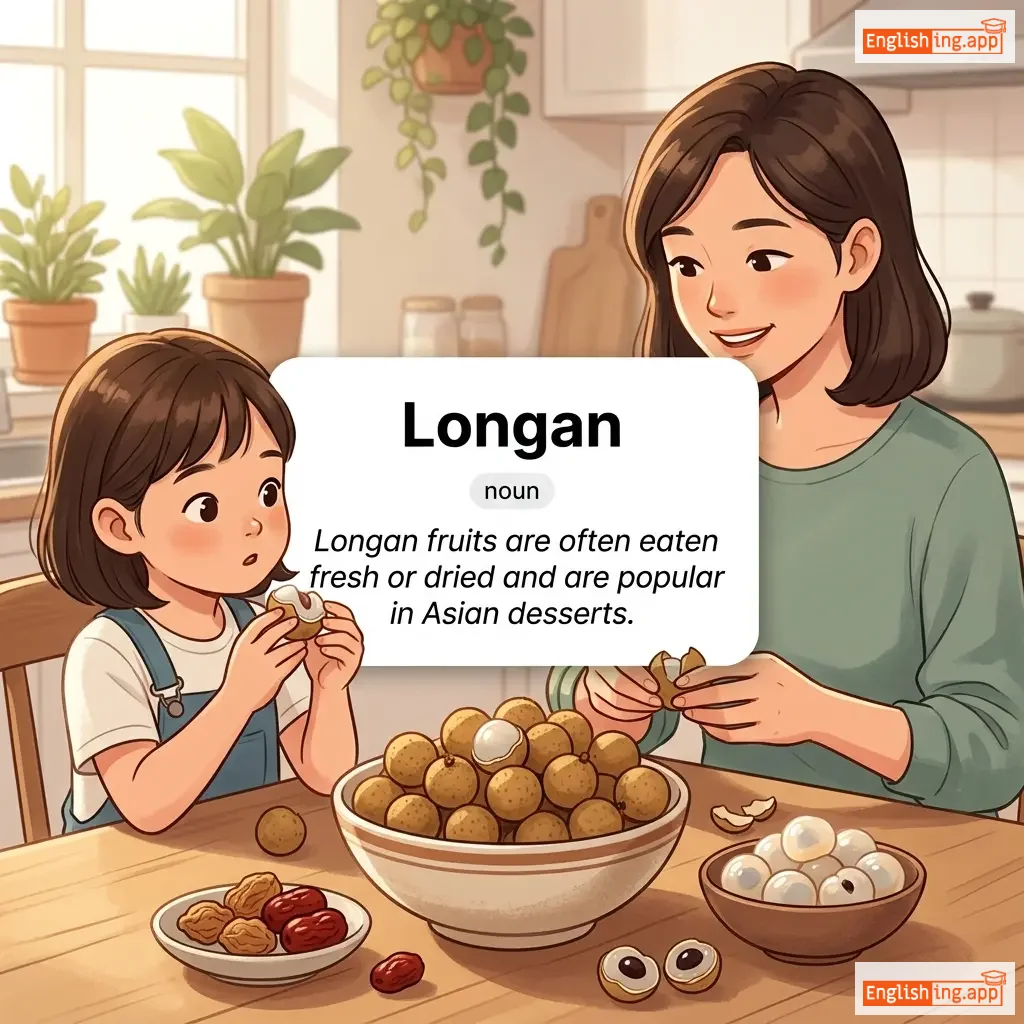
Longan definition card — visual illustration of the meaning
noun
/ˈlɔːŋ.ɡən/

a small round tropical fruit with translucent white flesh and sweet taste, related to lychee

"Longan fruits are often eaten fresh or dried and are popular in Asian desserts."

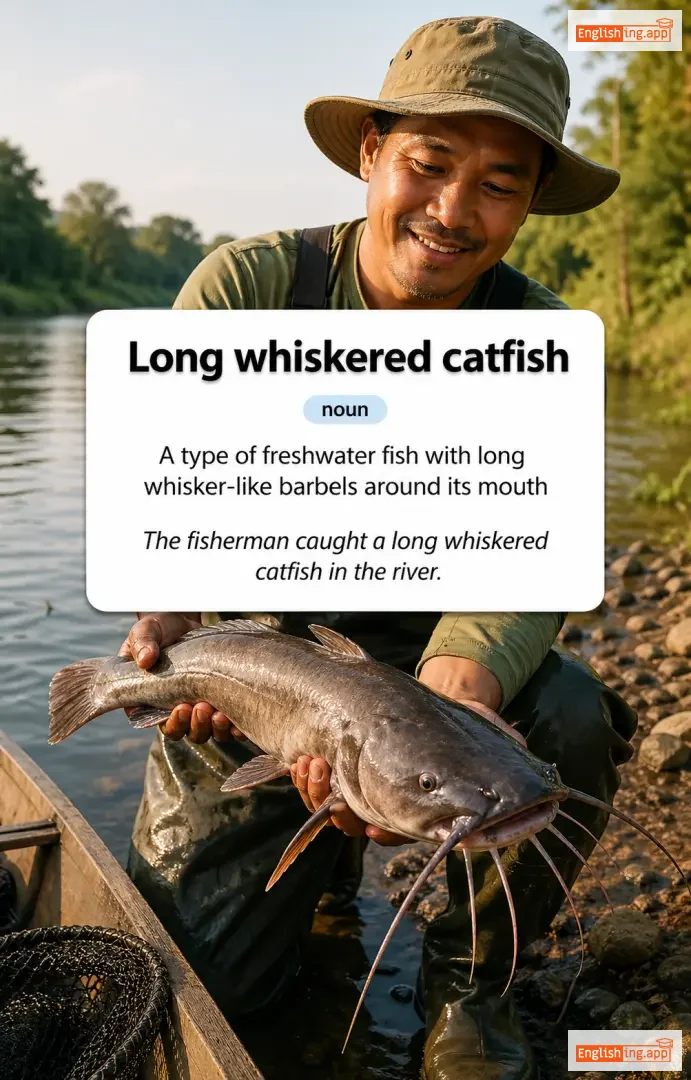
Long whiskered catfish definition card — visual illustration of the meaning
noun
/lɒŋ ˈwɪskəd ˈkætfɪʃ/
ナマズ (namazu)

A type of freshwater fish with long whisker-like barbels around its mouth

"The fisherman caught a long whiskered catfish in the river."

"漁師は川で長いひげのナマズを捕まえた。" (ryoshi wa kawa de nagai hige no namazu o tsukamaeta)
adjective, adverb
/ˈlɒŋ taɪm/
長年の (naganen no)

lasting or existing for a long period of time; having continued for many years

"She is a long-time friend of my family."

"彼女は私の家族の長年の友人です。" (kanojo wa watashi no kazoku no naganen no yuujin desu)
Long-term memory definition card — visual illustration of the meaning
noun
ˈlɒŋ tɜːm ˈmɛm.ər.i
長期記憶 (chouki kioku)

Such memory that remains stored in the brain for a long time

"Repeated practice helps transfer information into long-term memory."
"繰り返しの練習が情報を長期記憶に転送するのを助けます。" (Kurikaeshi no renshū ga jōhō o chōki kioku ni tensō suru no o tasukemasu.)
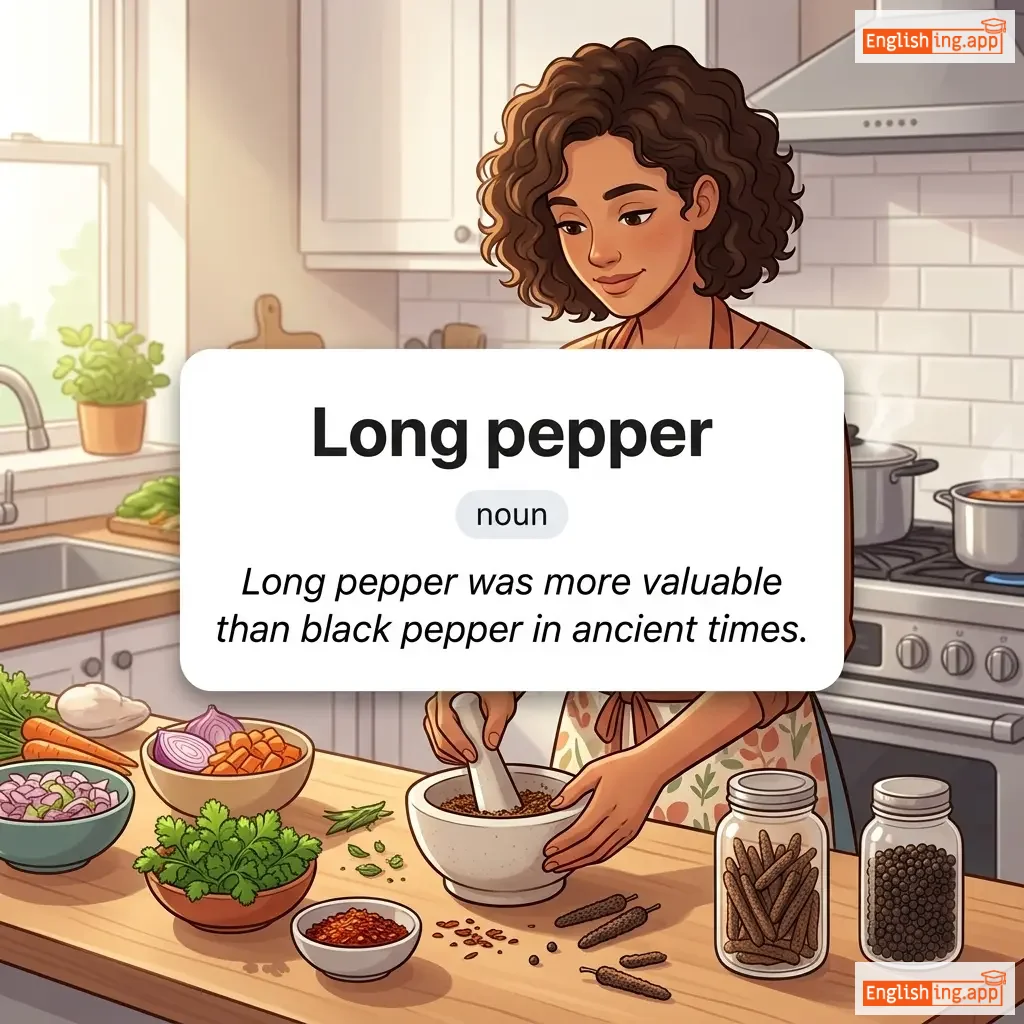
Long pepper definition card — visual illustration of the meaning
noun
/lɔːŋ ˈpepər/
ロングペッパー (rongu peppā)

a flowering vine in the family Piperaceae, cultivated for its fruit which is used as a spice

"Long pepper was more valuable than black pepper in ancient times."

"ロングペッパーは古代において黒胡椒よりも価値が高かった。" (Rongu peppā wa kodai ni oite kuro kosyou yori mo kachi ga takakatta.)
adjective
/lɔːŋ/
長い (nagai)

Measuring a great distance from end to end; lasting for a large amount of time.

"They waited a long time for the train."
"彼らは電車を長い時間待っていました。" (Karera wa densha wo nagai jikan matte imashita.)
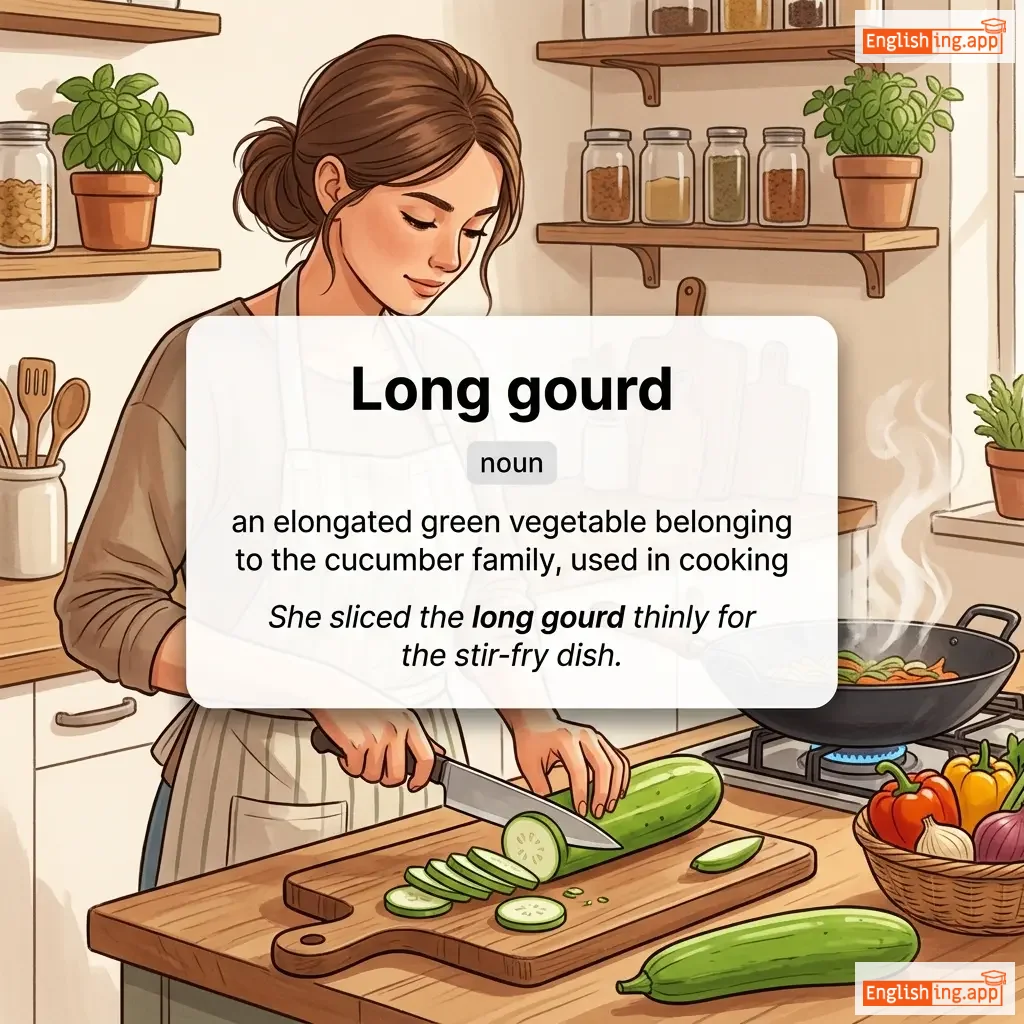
Long gourd definition card — visual illustration of the meaning
noun
/lɔːŋ ɡɔːrd/
長いウリ (nagai uri)

an elongated green vegetable belonging to the cucumber family, used in cooking

"She sliced the long gourd thinly for the stir-fry dish."

"彼女はその長いウリを薄切りにして、炒め物に使いました。" (Kanojo wa sono nagai uri wo usugiri ni shite, itamemono ni tsukaimashita.)