词汇表

英语词汇词典 | 单词含义、定义和示例

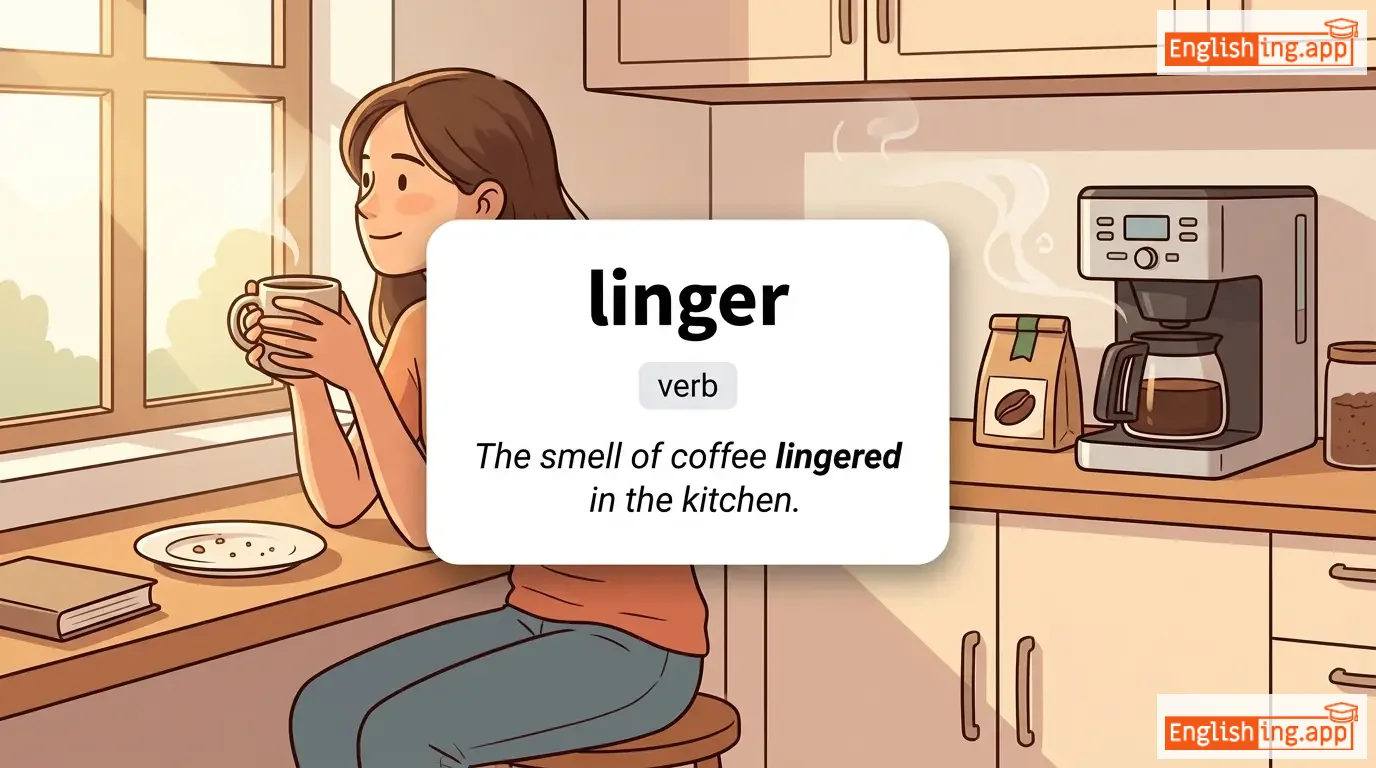
linger definition card — visual illustration of the meaning
verb
/ˈlɪŋ.ɡər/
逗留 (dòu liú)

To stay in a place longer than necessary, often because of unwillingness to leave.

"The smell of coffee lingered in the kitchen."

"咖啡的气味在厨房里 linger 了很久。" (Kāfēi de qìwèi zài chúfáng lǐ linger le hěnjiǔ.)
noun
/ˈlɪŋ.ɡoʊ/
专业术语 (zhuānyè shùyǔ)

Specialized or informal language used by a particular group that is often difficult for outsiders to understand.

"The manual was written in technical lingo that confused the new employees."

"手册是用技术术语写的,让新员工感到困惑。" (Shǒucè shì yòng jìshù shùyǔ xiě de, ràng xīn yuángōng gǎndào kùnhuò.)
noun
/ˈlɪŋ.ɡwə/
语言 (yuyan)

A language, especially one used for communication among people.

"English has become a global lingua for business and science."

"英语已经成为商业和科学的全球语言。" (Yingyu yijing chengwei shangye he kexue de quanqiu yuyan.)
adjective
/ˈlɪŋɡwəl/
与舌头相关 (yǔ shétou xiāngguān)

Relating to the tongue or speech.

"The dentist examined the patient's lingual surface of the teeth."

"牙医检查了病人的牙齿舌面。" (Yáyī jiǎnchále bìngrén de yáchǐ shé miàn.)
noun
/ˈlɪŋɡwɪst/
语言学家 (yǔyán xuéjiā)

A person skilled in foreign languages or in the scientific study of language.

"She is a linguist who speaks six languages fluently."
"她是一位能流利讲六种语言的语言学家。" (Tā shì yī wèi néng liúlì jiǎng liù zhǒng yǔyán de yǔyán xuéjiā.)
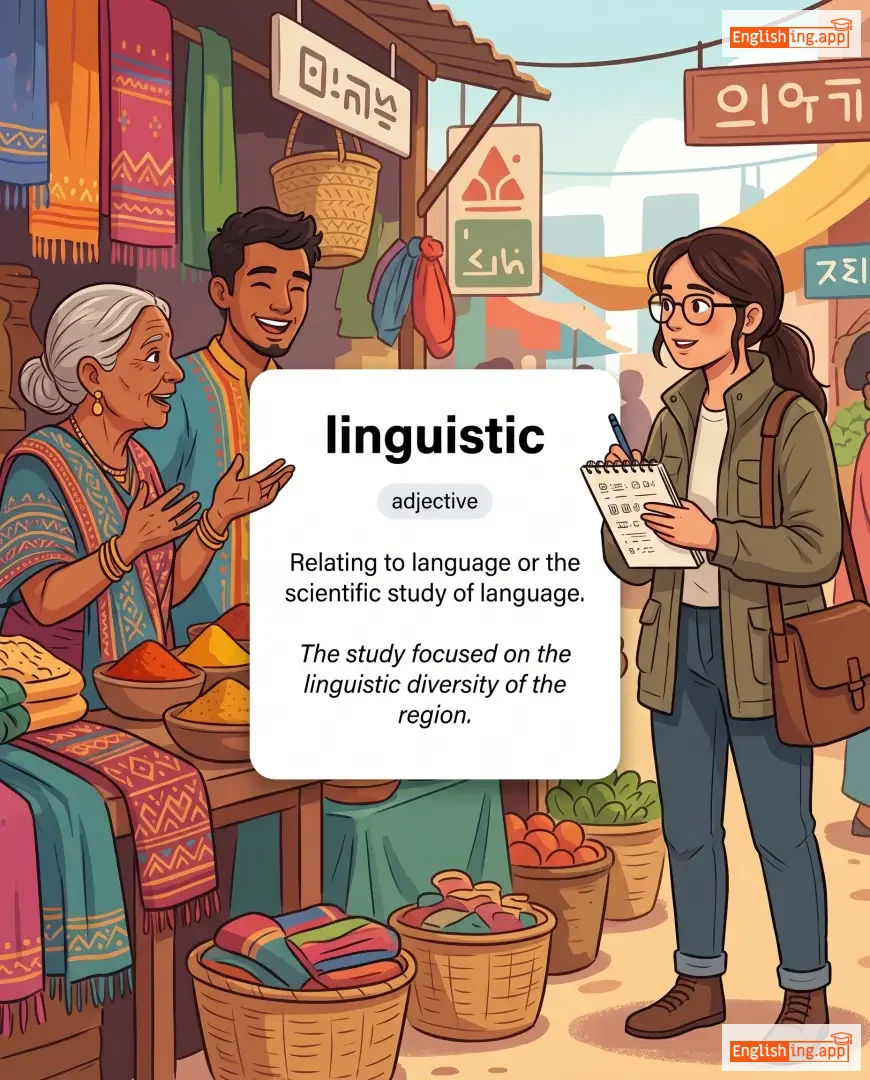
linguistic definition card — visual illustration of the meaning
adjective
/lɪŋˈɡwɪstɪk/
语言学的 (yǔyán xué de)

Relating to language or the scientific study of language.

"The study focused on the linguistic diversity of the region."

"该研究集中在该地区的语言多样性上。" (Gāi yánjiū jízhōng zài gāi dìqū de yǔyán duōyàng xìng shàng.)
noun
/lɪŋˈɡwɪstɪks/
语言学 (yuyanxue)

The scientific study of language and its structure.

"She decided to major in linguistics at university."

"她决定在大学里攻读语言学。" (Ta jueding zai daxue li gongdu yuyanxue.)
noun
/ˈlɪnəmənt/
擦剂 / 洛神 (caji / luoshen)

A liquid or lotion applied to the skin to relieve pain or stiffness.

"He rubbed liniment on his sore muscles after the workout."

"他在训练后擦上了伤痛的肌肉上了擦剂。" (Ta zai xunlian hou ca shang le shang tong de jirou shang le caji.)
noun, verb
/lɪŋk/
连接 (lianjie)

a connection between two things; to connect or associate

"The article includes a link to the official website."

"文章包含指向官方网站的链接。" (wenzhang baokuo zhixiang guanfang wangzhan de lianjie.)
noun
/lɪˈnoʊ.li.əm/
油布 (you bu)

a durable, washable floor covering made from solidified linseed oil, wood flour, or cork dust on a canvas backing

"They decided to cover the kitchen floor with linoleum."

"他们决定用油布覆盖厨房的地板。" (tamen jueding yong you bu fuzai chufang de diban)
noun
/lɪnt/
棉絮 (mianxu)

small soft fibers that come off cloth, often found in dryers or on clothes

"There was lint all over his black shirt after the wash."
"洗完后,他的黑衬衫上有棉絮。" (Xi wan hou, ta de hei chen shan shang you mianxu.)
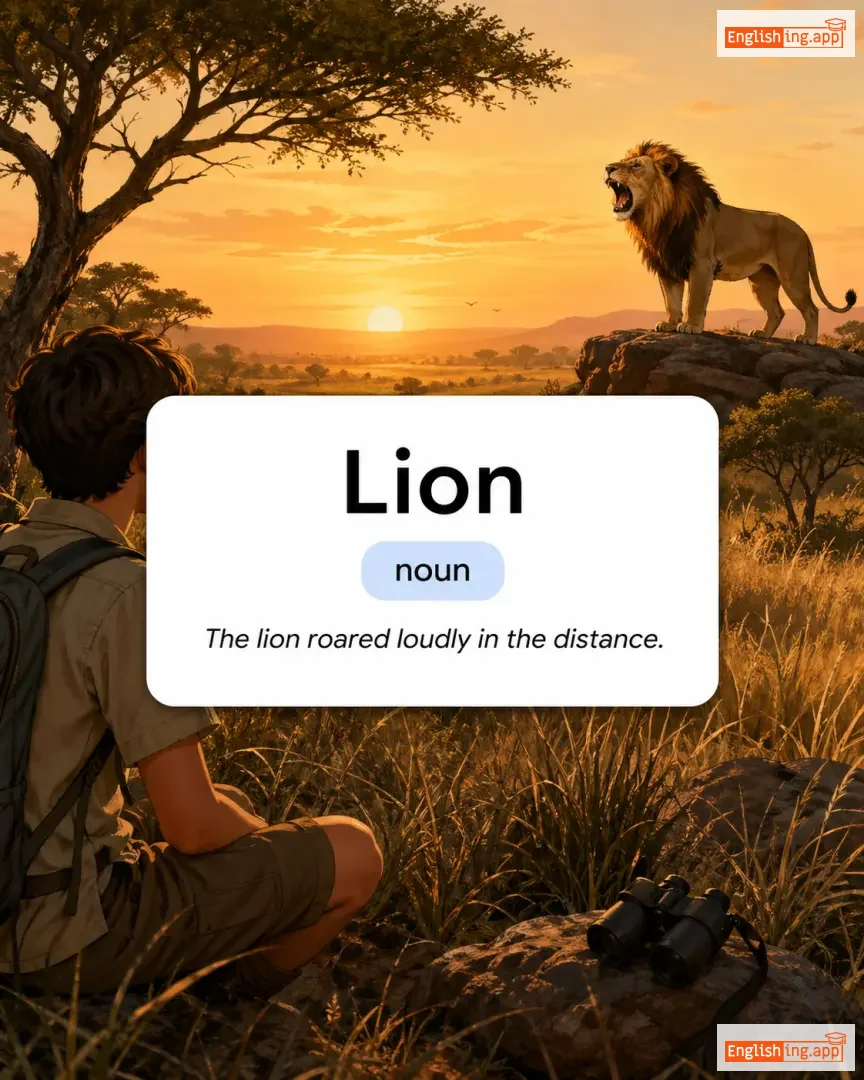
Lion definition card — visual illustration of the meaning
noun
/ˈlaɪən/
狮子 (shizi)

a large wild animal of the cat family that lives in Africa and Asia, known as the king of the jungle

"The lion roared loudly in the distance."
"狮子在远处大声咆哮。" (Shizi zai yuanchu dasheng paoxiao.)
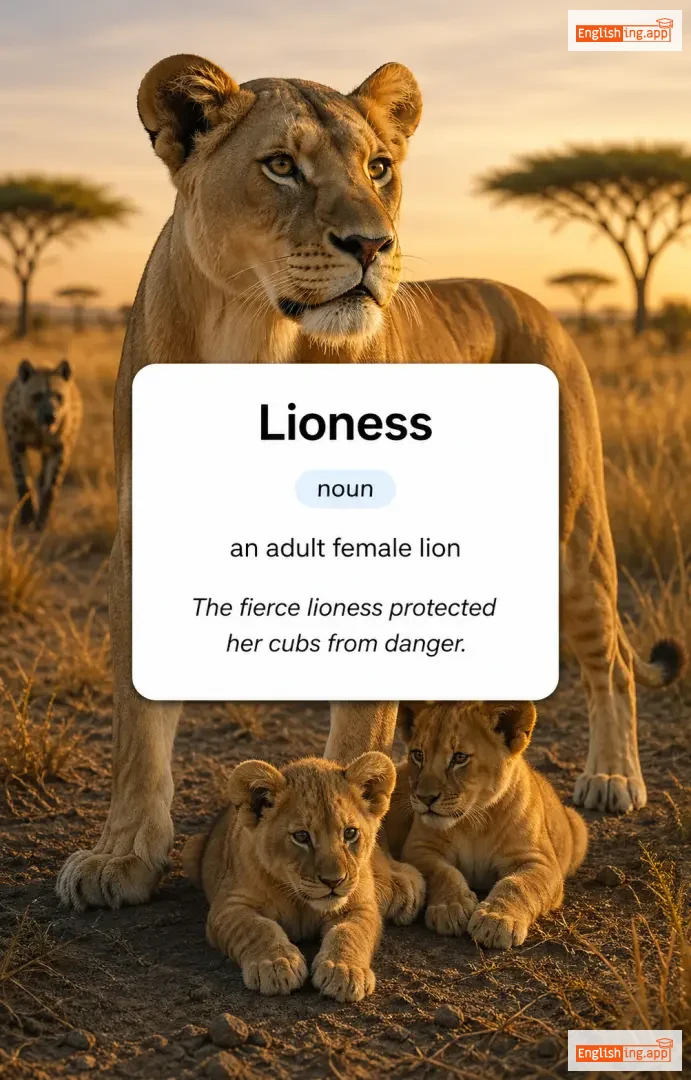
Lioness definition card — visual illustration of the meaning
noun
/ˈlaɪ.ə.nəs/
母狮 (mǔ shī)

an adult female lion

"The fierce lioness protected her cubs from danger."

"那只凶猛的母狮保护着她的小狮子免受危险。" (Nà zhī xiōngměng de mǔ shī bǎohùzhe tā de xiǎo shīzi miǎn shòu wēixiǎn.)
verb
/ˈlaɪ.ə.naɪz/
推崇 (tuīchóng)

to treat someone as a celebrity or give a lot of public attention

"The press began to lionize the young scientist after his discovery."

"媒体开始在他的发现之后捧场那位年轻的科学家。" (méitǐ kāishǐ zài tā de fāxiàn zhīhòu pěngchǎng nà wèi niánqīng de kēxuéjiā.)
noun
/lɪp/
嘴唇 (zuǐchún)

either of the two soft edges of the mouth

"She smiled and bit her lower lip nervously."

"她微笑着紧张地咬了下嘴唇。" (Tā wéixiào zhe jǐnzhāng de yǎo le xià zuǐchún.)
lipogenesis definition card — visual illustration of the meaning
noun
/ˌlaɪ.pəˈdʒen.ɪ.sɪs/
脂肪生成 (zhīfáng shēngchéng)

The metabolic process of fat synthesis where excess carbohydrates are converted into fatty acids and stored as triglycerides.

"Excess carbohydrate intake promotes lipogenesis and fat storage."

"过多的碳水化合物摄入促进了脂肪生成和脂肪储存。" (Guòduō de tànshuǐ huàhéwù shèrù cùjìnle zhīfáng shēngchéng hé zhīfáng chǔcún.)
noun
/ˌlɪk.wəˈfeɪ.ʃənt/
液化剂 (liquefacient)

a substance that causes something to become liquid

"The chemist explained how the liquefacient worked in the experiment."

"化学家解释了液化剂在实验中的作用。" (Huàxuéjiā jiěshìle yèhuàjì zài shíyàn zhōng de zuòyòng.)
verb
/ˈlɪk.wɪ.faɪ/
液化 (liquefy)

to make or become liquid

"The heat will liquefy the butter in a few minutes."

"热量将在几分钟内使黄油液化。" (Rèliàng jiāng zài jǐ fēnzhōng nèi shǐ huángyóu yèhuà.)
noun
/lɪˈkjʊər/
甜酒 (tian jiu)

A strong, sweet alcoholic drink flavored with fruits, herbs, or spices.

"She served a small glass of cherry liqueur after dinner."

"她在晚餐后提供了一小杯樱桃利口酒。" (Tā zài wǎncān hòu tígōng le yī xiǎo bēi yīngtáo lìkǒu jiǔ.)
Liquid definition card — visual illustration of the meaning
noun
/ˈlɪkwɪd/
液体 (yètǐ)

a substance that flows freely but is of constant volume, having a consistency like water or oil.

"Water is a clear liquid that is essential for life."

"水是一种清澈的液体,对于生命至关重要。" (Shuǐ shì yī zhǒng qīngchè de yètǐ, duìyú shēngmìng zhìguān zhòngyào.)
verb
/ˈlɪkwɪdeɪt/
清算 (qīngsuàn)

To sell assets in order to pay off debts; to close a business and convert assets into cash.

"The company decided to liquidate its assets to pay creditors."

"公司决定清算其资产以支付债权人。" (Gōngsī juédìng qīngsuàn qí zīchǎn yǐ zhīfù zhàiquánrén.)
liquidity definition card — visual illustration of the meaning
noun
lɪˈkwɪd.ə.ti
流动性 (liudongxing)

Cash flow, financial fluidity.

"The company maintains high liquidity."

"公司维持着高流动性。" (Gongsi weichi zhe gao liudongxing.)
adjective
/ˈluː.ni/
疯狂的; 傻的; 精神不稳定 (fēngkuáng de; shǎ de; jīngshén bù wěndìng)

crazy; silly; mentally unstable

"His loony behavior made everyone laugh."

"他的疯狂行为让每个人都笑了。" (tā de fēngkuáng xíngwéi ràng měi gèrén dōu xiàole)
noun, verb
/laʊndʒ/
休息室 (xiuxishi)

A public room for relaxing; or to sit, lie, or stand in a relaxed way.

"They lounged on the sofa after dinner."

"他们在晚餐后懒洋洋地躺在沙发上。" (Tāmen zài wǎncān hòu lǎn yáng yáng de tǎng zài shāfā shàng.)
noun
/lɒx/ or /lɒk/
湖泊 (hupo)

An Irish or Scottish word for a lake or sea inlet.

"The fishermen lived by the lough for generations."

"渔民们世世代代住在湖泊旁边。" (Yúmínmen shìshì dàidài zhù zài húpō pángbiān.)
adverb
/ˈlaʊdli/
大声地 (dasheng de)

in a way that produces a lot of sound; with a high volume

"He spoke loudly so everyone in the room could hear him."

"他大声地说话,让房间里的人都能听见。" (ta dasheng de shuohua rang fangjian li de ren dou neng tingjian)
loud definition card — visual illustration of the meaning
adjective/adverb
/laʊd/
响亮 (xiangliang)

Producing or capable of producing much noise.

"The music was too loud to concentrate."
"音乐太响了,无法集中注意力。" (Yīnyuè tài xiǎngle, wúfǎ jízhōng zhùyì lì.)
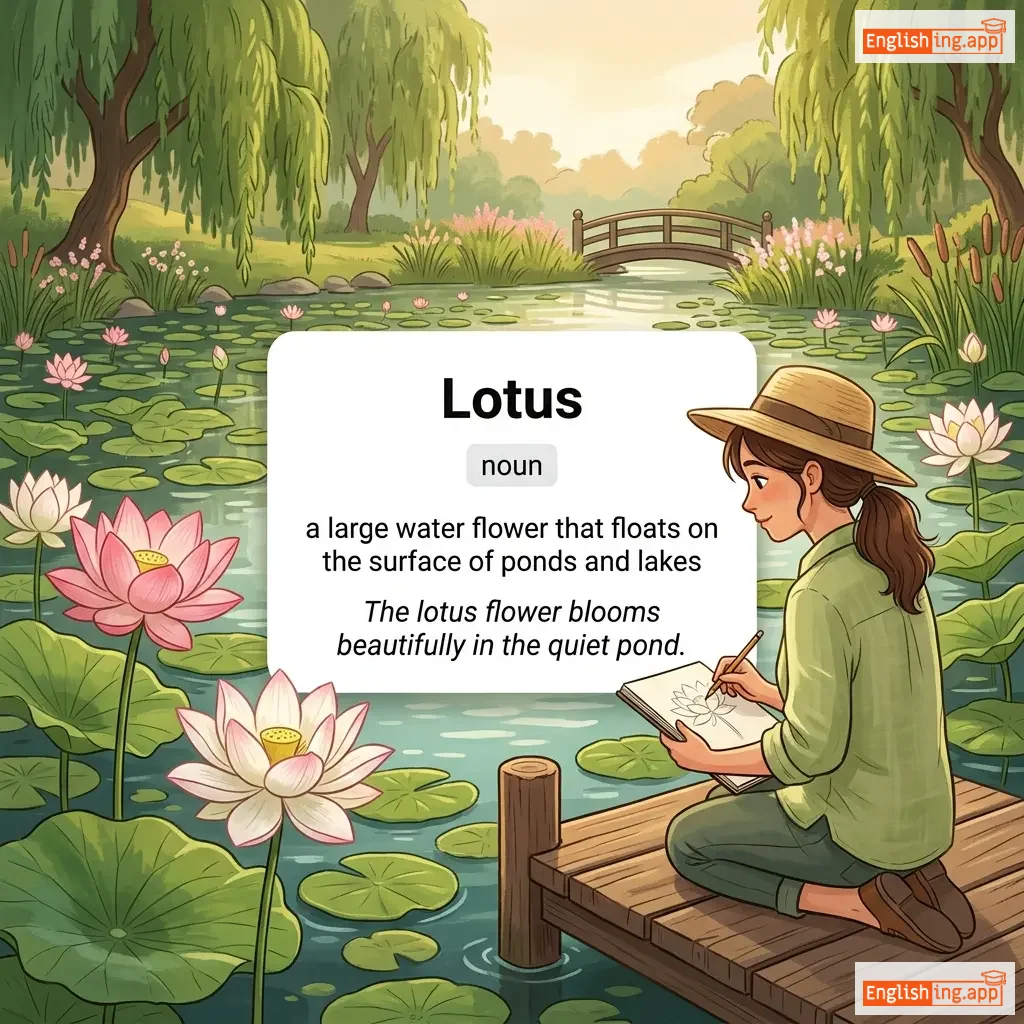
Lotus definition card — visual illustration of the meaning
noun
/ˈloʊ.təs/
莲花 (lianhua)

a large water flower that floats on the surface of ponds and lakes

"The lotus flower blooms beautifully in the quiet pond."

"莲花在宁静的池塘中美丽地绽放。" (lianhua zai ningjing de chitang zhong meili de zhanfang)
noun
/ˈlɒtəri/
彩票 (caipiao)

A means of raising money by selling numbered tickets and giving prizes to the holders of numbers drawn at random.

"He won a car in the national lottery."

"他在全国彩票中赢得了一辆车。" (Ta zai quanguo caipiao zhong yingde le yi liang che.)
pronoun/noun
/lɒts/
很多 (hěn duō)

A large number or amount of something.

"She has lots of friends in the city."

"她在城市里有很多朋友。" (Tā zài chéngshì lǐ yǒu hěn duō péngyǒu.)
noun
/lɒt/
许多 (xuduo)

A large number or amount; a group or portion.

"She bought a lot of books at the fair."

"她在集市上买了很多书。" (Ta zai jishi shang mai le henduo shu.)
verb/adjective
/lɒst/
丢失 (diū shī)

Unable to find the way; no longer in possession of something.

"He lost his keys and couldn’t enter the house."

"他丢失了钥匙,无法进入房子。" (Tā diū shī le yàoshi, wúfǎ jìnrù fángzi.)
loss definition card — visual illustration of the meaning
noun
/lɒs/
损失 (sǔn shī)

The state of no longer having something or someone; the harm resulting from losing.

"The company suffered a huge financial loss last year."
"公司去年遭受了巨大的财务损失。" (Gōngsī qùnián zāoshòu le jùdà de cáiwù sǔnhài.)
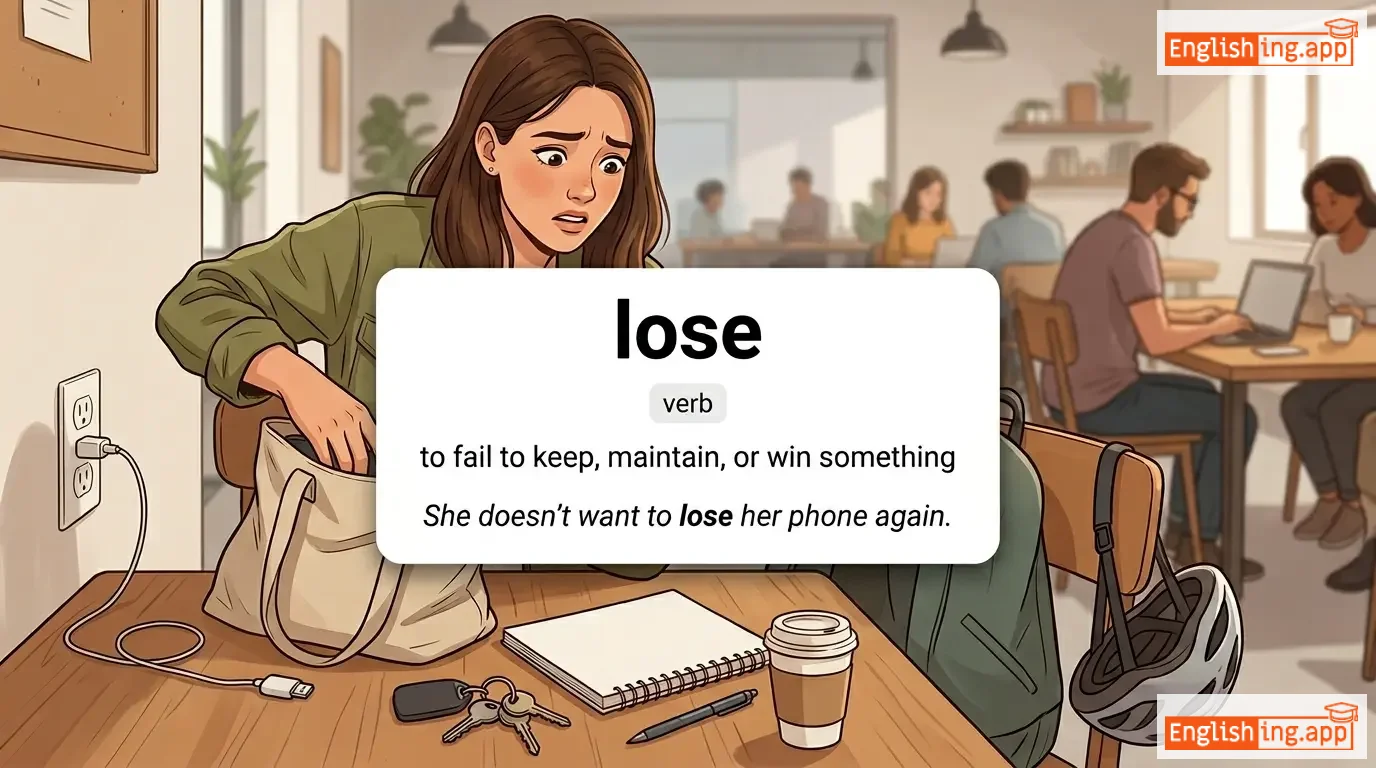
lose definition card — visual illustration of the meaning
verb
/luːz/
幸福 (xingfu)

to fail to keep, maintain, or win something

"She doesn’t want to lose her phone again."

"她在获得奖项时无法掩饰自己的快乐。" (Tā zài huòdé jiǎngxiàng shí wúfǎ yǎnshì zìjǐ de kuàilè.)
noun
/ˈlɔːrdlɪŋ/
小领主 (xiao lingzhu)

A young or petty lord; someone of minor nobility.

"The arrogant lordling demanded respect despite his lack of experience."
"那个傲慢的小领主尽管缺乏经验,仍要求尊重。" (Nàgè àomàn de xiǎo lǐngzhǔ jǐnguǎn quēfá jīngyàn, réng yāoqiú zūnzhòng.)
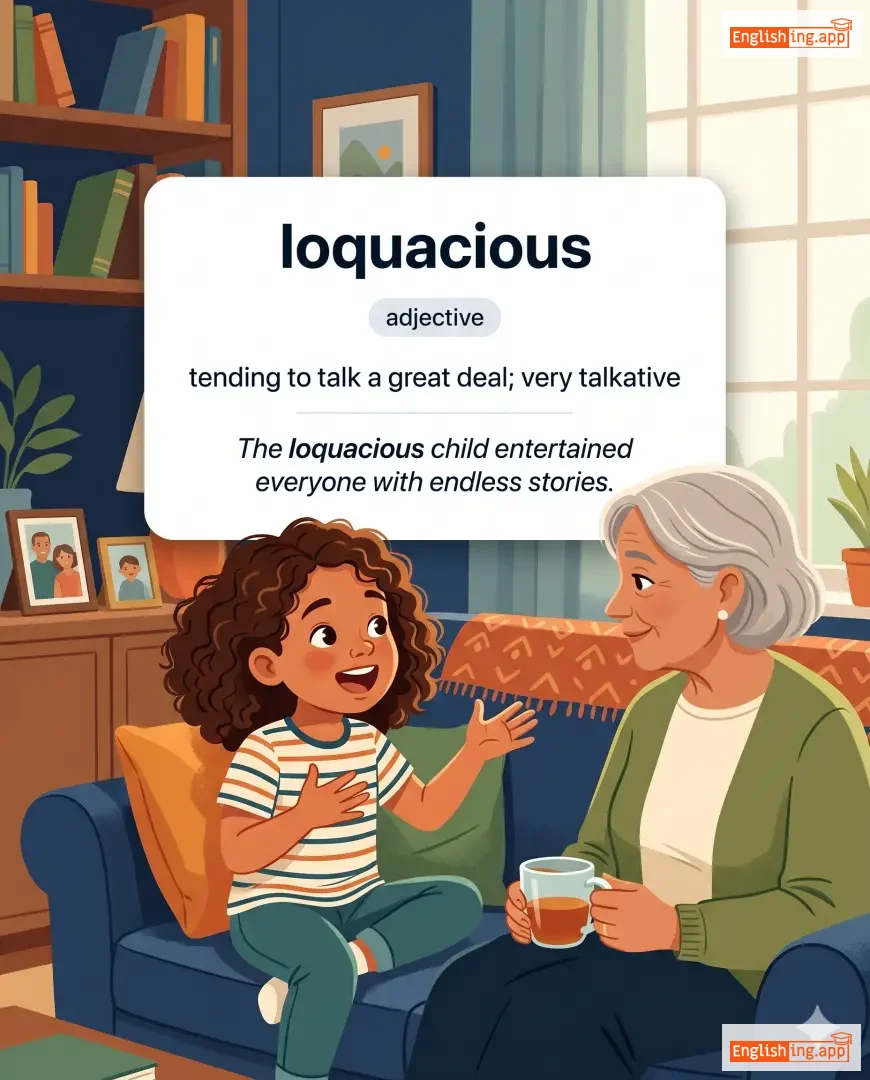
loquacious definition card — visual illustration of the meaning
adjective
/loʊˈkweɪʃəs/
话多的 (hua duo de)

tending to talk a great deal; very talkative

"The loquacious child entertained everyone with endless stories."

"话多的孩子用无尽的故事娱乐了每个人。" (Hua duo de haizi yong wu jin de gushi yule le meige ren.)
adjective
/ˈlɑːpˌsaɪdɪd/
倾斜的,不平衡的 (qīngxié de, bù pínghéng de)

with one side lower, larger, or different from the other; uneven or imbalanced

"The cake looked lopsided after being decorated in a hurry."

"蛋糕看起来不平衡,因为急忙装饰。" (Dàn gāo kàn qǐlái bù pínghéng, yīnwèi jí máng zhuāngshì.)
verb
/loʊp/
以长而有弹跳的步伐奔跑或移动 (yi chang er you dan tiao de bu fa ben pao huo yi dong)

to run or move with a long, bounding stride

"The horse loped gracefully across the field."

"马优雅地在田野上跑步。" (Ma youya de zai tianye shang paobu.)
verb
/luːt/
掠夺 (lüèduó)

to steal goods, typically during war, riot, or chaos

"The rioters looted several shops during the protest."

"抗议者在抗议期间掠夺了几家商店。" (Kàngyì zhě zài kàngyì qījiān lüèduó le jǐ jiā shāngdiàn.)
adjective
/luːs/
(song)

not firmly or tightly fixed in place

"The screw is loose and needs tightening."

"螺丝松动,需要紧固。" (Luosi songdong, xuyao jingu.)
adjective
/ˈluːpi/
疯癫 (fengdian)

crazy, silly, or eccentric

"After working all night, he felt a little loopy."
"整夜工作后,他感觉有点疯癫。" (Zhengye gongzuo hou, ta ganjue you dian fengdian.)
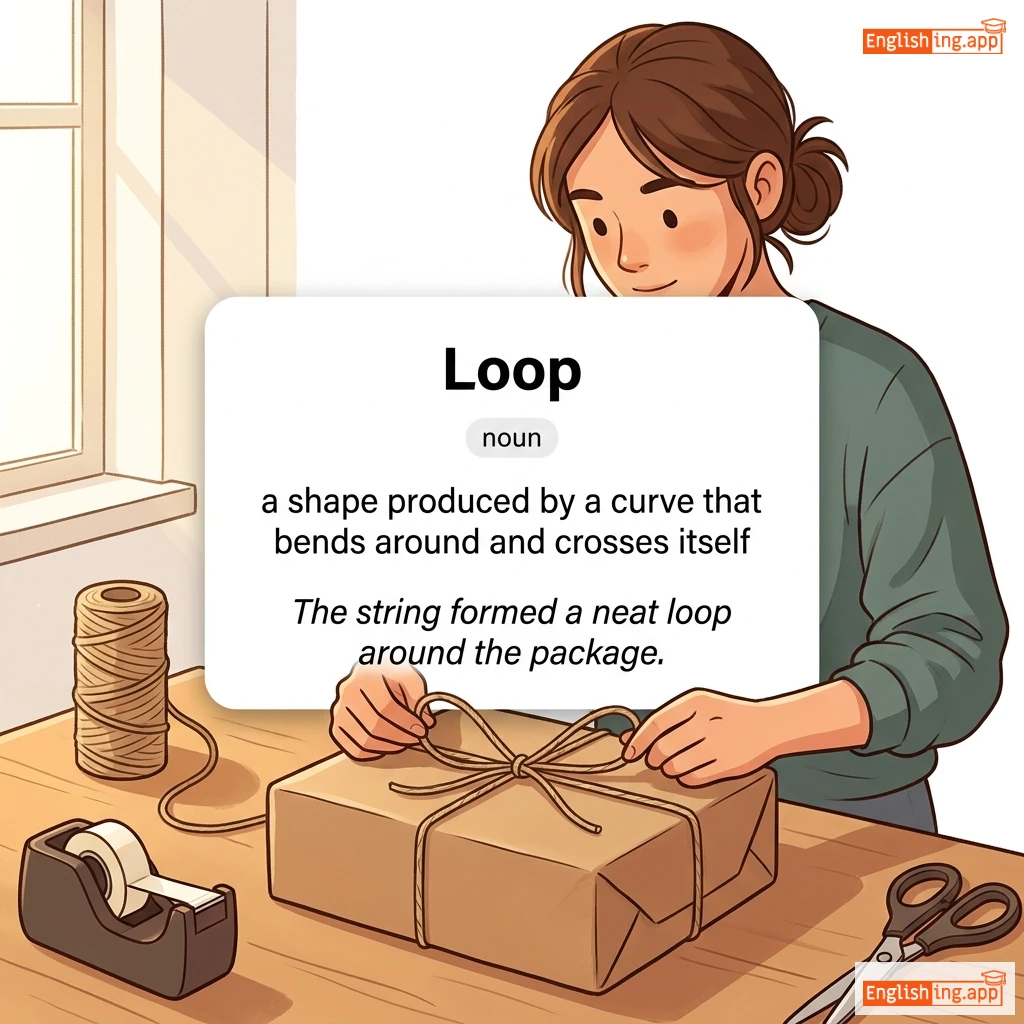
Loop definition card — visual illustration of the meaning
noun
/luːp/
圈,环 (quan, huan)

a shape produced by a curve that bends around and crosses itself

"The string formed a neat loop around the package."
"绳子在包裹周围形成了一个整齐的环。" (Shéngzi zài bāoguǒ zhōuwéi xíngchéngle yīgè zhěngqí de huán.)
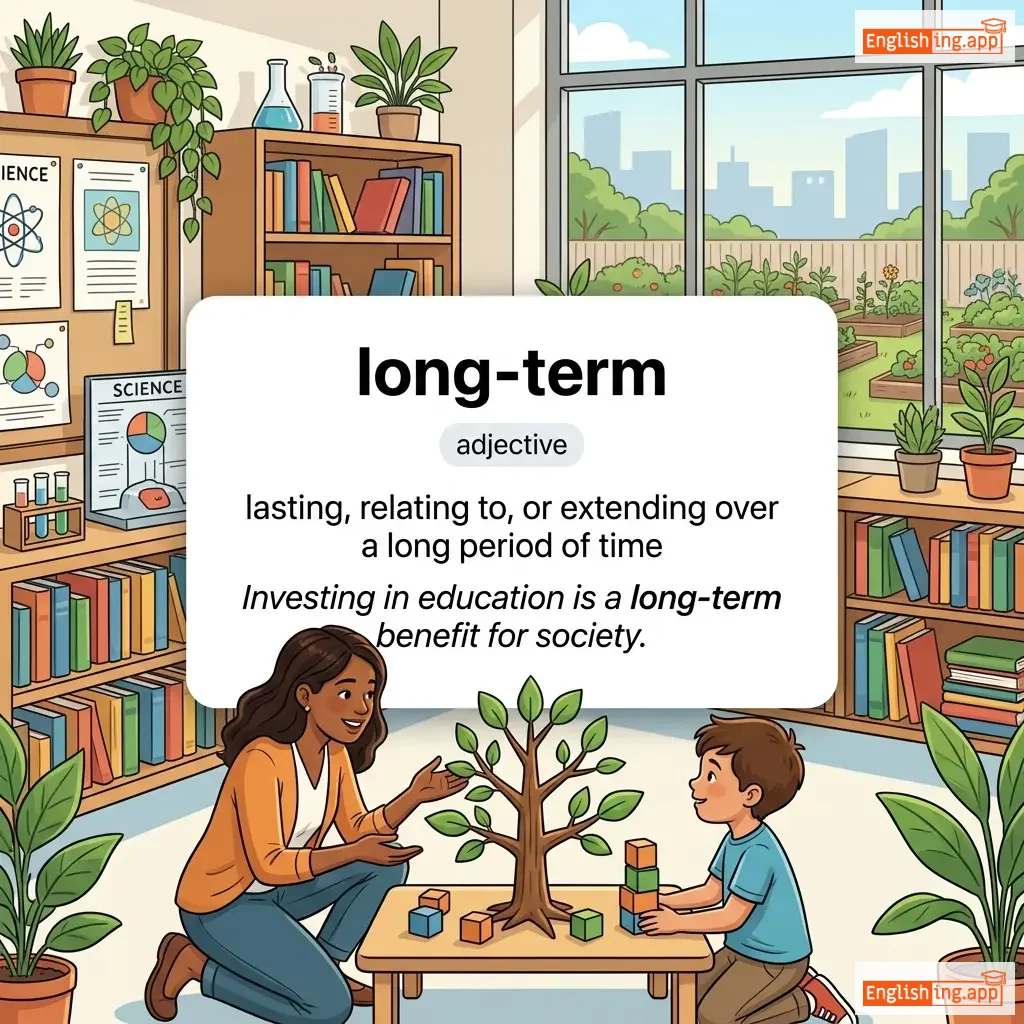
long-term definition card — visual illustration of the meaning
adjective
/ˌlɔːŋ ˈtɜːrm/
长期的 (changqi de)

lasting, relating to, or extending over a long period of time

"Investing in education is a long-term benefit for society."
"投资教育是社会的长期利益。" (Touzi jiaoyu shi shehui de changqi liyu.)
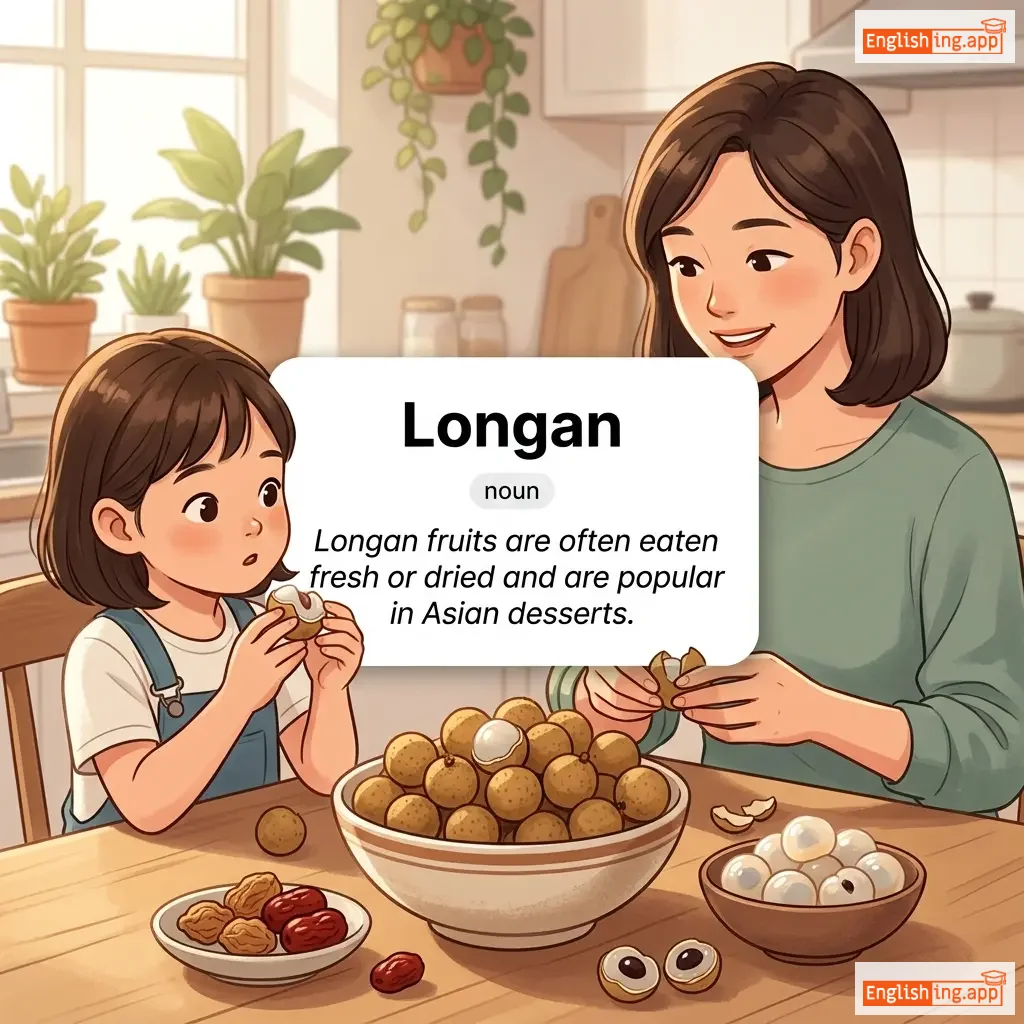
Longan definition card — visual illustration of the meaning
noun
/ˈlɔːŋ.ɡən/
龙眼 (longyan)

a small round tropical fruit with translucent white flesh and sweet taste, related to lychee

"Longan fruits are often eaten fresh or dried and are popular in Asian desserts."
"龙眼果通常鲜食或晒干,在亚洲甜点中很受欢迎。" (long yan guo tong chang xian shi huo shai gan zai ya zhou tian dian zhong hen shou huan ying)
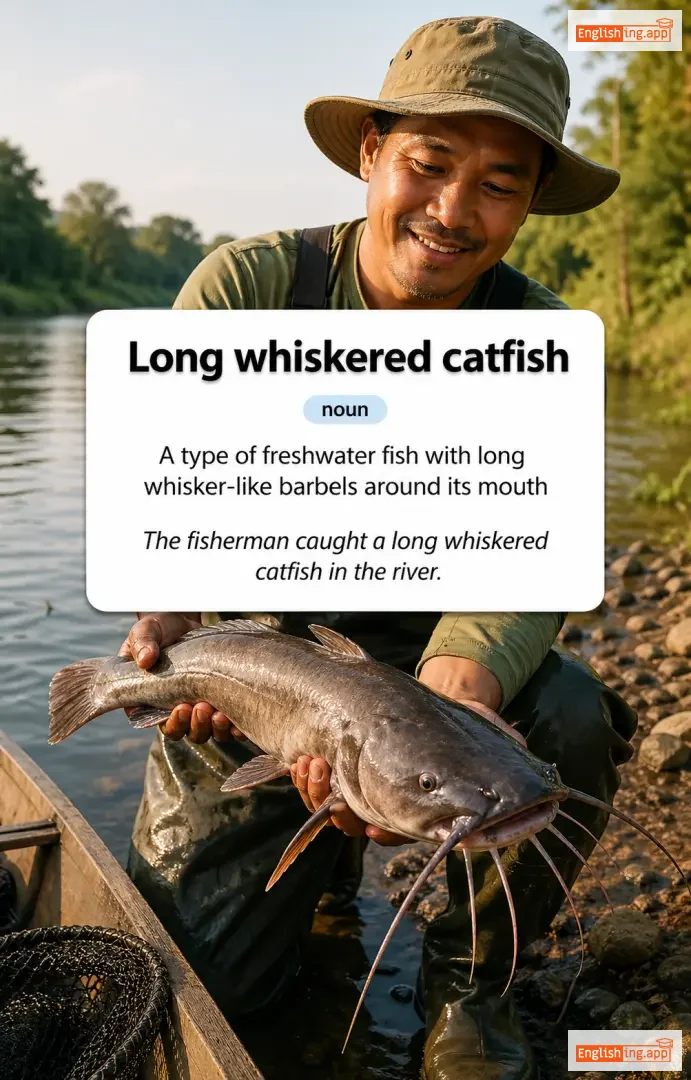
Long whiskered catfish definition card — visual illustration of the meaning
noun
/lɒŋ ˈwɪskəd ˈkætfɪʃ/
长须鲶鱼 (chang xu nian yu)

A type of freshwater fish with long whisker-like barbels around its mouth

"The fisherman caught a long whiskered catfish in the river."

"渔夫在河里抓到了一条长须鲶鱼。" (yu fu zai he li zhua dao le yi tiao chang xu nian yu)
adjective, adverb
/ˈlɒŋ taɪm/
长期的 (changqi de)

lasting or existing for a long period of time; having continued for many years

"She is a long-time friend of my family."

"她是我家长期的朋友。" (ta shi wo jia changqi de pengyou)
Long-term memory definition card — visual illustration of the meaning
noun
ˈlɒŋ tɜːm ˈmɛm.ər.i
长期记忆 (changqi jiyi)

Such memory that remains stored in the brain for a long time

"Repeated practice helps transfer information into long-term memory."
"重复练习有助于将信息转移到长期记忆中。" (Chóngfù liànxí yǒu zhù yú jiāng xìnxī zhuǎnyí dào chángqī jìyì zhōng.)
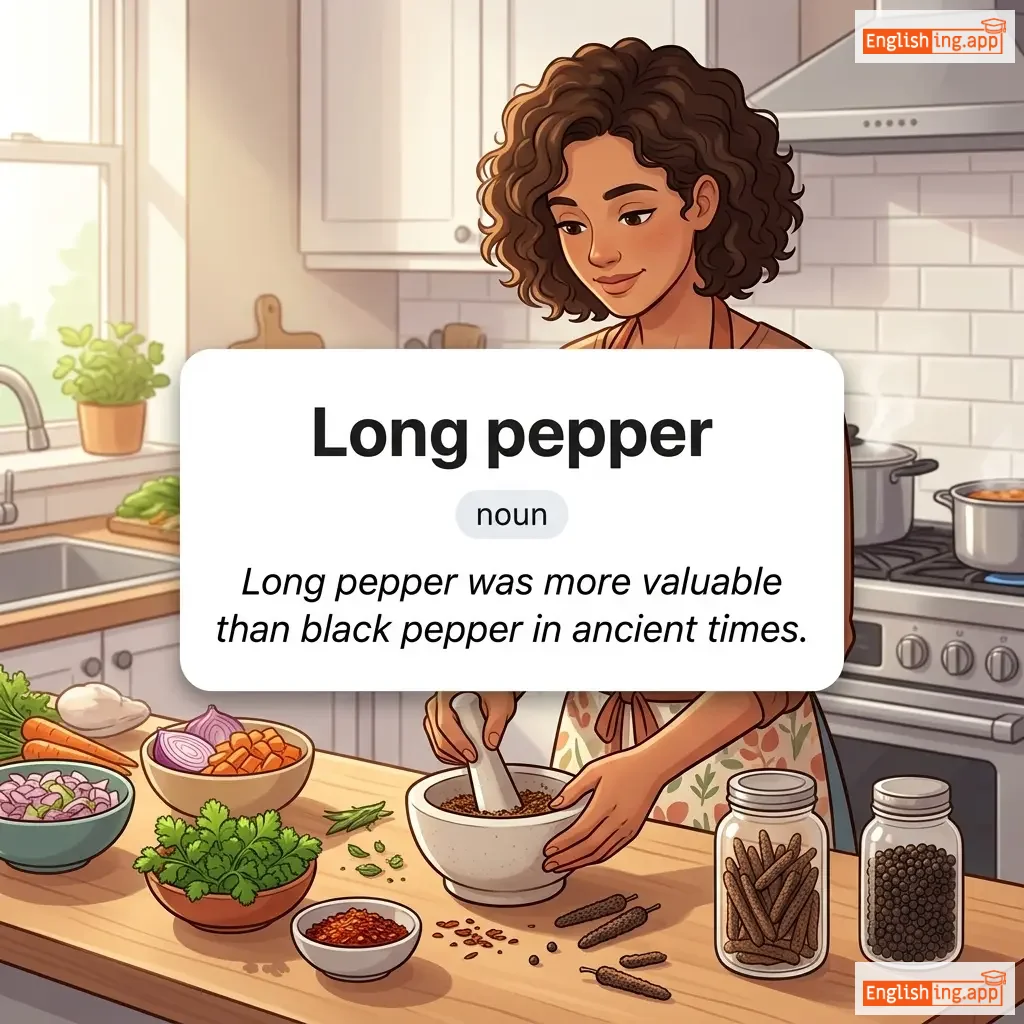
Long pepper definition card — visual illustration of the meaning
noun
/lɔːŋ ˈpepər/
长胡椒 (chang hujiao)

a flowering vine in the family Piperaceae, cultivated for its fruit which is used as a spice

"Long pepper was more valuable than black pepper in ancient times."

"长胡椒在古代比黑胡椒更有价值。" (Chang hujiao zai gudai bi hei hujiao geng you jiazhi.)
adjective
/lɔːŋ/
(chang)

Measuring a great distance from end to end; lasting for a large amount of time.

"They waited a long time for the train."
"他们等了很长时间才等到火车。" (tamen deng le hen chang shi jian cai deng dao huo che.)
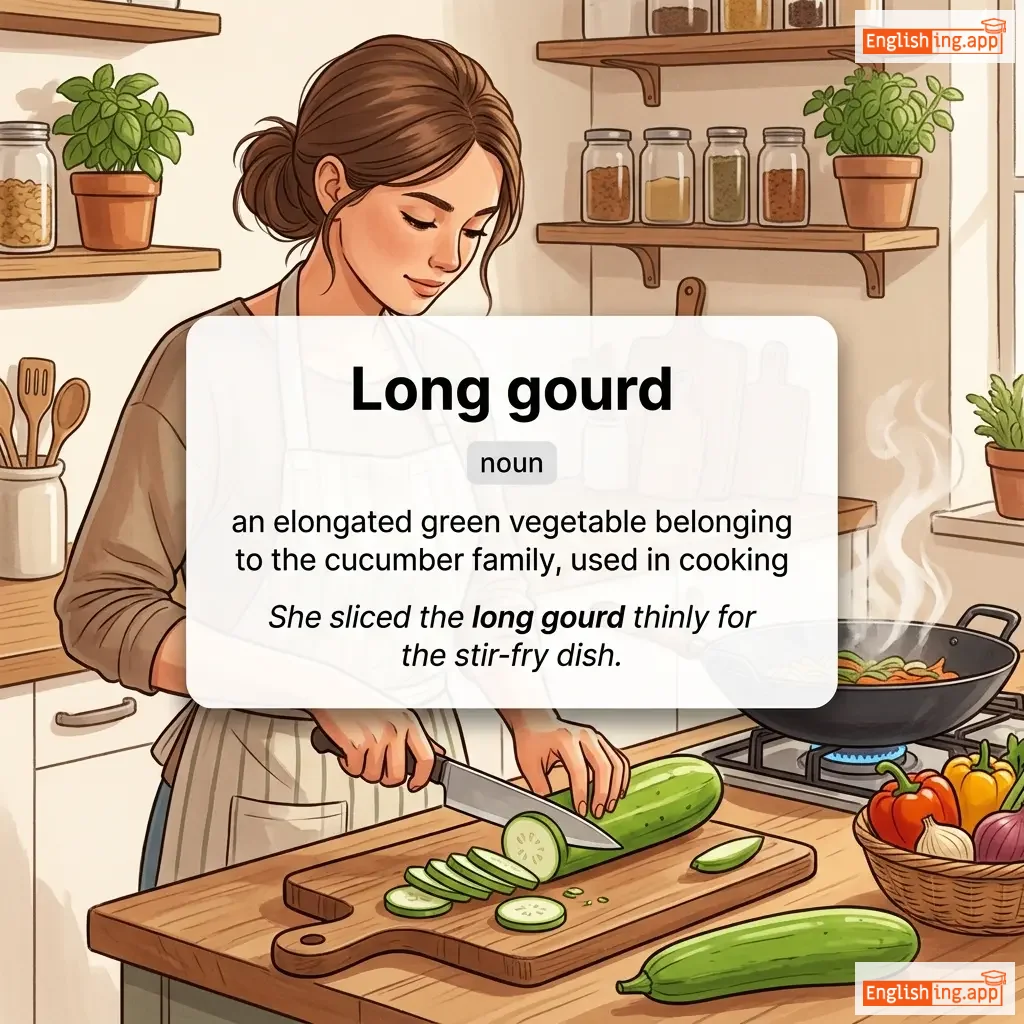
Long gourd definition card — visual illustration of the meaning
noun
/lɔːŋ ɡɔːrd/
长南瓜 (chang nan gua)

an elongated green vegetable belonging to the cucumber family, used in cooking

"She sliced the long gourd thinly for the stir-fry dish."

"她将长南瓜切成薄片,用于炒菜。" (Ta jiang chang nan gua qie cheng bo pian, yong yu chao cai.)