词汇表

英语词汇词典 | 单词含义、定义和示例

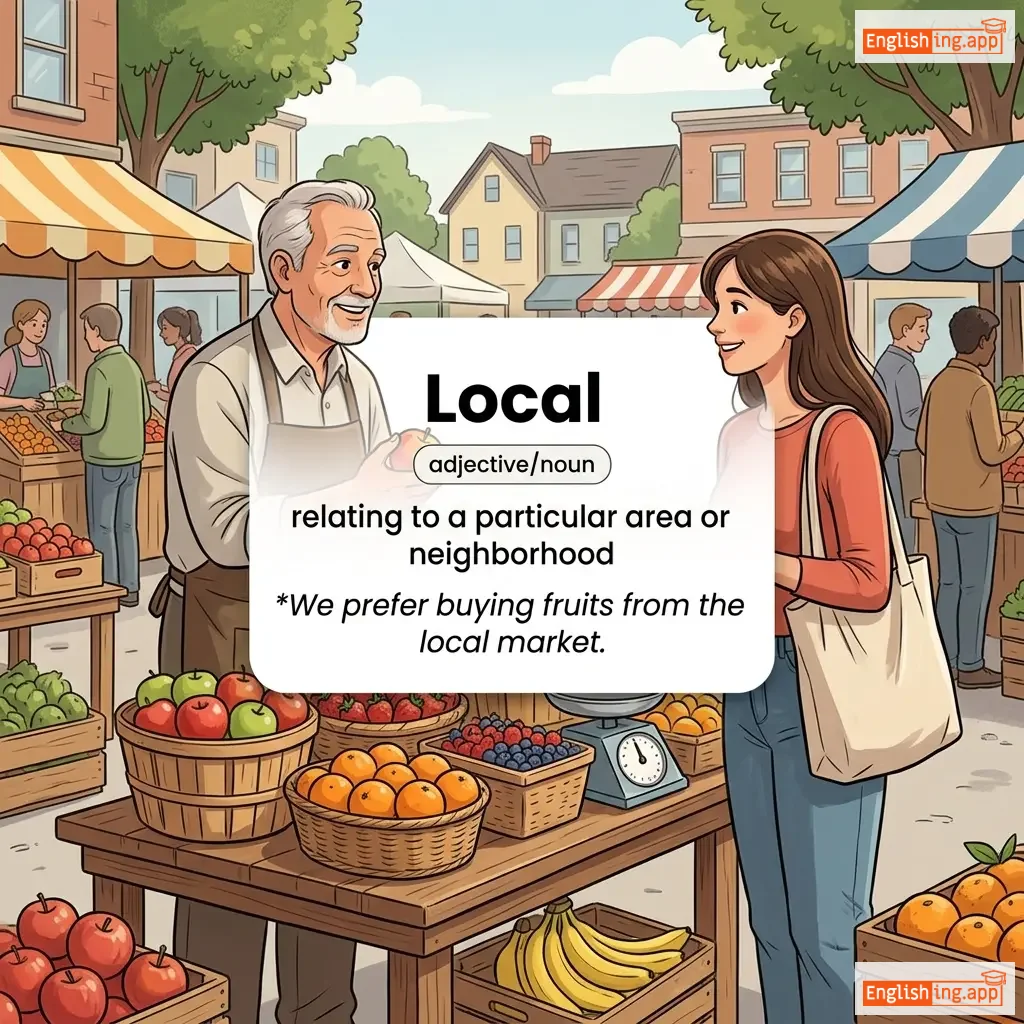
Local definition card — visual illustration of the meaning
adjective/noun
/ˈloʊkəl/
本地 (bendi)

relating to a particular area or neighborhood

"We prefer buying fruits from the local market."

"我们更喜欢从本地市场购买水果。" (Wǒmen gèng xǐhuān cóng běndì shìchǎng gòumǎi shuǐguǒ.)
verb
/loʊˈkeɪt/
定位 (duiwei)

to find the exact position or place of something

"They managed to locate the missing keys under the couch."

"他们成功地在沙发下找到丢失的钥匙。" (Tāmen chénggōng de zài shāfā xià zhǎodào diūshī de yàoshi.)
noun
/loʊˈkeɪʃən/
位置 (weizhi)

a particular place or position

"This cafe is in a beautiful location near the lake."

"这个咖啡馆位于湖边的一个美丽的位置。" (Zhège kāfēi guǎn wèiyú hú biān de yīgè měilì de wèizhì.)
noun
/ˈlɒkətɪv/
方位格 (fāngwèigé)

a grammatical case indicating location or place

"In Latin, the locative case is used to indicate location."

"在拉丁语中,方位格用于表示位置。" (Zài lādīng yǔ zhōng, fāngwèigé yòng yú biǎoshì wèizhì.)
noun
/lɒx/
(hu)

a lake or sea inlet, especially in Scotland

"Tourists visit Loch Ness to search for the legendary monster."

"游客们参观了洛赫湖,以寻找传说中的怪兽。" (You ke men can guan le Luo He hu, yi xun zhao chuan shuo zhong de guai shou.)
Lock definition card — visual illustration of the meaning
verb, noun
/lɒk/
锁,锁定 (suǒ, suǒ dìng)

to fasten something securely with a key or device; a fastening device

"Please lock the door when you leave."

"请在离开时锁好门。" (qǐng zài líkāi shí suǒ hǎo mén.)
Locket definition card — visual illustration of the meaning
noun
/ˈlɒk.ɪt/
项链坠子 (xianglian zhui zi)

a small ornamental case, typically made of gold or silver, worn on a chain around the neck

"She kept her grandmother's photo in the locket."

"她把祖母的照片放在了项链坠子里。" (Ta ba zumu de zhaopian fang zailiao xianglian zhui zi li)
noun
/ˌloʊkəˈmoʊʃən/
运动 (yundong)

movement or the ability to move from one place to another

"Walking is the most common form of human locomotion."

"走路是人类最常见的运动方式。" (Zoulu shi renlei zui changjian de yundong fangshi.)
noun
/ˌloʊ.kəˈmoʊ.tɪv/
机车 (jiche)

A powered rail vehicle used for pulling trains.

"The old steam locomotive was restored for the museum."
"这辆老式蒸汽机车已恢复供博物馆使用。" (Zhe liang laoshi zhengqi jiche yi huiufu gong bowuguan shiyong.)
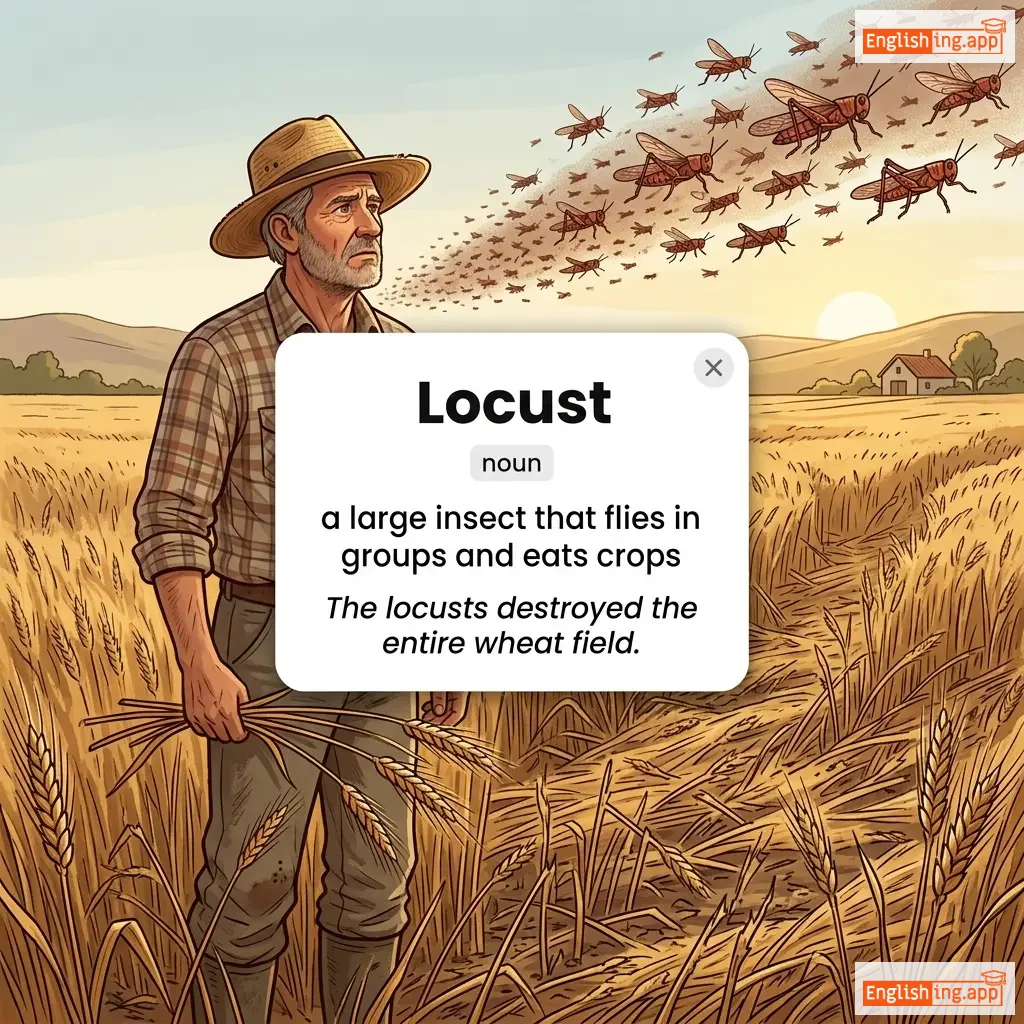
Locust definition card — visual illustration of the meaning
noun
/ˈloʊ.kəst/
蝗虫 (huángchóng)

a large insect that flies in groups and eats crops

"The locusts destroyed the entire wheat field."

"蝗虫摧毁了整个小麦田。" (huángchóng cuīhuǐle zhěnggè xiǎomài tián)
noun
/loʊd/
矿脉 (kuàngmài)

A rich source of something, often a vein of valuable metal in the earth.

"The miners discovered a rich lode of silver."

"矿工发现了一个丰富的银矿脉。" (Kuànggōng fāxiànle yīgè fēngfù de yín kuàngmài.)
noun
/ˈlɒdʒ.mənt/
临时住宿 (linshi zhusu)

The act of lodging or a place of temporary stay; also a deposit of something.

"The soldiers found lodgment in the abandoned house."

"士兵们在废弃的房子里找到了临时住宿。" (Shibing men zai feiqi de fangzi li zhaodao le linshi zhusu.)
noun
/lɒft/
阁楼 (gelou)

An upper room or space, often under the roof of a building.

"She converted the old loft into a modern studio."

"她把旧阁楼改造成了一个现代化的工作室。" (Ta ba jiu gelou gaizaochengle yi ge xiandaihua de gongzuoshi.)
adjective
/ˈlɒf.ti/
(gao)

Of great height; elevated in character or style; noble.

"He set himself the lofty goal of ending poverty."
"他设定了一个lofty的目标,要消除贫困。" (Ta she ding le yi ge lofty de mubiao, yao xiaochu pinkun.)
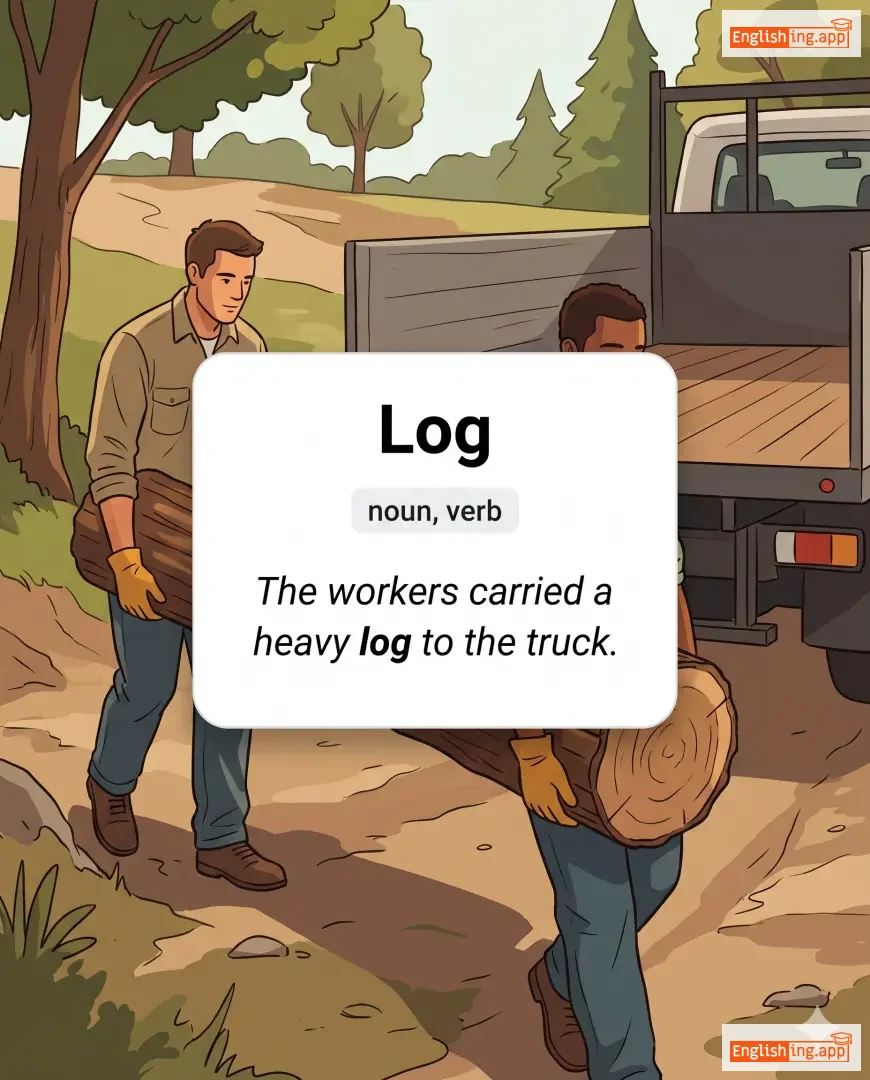
Log definition card — visual illustration of the meaning
noun, verb
/lɒɡ/
原木, 记录 (yuánmù, jìlù)

A part of the trunk or a large branch of a tree that has fallen or been cut off; also to record information systematically.

"The workers carried a heavy log to the truck."

"工人们将一根重木头搬到卡车上。" (Gōngrénmen jiāng yī gēn zhòng mùtou bān dào kǎchē shàng.)
noun
/ˈlɒdʒɪk/
逻辑 (luoji)

Reasoning conducted or assessed according to strict principles of validity.

"Her argument was based on sound logic."
"她的论点基于严密的逻辑。" (Ta de lundian jiyu yanmi de luoji.)
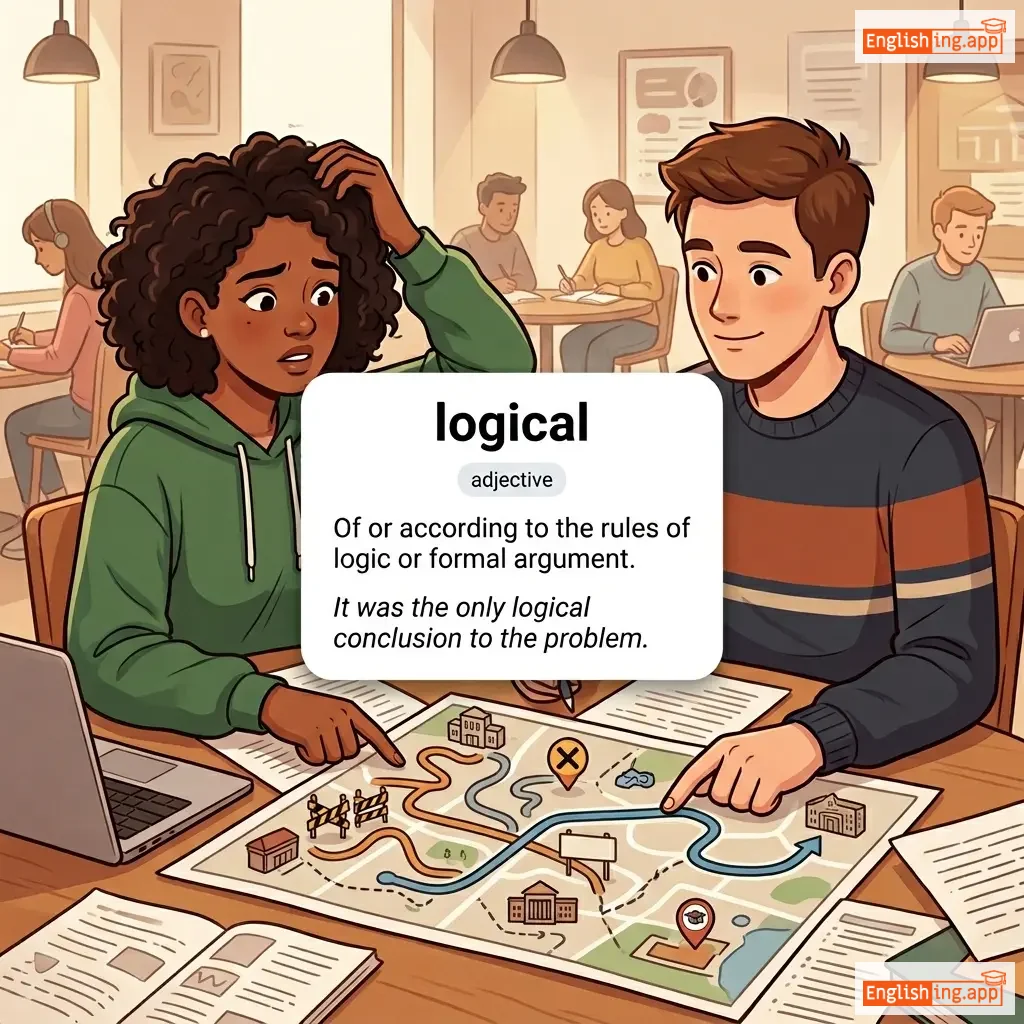
logical definition card — visual illustration of the meaning
adjective
/ˈlɒdʒɪkəl/
合乎逻辑的 (hehu luojide)

Of or according to the rules of logic or formal argument.

"It was the only logical conclusion to the problem."

"这是问题的唯一合乎逻辑的结论。" (Zhe shi wenti de weiyi hehu luojide jielun.)
noun
/ləˈdʒɪʃən/
逻辑学家 (luójíxuéjiā)

A person skilled in logic and reasoning.

"Aristotle is considered one of the greatest logicians in history."
"亚里士多德被认为是历史上最伟大的逻辑学家之一。" (Yà lǐ shì duō dé bèi rènwéi shì lìshǐ shàng zuì wěidà de luójíxuéjiā zhī yī.)
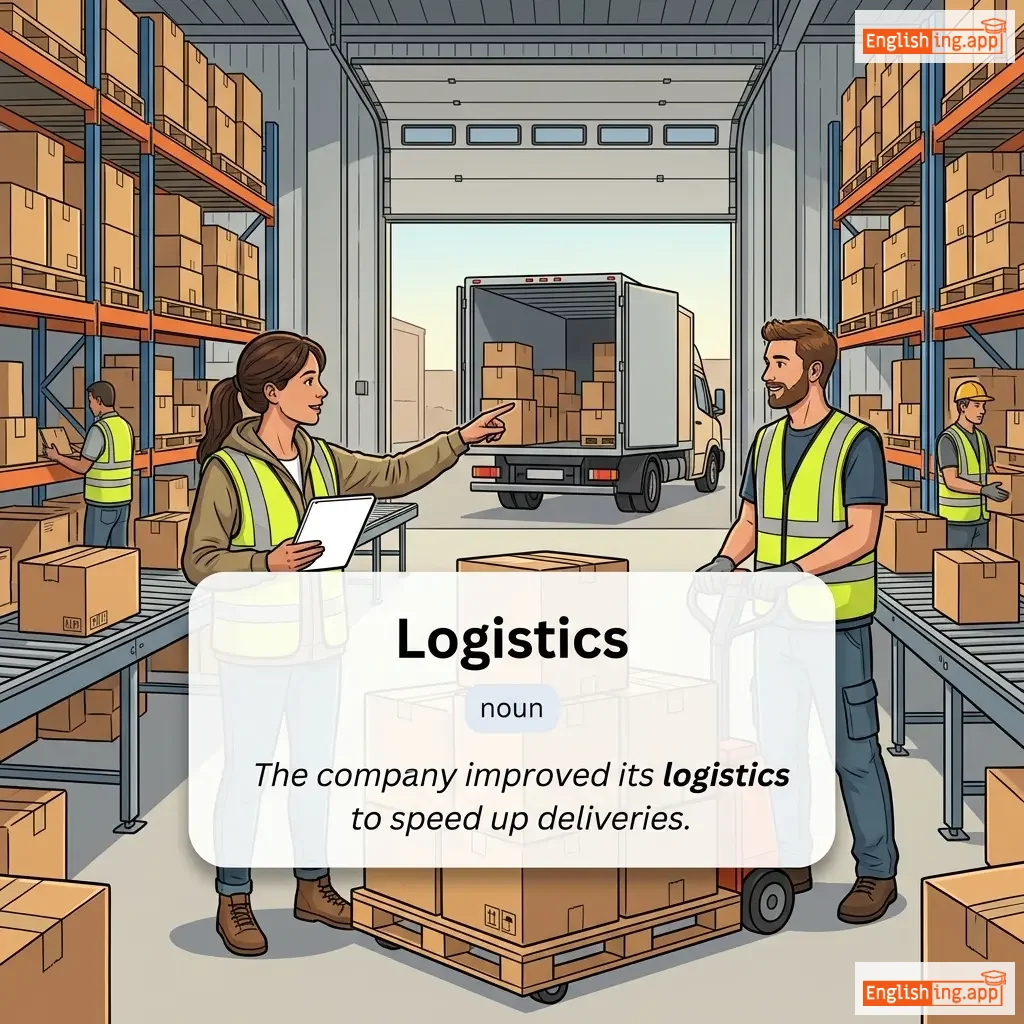
Logistics definition card — visual illustration of the meaning
noun
/ləˈdʒɪs.tɪks/
物流 (wuliu)

Supply chain management or operation, managing the flow of goods, services or information efficiently.

"The company improved its logistics to speed up deliveries."

"公司改善了其物流,以加快交付。" (Gongsi gaishanle qi wuliu, yi jiakuai jiaofu.)
🖼️

logo

noun
/ˈləʊɡəʊ/

a symbol or other small design adopted by an organization to identify its products, uniform, vehicles, etc.

"The company's logo was redesigned to reflect its new image."

verb
/ˈlɔɪtər/

To stand or wait around idly without apparent purpose.

"The teenagers were told not to loiter outside the shop."

noun
/ˈlɔɪtərər/
在某地漫无目的闲逛的人 (zai mou di man wu mu di xian guang de ren)

A person who lingers aimlessly in a place without purpose.

"The police questioned the loiterer outside the store."

"警察在商店外询问了洛伊特勒。" (Jingcha zai shangdian wai xunwenle luoyiteler.)
verb
/lɑːl/
懒散地坐着 (lǎnsàn de zuòzhe)

To sit, lie, or stand in a lazy, relaxed way.

"He lolled on the sofa after a long day at work."

"在长时间的工作后,他懒散地坐在沙发上。" (Zài cháng shíjiān de gōngzuò hòu, tā lǎnsàn de zuò zài shāfā shàng.)
adjective
/ˈlɪvɪd/
愤怒的 (fèn nù de)

Extremely angry; furious.

"She was livid when she found out about the betrayal."

"当她发现背叛时,她愤怒不已。" (Dāng tā fāxiàn bèipàn shí, tā fèn nù bù yǐ.)
noun
/ˈkɪləˌwɒt/
千瓦 (qianwa)

a unit of power equal to 1,000 watts

"The generator produces ten kilowatts of electricity."

"发电机产生十千瓦的电力。" (Fādiànjī chǎnshēng shí qiānwǎ de diànlì.)
noun
/kɪˈlɒmɪtər/ or /ˈkɪləˌmiːtər/
千米 (qian mi)

a unit of length equal to 1,000 meters

"The village is about five kilometers away from the town."

"这个村庄离城镇大约五千米远。" (Zhège cūnzhuāng lí chéngzhèn dàyuē wǔ qiān mǐ yuǎn.)
noun
/ˈkɪləˌliːtər/
千升 (qian sheng)

a unit of capacity equal to 1,000 liters

"The tank can hold up to three kiloliters of water."

"水箱最多可容纳三千升水。" (Shuǐxiāng zuìduō kě róngnà sān qiān shēng shuǐ.)
noun
/ˈkɪləɡræm/
千克 (qianke)

the base unit of mass in the metric system equal to 1,000 grams

"The bag of rice weighs five kilograms."

"这袋米重五千克。" (zhe dai mi zhong wu qianke)
noun
/kɪln/
窑炉 (yao lu)

a furnace or oven for burning, baking, or drying, especially one for firing pottery or bricks

"The potter placed the clay pots into the kiln for firing."

"陶工将泥土罐放入窑炉中烧制。" (Táo gōng jiāng nítǔ guàn fàng rù yáo lú zhōng shāo zhì.)
noun
/ˈkɪldʒɔɪ/
扫兴的人 (sǎo xìng de rén)

a person who spoils the fun or enjoyment of others

"Don’t be a killjoy at the party."

"别在派对上当扫兴的人。" (Bié zài pàiduì shàng dāng sǎo xìng de rén.)
noun
/ˈkɪlɪŋ/
谋杀 (móushā)

the act of causing death, especially deliberately

"The movie depicts the brutal killing of the villagers."

"电影描绘了村民的残忍谋杀。" (Diànyǐng miáohuìle cūnmín de cánrěn móushā.)
noun
/ˈkɪlər/
杀手 (shāshǒu)

A person or thing that kills.

"The police caught the killer last night."
"警察昨晚抓住了杀手。" (Jǐngchá zuówǎn zhuā zhù le shāshǒu.)
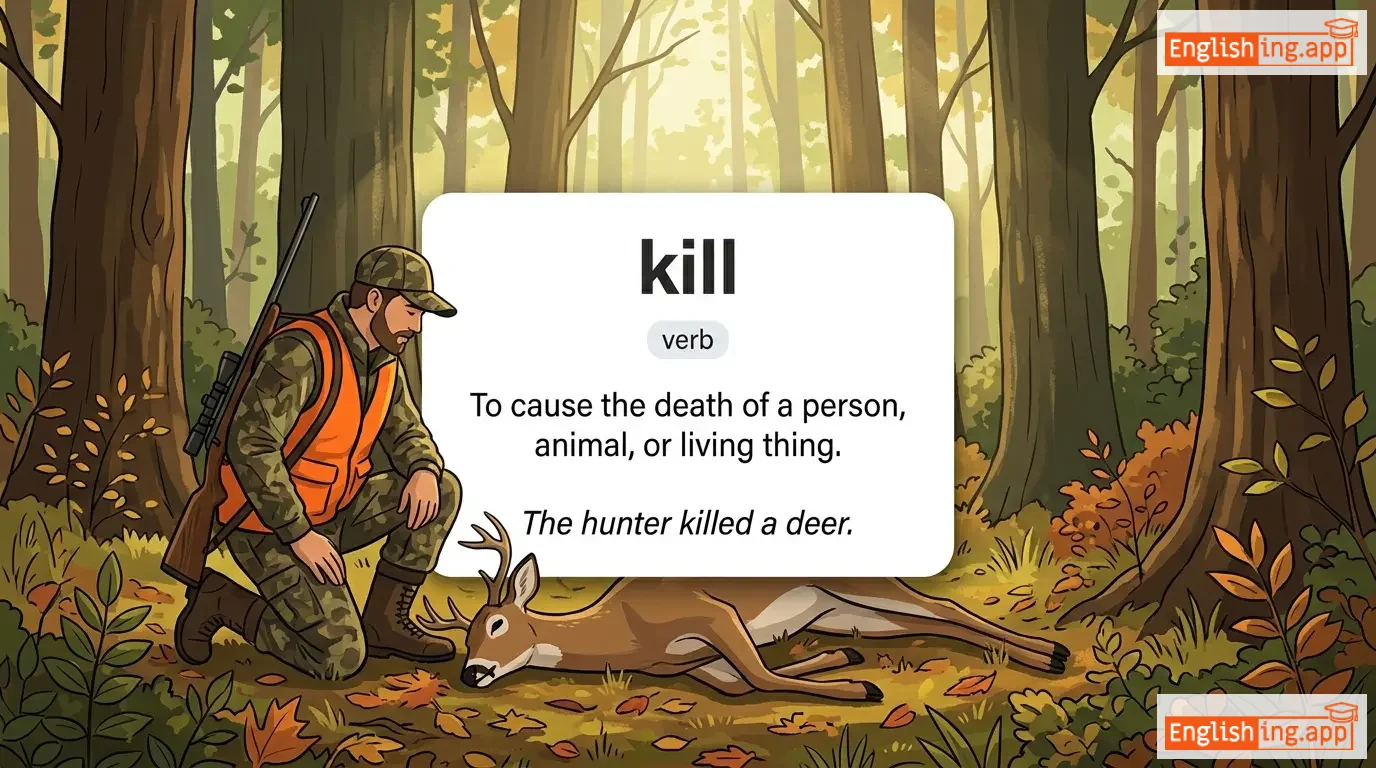
kill definition card — visual illustration of the meaning
verb
/kɪl/
(sha)

To cause the death of a person, animal, or living thing.

"The hunter killed a deer."

"猎人杀了一只鹿。" (Lie ren sha le yi zhi lu.)
noun
/ˈkɪdni/
肾脏 (shen zang)

a pair of organs in the body that remove waste products from the blood and balance bodily fluids

"The kidney plays a crucial role in filtering waste from the bloodstream."

"肾脏在过滤血液中的废物方面发挥着关键作用。" (Shen zang zai guo lv xue ye zhong de fei wu fang mian fa hui zhe guan jian zuo yong.)
kidnap definition card — visual illustration of the meaning
verb
/ˈkɪdnæp/
绑架 (bǎngjià)

to take someone away illegally by force, often for ransom

"The criminals planned to kidnap the wealthy businessman."
"罪犯计划绑架富有的商人。" (Zuìfàn jìhuà bǎngjià fùyǒu de shāngrén.)
kid definition card — visual illustration of the meaning
noun
/kɪd/
孩子 (haizi)

A child or young person.

"The kid was playing in the park."

"那个孩子在公园里玩。" (Na ge haizi zai gongyuan li wan.)
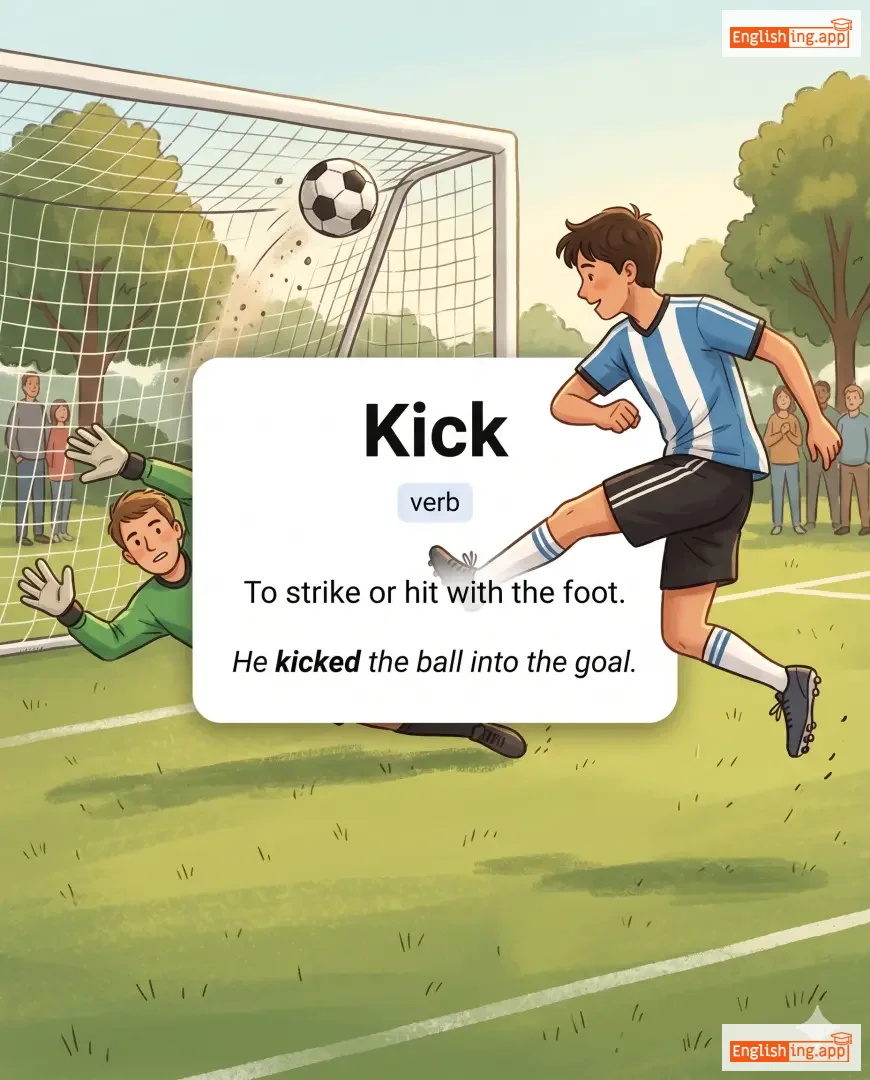
Kick definition card — visual illustration of the meaning
verb
/kɪk/
(ti)

To strike or hit with the foot.

"He kicked the ball into the goal."
"他把球踢进了球门。" (Ta ba qiu ti jinle qiumen.)
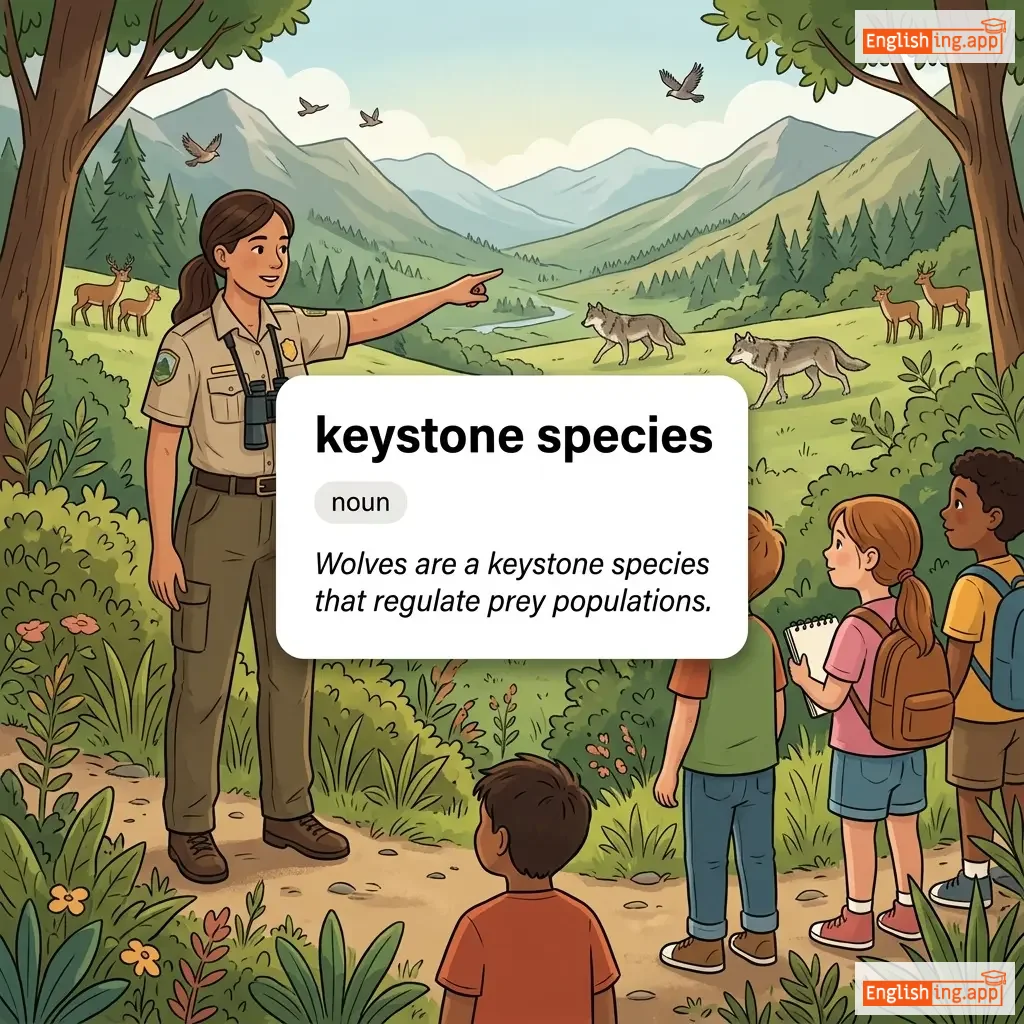
keystone species definition card — visual illustration of the meaning
noun
ˈkiː.stəʊn ˈspiː.ʃiːz
基石物种 (jī shí wù zhǒng)

A species on which other species in an ecosystem largely depend, such that if it were removed the ecosystem would change drastically.

"Wolves are a keystone species that regulate prey populations."

"狼是调节猎物种群的基石物种。" (Láng shì tiáojié lièwù zhǒngqún de jīshí wùzhǒng.)
noun
/ˈkiːbɔːrd/
键盘 (jianpan)

a set of keys used to operate a computer, typewriter, or similar device for inputting text and commands

"She typed the report quickly on her keyboard."
"她在键盘上快速打完了报告。" (ta zai jianpan shang kuaisu da wan le baogao)
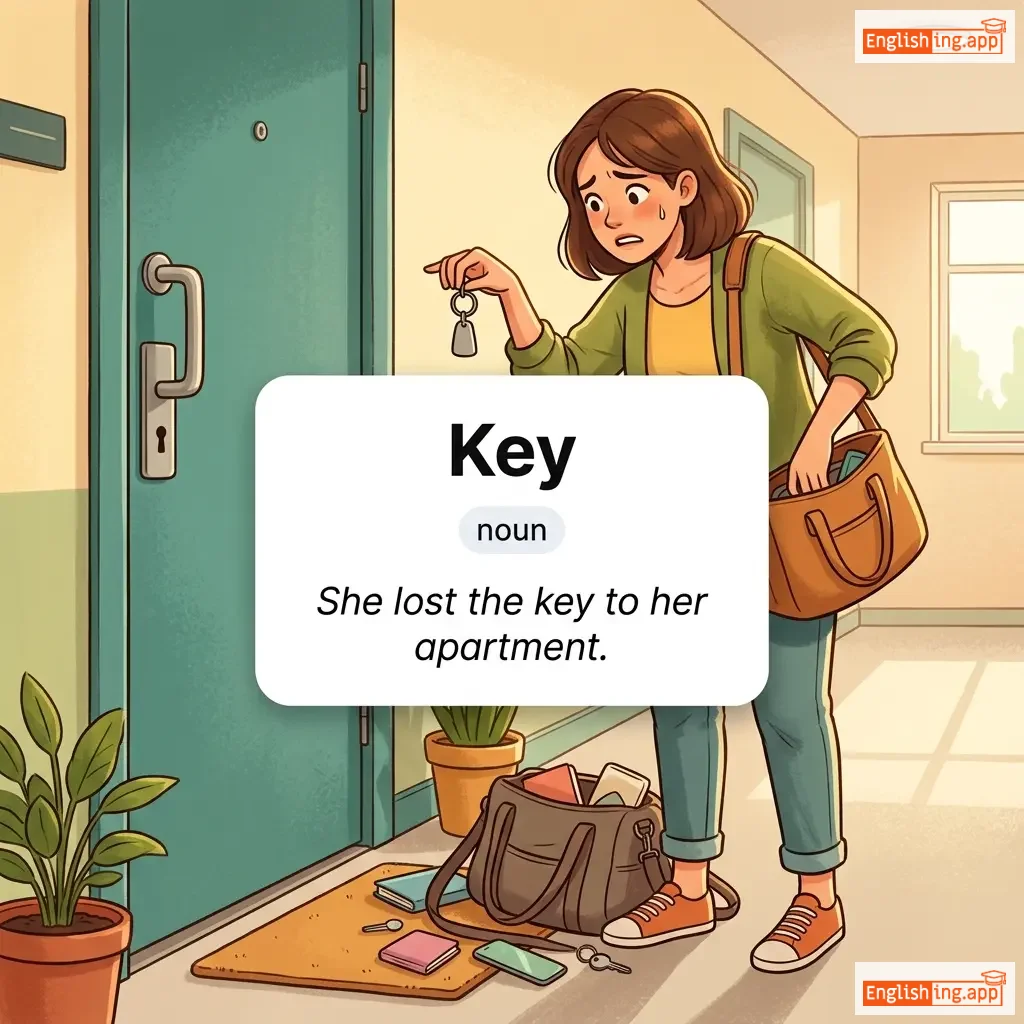
Key definition card — visual illustration of the meaning
noun
/kiː/
钥匙 (yaoshi)

A small piece of shaped metal used to open or close locks, or something crucial and essential.

"She lost the key to her apartment."

"她丢失了她公寓的钥匙。" (Ta diushi le ta gongyu de yaoshi.)
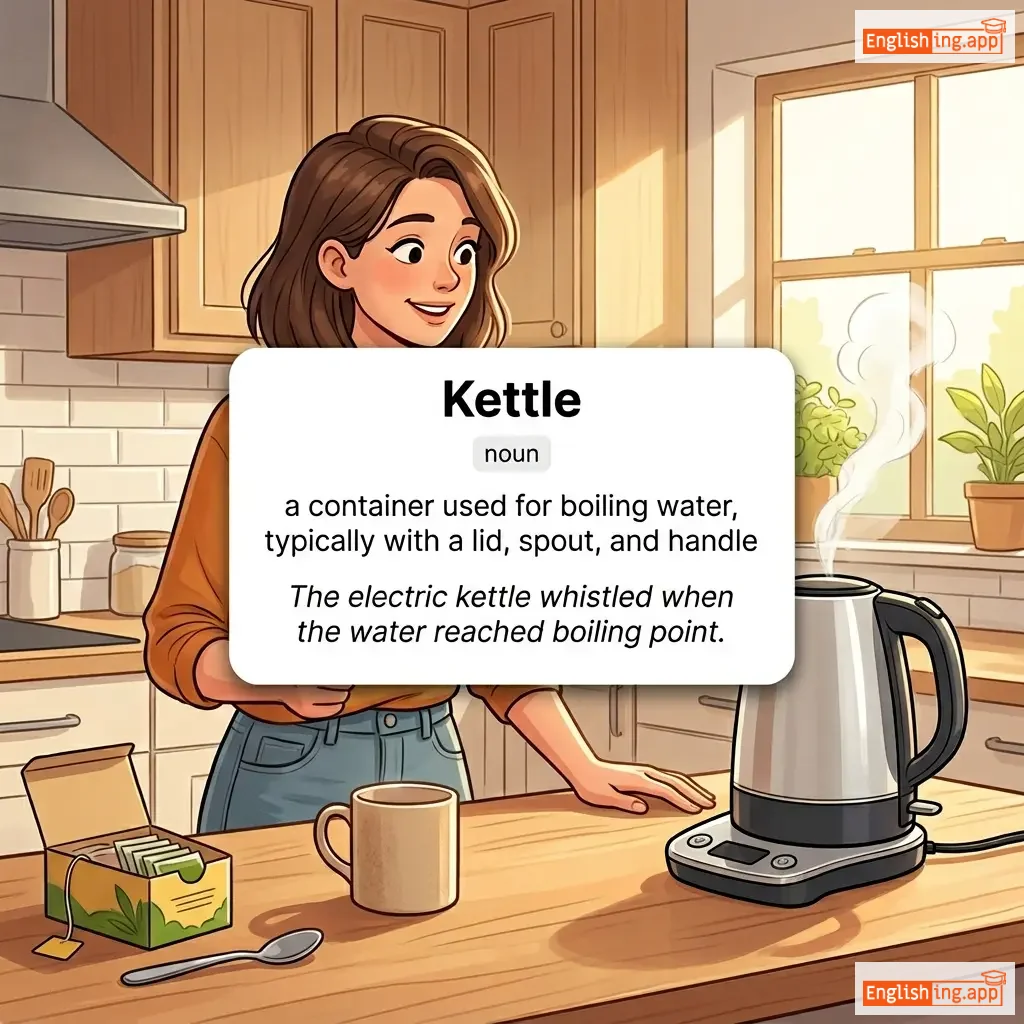
Kettle definition card — visual illustration of the meaning
noun
/ˈket.əl/
水壶 (shuǐ hú)

a container with a lid, spout, and handle, used for boiling water

"The kettle is boiling on the stove."
"水壶正在炉子上沸腾。" (Shuǐ hú zhèngzài lúzi shàng fèiténg.)
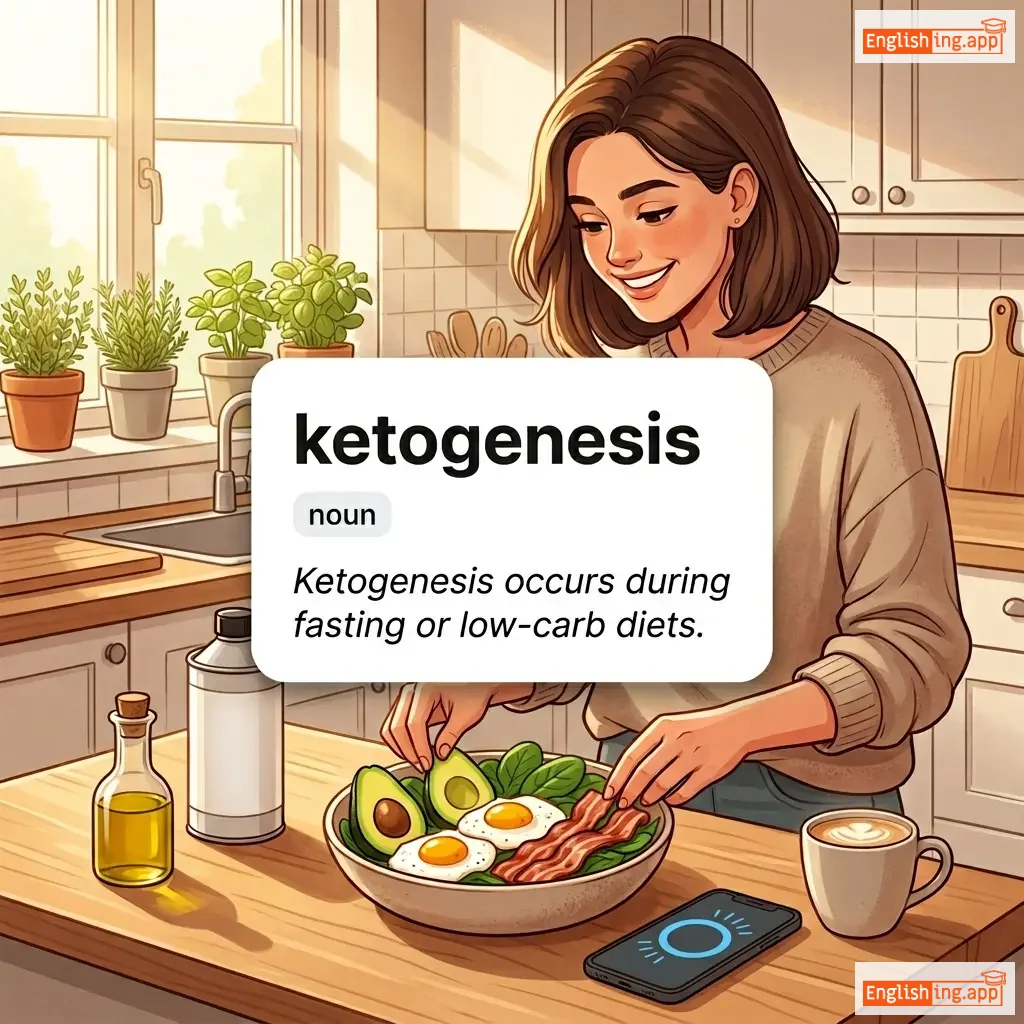
ketogenesis definition card — visual illustration of the meaning
noun
/ˌkiː.təʊˈdʒen.ɪ.sɪs/
酮体生成过程 (tóngtǐ shēngchéng guòchéng)

The metabolic process by which the liver produces ketones from fatty acids, providing an alternative energy source during low carbohydrate availability.

"Ketogenesis occurs during fasting or low-carb diets."

"酮生成发生在禁食或低碳水化合物饮食时。" (Tóngshēngchéng fāshēng zài jìnshí huò dī tànshuǐ huàhéwù yǐnshí shí.)
noun
/ˈketʃ.ʌp/
番茄酱 (fānqié jiàng)

a thick sauce made chiefly from tomatoes, vinegar, and spices

"She squeezed some ketchup on her french fries before eating them."

"她在吃薯条前挤了一些番茄酱。" (Tā zài chī shǔtiáo qián jǐle yīxiē fānqié jiàng.)
noun
/ˈker.ə.siːn/
煤油 (meiyou)

a combustible hydrocarbon liquid widely used as a fuel in lamps and heating systems

"The old lamp burned kerosene to provide light during power outages."

"老式的灯燃烧煤油以在停电时提供光源。" (laoshi de deng ranshao meiyou yi zai tingdian shi tigong guangyuan.)
noun
/ˈkɜːrnəl/
某物的核心; 坚果或种子的可食部分 (kè nèi ěr)

the central, most important part of something; the edible part of a nut or seed

"The kernel of the argument was about fairness."

"争论的核心是关于公平的。" (Zhēnglùn de héxīn shì guānyú gōngpíng de.)
noun
/ˈkɜːrtʃɪf/
头巾 (tóujīn)

a piece of cloth worn around the head or neck

"She wore a red kerchief on her head."

"她头上戴着一条红色的头巾。" (Tā tóu shàng dàizhe yītiáo hóngsè de tóujīn.)
noun
/ˈken.əl/
狗舍; 养犬或寄养犬的场所 (gǒu shè; yǎng quǎn huò jì yǎng quǎn de chǎng suǒ)

a small shelter for a dog; an establishment for the breeding or boarding of dogs

"The dog slept comfortably in his wooden kennel in the backyard."

"狗狗在后院的木狗舍里舒适地睡着了。" (Gǒu gǒu zài hòuyuàn de mù gǒu shè lǐ shūshì de shuì zháo le.)
noun
/kɛn/
知识范围 (zhishi fanwei)

one's range of knowledge or understanding

"Quantum physics is beyond my ken."

"量子物理学超出了我的理解范围。" (Liangzi wulixue chaochu le wode lijie fanwei.)
noun
/ˈkiːpˌseɪk/
纪念品 (jìniànpǐn)

An object kept as a reminder of a person, place, or event.

"She gave me a small locket as a keepsake of our friendship."

"她送给我一个小吊坠,作为我们友谊的纪念品。" (Tā sòng gěi wǒ yīgè xiǎo diàozhuì, zuòwéi wǒmen yǒuyì de jìniànpǐn.)
justice definition card — visual illustration of the meaning
noun
/ˈdʒʌstɪs/
正义 (zhèngyì)

the quality of being fair and reasonable; the administration of the law

"The victims are still waiting for justice."

"受害者仍在等待正义。" (Shòuhài zhě réng zài děngdài zhèngyì.)