词汇表

英语词汇词典 | 单词含义、定义和示例

/ˈdʒɛtɪsən/
抛弃 (pāoqì)

to throw or drop something from a ship, aircraft, or vehicle to lighten the load; to abandon something no longer wanted

"The crew had to jettison cargo to save the sinking ship."

"船员们不得不抛弃货物,以挽救沉船。" (chuányuán men bùdé bù pāoqì huòwù, yǐ wǎnjiù chénchuán.)
noun
/ˈdʒet.i/
码头 (matou)

a landing stage or small pier at which boats can dock or be moored

"The fishing boats were tied up at the wooden jetty near the harbor."
"渔船停靠在靠近港口的木质码头。" (Yuchuan tingkao zai kaojin gangkou de mu zhi matou.)
noun
/dʒuː/
犹太人 (yóu tài rén)

a person whose religion is Judaism or who is of Jewish descent

"He is a Jew by heritage and follows Jewish customs."

"他是犹太人,继承了犹太传统并遵守犹太习俗。" (Tā shì yóu tài rén, jì chéng le yóu tài chuántǒng bìng zūn shǒu yóu tài xí sú.)
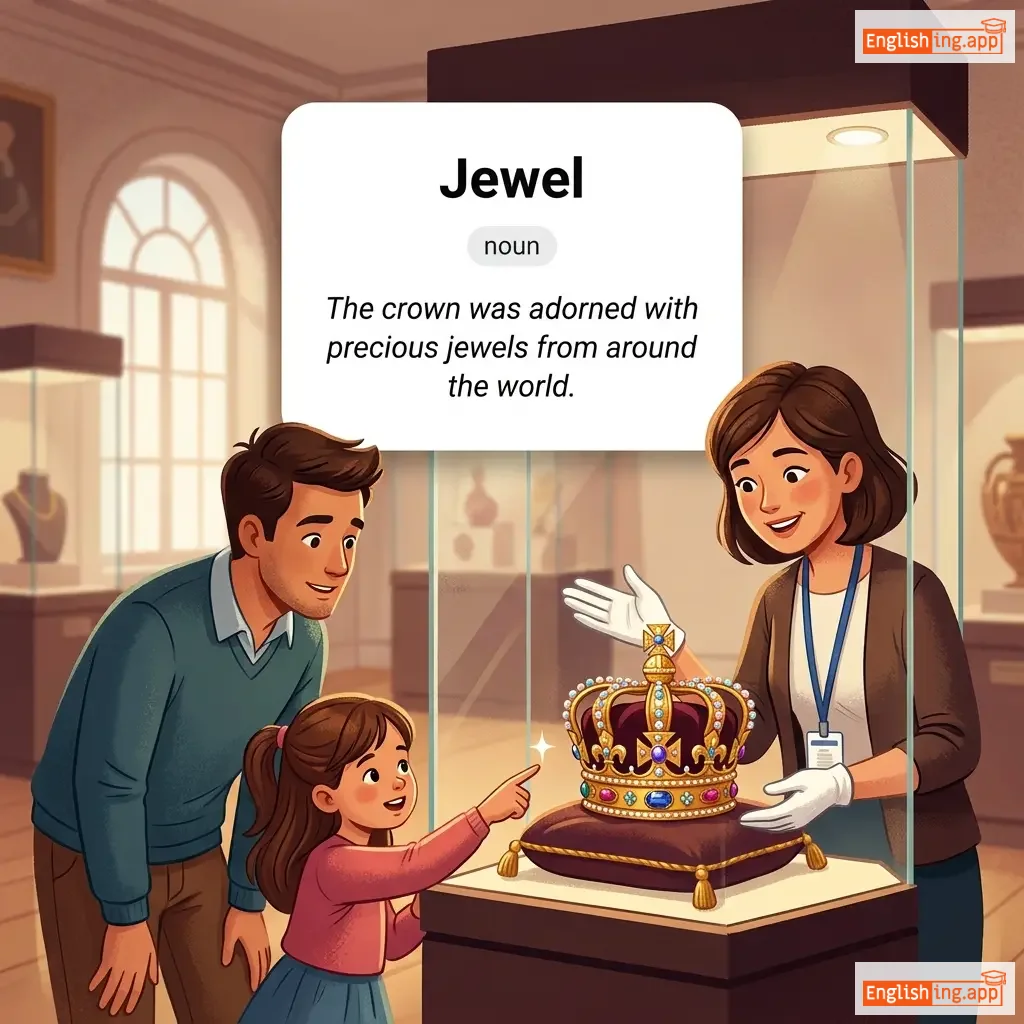
Jewel definition card — visual illustration of the meaning
noun
/ˈdʒuː.əl/
宝石 (baoshi)

a precious stone or a piece of jewelry containing precious stones

"The ancient treasure chest contained many rare jewels."

"古老的宝藏箱里包含了许多稀有的宝石。" (Gǔlǎo de bǎocáng xiāng lǐ bāohánle xǔduō xīyǒu de bǎoshí.)
noun
/ˈdʒuːələr/
珠宝商 (zhubao shang)

a person who makes, repairs, or sells jewelry

"The jeweller crafted a beautiful gold ring."

"这位珠宝商制作了一枚漂亮的金戒指。" (Zhe wei zhubao shang zhizuo le yi mei piaoliang de jin jiezhi)
noun
/ˈdʒuːəlri/
珠宝 (zhubao)

ornamental items worn for personal adornment, such as rings, necklaces, or bracelets, often made of precious metals or stones

"She wore beautiful jewellery to the wedding."

"她在婚礼上戴了漂亮的珠宝。" (ta zai hunli shang dai le piaoliang de zhubao)
noun
/ˈdʒuːəlri/
珠宝 (zhūbǎo)

personal ornaments such as necklaces, rings, or bracelets that are typically made from precious metals and stones

"She wore gold jewelry at the wedding."

"她在婚礼上戴了金饰。" (Tā zài hūnlǐ shàng dàile jīnshì.)
adjective
/ˈdʒuːɪʃ/
幸福 (xìng fú)

relating to Jews or Judaism

"They celebrate Jewish festivals every year."

"她收到奖项时无法掩饰她的幸福。" (Tā shōudào jiǎngxiàng shí wúfǎ yǎnshì tā de xìngfú.)
jibe definition card — visual illustration of the meaning
verb
/dʒaɪb/
讽刺 / 一致 (fengci / yizhi)

to make an insulting remark; to be in agreement or harmony with

"His actions did not jibe with his words."

"他的行动与他的言辞不符。" (Tā de xíngdòng yǔ tā de yáncí bù fú.)
adjective
/ˈdʒɪg.ərd/
惊讶; 震惊; (jiged)

surprised or astonished; confused or puzzled

"I'll be jiggered if I know what happened here."

"如果我知道这里发生了什么,我会感到惊讶。" (Rúguǒ wǒ zhīdào zhèlǐ fāshēngle shénme, wǒ huì gǎndào jīngyà.)
noun
/ˈdʒɪŋ.ɡəl/
轻微的金属声,通常由金属物体相互碰撞产生;一首短小而吸引人的歌曲 (qīngwéi de jīnshǔ shēng, tōngcháng yóu jīnshǔ wùtǐ xiānghù pèngzhuàng chǎnshēng; yī shǒu duǎnxiǎo ér xīyǐn rén de gēqǔ)

a light ringing sound such as that made by metal objects being shaken together; a short catchy song

"The jingle of keys could be heard as she walked down the hallway."

"当她走过走廊时,钥匙的声音可以听到。" (Dāng tā zǒu guò zǒuláng shí, yàoshi de shēngyīn kěyǐ tīngdào.)
noun
/ˈdʒɪŋɡoʊ/
好战的民族主义者 (hǎo zhàn de mínzú zhǔyì zhě)

a person who strongly supports warlike or aggressive foreign policy; an extreme nationalist

"The leader was criticized as a reckless jingo."

"领导人被批评为鲁莽的好战分子。" (Lǐngdǎo rén bèi pīpíng wéi lǔmǎng de hǎo zhàn fènzǐ.)
noun
/ˈdʒɪŋɡoʊˌɪzəm/
极端民族主义 (jíduān mínzú zhǔyì)

extreme patriotism expressed in aggressive foreign policy

"The politician's speech was filled with jingoism."

"那位政治家的演讲充满了沙文主义。" (Nà wèi zhèngzhì jiā de yǎnjiǎng chōngmǎnle shāwén zhǔyì.)
noun
/ˈdʒɪŋɡoʊɪst/
极端民族主义者 (jíduān mínzú zhǔyì zhě)

a person who supports jingoism; an extreme nationalist with aggressive foreign policies

"He was labeled a jingoist for his extreme views."

"由于他的极端观点,他被贴上了极端民族主义者的标签。" (Yóuyú tā de jíduān guāndiǎn, tā bèi tiē shàng le jíduān mínzú zhǔyì zhě de biāoqiān.)
verb
/ˈdʒɪtər/
颤抖 (chan dian)

to shake or tremble slightly, often from fear, nervousness, or excitement

"He began to jitter nervously before giving his speech."
"他在发表演讲前开始紧张地发抖。" (Ta zai fabiao yanjiang qian kaishi jinzhang de fadou.)
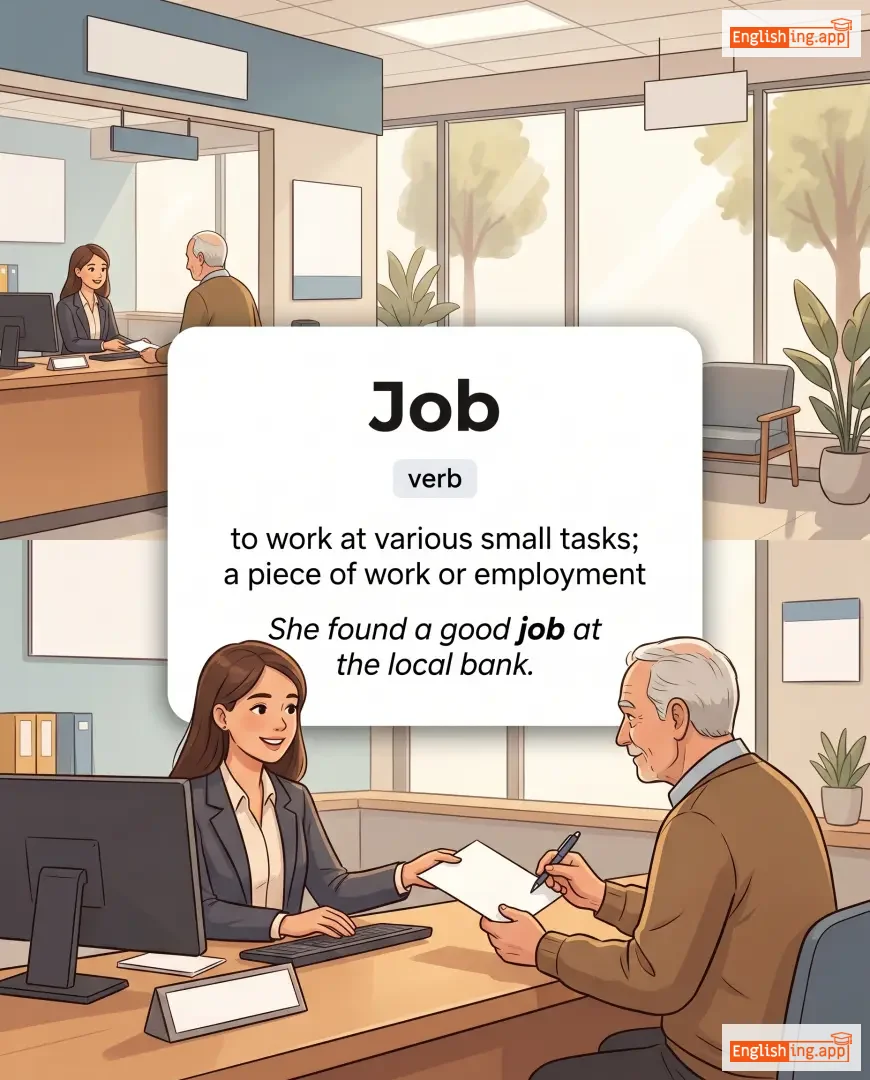
Job definition card — visual illustration of the meaning
noun
/dʒɒb/
工作 (gongzuo)

a paid position of regular employment

"She got a new job at a software company."

"她在一家软件公司找到了一份新工作。" (Ta zai yijia ruanjian gongsi zhǎodàole yī fèn xīn gōngzuò.)
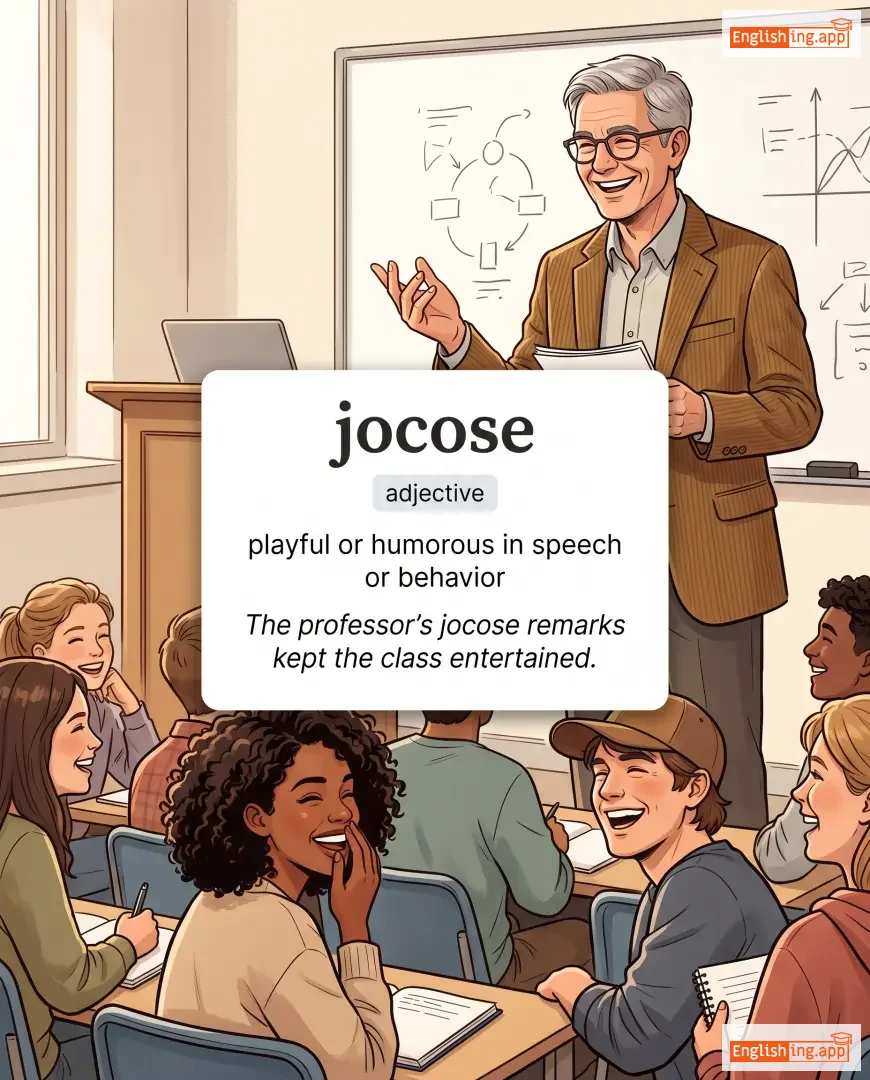
jocose definition card — visual illustration of the meaning
adjective
/dʒoʊˈkoʊs/
幽默的 (youmo de)

playful or humorous in speech or behavior

"The professor’s jocose remarks kept the class entertained."

"教授的幽默评论让班级感到娱乐。" (Jiaoshou de youmo pinglun rang banji gandao yule.)
adjective
/ˈdʒɒkjələr/
爱开玩笑的 (ài kāi wánxiào de)

fond of or characterized by joking; humorous

"His jocular nature made him popular among colleagues."

"他爱开玩笑的性格让他在同事中很受欢迎。" (Tā ài kāi wánxiào de xìnggé ràng tā zài tóngshì zhōng hěn shòu huānyíng.)
adjective
/ˈdʒɒkənd/
愉快 (yukai)

cheerful and lighthearted

"They walked together in a jocund mood after the celebration."

"庆祝后,他们在愉快的心情下一起走着。" (Qìngzhù hòu, tāmen zài yúkuài de xīnqíng xià yīqǐ zǒuzhe.)
verb
/dʒɑːɡ/
慢跑 (man pao)

to run at a slow, steady pace for exercise

"She jogs every morning in the park."

"她每天早上在公园里慢跑。" (ta meitian zaoshang zai gongyuan li manpao)
verb
/ˈdʒɒɡəl/
轻轻摇动 (qingqing yaodong)

to shake slightly; to move or cause to move with quick, small jerks

"He joggled the table and the vase nearly fell."
"他晃动了桌子,花瓶差点掉下来。" (Ta huangdong le zhuozi, huaping chadian diao xia lai.)
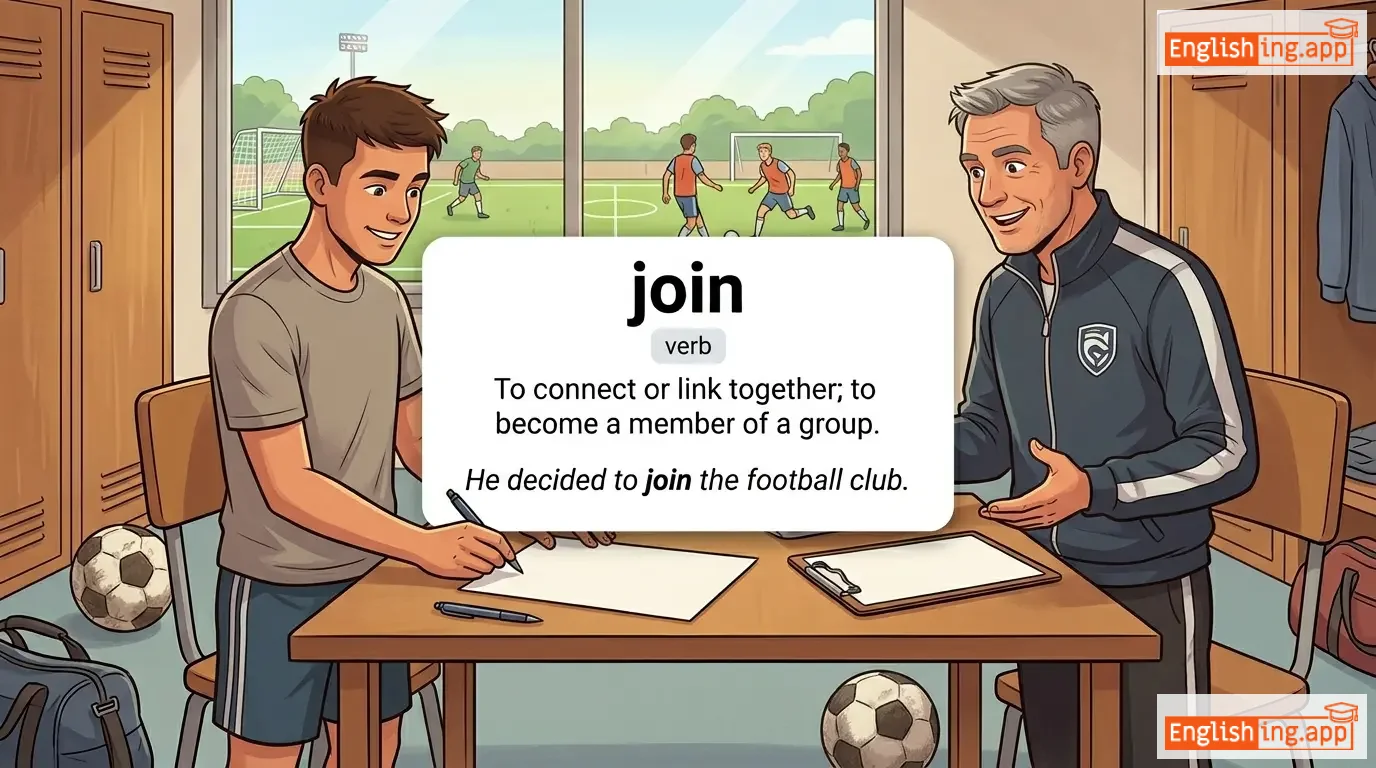
join definition card — visual illustration of the meaning
verb
/dʒɔɪn/
加入 (jiārù)

To connect or link together; to become a member of a group.

"He decided to join the football club."

"他决定加入足球俱乐部。" (Tā juédìng jiārù zúqiú jùlèbù.)
Joint definition card — visual illustration of the meaning
noun
/dʒɔɪnt/
关节 (guānjié)

a place where two parts of something are joined; also a term for a business establishment or a cannabis cigarette

"The knee is a joint that connects the thigh and the leg."

"膝盖是一个连接大腿和小腿的关节。" (xīgài shì yīgè liánjiē dàtuǐ hé xiǎotuǐ de guānjié.)
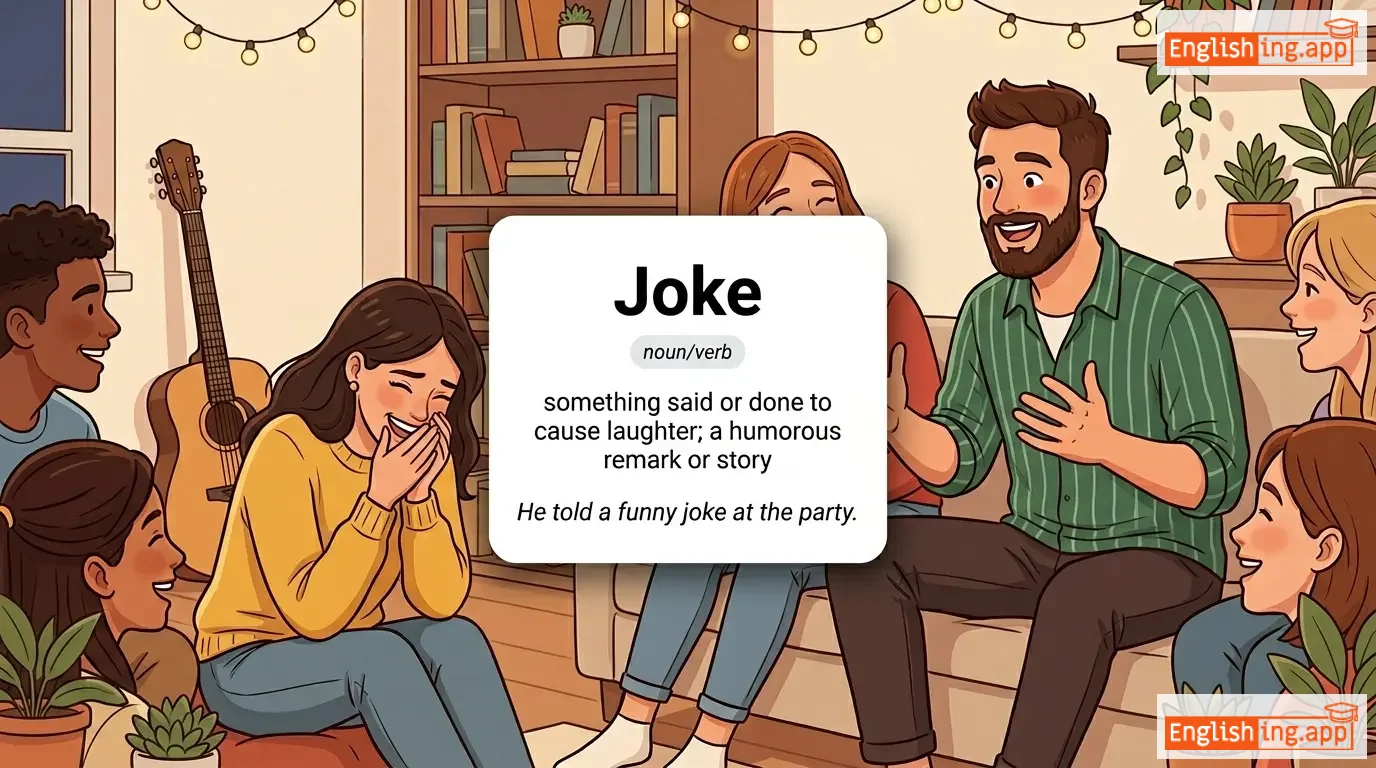
Joke definition card — visual illustration of the meaning
noun/verb
/dʒoʊk/
笑话 (xiaohua)

something said or done to cause laughter; a humorous remark or story

"He told a funny joke at the party."

"他在聚会上讲了一个有趣的笑话。" (Ta zai juhui shang jiang le yi ge youqu de xiaohua.)
noun
/ˈdʒoʊ.kər/
小丑 (xiaochou)

a playing card with a picture of a jester, used as a wild card; a person who is fond of joking

"He used the joker card to complete his winning hand in the poker game."
"他用小丑牌来完成他在扑克游戏中的赢牌。" (ta shi yong xiao chou pai lai wan cheng ta zai pu ke you xi zhong de ying pai)
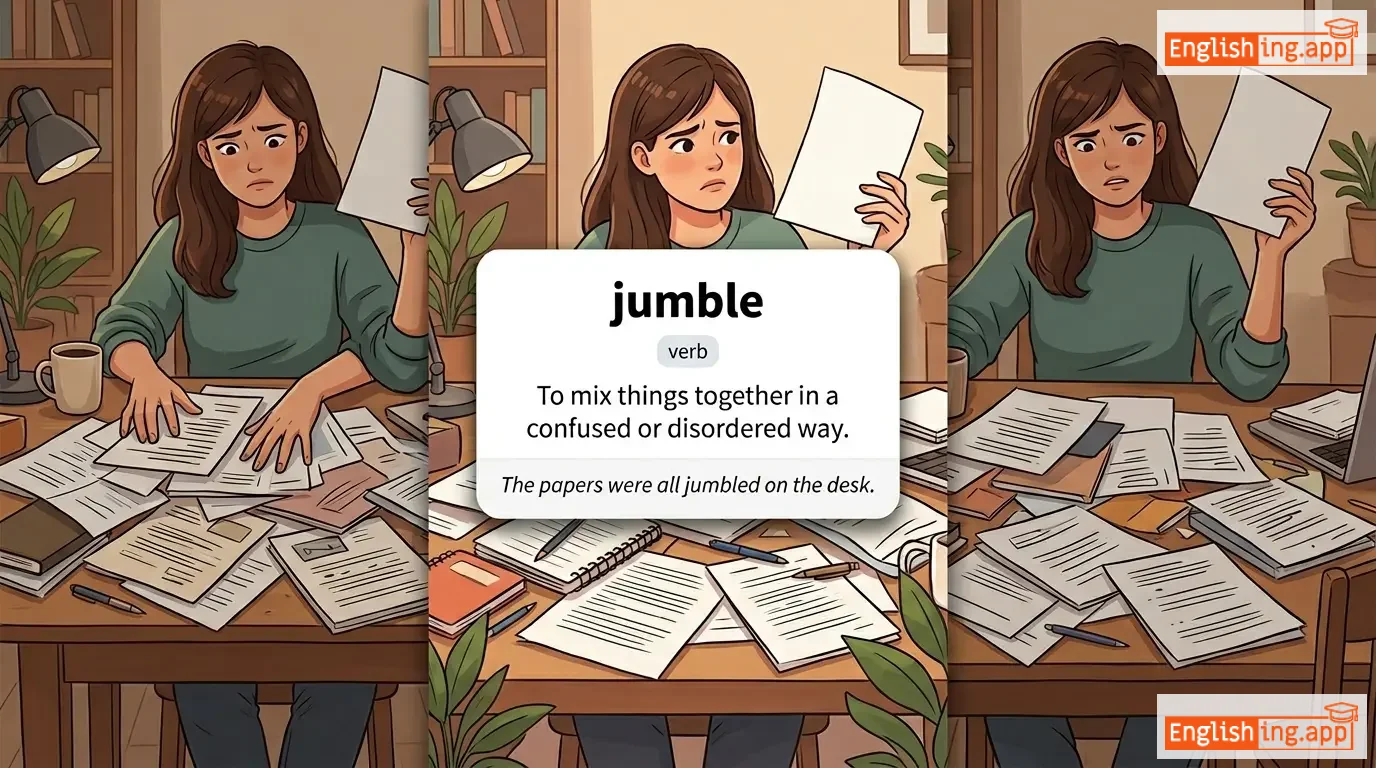
jumble definition card — visual illustration of the meaning
verb
/ˈdʒʌmbəl/
混乱 (hùnluàn)

To mix things together in a confused or disordered way.

"The papers were all jumbled on the desk."
"文件在桌子上杂乱无章。" (Wenjian zai zhuozi shang zaluan wuzhang.)
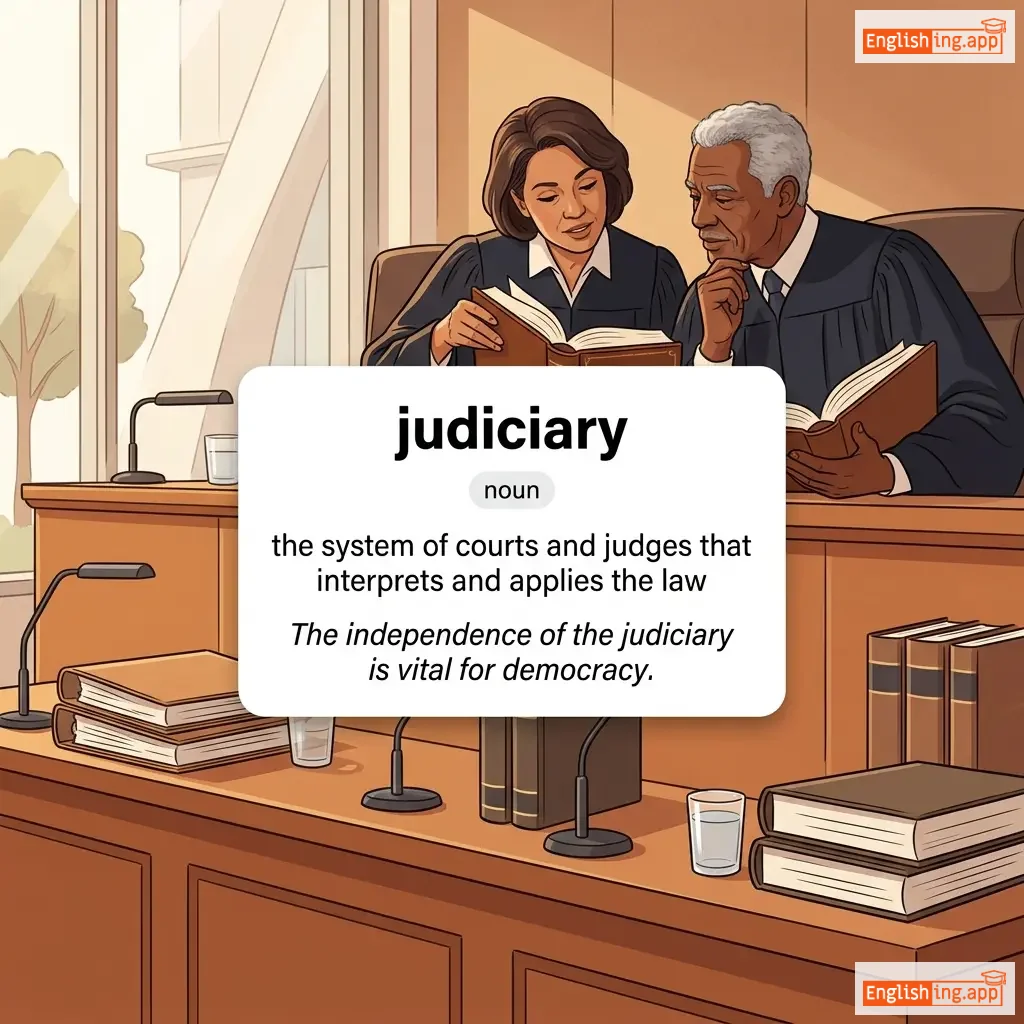
judiciary definition card — visual illustration of the meaning
noun
/dʒuːˈdɪʃ.i.er.i/
司法权 (sīfǎ quán)

the system of courts and judges that interprets and applies the law

"The independence of the judiciary is vital for democracy."
"司法权的独立对民主至关重要。" (sīfǎ quán de dúlì duì mínzhǔ zhìguān zhòngyào.)
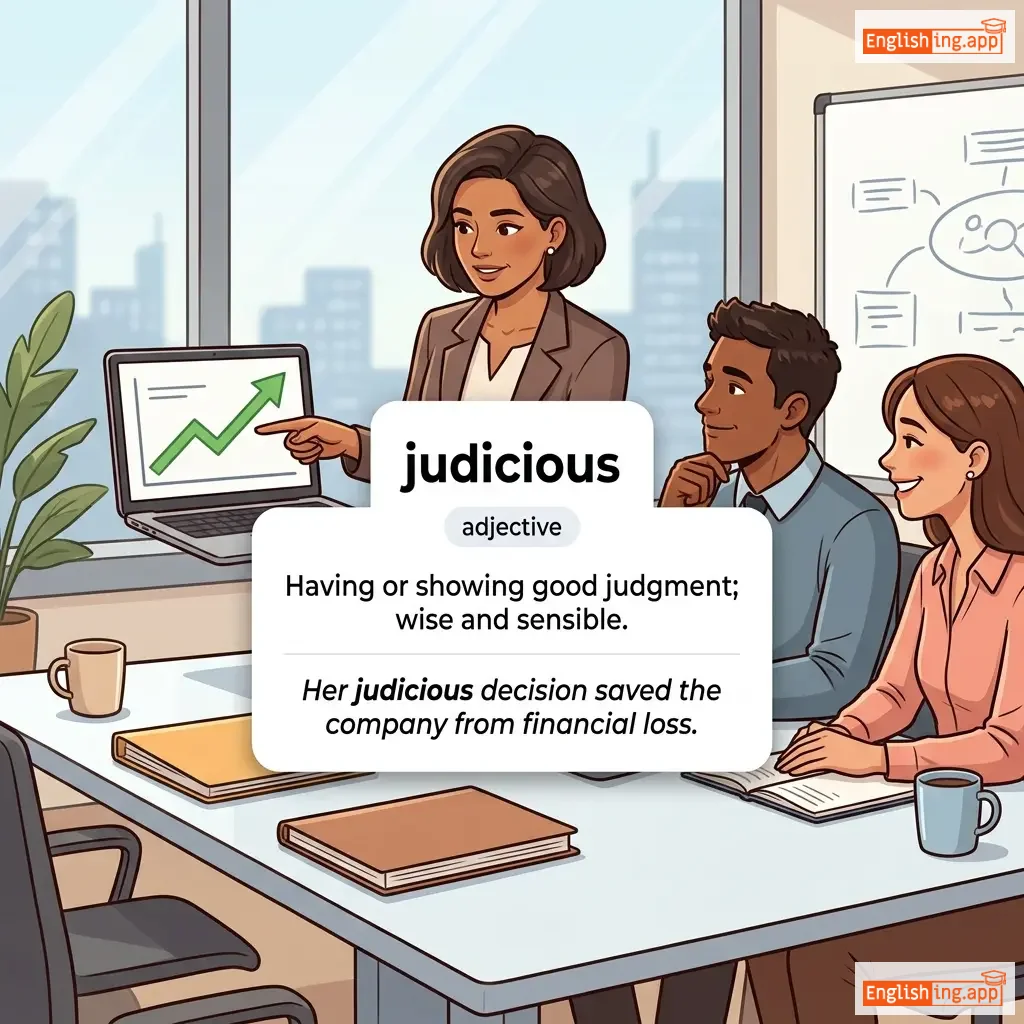
judicious definition card — visual illustration of the meaning
adjective
/dʒuːˈdɪʃəs/
明智的 (míngzhì de)

Having or showing good judgment; wise and sensible.

"Her judicious decision saved the company from financial loss."
"她明智的决定挽救了公司免于财务损失。" (Tā míngzhì de juédìng wǎnjiùle gōngsī miǎn yú cáiwù sǔnshī.)
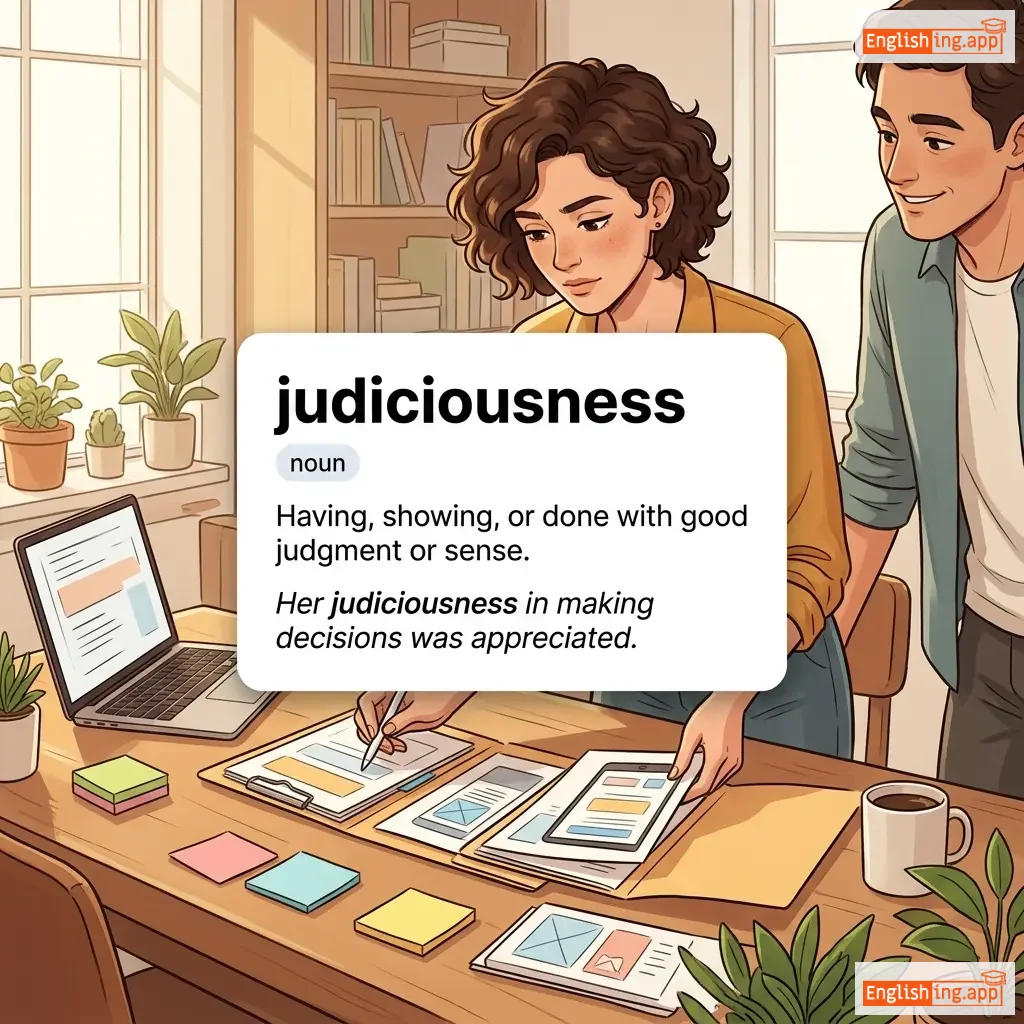
judiciousness definition card — visual illustration of the meaning
noun
dʒʊˈdɪʃəsnɪs
明智,审慎 (míngzhì, shěnshèn)

Having, showing, or done with good judgment or sense.

"Her judiciousness in making decisions was appreciated."

"她在做决定时的明智被赞赏。" (Tā zài zuò juédìng shí de míngzhì bèi zànshǎng.)
noun
/dʒʌɡ/
幸福 (xìng fú)

A large container used for holding and pouring liquids.

"She filled a jug with fresh water from the well."
"当她收到奖项时,她无法掩饰自己的幸福。" (Dāng tā shōudào jiǎngxiàng shí, tā wúfǎ yǎnshì zìjǐ de xìngfú.)
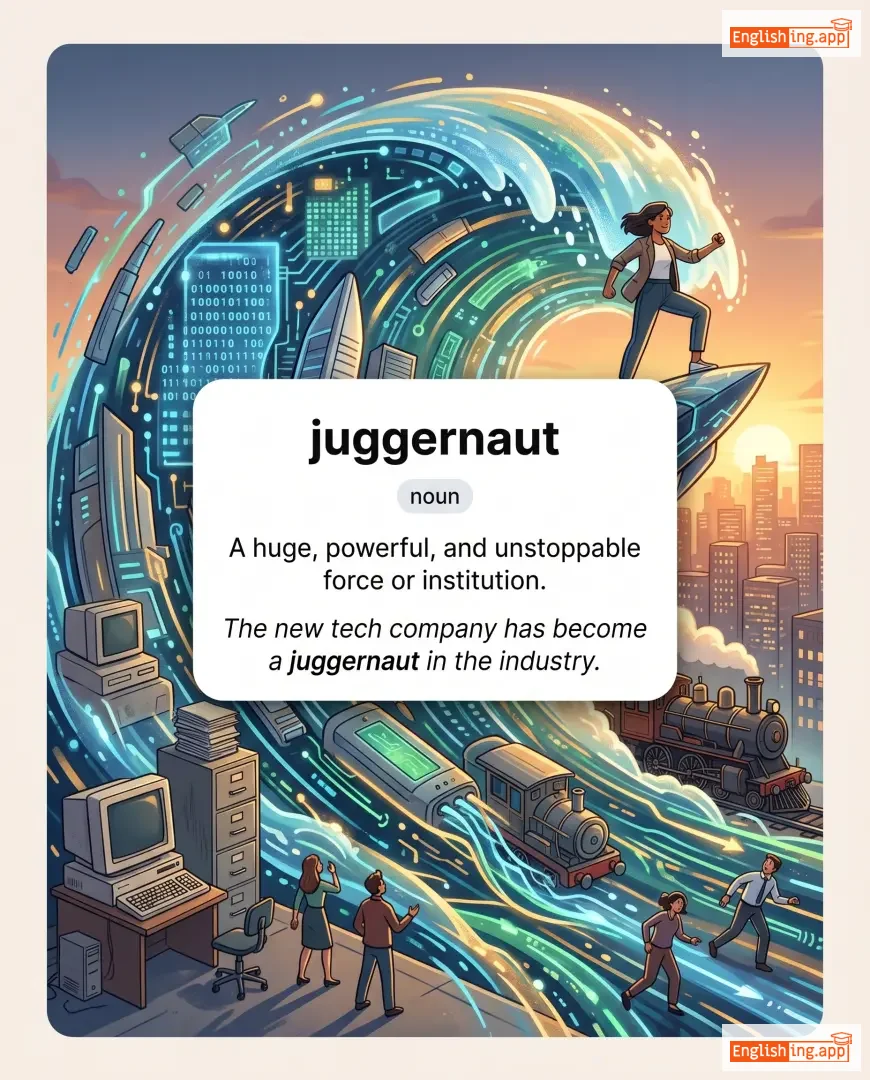
juggernaut definition card — visual illustration of the meaning
noun
/ˈdʒʌɡərˌnɔːt/
不可阻挡的力量 (bù kě zǔ dǎng de lì liàng)

A huge, powerful, and unstoppable force or institution.

"The new tech company has become a juggernaut in the industry."

"这家新技术公司已经成为了这个行业中不可阻挡的力量。" (Zhè jiā xīn jì shù gōng sī yǐ jīng chéng wéi le zhè ge háng yè zhōng bù kě zǔ dǎng de lì liàng.)
verb
/ˈdʒʌɡəl/
杂耍 (záshuǎ)

To continuously toss and catch objects in the air; to manage many tasks at the same time.

"He tried to juggle work, studies, and family responsibilities."
"他试图同时处理工作、学习和家庭责任。" (Tā shìtú tóngshí chǔlǐ gōngzuò, xuéxí hé jiātíng zérèn.)
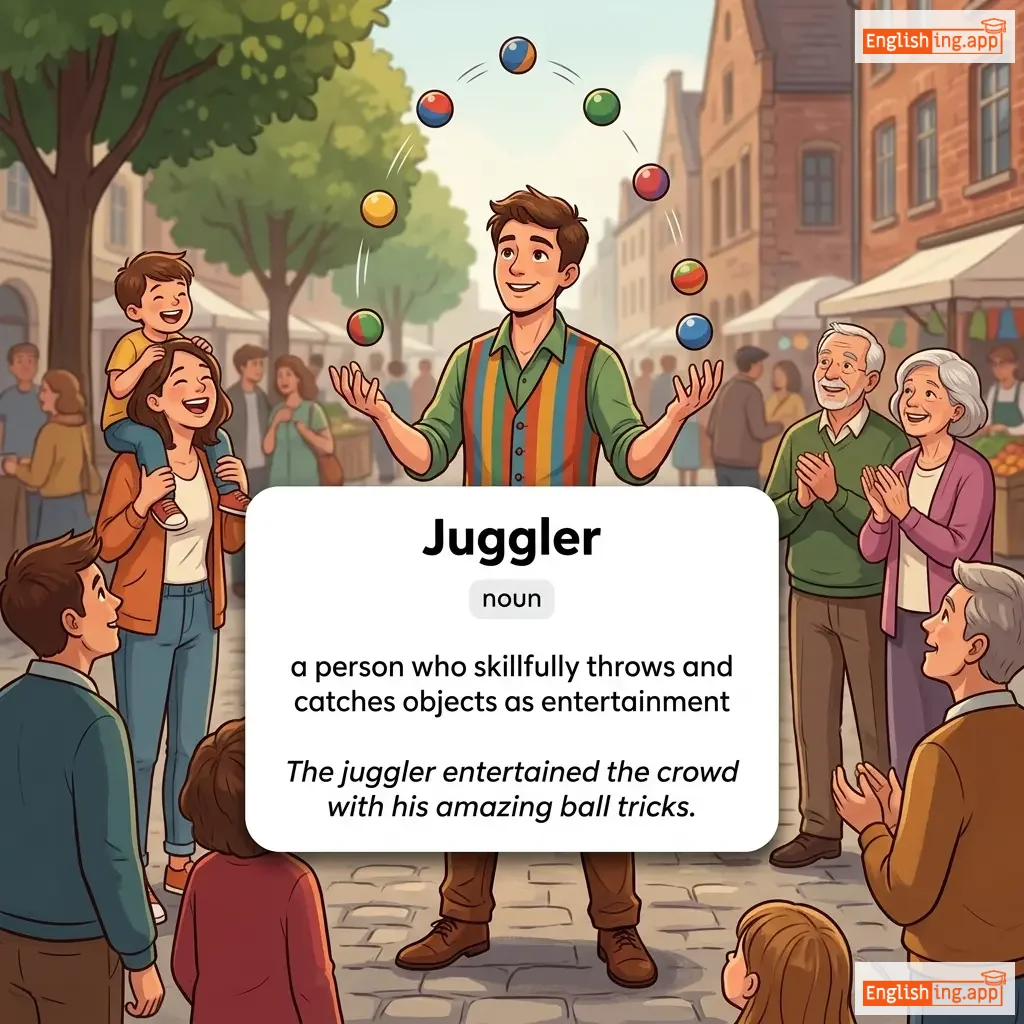
Juggler definition card — visual illustration of the meaning
noun
/ˈdʒʌɡ.lər/
杂技演员 (za ji yan yuan)

a person who skillfully throws and catches objects as entertainment

"The juggler entertained the crowd with his amazing ball tricks."

"那位杂技演员用他惊人的球技娱乐了观众。" (na wei za ji yan yuan yong ta jing ren de qiu ji yu le le guan zhong)
noun
/ˈdʒʌɡləri/
杂技 (zá jì)

The performance of tricks and illusions, especially by sleight of hand.

"The magician's jugglery amazed the audience."

"魔术师的杂技让观众惊讶不已。" (Móshù shī de zájì ràng guānzhòng jīngyà bùyǐ.)
noun
/ˈdʒʌɡjələr/
颈静脉 (jing jingmai)

A large vein in the neck that carries blood from the head back to the heart.

"The doctor checked the patient's jugular vein for signs of pressure."

"医生检查了病人的颈静脉,看是否有压力迹象。" (Yisheng jiankaile bingren de jingjingmai, kan shifou you yali jixiang.)
noun
/dʒuːs/
果汁 (guǒ zhī)

the liquid obtained from fruits, vegetables, or meat; also refers to energy or power in informal use

"She drank a glass of orange juice with breakfast."

"她早餐喝了一杯橙汁。" (Tā zǎocān hēle yī bēi chéng zhī.)
adjective
/ˈdʒuːsi/
多汁 (duō zhī)

Full of juice; succulent; also used to describe something exciting or scandalous.

"The steak was so juicy that it melted in my mouth."
"这块牛排多汁到在我嘴里融化。" (Zhè kuài niúpái duō zhī dào zài wǒ zuǐ lǐ rónghuà.)
noun
/dʒuˈlaɪ/
七月 (qi yue)

the seventh month of the year in the Gregorian calendar

"July is often the hottest month of the year."

"七月通常是一年中最热的月份。" (qi yue tongchang shi yi nian zhong zui re de yuefen)
noun
/dʒuːn/
六月 (liuyue)

the sixth month of the year in the Gregorian calendar

"Schools often close for summer vacation in June."

"学校通常在六月开始放暑假。" (xuexiao tongchang zai liuyue kaishi fang shujia)
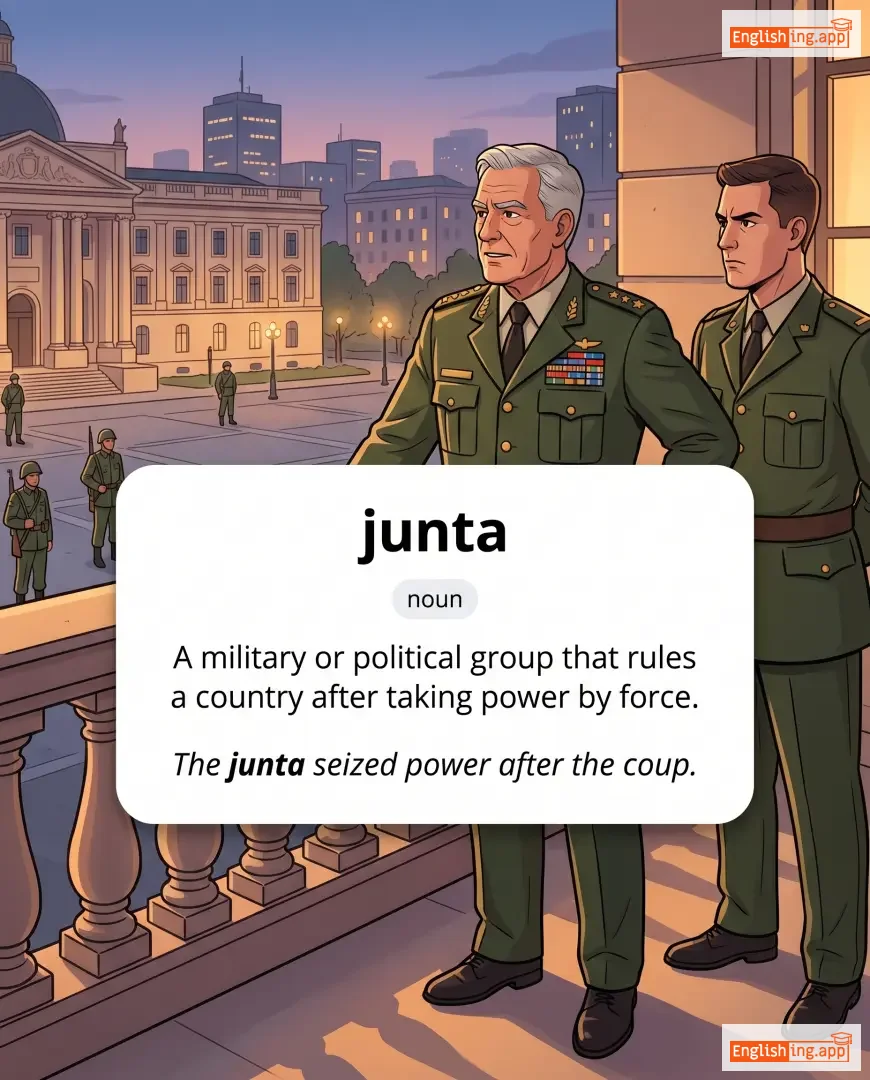
junta definition card — visual illustration of the meaning
noun
/ˈdʒʊntə/
军事政府 (junshi zhengfu)

A military or political group that rules a country after taking power by force.

"The junta seized power after the coup."

"政变后,军事政府掌握了权力。" (Zhengbian hou, junshi zhengfu zhangwo le quanli.)
noun
/ˈdʒʌŋkɪt/
旅行或庆典 (lüxing huo qingdian)

A trip or celebration, often funded by someone else, usually for pleasure or promotional purposes.

"The company organized a junket for journalists to promote their new resort."

"公司为记者组织了一个旅行,以推广他们的新度假村。" (Gongsi wei jizhe zuzhile yige lüxing, yi tuiguang tamen de xin dujiacun.)
noun
/dʒʌŋk/
垃圾; 废品 (laji, feipin)

old or discarded articles that are considered useless or of little value; things of poor quality

"He cleaned out the garage and threw away all the old junk."

"他清理了车库,扔掉了所有旧的垃圾。" (ta qingli le cheku, reng diao le suoyou jiu de laji.)
adjective, noun
/ˈdʒuːniər/
初级 (chūjí)

younger or lower in rank; also a student in the next-to-last year of high school or college

"He works as a junior officer in the company."

"他在公司担任初级职员。" (Tā zài gōngsī dānrèn chūjí zhíyuán.)
Jungle definition card — visual illustration of the meaning
noun
/ˈdʒʌŋɡəl/
丛林 (cónglín)

a dense forest, typically in a tropical region, filled with wild plants and animals

"They got lost in the thick jungle during their trip."

"他们在旅行中迷失在密林里。" (Tāmen zài lǚxíng zhōng míshī zài mìlín lǐ.)
noun
/ˈdʒʌm.pər/
毛衣; (maoyi)

a knitted garment worn on the upper body; a person or animal that jumps

"She wore a warm woolen jumper during the cold winter evening."

"她在寒冷的冬夜穿了一件温暖的羊毛跳绳衣。" (Ta zai hanleng de dongye chuānle yī jiàn wēnnuǎn de yángmáo tiàoshéng yī.)
adjective
/ˈdʒʌm.boʊ/
极其大; 巨大 (jumbo)

exceptionally large; enormous; gigantic

"The jumbo jet was delayed at the airport."

"巨型喷气机在机场延误。" (Juxing penqi ji zai jichang yanwu.)
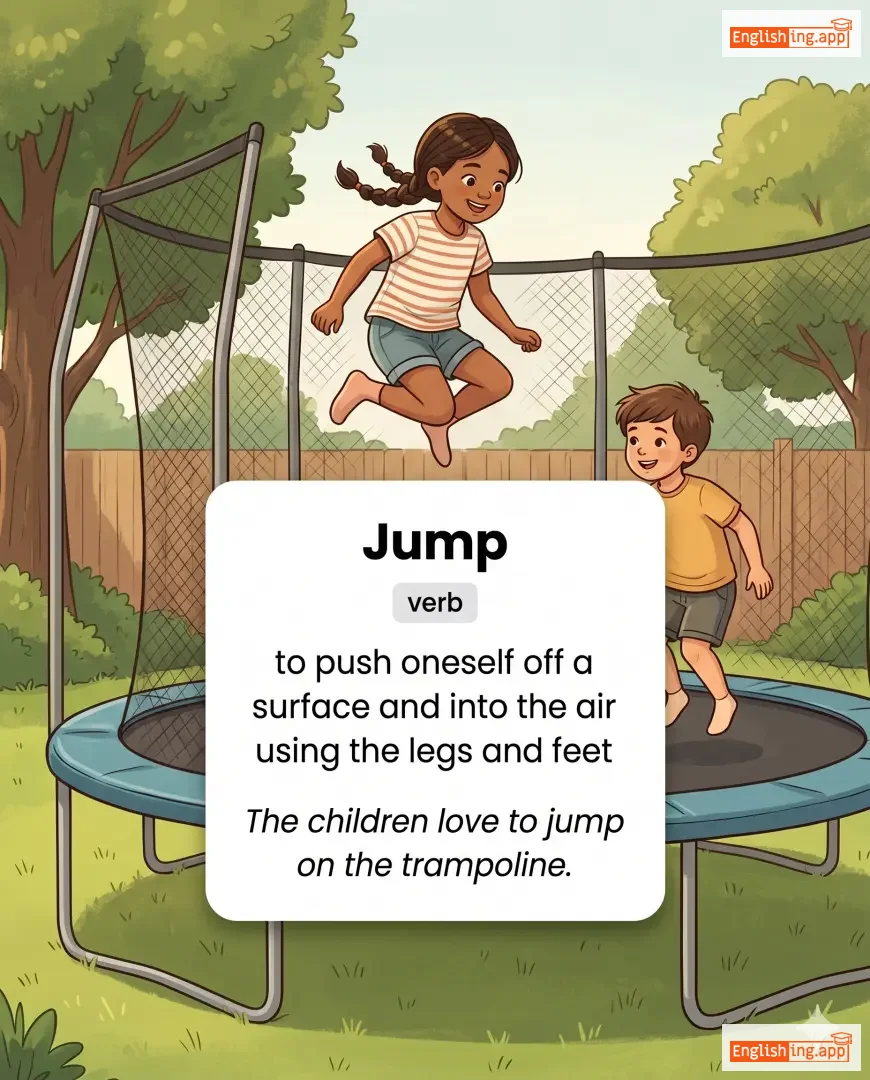
Jump definition card — visual illustration of the meaning
🤾

Jump

verb
/dʒʌmp/

to push oneself off a surface and into the air using the legs and feet

"The children love to jump on the trampoline."

adjective
/dʒuːˈdɪʃ.əl/
司法的 (sī fǎ de)

relating to judges, courts, or the administration of justice

"The new law faced strong judicial review before implementation."

"新法律在实施前接受了严格的司法审查。" (Xīn fǎ lǜ zài shí shī qián jiē shòu le yán gé de sī fǎ shěn chá.)
noun
/ˈdʒʌŋkʃən/
交叉口 (jiaochakou)

A place where two or more roads or things meet or are joined.

"The car stopped at the busy junction."

"汽车在繁忙的交叉口停了下来。" (Qiche zai fanmang de jiaochakou ting le xiala.)
noun
/ˈdʒʌŋktʃər/
关键时刻 (guanji shike)

A particular point in time or a critical moment.

"At this critical juncture, we must make the right decision."

"在这个关键时刻,我们必须做出正确的决定。" (Zai zhege guanji shike, women bixi zuochu zhengque de jueding.)