語彙集

英単語辞書 | 単語の意味、定義、例文

/ˈdʒɛtɪsən/
放棄する (hōkisarusuru)

to throw or drop something from a ship, aircraft, or vehicle to lighten the load; to abandon something no longer wanted

"The crew had to jettison cargo to save the sinking ship."

"乗組員は沈没している船を救うために貨物を投げ捨てなければならなかった。" (Jōkumiin wa chinbotsu shite iru fune o sukuu tame ni kamotsu o nagesutena kereba naranakatta.)
noun
/ˈdʒet.i/
桟橋 (sanbashi)

a landing stage or small pier at which boats can dock or be moored

"The fishing boats were tied up at the wooden jetty near the harbor."
"漁船は港近くの木製の桟橋に係留されていた。" (Gyosen wa minato chikaku no mokusei no sanbashi ni keiryuu sarete ita.)
noun
/dʒuː/
ユダヤ人 (yudayajin)

a person whose religion is Judaism or who is of Jewish descent

"He is a Jew by heritage and follows Jewish customs."

"彼はユダヤ人で、ユダヤの習慣を守っています。" (Kare wa yudayajin de, yudaya no shuukan o mamotte imasu.)
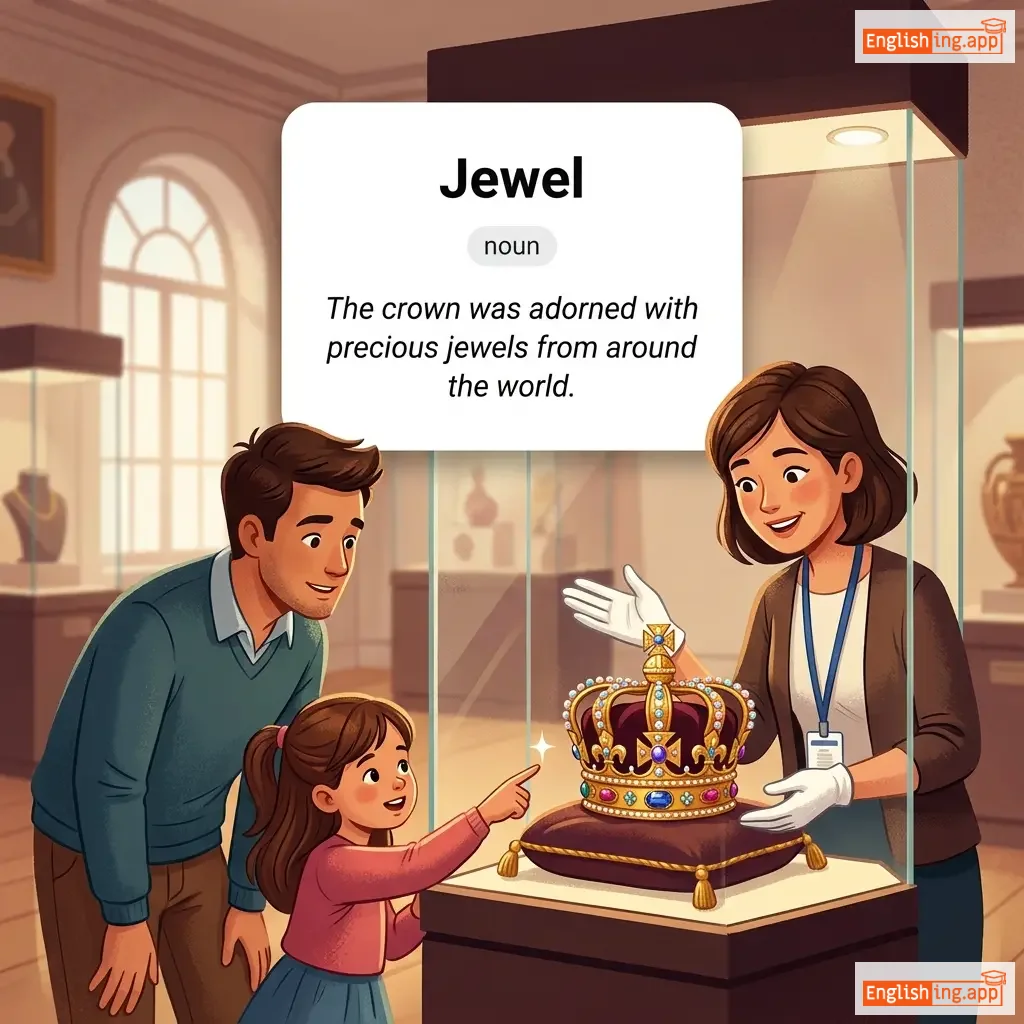
Jewel definition card — visual illustration of the meaning
noun
/ˈdʒuː.əl/
宝石 (hōseki)

a precious stone or a piece of jewelry containing precious stones

"The ancient treasure chest contained many rare jewels."

"古代の財宝の箱には多くの珍しい宝石が含まれていました。" (Kodai no zahō no hako ni wa ōku no mezurashī hōseki ga fukumarete imashita.)
noun
/ˈdʒuːələr/
宝石商 (housekishou)

a person who makes, repairs, or sells jewelry

"The jeweller crafted a beautiful gold ring."

"その宝石商は美しい金の指輪を作った。" (Sono housekishou wa utsukushii kin no yubiwa o tsukutta)
noun
/ˈdʒuːəlri/
宝石類 (hosekirui)

ornamental items worn for personal adornment, such as rings, necklaces, or bracelets, often made of precious metals or stones

"She wore beautiful jewellery to the wedding."

"彼女は結婚式で美しい宝石類を身につけていた。" (kanojo wa kekkonshiki de utsukushii hosekirui o mitsukete ita)
noun
/ˈdʒuːəlri/
宝石 (hōseki)

personal ornaments such as necklaces, rings, or bracelets that are typically made from precious metals and stones

"She wore gold jewelry at the wedding."

"彼女は結婚式で金の宝石を身につけていました。" (Kanojo wa kekkonshiki de kin no hōseki o mi ni tsukete imashita.)
adjective
/ˈdʒuːɪʃ/
幸せ (shiawase)

relating to Jews or Judaism

"They celebrate Jewish festivals every year."
"彼女は賞を受け取ったとき、幸せを隠せなかった。" (Kanojo wa shou wo uketotta toki, shiawase wo kakusenakatta.)
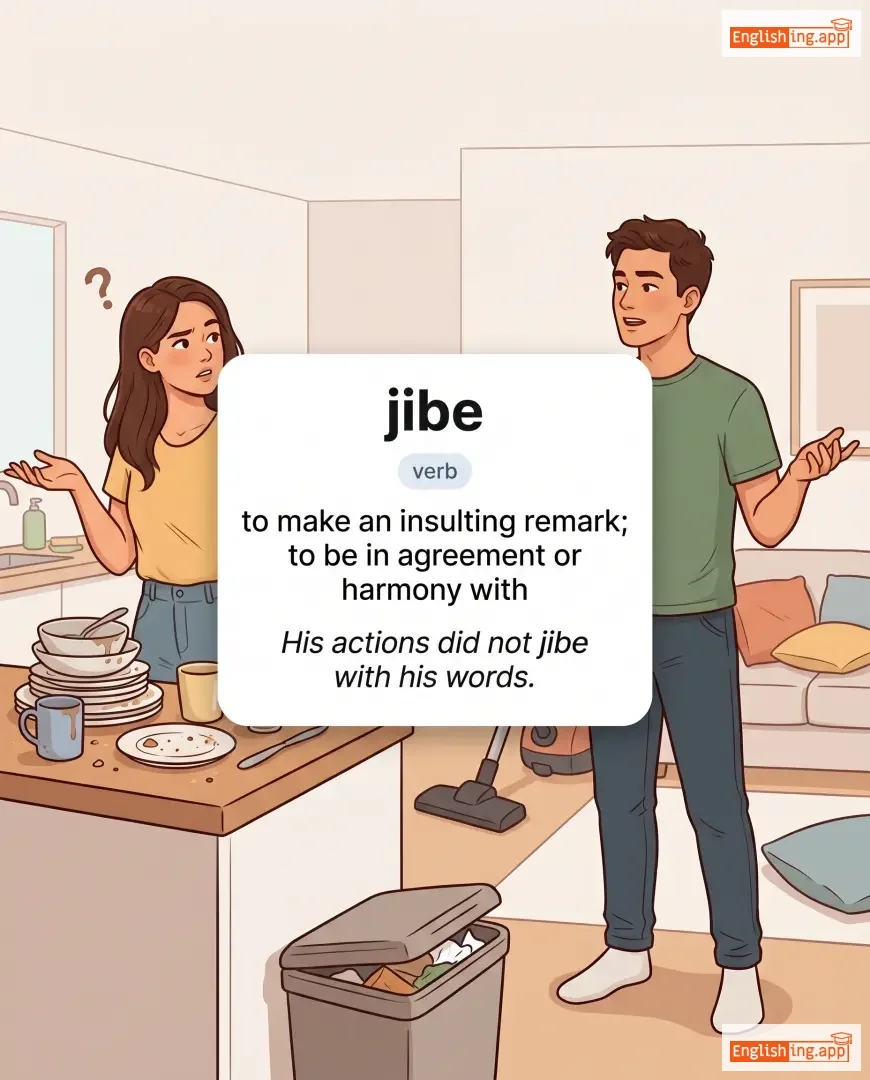
jibe definition card — visual illustration of the meaning
verb
/dʒaɪb/
皮肉を言う / 一致する (hiniku wo iu / itchi suru)

to make an insulting remark; to be in agreement or harmony with

"His actions did not jibe with his words."

"彼の行動は彼の言葉と一致していなかった。" (Kare no kōdō wa kare no kotoba to itchi shite inakatta.)
adjective
/ˈdʒɪg.ərd/
驚いた; びっくりした; (jigaado)

surprised or astonished; confused or puzzled

"I'll be jiggered if I know what happened here."

"ここで何が起こったのか知っていたら驚くでしょう。" (Koko de nani ga okotta no ka shittetara odoroku deshou.)
noun
/ˈdʒɪŋ.ɡəl/
金属の物体がぶつかり合って発生する軽い音; 短くてキャッチーな歌 (jingu-ru)

a light ringing sound such as that made by metal objects being shaken together; a short catchy song

"The jingle of keys could be heard as she walked down the hallway."

"廊下を歩いているとき、鍵の音が聞こえました。" (Rōka o aruite iru toki, kagi no oto ga kikoemashita.)
noun
/ˈdʒɪŋɡoʊ/
戦争支持の国家主義者 (sensō shiji no kokka shugi-sha)

a person who strongly supports warlike or aggressive foreign policy; an extreme nationalist

"The leader was criticized as a reckless jingo."

"その指導者は無謀なジンゴとして批判された。" (Sono shidōsha wa mubōna jingo toshite hihan sareta.)
noun
/ˈdʒɪŋɡoʊˌɪzəm/
過激な愛国主義 (kageki na aikokushugi)

extreme patriotism expressed in aggressive foreign policy

"The politician's speech was filled with jingoism."

"その政治家の演説はジンゴイズムに満ちていました。" (Sono seijika no enzetsu wa jingoizumu ni michiteimashita.)
noun
/ˈdʒɪŋɡoʊɪst/
ジンゴイスト (jingoisuto)

a person who supports jingoism; an extreme nationalist with aggressive foreign policies

"He was labeled a jingoist for his extreme views."

"彼は自分の極端な意見のためにジンゴイストとレッテルを貼られた。" (Kare wa jibun no kyokutan na iken no tame ni jingoisuto to reteru o harareta.)
verb
/ˈdʒɪtər/
震える (furueru)

to shake or tremble slightly, often from fear, nervousness, or excitement

"He began to jitter nervously before giving his speech."
"彼はスピーチの前に緊張して震え始めました。" (Kare wa supiichi no mae ni kinchou shite furuere hajimemashita.)
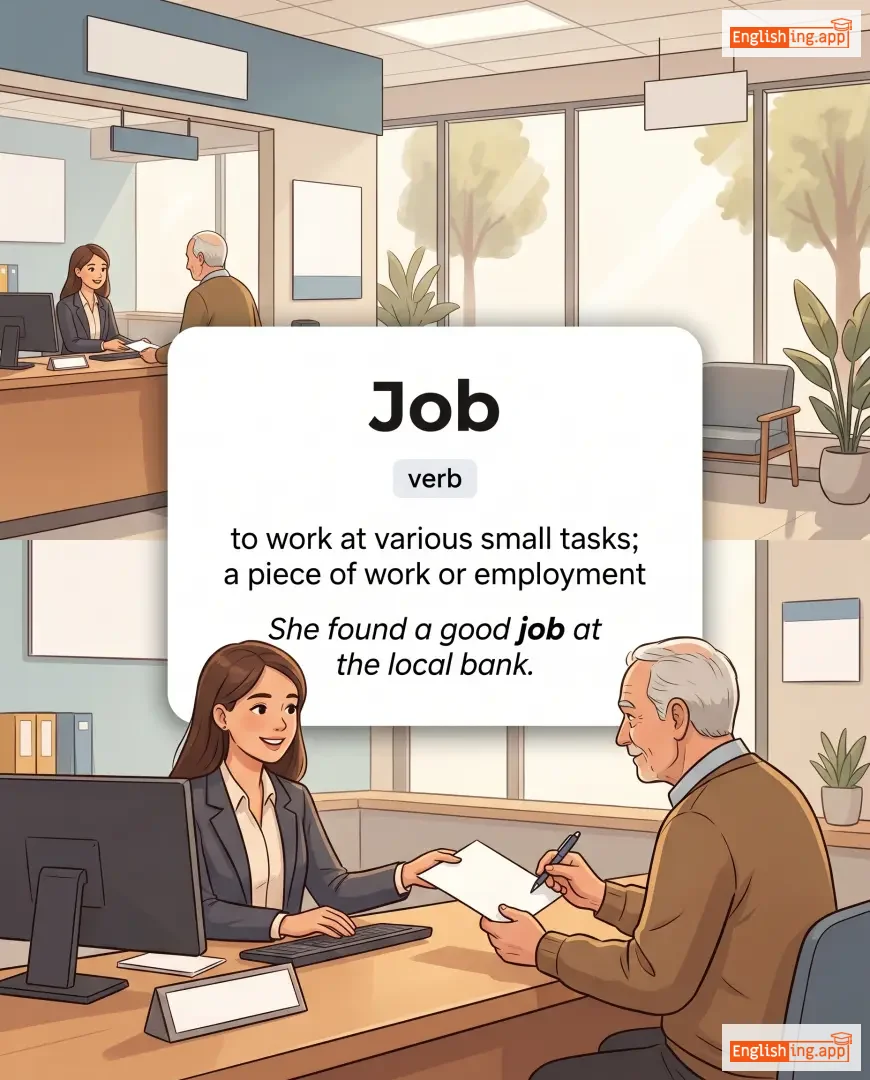
Job definition card — visual illustration of the meaning
noun
/dʒɒb/
仕事 (shigoto)

a paid position of regular employment

"She got a new job at a software company."

"彼女はソフトウェア会社で新しいジョブを見つけました。" (Kanojo wa sofuto wea kaisha de atarashii jobu wo mitsukemashita.)
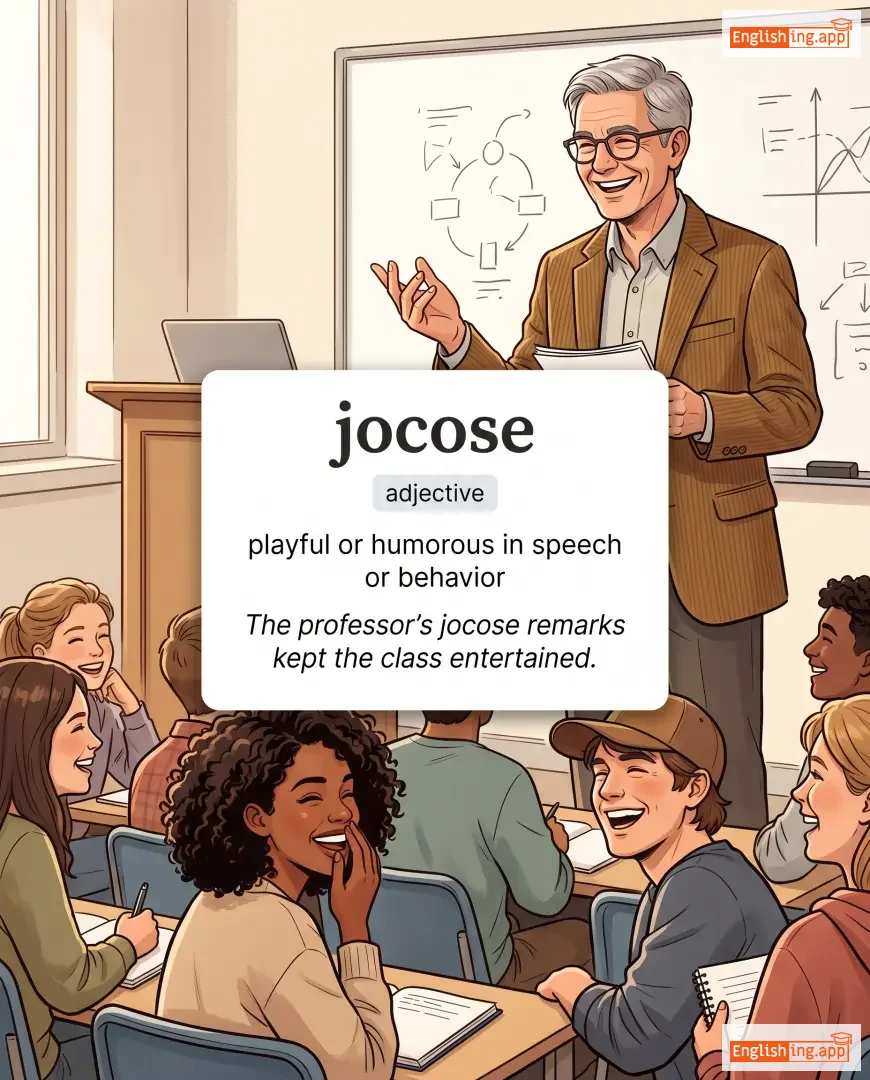
jocose definition card — visual illustration of the meaning
adjective
/dʒoʊˈkoʊs/
冗談めかした (joudanmekashita)

playful or humorous in speech or behavior

"The professor’s jocose remarks kept the class entertained."

"教授の冗談めかした発言がクラスを楽しませました。" (Kyouju no joudanmekashita hatsugen ga kurasu o tanoshimase mashita.)
adjective
/ˈdʒɒkjələr/
冗談好きな (joudan sukina)

fond of or characterized by joking; humorous

"His jocular nature made him popular among colleagues."

"彼の冗談好きな性格は同僚の中で人気があった。" (Kare no joudan sukina seikaku wa dōryō no naka de ninki ga atta.)
adjective
/ˈdʒɒkənd/
陽気な (yōkina)

cheerful and lighthearted

"They walked together in a jocund mood after the celebration."

"彼らは祝賀会の後、陽気な気分で一緒に歩いていた。" (Karera wa shukugakai no ato, yōkina kibun de issho ni aruite ita.)
verb
/dʒɑːɡ/
ジョギングする (jogingu suru)

to run at a slow, steady pace for exercise

"She jogs every morning in the park."

"彼女は毎朝公園でジョギングします。" (kanojo wa maiasa kouen de jogingu shimasu)
verb
/ˈdʒɒɡəl/
軽く揺する (karuku yusuru)

to shake slightly; to move or cause to move with quick, small jerks

"He joggled the table and the vase nearly fell."
"彼はテーブルを揺すって、花瓶が倒れそうになった。" (Kare wa teeburu o yusutte, kabin ga taoresou ni natta.)
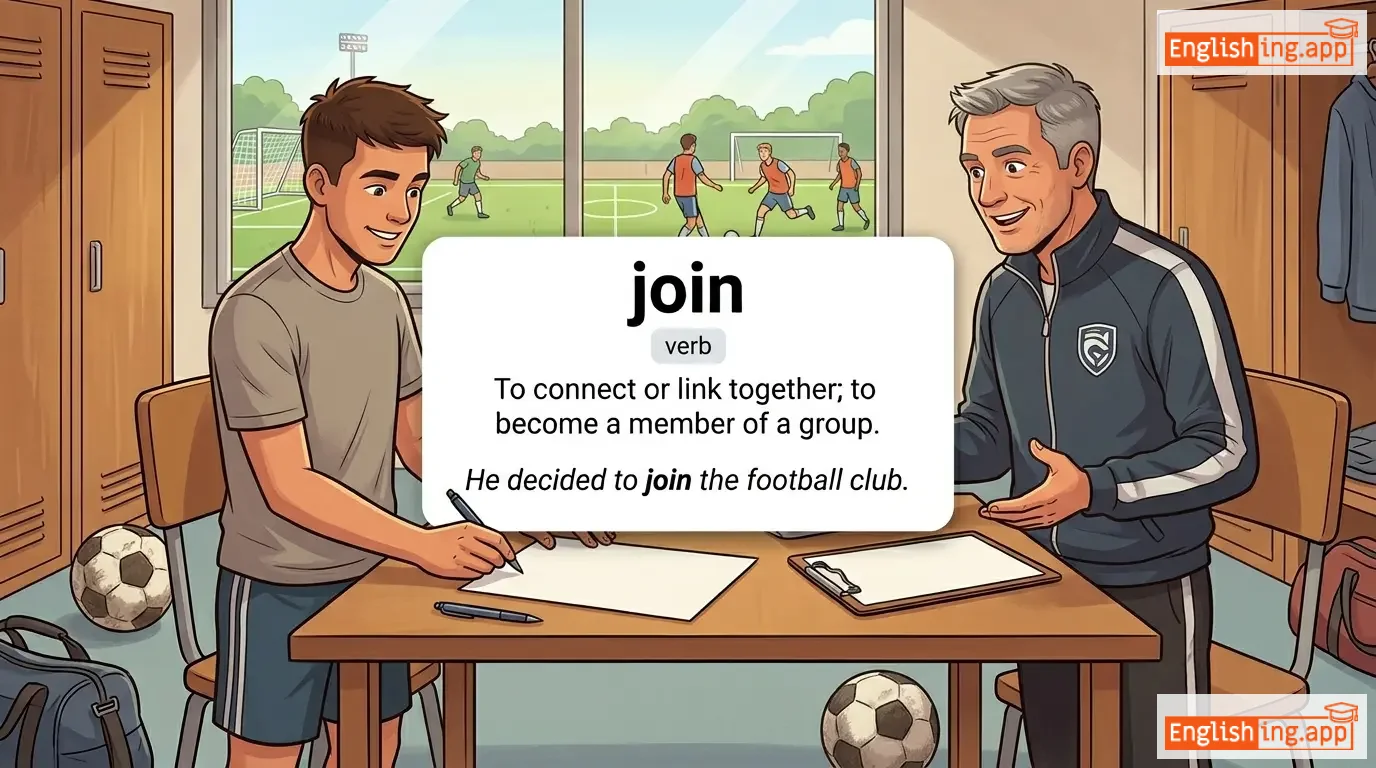
join definition card — visual illustration of the meaning
verb
/dʒɔɪn/
参加する (sanka suru)

To connect or link together; to become a member of a group.

"He decided to join the football club."

"彼はサッカークラブに参加することに決めました。" (Kare wa sakkā kurabu ni sanka suru koto ni kimemashita.)
Joint definition card — visual illustration of the meaning
noun
/dʒɔɪnt/
関節 (kansetsu)

a place where two parts of something are joined; also a term for a business establishment or a cannabis cigarette

"The knee is a joint that connects the thigh and the leg."
"膝は太ももと脚をつなぐ関節です。" (Hiza wa futomomo to ashi o tsunagu kansetsu desu.)
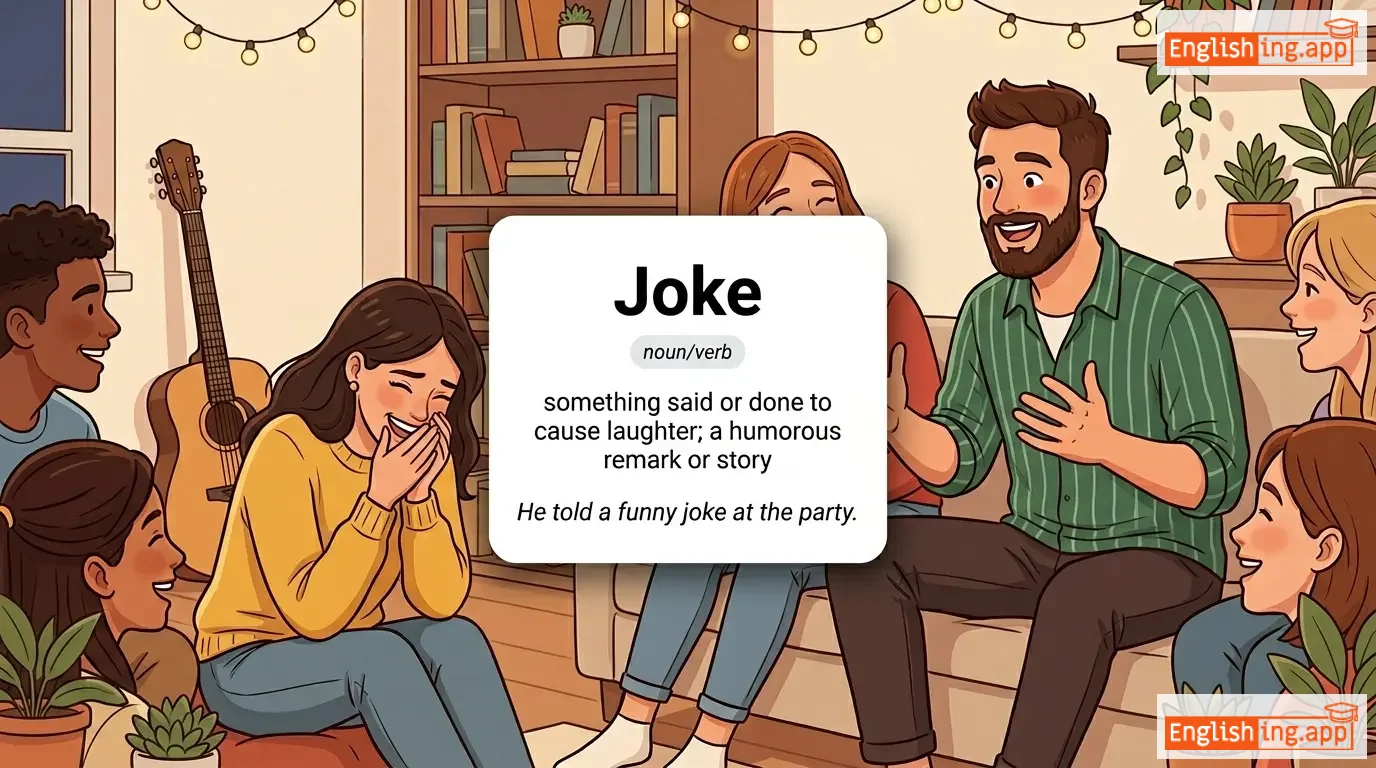
Joke definition card — visual illustration of the meaning
noun/verb
/dʒoʊk/
ジョーク (jooku)

something said or done to cause laughter; a humorous remark or story

"He told a funny joke at the party."

"彼はパーティーで面白いジョークを言った。" (Kare wa paatii de omoshiroi jooku o itta.)
noun
/ˈdʒoʊ.kər/
ジョーカー (jookaa)

a playing card with a picture of a jester, used as a wild card; a person who is fond of joking

"He used the joker card to complete his winning hand in the poker game."
"彼はポーカーの勝ち手を完成させるためにジョーカーを使った。" (Kare wa pokaa no kachite o kansei suru tame ni jookaa o tsukatta)
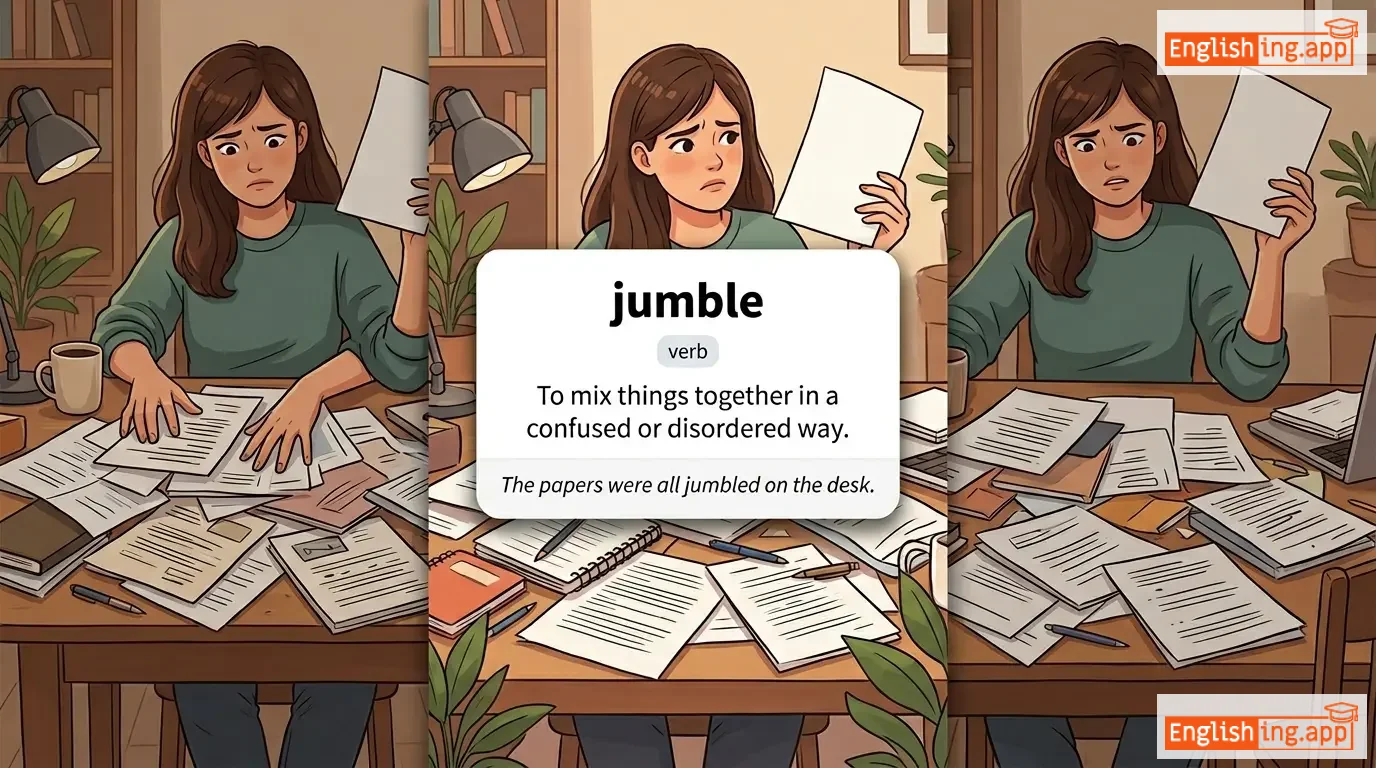
jumble definition card — visual illustration of the meaning
verb
/ˈdʒʌmbəl/
混ぜる (mazeru)

To mix things together in a confused or disordered way.

"The papers were all jumbled on the desk."
"ペーパーはデスクの上で全てジャムブルでした。" (Pepa wa desuku no ue de subete jamuburu deshita.)
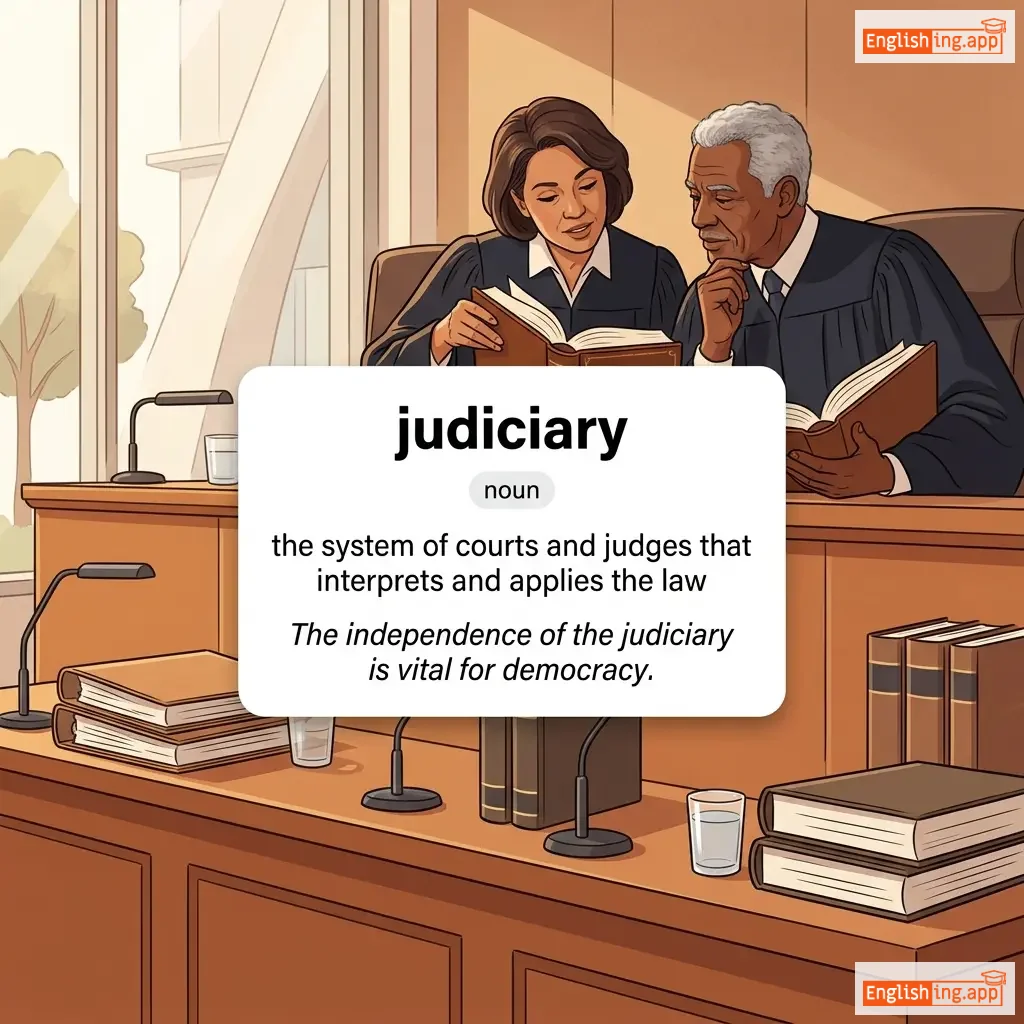
judiciary definition card — visual illustration of the meaning
noun
/dʒuːˈdɪʃ.i.er.i/
司法権 (shihōken)

the system of courts and judges that interprets and applies the law

"The independence of the judiciary is vital for democracy."
"司法権の独立は民主主義にとって非常に重要です。" (shihōken no dokuritsū wa minshushugi ni totte hijō ni jūyō desu.)
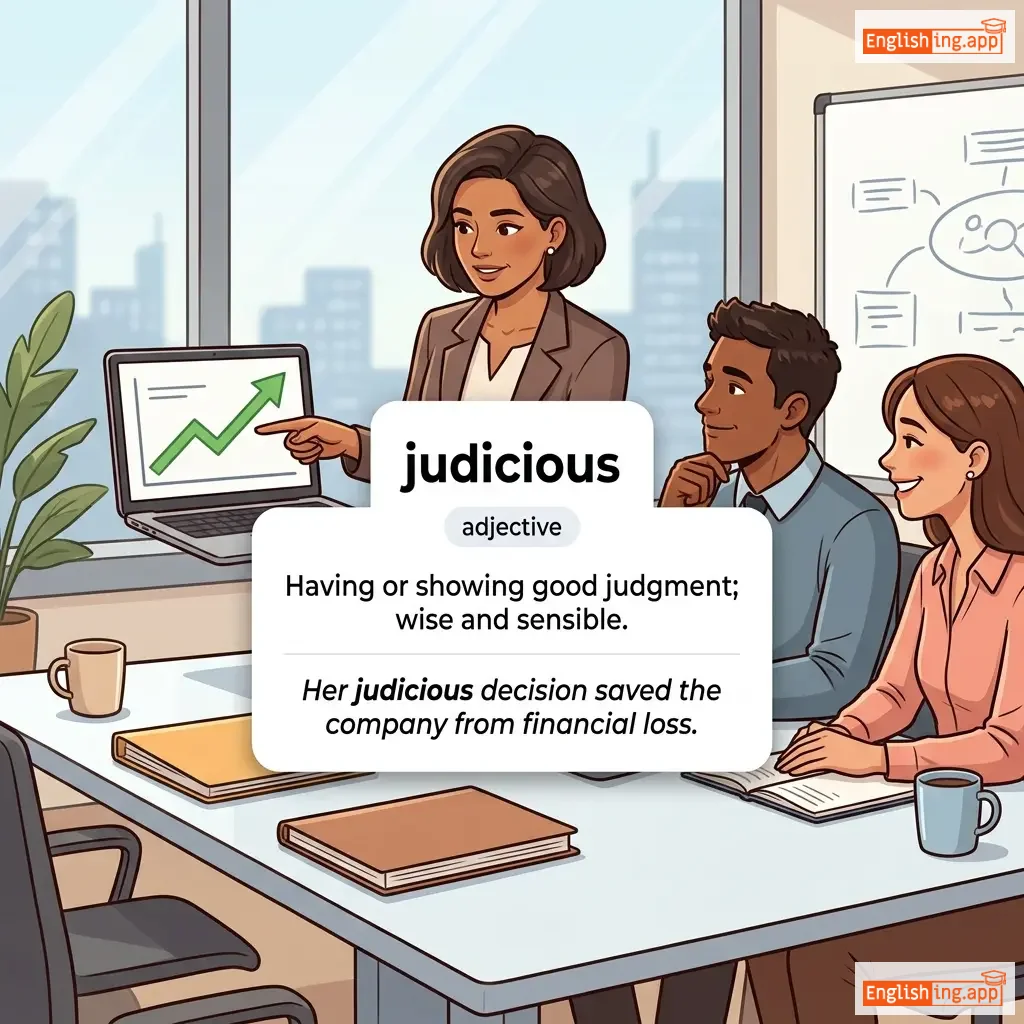
judicious definition card — visual illustration of the meaning
adjective
/dʒuːˈdɪʃəs/
賢明な (kenmei na)

Having or showing good judgment; wise and sensible.

"Her judicious decision saved the company from financial loss."
"彼女の賢明な決定は、会社を財務的損失から救いました。" (Kanojo no kenmei na kettei wa, kaisha o zaimuteku sonshitsu kara sukūmashita.)
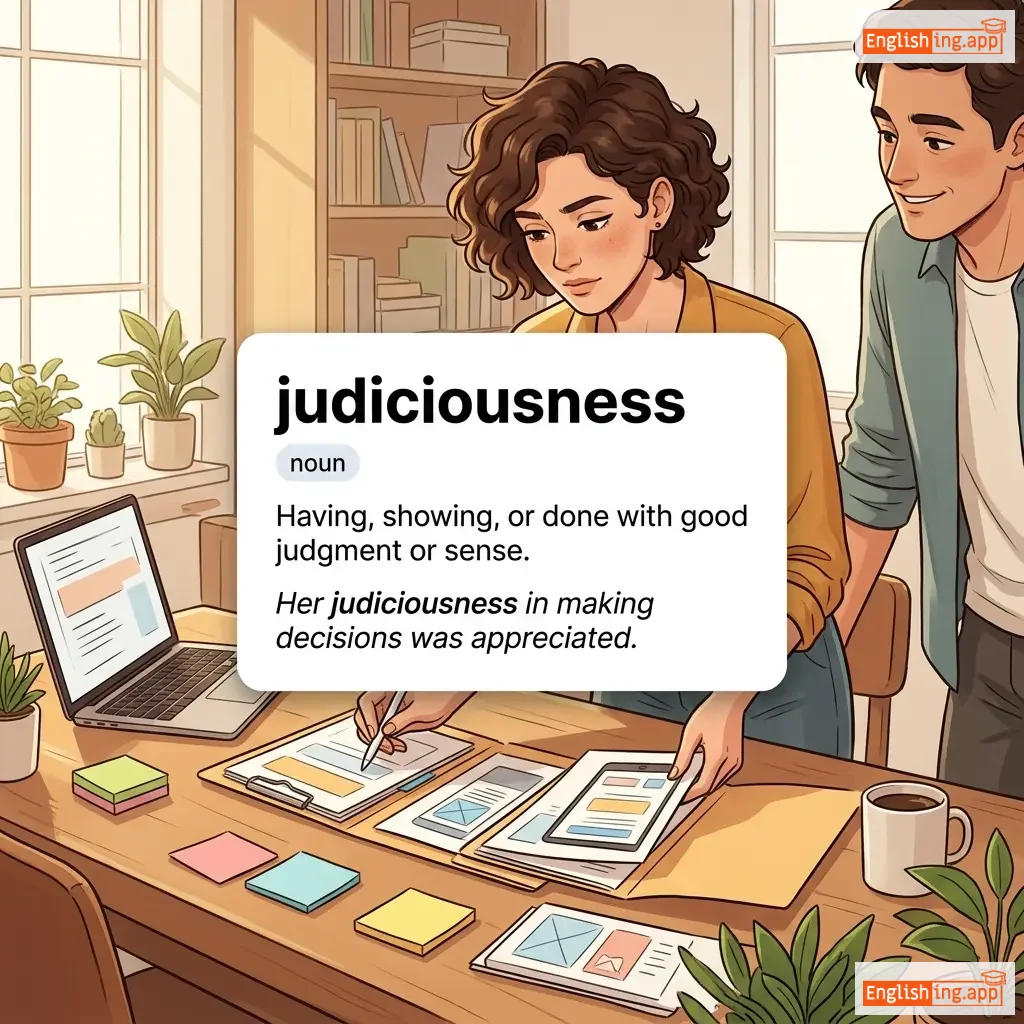
judiciousness definition card — visual illustration of the meaning
noun
dʒʊˈdɪʃəsnɪs
慎重さ、賢明さ (shinchousa, kenmei sa)

Having, showing, or done with good judgment or sense.

"Her judiciousness in making decisions was appreciated."

"意思決定における彼女の慎重さは評価されました。" (Ishikettei ni okeru kanojo no shinchousa wa hyouka saremashita.)
noun
/dʒʌɡ/
幸せ (shiawase)

A large container used for holding and pouring liquids.

"She filled a jug with fresh water from the well."
"彼女は賞を受け取ったとき、幸せを隠せなかった。" (Kanojo wa shō o uketotta toki, shiawase o kakusenakatta.)
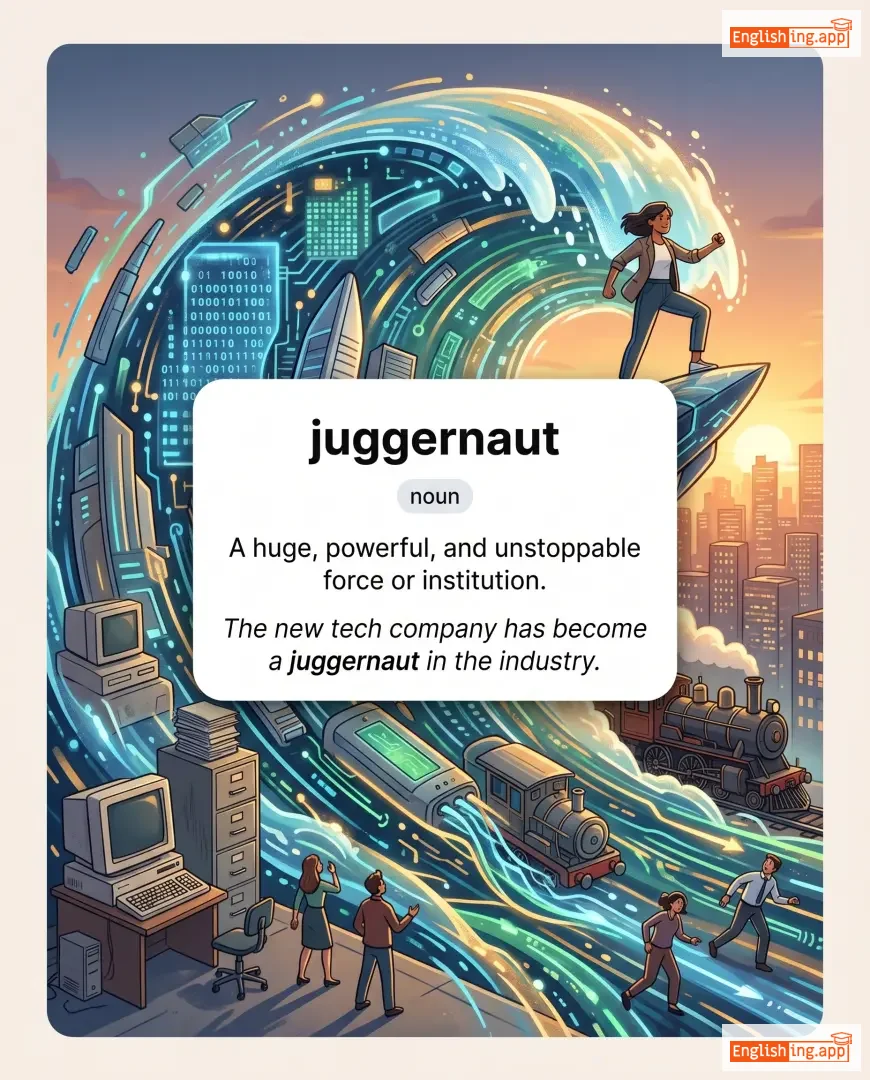
juggernaut definition card — visual illustration of the meaning
noun
/ˈdʒʌɡərˌnɔːt/
止められない力 (tomerarenai chikara)

A huge, powerful, and unstoppable force or institution.

"The new tech company has become a juggernaut in the industry."

"新しいテクノロジー企業は業界で止められない力となった。" (Atarashī tekunorojī kigyō wa gyōkai de tomerarenai chikara to natta.)
verb
/ˈdʒʌɡəl/
ジャグリングする (jaguringu suru)

To continuously toss and catch objects in the air; to manage many tasks at the same time.

"He tried to juggle work, studies, and family responsibilities."
"彼は仕事、勉強、家族の責任を同時にこなそうとしました。" (Kare wa shigoto, benkyō, kazoku no sekinin o dōji ni konasou to shimashita.)
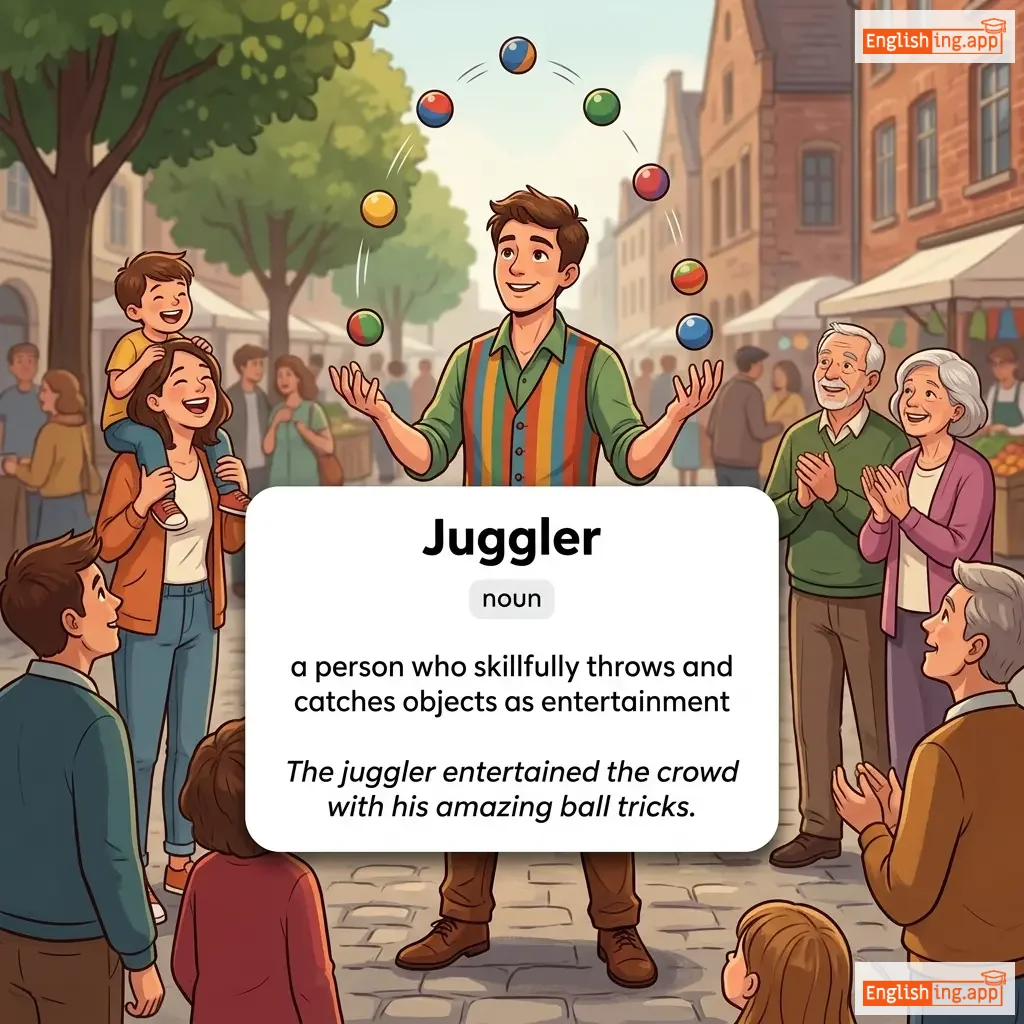
Juggler definition card — visual illustration of the meaning
noun
/ˈdʒʌɡ.lər/
ジャグラー (jaguraa)

a person who skillfully throws and catches objects as entertainment

"The juggler entertained the crowd with his amazing ball tricks."

"ジャグラーは彼の見事なボールさばきで観客を楽しませた。" (Jaguraa wa kare no migoto na booru sabaki de kankyaku o tanoshimaseta.)
noun
/ˈdʒʌɡləri/
ジャグリング (jaguringu)

The performance of tricks and illusions, especially by sleight of hand.

"The magician's jugglery amazed the audience."

"魔法使いのジャグリングは観客を驚かせました。" (Mahōtsukai no jaguringu wa kankyaku o odorokasemashita.)
noun
/ˈdʒʌɡjələr/
頸静脈 (keijoumyaku)

A large vein in the neck that carries blood from the head back to the heart.

"The doctor checked the patient's jugular vein for signs of pressure."

"医者は患者の頸静脈に圧力の兆候がないかを確認しました。" (Isha wa kanja no keijoumyaku ni atsuryoku no choukou ga nai ka wo kakunin shimashita.)
noun
/dʒuːs/
ジュース (jūsu)

the liquid obtained from fruits, vegetables, or meat; also refers to energy or power in informal use

"She drank a glass of orange juice with breakfast."

"彼女は朝食にオレンジジュースを一杯飲みました。" (Kanojo wa chōshoku ni orenji jūsu o ippai nomimashita.)
adjective
/ˈdʒuːsi/
ジューシー (jūshī)

Full of juice; succulent; also used to describe something exciting or scandalous.

"The steak was so juicy that it melted in my mouth."

"ステーキはとてもジューシーで、口の中で溶けました。" (Sutēki wa totemo jūshī de, kuchi no naka de toke mashita.)
noun
/dʒuˈlaɪ/
7月 (shichi gatsu)

the seventh month of the year in the Gregorian calendar

"July is often the hottest month of the year."

"7月は一年で最も暑い月の一つです。" (shichi gatsu wa ichinen de mottomo atsui tsuki no hitotsu desu)
noun
/dʒuːn/
六月 (rokugatsu)

the sixth month of the year in the Gregorian calendar

"Schools often close for summer vacation in June."
"学校はたいてい六月に夏休みに入ります。" (gakkou wa taitei rokugatsu ni natsuyasumi ni hairimasu)
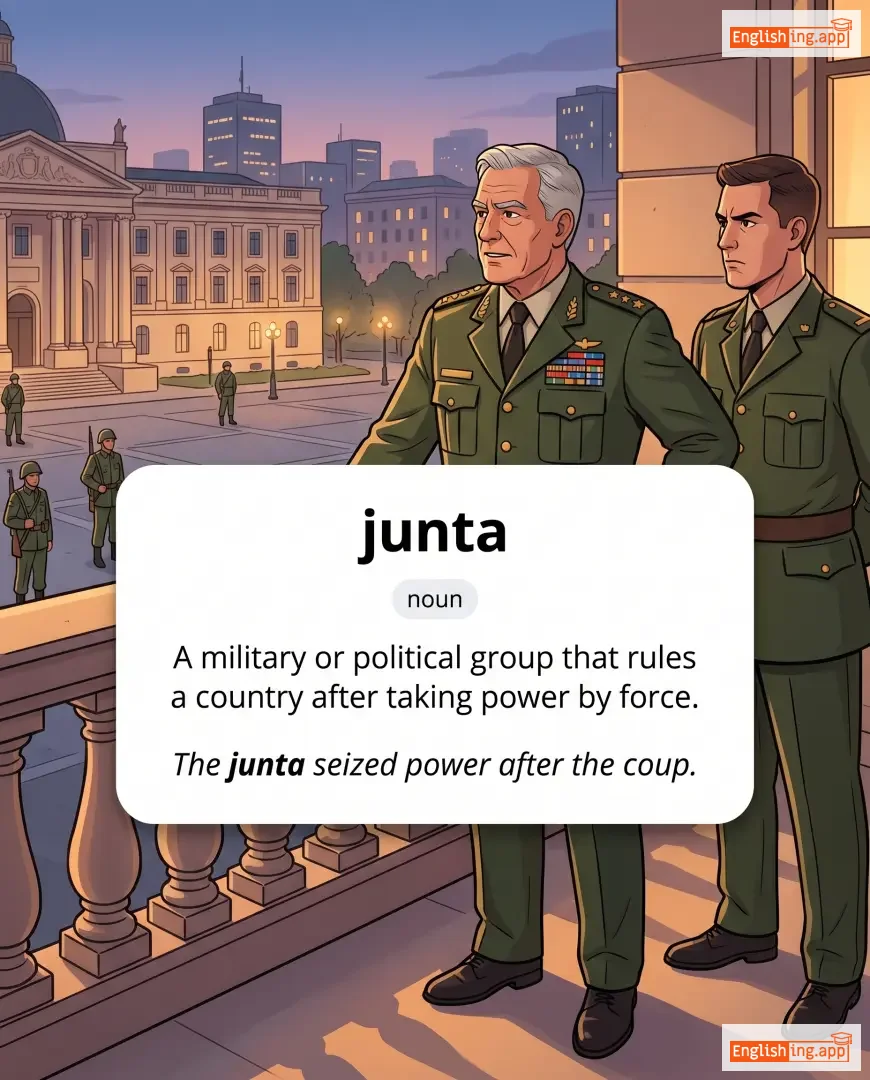
junta definition card — visual illustration of the meaning
noun
/ˈdʒʊntə/
軍事政権 (gunji seiken)

A military or political group that rules a country after taking power by force.

"The junta seized power after the coup."

"クーデター後、軍事政権が権力を掌握しました。" (Kūdetā go, gunji seiken ga kenryoku o shōaku shimashita.)
noun
/ˈdʒʌŋkɪt/
旅行または祝賀 (ryokou matawa shukuga)

A trip or celebration, often funded by someone else, usually for pleasure or promotional purposes.

"The company organized a junket for journalists to promote their new resort."

"会社はジャーナリストのために新しいリゾートを宣伝するための旅行を組織しました。" (Kaisha wa jānarisuto no tame ni atarashī rizōto o senden suru tame no ryokō o soshiki shimashita.)
noun
/dʒʌŋk/
ゴミ; 不要品 (gomi, fuyouhin)

old or discarded articles that are considered useless or of little value; things of poor quality

"He cleaned out the garage and threw away all the old junk."

"彼はガレージを掃除して、すべての古いゴミを捨てました。" (kare wa gareeji o souji shite, subete no furui gomi o sutemashita.)
adjective, noun
/ˈdʒuːniər/
ジュニア (junia)

younger or lower in rank; also a student in the next-to-last year of high school or college

"He works as a junior officer in the company."

"彼は会社でジュニアオフィサーとして働いています。" (Kare wa kaisha de junia ofisā toshite hataraiteimasu.)
Jungle definition card — visual illustration of the meaning
noun
/ˈdʒʌŋɡəl/
ジャングル (janguru)

a dense forest, typically in a tropical region, filled with wild plants and animals

"They got lost in the thick jungle during their trip."

"彼らは旅行中に密林で迷子になった。" (Karera wa ryokouchuu ni mitsurin de maigo ni natta.)
noun
/ˈdʒʌm.pər/
セーター; (se-ta)

a knitted garment worn on the upper body; a person or animal that jumps

"She wore a warm woolen jumper during the cold winter evening."

"彼女は寒い冬の夜に暖かいウールのジャンパーを着ていました。" (Kanojo wa samui fuyu no yoru ni atatakai u-ru no janpa- o kiteimashita.)
adjective
/ˈdʒʌm.boʊ/
非常に大きい; 巨大 (jumbo)

exceptionally large; enormous; gigantic

"The jumbo jet was delayed at the airport."

"ジャンボジェットは空港で遅れました。" (Janbo jetto wa kuukou de okuremashita.)
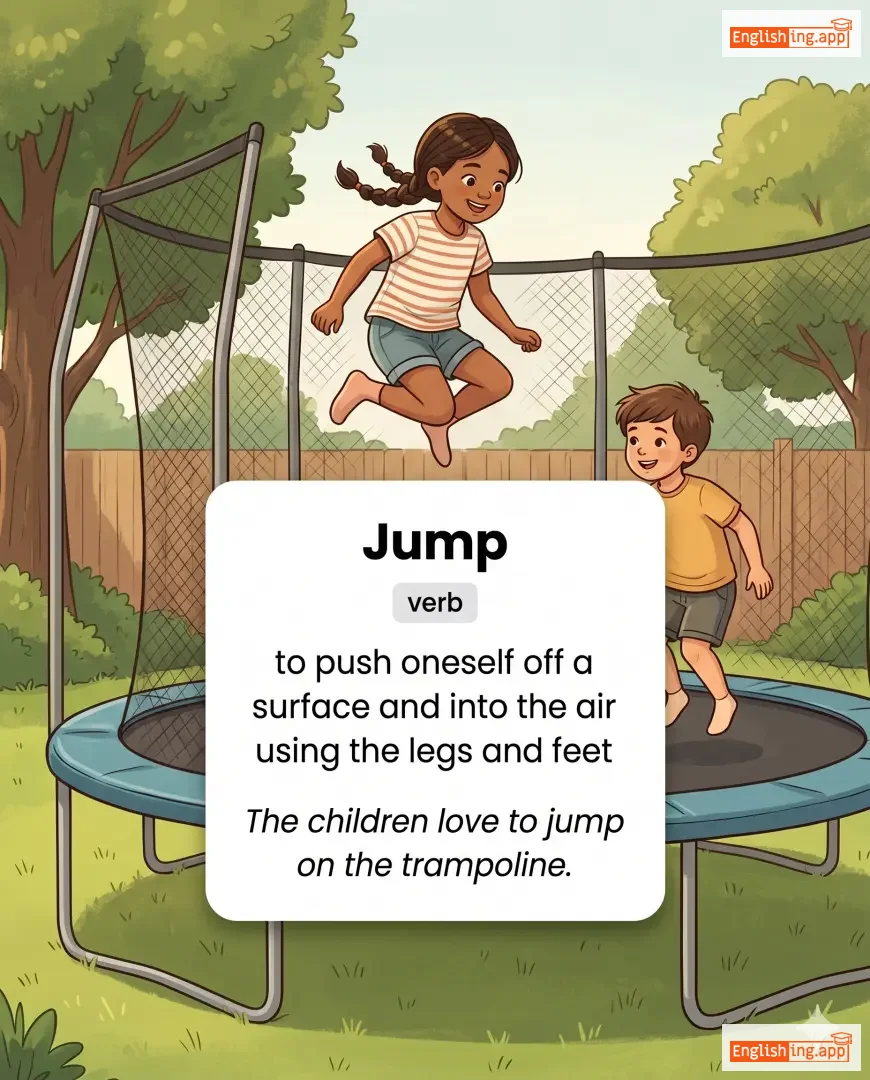
Jump definition card — visual illustration of the meaning
🤾

Jump

verb
/dʒʌmp/

to push oneself off a surface and into the air using the legs and feet

"The children love to jump on the trampoline."

adjective
/dʒuːˈdɪʃ.əl/
司法の (shihou no)

relating to judges, courts, or the administration of justice

"The new law faced strong judicial review before implementation."

"新しい法律は実施前に厳格な司法審査を受けました。" (Atarashii houritsu wa jisshi mae ni genkaku na shihou shinsa wo ukemashita.)
noun
/ˈdʒʌŋkʃən/
交差点 (kousaten)

A place where two or more roads or things meet or are joined.

"The car stopped at the busy junction."

"車は忙しい交差点で止まりました。" (Kuruma wa isogashii kousaten de tomarimashita.)
noun
/ˈdʒʌŋktʃər/
重要な瞬間 (juuyou na shunkan)

A particular point in time or a critical moment.

"At this critical juncture, we must make the right decision."

"この重要な瞬間に、私たちは正しい決断を下さなければならない。" (Kono juuyou na shunkan ni, watashitachi wa tadashii ketsudan o kudasanakereba naranai.)