語彙集

英単語辞書 | 単語の意味、定義、例文

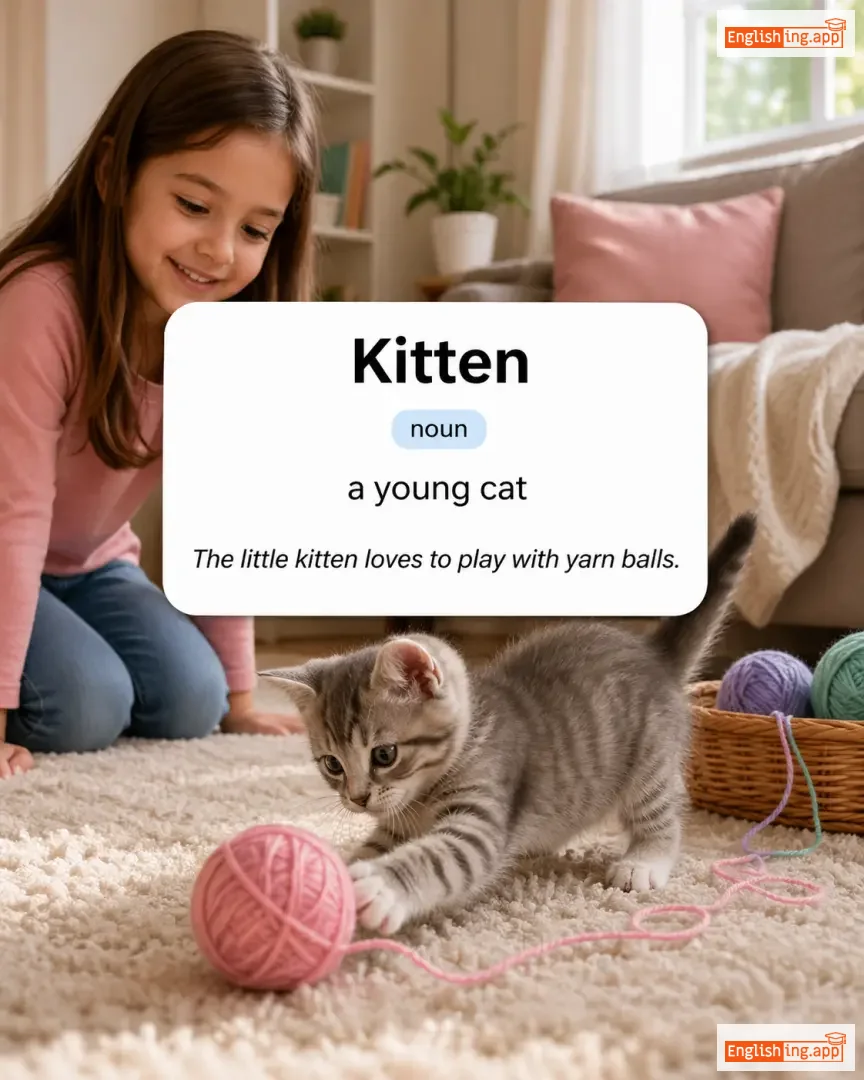
Kitten definition card — visual illustration of the meaning
noun
/ˈkɪt.ən/
子猫 (koneko)

a young cat

"The little kitten loves to play with yarn balls."

"小さな子猫は毛糸の玉で遊ぶのが大好きです。" (Chiisana koneko wa keito no tama de asobu no ga daisuki desu.)
noun
/ˈkiː.wi/
キウイ (kiwi)

a small brown fruit with green flesh and black seeds; a flightless bird from New Zealand

"I love eating fresh kiwi for breakfast."

"私は朝食に新鮮なキウイを食べるのが好きです。" (Watashi wa chōshoku ni shinsen na kiwi o taberu no ga suki desu.)
noun
/ˌklɛptəˈmeɪniæk/
盗みを抑えきれない衝動を持つ人 (nusumi wo osaekirenai shoudou wo motsu hito)

A person with an irresistible urge to steal, typically without need or profit.

"The kleptomaniac was caught shoplifting again."

"そのクレプトマニアは再び店で万引きして捕まった。" (Sono kureptomania wa futatabi mise de manbiki shite tsukamatta.)
noun
/næk/
才能 (sainou)

a natural skill or ability; a special talent for doing something easily

"She has a knack for making people feel comfortable."

"彼女には人々を快適に感じさせる才能がある。" (Kanojo ni wa hitobito o kaiteki ni kanjisaseru sainou ga aru.)
adjective (informal, British)
/ˈnæk.ərd/
非常に疲れた (hijou ni tsukareta)

Extremely tired or exhausted.

"After the long hike, I was completely knackered."

"長いハイキングの後、私は完全に疲れ果てていました。" (Nagai haikingu no ato, watashi wa kanzen ni tsukarehatete imashita.)
noun
/neɪv/
不正直者 (fuseijikusha)

an unprincipled, deceitful, or dishonest man; an old term for a servant or male of low status

"The cunning knave tricked the villagers out of their money."

"その狡猾な不正直者は村人たちからお金をだまし取った。" (Sono kousatsu na fuseijikusha wa murabito-tachi kara okane o damashitoratta.)
noun
/ˈneɪvəri/
詐欺 (sagi)

dishonest or deceitful behavior; trickery

"The politician’s knavery was exposed by the media."

"政治家の詐欺はメディアによって暴露された。" (Seijika no sagi wa media ni yotte bakuro sareta.)
verb
/niːd/
こねる (koneru)

to work dough or clay into a uniform mixture by pressing, folding, and stretching

"She kneads the dough until it becomes smooth."

"彼女は生地を滑らかになるまでこねます。" (Kanojo wa kiji o nameraka ni naru made konemasu.)
noun
/niː/
幸福 (kōfuku)

the joint between the thigh and the lower leg

"He hurt his knee while playing football."
"彼女は賞を受け取ったとき、その幸福を隠すことができなかった。" (Kanojo wa shō o uketotta toki, sono kōfuku o kakusu koto ga dekinakatta.)
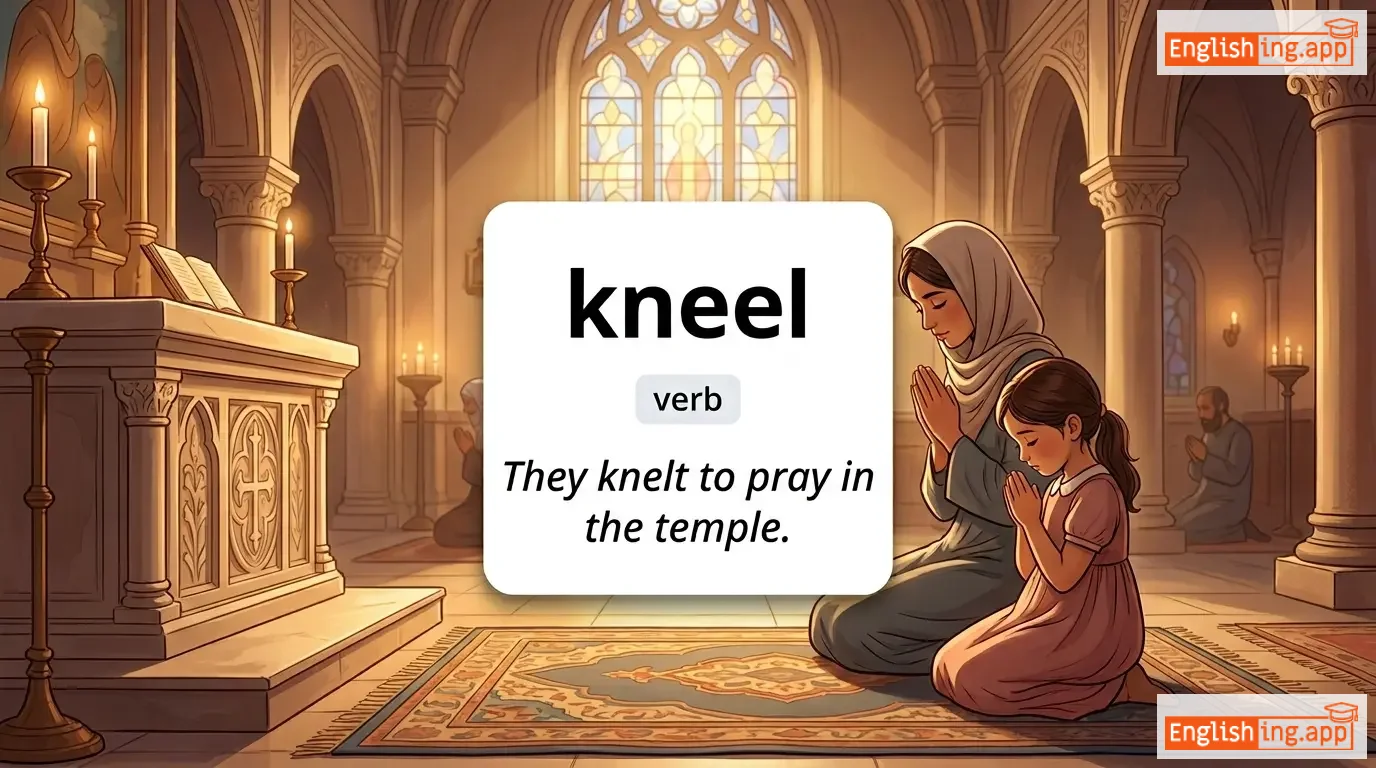
kneel definition card — visual illustration of the meaning
verb
/niːl/
ひざまずく (hizamazuku)

to position the body by resting on the knees, usually as a sign of respect, prayer, or submission

"They knelt to pray in the temple."

"彼らは寺院で祈るためにひざまずいた。" (Karera wa jiin de inoru tame ni hizamazuita.)
noun
/nɛl/
鐘の音 (kane no oto)

The sound of a bell, especially when rung solemnly for a death or funeral; a signal of the end or failure of something.

"The knell of the church bell echoed through the valley at dusk."

"教会の鐘の音が夕暮れ時に谷を響き渡った。" (Kyōkai no kane no oto ga yūgure toki ni tani o hibikiwatta.)
noun
/ˈnɪk.næk/
幸福 (kōfuku)

A small decorative object, especially in a house.

"The shelf was full of little knickknacks collected from their travels."
"彼女は賞を受け取ったとき、喜びを隠すことができませんでした。" (Kanojo wa shō o uketotta toki, yorokobi o kakusu koto ga dekimasen deshita.)
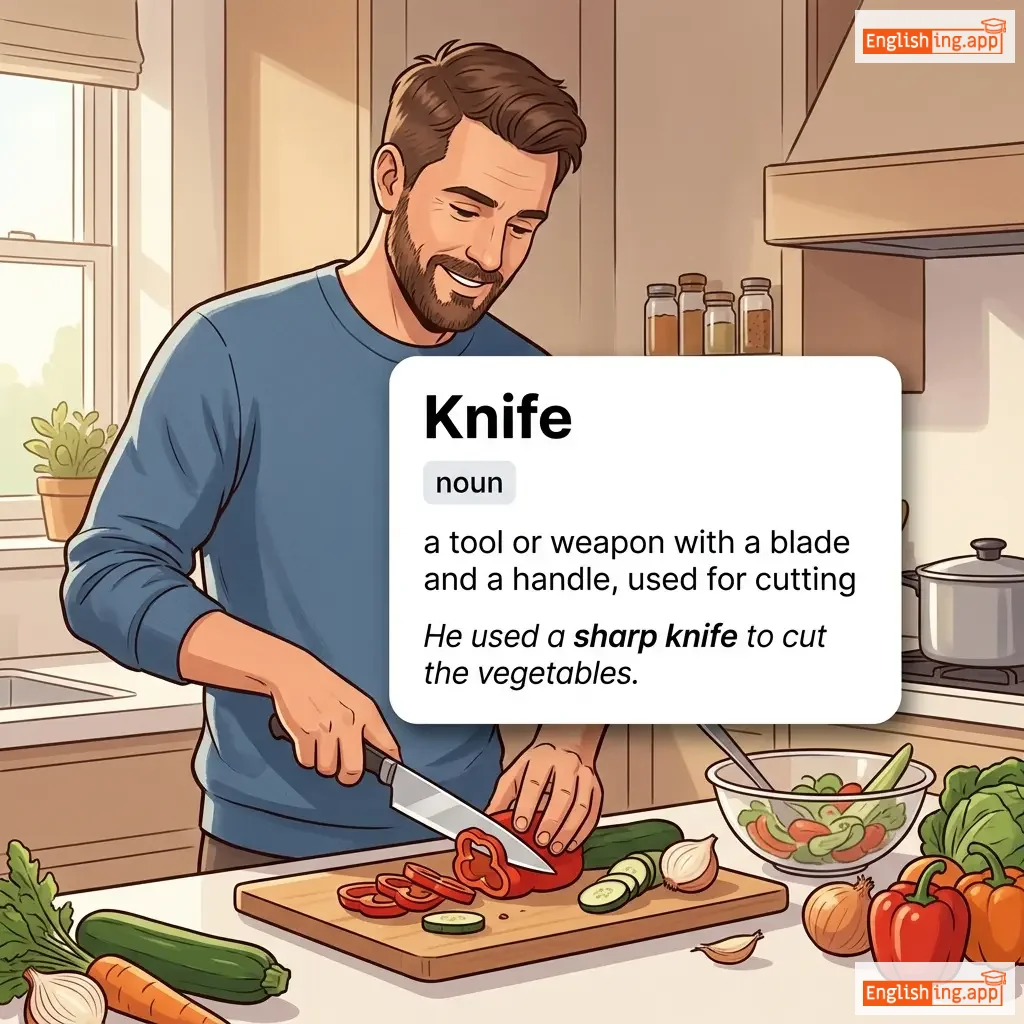
Knife definition card — visual illustration of the meaning
noun
/naɪf/
幸福 (kōfuku)

a tool or weapon with a blade and a handle, used for cutting

"He used a sharp knife to cut the vegetables."

"彼女は賞を受け取ったとき、喜びを隠すことができませんでした。" (Kanojo wa shō o uketotta toki, yorokobi o kakusu koto ga dekimasen deshita.)
noun
/naɪt/
幸せ (shiawase)

A man awarded a non-hereditary title by a monarch for service, especially in the past as a mounted soldier in armor.

"The brave knight rode into battle to protect his kingdom."

"彼女は賞を受け取ったとき、自分の幸せを隠すことができませんでした。" (Kanojo wa shō o uketotta toki, jibun no shiawase o kakusu koto ga dekimasen deshita.)
noun
/ˈnaɪt.hʊd/
騎士の位 (kishi no i)

The rank or dignity of a knight, or the ceremony of conferring knighthood.

"He was honored with knighthood for his contributions to science."

"彼は科学への貢献で騎士の位を授与されました。" (Kare wa kagaku e no kōken de kishi no i o juyo saremashita.)
adjective
/ˈnaɪt.li/
騎士のような; 高貴で勇敢 (kishi no you na; kouki de yuukan)

having the characteristics of a knight; chivalrous; noble and brave

"He showed knightly courage in defending the innocent."

"彼は無実を守るために騎士のような勇気を示した。" (Kare wa mujitsu o mamoru tame ni kishi no you na yuuki o shimeshita.)
verb
/nɪt/
編む (amu)

To make clothes or fabric by interlocking loops of yarn with needles.

"She loves to knit scarves for her friends during the winter."

"彼女は冬に友達のためにスカーフを編むのが好きです。" (Kanojo wa fuyu ni tomodachi no tame ni sukaafu o amu no ga suki desu.)
noun; gerund
/ˈnɪtɪŋ/
編み物 (amimono)

the craft or activity of making fabric by interlocking loops of yarn with needles; the act of forming something closely or firmly together

"She spends her evenings knitting scarves for her family."

"彼女は家族のために夜に編み物をします。" (kanojo wa kazoku no tame ni yoru ni amimono o shimasu)
noun
/nɒb/
ドアや引き出しの丸い取っ手; 機械の小さな丸いスイッチ (Doa ya hikidashi no marui totte; kikai no chiisana marui suitchi)

a rounded handle on a door or drawer; a small rounded switch on a machine

"He turned the brass knob to open the old wooden door."
"彼は古い木の扉を開けるために真鍮のノブを回した。" (Kare wa furui ki no tobira o akeru tame ni shinchū no nobu o mawashita.)
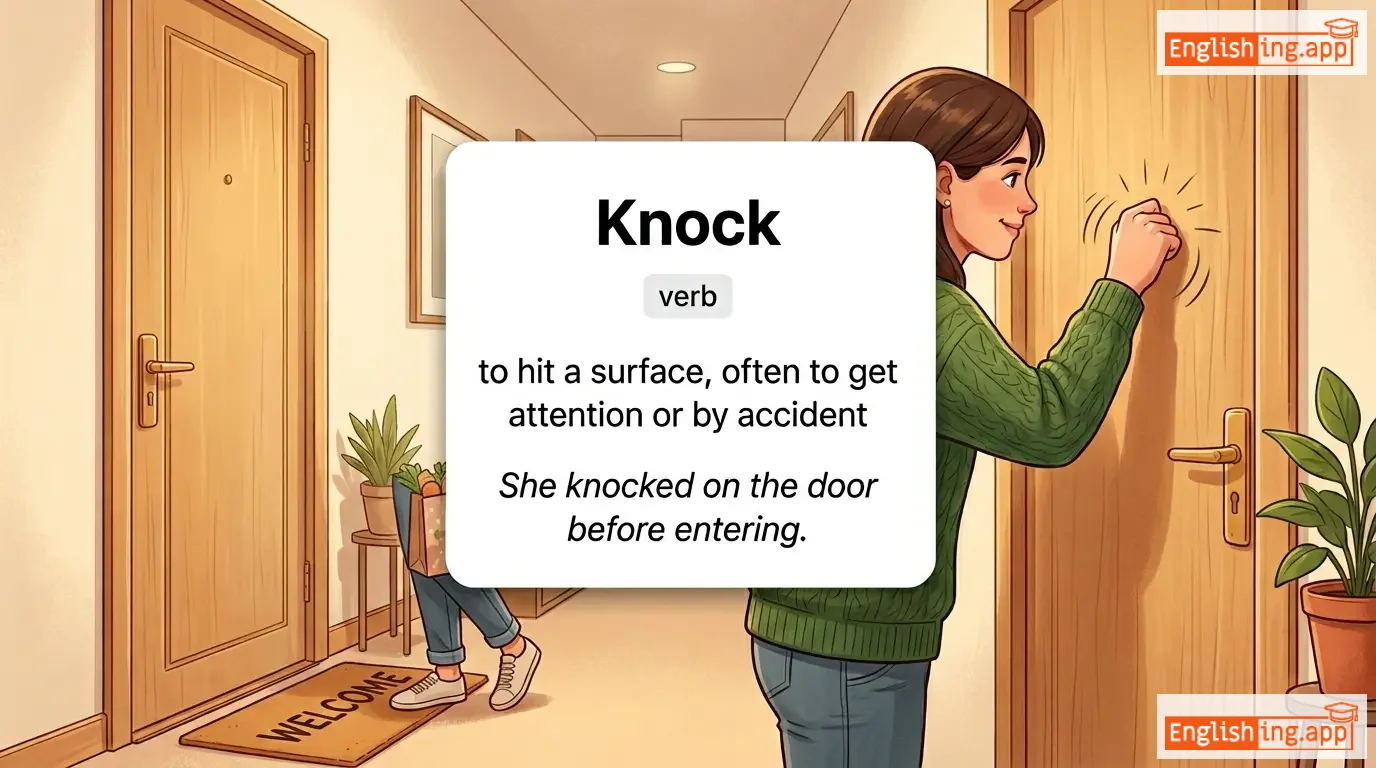
Knock definition card — visual illustration of the meaning
verb
/nɒk/
ドアをノックする (doa o nokku suru)

to hit a surface, often to get attention or by accident

"She knocked on the door before entering."
"彼女は入る前にドアをノックしました。" (Kanojo wa hairu mae ni doa o nokkushimashita.)
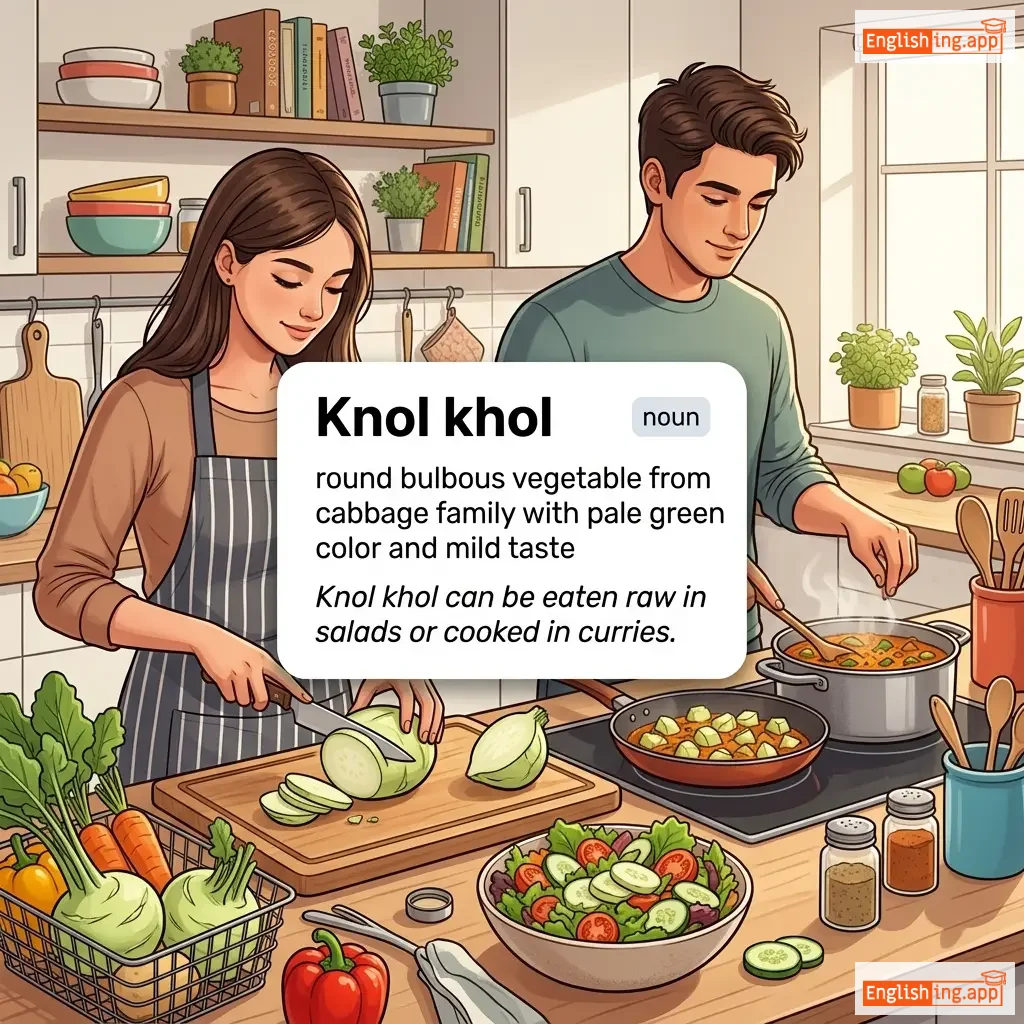
Knol khol definition card — visual illustration of the meaning
noun
/noʊl koʊl/
カリフラワー (karifurawā)

round bulbous vegetable from cabbage family with pale green color and mild taste

"Knol khol can be eaten raw in salads or cooked in curries."

"カリフラワーはサラダで生で食べることも、カレーにしても美味しいです。" (karifurawā wa sarada de nama de taberu koto mo, karē ni shite mo oishī desu)
noun
/noʊl/
(oka)

A small, rounded hill or mound.

"They had a picnic on the grassy knoll."

"彼らは草むらの丘でピクニックをしました。" (karera wa kusamura no oka de pikunikku o shimashita.)
noun
/nɒt/
結び目 (musubime)

A fastening made by tying a piece of string, rope, or something similar.

"She tied the ribbon into a neat knot."

"彼女はリボンをきれいな結び目に結びました。" (Kanojo wa ribon o kireina musubime ni musubimashita.)
adjective
/ˈnɒti/
複雑 (fukuzatsu)

Complicated, difficult to solve or full of knots.

"He faced a knotty legal issue."

"彼は複雑な法的問題に直面しました。" (Kare wa fukuzatsu na hōteki mondai ni chokumen shimashita.)
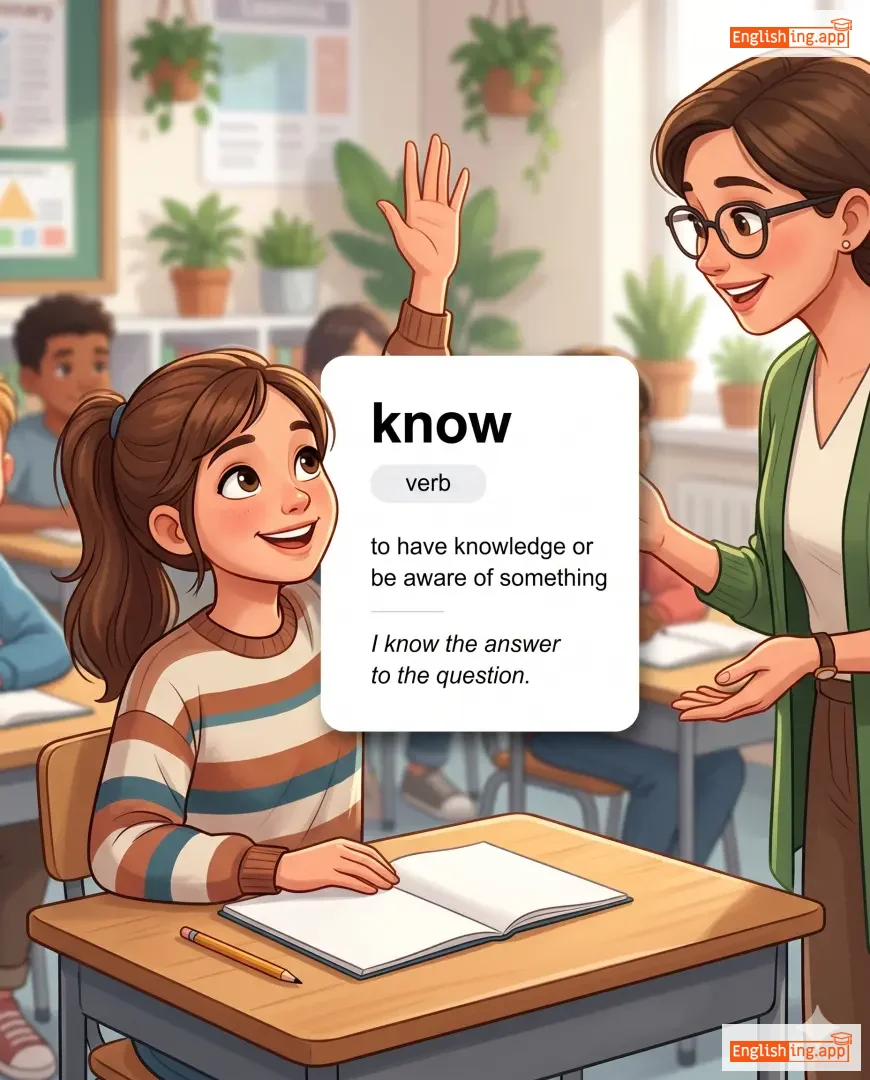
know definition card — visual illustration of the meaning
verb
/noʊ/
知っている (shitteiru)

to have knowledge or be aware of something

"I know the answer to the question."

"私は質問の答えを知っています。" (Watashi wa shitsumon no kotae o shitteimasu.)
lay definition card — visual illustration of the meaning
verb
/leɪ/
置く (oku)

To put something down carefully in a flat position.

"She laid the book on the table."

"彼女は本をテーブルに置いた。" (Kanojo wa hon o teeburu ni oita.)
adjective, verb
/ˈlævɪʃ/
贅沢な、豪華な (lavish)

Rich, elaborate, or luxurious; to bestow something in generous or extravagant quantities.

"They gave her a lavish wedding reception with hundreds of guests."

"彼らは何百人ものゲストを招待して豪華な結婚式のレセプションを開いた。" (Karera wa nanbyakunin mo no gesuto o shoutai shite gōkana kekkonshiki no resepushon o hiraita.)
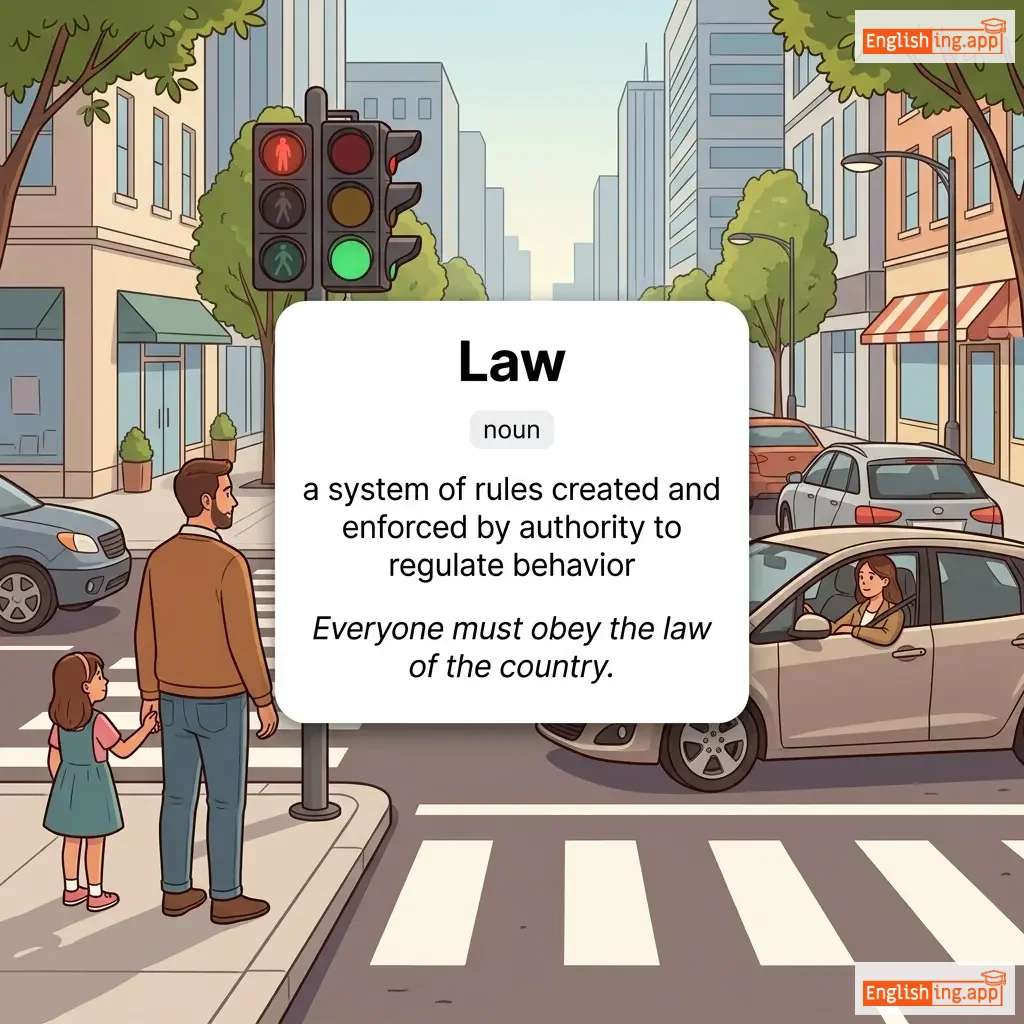
Law definition card — visual illustration of the meaning
noun
/lɔː/
法律 (hōritsu)

a system of rules created and enforced by authority to regulate behavior

"Everyone must obey the law of the country."

"誰もが国の法律に従わなければなりません。" (Dare mo ga kuni no hōritsu ni shitagawanakereba narimasen.)
adjective
/ˈlɔː.fəl/
合法的; 正当な; 有効; 公正; (gōhō-teki; seitōna; yūkō; kōsei;)

legal; legitimate; valid; just

"The judge confirmed that their actions were lawful and proper."

"裁判官は彼らの行動が合法で適切であることを確認しました。" (Saibankan wa karera no kōdō ga gōhō de tekisetsu de aru koto o kakunin shimashita.)
noun
/ˈlɔːˌɡɪvər/
立法者 (rippōsha)

A person who creates or enforces laws; a legislator.

"Moses is often regarded as a great lawgiver in history."

"モーセは歴史の中で偉大な立法者と見なされています。" (Mōse wa rekishi no naka de idaina rippōsha to minasareteimasu.)
adjective
/ˈlɔː.ləs/
無法; 無政府主義; 無秩序; 犯罪者 (muhō; muzōfushugi; muchitsujo; hanzai-sha)

without law; anarchic; unruly; criminal

"The frontier town was known for its lawless behavior and chaos."

"その国境の町は無法行為と混乱で知られていた。" (Sono kokkyō no machi wa muhō kōi to konran de shirarete ita.)
noun
/ˈlɔː.ləs.nəs/
無法状態 (muhou joutai)

absence of law and order; a state where laws do not exist or are not enforced

"The city descended into lawlessness after the government collapsed."

"政府の崩壊後、都市は無法状態に陥った。" (seifu no hōkai go, toshi wa muhō jōtai ni ochitta)
noun
/ˈlɔːˌmeɪkər/
立法者 (rippousha)

A member of a legislative body who makes laws.

"The lawmaker introduced a new bill on education reform."

"立法者は教育改革に関する新しい法案を提出しました。" (Rippousha wa kyōiku kaizen ni kansuru atarashī hōan o teishutsu shimashita.)
noun
/lɔːn/
芝生 (shibafu)

an area of short, regularly cut grass in a yard or park

"Children were playing on the green lawn."

"子供たちは緑の芝生の上で遊んでいました。" (Kodomotachi wa midori no shibafu no ue de asonde imashita.)
noun
/ˈlɔːsuːt/
訴訟 (soshō)

a legal case brought to a court of law by one person against another

"The company faced a lawsuit over false advertising."

"その会社は虚偽広告に関する訴訟に直面した。" (sono kaisha wa kyogi kōkoku ni kansuru soshō ni chokumen shita.)
Lawyer definition card — visual illustration of the meaning
noun
/ˈlɔːjər/
弁護士 (bengoshi)

A professional who practices or studies law; an attorney.

"The lawyer presented the case confidently in court."

"弁護士は自信を持って裁判所で事件を弁護しました。" (Bengoshi wa jishin o motte saiban-sho de jiken o bengo shimashita.)
adjective
/læks/
緩い, だらしない (lax)

Not strict, severe, or careful; negligent or careless.

"The security at the airport was surprisingly lax."

"空港のセキュリティは驚くほど緩かった。" (Kūkō no sekyuriti wa odoroku hodo yurukatta.)
noun, adjective
/ˈlæksətɪv/
下剤 (gezai)

A medicine or substance that stimulates bowel movements; tending to loosen or relieve constipation.

"The doctor prescribed a mild laxative for her condition."

"医者は彼女の状態のために軽い下剤を処方しました。" (Isha wa kanojo no joudai no tame ni karui gezai wo shohou shimashita.)
noun
/ˈleɪ.zi.nəs/
怠惰 (taida)

the quality of being unwilling to work or use energy; idleness

"His laziness prevented him from achieving his goals."

"彼の怠惰さが彼の目標達成を妨げた。" (kare no taida ga kare no mokuhyou tassei o samatageteta)
adjective
/ˈliːdɪŋ/
先導 (sendou)

most important or most successful; at the front

"She is one of the leading experts in the field."

"彼女はその分野で先導的な専門家の一人です。" (Kanojo wa sono bunya de sendou-teki na senmonka no hitori desu.)
leadership definition card — visual illustration of the meaning
noun
/ˈliːdərˌʃɪp/
リーダーシップ (rīdāshippu)

The action of leading a group of people or an organization.

"Her leadership inspired the entire team to achieve their goals."
"彼女のリーダーシップはチーム全体を目標達成に導いた。" (Kanojo no rīdāshippu wa chīmu zentai o mokuhyō tassei ni michibiita.)
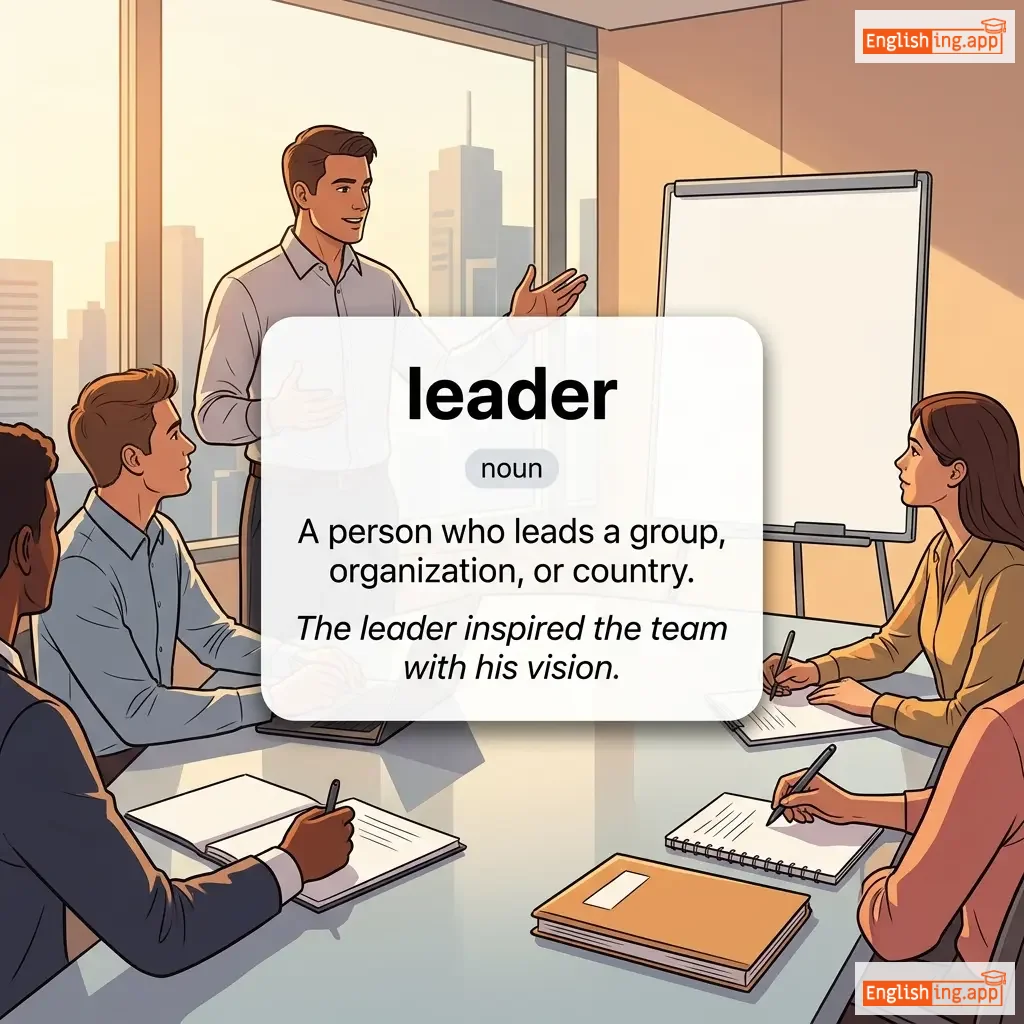
leader definition card — visual illustration of the meaning
noun
/ˈliːdər/
リーダー (rīdā)

A person who leads a group, organization, or country.

"The leader inspired the team with his vision."
"リーダーは彼のビジョンでチームを鼓舞しました。" (Rīdā wa kare no bijon de chīmu o kobu shimashita.)
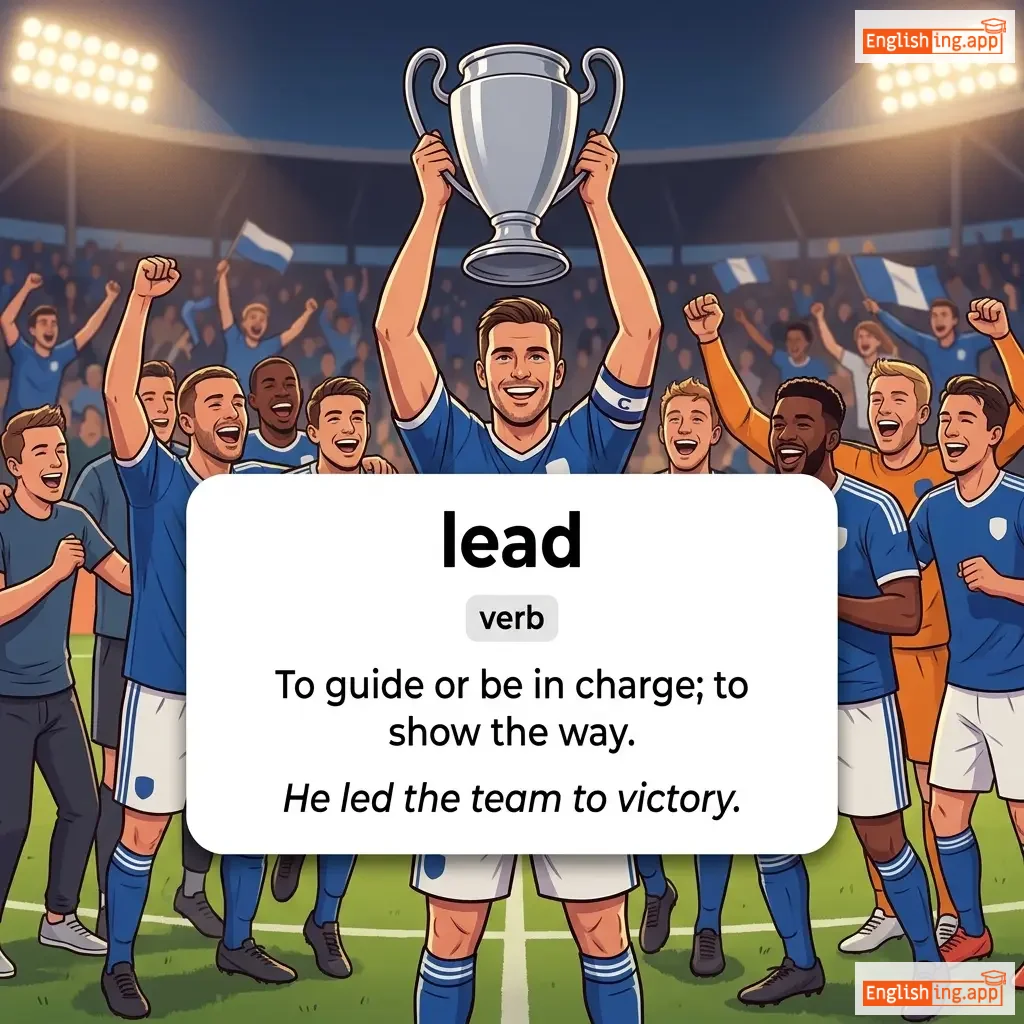
lead definition card — visual illustration of the meaning
verb
/liːd/
導く (michibiku)

To guide or be in charge; to show the way.

"He led the team to victory."

"彼はチームを勝利に導いた。" (Kare wa chīmu o shōri ni michibiita.)
noun
/liː/
草地 (koushi)

An open area of grassy or arable land; a meadow.

"The cottage was surrounded by a quiet lea."

"小屋は静かな草地に囲まれていました。" (Koya wa shizuka na koushi ni kakomarete imashita.)
adjective
/ˈleɪ.zi/
怠け者; 働きたくない (namakemono; hatarakitakunai)

idle; unwilling to work; sluggish

"He was too lazy to clean his room on the weekend."

"彼は週末に部屋を掃除するのが面倒だった。" (Kare wa shuumatsu ni heya o souji suru no ga mendou datta.)
noun
/ˈleɪaʊt/
レイアウト (reiauto)

the arrangement or design of something, especially the arrangement of elements in a book, webpage, or room

"The designer presented a new layout for the website that was much more user-friendly."

"デザイナーはウェブサイトのために新しいレイアウトを提示しました、それはもっとユーザーフレンドリーでした。" (Dezainā wa uebu saito no tame ni atarashī reiauto o teiji shimashita, sore wa motto yūzā furendorī deshita.)
noun
/ˈleɪər/
(sō)

A sheet, thickness, or coating of something that lies over or under a surface.

"The cake had a layer of cream between the sponges."

"ケーキにはスポンジの間にクリームの層がありました。" (Kēki ni wa suponji no aida ni kurīmu no sō ga arimashita.)
noun
/ˈleɪmən/
素人 (shirouto)

A person without professional or specialized knowledge in a particular subject.

"To a layman, the medical explanation was confusing."
"素人にとって、医学の説明は混乱していた。" (shirouto ni totte, igaku no setsumei wa konran shite ita.)
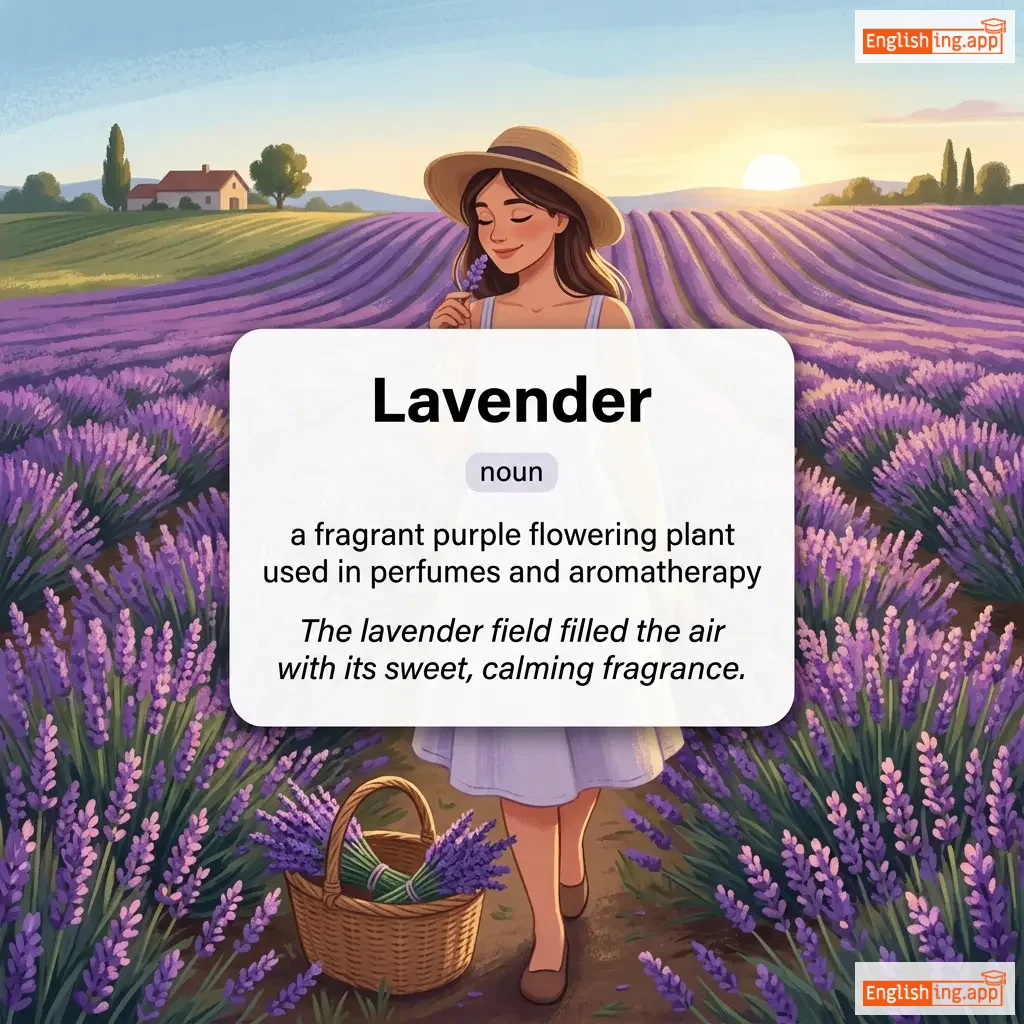
Lavender definition card — visual illustration of the meaning
noun
/ˈlæv.ən.dər/
ラベンダー (rabendā)

a fragrant purple flowering plant used in perfumes and aromatherapy

"The lavender field filled the air with its sweet, calming fragrance."

"ラベンダー畑は、その甘く落ち着く香りで空気を満たしました。" (Rabendā hatake wa, sono amaku ochitsuku kaori de kūki o mitashimashita.)
noun
/ˈleɪˌpɜːrsən/
素人 (shirouto)

A person who is not a member of the clergy or does not have specialized knowledge in a subject.

"The judge explained the law so that the layperson could understand."

"裁判官は法を説明し、素人でも理解できるようにしました。" (Saibankan wa hō o setsumei shi, shirouto demo rikai dekiru yō ni shimashita.)