Словари

Словарь английского языка | Значения слов, определения и примеры
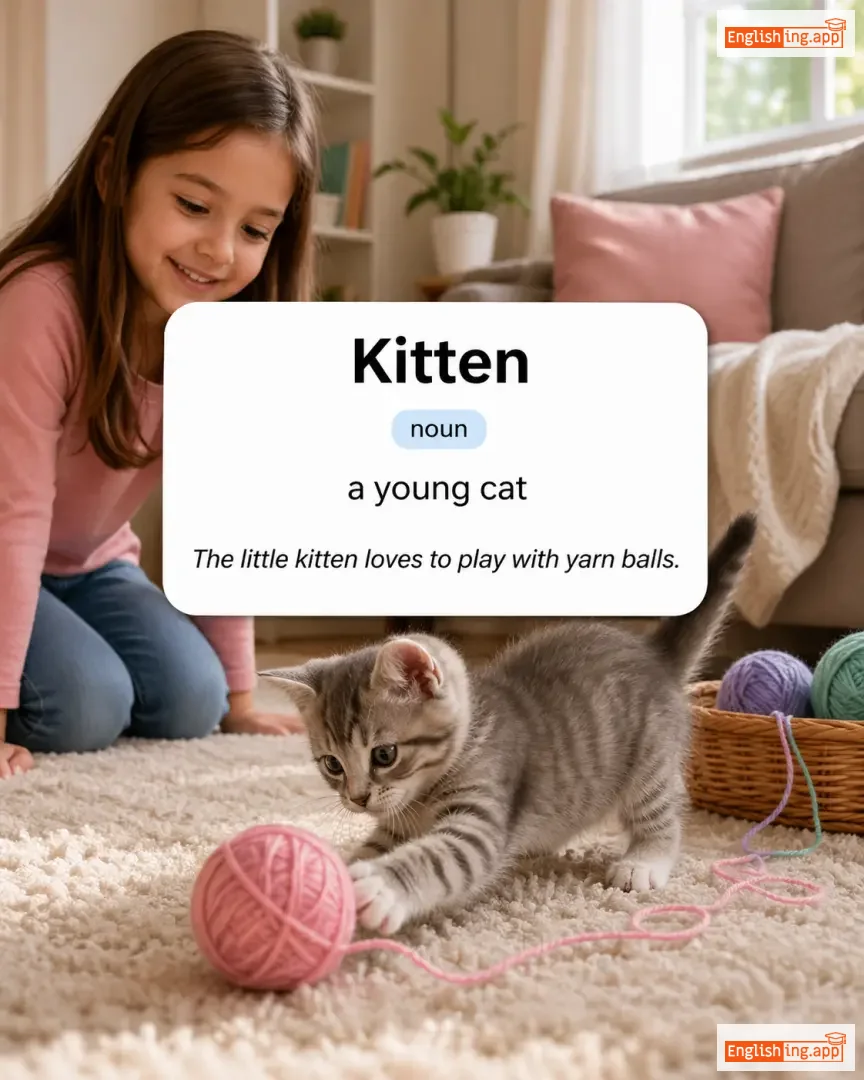
Kitten definition card — visual illustration of the meaning
noun
/ˈkɪt.ən/
котёнок (kotyonok)

a young cat

"The little kitten loves to play with yarn balls."

"Маленький котёнок любит играть с клубками пряжи." (Malen'kiy kotyonok lyubit igrat' s klubkami priazhi.)
noun
/ˈkiː.wi/
киви (kivi)

a small brown fruit with green flesh and black seeds; a flightless bird from New Zealand

"I love eating fresh kiwi for breakfast."

"Я люблю есть свежий киви на завтрак." (Ya lyublyu yest' svezhiy kivi na zavtrak.)
noun
/ˌklɛptəˈmeɪniæk/
человек с неудержимым желанием воровать (chelovek s neuderzhimym zhelaniem vorovat)

A person with an irresistible urge to steal, typically without need or profit.

"The kleptomaniac was caught shoplifting again."

"Клептоман был снова пойман на воровстве в магазине." (Kleptoman byl snova poyman na vorovstve v magazine.)
noun
/næk/
умение (umeniye)

a natural skill or ability; a special talent for doing something easily

"She has a knack for making people feel comfortable."

"У нее есть умение заставить людей чувствовать себя комфортно." (U nee yest' umeniye zastaavit' lyudey chuvstvovat' sebya komfortno.)
adjective (informal, British)
/ˈnæk.ərd/
очень устал (ochen' ustal)

Extremely tired or exhausted.

"After the long hike, I was completely knackered."

"После долгого похода я был совершенно устал." (Posle dolgogo poxoda ya byl sovershenno ustal.)
noun
/neɪv/
гад (gad)

an unprincipled, deceitful, or dishonest man; an old term for a servant or male of low status

"The cunning knave tricked the villagers out of their money."

"Ловкий гад обманул деревенских жителей и украл их деньги." (Lovkiy gad obmanul derevenskikh zhiteley i ukral ikh den'gi.)
noun
/ˈneɪvəri/
обман (obman)

dishonest or deceitful behavior; trickery

"The politician’s knavery was exposed by the media."

"Обман политика был разоблачен СМИ." (Obman politika byl razoblachen SMI.)
verb
/niːd/
месить (mesit')

to work dough or clay into a uniform mixture by pressing, folding, and stretching

"She kneads the dough until it becomes smooth."

"Она месит тесто, пока оно не станет гладким." (Ona mesit testo, poka ono ne stanet gladkim.)
noun
/niː/
счастье (schastye)

the joint between the thigh and the lower leg

"He hurt his knee while playing football."

"Она не могла скрыть своего счастья, когда получила награду." (Ona ne mogla skryt' svoego schast'ya, kogda poluchila nagradu.)
kneel definition card — visual illustration of the meaning
verb
/niːl/
становиться на колени (stanovitsya na koleni)

to position the body by resting on the knees, usually as a sign of respect, prayer, or submission

"They knelt to pray in the temple."

"Они встали на колени, чтобы помолиться в храме." (Oni vstal na koleni, chtoby pomolitsya v khrame.)
noun
/nɛl/
похоронный звон (pokhoronnyy zvon)

The sound of a bell, especially when rung solemnly for a death or funeral; a signal of the end or failure of something.

"The knell of the church bell echoed through the valley at dusk."

"Похоронный звон церкви отразился в долине на закате." (Pokhoronnyy zvon tserkvi otrezalsya v doline na zakate.)
noun
/ˈnɪk.næk/
счастье (schast'ye)

A small decorative object, especially in a house.

"The shelf was full of little knickknacks collected from their travels."
"Она не могла скрыть свое счастье, когда получила награду." (Ona ne mogla skryt' svoe schast'ye, kogda poluchila nagradu.)
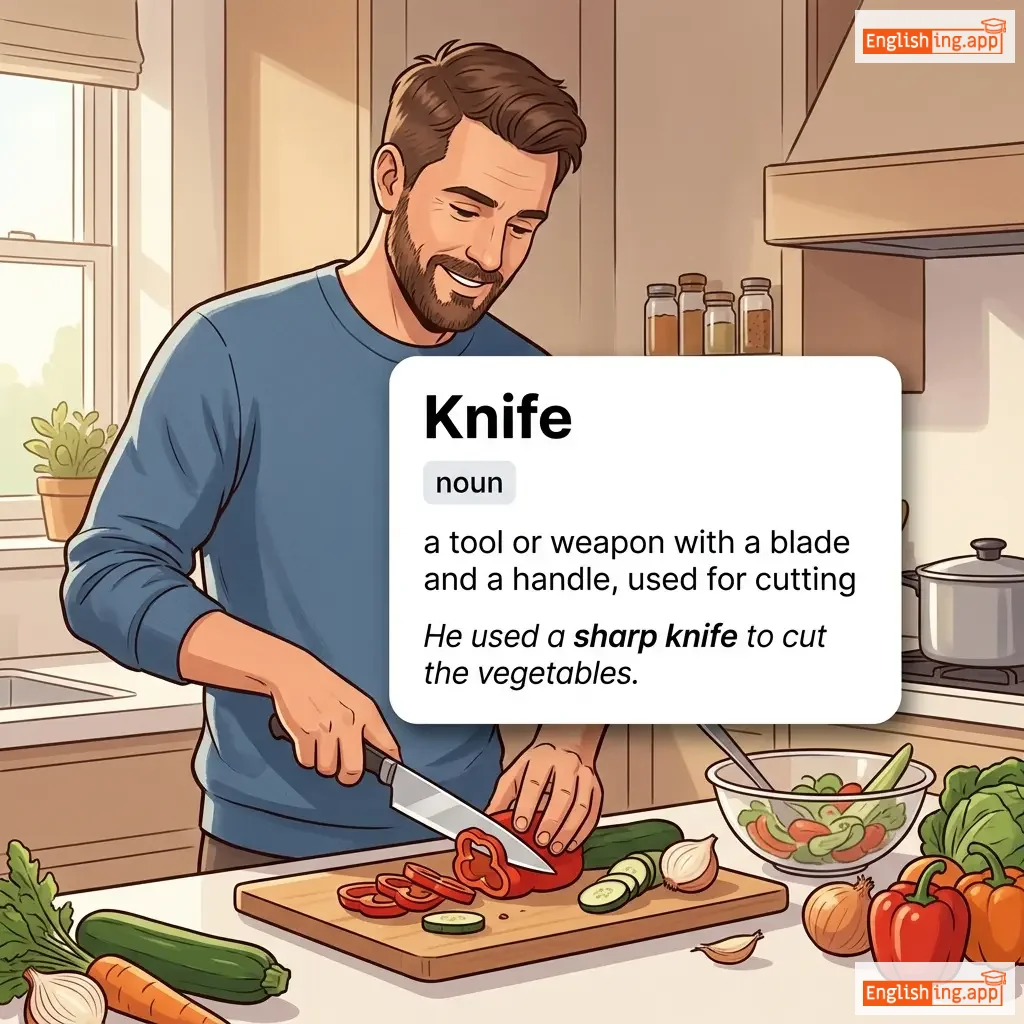
Knife definition card — visual illustration of the meaning
noun
/naɪf/
счастье (schast'ye)

a tool or weapon with a blade and a handle, used for cutting

"He used a sharp knife to cut the vegetables."

"Она не могла скрыть своего счастья, когда получила награду." (Ona ne mogla skryt' svoego schast'ya, kogda poluchila nagradu.)
noun
/naɪt/
счастье (schast'ye)

A man awarded a non-hereditary title by a monarch for service, especially in the past as a mounted soldier in armor.

"The brave knight rode into battle to protect his kingdom."

"Она не могла скрыть своего счастья, когда получила приз." (Ona ne mogla skryt' svoego schast'ya, kogda poluchila priz.)
noun
/ˈnaɪt.hʊd/
рыцарство (rytsarstvo)

The rank or dignity of a knight, or the ceremony of conferring knighthood.

"He was honored with knighthood for his contributions to science."

"Он был удостоен рыцарства за его вклад в науку." (On byl udostoen rytsarstva za ego vklad v nauku.)
adjective
/ˈnaɪt.li/
рыцарский; благородный и храбрый (rytsarskij; blagorodnyj i khrabryj)

having the characteristics of a knight; chivalrous; noble and brave

"He showed knightly courage in defending the innocent."

"Он показал рыцарское мужество, защищая невинных." (On pokazal rytsarskoe muzhesvo zashchishchaya nevinnykh.)
verb
/nɪt/
вязать (vyazat)

To make clothes or fabric by interlocking loops of yarn with needles.

"She loves to knit scarves for her friends during the winter."

"Она любит вязать шарфы для своих друзей зимой." (Ona lyubit vyazat' sharfyi dlya svoikh druzey zimoy.)
noun; gerund
/ˈnɪtɪŋ/
вязание (vyazanie)

the craft or activity of making fabric by interlocking loops of yarn with needles; the act of forming something closely or firmly together

"She spends her evenings knitting scarves for her family."

"Она по вечерам занимается вязанием для своей семьи." (ona po vecheram zanimaetsya vyazaniem dlya svoei semi)
noun
/nɒb/
круглая ручка на двери или ящике; маленький круглый переключатель на машине (kruglaya ruchka na dveri ili yashchike; malen'kiy kruglyy perekljuchatel' na mashine)

a rounded handle on a door or drawer; a small rounded switch on a machine

"He turned the brass knob to open the old wooden door."
"Он повернул латунную ручку, чтобы открыть старую деревянную дверь." (On povernul latunnuyu ruchku, chtoby otkryt' staruyu derevyannuyu dver'.)
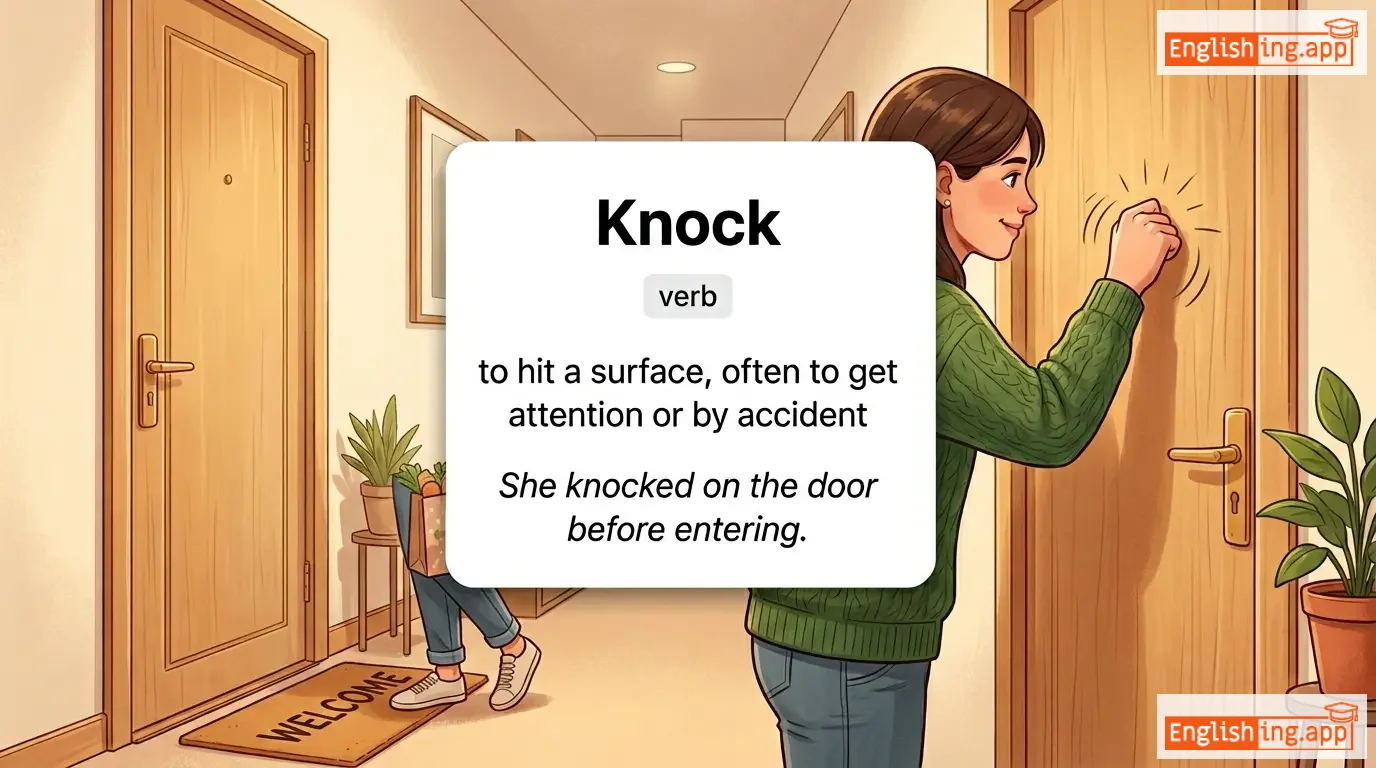
Knock definition card — visual illustration of the meaning
verb
/nɒk/
стучать в дверь (stuchat v dver)

to hit a surface, often to get attention or by accident

"She knocked on the door before entering."
"Она постучала в дверь перед тем, как войти." (Ona postuchala v dver pered tem, kak voiti.)
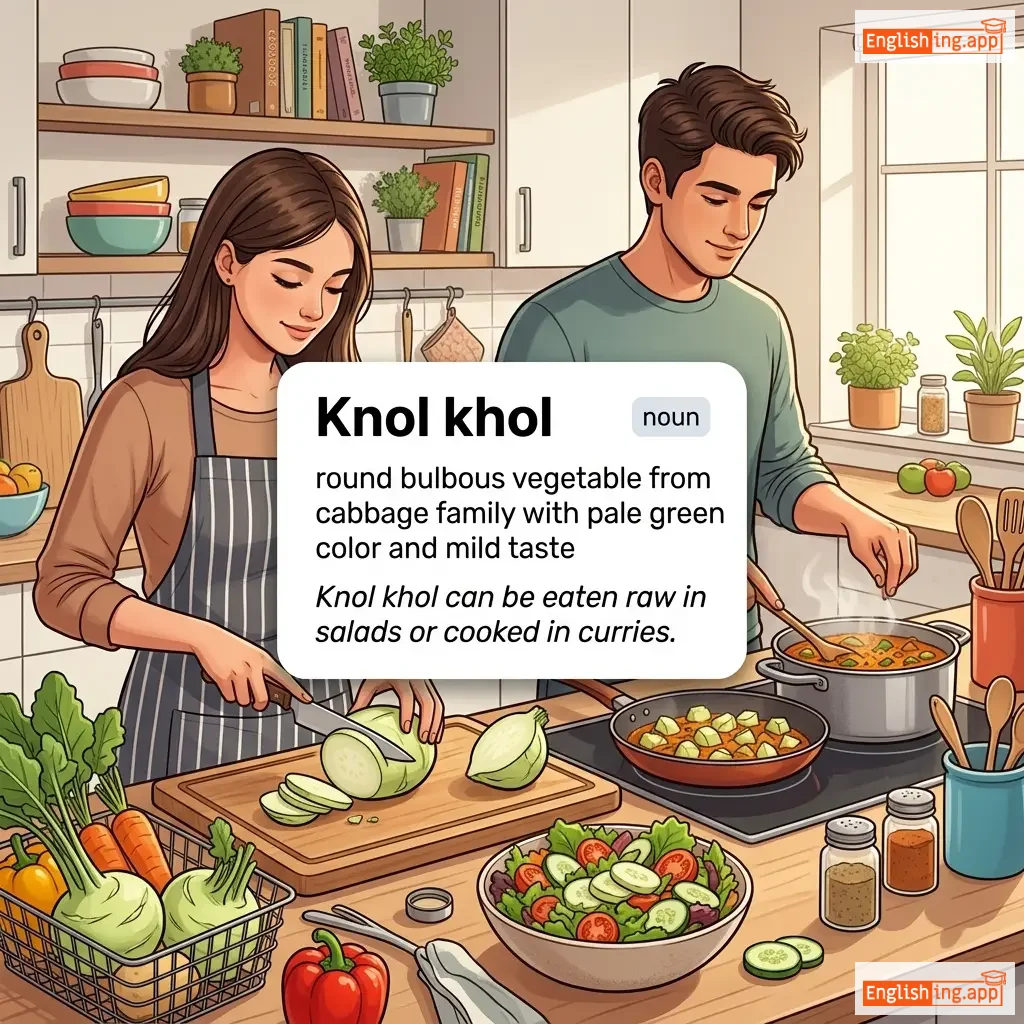
Knol khol definition card — visual illustration of the meaning
noun
/noʊl koʊl/
кулькхаби (kulkhabi)

round bulbous vegetable from cabbage family with pale green color and mild taste

"Knol khol can be eaten raw in salads or cooked in curries."

"Кулькхаби можно есть сырым в салатах или готовить в карри." (Kulkhabi mozhno yest' syrym v salatakh ili gotovit' v karri)
noun
/noʊl/
холм (kholm)

A small, rounded hill or mound.

"They had a picnic on the grassy knoll."

"Они устроили пикник на травяном холме." (oni ustroili piknik na travyanom kholme.)
noun
/nɒt/
узел (uzel)

A fastening made by tying a piece of string, rope, or something similar.

"She tied the ribbon into a neat knot."

"Она завязала ленту в аккуратный узел." (Ona zavyazala lentu v akkuratnyy uzel.)
adjective
/ˈnɒti/
сложный (slozhny)

Complicated, difficult to solve or full of knots.

"He faced a knotty legal issue."
"Он столкнулся с сложной юридической проблемой." (On stolknulsya s slozhnoy yuridicheskoy problemoy.)
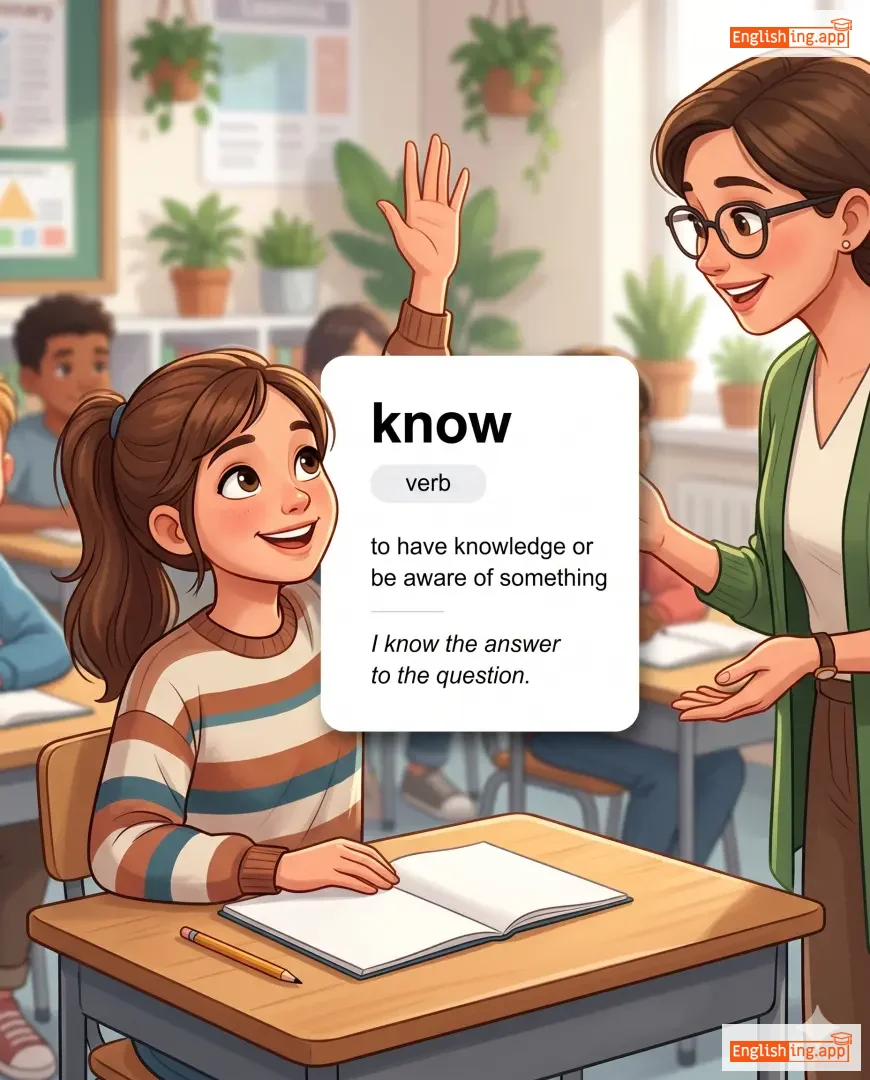
know definition card — visual illustration of the meaning
verb
/noʊ/
знать (znat)

to have knowledge or be aware of something

"I know the answer to the question."

"Я знаю ответ на вопрос." (Ya znayu otvet na vopros.)
lay definition card — visual illustration of the meaning
verb
/leɪ/
положить (polozhit)

To put something down carefully in a flat position.

"She laid the book on the table."

"Она положила книгу на стол." (Ona polozhila knigu na stol.)
adjective, verb
/ˈlævɪʃ/
роскошный, расточительный (lavish)

Rich, elaborate, or luxurious; to bestow something in generous or extravagant quantities.

"They gave her a lavish wedding reception with hundreds of guests."
"Они устроили для неё роскошный свадебный прием с сотнями гостей." (Oni ustroili dlya nee roskoshnyy svadebnyy priyem s sotnyami gostey.)
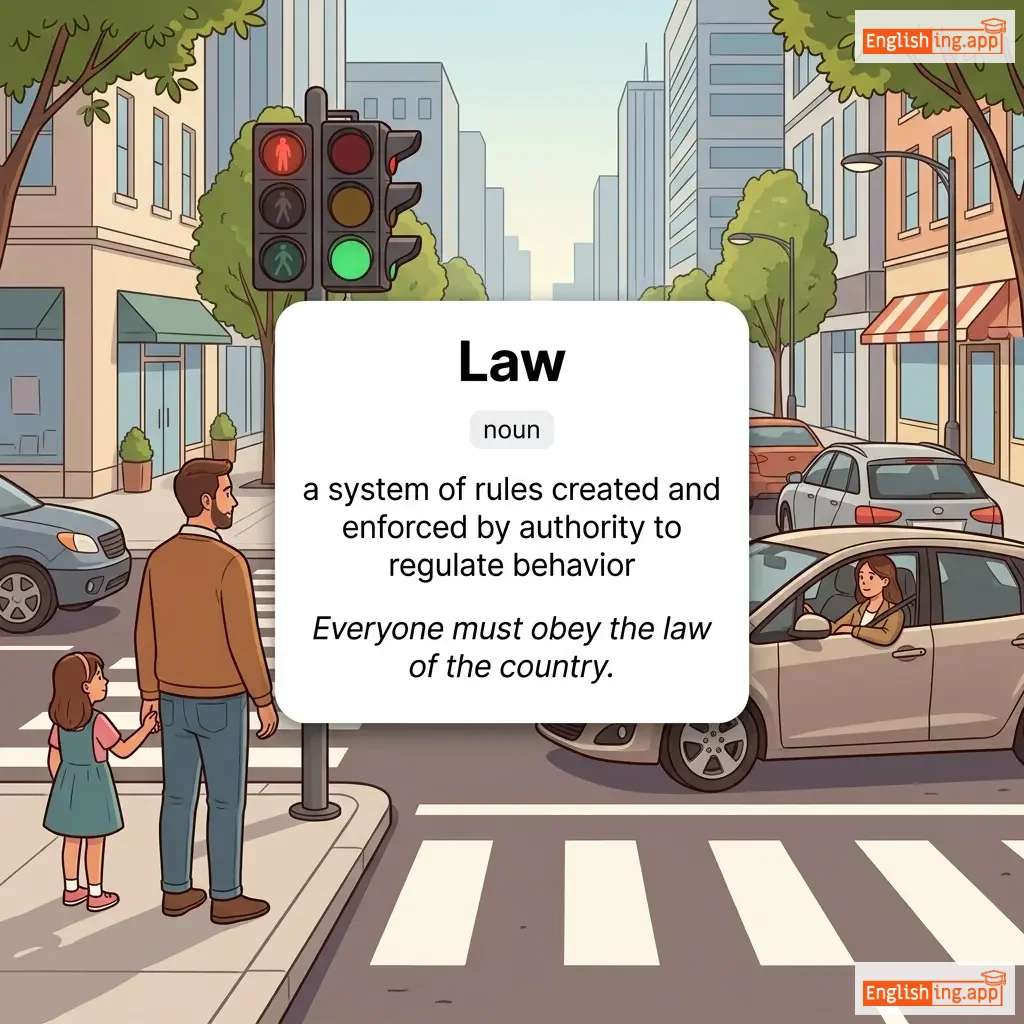
Law definition card — visual illustration of the meaning
noun
/lɔː/
закон (zakon)

a system of rules created and enforced by authority to regulate behavior

"Everyone must obey the law of the country."

"Все должны соблюдать закон страны." (Vse dolzhny soblyudat' zakon strany.)
adjective
/ˈlɔː.fəl/
законный; легитимный; действительный; справедливый; (zakonnyj; legitimnyj; dejstvitel'nyj; spravedlivyj;)

legal; legitimate; valid; just

"The judge confirmed that their actions were lawful and proper."

"Судья подтвердил, что их действия были законными и правильными." (Sud'ya podtverdit, chto ikh deystviya byli zakonny i pravil'ny.)
noun
/ˈlɔːˌɡɪvər/
законодатель (zakonodatel)

A person who creates or enforces laws; a legislator.

"Moses is often regarded as a great lawgiver in history."

"Моисей часто рассматривается как великий законодатель в истории." (Moisey chasto rassmatrivayetsya kak velikiy zakonodatel v istorii.)
adjective
/ˈlɔː.ləs/
беззаконие; анархия; беспорядок; преступник (bezzakonije; anarkhiya; besporyadok; prestupnik)

without law; anarchic; unruly; criminal

"The frontier town was known for its lawless behavior and chaos."

"Приграничный город был известен своим беззаконием и хаосом." (Prigranichnyy gorod byl izvesten svoim bezzakoniyem i khaosom.)
noun
/ˈlɔː.ləs.nəs/
беззаконие (bezzakonije)

absence of law and order; a state where laws do not exist or are not enforced

"The city descended into lawlessness after the government collapsed."

"Город погрузился в беззаконие после того, как правительство развалилось." (Gorod pogruzilsia v bezzakonije posle togo, kak pravitel'stvo razvalilos'.)
noun
/ˈlɔːˌmeɪkər/
законодатель (zakonodatel)

A member of a legislative body who makes laws.

"The lawmaker introduced a new bill on education reform."

"Законодатель представил новый законопроект о реформе образования." (Zakonodatel predstavil novyj zakonoproekt o reforme obrazovanija.)
noun
/lɔːn/
газон (gazon)

an area of short, regularly cut grass in a yard or park

"Children were playing on the green lawn."

"Дети играли на зелёной лужайке." (Deti igrali na zelyonoy luzhayke.)
noun
/ˈlɔːsuːt/
иск (isk)

a legal case brought to a court of law by one person against another

"The company faced a lawsuit over false advertising."

"Компания столкнулась с иском за ложную рекламу." (Kompaniya stolknulas' s iskom za lozhnuyu reklamu.)
Lawyer definition card — visual illustration of the meaning
noun
/ˈlɔːjər/
адвокат (advokat)

A professional who practices or studies law; an attorney.

"The lawyer presented the case confidently in court."

"Адвокат уверенно представил дело в суде." (Advokat uverenno predstavil delo v sude.)
adjective
/læks/
небрежный, расслабленный (lax)

Not strict, severe, or careful; negligent or careless.

"The security at the airport was surprisingly lax."

"Безопасность в аэропорту была удивительно нестрогой." (Bezopasnost' v aeroporte byla udivitel'no nestrogoi.)
noun, adjective
/ˈlæksətɪv/
слабительное (slabitelnoye)

A medicine or substance that stimulates bowel movements; tending to loosen or relieve constipation.

"The doctor prescribed a mild laxative for her condition."

"Врач прописал мягкое слабительное для её состояния." (Vrach propisal myagkoye slabitelnoye dlya yeye sostoyaniya.)
noun
/ˈleɪ.zi.nəs/
лень (len)

the quality of being unwilling to work or use energy; idleness

"His laziness prevented him from achieving his goals."

"Его лень помешала ему достичь своих целей." (Ego len' pomeshala emu dostich' svoikh tseley)
adjective
/ˈliːdɪŋ/
ведущий (vedushchiy)

most important or most successful; at the front

"She is one of the leading experts in the field."

"Она одна из ведущих экспертов в этой области." (Ona odna iz vedushchikh eksperty v etoy oblasti.)
leadership definition card — visual illustration of the meaning
noun
/ˈliːdərˌʃɪp/
лидерство (liderstvo)

The action of leading a group of people or an organization.

"Her leadership inspired the entire team to achieve their goals."
"Ее лидерство вдохновило всю команду на достижение своих целей." (Yeyo liderstvo vdokhnovilo vsyu komandu na dostizheniye svoikh tseley.)
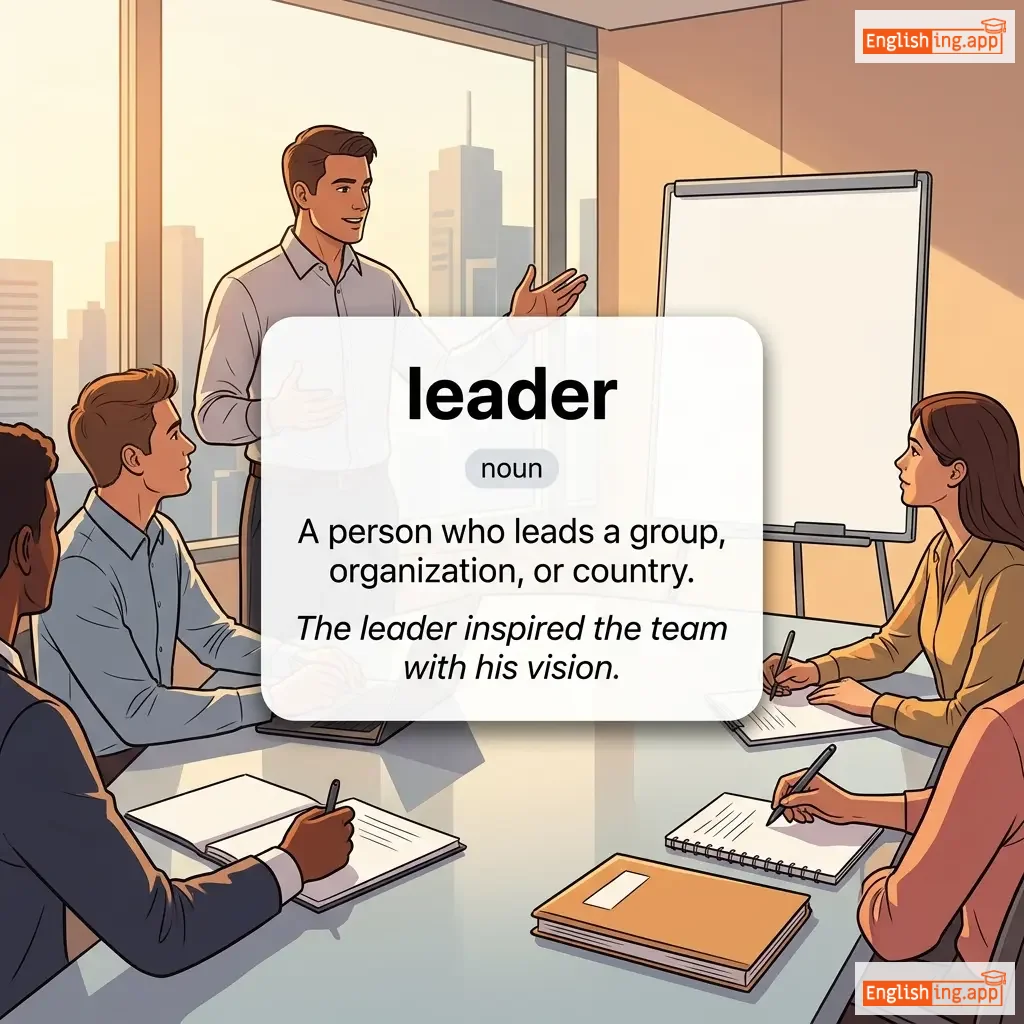
leader definition card — visual illustration of the meaning
noun
/ˈliːdər/
лидер (lider)

A person who leads a group, organization, or country.

"The leader inspired the team with his vision."
"Лидер вдохновил команду своей визией." (Lider vdokhnovil komandu svoej viziej.)
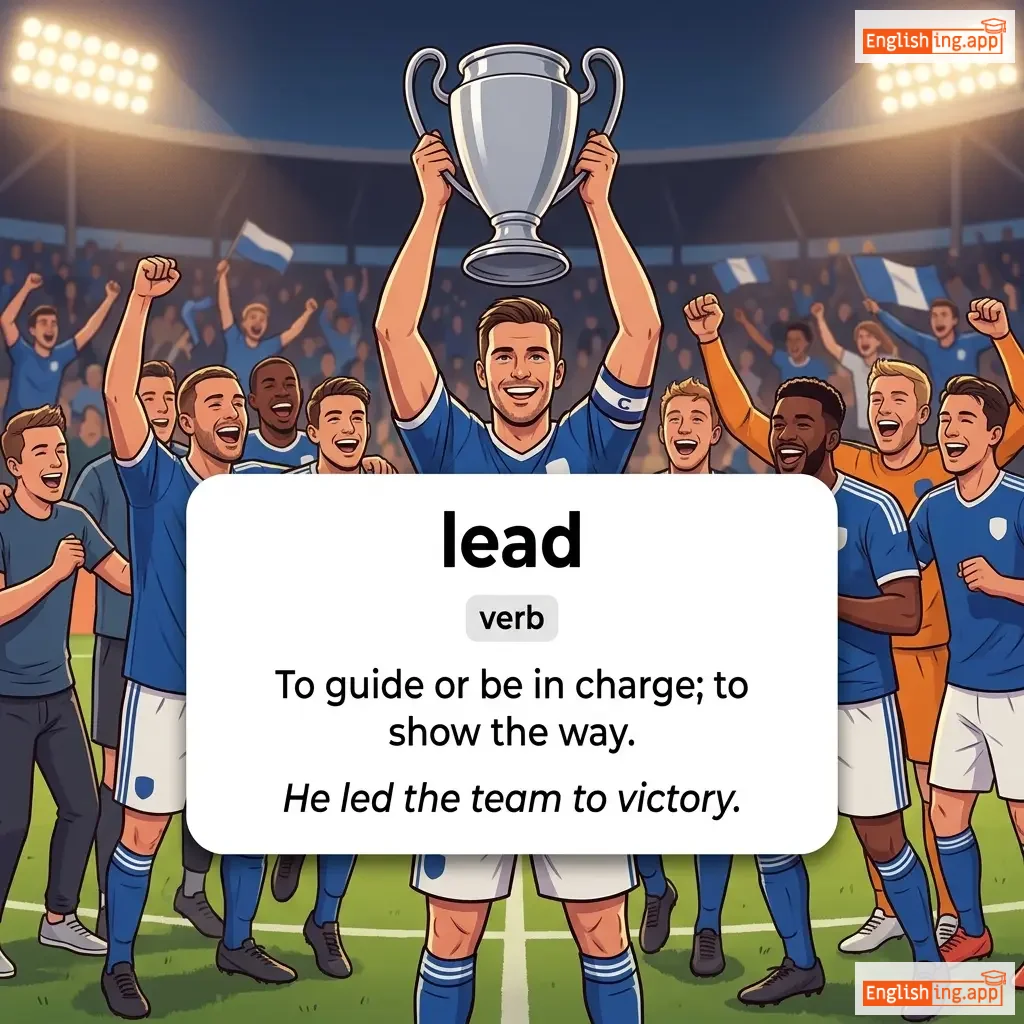
lead definition card — visual illustration of the meaning
verb
/liːd/
вести (vesti)

To guide or be in charge; to show the way.

"He led the team to victory."

"Он повел команду к победе." (On povel komandu k pobede.)
noun
/liː/
луг (lug)

An open area of grassy or arable land; a meadow.

"The cottage was surrounded by a quiet lea."

"Коттедж был окружен тихим луговым участком." (Kottedzh byl okruzhion tikhim lugovym uchastkom.)
adjective
/ˈleɪ.zi/
ленивый; неохотный работать (lenivyy; neokhotny rabotat)

idle; unwilling to work; sluggish

"He was too lazy to clean his room on the weekend."

"Он был слишком ленив, чтобы на выходных убрать свою комнату." (On byl slishkom leniv, chtoby na vykhodnykh ubrat' svoju komnatu.)
noun
/ˈleɪaʊt/
макет (maket)

the arrangement or design of something, especially the arrangement of elements in a book, webpage, or room

"The designer presented a new layout for the website that was much more user-friendly."

"Дизайнер представил новый макет для веб-сайта, который был гораздо более удобным для пользователя." (Dizajner predstavил novyj maket dlya veb-sajta, kotoryj byl gorazdo bolee udobnym dlya pol'zovatelya.)
noun
/ˈleɪər/
слой (sloy)

A sheet, thickness, or coating of something that lies over or under a surface.

"The cake had a layer of cream between the sponges."

"Торт имел слой крема между бисквитами." (Tort imel sloy krema mezhdu biskvitami.)
noun
/ˈleɪmən/
непрофессионал (neprofessional)

A person without professional or specialized knowledge in a particular subject.

"To a layman, the medical explanation was confusing."
"Для непрофессионала медицинское объяснение было сбивающим с толку." (Dlya neprofessional'a meditsinskoe ob'yasnenie bylo sbivayushchim s tolkum.)
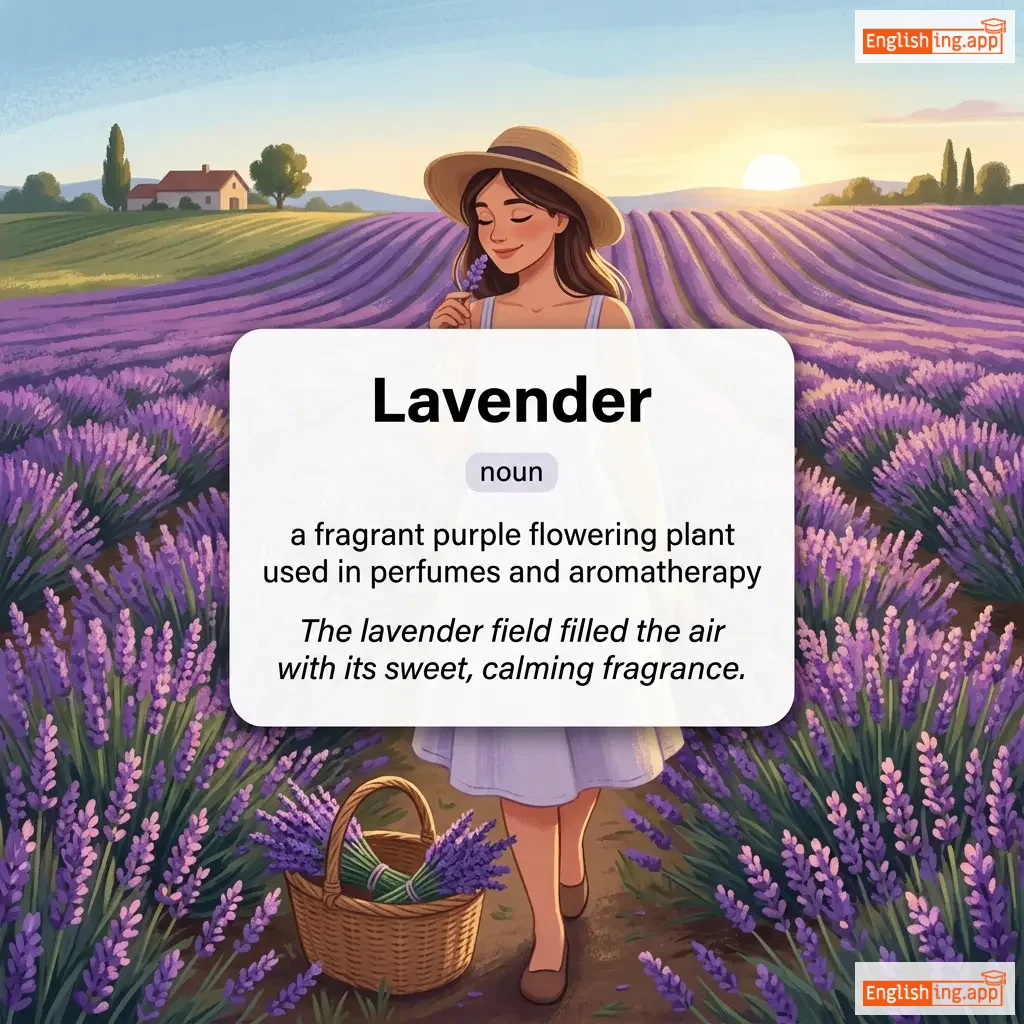
Lavender definition card — visual illustration of the meaning
noun
/ˈlæv.ən.dər/
лаванда (lavanda)

a fragrant purple flowering plant used in perfumes and aromatherapy

"The lavender field filled the air with its sweet, calming fragrance."

"Лаванда наполнила воздух своим сладким, успокаивающим ароматом." (Lavanda napolnila vozdukh svoim sladkim, uspokaivayushchim aromatom.)
noun
/ˈleɪˌpɜːrsən/
непрофессионал (neprofessional)

A person who is not a member of the clergy or does not have specialized knowledge in a subject.

"The judge explained the law so that the layperson could understand."

"Судья объяснил закон так, чтобы непрофессионал мог его понять." (Sud'ya ob'yasnil zakon tak, chtoby neprofessional mog ego ponyat'.)