Словари

Словарь английского языка | Значения слов, определения и примеры

adjective, verb
/ˈlævɪʃ/
роскошный, расточительный (lavish)

Rich, elaborate, or luxurious; to bestow something in generous or extravagant quantities.

"They gave her a lavish wedding reception with hundreds of guests."
"Они устроили для неё роскошный свадебный прием с сотнями гостей." (Oni ustroili dlya nee roskoshnyy svadebnyy priyem s sotnyami gostey.)
Lavender definition card — visual illustration of the meaning
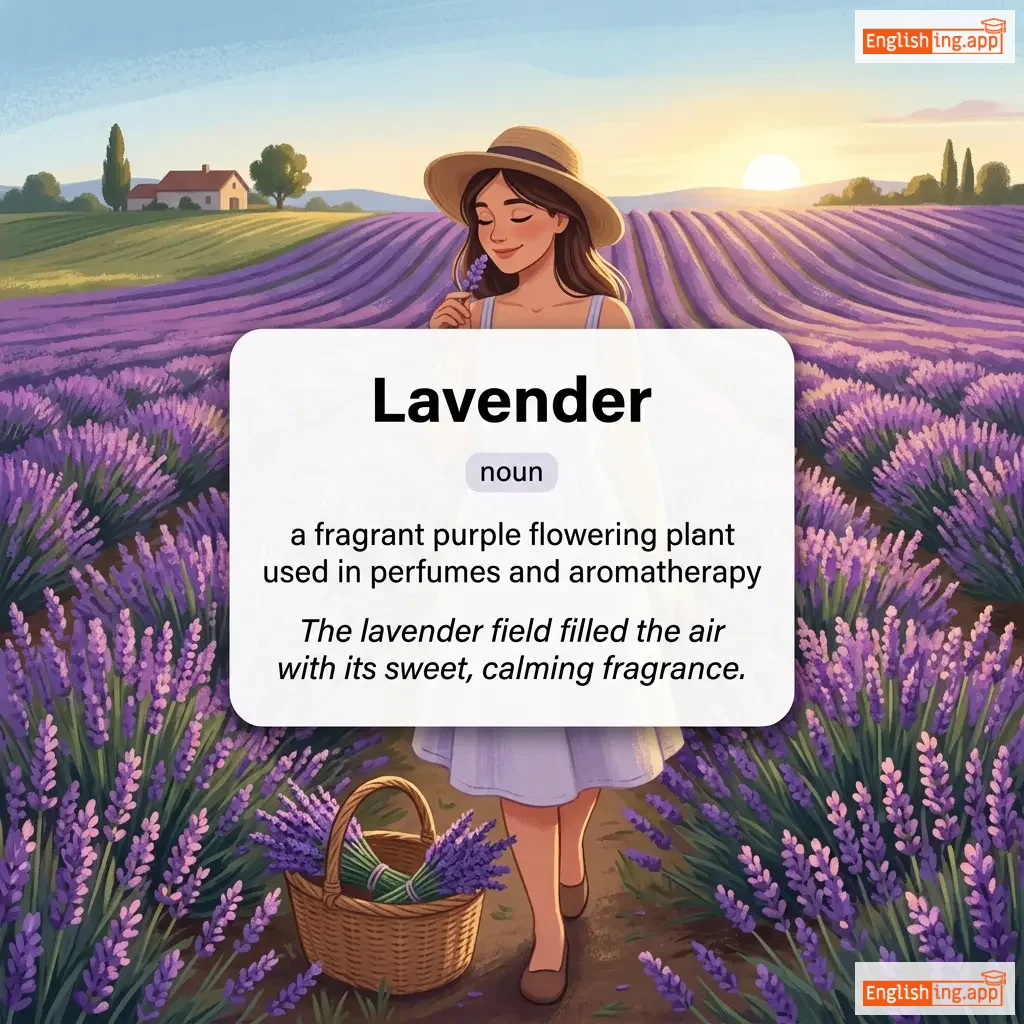
noun
/ˈlæv.ən.dər/
лаванда (lavanda)

a fragrant purple flowering plant used in perfumes and aromatherapy

"The lavender field filled the air with its sweet, calming fragrance."

"Лаванда наполнила воздух своим сладким, успокаивающим ароматом." (Lavanda napolnila vozdukh svoim sladkim, uspokaivayushchim aromatom.)
verb
/leɪv/
мыть (myt')

To wash or bathe.

"She laved her face with cool water."

"Она вымыла лицо холодной водой." (Ona vymyla litso kholodnoy vodoy.)
noun
/ˈlɔːriət/
лауреат (laureat)

A person honored with an award for outstanding achievement in a field, especially the arts or sciences.

"The Nobel laureate gave an inspiring lecture on peace."

"Нобелевский лауреат прочитал вдохновляющую лекцию о мире." (Nobelevskiy laureat prochital vdokhnovlyayushchuyu lektsiyu o mire.)
laundry definition card — visual illustration of the meaning
noun
/ˈlɔːndri/
счастье (schast'ye)

clothes or linens that need to be washed or have been washed

"She folded the clean laundry neatly."

"Она не смогла скрыть своего счастья, когда получила награду." (Ona ne smogla skryt' svoego schast'ya, kogda poluchila nagradu.)
noun
/ˈlɔːndrəs/
прачка (prachka)

A woman whose job is washing clothes and linens.

"The laundress delivered the freshly cleaned clothes to the household."

"Прачка доставила только что выстираную одежду в дом." (Prachka dostavila tolkо chto vystiranuyu odezhdu v dom)
verb
/ˈlɔːndər/
стирка одежды / сокрытие происхождения незаконно полученных денег (stirka odezhdy / sokrytie proiskhozhdeniya nezakonno poluchennykh deneg)

to wash clothes, linens, etc.; or to conceal the origins of money obtained illegally

"She laundered all the dirty clothes on Sunday."

"Она постирала всю грязную одежду в воскресенье." (Ona postirala vsyu gryaznuyu odezhdu v voskresen'ye.)
launched definition card — visual illustration of the meaning
verb
lɔːntʃt
запущен (zapushchen)

Set (something) in motion by pushing it or letting it go.

"The satellite was launched successfully."

"Спутник был успешно запущен." (Sputnik byl uspeshno zapushchen.)
Launch definition card — visual illustration of the meaning
verb, noun
/lɔːntʃ/
запустить (zapustit)

to start or introduce something, especially a new product, service, or event

"The company launched a new app last month."

"Компания запустила новое приложение в прошлом месяце." (Kompanija zapustila novoe prilozhenie v proshlom mesyatse.)
noun
/ˈlæftər/
смех (smekh)

the act or sound of laughing

"The room was filled with laughter."

"Комната была полна смеха." (Komnata byla polna smekha.)
laugh definition card — visual illustration of the meaning
verb, noun
/læf/
смеяться (smejat'sja)

to make sounds and movements of the face that show amusement or joy

"They laughed loudly at the comedian's joke."

"Они громко смеялись над шуткой комика." (Oni gromko smeyalis' nad shutkoj komika.)
adjective
/ˈlɔːdəˌtɔːri/
похвальный (pokhval'nyy)

Expressing praise or admiration.

"She wrote a laudatory review of the new book."

"Она написала похвальный обзор новой книги." (Ona napisala pokhval'nyy obzor novoy knigi.)
noun
/lɔːˈdeɪʃən/
похвала (pokhvala)

The act of praising or expressing approval.

"The poet received much laudation for his moving verses."

"Поэт получил много похвалы за свои трогательные стихи." (Poet poluchil mnogo pokhvaly za svoi trogatelnye stikhi.)
adjective
/ˈlɔː.də.bəl/
достойный похвалы (dostoynyy pokhvaly)

Deserving praise and admiration.

"Her efforts to help the poor are truly laudable."

"Её усилия помочь бедным действительно достойны похвалы." (Yeyo usiliya pomoch' bednym deystvitel'no dostoyny pokhvaly.)
laud definition card — visual illustration of the meaning
👏

laud

verb
/lɔːd/

To praise someone or something highly, especially in public.

"The critic lauded the actor's performance as a masterpiece."

noun
/ˈlætɪs/
решетчатая структура (reshetchataya struktura)

A structure of crossed strips arranged in a grid or crisscross pattern.

"The garden was decorated with a wooden lattice covered in vines."

"Сад был украшен деревянной решетчатой конструкцией, покрытой лозами." (Sad byl ukrasheny drevnyannoy reshetchatoy konstruktsiyey, pokrytoy lozami.)
adjective
/ˈlætər/
второй (vtoroy)

the second of two people or things mentioned

"Between tea and coffee, I prefer the latter."

"Между чаем и кофе я предпочитаю второй." (Mezhdu chayem i kofe ya predpochitayu vtoroy.)
noun
/ˈlætɪˌtjuːd/
широта (shirota)

The angular distance north or south of the equator; also freedom or scope to act.

"The city lies at a high latitude close to the Arctic Circle."

"Город находится на высокой широте рядом с Арктическим кругом." (Gorod nakhoditsya na vysokoy shirote ryadom s Arkticheskim krugom.)
adjective
/ˈleɪ.tɪʃ/
немного поздно (nemnogo pozdno)

Somewhat late; occurring or arriving later than usual but not very late.

"We arrived latish to the party but still caught most of the fun."

"Мы приехали немного поздно на вечеринку, но все равно успели насладиться большей частью веселья." (My priekhali nemnogo pozdno na vecherinku, no vse ravno uspelI naslazhdatsya bol'sheye chastyu veselya.)
noun/adjective
/ˈlætɪn/
латинский (latinskiy)

the language of ancient Rome; relating to Latin culture or language

"Many English words are derived from Latin."

"Многие английские слова произошли от латинского языка." (Mnogie angliyskie slova proishli ot latinskogo yazyka.)
noun
/leɪð/
токарный станок (tokarnyy stanok)

A machine for shaping wood, metal, or other material by rotating it against a cutting tool.

"The carpenter used a lathe to shape the wooden bowl."

"Плотник использовал токарный станок для обработки деревянной чаши." (Plotnik ispol'zoval tokarnyy stanok dlya obrabotki derevyannoy chashi.)
adjective
/ˈleɪtɪst/
последний (posledniy)

most recent in time; newest available

"She shared the latest updates with the team."

"Она поделилась последними обновлениями с командой." (ona podelilas poslednimi obnovleniyami s komandoy)
adjective
/ˈlætərəl/
боковой (bokovoy)

Relating to the side or sideways movement.

"The football player made a quick lateral pass."
"Футболист сделал быстрый боковой пас." (Futbolist sdelal bystryy bokovoy pas.)
later definition card — visual illustration of the meaning
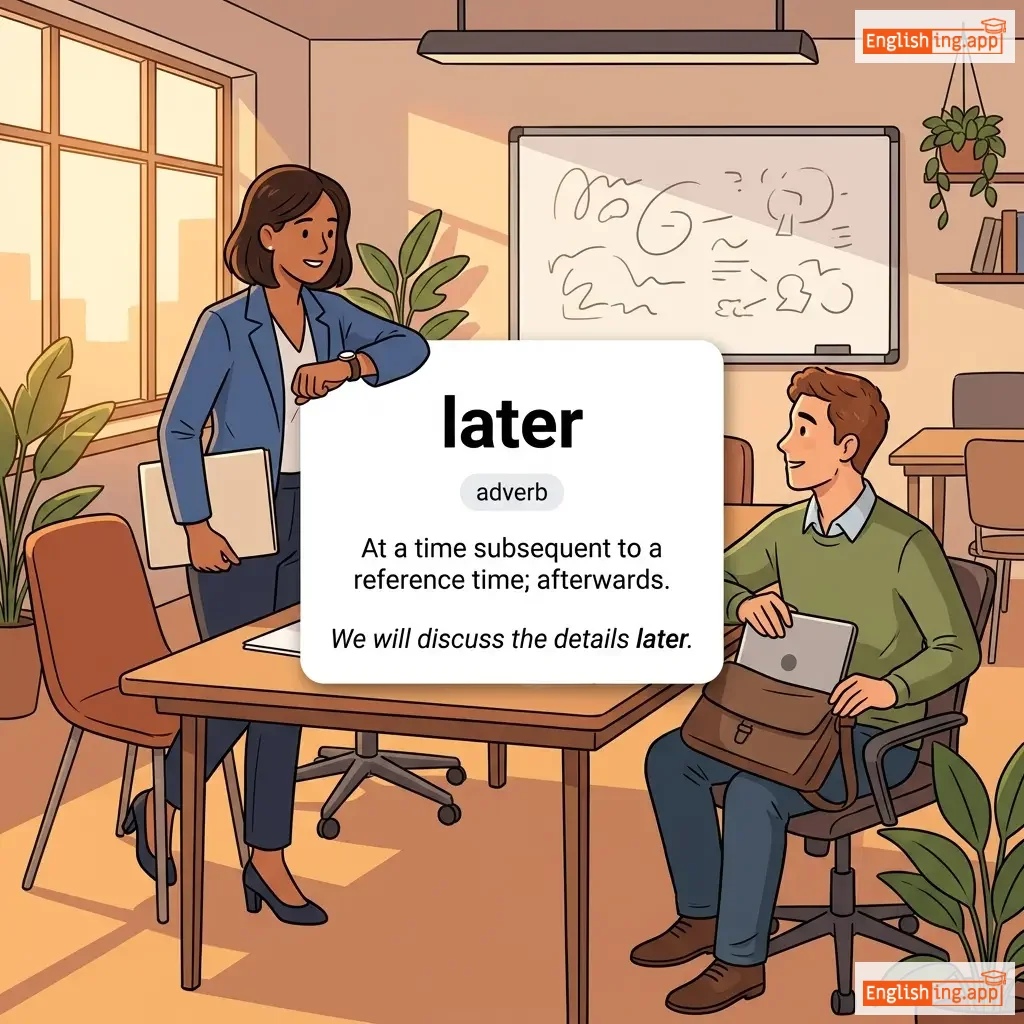
adverb
/ˈleɪtər/
позже (pozzhe)

At a time subsequent to a reference time; afterwards.

"We will discuss the details later."
"Мы обсудим детали позже." (My obsudim detali pozhe.)
latent definition card — visual illustration of the meaning
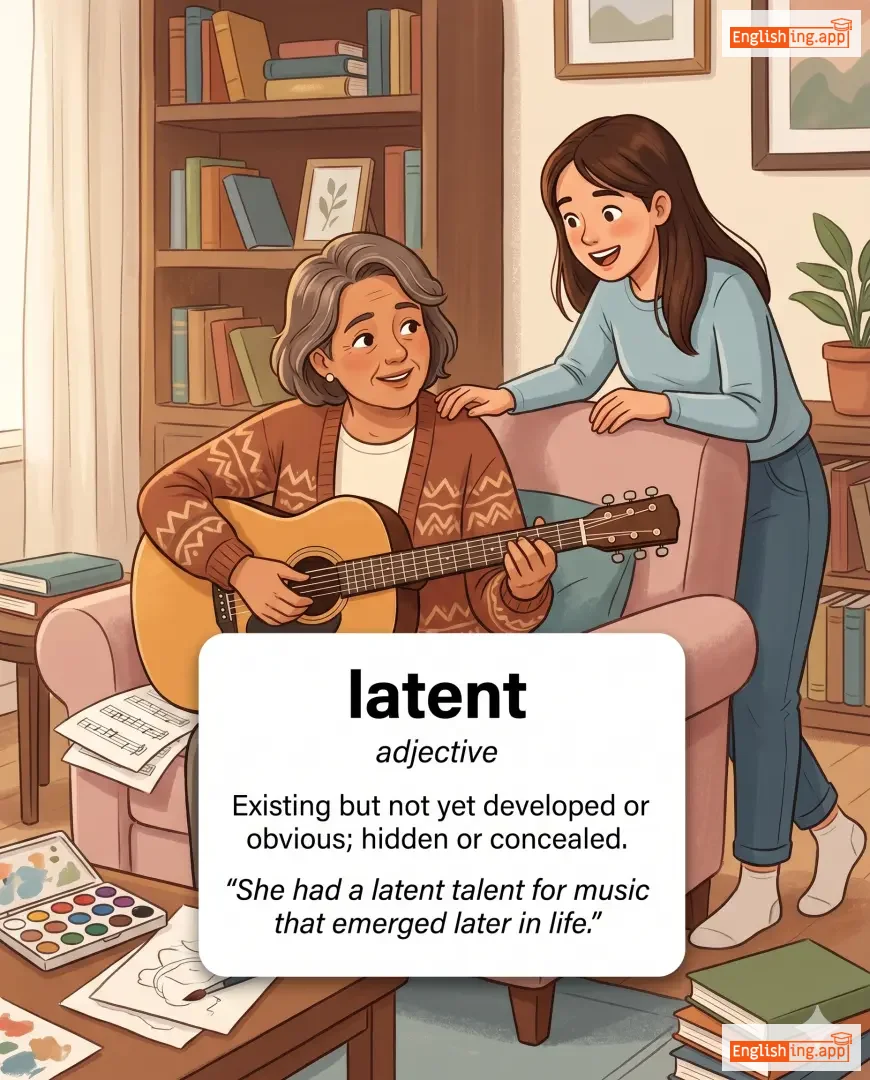
adjective
/ˈleɪtənt/
скрытый (skrytyy)

Existing but not yet developed or obvious; hidden or concealed.

"She had a latent talent for music that emerged later in life."

"У нее был скрытый талант к музыке, который проявился позже в жизни." (U nee byl skrytyy talant k muzyke, kotoryy proyavilsya pozhe v zhizni.)
latency definition card — visual illustration of the meaning
noun
/ˈleɪtənsi/
задержка (zaderzhka)

The delay before a transfer of data begins following an instruction for its transfer.

"High latency can slow down online gaming experiences."

"Высокая задержка может замедлить онлайн-игры." (Vysokaya zaderzhka mozhet zamedlit' onlayn-igry.)
Ladle definition card — visual illustration of the meaning
noun, verb
/ˈleɪ.dl̩/
счастье (schastye)

A large spoon for serving soup or liquids; to serve with such a spoon.

"She used a ladle to serve the hot soup into bowls."

"Она не смогла скрыть своего счастья, когда получила награду." (Ona ne smogla skryt' svoego schast'ya, kogda poluchila nagradu.)
noun/verb
/læk/
недостаток (nedostatok)

The state of being without or not having enough of something.

"He failed the exam due to a lack of preparation."

"Он провалил экзамен из-за недостатка подготовки." (On provalil ekzamen iz-za nedostatka podgotovki.)
adjective
/ˌlækəˈdeɪzɪkəl/
небрежный или ленивый (nebrezhnyy ili lenivyy)

lacking enthusiasm, energy, or determination; careless or lazy

"His lackadaisical attitude toward work annoyed his boss."

"Его небрежное отношение к работе раздражало его начальника." (Ego nebrezhnoe otnoshenie k rabote razdrazhalo ego nachal'nika.)
noun
/ˈlæki/
паж (pazh)

a person who is overly willing to serve or obey someone else

"He treated his assistant like a mere lackey."

"Он относился к своему помощнику как к простому пажу." (On otnosilsya k svoemu pomoshchniku kak k prostomu pazhu.)
adjective
/ˈlækɪŋ/
нехватка (nekhatka)

not having enough of something; missing

"His report was lacking in detail."
"Его отчет не хватал деталей." (Ego otchet ne khvatal detalei.)
lackluster definition card — visual illustration of the meaning
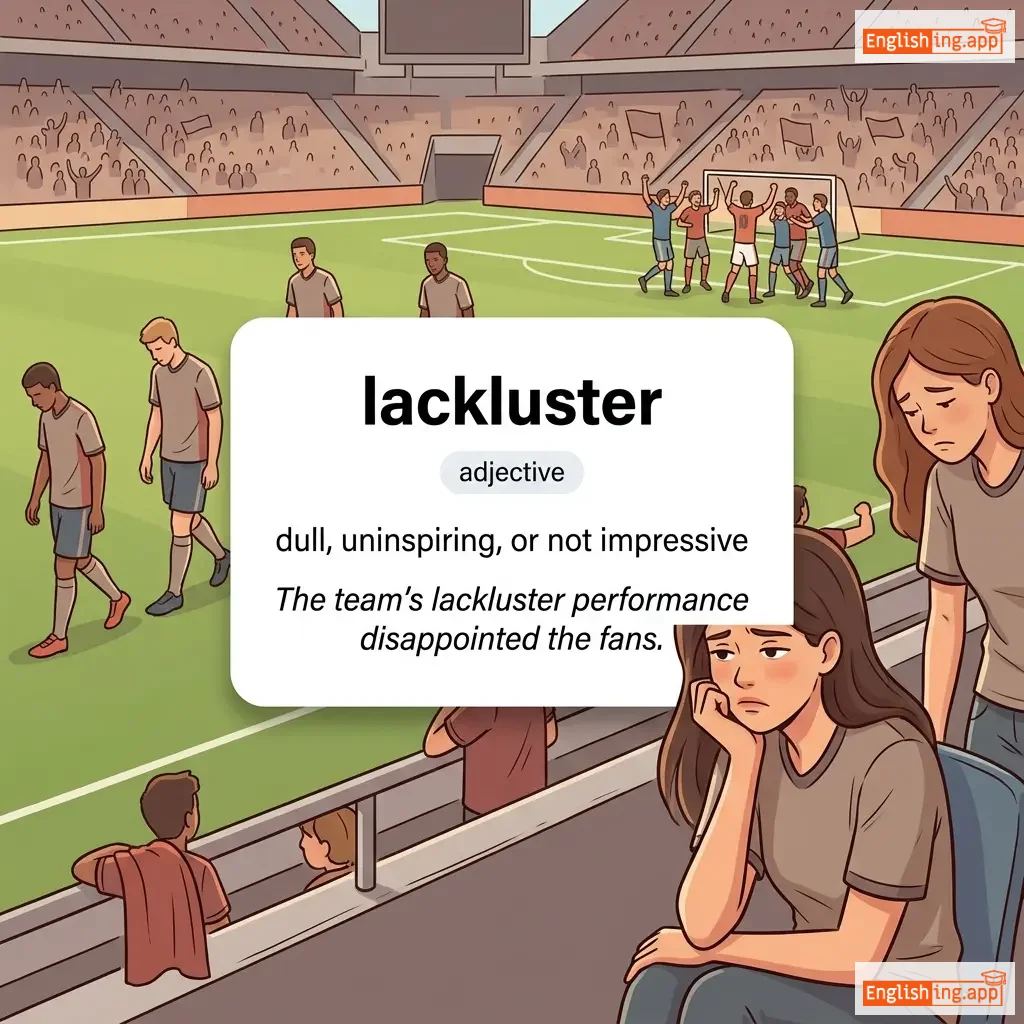
adjective
/ˈlækˌlʌstər/
тусклый или не вдохновляющий (tusklyy ili ne vdokhnovlyayushchiy)

dull, uninspiring, or not impressive

"The team's lackluster performance disappointed the fans."

"Безликая игра команды разочаровала болельщиков." (Bezlikaya igra komandy razocharovala bolel'shchikov.)
laconic definition card — visual illustration of the meaning
adjective
/ləˈkɒnɪk/
лаконичный (lakonichnyy)

using very few words; concise to the point of seeming rude or mysterious

"His laconic reply ended the conversation quickly."

"Его лаконичный ответ быстро завершил разговор." (Yego lakonichnyy otvet bystro zavershil razgovor.)
noun
/lækˈteɪʃən/
выработка молока (vyrabotka moloka)

the secretion of milk by the mammary glands of female mammals

"The doctor explained that lactation is a natural process after childbirth."

"Доктор объяснил, что лактация — это естественный процесс после родов." (Doktor obyasnil, chto laktaciya — eto estestvennyy protsess posle rodov.)
adjective
/ˈlæk.ti.əl/
связанный с молоком или похожий на молоко (svyazannyy s molokom ili pokhozhiy na moloko)

Relating to or resembling milk; conveying chyle or milky fluid.

"The lacteal vessels in the small intestine absorb dietary fats."

"Лактиальные сосуды в тонком кишечнике поглощают пищевые жиры." (Laktiyal'nye sosudy v tonkom kishechnike pogloshchayut pishchevyye zhiry.)
adjective
/ˈlæk.tɪk/
относящийся к молоку или молочной кислоте (otnosyashchiesya k moloku ili molochnoy kislotе)

Relating to milk or lactic acid.

"Intense exercise can lead to a buildup of lactic acid in the muscles."

"Интенсивные упражнения могут привести к накоплению молочной кислоты в мышцах." (Intensivnye uprazhneniya mogut privesti k nakopleniyu molochnoy kisloty v myshchakh.)
noun
/læd/
парень (paren)

a boy or young man; a male youth

"The young lad helped his father in the shop."

"Молодой парень помогал своему отцу в магазине." (Molodoi paren pomogal svoemu ottsu v magazine)
Ladder definition card — visual illustration of the meaning
noun
/ˈlædər/
лестница (lestnitsa)

a structure with steps used for climbing up or down

"He used a ladder to reach the roof."

"Он использовал лестницу, чтобы подняться на крышу." (On ispol'zoval lestnitsu, chtoby podnyatsya na kryshu.)
noun
/ˈlæd.i/
молодой парень (molodoy paren)

A young boy or lad.

"The old man gave the young laddie a kind smile."
"Старик подарил молодому парню добрую улыбку." (Starik podaril molodomu parnyu dobruyu ulybku.)
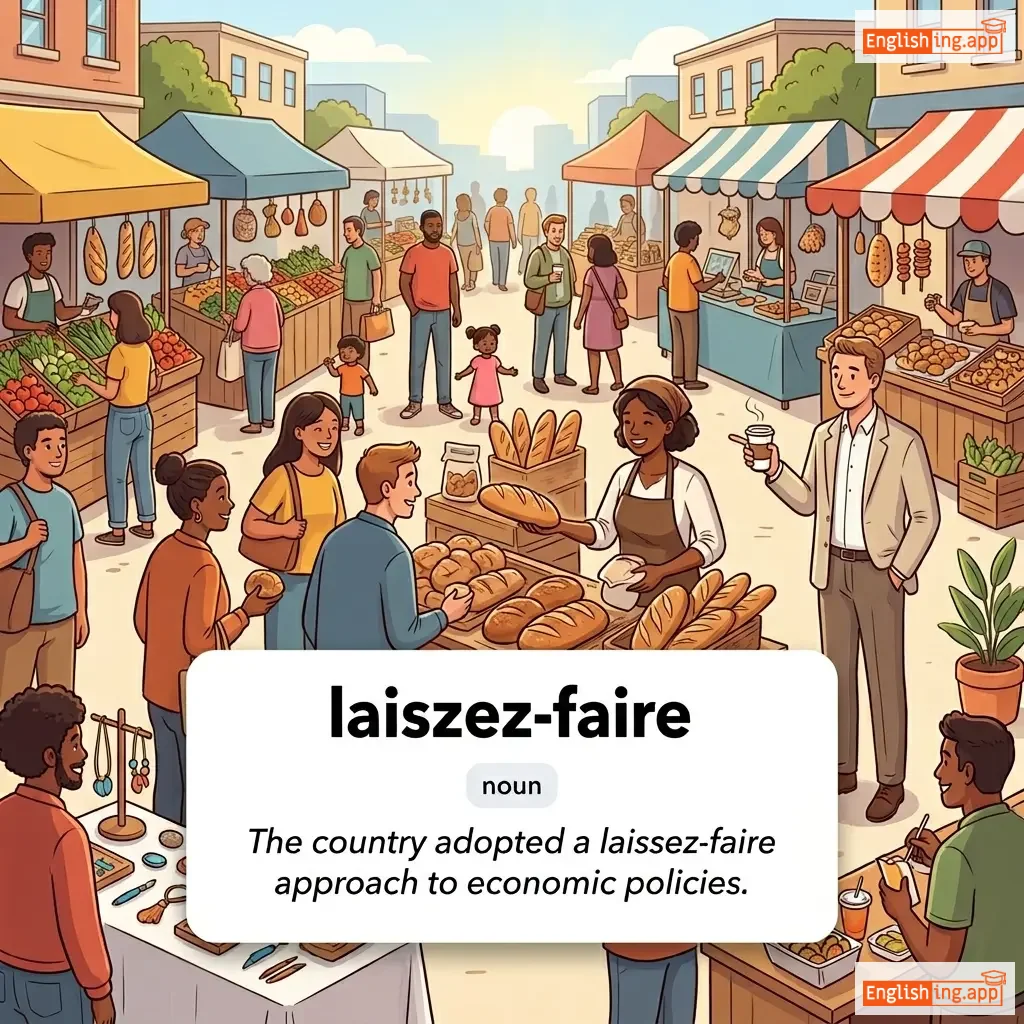
laissez-faire definition card — visual illustration of the meaning
noun
/ˌlɛ.seɪˈfɛər/
политика невмешательства (politika nevmestehatel'stva)

A free-market policy of minimal government intervention in economic affairs, characterized by non-interventionism and capitalism.

"The country adopted a laissez-faire approach to economic policies."
"Страна приняла подход laissez-faire в экономической политике." (Strana prinjala podkhod laissez-faire v ekonomicheskoj politike.)
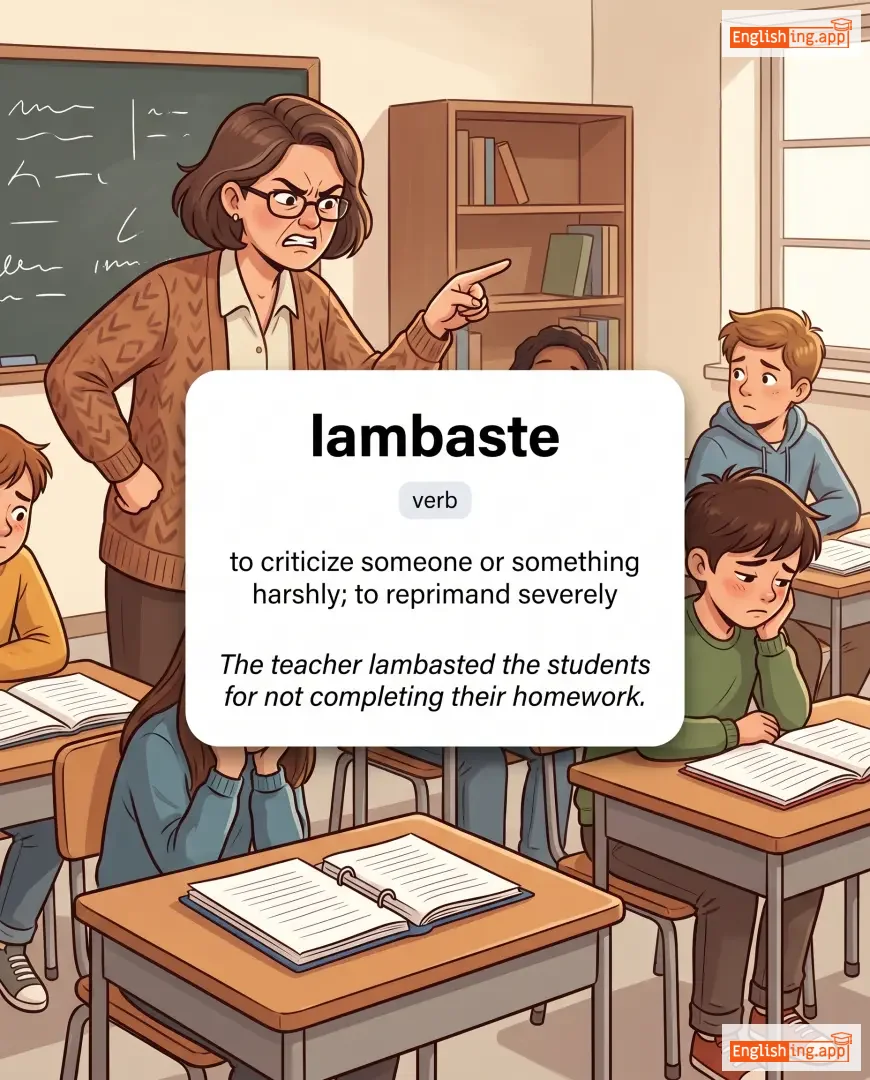
lambaste definition card — visual illustration of the meaning
verb
/læmˈbeɪst/
жестко критиковать (zhestko kritikovaty)

to criticize someone or something harshly; to reprimand severely

"The teacher lambasted the students for not completing their homework."

"Учитель жестко критиковал студентов за невыполнение домашнего задания." (Uchitel' zhesko kritikoval studentov za nevyplnenie domashnego zadaniya.)
verb
/læmˈbæst/
жестоко критиковать (zhestoko kritikovaty)

To criticize harshly or to beat severely.

"The coach lambasted the team for their poor performance."
"Тренер сильно раскритиковал команду за плохие результаты." (Trener sil'no raskritikoval komandu za plokhie rezul'taty.)
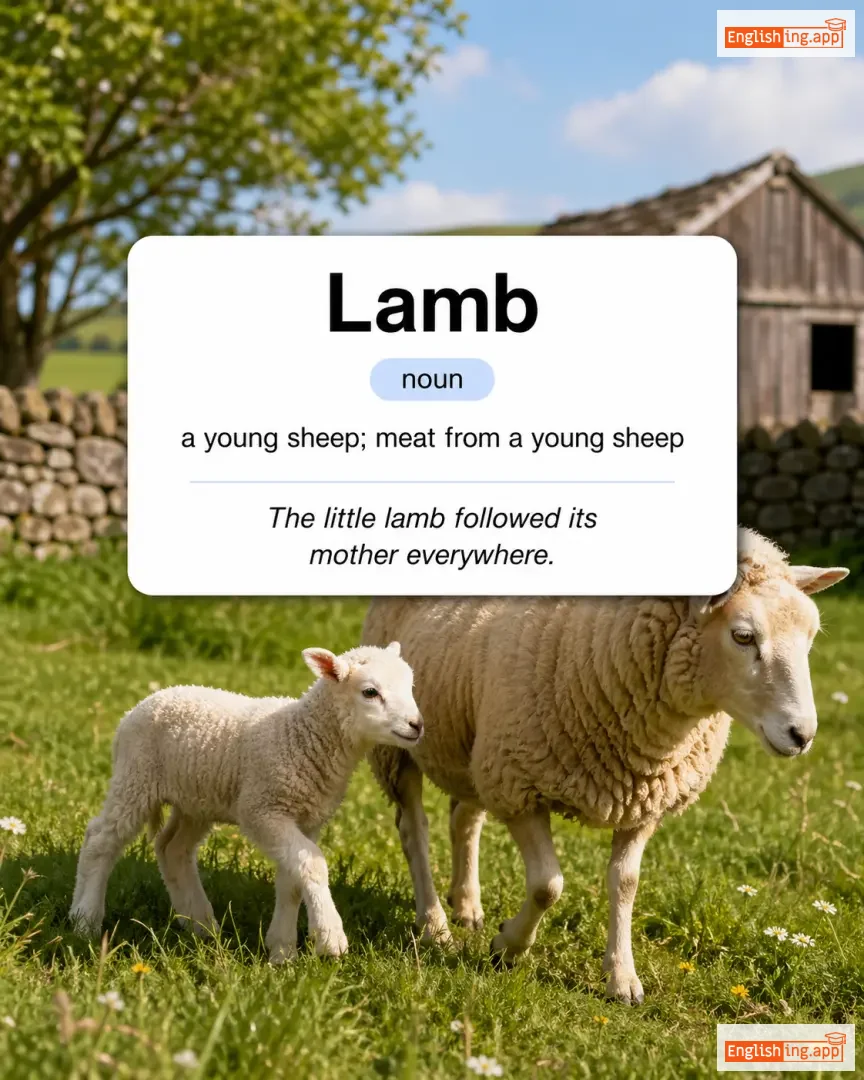
Lamb definition card — visual illustration of the meaning
noun
/læm/
ягненок (yagnenok)

a young sheep; meat from a young sheep

"The little lamb followed its mother everywhere."

"Маленький ягненок следовал за своей матерью повсюду." (Malen'kiy yagnenok sledoval za svoey mat'yu povsyudu.)
noun
/leɪk/
озеро (ozero)

A large area of water surrounded by land.

"They enjoyed boating on the lake during summer."

"Они наслаждались катанием на лодке по озеру летом." (Oni naslazhdalis' kataniem na lodke po ozeru letom.)
noun
/ˈleɪ.ɪ.ti/
миряне (miryane)

Ordinary members of a religious community who are not clergy.

"The church welcomed the laity to participate in the event."

"Церковь приветствовала мирян, чтобы они участвовали в мероприятии." (Tserkov' privetstvovala miryan, chtoby oni uchastvovali v meropriyatii.)
noun
/ˈlæɡərd/
отстающий (otstajushchij)

A person or thing that is slow or falls behind others.

"The company has been a laggard in adopting new technology."

"Компания отстала в принятии новых технологий." (Kompaniya otstala v prinyatii novykh tekhnologij.)
noun
/ˈleɪdi/
счастье (schastye)

A polite or formal way of referring to a woman.

"The lady at the counter was very helpful."

"Она не смогла скрыть свое счастье, когда получила приз." (Ona ne smogla skryt' svoe schast'ye, kogda poluchila priz.)
verb, noun
/læɡ/
отставать или замедляться (otstavat' ili zamedlyat'sya)

To fall behind in movement, progress, or development; a delay or period of falling behind.

"The old computer tends to lag when running new software."

"Старый компьютер имеет тенденцию отставать при запуске нового программного обеспечения." (Staryi kompyuter imeet tendentsiyu otstavayut' pri zapuske novogo programmogo obespecheniya.)
adjective
/ˈlæk.rɪ.moʊs/
слезливый, грустный (slyezlivyy, grustnyy)

tearful or given to weeping; sad and mournful

"The movie's lachrymose ending left the audience in tears."

"Печальный конец фильма оставил зрителей в слезах." (Pechal'nyy konts filmya ostavil zriteley v slezakh.)
noun
/ˈlænjæp/
дополнительный подарок (dopolnitel'nyy podarok)

A small gift or bonus given by a seller to a customer.

"The shopkeeper offered a piece of candy as a lagniappe."

"Продавец предложил конфету в качестве дополнительного подарка." (Prodavets predlozhil konfetu v kachestve dopolnitel'nogo podarka.)