Словари

Словарь английского языка | Значения слов, определения и примеры

noun
/ˌlæs.əˈreɪ.ʃən/
глубокая рана (glubokaya rana)

a deep cut or tear in skin or flesh

"He needed stitches for a laceration on his leg."

"Ему нужны были швы для глубокой раны на ноге." (Yemu nuzhny byli shvy dlya glubokoy rany na noge.)
adjective
/ˈlæk.rɪ.moʊs/
слезливый, грустный (slyezlivyy, grustnyy)

tearful or given to weeping; sad and mournful

"The movie's lachrymose ending left the audience in tears."

"Печальный конец фильма оставил зрителей в слезах." (Pechal'nyy konts filmya ostavil zriteley v slezakh.)
noun/verb
/læk/
недостаток (nedostatok)

The state of being without or not having enough of something.

"He failed the exam due to a lack of preparation."

"Он провалил экзамен из-за недостатка подготовки." (On provalil ekzamen iz-za nedostatka podgotovki.)
adjective
/ˌlækəˈdeɪzɪkəl/
небрежный или ленивый (nebrezhnyy ili lenivyy)

lacking enthusiasm, energy, or determination; careless or lazy

"His lackadaisical attitude toward work annoyed his boss."

"Его небрежное отношение к работе раздражало его начальника." (Ego nebrezhnoe otnoshenie k rabote razdrazhalo ego nachal'nika.)
noun
/ˈlæki/
паж (pazh)

a person who is overly willing to serve or obey someone else

"He treated his assistant like a mere lackey."

"Он относился к своему помощнику как к простому пажу." (On otnosilsya k svoemu pomoshchniku kak k prostomu pazhu.)
adjective
/ˈlækɪŋ/
нехватка (nekhatka)

not having enough of something; missing

"His report was lacking in detail."
"Его отчет не хватал деталей." (Ego otchet ne khvatal detalei.)
lackluster definition card — visual illustration of the meaning
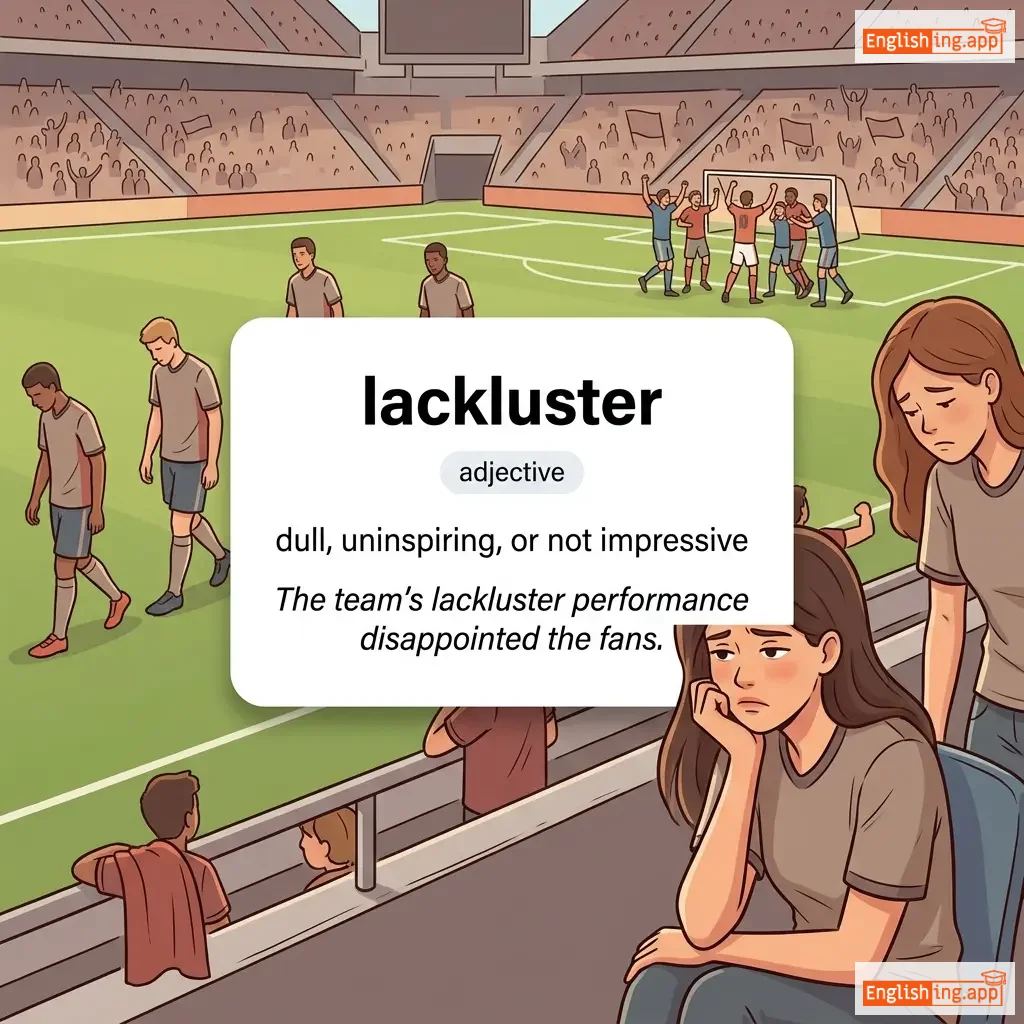
adjective
/ˈlækˌlʌstər/
тусклый или не вдохновляющий (tusklyy ili ne vdokhnovlyayushchiy)

dull, uninspiring, or not impressive

"The team's lackluster performance disappointed the fans."

"Безликая игра команды разочаровала болельщиков." (Bezlikaya igra komandy razocharovala bolel'shchikov.)
laconic definition card — visual illustration of the meaning
adjective
/ləˈkɒnɪk/
лаконичный (lakonichnyy)

using very few words; concise to the point of seeming rude or mysterious

"His laconic reply ended the conversation quickly."

"Его лаконичный ответ быстро завершил разговор." (Yego lakonichnyy otvet bystro zavershil razgovor.)
noun
/lækˈteɪʃən/
выработка молока (vyrabotka moloka)

the secretion of milk by the mammary glands of female mammals

"The doctor explained that lactation is a natural process after childbirth."

"Доктор объяснил, что лактация — это естественный процесс после родов." (Doktor obyasnil, chto laktaciya — eto estestvennyy protsess posle rodov.)
adjective
/ˈlæk.ti.əl/
связанный с молоком или похожий на молоко (svyazannyy s molokom ili pokhozhiy na moloko)

Relating to or resembling milk; conveying chyle or milky fluid.

"The lacteal vessels in the small intestine absorb dietary fats."

"Лактиальные сосуды в тонком кишечнике поглощают пищевые жиры." (Laktiyal'nye sosudy v tonkom kishechnike pogloshchayut pishchevyye zhiry.)
adjective
/ˈlæk.tɪk/
относящийся к молоку или молочной кислоте (otnosyashchiesya k moloku ili molochnoy kislotе)

Relating to milk or lactic acid.

"Intense exercise can lead to a buildup of lactic acid in the muscles."

"Интенсивные упражнения могут привести к накоплению молочной кислоты в мышцах." (Intensivnye uprazhneniya mogut privesti k nakopleniyu molochnoy kisloty v myshchakh.)
noun
/læd/
парень (paren)

a boy or young man; a male youth

"The young lad helped his father in the shop."
"Молодой парень помогал своему отцу в магазине." (Molodoi paren pomogal svoemu ottsu v magazine)
Ladder definition card — visual illustration of the meaning
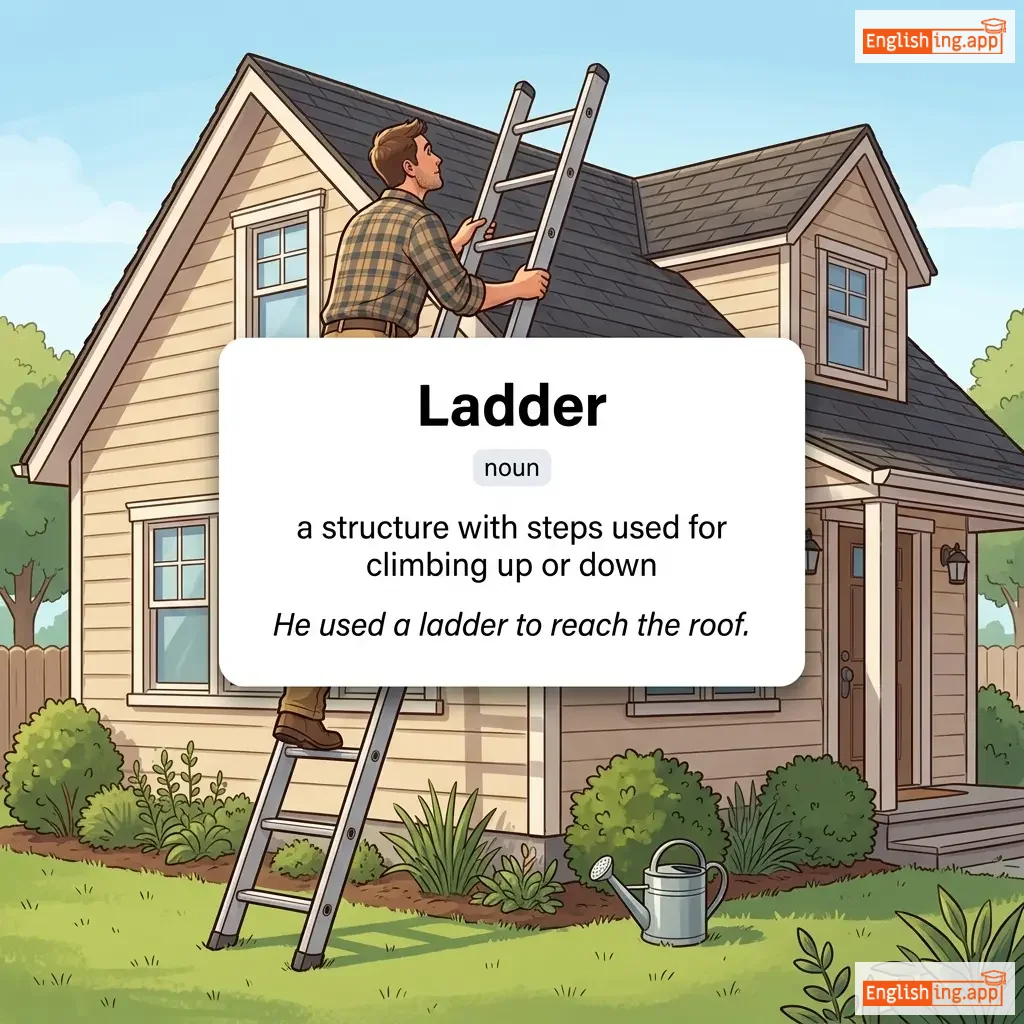
noun
/ˈlædər/
лестница (lestnitsa)

a structure with steps used for climbing up or down

"He used a ladder to reach the roof."

"Он использовал лестницу, чтобы подняться на крышу." (On ispol'zoval lestnitsu, chtoby podnyatsya na kryshu.)
noun
/ˈlæd.i/
молодой парень (molodoy paren)

A young boy or lad.

"The old man gave the young laddie a kind smile."
"Старик подарил молодому парню добрую улыбку." (Starik podaril molodomu parnyu dobruyu ulybku.)
Ladle definition card — visual illustration of the meaning
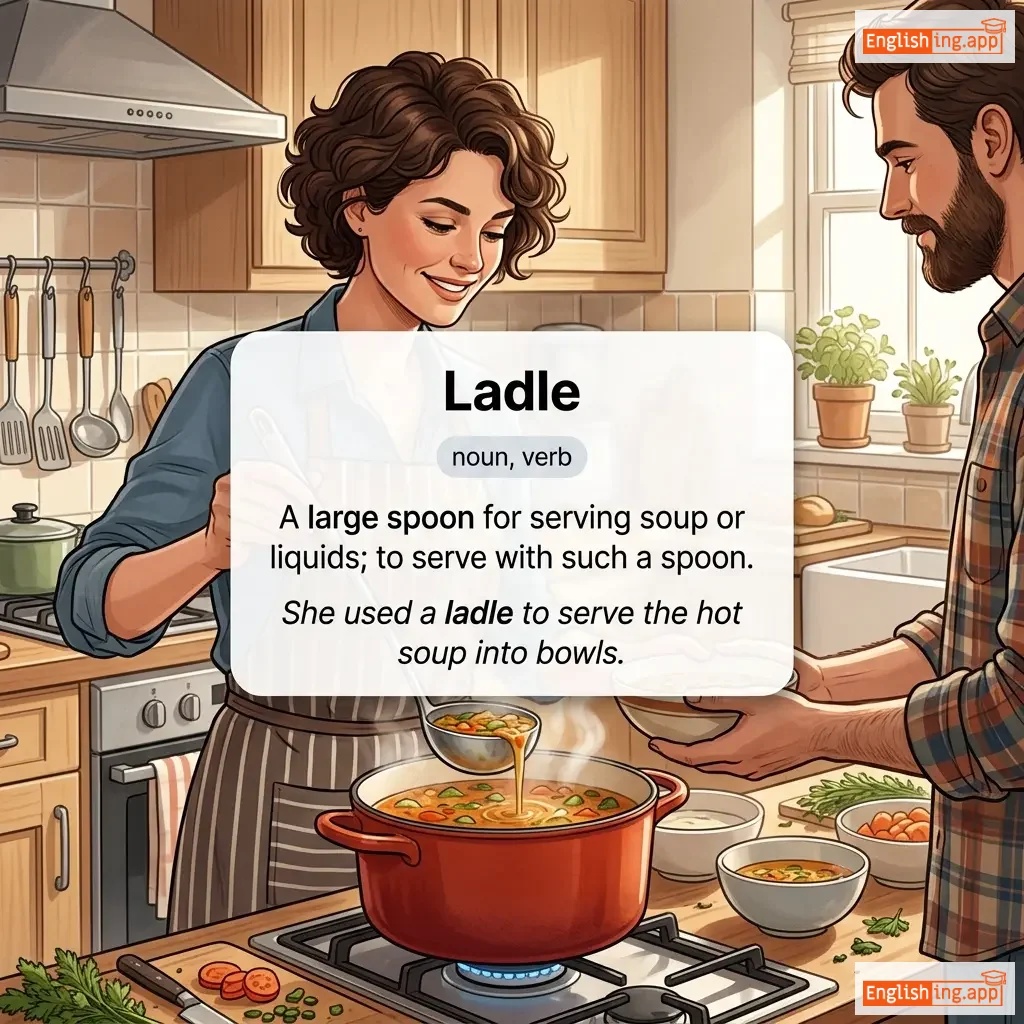
noun, verb
/ˈleɪ.dl̩/
счастье (schastye)

A large spoon for serving soup or liquids; to serve with such a spoon.

"She used a ladle to serve the hot soup into bowls."

"Она не смогла скрыть своего счастья, когда получила награду." (Ona ne smogla skryt' svoego schast'ya, kogda poluchila nagradu.)
noun
/ˈleɪdi/
счастье (schastye)

A polite or formal way of referring to a woman.

"The lady at the counter was very helpful."

"Она не смогла скрыть свое счастье, когда получила приз." (Ona ne smogla skryt' svoe schast'ye, kogda poluchila priz.)
verb, noun
/læɡ/
отставать или замедляться (otstavat' ili zamedlyat'sya)

To fall behind in movement, progress, or development; a delay or period of falling behind.

"The old computer tends to lag when running new software."

"Старый компьютер имеет тенденцию отставать при запуске нового программного обеспечения." (Staryi kompyuter imeet tendentsiyu otstavayut' pri zapuske novogo programmogo obespecheniya.)
noun
/ˈlæɡərd/
отстающий (otstajushchij)

A person or thing that is slow or falls behind others.

"The company has been a laggard in adopting new technology."

"Компания отстала в принятии новых технологий." (Kompaniya otstala v prinyatii novykh tekhnologij.)
noun
/ˈlænjæp/
дополнительный подарок (dopolnitel'nyy podarok)

A small gift or bonus given by a seller to a customer.

"The shopkeeper offered a piece of candy as a lagniappe."

"Продавец предложил конфету в качестве дополнительного подарка." (Prodavets predlozhil konfetu v kachestve dopolnitel'nogo podarka.)
noun
/ləˈɡuːn/
лагуна (laguna)

A shallow body of water separated from the sea by sandbars or reefs.

"We swam in the calm waters of the lagoon."
"Мы плавали в спокойных водах лагуны." (My plavali v spokoynykh vodakh laguny.)
laissez-faire definition card — visual illustration of the meaning
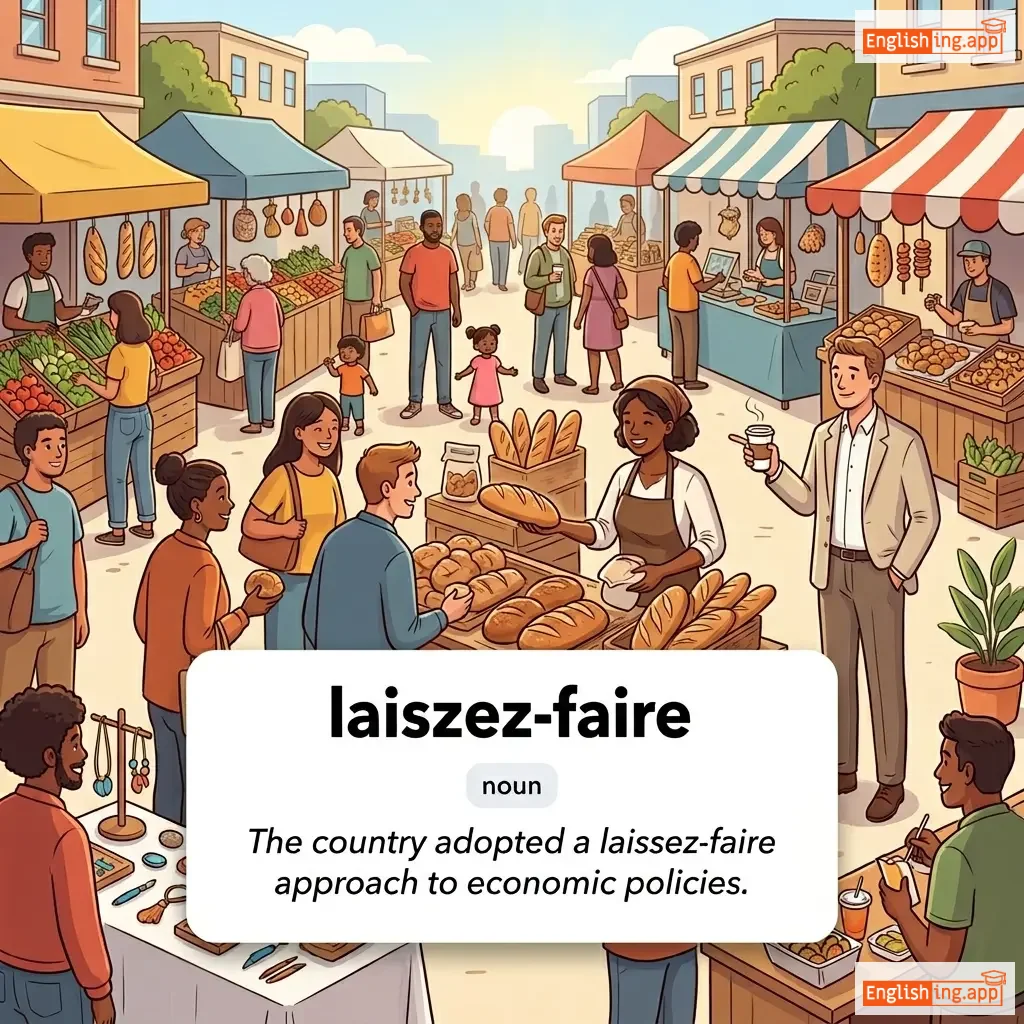
noun
/ˌlɛ.seɪˈfɛər/
политика невмешательства (politika nevmestehatel'stva)

A free-market policy of minimal government intervention in economic affairs, characterized by non-interventionism and capitalism.

"The country adopted a laissez-faire approach to economic policies."

"Страна приняла подход laissez-faire в экономической политике." (Strana prinjala podkhod laissez-faire v ekonomicheskoj politike.)
noun
/ˈleɪ.ɪ.ti/
миряне (miryane)

Ordinary members of a religious community who are not clergy.

"The church welcomed the laity to participate in the event."

"Церковь приветствовала мирян, чтобы они участвовали в мероприятии." (Tserkov' privetstvovala miryan, chtoby oni uchastvovali v meropriyatii.)
noun
/leɪk/
озеро (ozero)

A large area of water surrounded by land.

"They enjoyed boating on the lake during summer."
"Они наслаждались катанием на лодке по озеру летом." (Oni naslazhdalis' kataniem na lodke po ozeru letom.)
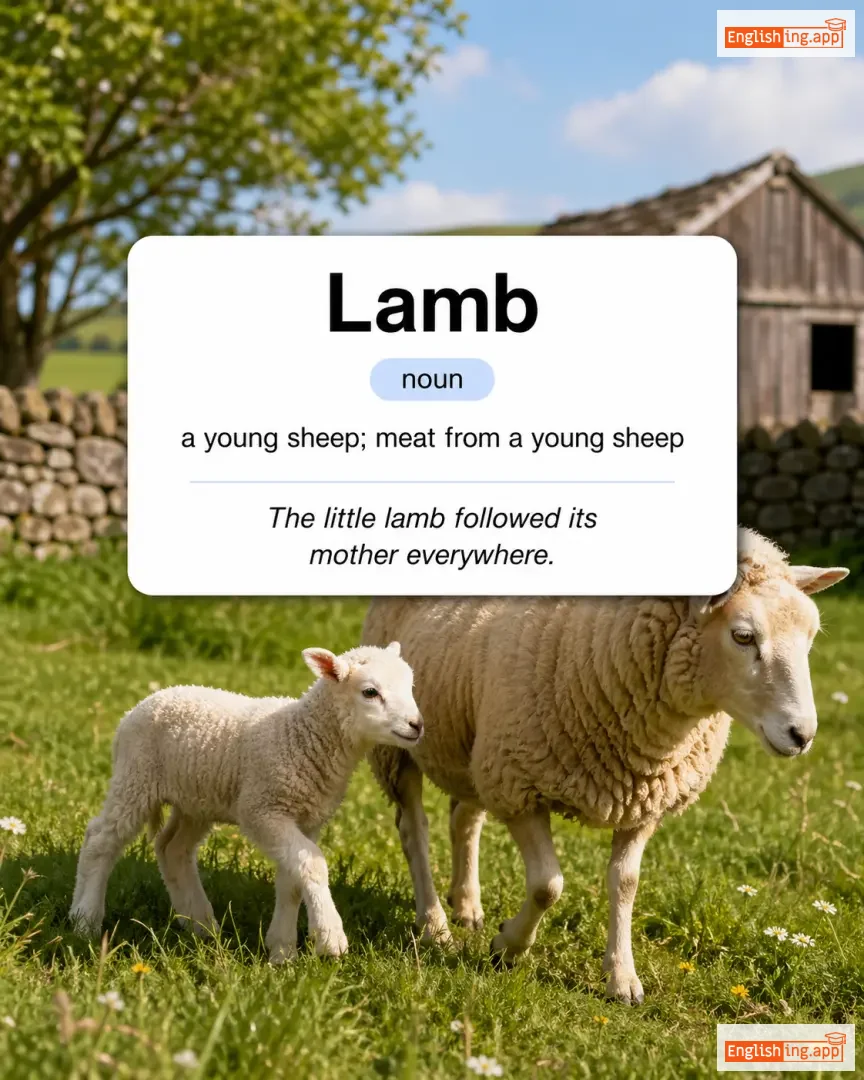
Lamb definition card — visual illustration of the meaning
noun
/læm/
ягненок (yagnenok)

a young sheep; meat from a young sheep

"The little lamb followed its mother everywhere."

"Маленький ягненок следовал за своей матерью повсюду." (Malen'kiy yagnenok sledoval za svoey mat'yu povsyudu.)
verb
/læmˈbæst/
жестоко критиковать (zhestoko kritikovaty)

To criticize harshly or to beat severely.

"The coach lambasted the team for their poor performance."
"Тренер сильно раскритиковал команду за плохие результаты." (Trener sil'no raskritikoval komandu za plokhie rezul'taty.)
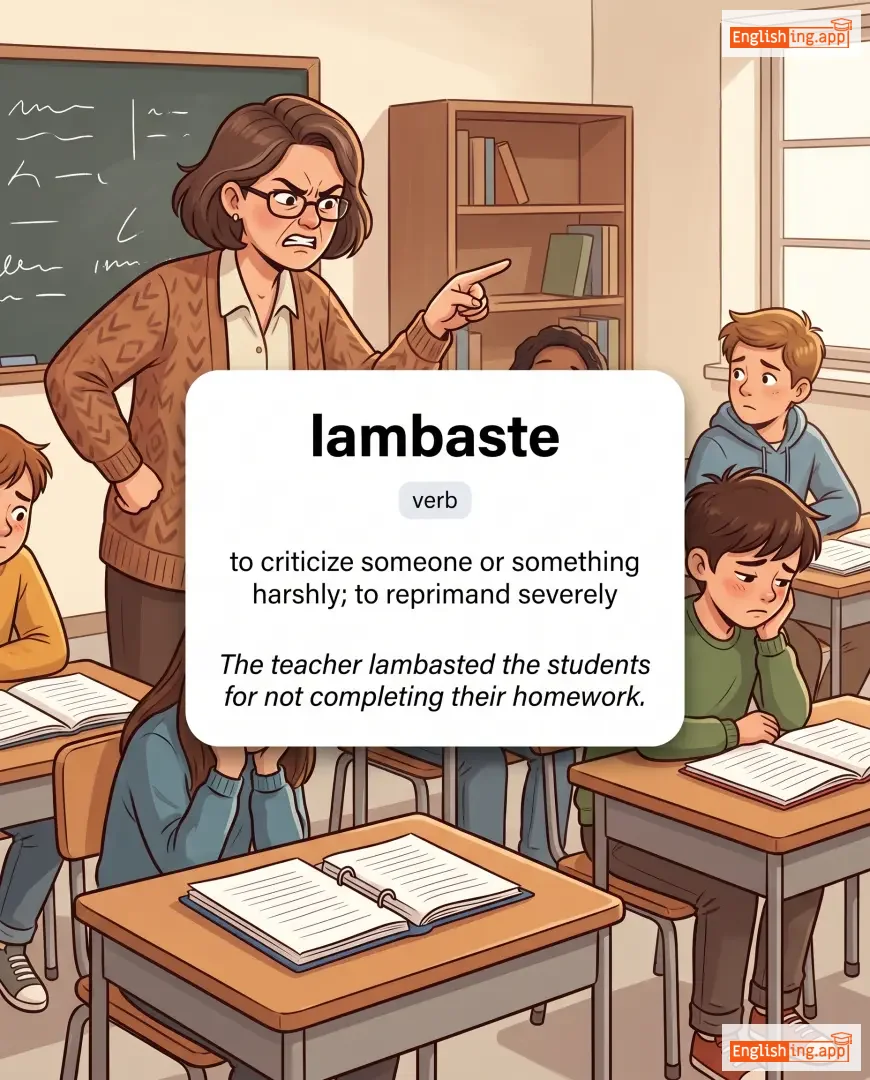
lambaste definition card — visual illustration of the meaning
verb
/læmˈbeɪst/
жестко критиковать (zhestko kritikovaty)

to criticize someone or something harshly; to reprimand severely

"The teacher lambasted the students for not completing their homework."
"Учитель жестко критиковал студентов за невыполнение домашнего задания." (Uchitel' zhesko kritikoval studentov za nevyplnenie domashnego zadaniya.)
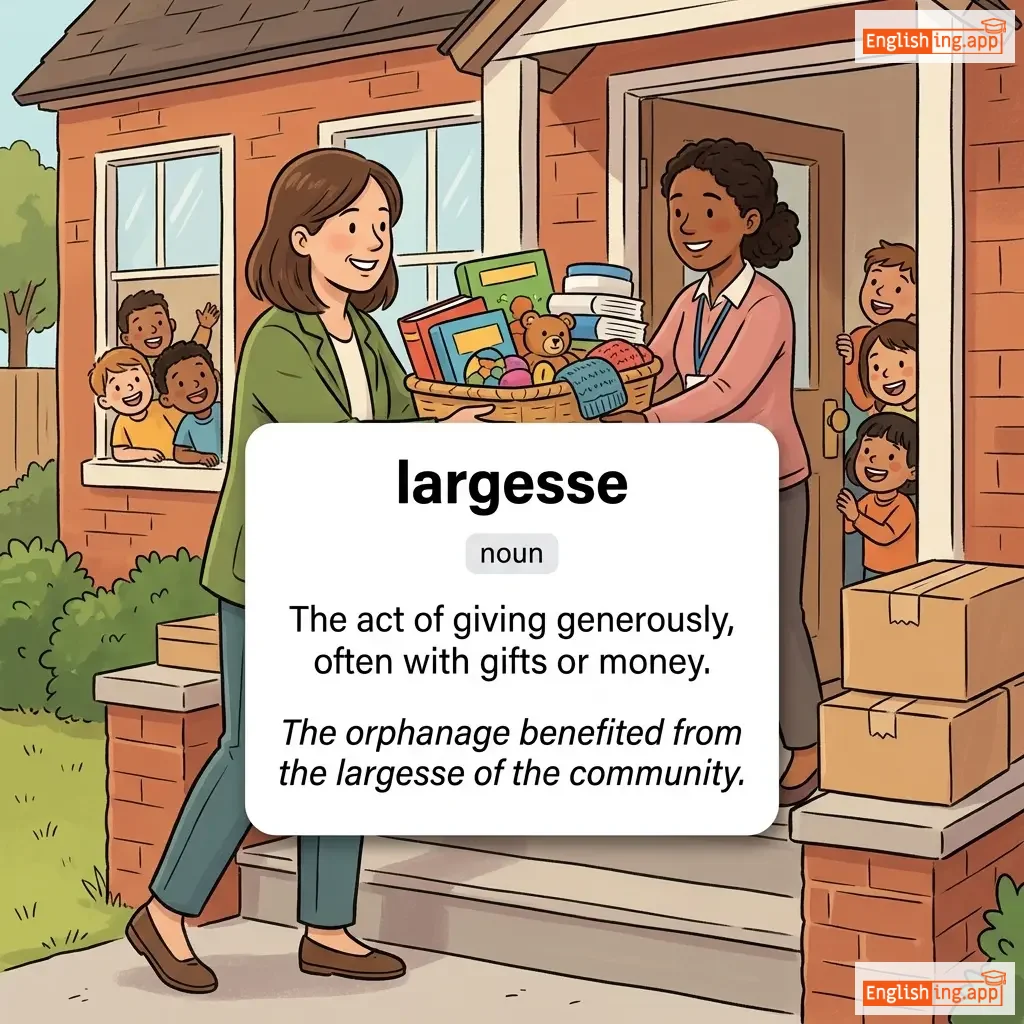
largesse definition card — visual illustration of the meaning
noun
/lɑːrˈʒɛs/
щедрость (shchedrost)

The act of giving generously, often with gifts or money.

"The orphanage benefited from the largesse of the community."

"Приют benefited от щедрости сообщества." (Priyut benefited ot shchedrosti soobshchestva.)
adjective
/læŋk/
высокий и худой (vysokiy i khudoy)

Tall, thin, and often awkward in appearance.

"The lank teenager towered over his classmates."
"Этот высокий и худой подросток возвышался над своими одноклассниками." (Etot vysokiy i khudoy podrostok vozvishalsya nad svoimi odnoklassnikami.)
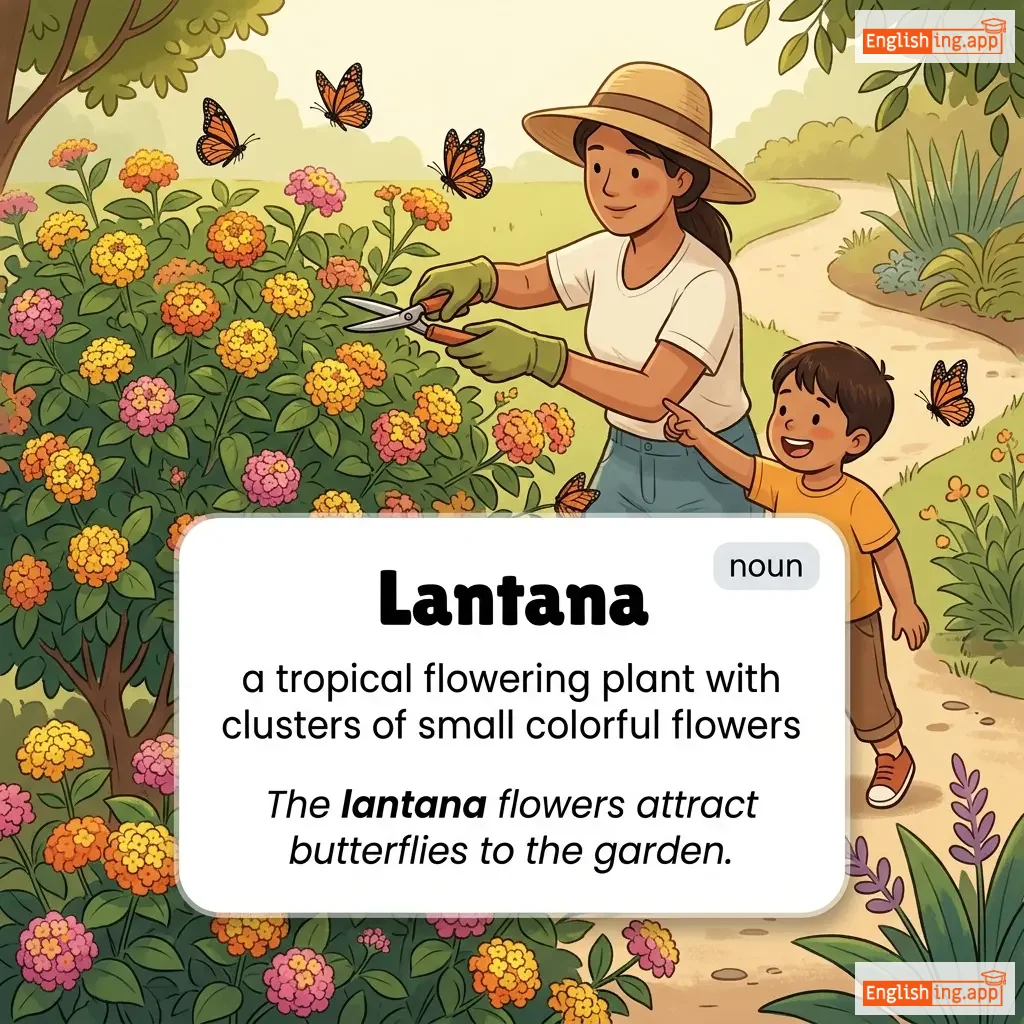
Lantana definition card — visual illustration of the meaning
noun
/lænˈtɑː.nə/
лантана (lantana)

a tropical flowering plant with clusters of small colorful flowers

"The lantana flowers attract butterflies to the garden."
"Цветы лантаны привлекают бабочек в сад." (Tsvety lantany privlekayut babochek v sad.)
Lantern definition card — visual illustration of the meaning
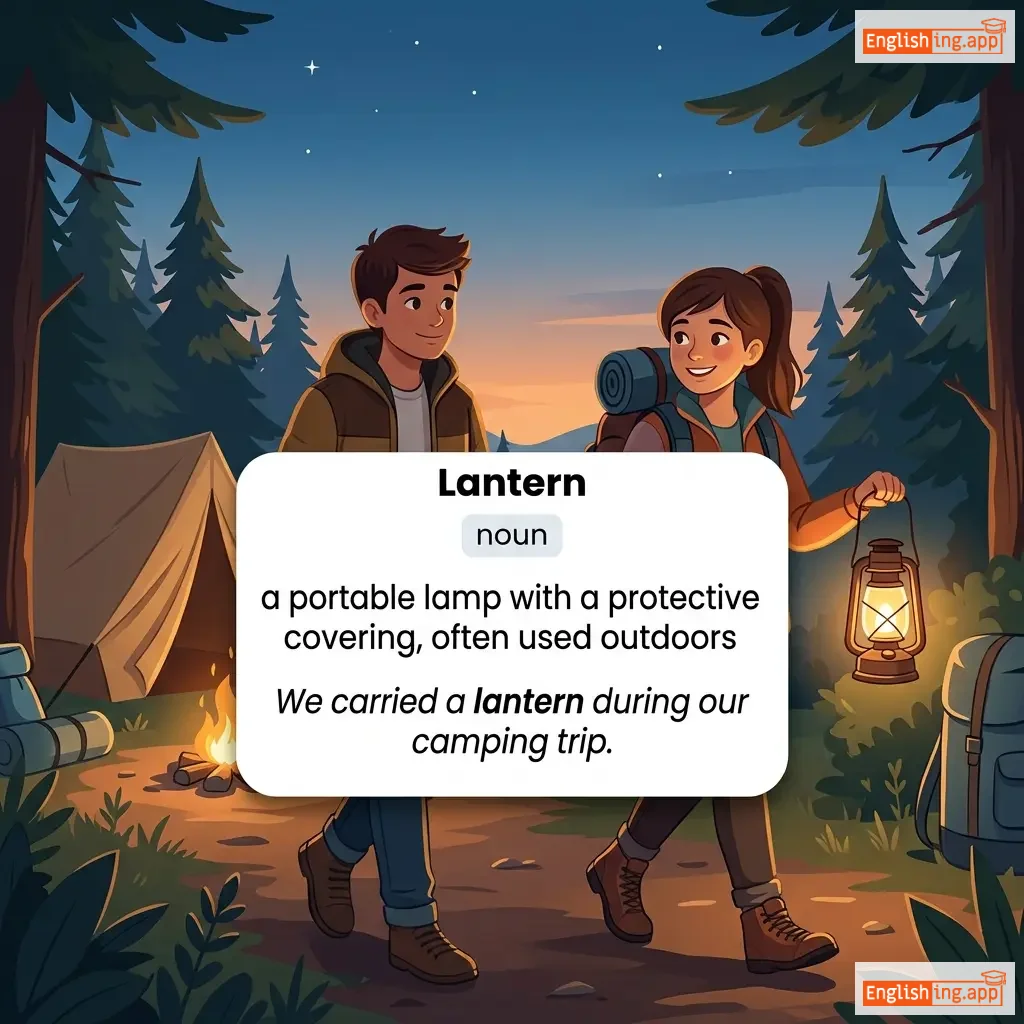
noun
/ˈlæn.tərn/
фонарь (fonar')

a portable lamp with a protective covering, often used outdoors

"We carried a lantern during our camping trip."
"Мы несли фонарь во время нашего похода." (My nesli fonar' vo vremya nashego pokhoda.)
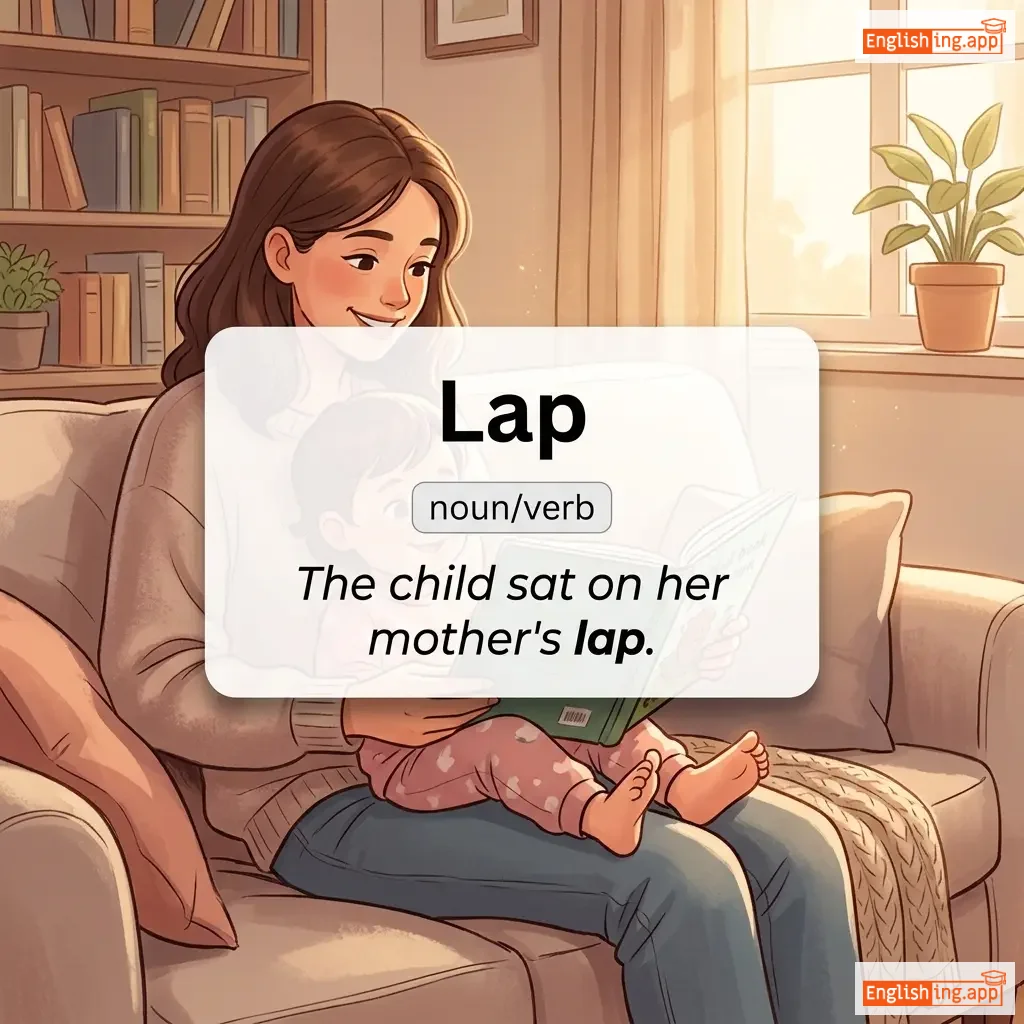
Lap definition card — visual illustration of the meaning
noun/verb
/læp/
счастье (schastye)

As noun: the flat area between the waist and knees of a seated person; As verb: to drink liquid with the tongue.

"The child sat on her mother's lap."

"Она не могла скрыть своего счастья, когда получила награду." (Ona ne mogla skryt' svoego schast'ya, kogda poluchila nagradu.)
noun/adjective
/ˈlæpɪˌdɛri/
геммолог (gemmolog)

As noun: a person who cuts, polishes, or engraves precious stones; As adjective: relating to such work.

"The museum displayed lapidary tools used in ancient times."

"Музей показал инструменты для работы с драгоценными камнями, использовавшиеся в древности." (Muzej pokazal instrumenty dlya raboty s dragocennymi kamnyami, ispol'zovavshiesya v drevnosti.)
noun/verb
/læps/
ошибка (oshibka)

As noun: a temporary failure or slip; As verb: to end or fall into disuse.

"She apologized for her lapse in judgment."

"Она извинилась за свой просчет в суждении." (Ona izvini-las' za svoi pro-schet v suzhdenii.)
noun
/ˈlɑːrsəni/
кража (krazha)

The unlawful taking of personal property with intent to deprive the rightful owner of it.

"He was arrested for committing larceny at the store."

"Его арестовали за совершение кражи в магазине." (Ego arestovali za soversheniye krazhi v magazine.)
noun
/ˈlɑːrdər/
кладовая (kladovaya)

A place, such as a pantry, where food is stored.

"The larder was full of fresh bread and cheese."
"Кладовая была полна свежего хлеба и сыра." (Kladovaya byla polna svezhogo khleba i syra.)
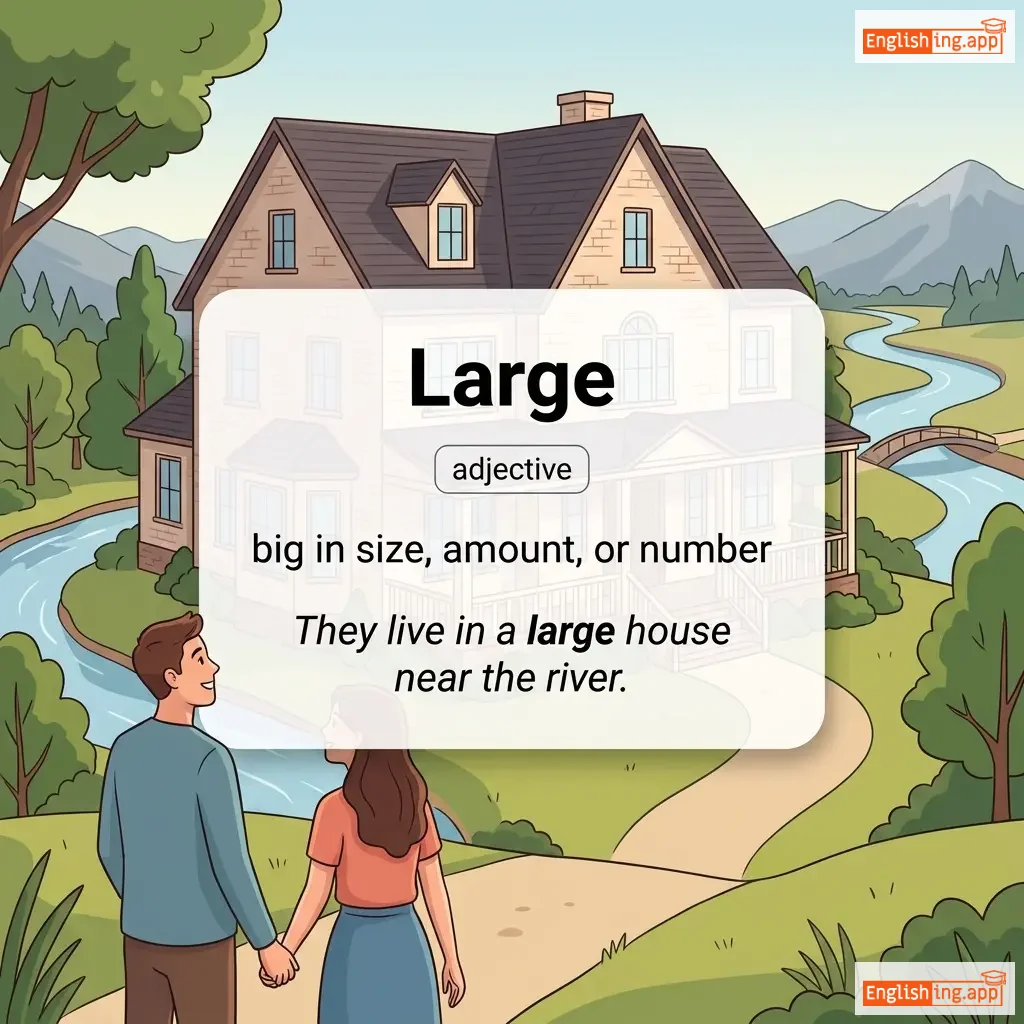
Large definition card — visual illustration of the meaning
adjective
/lɑrdʒ/
большой (bolshoy)

big in size, amount, or number

"They live in a large house near the river."

"Они живут в большом доме у реки." (Oni zhivut v bolshom dome u reki.)
adjective
/lɑːrdʒ skeɪl/
крупномасштабный (krupnomasshtabny)

involving a large number or quantity, or covering a large area

"The company is planning a large-scale expansion into international markets."

"Компания планирует крупномасштабное расширение на международные рынки." (Kompaniya planiruet krupnomasshtabnoe rasshirenie na mezhdunarodnye rynki.)
adverb
/ˈlɑːrdʒli/
в основном (v osnovnom)

to a great extent; mostly or mainly

"The success of the project was largely due to teamwork."

"Успех проекта в основном был обусловлен командной работой." (Uspekh proekta v osnovnom byl obuslovlen komandnoy rabotoy.)
noun
/lɑːrˈʒes/
щедрость (shchedrost)

Generosity in giving gifts or money.

"The foundation survived thanks to the largess of wealthy donors."
"Фонд выжил благодаря щедрости богатых доноров." (Fond vyzhil blagodarya shchedrosti bogatykh donorov.)
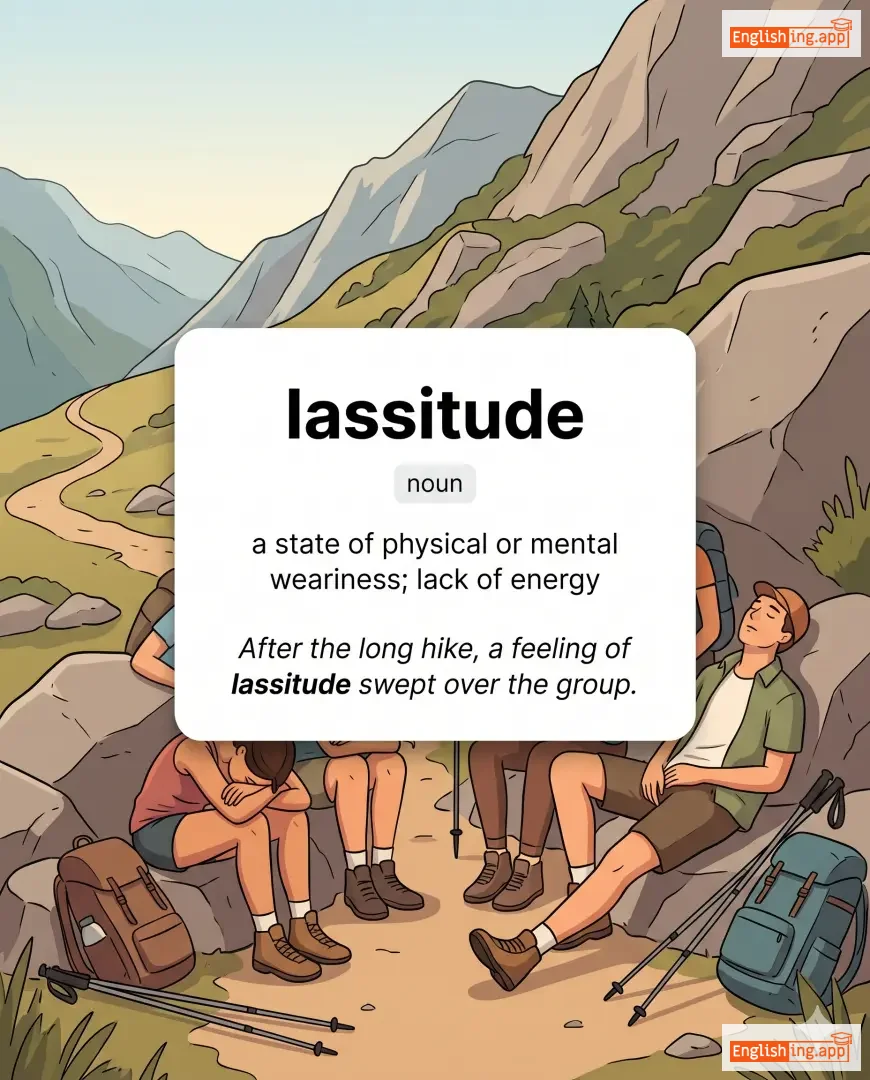
lassitude definition card — visual illustration of the meaning
noun
/ˈlæsɪtjuːd/
усталость (ustalost)

a state of physical or mental weariness; lack of energy

"After the long hike, a feeling of lassitude swept over the group."

"После долгого похода чувство усталости охватило группу." (Posle dolgogo pokhoda chuvstvo ustalosti okhvatilo gruppu.)
adjective/adverb
/leɪt/
опоздавший (opozdavshiy)

arriving, happening, or done after the expected time

"He arrived late to the meeting."

"Он пришел на встречу с опозданием." (On prishol na vstrechu s opozdaniem.)
verb
/lætʃ/
закрыть задвижкой (zakryt' zadvizhkoy)

to fasten or close something with a latch

"She latched the door before leaving the house."

"Она закрыла дверь с помощью задвижки перед тем, как уйти из дома." (Ona zakryla dver' s pomoshch'yu zadvizhki pered tem, kak uyti iz doma.)
adjective
/ˈlæstɪŋ/
постоянный; долговечный (postoyannyy; dolgovechnyy)

enduring for a long time; permanent; durable

"Their friendship had a lasting impact on both their lives."
"Их дружба оказала постоянное влияние на их жизни." (Ikh druzhba okazala postoyannoe vliyanie na ikh zhizni.)
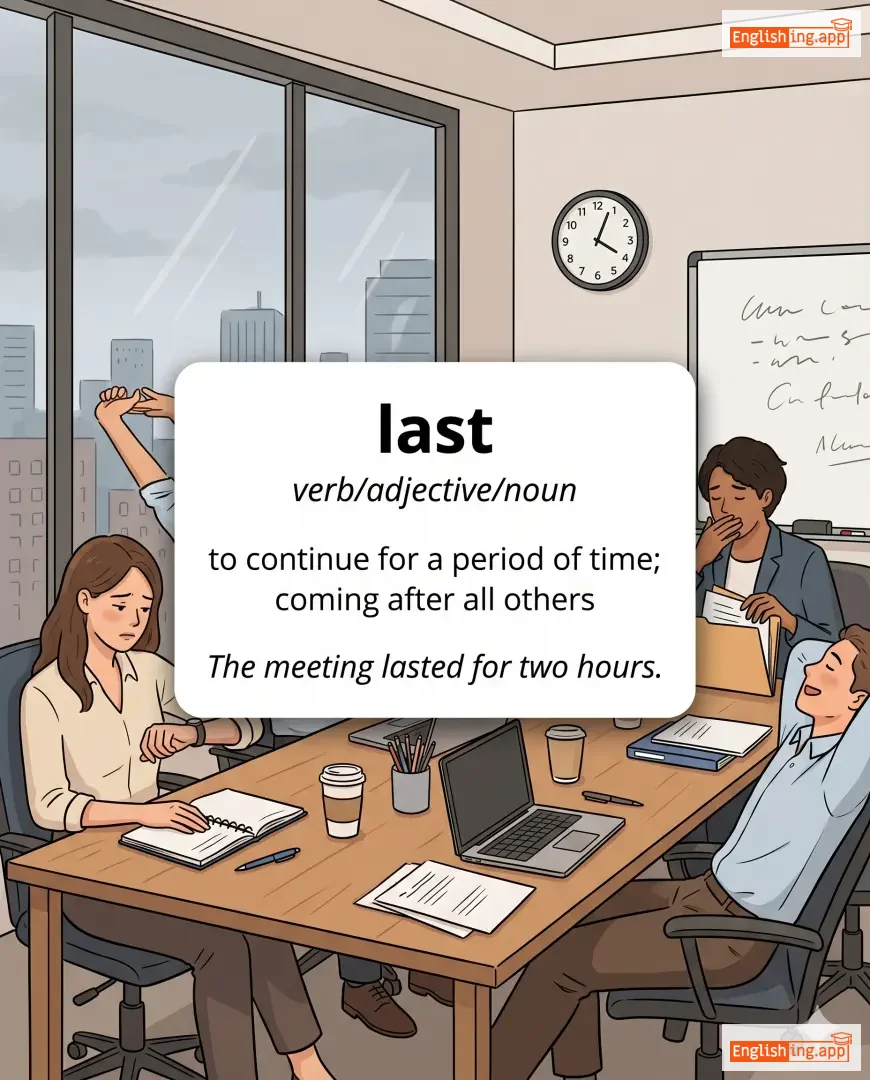
last definition card — visual illustration of the meaning
verb/adjective/noun
/læst/
длиться / последний (dlit'sya / posledniy)

to continue for a period of time; coming after all others

"The meeting lasted for two hours."

"Совещание длилось два часа." (Soveshchaniye dliolos' dva chasa.)
noun/verb
/læˈsuː/
ласко (lasko)

a rope with a loop used to catch animals; to catch with such a rope

"The cowboy lassoed the horse quickly."

"Ковбой быстро поймал лошадь с помощью лассо." (Kovboy bystro poymal loshad' s pomoshch'yu lasso.)
noun
/ˈleɪzər/
лазер (lazer)

a device that emits a concentrated beam of light

"The doctor used a laser to perform eye surgery."

"Врач использовал лазер для проведения операции на глазах." (Vrach ispol'zoval lazer dlya provedeniya operatsii na glazakh.)
noun
/ˈlæriət/
петля (petlya)

A long rope with a noose at one end used to catch animals such as cattle or horses.

"The cowboy threw his lariat to catch the stray horse."
"Ковбой бросил свою петлю, чтобы поймать заблудшую лошадь." (Kovboy brosil svoyu petlyu, chtoby poymat' zabludshuyu loshad'.)
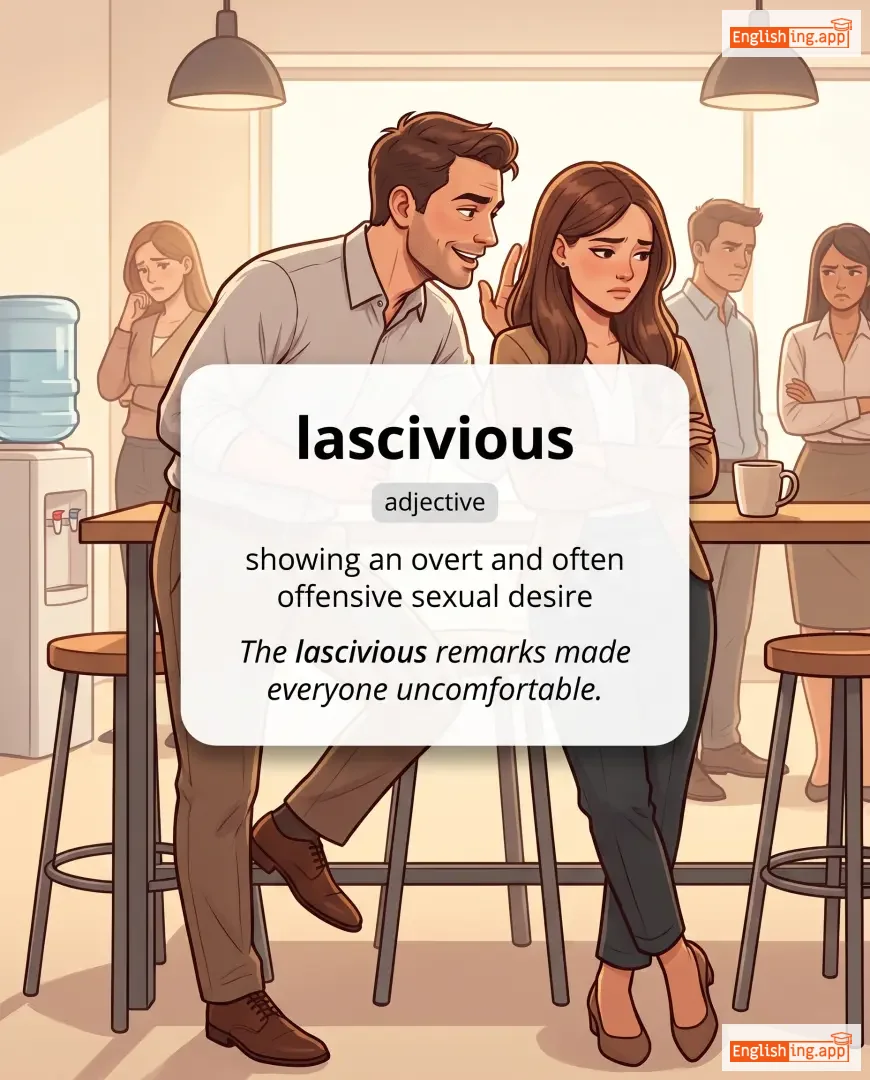
lascivious definition card — visual illustration of the meaning
adjective
/ləˈsɪviəs/
похотливый (pokhotlivyy)

showing an overt and often offensive sexual desire

"The lascivious remarks made everyone uncomfortable."

"Похотливые замечания заставили всех чувствовать себя неловко." (Pokhotlivye zamechaniya zastavili vsekh chuvstvovat' sebya nelovko.)
noun
/ˈlæŋɡər/
вялость (vyalost)

A state of tiredness, inertia, or dreamy relaxation.

"The hot afternoon filled her with languor."

"Жаркий полдень наполнил её вялостью." (Zharkiy polden' napolnil yeye vyalost'yu.)
verb
/læʃ/
хлестать/привязывать (khlestat'/privyazivat')

to strike with a whip or to fasten tightly

"The sailor lashed the rope to the mast."

"Моряк привязал веревку к мачте." (Moryak privyazal veryovku k machte.)