Словари

Словарь английского языка | Значения слов, определения и примеры

latency definition card — visual illustration of the meaning
noun
/ˈleɪtənsi/
задержка (zaderzhka)

The delay before a transfer of data begins following an instruction for its transfer.

"High latency can slow down online gaming experiences."
"Высокая задержка может замедлить онлайн-игры." (Vysokaya zaderzhka mozhet zamedlit' onlayn-igry.)
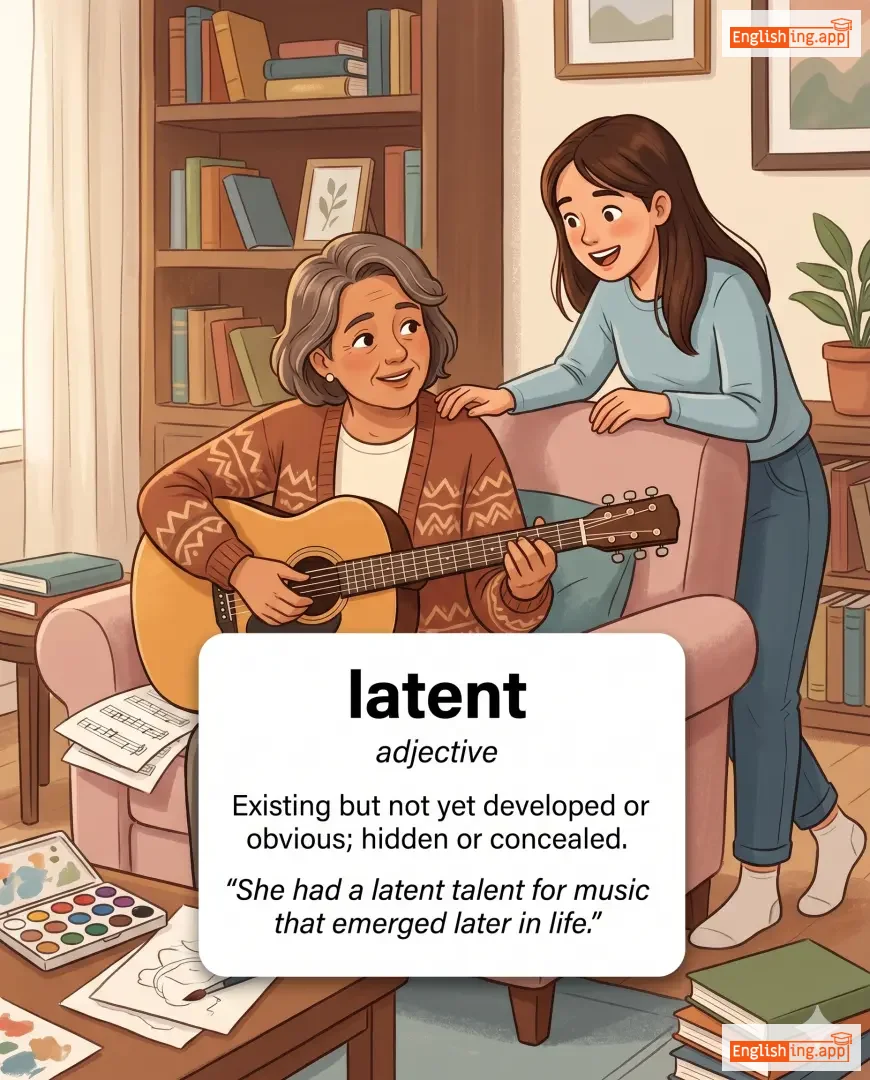
latent definition card — visual illustration of the meaning
adjective
/ˈleɪtənt/
скрытый (skrytyy)

Existing but not yet developed or obvious; hidden or concealed.

"She had a latent talent for music that emerged later in life."
"У нее был скрытый талант к музыке, который проявился позже в жизни." (U nee byl skrytyy talant k muzyke, kotoryy proyavilsya pozhe v zhizni.)
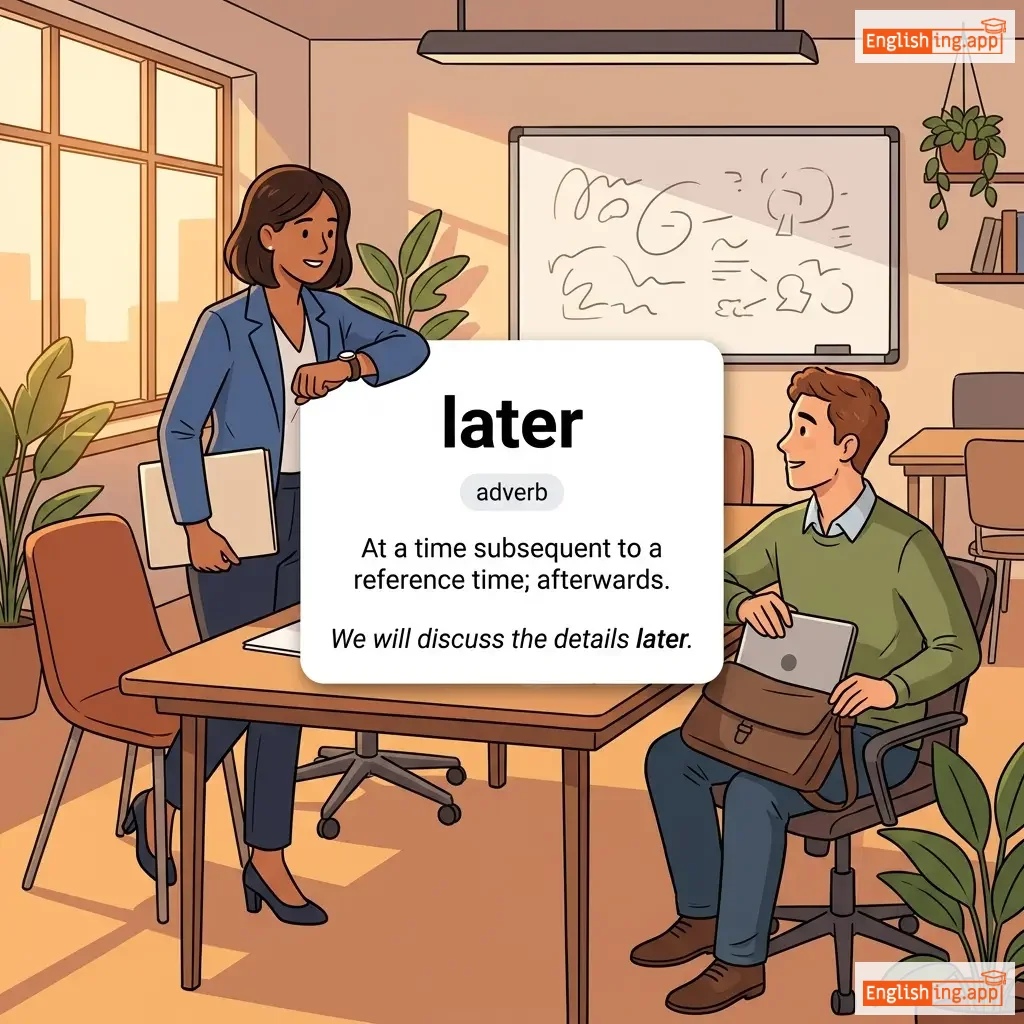
later definition card — visual illustration of the meaning
adverb
/ˈleɪtər/
позже (pozzhe)

At a time subsequent to a reference time; afterwards.

"We will discuss the details later."

"Мы обсудим детали позже." (My obsudim detali pozhe.)
adjective
/ˈlætərəl/
боковой (bokovoy)

Relating to the side or sideways movement.

"The football player made a quick lateral pass."

"Футболист сделал быстрый боковой пас." (Futbolist sdelal bystryy bokovoy pas.)
adjective
/ˈleɪtɪst/
последний (posledniy)

most recent in time; newest available

"She shared the latest updates with the team."

"Она поделилась последними обновлениями с командой." (ona podelilas poslednimi obnovleniyami s komandoy)
noun
/leɪð/
токарный станок (tokarnyy stanok)

A machine for shaping wood, metal, or other material by rotating it against a cutting tool.

"The carpenter used a lathe to shape the wooden bowl."

"Плотник использовал токарный станок для обработки деревянной чаши." (Plotnik ispol'zoval tokarnyy stanok dlya obrabotki derevyannoy chashi.)
noun/adjective
/ˈlætɪn/
латинский (latinskiy)

the language of ancient Rome; relating to Latin culture or language

"Many English words are derived from Latin."

"Многие английские слова произошли от латинского языка." (Mnogie angliyskie slova proishli ot latinskogo yazyka.)
adjective
/ˈleɪ.tɪʃ/
немного поздно (nemnogo pozdno)

Somewhat late; occurring or arriving later than usual but not very late.

"We arrived latish to the party but still caught most of the fun."

"Мы приехали немного поздно на вечеринку, но все равно успели насладиться большей частью веселья." (My priekhali nemnogo pozdno na vecherinku, no vse ravno uspelI naslazhdatsya bol'sheye chastyu veselya.)
noun
/ˈlætɪˌtjuːd/
широта (shirota)

The angular distance north or south of the equator; also freedom or scope to act.

"The city lies at a high latitude close to the Arctic Circle."

"Город находится на высокой широте рядом с Арктическим кругом." (Gorod nakhoditsya na vysokoy shirote ryadom s Arkticheskim krugom.)
adjective
/ˈlætər/
второй (vtoroy)

the second of two people or things mentioned

"Between tea and coffee, I prefer the latter."

"Между чаем и кофе я предпочитаю второй." (Mezhdu chayem i kofe ya predpochitayu vtoroy.)
noun
/ˈlætɪs/
решетчатая структура (reshetchataya struktura)

A structure of crossed strips arranged in a grid or crisscross pattern.

"The garden was decorated with a wooden lattice covered in vines."

"Сад был украшен деревянной решетчатой конструкцией, покрытой лозами." (Sad byl ukrasheny drevnyannoy reshetchatoy konstruktsiyey, pokrytoy lozami.)
laud definition card — visual illustration of the meaning
👏

laud

verb
/lɔːd/

To praise someone or something highly, especially in public.

"The critic lauded the actor's performance as a masterpiece."

adjective
/ˈlɔː.də.bəl/
достойный похвалы (dostoynyy pokhvaly)

Deserving praise and admiration.

"Her efforts to help the poor are truly laudable."

"Её усилия помочь бедным действительно достойны похвалы." (Yeyo usiliya pomoch' bednym deystvitel'no dostoyny pokhvaly.)
noun
/lɔːˈdeɪʃən/
похвала (pokhvala)

The act of praising or expressing approval.

"The poet received much laudation for his moving verses."

"Поэт получил много похвалы за свои трогательные стихи." (Poet poluchil mnogo pokhvaly za svoi trogatelnye stikhi.)
adjective
/ˈlɔːdəˌtɔːri/
похвальный (pokhval'nyy)

Expressing praise or admiration.

"She wrote a laudatory review of the new book."

"Она написала похвальный обзор новой книги." (Ona napisala pokhval'nyy obzor novoy knigi.)
laugh definition card — visual illustration of the meaning
verb, noun
/læf/
смеяться (smejat'sja)

to make sounds and movements of the face that show amusement or joy

"They laughed loudly at the comedian's joke."

"Они громко смеялись над шуткой комика." (Oni gromko smeyalis' nad shutkoj komika.)
noun
/ˈlæftər/
смех (smekh)

the act or sound of laughing

"The room was filled with laughter."

"Комната была полна смеха." (Komnata byla polna smekha.)
Launch definition card — visual illustration of the meaning
verb, noun
/lɔːntʃ/
запустить (zapustit)

to start or introduce something, especially a new product, service, or event

"The company launched a new app last month."

"Компания запустила новое приложение в прошлом месяце." (Kompanija zapustila novoe prilozhenie v proshlom mesyatse.)
launched definition card — visual illustration of the meaning
verb
lɔːntʃt
запущен (zapushchen)

Set (something) in motion by pushing it or letting it go.

"The satellite was launched successfully."

"Спутник был успешно запущен." (Sputnik byl uspeshno zapushchen.)
verb
/ˈlɔːndər/
стирка одежды / сокрытие происхождения незаконно полученных денег (stirka odezhdy / sokrytie proiskhozhdeniya nezakonno poluchennykh deneg)

to wash clothes, linens, etc.; or to conceal the origins of money obtained illegally

"She laundered all the dirty clothes on Sunday."

"Она постирала всю грязную одежду в воскресенье." (Ona postirala vsyu gryaznuyu odezhdu v voskresen'ye.)
noun
/ˈlɔːndrəs/
прачка (prachka)

A woman whose job is washing clothes and linens.

"The laundress delivered the freshly cleaned clothes to the household."

"Прачка доставила только что выстираную одежду в дом." (Prachka dostavila tolkо chto vystiranuyu odezhdu v dom)
laundry definition card — visual illustration of the meaning
noun
/ˈlɔːndri/
счастье (schast'ye)

clothes or linens that need to be washed or have been washed

"She folded the clean laundry neatly."

"Она не смогла скрыть своего счастья, когда получила награду." (Ona ne smogla skryt' svoego schast'ya, kogda poluchila nagradu.)
noun
/ˈlɔːriət/
лауреат (laureat)

A person honored with an award for outstanding achievement in a field, especially the arts or sciences.

"The Nobel laureate gave an inspiring lecture on peace."

"Нобелевский лауреат прочитал вдохновляющую лекцию о мире." (Nobelevskiy laureat prochital vdokhnovlyayushchuyu lektsiyu o mire.)
verb
/leɪv/
мыть (myt')

To wash or bathe.

"She laved her face with cool water."
"Она вымыла лицо холодной водой." (Ona vymyla litso kholodnoy vodoy.)
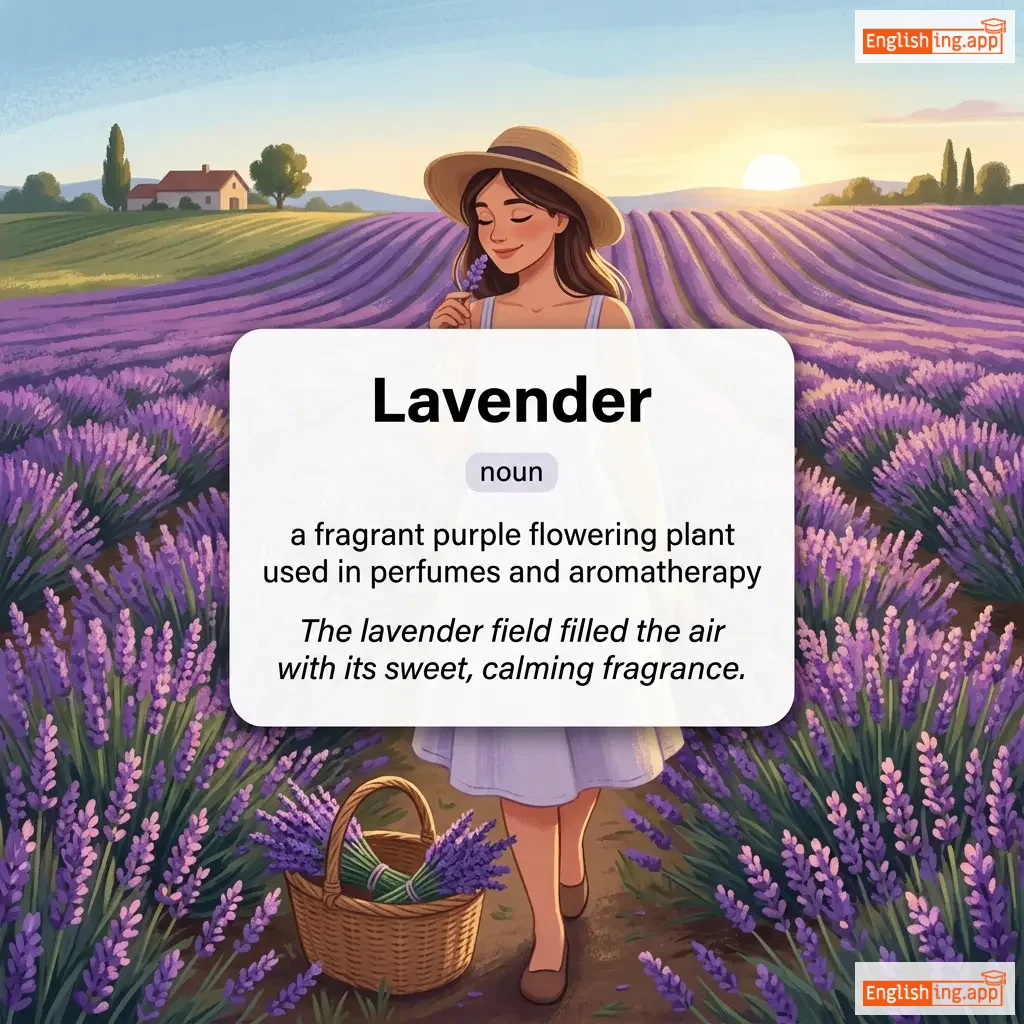
Lavender definition card — visual illustration of the meaning
noun
/ˈlæv.ən.dər/
лаванда (lavanda)

a fragrant purple flowering plant used in perfumes and aromatherapy

"The lavender field filled the air with its sweet, calming fragrance."

"Лаванда наполнила воздух своим сладким, успокаивающим ароматом." (Lavanda napolnila vozdukh svoim sladkim, uspokaivayushchim aromatom.)
adjective, verb
/ˈlævɪʃ/
роскошный, расточительный (lavish)

Rich, elaborate, or luxurious; to bestow something in generous or extravagant quantities.

"They gave her a lavish wedding reception with hundreds of guests."
"Они устроили для неё роскошный свадебный прием с сотнями гостей." (Oni ustroili dlya nee roskoshnyy svadebnyy priyem s sotnyami gostey.)
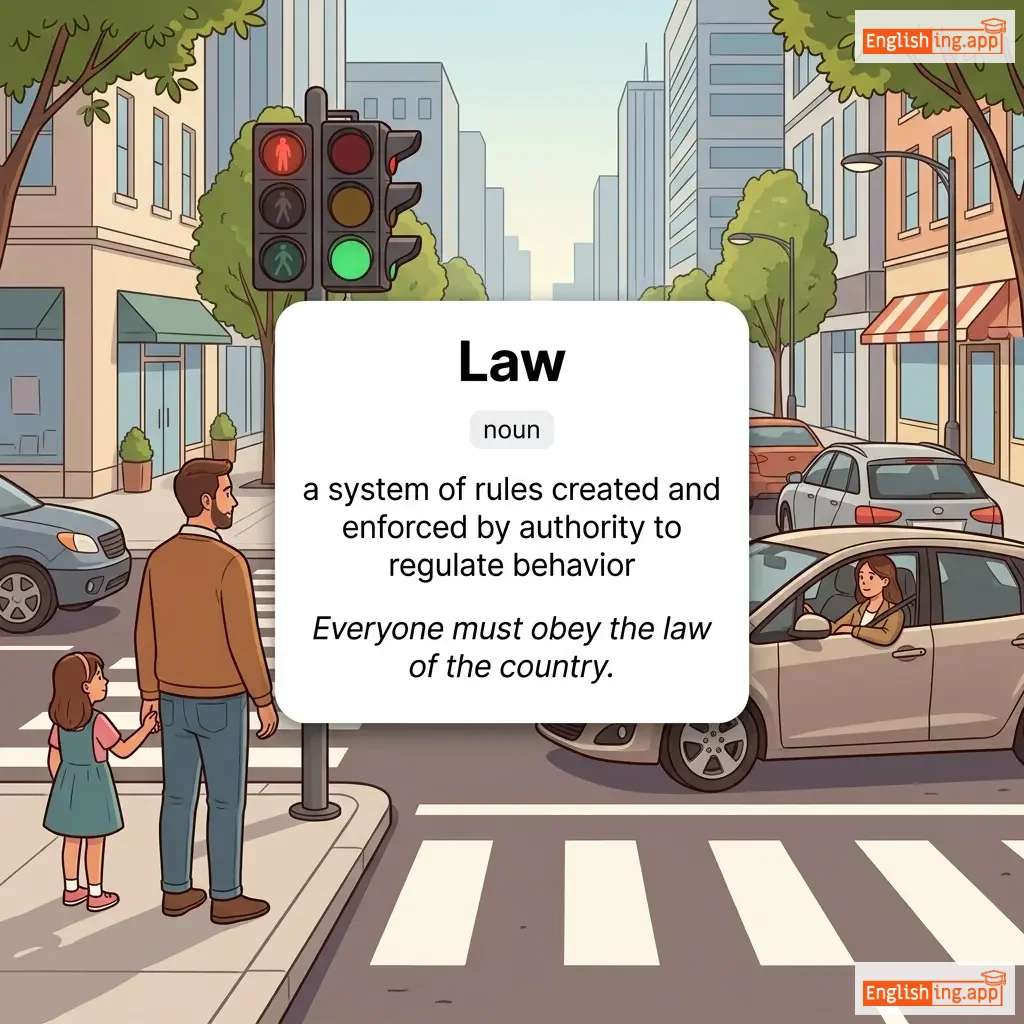
Law definition card — visual illustration of the meaning
noun
/lɔː/
закон (zakon)

a system of rules created and enforced by authority to regulate behavior

"Everyone must obey the law of the country."

"Все должны соблюдать закон страны." (Vse dolzhny soblyudat' zakon strany.)
adjective
/ˈlɔː.fəl/
законный; легитимный; действительный; справедливый; (zakonnyj; legitimnyj; dejstvitel'nyj; spravedlivyj;)

legal; legitimate; valid; just

"The judge confirmed that their actions were lawful and proper."

"Судья подтвердил, что их действия были законными и правильными." (Sud'ya podtverdit, chto ikh deystviya byli zakonny i pravil'ny.)
noun
/ˈlɔːˌɡɪvər/
законодатель (zakonodatel)

A person who creates or enforces laws; a legislator.

"Moses is often regarded as a great lawgiver in history."

"Моисей часто рассматривается как великий законодатель в истории." (Moisey chasto rassmatrivayetsya kak velikiy zakonodatel v istorii.)
adjective
/ˈlɔː.ləs/
беззаконие; анархия; беспорядок; преступник (bezzakonije; anarkhiya; besporyadok; prestupnik)

without law; anarchic; unruly; criminal

"The frontier town was known for its lawless behavior and chaos."

"Приграничный город был известен своим беззаконием и хаосом." (Prigranichnyy gorod byl izvesten svoim bezzakoniyem i khaosom.)
noun
/ˈlɔː.ləs.nəs/
беззаконие (bezzakonije)

absence of law and order; a state where laws do not exist or are not enforced

"The city descended into lawlessness after the government collapsed."

"Город погрузился в беззаконие после того, как правительство развалилось." (Gorod pogruzilsia v bezzakonije posle togo, kak pravitel'stvo razvalilos'.)
noun
/ˈlɔːˌmeɪkər/
законодатель (zakonodatel)

A member of a legislative body who makes laws.

"The lawmaker introduced a new bill on education reform."

"Законодатель представил новый законопроект о реформе образования." (Zakonodatel predstavil novyj zakonoproekt o reforme obrazovanija.)
noun
/lɔːn/
газон (gazon)

an area of short, regularly cut grass in a yard or park

"Children were playing on the green lawn."

"Дети играли на зелёной лужайке." (Deti igrali na zelyonoy luzhayke.)
noun
/ˈlɔːsuːt/
иск (isk)

a legal case brought to a court of law by one person against another

"The company faced a lawsuit over false advertising."

"Компания столкнулась с иском за ложную рекламу." (Kompaniya stolknulas' s iskom za lozhnuyu reklamu.)
Lawyer definition card — visual illustration of the meaning
noun
/ˈlɔːjər/
адвокат (advokat)

A professional who practices or studies law; an attorney.

"The lawyer presented the case confidently in court."

"Адвокат уверенно представил дело в суде." (Advokat uverenno predstavil delo v sude.)
adjective
/læks/
небрежный, расслабленный (lax)

Not strict, severe, or careful; negligent or careless.

"The security at the airport was surprisingly lax."

"Безопасность в аэропорту была удивительно нестрогой." (Bezopasnost' v aeroporte byla udivitel'no nestrogoi.)
noun, adjective
/ˈlæksətɪv/
слабительное (slabitelnoye)

A medicine or substance that stimulates bowel movements; tending to loosen or relieve constipation.

"The doctor prescribed a mild laxative for her condition."

"Врач прописал мягкое слабительное для её состояния." (Vrach propisal myagkoye slabitelnoye dlya yeye sostoyaniya.)
lay definition card — visual illustration of the meaning
verb
/leɪ/
положить (polozhit)

To put something down carefully in a flat position.

"She laid the book on the table."

"Она положила книгу на стол." (Ona polozhila knigu na stol.)
noun
/ˈleɪər/
слой (sloy)

A sheet, thickness, or coating of something that lies over or under a surface.

"The cake had a layer of cream between the sponges."

"Торт имел слой крема между бисквитами." (Tort imel sloy krema mezhdu biskvitami.)
noun
/ˈleɪmən/
непрофессионал (neprofessional)

A person without professional or specialized knowledge in a particular subject.

"To a layman, the medical explanation was confusing."

"Для непрофессионала медицинское объяснение было сбивающим с толку." (Dlya neprofessional'a meditsinskoe ob'yasnenie bylo sbivayushchim s tolkum.)
noun
/ˈleɪaʊt/
макет (maket)

the arrangement or design of something, especially the arrangement of elements in a book, webpage, or room

"The designer presented a new layout for the website that was much more user-friendly."

"Дизайнер представил новый макет для веб-сайта, который был гораздо более удобным для пользователя." (Dizajner predstavил novyj maket dlya veb-sajta, kotoryj byl gorazdo bolee udobnym dlya pol'zovatelya.)
noun
/ˈleɪˌpɜːrsən/
непрофессионал (neprofessional)

A person who is not a member of the clergy or does not have specialized knowledge in a subject.

"The judge explained the law so that the layperson could understand."

"Судья объяснил закон так, чтобы непрофессионал мог его понять." (Sud'ya ob'yasnil zakon tak, chtoby neprofessional mog ego ponyat'.)
adverb
/ˈleɪ.zɪ.li/
лениво (lenivo)

in a way that shows unwillingness to work or use energy; sluggishly

"He lazily stretched his arms and yawned in the morning."

"Он лениво потянул руки и зевнул утром." (On lenivo potyanul ruki i zevnuł utrom.)
noun
/ˈleɪ.zi.nəs/
лень (len)

the quality of being unwilling to work or use energy; idleness

"His laziness prevented him from achieving his goals."

"Его лень помешала ему достичь своих целей." (Ego len' pomeshala emu dostich' svoikh tseley)
adjective
/ˈleɪ.zi/
ленивый; неохотный работать (lenivyy; neokhotny rabotat)

idle; unwilling to work; sluggish

"He was too lazy to clean his room on the weekend."

"Он был слишком ленив, чтобы на выходных убрать свою комнату." (On byl slishkom leniv, chtoby na vykhodnykh ubrat' svoju komnatu.)
noun
/liː/
луг (lug)

An open area of grassy or arable land; a meadow.

"The cottage was surrounded by a quiet lea."
"Коттедж был окружен тихим луговым участком." (Kottedzh byl okruzhion tikhim lugovym uchastkom.)
lead definition card — visual illustration of the meaning
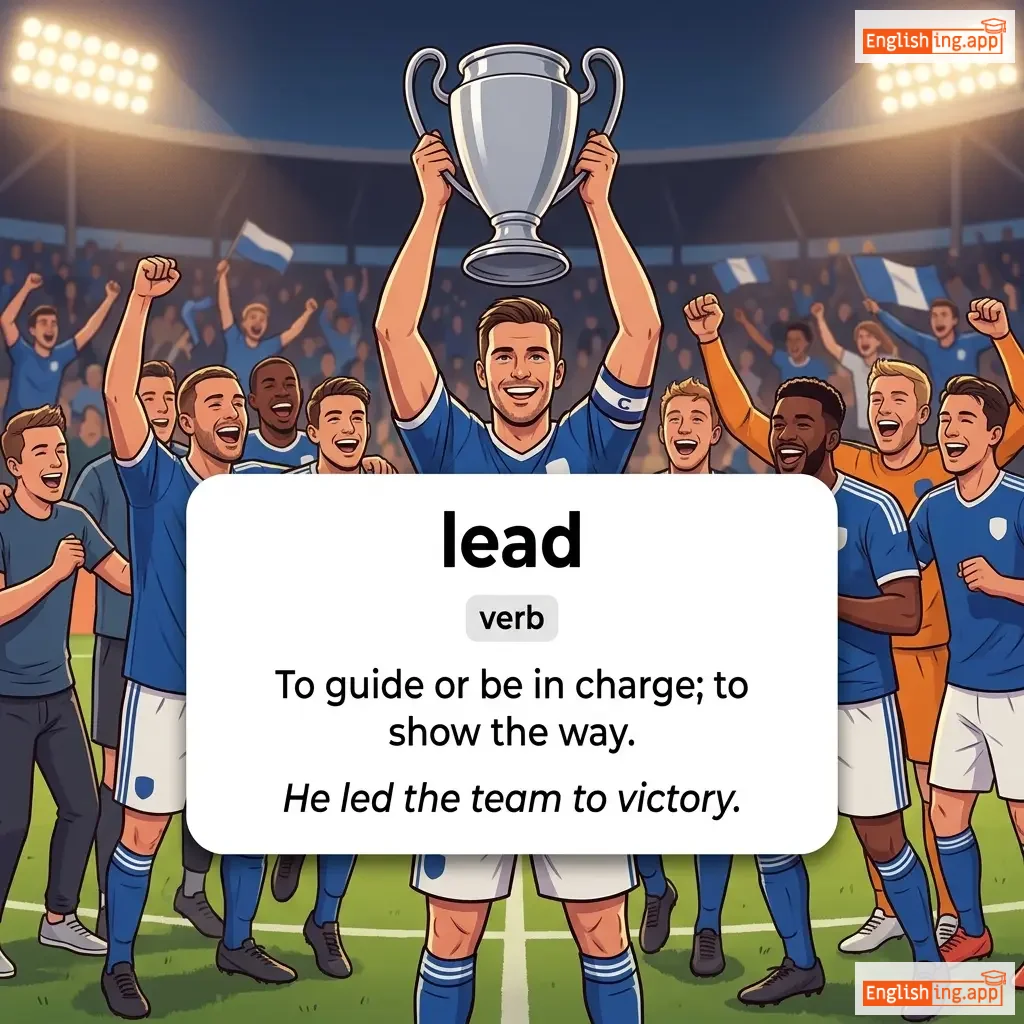
verb
/liːd/
вести (vesti)

To guide or be in charge; to show the way.

"He led the team to victory."

"Он повел команду к победе." (On povel komandu k pobede.)
leader definition card — visual illustration of the meaning
noun
/ˈliːdər/
лидер (lider)

A person who leads a group, organization, or country.

"The leader inspired the team with his vision."

"Лидер вдохновил команду своей визией." (Lider vdokhnovil komandu svoej viziej.)
leadership definition card — visual illustration of the meaning
noun
/ˈliːdərˌʃɪp/
лидерство (liderstvo)

The action of leading a group of people or an organization.

"Her leadership inspired the entire team to achieve their goals."

"Ее лидерство вдохновило всю команду на достижение своих целей." (Yeyo liderstvo vdokhnovilo vsyu komandu na dostizheniye svoikh tseley.)
adjective
/ˈliːdɪŋ/
ведущий (vedushchiy)

most important or most successful; at the front

"She is one of the leading experts in the field."

"Она одна из ведущих экспертов в этой области." (Ona odna iz vedushchikh eksperty v etoy oblasti.)