Vocabularios

Descubra, aprenda y domine el vocabulario en inglés

latency definition card — visual illustration of the meaning
noun
/ˈleɪtənsi/
latencia (latencia)

The delay before a transfer of data begins following an instruction for its transfer.

"High latency can slow down online gaming experiences."

"La alta latencia puede ralentizar la experiencia de juegos en línea." (La alta latencia puede ralentizar la experiencia de juegos en línea.)
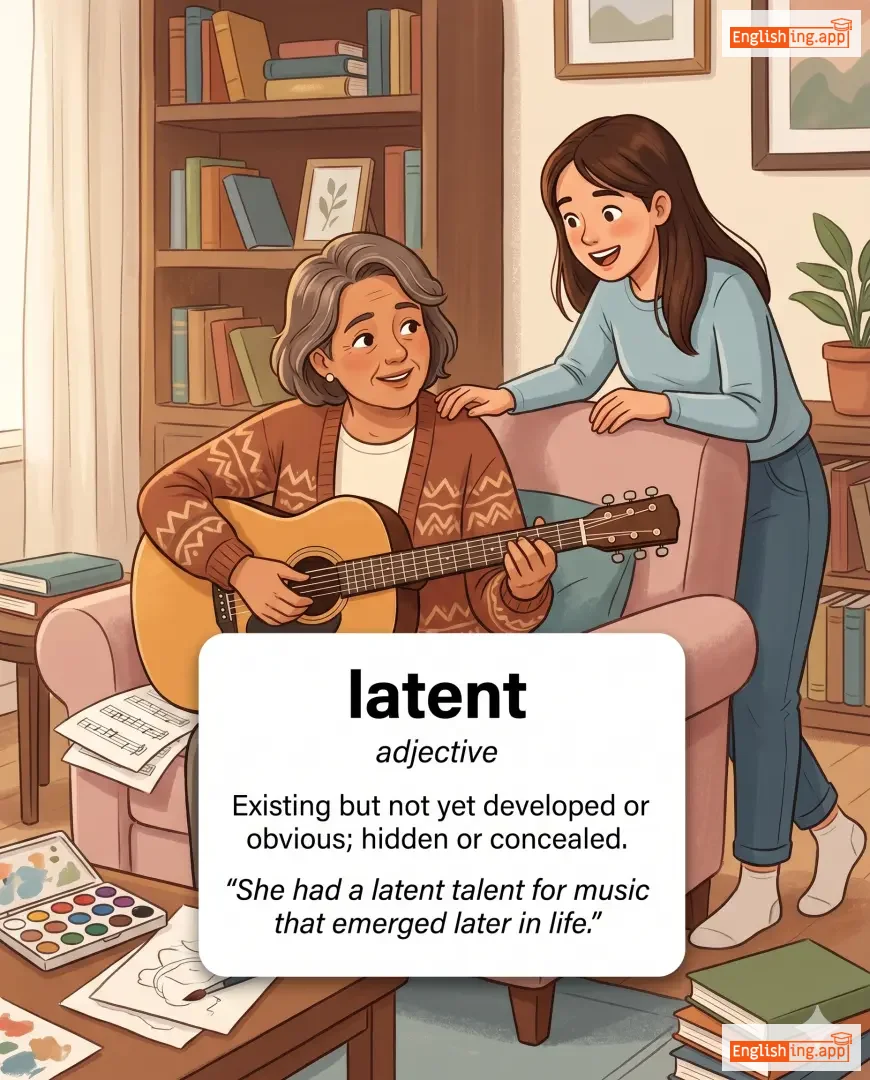
latent definition card — visual illustration of the meaning
adjective
/ˈleɪtənt/
latente (latente)

Existing but not yet developed or obvious; hidden or concealed.

"She had a latent talent for music that emerged later in life."

"Ella tenía un talento latente para la música que emergió más tarde en su vida." (Ella tenía un talento latente para la música que emergió más tarde en su vida.)
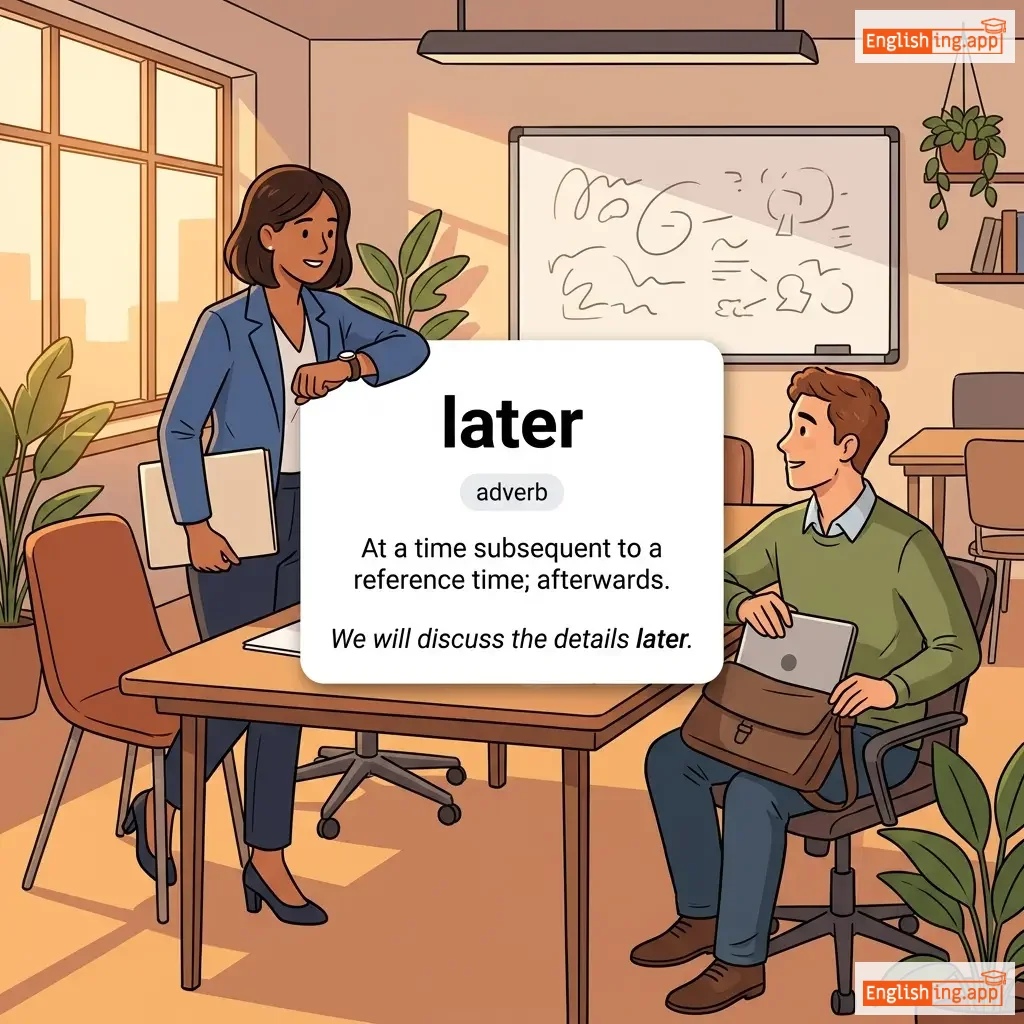
later definition card — visual illustration of the meaning
adverb
/ˈleɪtər/
más tarde (mas tarde)

At a time subsequent to a reference time; afterwards.

"We will discuss the details later."

"Discutiremos los detalles más tarde." (Discutiremos los detalles más tarde.)
adjective
/ˈlætərəl/
lateral (lateral)

Relating to the side or sideways movement.

"The football player made a quick lateral pass."

"El jugador de fútbol hizo un pase lateral rápido." (El jugador de fútbol hizo un pase lateral rápido.)
adjective
/ˈleɪtɪst/
más reciente (mas reciente)

most recent in time; newest available

"She shared the latest updates with the team."

"Ella compartió las actualizaciones más recientes con el equipo." (ella compartio las actualizaciones mas recientes con el equipo)
noun
/leɪð/
torno (torno)

A machine for shaping wood, metal, or other material by rotating it against a cutting tool.

"The carpenter used a lathe to shape the wooden bowl."

"El carpintero usó un torno para dar forma al tazón de madera." (El carpintero uso un torno para dar forma al tazon de madera.)
noun/adjective
/ˈlætɪn/
latín (latin)

the language of ancient Rome; relating to Latin culture or language

"Many English words are derived from Latin."

"Muchas palabras en inglés provienen del latín." (Muchas palabras en inglés provienen del latín.)
adjective
/ˈleɪ.tɪʃ/
un poco tarde (un poco tarde)

Somewhat late; occurring or arriving later than usual but not very late.

"We arrived latish to the party but still caught most of the fun."

"Llegamos un poco tarde a la fiesta, pero aún así alcanzamos la mayoría de la diversión." (Llegamos un poco tarde a la fiesta, pero aun asi alcanzamos la mayoria de la diversion.)
noun
/ˈlætɪˌtjuːd/
latitud (latitud)

The angular distance north or south of the equator; also freedom or scope to act.

"The city lies at a high latitude close to the Arctic Circle."

"La ciudad está en una latitud alta cerca del Círculo Ártico." (La ciudad esta en una latitud alta cerca del Circulo Artico.)
adjective
/ˈlætər/
el segundo (el segundo)

the second of two people or things mentioned

"Between tea and coffee, I prefer the latter."

"Entre el té y el café, prefiero el segundo." (Entre el té y el café, prefiero el segundo.)
noun
/ˈlætɪs/
estructura de rejilla (estructura de rejilla)

A structure of crossed strips arranged in a grid or crisscross pattern.

"The garden was decorated with a wooden lattice covered in vines."

"El jardín estaba decorado con una estructura de rejilla de madera cubierta de vides." (El jardín estaba decorado con una estructura de rejilla de madera cubierta de vides.)
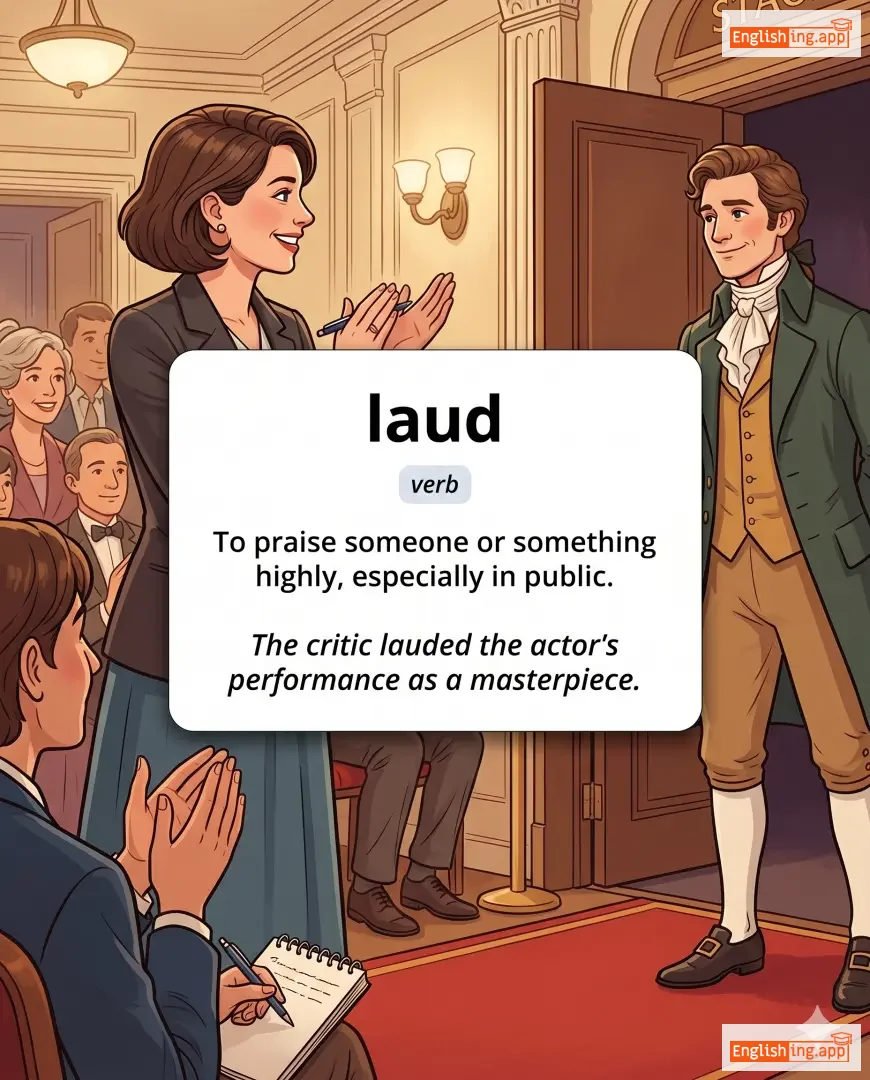
laud definition card — visual illustration of the meaning
verb
/lɔːd/
elogiar (elogiar)

To praise someone or something highly, especially in public.

"The critic lauded the actor's performance as a masterpiece."

"El crítico elogió la actuación del actor como una obra maestra." (El critico elogió la actuacion del actor como una obra maestra.)
adjective
/ˈlɔː.də.bəl/
loable (loable)

Deserving praise and admiration.

"Her efforts to help the poor are truly laudable."

"Sus esfuerzos para ayudar a los pobres son realmente loables." (Sus esfuerzos para ayudar a los pobres son realmente loables.)
noun
/lɔːˈdeɪʃən/
elogio (elogio)

The act of praising or expressing approval.

"The poet received much laudation for his moving verses."

"El poeta recibió muchos elogios por sus versos conmovedores." (El poeta recibio muchos elogios por sus versos conmovedores.)
adjective
/ˈlɔːdəˌtɔːri/
elogioso (elogioso)

Expressing praise or admiration.

"She wrote a laudatory review of the new book."

"Ella escribió una reseña elogiosa del nuevo libro." (Ella escribió una reseña elogiosa del nuevo libro.)
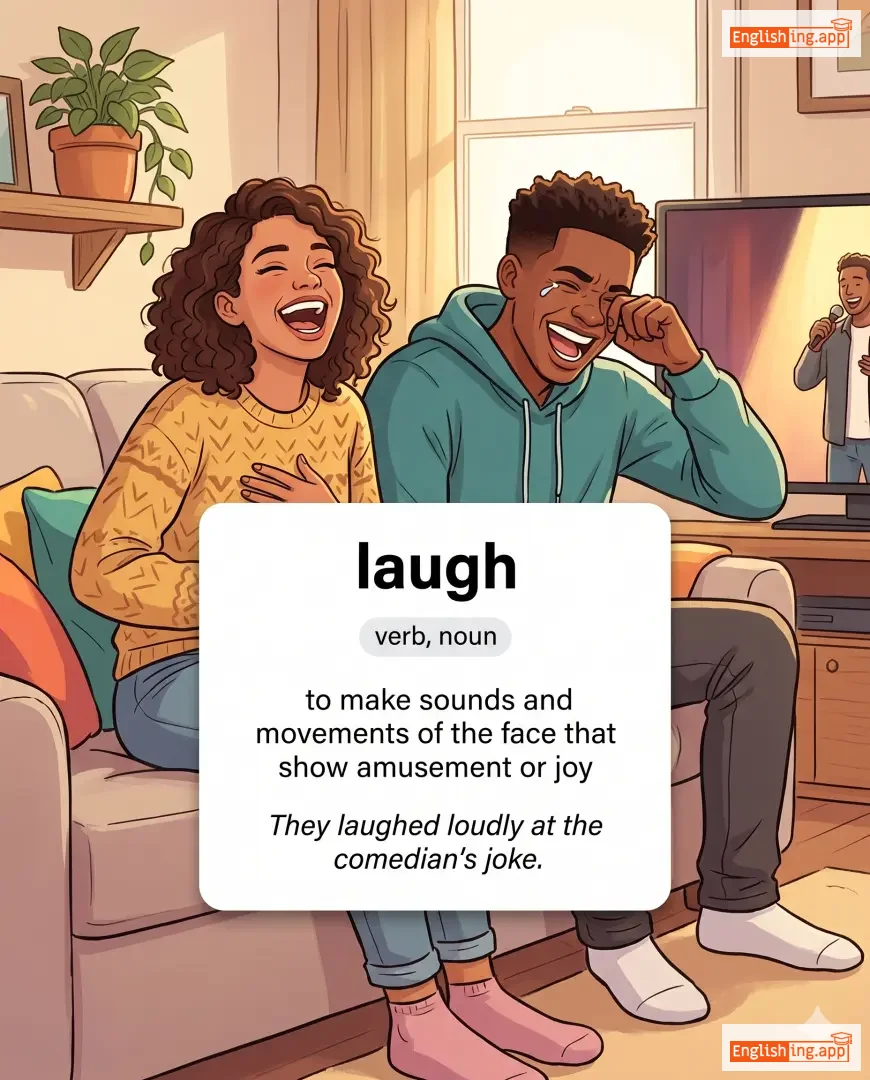
laugh definition card — visual illustration of the meaning
verb, noun
/læf/
reír (reir)

to make sounds and movements of the face that show amusement or joy

"They laughed loudly at the comedian's joke."

"Ellos rieron en voz alta con el chiste del comediante." (Ellos rieron en voz alta con el chiste del comediante.)
noun
/ˈlæftər/
risa (risa)

the act or sound of laughing

"The room was filled with laughter."

"La habitación estaba llena de risas." (La habitacion estaba llena de risas.)
Launch definition card — visual illustration of the meaning
verb, noun
/lɔːntʃ/
lanzar (lanzar)

to start or introduce something, especially a new product, service, or event

"The company launched a new app last month."

"La compañía lanzó una nueva aplicación el mes pasado." (La compañia lanzó una nueva aplicación el mes pasado.)
launched definition card — visual illustration of the meaning
verb
lɔːntʃt
lanzado (lanzado)

Set (something) in motion by pushing it or letting it go.

"The satellite was launched successfully."

"El satélite fue lanzado con éxito." (El satélite fue lanzado con éxito.)
verb
/ˈlɔːndər/
lavar ropa / ocultar el origen del dinero obtenido ilegalmente (lavar ropa / ocultar el origen del dinero obtenido ilegalmente)

to wash clothes, linens, etc.; or to conceal the origins of money obtained illegally

"She laundered all the dirty clothes on Sunday."

"Ella lavó toda la ropa sucia el domingo." (Ella lavó toda la ropa sucia el domingo.)
noun
/ˈlɔːndrəs/
lavandera (lavandera)

A woman whose job is washing clothes and linens.

"The laundress delivered the freshly cleaned clothes to the household."

"La lavandera entregó la ropa recién lavada a la casa." (La lavandera entrego la ropa recien lavada a la casa)
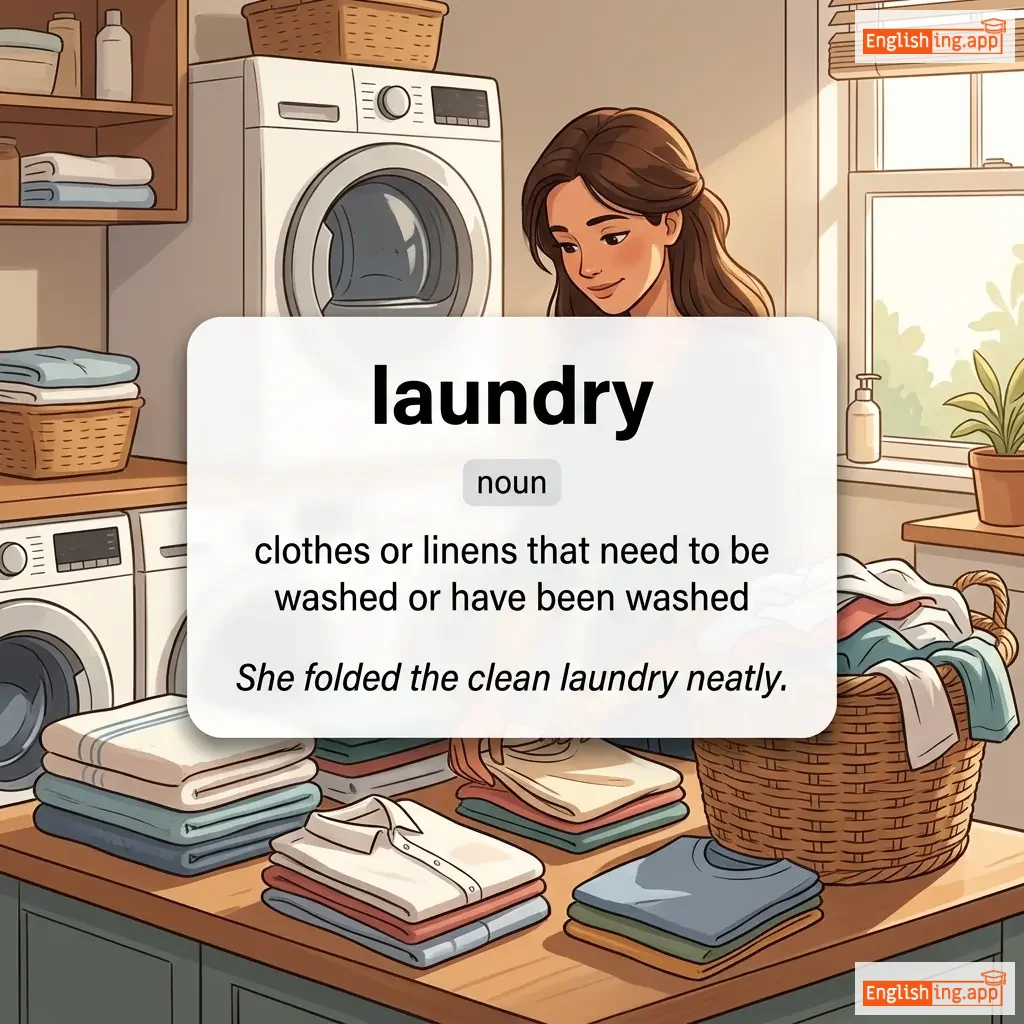
laundry definition card — visual illustration of the meaning
noun
/ˈlɔːndri/
felicidad (felicidad)

clothes or linens that need to be washed or have been washed

"She folded the clean laundry neatly."

"Ella no pudo ocultar su felicidad cuando recibió el premio." (Ella no pudo ocultar su felicidad cuando recibió el premio.)
noun
/ˈlɔːriət/
galardonado (galardonado)

A person honored with an award for outstanding achievement in a field, especially the arts or sciences.

"The Nobel laureate gave an inspiring lecture on peace."

"El laureado Nobel dio una conferencia inspiradora sobre la paz." (El laureado Nobel dio una conferencia inspiradora sobre la paz.)
verb
/leɪv/
lavar (lavar)

To wash or bathe.

"She laved her face with cool water."

"Ella lavó su cara con agua fría." (Ella lavó su cara con agua fría.)
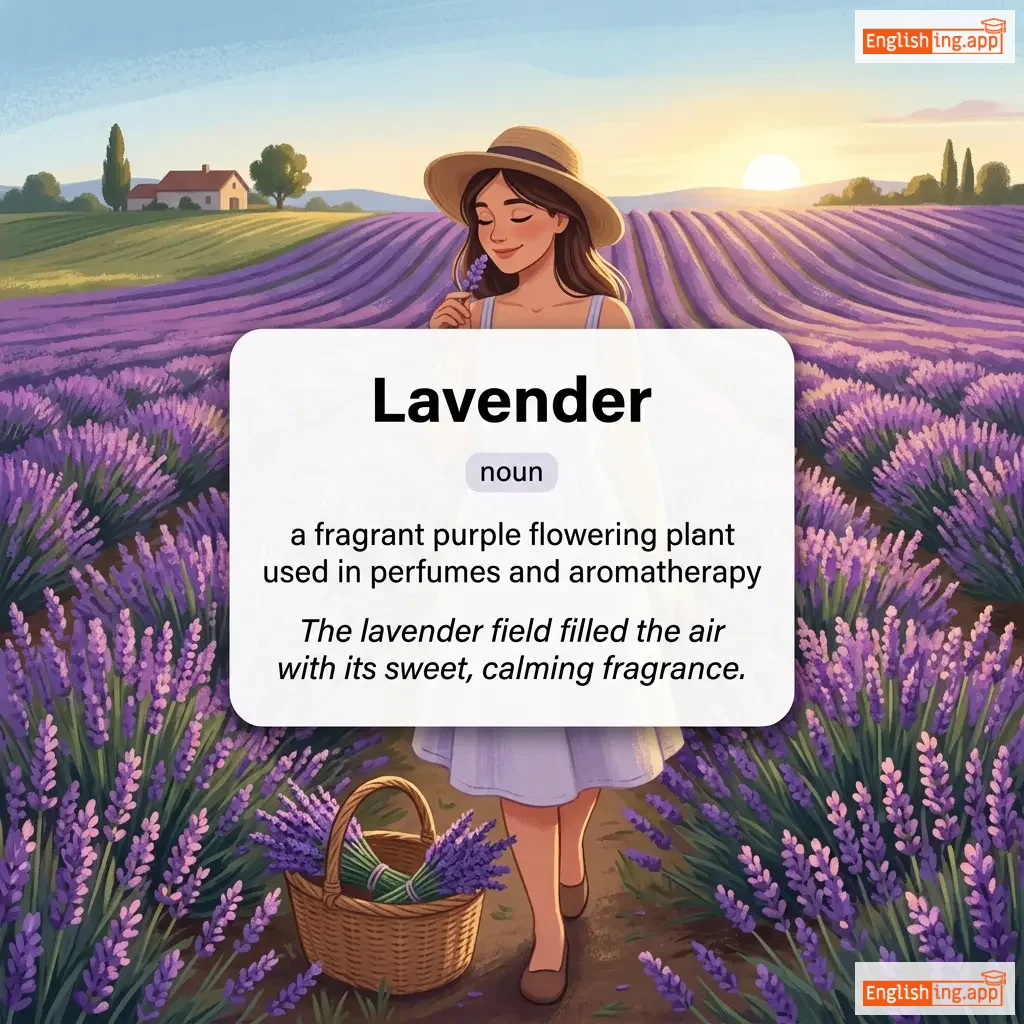
Lavender definition card — visual illustration of the meaning
noun
/ˈlæv.ən.dər/
lavanda (lavanda)

a fragrant purple flowering plant used in perfumes and aromatherapy

"The lavender field filled the air with its sweet, calming fragrance."

"El campo de lavanda llenó el aire con su dulce y calmante fragancia." (El campo de lavanda llenó el aire con su dulce y calmante fragancia.)
adjective, verb
/ˈlævɪʃ/
lujoso, opulento (lavish)

Rich, elaborate, or luxurious; to bestow something in generous or extravagant quantities.

"They gave her a lavish wedding reception with hundreds of guests."

"Le dieron una recepción de boda lujosa con cientos de invitados." (Le dieron una recepcion de boda lujosa con cientos de invitados.)
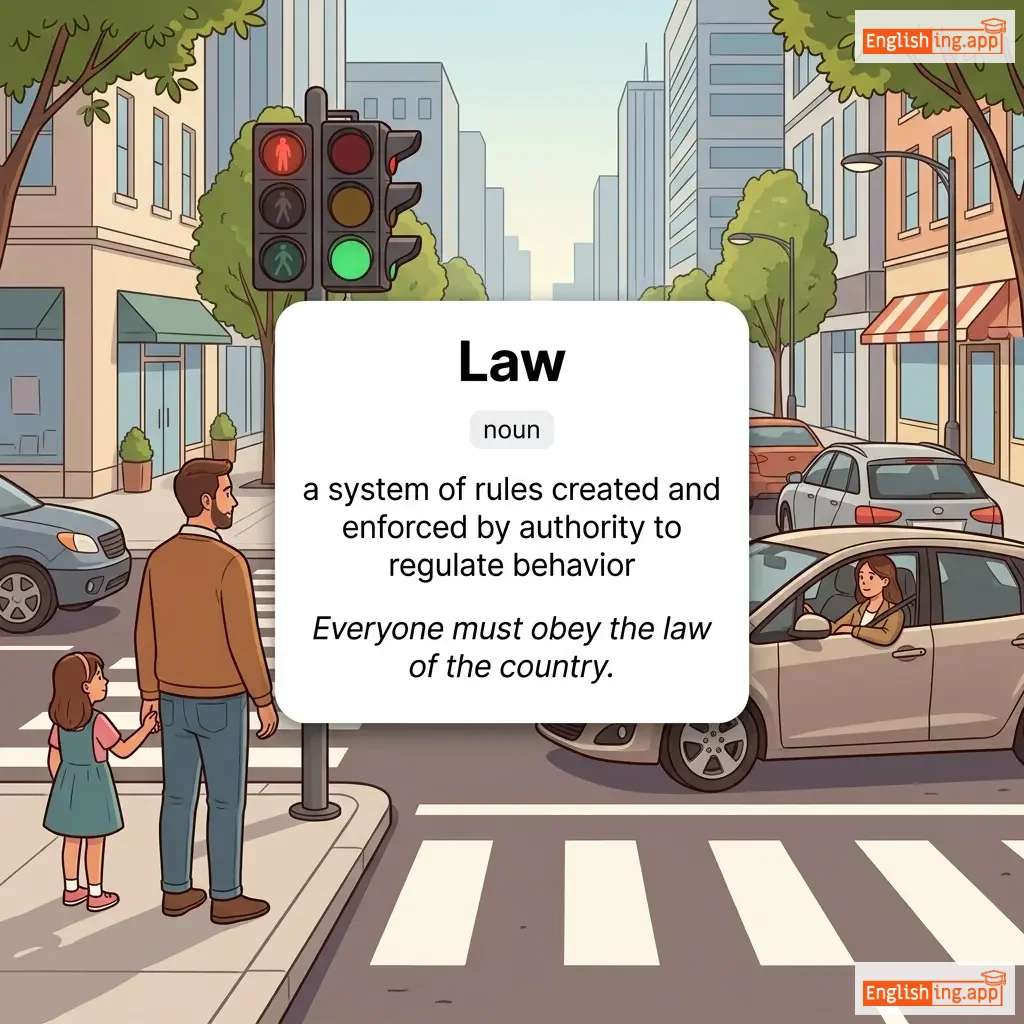
Law definition card — visual illustration of the meaning
noun
/lɔː/
ley (ley)

a system of rules created and enforced by authority to regulate behavior

"Everyone must obey the law of the country."

"Todos deben obedecer la ley del país." (Todos deben obedecer la ley del país.)
adjective
/ˈlɔː.fəl/
legal; legítimo; válido; justo; (legal; legitim; valido; justo;)

legal; legitimate; valid; just

"The judge confirmed that their actions were lawful and proper."

"El juez confirmó que sus acciones eran legales y apropiadas." (El juez confirmo que sus acciones eran legales y apropiadas.)
noun
/ˈlɔːˌɡɪvər/
legislador (legislador)

A person who creates or enforces laws; a legislator.

"Moses is often regarded as a great lawgiver in history."

"Moisés es a menudo considerado como un gran legislador en la historia." (Moisés es a menudo considerado como un gran legislador en la historia.)
adjective
/ˈlɔː.ləs/
sin ley; anárquico; desordenado; criminal (sin ley; anarqiko; desordenado; kriminal)

without law; anarchic; unruly; criminal

"The frontier town was known for its lawless behavior and chaos."

"La ciudad fronteriza era conocida por su comportamiento sin ley y el caos." (La ciudad fronteriza era conocida por su comportamiento sin ley y el caos.)
noun
/ˈlɔː.ləs.nəs/
anarquía (anarquia)

absence of law and order; a state where laws do not exist or are not enforced

"The city descended into lawlessness after the government collapsed."

"La ciudad descendió a la anarquía después del colapso del gobierno." (La ciudad descendió a la anarquía después del colapso del gobierno.)
noun
/ˈlɔːˌmeɪkər/
legislador (legislador)

A member of a legislative body who makes laws.

"The lawmaker introduced a new bill on education reform."

"El legislador presentó un nuevo proyecto de ley sobre la reforma educativa." (El legislador presentó un nuevo proyecto de ley sobre la reforma educativa.)
noun
/lɔːn/
césped (cesped)

an area of short, regularly cut grass in a yard or park

"Children were playing on the green lawn."

"Los niños estaban jugando en el césped verde." (Los ninos estaban jugando en el cesped verde.)
noun
/ˈlɔːsuːt/
demanda (demanda)

a legal case brought to a court of law by one person against another

"The company faced a lawsuit over false advertising."

"La empresa enfrentó una demanda por publicidad falsa." (La empresa enfrentó una demanda por publicidad falsa.)
Lawyer definition card — visual illustration of the meaning
noun
/ˈlɔːjər/
abogado (abogado)

A professional who practices or studies law; an attorney.

"The lawyer presented the case confidently in court."

"El abogado presentó el caso con confianza en la corte." (El abogado presentó el caso con confianza en la corte.)
adjective
/læks/
relajado, descuidado (lax)

Not strict, severe, or careful; negligent or careless.

"The security at the airport was surprisingly lax."

"La seguridad en el aeropuerto era sorprendentemente relajada." (La seguridad en el aeropuerto era sorprendentemente relajada.)
noun, adjective
/ˈlæksətɪv/
laxante (laxante)

A medicine or substance that stimulates bowel movements; tending to loosen or relieve constipation.

"The doctor prescribed a mild laxative for her condition."

"El médico recetó un laxante suave para su condición." (El medico receto un laxante suave para su condicion.)
lay definition card — visual illustration of the meaning
verb
/leɪ/
poner (poner)

To put something down carefully in a flat position.

"She laid the book on the table."

"Ella puso el libro sobre la mesa." (Ella puso el libro sobre la mesa.)
noun
/ˈleɪər/
capa (capa)

A sheet, thickness, or coating of something that lies over or under a surface.

"The cake had a layer of cream between the sponges."

"El pastel tenía una capa de crema entre las esponjas." (El pastel tenía una capa de crema entre las esponjas.)
noun
/ˈleɪmən/
laico (laiko)

A person without professional or specialized knowledge in a particular subject.

"To a layman, the medical explanation was confusing."

"Para un laico, la explicación médica era confusa." (Para un laiko, la eksplikaθion medika era konfusa.)
noun
/ˈleɪaʊt/
diseño (diseno)

the arrangement or design of something, especially the arrangement of elements in a book, webpage, or room

"The designer presented a new layout for the website that was much more user-friendly."

"El diseñador presentó un nuevo diseño para el sitio web que era mucho más fácil de usar." (El diseniador presento un nuevo diseno para el sitio web que era mucho mas facil de usar.)
noun
/ˈleɪˌpɜːrsən/
persona común (persona comun)

A person who is not a member of the clergy or does not have specialized knowledge in a subject.

"The judge explained the law so that the layperson could understand."

"El juez explicó la ley de manera que la persona común pudiera entenderla." (El juez explicó la ley de manera que la persona común pudiera entenderla.)
adverb
/ˈleɪ.zɪ.li/
perezosamente (perezosamente)

in a way that shows unwillingness to work or use energy; sluggishly

"He lazily stretched his arms and yawned in the morning."

"Él estiró perezosamente los brazos y bostezó por la mañana." (El estiró perezosamente los brazos y bostezó por la mañana.)
noun
/ˈleɪ.zi.nəs/
pereza (pereza)

the quality of being unwilling to work or use energy; idleness

"His laziness prevented him from achieving his goals."

"Su pereza le impidió lograr sus objetivos." (su pereza le impidió lograr sus objetivos)
adjective
/ˈleɪ.zi/
perezoso; remolón (perezoso; remolon)

idle; unwilling to work; sluggish

"He was too lazy to clean his room on the weekend."

"Él estaba demasiado perezoso para limpiar su cuarto el fin de semana." (El estaba demasiado perezoso para limpiar su cuarto el fin de semana.)
noun
/liː/
pradera (pradera)

An open area of grassy or arable land; a meadow.

"The cottage was surrounded by a quiet lea."

"La cabaña estaba rodeada por una tranquila pradera." (La cabana estaba rodeada por una tranquila pradera.)
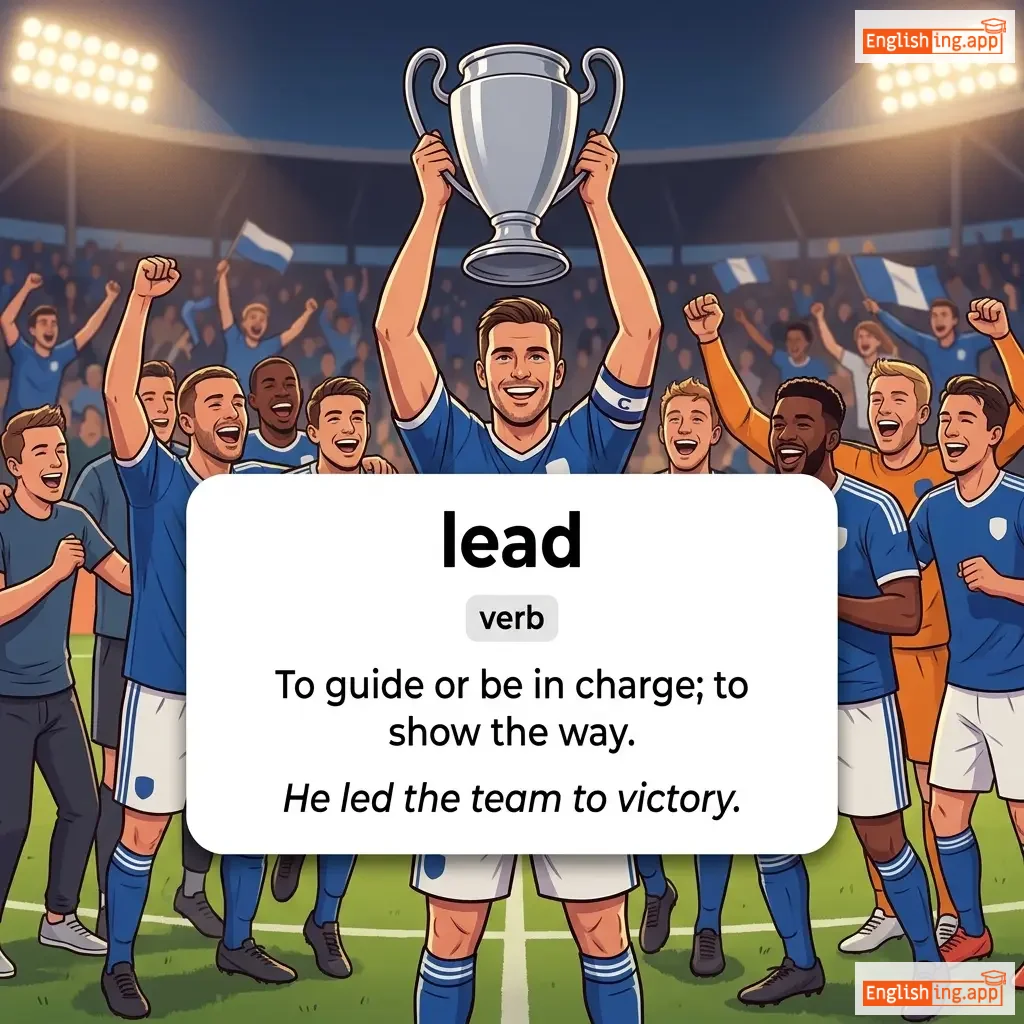
lead definition card — visual illustration of the meaning
verb
/liːd/
dirigir (dirigir)

To guide or be in charge; to show the way.

"He led the team to victory."

"Él lideró el equipo hacia la victoria." (Él lideró el equipo hacia la victoria.)
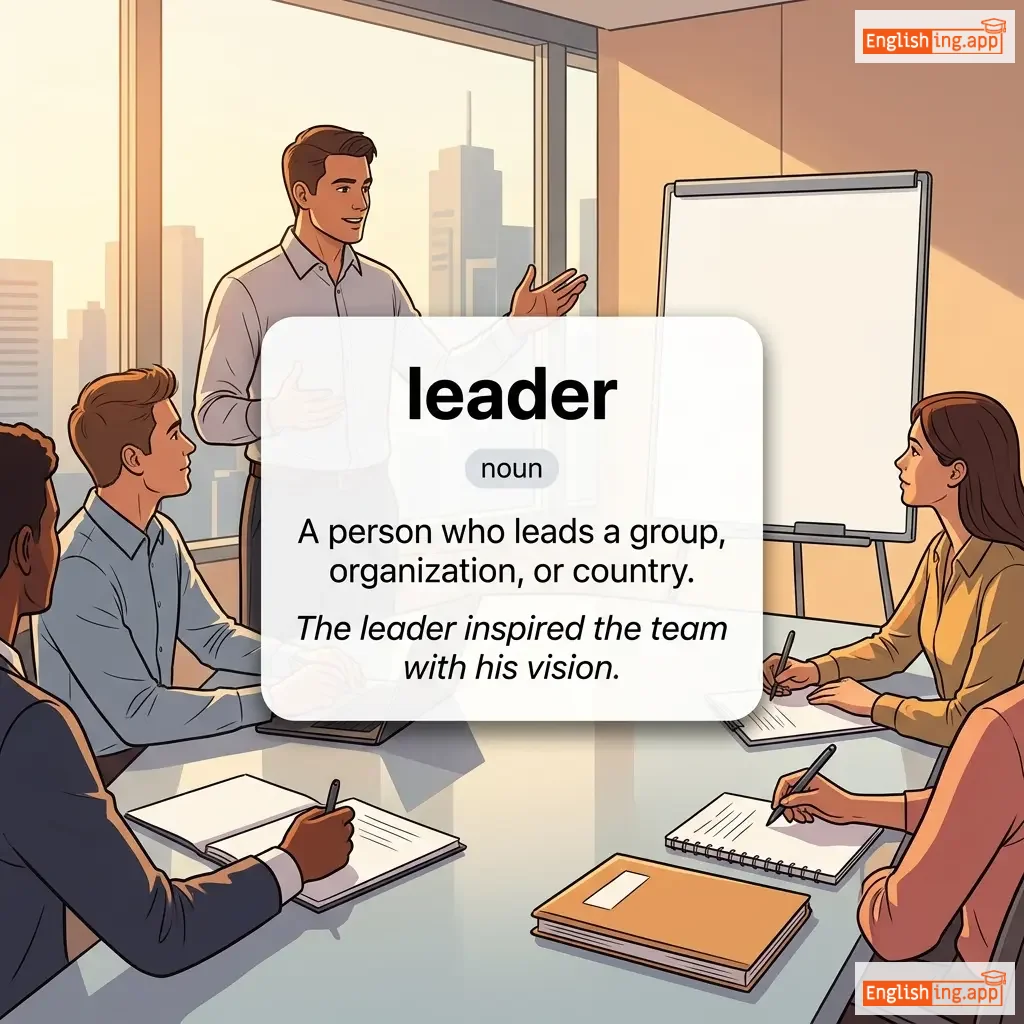
leader definition card — visual illustration of the meaning
noun
/ˈliːdər/
líder (lider)

A person who leads a group, organization, or country.

"The leader inspired the team with his vision."

"El líder inspiró al equipo con su visión." (El lider inspiro al equipo con su vision.)
leadership definition card — visual illustration of the meaning
noun
/ˈliːdərˌʃɪp/
liderazgo (liderazgo)

The action of leading a group of people or an organization.

"Her leadership inspired the entire team to achieve their goals."

"Su liderazgo inspiró a todo el equipo a alcanzar sus metas." (Su liderazgo inspiró a todo el equipo a alcanzar sus metas.)
adjective
/ˈliːdɪŋ/
principal (principal)

most important or most successful; at the front

"She is one of the leading experts in the field."

"Ella es una de las principales expertas en el campo." (Ella es una de las principales expertas en el campo.)