वोकैबुलरीज

इंग्लिश वोकैबुलरी डिस्कवर, लर्न और मास्टर करें

latency definition card — visual illustration of the meaning
noun
/ˈleɪtənsi/
विलंब (vilamb)

The delay before a transfer of data begins following an instruction for its transfer.

"High latency can slow down online gaming experiences."

"उच्च विलंब ऑनलाइन गेमिंग अनुभव को धीमा कर सकता है।" (uchch vilamb online gaming anubhav ko dheema kar sakta hai.)
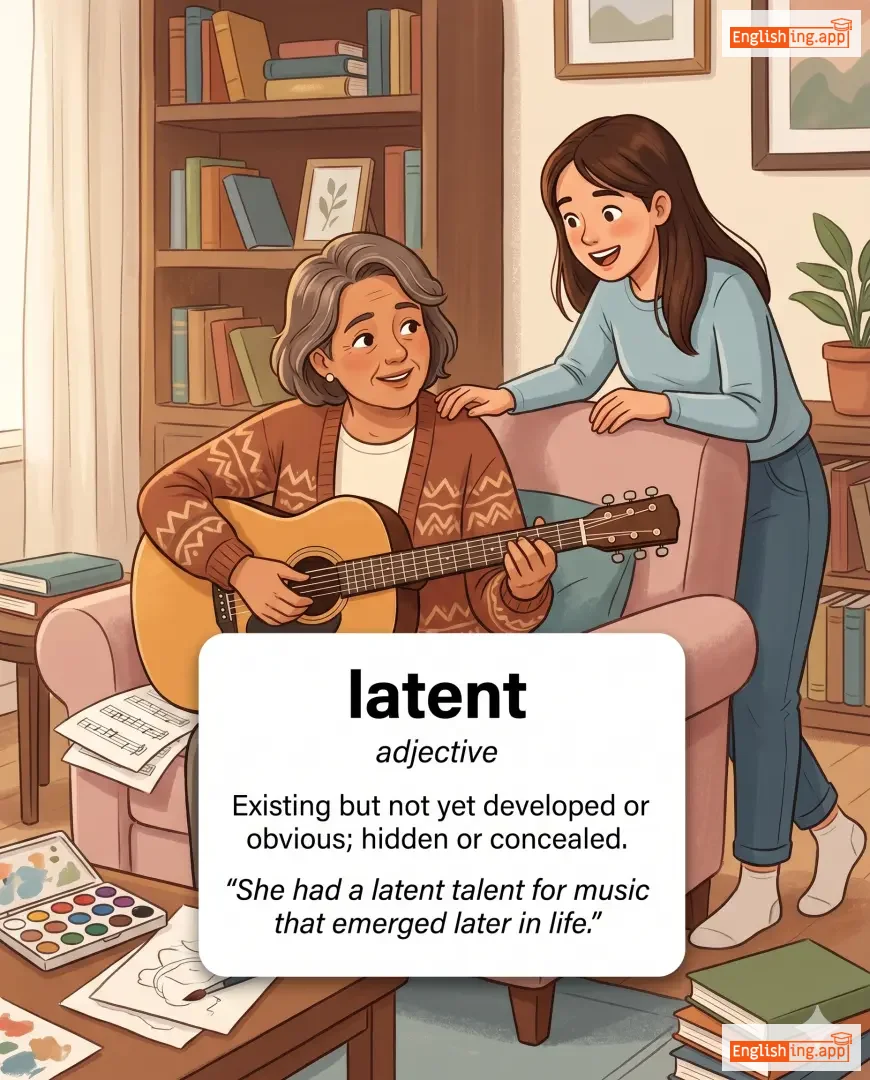
latent definition card — visual illustration of the meaning
adjective
/ˈleɪtənt/
निहित (nihit)

Existing but not yet developed or obvious; hidden or concealed.

"She had a latent talent for music that emerged later in life."

"उसमें संगीत के लिए एक निहित प्रतिभा थी, जो बाद में जीवन में उभरी।" (Usmein sangeet ke liye ek nihit pratibha thi, jo baad mein jeevan mein ubhri.)
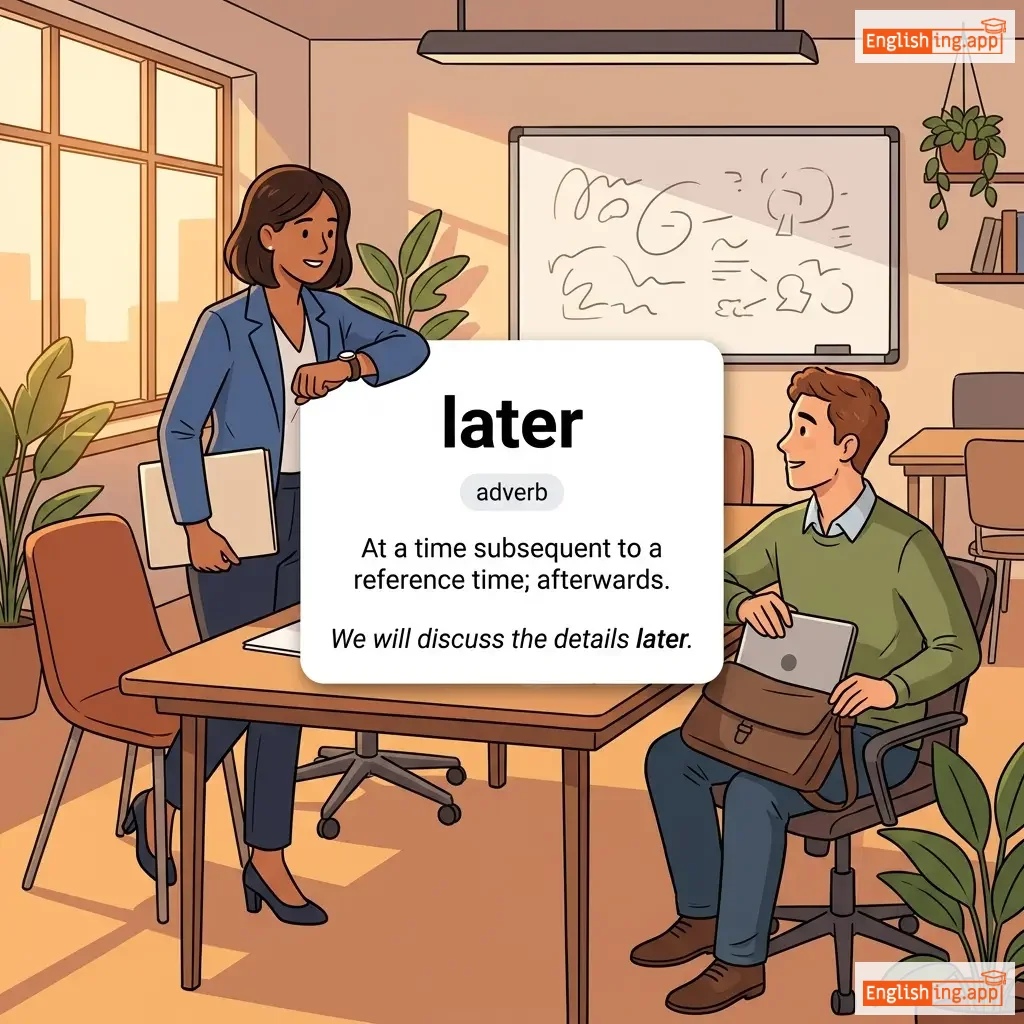
later definition card — visual illustration of the meaning
adverb
/ˈleɪtər/
बाद में (baad mein)

At a time subsequent to a reference time; afterwards.

"We will discuss the details later."

"हम विवरण बाद में चर्चा करेंगे।" (ham vivaran baad mein charcha karenge.)
adjective
/ˈlætərəl/
पार्श्व (paarshv)

Relating to the side or sideways movement.

"The football player made a quick lateral pass."

"फुटबॉल खिलाड़ी ने एक तेज़ पार्श्व पास किया।" (football khiladi ne ek tez paarshv pass kiya.)
adjective
/ˈleɪtɪst/
नवीनतम (navintam)

most recent in time; newest available

"She shared the latest updates with the team."

"उसने टीम के साथ नवीनतम अपडेट साझा किए।" (usne team ke saath navintam update saajha kiye)
noun
/leɪð/
लेथ यंत्र (leth yantra)

A machine for shaping wood, metal, or other material by rotating it against a cutting tool.

"The carpenter used a lathe to shape the wooden bowl."

"बढ़ई ने लकड़ी के कटोरे को आकार देने के लिए लेथ का उपयोग किया।" (badhai ne lakdi ke katora ko akar dene ke liye leth ka upyog kiya.)
noun/adjective
/ˈlætɪn/
लैटिन (latin)

the language of ancient Rome; relating to Latin culture or language

"Many English words are derived from Latin."

"कई अंग्रेजी शब्द लैटिन से उत्पन्न हुए हैं।" (Kai angrezi shabd latin se utpann huye hain.)
adjective
/ˈleɪ.tɪʃ/
थोड़ा देर से (thoda der se)

Somewhat late; occurring or arriving later than usual but not very late.

"We arrived latish to the party but still caught most of the fun."

"हम पार्टी में थोड़ा देर से पहुंचे, लेकिन फिर भी ज्यादातर मज़ा लिया।" (Ham party mein thoda der se pahunchhe, lekin phir bhi zyada tar maza liya.)
noun
/ˈlætɪˌtjuːd/
अक्षांश (akshansh)

The angular distance north or south of the equator; also freedom or scope to act.

"The city lies at a high latitude close to the Arctic Circle."

"शहर आर्कटिक सर्कल के पास उच्च अक्षांश पर स्थित है।" (Shehar Arctic Circle ke paas uchch akshansh par sthit hai.)
adjective
/ˈlætər/
दूसरा (doosra)

the second of two people or things mentioned

"Between tea and coffee, I prefer the latter."

"चाय और कॉफी के बीच, मुझे दूसरा पसंद है।" (Chaay aur coffee ke beech, mujhe doosra pasand hai.)
noun
/ˈlætɪs/
जाल संरचना (jaal sanrachna)

A structure of crossed strips arranged in a grid or crisscross pattern.

"The garden was decorated with a wooden lattice covered in vines."

"बगिया को एक लकड़ी की जाली संरचना से सजाया गया था जो बेलों से ढकी हुई थी।" (Bagiya ko ek lakdi ki jaal sanrachna se sajaya gaya tha jo belon se dhaki hui thi.)
laud definition card — visual illustration of the meaning
verb
/lɔːd/
प्रशंसा करना (prashamsa karna)

To praise someone or something highly, especially in public.

"The critic lauded the actor's performance as a masterpiece."

"आलोचक ने अभिनेता के प्रदर्शन को एक मास्टरपीस के रूप में प्रशंसा की।" (Aalochak ne abhineta ke pradarshan ko ek masterpece ke roop mein prashamsa ki.)
adjective
/ˈlɔː.də.bəl/
सराहनीय (saraahniya)

Deserving praise and admiration.

"Her efforts to help the poor are truly laudable."

"गरीबों की मदद करने के उनके प्रयास वास्तव में सराहनीय हैं।" (Gareebon ki madad karne ke unke prayaas vaastav mein saraahniya hain.)
noun
/lɔːˈdeɪʃən/
प्रशंसा (prashansa)

The act of praising or expressing approval.

"The poet received much laudation for his moving verses."

"कवि को अपनी प्रेरणादायक कविताओं के लिए बहुत प्रशंसा प्राप्त हुई।" (Kavi ko apni prerṇadayak kavitaon ke liye bahut prashansa prapt hui.)
adjective
/ˈlɔːdəˌtɔːri/
प्रशंसा करनेवाला (prashansa karnewala)

Expressing praise or admiration.

"She wrote a laudatory review of the new book."

"शी ने नई किताब की सराहनात्मक समीक्षा लिखी।" (She ne nai kitaab ki sarahnatmak sameeksha likhi.)
laugh definition card — visual illustration of the meaning
verb, noun
/læf/
हँसना (hansna)

to make sounds and movements of the face that show amusement or joy

"They laughed loudly at the comedian's joke."

"वे हास्य कलाकार के जोक पर जोर से हंसे।" (ve haasya kalakar ke jok par zor se hanse.)
noun
/ˈlæftər/
खुशी (khushi)

the act or sound of laughing

"The room was filled with laughter."

"वह पुरस्कार प्राप्त करते समय अपनी खुशी को छिपा नहीं सकी।" (Woh puraskar prapt karte samay apni khushi ko chhupa nahi saki.)
Launch definition card — visual illustration of the meaning
verb, noun
/lɔːntʃ/
लॉन्च करना (launch karna)

to start or introduce something, especially a new product, service, or event

"The company launched a new app last month."

"कंपनी ने पिछले महीने एक नया ऐप लॉन्च किया।" (company ne pichhle mahine ek naya app launch kiya.)
launched definition card — visual illustration of the meaning
verb
lɔːntʃt
प्रक्षिप्त (prakshipt)

Set (something) in motion by pushing it or letting it go.

"The satellite was launched successfully."

"सैटेलाइट सफलतापूर्वक प्रक्षिप्त किया गया।" (Satellite safaltapurvak prakshipt kiya gaya.)
verb
/ˈlɔːndər/
कपड़े धोना / अवैध धन को वैध करना (kapde dhona / avaid dhan ko vaidh karna)

to wash clothes, linens, etc.; or to conceal the origins of money obtained illegally

"She laundered all the dirty clothes on Sunday."

"उसने रविवार को सारे गंदे कपड़े धोए।" (Usne ravivaar ko saare gande kapde dhoye.)
noun
/ˈlɔːndrəs/
लॉन्ड्रेस (laundress)

A woman whose job is washing clothes and linens.

"The laundress delivered the freshly cleaned clothes to the household."

"लॉन्ड्रेस ने ताजे धोए हुए कपड़े घर में पहुंचाए" (Laundress ne taze dhoe hue kapde ghar mein pahuchaye)
laundry definition card — visual illustration of the meaning
noun
/ˈlɔːndri/
खुशी (khushi)

clothes or linens that need to be washed or have been washed

"She folded the clean laundry neatly."

"वह पुरस्कार मिलने पर अपनी खुशी को छिपा नहीं पाई।" (Wah puraskaar milne par apni khushi ko chhupa nahi paayi.)
noun
/ˈlɔːriət/
उपाधी प्राप्त व्यक्ति (upaadhee praapt vyakti)

A person honored with an award for outstanding achievement in a field, especially the arts or sciences.

"The Nobel laureate gave an inspiring lecture on peace."

"नोबेल पुरस्कार विजेता ने शांति पर एक प्रेरणादायक व्याख्यान दिया।" (Nobel puraskar vijeta ne shanti par ek prernadayak vyakhyan diya.)
verb
/leɪv/
धोना (dhona)

To wash or bathe.

"She laved her face with cool water."

"वह ठंडे पानी से अपना चेहरा धो रही थी।" (Vah thande pani se apna chehra dho rahi thi.)
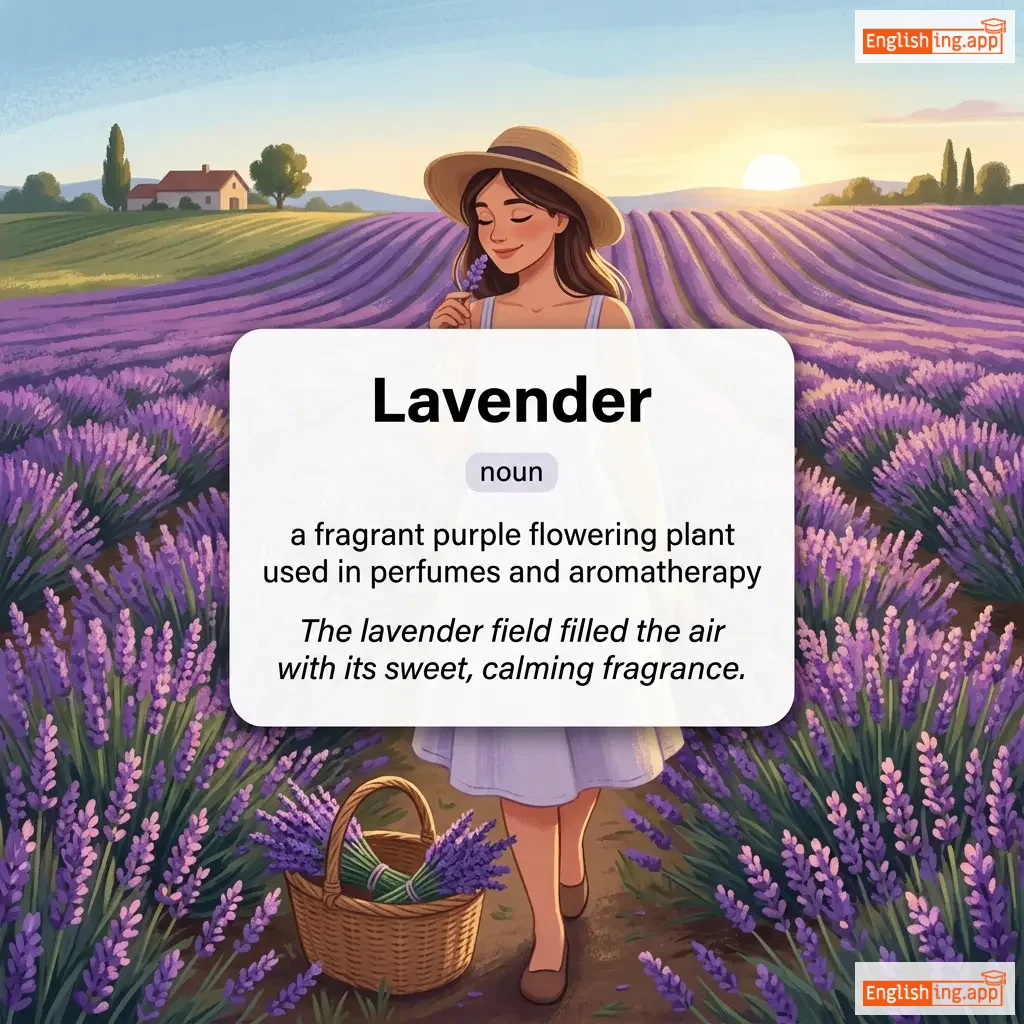
Lavender definition card — visual illustration of the meaning
noun
/ˈlæv.ən.dər/
लैवेंडर (lavender)

a fragrant purple flowering plant used in perfumes and aromatherapy

"The lavender field filled the air with its sweet, calming fragrance."

"लैवेंडर खेत ने हवा को अपनी मीठी, शांति देने वाली खुशबू से भर दिया।" (lavender khet ne hawa ko apni mishti, shanti dene wali khushboo se bhar diya.)
adjective, verb
/ˈlævɪʃ/
विलासी, शानदार (lavish)

Rich, elaborate, or luxurious; to bestow something in generous or extravagant quantities.

"They gave her a lavish wedding reception with hundreds of guests."

"वे उसे सैकड़ों मेहमानों के साथ एक भव्य शादी का रिसेप्शन दे रहे थे।" (ve use saikdon mehmano ke saath ek bhavya shaadi ka reception de rahe the.)
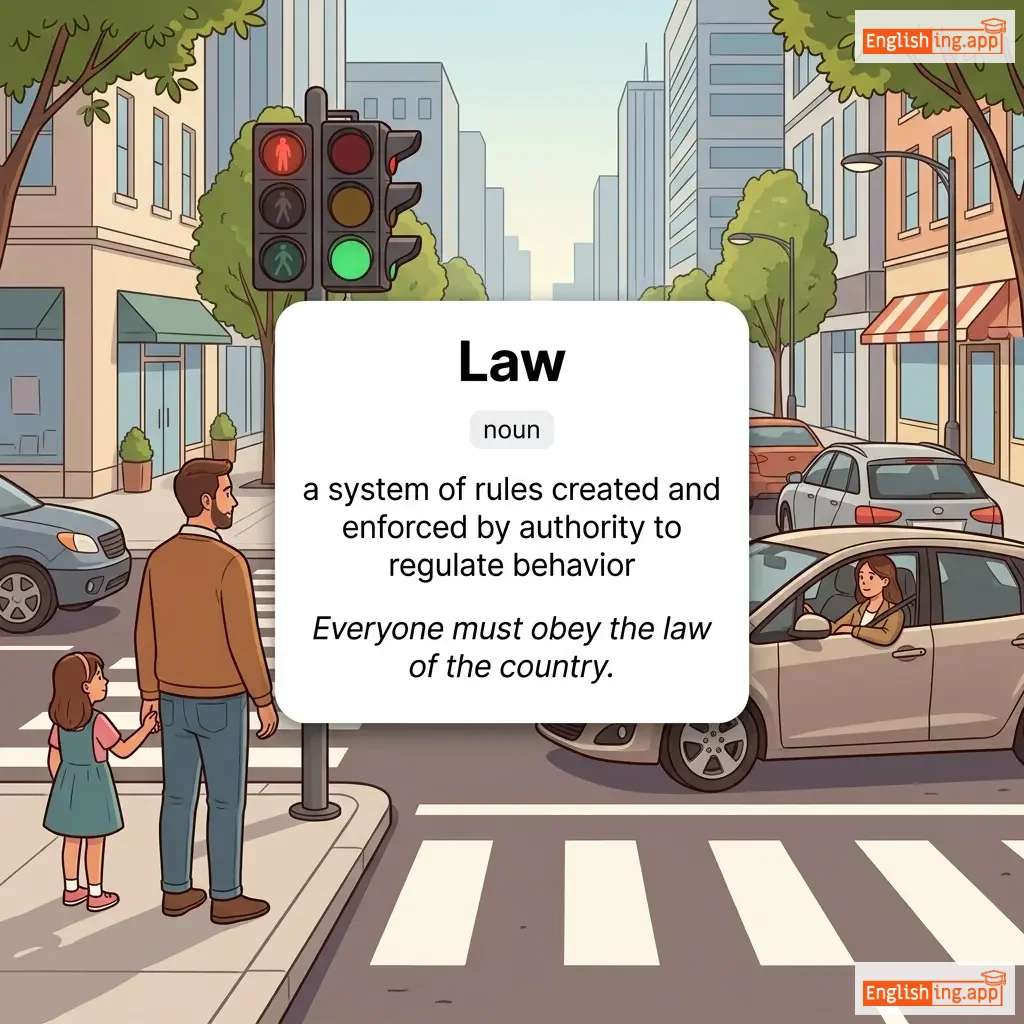
Law definition card — visual illustration of the meaning
noun
/lɔː/
कानून (kanun)

a system of rules created and enforced by authority to regulate behavior

"Everyone must obey the law of the country."

"हर किसी को देश के कानून का पालन करना चाहिए।" (har kisi ko desh ke kanun ka paalan karna chahiye.)
adjective
/ˈlɔː.fəl/
कानूनी; वैध; उचित; न्यायपूर्ण; (kanuni; vaidh; uchit; nyaypoorn;)

legal; legitimate; valid; just

"The judge confirmed that their actions were lawful and proper."

"न्यायाधीश ने पुष्टि की कि उनके कार्य कानूनी और उचित थे।" (nyayadhish ne pushti ki ki unke kary kanuni aur uchit the.)
noun
/ˈlɔːˌɡɪvər/
कानून निर्माता (kanun nirmata)

A person who creates or enforces laws; a legislator.

"Moses is often regarded as a great lawgiver in history."

"मोसेस को अक्सर इतिहास में एक महान कानून निर्माता के रूप में माना जाता है।" (Moses ko aksar itihas mein ek mahaan kanun nirmata ke roop mein maana jaata hai.)
adjective
/ˈlɔː.ləs/
कानूनहीन; अराजक; अव्यवस्थित; अपराधी (kaanoonheen; arajak; avyavasthit; apradhi)

without law; anarchic; unruly; criminal

"The frontier town was known for its lawless behavior and chaos."

"सीमांत शहर अपने कानूनहीन व्यवहार और अराजकता के लिए जाना जाता था।" (seemant sheher apne kaanoonheen vyavhaar aur arajakta ke liye jaana jaata tha)
noun
/ˈlɔː.ləs.nəs/
कानून की अनुपस्थिति (lawlessness)

absence of law and order; a state where laws do not exist or are not enforced

"The city descended into lawlessness after the government collapsed."

"सरकार के पतन के बाद शहर कानून की अनुपस्थिति में गिर गया।" (sarkar ke patan ke baad shahar kanun ki anupasthiti mein gir gaya)
noun
/ˈlɔːˌmeɪkər/
कानून निर्माता (kanun nirmata)

A member of a legislative body who makes laws.

"The lawmaker introduced a new bill on education reform."

"कानून निर्माता ने शिक्षा सुधार पर एक नया बिल पेश किया।" (Kanun nirmata ne shiksha sudhar par ek naya bill pesh kiya.)
noun
/lɔːn/
घास का मैदान (ghaas ka maidan)

an area of short, regularly cut grass in a yard or park

"Children were playing on the green lawn."

"बच्चे हरे लॉन पर खेल रहे थे।" (bachche hare lawn par khel rahe the.)
noun
/ˈlɔːsuːt/
मुकदमा (mukadma)

a legal case brought to a court of law by one person against another

"The company faced a lawsuit over false advertising."

"कंपनी ने झूठी विज्ञापन के कारण मुकदमे का सामना किया।" (company ne jhoothi vigyapan ke karan mukadme ka samna kiya.)
Lawyer definition card — visual illustration of the meaning
noun
/ˈlɔːjər/
वकील (vakil)

A professional who practices or studies law; an attorney.

"The lawyer presented the case confidently in court."

"वकील ने अदालत में आत्मविश्वास के साथ मामला प्रस्तुत किया।" (Vakil ne adalat mein atmvishwas ke saath mamla prastut kiya.)
adjective
/læks/
ढीला, लापरवाह (lax)

Not strict, severe, or careful; negligent or careless.

"The security at the airport was surprisingly lax."

"हवाई अड्डे पर सुरक्षा आश्चर्यजनक रूप से ढीली थी।" (D havai adde par suraksha aashcharyajanak roop se dheeli thi.)
noun, adjective
/ˈlæksətɪv/
जुलाब (julaab)

A medicine or substance that stimulates bowel movements; tending to loosen or relieve constipation.

"The doctor prescribed a mild laxative for her condition."

"डॉक्टर ने उसकी स्थिति के लिए एक हल्का जुलाब दवा निर्धारित की।" (Doktar ne uski sthiti ke liye ek halka julaab dava nirdharit ki.)
lay definition card — visual illustration of the meaning
verb
/leɪ/
रखना (rakhna)

To put something down carefully in a flat position.

"She laid the book on the table."

"उसने किताब को मेज़ पर रखा।" (Usne kitaab ko mez par rakha.)
noun
/ˈleɪər/
परत (parat)

A sheet, thickness, or coating of something that lies over or under a surface.

"The cake had a layer of cream between the sponges."

"केक के बीच एक क्रीम की परत थी।" (Kek ke beech ek kreem ki parat thi.)
noun
/ˈleɪmən/
साधारण व्यक्ति (sadharan vyakti)

A person without professional or specialized knowledge in a particular subject.

"To a layman, the medical explanation was confusing."

"एक साधारण व्यक्ति के लिए, चिकित्सा व्याख्या भ्रमित करने वाली थी।" (ek sadharan vyakti ke liye, chikitsa vyakhya bhramit karne wali thi.)
noun
/ˈleɪaʊt/
विन्यास (vinyas)

the arrangement or design of something, especially the arrangement of elements in a book, webpage, or room

"The designer presented a new layout for the website that was much more user-friendly."

"डिज़ाइनर ने वेबसाइट के लिए एक नया विन्यास प्रस्तुत किया जो बहुत अधिक उपयोगकर्ता-अनुकूल था।" (Designer ne website ke liye ek naya vinyas prastut kiya jo bahut adhik upayogkarta-anukul tha.)
noun
/ˈleɪˌpɜːrsən/
साधारण व्यक्ति (sadharan vyakti)

A person who is not a member of the clergy or does not have specialized knowledge in a subject.

"The judge explained the law so that the layperson could understand."

"न्यायधीश ने कानून को इस तरह से समझाया ताकि एक साधारण व्यक्ति समझ सके।" (Nyayadhish ne kanoon ko is tarah se samjhaya taki ek sadharan vyakti samajh sake.)
adverb
/ˈleɪ.zɪ.li/
आलस्य से (aalsya se)

in a way that shows unwillingness to work or use energy; sluggishly

"He lazily stretched his arms and yawned in the morning."

"वह आलस्य से अपनी बाहों को खींचता और सुबह में आह भरता था।" (vah aalsya se apni baahon ko kheenchta aur subah mein aah bharta tha.)
noun
/ˈleɪ.zi.nəs/
आलस्य (aalsya)

the quality of being unwilling to work or use energy; idleness

"His laziness prevented him from achieving his goals."

"उसकी आलस्य ने उसे अपने लक्ष्य को प्राप्त करने से रोका।" (uski aalsya ne use apne lakshya ko prapt karne se roka)
adjective
/ˈleɪ.zi/
आलसी; काम करने में नाकाम (aalsi; kaam karne mein nakaam)

idle; unwilling to work; sluggish

"He was too lazy to clean his room on the weekend."

"वह सप्ताहांत में अपना कमरा साफ करने के लिए बहुत आलसी था।" (vah saptahant mein apna kamra saaf karne ke liye bahut aalsi tha)
noun
/liː/
घास का मैदान (ghaas ka maidan)

An open area of grassy or arable land; a meadow.

"The cottage was surrounded by a quiet lea."

"कॉटेज एक शांत घास के मैदान से घिरा हुआ था।" (kottage ek shant ghas ke maidan se ghira hua tha.)
lead definition card — visual illustration of the meaning
verb
/liːd/
नेतृत्व करना (netritva karna)

To guide or be in charge; to show the way.

"He led the team to victory."

"उसने टीम को जीत दिलाई।" (Usne team ko jeet dilayi.)
leader definition card — visual illustration of the meaning
noun
/ˈliːdər/
नेता (neta)

A person who leads a group, organization, or country.

"The leader inspired the team with his vision."

"नेता ने अपनी दृष्टि से टीम को प्रेरित किया।" (Neta ne apni drishti se team ko prerit kiya.)
leadership definition card — visual illustration of the meaning
noun
/ˈliːdərˌʃɪp/
नेतृत्व (netritva)

The action of leading a group of people or an organization.

"Her leadership inspired the entire team to achieve their goals."

"उसकी नेतृत्व क्षमता ने पूरी टीम को उनके लक्ष्य प्राप्त करने के लिए प्रेरित किया।" (uski netritva kshamata ne puri team ko unke lakshya prapt karne ke liye prerith kiya.)
adjective
/ˈliːdɪŋ/
प्रमुख (pramukh)

most important or most successful; at the front

"She is one of the leading experts in the field."

"वह क्षेत्र में प्रमुख विशेषज्ञों में से एक हैं।" (Wah kshetra mein pramukh visheshagyon mein se ek hain.)