वोकैबुलरीज

इंग्लिश वोकैबुलरी डिस्कवर, लर्न और मास्टर करें

adjective, verb
/ˈlævɪʃ/
विलासी, शानदार (lavish)

Rich, elaborate, or luxurious; to bestow something in generous or extravagant quantities.

"They gave her a lavish wedding reception with hundreds of guests."

"वे उसे सैकड़ों मेहमानों के साथ एक भव्य शादी का रिसेप्शन दे रहे थे।" (ve use saikdon mehmano ke saath ek bhavya shaadi ka reception de rahe the.)
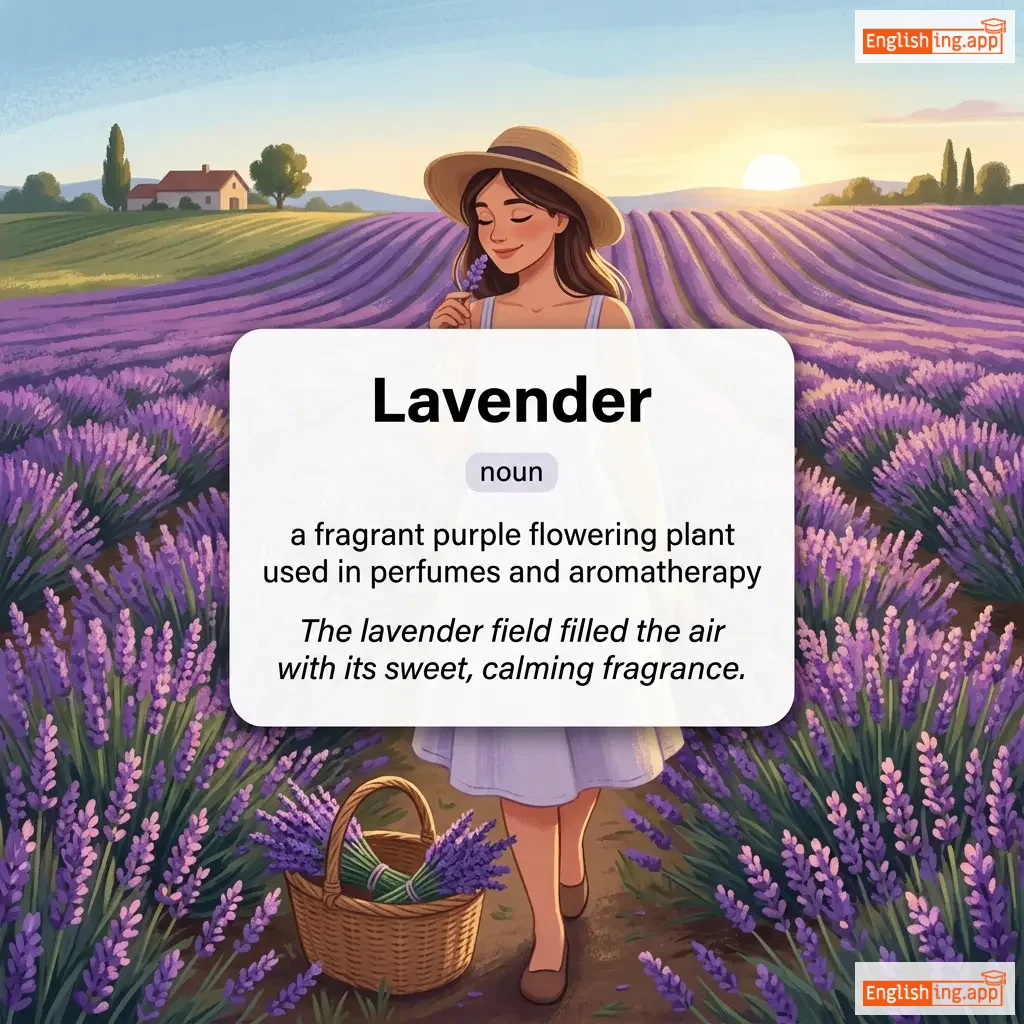
Lavender definition card — visual illustration of the meaning
noun
/ˈlæv.ən.dər/
लैवेंडर (lavender)

a fragrant purple flowering plant used in perfumes and aromatherapy

"The lavender field filled the air with its sweet, calming fragrance."

"लैवेंडर खेत ने हवा को अपनी मीठी, शांति देने वाली खुशबू से भर दिया।" (lavender khet ne hawa ko apni mishti, shanti dene wali khushboo se bhar diya.)
verb
/leɪv/
धोना (dhona)

To wash or bathe.

"She laved her face with cool water."

"वह ठंडे पानी से अपना चेहरा धो रही थी।" (Vah thande pani se apna chehra dho rahi thi.)
noun
/ˈlɔːriət/
उपाधी प्राप्त व्यक्ति (upaadhee praapt vyakti)

A person honored with an award for outstanding achievement in a field, especially the arts or sciences.

"The Nobel laureate gave an inspiring lecture on peace."

"नोबेल पुरस्कार विजेता ने शांति पर एक प्रेरणादायक व्याख्यान दिया।" (Nobel puraskar vijeta ne shanti par ek prernadayak vyakhyan diya.)
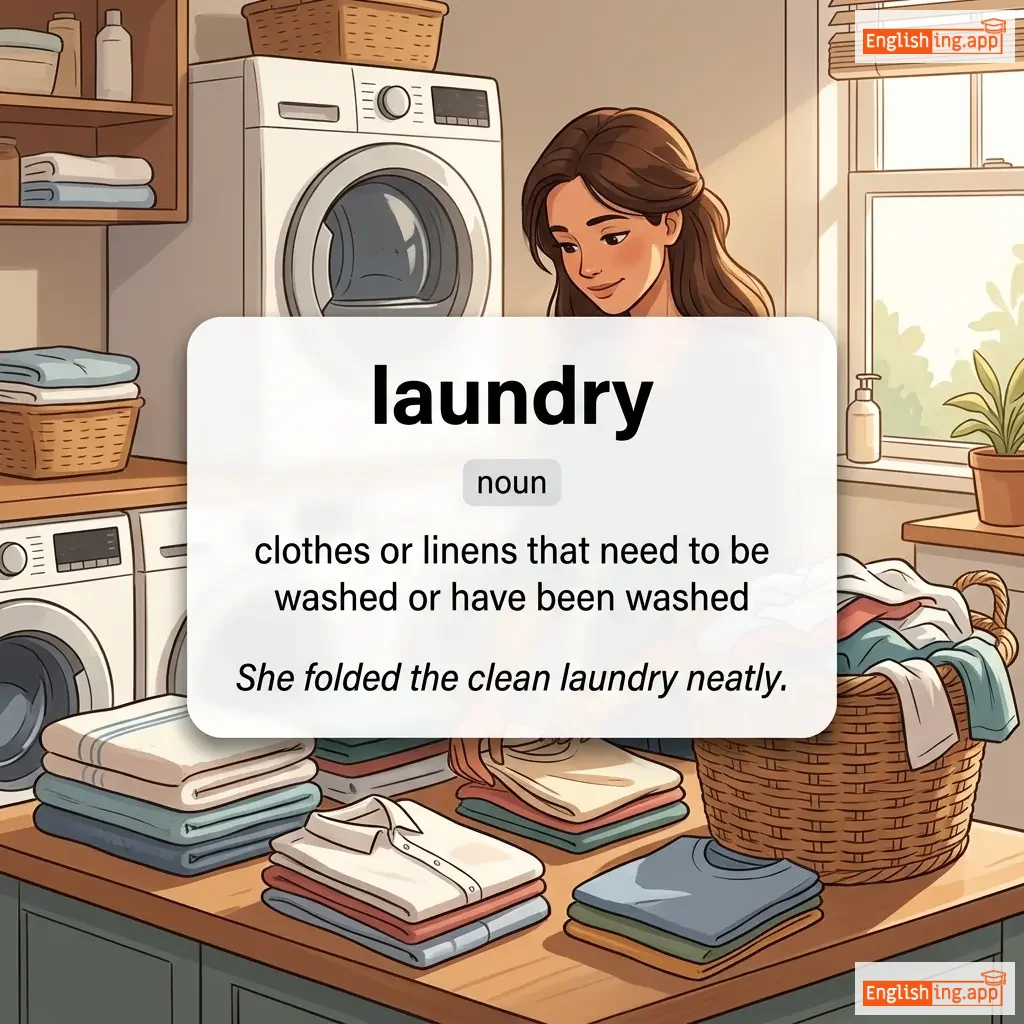
laundry definition card — visual illustration of the meaning
noun
/ˈlɔːndri/
खुशी (khushi)

clothes or linens that need to be washed or have been washed

"She folded the clean laundry neatly."

"वह पुरस्कार मिलने पर अपनी खुशी को छिपा नहीं पाई।" (Wah puraskaar milne par apni khushi ko chhupa nahi paayi.)
noun
/ˈlɔːndrəs/
लॉन्ड्रेस (laundress)

A woman whose job is washing clothes and linens.

"The laundress delivered the freshly cleaned clothes to the household."

"लॉन्ड्रेस ने ताजे धोए हुए कपड़े घर में पहुंचाए" (Laundress ne taze dhoe hue kapde ghar mein pahuchaye)
verb
/ˈlɔːndər/
कपड़े धोना / अवैध धन को वैध करना (kapde dhona / avaid dhan ko vaidh karna)

to wash clothes, linens, etc.; or to conceal the origins of money obtained illegally

"She laundered all the dirty clothes on Sunday."

"उसने रविवार को सारे गंदे कपड़े धोए।" (Usne ravivaar ko saare gande kapde dhoye.)
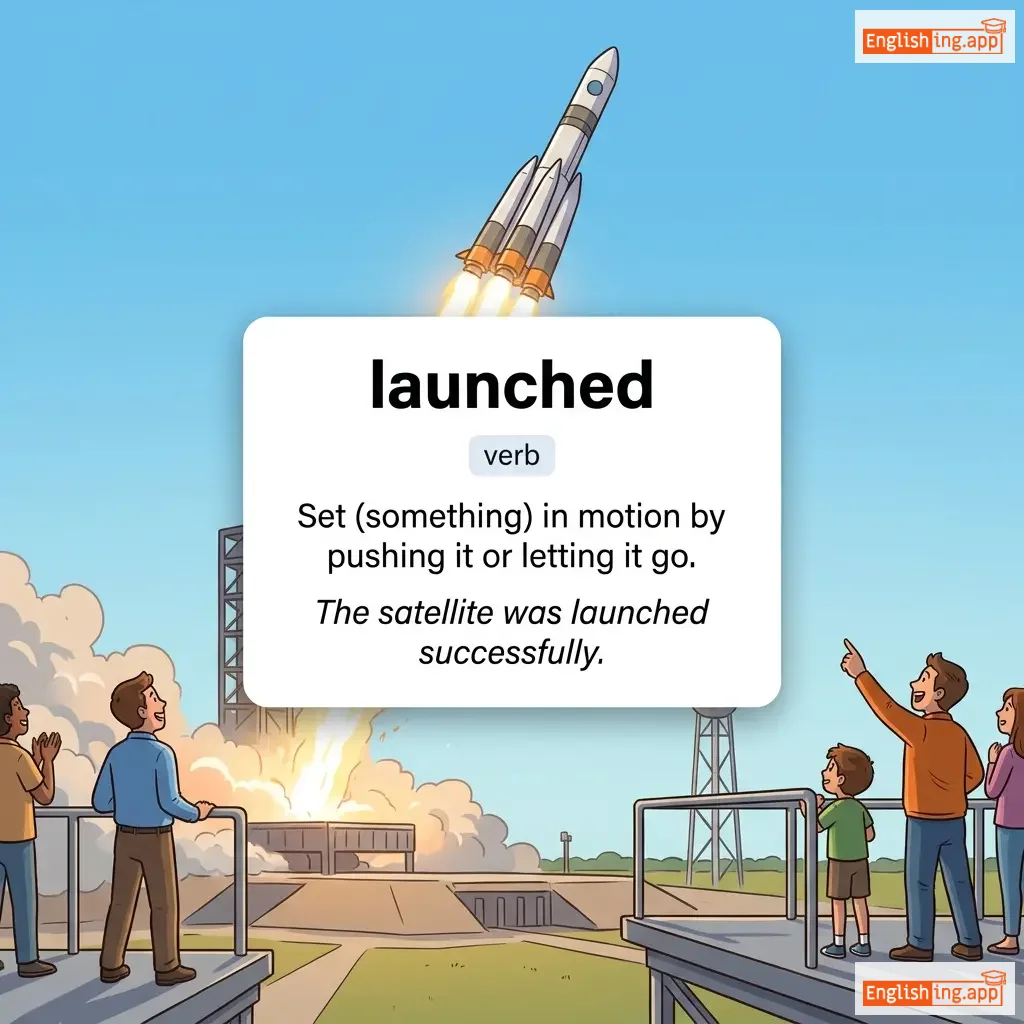
launched definition card — visual illustration of the meaning
verb
lɔːntʃt
प्रक्षिप्त (prakshipt)

Set (something) in motion by pushing it or letting it go.

"The satellite was launched successfully."

"सैटेलाइट सफलतापूर्वक प्रक्षिप्त किया गया।" (Satellite safaltapurvak prakshipt kiya gaya.)
Launch definition card — visual illustration of the meaning
verb, noun
/lɔːntʃ/
लॉन्च करना (launch karna)

to start or introduce something, especially a new product, service, or event

"The company launched a new app last month."

"कंपनी ने पिछले महीने एक नया ऐप लॉन्च किया।" (company ne pichhle mahine ek naya app launch kiya.)
noun
/ˈlæftər/
खुशी (khushi)

the act or sound of laughing

"The room was filled with laughter."

"वह पुरस्कार प्राप्त करते समय अपनी खुशी को छिपा नहीं सकी।" (Woh puraskar prapt karte samay apni khushi ko chhupa nahi saki.)
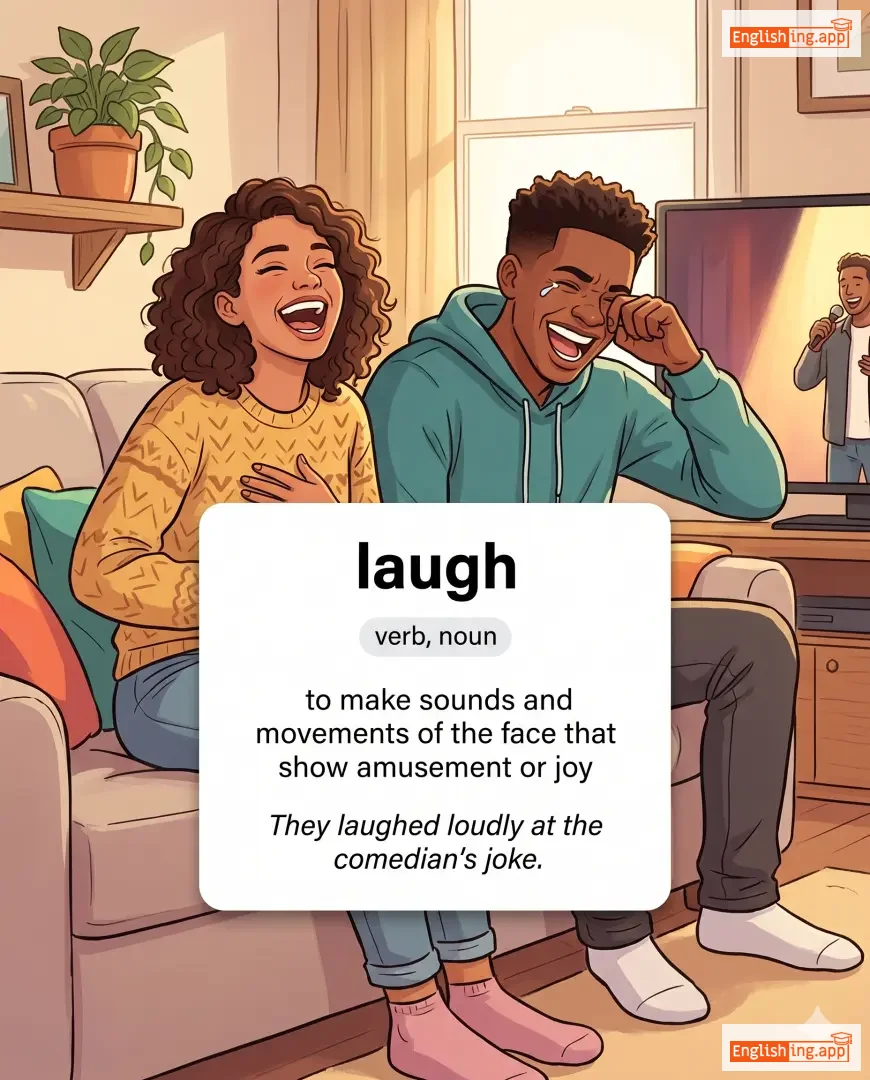
laugh definition card — visual illustration of the meaning
verb, noun
/læf/
हँसना (hansna)

to make sounds and movements of the face that show amusement or joy

"They laughed loudly at the comedian's joke."

"वे हास्य कलाकार के जोक पर जोर से हंसे।" (ve haasya kalakar ke jok par zor se hanse.)
adjective
/ˈlɔːdəˌtɔːri/
प्रशंसा करनेवाला (prashansa karnewala)

Expressing praise or admiration.

"She wrote a laudatory review of the new book."

"शी ने नई किताब की सराहनात्मक समीक्षा लिखी।" (She ne nai kitaab ki sarahnatmak sameeksha likhi.)
noun
/lɔːˈdeɪʃən/
प्रशंसा (prashansa)

The act of praising or expressing approval.

"The poet received much laudation for his moving verses."

"कवि को अपनी प्रेरणादायक कविताओं के लिए बहुत प्रशंसा प्राप्त हुई।" (Kavi ko apni prerṇadayak kavitaon ke liye bahut prashansa prapt hui.)
adjective
/ˈlɔː.də.bəl/
सराहनीय (saraahniya)

Deserving praise and admiration.

"Her efforts to help the poor are truly laudable."

"गरीबों की मदद करने के उनके प्रयास वास्तव में सराहनीय हैं।" (Gareebon ki madad karne ke unke prayaas vaastav mein saraahniya hain.)
laud definition card — visual illustration of the meaning
verb
/lɔːd/
प्रशंसा करना (prashamsa karna)

To praise someone or something highly, especially in public.

"The critic lauded the actor's performance as a masterpiece."

"आलोचक ने अभिनेता के प्रदर्शन को एक मास्टरपीस के रूप में प्रशंसा की।" (Aalochak ne abhineta ke pradarshan ko ek masterpece ke roop mein prashamsa ki.)
noun
/ˈlætɪs/
जाल संरचना (jaal sanrachna)

A structure of crossed strips arranged in a grid or crisscross pattern.

"The garden was decorated with a wooden lattice covered in vines."

"बगिया को एक लकड़ी की जाली संरचना से सजाया गया था जो बेलों से ढकी हुई थी।" (Bagiya ko ek lakdi ki jaal sanrachna se sajaya gaya tha jo belon se dhaki hui thi.)
adjective
/ˈlætər/
दूसरा (doosra)

the second of two people or things mentioned

"Between tea and coffee, I prefer the latter."

"चाय और कॉफी के बीच, मुझे दूसरा पसंद है।" (Chaay aur coffee ke beech, mujhe doosra pasand hai.)
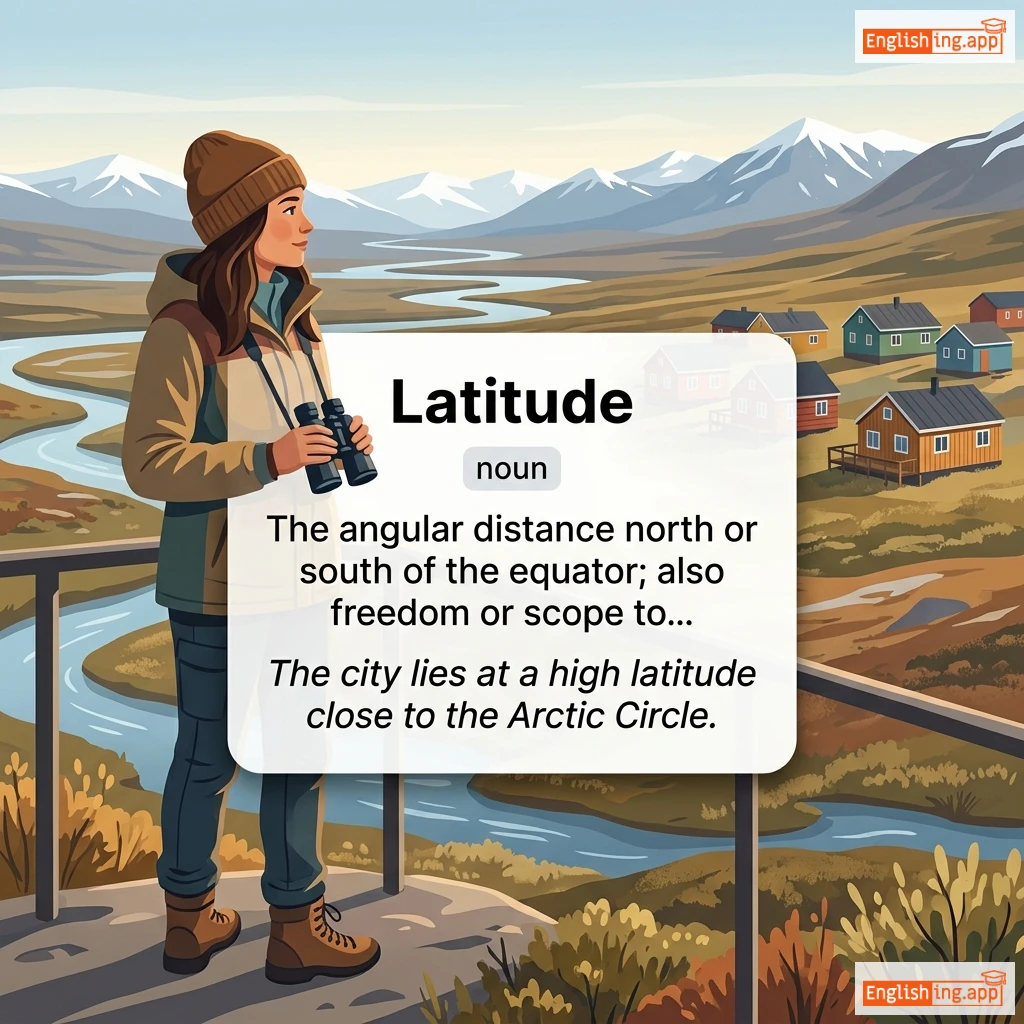
Latitude definition card — visual illustration of the meaning
noun
/ˈlætɪˌtjuːd/
अक्षांश (akshansh)

The angular distance north or south of the equator; also freedom or scope to act.

"The city lies at a high latitude close to the Arctic Circle."

"शहर आर्कटिक सर्कल के पास उच्च अक्षांश पर स्थित है।" (Shehar Arctic Circle ke paas uchch akshansh par sthit hai.)
adjective
/ˈleɪ.tɪʃ/
थोड़ा देर से (thoda der se)

Somewhat late; occurring or arriving later than usual but not very late.

"We arrived latish to the party but still caught most of the fun."

"हम पार्टी में थोड़ा देर से पहुंचे, लेकिन फिर भी ज्यादातर मज़ा लिया।" (Ham party mein thoda der se pahunchhe, lekin phir bhi zyada tar maza liya.)
noun/adjective
/ˈlætɪn/
लैटिन (latin)

the language of ancient Rome; relating to Latin culture or language

"Many English words are derived from Latin."

"कई अंग्रेजी शब्द लैटिन से उत्पन्न हुए हैं।" (Kai angrezi shabd latin se utpann huye hain.)
noun
/leɪð/
लेथ यंत्र (leth yantra)

A machine for shaping wood, metal, or other material by rotating it against a cutting tool.

"The carpenter used a lathe to shape the wooden bowl."

"बढ़ई ने लकड़ी के कटोरे को आकार देने के लिए लेथ का उपयोग किया।" (badhai ne lakdi ke katora ko akar dene ke liye leth ka upyog kiya.)
adjective
/ˈleɪtɪst/
नवीनतम (navintam)

most recent in time; newest available

"She shared the latest updates with the team."

"उसने टीम के साथ नवीनतम अपडेट साझा किए।" (usne team ke saath navintam update saajha kiye)
adjective
/ˈlætərəl/
पार्श्व (paarshv)

Relating to the side or sideways movement.

"The football player made a quick lateral pass."

"फुटबॉल खिलाड़ी ने एक तेज़ पार्श्व पास किया।" (football khiladi ne ek tez paarshv pass kiya.)
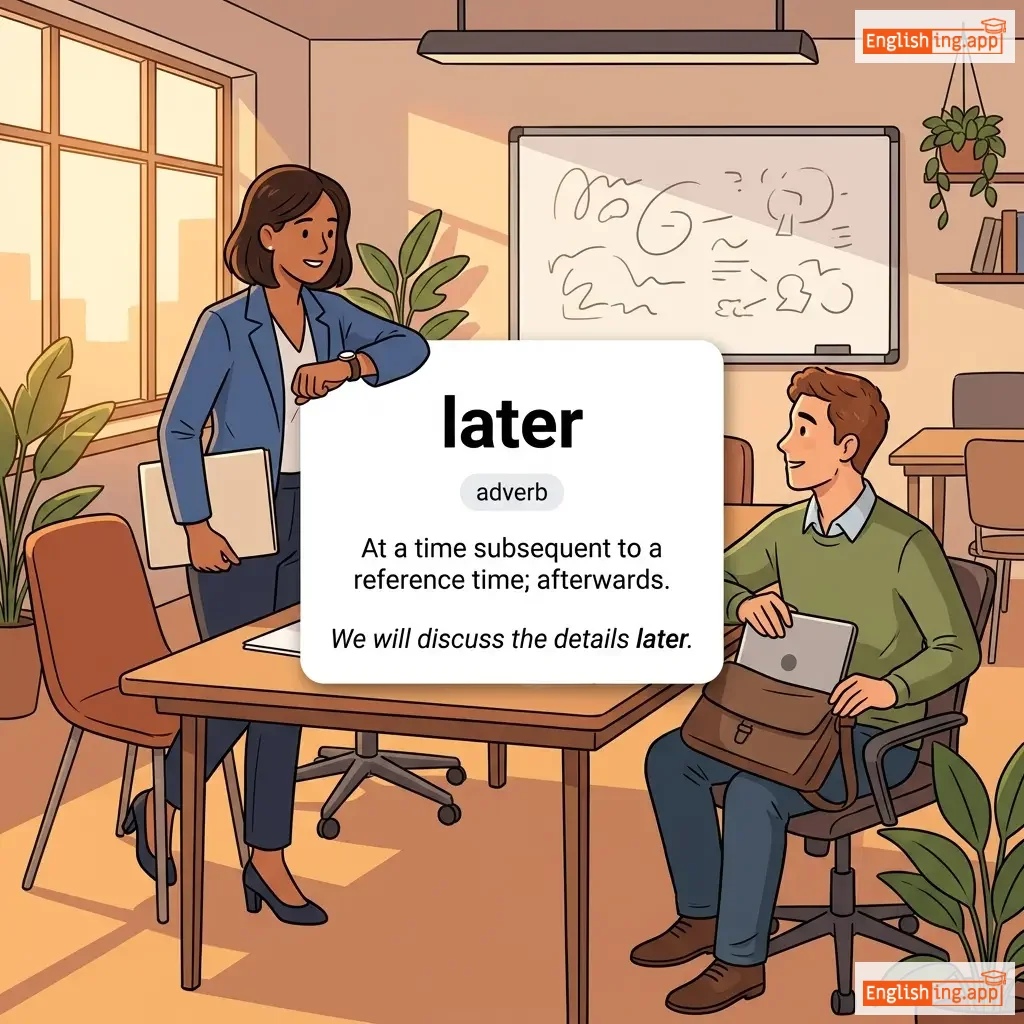
later definition card — visual illustration of the meaning
adverb
/ˈleɪtər/
बाद में (baad mein)

At a time subsequent to a reference time; afterwards.

"We will discuss the details later."

"हम विवरण बाद में चर्चा करेंगे।" (ham vivaran baad mein charcha karenge.)
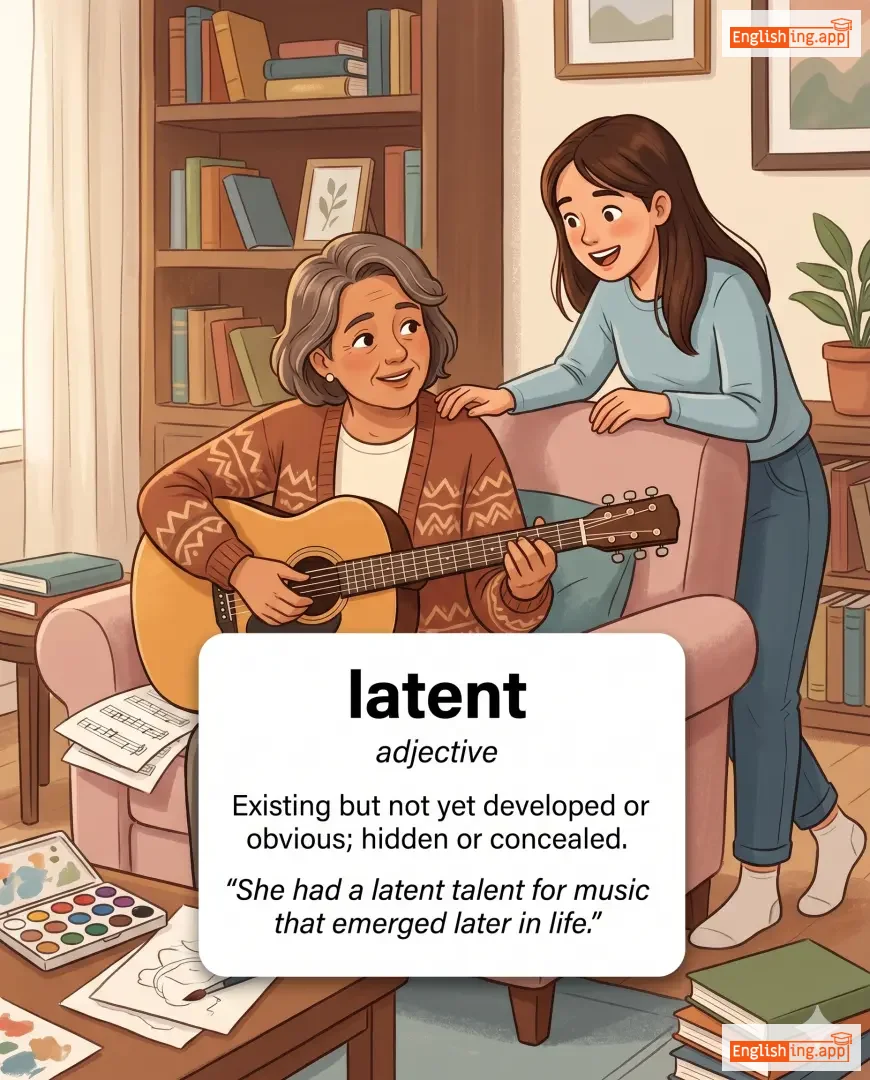
latent definition card — visual illustration of the meaning
adjective
/ˈleɪtənt/
निहित (nihit)

Existing but not yet developed or obvious; hidden or concealed.

"She had a latent talent for music that emerged later in life."

"उसमें संगीत के लिए एक निहित प्रतिभा थी, जो बाद में जीवन में उभरी।" (Usmein sangeet ke liye ek nihit pratibha thi, jo baad mein jeevan mein ubhri.)
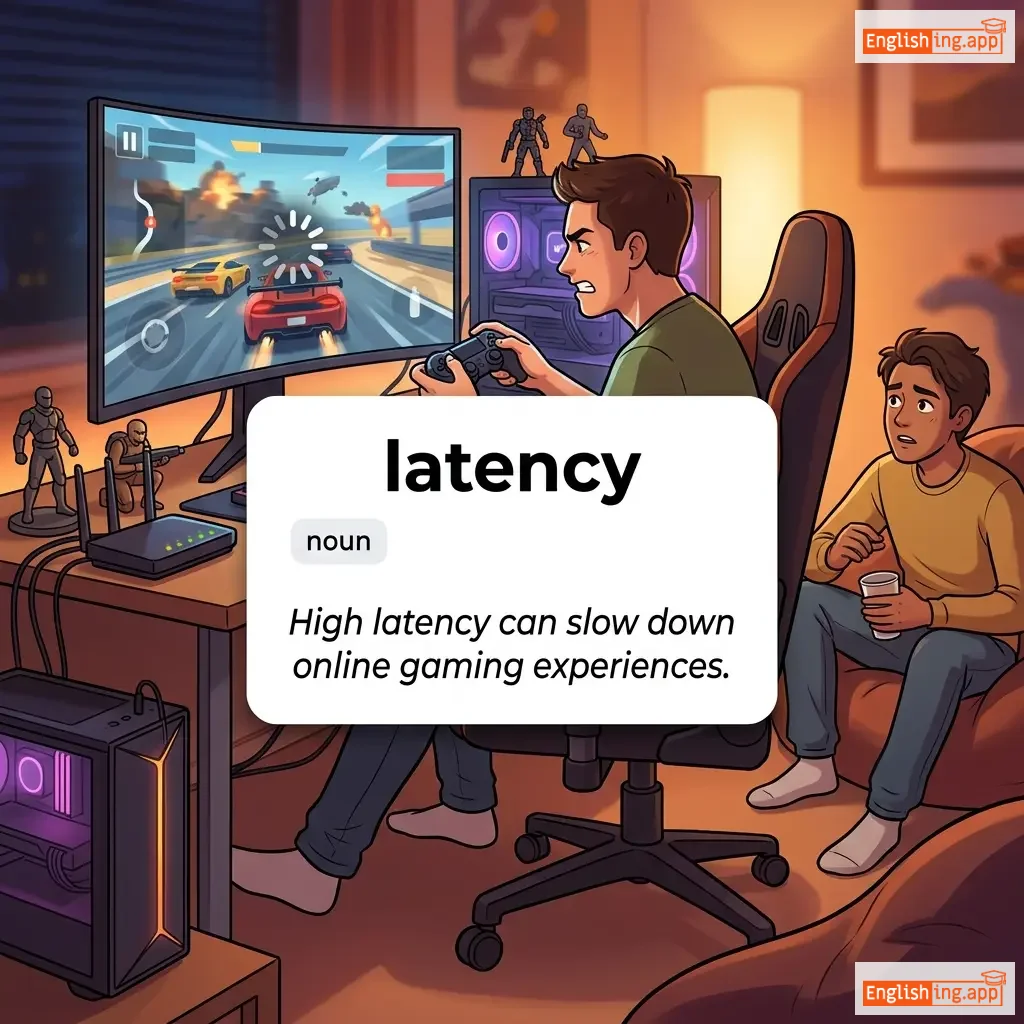
latency definition card — visual illustration of the meaning
noun
/ˈleɪtənsi/
विलंब (vilamb)

The delay before a transfer of data begins following an instruction for its transfer.

"High latency can slow down online gaming experiences."

"उच्च विलंब ऑनलाइन गेमिंग अनुभव को धीमा कर सकता है।" (uchch vilamb online gaming anubhav ko dheema kar sakta hai.)
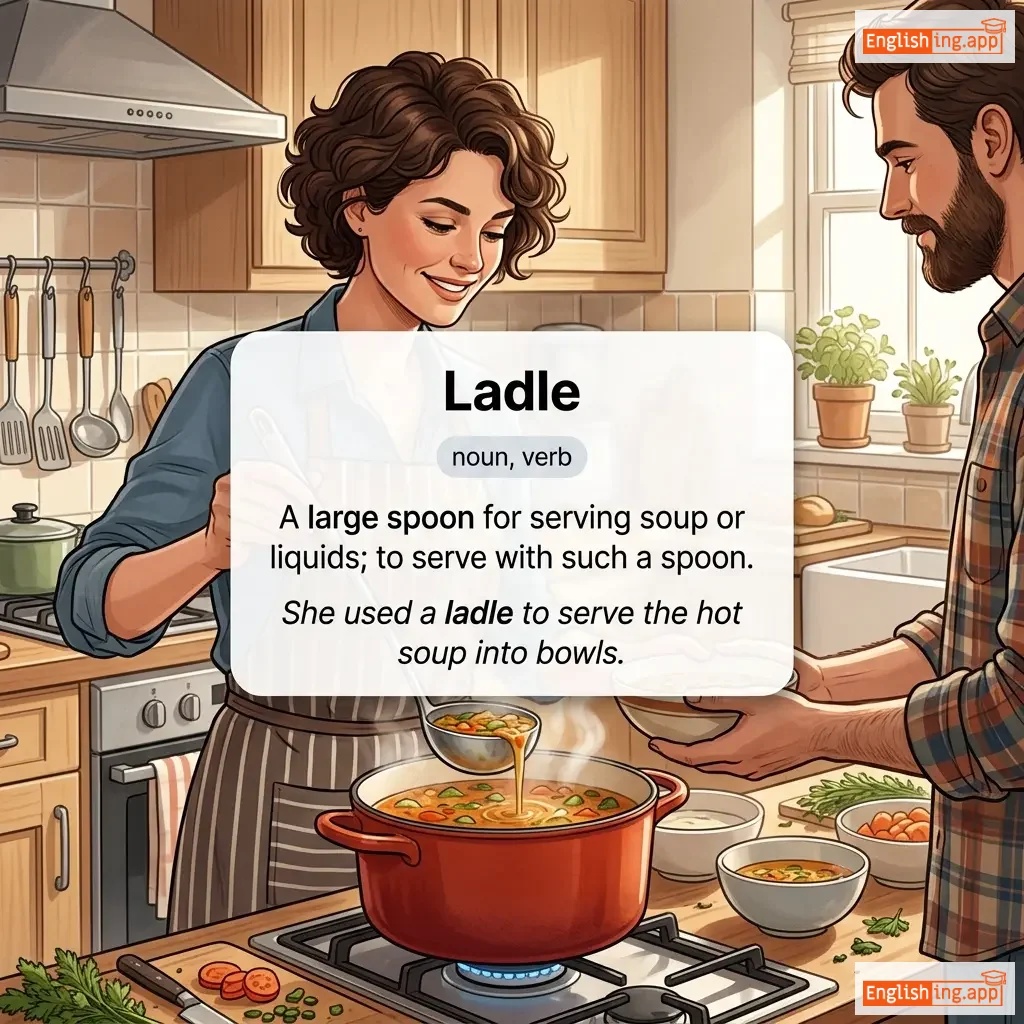
Ladle definition card — visual illustration of the meaning
noun, verb
/ˈleɪ.dl̩/
खुशी (khushi)

A large spoon for serving soup or liquids; to serve with such a spoon.

"She used a ladle to serve the hot soup into bowls."

"जब उसने पुरस्कार प्राप्त किया तो वह अपनी खुशी छिपा नहीं सकी।" (Jab usne puraskar prapt kiya to wah apni khushi chhupa nahi sakee.)
noun/verb
/læk/
कमी (kami)

The state of being without or not having enough of something.

"He failed the exam due to a lack of preparation."

"वह तैयारी की कमी के कारण परीक्षा में असफल हो गया।" (Wah taiyari ki kami ke karan pariksha mein asafal ho gaya.)
adjective
/ˌlækəˈdeɪzɪkəl/
उदासीन या आलसी (udaaseen ya aalsi)

lacking enthusiasm, energy, or determination; careless or lazy

"His lackadaisical attitude toward work annoyed his boss."

"उसका आलसी रवैया काम के प्रति उसके बॉस को परेशान करता था।" (Uska aalsi ravaiya kaam ke prati uske boss ko pareshan karta tha.)
noun
/ˈlæki/
चाकर (chakar)

a person who is overly willing to serve or obey someone else

"He treated his assistant like a mere lackey."

"उसने अपने सहायक के साथ एक मामूली चाकर की तरह व्यवहार किया।" (usne apne sahayak ke saath ek maamooli chakar ki tarah vyavhaar kiya.)
adjective
/ˈlækɪŋ/
कमी (kami)

not having enough of something; missing

"His report was lacking in detail."

"उसकी रिपोर्ट में विस्तार की कमी थी।" (Uski report mein vistar ki kami thi.)
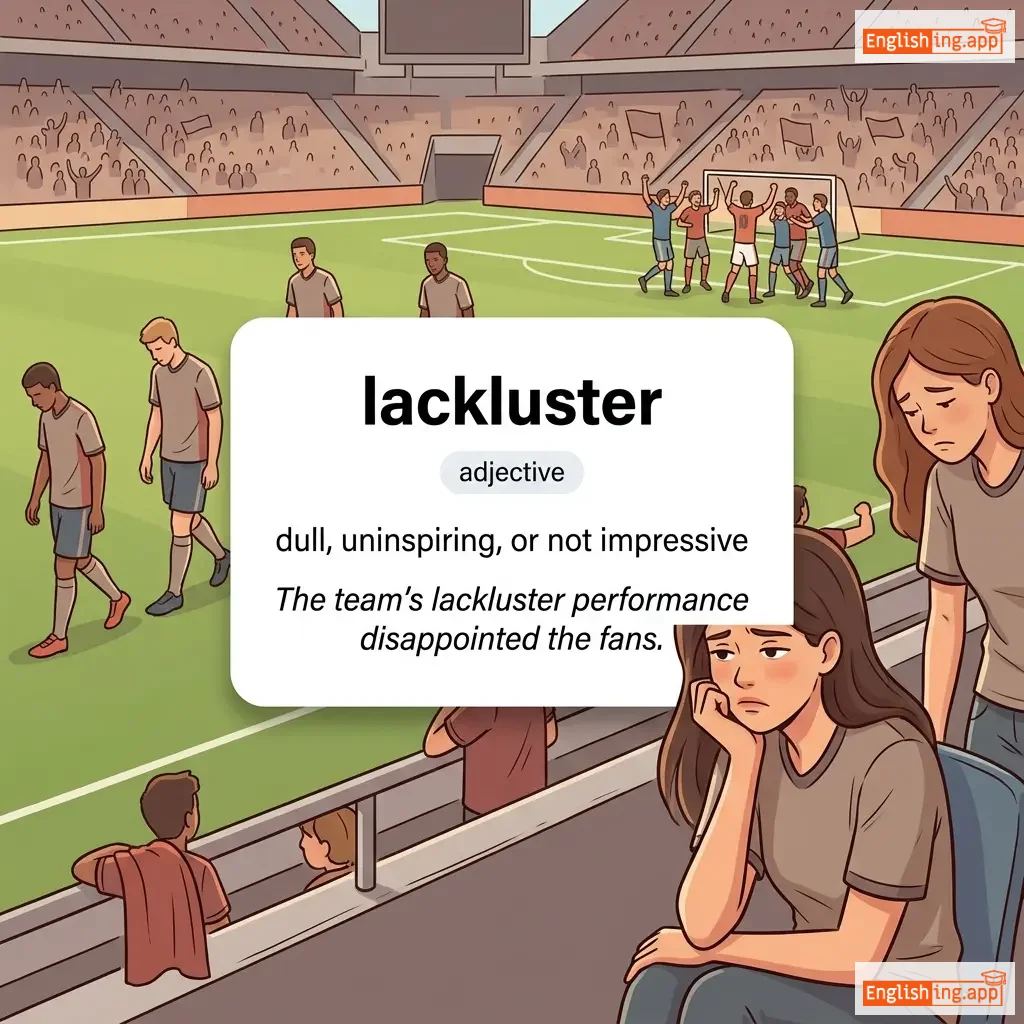
lackluster definition card — visual illustration of the meaning
adjective
/ˈlækˌlʌstər/
निरुत्साही या सामान्य (nirutsahi ya samanya)

dull, uninspiring, or not impressive

"The team's lackluster performance disappointed the fans."

"टीम का निरुत्साही प्रदर्शन प्रशंसकों को निराश कर गया।" (Team ka nirutsahi pradarshan prashansako ko nirash kar gaya.)
laconic definition card — visual illustration of the meaning
adjective
/ləˈkɒnɪk/
संक्षिप्त (sankshipt)

using very few words; concise to the point of seeming rude or mysterious

"His laconic reply ended the conversation quickly."

"उसका संक्षिप्त जवाब बातचीत को जल्दी समाप्त कर दिया।" (uska sankshipt jawab baatcheet ko jaldi samaapt kar diya.)
noun
/lækˈteɪʃən/
दूध उत्पादन (doodh utpadan)

the secretion of milk by the mammary glands of female mammals

"The doctor explained that lactation is a natural process after childbirth."

"डॉक्टर ने समझाया कि प्रसव के बाद दूध उत्पादन एक स्वाभाविक प्रक्रिया है।" (doktor ne samjhaya ki prasav ke baad doodh utpadan ek swabhavik prakriya hai.)
adjective
/ˈlæk.ti.əl/
दूध से संबंधित या दूध जैसा (doodh se sambandhit ya doodh jaisa)

Relating to or resembling milk; conveying chyle or milky fluid.

"The lacteal vessels in the small intestine absorb dietary fats."

"छोटे आंत में लैक्टियल वाहिकाएं आहार वसा अवशोषित करती हैं।" (chhote aant mein lacteal vahiikayein aahaar vasa avashoshit karti hain.)
adjective
/ˈlæk.tɪk/
दूध या लैक्टिक एसिड से संबंधित (dudh ya lactic acid se sambandhit)

Relating to milk or lactic acid.

"Intense exercise can lead to a buildup of lactic acid in the muscles."

"गहन व्यायाम से मांसपेशियों में लैक्टिक एसिड का जमाव हो सकता है।" (Gahan vyayam se maanspeshiyon mein lactic acid ka jamav ho sakta hai.)
noun
/læd/
लड़का (ladka)

a boy or young man; a male youth

"The young lad helped his father in the shop."

"उस युवा लड़के ने अपने पिता की दुकान में मदद की।" (us yuva ladke ne apne pita ki dukaan mein madad ki)
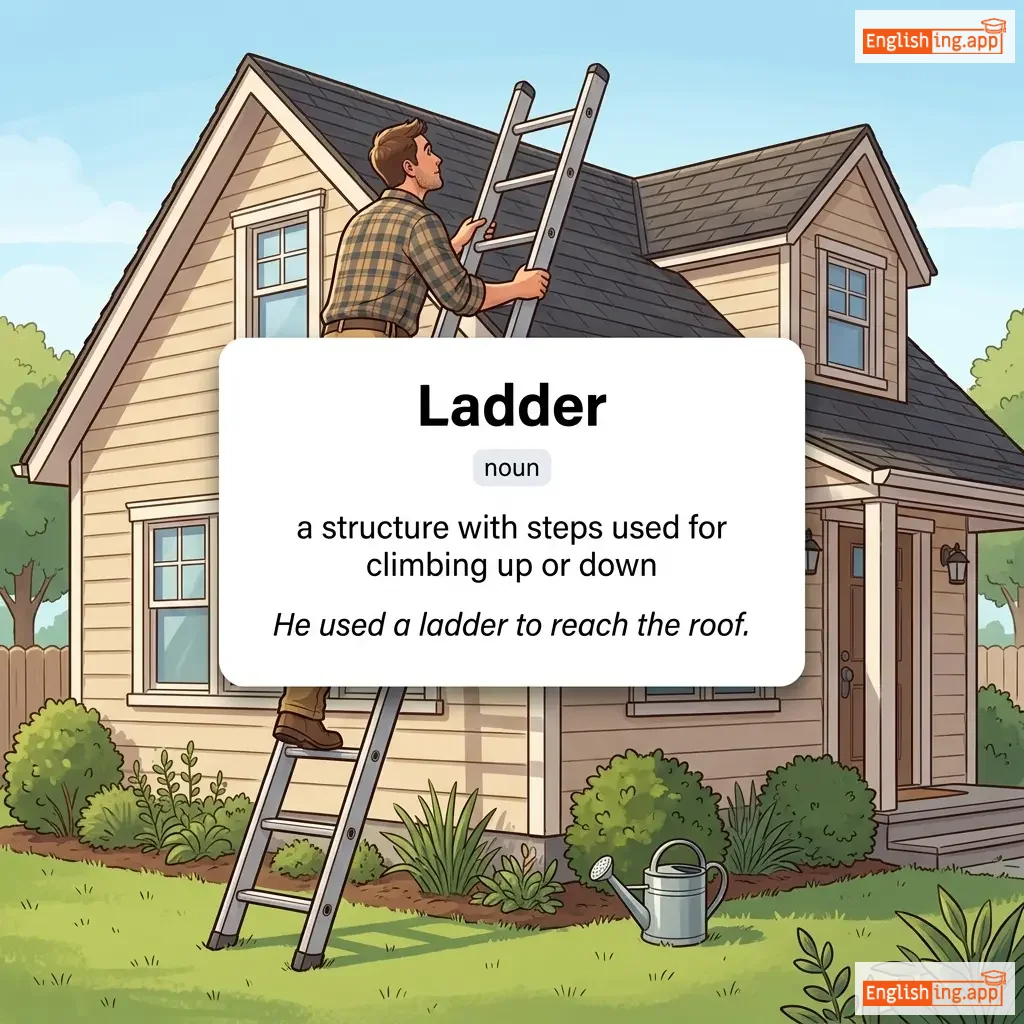
Ladder definition card — visual illustration of the meaning
noun
/ˈlædər/
सीढ़ी (seedhi)

a structure with steps used for climbing up or down

"He used a ladder to reach the roof."

"उसने छत तक पहुँचने के लिए एक सीढ़ी का उपयोग किया।" (Usne chhat tak pahuchne ke liye ek seedhi ka upyog kiya.)
noun
/ˈlæd.i/
छोटा लड़का (chhota ladka)

A young boy or lad.

"The old man gave the young laddie a kind smile."

"वृद्ध आदमी ने छोटे लड़के को एक दयालु मुस्कान दी।" (Vriddh aadmi ne chhote ladke ko ek dayalu muskaan dee.)
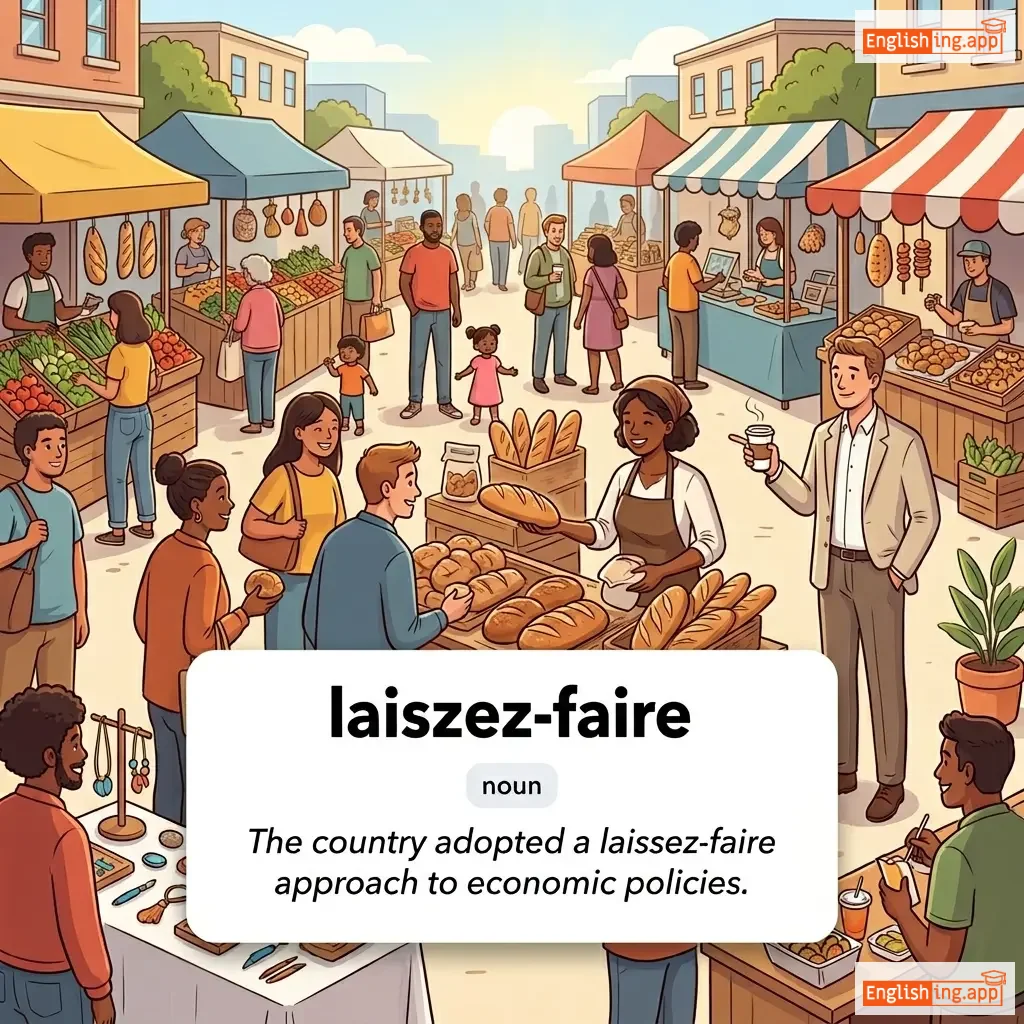
laissez-faire definition card — visual illustration of the meaning
noun
/ˌlɛ.seɪˈfɛər/
न्यूनतम हस्तक्षेप नीति (nyoonatam hastakshep neeti)

A free-market policy of minimal government intervention in economic affairs, characterized by non-interventionism and capitalism.

"The country adopted a laissez-faire approach to economic policies."

"देश ने आर्थिक नीतियों में लेसे-फेयर दृष्टिकोण अपनाया।" (Desh ne arthik neetiyon mein lese-fair drishtikon apnaya.)
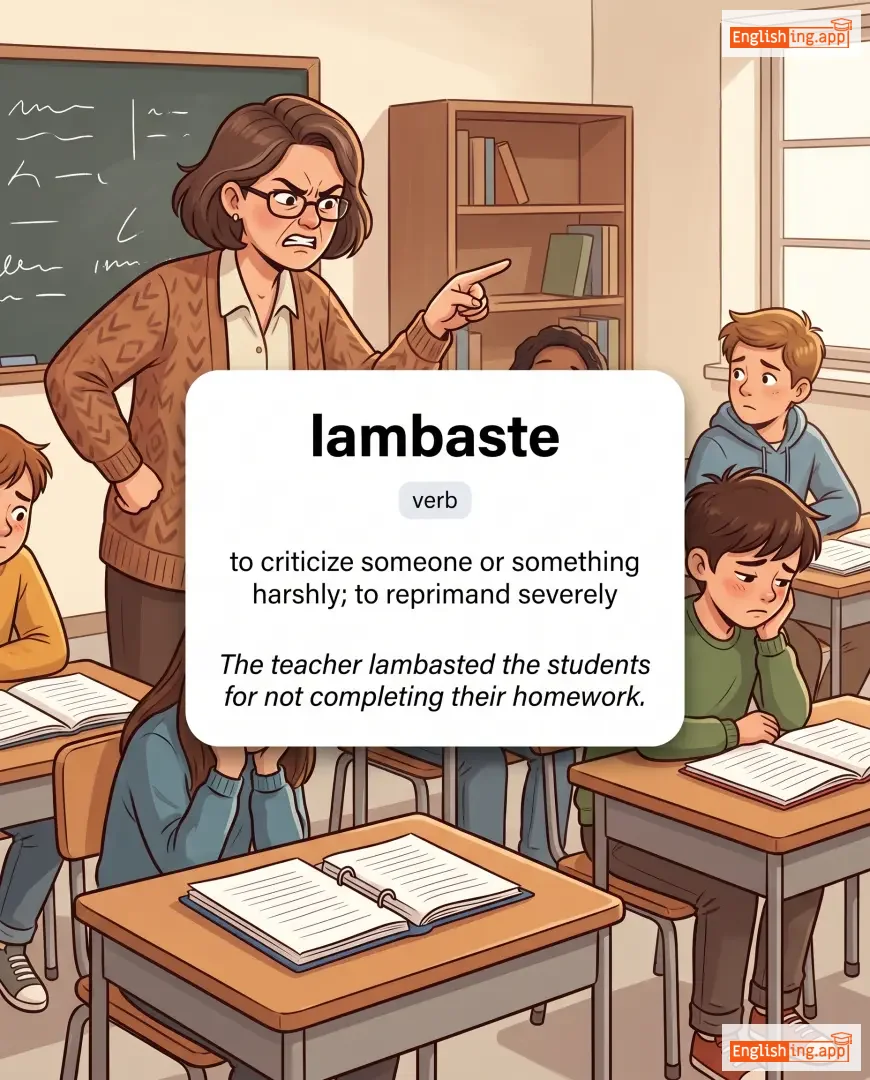
lambaste definition card — visual illustration of the meaning
verb
/læmˈbeɪst/
कड़ी आलोचना करना (kadi alochna karna)

to criticize someone or something harshly; to reprimand severely

"The teacher lambasted the students for not completing their homework."

"टीचर ने छात्रों को उनके होमवर्क न करने के लिए कड़ी आलोचना की।" (Teacher ne chatron ko unke homework na karne ke liye kadi alochna ki.)
verb
/læmˈbæst/
कड़ी आलोचना करना (kadi alochana karna)

To criticize harshly or to beat severely.

"The coach lambasted the team for their poor performance."

"कोच ने टीम की खराब प्रदर्शन के लिए उनकी कड़ी आलोचना की।" (Coach ne team ki kharab performance ke liye unki kadi alochana ki.)
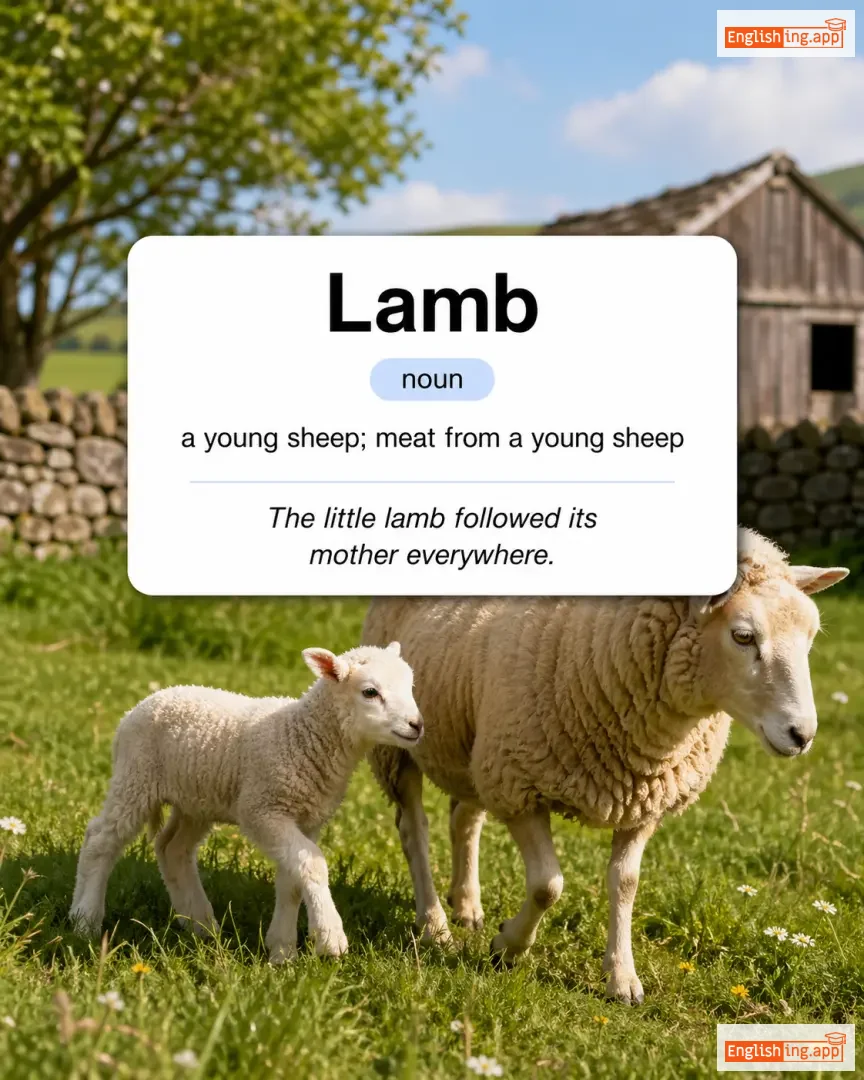
Lamb definition card — visual illustration of the meaning
noun
/læm/
मेमना (memna)

a young sheep; meat from a young sheep

"The little lamb followed its mother everywhere."

"छोटा मेमना अपनी माँ के पीछे हर जगह गया।" (chhota memna apni maan ke peeche har jagah gaya)
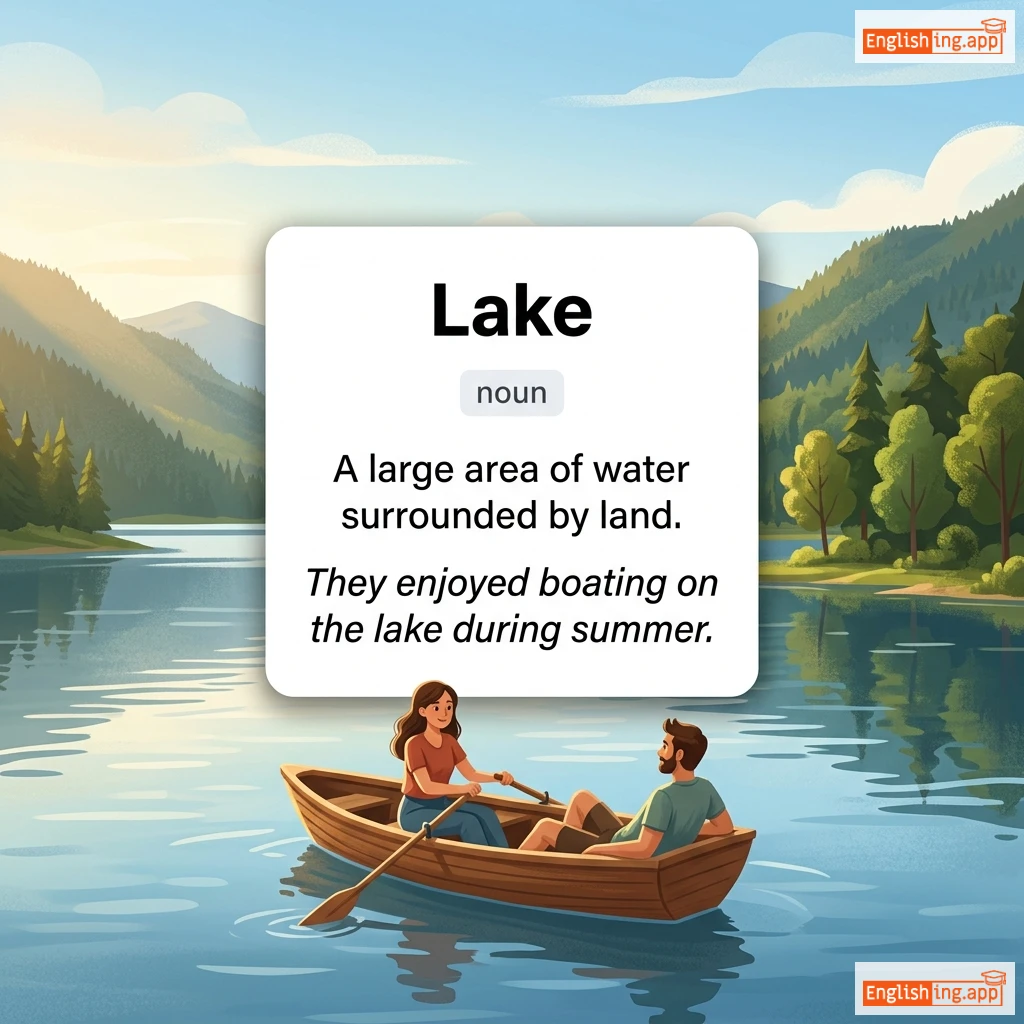
Lake definition card — visual illustration of the meaning
noun
/leɪk/
झील (jheel)

A large area of water surrounded by land.

"They enjoyed boating on the lake during summer."

"वे गर्मी के दौरान झील पर नाव चलाने का आनंद ले रहे थे।" (ve garmi ke dauran jheel par naav chalane ka anand le rahe the.)
noun
/ˈleɪ.ɪ.ti/
धार्मिक सामान्य सदस्य (dharmik samanya sadasya)

Ordinary members of a religious community who are not clergy.

"The church welcomed the laity to participate in the event."

"गिरजाघर ने सामान्य सदस्यों को कार्यक्रम में भाग लेने के लिए स्वागत किया।" (Girjaghar ne samanya sadasyon ko karyakram mein bhag lene ke liye swagat kiya.)
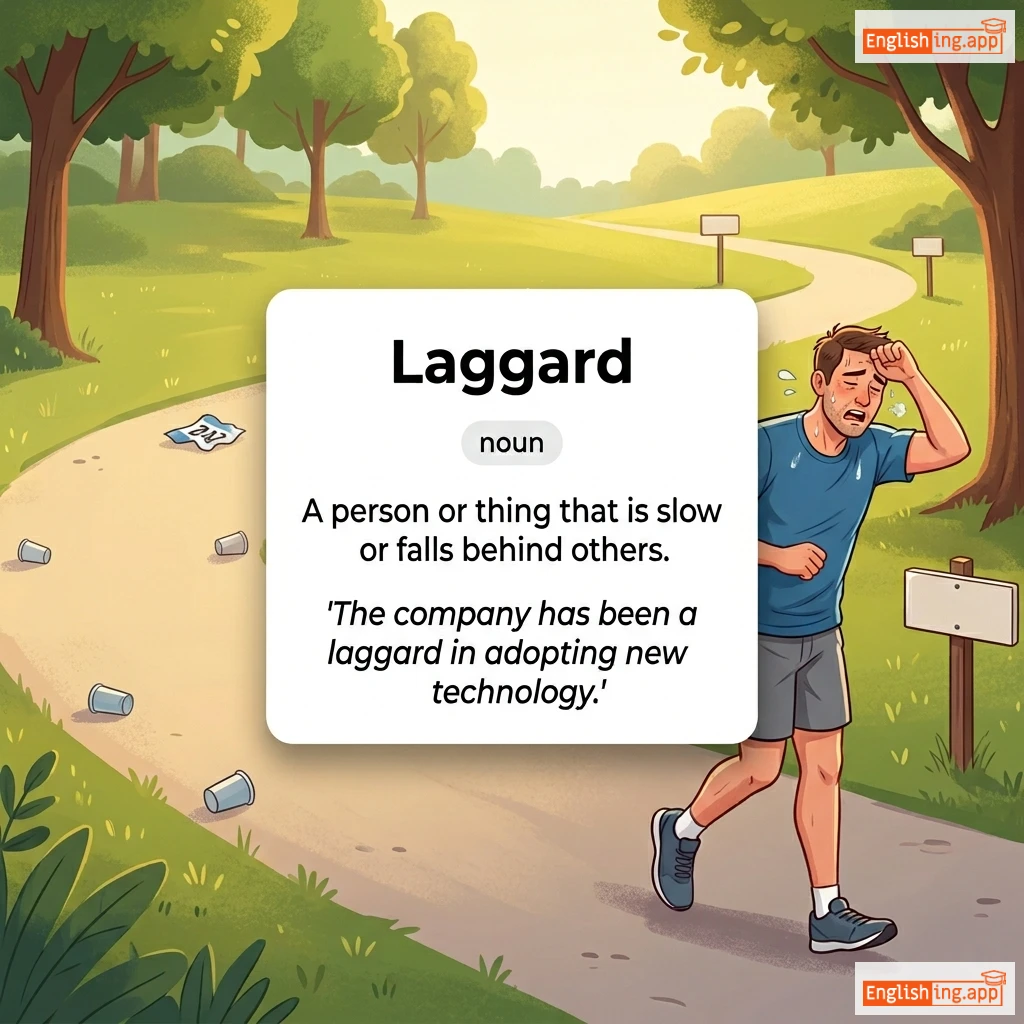
Laggard definition card — visual illustration of the meaning
noun
/ˈlæɡərd/
आलसी व्यक्ति (aalsi vyakti)

A person or thing that is slow or falls behind others.

"The company has been a laggard in adopting new technology."

"कंपनी नई तकनीक अपनाने में पिछड़ी हुई है।" (Company nayi takneek apnane mein pichhadi hui hai.)
noun
/ˈleɪdi/
खुशी (khushi)

A polite or formal way of referring to a woman.

"The lady at the counter was very helpful."

"जब उसे पुरस्कार मिला, तो वह अपनी खुशी नहीं छुपा पाई।" (Jab use puraskar mila, to woh apni khushi nahin chhupa paayi.)
verb, noun
/læɡ/
धीमा होना या विलंब करना (dheema hona ya vilamb karna)

To fall behind in movement, progress, or development; a delay or period of falling behind.

"The old computer tends to lag when running new software."

"पुराना कंप्यूटर नया सॉफ़्टवेयर चलाते समय लैग करता है।" (Purana computer naya software chalate samay lag karta hai.)
adjective
/ˈlæk.rɪ.moʊs/
आंसू से भरा हुआ, शोकपूर्ण (aansoo se bhara hua, shokpoorn)

tearful or given to weeping; sad and mournful

"The movie's lachrymose ending left the audience in tears."

"फ़िल्म के शोकपूर्ण अंत ने दर्शकों को आँसुओं में डूबो दिया।" (Film ke shokpoorn ant ne darshako ko aansuon mein dooba diya.)
noun
/ˈlænjæp/
अतिरिक्त उपहार (atirikt upohar)

A small gift or bonus given by a seller to a customer.

"The shopkeeper offered a piece of candy as a lagniappe."

"दुकानदार ने एक टॉफी एक अतिरिक्त उपहार के रूप में दी।" (Dukandar ne ek toffee ek atirikt upohar ke roop mein dee.)