词汇表

英语词汇词典 | 单词含义、定义和示例

adjective, verb
/ˈlævɪʃ/
奢华的,豪华的 (lavish)

Rich, elaborate, or luxurious; to bestow something in generous or extravagant quantities.

"They gave her a lavish wedding reception with hundreds of guests."
"他们为她举办了一个豪华的婚礼招待会,邀请了数百位客人。" (Tāmen wèi tā jǔbànle yīgè háohuá de hūnlǐ zhāodài huì, yāoqǐngle shù bǎi wèi kèrén.)
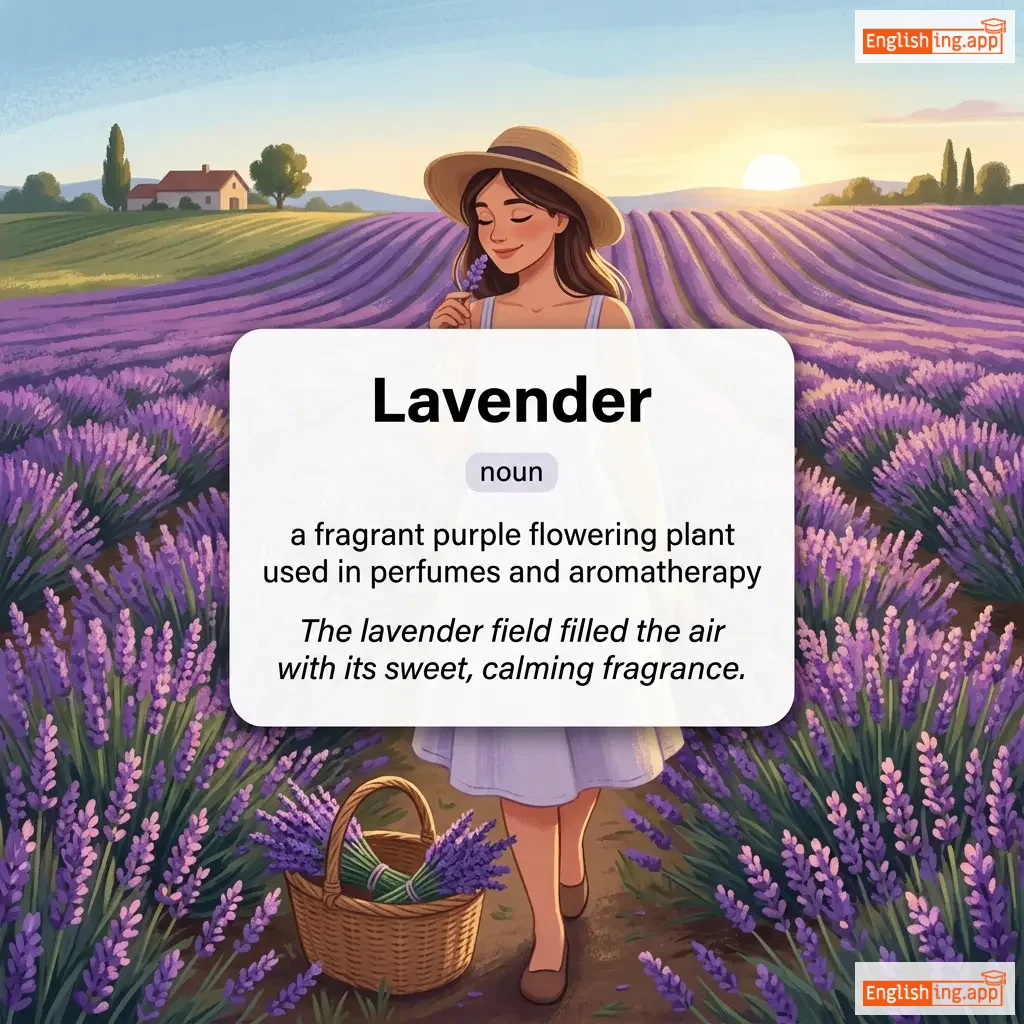
Lavender definition card — visual illustration of the meaning
noun
/ˈlæv.ən.dər/
薰衣草 (xunyicao)

a fragrant purple flowering plant used in perfumes and aromatherapy

"The lavender field filled the air with its sweet, calming fragrance."

"薰衣草田充满了甜美而宁静的香气。" (Xūn yī cǎo tián chōngmǎnle tiánměi ér níngjìng de xiāngqì.)
verb
/leɪv/
(xi)

To wash or bathe.

"She laved her face with cool water."

"她用冷水洗了脸。" (Tā yòng lěng shuǐ xǐ le liǎn.)
noun
/ˈlɔːriət/
获得者 (huòdé zhě)

A person honored with an award for outstanding achievement in a field, especially the arts or sciences.

"The Nobel laureate gave an inspiring lecture on peace."

"诺贝尔奖获得者就和平发表了激动人心的演讲。" (Nuòbèi'ěr jiǎng huòdé zhě jiù hépíng fābiǎo le jīdòng rénxīn de yǎnjiǎng.)
laundry definition card — visual illustration of the meaning
noun
/ˈlɔːndri/
幸福 (xìngfú)

clothes or linens that need to be washed or have been washed

"She folded the clean laundry neatly."

"当她收到奖项时,她无法掩饰自己的幸福。" (Dāng tā shōu dào jiǎngxiàng shí, tā wúfǎ yǎnshì zìjǐ de xìngfú.)
noun
/ˈlɔːndrəs/
洗衣女工 (xiyi nǚgōng)

A woman whose job is washing clothes and linens.

"The laundress delivered the freshly cleaned clothes to the household."

"洗衣女工将新洗净的衣物送到家里。" (Xǐyī nǚgōng jiāng xīn xǐ jìng de yīwù sòng dào jiālǐ)
verb
/ˈlɔːndər/
洗衣服 / 隐瞒非法获得的钱的来源 (xi yi fu / yin man fei fa huo de qian de laiyuan)

to wash clothes, linens, etc.; or to conceal the origins of money obtained illegally

"She laundered all the dirty clothes on Sunday."

"她在星期天洗了所有脏衣服。" (Ta zai xingqi tian xile suoyou zang yifu.)
launched definition card — visual illustration of the meaning
verb
lɔːntʃt
发射 (fāshè)

Set (something) in motion by pushing it or letting it go.

"The satellite was launched successfully."

"卫星已成功发射。" (Wèixīng yǐ chénggōng fāshè.)
Launch definition card — visual illustration of the meaning
verb, noun
/lɔːntʃ/

to start or introduce something, especially a new product, service, or event

"The company launched a new app last month."

noun
/ˈlæftər/
笑声 (xiaosheng)

the act or sound of laughing

"The room was filled with laughter."

"房间里充满了笑声。" (Fángjiān lǐ chōngmǎn le xiàoshēng.)
laugh definition card — visual illustration of the meaning
verb, noun
/læf/
(xiao)

to make sounds and movements of the face that show amusement or joy

"They laughed loudly at the comedian's joke."

"他们对喜剧演员的笑话大笑。" (tamen dui xiju yanyuan de xiaohua daxiao.)
adjective
/ˈlɔːdəˌtɔːri/
赞扬的 (zànyáng de)

Expressing praise or admiration.

"She wrote a laudatory review of the new book."

"她写了本书的赞扬评论。" (Tā xiěle běn shū de zànyáng pínglùn.)
noun
/lɔːˈdeɪʃən/
赞扬 (zanyáng)

The act of praising or expressing approval.

"The poet received much laudation for his moving verses."

"这位诗人因其感人的诗句而获得了许多赞扬。" (Zhè wèi shīrén yīn qí gǎnrén de shījù ér huòdé le xǔduō zànyáng.)
adjective
/ˈlɔː.də.bəl/
值得称赞的 (zhí dé chēng zàn de)

Deserving praise and admiration.

"Her efforts to help the poor are truly laudable."

"她帮助穷人的努力真是值得称赞的。" (Tā bāngzhù qióngrén de nǔlì zhēn shì zhí dé chēng zàn de.)
laud definition card — visual illustration of the meaning
👏

laud

verb
/lɔːd/

To praise someone or something highly, especially in public.

"The critic lauded the actor's performance as a masterpiece."

noun
/ˈlætɪs/
格子结构 (gé zi jié gòu)

A structure of crossed strips arranged in a grid or crisscross pattern.

"The garden was decorated with a wooden lattice covered in vines."

"花园里装饰着一座覆盖着藤蔓的木质格子结构。" (Huāyuán lǐ zhuāngshì zhe yīzuò fùgài zhe téngmàn de mùzhì gézi jiégòu.)
adjective
/ˈlætər/
第二个 (di'er ge)

the second of two people or things mentioned

"Between tea and coffee, I prefer the latter."

"在茶和咖啡之间,我更喜欢第二个。" (Zai cha he kafei zhijian, wo geng xihuan dier ge.)
noun
/ˈlætɪˌtjuːd/
纬度 (wèidù)

The angular distance north or south of the equator; also freedom or scope to act.

"The city lies at a high latitude close to the Arctic Circle."

"这座城市位于靠近北极圈的高纬度。" (Zhe zuo chengshi weiyu kaojin Beijiquan de gao weidu.)
adjective
/ˈleɪ.tɪʃ/
稍微晚一点 (shaowei wan yidian)

Somewhat late; occurring or arriving later than usual but not very late.

"We arrived latish to the party but still caught most of the fun."

"我们稍微晚一点到达了聚会,但仍然赶上了大部分的乐趣。" (Women shaowei wan yidian daodale juhui, dan rengran ganchang le dabufen de lequ.)
noun/adjective
/ˈlætɪn/
拉丁语 (ladingyu)

the language of ancient Rome; relating to Latin culture or language

"Many English words are derived from Latin."

"许多英语单词源自拉丁语。" (Xu duo yingyu danci yuanci ladingyu.)
noun
/leɪð/
车床 (chēchuáng)

A machine for shaping wood, metal, or other material by rotating it against a cutting tool.

"The carpenter used a lathe to shape the wooden bowl."

"木匠使用车床来塑形木碗。" (Mùjiàng shǐyòng chēchuáng lái sùxíng mùwǎn.)
adjective
/ˈleɪtɪst/
最新的 (zuixin de)

most recent in time; newest available

"She shared the latest updates with the team."

"她与团队分享了最新的更新。" (ta yu tuandui fenxiang le zuixin de gengxin)
adjective
/ˈlætərəl/
侧面 (cèmiàn)

Relating to the side or sideways movement.

"The football player made a quick lateral pass."
"足球运动员做了一个快速的侧面传球。" (zúqiú yùndòngyuán zuòle yīgè kuàisù de cèmiàn chuánqiú.)
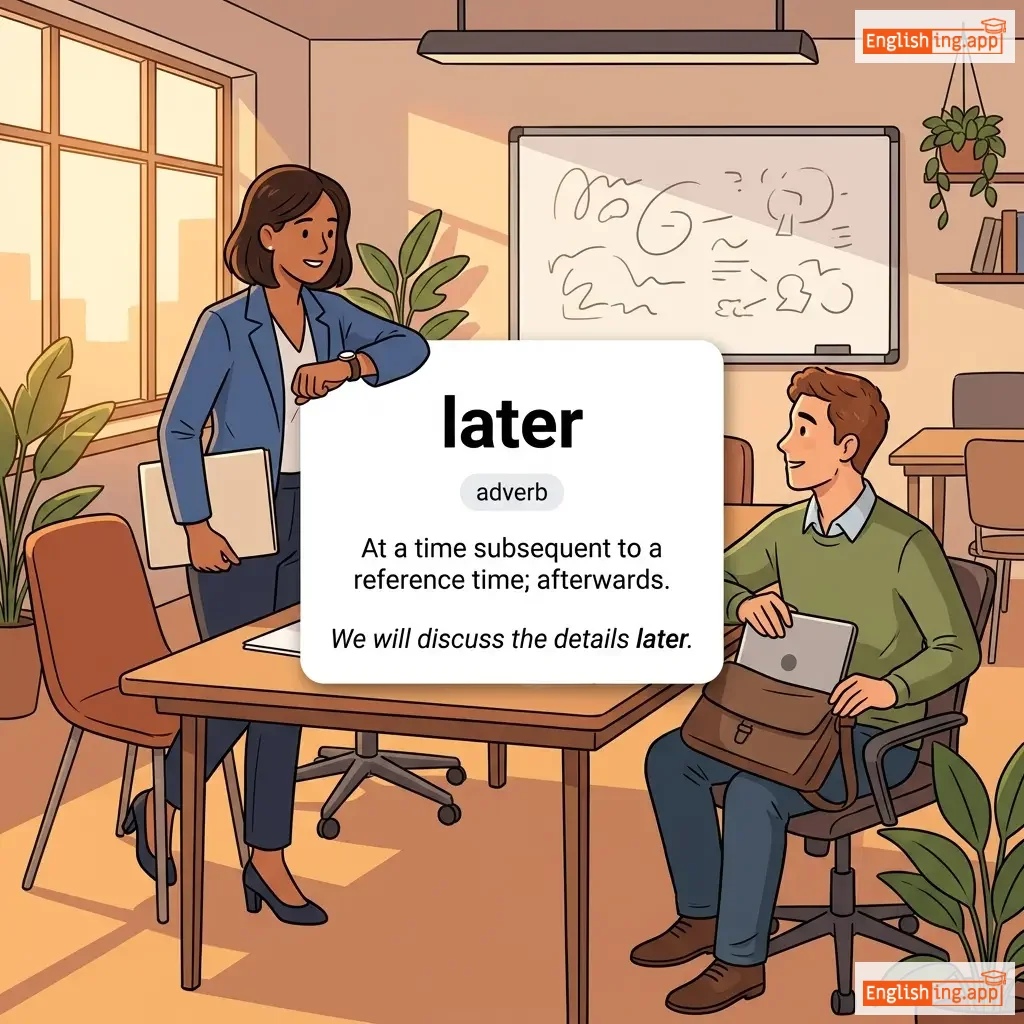
later definition card — visual illustration of the meaning
adverb
/ˈleɪtər/
稍后 (shaohou)

At a time subsequent to a reference time; afterwards.

"We will discuss the details later."

"我们稍后讨论细节。" (Women shaohou taolun xijie.)
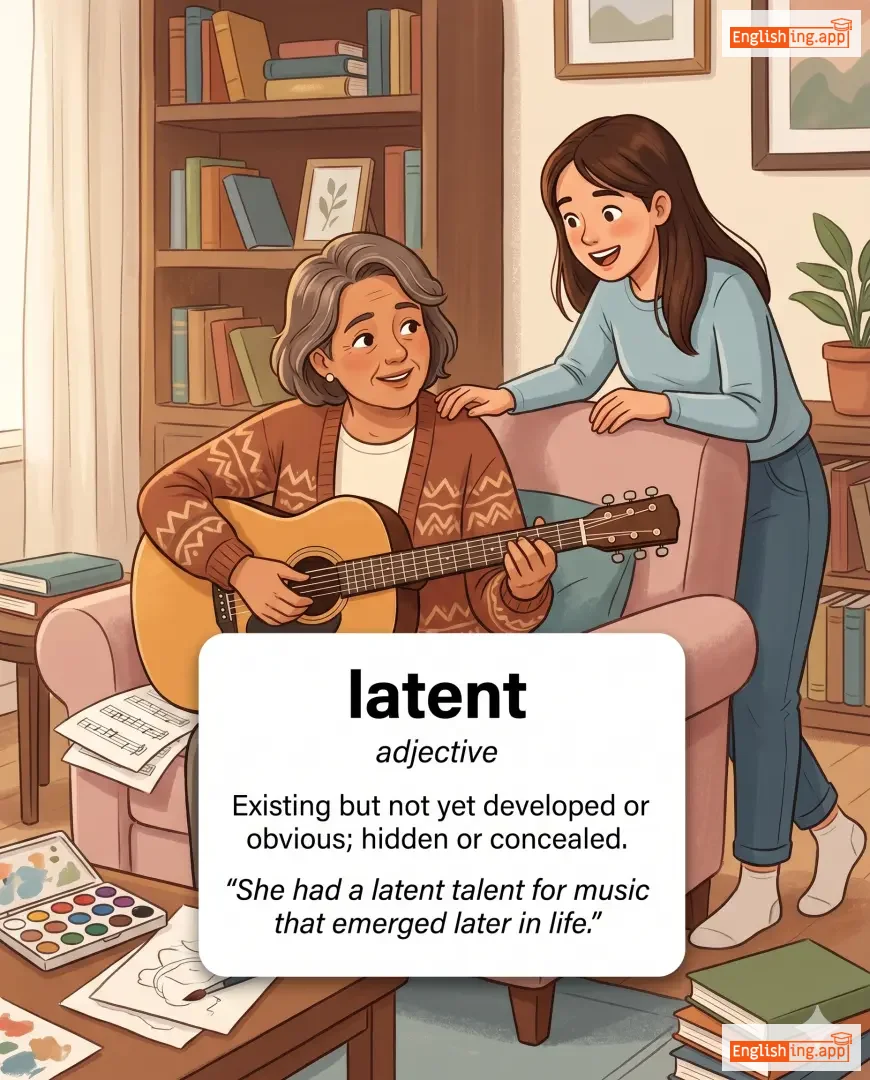
latent definition card — visual illustration of the meaning
adjective
/ˈleɪtənt/

Existing but not yet developed or obvious; hidden or concealed.

"She had a latent talent for music that emerged later in life."

latency definition card — visual illustration of the meaning
noun
/ˈleɪtənsi/
延迟 (yanchi)

The delay before a transfer of data begins following an instruction for its transfer.

"High latency can slow down online gaming experiences."

"高延迟会减慢在线游戏体验。" (Gāo yánchí huì jiǎn màn zàixiàn yóuxì tǐyàn.)
Ladle definition card — visual illustration of the meaning
noun, verb
/ˈleɪ.dl̩/
幸福 (xingfu)

A large spoon for serving soup or liquids; to serve with such a spoon.

"She used a ladle to serve the hot soup into bowls."

"她在收到奖项时,无法隐藏她的幸福。" (Tā zài shōudào jiǎngxiàng shí, wúfǎ yǐncáng tā de xìngfú.)
noun/verb
/læk/
缺乏 (quēfá)

The state of being without or not having enough of something.

"He failed the exam due to a lack of preparation."

"他因为缺乏准备而未通过考试。" (Tā yīnwèi quēfá zhǔnbèi ér wèi tōngguò kǎoshì.)
adjective
/ˌlækəˈdeɪzɪkəl/
懒散或懒惰 (lǎnsàn huò lǎnduò)

lacking enthusiasm, energy, or determination; careless or lazy

"His lackadaisical attitude toward work annoyed his boss."

"他对工作的懒散态度让他的老板很烦恼。" (Tā duì gōngzuò de lǎnsàn tàidù ràng tā de lǎobǎn hěn fánnǎo.)
noun
/ˈlæki/
侍从 (shì cóng)

a person who is overly willing to serve or obey someone else

"He treated his assistant like a mere lackey."

"他把助手当作一个普通的侍从对待。" (Tā bǎ zhùshǒu dàngzuò yīgè pǔtōng de shì cóng duìdài.)
adjective
/ˈlækɪŋ/
缺乏 (quefa)

not having enough of something; missing

"His report was lacking in detail."
"他的报告缺少细节。" (Tā de bàogào quēshǎo xìjié.)
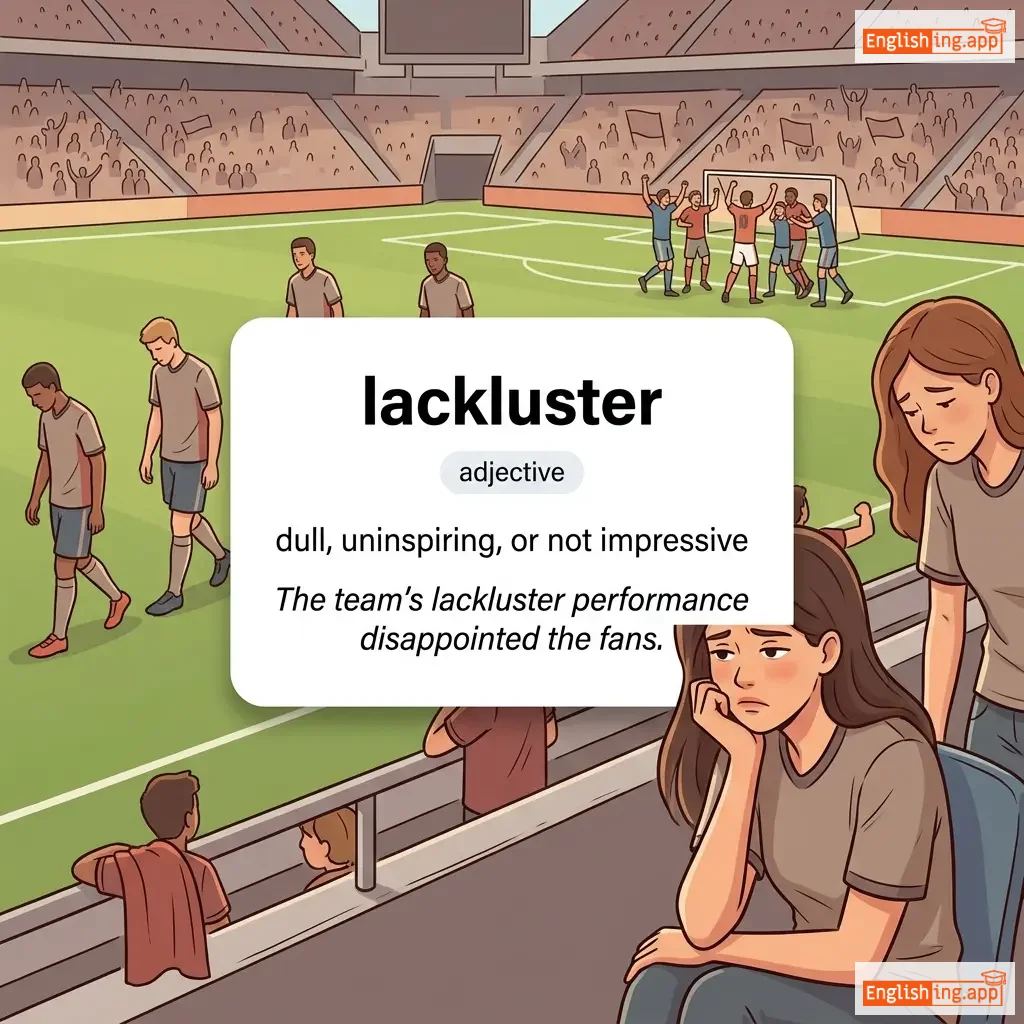
lackluster definition card — visual illustration of the meaning
adjective
/ˈlækˌlʌstər/
平淡无奇或缺乏灵感 (píng dàn wú qí huò quē fá líng gǎn)

dull, uninspiring, or not impressive

"The team's lackluster performance disappointed the fans."

"团队平淡无奇的表现让粉丝失望。" (Tuánduì píng dàn wú qí de biǎoxiàn ràng fěnsī shīwàng.)
laconic definition card — visual illustration of the meaning
adjective
/ləˈkɒnɪk/
简洁的 (jianjie de)

using very few words; concise to the point of seeming rude or mysterious

"His laconic reply ended the conversation quickly."

"他简洁的回答迅速结束了谈话。" (Ta jianjie de huida xunsu jieshu le tanhua.)
noun
/lækˈteɪʃən/
乳汁分泌 (rǔ zhī fēn mì)

the secretion of milk by the mammary glands of female mammals

"The doctor explained that lactation is a natural process after childbirth."

"医生解释说,哺乳是分娩后的一种自然过程。" (Yīshēng jiěshì shuō, bǔrǔ shì fēnmiǎn hòu de yī zhǒng zìrán guòchéng.)
adjective
/ˈlæk.ti.əl/
与牛奶相关或类似牛奶的 (yǔ niúnǎi xiāngguān huò lèisì niúnǎi de)

Relating to or resembling milk; conveying chyle or milky fluid.

"The lacteal vessels in the small intestine absorb dietary fats."

"小肠中的乳汁管吸收膳食脂肪。" (xiǎo cháng zhōng de rǔzhī guǎn xīshōu shànshí zhīfáng.)
adjective
/ˈlæk.tɪk/
与牛奶或乳酸相关 (yǔ niúnǎi huò rǔsuān xiāngguān)

Relating to milk or lactic acid.

"Intense exercise can lead to a buildup of lactic acid in the muscles."

"剧烈运动可能会导致肌肉中乳酸的积聚。" (Jùliè yùndòng kěnéng huì dǎozhì jīròu zhōng rǔsuān de jījù.)
noun
/læd/
小伙子 (xiao huoz i)

a boy or young man; a male youth

"The young lad helped his father in the shop."

"这个年轻小伙子在商店里帮助了他的父亲。" (zhe ge nianqing xiao huoz i zai shangdian li bangzhu le ta de fuqin)
Ladder definition card — visual illustration of the meaning
noun
/ˈlædər/
梯子 (tīzi)

a structure with steps used for climbing up or down

"He used a ladder to reach the roof."

"他用梯子爬上了屋顶。" (Tā yòng tīzi pá shàng le wūdǐng.)
noun
/ˈlæd.i/
小男孩 (xiao nanhai)

A young boy or lad.

"The old man gave the young laddie a kind smile."
"老人给年轻的小男孩一个友好的微笑。" (Laoren gei nianqing de xiao nanhai yi ge youhao de weixiao.)
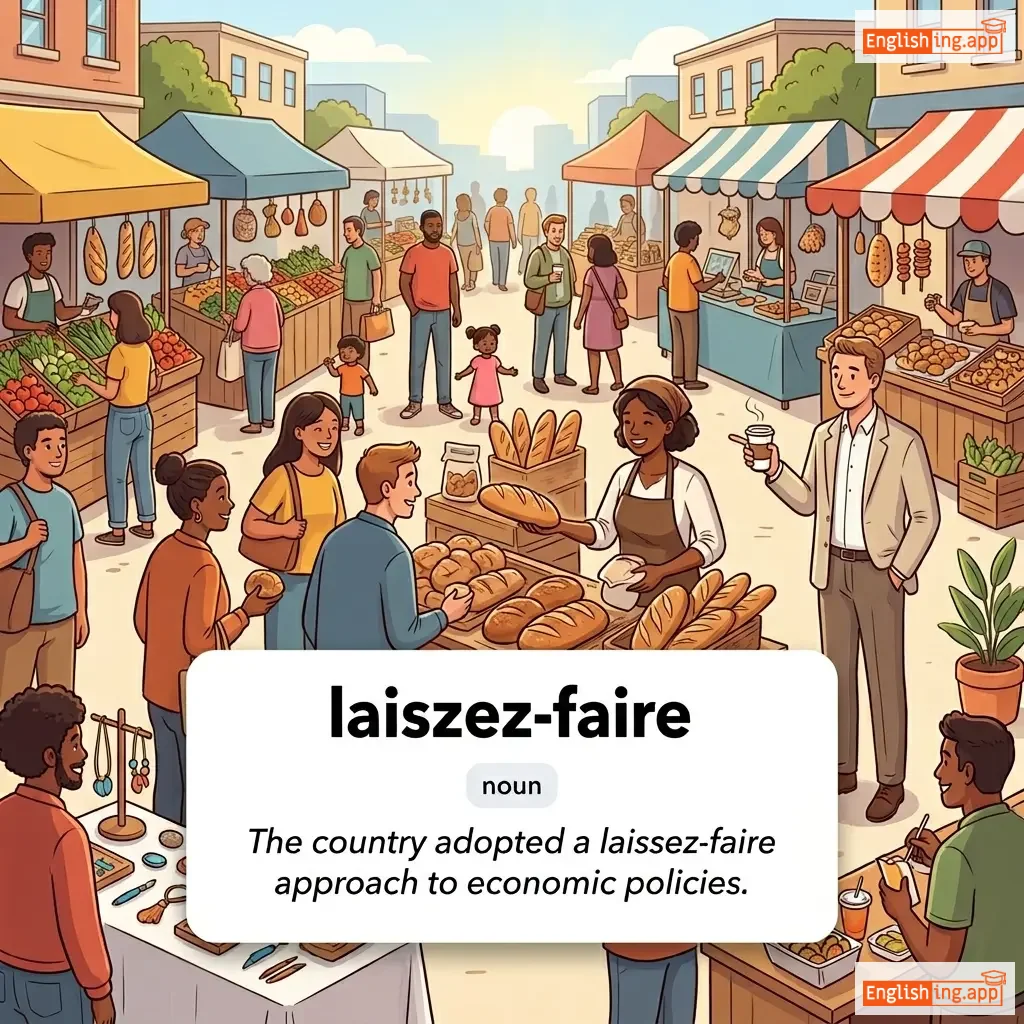
laissez-faire definition card — visual illustration of the meaning
noun
/ˌlɛ.seɪˈfɛər/
自由放任政策 (zìyóu fàngrèn zhèngcè)

A free-market policy of minimal government intervention in economic affairs, characterized by non-interventionism and capitalism.

"The country adopted a laissez-faire approach to economic policies."
"该国在经济政策中采取了自由放任的方式。" (Gāi guó zài jīngjì zhèngcè zhōng cǎiqǔle zìyóu fàngrèn de fāngshì.)
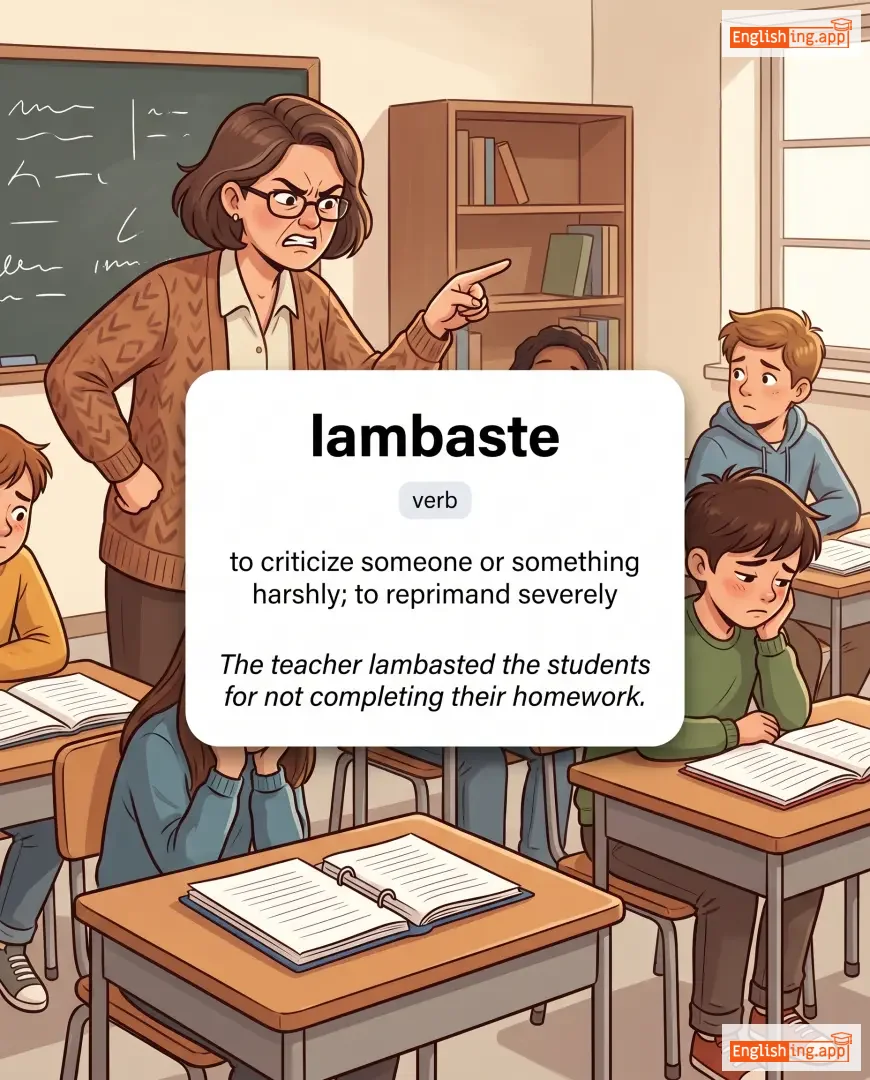
lambaste definition card — visual illustration of the meaning
verb
/læmˈbeɪst/
严厉批评 (yánlì pīpíng)

to criticize someone or something harshly; to reprimand severely

"The teacher lambasted the students for not completing their homework."

"老师因学生未完成作业而严厉批评了他们。" (Lǎoshī yīn xuéshēng wèi wánchéng zuòyè ér yánlì pīpíngle tāmen.)
verb
/læmˈbæst/
严厉批评 (yanli piping)

To criticize harshly or to beat severely.

"The coach lambasted the team for their poor performance."
"教练因团队表现差而严厉批评了他们。" (Jiaolian yin tuandui biaoxian cha er yanli piping le tamen.)
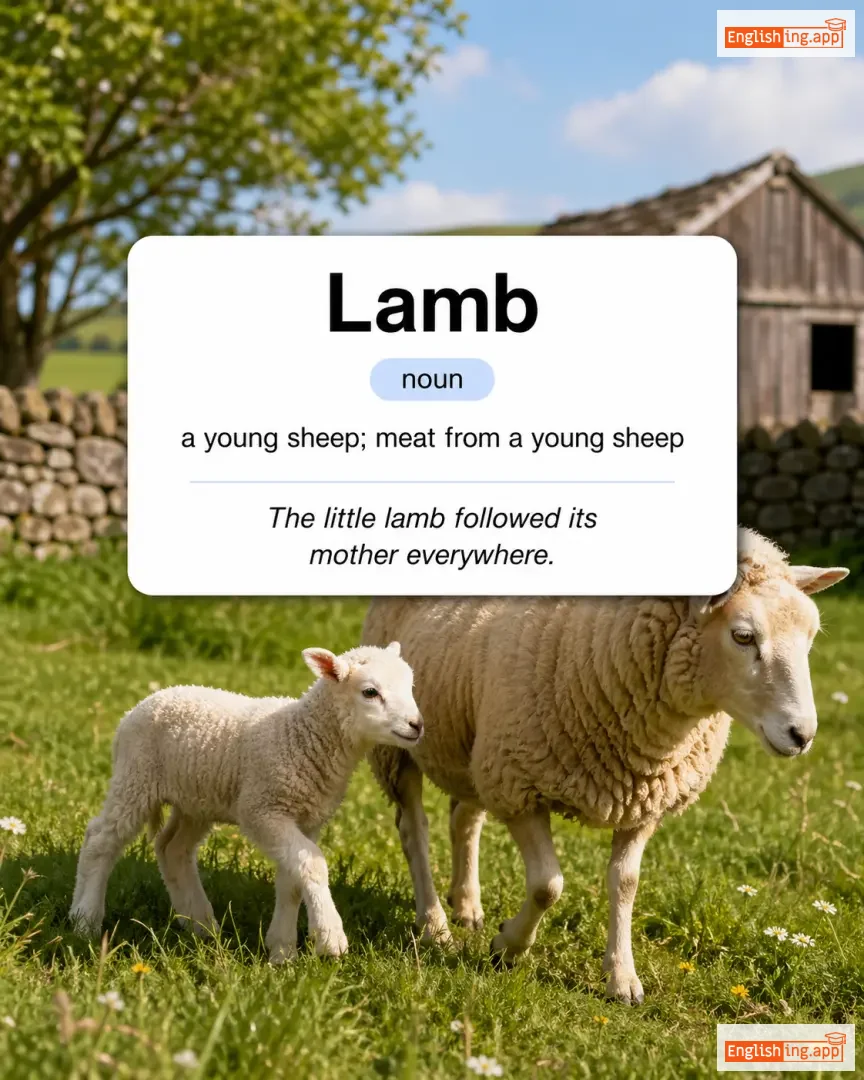
Lamb definition card — visual illustration of the meaning
noun
/læm/
小羊 (xiǎo yáng)

a young sheep; meat from a young sheep

"The little lamb followed its mother everywhere."

"小羊到处跟着它的母亲。" (Xiǎo yáng dàochù gēnzhe tā de mǔqīn.)
noun
/leɪk/
湖泊 (húpō)

A large area of water surrounded by land.

"They enjoyed boating on the lake during summer."

"他们在夏季喜欢在湖上划船。" (Tāmen zài xiàjì xǐhuān zài hú shàng huáchuán.)
noun
/ˈleɪ.ɪ.ti/
俗人 (sú rén)

Ordinary members of a religious community who are not clergy.

"The church welcomed the laity to participate in the event."

"教堂欢迎俗人参加活动。" (Jiàotáng huānyíng sú rén cānjiā huódòng.)
noun
/ˈlæɡərd/
落后者 (luòhòu zhě)

A person or thing that is slow or falls behind others.

"The company has been a laggard in adopting new technology."

"该公司在采用新技术方面落后。" (gāi gōngsī zài cǎiyòng xīn jìshù fāngmiàn luòhòu.)
noun
/ˈleɪdi/
幸福 (xingfu)

A polite or formal way of referring to a woman.

"The lady at the counter was very helpful."

"当她收到奖项时,她无法掩饰自己的幸福。" (Dāng tā shōudào jiǎngxiàng shí, tā wúfǎ yǎnshì zìjǐ de xìngfú.)
verb, noun
/læɡ/
滞后或延迟 (zhihou huo yanchi)

To fall behind in movement, progress, or development; a delay or period of falling behind.

"The old computer tends to lag when running new software."

"旧电脑在运行新软件时常常滞后。" (Jiu dian nao zai yun xing xin ruan jian shi chang chang zhihou.)
adjective
/ˈlæk.rɪ.moʊs/
流泪的,悲伤的 (liú lèi de, bēi shāng de)

tearful or given to weeping; sad and mournful

"The movie's lachrymose ending left the audience in tears."

"电影的悲伤结局让观众泪流满面。" (Diànyǐng de bēi shāng jiéjú ràng guānzhòng lèi liú mǎn miàn.)
noun
/ˈlænjæp/
额外礼物 (éwài lǐwù)

A small gift or bonus given by a seller to a customer.

"The shopkeeper offered a piece of candy as a lagniappe."

"店主作为额外礼物提供了一颗糖果。" (Diànzhǔ zuòwéi éwài lǐwù tígōngle yī kē tángguǒ.)